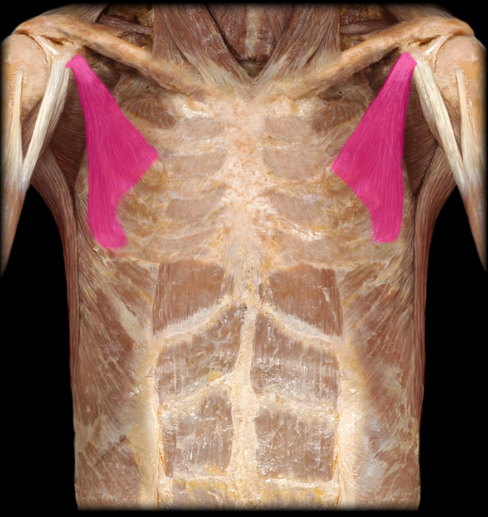
Axial Muscles: Location, Origin, Insertion, Action
 Call Kai
 Learn
Learn Practice Test
 Spaced Repetition
 Match
Match Flashcards
 Knowt Play
1/26

Name | Mastery | Learn | Test | Matching | Spaced | Call with Kai |
|---|
No analytics yet
Send a link to your students to track their progress
27 Terms
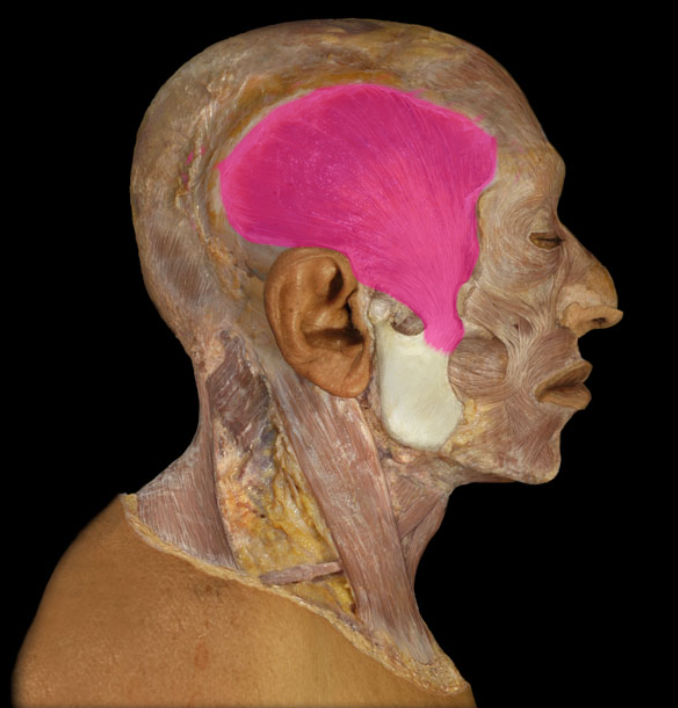
temporalis
action: elevates mandible (mastication, i.e., chewing)
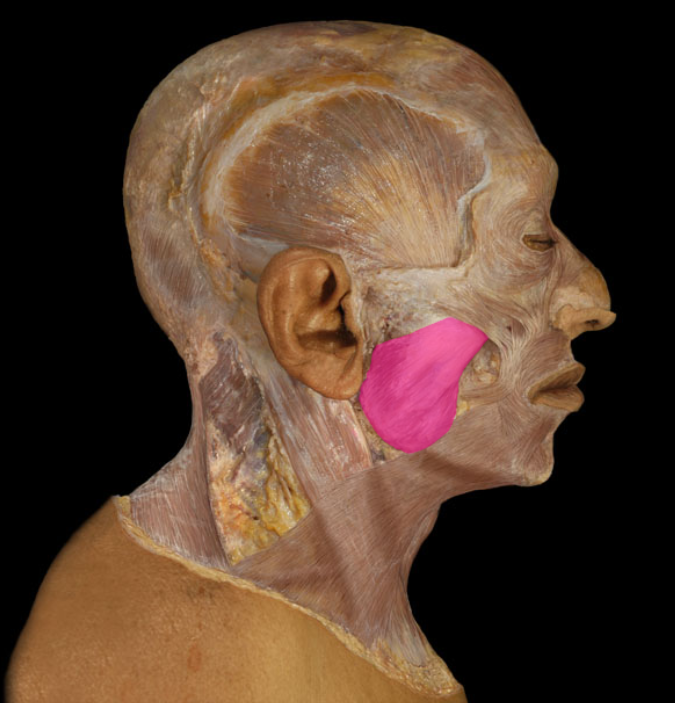
masseter
action: elevates mandible (mastication, i.e., chewing)
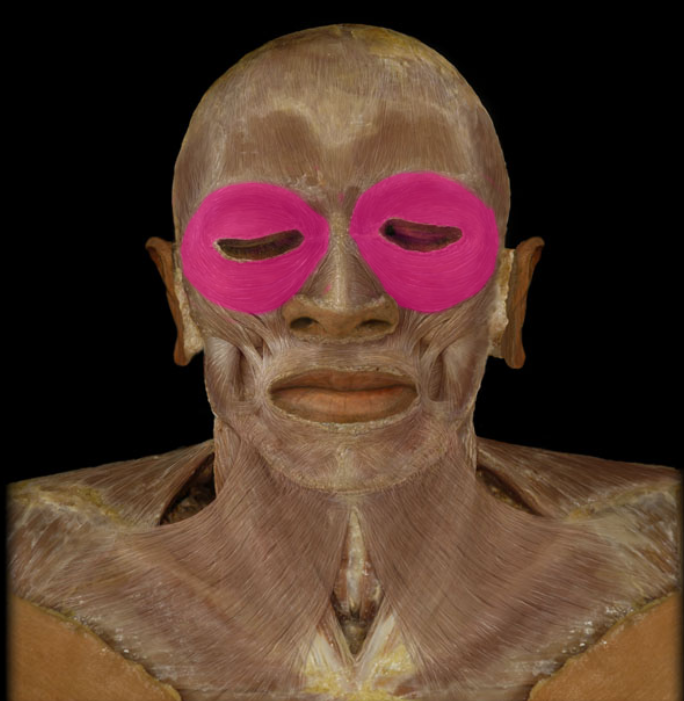
orbicularis oculi
action: sphincter of eyelids, closes eyelid (for blinking, sleep, squinting), aids in flow of tears across eye
orbicularis oris
action: closes lips, speech, protrudes lips (kissing)
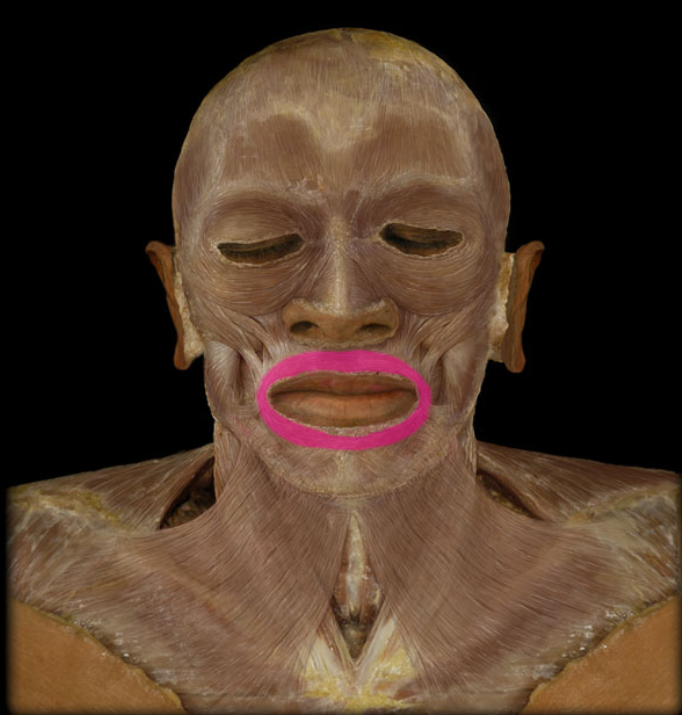
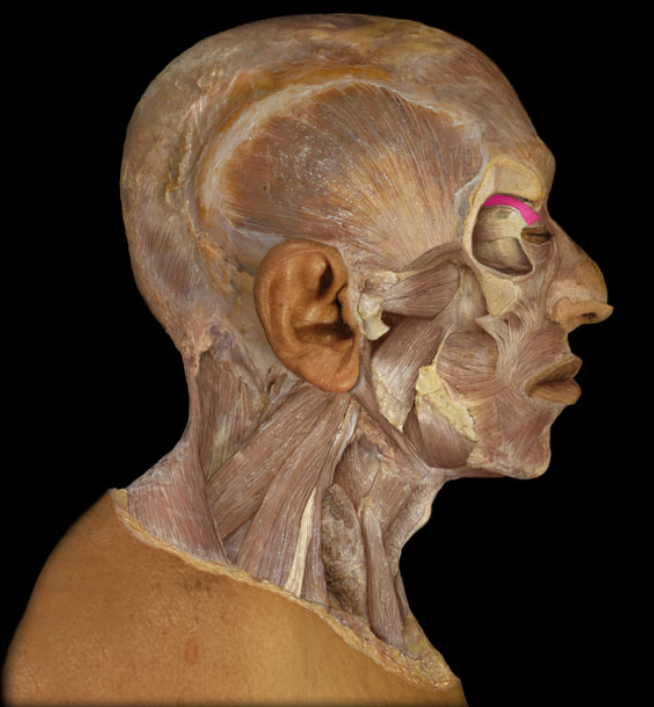
levator palpebrae superioris
action: elevates upper eyelid (opens eye)
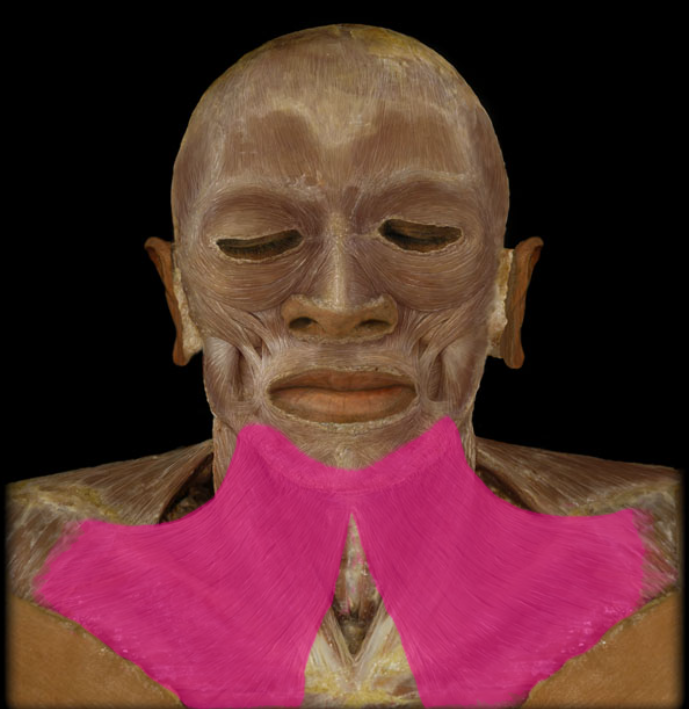
platysma
action: opens mouth widely, draws lower lip downward (i.e., in facial expressions of horror/surprise)
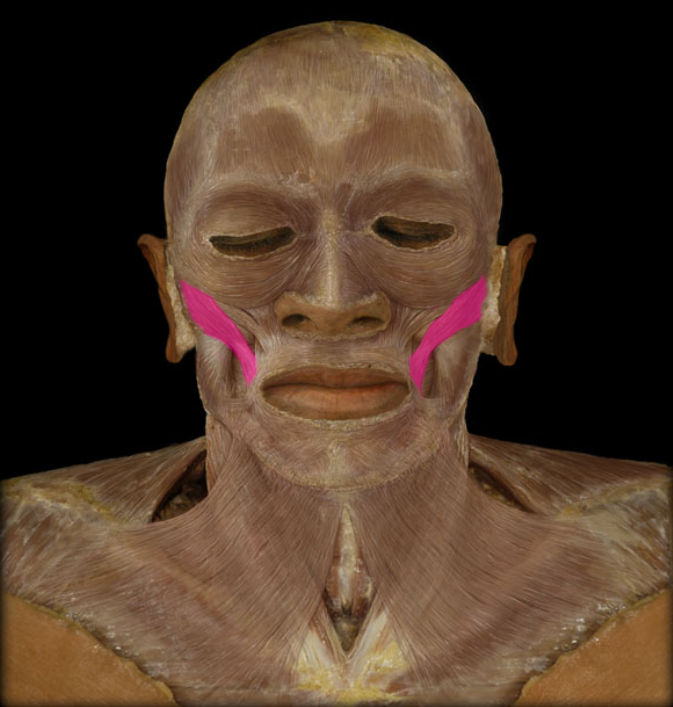
zygomaticus major
action: elevates corner of mouth (smiling, laughing)
zygomaticus minor
action: elevates upper lip
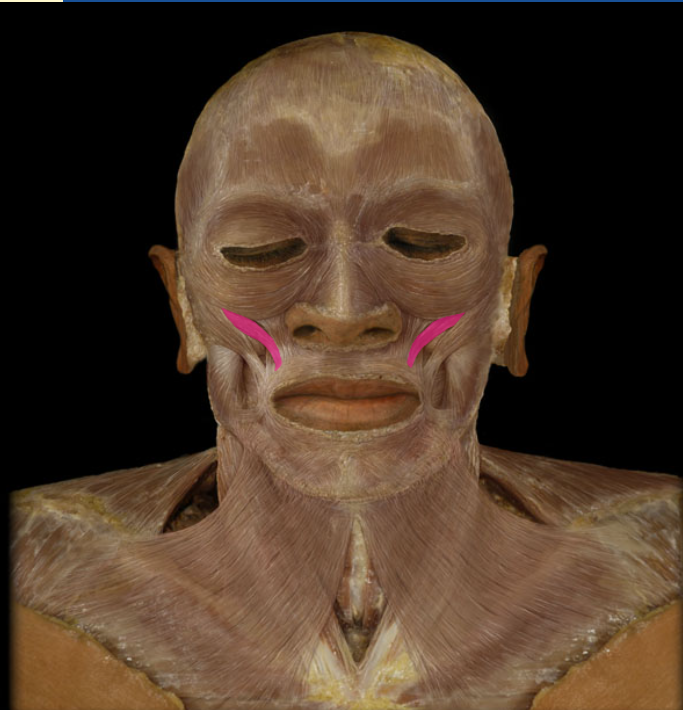

sternocleidomastoid (I/O)
origin: manubrium of sternum and medial one-third of clavicle.
insertion: mastoid process of temporal bone.
action: unilateral action is the contralateral rotation of the head and the bilateral action is the flexion of the neck.
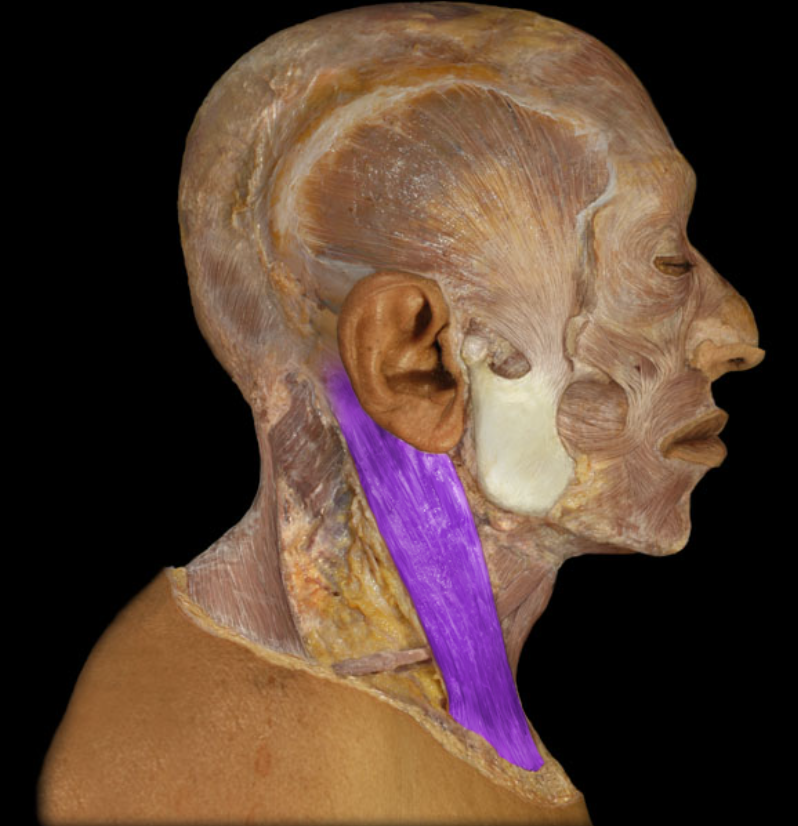
scalenes (anterior, middle, posterior)
bilateral action: flexes neck and elevates ribs 1-2 (which aids in breathing when spine is fixed)
unilateral action: lateral flexion of neck
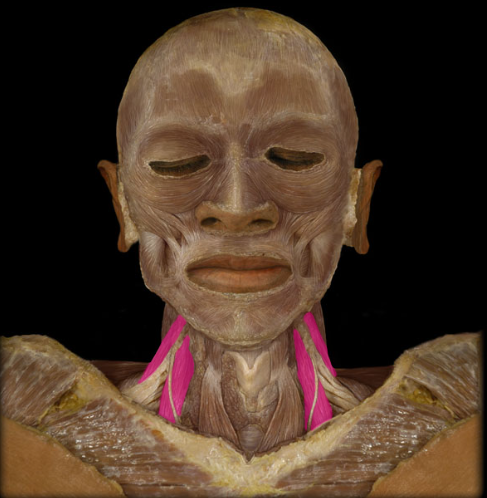

digastric (I/O)
origin: the anterior belly’s origin is the digastric fossa of the mandible. the posterior belly’s origin is in the mastoid process of the temporal bone.
insertion: hyoid bone (via fascial sling).
action: depresses mandible when hyoid is fixed and elevates hyoid when mandible is fixed.
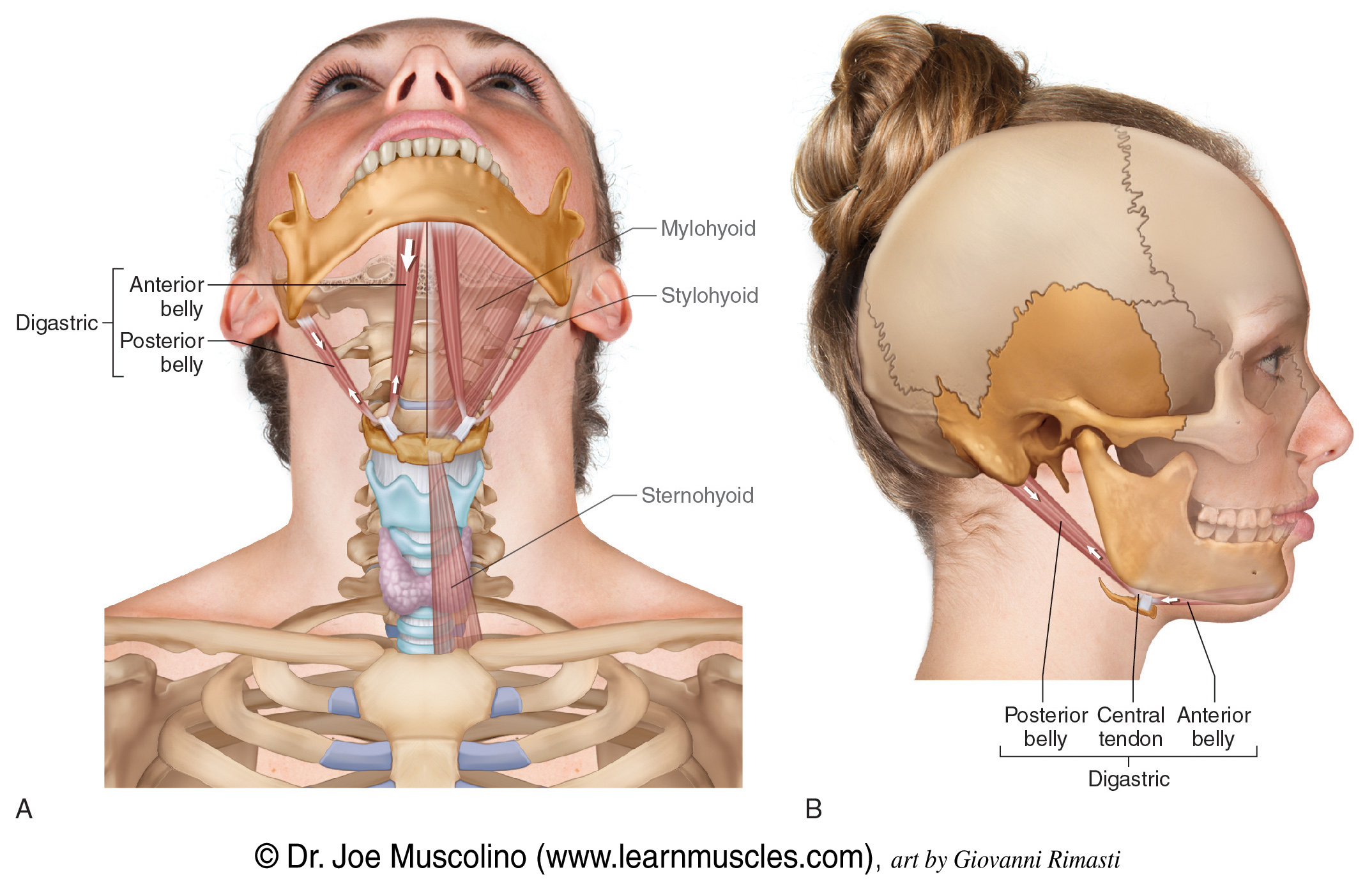
stylohyoid (I/O)
origin: styloid process of temporal bone.
insertion: hyoid bone.
action: elevate and retract hyoid.
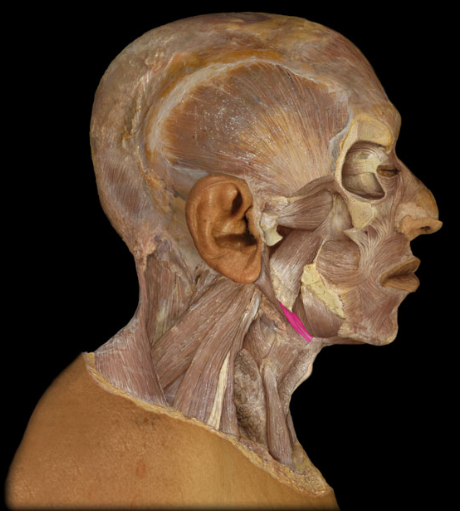
mylohyoid
action: elevates floor of mouth for swallowing.
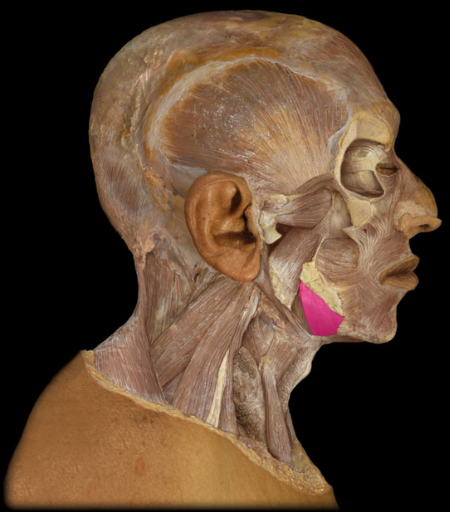
sternohyoid (I/O)
origin: manubrium of sternum and medial end of clavicle.
insertion: hyoid bone.
action: depresses hyoid.
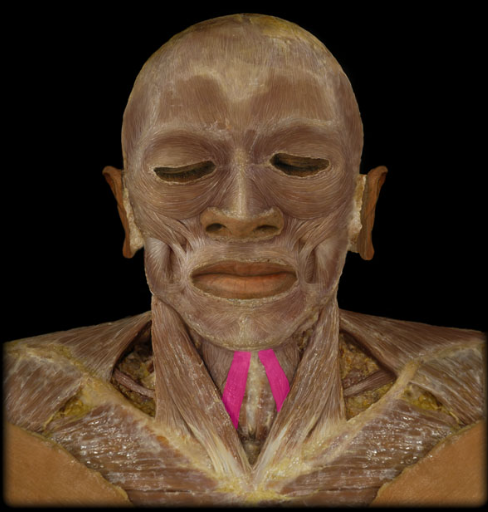
omohyoid
action: depresses hyoid.

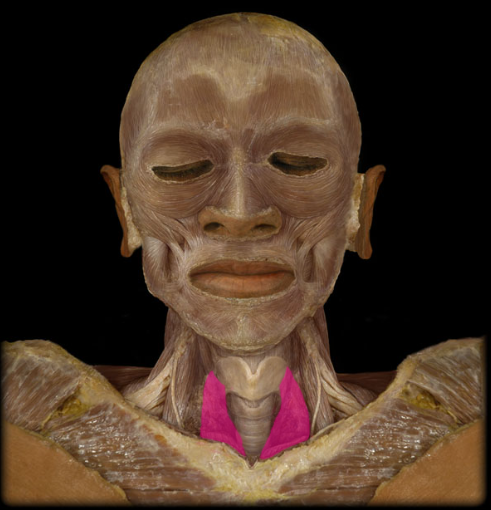
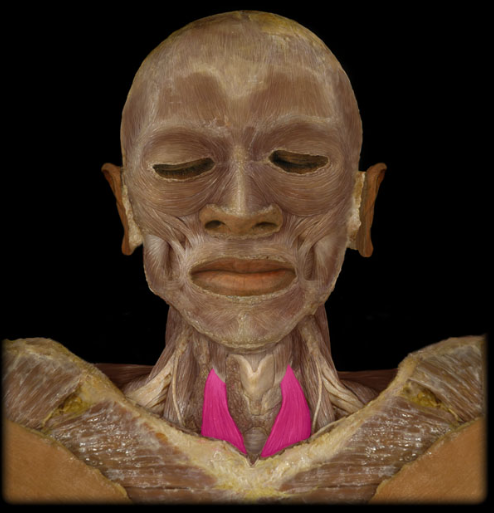
sternothyroid
action: depresses larynx after it had been elevated (in swallowing and vocalization).

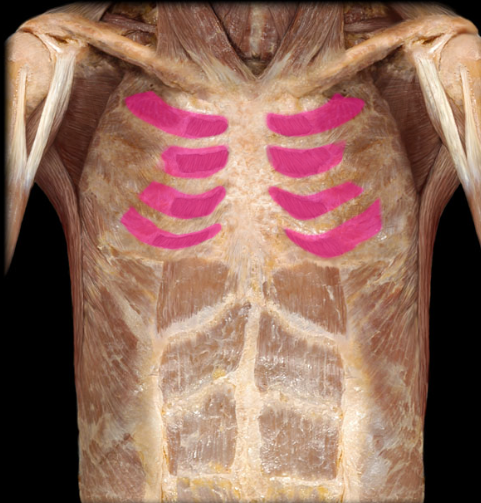
external intercostals
action: elevates and protracts ribs 2 through 12, expanding the thoracic cavity for inspiration (this occurs when scalenes fix rib 1).

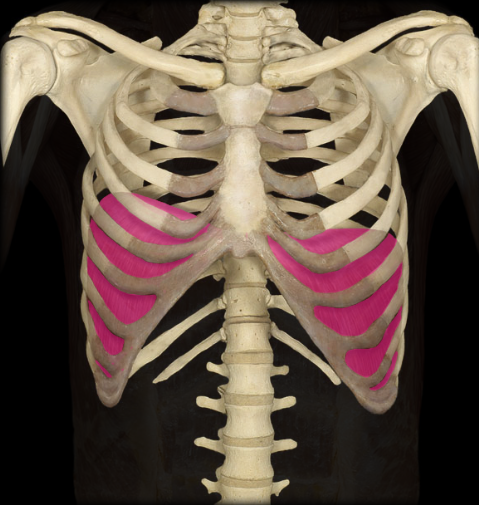
internal intercostals
action: depresses and retracts the ribs, compressing the thoracic cavity and expelling air (this occurs in forced expiration).

diaphragm
action: prime mover (i.e., agonist) of inspiration. contraction of this muscle compresses abdominal viscera (i.e., internal organs). this muscle also aids in childbirth and the expulsion of urine and feces.
rectus abdominis (I/O)
origin: pubic symphysis and superior margin of pubis.
insertion: xyphoid process of sternum and the costal cartilages 5 through 7.
action: flexes trunk, stabilizes pelvic region during walking, and compresses abdominal viscera (i.e., internal organs).

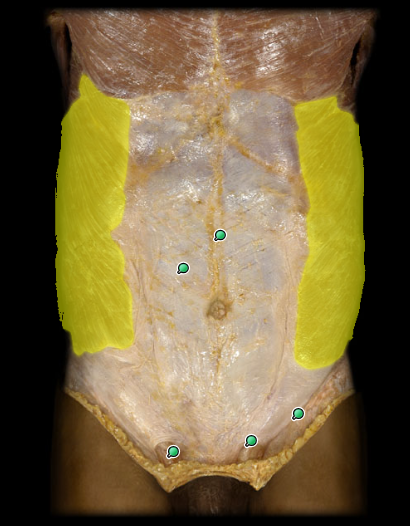
external abdominal oblique
action: this muscle supports viscera (i.e., internal abdominal organs), stabilizes the vertebral column, and maintains posture. its unilateral action (i.e., action of one oblique) is contralateral rotation of the waist. its bilateral action is flexion of the trunk
internal abdominal oblique
action: supports viscera (i.e., internal organs), stabilizes the vertebral column, and maintains posture.
its unilateral action is the ipsilateral rotation of the trunk.
its bilateral action is the flexion of the trunk.
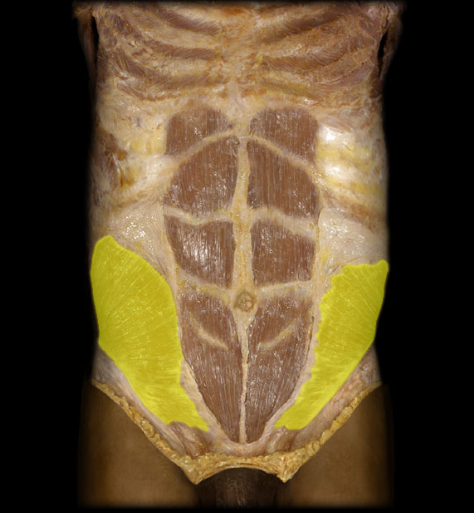
transverse abdominis
action: compresses abdominal contents, but does NOT contribute to vertebral column movements.
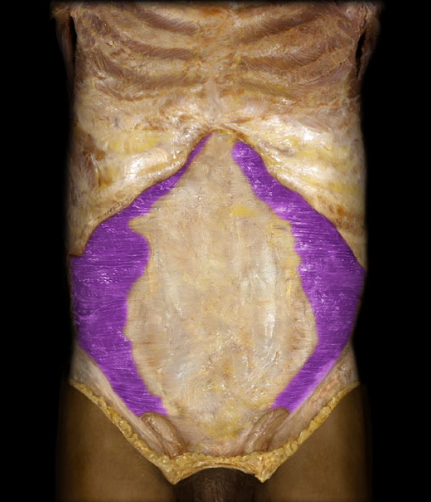
linea alba
this structure is NOT a muscle. It is a fibrous structure running between the xyphoid process of the sternum and the pubic symphysis. this is the insertion site for transverse abdominis.
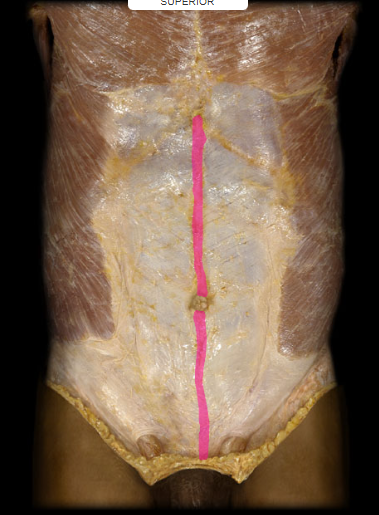

serratus anterior (O/I)
origin: ribs 1 through 9.
insertion: medial border of scapula.
action: this muscle protracts the scapula (with the help of the pectoralis minor). it is also the prime mover (i.e., agonist) in all forward-reaching and pushing actions (which is why it is called the “boxer’s muscle”). it also fixes the scapula during abduction of the arm.


pectoralis major (I/O)
origin: medial half of clavicle, lateral margin of sternum, costal cartilages 1 through 7, and the aponeurosis (i.e., sheet of fibrous tissue) of the external oblique.
insertion: the intertubercular sulcus of the humerus.
action: flexion of the shoulder, adduction of the shoulder, and medial rotation of the shoulder.
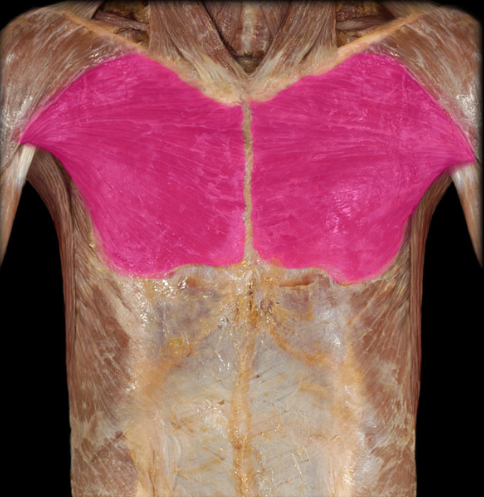
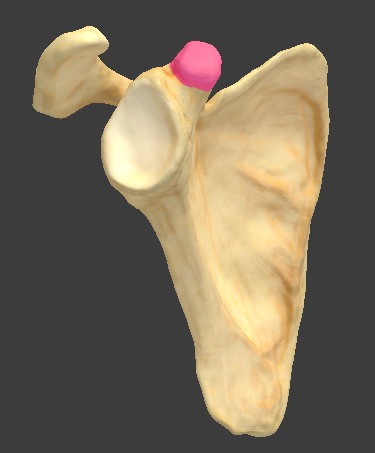
pectoralis minor (O/I)
origin: ribs 3 through 5 and the overlying fascia.
insertion: coracoid process of the scapula.
action: protracts the scapula (with the help of the serratus anterior).