Art Exam 1 Study Guide

0.0(0)
studied byStudied by 0 people
0.0(0)
full-widthCall with Kai
learnLearn
examPractice Test
spaced repetitionSpaced Repetition
heart puzzleMatch
flashcardsFlashcards
GameKnowt Play
Card Sorting

1/25

encourage image

There's no tags or description

Looks like no tags are added yet.

Study Analytics
Name
Mastery
Learn
Test
Matching
Spaced
Call with Kai

No study sessions yet.

26 Terms

1
New cards

Annunciation, Nativity, and Adoration of the Shepherds ca.1260

Made by Nicola Pisano for the baptistry pulpit in Pisa, with the medium being marble. The structure is a sculptural relief.

<p><strong>Made by </strong><span><strong><span>Nicola Pisano for the baptistry pulpit in Pisa, with the medium being marble. The structure is a sculptural relief. </span></strong></span></p>
2
New cards

Sarcophagus (Third Century)

If you were a prestigious person or like a war general, you could be celebrated in one of these. We saw a roman sarcophagus in class. (Coffin)

3
New cards

St. Francis Altarpiece, 1235 (Italo-Byzantine)

Made by Berlinghieri. It was made to show his fans St Francis’ divinity and connection to religion, not realistic. Appears like a spirit, golden, elongated, with stigmatas on his feet/hands. Medium: Was a wood panel, where the paint was Tempera with golden leaves added.

<p>Made by <strong><mark data-color="yellow" style="background-color: yellow; color: inherit;"><span>Berlinghieri</span></mark><span>. It was made to show his fans St Francis’ divinity and connection to religion, not realistic. Appears like a spirit, golden, elongated, with stigmatas on his feet/hands. Medium: </span></strong><span style="background-color: transparent;"><strong><span>Was a wood panel, where the paint was Tempera with golden leaves added.</span></strong></span></p><p></p>
4
New cards

Madonna Enthroned with Angels and Prophets ca. 1280-1290

Made by Giovanni Cimabue, uses hierarchy of scale (It isn’t just this one, just wanted to point out so you recognize)

<p>Made by <strong><mark data-color="yellow" style="background-color: yellow; color: inherit;"><span>Giovanni Cimabue</span></mark><span>, uses hierarchy of scale (It isn’t just this one, just wanted to point out so you recognize)</span></strong></p>
5
New cards

Hierarchy of scale

Centering or enlarging the main figure in art, like most of the art shown so far, the main figure is centered and enlarged

6
New cards

Madonna Enthroned “All Saints” Altarpiece, ca. 1310

Painted by Giotto

<p>Painted by Giotto</p>
7
New cards

Arena Chapel (Scrovegni) Padua Italy, 1305-1306

Made by Giotto. The fresco method of painting was used, deep blue.

  • Top - Lives of the Virgin Mary and her parents

  • Middle - Scenes from the life and mission of Jesus

  • Bottom - His passion and resurrection

<p>Made by <strong><mark data-color="yellow" style="background-color: yellow; color: inherit;">Giotto</mark></strong>. <span style="background-color: transparent;"><strong><span>The </span></strong></span><strong><span>fresco</span></strong><span style="background-color: transparent;"><strong><span> method of painting was used, deep blue.</span></strong></span></p><ul><li><p><strong><span>Top</span></strong><span style="background-color: transparent;"><strong><span> - Lives of the Virgin Mary and her parents</span></strong></span></p></li></ul><ul><li><p><strong><span>Middle</span></strong><span style="background-color: transparent;"><strong><span> - Scenes from the life and mission of Jesus</span></strong></span></p></li><li><p><strong><span>Bottom</span></strong><span style="background-color: transparent;"><strong><span> - His passion and resurrection</span></strong></span></p></li></ul><p></p>
8
New cards

The Lamentation

Made by Giotto. The “cast” includes: Virgin Mary, Saint John the Baptist, Mary Magdalene, and the random filler mfs

  • There wasn't a lot of emotionalism in art during this time period, but he did it here for the relatability within the artwork.

  • No hierarchy of scale, as it just deletes relatability 

  • Individualized body language and facial expressions

  • Foreshortening for depth (angels look like they inhabit the space)

<p><strong>Made by <mark data-color="yellow" style="background-color: yellow; color: inherit;">Giotto</mark>. </strong><span style="background-color: transparent;"><strong><span>The “cast” includes: Virgin Mary, Saint John the Baptist, Mary Magdalene, and the random filler mfs</span></strong></span></p><ul><li><p><span style="background-color: transparent;"><strong><span>There wasn't a lot of emotionalism in art during this time period, but he did it here for the relatability within the artwork.</span></strong></span></p></li><li><p><span style="background-color: transparent;"><strong><span>No hierarchy of scale, as it just deletes relatability&nbsp;</span></strong></span></p></li><li><p><span style="background-color: transparent;"><strong><span>Individualized body language and facial expressions</span></strong></span></p></li><li><p><strong>Foreshortening for depth (angels look like they inhabit the space)</strong></p></li></ul><p></p>
9
New cards

Pietro Lorenzetti

The Birth of The Virgin, 1342

The art is a triptych (three part panel painting)

<p><span style="background-color: transparent;"><strong><span>The Birth of The Virgin, 1342</span></strong></span></p><p><strong><span>The art is a </span><mark data-color="yellow" style="background-color: yellow; color: inherit;"><span>triptych</span></mark><span> (three part panel painting)</span></strong></p>
10
New cards

Hall of Peace (Siena, Italy)

City hall building with murals painted by Ambrogio Lorenzetti in fresco. The murals include the Peaceful City and the Peaceful Country.

<p><span style="background-color: transparent;"><strong><span>City hall building with murals painted by </span></strong></span><strong><mark data-color="yellow" style="background-color: yellow; color: inherit;"><span>Ambrogio Lorenzetti</span></mark><span> </span></strong><span style="background-color: transparent;"><strong><span>in </span><mark data-color="yellow" style="background-color: yellow; color: inherit;"><span>fresco</span></mark><span>. The murals include the Peaceful City and the Peaceful Country.</span></strong></span></p>
11
New cards

Peaceful City (1338-1339)

Mural painted by Ambrogio Lorenzetti using the fresco method. One of the murals in the Hall of Peace

<p><span style="background-color: transparent;"><strong><span>Mural painted by </span></strong></span><strong><mark data-color="yellow" style="background-color: yellow; color: inherit;"><span>Ambrogio Lorenzetti using the fresco method</span></mark><span>. One of the murals in the Hall of Peace</span></strong></p>
12
New cards

Robert Campin (Master of Flemalle)

The Merode Altarpiece, 1425

Painted with oil paint. There is a shit ton of details, along with symbolism. Purify + Divine mission, there were lots of symbolism

<p><span style="background-color: transparent;"><strong><span>The Merode Altarpiece, 1425 </span></strong></span></p><p>Painted <span style="background-color: transparent;"><strong><span>with oil paint. There is a shit ton of details, along with symbolism. Purify + Divine mission, there were lots of symbolism</span></strong></span></p>
13
New cards

15th Century Renaissance in the North: the Burgundian Netherlands

  • Apparently, they started to use oil paints during this time, and since it took a long time to dry, it allowed for more detail

  • Early renaissance had a shit ton of symbolism

  • Flanders (Silicone Valley of Europe) is a region - “Flemish” is the adjective

14
New cards

Ghent Altarpiece 1432

(Hubert) and Jan van Eyck created this panel art piece with oil paint, 12ft by 15ft.

Jesus being the Lamb represents the sacrifice he made, since animals were sacrificed during this time.

<p><span><strong><span>(Hubert) and Jan van Eyck created this panel art piece with oil paint, 12ft by 15ft.</span></strong></span></p><p><span style="background-color: transparent;"><strong><span>Jesus being the Lamb represents the sacrifice he made, since animals were sacrificed during this time. </span></strong></span></p>
15
New cards

Amolfini Wedding Portrait, 1434

Painted by Jan Van Eyck using oil paint.

  • Fruits (oranges) represent wealth. They also have seeds, which also points to fertility.

  • St. Margaret, she is there because she is the patron saint of childbirth

  • Jan Van Eyck also signed it, right above the mirror in the back

<p>Painted by <span><strong><mark data-color="yellow" style="background-color: yellow; color: inherit;"><span>Jan Van Eyck</span></mark><span> using oil paint. </span></strong></span></p><ul><li><p><span style="background-color: transparent;"><strong><span>Fruits (oranges) represent wealth. They also have seeds, which also points to fertility.</span></strong></span></p></li><li><p><span><strong><span>St. Margaret</span></strong></span><span style="background-color: transparent;"><strong><span>, she is there because she is the patron saint of childbirth</span></strong></span></p></li><li><p><span style="background-color: transparent;"><strong><span>Jan Van Eyck also signed it, right above the mirror in the back</span></strong></span></p></li></ul><p></p>
16
New cards

Jan Van Eyck self Portrait 1433

  • Whenever someone entered his art area, they saw his self portrait

  • It was also supposed to be a little bit imperfect, like showing himself at work like he has some stumbles on his face not clean shaven

<ul><li><p><span style="background-color: transparent;"><strong><span>Whenever someone entered his art area, they saw his self portrait</span></strong></span></p></li><li><p><span style="background-color: transparent;"><strong><span>It was also supposed to be a little bit imperfect, like showing himself at work like he has some stumbles on his face not clean shaven</span></strong></span></p></li></ul><p></p>
17
New cards

Guilds

Where you would apprentice with a professional and learn. They didn’t have universities for stuff like that I assume. They were also like unions almost

18
New cards

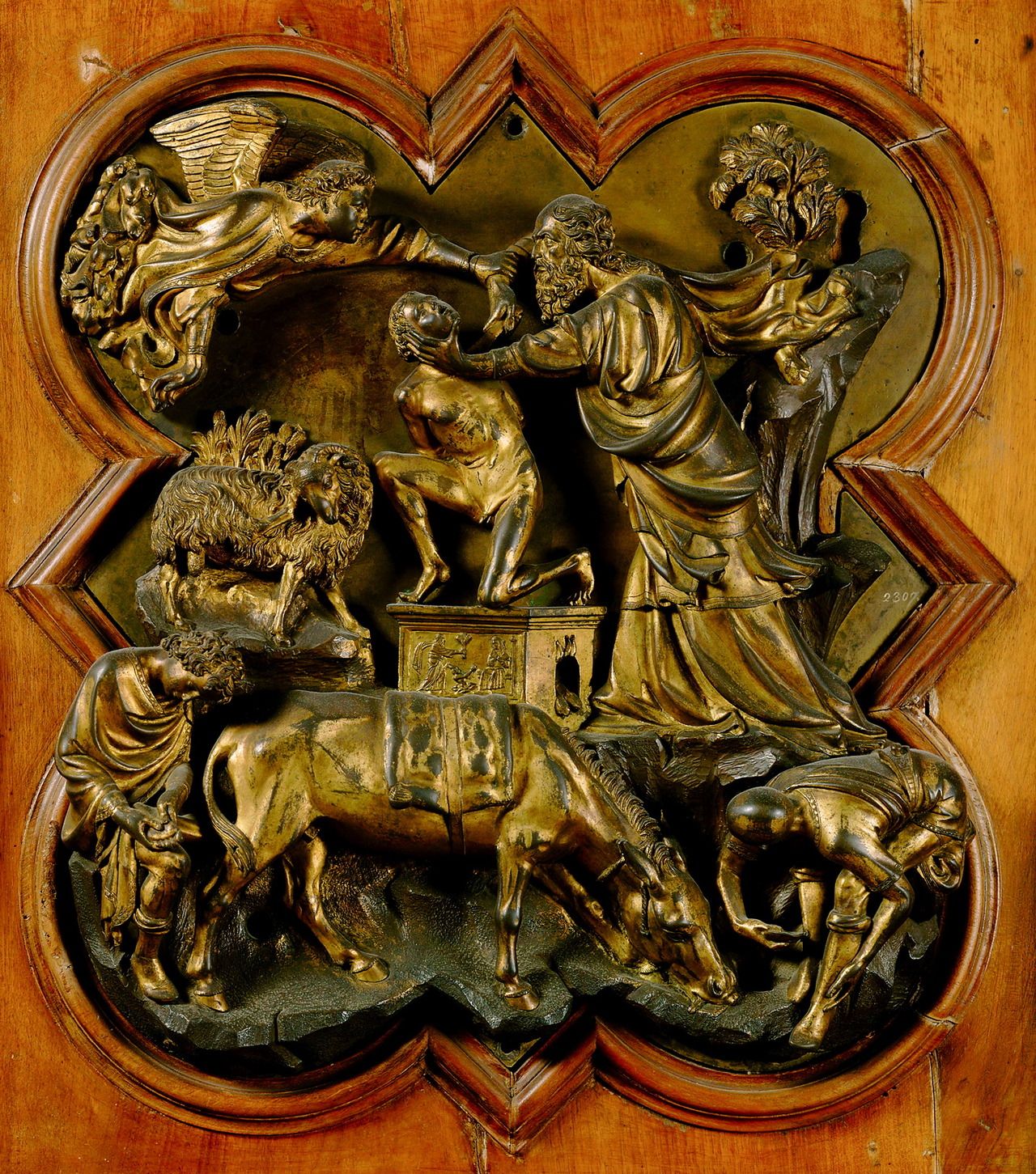
Sacrifice of Isaac 1401 (Loser)

Brunelleschi’s entry in the east door competition in (French Gothic quatrefoil frame a medieval holdover) (cast bronze, old testament)
<p><strong><span>Brunelleschi’s e</span></strong><span style="background-color: transparent;"><strong><span>ntry in the east door competition in (French Gothic quatrefoil frame a medieval holdover) (cast bronze, old testament) </span></strong></span></p>
19
New cards

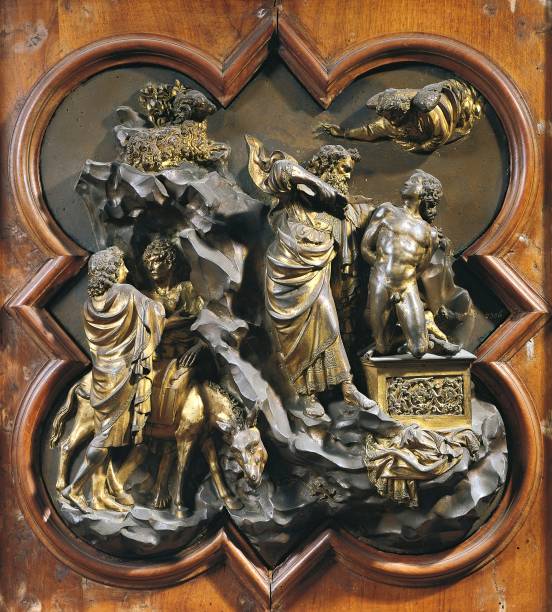
Sacrifice of Isaac 1401 (Winner)

Ghiberti’s entry for the east door competition in (French Gothic quatrefoil frame a medieval holdover) (cast bronze, old testament)

  • 1st “classical” nude since Antiquity, appreciation of the human body, he made them look muscular

  • Ghiberti won due to the classical motifs, illusionism of depth, dramatic intensity, and the artisan virtuosity
<p><span style="background-color: transparent;"><strong><span>Ghiberti’s entry for the east door competition in (French Gothic quatrefoil frame a medieval holdover) (cast bronze, old testament) </span></strong></span></p><ul><li><p><span style="background-color: transparent;"><strong><span>1st “classical” nude since Antiquity, appreciation of the human body, he made them look muscular</span></strong></span></p></li><li><p><span><strong><span>Ghiberti won</span></strong></span><span style="background-color: transparent;"><strong><span> due to the classical motifs, illusionism of depth, dramatic intensity, and the artisan virtuosity</span></strong></span></p></li></ul><p></p>
20
New cards

Linear Perspective

Horizon line, vanishing point, and orthogonals (diagonal lines) which all give an illusion of depth/perspective - thanks to Brunelleschi
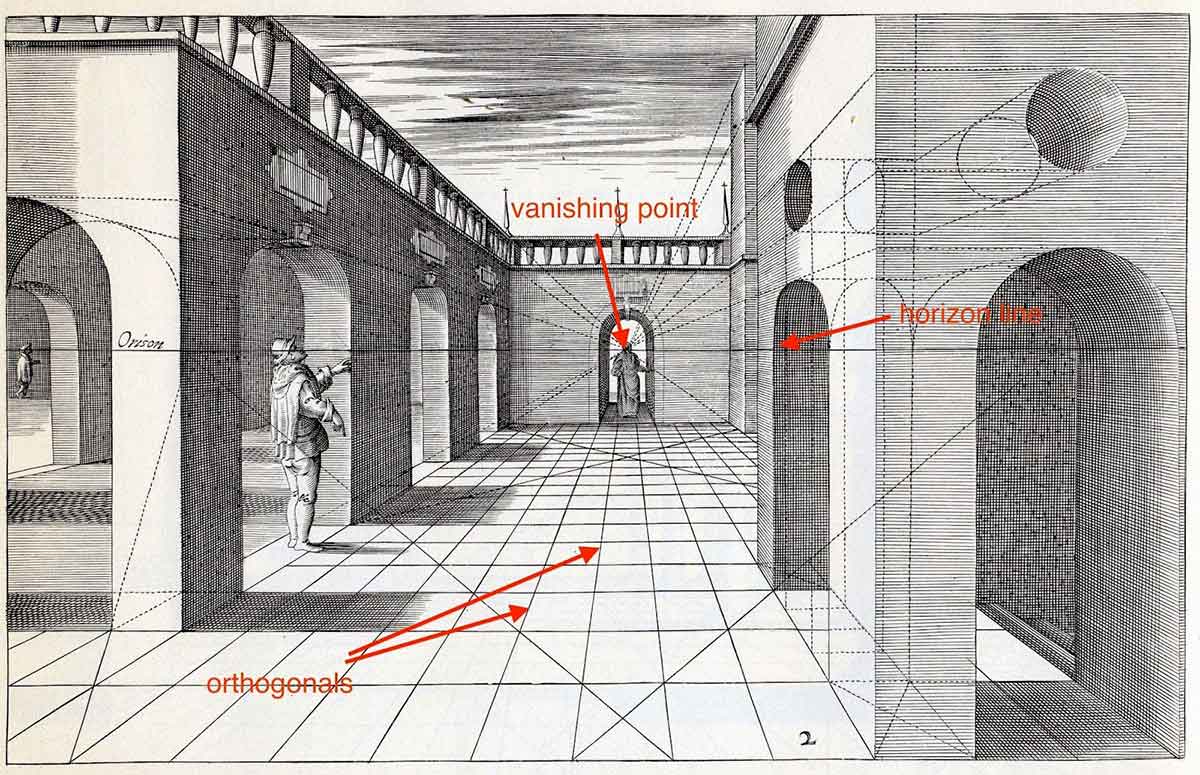
<p><span style="background-color: transparent;"><strong><span>Horizon line, vanishing point, and orthogonals (diagonal lines) which all give an illusion of depth/perspective - thanks to Brunelleschi</span></strong></span></p>
21
New cards

Atmospheric perspective (Aerial perspective)

the farther back an object, the blurrier, less detailed, and bluer it appears

22
New cards

Gates of Paradise 1425-1452

East doors, Baptistery of San Giovanni, Florence made by Ghiberti. It is the entire door.
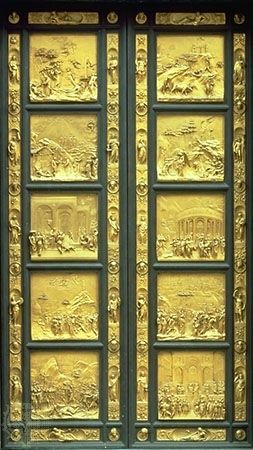
<p><span style="background-color: transparent;"><strong><span>East doors, Baptistery of San Giovanni, Florence made by Ghiberti. It is the entire door. </span></strong></span></p>
23
New cards

Saint Mark 1411-1413

  • Sculpted by Donatello, he reintroduces Greek contrapposto stance to statuary

  • Guild headquarters had artists sculpt their patrons’ saint, basically like their mascot
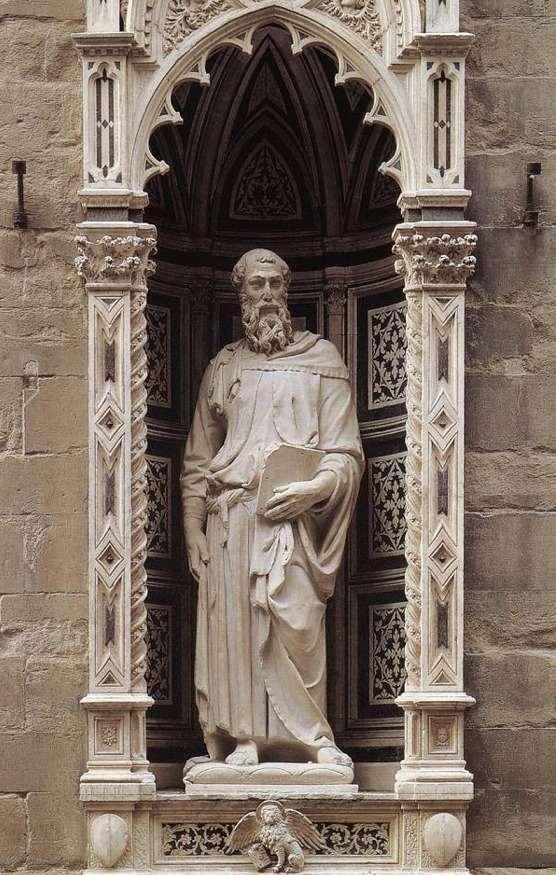
<ul><li><p><span><strong><span>Sculpted by Donatello, he</span></strong></span><span style="background-color: transparent;"><strong><span> reintroduces Greek </span></strong></span><span><strong><span>contrapposto</span></strong></span><span style="background-color: transparent;"><strong><span> stance to statuary</span></strong></span></p></li><li><p><span style="background-color: transparent;"><strong><span>Guild headquarters had artists sculpt their patrons’ saint, basically like their mascot</span></strong></span></p></li></ul><p></p>
24
New cards

David (Medici Family) 1440-1460

  • Fully nude sculpture by Donatello

  • About the biblical character David, from David vs. Goliath

  • Laurel wreath - Was put on victors, a symbol of victory
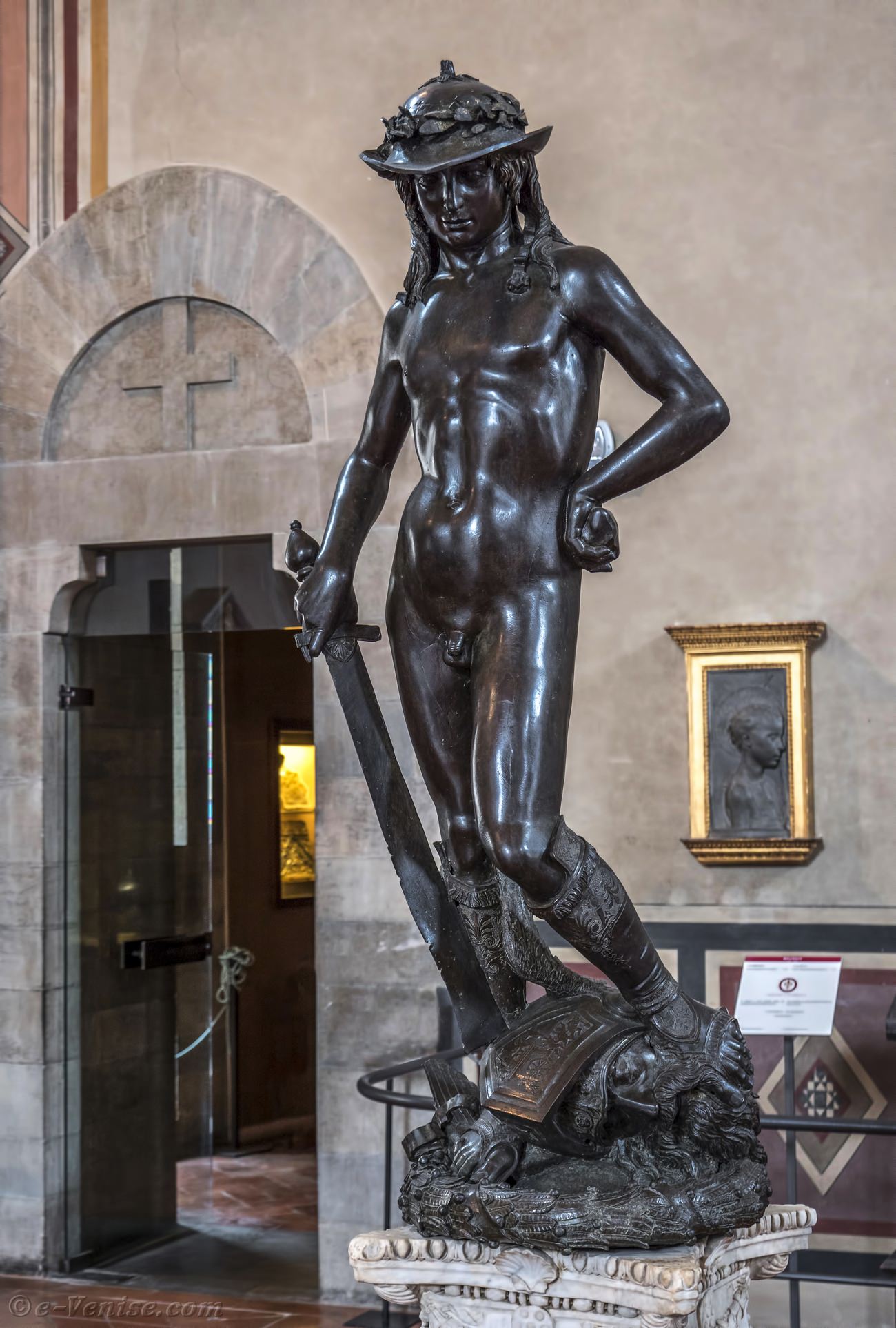
<ul><li><p><span style="background-color: transparent;"><strong><span>Fully nude sculpture by Donatello</span></strong></span></p></li><li><p><span style="background-color: transparent;"><strong><span>About the biblical character David, from David vs. Goliath</span></strong></span></p></li><li><p><span><strong><mark data-color="green" style="background-color: green; color: inherit;"><span>Laurel wreath</span></mark><span> </span></strong></span><span style="background-color: transparent;"><strong><span>- Was put on victors, a symbol of victory</span></strong></span></p></li></ul><p></p>
25
New cards

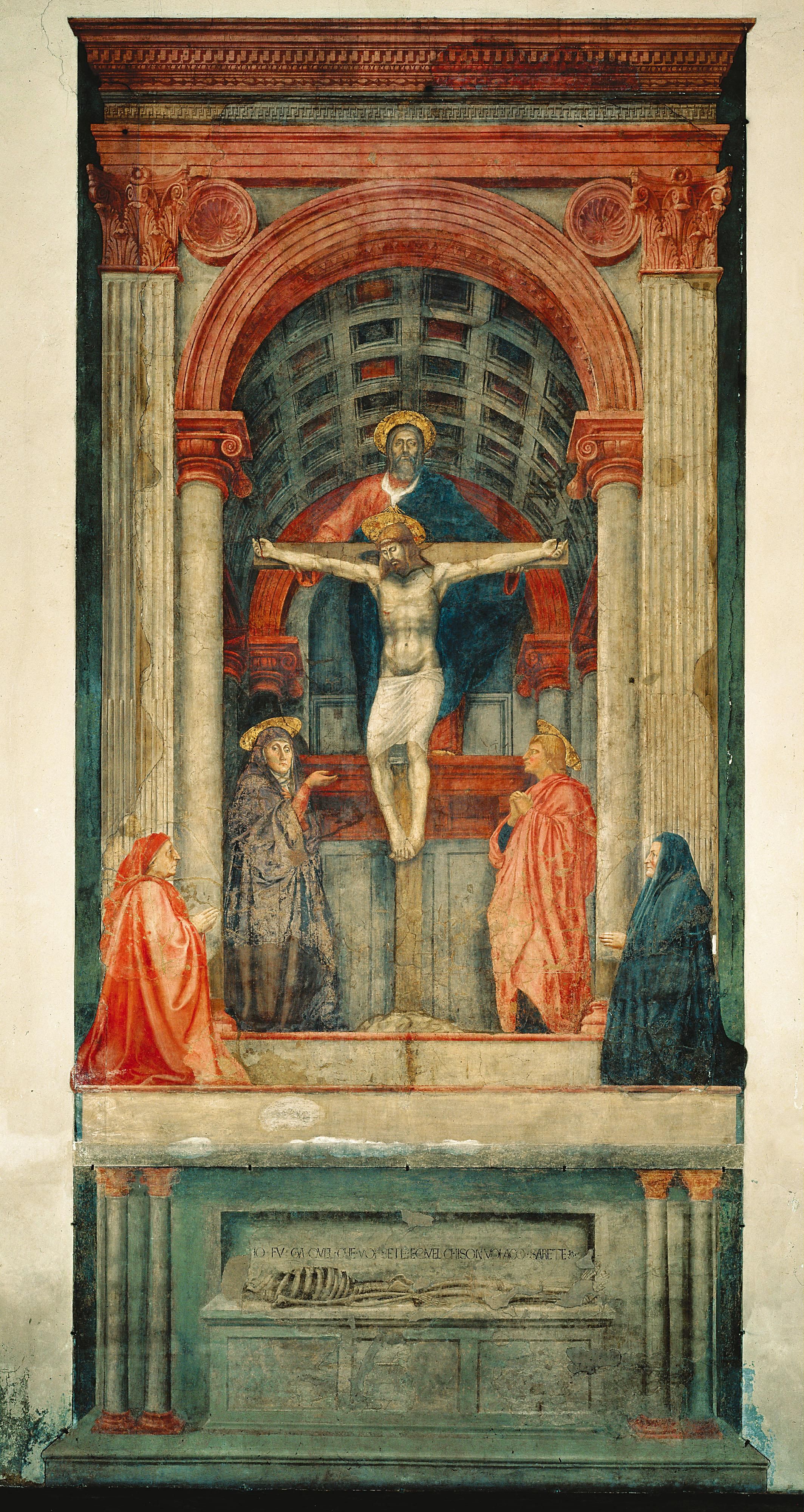
Holy Trinity 1425

Painting by Masaccio

  • “I was once what you are, and what I am you will become”

  • Classical coffered ceiling inside a painted barrel vaulted, fluted pilasters with Corinthian capitals, and columns

  • Used linear perspective

<p>Painting by <strong><span>Masaccio</span></strong></p><ul><li><p><span style="background-color: transparent;"><strong><span>“I was once what you are, and what I am you will become”</span></strong></span></p></li><li><p><span style="background-color: transparent;"><strong><span>Classical coffered ceiling inside a painted barrel vaulted, fluted pilasters with Corinthian capitals, and columns</span></strong></span></p></li><li><p><span style="background-color: transparent;"><strong><span>Used linear perspective</span></strong></span></p></li></ul><p></p>
26
New cards

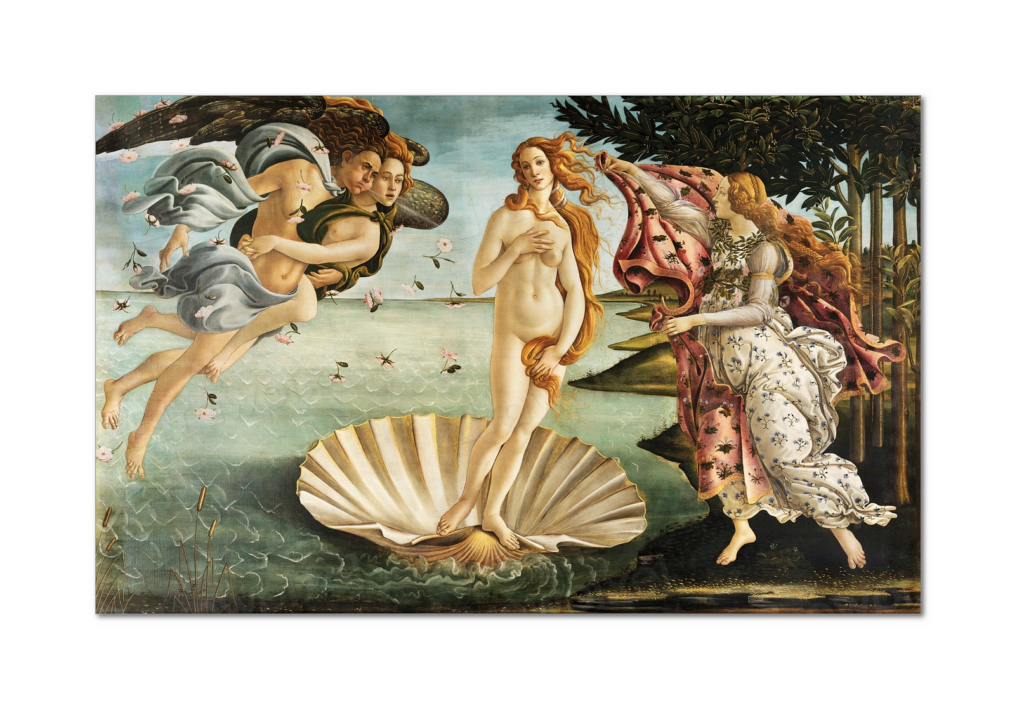
Birth of Venus 1484

Painted by Botticelli

  • Personification - Ideas in human form, learned this in english

  • Tempera was used for this painting

<p>Painted by <span><strong><span>Botticelli</span></strong></span></p><ul><li><p><span><strong><span>Personification</span></strong></span><span style="background-color: transparent;"><strong><span> - Ideas in human form, learned this in english</span></strong></span></p></li><li><p><span style="background-color: transparent;"><strong><span>Tempera was used for this painting</span></strong></span></p></li></ul><p></p>