OCR A-A Level Biology- Chapter 24 Populations and Sustainability
 Studied by 1 person
 Call Kai
 Learn
Learn Practice Test
 Spaced Repetition
 Match
Match Flashcards
 Knowt Play
1/141

There's no tags or description
Looks like no tags are added yet.
Name | Mastery | Learn | Test | Matching | Spaced | Call with Kai |
|---|
No analytics yet
Send a link to your students to track their progress
142 Terms
Limiting factor
(population size) an environmental resource or constraint that limits population growth.
Population growth curve
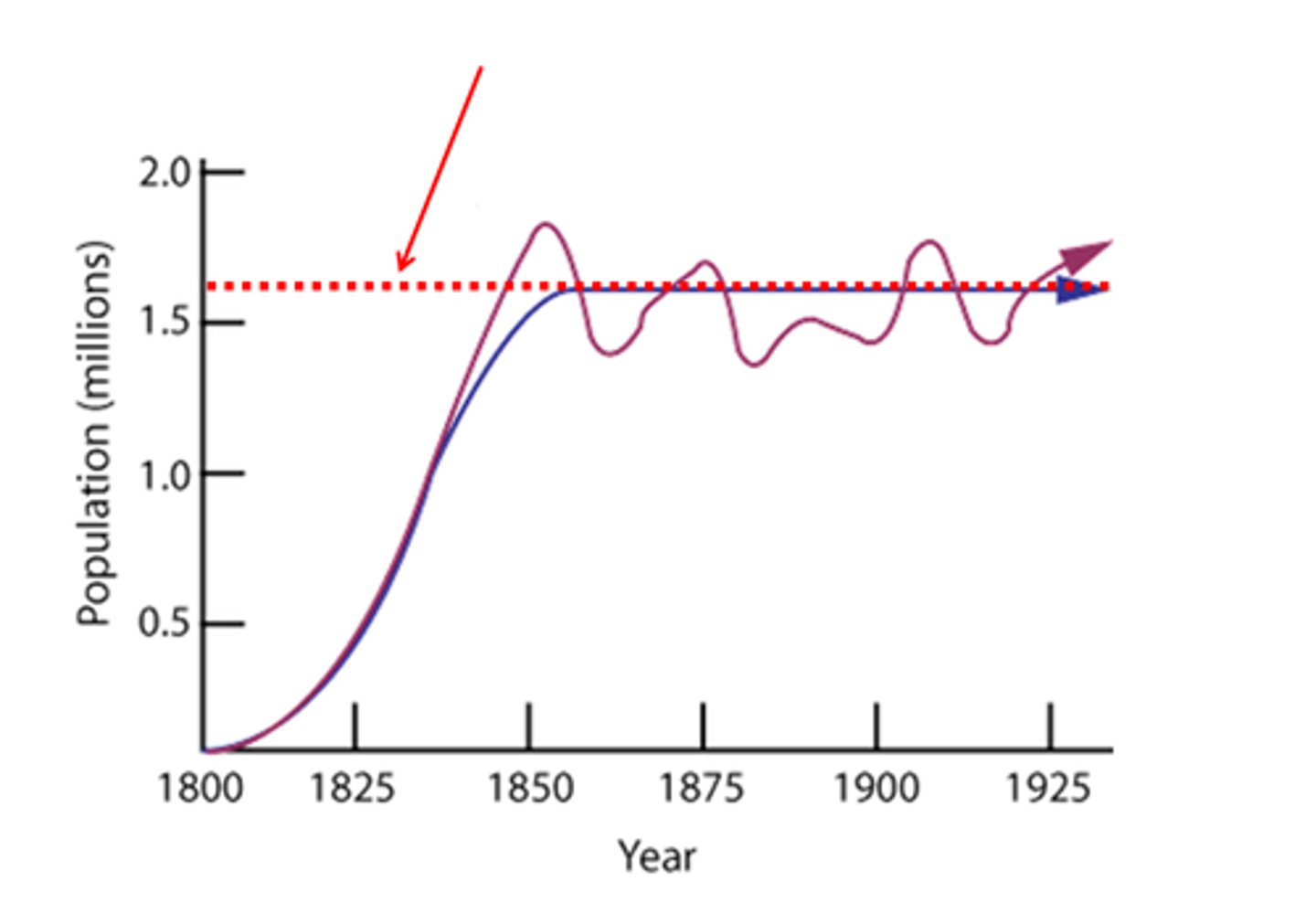
the growth of a new population over time plotted on a graph; regardless of the organism, most natural populations will show the same characteristics.
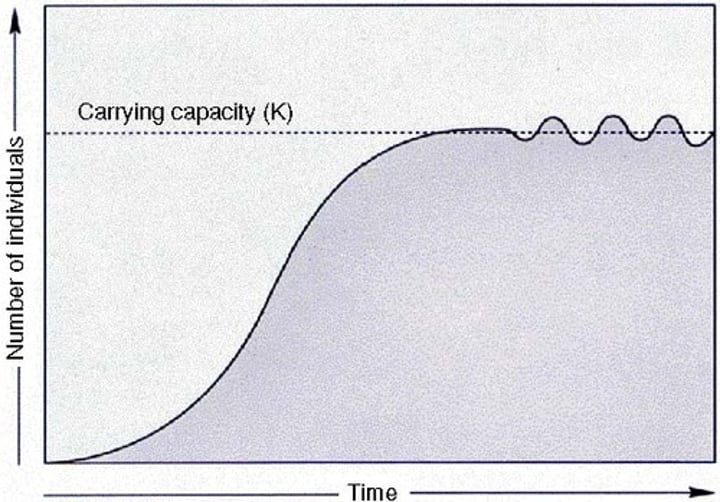
Slow growth
phase 1 of the population growth curve. The small numbers of individuals that are initially present reproduce increasing the total population. Birth rate is higher than death rate, so the population increases in size.
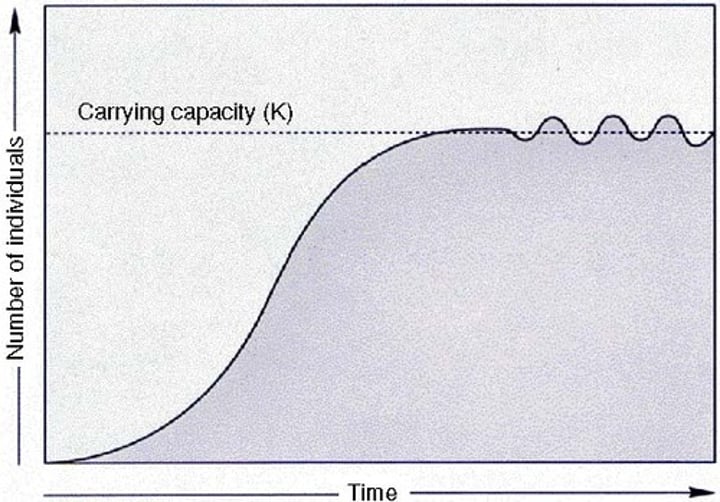
Rapid growth
phase 2 of the population growth curve. As the number of breeding individuals increases, the total population multiplies exponentially. No constraints act to limit the population explosion.
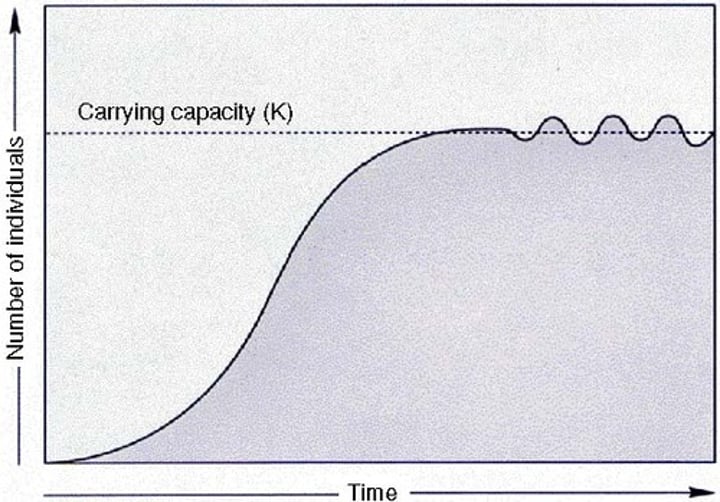
Stable state
phase 3 of the population growth curve. Further population growth is prevented by external constraints. The population fluctuates as limiting factors fluctuate, but size overall remains relatively stable, with birth rates and death rates approximately equal.
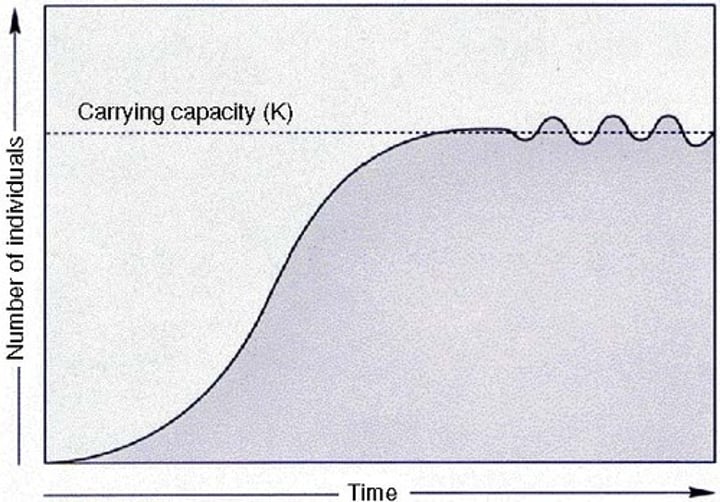
Carrying capacity
the maximum population size that an environment can support.
Immigration
the movement of individual organisms into an area (increases population size).
Emigration
the movement of individual organisms out of an area (decreases population size).
Density independent factors
factors that have an effect on the whole population regardless of its size, e.g. earthquakes, fires, storms.
Population growth (%)
(population change during the period)/(population at the start of the period) x 100.
Interspecific competition
when two or more different species of organism compete for the same resource, resulting in a reduction of the resource available to both populations, and probably a decrease in population size.
Competitive exclusion principle
where two species are competing for limited resources, the one that uses the resources more effectively will ultimately eliminate the other.
Outcompete
a better adapted species will cause the population of a less well adapted species to decrease when competing for a resource.
Intraspecific competition
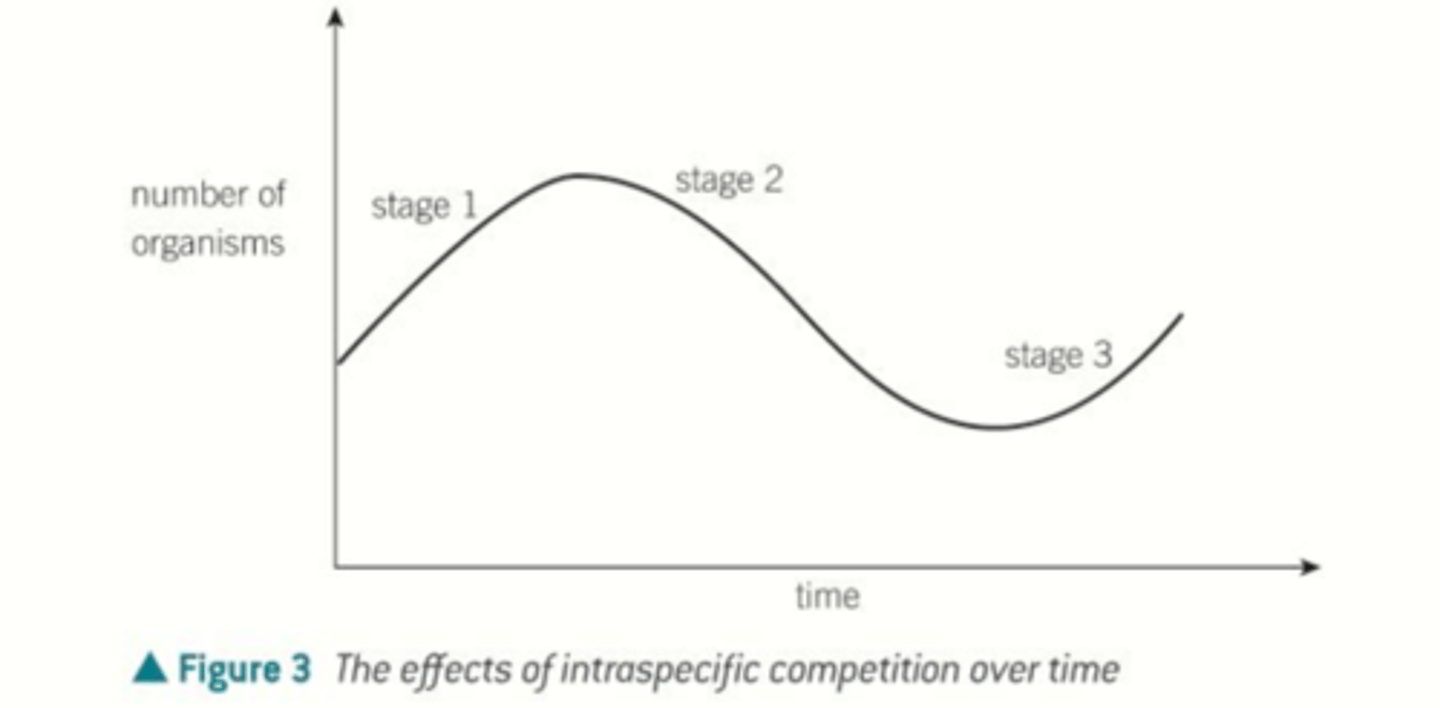
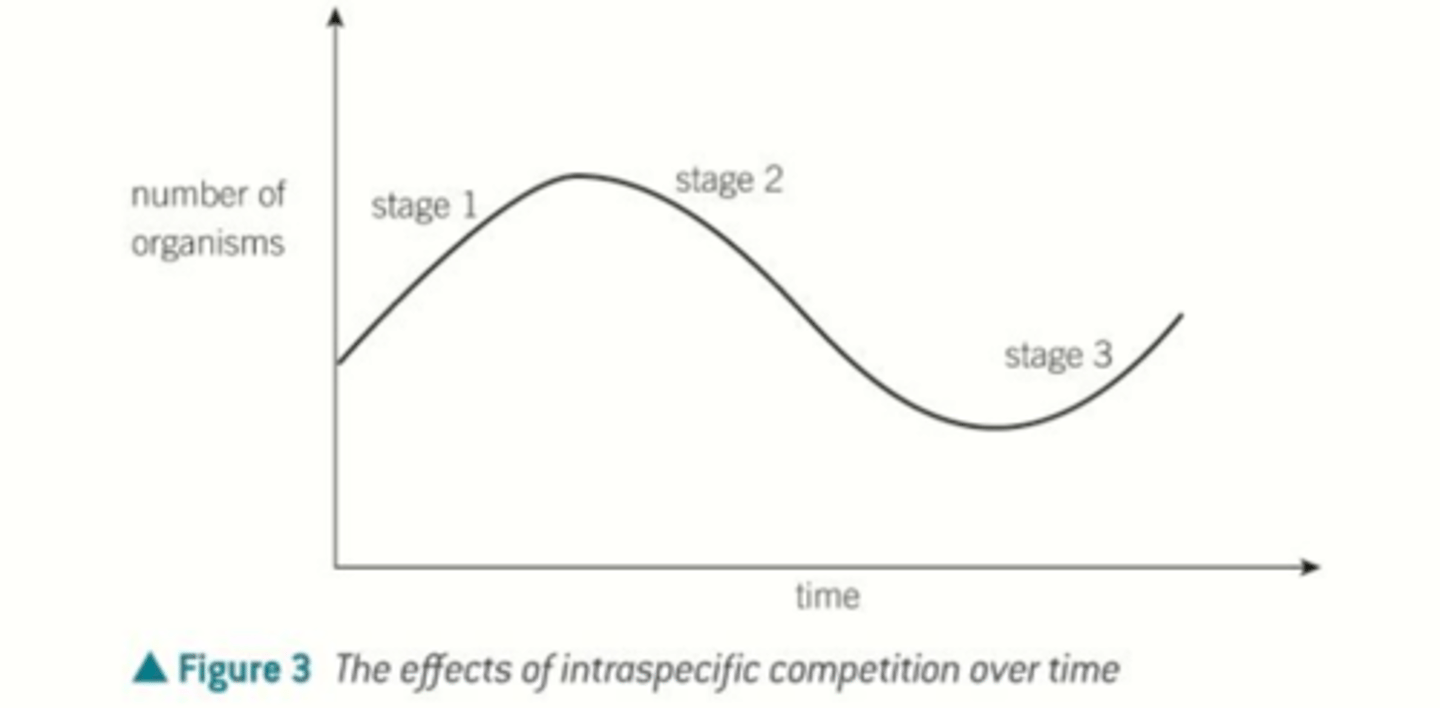
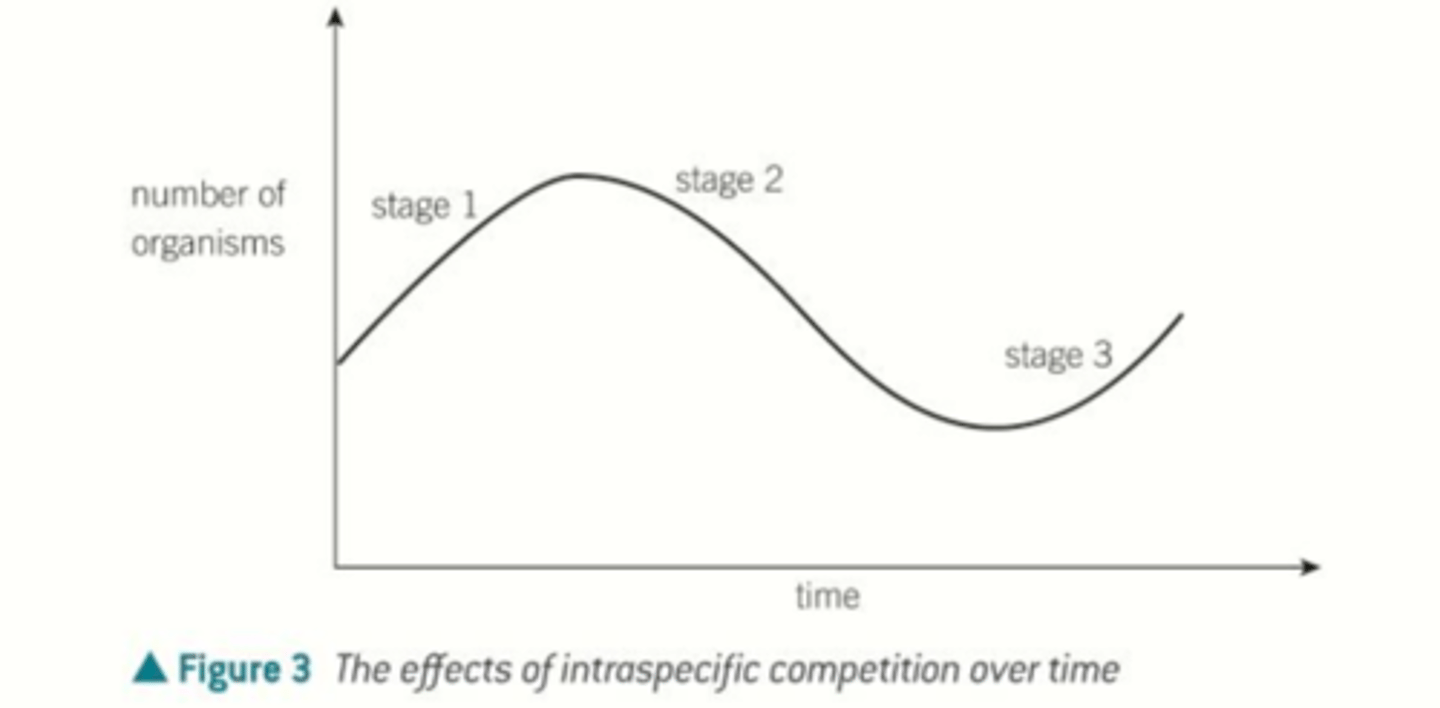
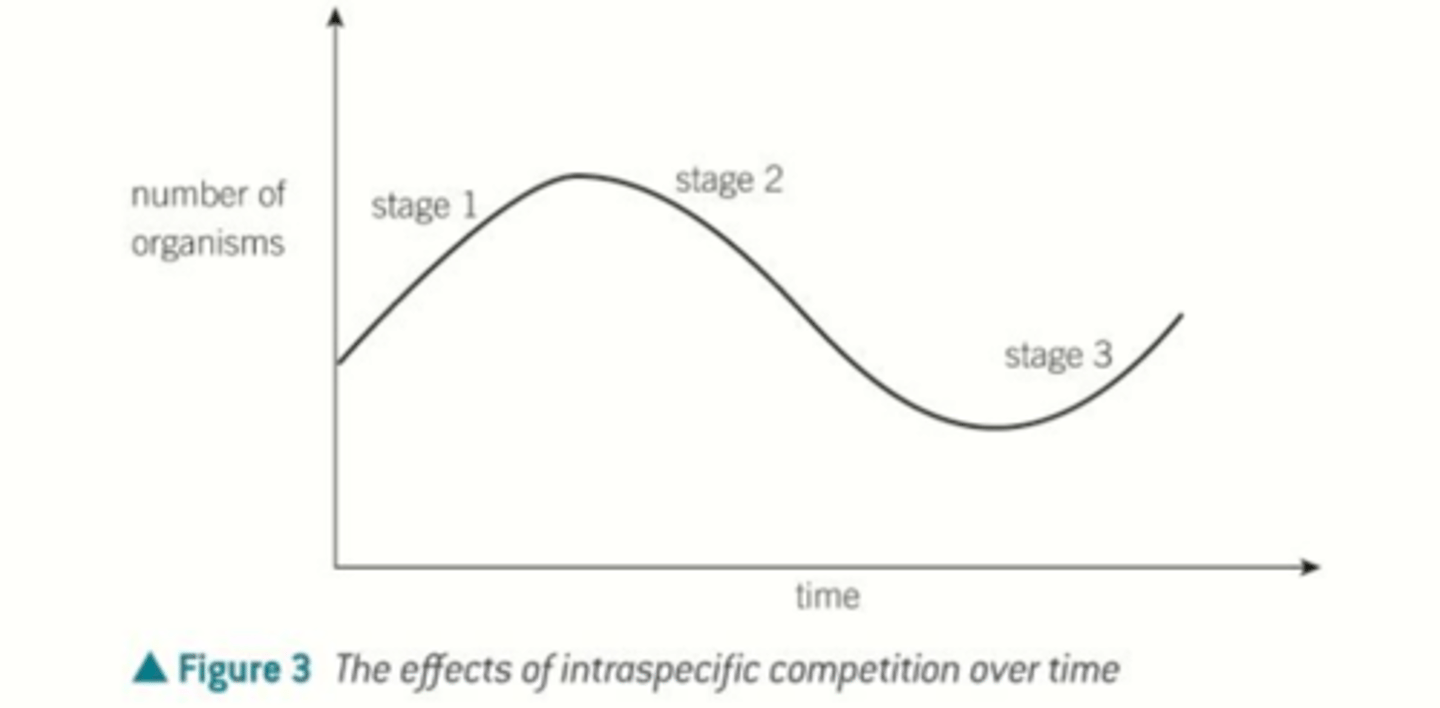
when members of the same species compete for the same resource. Creates a repeating cycle of population fluctuation.
Stage 1
(intraspecific competition over time) when a resource is plentiful, all organisms have enough to survive and reproduce, so population size increases.
Stage 2
(intraspecific competition over time) as a result of the increased population, resources are now limited and the population will decrease in size.
Stage 3
(intraspecific competition over time) fewer organisms are competing for the same resources so there is less competition, leading to an increase in population size.
Predation
the capturing of prey in order to sustain life; a type of interspecific competition.
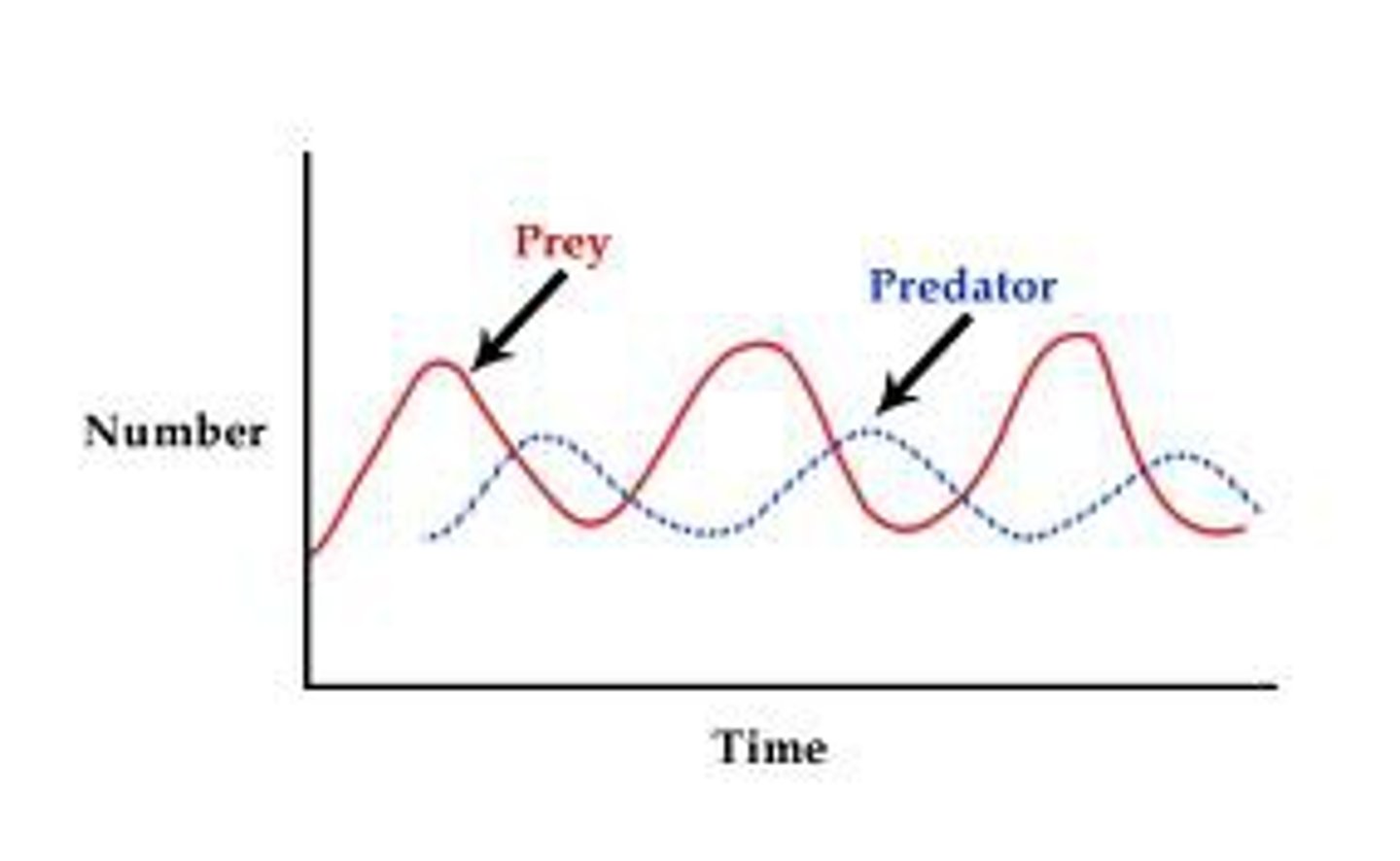
Predator-prey relationship
the peaks and troughs in the size of the prey population are mirrored by the peaks and troughs in the size of the predator population after a time delay.
Conservation
the maintenance of biodiversity through human action or management.
Preservation
protection of an area by restricting or banning human use, so that the ecosystem is kept in its original state.
Sustainable development
economic development that meets the needs of people today, without limiting the ability of future generations to meet their needs.
Reclamation
the process of restoring ecosystems that have been damaged or destroyed; a type of conservation.
Sustainable resource
a renewable resource which is being economically exploited in such a way that it will not diminish or run out.
Coppicing
(small-scale timber production) technique where a tree trunk is cut close to the ground and grows new shoots, which are cut and grow back. The shoots have many uses in small-scale timber production.
Rotational coppicing
(small-scale timber production) a woodland is divided into sections, which are coppiced one by one; the process continues until you reach the first section, which will have grown back, and the process is repeated.
Pollarding
(small-scale timber production) technique similar to coppicing, but the trunk is cut higher up so animals cannot eat the new shoots as they appear.
Large-scale timber production
felling large areas of forest. Trees are replanted, an optimal distance apart, with pests and pathogens managed, and areas of forest left for indigenous people.
Selective cutting
(in large-scale timber production) removing only the largest trees.
Common Fisheries Policy
EU policy where fishing quotas provide limits on the numbers of certain species of fish that are allowed to be caught in a particular area, with the aim of maintaining a natural population of these species that allows the fish to reproduce sufficiently to maintain their population.
1961
year the Masai Mara National Reserve was established
1500
approximate size of the Masai Mara National Reserve (square km).
Savannah
primary type of ecosystem of the Masai Mara National Reserve. The fertile regions close to the Mara are rich grasslands and woodland, with open plains further from the river.
Mara
river running through the Masai Mara National Reserve.
Acacia (bush)
bush which previously dominated the Masai Mara National Reserve, providing a habitat for the tsetse fly. Major tracts have been cleared in the last 50 years, and its presence has been further reduced by elephants, fire and cattle grazing.
Tsetse fly
fly which causes sleeping sickness and lives in acacia bushes.
Grazing
now limited to areas on the edge of the Masai Mara National Reserve, as local tribes are prevented from entering the park.
Cultivation
level around the Masai Mara National Reserve has increased in recent years, with grassland converted into cropland.
Ecotourism
tourism directed towards natural environments, intended to support conservation efforts.
Principles of ecotourism
ensure that tourism does not exploit the natural environment or local communities; consult and engage with local communities on planned developments; ensure that infrastructure improvements benefit locals as well as visitors.
Black rhinos
one of the most critically endangered animals in Africa. They are poached for their horn, particularly for their use in traditional South-East Asian medicine. An active conservation and protection programme includes reserve rangers, communication equipment, vehicles and infrastructure necessary to deter poachers.
Michigan State University
studying the behaviour and physiology of the predator spotted hyena in the Masai Mara National Reserve.
Subalusky and Dutton
completing a flow assessment for the Mara River Basin, with the aim of identifying the river flows needed to provide for both the basic human needs of those who depend on the water, and to sustain the ecosystem in its current form.
Mara Predator Project
catalogues and monitors lion populations throughout the Masai Mara National Reserve, with the aim of identifying population trends and responses to changes in land management, human settlements, livestock movements, and tourism.
Mara-Meru Cheetah Project
aims to monitor the cheetah population in the Masai Mara National Reserve and evaluate the impact of human activity on human behaviour and survival.
Elephants
large populations can be responsible for crop trampling and homestead damage. Other grazing animals may eat crops. Land may be fenced, with a negative effect on natural migration.
Legal hunting
used to cull excess animals. This can successfully maintain population numbers and bring in money for conservation work, but numbers must be constantly monitored.
Migratory wildlife
can pose a threat to livestock by outcompeting, e.g. for grass, and introducing disease into domesticated populations. Competition and disease can also work the other way.
Human population expansion
more homes are required, as well as more land for agriculture. Wildlife density declines as the density of the built environment increases.
Terai region
rich agricultural area along Nepal's southern border with India for 25-30km. The land is fertile, and the main agricultural region of the country.
High population density
major human factor which puts natural resources in the Terai region of Nepal at risk of being overused.
Deforestation
large areas of forest in the Terai region of Nepal have been cleared for agriculture or to sell the timber, primarily as a result of poverty and corruption.
Monsoon flooding
exacerbated by removal of large parts of forest in the Terai region of Nepal; causes severe disruption to communities downstream.
Terai lowlands
define by a belt of well-watered floodplains stretching from the Indian borders in the south to the slopes of the Bhabhar and Siwalik mountain ranges to the north.
25-30
width of the Terai region along the border between Nepal and India (km).
Forestry Stewardship Council (FSC)
an international standard which rewards sustainable forestry.
Sustainable forest management
aims to provide a livelihood for locals, ensure the conservation of forests, and provide the Nepali state with income for general development
(National) legislation
national method of achieving sustainable forest management in Nepal.
Community forestry groups
localised method of achieving sustainable forest management in Nepal. They have achieved increased area and density of forest in the Terai region, improved soil and water quality, increased retail price of forestry products, employment, income generation, sustainable wood fuel sources and securing biodiversity.
Local (community forestry) groups
develop their own operational plans, set harvesting rules, rates and prices and determine how surplus income is distributed or spent.
Cooperative networks
local community forestry groups / small forestry businesses can work effectively together.
Farming the hills
(management strategies for sustainable land use in the Terai) produce fruit and vegetables in the hills to prevent intensification of the Terai.
Improve irrigation
(management strategies for sustainable land use in the Terai) improve facilities to enhance crop production.
Nitrogen-fixing crops
(management strategies for sustainable land use in the Terai) grow crops such as legumes and pulses to enhance soil fertility.
Resistant crops
(management strategies for sustainable land use in the Terai) grow crops resistant to soil, climatic and biotic challenges using biotechnology and genetic engineering.
Fertilisation (techniques)
(management strategies for sustainable land use in the Terai) improve techniques to fertilise crops and enhance yields, e.g. using manure to improve nutrients in the soil.
Peat bog
a region of wet, spongy ground that contains decomposing vegetation; takes many thousands of years to form. If undisturbed, it is a carbon sink.
Carbon sink
store of carbon dioxide.
Peat
once dried, it can be used as a fuel, releasing thermal energy and carbon dioxide. Farmers mix it with soil to improve soil structure and increase acidity. Mainly composed of wetland vegetation, e.g. mosses, sedges, shrubs.
Peat production
plant material is inhibited from fully decaying by acidic and anaerobic conditions, normally in wet or boggy areas.
Peat ecosystem
sphagnum mosses, bog cotton/cottonsedge, heathers; butterflies, moths, dragonflies, and damselflies; birds nest and bring up chicks; the abundance of insects, spiders, frogs and nutritious vegetation and berries provides food for many species, and areas of open ground provide hunting ground for birds of prey.
Peat benefits
must be conserved to maintain biodiversity, and contribute to flood management, erosion control downstream, and carbon storage.
Drying out of peat
due to afforestation, peat extraction, and agricultural intensification including land drainage.
Conserving (lowland peat) bogs
the key to conservation is maintaining or restoring appropriate water levels.
Ditch blocking
(conserving peat bogs) method which may be required for a time, to raise the water table to the bog surface and ensure that the peat and vegetation of the bog surface is undisturbed and as wet as possible.
Tree seedling removal
(conserving peat bogs) trees have a high water requirement due to transpiration, so have the ability to remove water from peatland, and may be removed from the area to maintain water levels.
Controlled grazing
(conserving peat bogs) grazing ensures a diverse wetland surface in terms of structure and species composition, providing a wide range of habitats for many rare insect species.
The Wildlife Trusts, Natural England, RSPB
organisations working to preserve important peat ecosystems in the UK.
Environmentally sensitive ecosystems
regions/ecosystems which are less resistant to changes than others.
Management techniques
techniques to manage environmentally sensitive ecosystems, which include limiting areas tourists can visit; controlling movement of livestock; anti-poaching measures; replanting forests and native plants; limiting hunting through quotas and seasonal bans.
(The) Galapagos (Islands)
an archipelago of volcanic islands that rise up from the bed of the Pacific Ocean 1000km west of Ecuador. They have never been connected to the mainland, so all flora and fauna had to cross the ocean.
Galapagos giant tortoise
Chelonoidis nigra. Reptile species unique to the Galapagos Islands which grows to over 150cm in length.
Flightless cormorant
Phalacrocorax harrisi. Bird species unique to the Galapagos Islands, whose reduced wings are better for fishing underwater, as flight is unnecessary to escape mainland predators.
Marine iguana
Amblyrhynchus cristatus. Reptile species unique to the Galapagos Islands with the ability to swim effectively. It has black or grey skin to bask in the sun and raise the body temperature before foraging for food in the cool sea.
Coastal zone
distinct region of the Galapagos Islands which contains salt-tolerant plant species such as mangrove and saltbush.
Arid zone
distinct region of the Galapagos Islands which contains drought-tolerant plant species such as cacti and the carob tree.
Humid zone
distinct region of the Galapagos Islands which contains dense cloud-forest. These trees support populations of mosses and liverworts.
Galapagos National Park
established in 1959 to protect the Galapagos Islands. Park rangers; limiting human access; controlling migration; strict control over movement of introduced animals.
Antarctica
the coldest, highest, driest, windiest and emptiest continent, almost entirely covered by an ice sheet which averages 2km thick.
2
average thickness of the Antarctic ice sheet (km).
2(%)
percentage of Antarctica which is ice-free and can therefore support plant life.
70(%)
percentage of the world's fresh water contained in the Antarctic ice sheet.
Blubber
thick insulating layers which all endothermic animals on and around Antarctica rely on, including whales, seals and penguins.
Emperor penguin
Aptenodytes forsteri. The only endothermic animal that remains on Antarctica for the winter.
Antarctic midge
Belgica Antarctica. Wingless midge which is the largest invertebrate (5mm) that lives on Antarctica all year.
Plants (in Antarctica)
can only grow in the ice-free regions of Antarctica.
Lichens and moss
plants in Antarctica, which grow in any favourable niche such as sand, soil, rock and on the weathered bones and feathers of dead animals.
Algae
photosynthetic organisms able to grow in many sheltered areas of Antarctica.
Global warming (and ozone depletion)
planet-wide impact of human activity which causes some parts of the coastal ice sheet to break up.
Hunting and fishing
whale and seals stocks have been depleted, as well as stocks of some aquatic species of Antarctica.
 Note
Note  Flashcards (50)