SCI part 2
 Call Kai
 Learn
Learn Practice Test
 Spaced Repetition
 Match
Match Flashcards
 Knowt Play
1/17

There's no tags or description
Looks like no tags are added yet.
Name | Mastery | Learn | Test | Matching | Spaced | Call with Kai |
|---|
No analytics yet
Send a link to your students to track their progress
18 Terms
Autonomic Dysreflexia/Hyperreflexia:
At what level?
What type of stimuli and where?
How do you diagnose it?

Autonomic Dysreflexia/Hyperreflexia:
More common w/ acute/chronic? How many months?
More common w/ incomplete/complete?

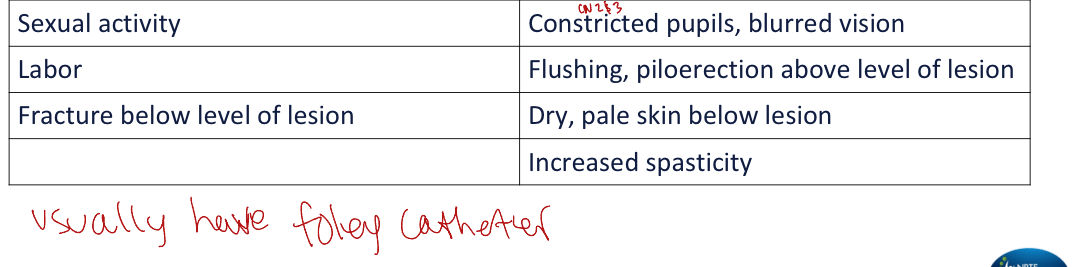
Causes of Autonomic Dysreflexia and Signs/Symptoms: part 1
What 3 stimuli’s? What are the 3 s/s?

Causes of Autonomic Dysreflexia and Signs/Symptoms: part 2
What activity? What 2 s/s?
Exertion? What 2 s/s?
What injury and where? What 2 s/s? Increased what?
What do these pts usually have?
Intervention:
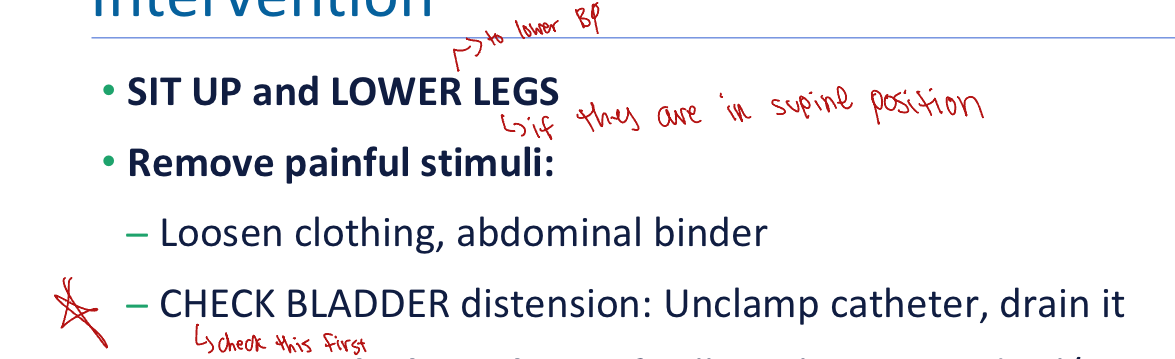
What do you do first if they are in supine?
Then what do you check first?
Then after that then what else?
Intervention:
What else do you monitor as you are checking them? And then do what ?

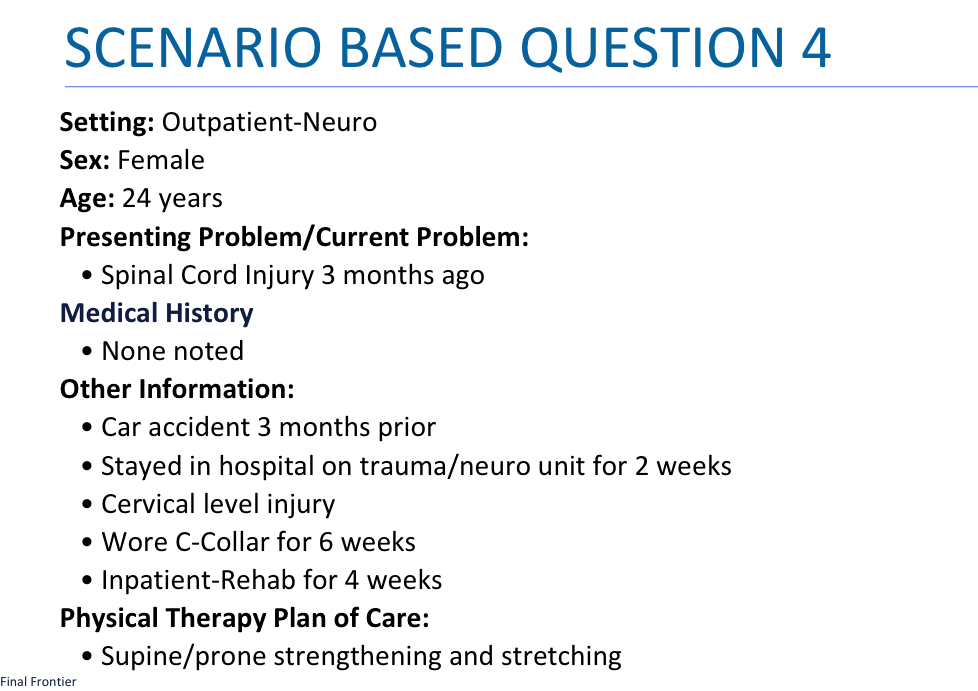
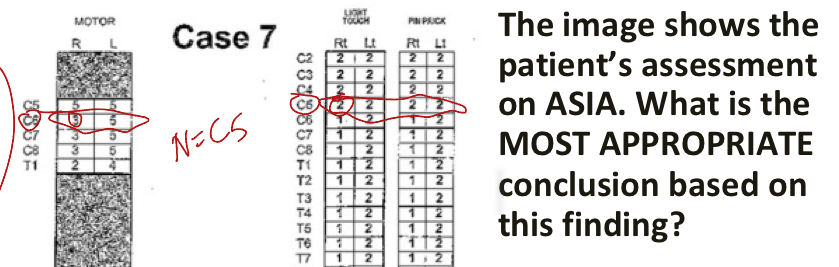
C. C5 ASIA D
Which of the following is MOST LIKELY expected to be present in this case?
A. Loss of ability to raise eyebrows
and chew food. B. Positive Babinski and clonus C. Flaccidity of lower extremity
muscle affecting gait D. Loss of ability to move eyes in
vertical direction
B
During the treatment session today, the physical therapist had to stop the intervention because the patient developed blurriness in the vision and reported a severe headache. The physical therapist suspects the patient to have autonomic dysreflexia. What other signs and symptoms are MOST LIKELY to be present in that case? A. Bradycardia and hypertension B. Hypotension and bradycardia C. Tachycardia and hypertension D. Hypotension and tachycardia
A
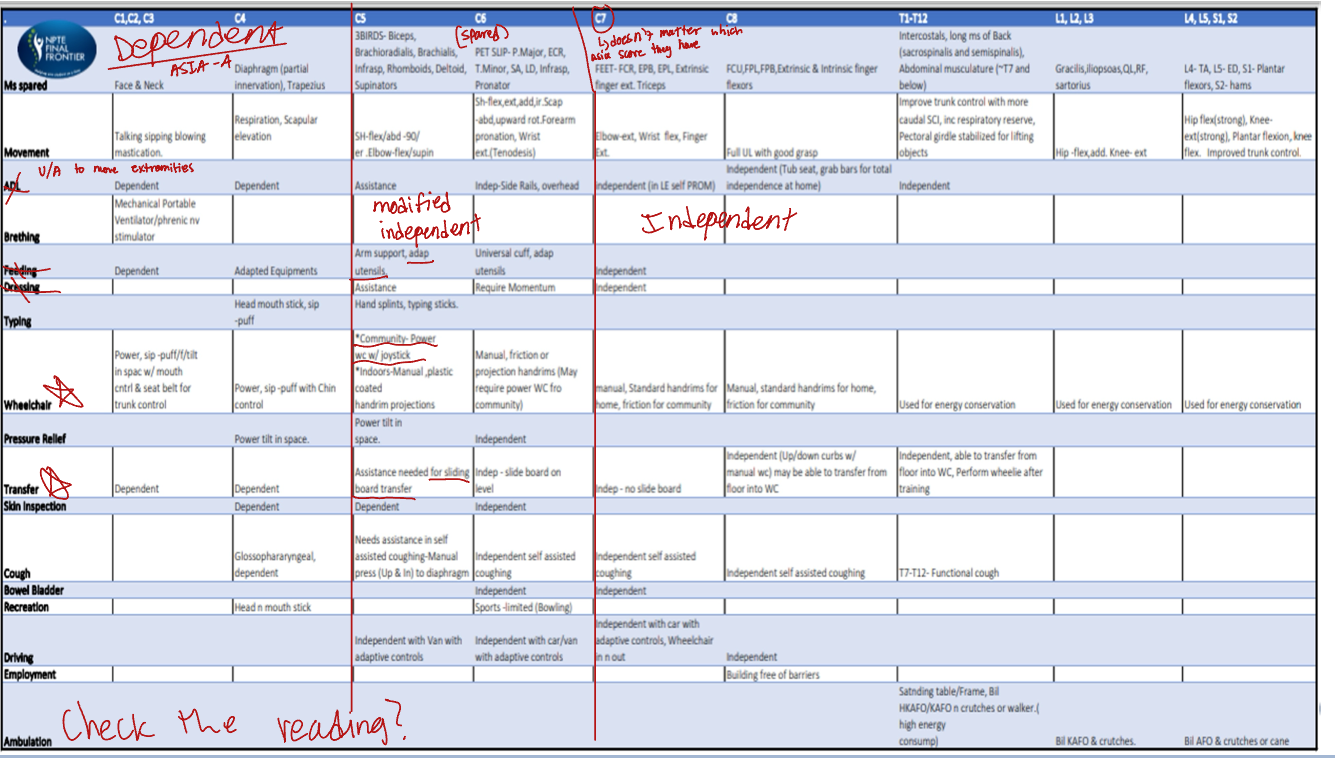
study this
Transfers and Wheelchairs:
C1 - C4?
C5 ?
C6?

Transfers and Wheelchairs:
C7: even/uneven?
C8?

Transfers and Wheelchairs:
T1?
T4?
L3?

A patient has been diagnosed with C8 ASIA A injury. Which of the following is MOST APPROPRIATE about the clinical presentation of this patient? A. Patient will be able to transfer independently on level surfaces B. All sensation will be present at S4-S5 level C. Patient will not be able to perform elbow flexion and wrist
extension D. Some motor function will be present at S4-S5 level
A. Patient will be able to transfer independently on level surfaces
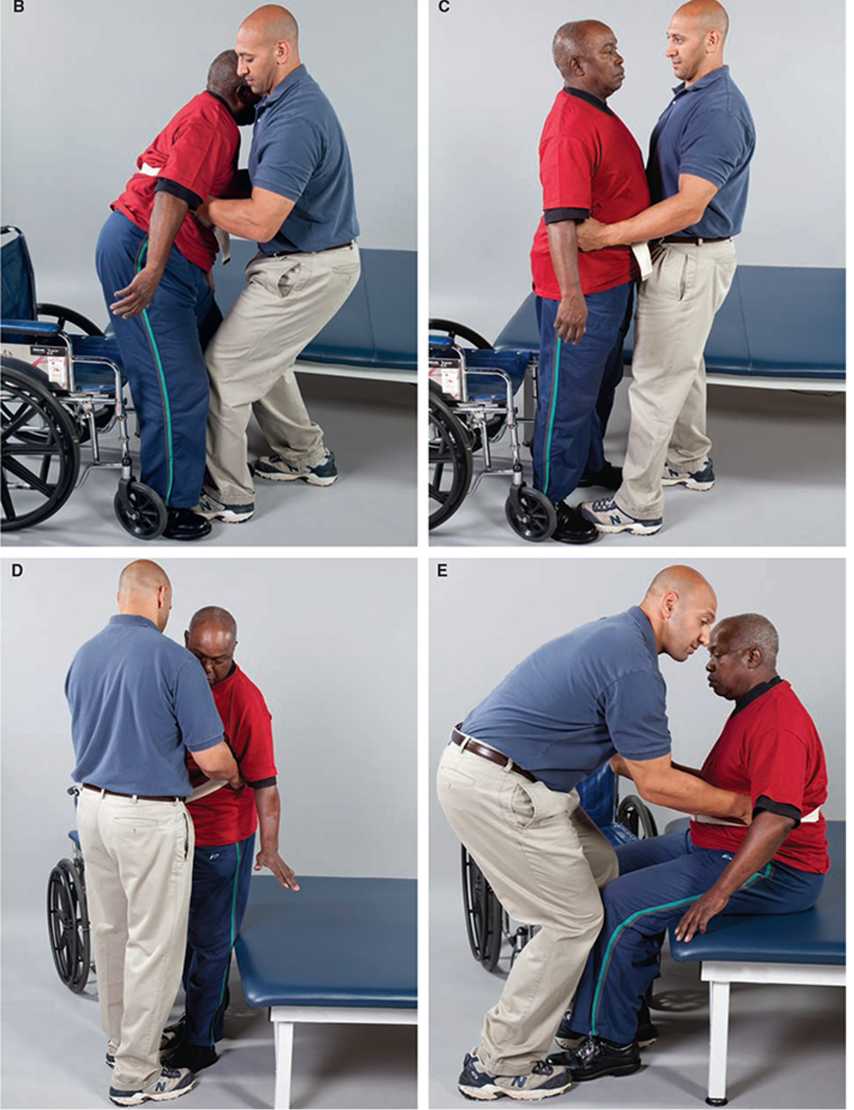
Stand pivot transfer
L3
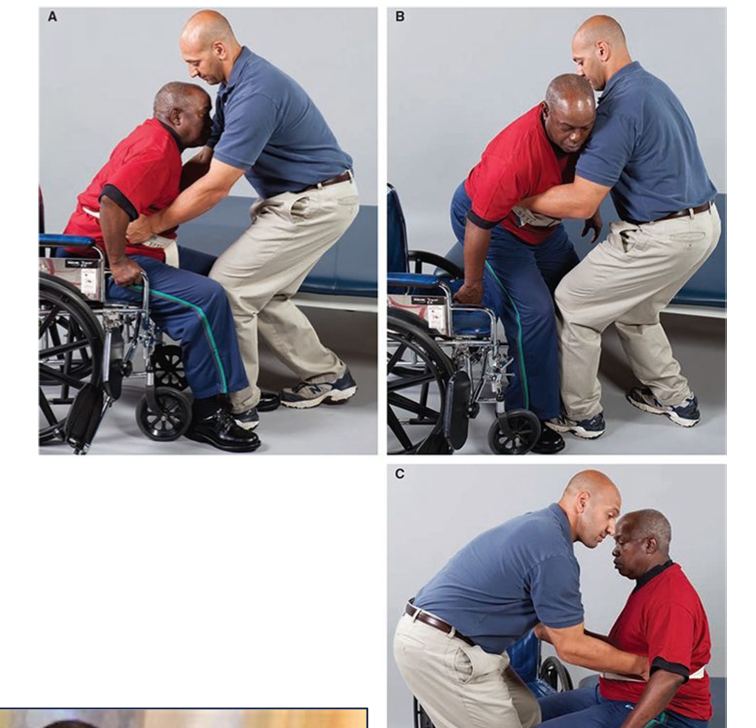
Squat pivot
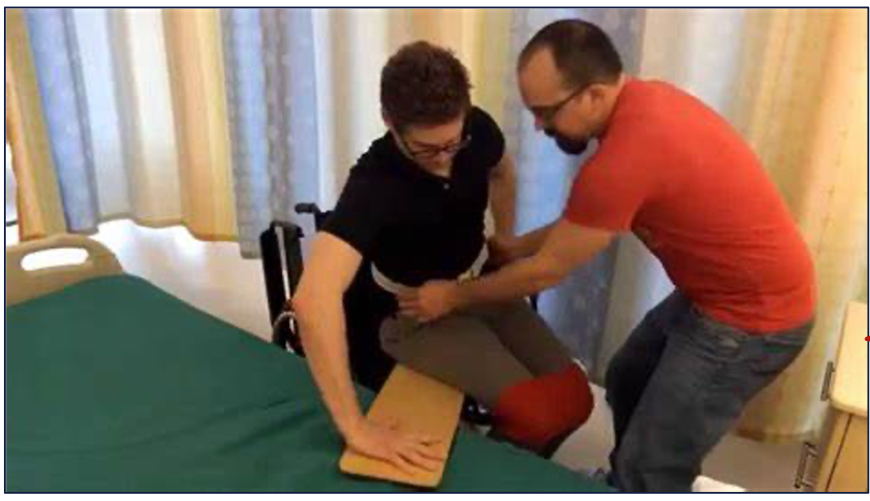
dependent sliding board
C5

