Light and optics quiz - 1
 Call Kai
 Learn
Learn Practice Test
 Spaced Repetition
 Match
Match Flashcards
 Knowt Play
1/26

There's no tags or description
Looks like no tags are added yet.
Name | Mastery | Learn | Test | Matching | Spaced | Call with Kai |
|---|
No analytics yet
Send a link to your students to track their progress
27 Terms
Pythagoras ( Greek mathematician )
Light comes from our eyes
Euclid ( Greek )
Light travels in straight lines when striking a plane mirror, the angle of reflection and the angle of incidence is equal
Ptolemy ( Greek astronomer )
How light beams bend when they go through air to glass ( refraction )
Al - Haythem ( Arab scientist )
Light bounces off objects and to our eyes
Sir Issac Newton ( English scientist )
White light is made of a mixture of different colors of light and when passing through a prism, it splits up
Albert A. Michelson ( scientist )
Calculated the speed of light by placing 2 mirrors on top of 2 mountains, measured the distance, and shone a light to 1 and the other.
Speed of light
299 798 km/s
Formula
distance / speed = time ( seconds )
or
distance / speed = j —> j / 60 = time ( minutes )
Optical devices
Any device that uses light
Refracting telescope
Lens on each end of the tube (larger = objective lens ). Gathers and focuses rays to eyepiece
Reflecting telescope
Large circular mirror that curves in ( concave mirror ) that reflects the light to a lens which then directs it to the eyepiece
Ray
Light travelling from its source in a straight line that represents the path of light
Transparent
All light can get through
Translucent
Some light can go through
Opaque
No light can go through ( reflects or absorbs )
Luminous
Produces light
Non - luminous
Doesn’t produce light
Regular reflection
Happens when rays hit a smooth surface. Reflected at the same angle ( rays are parallel )
Diffuse reflection
Happens when rays hit an uneven surface. Reflected in different angles
Concave mirror
Curves inward
images are closer / larger
collects light from a large area to bring it into a focal point
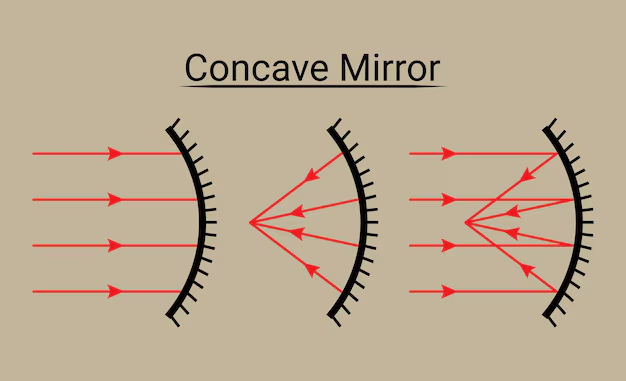
Between mirror and focal point
Image = upright and large
Past focal point
Image = upside down and small
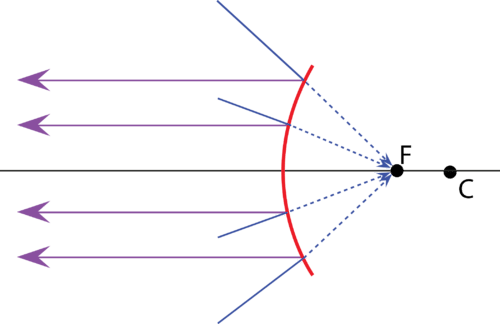
Convex mirror
Bluges out
images are smaller and further away
focal point behind
Lens
Piece of curved glass or any other transparent material
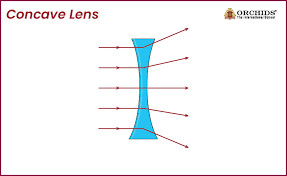
Concave lens
Thinner in the centre than the edges
diverges light rays
Convex lens
Curves outward and is thicker in the middle
converges light rays
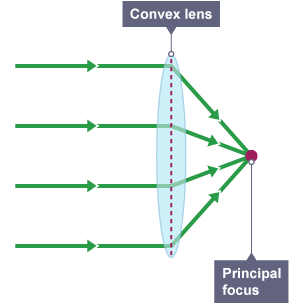
Convex lenses uses
1) acts like a light collector
collects and focuses light
2) forms a real image
rays meet at a point and image can be projected onto a screen

