PSYC315 - MT1
 Studied by 6 people
 Call Kai
 Learn
Learn Practice Test
 Spaced Repetition
 Match
Match Flashcards
 Knowt Play
1/141

There's no tags or description
Looks like no tags are added yet.
Name | Mastery | Learn | Test | Matching | Spaced | Call with Kai |
|---|
No analytics yet
Send a link to your students to track their progress
142 Terms
Implicit/Explicit Distinction
-Describes levels of analysis
-Implicit: What's uncontrollable (automatic) and not accessible via introspection. What's happening below the surface: Automatic, unconscious, uncontrollable. What's happening below the surface
-Explicit: Controllable and accessible via conscious thought: what's observable, above the surface
2 levels of processing
Explicit: Deliberate, intentional, consciously accessible
Implicit: Automatic, unconscious, uncontrollable
Social categories
-Social categories are defined over a number of dimensions that differ in vastly different properties including where one is born, a person's belief system, a person's biological properties (e.g. gender/sex, skin colour, physical build, etc.)
-Political orientation is a social categories
-Sexual orientation
-Biological and social construction of sex/gender
-Sports teams they root for
Function of Social Cateogires
-Learning
-Induction (evaluation/attitudes and stereotypes)
-Facilitates social interaction (helping, friendships)
-Our representations of social categories allow us to learn more efficiently - we can reason about an individual with whom we never met simply knowing about their social group membership(s)
-We tend to prefer to interact more with ingroup members relative to outgroup members even when the ingroup members are strangers
Social cognition
-how people think about themselves and the social world; more specifically, how people select, interpret, remember, and use social information to make judgments and decisions
-Social cognition is "a sub-topic of social psychology that focuses on how people process, store, and apply information about other people and social situations. It focuses on the role that cognitive processes play in social interactions
Intergroup cognition
-How we think about social groups based on their association
Intergroup bias
-The tendency to favor in-groups (with which we identify) and undervalue out-groups (that we do not identify with)
-May come from parents, peers, media, personal experience
Understanding intergroup bias: Key questions to address
-When do such biases begin to form?
-What role does experience play?
-How do such biases change across development?
-How do such biases shape behaviour and other aspects of cognition?
Sources of intergroup cognition
-Experience
-Peers
-Family
-Media
-Biology
-Interaction (culture fills in content)
Development of intergroup cognition
-Aboud (2003):
- ingroup liking emerges before dislike of outgroup (explicitly)
- age 3/4 for ingroup liking, outgroup dislike after age 7
-Bigler, Jones, Lobliner (1997):
- children randomly chose out of a hat a group and they found that children seem to spontaneously form categories and prefer ingroup members (by age 6) and this is related to their levels of self esteem
-With age explicit intergroup preferences changes
-Implicit intergroup preferences remains fairly constant
Hardwired/automatic/inevitable to like us vs. them
-With age, explicit intergroup preferences changes but implicit intergroup preferences remains fairly constant
Effect of contact
-Children's explicit bias is influenced by the demographics of their communities/schools
-In one study, children were shown ambiguous drawings and asked to talk about the motivations/intentions of the actor/actress who finds the money and the motivations of the person standing behind a swing (e.g. perhaps he/she pushed the person down or perhaps he/she will help the person up)
-They looked at whether the intentions ascribed to the minority (black) actor were more hostile than intensions ascribed to the majority (white) actor
-Children in an all white school attributed more hostile intentions to the black transgressor and children in racially mixed groups attributed intentions to the white and black transgessors equally.
-Conclusion: contact matters
Development of explicit social group preferences
-A paradox
-Race is one of the earliest groups children represent and for adults is the basis of much discrimination and intergroup conflict
-Developmental decrease in negative attitudes towards the out group: race bias emerges by age 3 or 4 and peaks near age 7 but declines through adolescence
-Developmental increase in negative behaviour towards the out group: fewer interracial interactions and friendships. Discrimination in the form of housing, employment, healthcare, and education and other subtle ways
-Often negative behaviour towards outgroup races is subtle, small differences in langauge used with vast implications for judgements made
Limitations of explicit measures of social group preferences
-Access
-Social desirability
1) Assumes we don't harbour feelings outside of our awareness
2) Assumes we're never motivated to conceal our feelings
-We know both are false
Measuring implicit bias
-The Implicit Association Test
-Reaction time measure, measures strength of association between concepts
-This method is not subject to social desirability concerns - people can't easily fake their implicit attitudes about social groups
-Stronger association = faster, more accurate responses
Implicit preferences and behaviour
-Friendliness
-Hiring
-Voting
-Medical Treatment
Learning of social group preferences
2 Possibilities:
1) -Learned gradually
-Parents, peers, media, personal experience influence this
-Both graphs show gradual change over time, need more data to know what the real relationship is with the change in bias over development - can help to identify optimal times to focus on changing such bias
2) Early and automatic learning of ingroup preference, due to mere familarity. Intergroup preferences may be an automatic consequence of social categorization. We immediately prefer someone in our ingroup and dislike people in outgroups
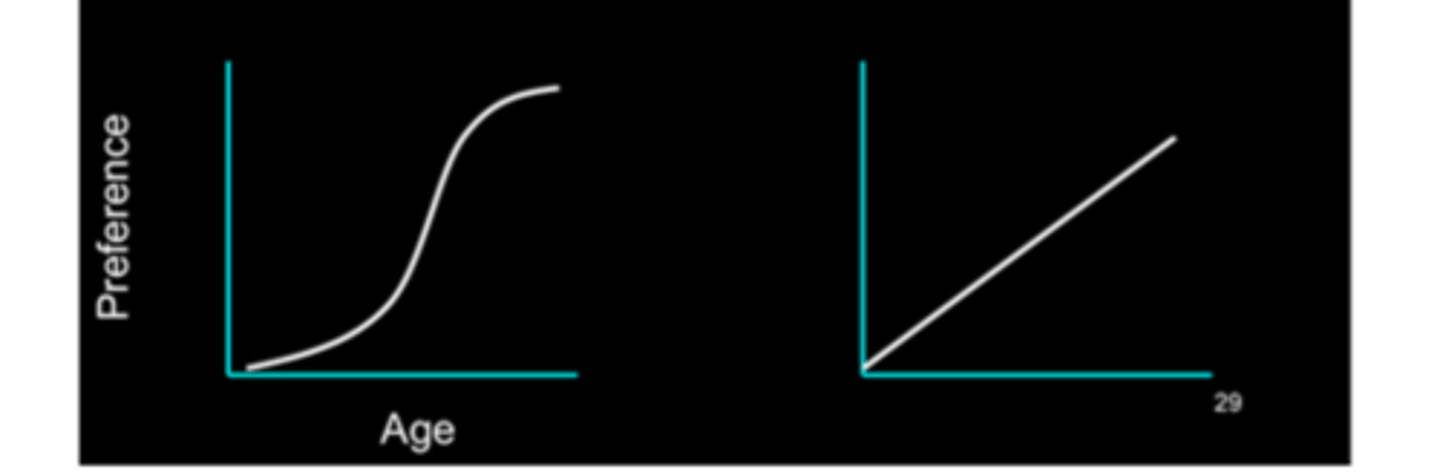
Child IAT
-Comparison between blocks (Mean RT)
-To find out the development trajectory of implicit race bias we develop a child friendly version of the IAT (implicit association test)
Implicit Intergroup Preference: European Americans
-Magnitude of an implicit ingroup preference across development is very stable
-Implicit white and good, black and bad association is very stable across 6 year olds, 10 year olds, and adults
-We have converging evidence from a cross-cultural study in Japan which shows that children of same ages prefer their racial in-group to lower status out-groups
-By age 6 children have acquired implicit race bias at adult like levels!
Explicit intergroup preference: European-Americans
-Self reported preferences for white over black
-Same participants tested for implicit intergroup preference showed a gradual reduction of self-reported (explicit) race bias over the same ages - replicating a very common finding from the literature on explicit bias
-Presumably the reduction of explicit bias reflects an internalization of the norms around not expressing racial prejudice
Implicit Intergroup Preference:African-Americans
-Among a culturally lower status group, we don't see evidence at either age of a significant implicit preference for their own group relative to a culturally higher status outgroup
-This result is conceptually similar to the European-American children in that adult like levels of bias exhibited by a group are evidence by age 5/6 for children from that same group
Implicit Intergroup Preference: Latino-Americans
-Interestingly, when comparing the own group to a culturally higher status out group (green bars, Latino vs White), children and adults, like African-Americans show no implicit preference for their ingroup over the outgroup
-However, when comparing their ingroup to a culturally lower status outgroup (Latino-black), children and adults show implicit preference for the ingroup over the outgroup.
-Implicit attitudes are sensitive to whether the comparison group is of higher or lower cultural standing
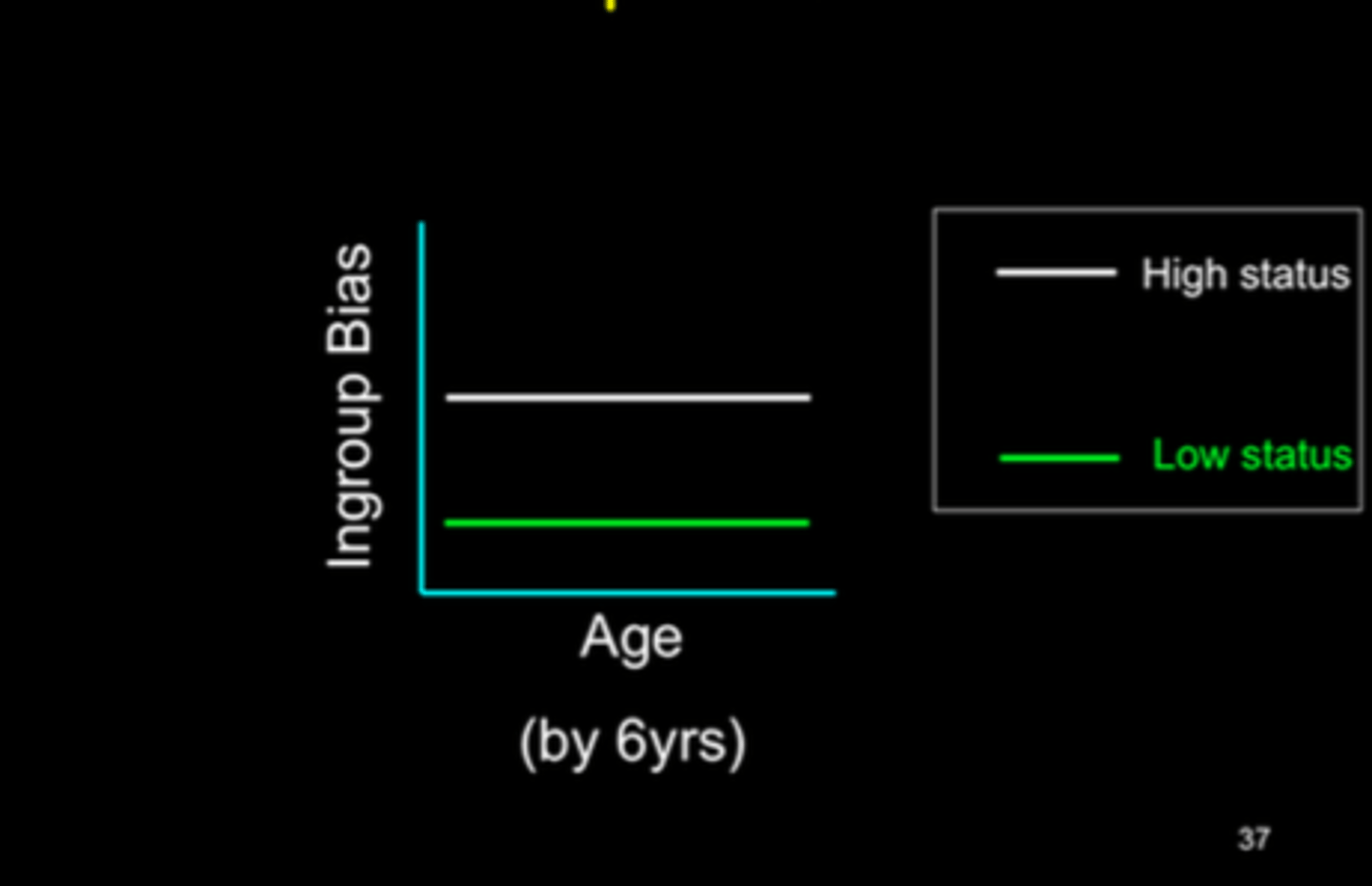
Development of implicit social group preferences
-Early acquisition (5/6 year olds)
-Sensitive to whether one's own group is of higher or lower cultural standing (group membership)
-Stable across development
-Ingroup bias is larger for individuals with high status compared to low status
-Current research is examining roots prior to age 6, if early life experiences are important for acquisition, and how early such biases form (age 1, 2, 3, 4, 5?)
Developmental differences in the malleability of intergroup cognition
-Exposed children 5-12 years of age to positive out-group exemplars and found that for older children this exposure resulted in significantly less implicit race bias compared to control conditions
-Investigating if there are developmental differences in the capacity to change implicit race bias
Reponse latency measures
-Yield evaluations that are unlikely to be controlled
-Override the obvious problem of distortion since they are taken from reaction time tasks that measure people's attitudes or beliefs indirectly (without asking people how they feel or think)
-People's attention is focused not on the attitude object, but on performing an objective task, and attitudes are then inferred from systematic variations in task performance
Implicit Association Test
-Automatic association between mental representations of objects
-Automatic pro-White bias is indicated wen people show faster performance categorizing pleasant words and Whites together, compared with unpleasant words and whites
-Implicit attitudes can be characterized as the automatic association people have between an object and evaluation whereas explicit attitudes may reflect more thoughtful or deliberative responding
4 factors that have been theorized to influence implicit more than explicit attitudes
1) Early Experiences
2) Affective Experiences
3) Cultural Biases
4) Cognitive Consistency Principles
Early experiences influence on implicit attitudes
-Prominent conception is that implicit attitudes stem from past (and largely forgotten) experiences and explicit attitudes reflect more recent or accessible events
-Developmental events may inform implicit more than explicit attitudes. Much of what is learned early in life is preverbal and taught indirectly and these lessons form the foundation on which later learning is built and may serve as a non conscious source for related evaluations and actions
-Evidence: People raised primarily by their mothers implicitly preferred women to men and people implicitly favoured women if they automatically preferred their mothers to their fathers and explicit attitudes towards parents and gender are not related
Affective Experiences
-Implicit Attitudes may stem from automatic emotional responses to stimuli (affective experiences)
-Explicit attitudes are more cognitively controlled
-Estimates of implicit but not explicit prejudice positively co-varied with activation in the amygdala in Whites exposed to photos of Blacks. Amygdala is implicated in control of affective responses, so these results suggest that implicit attitudes may stem from automatic emotional reactions to stimuli, whereas explicit attitudes are more cognitively controlled
-Found that Whites who volunteered for diversity education showed reduced anti-Black attitudes, both implicitly and explicitly at the end of the course but changes in these 2 kinds of attitudes were only weakly associated
-Reductions in implicit attitudes were related to emotion-based predictors such as reduced fear of Blacks, increased friendship with Blacks, and liking for the African American professor who taught the course whereas reductions in explicit attitudes covaried with students' increased awareness of bias and desire to overcome their own prejudice
-Implicit attitude changes may depend on EMOTIONAL RECONDITIONING whereas explicit attitudes may depend on more COGNITIVE AND MOTIVATIONAL factors
-Learning about admired Blacks and criminal Whites, mentally imagining heroic women, and listening to rap music have been shown to modify implicit associations (priming effects/contextual factors). This may be due to feelings aroused by stimuli
-It's possible that studies that found past events influenced implicit attitudes more than explicit attitudes obtained these results because the events were emotional (aversive experiences with smoking, maternal bonding, and romantic fantasies)
Cultural Biases
-Implicit attitudes are more influenced by one's cultural milieu than explicit attitudes are
-It has been shown repeatedly that Blacks and Whites alike possess more anti-Black bias on implicit measures, compared with self-reports
-Although the pattern for Blacks is provocative, it is consistent with the justification theory's argument that minorities non consciously rationalize their lower status by internalizing society's negative view of their group
- Lower the cultural status, more minorities implicitly favoured the dominant out-group. Poor and overweight participants showed significant preference for rich and slim out-group members
-Participants were asked to report their group's relative status, and these ratings also covaried with their implicit attitudes. For example, Jews who ranked Christians as higher in status than Jews tended to automatically associate Christians with positive attributes and Jews with negative attributes
-Minorities showed robust explicit in-group bias, which was unrelated to their status
-Social standing has opposite influences on Black's automatic and self-reported in-group bias. Blacks who perceived that Whites disliked their group showed stronger automatic pro-White bias but at the same time, Stonger pro-Black bias in their self-reports, compared with Blacks who perceived that Whites liked their group
-High status groups routinely show stronger implicit in-group bias than do low-status groups, but this is a function of their relative status (whereas explicit in-group bias is not)
-For members of dominant and minority groups alike, societal evaluations have an assimilative effect on automatic but not controlled attitudes, so cultural biases inform implicit attitudes more than explicit attitudes
-Because learning about one's place in the world
is likely to occur early (and often) in life, and is likely to be emotionally
charged, the influence of cultural biases on implicit attitudes may be
reconcilable with the influence of early and affective experiences.
Cognitive Consistency Principles
-People prefer consonant evaluations of related attitude objects
-If I like myself and I am female, I should also like women: cognitive consistency should be observed among the variables of self-esteem, gender identity, and gender attitude
-Implicit attitudes, identity, self-esteem, stereotypes, and self-concept conformed to cognitive consistency principles, whereas self-reports of these same constructs did not (an observation that led to the development of the unified theory of implicit social cognition)
-"If I am Y and I am X, then X is also Y" where Y represents evaluation and X represents group membership
-Whites who showed high self-esteem and who identified with their ethnicity also preferred Whites to Blacks.
-Men and women who associated themselves with warmth (or power) also associated warmth (or power) with their own gender, provided they identified with their gender; and self report measures didn't conform to this pattern
-Identical findings were found using academic gender stereotypes but only with implicit estimates of self-concept, stereotypes, and gender identity
-The unified theory may be reconciled with other theories that distinguish
sources of implicit and explicit attitudes.
1) Theory
converges with the hypothesis that cultural milieu biases implicit
attitudes. Societal evaluations clearly influence implicit in-group appraisal, which contributes to self-appraisal when in-group identification
is strong.
2) Affect may inform the unified model by
means of evaluative links that involve the self. Given that people
likely do not view themselves impartially, emotional self-appraisals
may spill over into automatic (more than self-reported) evaluations.
For example, early and affective lessons learned about the self may
shape one's implicit appraisals of other objects that are (or are not)
connected to the self. Interestingly, the resulting implicit structure can be counterstereotypical (e.g., ''If I am warm and I am male, then men
are warmer than women''). In this way, automatic self-appraisals may
counter the influence of culture on implicit associations.
Summary of sources of implicit attitude paper
-Early and affective experiences may influence automatic evaluations more than explicit attitudes
-There is growing evidence that systemic, culturally held appraisals can bias people's automatic evaluations irrespective of their personal opinion
-Only implicit and not explicit evaluations appear to be sensitive to cognitive consistency principles
Paper- Development of Implicit Attitudes: what they studied
-Race: Children's concept of race may be commensurate with that of adults (by age 5)
-The study investigated whether 5- and 6-year-olds have implicit attitudes toward race categories
soon after the age at which they are expected to have
achieved a mature representation of the concept of race.
-White N.A children begin to report negative explicit attitudes towards out-group members as early as age 3 and these attitudes decline by age 7 until they disappear around age 12
-Study also tracked implicit race attitudes in 10 year olds, and adults to view developmental progression of implicit attitudes cross-sectionally
-Used child version of IAT and also included a measure of implicit attitudes towards nonsocial categories such as insects and flowers
-Sample included 79 participants: kindergartners, fifth graders, and attitudes
-IAT measures relative strength of association between a target concept and an attribute concept (evaluation like words with good/bad meaning).Uses the fact that more strongly two concepts have come to be associated with one another, the faster and more accurately they can be paired together
-Children IAT: Use pictures of black and white children, and use voice recordings of good and bad words instead of printed words and used two large jelly bean buttons instead of computer keys
How explicit attitude was measured in the paper (Baron)
-Provided forced-choice preference judgements
-Example: picture of black child and white child were paired, and participants indicated whom they preferred
-Unlike in the Child IAT, participants
were encouraged to take their time and to deliberate over their
responses.
Results of the development of implicit attitude paper: 6 year olds (Baron)
-6 year olds were significantly faster to respond to insect+bad/flower+good trials that insect+good/flower+bad trials. Boys showed this preference less than girls but not statistically significant and also reported clear self-reported preference for flowers of insects (females a lot more than girls)
-6 year olds already developed implicit pro-White/anti-Black associations
-6 year olds explicit race attitudes were consonant with their implicit attitudes
-Self-reported a strong preference for photographic white compared with black children (84% of the time)
-More males reported a preference for whites over blacks compared to females
10 year olds results
-Same as 6-year olds for insect-flower attitudes but there was a significant gender difference in reported preference, females more likely than males to choose flowers over insects (but less than 6 year old gender difference)
-Revealed explicit preference for Whites over Blacks but significantly more muted than reported by 6 year olds
-6 to 10 year olds showed same magnitude of implicit race bias, but by age 10 children's self-reported preference for their own group was significantly reduced
Adults results
-No gender difference in flower vs insect preferences (self-reported)
-Adults showed the same implicit pro-White/anti-Black response bias on the race child IAT as child participants did
-Adults self-reported an equal preference for White and Black targets (46% of the time, participants chose the White child over the Black child)
General discussion: Development of implicit attitudes paper
-Data shows that the early emergence of implicit attitudes towards both nonsocial (flower vs. insect) and social (Black vs. White) categories
-By age 6, children appear to have formed detectable implicit attitudes towards social groups and these attitudes didn't vary across 6, 10, and adults
- An early and strong preference for members of one's own social group subsides by age 10 and levels
off to an equal preference for the in-group and out-group by
adulthood for self-reported race attitudes
-Substantial data on adult Black Americans indicate than on average, they lack an implicit in-group preference even though they report strong in-group liking on self report measures
-Group membership
pushes in the direction of in-group positivity, but that positivity
is modulated by the countervailing force of the evaluation of the
group in the eyes of the broader culture. That evaluation then ''becomes'' the implicit attitude of group members
-Dunham, Baron, and Banaji (2004) reported that
Hispanic children as young as 5 show an in-group preference for
Hispanic over Black, but show no preference for Hispanic over
White, which suggests that implicit intergroup attitudes are
learned quite early, and that children who come from disadvantaged
groups experience the lower attitudinal status of their
own group
-Dasgupta, Greenwald, &
Banaji, 2003) ruled out familiarity as the dominant explanation
of IAT effects by showing (a) preference for low-familiarity but
positive stimuli over high-familiarity but negative stimuli and
(b) preference effects that remain even after statistically controlling
for familiarity effects item by item.
-However, in young
children, it is quite possible that attitudes, both implicit and
explicit, may indeed rely more on familiarity than on preference
-Implicit race attitudes
are acquired early and remain relatively stable across development,
even though explicit attitudes become more egalitarian.
It is around age 10 that the split between mean levels of conscious
and less conscious race attitudes first emerges, pointing
out the differential sensitivity of these two forms of attitude to the
societal demand to be unbiased in race-based evaluation.
Study on reducing children's implicit racial bias through exposure to positive out-group exemplars
-Study included 369 children and examined whether their implicit racial bias would be reduced following exposure to positive Black exemplars
-Many studies show that implicit preferences for high-status racial groups over lower status groups emerge early in childhood at levels that remain stable across development
-Since children acquire implicit racial bias by age 5, age 5 or earlier may be the optimal period to shape the magnitude of implicit intergroup biases. However, there is evidence that implicit bias may be more amneable to change among older children since cognitive flexibility is increased
-Although cognitive flexibility continues developing into adulthood, implicit biases might be more easily reduced in older children than in their adult counterparts because they have received comparatively less reinforcement of the prevailing cultural attitudes about social groups.
-Used exposure to counterstereotypical exemplars: through use of vignettes, exposed participants to black individuals represented in a very positive frame
-They used this method to see if brief exposure to vignettes depicting positive Black exemplars, as compared to either white exemplars or flowers would reduce implicit racial bias among children: included children of caucasian and asian identity
-Each participant read 4 vignettes with positive information about picture
-Children's implicit racial bias was measured using child IAT
Results of study on reducing child implicit racial bias
-Exposing white and asian children to counterstereotypical black exemplars can successfully reduce implicit racial bias among older (~10 years) but not younger (~7 years) children
-Older participants showed an absence of an implicit preference for White relative to Black targets following a brief intervention in which stories about 4 positive Black exemplars were read
-Whereas previous research found developmental invariance in the strength of implicit racial bias, their study suggests that important developmental differences exist with respect to the capacity to reduce implicit attitudes
-For their intervention to have been effective, children needed to categorize the individuals in the vignettes as members of a particular racial category and generalize that affective association with noel members of the category. Young children may not spontaneously categorize others by race to the same extent as older children (less likely to spontaneously attend to race when reasoning about others)
:)
:)
Psychological Essentialism
-A way of reasoning about the world
-Shaped by our language (nouns in particular)
-Idea that something is what it is because of some sort of intrinsic, immutable property
-We tend to view some categories as having underlying stable essences
-Causes: noun labels
-We're more likely to learn stereotypes about groups that are essentialized
3 parts of essentialism
1) People believe (intuitively) that certain categories are: real (not fabricated by humans), discovered (not invented), rooted in nature. Not independent ideas.. this is not a metaphysical claim about the world but rather a claim about how our psychology leads us to think a certain way about objects in the world
2) Belief that some unobservable property (essence) causes things to be the way they are. That the "essence" causes the observable similarities shared by members of the category. Idea that dogs bark and chase cats and look a certain way because of their dog essence
3) Belief that everyday words reflect this real structure of the world. for example: dog. Nouns serve as potential cues to things we ought to essentialize
-Despite some surface differences in appearance, we nonetheless see all different types of dogs as members of a kind (and our psychological commitment to essences is what helps to accomplish this so goes the theory of psychological essentialism)
-We are not fooled by surface level changes - according to psychological essentialism you can't change an objects/indiiduals identity when we essentialize that kind
Stability of Essentialism
-Stability: membership/identity fixed at birth, highly resistant to change (immutable), exterior transformations not relevant
-Key criteria for judging stability (a core consequence of essentialist thinking)
Essentialism and social groups
-Essentialism, when applied to human groups, is false
-There is no invisible essence that differentiates: Greeks from Turks, Protestants from Catholics, Blacks, Whites, Asians, Canadians and Americans
-We nevertheless tend to view some groups through an essentialist lens (identity fixed at birth, immutable, indicative of other shared properties)
e.g. Gender and race vs. OCCUPATION
-Which social categories we essentialize varies across cultures
What causes children to essentialize some social groups?
-One proposal:
-If children hear social groups marked with a noun label, they will tend to believe that the people in those groups are deeply different kinds of people
Cues to Essentialism
-Linguistic Cues (eg noun labels)
The importance of noun labels
-Verbal predicate condition: Rose is 8 years old. Rose eats a lot of carrots. She eats carrots whenever she can.
-Noun label condition: Rose is 8 years old. Rose eats a lot of carrots. She is a carrot eater.
-Then asked subjects questions about stability of the key property
-Past behaviour "Did rose eat lots of carrots when she was 4 years old?"
-Future behaviour "Will rose eat a lot of carrots when she is grown up?"
-Behaviour with no family support "Would rose eat a lot of carrots if she grew up in a family where no one liked carrots?"
-Behaviour with family opposition "Would rose stop eating a lot of carrots if her family tried to stop her from eating carrots?"
Other noun labels
-A boy who thinks that creatures live on other planets "He's a creature believer"
-A boy who wakes up early "He's an early waker"
-A girl who really loves guinea pigs "She's a guinea-pig lover"
Influence of noun labels at age 5
-By age 5, personal characteristics (carrot eating) were more stable when they were referred to by a noun (e.g. "She is a carrot eater) than by a verbal predicate "She eats carrots whenever she can"
-Between age 5-7, the influence of noun labels on essentialism becomes MORE pronounced
For adults and childrens, noun labels (compared to other linguistic expressions) seem to indicate that a category:
1) Supports more inferences
2) Provides more information about "essence"
3) Is central to the identity of an object
4) Is relatively enduring and permanent
5) Is organized into taxonomies
6) Is unique and nonoverlapping with other categories
Language and intergroup cognition
-Implications for attitudes and stereotype development? and stability/resistance to attitude or stereotype change?
- if you see something that goes against your belief, you don't connect it
Essentialism summary
-Bias in how we think about individuals and categories
-Exists in our heads, not in the world (i.e, is not a metaphysical claim)
-Shaped by language use (nouns in particular)
-Language influence stronger in older children and adults (7 years old and up)
Development of Intergroup Cognition
-Thinking about the world in terms of us and them
-Simply classifying someone as a member of the in group, even when such pairings are arbitrary, can lead to explicit and implicit bias in favour of the in-group and negatively towards the out group
Effects of Lexicalization/Language on Children's Inferences about Social Cateogires
-Lexicalization = using a noun label to refer to someone who possessed a certain property
-Hypothesis: When a property is lexicalized, it is thought to be more stable over time and over contexts
-Labels lead to changed expectations, they may be positive but they can foster stereotypes and lead to negative expectations
-Labelling may imply that the information provided is particularly stable and immutable. Giving a label may reify a category in a way that others way of referring to the same information do not. Labels can be separated from the behaviours they describe "He's not a criminal,; he just made an error in judgment"
-Behavioural descriptions convey temporary status and distance from central identity
-Referring to a category with an adjective implies that it supports fewer inferences, and provides less essential information whereas referring to a category with a noun supports enduring and permanent identities
-This study used novel nominalized phrases to remove possibility of contaminating effects of familiar labels that can cause listeners to retrieve pre-determined meanings
-Participants were 5 and 7 year olds. They were given descriptions with either a novel noun "she is a carrot-eater" = label condition or desrciptive phase "she eats carrots whenever she can" (verbal-predicate condition)
-Asked about past behaviour, future behaviour, behaviour with no family support, and behaviour with family opposition
Results of Lexicalization/Language on Children's Inferences about Social Cateogires study
-By 5 years of age, children judge personal characteristics as more stable when they are referred to by a noun than by verbal predicate
-Children in the label condition predicated that characteristics would be more stable over time and more stable over adverse environmental conditions (retained even when there is no family support)
-Labels make a difference even when a label condition is compared with a condition in which the same information is provided in no-label format
-Characteristics were all novel, which implies that children are NOT retrieving rote meanings, but rather made use of a general rule that they applied to these novel noun phrases
-Lexicalization (in the form of a noun) provides important information to children regarding property stability
-This can be understood in terms of fundamental attribution error: tendency of people to emphasize the role of dispositional factors and downplay the role of situational factors in explaining peoples behaviour. Noun labels encourage and promote this error in children as young as 5 years of age. Whereas
"those who eat carrots" are interpreted as eating carrots for situationally determined reasons, "carrot-eaters" are interpreted as eating carrots for reasons that are rooted within the individuals' dispositions
-They suggest that use of a label may have a broader effect, by serv-
ing as one factor that helps children to construe certain social categories as natural kinds. Natural kinds are categories that are assumed
to have a particularly rich structure, with nonobvious similarities
(including an underlying "essence") and rich inductive potential
-Referring to a category with a noun label may foster an essentialist perspective on a category
-essentialism implies relative emphasis on within-group similarity and between-group differences. It also implies that a category has high inductive potential (i.e., promotes many inferences), that it has a nonobvious basis, that it is real (discovered)
rather than invented, that it is biological in origin rather than social,
and that it is inherent in an individual rather than the product of
social interaction.
-Overall, language may help turn an arbitrary characteristic into a trait and may provide clues about how to carve up the social world.
-How parents talk to their children affect how that child thinks about his/her own characteristics.
Primary goal of the developing child
-Establishment of social identity, a meaningful way of placing him or herself within the fabric of modern society
-One way to accomplish this is through membership in socially recognized groups: they describe a circle of relevantly dissimilar others, relatively similar others, foster connection and interdependence
Consequences of "Minimal" Group Affiliations in Children paper procedure
-Three experiments tested the hypothesis that 5-year old children's membership in randomly assigned "minimal" groups would be sufficient to induce intergroup bias
-Children were randomly assigned to groups and engaged in tasks involving judgments of unfamiliar in-group or out-group children
-2 main goals:
1) Providing a direct test of minimal group preferences in young children
2) Exploring the consequences of minimal group membership for subsequent information processing, in particular, memory for valenced (positive/negative) actions performed by in-group and out-group members
"Minimal Group Phenomenon"
-Participants might be grouped based on shared preferences or even random assignment
-Disproves idea that a mere categorical distinction, just one among many possibilities, do not have any particular consequences prior to its cultural elaboration
Use minimal group paradigm as a baseline in which participants had no reason to favour their group: Method for investigating the minimal conditions required for discrimination to occur between groups.
-These seemingly meaningless social groupings were sufficient to induce preference for the minimal in-group across a wide range of measures, including resource allocation, trait evaluations, and implicit measures
-The minimal group paradigm reliably produces in-group preference of moderate magnitude
-These minimal group findings suggest that neither social learning and cognitive limitations are strictly necessary: Intergroup bias can emerge in cognitively mature adults in the complete absence of any relevant social content regarding the worth of groups
Theoretical Accounts relevant to the minimal group phnomenon
-Dominant class of theories derives the minimal group effect from motivational systems, such as the desire to maintain positive self-esteem
-One source of self-esteem derives from the group one belongs to, so individuals are motivated to emphasize positive traits associated with the in-group but empirical support for this lacks (causation may run the opposite way, in-groups acquire a positive construal from a self that is already positively construed)
-Suggestion that minimal group preferences results in part form self-related positivity which is extended to in-groups in an automatic fashion
Developmental Intergroup Theory
-A theory that postulates that adults' focus on gender leads children to pay attention to gender as a key source of information about themselves and others, to seek out possible gender differences, and to form rigid stereotypes based on gender.
--After a given categorical dimension has achieved psychological salience and been used to form an intergroup contrast, in-group bias will generally appear as children transfer self-related positivity to the groups to which they belong
-Emphasizes the role of environmental factors such as explicit labeling, a feature found in most minimal group studies, as a way of making an intergroup contrast important and approved by the presumably authoritative adult labeler
Novels vs. Minimal group preferences
-Novel groups = those with which the child has no prior acquaintance; thus, novel groups control for differential exposure to prior knowledge bearing on the group's importance or status
-Minimal groups satsify several additional constraints. The dimension of classification upon which inter-group categorization rests must be value neutral. There must not be between-group competition or unequal status between groups, as these factors have been shown to increase the strength of intergroup bias. There must not be opportunity for differential interaction with in-groups or out-groups, which can lead to preference indirectly
-These criterion are met by by studies in which participants are tested alone such that they never actually meet or interact with in-group or out-group members
-These conditions remove the influence of independent factors, over and above mere membership in a social group, that could lead to intergroup bias
Experiment 1
-Examine the question of developmental continuity in various forms of minimal group bias. Examine in-group gender preference as well as in-group minimal group preference in the same study
-Children placed in either red or blue group. Put on t-shirt of appropriate colour, then view other children in red/blue groups
-Observed preference for the gender in-group on 3 of 3 measures: explicit attitude, resource allocation, and behavioural attribution, but these effects were driven primarily by strong in-gender preference in girls
-Observed preferences for the minimal in-group on 3 of 4 measures: explicit attitude, resource allocation, and implicit attitude, and didn't vary as a function of participant gender.
-Behavioural attribution didn't show in-group preference for a minimal group but did show a reliable correlation with implicit attitude (on average, participants with stronger implicit in-group preference also made more in-group favouring attributions)
-While behavioural attribution may be a weaker index of minimal group bias at the main effect level, more biased participants were reliably making more biased behavioural attributions
-These results establish that the minimal group effect is present in children of this age
-Minimal ingroups are weaker organizers of evaluations than is gender for children of this age; effect sizes for gender were about twice as large as for minimal groups (for girls, who largely drove these effects)
-This reinforces the central importance of gender as an organizer of social relations in this age range
-A novel, randomly assigned group was able to produce spontaneous preferences about half as powerful as those created by a lifetime in a gender role is a striking testament to power of "minimal" social categories, very little is needed to induce great in-group preferences
-The strongest effects of the minimal group manipulation emerged on the implicit measure
-The implicit evaluative system of 5 year olds is continuous with the adult system
-Since implicit attitudes in children emerged so quickly (15 minutes), it disproves the belief that implicit attitudes are slowly learned models
- From early in the process of acquiring rich social category representations, the mere presence of an in-group⁄out-group contrast is enough to set the stage for arangement of in-group preferences.
Experiment 2
-Ensure reliability of basic effects
-Replicate and extend the results of experiment 1 while also addressing several potential issues in the first study
-Also primarily 5 year olds but included some older 4 year olds and two 6-year olds
-Procedure same as experiment 1 except used orange vs green and instead of being told they belonged to the green group or the orange group, they were simply told they would wear a shirt of that colour, and children in experimental stimuli were described as "someone wearing an orange (green) shirt" (descriptive phrase rather than a noun phrase)
-Confirmed results of experiment 1, found evidence of intergroup bias on several measures most notably, behavioural attribution and implicit attitude
-Consistent with the hypothesis that in-group positivity reflects expectations of reciprocal altruism, found evidence that 5-year olds have the expectation that their in-group is more likely to reciprocate with them
-Children may have additional beliefs about within-group interactions such as expection preferential treatment from even minimal in-group members
-Results of Exp 2 differed in Exp 1 in fact that participants in exp 2 didn't allocate more resources to members of their in-group
-Noun labels increase the inductive potential of categories and promote more coherent, kind-based reasoning due to weaker effects in exp 2 than exp 1 (which used noun labels) and confirms DIT, in which group labels are thought to play the fundamental role of pointing children in the direction of a socially sanctioned way of dividing individuals into groups
-Visually apparent shared property is sufficient to induce preferences in the absence of explicit category labels
-Exp 1: behavioural attributions not present but in exp 2 was. In experiment 2, bias in attributions was driven by positive items, which were preferentially extended to the in-group, and there was a weak trend in same direction in exp 1 but not significant. Possible that children focused primarily on gender when making behavioural attributions in exp 1, washing out an effect of group on that measure
2 subtly different interpretations minimal group effects from exp 1 and 2 are open to
1) Widespread evidence of in-group bias found among 5-year olds may reflect a rich set of interrelated in-group-favouring cognitions already in place at this young age, such as generalized expectation that members of the in-group are more positive, more generous, etc. Exp 1 and 2 conclusively establish that minimal group bias is in place at this age, and that the various reflections of it are interrelated, in that they are positively correlated across participants
2) Minimal group manipulation may simply establish a positive valence associated with the in-group, and these drive task performance. In this interpretation, it's not that children EXPECTED positive behaviours out of the in-group or they expected members of the in-group to share with them; rather, they generated such expectations in response to the experimenter's questions. All measures essentially become indirect measures of attitude. The fact that children were as likely to judge members of the in-group likely to experience lucky outcomes as they were to judge that they would perform positive actions is consistent with this interpretation
Exp 3
-Tests hypothesis that minimal group bias constitutes an organizational template that affects the acquisition of group-relevant information, biasing learning in in-group favouring ways
-Children use socially learned stereotypes to organize memory. Children will preferentially remember information consistent with a preexisting stereotype or with a newly learned schema provided by the experimenter immediately prior to the learning phase
-Question: Do randomly assigned minimal groups, for which no stereotypes and thus no schemas have been learned or made salient, will similarly organize memory around the simpler dimension of valence? If yes, this means children can rapidly generate a basic valence-based schema in absence of evidence regarding valence
Experiment 3 methods
-Children read 2 stories, one featuring an in-group protagonist and one an out-group protagonist
-In each story, protagonist engaged in several positive and negative behaviours
-Tested children's memory for both positive and negative behaviours
-contained primarily 5-6 year olds
-Same photographic stimuli from experiment 2 was employed (viewing face of a single gender matched child, children were read stories)
-Tested free-recall memory test: Immediately following each story, children were asked what do you remember most about that story, and also playmate preference, children asked which child they would rather play with
Results of Experiment 3
-Confirmed In-group bias created by mere membership in a minimal group as seen in exp 1 and 2 (playmate preferences)
-Evidence of in-group favouring memory biases in young children in a minimal group context
-Children's free recall of these stories divereged markedly from the equivalence of input
-General tendency for better recall of negative behaviours compard to positive, this tendency was weaker for the story involving an in-group protagonist
-Children showed enhanced memory for the positive action of in-group members, demonstrating a bias in information processing with respect to in-group and out-group targets
-Experiment 3 demonstrates a systematic tendency to encode information in a way favourable to even the most minimal of in-groups
-This result is best interpreted as a positivity bias in favour of the in-group; negative actions performed by the out-group members were no preferentially encoded
-Ingroup preference may precede outgroup derogation
-Strong evidence that a perviously learned cultural knowledge schema is not the ONLY causal means by which group-based memory distortions can emerge
General discussion of minimal group affiliations
-Across the 3 experiments, moderate to large effects of in-group favouritsm was found across several measures.
-These data show that "mere membership" in minimal social groups is enough to elicit intergroup bias in 5 year olds
-Wide range of biases observed
-In-group favouring biases emerge rapidly, are moderate to large effects, and do not require any supporting social information whatsoever
-Group-relavent information is pervasively distored by mere membership in a social group. If children assume that members of the in-group are more likely to perform good actions and are generally more likeable, if they are more likely to encode positive actions performed by in-group members then over time, initial biases will take root by, in essence, shifting perception to produce confirmatory evidence .
-Minimal group effect = a powerful learning bias underlying the rapid internalization and entrenchment of social biases in the real world
-Socially reinforced groupings (race but not eye colour) will rapidly acquire more importance and will become widely shared in a given culture
-EVEN WHEN THE INPUT IS NEUTRAL, MINIMAL GROUP BIASES CAN REORGANIZE INPUT TO PRODUCE IN GROUP FAVOURITSM
-Young children's initial attitudes can be explained by a simple in-group⁄out-group contrast wherein the in-group is preferred,while adults' attitudes also reflect cultural norms regarding the consensual status of those groups.
-Subtle biases may lose out to other factors such as norms against exclusionary and other forms of dicriminatory behaviour
-Minimal group preferences may represent a default response to the perception of social difference, but they are only one process among many.
Movie: A class Divided
-The day after Martin Luther King, Jr. was killed, a teacher in a small town in Iowa tried a daring classroom experiment. She decided to treat children with blue eyes as superior to children with brown eyes.
-Labelling kids as "brown eyed people"
-Some children became viscious and discriminatory in just 15 minutes
-As a result, whichever group was favored by Elliott performed enthusiastically in class, answered questions quickly and accurately, and performed better in tests; those who were discriminated against felt more downcast, were hesitant and uncertain in their answers, and performed poorly in tests
-The now-adults agree, as they had learned after the 1970 experiment, that racism and prejudice are wrong, and that the life-affecting lesson should be experienced by other children, teachers, and adults in the present day as a form of understanding.
-Students performed worse because they were wearing the collars --> felt bad
:)
:)
General intelligence (g)
-Defining intelligence as a single trait: intelligence = a single trait that influences all aspects of cognitive functioning
-General intelligence, also known as g factor, refers to the existence of a broad mental capacity that influences performance on cognitive ability measures. Charles Spearman first described the existence of general intelligence in 1904
-Each of us possesses a certain amount of "g"/general intelligence and g influences our ability to think and learn on all intellectual tasks
-Tasks on intelligence tests are positively correlated with g
-Supporting this idea is the fact that performance on all intellectual tasks is positively correlated: children who do well in one task tend to do well on others too
-Overall scores correlate with school grades, information-processing speed, knowledge of non-studied subjects, and speed of neural transmission, brain volume, and general information of the world
-Many different ways researchers have talked about what constitutes intelligence and, what to measure to assess an individual's intelligence
-Measures of g, such as overall scores on intelligence tests, correlate positively with school grades and achievement test performances
Primary Mental Abilities
-Defining intelligence as primary mental abilities/a few basic abilities: evidence for this claim is that tests for a single ability correlate more than with tests for other abilities
-There are 7:
-Word fluency
-Verbal meaning
-Reasoning
-Spatial visualization
-Numbering/number facility
-Memory
-Perceptual speed
Two types of intelligence: Crystallized and Fluid
1) Crystallized intelligence: Factual knowledge about the world (e.g. word meaning, state capitals, answers to arithmetic problems)
> Tends to increase across the life span
>Reflects long term memory for prior experiences and related to verbal ability
2) Fluid intelligence: Ability to think on the spot - drawing inferences and understanding relations between concepts that have not been encountered previously (e.g. solve novel puzzles)
>Tends to peak early in adulthood
>Closely related to adaptation to novel tasks, speed of information processing, working-memory functioning, and ability to control attention
-Supported by the fact that tests of each type of intelligence correlate more highly with tests of the same type than they do with tests of other types
-2 types of intelligence have different developmental courses: crystallized intelligence increases steadily from early in life to old age, whereas fluid intelligence peaks around age 20 and slowly declines thereafter
-Brain areas active also differ: prefrontal cortex = fluid intelligence but less active in crystallized
Measuring intelligence: WISC
-Measuring intelligence is different at different ages
-Wechsler Intelligence Test for Children (WISC - 6 and older)
-Conception of intelligence used in this test is consistent with the three-stratum framework
-Test yields not only an overall score but also separate scores on 5 moderately general abilities: verbal comprehension, visual-spatial processing, working memory, fluid reasoning, and processing speed. These abilities correlate positively with other aspects of intelligence, and are related to important outcomes such as school grades and occupational success
-Verbal section: Crystallized intelligence, tests general knowledge, subtests on info, vocab, similarities, arithmetic, comprehension, and digit span
-Performance section: Fluid intelligence, tests spatial and perceptual abilities, subtests on picture completion, picture arrangement, block design, object assembly, coding, and mazes
Seven primary mental abilities
-Seven abilities proposed by Thurstone as crucial to intelligence
1) Word fluency
2) Verbal meaning
3) Reasoning
4) Spatial visualization
5) Numbering
6) Rote memory
7) Perceptual speed
-Scores on various tests of a single ability tend to correlate more strongly with one another than do scores on tests of different abilities
-Although both spatial visualization and perceptual speed are measures of fluid intelligence, children tend to perform more similarly on two tests of spatial visualization than they do on a test of spatial visualization and a test of perceptual speed
-This view has a greater precision than idea of crystallized/fluid intelligence
Viewing intelligence as numerous distinct processes
-Intelligence comprising numerous, distinct processes
-Processes include remembering, perceiving, attending, comprehending, encoding, associating, generalizing, planning, reasoning, forming concepts, solving problems, generating and applying strategies, and so on
-Viewing intelligence as "many processes" allows more precise specification of the mechanisms involved in intelligent behaviour than do approaches that view it as "a single trait" or as "several abilities"
Intelligence Quotient (IQ)
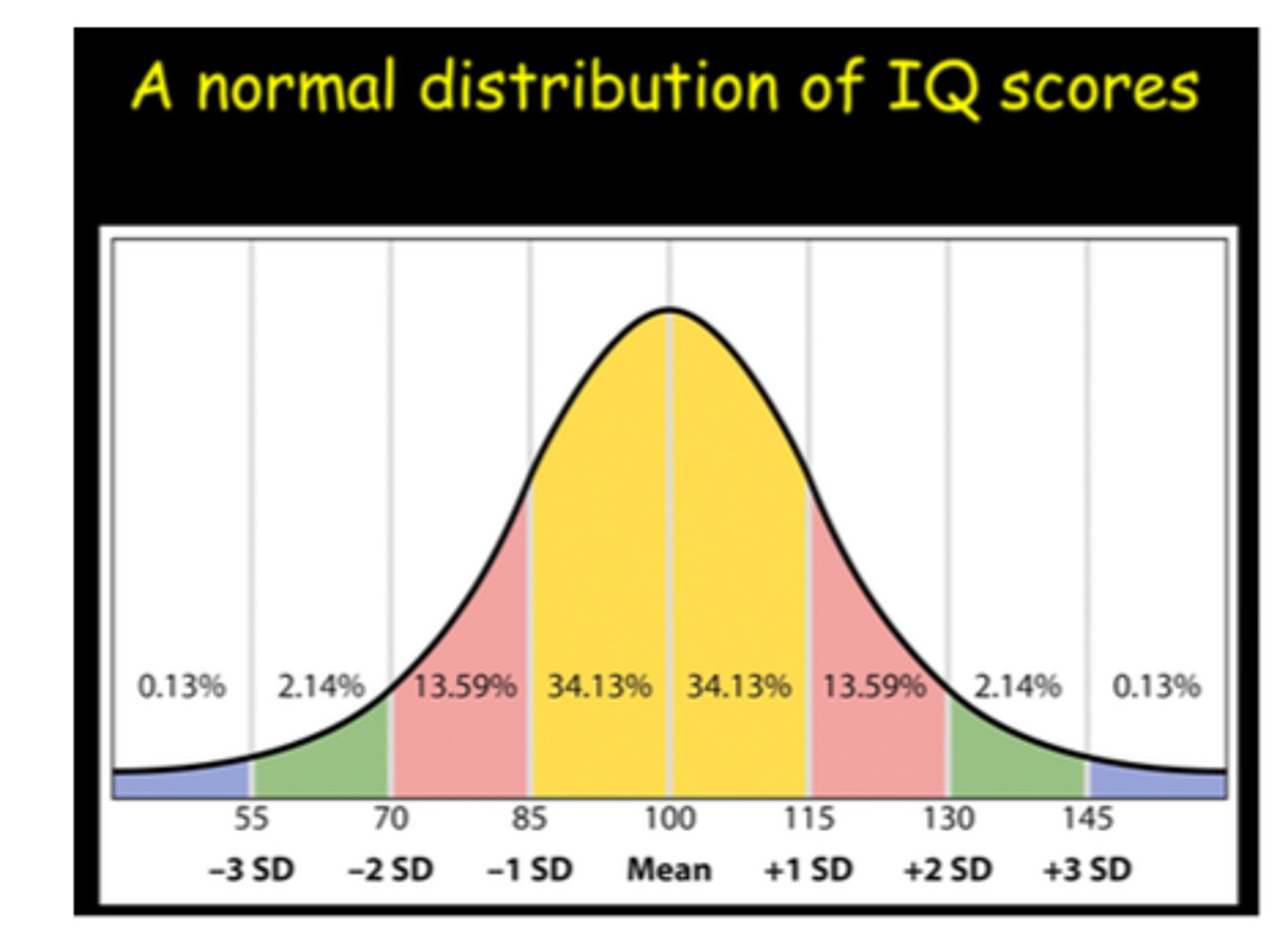
-Based on a normal distribution
-Quantitative measure of intelligence relative to that of other children of the same age
-A score of 100 are given to children who score exactly at the meaan for their age at the time the test is developed
-Most scores are near the mean (100)
-1 SD from the mean = +/- 15 (115 or 85)
-Standard deviation = a measure of the variability of scores within a distribution.
-68% of scores fall 1 SD below the mean and 1 SD above it, and 95% of scores fall between 2 SDs below the mean and 2 SDs above the mean
-On most IQ tests, the standard deviation is about 15 points
Stanford Binet intelligence test
-2 year olds are asked to identify the objects depicted in line drawings (object recognition), to find an object that they earlier saw someone hide (learning and memory), and to place each of three objects in a hole of proper shape (perceptual skill and motor coordination)
-10 year olds are asked to define words (verbal ability), to explain why certain social institutions exist (test of general information and verbal reasoning), and to count the blocks in a picture in which the existence of some blocks must be inferred (problem solving and spatial reasoning)
-Items on Intelligence test differ for different ages because it's reflected in different abilities at different ages
-Intelligence tests have had their greatest success and widest application with children who are at least 5 or 6 years old. The exact abilities examined, and the items used to examine them, vary somewhat from test to test, but there is considerable similarity among the leading tests
Stability of IQ
-From age 5 correlations of IQ tests are strong, IQ scores show high continuity; the closer in age the tests are given the stronger the correlation (ages 5 and 7 scores are more positively correlated than ages 5 and 9 scores)
-For any given length of time between tests, scores are more stable at older ages
-Even though IQ scores are quite similar from age to age, they are rarely identical and always changes by some amount of points probably due to random variation in factors like child's mood and alertness on test days or also changes in the child's environment like divorce or moving to a better or worse neighbourhood
-Scores are not constant for individuals over time
-Stability increases when:
>A child believes academic performance is valuable
>Similarity of children's environments
>A child's parents take interest in their success
>A child's parents use firm but modest discipline
What can IQ predict?
-Academic, economic, and occupational success
-Positive relation between IQ score and occupational and economic success stems from the fact that standardized test scores serve as gatekeepers, determining which students gain access to the training and credentials required for entry into lucrative professions
-A child's IQ score is more closely related to child's later occupational success than is SES of child's family, school they attend, or any other variable that has been studied
-BUT motivation to succeed, conscientiousness, intellectual creativity, physical and mental health, and social skills are factors affecting success and are important influences
-Self discipline is more predicative of changes in report card grades between grades 5-9 than is IQ score, but IQ score is more predictive of changes in achievement test scores over the same period
-Environmental characteristics are also influential: parent's encouragement and modelling of productive careers predict their children's occupational success
Factors influencing intelligence: Nature
-Genetics: Plays a greater role as the child gets older.
Evidence: Research on adopted children and their biological and adopted parents. IQ scores of adopted children and their biological parents become increasingly correlated as the children develop, even without contact between them but the scores of adopted children and their adoptive parents become less correlated over the course of development
-This is b/c some genetic processes don't exert their effects until later childhood and adolescence like some types of synchronization of activities of distant brain areas aren't evident until adolescence or early adulthood and the extent of synchronization reflects genetic influences. Also children's independence increases with age --> greater freedom to choose environments compatible with their own genetically based preferences.
-Many genes associated with mental retardation and large number of other genes consistently related to normal variation in intelligence but these correlations are small, genetic influences on intelligence reflect small contributions from each of a very large number of genes, as well as complex interactions among them, rather than one or a small number of master genes
-Intelligence --> Brofenbrenner's bio-ecological model of development: children's lives = embedded within a series of increasingly encompassing environments
Genotype-Environmental Interaction - Intelligence, 3 effects
-Scarr, 1992. Environments children encounter are influenced by the children's genotype. Gene-environment relationships involve 3 types of processes:
1) Passive effects of genotype: Arise when children are raised by biological parents. Due to overlap of parent + child genes. Children overlap with their parents' interests. (Child whose genotype predisposes them to enjoy reading are likely to be raised in homes with plentiful access to reading matters b/c their parents like to read). Explains why correlations between biological parents and their children's IQ scores are higher when children live with their biological children.
2) Evocative effects: Children influence other's behaviour. e.g. if child's parents aren't avid readers they will read more bedtime stories to a child who is interested in the stories than to one who is uninterested.
3) Active effects: Children choose things that they enjoy
-Evocative and active effects explain how children's IQ scores become more closely related over time to those of their biological parents even if they don't see them
Gender differences in intelligence
-Boys and girls are mostly EQUAL but small differences appear in early toddlerhood
-Girls show more verbal fluency, writing skills, and perceptual speed
-Boys tend to be stronger in visual-spatial processing, science skills, and mathematical problem solving
How the immediate environment influences how well children do academically
-Immediate environment: family, school, classmates, teachers, neighbours, and so on
-Family:
-HOME: Home Observation for Measurement of the Environment: way that the family environment can be measured. Samples aspects of children's home life
Sample items and subscales:
-Emotional and verbal responsively of mother
-Avoidance of restrictions and punishment
-Organization of Physical and Temporal Environment
-Provisions of appropriate play material
-Maternal involvement with child
-Opportunities for variety of daily stimulation
-Throughout childhood, Children's IQ scores and math and reading achievement scores are positively correlated with scores on the HOME
-We are still uncertain if children in better quality home environments have higher IQ scores because 1) type of intellectual environment that parents establish in the home is almost certainly influenced by their genetic environment 2) almost all studies using the HOME focused on families in which children live with their biological parents
-Parent's genes influences may influence both the intellectual quality of the home environment and children's IQ scores so home intellectual environment may not cause children to have a higher or lower IQ
-We don't know if HOME scores and IQ CAUSALLY correlates.. may be due to genetic influences
-Influences of non-shared environment increases with age and influences of shared environment decreases with age as children become more able to choose their own friends and activities
-For children from low income families, shared environment accounts for more of the variance in IQ scores and academic achievement than genetics does. For middle to high income families, the relative influence of shared environment and genetics is reversed. This is only true for US families.
How schools influence how well children do academically
-More schooling is correlated with increased IQ scores
-More education doesn't necessarily increase "g" but rather through education increasing a number of specific cognitive skills on IQ tests such as inferential reasoning and logical memory
-IQ scores increase during school year for both low and high SES children
-IQ scores stay constant or drop for children of low SES but rise for high SES children during the summer probably b/c low SES families don't have types of experiences that allow them to increase their academic achievement
Flynn Effect
-IQ scores consistently rising over the past 80 years
-Source of this effect is controversial
-Scores of fluid intelligence have increased much more than those of crystallized intelligence
Economic differences and differences in IQ: Poverty
-Poverty: poor diet, reduced healthcare, inadequate parenting, poor intellectual stimulation, lack of emotional support
-Poverty hinders intellectual development
-The greater the gap in wealth in a country the greater the difference in IQ scores
-Differences in IQ are largely predicted by economic differences
Cultural differences in average intelligence
-AVERAGE IQ scores of children from different racial and ethnic groups DO differ but they can be explained in part by differences in social-class backgrounds
-More variability exists within each racial group than between them: so data on avg IQ scores of members of an ethnic group tells us nothing
-Differences in IQ and achievement test scores of children from different racial and ethnic groups describe children's performance only in the environments in which the children live. The findings do not indicate their intellectual potential, nor do they indicate what their scores would be if the children lived in different environments
-Time spent on the subject matter for a given domain varies among cultures
-Instructions that emphasizes the mastery of concepts vs. memorization of procedures: differs
-Example: math education varies along these dimensions across cultures
Risk factors related to IQ scores
1) Head of household unemployed or in low status occupation
2) Mother didn't complete high school
3) At least 4 children in family
4) No father or stepfather in home
5) African-American Family: correlation between race and income in US study - but controlling for SES (income), race isn't predicative of performance on measures of intelligence
6) Large number of stressful life events in past few years
7) Rigidity of parents' beliefs about child development
8) Maternal anxiety
9) Maternal mental health
10) Negative mother-child interactions
-Environmental risk scale = based on these 10 features
-For both younger and older children, the more risk factors there are in the environment, the lower the average IQ
-usually risk factor number stays consistent
Intervention Programs for IQ
-Programs include self-esteem, motivation, positive classroom behaviour, parenting skills, ability to communicate with teachers.
-Child-focused, parent-focused, and family and community-focused programs
-Initial gains in IQ after participation in programs are pretty good but they fade away after (gains decrease)
-Interventions had long term effects on children's motivation and conduct (less likely to be arrested or put in special education class) but not IQ. As adults, former participants in some intervention programs used the welfare system less and more likely to enroll in college
-Results in better school performance
-Ways to foster greater academic achievement in more vulnerable populations has been centered on interventions at both home and in school '
-Examples: Project Head Start, beneficial in a variety of ways
-Better Beginnings and Better future project and Carolina Abecedarian Project are reporting enduring positive effects on school achievement and other areas of functioning
Theories of Intelligence: 2 most well known (Gardner and Sternberg)
-A number of contemporary theorists have argued that many important aspects of intelligence are not measured by IQ
Gardner --> Multiple Intelligence Theory
Sternberg --> Theory of Successful Intelligence
Gardner's Theory of Multiple Intelligences
-Multiple Intelligence Theory: Intellect based on the view that people possess at least 8 types of intelligence: also a 9th may be possible.. existential intelligence (why are humans here?)
1) Linguistic
2) Logical-mathematical
3) Spatial
4) Musical
5) Naturalistic
6) Bodily-kinesthetic
7) Intrapersonal
8) Interpersonal
-Children learn best through instruction that allows them to build on their strengths
-These sets of intelligences were based on individuals with brain damages and also prodigies
-This theory has had a large influence on teaching although it's not backed up by as much evidence as traditional theories
Linguistic intelligence
-Sensitivity to the meanings and sounds of words; mastery of syntax; appreciation of the ways language can be used: Poet, politician, teacher
-Poet, politician, teacher
Logical-mathematical intelligence
-Understanding of objects and symbols, of the actions that can be performed on them and of the relations between these actions; ability for abstraction; ability to identify problems and seek explanations
-Mathematician, scientists
Spatial intelligence
-Perceive the visual world accurately, perform transformations upon perceptions and to recreate aspects of visual experience in the absence of physical stimuli; sensitivity to tension, balance, and composition; ability to detect similar patterns
-Artist, engineer, chess master
Musical intelligence
-Sensitivity to individual tones and phrases of music; an understanding of ways to combine tones and phrases into larger musical rhythms and structures; awareness of emotional aspects of music
-Musician, composer
Naturalistic Intelligence
-Sensitivity/understanding of plants, animals, and other aspects of nature
-Biologist
Bodily-kinesthetic intelligence
-Use of one's body in highly skilled ways for expressive or goal-directed purposes
-Dancer, athlete, actor
Intrapersonal intelligence
-Access to one's own feeling life; ability to draw on one's emotions to guide and understand one's behaviour
-Novelist, therapist
Interpersonal intelligence
-Ability to notice and make distinctions among the moods, temperaments, motivations, and intentions of other people and to act on this knowledge
-Leader, parent, teacher, therapist
 Note
Note  Flashcards (500)