Extensions of Mendel's Principles
 Studied by 0 people
 Call Kai
 Learn
Learn Practice Test
 Spaced Repetition
 Match
Match Flashcards
 Knowt Play
1/25

There's no tags or description
Looks like no tags are added yet.
Name | Mastery | Learn | Test | Matching | Spaced | Call with Kai |
|---|
No analytics yet
Send a link to your students to track their progress
26 Terms
Alleles
variants of one gene; changes in DNA —> changes to protein structure
Types of dominance
1) Complete dominance
2) Incomplete dominance
3) Codominance
Complete dominance
One allele determines phenotype
Trait is completely determined by dominant allele
Recessive allele is “hidden”
May be lack of trait (red vs white flower)
One dominant allele is enough to produce the full phenotype (protein)
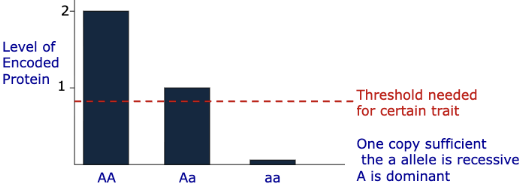
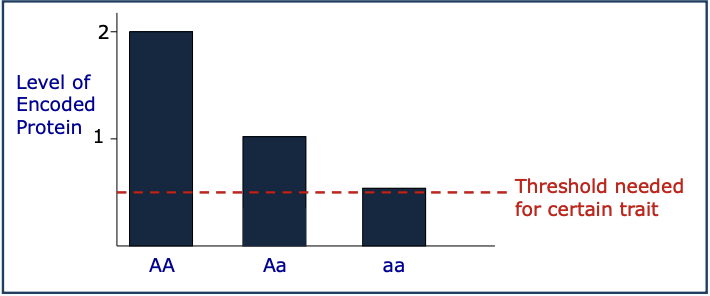
What does the complete dominance chart show?
The bars show amount of protein produced:
AA → high protein level
Aa → medium protein level
aa → very little or no protein
The red dashed line = threshold needed to show the trait
If the amount of protein is above the threshold, the dominant trait appears.
Even though Aa makes less protein than AA,
it still makes enough to cross the threshold.
That’s why:
👉 One copy is sufficient
👉 The dominant allele “wins”
Example: Flower Color
A allele makes red pigment
a allele makes no pigment
Genotypes:
AA → lots of pigment → red
Aa → enough pigment → red
aa → no pigment → white
Modifications to complete dominance
“Modifications” = situations where heterozygote (Aa) does NOT behavior exactly like AA (simple dominant-recessive model doesn’t fully apply)
1) Haploinsufficiency
2) Dominant negative
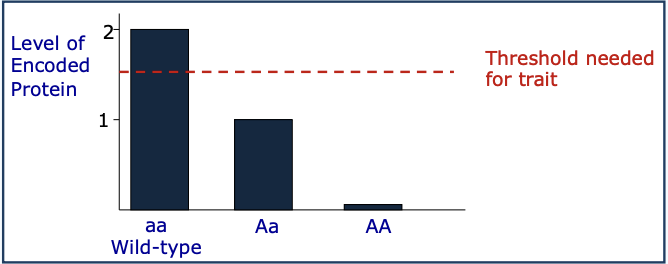
Haploinsufficiency
A genetic condition where one functional copy of a gene is insufficient to produce enough protein for normal function, resulting in a disease phenotype
Cannot produce enough protein in heterozygote
AA = normal
Aa = abnormal
aa = more severe abnormal
Dominant negative
Mutated allele is dominant and “overwhelms” wild-type
The mutant protein interferes with the normal protein’s function, causing disease even when one normal allele is present
Example: Marfan syndrome (FBN1)
Incomplete dominance
Both alleles determine phenotype
The heterozygote is intermediate/blend between the two homozygotes
Flower example
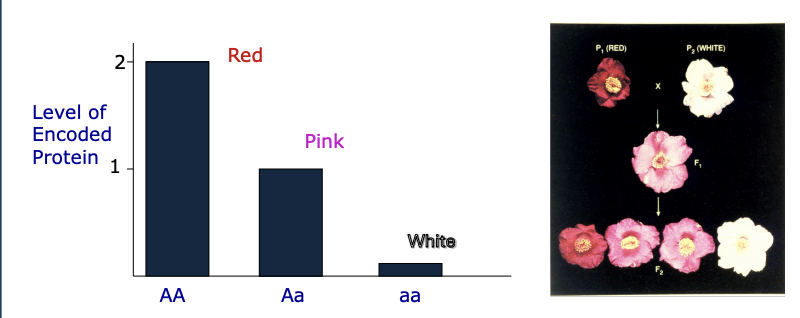
AA = red
aa = white
Aa = pink
Why pink? Because AA produces a lot of red pigment, aa produces none, and Aa produces half the pigment = intermediate color - pink = blend between the two homozygotes
Codominance
Both alleles determine phenotype (are fully and separately expressed); heterozygote shows BOTH traits at the same time
Heterozygous express both traits
Example: AB blood groups: express both A and B antigens; not blended or intermediate, but both fully present
Multi-allelic traits
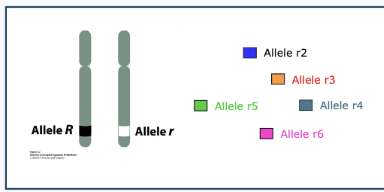
Multiple alleles for a gene present in a population (a gene has more than 2 possible alleles)
A wider assortment of genotype possible
Individuals still have two alleles at a time
Alleles are different mutations in the same gene
REMEMBER: each individual still only has TWO alleles (diploid) but the population can have many versions
Instead of just A and a, there might be A, a¹, a², a³, etc.
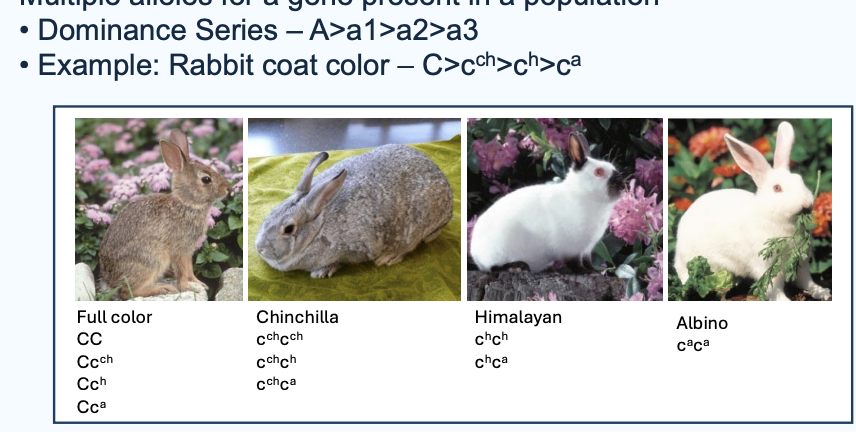
Dominance series
For multi-allelic traits (multiple alleles for a gene present in a population)
Example: rabbit coat color
If two alleles are paired, the higher one in the hierarchy determines phenotype.
Full color (C) > Chincilla (Cch) > Himalayan (Ch) > Albino (Ca)
Partial penetrance
Phenotype does not express 100% of genotype
Environment, timing, other alleles can shift threshold
Observed individuals are less than expected
Even if someone has a genotype that “should” cause the trait: They might not express it if protein levels do not cross the threshold.
Ex. BRCA1 mutation (breast cancer): inherited gene in autosomal dominant manner, but not everyone with the mutation develops cancer
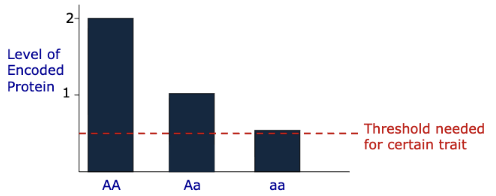
What does this graph for partial penetrance show?
Even if someone has a genotype that “should” cause the trait: They might not express it if protein levels do not cross the threshold.
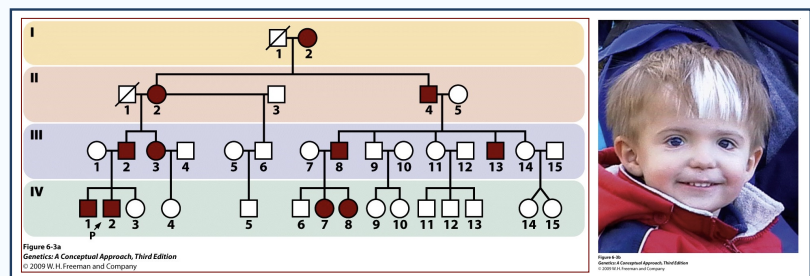
Example of partial penetrance
Example: Waardenburg Syndrome - Dominant allele but low penetrance
45% of WS1/WS1 or WS1/ws1 individuals develop symptoms
Expressivity
Degree of phenotype varies with same genotype
Example: Polydactyly
Extra digits on one or more hands or feets
Digits of varying length and development
Even if two people both have polydactyly, it may express differently; one individual might have very long hands while the other very long feet
Partial penetrance vs. expressivity
Partial (Incomplete) Penetrance - does the phenotype appear at all? not everyone with the genotype shows the trait
Expressivity - how strongly is the phenotype expressed? everyone with the genotype shows the trait, but severity differs
Pleiotropy
One gene affects many traits
Example: Waardenburg Syndrome
One gene: affects heating, vision, skin color, hair color, etc.
Environmental effects
Gene-by-environment interactions
Individuals can have the same genotype, but show different phenotypes depending on the environment
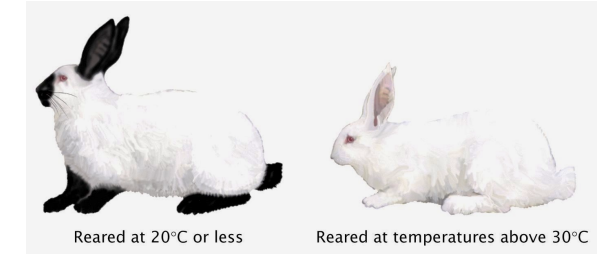
Example: temperature sensitive alleles
Himalayan rabbits: Heat disrupts protein structures, so higher temps result in white color, while lower temps result in normal black and white color
These rabbits have a pigment gene that only works when it’s cool.
In cold temperatures (≤ 20°C):
The enzyme works → pigment is made → dark fur.In warm temperatures (> 30°C):
The enzyme doesn’t work → no pigment → white fur.
Multi-gene traits
Multiple genes influence the same trait
Traits can be complex
Assemblage of structures with different proteins
Different proteins acting at different times in development
Multi-gene traits scenarios
1) Complementation
2) Epistasis
Complementation
Type of multi-gene trait
Mutations in DIFFERENT genes = same trait (Two individuals have the same mutant phenotype, but the mutations are in different genes.)
When crossed, heterozygous offspring return to wild-type (normal)
Complementation = restoration of wild-type phenotype when two recessive mutations in different genes are combined in a heterozygote.
Why does crossing two individuals with the same mutant phenotype but mutations in different genes lead to the normal (wild-type)?
Each parent has:
One defective gene
But a normal copy of the other gene
When crossed:
The offspring get one working copy of BOTH genes.
So the normal function is restored.
Guinea pig example of complementation
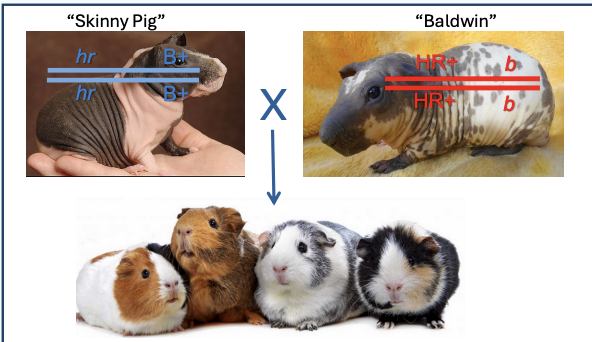
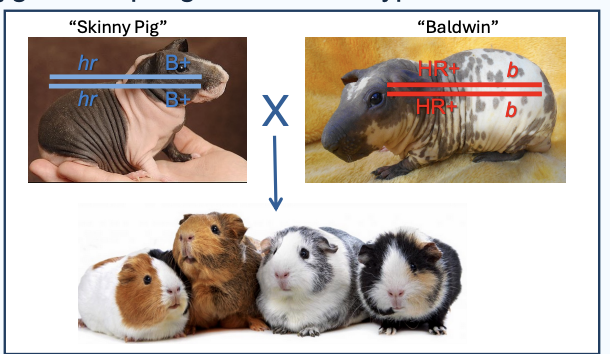
Two hairless guinea pigs due to mutations in different genes
Skinny pig - genotype: hr/hr || B+/B+ (mutation in hr gene, normal B gene); hairless because hr gene is defective
Baldwin - genotype: HR+/HR+; b/b (normal hr gene, mutation in b gene); also hairless, but because b gene is defective
When we cross them, the offspring become hr+/hr || B+/b
Each baby now has one working copy of hr, and one working copy of b, so the F1 offspring have fur (wild-type)
Epistasis
Type of multi-gene trait
One gene masks the effects of another
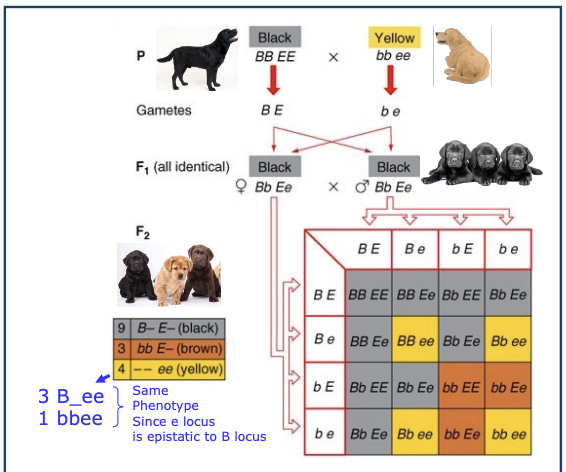
Example: coat color in dogs
Gene B: B = black pigment; b = brown pigment
Gene E: E = allows pigment deposition; e = no pigment deposited
If genotype is ee → no pigment → yellow dog, even if B is present (for black pigment).
Gene E controls whether B can show its effect.
E is epistatic to B (E gene masks the effect of B gene).
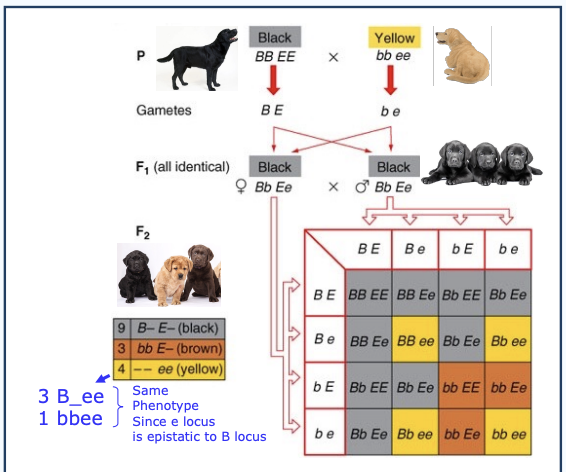
Phenotypic ratio changes
Normally dihybrid cross gives 9:3:3:1.
But here:
You get:
9 black
3 brown
4 yellow
That 4 yellow group includes:
B_ ee
bb ee
Both yellow because ee masks B locus.
So you see 9:3:4 ratio.
Polygenic traits
Continuous traits
“Additive genetic variation” - effects of different alleles add up to influence the trait
Coded by genes at many loci
Examples: height, skin, color in humans
Explore top notes

