Mizzou BIOCHEM 4270 Exam 3
 Call Kai
 Learn
Learn Practice Test
 Spaced Repetition
 Match
Match Flashcards
 Knowt Play
1/34

There's no tags or description
Looks like no tags are added yet.
Name | Mastery | Learn | Test | Matching | Spaced | Call with Kai |
|---|
No analytics yet
Send a link to your students to track their progress
35 Terms
What is the primary function of glycogen in the liver vs. in muscle?
Liver: Stores glucose to maintain blood glucose levels between meals.
Muscle: Stores glucose as a rapid source of glucose-1-phosphate for its own energy needs during contraction.
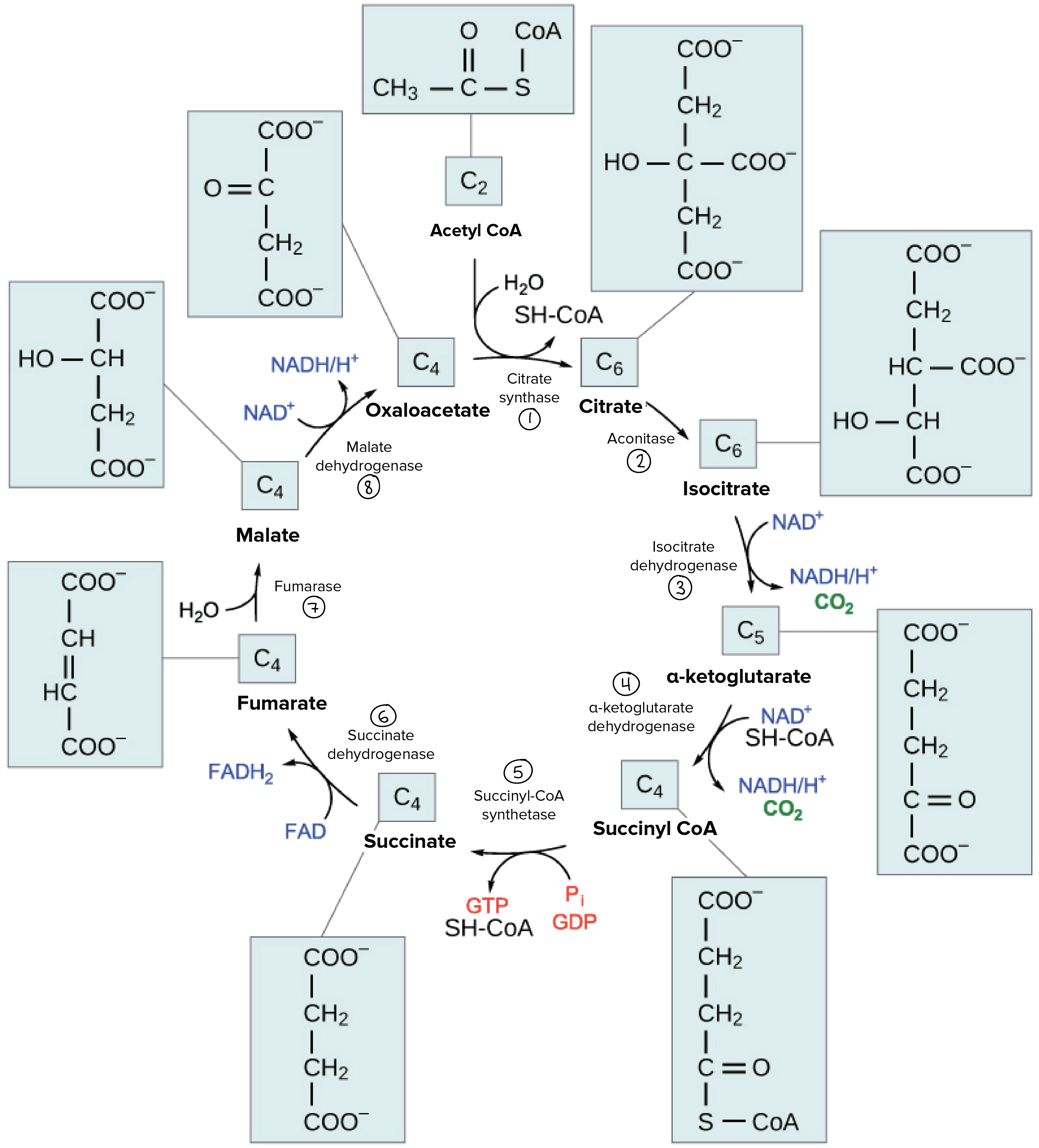
Draw the citric acid cycle
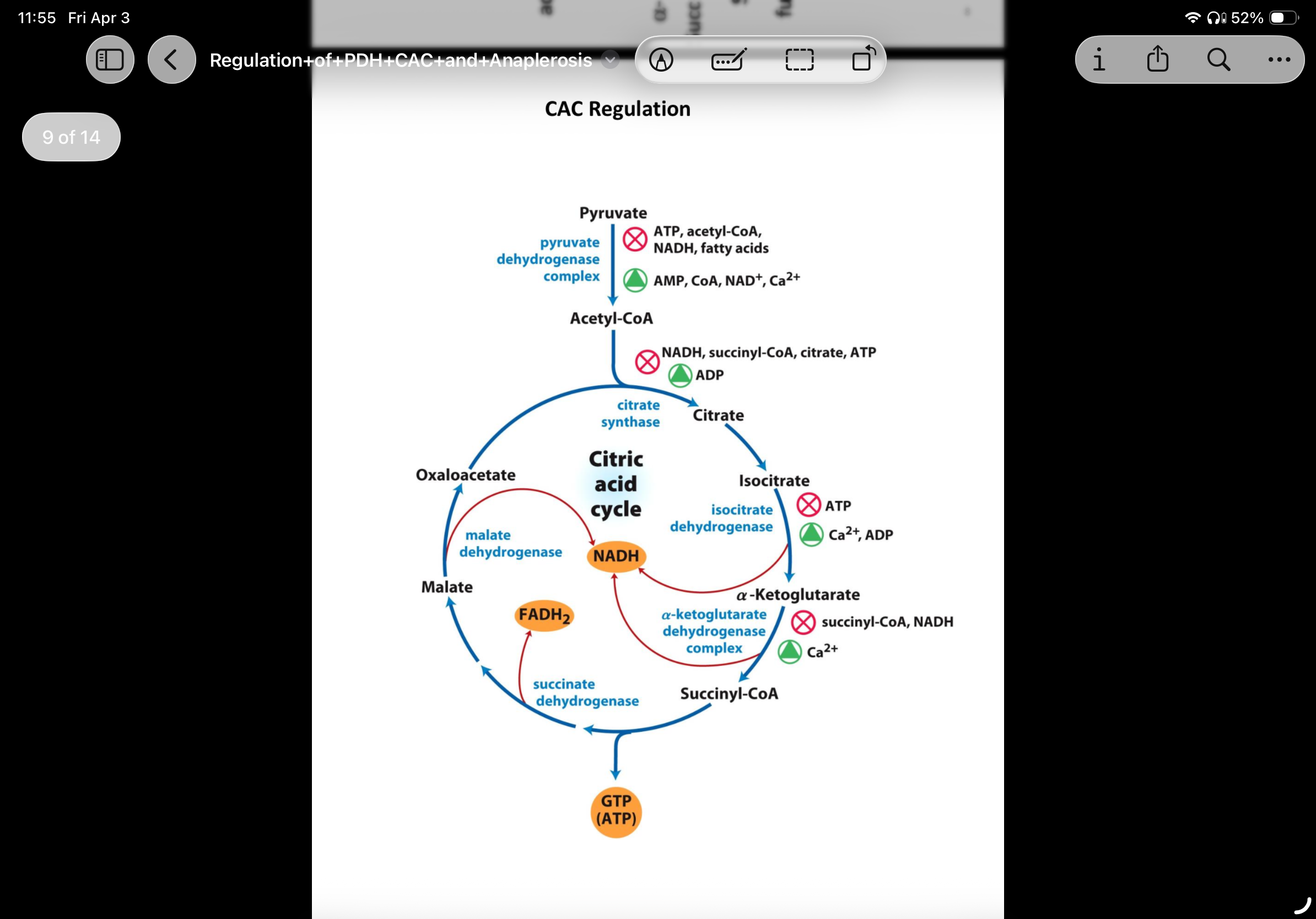
Draw of CAC regulation
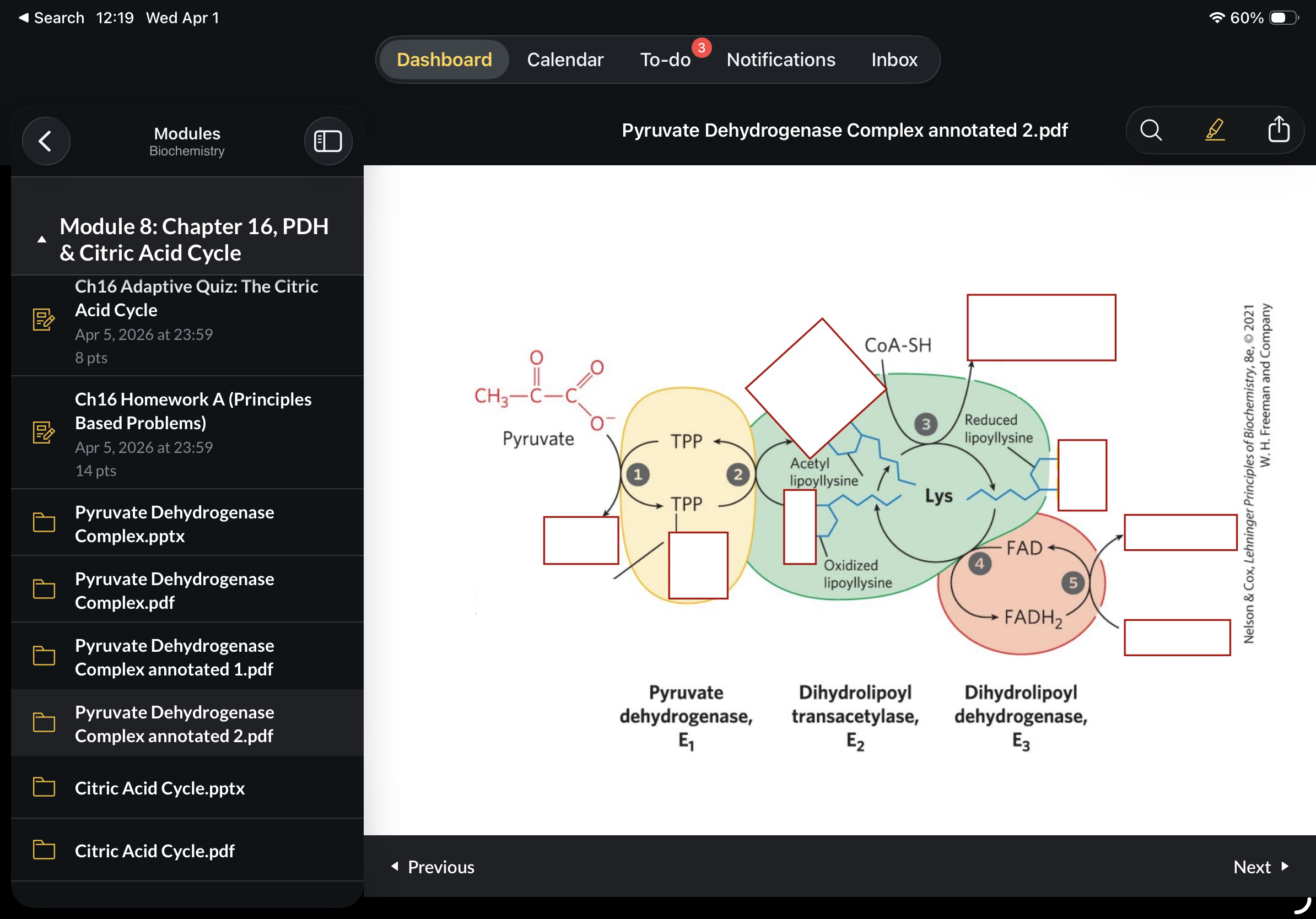
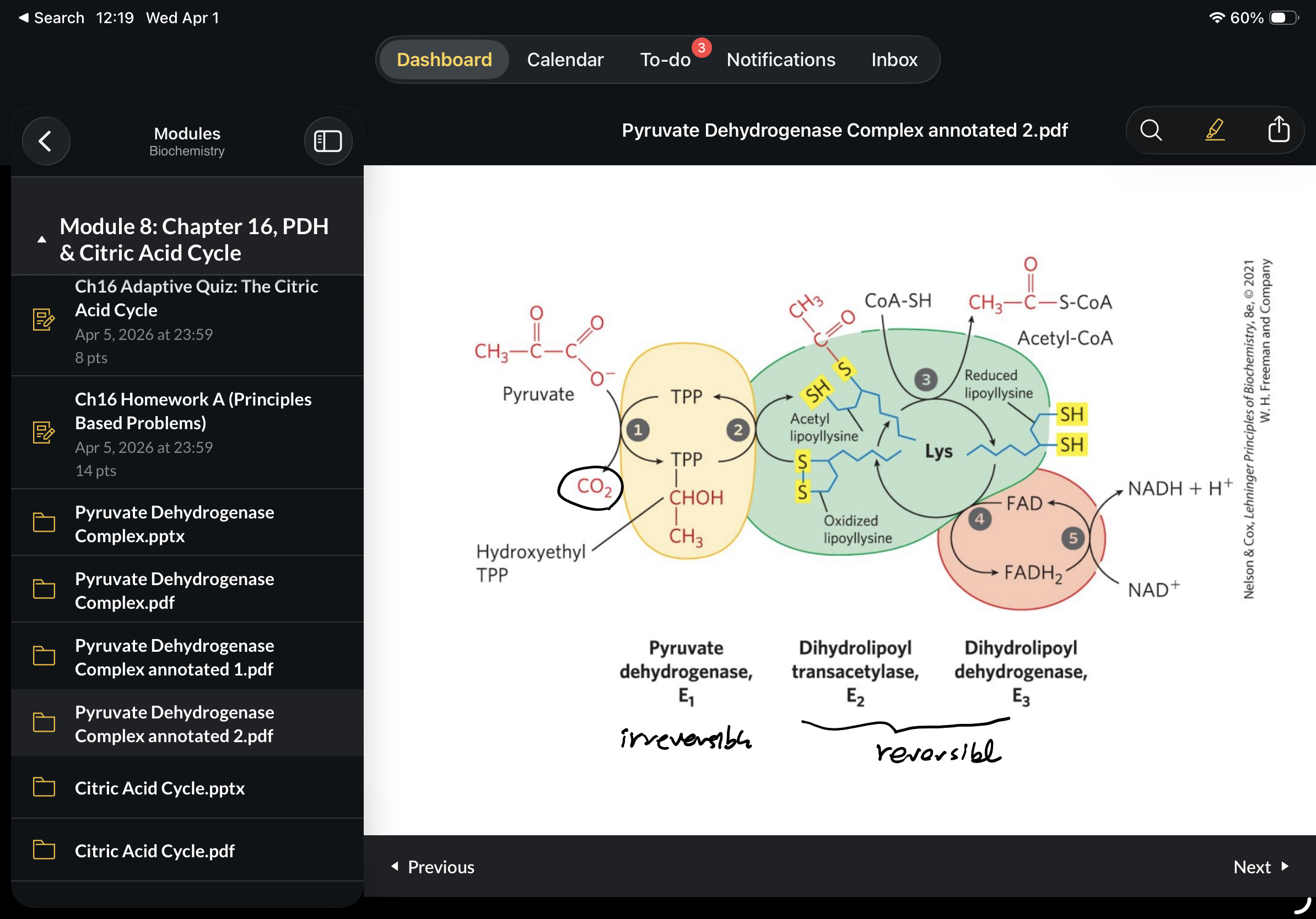
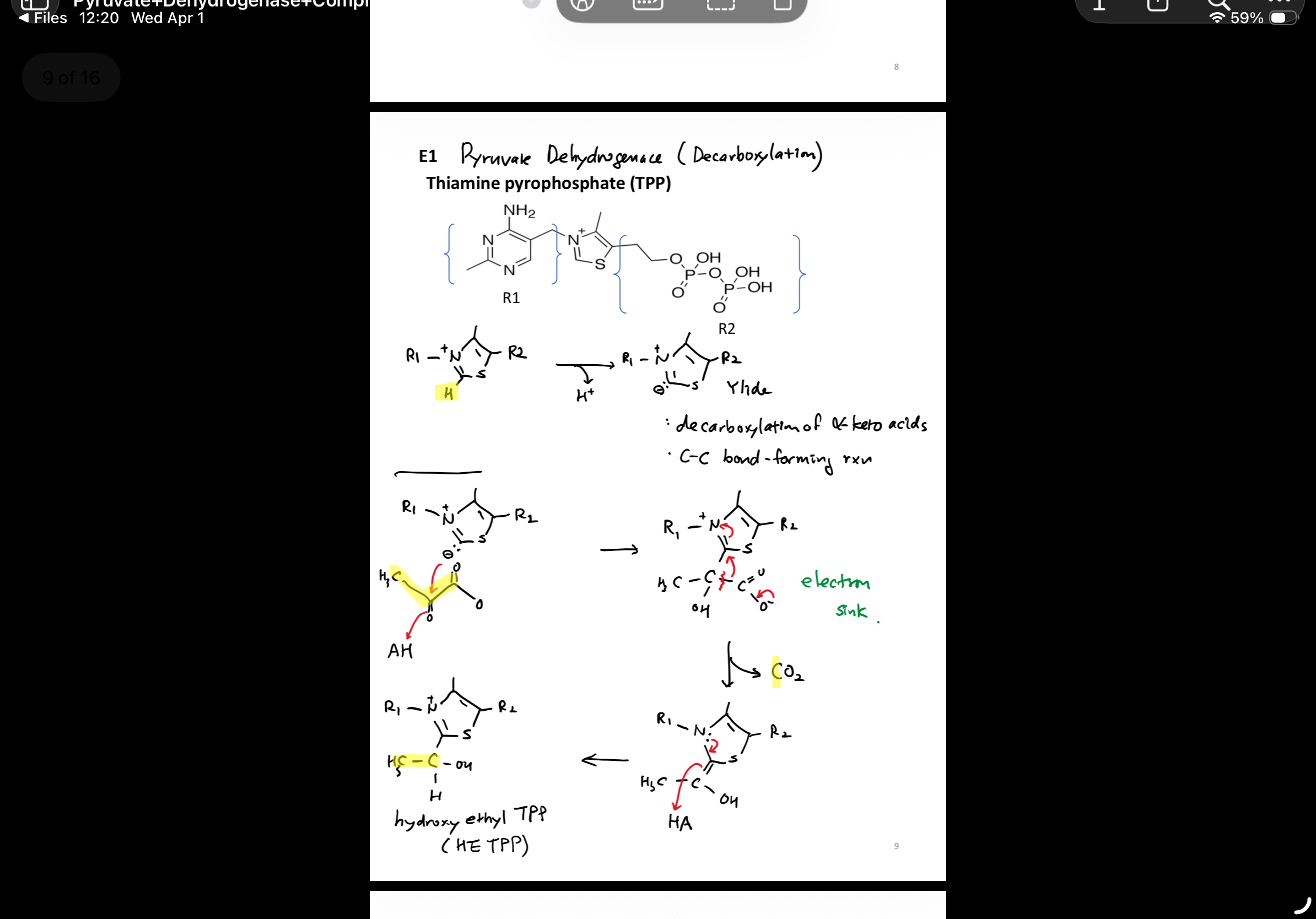
E1 draw out and what it is
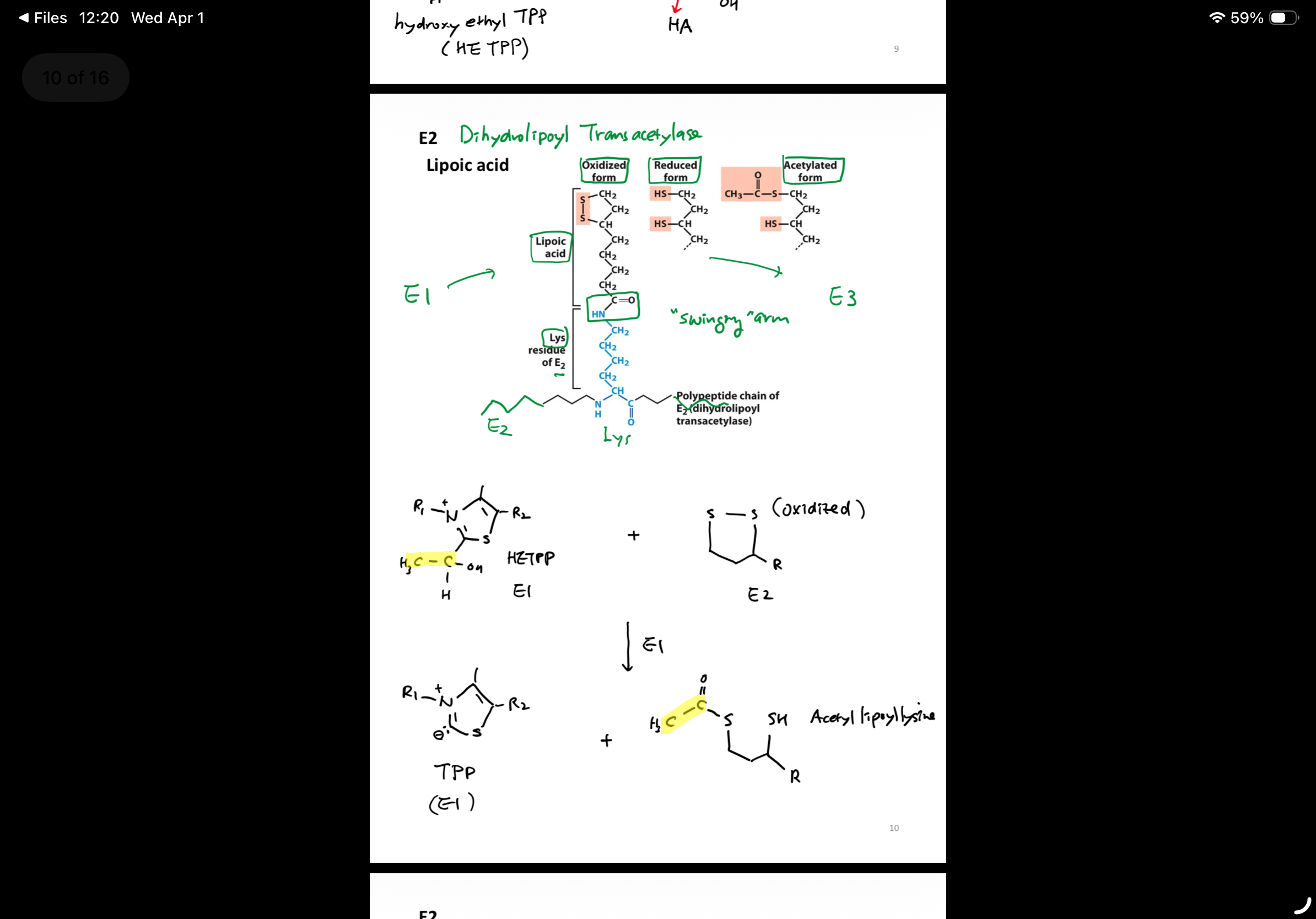
E2 lipoic acid draw it out and what it is
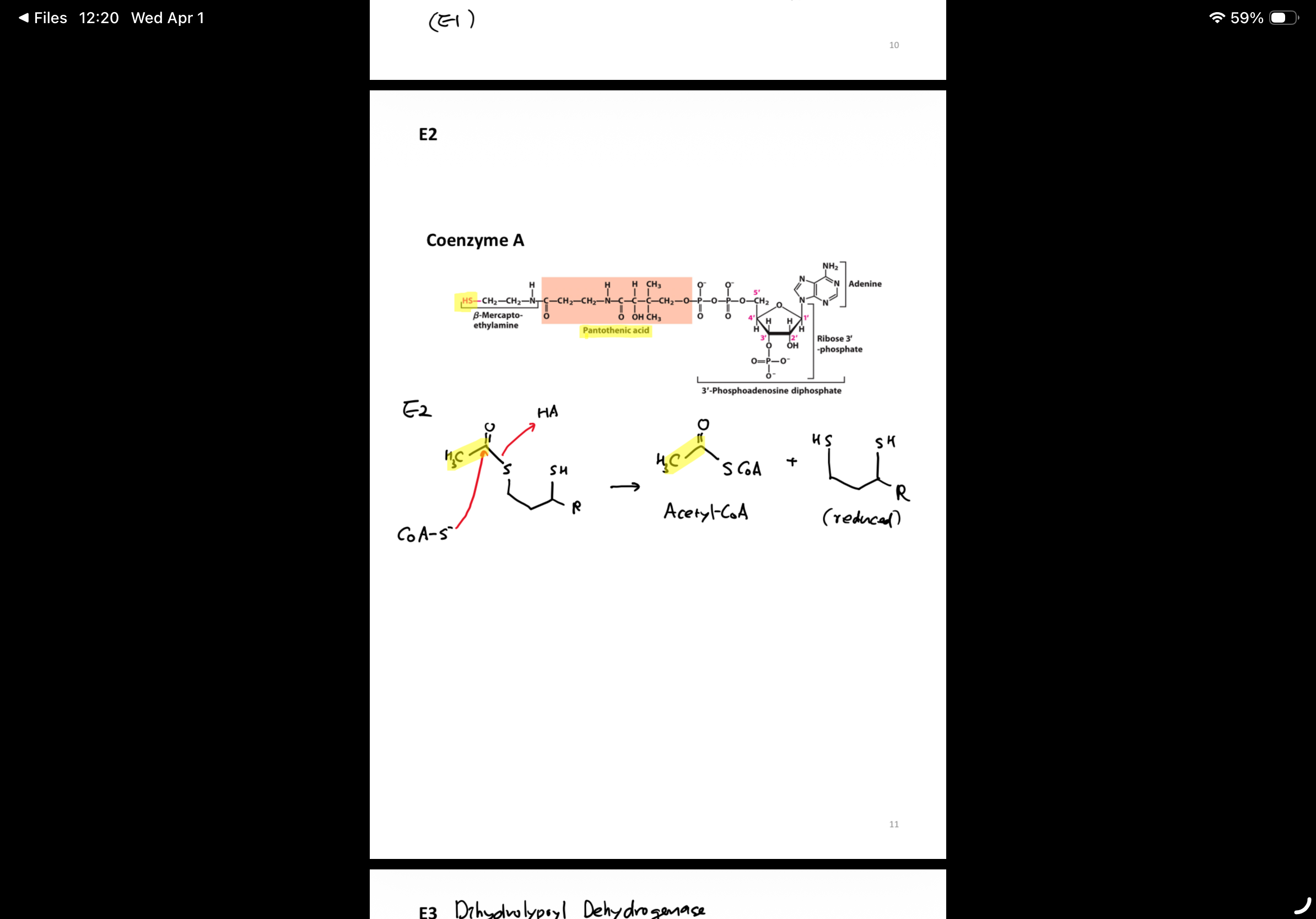
E2 coa draw it out and what it is
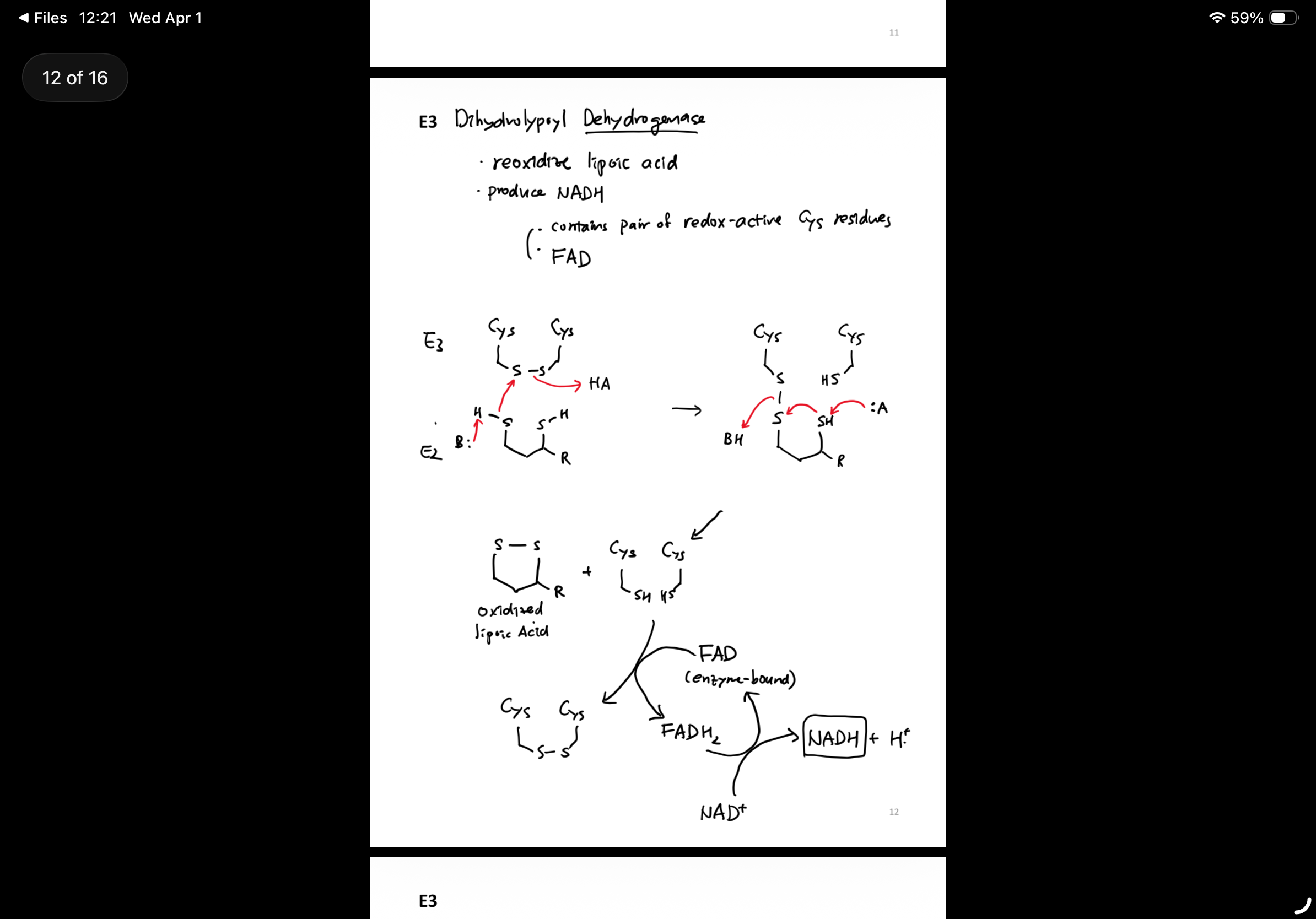
E3 draw it out and what it is
What are the advantages of storing glucose as glycogen (a polymer)?
Osmotic stability: Glycogen is a large, insoluble polymer. Storing glucose as a single molecule would create a dangerously high osmotic pressure.
Rapid mobilization: The branched structure creates many non-reducing ends, allowing for the rapid addition and removal of glucose units by glycogen synthase and glycogen phosphorylase.
Describe the structure of glycogen. Include the type of linkages, branching frequency, and number of reducing ends.
Glycogen is a polymer of glucose linked by α(1→4) glycosidic bonds. Branches occur every 8-12 residues via α(1→6) glycosidic bonds. It has a single reducing end (the end with a free anomeric carbon) and many non-reducing ends (the ends where glucose units are added or removed).
What are the reactants and products of the reaction converting glucose-6-phosphate to glucose-1-phosphate?
Reactant: Glucose-6-phosphate (G6P)
Product: Glucose-1-phosphate (G1P)
Enzyme: Phosphoglucomutase
What are the reactants and products of the UDP-glucose synthesis reaction? Why is it thermodynamically favored in the cell?
Reactants: Glucose-1-phosphate (G1P) + UTP
Products: UDP-glucose + PP~i~ (pyrophosphate)
ΔG°' is positive.
It is driven forward in the cell by the rapid hydrolysis of PP~i~ to 2 P~i~ by the enzyme pyrophosphatase, which makes the overall reaction highly exergonic.
What is a sugar nucleotide? What are its key features and advantages?
A sugar nucleotide (e.g., UDP-glucose) is an activated form of a monosaccharide.
· Key Features: It contains a sugar linked to a nucleotide (UDP) via a high-energy bond.
· Advantages:
1. Molecular Recognition: The nucleotide "tag" allows enzymes to distinguish between sugars destined for different pathways.
2. Leaving Group: The UDP is an excellent leaving group, making the sugar's anomeric carbon highly reactive for nucleophilic attack.
3. Irreversibility: The energy investment makes synthetic pathways essentially irreversible in the cell.
What is the substrate requirement of glycogen synthase? Can it initiate a new glycogen chain?
Glycogen synthase requires a pre-existing glycogen primer of at least 4 glucose residues linked by α(1→4) bonds. No, it cannot initiate synthesis. It can only extend an existing chain by adding UDP-glucose to the non-reducing end.
How is the glycogen chain initiated?
The protein glycogenin acts as a primer. It catalyzes the addition of the first few UDP-glucose molecules to itself, creating a short α(1→4) linked glucose chain that serves as the primer for glycogen synthase.
How are α(1→6) branches introduced into glycogen?
Glycogen branching enzyme (amylo-α(1,4)→α(1,6) transglycosylase) removes a block of 6-7 glucose residues from a growing chain (via α(1→4) linkage) and reattaches it to an inner glucose residue via an α(1→6) glycosidic bond.
What are the reactants, products, and cofactor of the glycogen phosphorylase reaction?
Reactants: Glycogen (at non-reducing end) + P~i~ (inorganic phosphate)
Products: Glycogen (shortened by 1 residue) + Glucose-1-phosphate (G1P)
Cofactor: Pyridoxal phosphate (PLP) , which acts as a general acid-base catalyst.
What is the mechanism of glycogen phosphorylase? How is it different from hydrolysis?
Mechanism: PLP catalyzes the nucleophilic attack of orthophosphate (P~i~) on the C1 of the terminal glucose residue, breaking the α(1→4) bond.
Comparison: Instead of using water to break the bond (hydrolysis), it uses P~i~, yielding a phosphorylated sugar (G1P) .
Why is the phosphorylase reaction thermodynamically favored in the cell despite having a positive ΔG°'?
The reaction is driven forward by maintaining a high ratio of [P~i~] to [G1P]. In the cell, G1P is rapidly consumed by phosphoglucomutase (to make G6P), keeping its concentration low.
What is the advantage of phosphorolysis over hydrolysis?
Phosphorolysis produces glucose-1-phosphate, which is already phosphorylated. This saves the cell one ATP that would otherwise be required to phosphorylate free glucose via hexokinase.
Describe the path by which glycogen breakdown in the liver increases blood glucose.
1. Glycogen phosphorylase produces G1P.
2. Phosphoglucomutase converts G1P to G6P.
3. Glucose-6-phosphatase (an enzyme found only in the liver and kidneys) removes the phosphate group, producing free glucose.
4. Glucose is transported out of the liver and into the bloodstream.
What does the debranching enzyme do, and why is it needed?
Glycogen phosphorylase cannot cleave α(1→6) bonds or approach the branch point closely. The debranching enzyme has two activities:
1. Transferase: Moves a block of 3 glucose residues from a branch to the end of a main chain, making the branch point accessible.
2. α(1→6) : Hydrolyzes the single remaining glucose residue at the branch point, releasing free glucose.
How does phosphorylation change the activities of glycogen phosphorylase (GP) and glycogen synthase (GS)?
Phosphorylation: Activates glycogen phosphorylase (GP b → GP a). Inactivates glycogen synthase (GS a → GS b). This ensures that glycogen breakdown and synthesis do not occur simultaneously at high rates.
What is the allosteric regulation of muscle glycogen phosphorylase by AMP, ATP, and glucose?
AMP: Allosteric activator (binds to the inactive "b" form, signaling low energy).
ATP: Allosteric inhibitor (signals high energy).
Glucose: Allosteric inhibitor (liver GP, signals high blood sugar, promoting dephosphorylation and inactivation).
What is the allosteric regulation of glycogen synthase by glucose-6-phosphate (G6P)?
G6P is an allosteric activator of glycogen synthase. It is a signal that glucose is abundant, promoting the inactive "b" form to be active regardless of its phosphorylation state.
What are the kinases and phosphatases that regulate glycogen metabolism? What are their targets?What are the kinases and phosphatases that regulate glycogen metabolism? What are their targets?
- Protein Kinase A (PKA): Activated by cAMP. Phosphorylates and activates phosphorylase kinase, and phosphorylates and inactivates glycogen synthase.
· Phosphorylase Kinase (PhK): Phosphorylates and activates glycogen phosphorylase (GP b → GP a).
· Glycogen Synthase Kinase 3 (GSK3): Phosphorylates and inactivates glycogen synthase (GS a → GS b).
· Protein Phosphatase 1 (PP1): Dephosphorylates and inactivates glycogen phosphorylase (GP a → GP b) and activates glycogen synthase (GS b → GS a).
How do insulin, epinephrine, and glucagon affect glycogen metabolism?
- Epinephrine & Glucagon: Signal "fight-or-flight" (muscle) or "low blood glucose" (liver). They activate PKA, leading to increased glycogen breakdown and decreased glycogen synthesis.
· Insulin: Signals "high blood glucose." It activates PP1, leading to decreased glycogen breakdown and increased glycogen synthesis. It also inactivates GSK3.
What is the cascade mechanism of hormone action (e.g., epinephrine/glucagon)?
A signal amplification pathway: Hormone binds receptor → activates G-protein → activates adenylyl cyclase → increases cAMP → activates PKA → PKA phosphorylates downstream targets (e.g., phosphorylase kinase and glycogen synthase), leading to a large, rapid change in metabolic state.
What is the overall reaction of the private dehydrogenase complex (PDH)?
Pyruvate + CoASH + NAD+ → Acetyl-CoA + NADH + H+
Where is PDH located in bacteria vs. eukaryotes?
Bacteria: Cytoplasm
Eukaryotes: Mitochondrial matrix
What are the three enzymes in the PDH complex, and what reactions do they catalyze?
E1 (pyruvate dehydrogenase): Decarboxylates pyruvate, transfers hydroxyethyl group to TPP
E2 (Dihydrolipoyl transacetylase): Transfers acetylene group to CoASH, forming acetylene-CoA
E3 (Dihydrolipoyl dehydrogenase): Regenerates oxidized lipoamide, reduces NAD+ to NADH
What are the 5 cofactors/prosthetic groups of PDH, and which enzyme uses each?
TPP - E1
Lipoamide (lipoic acid). E2
FAD - E3
CoASH - E2 (substrate)
NAD+ - E3 (substrate)
How is lipoamide regenerated in the PDH complex?
E3 ( Dihydrolipoyl dehydrogenase) uses FAD to re-oxidize dihydrolipoamide back to lipoamide. FAD is then re-oxidized by NAD+
What are the energy products of one turn of the CAC (per acetylene-CoA)?
3 NADH
1 FADH2
1 GTP (or ATP)
2 CO2

