Lecture 10 - Wildlife Conservation and One Health
 Call Kai
 Learn
Learn Practice Test
 Spaced Repetition
 Match
Match Flashcards
 Knowt Play
1/46

There's no tags or description
Looks like no tags are added yet.
Name | Mastery | Learn | Test | Matching | Spaced | Call with Kai |
|---|
No analytics yet
Send a link to your students to track their progress
47 Terms
energy flows through food chains and nutrients are recycled
Function through complex web of interactions between organisms and the environment where...
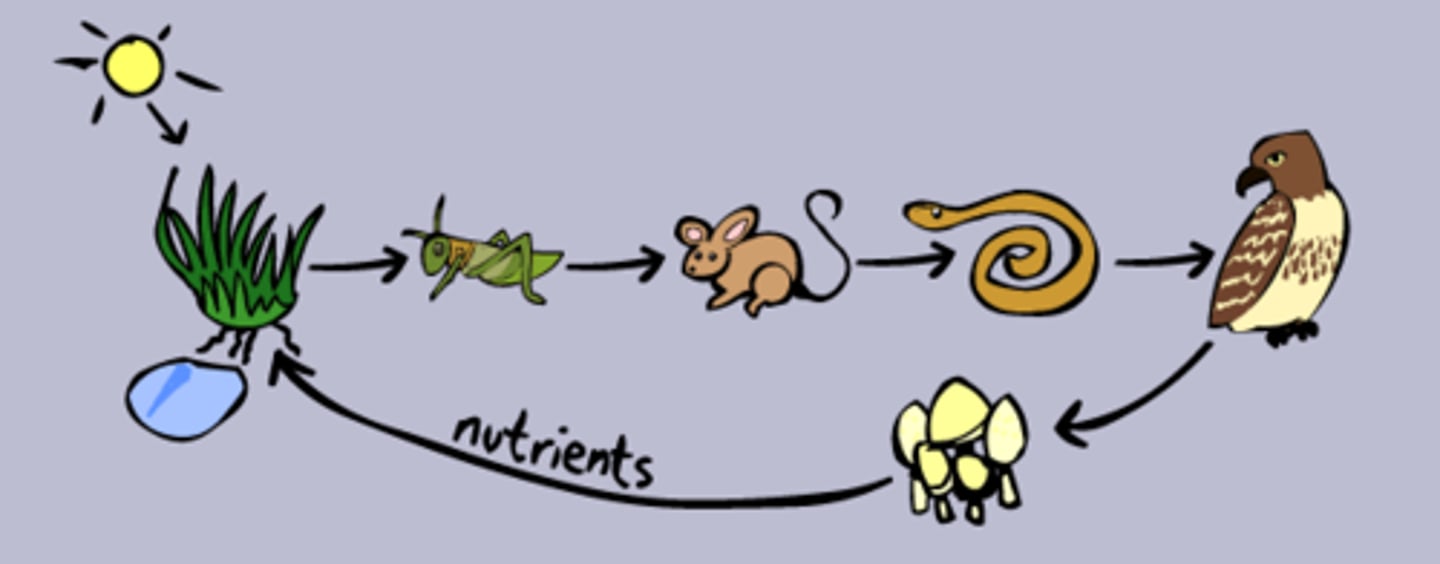
humans
______ benefit from the services ecosystems provide
vultures
What animals are considered nature's sanitation service because they remove dead animals that spread bacteria and pathogen if not removed?
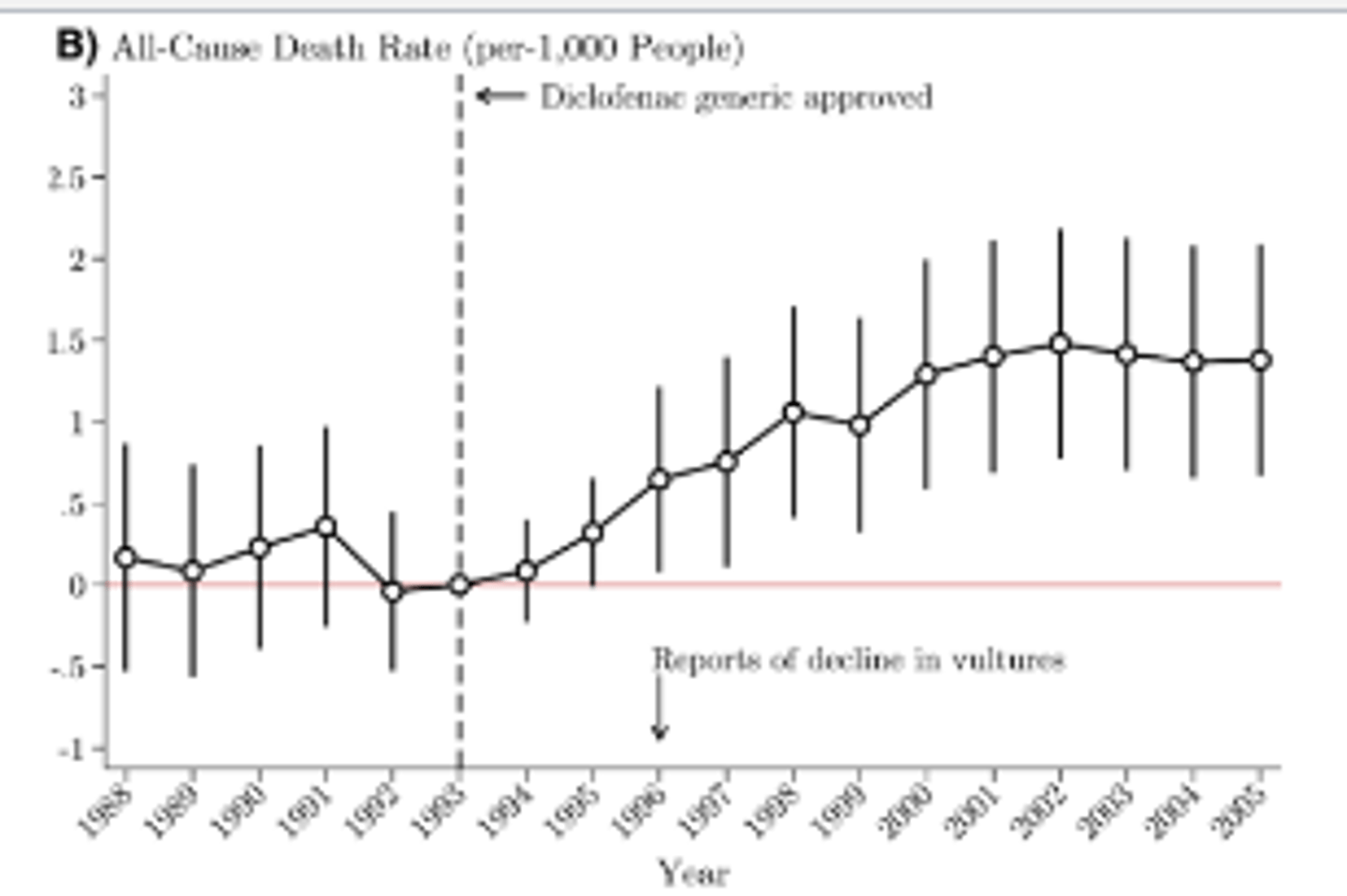
human death rates (+4%)
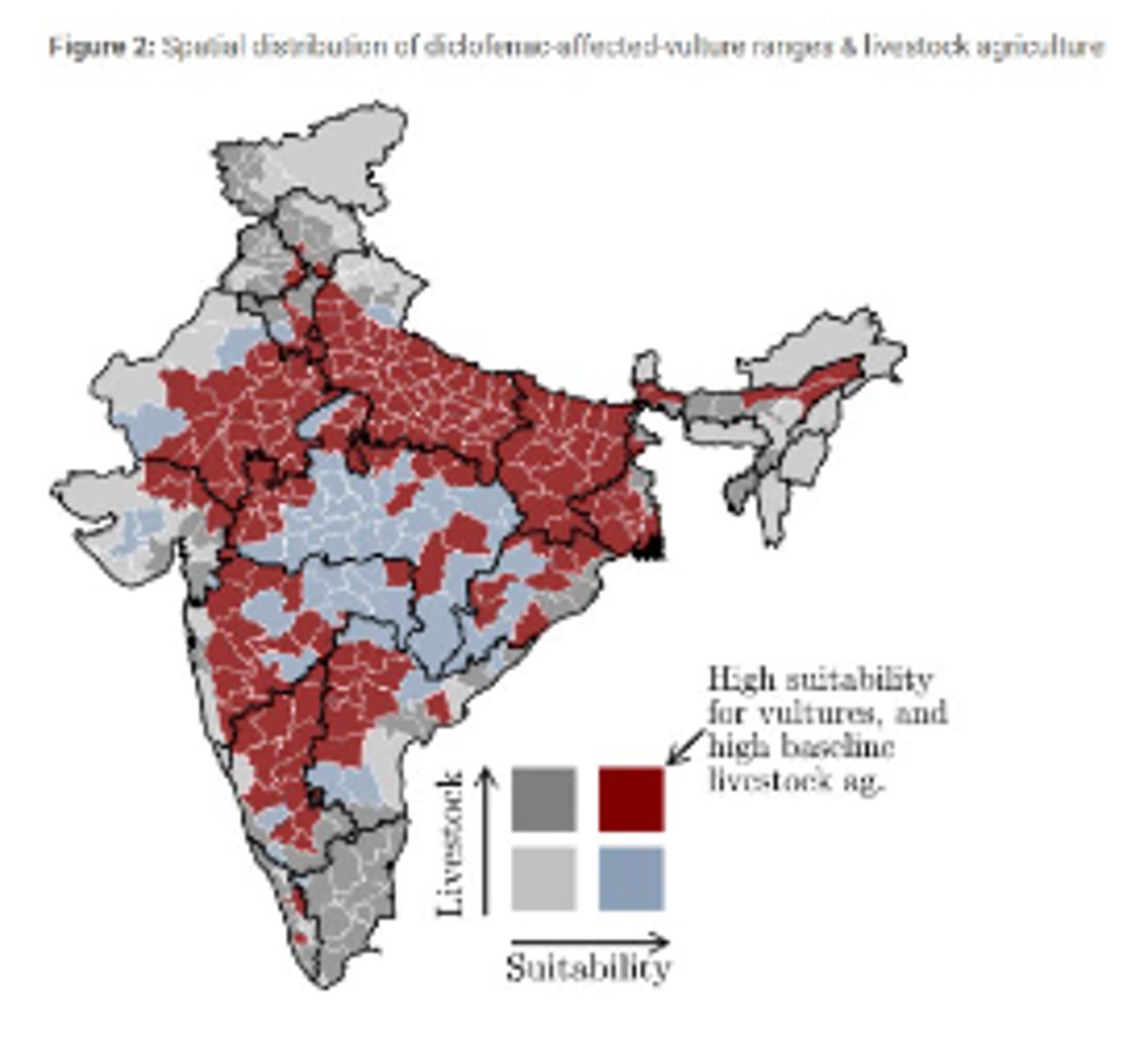
Researchers compared ______ in Indian districts that once thrived with vultures to those with historically low vulture populations
1. rabies vaccine sales
2. feral dog counts
3. pathogen levels in water supply
What other things did researchers examine in India?
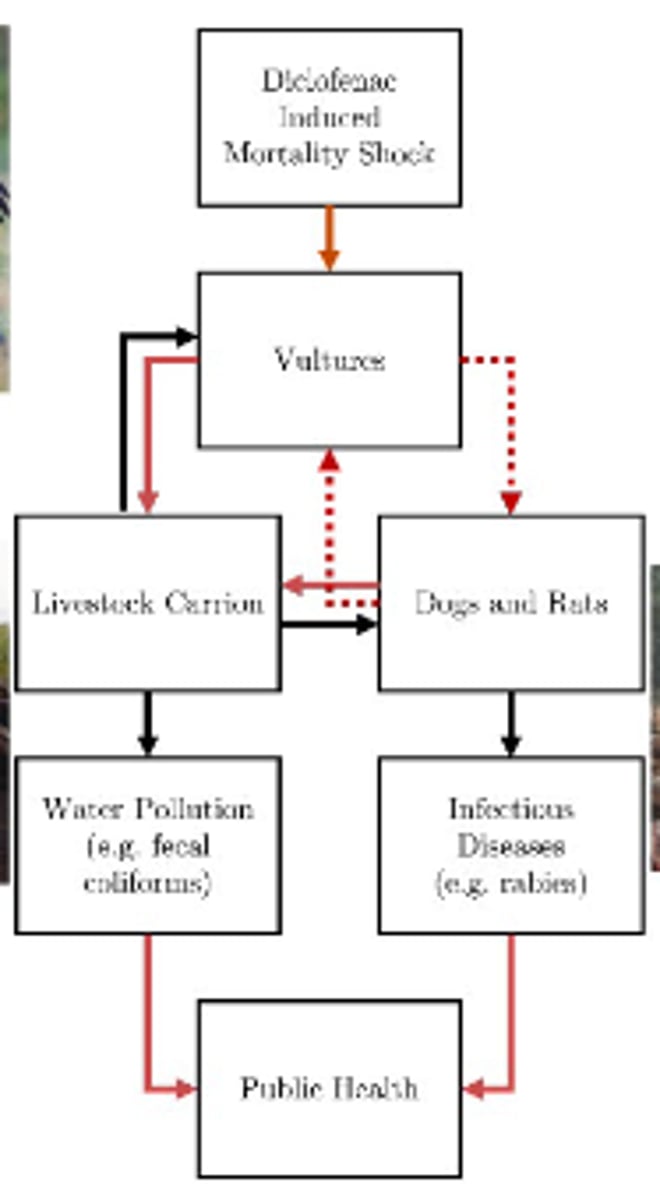
vultures on ecosystem
What does this flowchart indicate?
wildlife conservation
Veterinarians work in field research and ______ _____ programs, conducting health assessments of wild populations
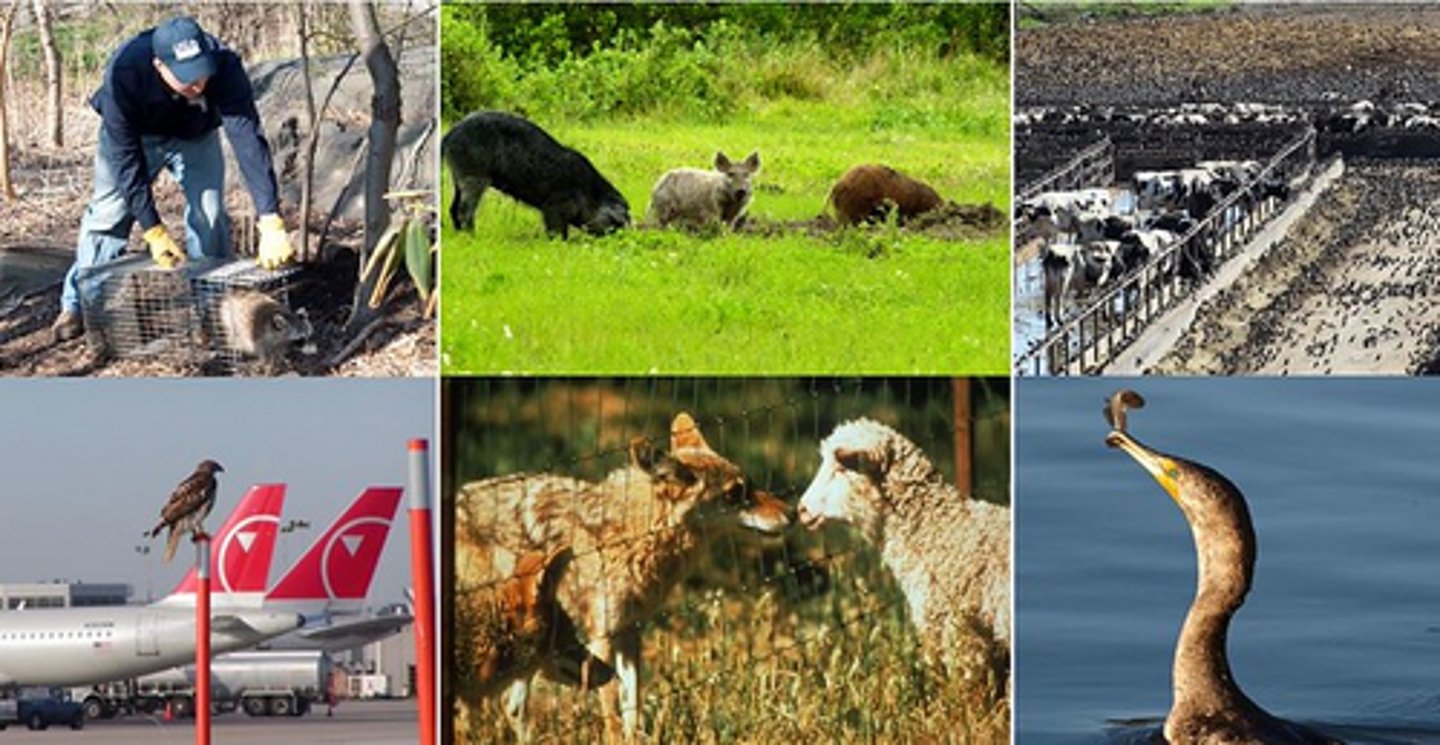
disease surveillance
What is used for detection and response to wildlife outbreaks, working with organizations like the National Wildlife Health Center and USDA Wildlife Services?
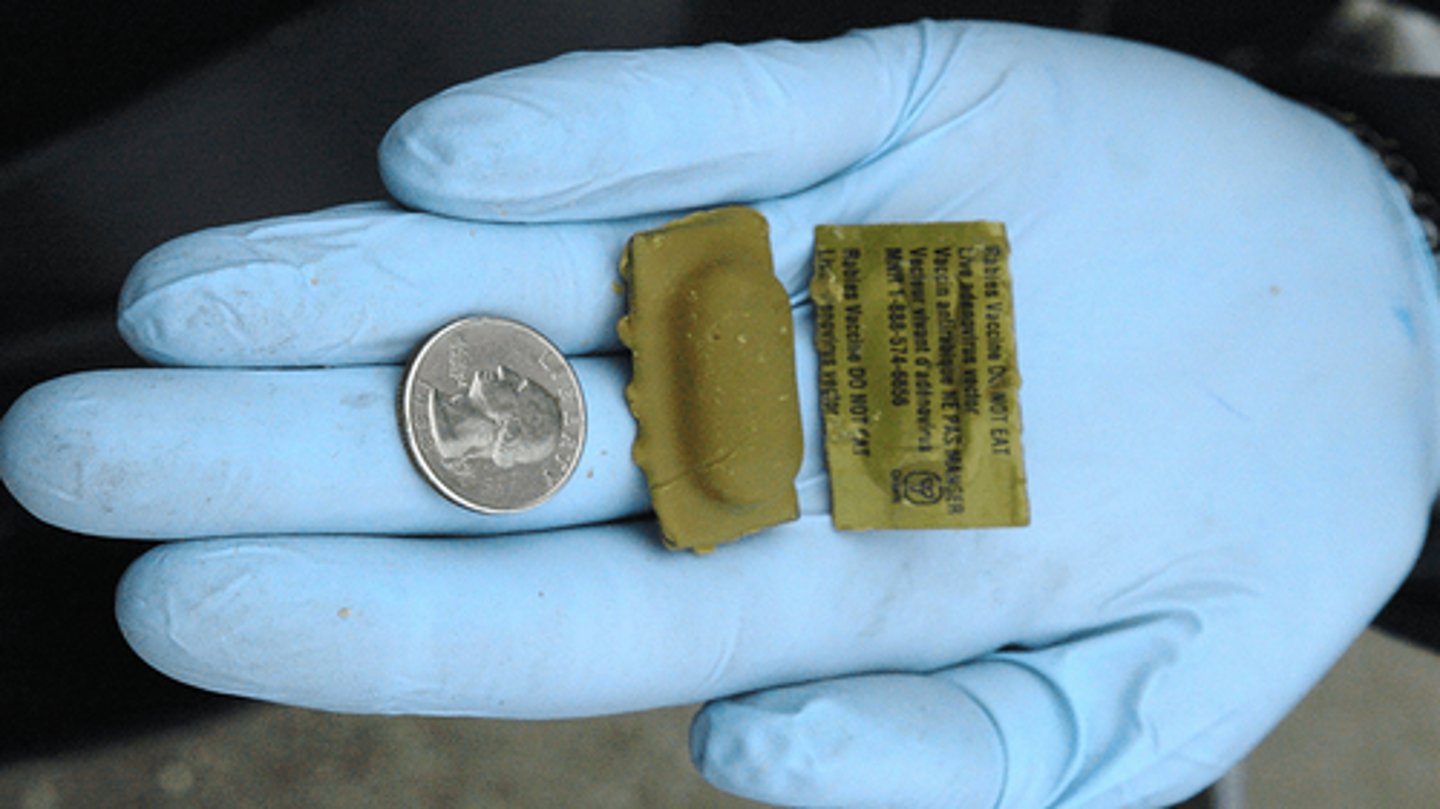
oral rabies vaccines
What are baits that are deployed in fox and raccoon populations to reduce human and domestic animal cases?
wildlife biologists
A wildlife veterinarian works closely with...
1. technical expertise to agency
2. conserve and manage fish and wildlife populations
3. help recover endangered species
What all are involved in the job of a free-ranging wildlife veterinarian?
public perceptions
In a way, wildlife veterinarians can be the mosst important link between _______ ______ of wildlife and economic and health interests of people and their animals.
responsible management and sustainable use
Conservation is the ____________ of natural resources to ensure their long-term availability while maintaining environmental health and ecosystem balance
1. habitat restoration
2. wildlife population management
3. sustainable hunting or fishing practices
What things are part of responsible conservation management?
19th century
Wildlife conservation emerged as a social and political movement in the United States and Canada during the...
"sport hunters", "market hunters"
Wildlife conservation movement was led by _____ who decried the devastating losses of wildlife caused by _____ who hunted for profit
wildlife is public property
The government holds wildlife in trust for the benefit of all people because...
wildlife cannot be slaughtered for commercial use
What principle eliminates trafficking in game animals?
wildlife is allocated by law
What principle is described: Every citizen in good standing regardless of wealth, social standing, or land ownership is allowed to participate in the harvest of fish and wildlife within guidelines set by state and federal governments.
wildlife shall be taken by legal and ethical means
What principle is being described: in the spirit of "fair chase" and with good cause. Animals can be killed only for legitimate purposes — for food and fur, in self-defense, or for protection of property.
wildlife is an international resource
What principle is being described: As such, hunting
and fishing shall be managed cooperatively across state,
provincial, and national boundaries.
scientific knowledge and principles
Wildlife management, use and conservation shall be based on sound...
hunting, fishing, and trapping shall be democratic
What wildlife principle is being described: This gives all persons — wealthy and poor, landowner and non-landowner alike — the opportunity to participate.
no
Are conservation and preservation the same thing?
preservation
The goal of protecting nature from human use and interference, aiming to keep ecosystems intact in their natural state.
1. habitat protection - national parks and wildlife refuges
2. minimal human activity - "sorry, no dogs"
3. sustainable hunting or fishing practices
4. example: Yellowstone National Park preserving bison and wolves from hunting and habitat modifications
What are some examples of preservation?
exploitation
What is the term for unsustainable use or overuse of natural resources, often leading to habitat destruction, population declines, and ecosystem imbalances?
1. overhunting/fishing
2. deforestation
3. illegal wildlife trade
4. global trade and invasive species movement
What are examples of exploitation?
1. nuts and timber for humans
2. nuts, sapling browsing, and habitat for animals
What do chestnut trees provide culturally and ecologically in the eastern US?
blight fungus
What invasive species was introduced and decimated the chestnut trees, changing forest forage and habitat metrics?
1. enhance wildlife populations
2. reclaim soil quality
Coal mine reclamation is using blight resistant chestnut to improve habitat on mountain tops to...
Endangered Species Act (ESA) of 1973
What act was enacted in response to declining populations of animals and plants and designed to protect and recover species at risk of extinction and promote conservation of those species' habitats?
web of life
In theory, each species is a part of the _______ with a unique role, cultural and biological, in their communities, performing services that are essential to our combined well-being
air, land and water
By conserving them, guided by the best-available science, we help protect healthy ________ for everyone
declines
The destruction and modification of habitat, pollution, and hunting are a few of the factors that explain population declines.
Wild Ones by Jon Mooallem
What book explores the environmental and cultural history of popular culture and wild animals in America?
1. damage to property by habituated wildlife in human-dominated landscapes
2. threats to pets and livestock
3. emerging infectious diseases (EID), wildlife-associated zoonoses
What are negative consequences that people are becoming more aware of?
~75%
____ of all emerging infectious diseases (EIDs) are zoonotic with most originating in wildlife
1. lyme disease
2. west nile virus encephalitis
3. chronic wasting disease
4. zoontic avian influenzas
What are some examples of EIDs that have increased since 1940?
"grass roots"
Conservation efforts are usually from ____ organizations or local communities
increase
If wildlife populations continue their recovery, the frequency of human-wildlife interactions will continue to..
rarely identified
Although emerging diseases of humans and domestic animals are assumed to be maintained in wildlife, reservoirs or reservoir hosts are...
one or more
A "reservoir" is ______ epidemiologically connected populations or environments in which a pathogen can be maintained and from which infection is transmitted to target population
managed
Emergent infectious diseases are often _____ through large-scale actions directed towards suspected reservoirs
perceived notions
Sometimes actions stem from _____ ____ of reservoir hosts and where infectious agents reside may not be measured directly
1. that infections in reservoir hosts are nonpathogenic
2. any natural host is a reservoir host
3. the reservoir must be a different species
4. reservoirs are economically unimportant hosts
5. reservoirs may be primary or secondary hosts
What are characteristics of reservoirs?
1. we have a limited understanding of the epidemiology of multi-host pathogens
2. reservoirs must be defined with reference to particular target populations
3. identification of reservoir may be difficult but necessary for control
4. if disease risk or costs are low then it could be justified
5. control measures are likely to be ineffective if directed at components of reservoir that are not involved
What are some take-home messages regarding reservoirs?

