Biological molecules

0.0(0)
studied byStudied by 0 people
call kaiCall Kai
learnLearn
examPractice Test
spaced repetitionSpaced Repetition
heart puzzleMatch
flashcardsFlashcards
GameKnowt Play
Card Sorting

1/126

encourage image

There's no tags or description

Looks like no tags are added yet.

Last updated 2:35 PM on 2/4/26
Name
Mastery
Learn
Test
Matching
Spaced
Call with Kai

No analytics yet

Send a link to your students to track their progress

127 Terms

1
New cards

What are carbohydrates made of?

C, H, O
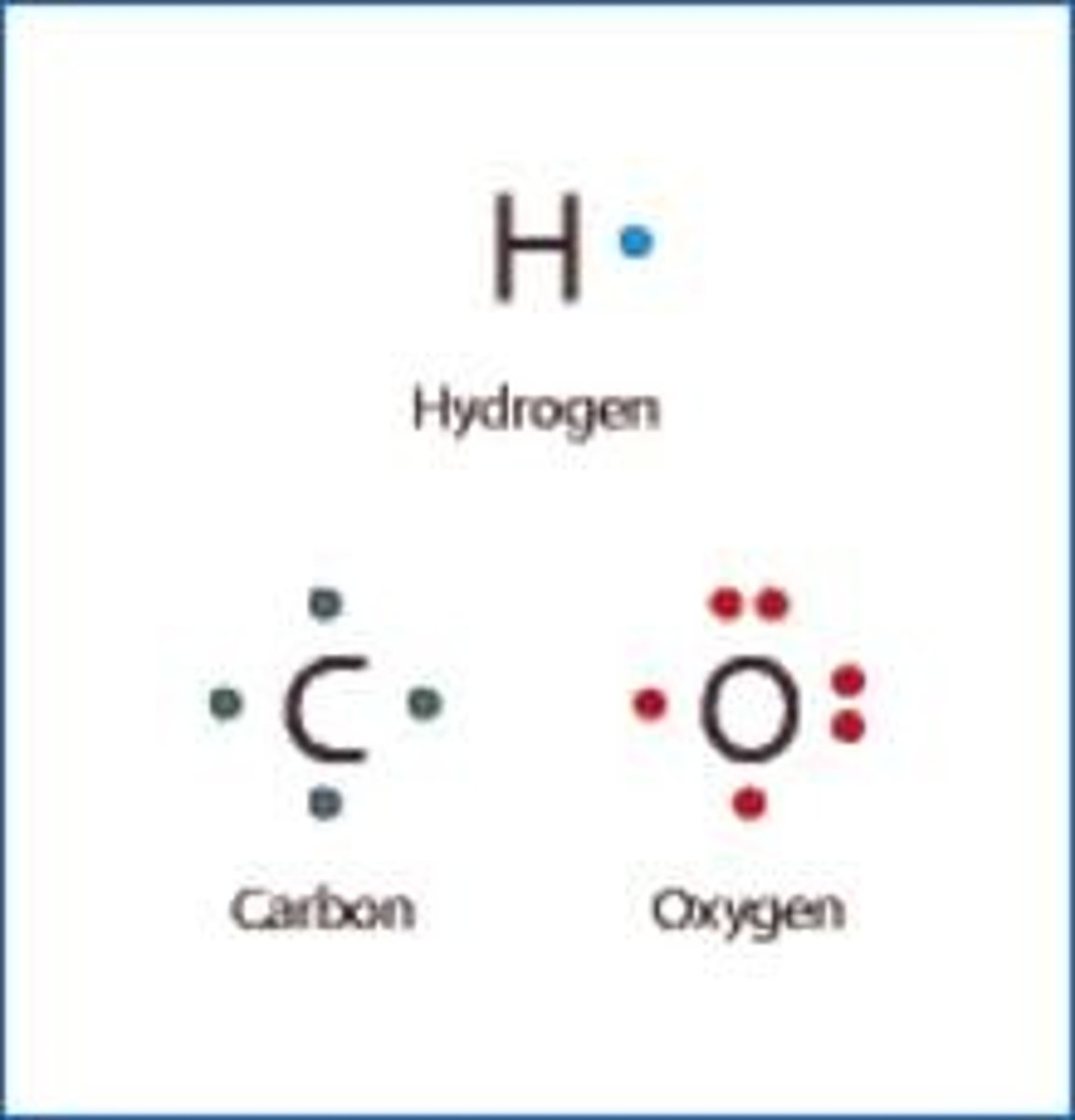
<p>C, H, O</p>
2
New cards

What are lipids made of?

C, H, O

<p>C, H, O</p>
3
New cards

What are proteins made of?

C, H O, N, S
<p>C, H O, N, S</p>
4
New cards

What are nucleic acids (DNA/RNA) made of?

C, H, O, N, P
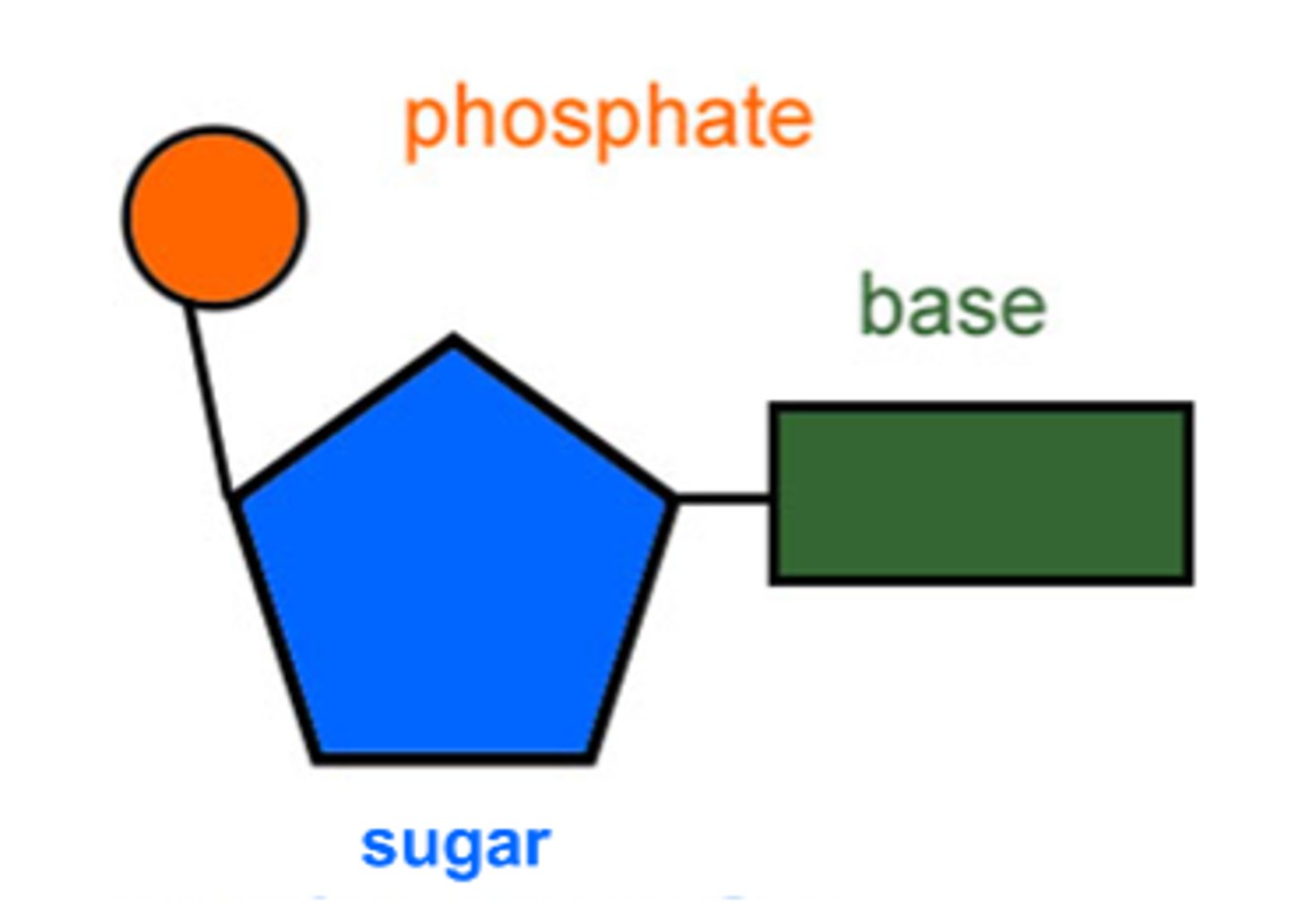
<p>C, H, O, N, P</p>
5
New cards

Types of Carbohydrates

Monosaccharides, Disaccharides, Polysaccharides
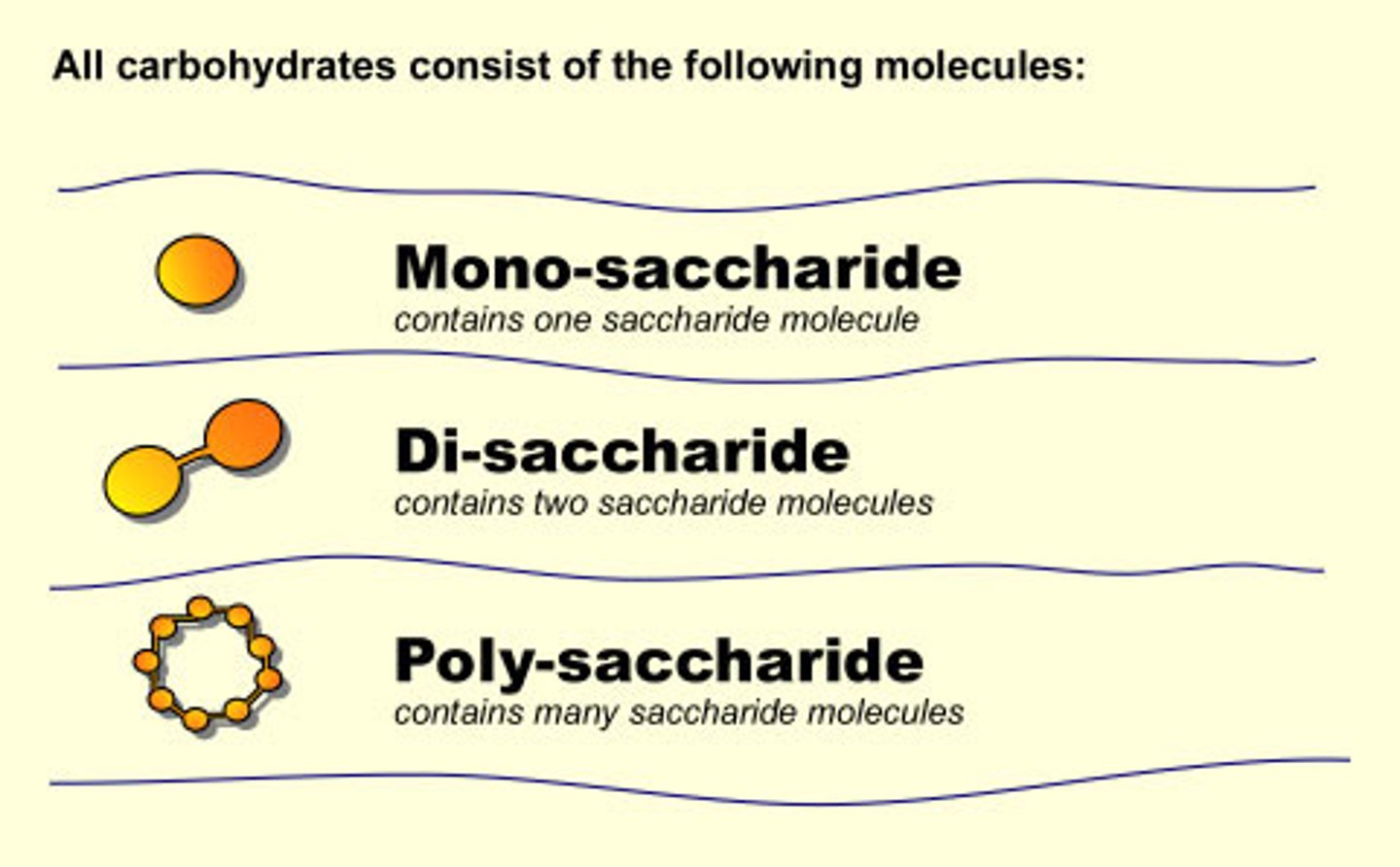
<p>Monosaccharides, Disaccharides, Polysaccharides</p>
6
New cards

Properties of Glucose

- Hexose monosaccharide (6 carbon atoms)

- Highly soluble

- Major energy source
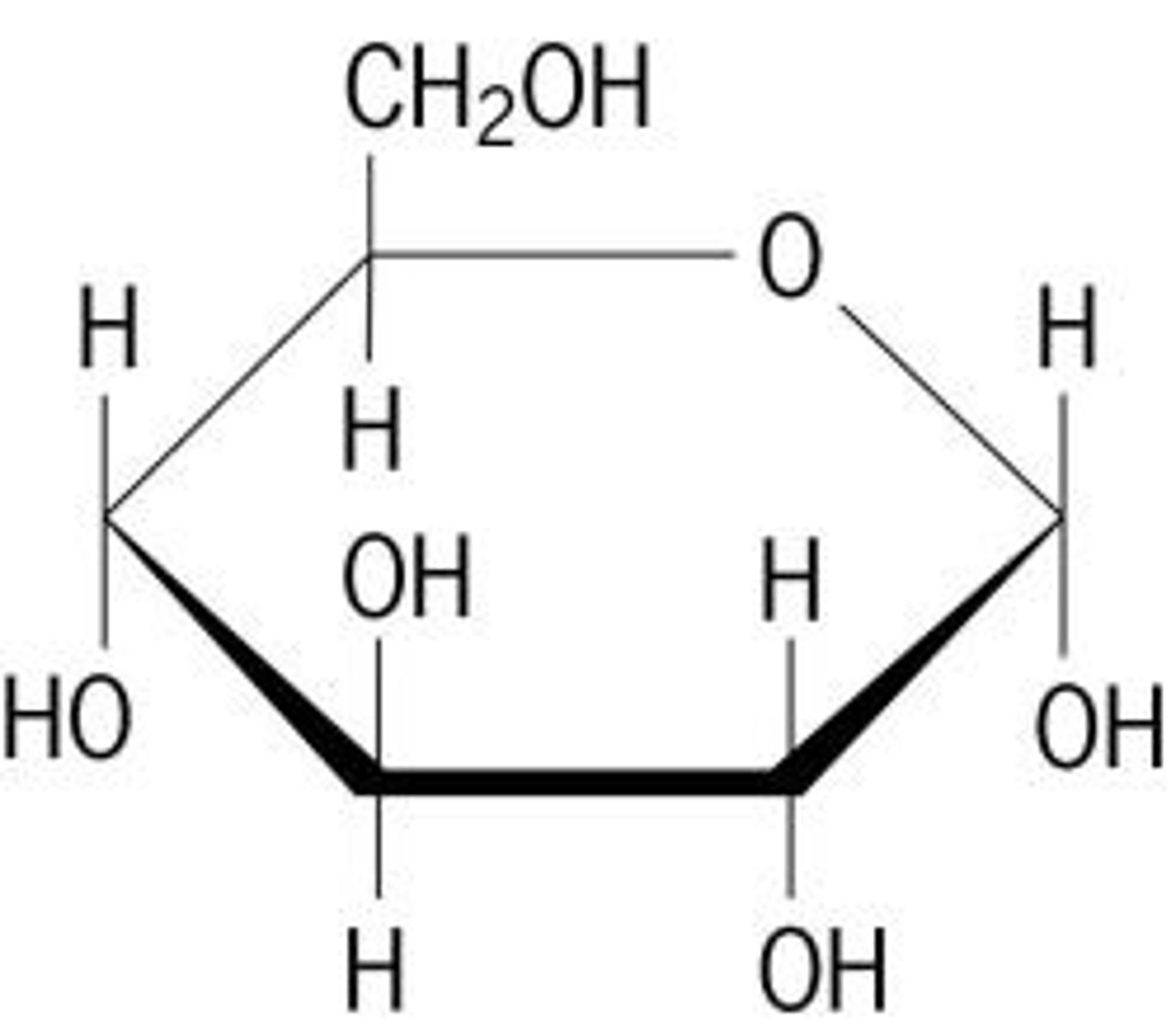
<p>- <span class="bgP">Hexose monosaccharide</span> (6 carbon atoms)</p><p>- Highly <span class="bgP">soluble</span></p><p>- Major <span class="bgP">energy source</span> </p>
7
New cards

What are pentose monosaccharides?

Sugars with 5 carbon atoms (eg; Ribose, Deoxyribose)
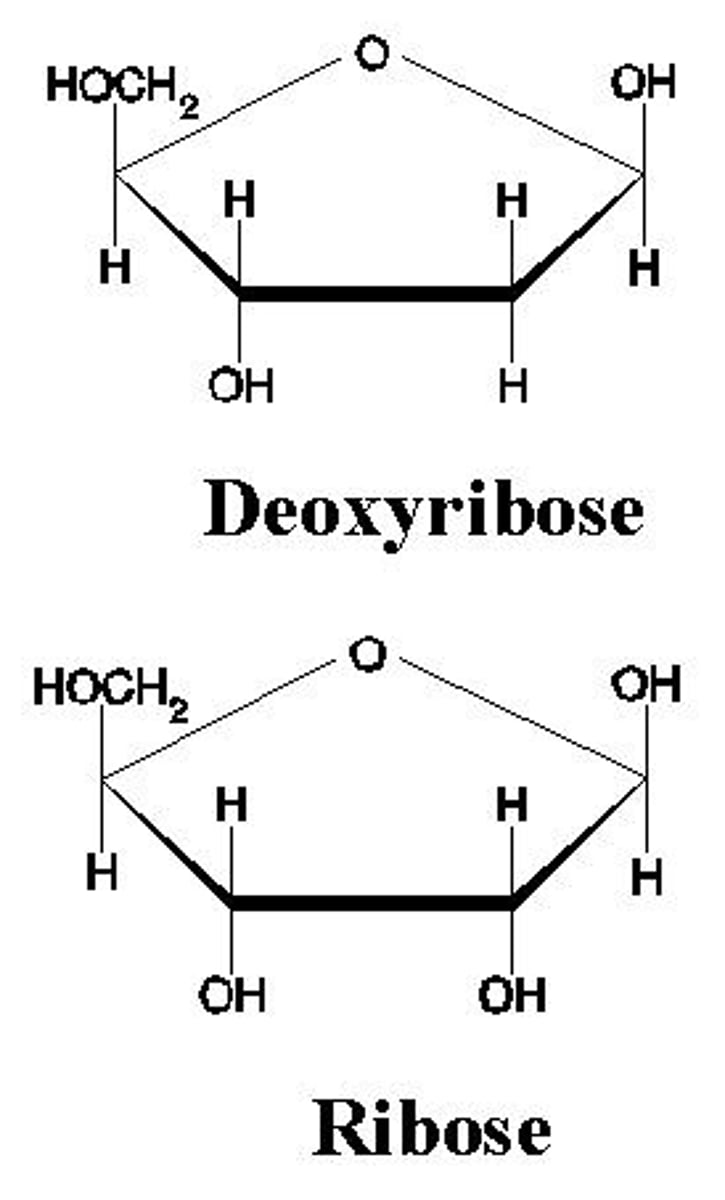
<p>Sugars with <span class="bgP">5 carbon atoms</span> (eg; Ribose, Deoxyribose)</p>
8
New cards

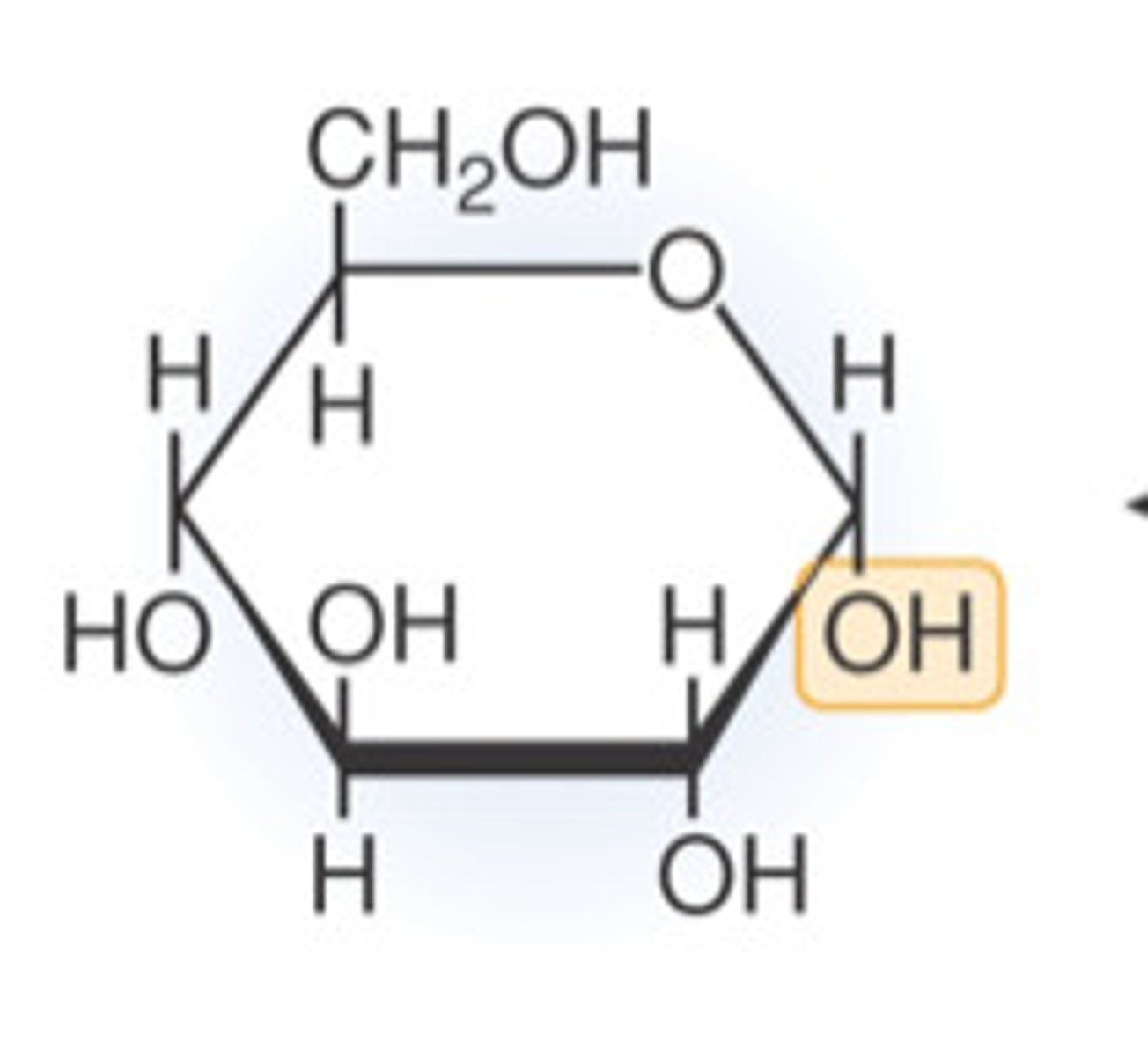
Structure of alpha glucose

OH down

<p>OH down</p>
9
New cards

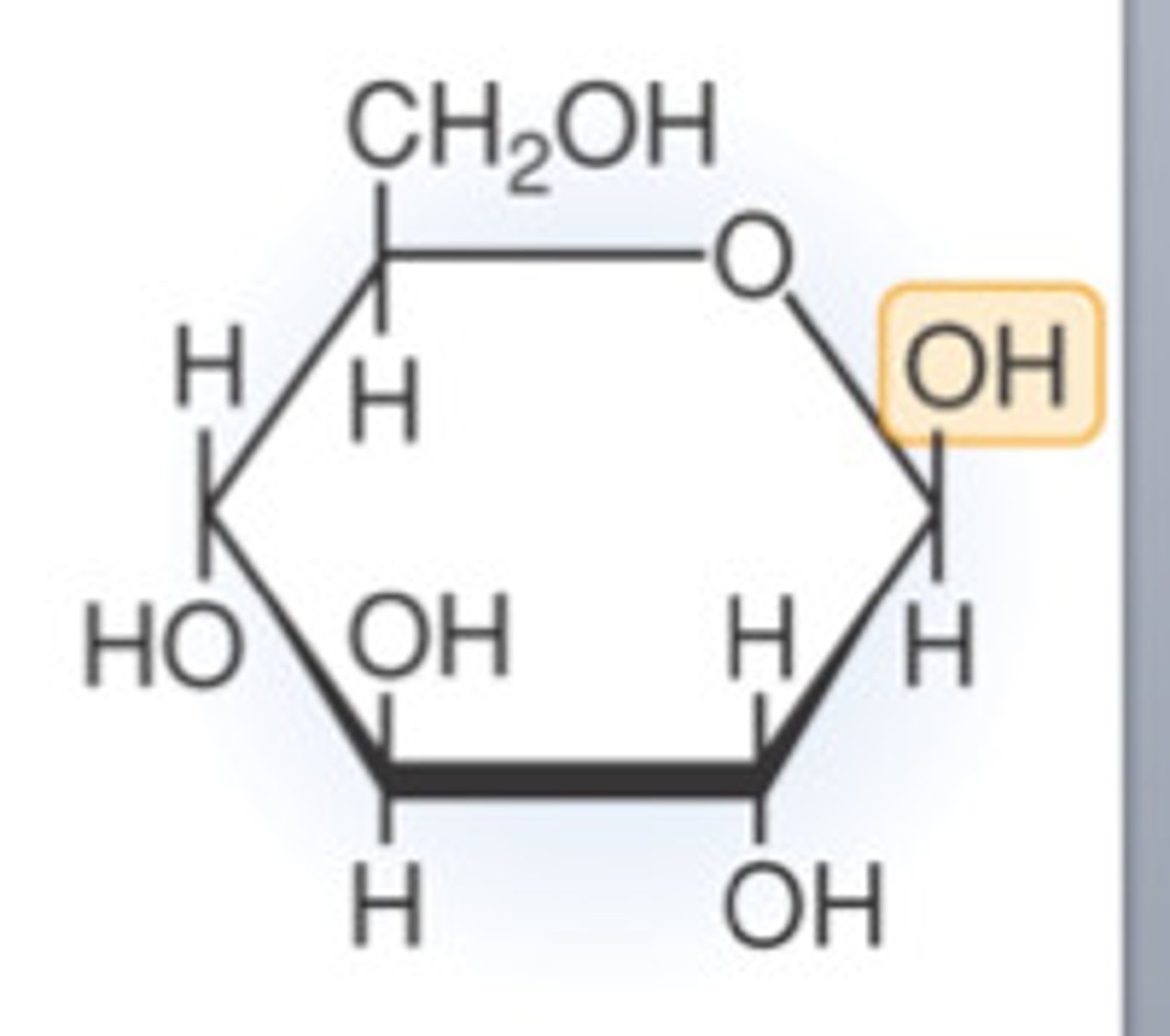
Structure of beta glucose

OH up

<p>OH up</p>
10
New cards

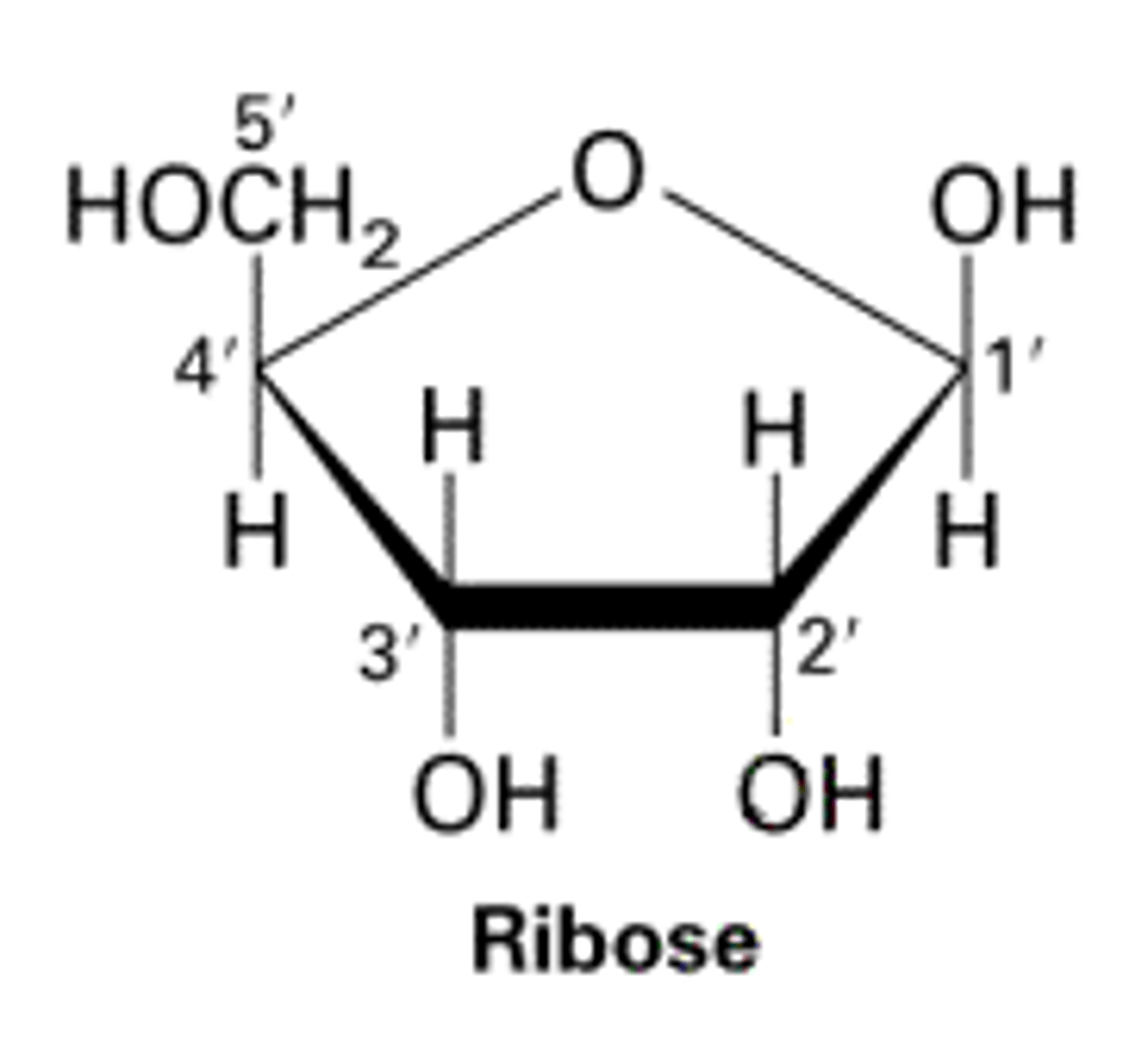
Structure of ribose

knowt flashcard image
11
New cards

Disaccharaide

2 monosaccharides bonded by a glycosidic bond

12
New cards

How are disaccharides and polysaccharides formed?

Condensation reaction releasing a water molecule
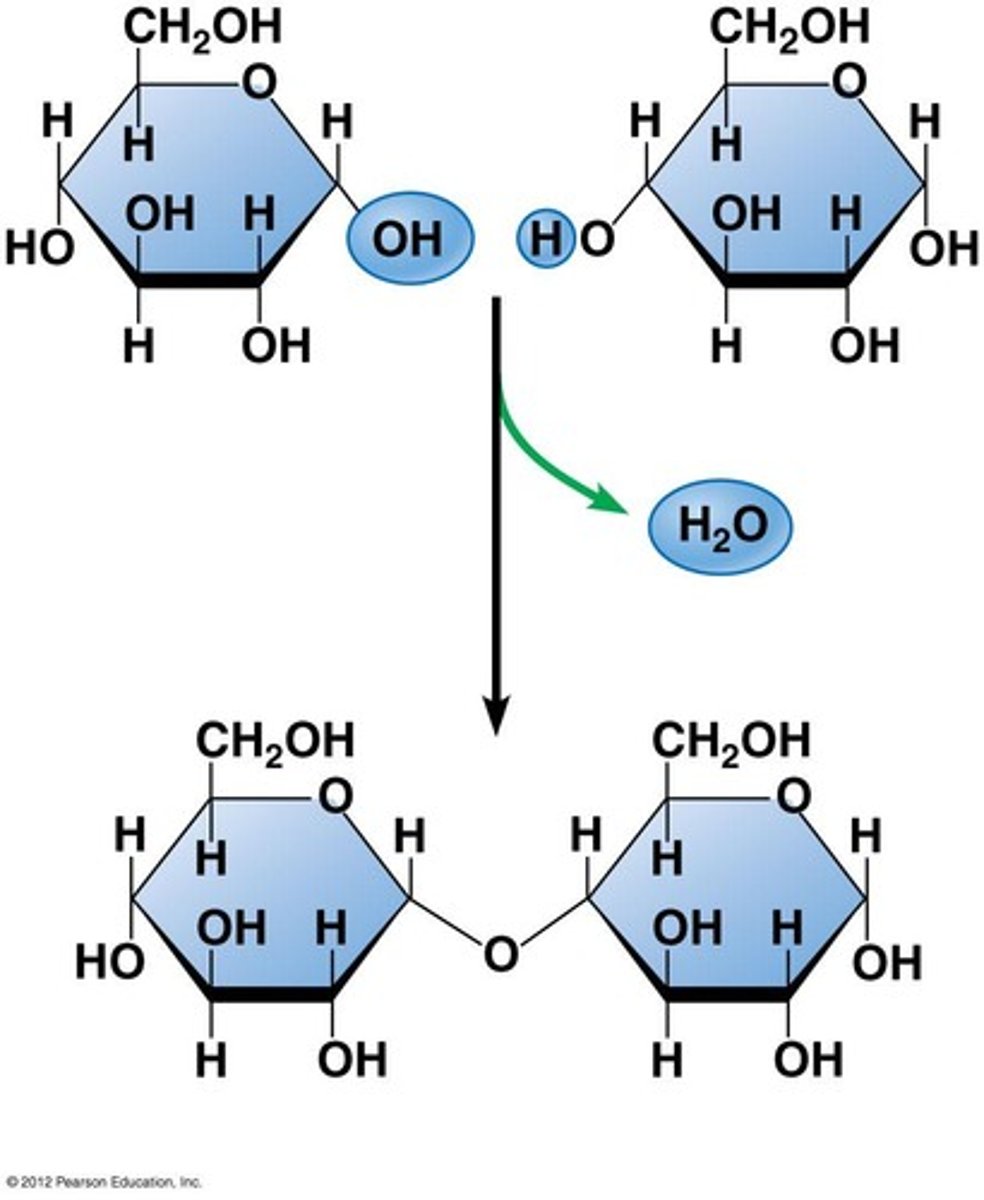
<p><span class="bgP">Condensation</span> reaction releasing <strong>a water molecule</strong></p>
13
New cards

How are disaccharides broken down?

By hydrolysis using a water molecule
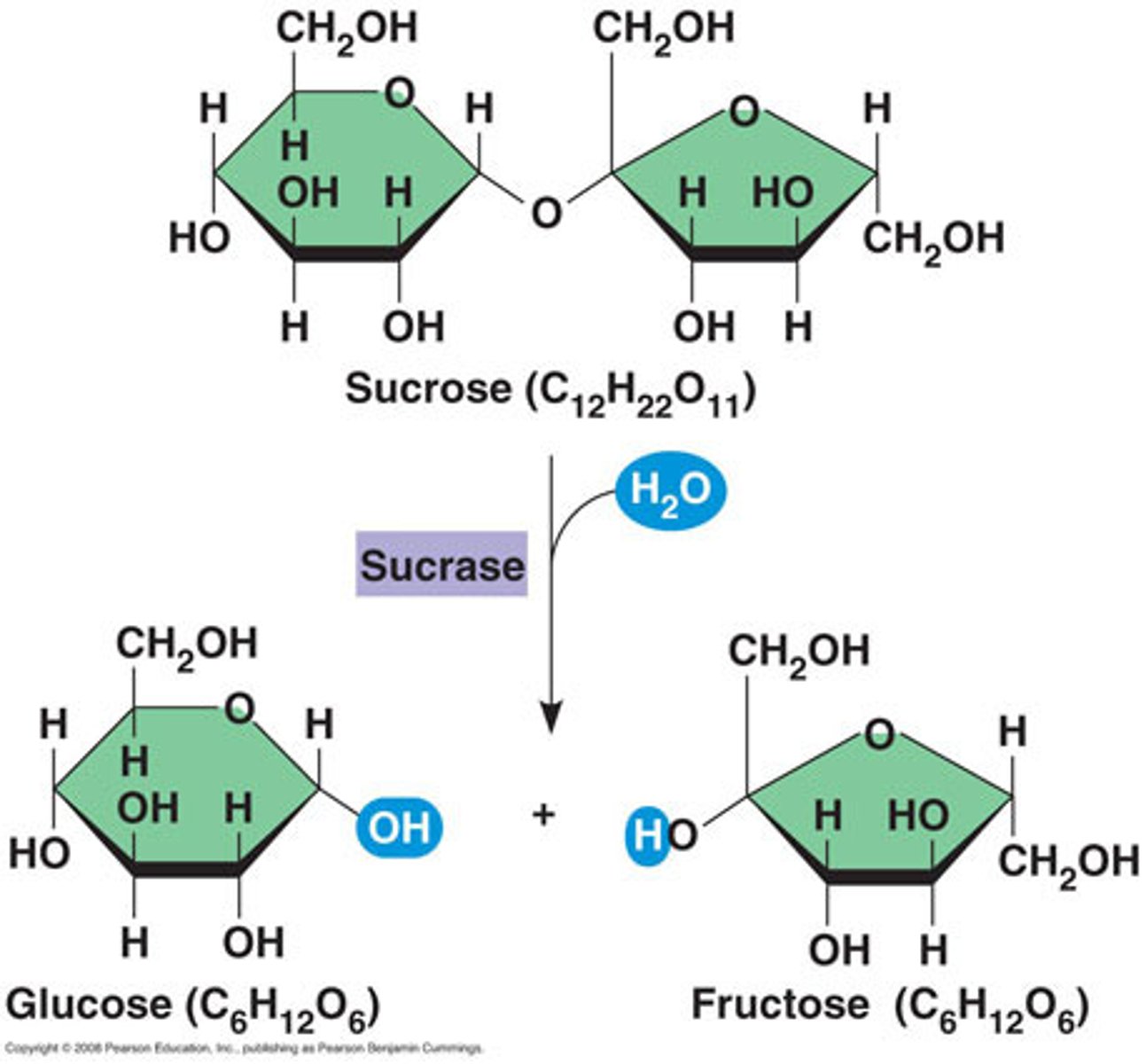
<p>By <span class="bgP">hydrolysis</span> using <strong>a water molecule</strong></p>
14
New cards

What is maltose made of?

- 2 Alpha Glucose molecules

- Alpha 1-4 glycosidic bond
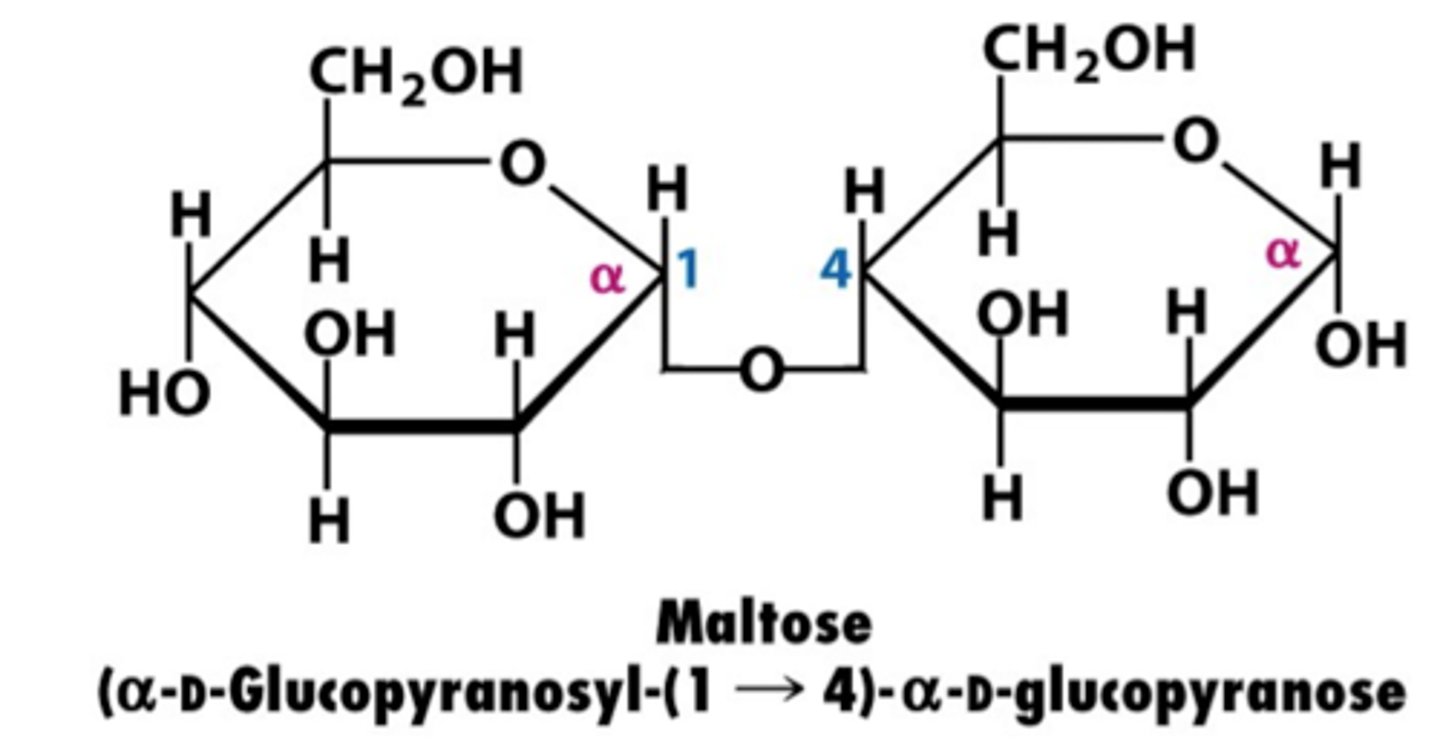
<p>- 2 Alpha Glucose molecules </p><p>- Alpha <span class="bgP">1-4</span> glycosidic bond</p>
15
New cards

What is sucrose made of?

- Alpha Glucose + Fructose

- Alpha 1-5 glycosidic bond
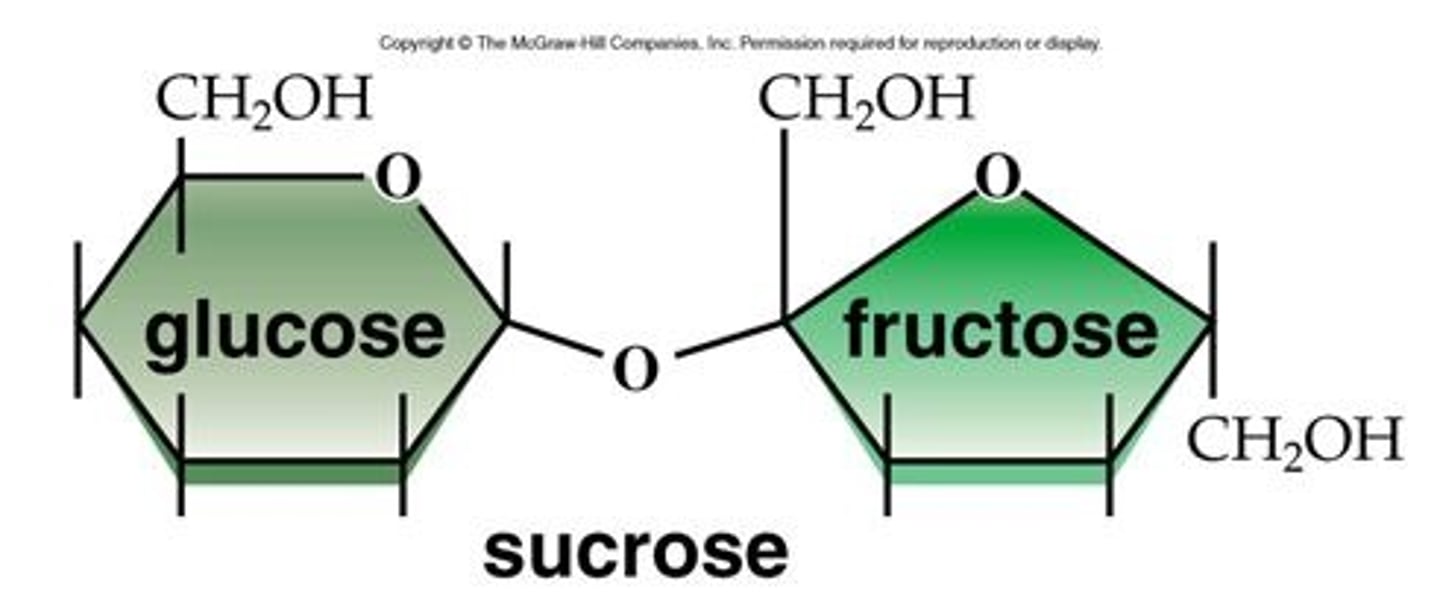
<p>- Alpha Glucose + Fructose </p><p>- Alpha <span class="bgP">1-5</span> glycosidic bond</p>
16
New cards

What is lactose made of?

- Alpha Glucose + Galactose

- Alpha 1-4 glycosidic bond
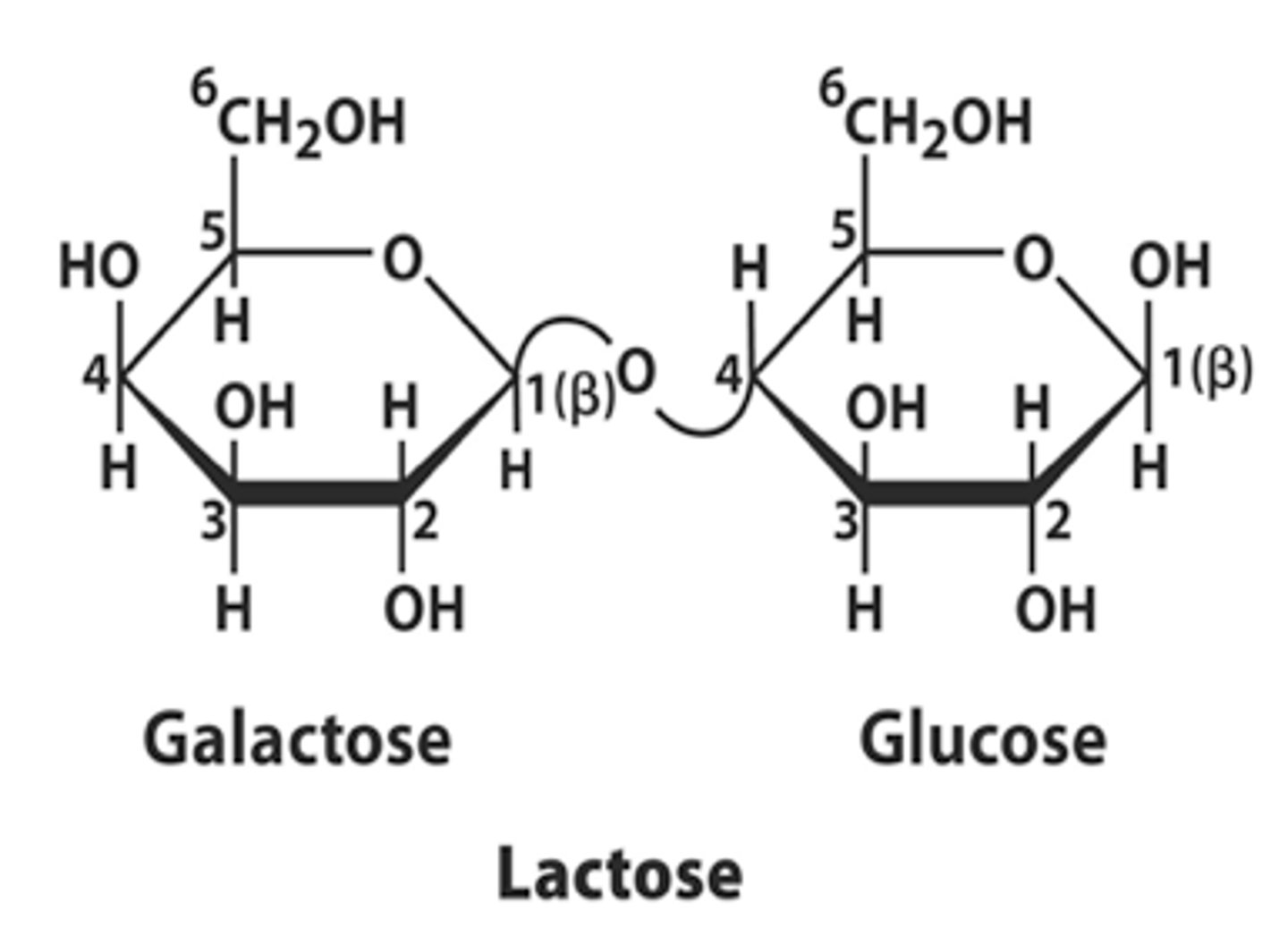
<p>- Alpha Glucose + Galactose </p><p>- Alpha <span class="bgP">1-4</span> glycosidic bond</p>
17
New cards

Structure of Glycogen

- Made of Alpha Glucose

- 1,4 and 1,6 glycosidic bonds

- Highly Branched structure

- Used for energy storage
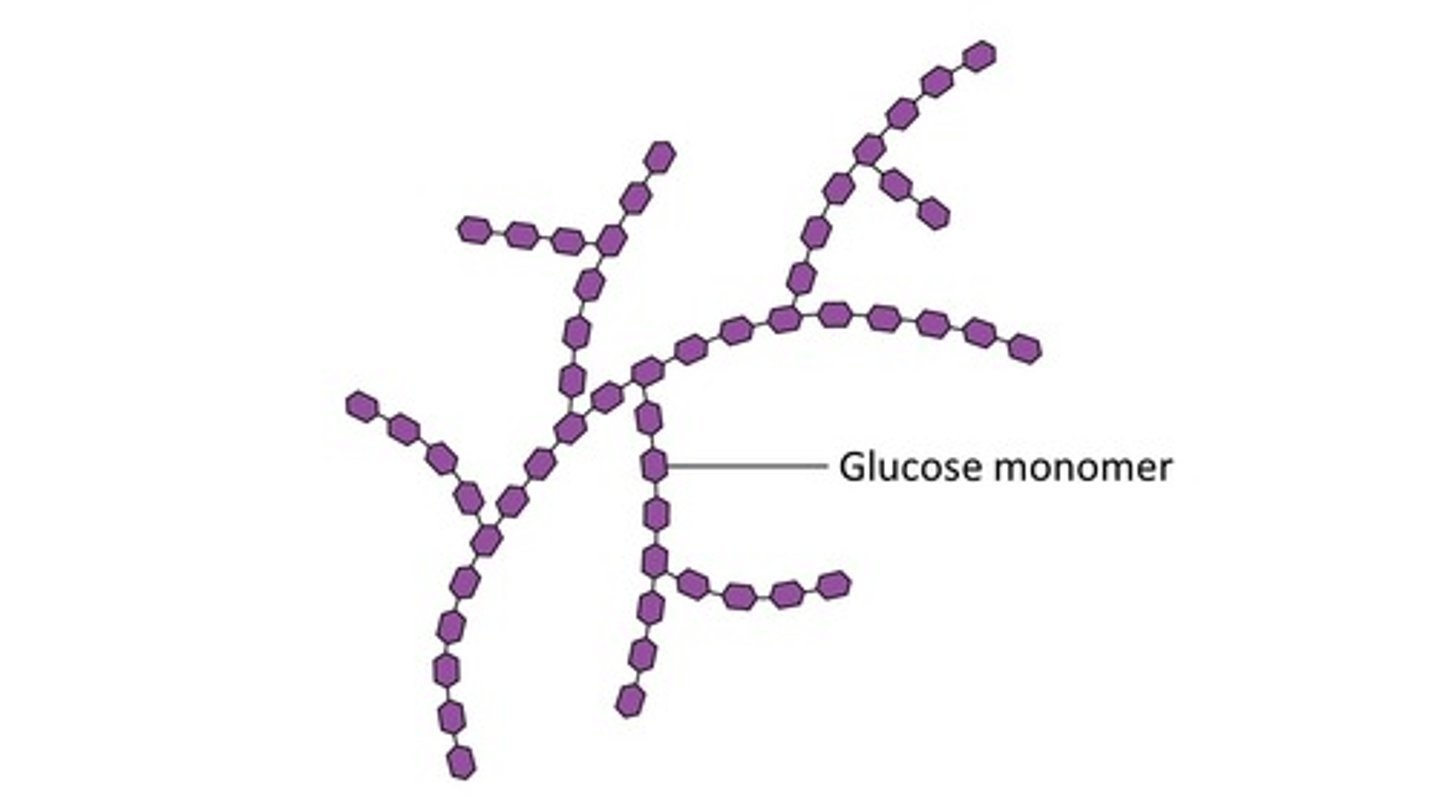
<p>- Made of <span class="bgP">Alpha Glucose</span></p><p>- <span class="bgP">1,4</span> and <span class="bgP">1,6 glycosidic bonds</span></p><p>- <span class="bgP">Highly Branched</span> structure</p><p>- Used for <span class="bgP">energy storage</span></p>
18
New cards

Why is it good that Glycogen molecules are branched?

Increases SA so glucose can be rapidly hydrolysed and released
<p><span class="bgP">Increases SA</span> so glucose can be <span class="bgP">rapidly hydrolysed</span> and <span class="bgP">released</span> </p>
19
New cards

Structure of Cellulose

- Made of Beta Glucose

- Beta 1,4 glycosidic bonds

- Strong due to hydrogen bonds between microfibrils (long cellulose chains)

- Used for cell walls
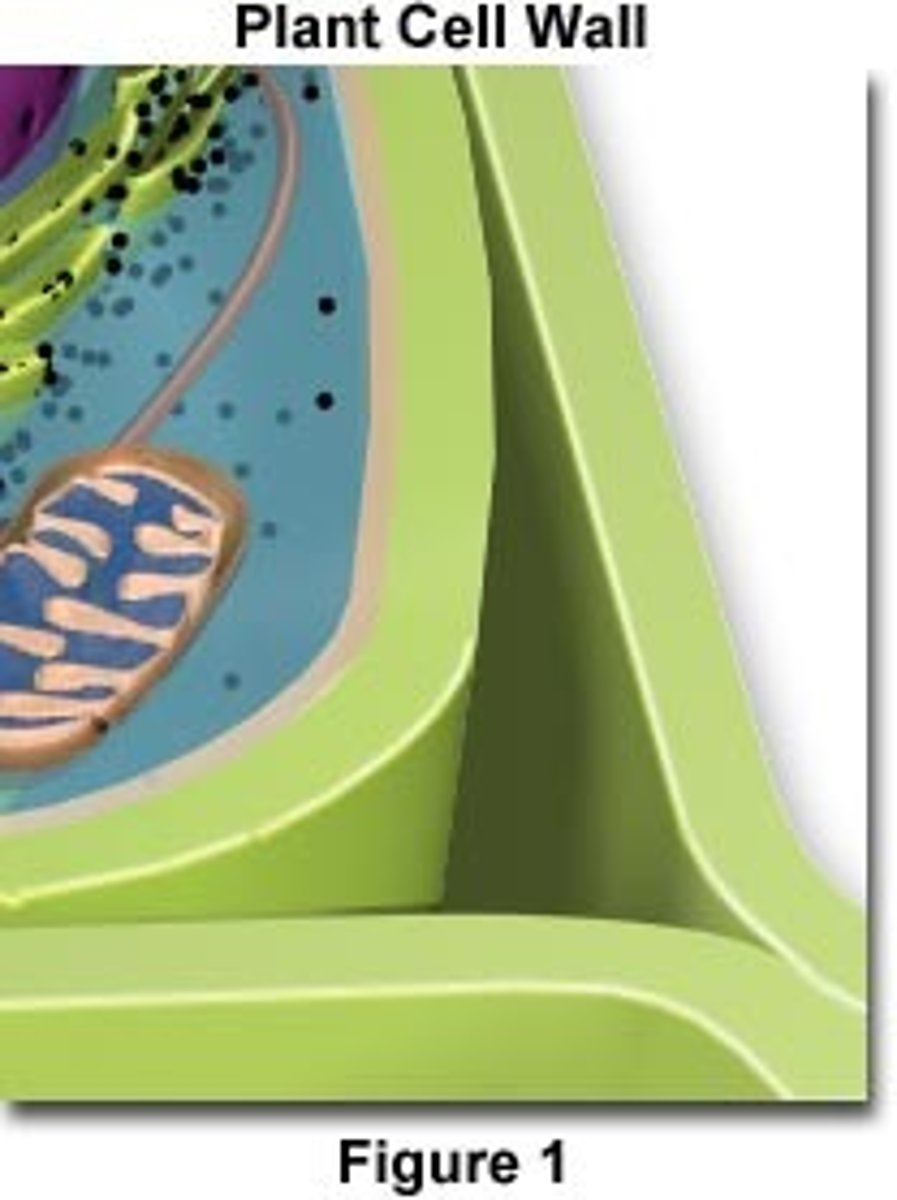
<p>- Made of <span class="bgP">Beta Glucose</span></p><p>- <span class="bgP">Beta 1,4 glycosidic bonds</span></p><p>- <span class="bgP">Strong</span> due to <span class="bgP">hydrogen bonds</span> between <span class="bgP">microfibrils</span> (long cellulose chains)</p><p>- Used for <span class="bgP">cell walls</span></p>
20
New cards

Properties of Cellulose

- Insoluble

- Unreactive

- Flexible

- Form hydrogen bonds with neighbouring chains

21
New cards

Structure of Starch

- Made of Alpha Glucose

- Consists of Amylose and Amylopectin polymers

- Used for energy storage

- Insoluble in water (doesn't affect cell's water potential)

- Helical shape (compact storage)
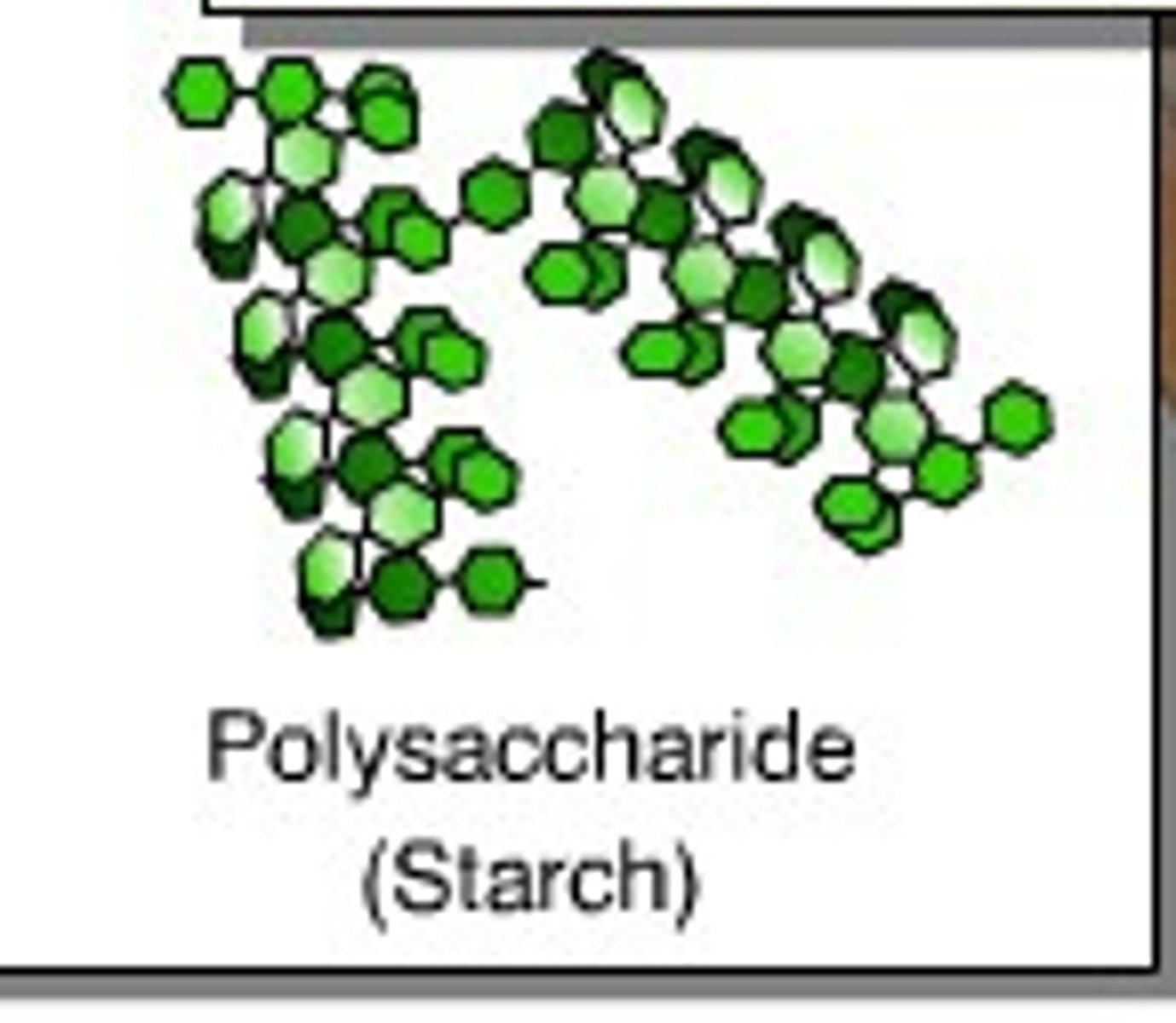
<p>- Made of <span class="bgP">Alpha Glucose</span></p><p>- Consists of <span class="bgP">Amylose</span> and <span class="bgP">Amylopectin</span> polymers</p><p>- Used for <span class="bgP">energy storage</span>         </p><p>- <span class="bgP">Insoluble in water</span> (doesn't affect cell's water potential)</p><p>- <span class="bgP">Helical</span> shape (compact storage)</p>
22
New cards

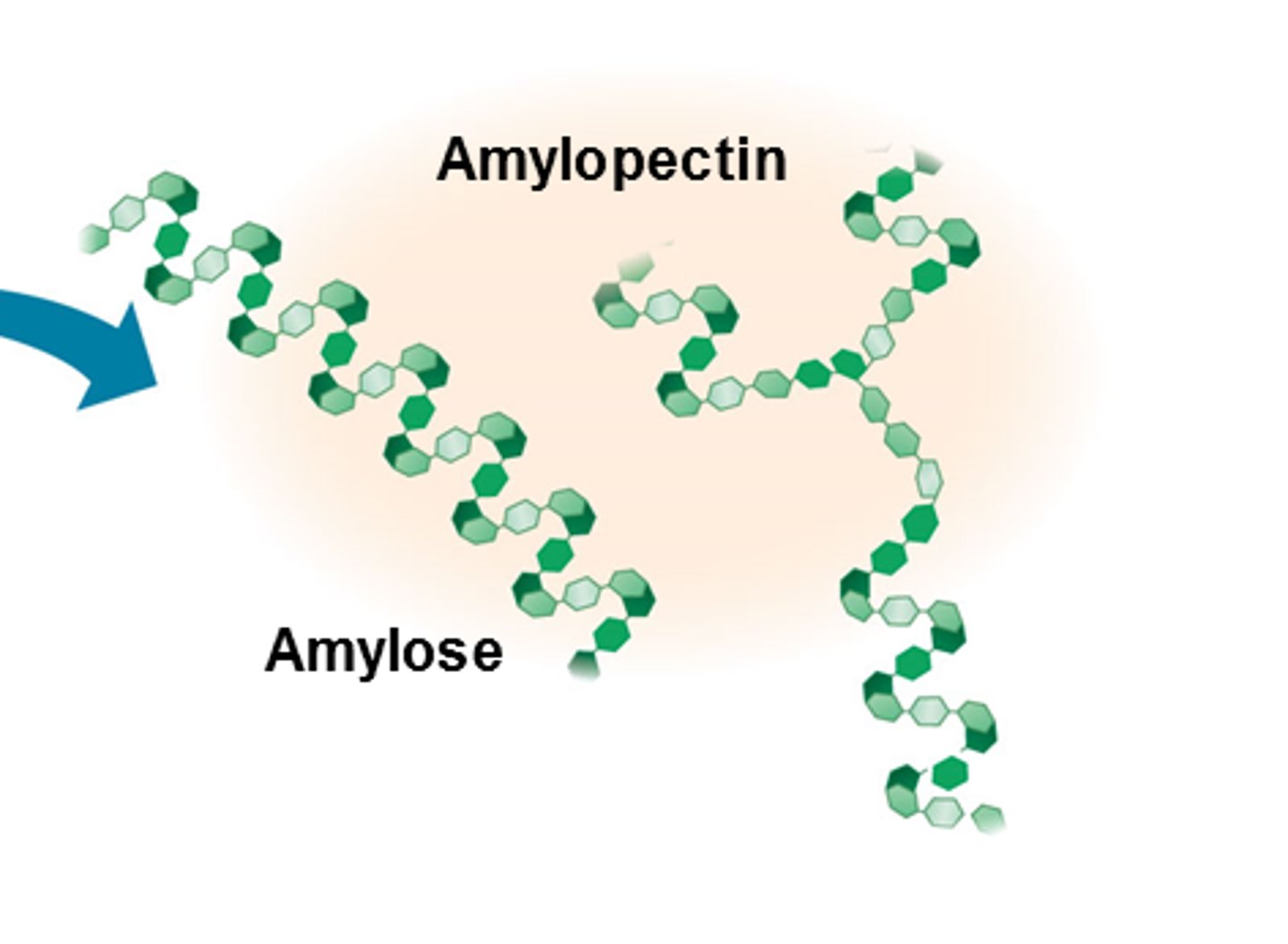
What is amylose?

- Unbranched chain of alpha glucose

- 1,4 glycosidic bonds

- Compact helical chain (stores lots of energy)
<p>- <span class="bgP">Unbranched chain</span> of <span class="bgP">alpha glucose</span></p><p>- <span class="bgP">1,4 glycosidic bonds</span></p><p>- Compact <span class="bgP">helical</span> chain (stores lots of energy)</p>
23
New cards

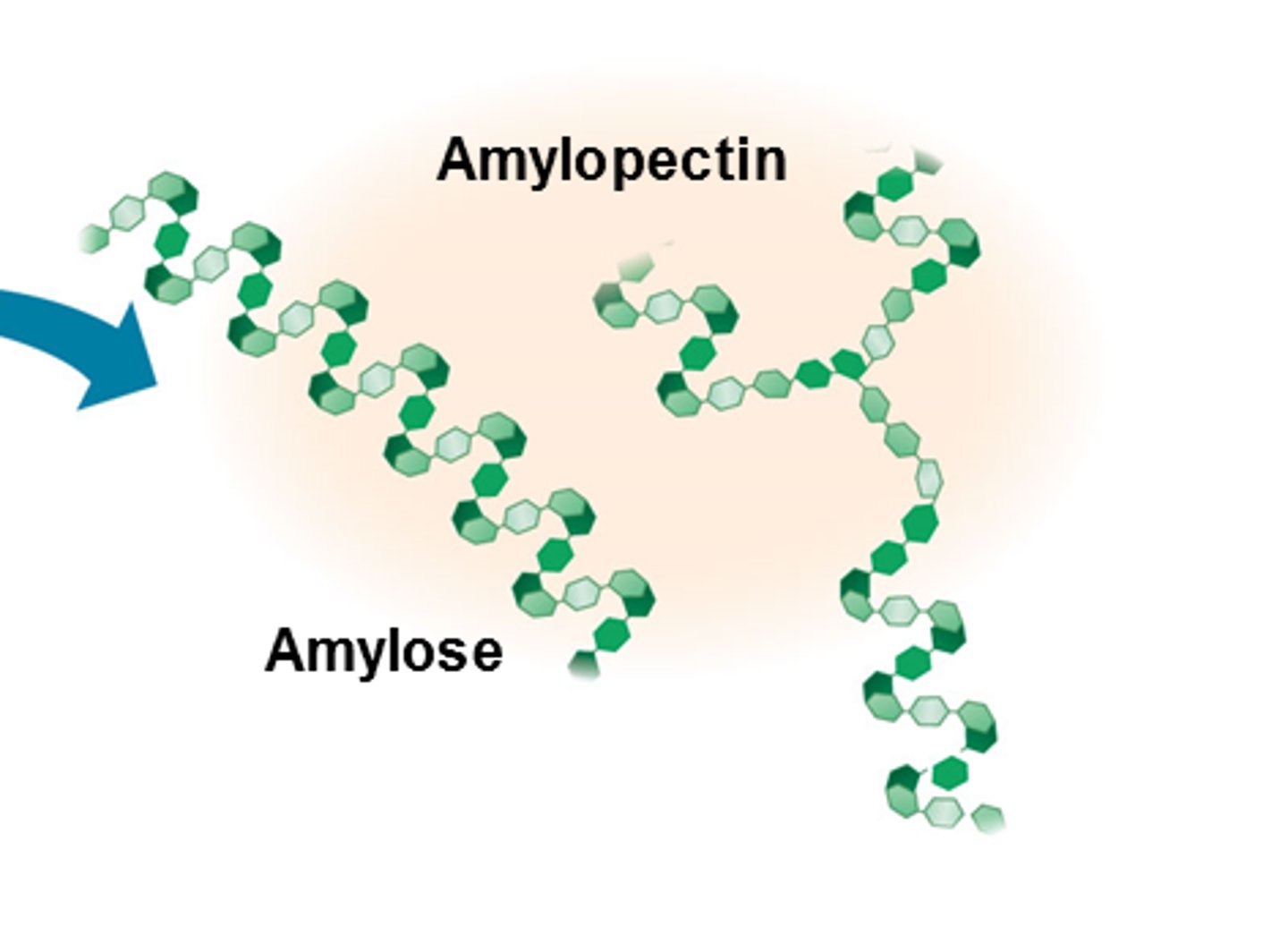
What is amylopectin?

- Branched chain of alpha glucose

- 1,4 and 1,6 glycosidic bonds

- Branches mean energy is quickly hydrolysed into glucose
<p>- <span class="bgP">Branched</span> chain of <span class="bgP">alpha glucose</span></p><p>- <span class="bgP">1,4</span> and <span class="bgP">1,6 glycosidic bonds</span></p><p>- Branches mean energy is <span class="bgP">quickly hydrolysed</span> into glucose</p>
24
New cards

Functions of Water

- Solvent
- Transport medium
- Coolant
- Habitat

25
New cards

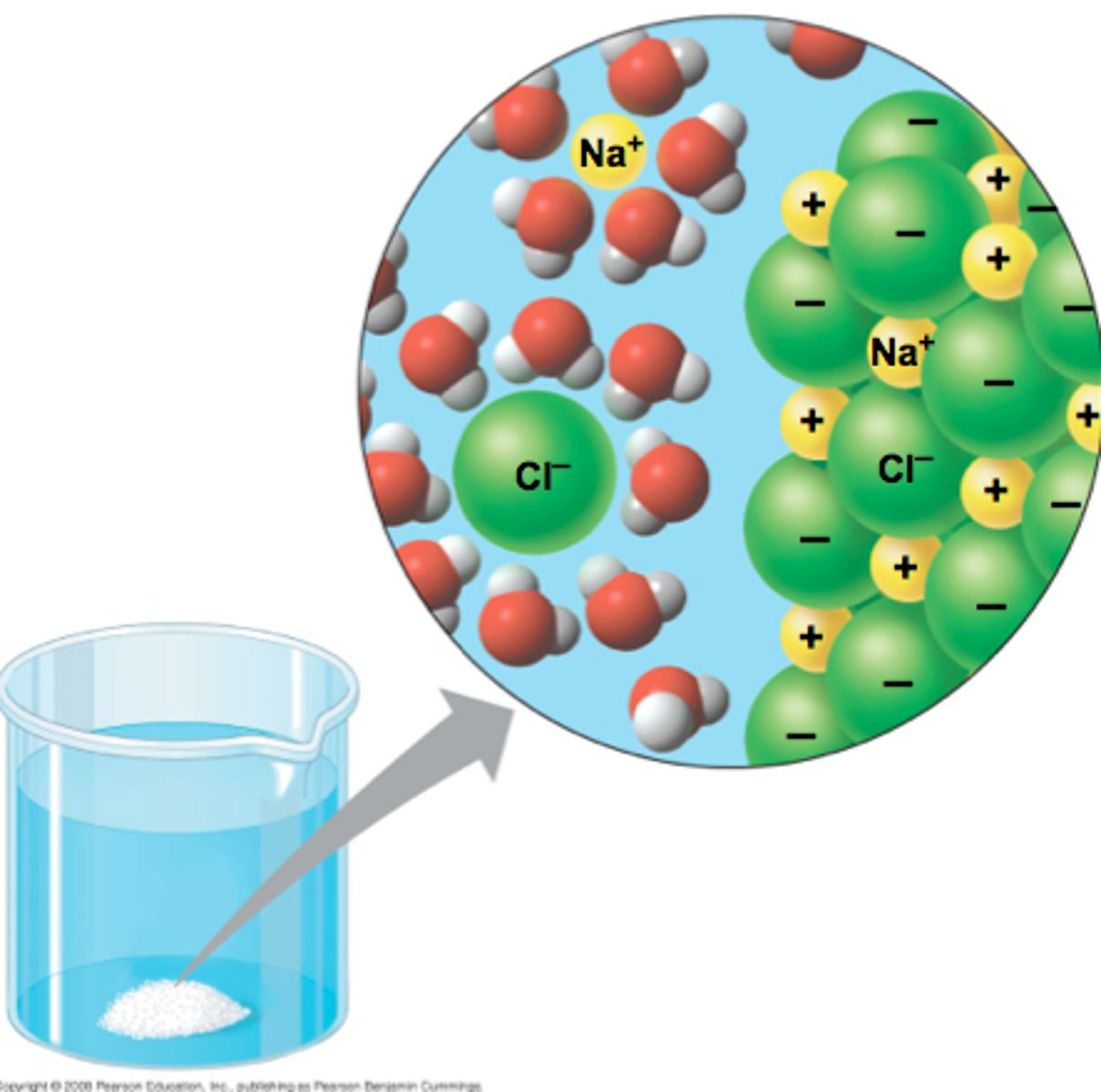
Why is water a good solvent?

Molecules are polar so enables water can bind to solute molecules
<p>Molecules are <span class="bgP">polar</span> so enables water can <span class="bgP">bind</span> to <span class="bgP">solute molecules</span> </p>
26
New cards

Why is water a good transport medium?

Cohesion due to hydrogen bonds between molecules so water can flow (eg xylem)

27
New cards

Properties of Water

- Ice is less dense than water

- High specific heat capacity

- High latent heat of vaporisation

- Cohesion produces surface tension

- Adhesion means water is attracted to surfaces

- Reactant

28
New cards

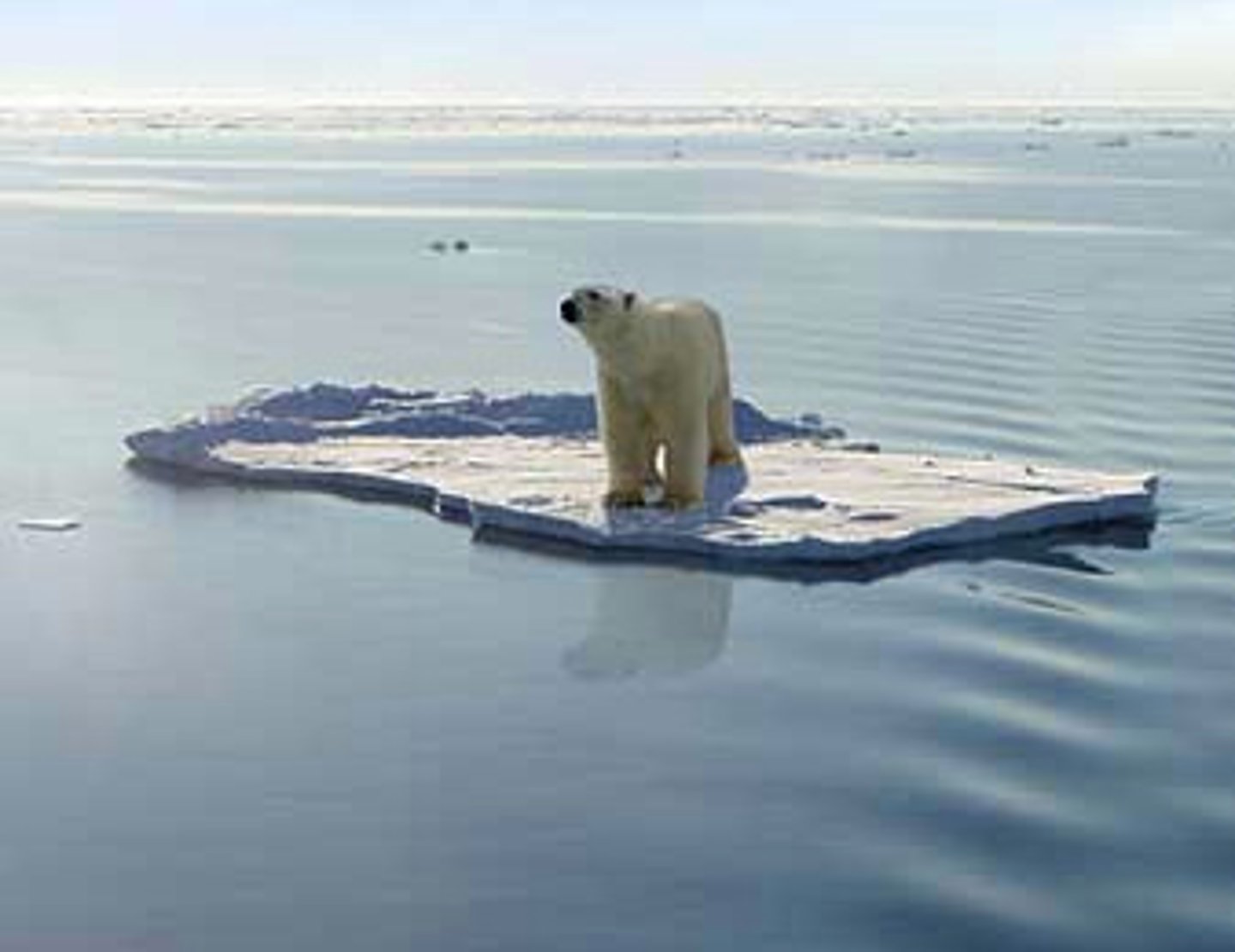
Why is water a good habitat?

- Ice is less dense than water

- Ice provides habitat and insulates water below

- Animals can move and oxygen can circulate
<p>- Ice is less dense than water </p><p>- Ice provides <span class="bgP">habitat</span> and <span class="bgP">insulates water</span> below</p><p>- Animals can move and <span class="bgP">oxygen can circulate</span> </p>
29
New cards

Why is water a good coolant?

- High specific heat capacity so internal temperature of organisms remains constant (enzymes aren't affected)

- High latent heat of vaporisation

30
New cards

Why is water polar?

Oxygen is delta negative (δ–) whereas hydrogen is delta positive (δ+)

- Oxygen atom pulls the shared electrons towards it, so water is slightly negative at the oxygen and slightly positive at the hydrogen ends meaning they can form hydrogen bonds with each other
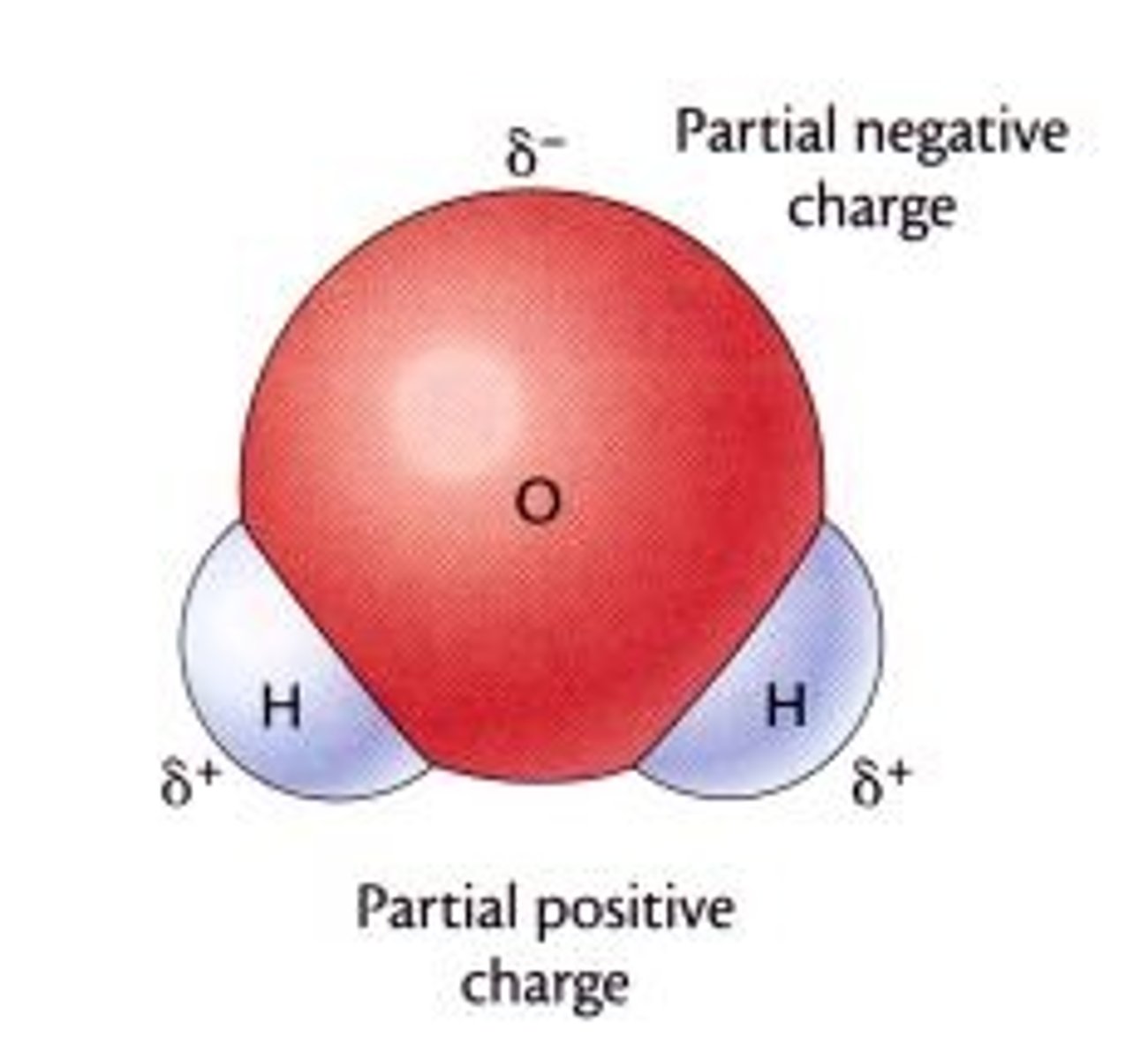
<p>Oxygen is <span class="bgP">delta negative</span> (δ–) whereas hydrogen is <span class="bgP">delta positive</span> (δ+) </p><p>- Oxygen atom <span class="bgP">pulls</span> the <span class="bgP">shared electrons</span> towards it, so <span class="bgP">water</span> is <span class="bgP">slightly negative</span> at the <span class="bgP">oxygen</span> and <span class="bgP">slightly positive</span> at the <span class="bgP">hydrogen</span> ends meaning they can form hydrogen bonds with each other</p>
31
New cards

How do water molecules bond together?

Hydrogen bonds due to water's polarity
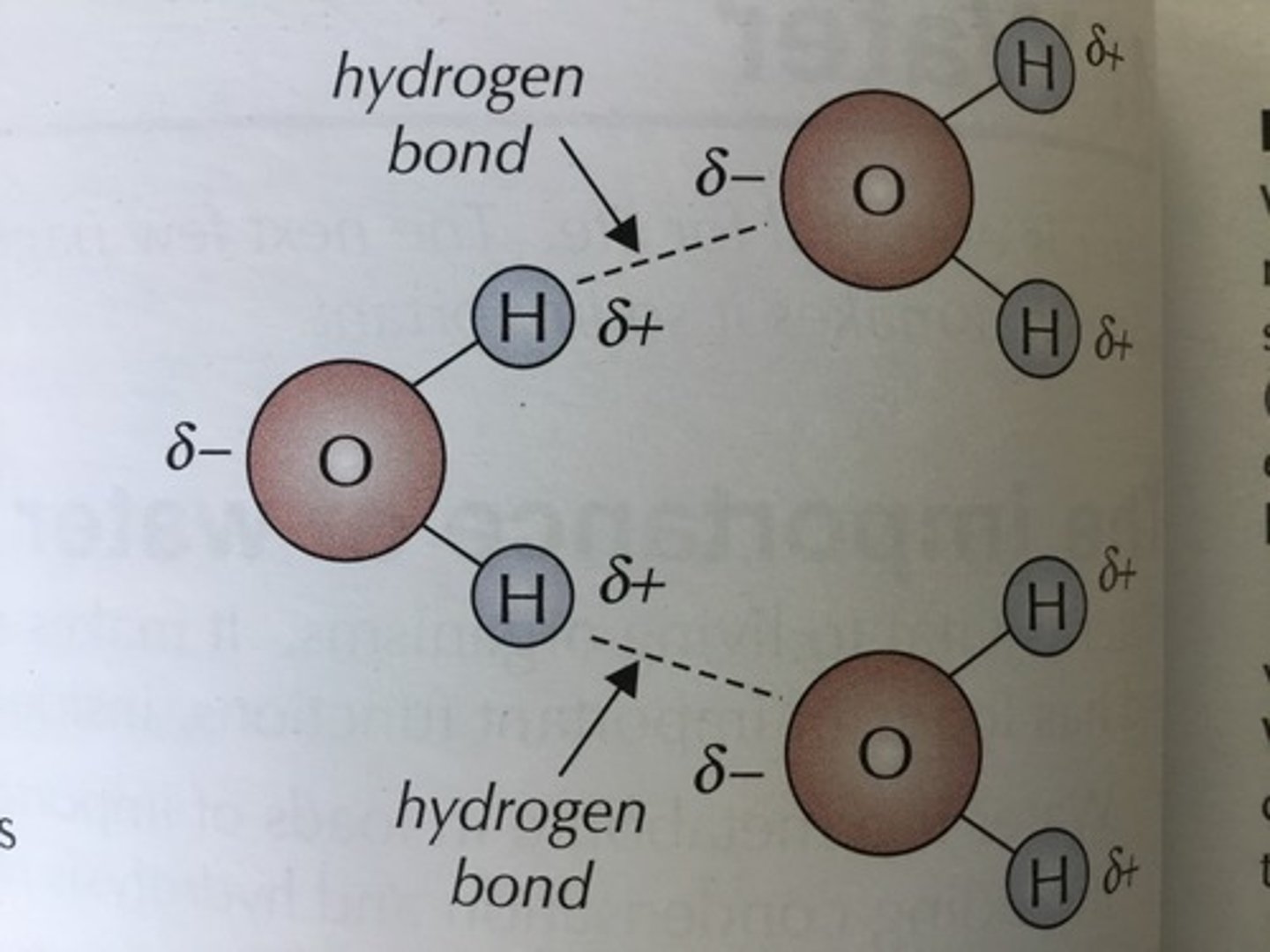
<p><span class="bgP">Hydrogen bonds</span> due to water's <span class="bgP">polarity</span></p>
32
New cards

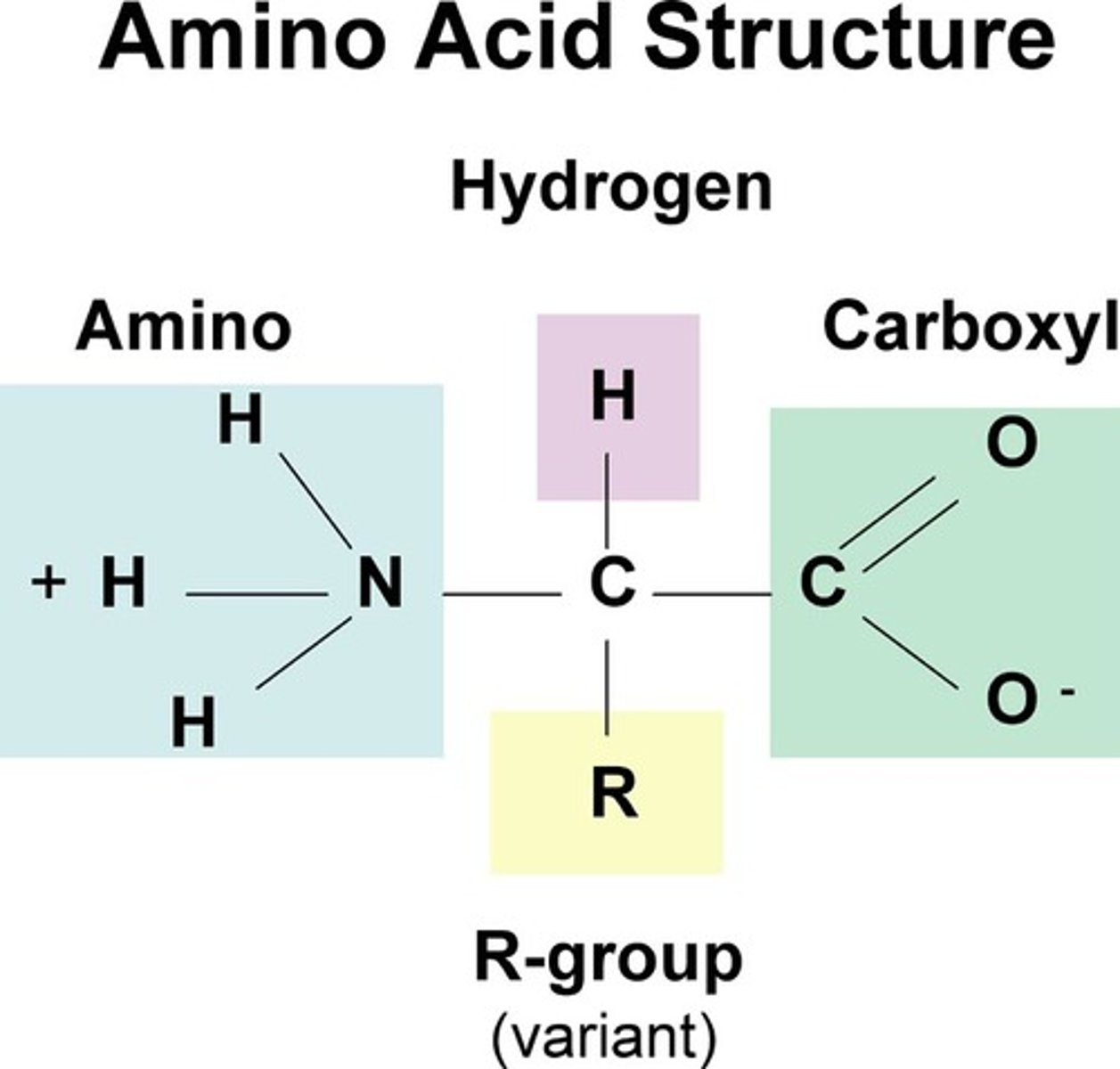
Structure of an amino acid

Amine group, Carboxylic acid group, R group
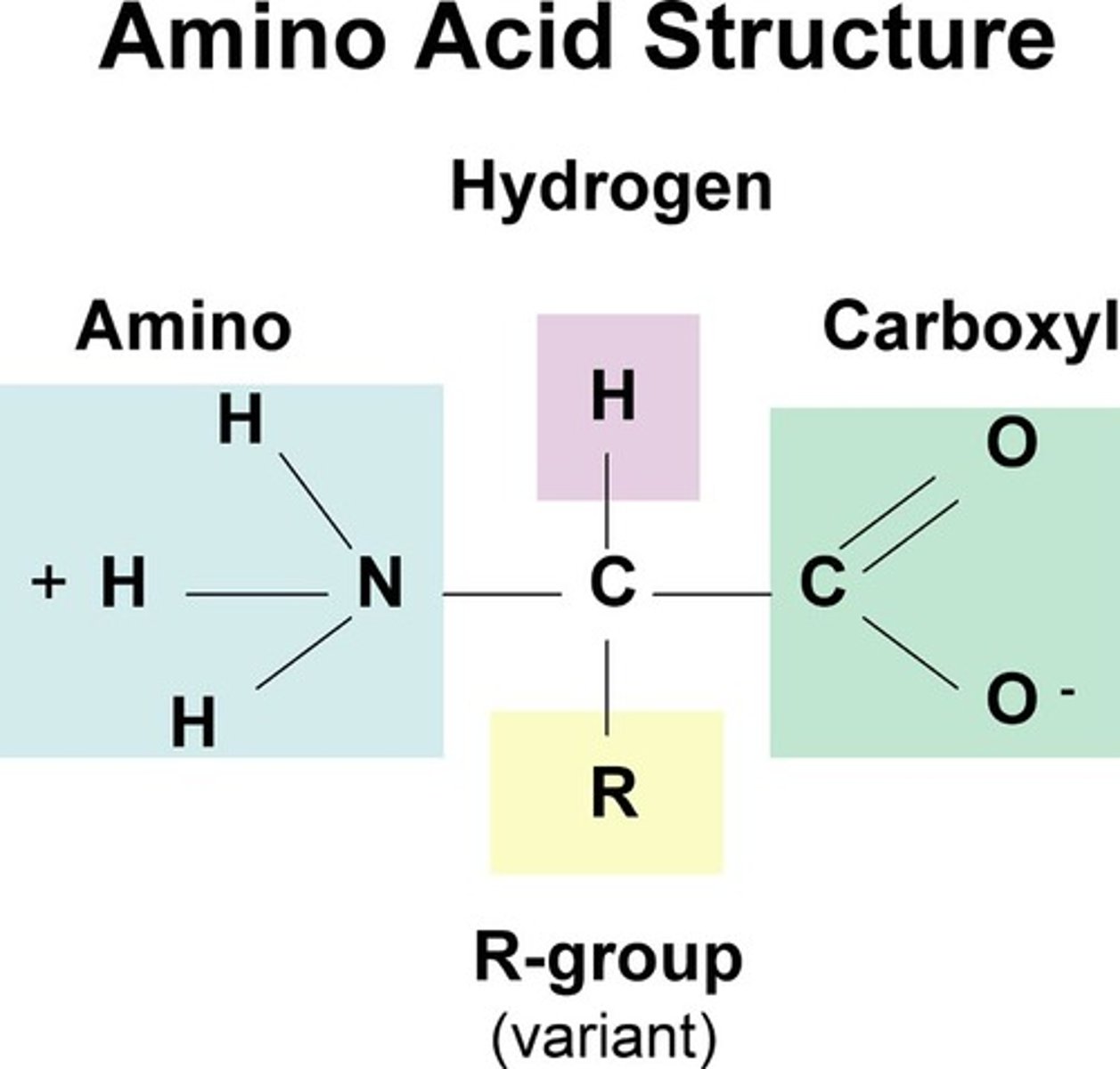
<p>Amine group, Carboxylic acid group, R group</p>
33
New cards

How are amino acids formed?

Joined by peptide bonds between amine group and carboxyl group in condensation reactions

34
New cards

How can dipeptides/polypeptides be broken down?

Breaking the peptide bonds in hydrolysis

35
New cards

Levels of protein structure

- Primary
- Secondary
- Tertiary
- Quaternary
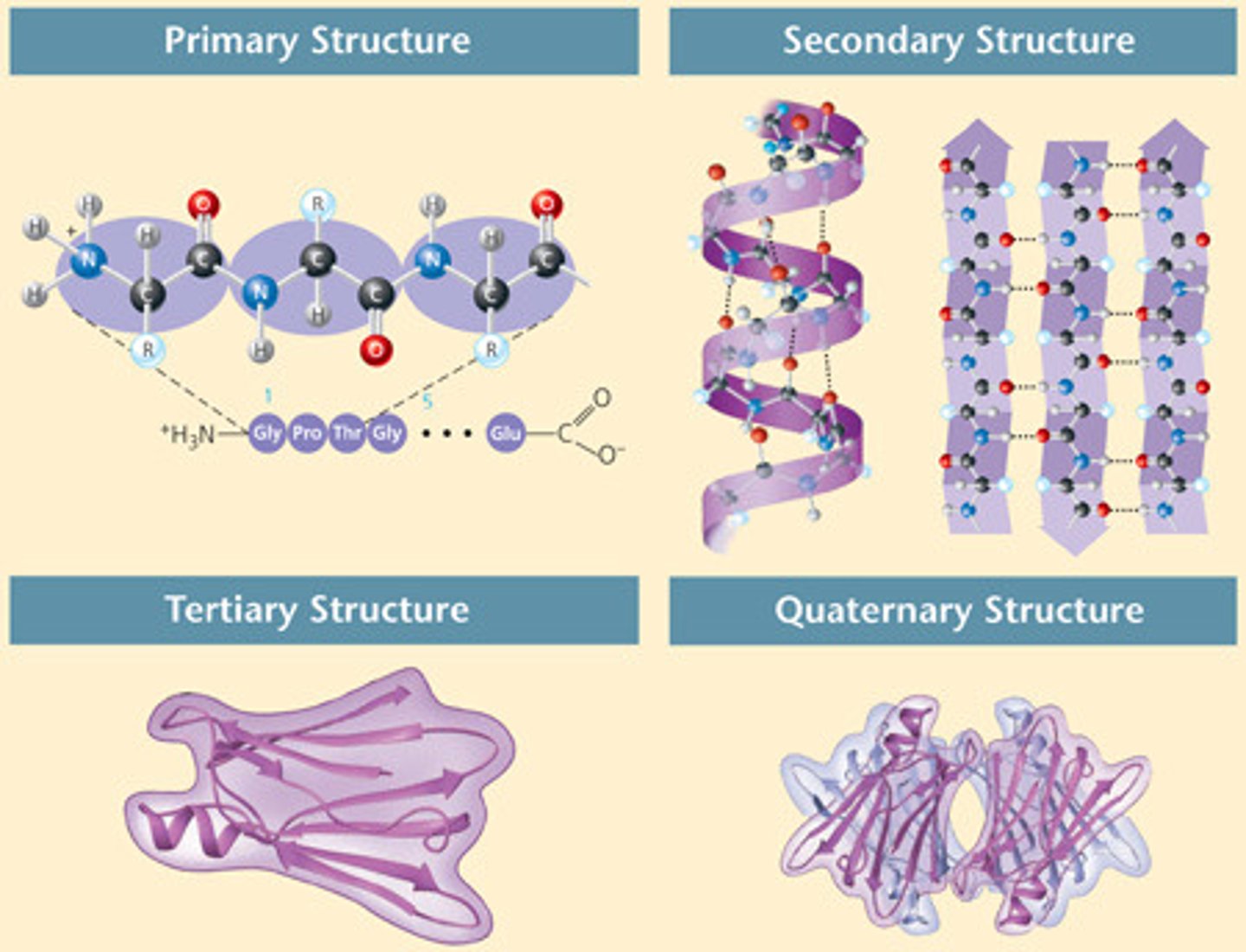
<p>- Primary<br>- Secondary<br>- Tertiary<br>- Quaternary</p>
36
New cards

Primary protein structure

Sequence of amino acids in a polypeptide chain

37
New cards

Secondary protein structure

- Alpha helix or Beta pleated sheets

- Hydrogen bonding between amide and carboxyl group
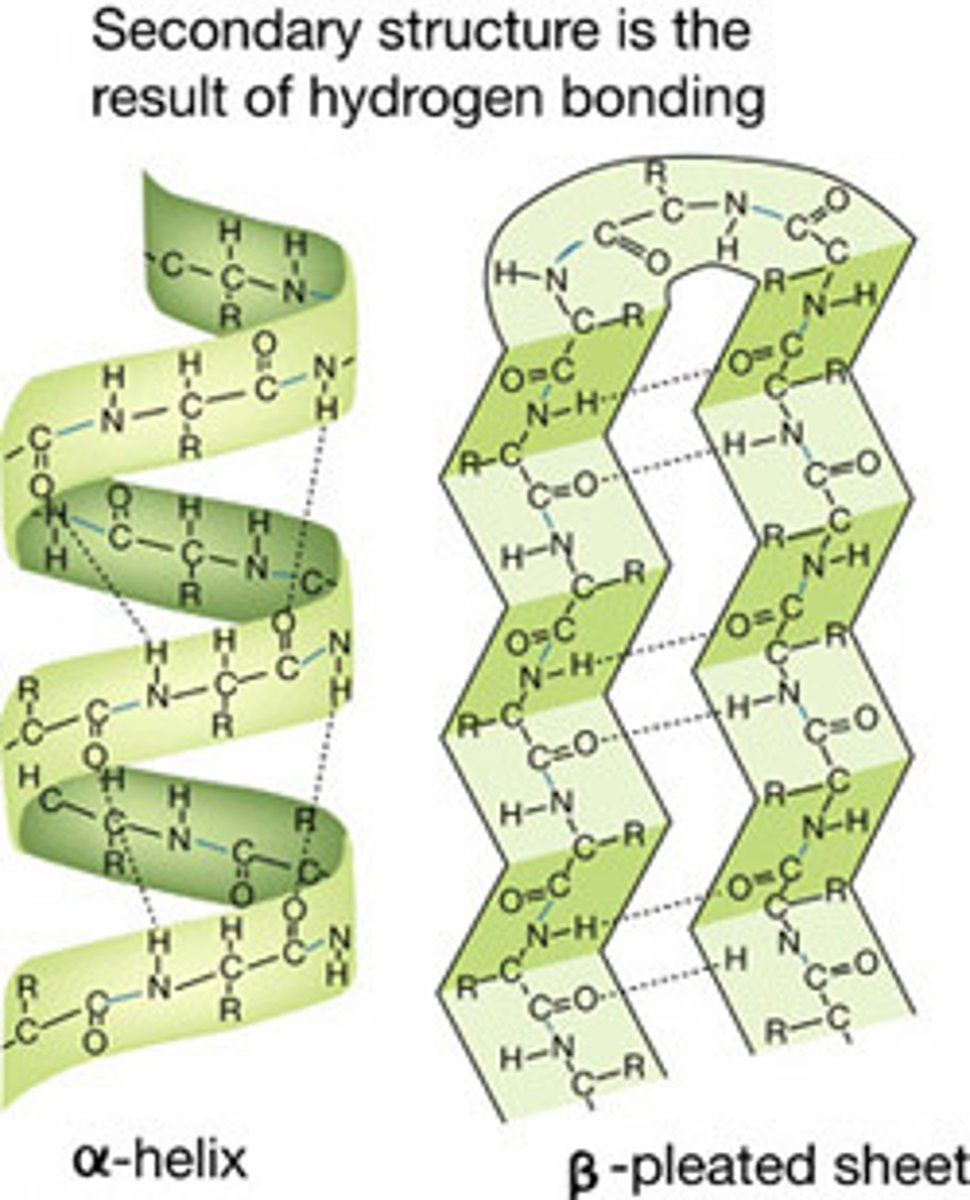
<p>- <span class="bgP">Alpha helix</span> or <span class="bgP">Beta pleated sheets</span></p><p>- <span class="bgP">Hydrogen bonding</span> between amide and carboxyl group</p>
38
New cards

Tertiary protein structure

- 3D shape of protein due to R group interactions

- Hydrophilic/phobic interactions (polar and non polar R groups), hydrogen bonds (weak), disulfide bonds (cysteine) and ionic bonds (between oppositely charged R groups) hold the polypeptides together
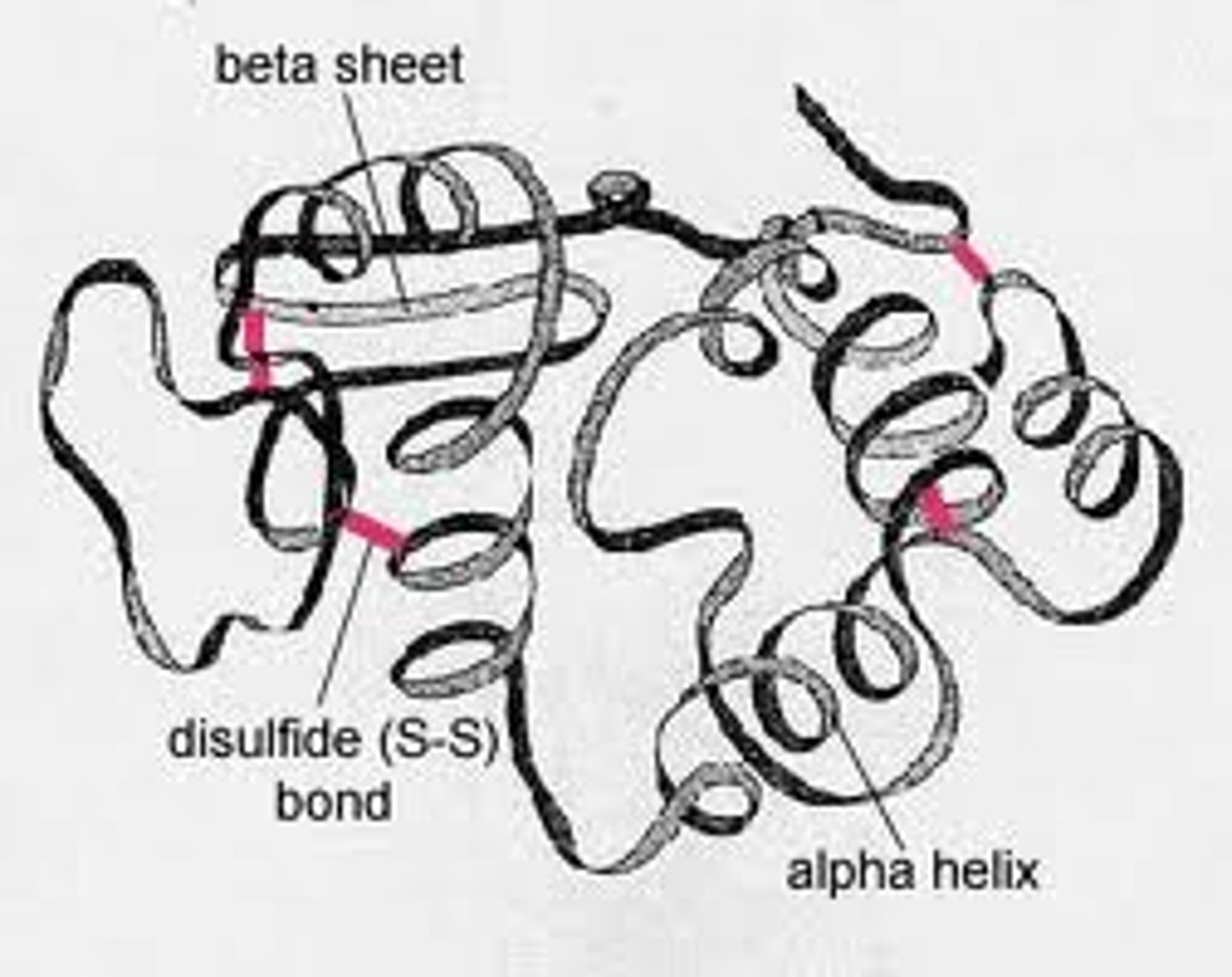
<p>- <span class="bgP">3D shape of protein </span>due to <span class="bgP">R group interactions</span></p><p>- <span class="bgP">Hydrophilic/phobic interactions </span>(polar and non polar R groups), <span class="bgP">hydrogen bonds </span>(weak), <span class="bgP">disulfide bonds</span> (cysteine) and <span class="bgP">ionic bonds </span>(between oppositely charged R groups) hold the polypeptides together</p>
39
New cards

Quaternary protein structure

- Protein made of 2+ polypeptide chains

- Each polypeptide is a subunit
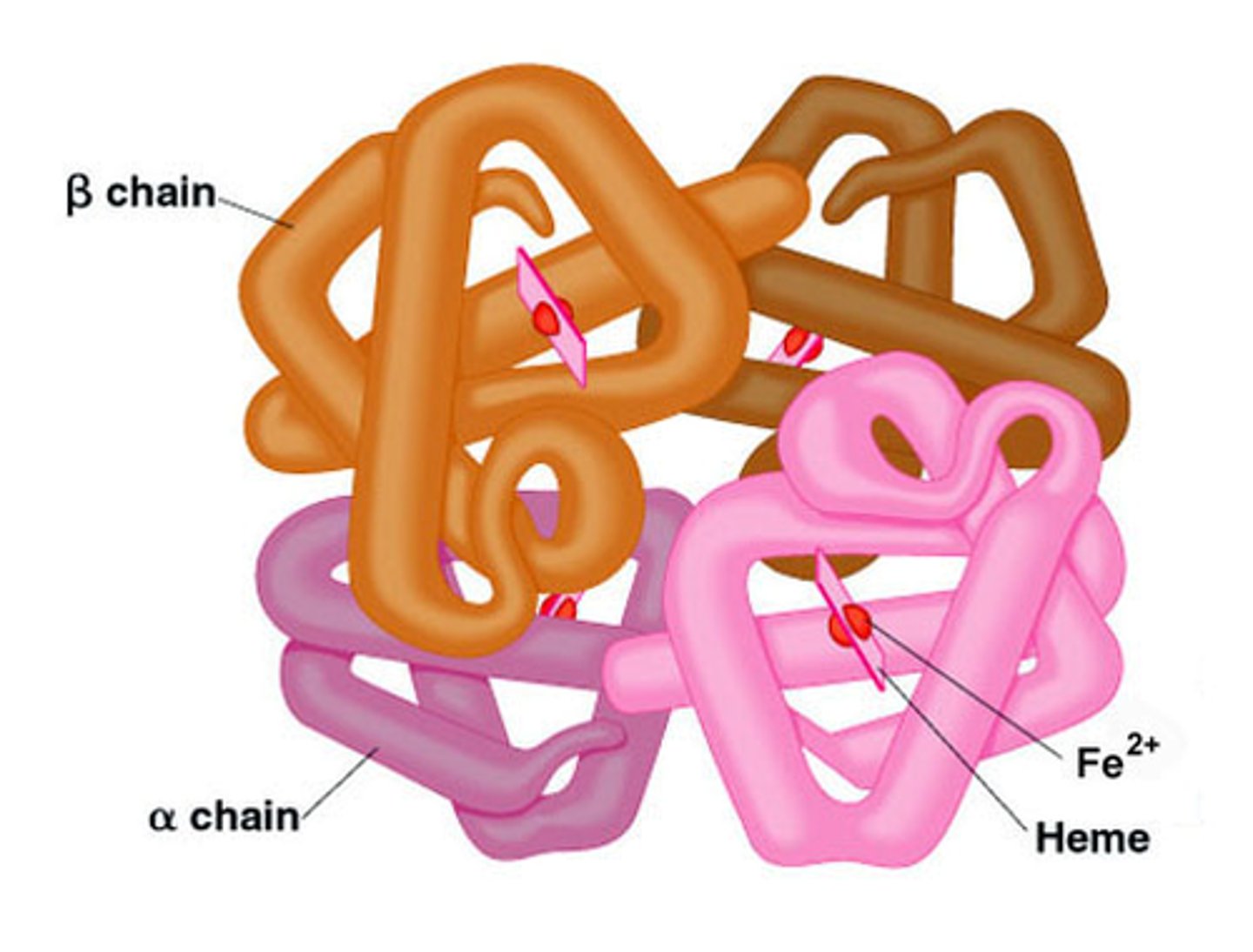
<p>- Protein made of <span class="bgP">2+ polypeptide chains</span></p><p>- Each <span class="bgP">polypeptide</span> is a <span class="bgP">subunit</span></p>
40
New cards

Structure of globular proteins

- Compact

- Water soluble (hydrophilic R groups on outside of molecule)

- Spherical
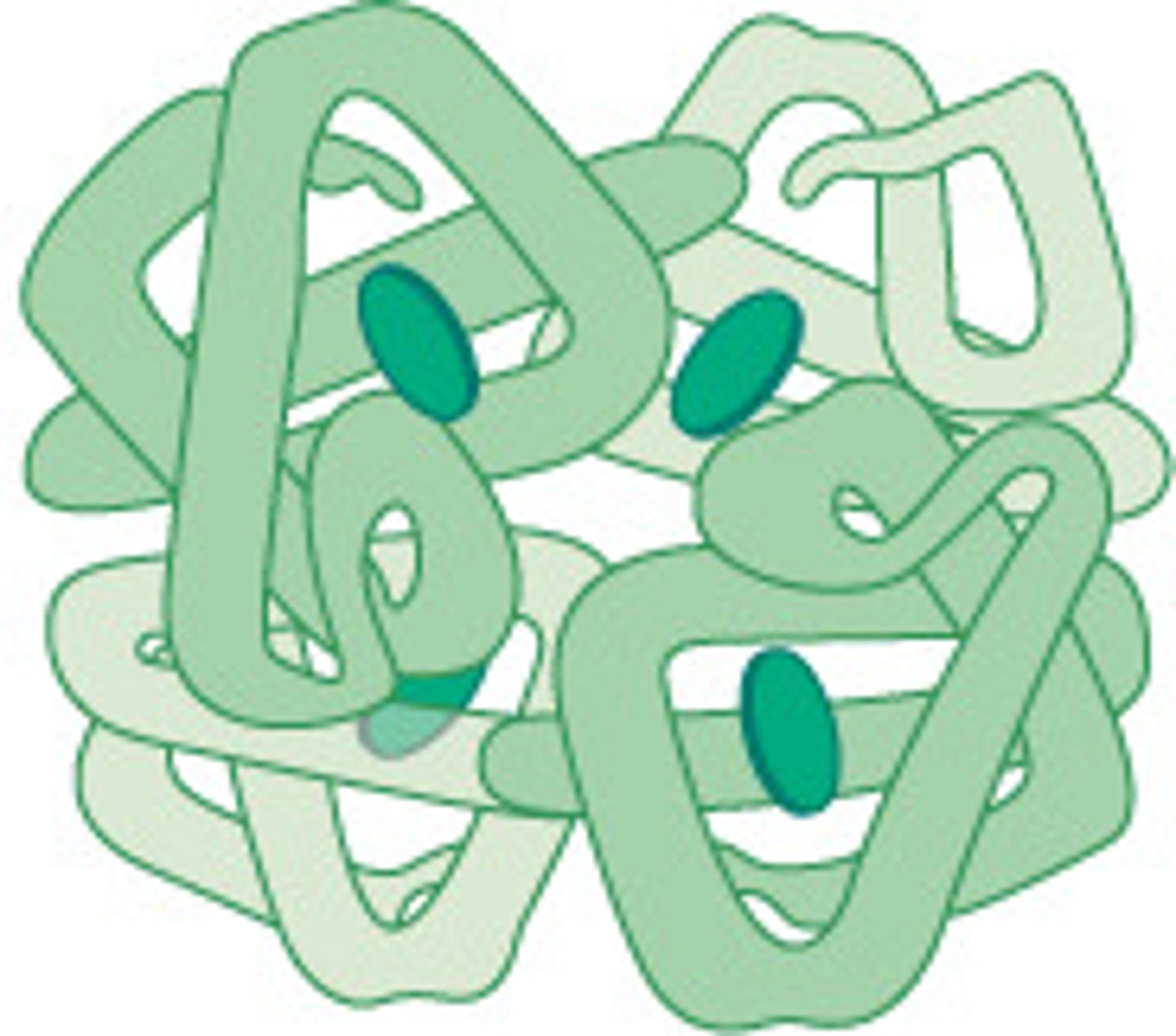
<p>- <span class="bgP">Compact</span></p><p>- Water <span class="bgP">soluble</span> (hydrophilic R groups on outside of molecule)</p><p>- <span class="bgP">Spherical</span></p>
41
New cards

Insulin: Function and Protein type

- Globular protein

- Hormone that regulates blood glucose levels (soluble so transported in blood)
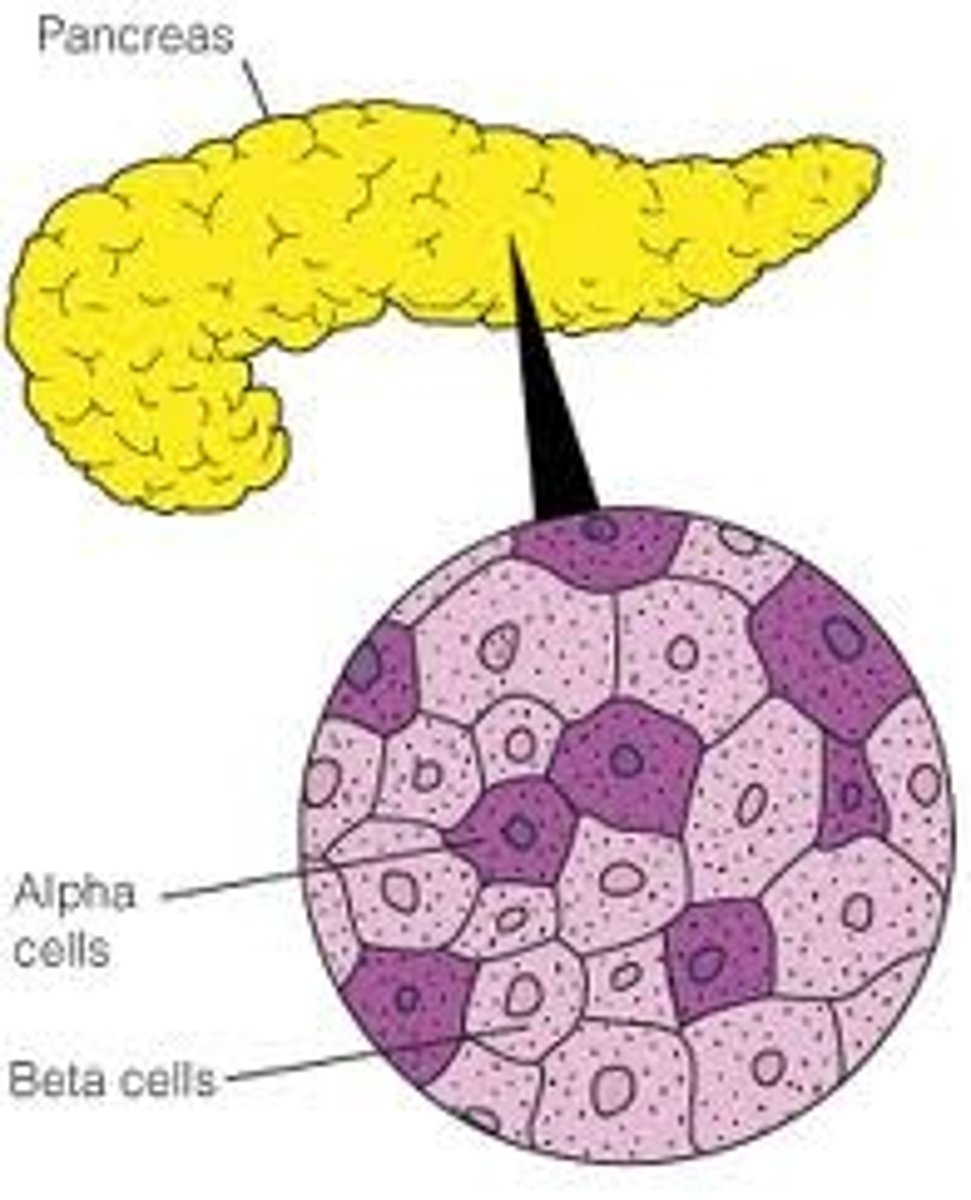
<p>- <span class="bgP">Globular protein</span></p><p>- Hormone that <span class="bgP">regulates blood glucose levels</span> (soluble so transported in blood)</p>
42
New cards

Conjugated protein

Globular proteins with a prosthetic group (non-protein component)
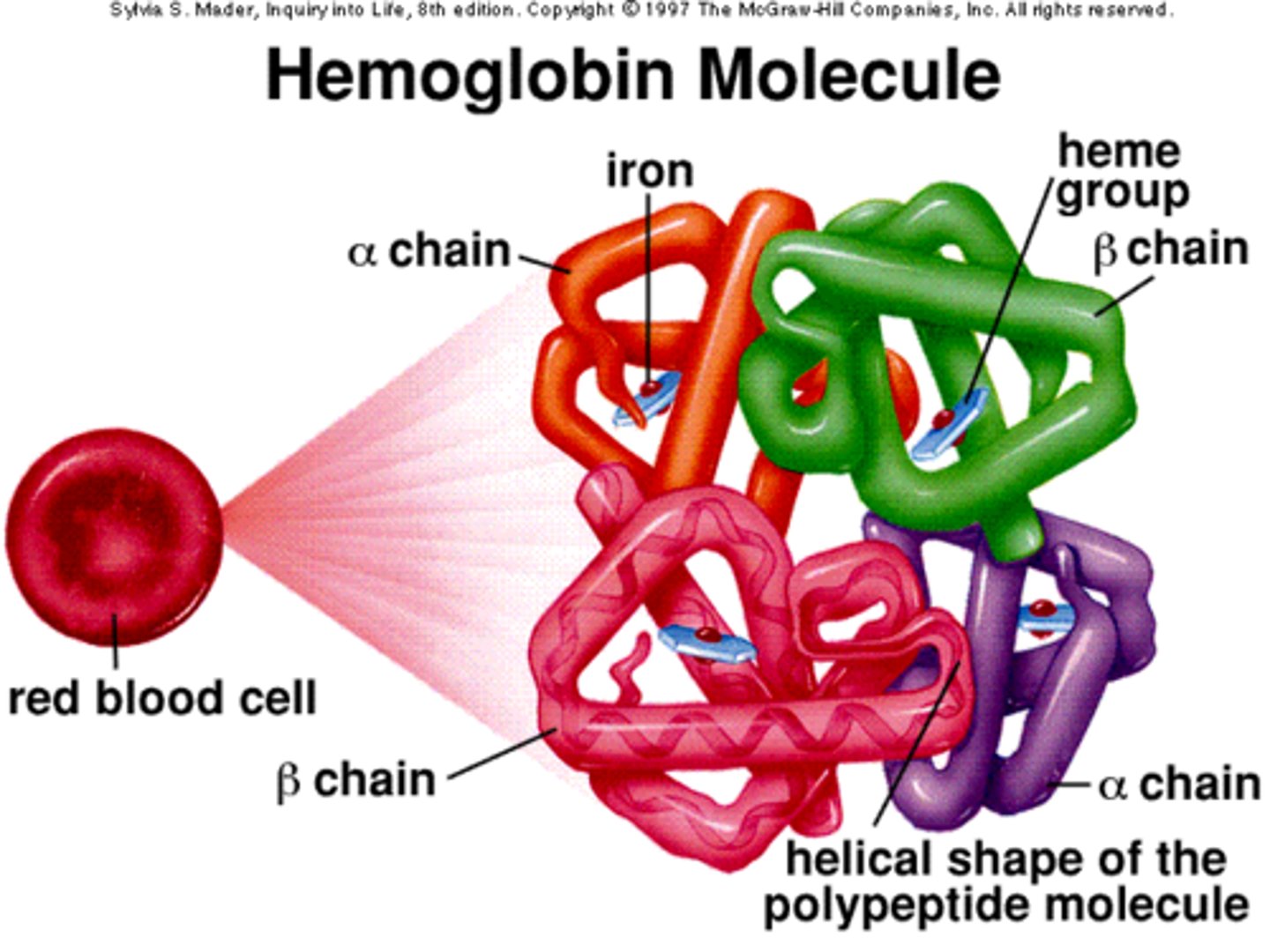
<p><span class="bgP">Globular proteins</span> with a <span class="bgP">prosthetic group</span> (non-protein component) </p>
43
New cards

What is a haem group?

- Prosthetic group containing Fe2+ ions

- Catalase and haemoglobin contain haem groups
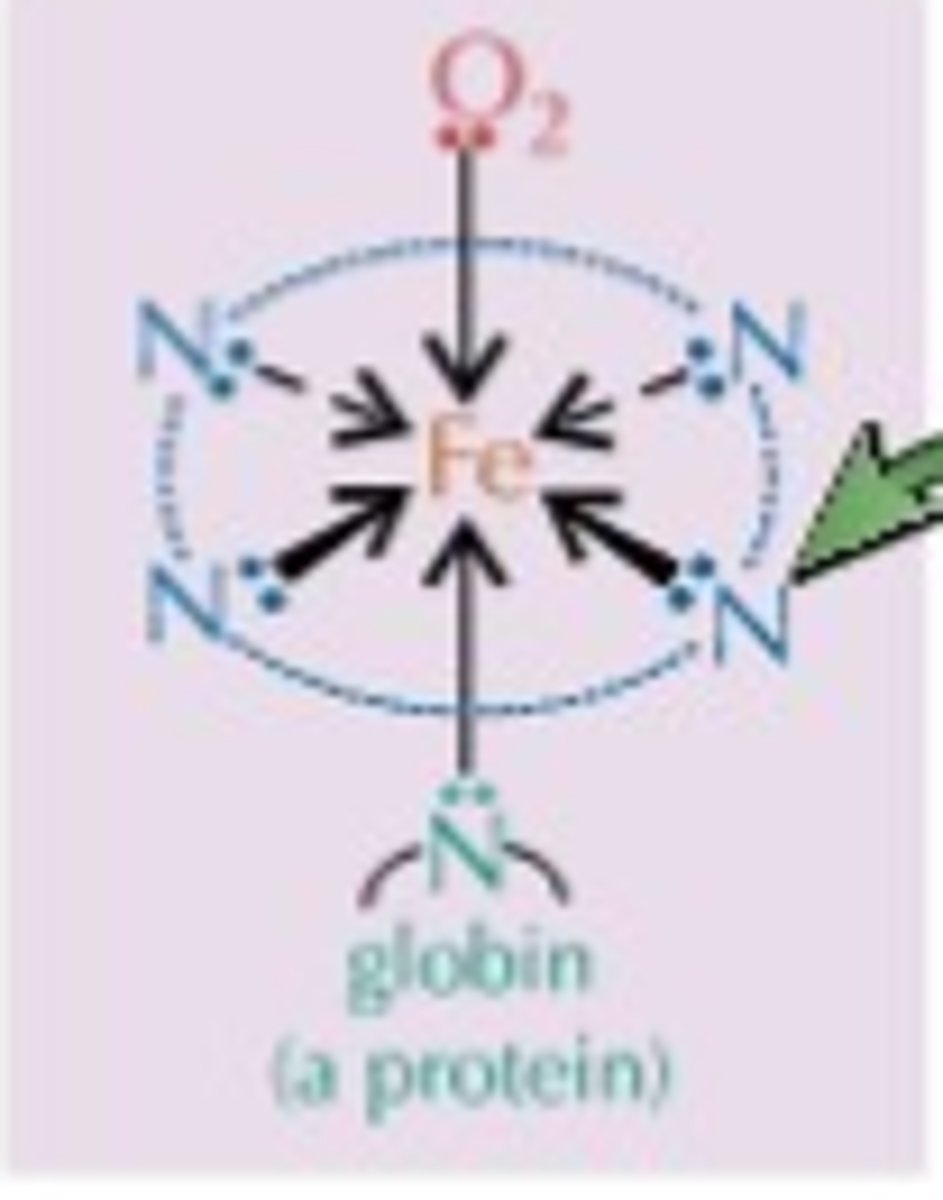
<p>- <span class="bgP">Prosthetic group</span> containing <span class="bgP">Fe2+ ions</span></p><p>- <span class="bgP">Catalase</span> and <span class="bgP">haemoglobin</span> contain haem groups</p>
44
New cards

Haemoglobin structure

- Conjugated protein (quaternary)

- Made of 2 alpha and 2 beta subunits (4 polypeptides)

- Has 4 haem groups

- Fe2+ ions combine with oxygen reversibly

- Enables oxygen transport around the body
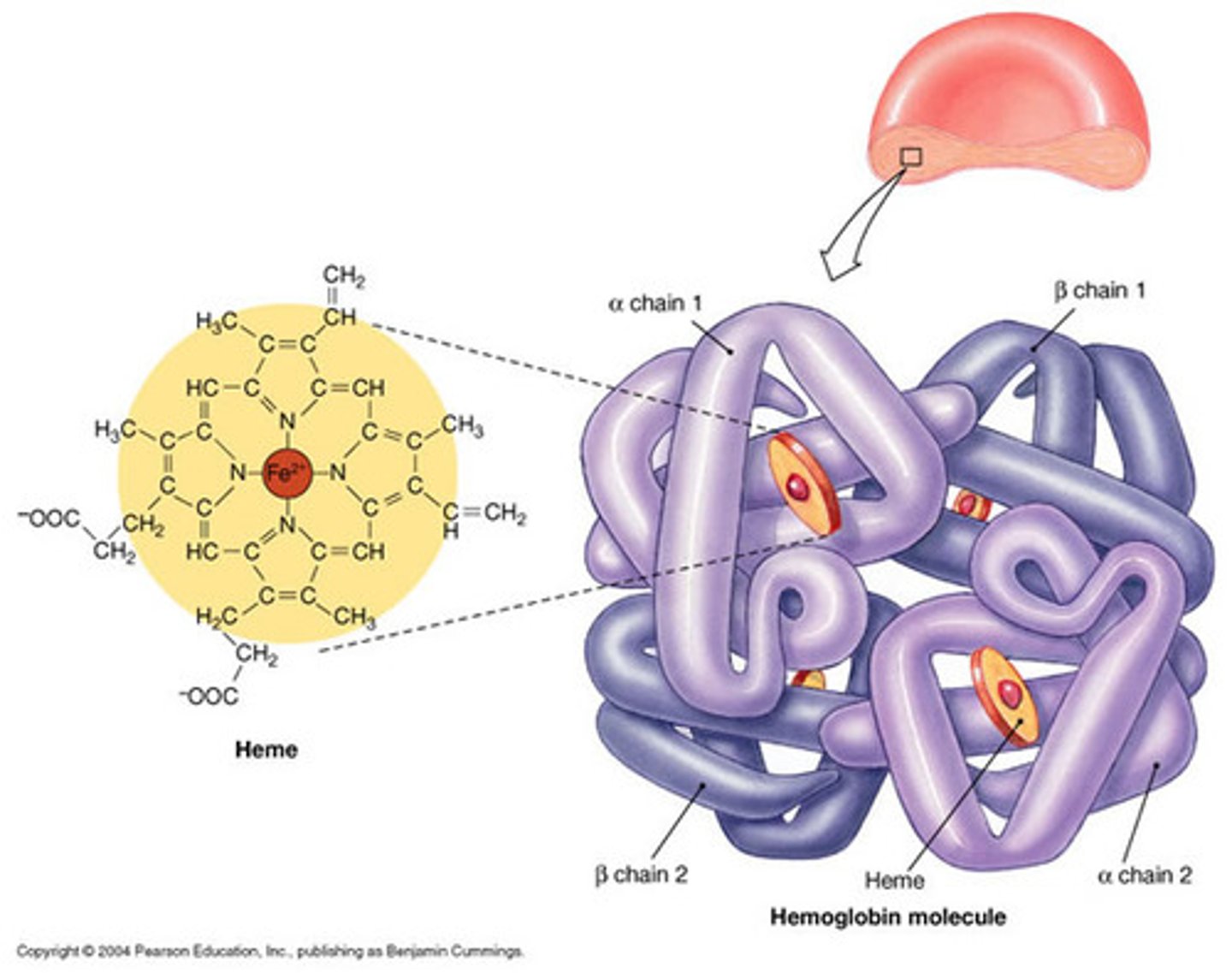
<p>- <span class="bgP">Conjugated protein (quaternary)</span></p><p>- Made of <span class="bgP">2 alpha</span> and <span class="bgP">2 beta subunits</span> (4 polypeptides)</p><p>- Has <span class="bgP">4 haem groups</span></p><p>- <span class="bgP">Fe2+ ions</span> combine with <span class="bgP">oxygen</span> reversibly</p><p>- <span class="bgP">Enables oxygen transport</span> around the body</p>
45
New cards

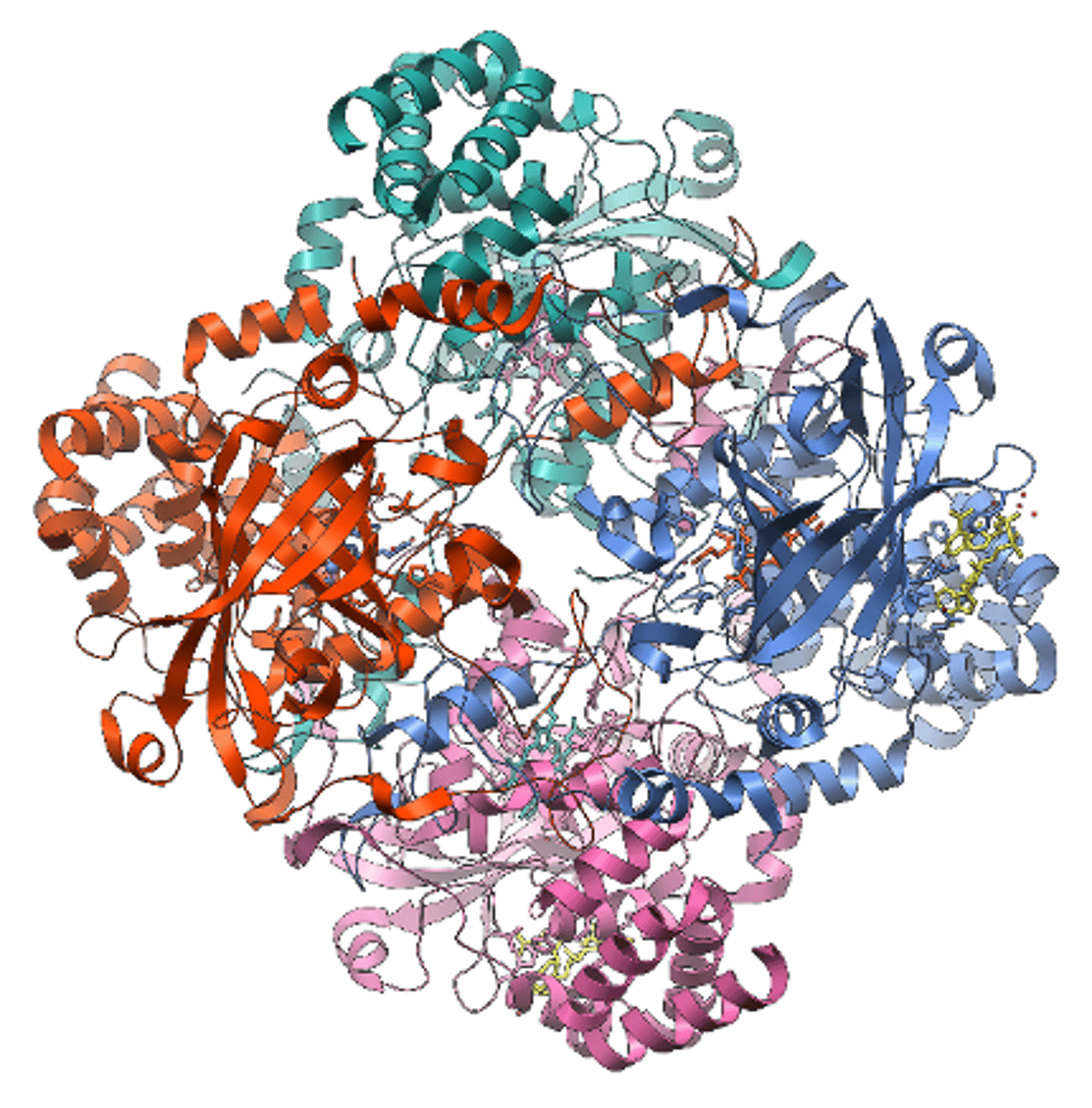
Catalase: Structure and Function

- Conjugated protein (enzyme)

- Has 4 haem groups

- Fe2+ ion allows it to breakdown hydrogen peroxide into water and oxygen (common byproduct of metabolism which is damaging to cells)
<p>- <span class="bgP">Conjugated protein</span> (<span class="bgP">enzyme</span>)</p><p>- Has <span class="bgP">4 haem groups</span></p><p>- <span class="bgP">Fe2+ ion</span> allows it to <span class="bgP">breakdown hydrogen peroxide</span> into <span class="bgP">water</span> and <span class="bgP">oxygen</span> (common byproduct of metabolism which is damaging to cells) </p>
46
New cards

Properties of Fibrous proteins

- Strong, Long

- Insoluble (many hydrophobic R groups)

- Unreactive

- Organised structure (repetitive amino acid sequence)
<p>- <span class="bgP">Strong, Long</span></p><p>- <span class="bgP">Insoluble</span> (many hydrophobic R groups) </p><p>- <span class="bgP">Unreactive</span></p><p>- <span class="bgP">Organised structure</span> (repetitive amino acid sequence)</p>
47
New cards

Function of Fibrous proteins

Provides structure
<p>Provides <span class="bgP">structure</span></p>
48
New cards

Keratin: Structure and Function

- Fibrous protein

- Many cysteine and disulfide bridges

- Found in hair, skin, nails

<p>- <span class="bgP">Fibrous protein</span> </p><p>- Many <span class="bgP">cysteine</span> and <span class="bgP">disulfide bridges</span></p><p>- Found in <span class="bgP">hair, skin, nails</span></p>
49
New cards

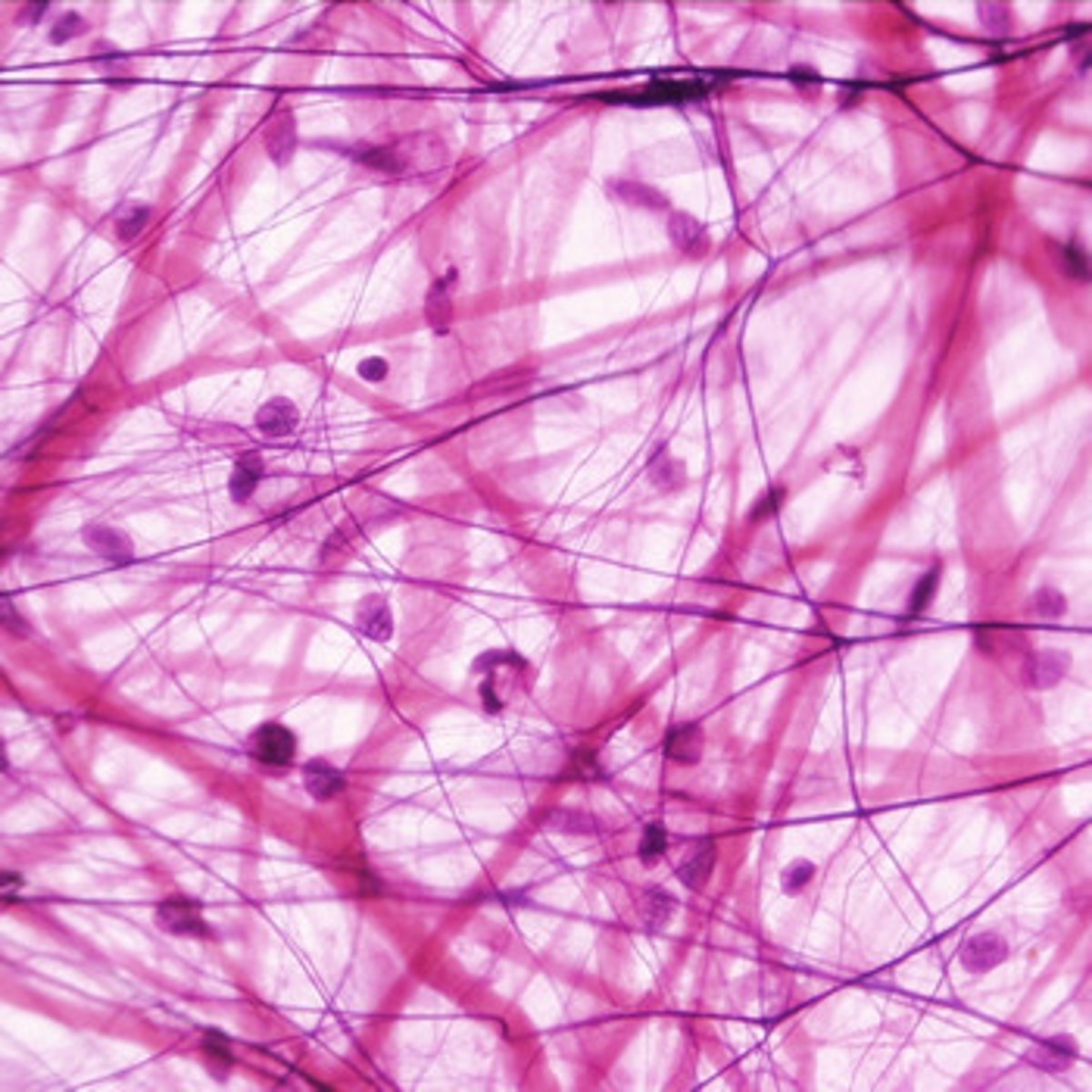
Elastin: Structure and Function

- Fibrous protein

- Allows tissue to stretch and return to normal size

- Found in elastic fibres (e.g. walls of alveoli)
<p>- <span class="bgP">Fibrous protein</span> </p><p>- Allows tissue to <span class="bgP">stretch </span>and return to normal size</p><p>- Found in <span class="bgP">elastic fibres</span> (e.g. walls of alveoli)</p>
50
New cards

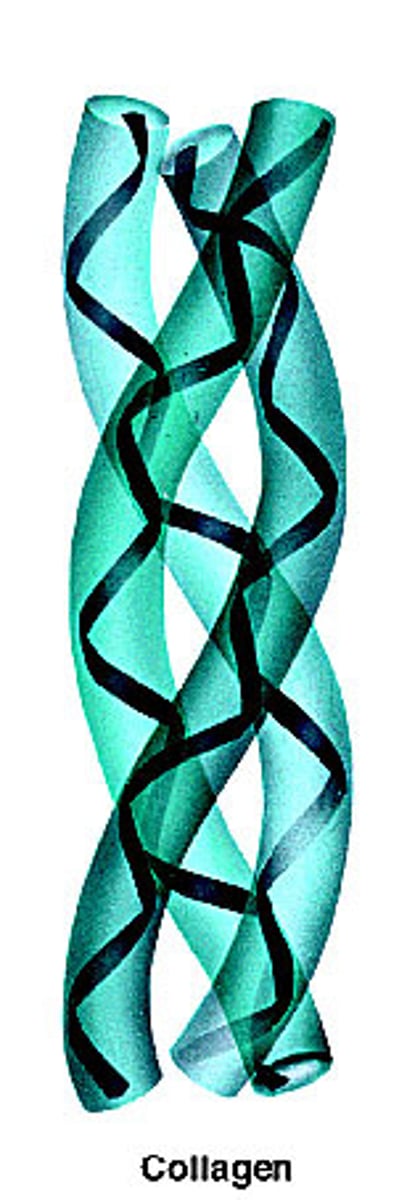
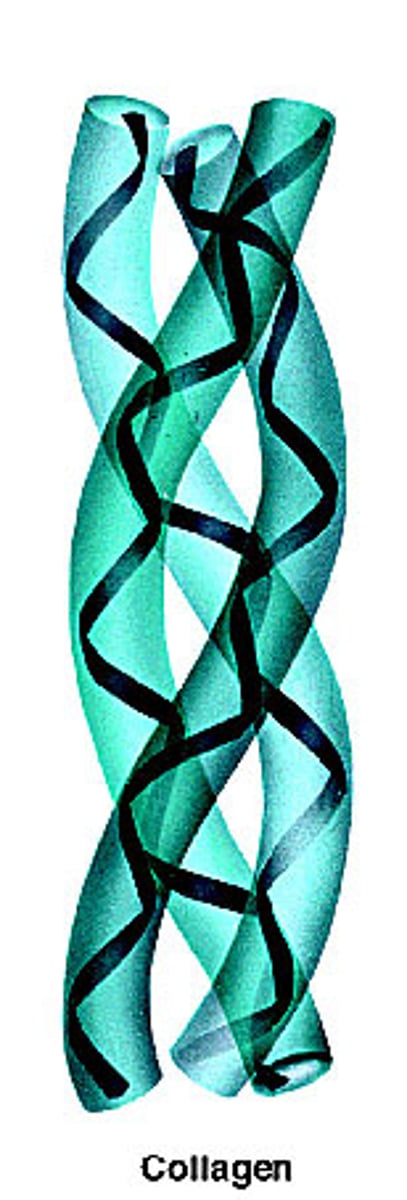
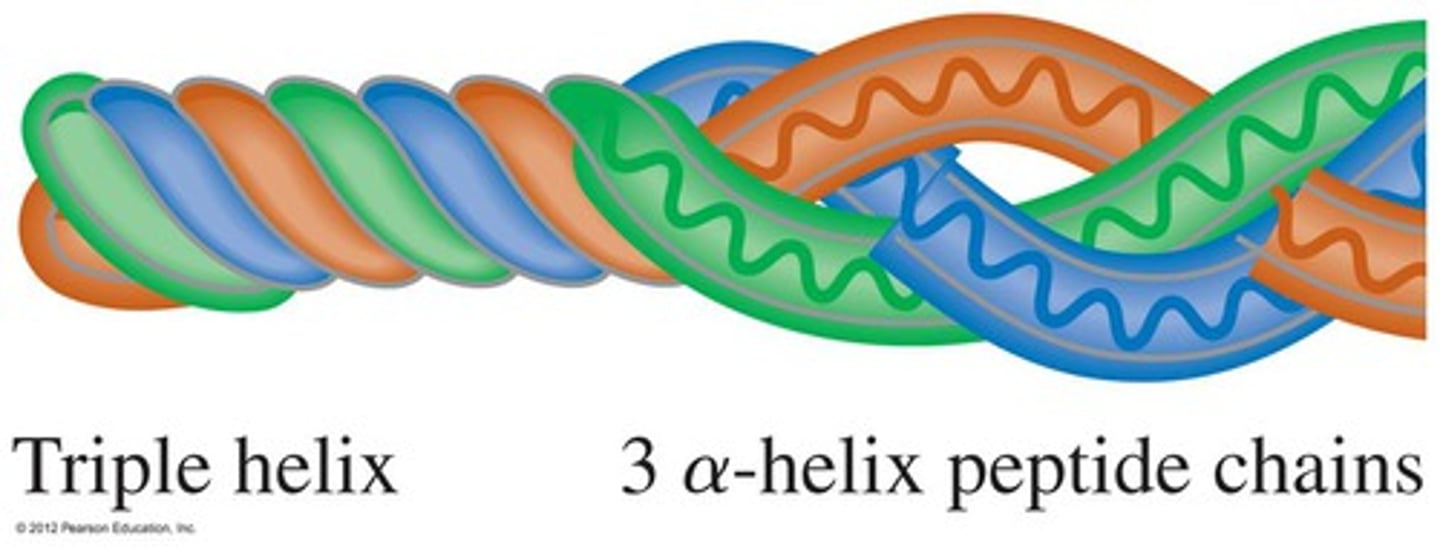
Collagen: Structure and Function

- Fibrous protein

- 3 polypeptides wound together

- Found in skin, tendons, ligaments, nervous system
<p>- <span class="bgP">Fibrous protein</span></p><p>- <span class="bgP">3 polypeptides</span> wound together</p><p>- Found in <span class="bgP">skin, tendons, ligaments, nervous system</span> </p>
51
New cards

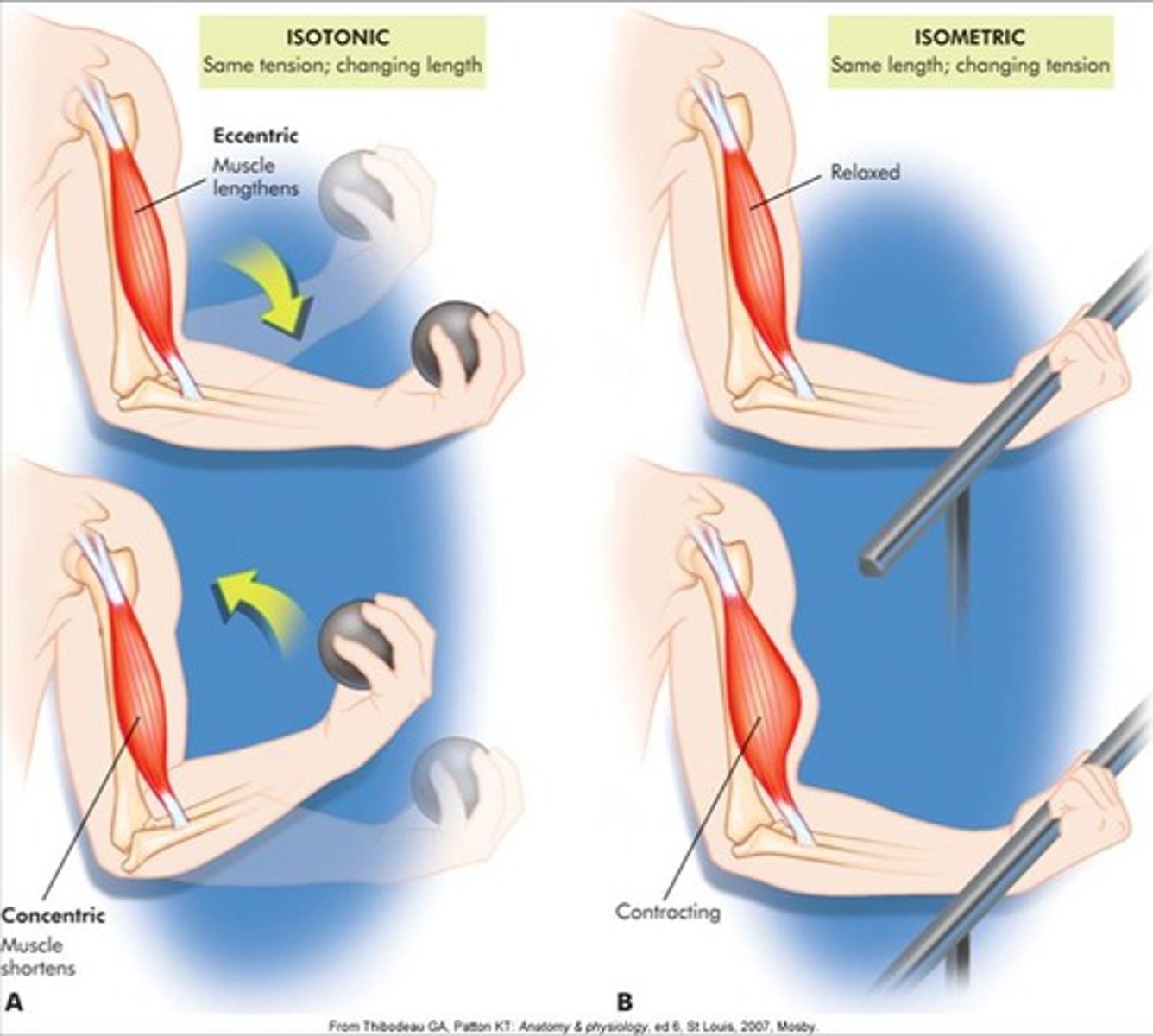
Calcium ions function (Ca²⁺)

- Nerve impulse transmission

- Muscle contraction
<p>- <span class="bgP">Nerve impulse transmission</span></p><p>- <span class="bgP">Muscle contraction</span></p>
52
New cards

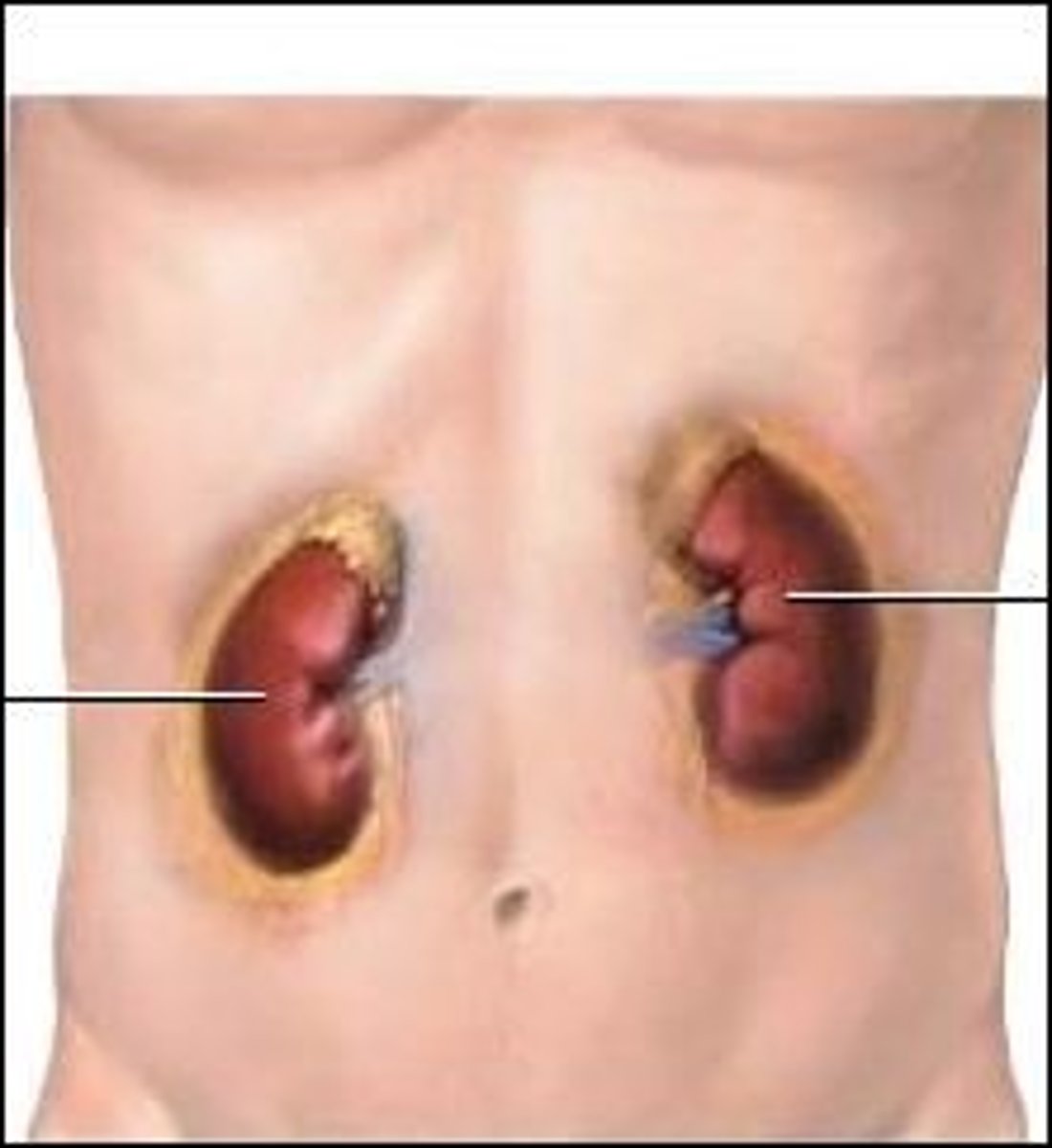
Sodium ions function (Na⁺)

- Nerve impulse transmission

- Regulates cell water potential

- Kidney function
<p>- <span class="bgP">Nerve impulse transmission</span></p><p>- Regulates <span class="bgP">cell water potential</span></p><p>- <span class="bgP">Kidney</span> function </p>
53
New cards

Potassium ions function (K⁺)

- Nerve impulse transmission

- Regulates cell water potential

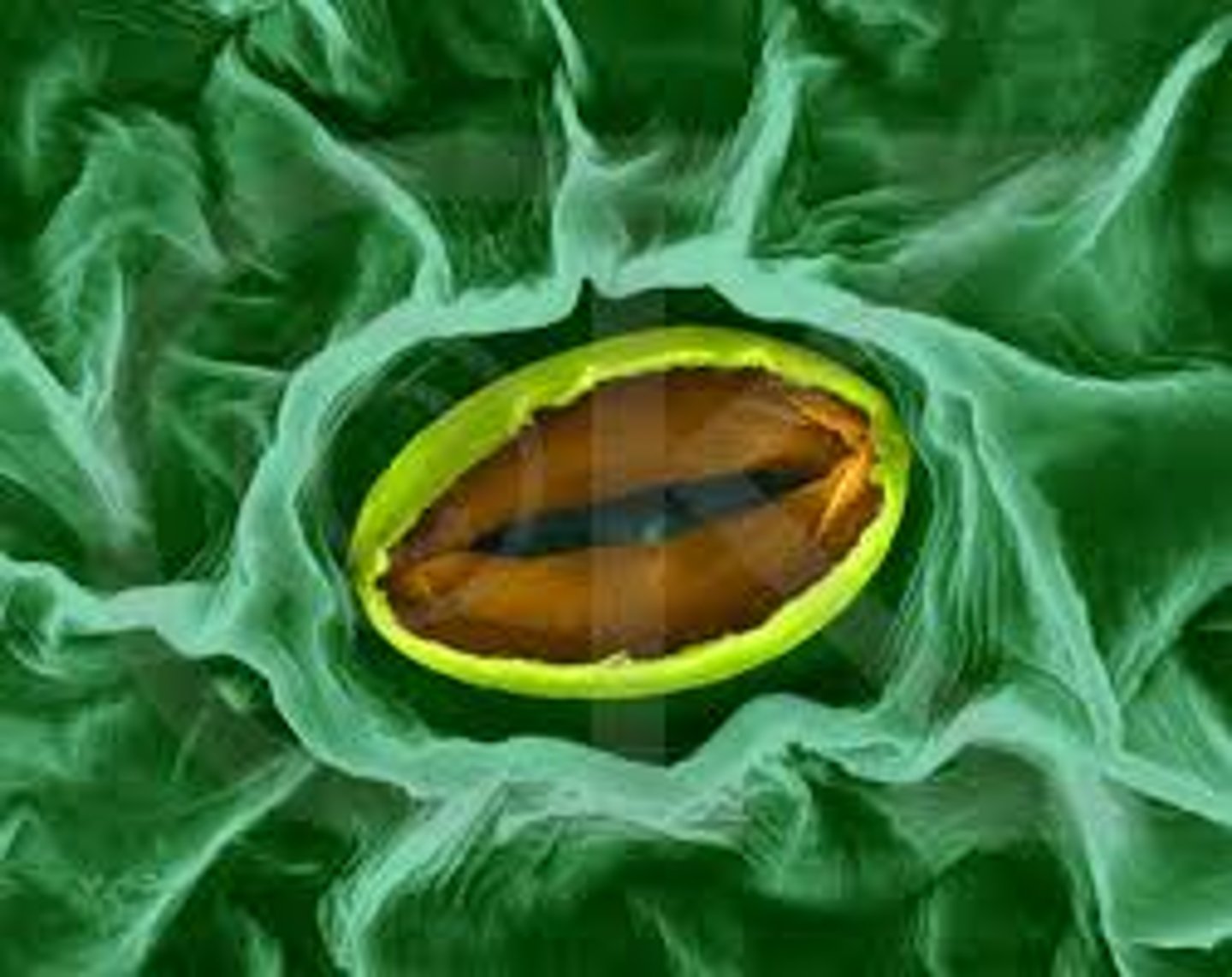
- Stomatal opening
<p>- <span class="bgP">Nerve impulse transmission</span></p><p>- Regulates <span class="bgP">cell water potential</span></p><p>- <span class="bgP">Stomatal opening</span></p>
54
New cards

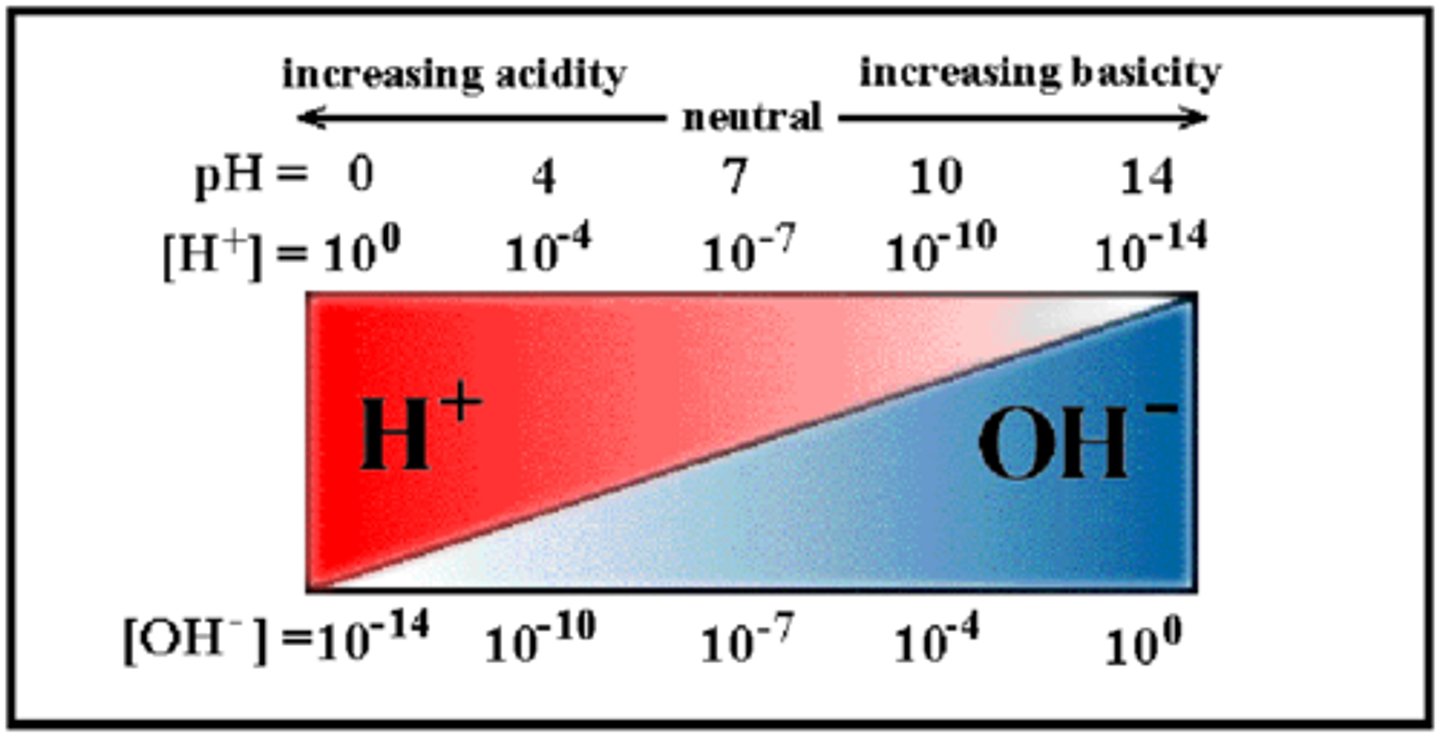
Hydrogen ions function (H⁺)

- Catalyses reactions

- Determines pH
<p>- <span class="bgP">Catalyses</span> reactions</p><p>- Determines <span class="bgP">pH</span> </p>
55
New cards

Ammonium ions function (NH₄⁺)

Produces nitrate ions in bacteria
<p>Produces <span class="bgP">nitrate</span> ions in <span class="bgP">bacteria</span></p>
56
New cards

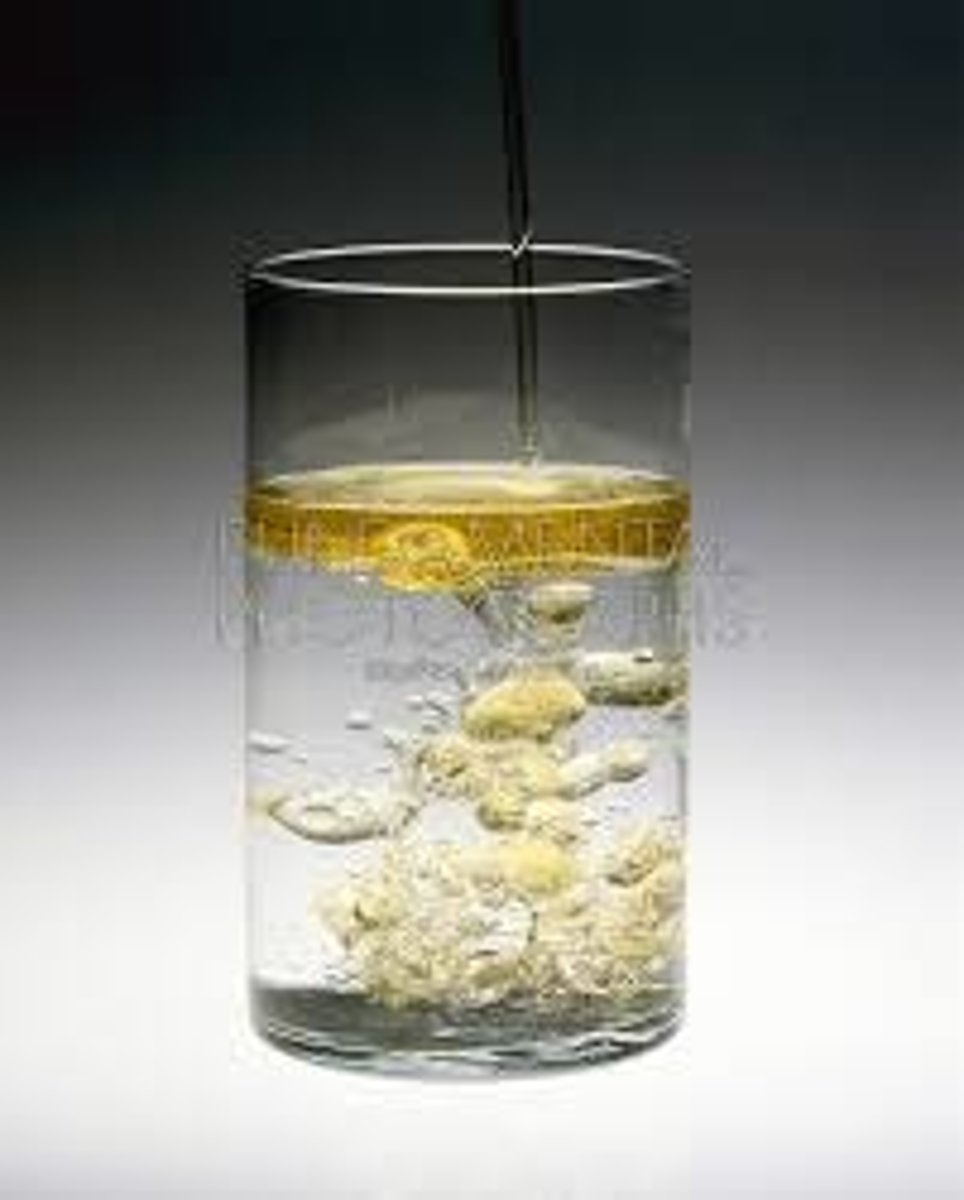
How soluble are Lipids?

- Soluble in organic solvents (eg alcohol)

- Insoluble in water (doesn't affect water potential)
<p>- <span class="bgP">Soluble</span> in <span class="bgP">organic solvents</span> (eg alcohol)</p><p>- <span class="bgP">Insoluble</span> in <span class="bgP">water</span> (doesn't affect water potential)</p>
57
New cards

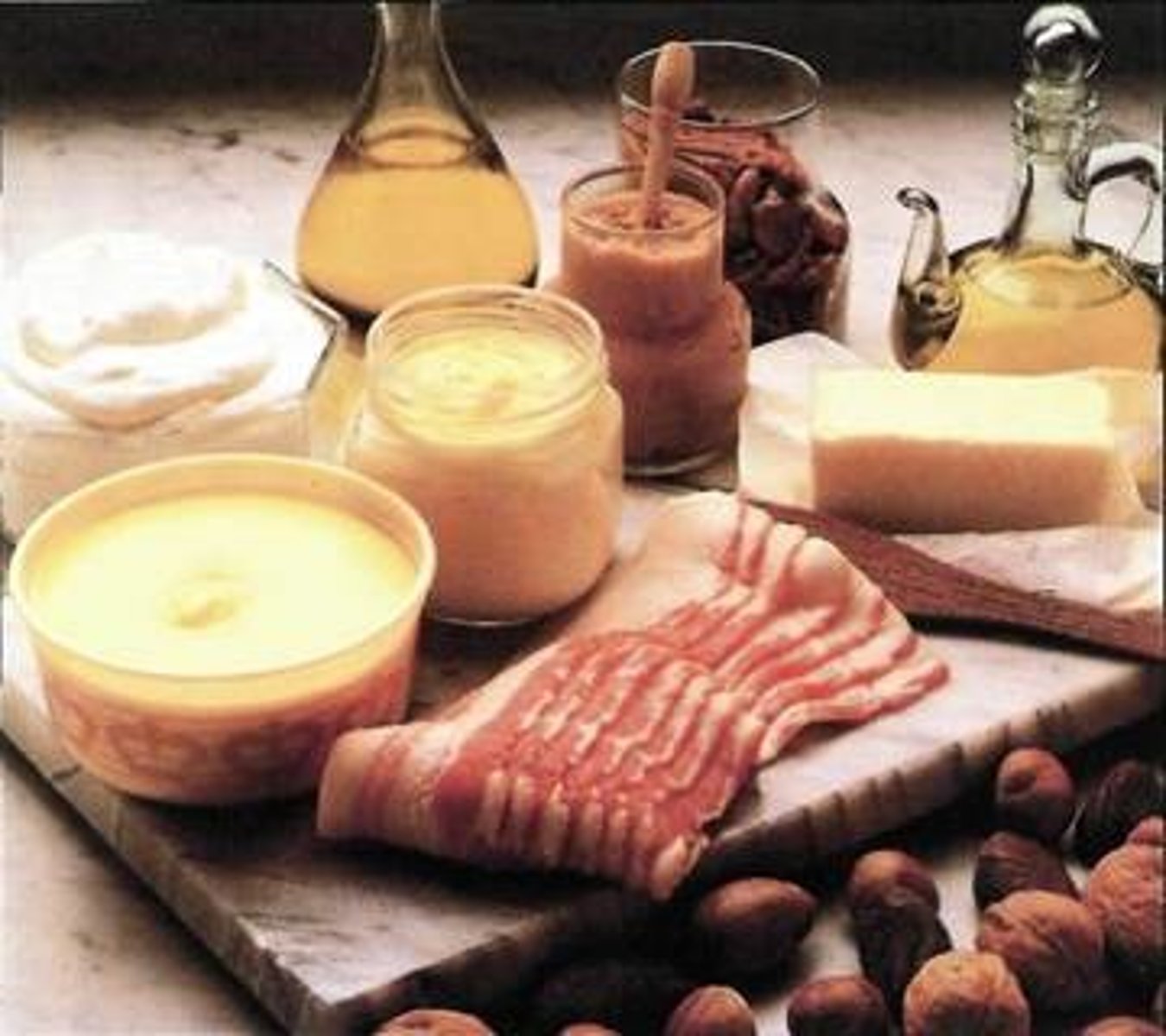
Function of Lipids

- Energy storage (releases water too)

- Insulation

- Protection (saturated/hard)
<p>- <span class="bgP">Energy storage</span> (releases water too)</p><p>- <span class="bgP">Insulation</span></p><p>- <span class="bgP">Protection</span> (saturated/hard)</p>
58
New cards

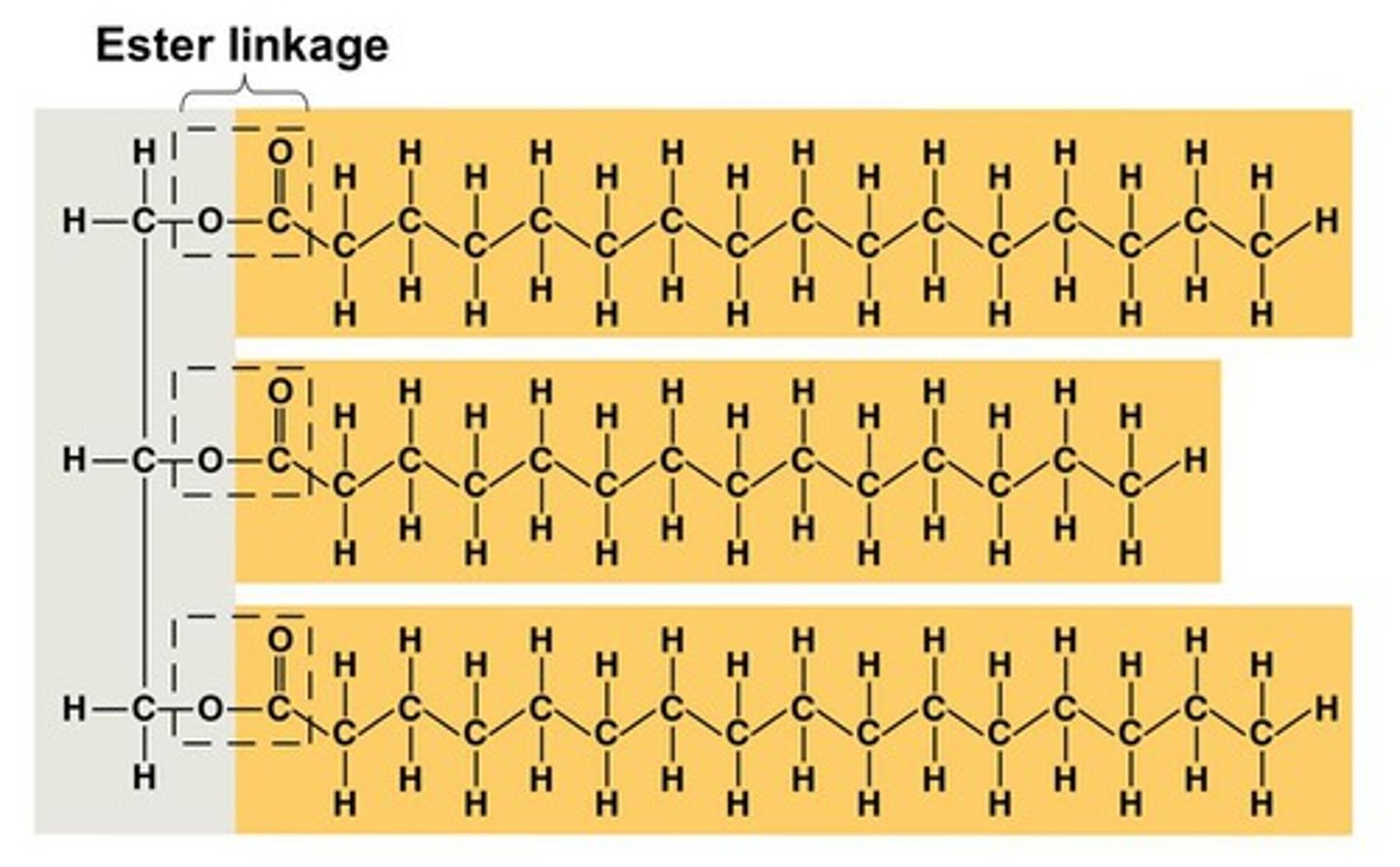
Trigylceride structure

1 glycerol covalently bonded with 3 fatty acids by ester linkage
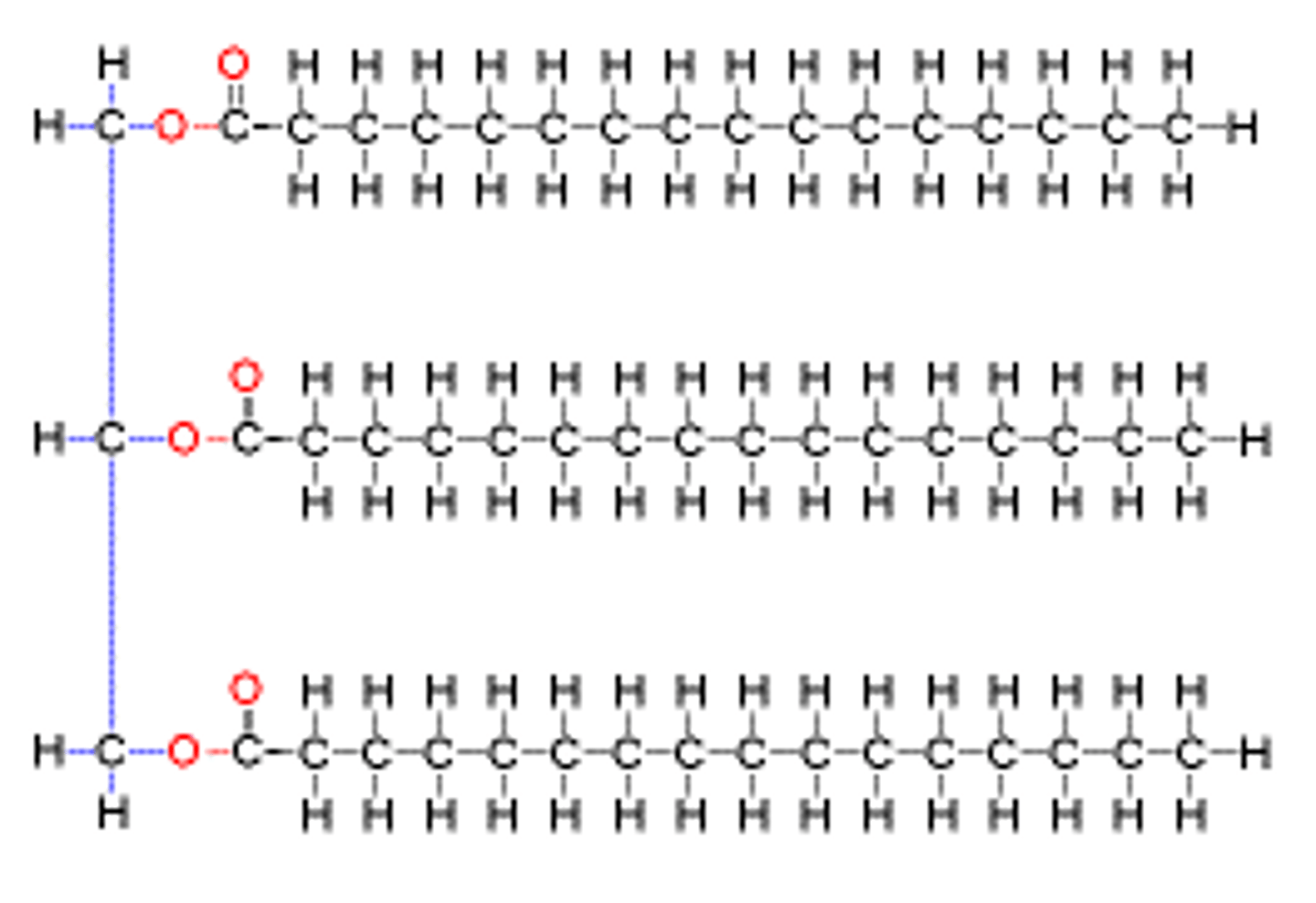
<p><span class="bgP">1 glycerol</span> covalently bonded with <span class="bgP">3 fatty acids</span> by <span class="bgP">ester linkage</span></p>
59
New cards

Structure of Phospholipids

- 1 phosphate head (hydrophilic)

- 2 fatty acids (hydrophobic tails)

- 1 glycerol
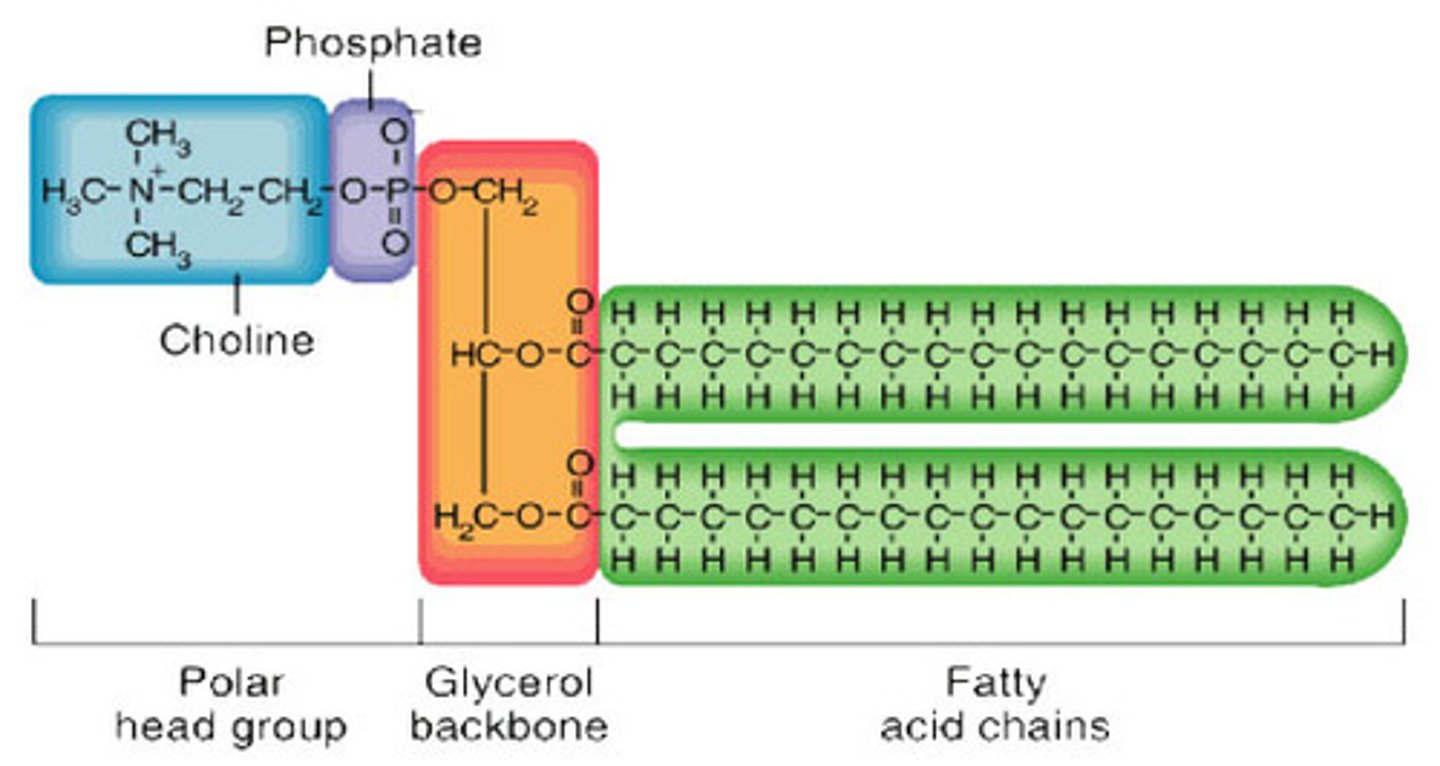
<p>- <span class="bgP">1 phosphate head</span> (hydrophilic)</p><p>- <span class="bgP">2 fatty acids</span> (hydrophobic tails)</p><p>- <span class="bgP">1 glycerol</span></p>
60
New cards

Function of Phospholipids

- Forms the phospholipid bilayer in water

- Which makes up cell membranes
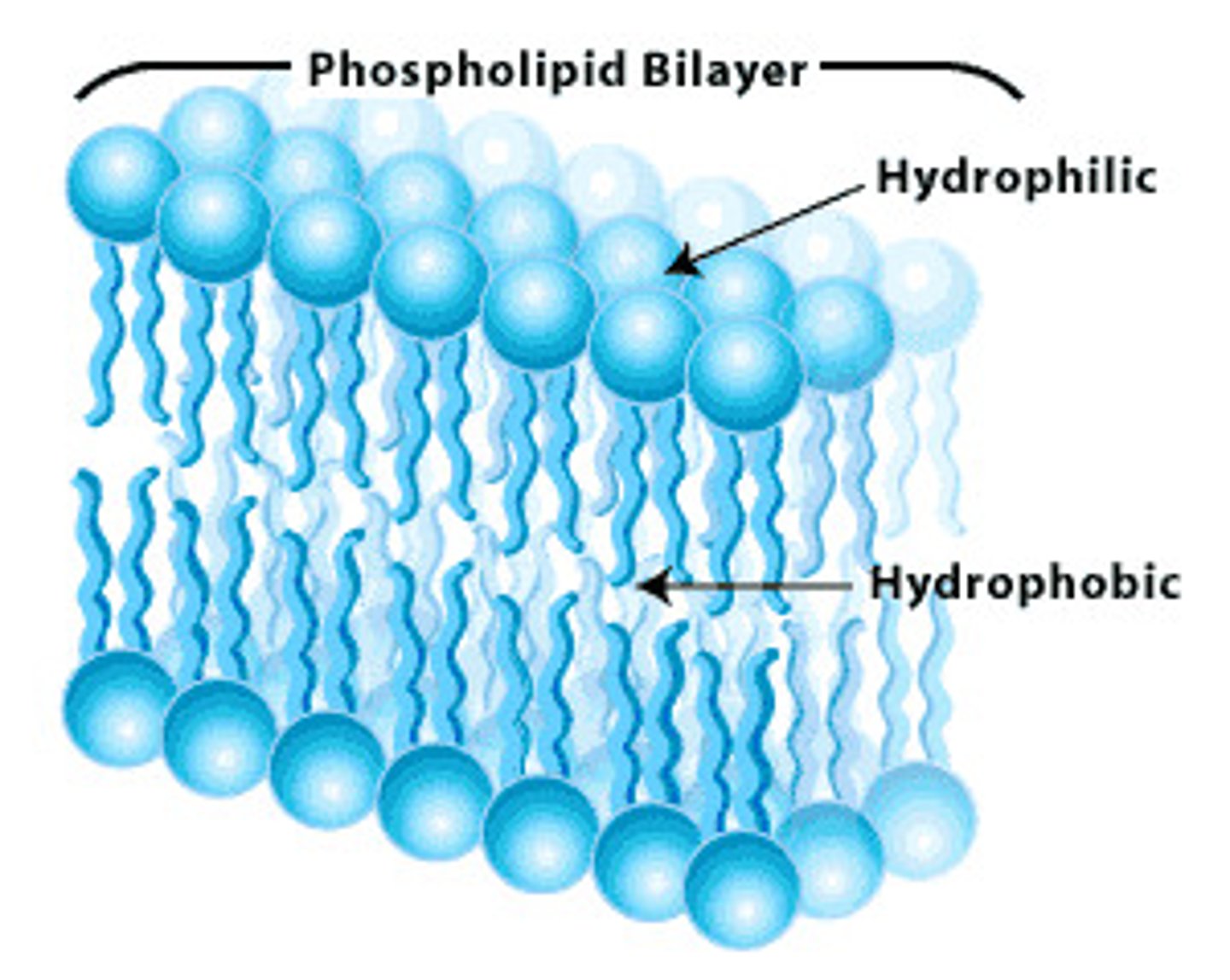
<p>- Forms the <span class="bgP">phospholipid bilayer</span> in <span class="bgP">water</span> </p><p>- Which makes up <span class="bgP">cell membranes</span></p>
61
New cards

How do phospholipids form the bilayer of plasma membranes?

- Phosphate head is hydrophilic and fatty acid tails are hydrophobic

- Hydrophobic tails are repelled by water outside plasma membrane

- Hydrophilic head forms H bonds with water

- Tails face inwards towards each other because they're hydrophobic
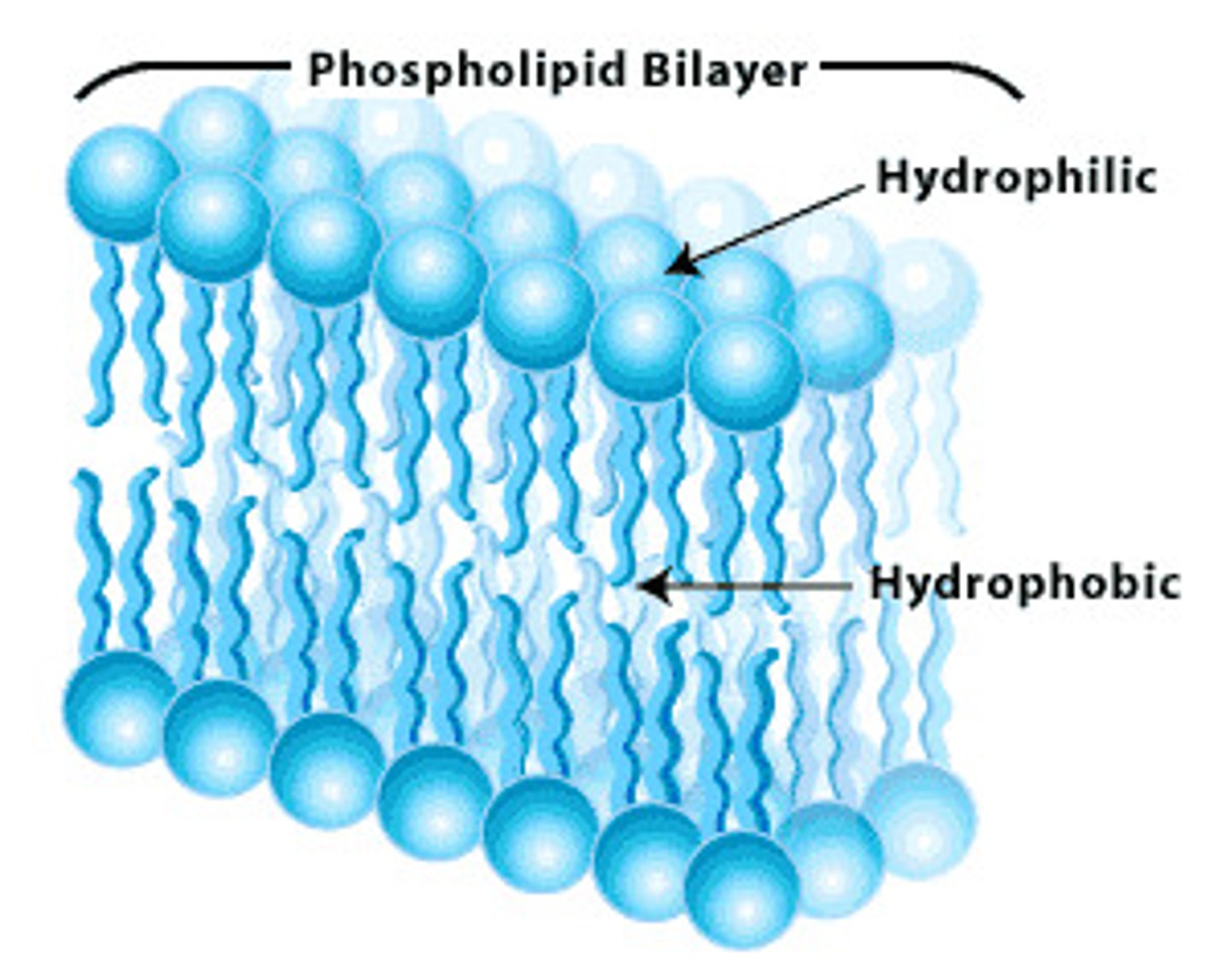
<p>- <span class="bgP">Phosphate head</span>  is <span class="bgP">hydrophilic</span> and <span class="bgP">fatty acid tails</span> are <span class="bgP">hydrophobic</span></p><p>- <span class="bgP">Hydrophobic tails</span> are <span class="bgP">repelled by water</span> outside <span class="bgP">plasma membrane</span></p><p>- <span class="bgP">Hydrophilic head</span> forms <span class="bgP">H bonds</span> with <span class="bgP">water</span> </p><p>- <span class="bgP">Tails face inwards</span> towards each other because they're <span class="bgP">hydrophobic</span></p>
62
New cards

What is a Macromolecule?

Large molecule formed by smaller organic molecules (eg trigylcerides)
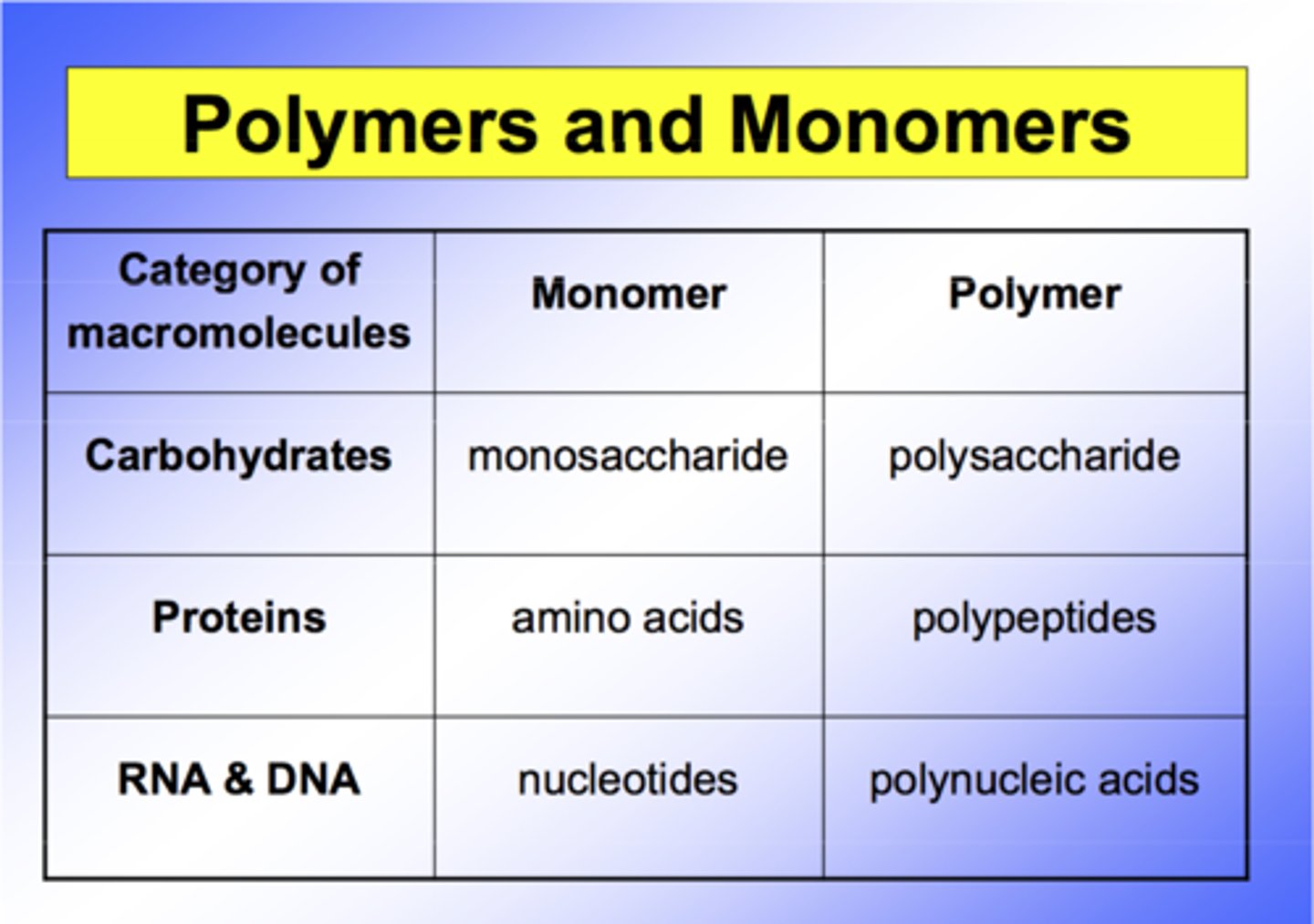
<p><span class="bgP">Large molecule</span> formed by <span class="bgP">smaller organic molecules</span> (eg trigylcerides)</p>
63
New cards

Difference between the structure of saturated fats and unsaturated fats

Saturated fats - single carbon bonds

Unsaturated fats - double carbon bonds
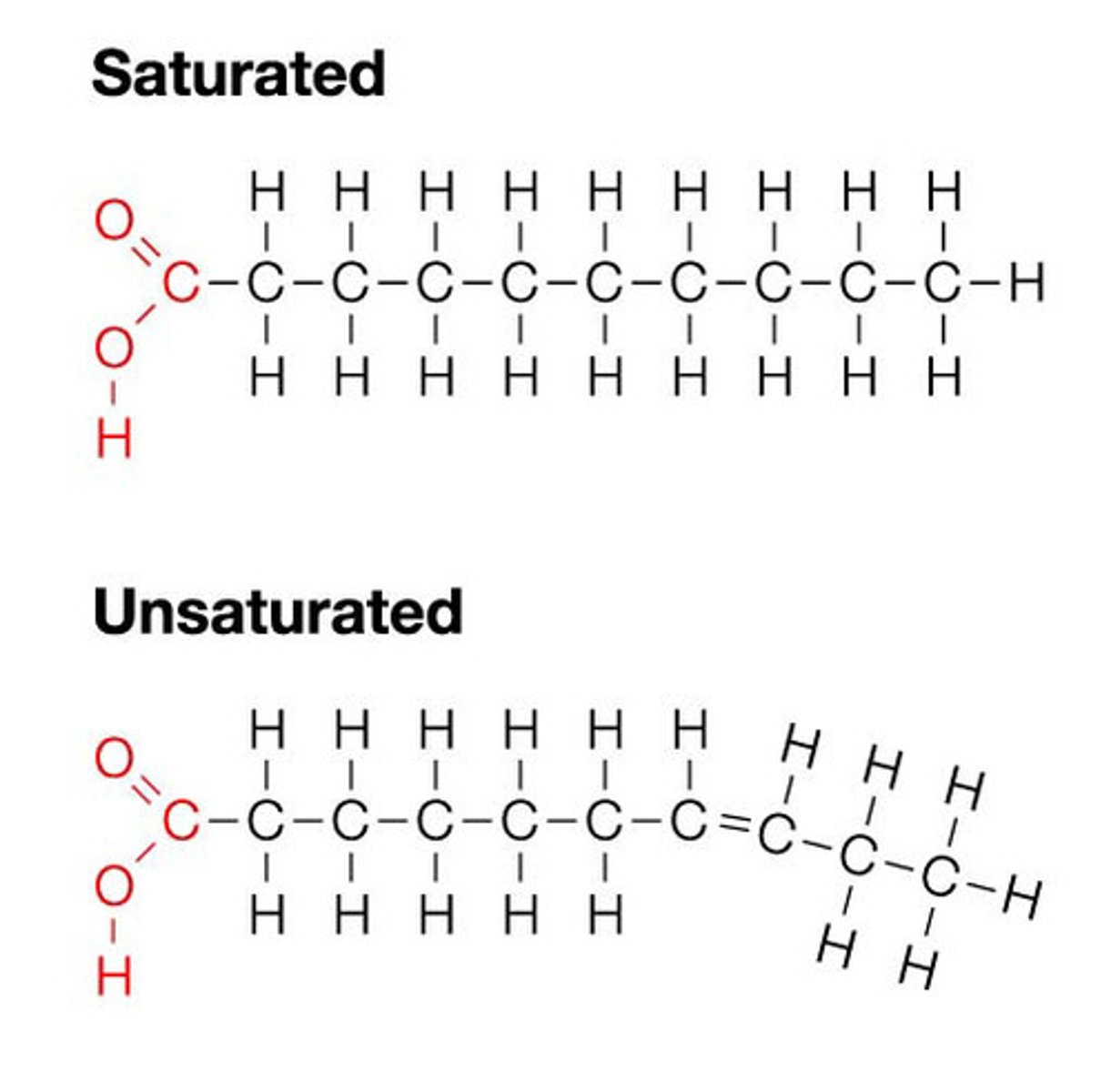
<p>Saturated fats - <span class="bgP">single</span> carbon bonds</p><p>Unsaturated fats - <span class="bgP">double carbon bonds</span></p>
64
New cards

Why are unsaturated fats liquid at room temperature?

- More unsaturated (double) bonds which bend

- Can't pack closely together

- So weaker intermolecular bonds

- So lower melting point

- So liquid at RT
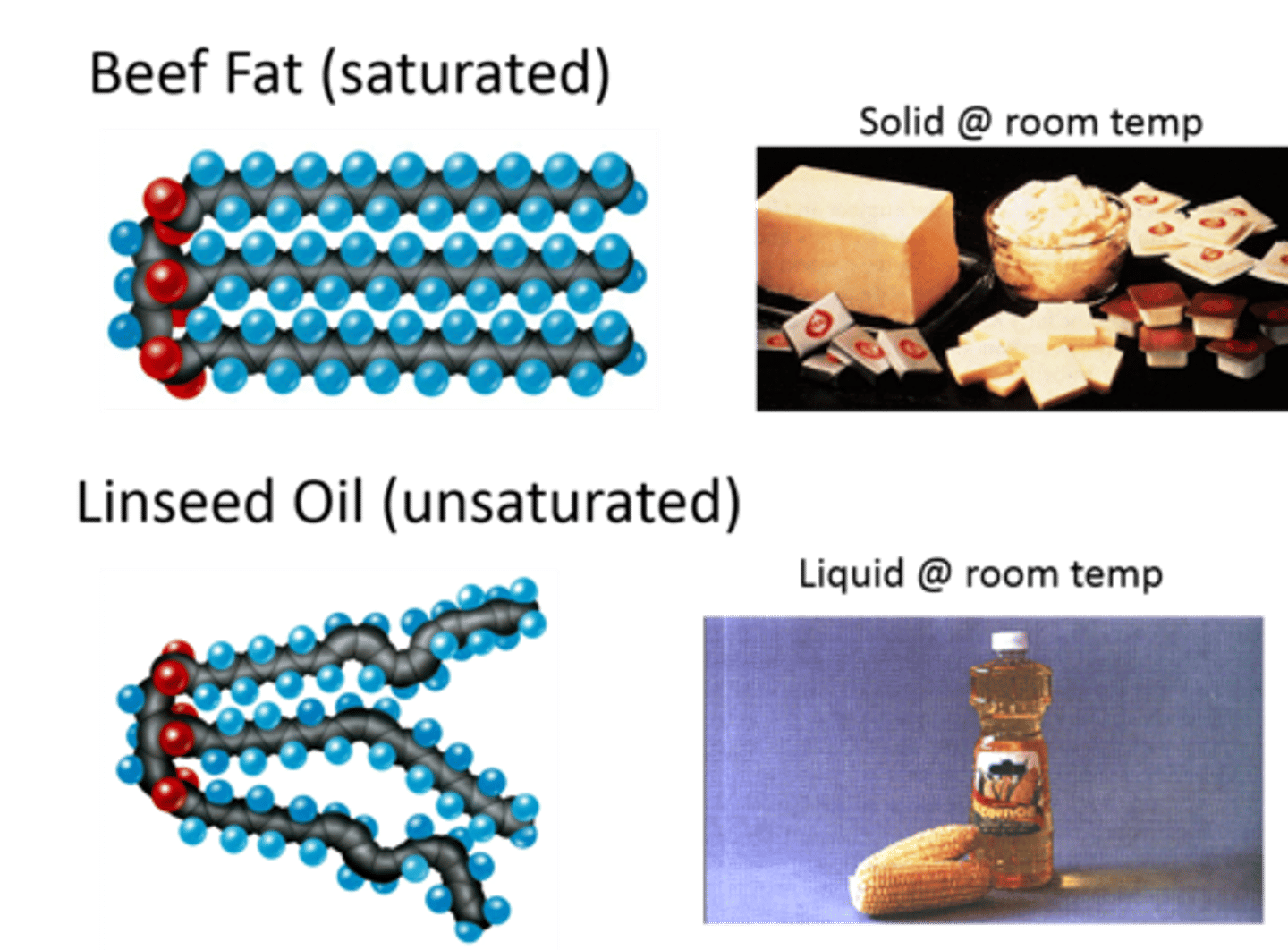
<p>- More <span class="bgP">unsaturated (double) bonds</span> which <span class="bgP">bend</span> </p><p>- <span class="bgP">Can't pack closely together</span></p><p>- So <span class="bgP">weaker intermolecular bonds</span></p><p>- So <span class="bgP">lower melting point</span></p><p>- So <span class="bgP">liquid at RT</span></p>
65
New cards

Cholesterol: Structure and Function

- Steroid of 4 carbon rings

- Hydrophobic and hydrophiliic regions

- Adds stability to phospholipid bilayer

- Affects membrane fluidity
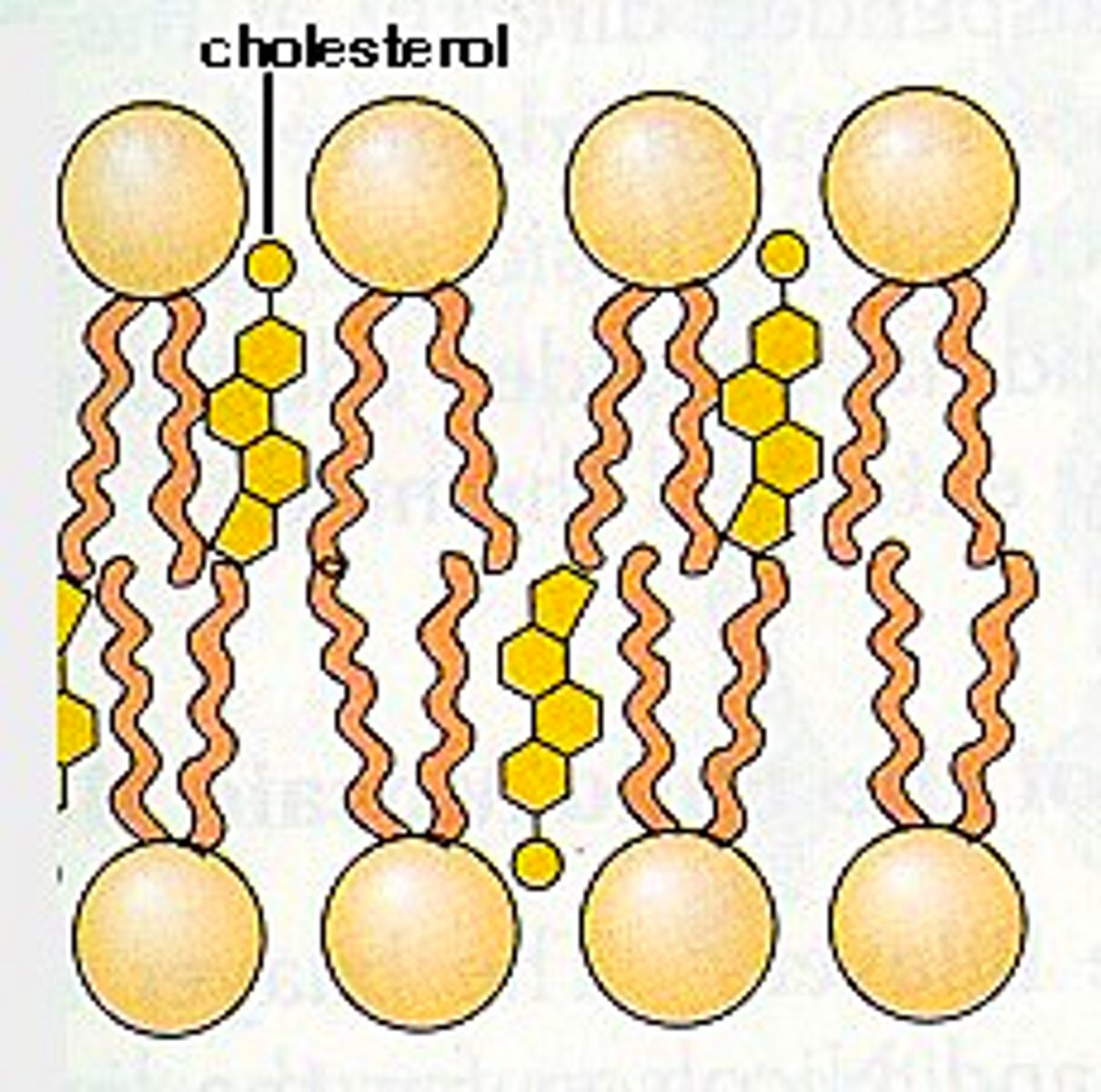
<p>- Steroid of <span class="bgP">4 carbon rings</span></p><p>- Hydrophobic and hydrophiliic regions</p><p>- Adds <span class="bgP">stability</span> to phospholipid bilayer </p><p>- Affects <span class="bgP">membrane fluidity</span></p>
66
New cards

How are triglycerides formed?

Condensation reaction forming ester bonds
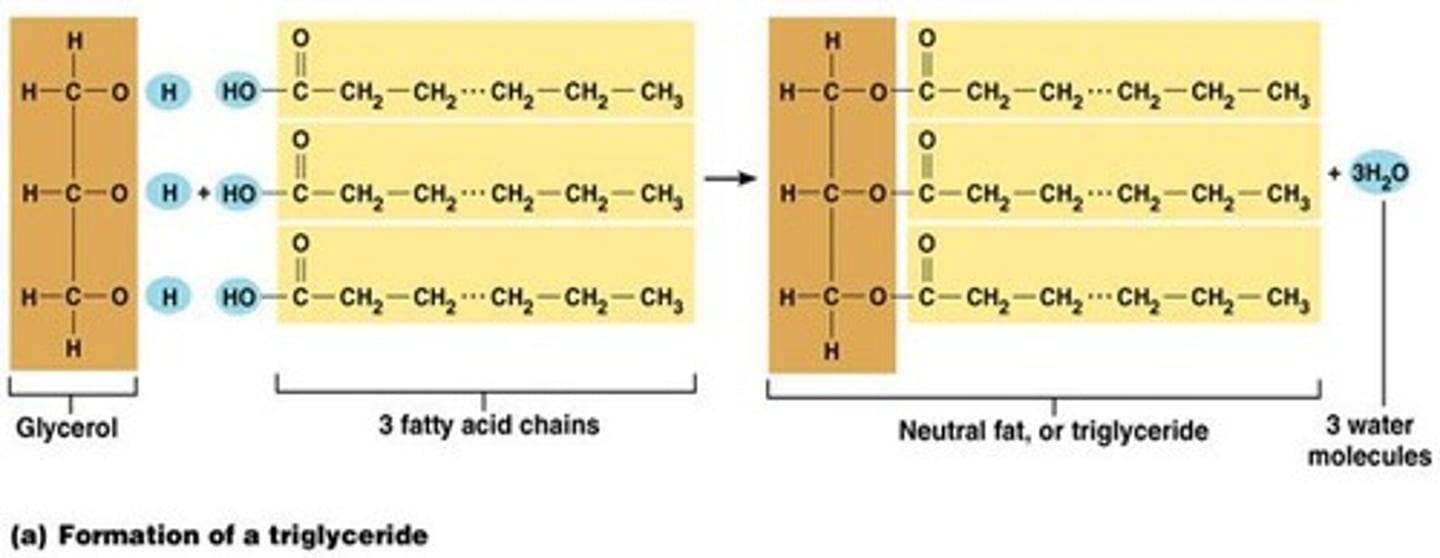
<p><span class="bgP">Condensation reaction</span> forming <span class="bgP">ester bonds</span></p>
67
New cards

How are triglycerides broken down?

Hydrolysis reaction breaking ester bonds
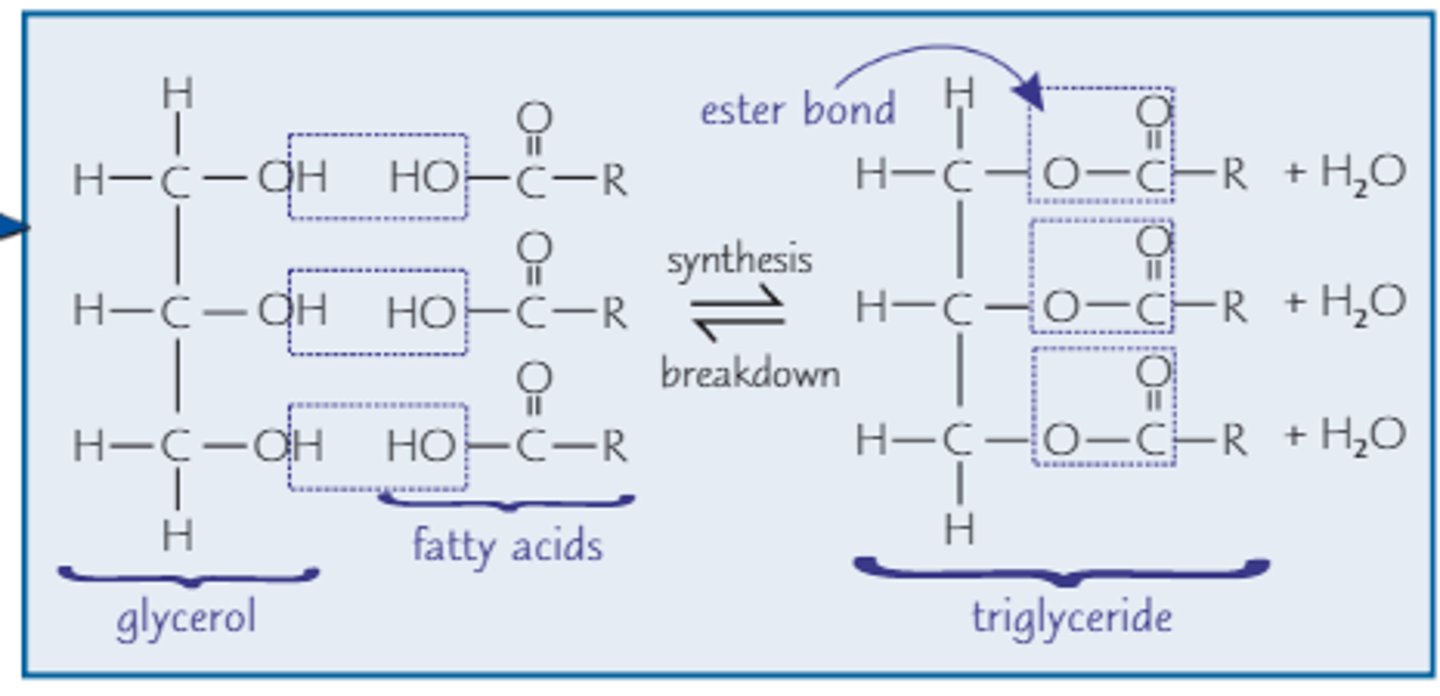
<p><span class="bgP">Hydrolysis reaction</span> breaking <span class="bgP">ester bonds</span></p>
68
New cards

Why are triglycerides used as energy reserves?

They store more energy than carbohydrates due to their hydrocarbon chains
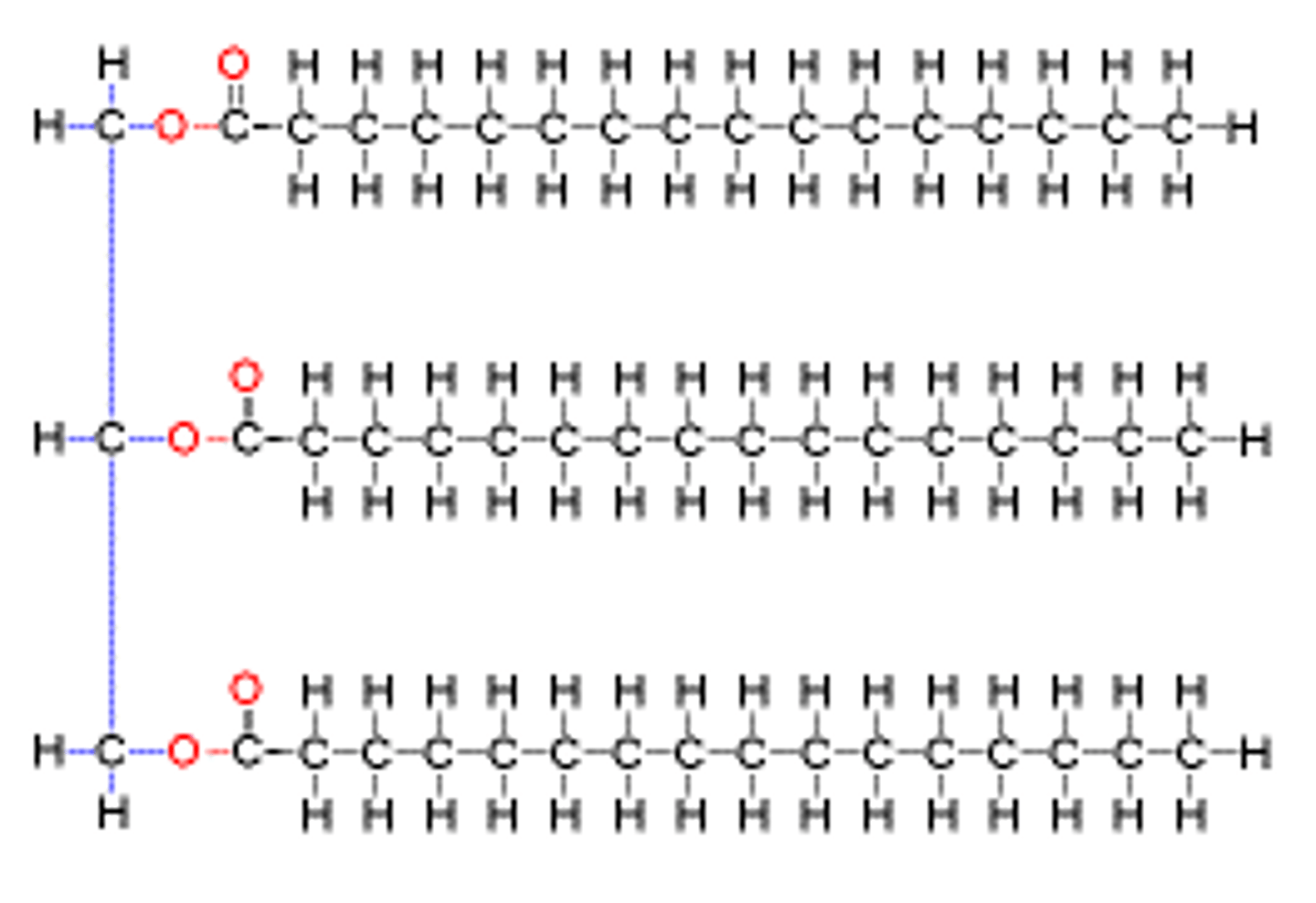
<p>They store <span class="bgP">more energy</span> than <span class="bgP">carbohydrates</span> due to their <span class="bgP">hydrocarbon chains</span></p>
69
New cards

What is an ester bond?

- COO

<p>- COO</p>
70
New cards

How are solid samples prepared for chemical tests?

Crush sample and dissolve in distilled water

71
New cards

Reducing sugars test

- Benedict's solution

- Heat for 5 mins at 80°C

- Blue -> Brick-red precipitate
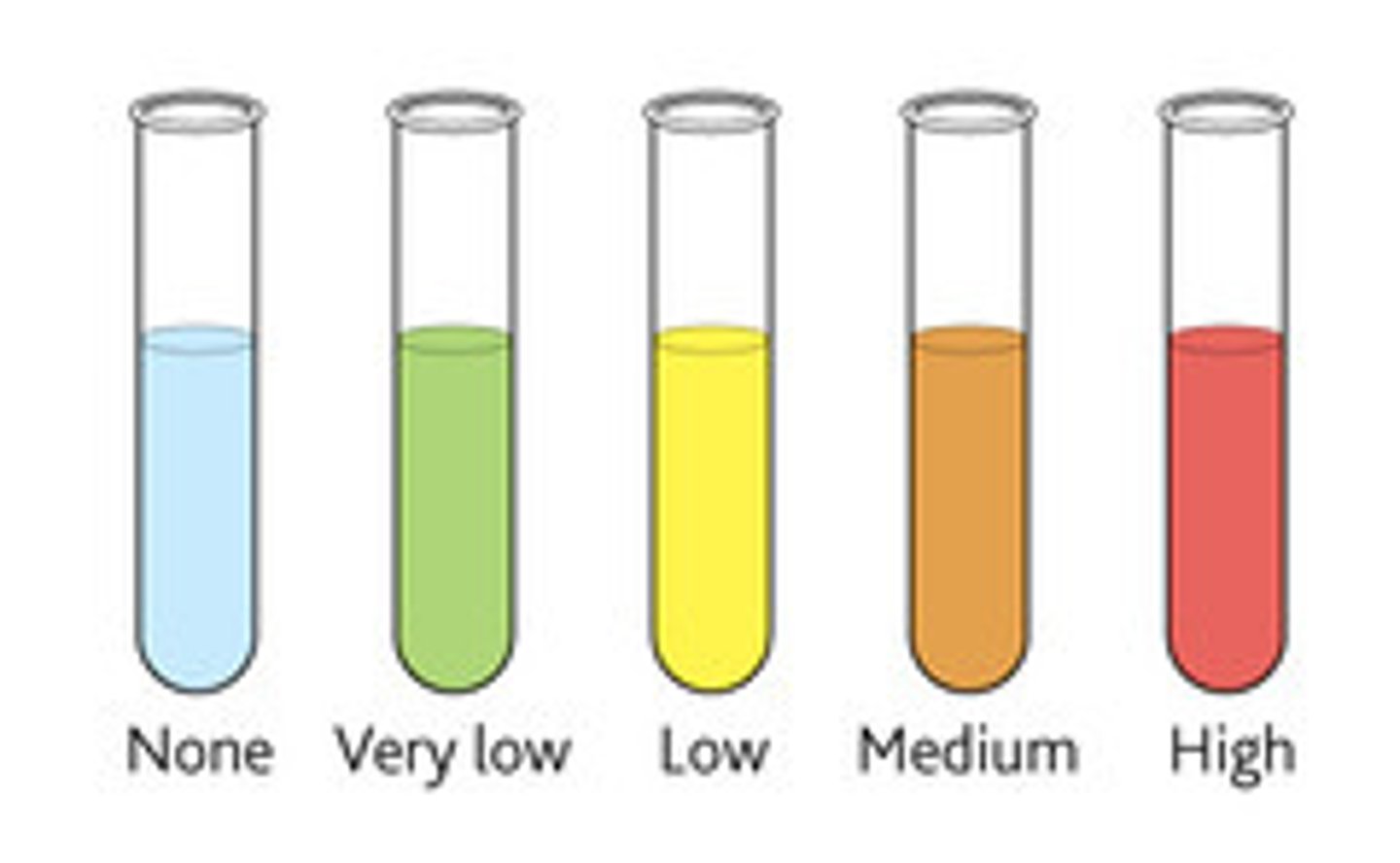
<p>- <span class="bgP">Benedict's </span><strong><span class="bgP">solution</span></strong></p><p>- <span class="bgP">Heat</span> for <span class="bgP">5 mins</span> at <span class="bgP">80°C</span> </p><p>- <span class="bgP">Blue -&gt; Brick-red</span> precipitate</p>
72
New cards

Non-reducing sugars test

Following a negative Benedicts test (stays blue):

- Add HCl acid and boil

- Neutralise by adding NaOH

- Add Benedict's solution and heat for 5 mins at 80°C

- Blue -> Brick-red precipitate
<p>Following a negative Benedicts test (stays blue):</p><p>- Add <span class="bgP">HCl acid</span> and boil</p><p>- <span class="bgP">Neutralise</span> by adding <span class="bgP">NaOH</span></p><p>- Add <span class="bgP">Benedict's </span><strong><span class="bgP">solution</span></strong> and <span class="bgP">heat</span> for <span class="bgP">5 mins</span> at <span class="bgP">80°C</span> </p><p>- <span class="bgP">Blue -&gt; Brick-red</span> precipitate</p>
73
New cards

Proteins test

- Biuret's solution

- Blue -> Purple
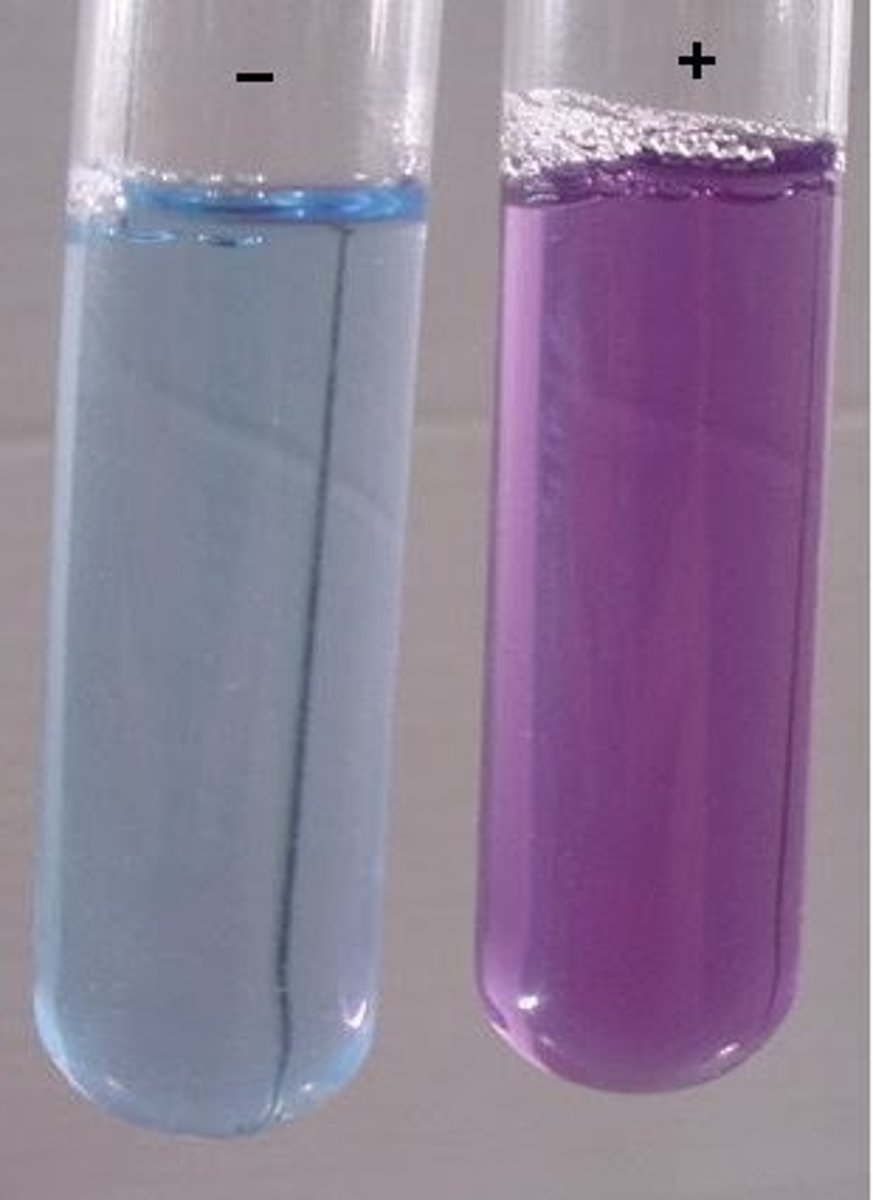
<p>- <span class="bgP">Biuret's</span> solution </p><p>- <span class="bgP">Blue -&gt; Purple</span></p>
74
New cards

Starch test

- Iodine solution

- Yellow -> Blue-black
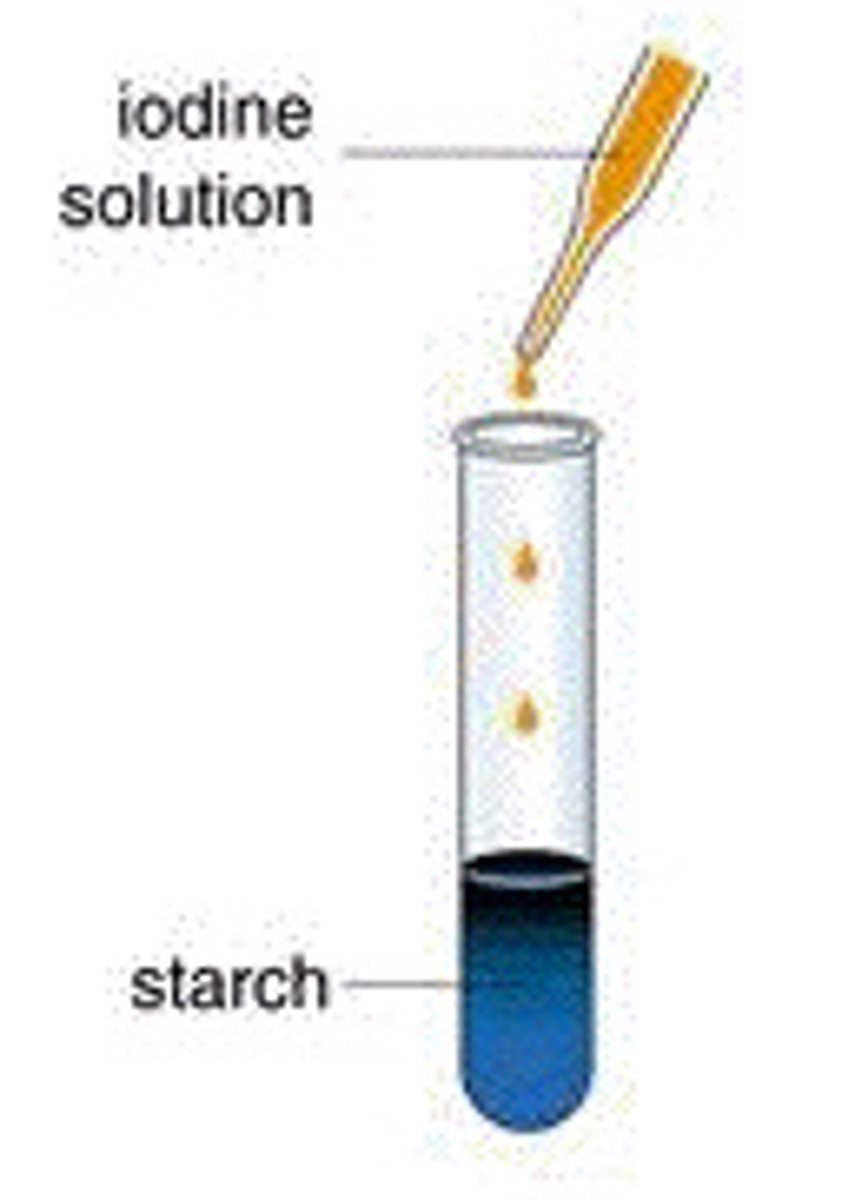
<p>- <span class="bgP">Iodine </span><strong><span class="bgP">solution</span></strong></p><p>- <span class="bgP">Yellow -&gt; Blue-black</span></p>
75
New cards

Lipids test

- Dissolve in ethanol and add distilled water

- White cloudy emulsion layer
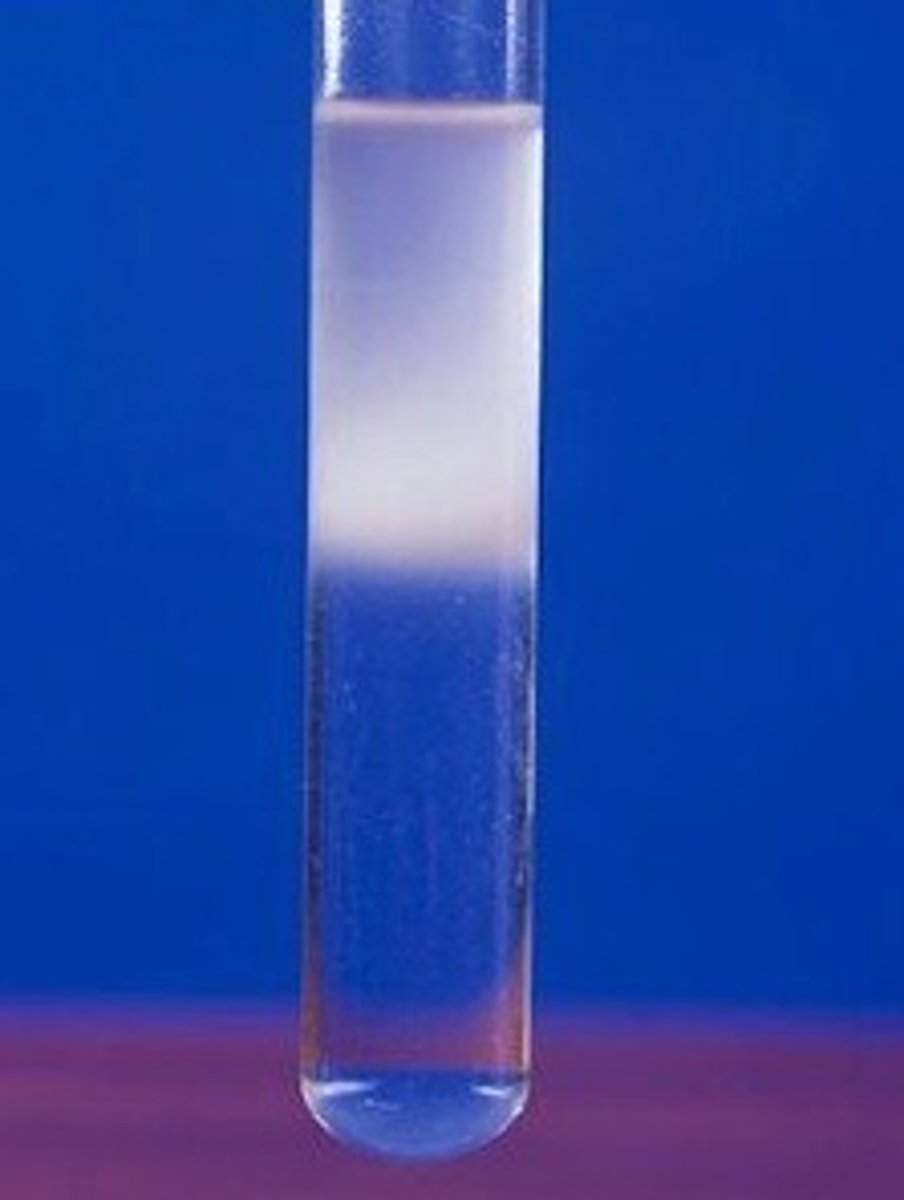
<p>- <strong>Dissolve</strong> in <span class="bgP">ethanol</span> and add <span class="bgP">distilled water</span></p><p>- <span class="bgP">White cloudy emulsion layer</span></p>
76
New cards

How can the Benedict's test be made quantitative?

- Put excess Benedict’s reagent

- Place sample in a centrifuge to get unused Benedict’s reagent.

- Use colorimeter

77
New cards

Chromatography Method

- Draw pencil line 1cm away from bottom of chromatography paper

- Place spot of substance on start line

- Place chromatography paper in beaker (using a splint and paper clip)

- Place solvent in beaker so bottom of paper just touches solvent

- Place lid over beaker

- Wait for solvent to travel 3/4 up the paper

- Mark and measure solvent front with pencil

- Dry paper and measure distance each spot travelled

- Use measurements to calculate Rf value
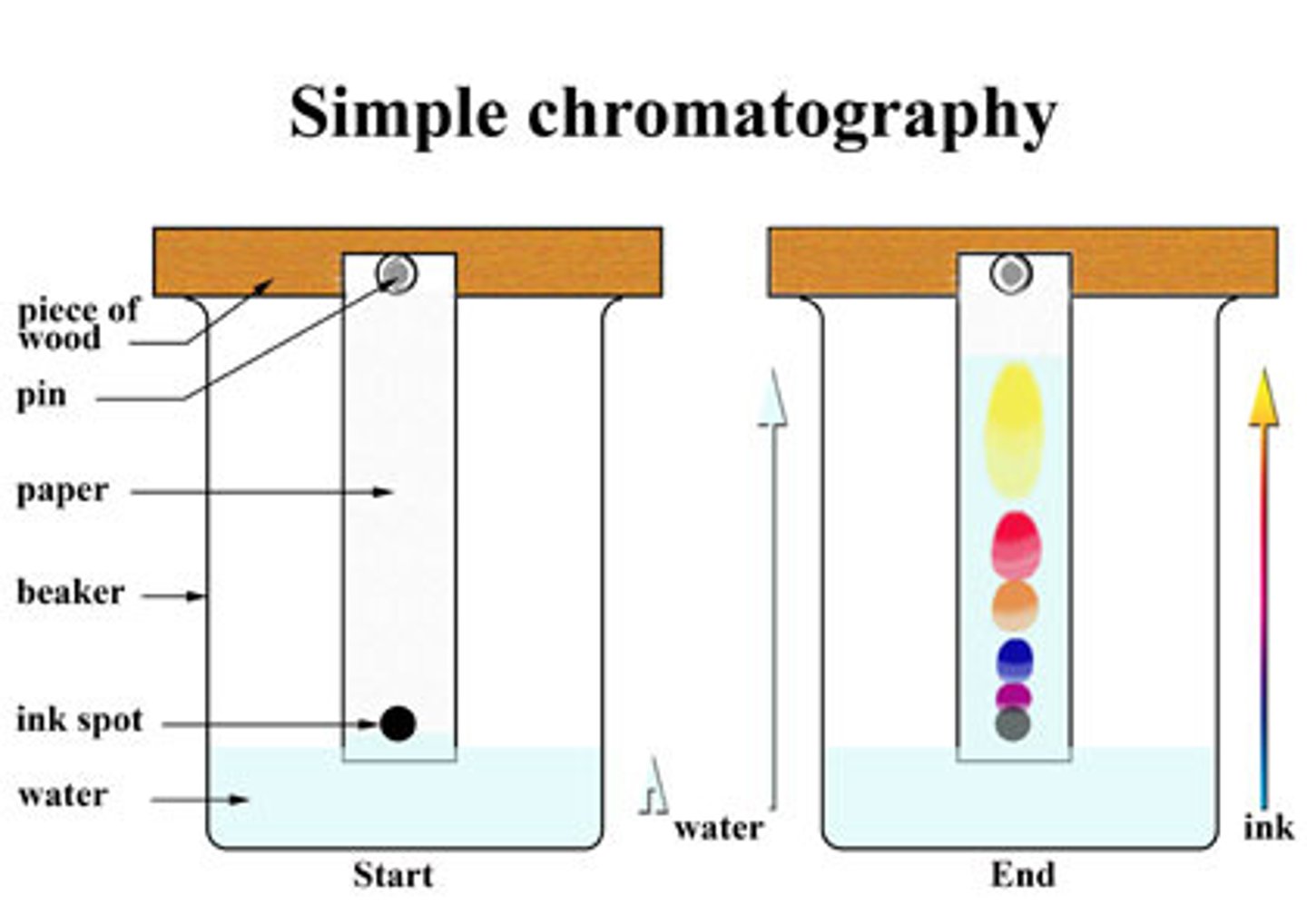
<p>- Draw <span class="bgP">pencil line</span> <span class="bgP">1cm away</span> from <span class="bgP">bottom</span> of chromatography paper </p><p>- Place spot of <span class="bgP">substance</span> on <span class="bgP">start line</span></p><p>- Place <span class="bgP">chromatography paper</span> in <span class="bgP">beaker</span> (using a splint and paper clip) </p><p>- Place <span class="bgP">solvent</span> in <span class="bgP">beaker</span> so bottom of paper just touches solvent</p><p>- Place <strong><span class="bgP">lid</span></strong> over beaker</p><p>- Wait for solvent to travel <span class="bgP">3/4 up</span> the paper </p><p>- <span class="bgP">Mark</span> and <span class="bgP">measure solvent front</span> with <span class="bgP">pencil</span></p><p>- <span class="bgP">Dry paper</span> and <span class="bgP">measure distance</span> each <span class="bgP">spot</span> travelled</p><p>- Use measurements to calculate Rf value</p>
78
New cards

What are amino acids stained with for chromatography?

Ninhydrin
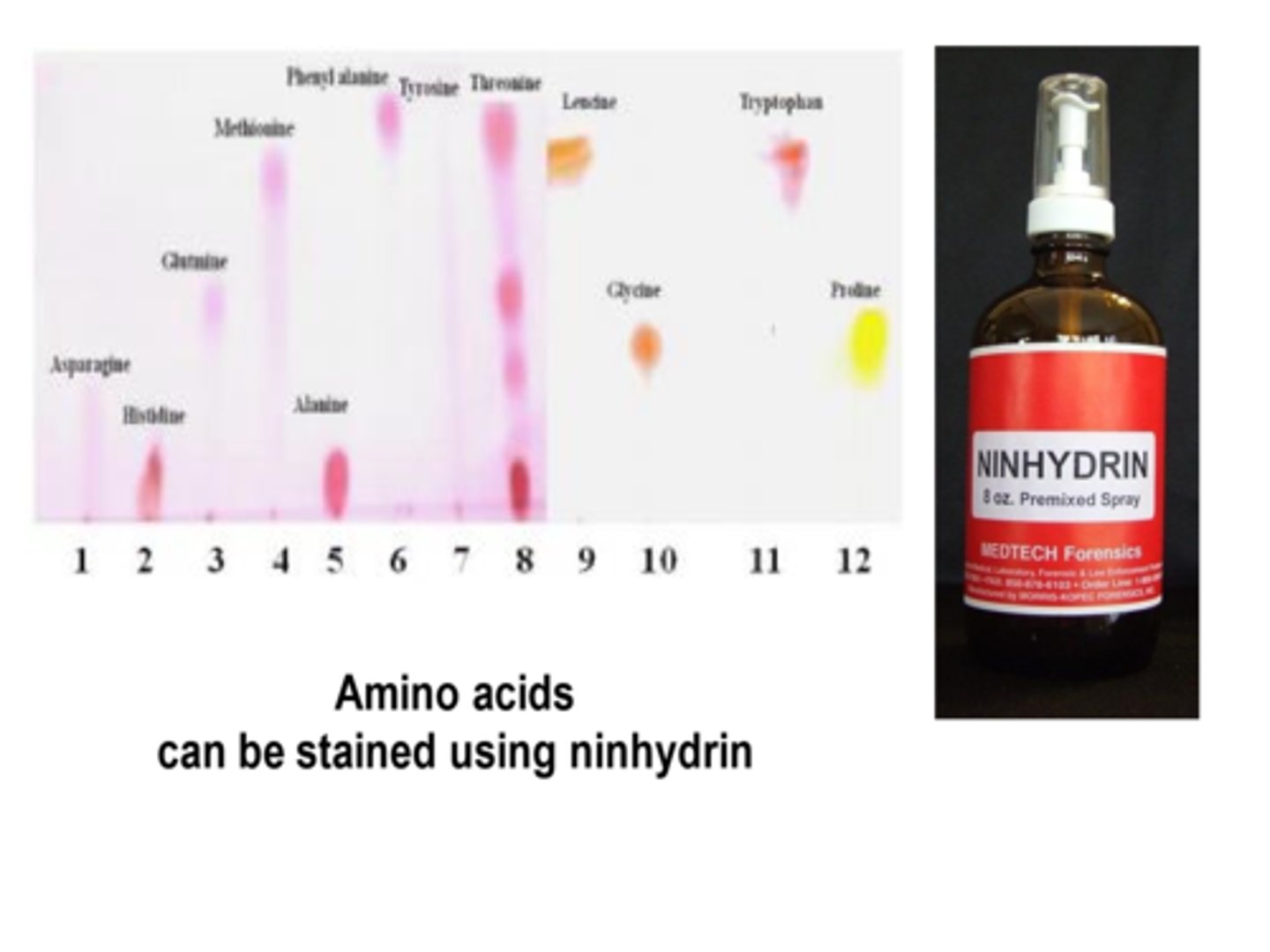
<p>Ninhydrin</p>
79
New cards

Why do substances separate in chromatography?

- Substances have different solubilties in the mobile phase
- Longer in mobile phase = Travel faster/further

80
New cards

How can Rf values be used to identify substances?

-When Rf value is compared to Rf values of known substances
- The higher the value, the more soluble the substance is in the solvent.

81
New cards

What is Thin Layer Chromatography (TLC)?

Mobile phase is still solvent, but stationary phase is a thin layer of absorbent material (eg silica gel) which is spread onto a glass sheet
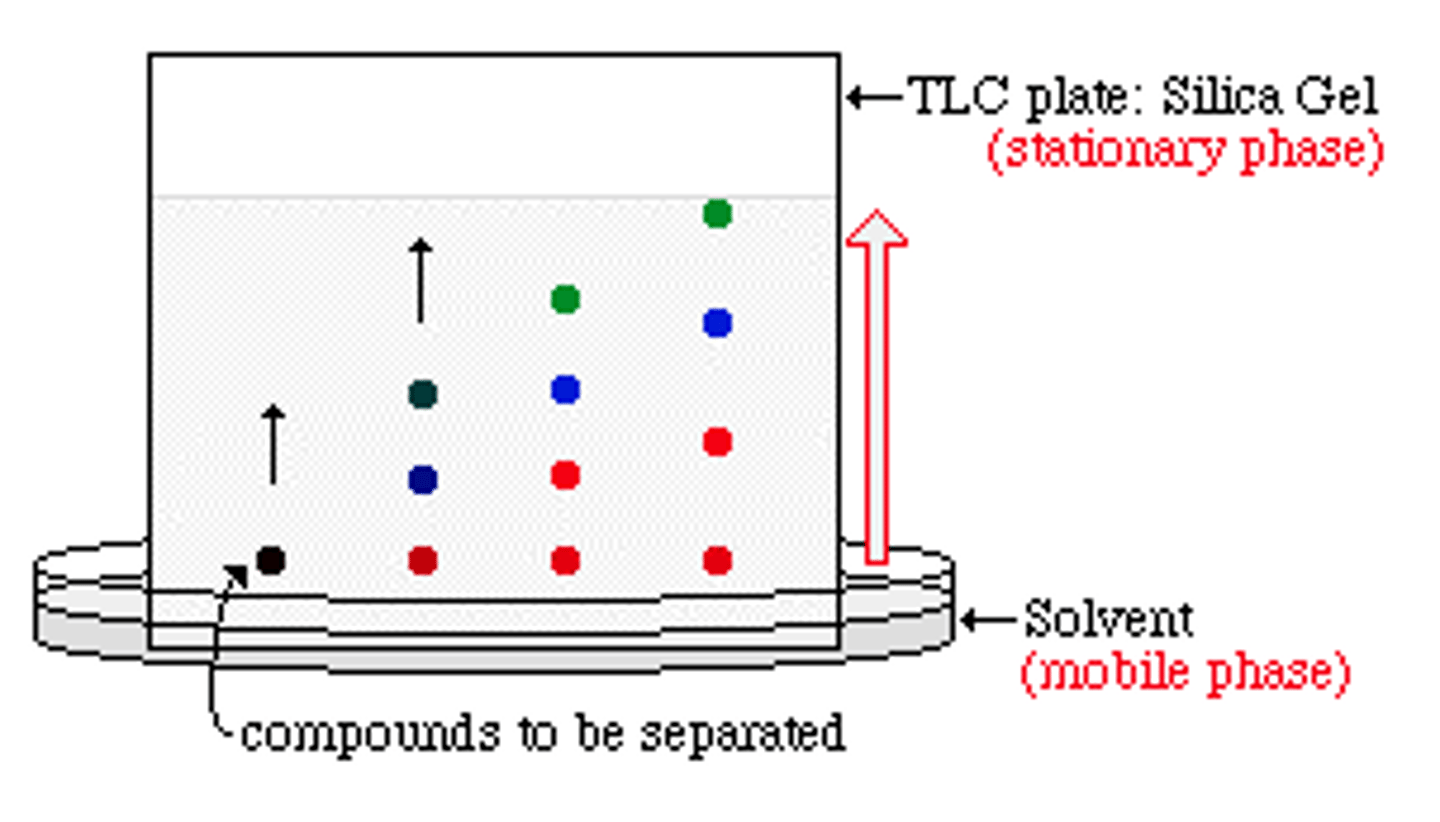
<p>Mobile phase is still solvent, but stationary phase is a thin layer of absorbent material (eg silica gel) which is spread onto a glass sheet</p>
82
New cards

Rf value equation

Distance travelled by Substance ÷ Distance travelled by Solvent

(Rf value is always below 1)
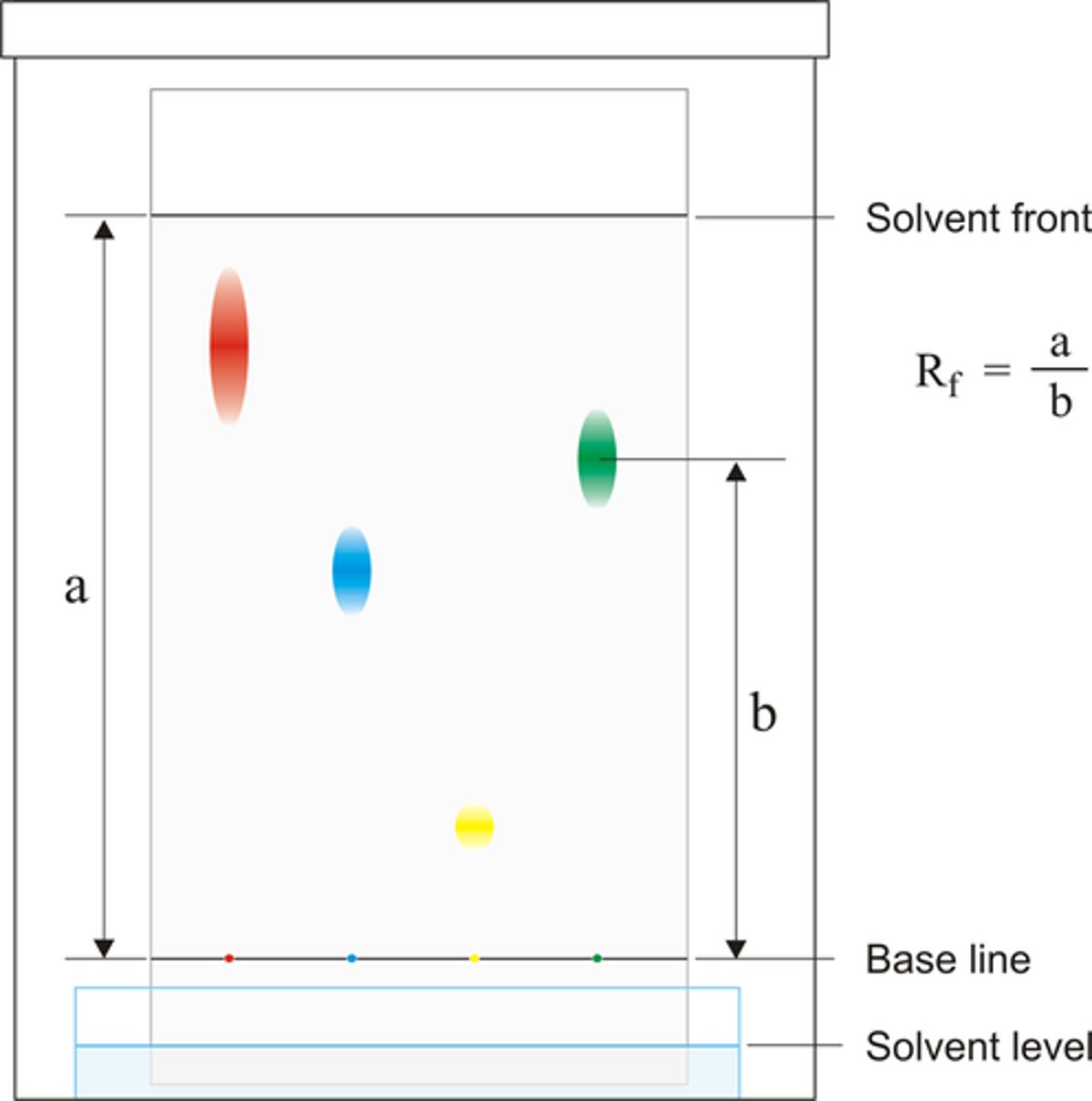
<p>Distance travelled by <span class="bgP">Substance</span> ÷ Distance travelled by <span class="bgP">Solvent</span></p><p>(Rf value is always below 1)</p>
83
New cards

What do enzymes do?

Increases rate of reaction by lowering the activation energy
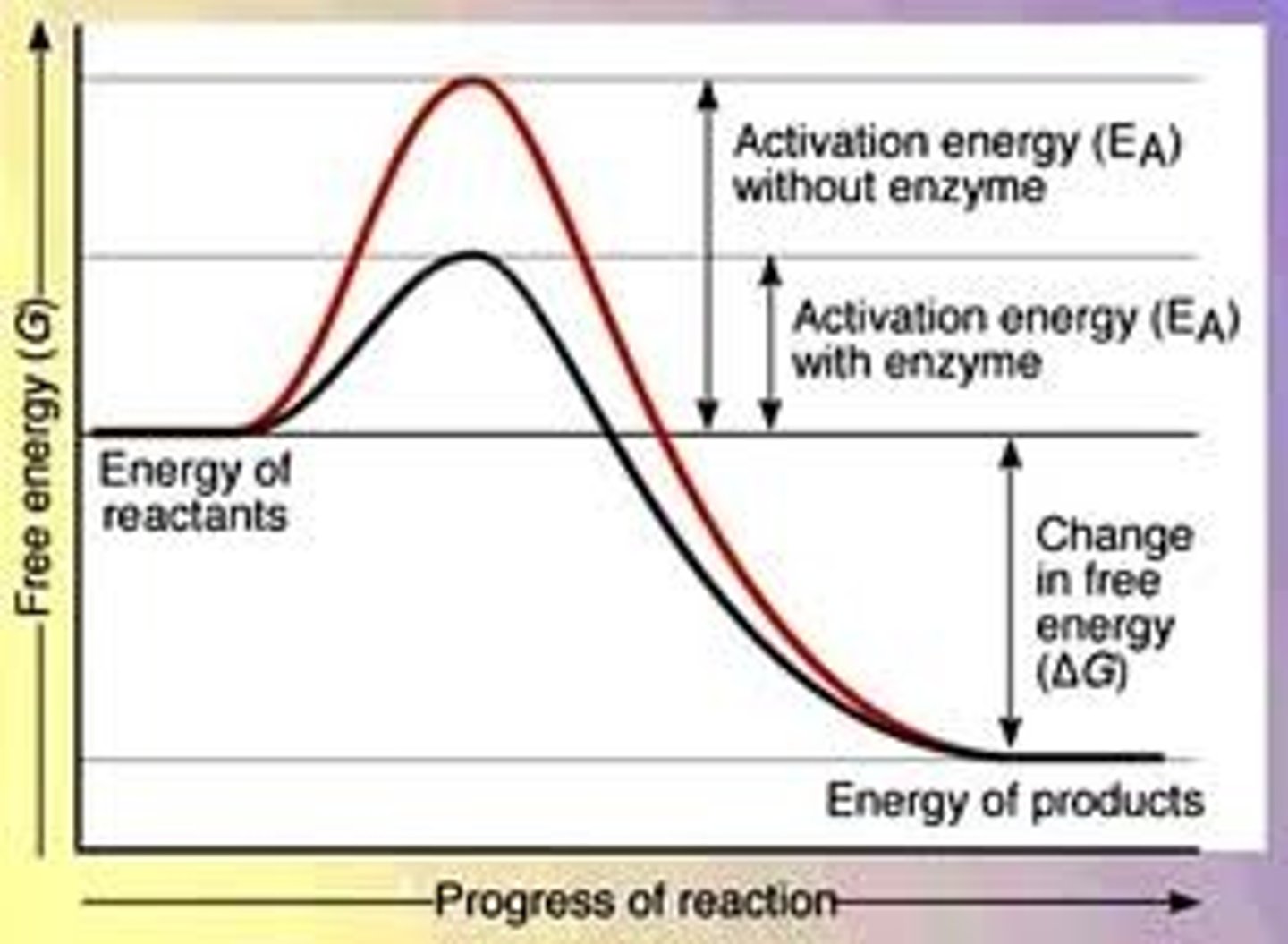
<p><span class="bgP">Increases </span><strong><span class="bgP">rate</span></strong><span class="bgP"> of reaction</span> by <span class="bgP">lowering</span> the <span class="bgP">activation energy</span> </p>
84
New cards

How do enzymes break down substrates?

- Substrate is complementary to the enzyme’s active site

- They combine to form enzyme–substrate complex

- This strains the bonds in the substrate, forming the enzyme-product complex

- Product leaves the active site

85
New cards

Examples of Extracellular and Intracellular enzymes

Extracellular (outside cell) - Amylase

Intracellular (inside cell) - Catalase

86
New cards

Lock and Key theory

The enzyme's active site has a specific 3d tertiary structure that is complementary to the shape of the specific substrate
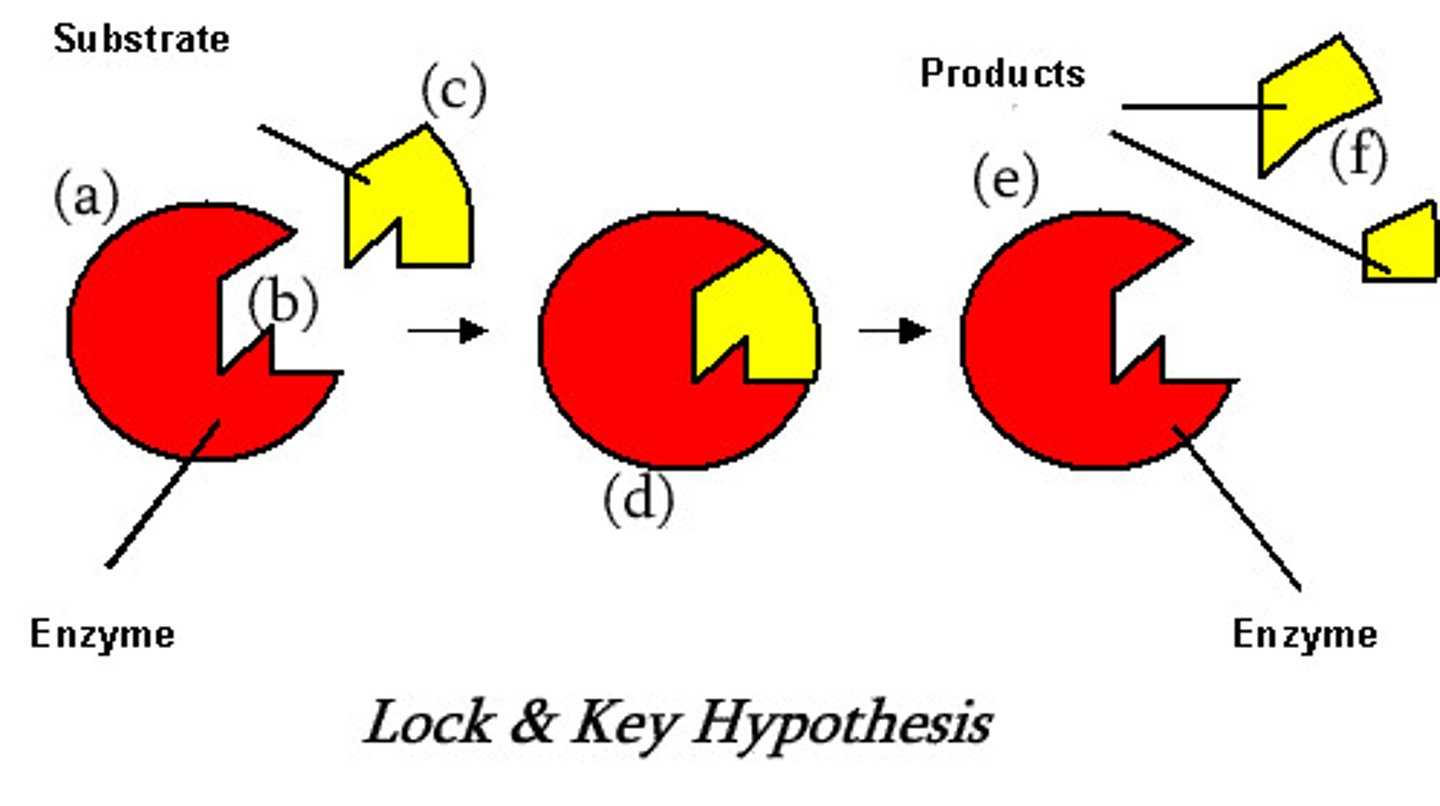
<p>The enzyme's <span class="bgP">active site</span> has a <strong><span class="bgP">specific</span></strong><span class="bgP"> 3d tertiary structure</span> that is <span class="bgP">complementary</span> to the <span class="bgP">shape</span> of the <strong><span class="bgP">specific</span></strong><span class="bgP"> substrate</span></p>
87
New cards

Induced fit theory

- Active site of enzyme is not perfectly complementary to the shape of the substrate

- Substrate moves into the active site and bonds are strained

- Active site shape is altered to be complementary to substrate shape

- Changed active site also changes bonds in the substrate, making them easier to make/break (reducing the activation energy)
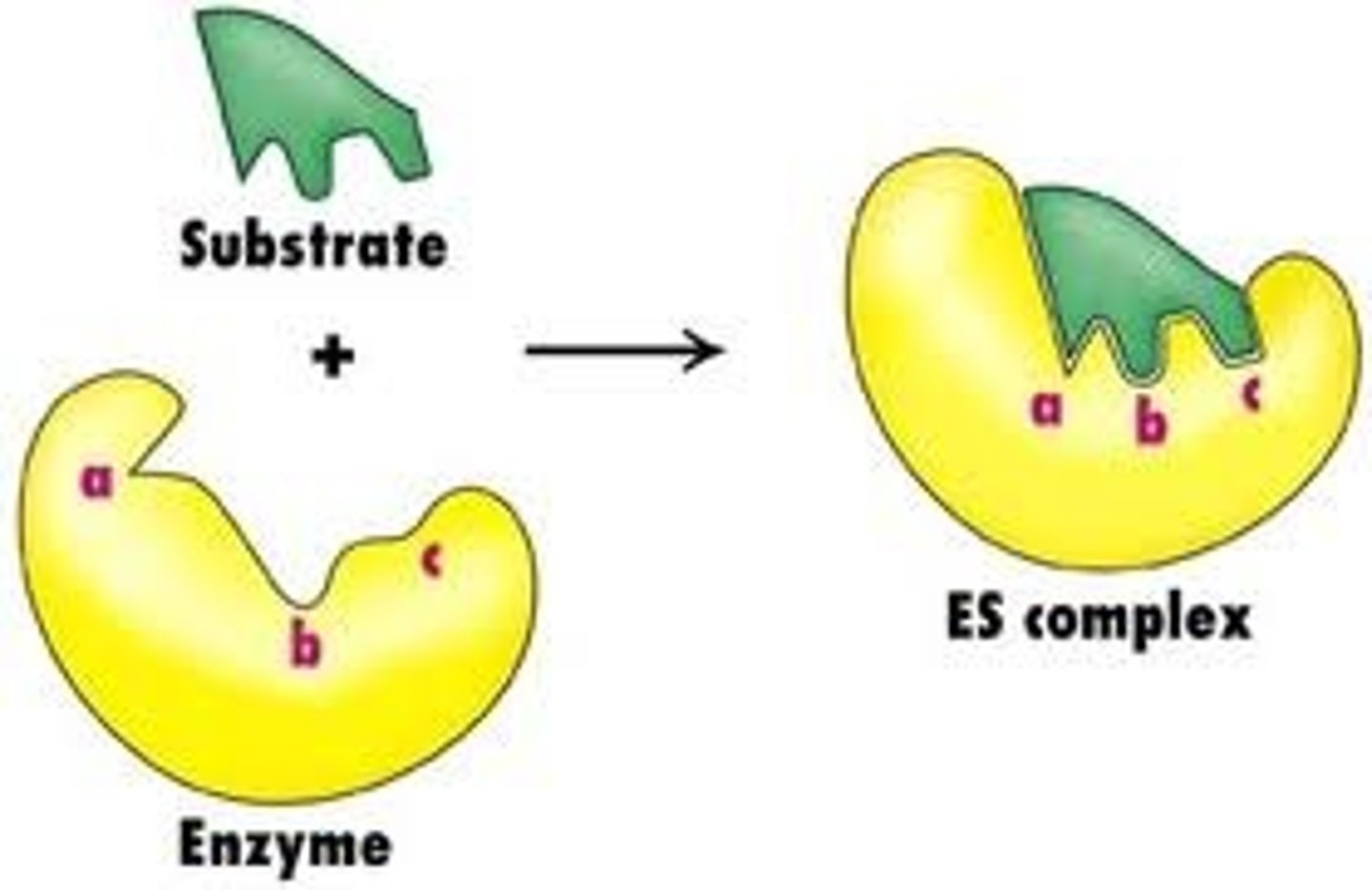
<p>- <span class="bgP">Active site</span> of <span class="bgP">enzyme</span> is <em><span class="bgP">not</span></em><span class="bgP"> perfectly complementary</span> to the <span class="bgP">shape</span> of the <span class="bgP">substrate</span> </p><p>- <span class="bgP">Substrate</span> moves into the <span class="bgP">active site</span> and <span class="bgP">bonds</span> are <span class="bgP">strained</span></p><p>- <span class="bgP">Active site shape</span> is <span class="bgP">altered</span> to be <span class="bgP">complementary</span> to <span class="bgP">substrate  </span>shape</p><p>- <span class="bgP">Changed active site</span> also <span class="bgP">changes bonds</span> in the substrate, making them <span class="bgP">easier</span> to <span class="bgP">make/break</span> (<span class="bgP">reducing the activation energy</span>)</p>
88
New cards

What is the temperature (Q₁₀) coefficient?

- The change in rate of reaction per 10℃ increase (usually 2)

- Q₁₀ = R2 / R1

89
New cards

What affects enzyme activity?

- Temperature
- pH
- Enzyme concentration
- Substrate concentration

90
New cards

How does pH affect enzyme activity?

- Hydrogen/ionic bonds break due to high concentration of H+ ions

- Tertiary structure and active site change

- Active site is no longer complementary to substrate, so substrate doesn't fit

- Enzyme denatured
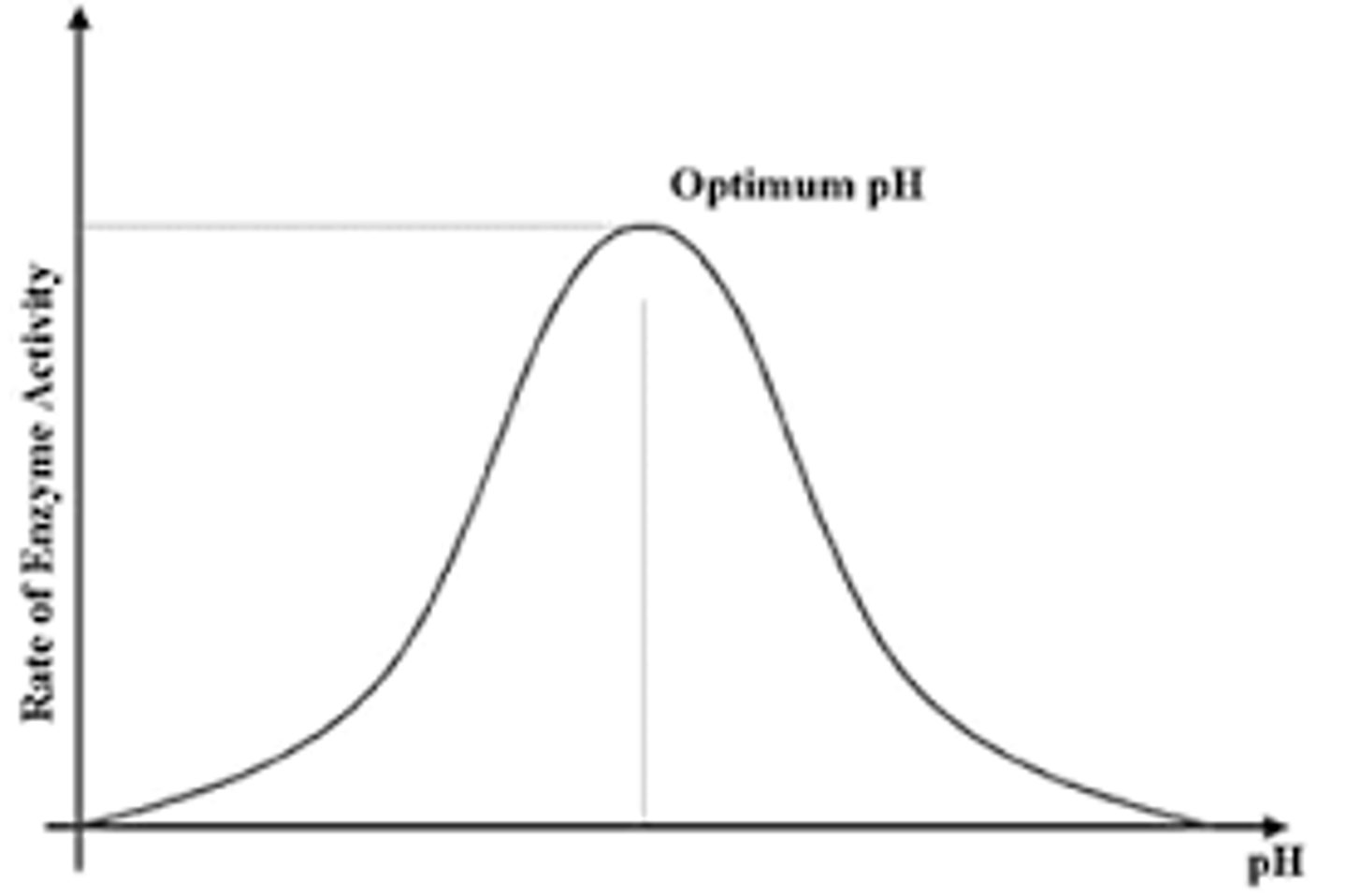
<p>- <span class="bgP">Hydrogen/ionic bonds break</span> due to <span class="bgP">high concentration of H+</span> ions </p><p>- <span class="bgP">Tertiary structure</span> and <span class="bgP">active site change</span></p><p>- <span class="bgP">Active site</span> is <span class="bgP">no longer complementary</span> to <span class="bgP">substrate</span>, so substrate doesn't fit</p><p>- Enzyme <span class="bgP">denatured</span> </p>
91
New cards

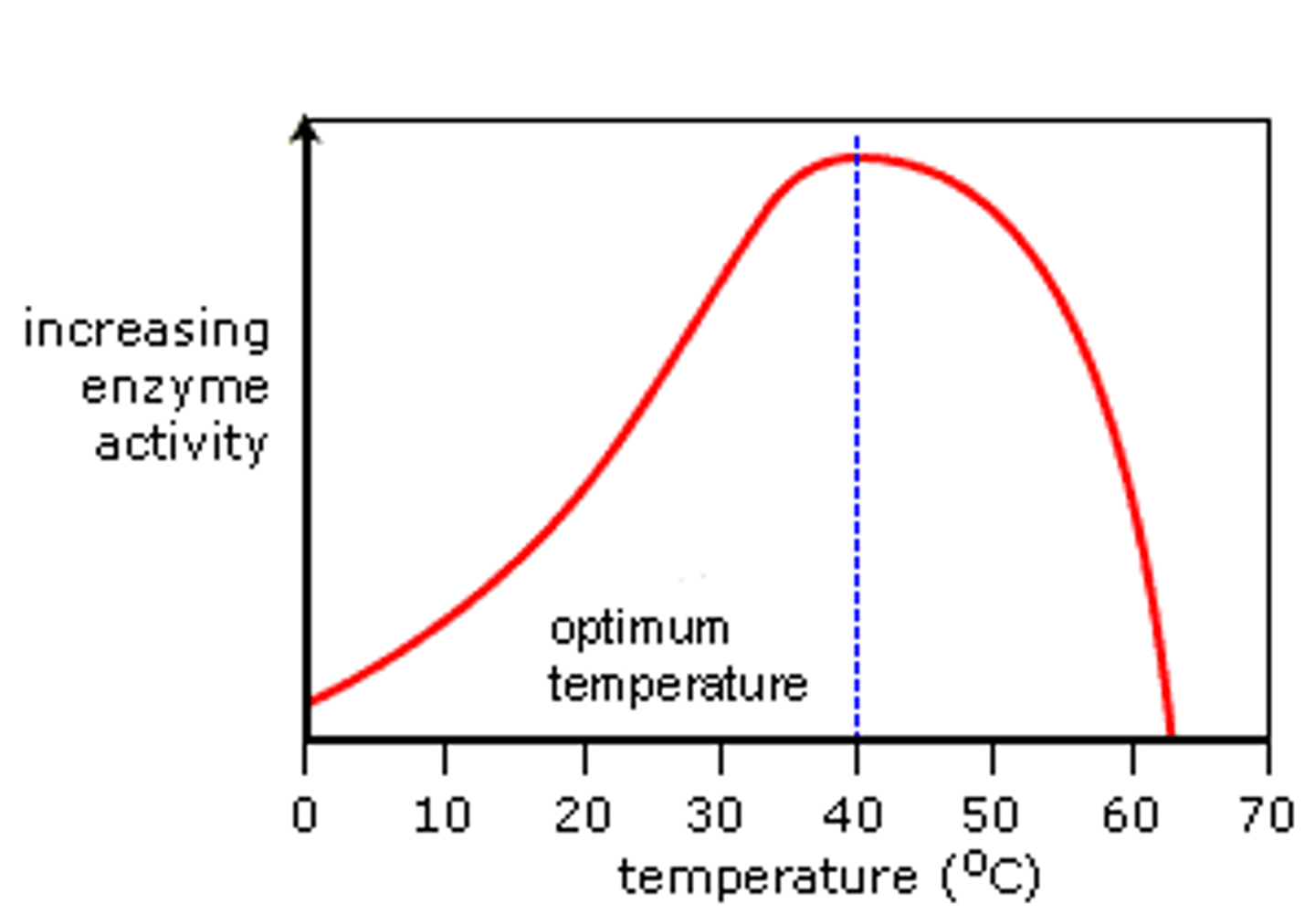
How does low temperature affect enzyme activity?

- Enzymes have less kinetic energy

- Less collisions with substrates

- Decreased rate of reaction
<p>- Enzymes have <span class="bgP">less kinetic energy</span></p><p>- <span class="bgP">Less collisions</span> with <span class="bgP">substrates</span></p><p>- <span class="bgP">Decreased rate</span> of reaction</p>
92
New cards

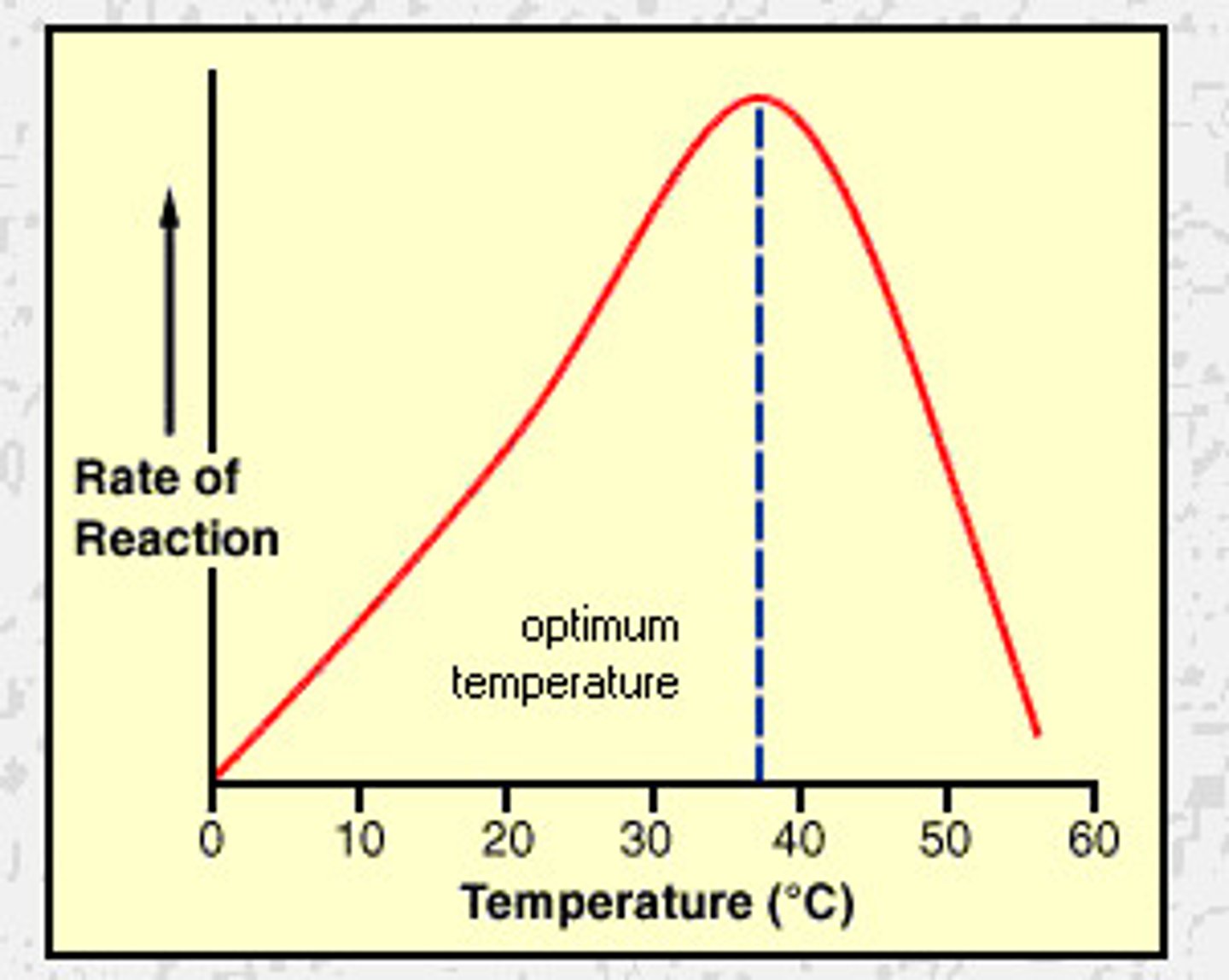
How does high temperature affect enzyme activity?

- Enzymes have high kinetic energy

- More collisions with substrates,

- More enzyme-substrate complexes

- Increased rate until optimum temp

- Past optimum, enzyme's bonds break and enzyme denatures
<p>- Enzymes have <span class="bgP">high kinetic energy</span></p><p>- <span class="bgP">More collisions</span> with <span class="bgP">substrates</span>, </p><p>- More <span class="bgP">enzyme-substrate complexes</span> </p><p>- <span class="bgP">Increased rate</span> until <span class="bgP">optimum temp</span></p><p>- Past optimum, <span class="bgP">enzyme's bonds break</span> and enzyme <span class="bgP">denatures</span></p>
93
New cards

How does enzyme concentration affect enzyme activity?

- More enzymes means more active sites

- More collisions

- More enzyme-substrate complexes

- Increased rate of reaction (until Vmax where all substrates are occupied)

94
New cards

How does substrate concentration affect enzyme activity?

- More collisions between enzyme active sites and substrate

- More enzyme-substrate complexes

- Increased rate of reaction (until Vmax where all active sites are occupied)

95
New cards

What are cofactors?

Non-protein compound required for enzyme activity to occur

96
New cards

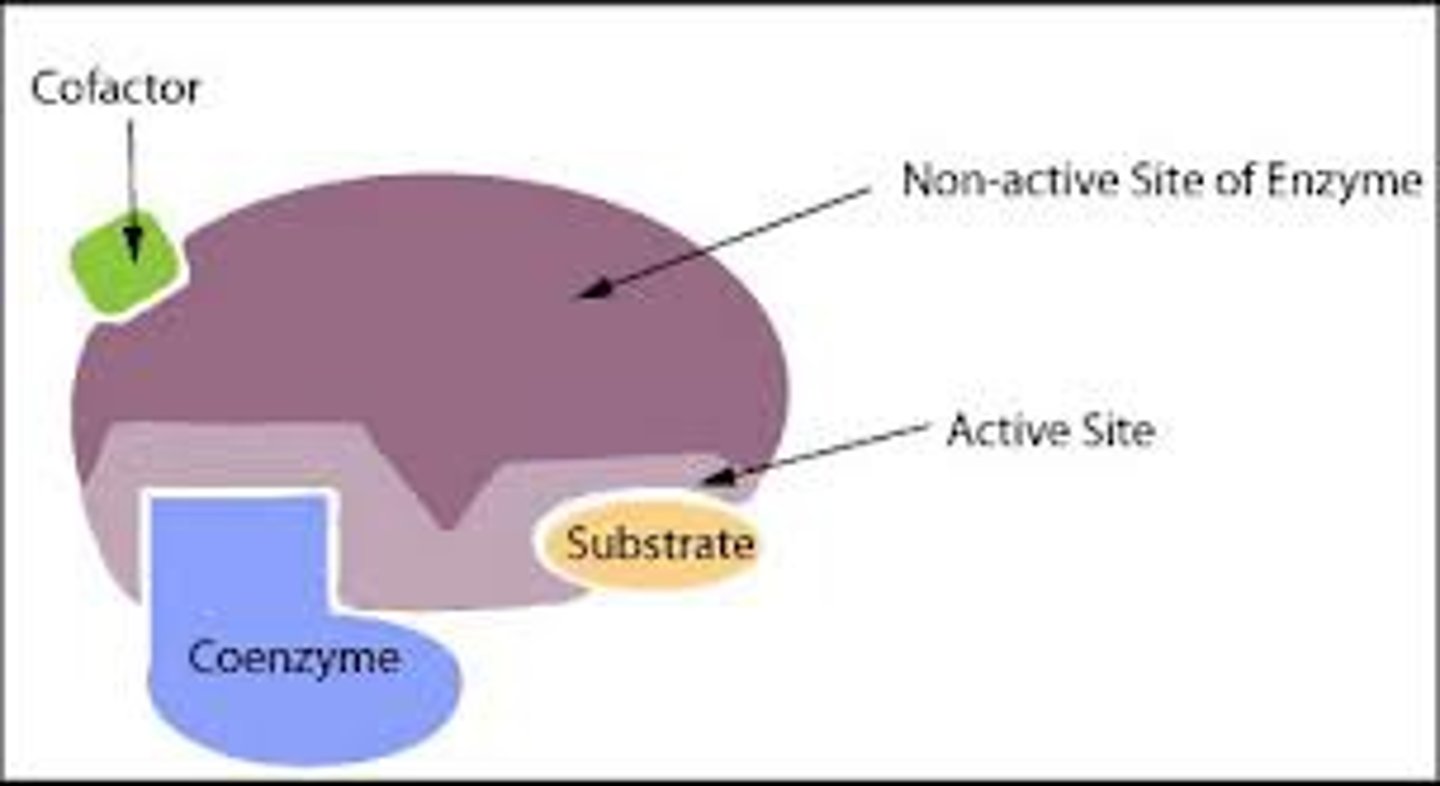
Cofactors

- Inorganic ions (usually metal ions)

- Helps enzyme and substrate bind

- Temporarily bound to enzyme

- Eg: Cl– are cofactors for amylase
<p>- <span class="bgP">Inorganic</span> ions (usually <span class="bgP">metal ions</span>) </p><p>- Helps enzyme and substrate <span class="bgP">bind</span></p><p>- <span class="bgP">Temporarily bound</span> to enzyme</p><p>- Eg: <span class="bgP">Cl– </span>are <span class="bgP">cofactors</span> for <span class="bgP">amylase</span></p>
97
New cards

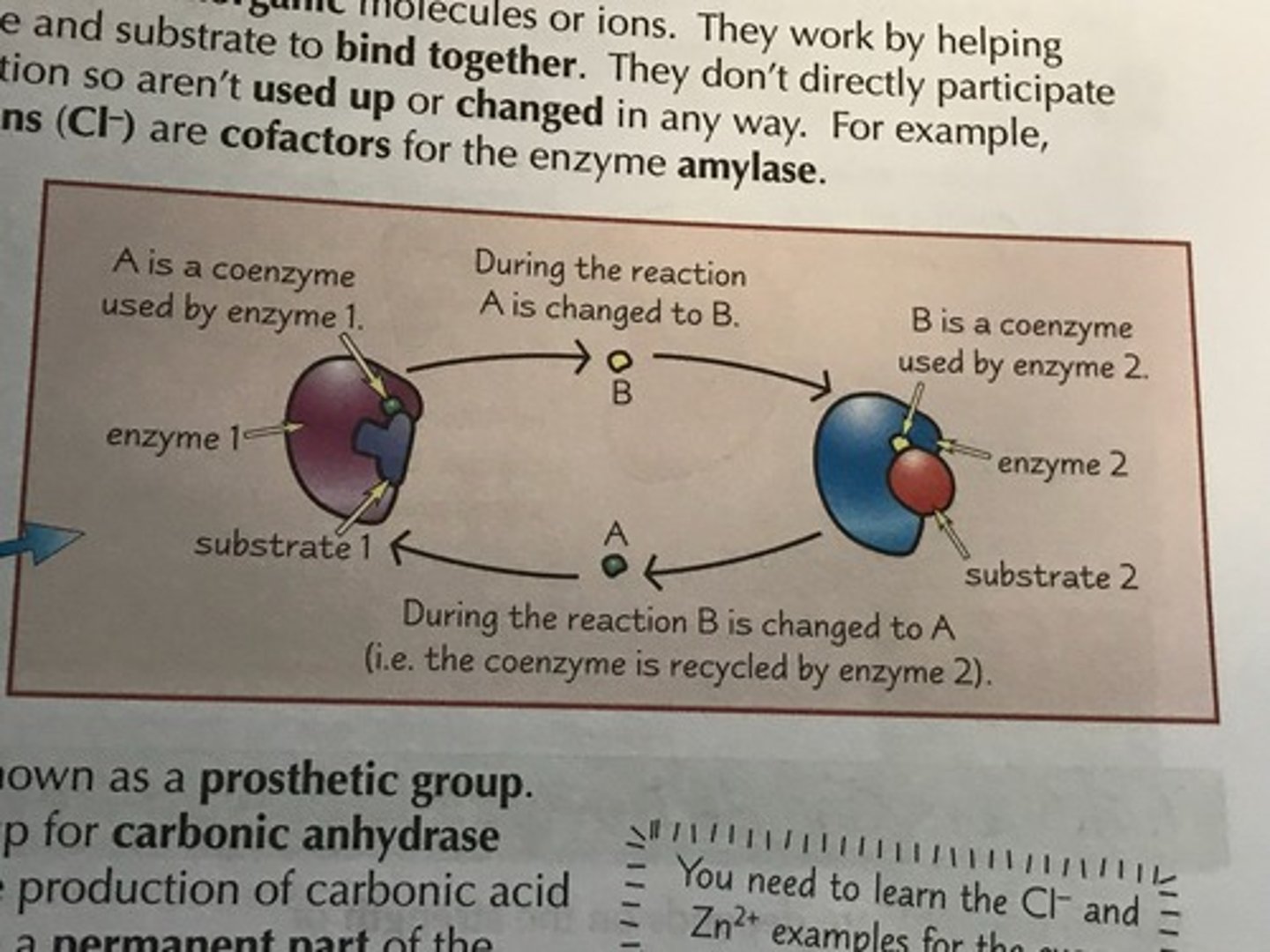
Coenzymes

- Organic substances (vitamin devired)

- Act as carriers moving chemical groups between enzymes

- Participate in reaction and changed by it

- Eg: NAD, NADP (H carriers)
<p>- <span class="bgP">Organic</span> substances (<span class="bgP">vitamin devired</span>) </p><p>- Act as <span class="bgP">carriers</span> moving <span class="bgP">chemical groups</span> between <span class="bgP">enzymes</span></p><p>- <span class="bgP">Participate</span> in <span class="bgP">reaction</span> and <span class="bgP">changed</span> by it</p><p>- Eg: <span class="bgP">NAD, NADP</span> (H carriers)</p>
98
New cards

Prosthetic groups

- Permenantly bound to enzyme

- Zn2+ is a prosthetic group in carbonic anhydrase
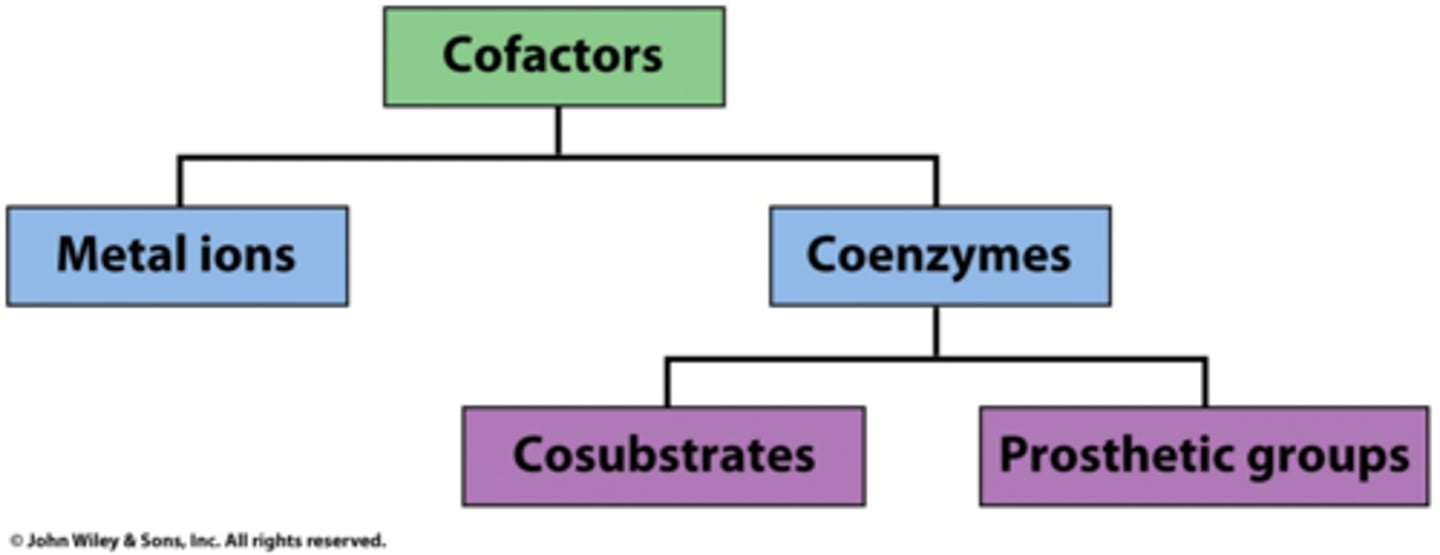
<p>- <span class="bgP">Permenantly bound</span> to enzyme</p><p>- <span class="bgP">Zn2+</span> is a prosthetic group in <span class="bgP">carbonic anhydrase</span></p>
99
New cards

What are inhibitors?

Substances that decrease the rate of enzyme reaction

100
New cards

Competitive inhibitors

- Similar structure to the substrate so complementary to enzyme's active site

- Competes with substrate for the enzyme active site

- Decreases rate of reaction

- Increasing the substrate reverses the effect of competitive inhibitors by outcompeting them
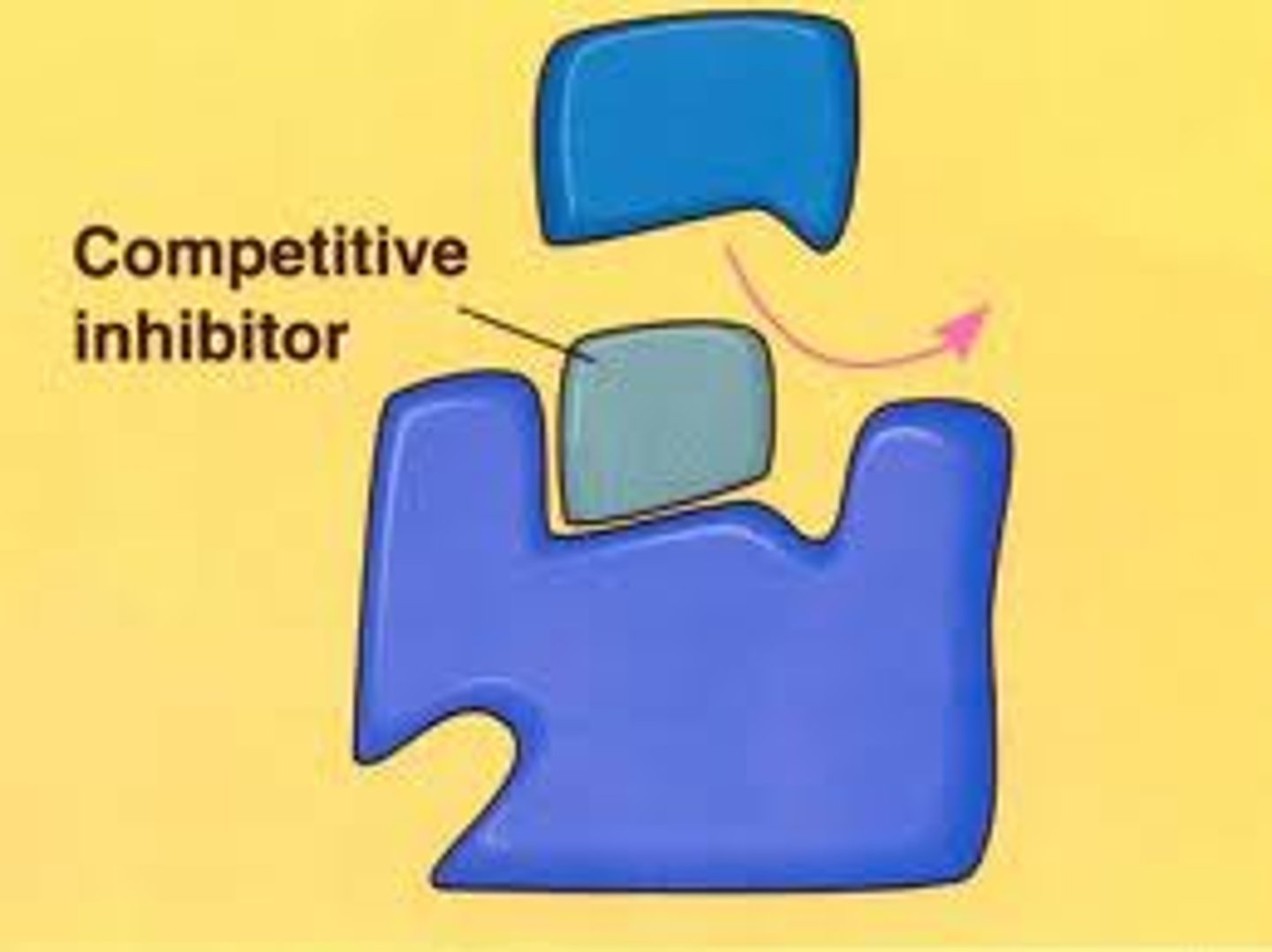
<p>- <span class="bgP">Similar structure</span> to the <span class="bgP">substrate</span> so <span class="bgP">complementary</span> to <span class="bgP">enzyme's active site</span></p><p>- <span class="bgP">Competes</span> with substrate for the <span class="bgP">enzyme active site</span></p><p>- <span class="bgP">Decreases rate of reaction</span></p><p>- <span class="bgP">Increasing</span> the <span class="bgP">substrate</span> <span style="text-decoration:underline"><span class="bgP">reverses the effect</span></span> of competitive inhibitors by <span class="bgP">outcompeting</span> them</p>