Proteins in Nutrition: Structure, Function, and Dietary Sources
 Call Kai
 Learn
Learn Practice Test
 Spaced Repetition
 Match
Match Flashcards
 Knowt Play
1/71

There's no tags or description
Looks like no tags are added yet.
Name | Mastery | Learn | Test | Matching | Spaced | Call with Kai |
|---|
No analytics yet
Send a link to your students to track their progress
72 Terms
What are proteins?
Complex organic molecules made up of amino acids.
What elements are proteins composed of?
Carbon, hydrogen, oxygen, and nitrogen.
What are the primary functions of proteins in the body?
Structural support, hormones, immune response, pH balance, and transport.
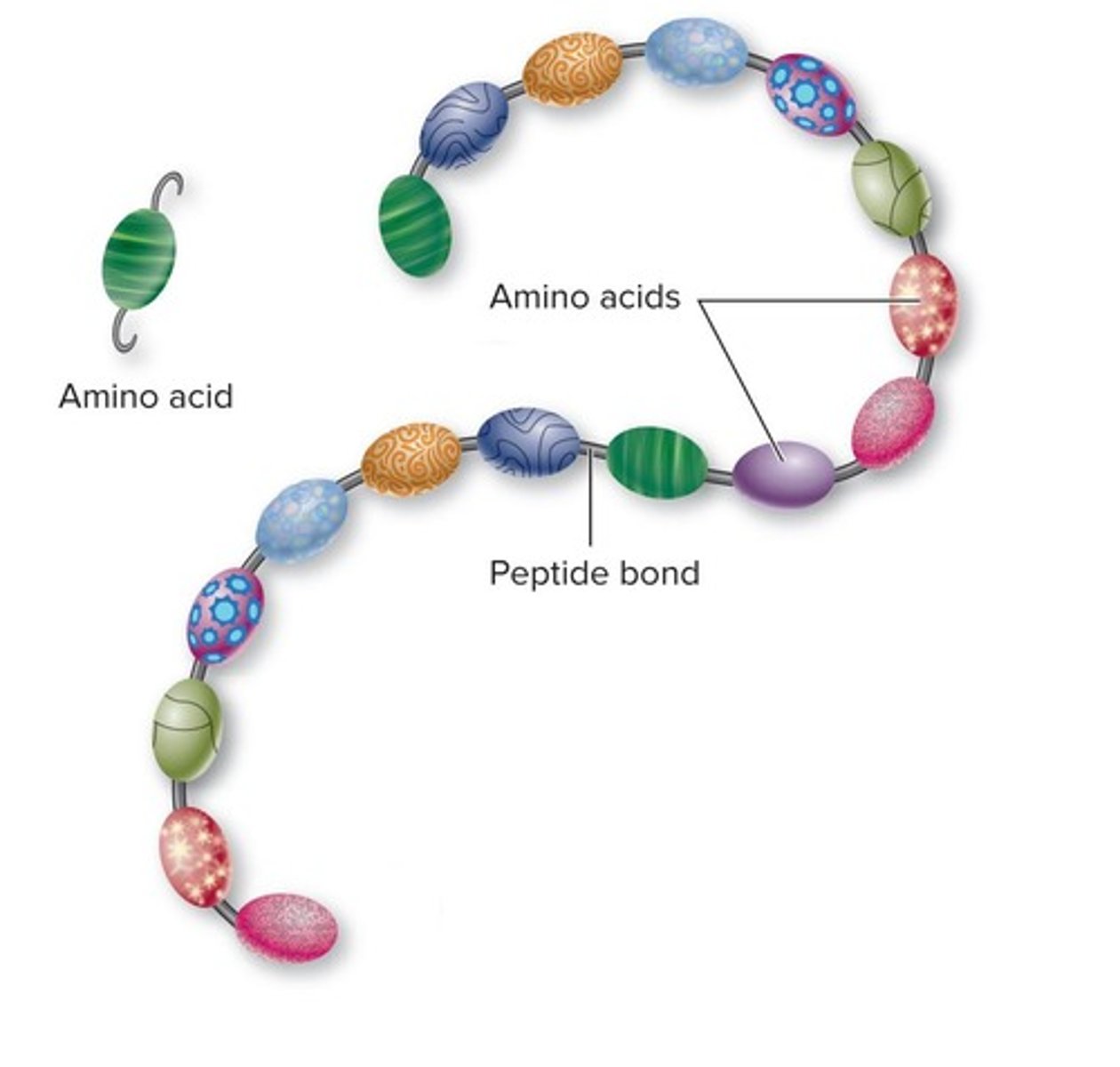
What are the basic structural units of proteins?
Amino acids.
What distinguishes essential amino acids from nonessential amino acids?
Essential amino acids cannot be made by the body and must be supplied by the diet.
How many essential amino acids are there?
9 of the 20 amino acids.
How many nonessential amino acids are there?
11 of the 20 amino acids.
What is the difference between high-quality and low-quality proteins?
High-quality proteins contain all 9 essential amino acids; low-quality proteins lack one or more essential amino acids.
What are some examples of high-quality protein sources?
Most animal products, quinoa, and processed soy.
What are limiting amino acids commonly found in plant foods?
Lysine, tryptophan, threonine, methionine, and cysteine.
What is protein synthesis?
The process by which cells assemble amino acids into proteins based on DNA information.
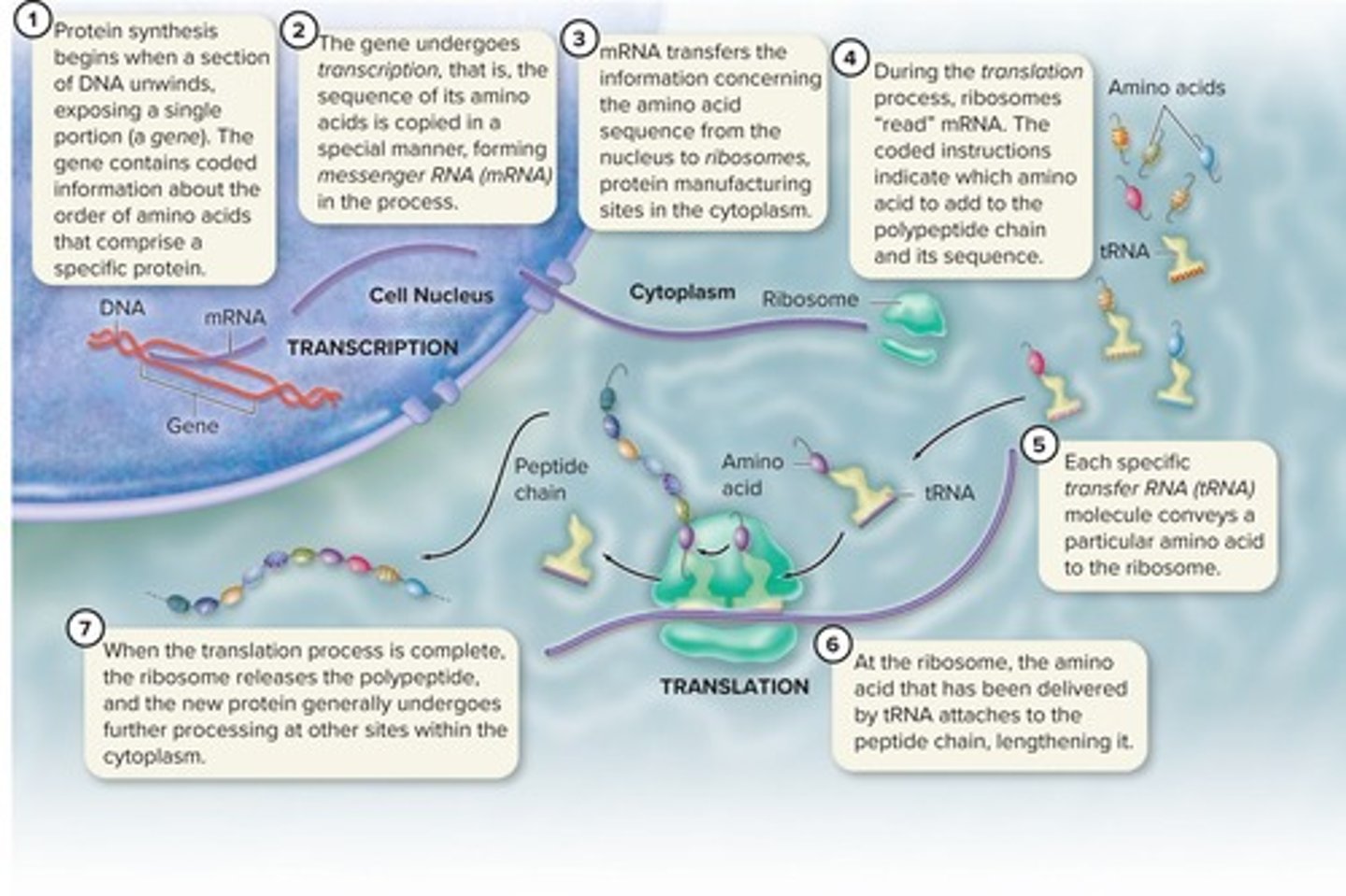
What role does mRNA play in protein synthesis?
mRNA carries the genetic information from DNA to the ribosome for protein assembly.
What is protein denaturation?
The alteration of a protein's natural shape and function due to exposure to heat, acid, or agitation.
Where does protein digestion begin?
In the stomach, where hydrochloric acid denatures proteins.
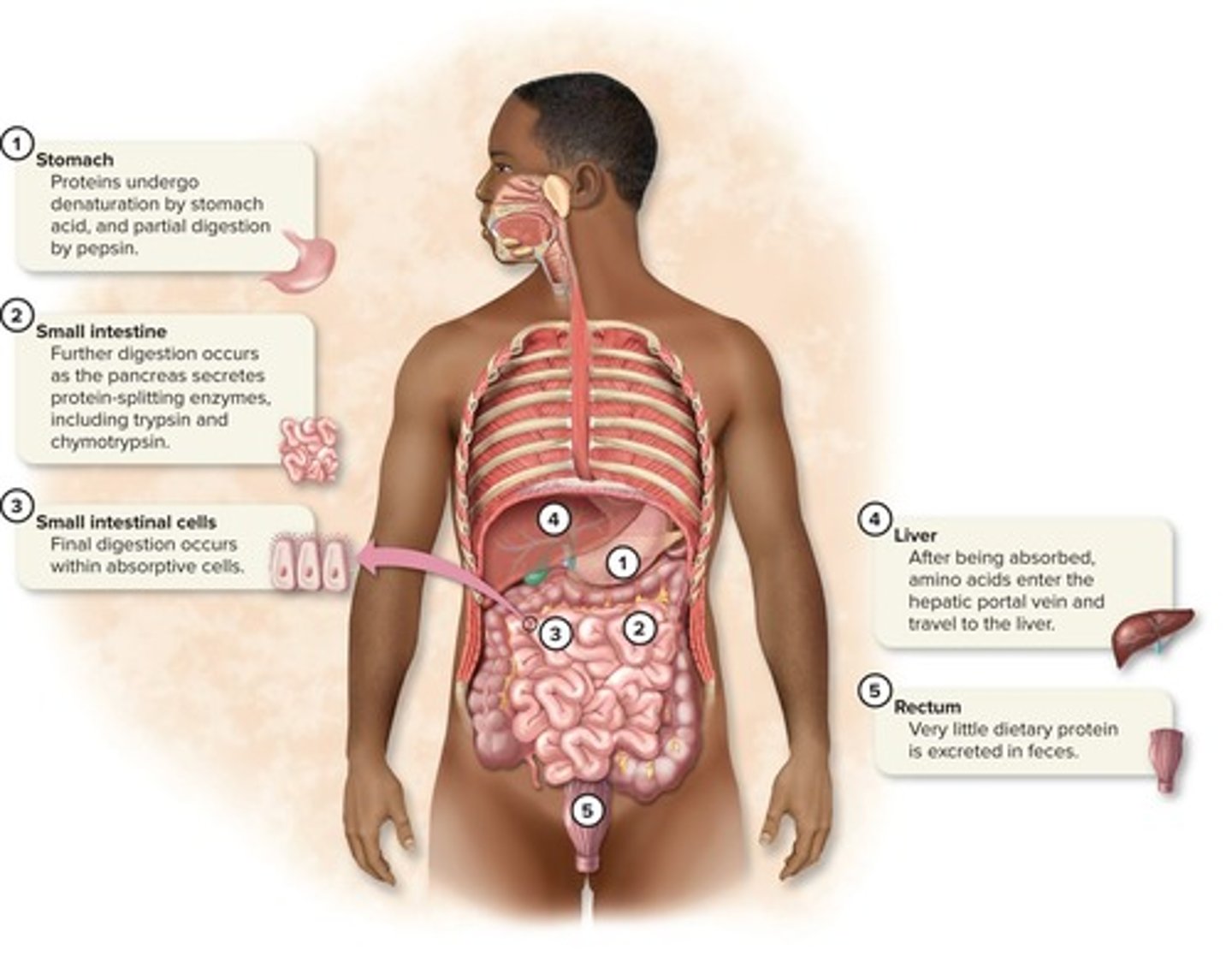
What enzyme is responsible for digesting proteins in the stomach?
Pepsin.
What happens to polypeptides in the small intestine?
They are further digested into shorter peptides and individual amino acids by enzymes like trypsin and chymotrypsin.
How are amino acids absorbed in the small intestine?
Absorptive cells digest small peptides into individual amino acids, which then enter the bloodstream.
What is nitrogen balance?
The state of the body regarding nitrogen intake versus nitrogen excretion.
What indicates a positive nitrogen balance?
When nitrogen intake exceeds nitrogen excretion, often during growth or recovery.
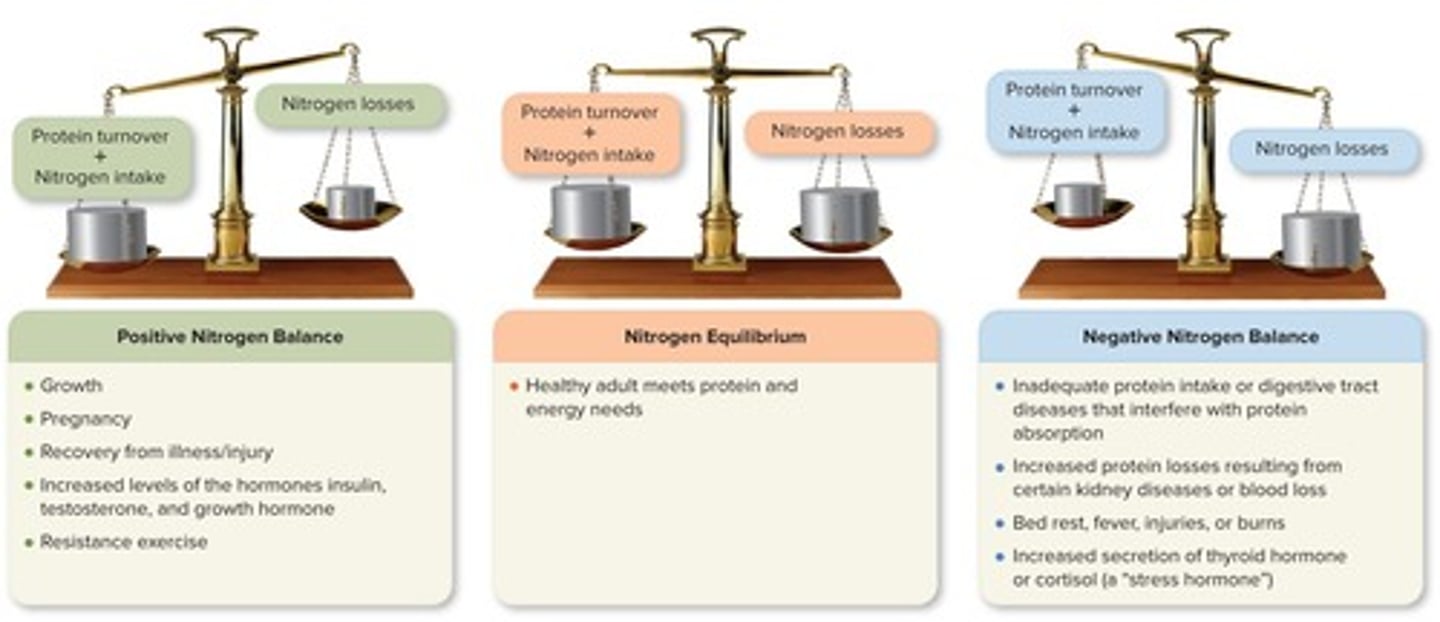
What indicates a negative nitrogen balance?
When nitrogen excretion exceeds nitrogen intake, often in cases of malnutrition or illness.
What is the RDA for protein based on body weight?
The Recommended Dietary Allowance varies, typically around 0.8 grams of protein per kilogram of body weight.
What is the role of antibodies in the body?
To fight infections.
What are structural proteins?
Proteins that provide support in cells and tissues, such as collagen and keratin.
What is the role of proteins in maintaining pH balance?
Proteins act as buffers by accepting or releasing hydrogen ions (H+).
What happens to excess amino acids in the body?
They can be converted to energy or stored as fat.
What is the significance of the R-group in amino acids?
The R-group varies with each amino acid and determines its unique properties.
What is protein turnover?
The process of breaking down old or unneeded proteins into their components (amino acids) and recycling the amino acids for new uses.
What is the amino acid pool?
A small amount of amino acids that have not been incorporated into proteins.
What are endogenous amino acids?
Amino acids that are available from the body's amino acid pool.
What are exogenous proteins?
Proteins obtained from dietary sources.
What is deamination?
The removal of the nitrogen-containing group from an unneeded amino acid.
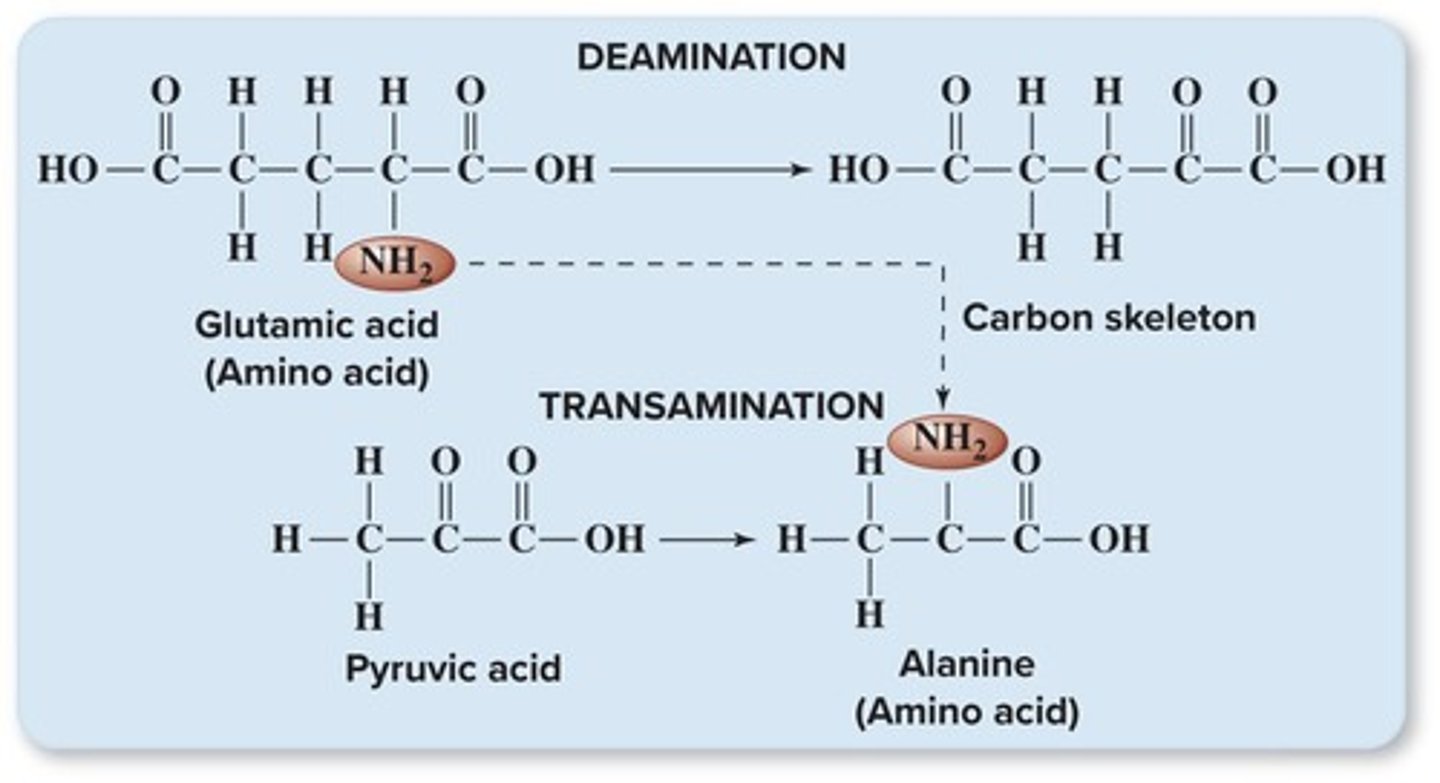
What is transamination?
The transfer of the nitrogen-containing group from an unneeded amino acid to a carbon skeleton, forming a new amino acid.
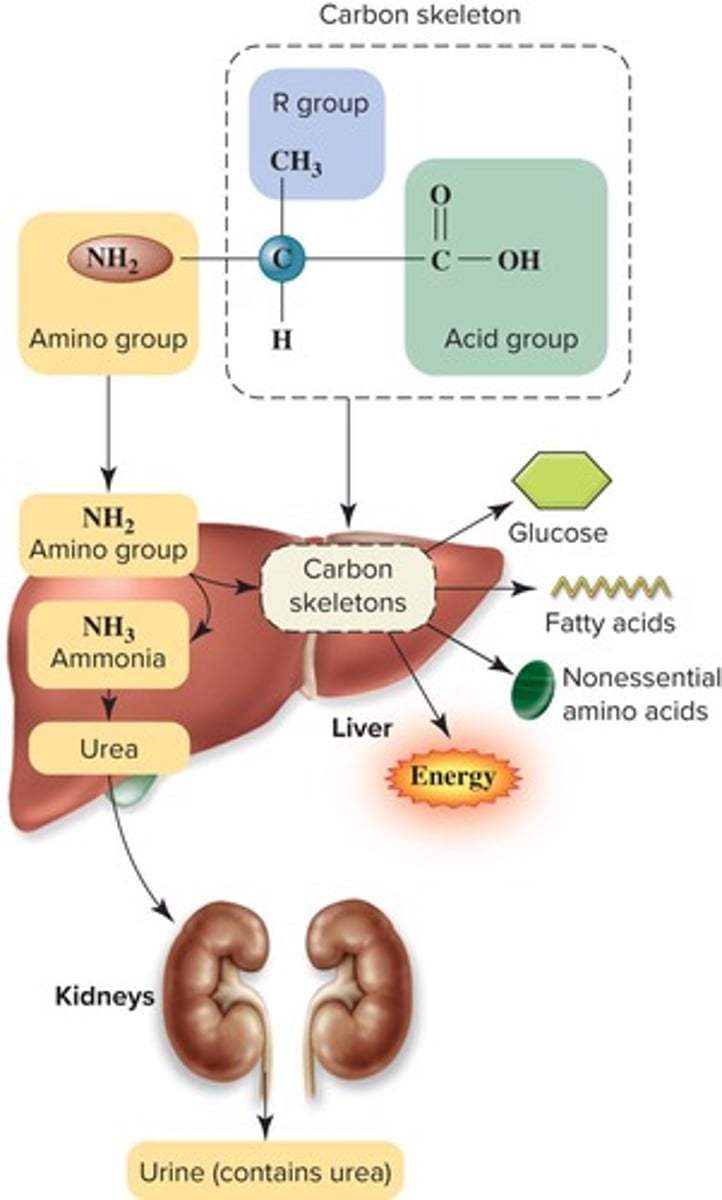
What happens to excess amino groups in the body?
Ammonia (NH3) is converted to urea in the liver, and the kidneys excrete urea in urine.
What is the daily protein requirement for healthy adults?
EAR = 0.66 g/kg body weight and RDA = 0.8 g/kg body weight.
How do you calculate the RDA for protein for a healthy adult weighing 165 lbs?
Convert weight to kg (165 lb ÷ 2.2 lb/kg = 75 kg) and multiply by 0.8 g/kg (75 kg × 0.8 g/kg = 60 g protein/day).
What percentage of calories does protein contribute to the typical American diet?
16% of an adult American's average energy intake.
What is the AMDR for protein?
10 to 35% of energy.
Which food groups provide most of the protein in the American diet?
Meat, fish, poultry, dairy, and eggs (70 to 85% of protein).
What chronic diseases are associated with high processed meat consumption?
Increased risk for cardiovascular disease (CVD) and some forms of cancer.
What are recommendations for protein intake?
Choose lean or low-fat meat, limit processed meat, and include more fish and plant protein sources.
How can people reduce meat intake without sacrificing protein quality?
Substitute eggs, milk, cheese, and yogurt for meat, and mix plant and animal protein sources.
What are complementary proteins?
Mixing certain plant foods to provide all essential amino acids without adding animal proteins.
What are the concerns for vegetarian diets regarding children?
Children may find it difficult to consume adequate protein and energy, and growth rates need close monitoring.
What is a potential issue for pregnant women on vegetarian diets?
They may need vitamin B-12 supplements to prevent deficiencies in their infants.
What health problems may occur with excessive protein intake?
Increased risk of heart disease and colorectal cancer, and potential dehydration.
What is protein-energy malnutrition?
A serious nutritional state, especially for young children, due to inadequate protein intake.
What health risks are associated with excessive red or processed meat intake?
Increased risk of heart disease and colorectal cancer.
Why are high-protein diets generally not recommended for healthy individuals?
Excess protein intake may lead to dehydration and higher urinary losses of calcium.
What substance does the body produce from purines found in protein-rich foods?
Uric acid.
What condition can high blood uric acid levels contribute to?
Gout.
What is Protein-Energy Malnutrition (PEM)?
A condition resulting from a diet lacking energy and high-quality protein.
What is Kwashiorkor?
A condition that occurs when an infant is abruptly weaned from breast milk and given a low-quality protein diet.
What are the signs of severe Protein-Energy Malnutrition (PEM)?
Muscle wasting and edema.
What dietary changes should individuals recovering from COVID-19 make?
Consume a high-calorie, high-protein diet that exceeds the RDA for their age group.
What are common signs and symptoms of food allergies?
Hives, swollen lips, difficulty swallowing, and anaphylaxis.
What is celiac disease?
An inherited condition resulting in malabsorption of nutrients from the small intestine due to gluten intolerance.
What foods must individuals with celiac disease avoid?
Foods containing gluten, such as wheat, barley, and rye.
What is Phenylketonuria (PKU)?
A rare genetic disorder caused by a lack of an enzyme that converts phenylalanine to another compound.
What dietary restrictions are necessary for individuals with PKU?
Avoid high-phenylalanine foods like nuts, milk, and meats.
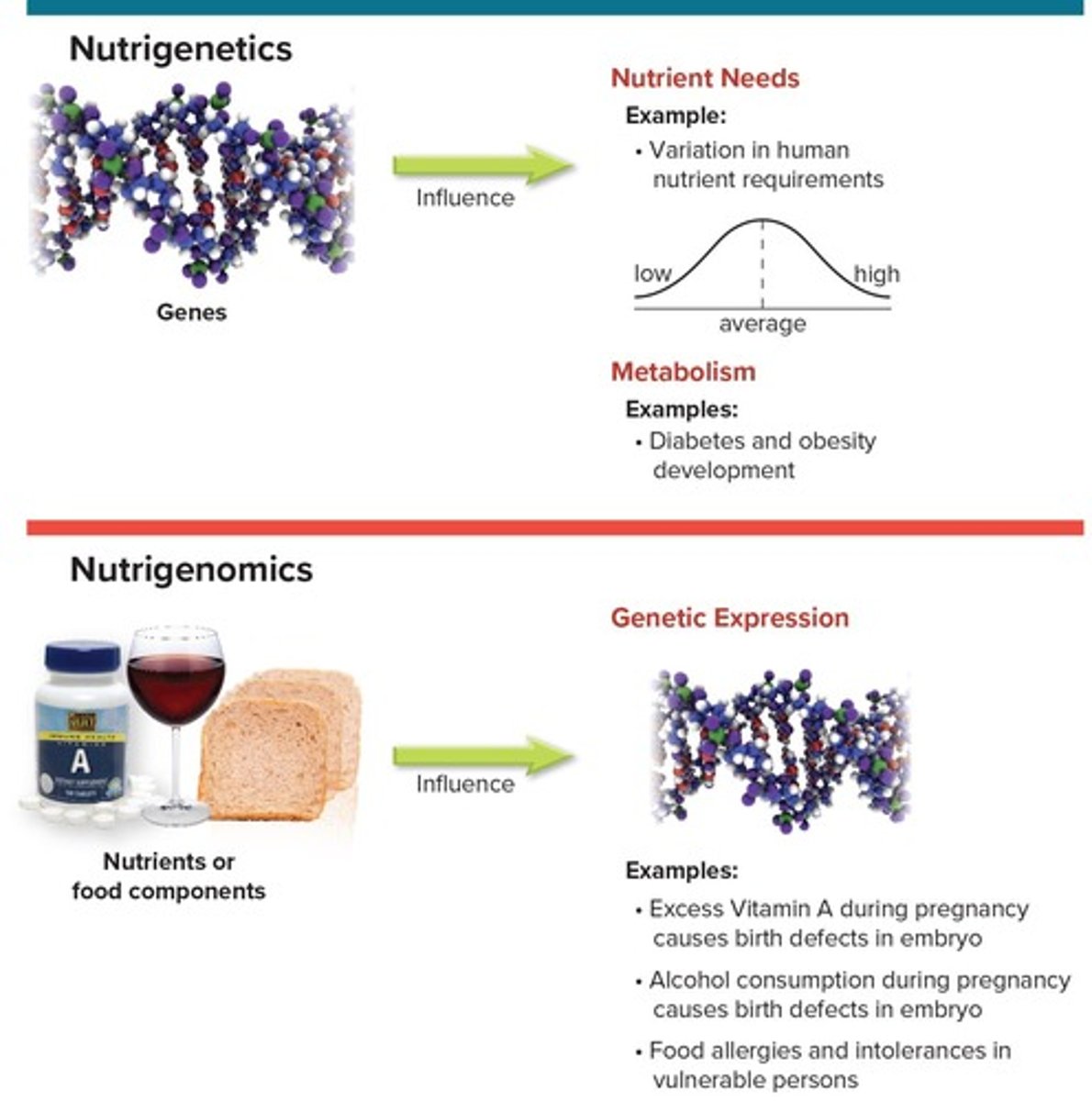
What is the difference between nutrigenetics and nutrigenomics?
Nutrigenetics studies how genetic makeup affects food response, while nutrigenomics studies how nutrients affect gene expression.
What are practical ways to save money when purchasing food?
Use unit pricing, compare net weights, and use coupons.
What should consumers check when buying perishable foods?
Sell by dates.
What is a recommended dietary practice to save money on food?
Have at least one vegetarian meal a week.
What is the role of purines in the body?
Purines are nitrogen-containing substances that the body converts to uric acid.
What is marasmus?
A severe form of Protein-Energy Malnutrition characterized by extreme weight loss.
What are the common signs of celiac disease?
Abdominal bloating, chronic diarrhea, and weight loss.
What is the significance of protein-rich foods in relation to food allergies?
Most food allergens are proteins that can trigger an inappropriate immune response.
What are the potential effects of high-protein weight-loss diets?
Reduced hunger and increased sense of fullness, but may be difficult to maintain.
What is the relationship between chronic diseases and protein deficiency?
Chronic diseases can increase protein requirements, leading to potential deficiency.
What is the recommended treatment for celiac disease?
Complete avoidance of gluten.
What are the common food allergens?
Cow's milk, eggs, peanuts, wheat, soybeans, fish, and shellfish.
What is the role of the immune system in food allergies?
It reacts inappropriately to harmless substances, leading to allergic reactions.

