supply chain exam 2
 Call Kai
 Learn
Learn Practice Test
 Spaced Repetition
 Match
Match Flashcards
 Knowt Play
1/190

Earn XP
Description and Tags
chapters 4-6
Name | Mastery | Learn | Test | Matching | Spaced | Call with Kai |
|---|
No analytics yet
Send a link to your students to track their progress
191 Terms
critical decision in product-based supply chain
how much inventory to keep on hand (as its one of the largest assets)
inventory
quantity of goods and materials that are held in stock
includes all materials used to support production, the finished products needed to provide the customer service, and all other supplies to run a business
inventory as a liability
to much ties up capital that could be used elsewhere
more inventory held needs more space which costs money
security, insurances, taxes to hold inventory
can be become unusable due to expiration, obsolescence, damage, spoilage
categories of inventory
raw material
work in process (WIP)
finished goods
maintenance, repair, and operating supplies (MPO)
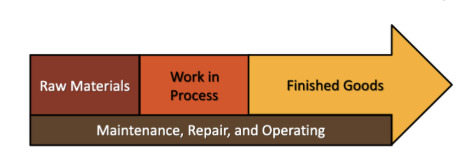
raw materials
purchased items or extracted materials converted via the manufacturing process into components and products
work-in-process (WIP)
goods in various stages of completion throughout the plant, spanning from raw material that has been released for initial processing up to fully processed material awaiting final inspection and acceptance as finished goods
finished goods
those items on which all manufacturing operations, including final testing, have been completed. these products are available for sale and shipment to customers
finished goods cost perspective
finished goods are usually worth much more than raw materials or WIP since all material, labor, and overhead costs are fully applied to finished goods
make-to-order
little to no finished goods inventory is maintained
make-to-stock
significant amount of finished goods inventory can be maintained
maintenance, repair and operating (MRO)
items used to support general operations and maintenance such as maintenance supplies, spare parts, and consumable and are used in manufacturing and supporting operations
service inventory
activities carried out in advance of the customer’s arrival
don’t maintain an inventory of services since services are produced and consumed upon demand
can maintain an inventory of “facilitating goods” that facilitate services
why hold inventory
meet customer demand
buffer against uncertainty in demand or supply
decouple supply from demand
decouple dependencies in the supply chain
meet customer demand
immediately fill customer orders
deploy the product/material
to buffer against uncertainty in demand or supply
uncertainty in demand: sales or usage above expectations
uncertainty in supply: shortages, delays, disruptions
decouple supply from demand
supply pattern is different from demand pattern
achieve economies of scale in purchasing
speculative buying in anticipation of a price increase
economical order size, lot size, production output
seasonal products/demand
decouple dependencies in the supply chain
separating operations in a process
smoothing production and reducing peak period capacity needs
inventory management
the function of planning and controlling inventories
goal to help a company be more profitable by lowering the cost of goods and increasing sales
effective inventory management
balances reducing the amount of inventory held in stock while ensuring there is enough inventory to satisfy customer demand
cycle stock
inventory that a company builds to satisfy its immediate demand
depletes gradually with customer orders and replenished cyclically
safety stock
inventory above what is needed to meet anticipated demand
quantity of stock planned to be in inventory to protect against fluctuations in demand
strategic stock
additional inventory used for a specific purpose or future event and a defined period
(seasonal, price-discounts, business opportunity, currency fluctuations, protect against disruptions in supply)
pipeline inventory
in the transportation network and distribution system being held by wholesalers, distributors, retailers, consumers
ownership transfers to trading partners
obsolete inventory
obsolescence criteria established by company (expired, damaged, no longer needed)
unusable inventory takes up space and storage, but also costs are associated with disposal of inventory — hard decision
MRO supplies
needed to run manufacturing and business operations, but not part of finished product
ex. oil for equipment, cleaning supplies, spare parts, office supplies, coffee for break room
costs related to inventory - direct
directly traceable to unit produced (materials, labor)
costs related to inventory - indirect
cannot be traced directly to the unit produced (MRO, equipment)
costs related to inventory - variable
dependent on the unit volume produced varies with output level (materials, labor, utility power)
costs related to inventory - fixed
independent of unit volume produced (buildings, equipment, rent)
costs related to inventory - carrying
costs for physically having inventory on-site and maintaining the infrastructure needed to store the inventory and secure and insure it over time
costs related to inventory - order
labor costs associated with placing an order for inventory and recieving the order
hidden costs of inventory
having too much or too little inventory on hand can build hidden costs that create a risk for company
too much inventory
financial resources tied up in inventory
underlying problems being hidden rather than exposed and solves, including quality problems not being immediately identified
no incentive to process improvements
too little inventory
production disruptions creating need for expediting and additional costs
longer delivery replenishment lead times
reduced responsiveness
lost revenue
absolute inventory value
the value of the inventory at either its cost or market value (balance sheet)
inventory turnover
number of times an inventory cycles or “turns over” during the year
the more the better
turnover ration = COGS / average inventory @ cost
inventory policy
set target inventory levels for all products and materials
address questions:
when to review inventory
when to order inventory
how much inventory to order
periodic review system
inventory levels are reviewed at a set frequency (weekly, monthly)
at the time of review, if stock levels are below pre-determined level, an order for replenishment is placed, otherwise no action is taken until the next cycle
advantages of periodic review system
reduce the time spent analyzing inventory
less expensive to implement and operate than a continuous review system
disadvantages of periodic review system
challenging to determine the best review/reordering intervals
can make inventory accounting less accurate
since items are only reviewed periodically, theres greater risk of inventory dropping below the reorder point between reviews, and therefore a greater potential need for safety stock
continuous review system
inventory levels are continuously reviewed, as soon as inventory falls below the pre-determined level, a replenishment order is automatically triggered
advantages of continuous review system
allows for real-time updates of inventory, which can make it easier to know when to replenish
facilitate accurate accounting since inventory system can generate real-time costs of goods sold
potentially requires less safety stock because inventory is constantly monitored, and replenishment actions are taken more quickly
disadvantages of continuous review system
cost of implementation generally requires an automated system
the hardware and software necessary to run the system can be expensive to purchase, install, and maintain
reorder point
the lowest inventory level at which a new order must be placed to avoid a stockout
ROP = demand during lead time (d x lead time) + safety stock
fixed-time period system
inventory is checked in fixed periods against a target inventory level
if the inventory is less than target, a quantity necessary to bring inventory back up to target level is ordered
amount of inventory ordered will potentially vary from period to period based on the remaining inventory at each time interval checked
fixed order quantity system
a continuous inventory review system uses the same order quantity from order to order
when the inventory position drops to a predetermined reorder point, a predetermined fixed order quantity is placed
the time between order varies from order to order
economic order quantity model (EOQ)
a fixed order quantity model based on the trade-off between annual inventory costs and annual inventory carrying costs - formula given on exam
order costs
incurred each time an order is placed
order preparation costs
order transportation costs
order receipt processing costs
material handling costs
carrying costs
costs incurred for holding inventory in storage
cost of capital - specified by senior management
taxes - on inventory held in warehouses
insurance - based on estimates risk or loss over time and facility characteristics
obsolescence - deterioration of the product during storage and shelf-life
storage - facility expense related to product holding rather than product handling
constraints on the practical use of EOQ
limited capital
storage capacity
transportation
obsolescence
production lot size
utilization
ABC system
method to determine which inventories should be counted and managed more closely than others
A: highest priority (20% of total items, 80% of total inventory cost)
B&C (80% of items, 20% of cost)
B: items require closer management since relatively more expensive & more purchase effort
C: lowest value and lowest priority
Bin system
inventory system that uses one or two bins to hold a quantity of the items being inventoried
mainly for small low-value items
when inventory in first bin depletes, an order is placed to refill
second bin is set up to hold enough to cover demand during the replenishment led time
base stock level system
inventory system that issues an order whenever a withdrawal is made from inventory
equal to to quantity withdrawn from inventory
form of JIT
single-period mode
an inventory system in which inventory is only ordered for a one-time stocking
maximize profits — christmas trees, newspaper stands
inventory control tools
many inventory control tools exist in today’s market, those incorporating barcode tracking or RFID tagging generally offer the most flexibility and ease of use
barcodes
help business track products and stock levels for inventory management
linear barcode
series of alternating bars and spaces printed on representing encoded info that electronic reader can read
2D barcodes
graphical image that stores horizontal and vertical info
can store 7,000 characters, allowing transmission of almost two paragraphs of information
radio frequency identification (RFID)
successor to the barcode for tracking individual units of goods
doesn’t require a direct line of sight to read a tag, and the information on the tag is updatable
automates the supply chain - materials management
goods automatically counted and logged as they enter the supply warehouse
automates the supply chain - manufacturing
assembly instructions encoded on RFID tags provide info to computer-controlled assembly devices
automates the supply chain - distribution center
shipment leaving DC automatically updates ERP to trigger a replenishment order and notify customer for delivery tracking
automates the supply chain - retail store
no check-out lines as scanners link RFID tagged goods in shopping carts with buyer credit cards
procurement
the process of selecting and vetting suppliers, negotiating contracts, establishing payment terms, and the actual purchasing of goods and services
purchasing
obtaining merchandise, capital equipment, raw materials, services, and/or MRO is exchange for money
transaction function of procurement with a 3rd party
supply management
encompasses all acquisition activities beyond the simple purchase transaction
purchase requisition
an internal document that defines the need for goods or services
doesn’t constitute a contractual relationship with external part
generated by a user department to notify purchasing personnel of item to order, quantity, and timeframe
purchase order (PO)
an external commercial document, an official offer issued by a buyer to a seller to acquire goods or services
used to control the purchasing of products and services from external suppliers
indicated types, quantities, and agreed prices for products or services
becomes a legally binding contract only when accepted by the supplier
e-procurement
B2B purchase and sale of supplies and services over the internet
merchants
wholesalers and retailers who purchase for resale
industrial buyers
individuals within an organization who purchase raw materials for conversion into products or purchase services, capital equipment and MRO supplies
contracting
used for the acquisition of services
request for information (RFI)
a standard business process whose purpose is to collect written information about the capabilities of various suppliers
request for proposal (RFP)
a detailed capabilities document used to determine a supplier’s capability and interest in producing a product or service
request for quote (RFQ)
a document to solicit bids (price and delivery) from interested and qualified suppliers for goods or services the organization needs to obtain
primary objective of purchasing
ensure an uninterrupted flow of materials and services at the lowest overall cost
improve the quality of the finished goods produced
optimize customer satisfaction
purchasing contributed to these objectives by
actively seeking reliable suppliers
working with the expertise of strategic suppliers to improve quality and materials
involving suppliers and purchasing personnel in new product design and development
1st step of purchasing process
need identified and purchase requisition issues
request for goods/services submitted to procurement/purchasing organization
2nd step in purchasing process
obtain authorization as necessary
purchase requisition routed to authorized approver
3rd step in purchasing process
identify and evaluate potential suppliers
may be determined from a list of approved suppliers
alternatively, a request for information may be used to collect info from potential suppliers
4th step in purchasing process
make supplier selection
competitive bidding process, if supplier isn’t already known, initiated through a request for proposal
supplier selected from the bids based on criteria; price, availability, quality, delivery costs, etc.
5th step in purchasing process
purchase order (PO) is created and delivered to the supplier
informs the supplier of intent to purchase
identify items, quantity, delivery date, price, location, etc
PO is buyer’s formal offer to supplier to obtain items
6th step in purchasing process
supplier confirmation of PO
supplier formally agrees to supply items and terms of PO
PO becomes a legally binding contract when accepted and confirmed
7th step in purchasing process
fulfillment
supplier delivers items to buying organization as per the PO
8th step in purchasing process
receipt of goods
once items arrive, buyer conducts receipt process where items are checked to ensure they conform to details of PO
confirmation of receipt may be sent to supplier
9th step in purchasing process
invoice and reconciliation
supplier prepares invoice for items
may need to be reconciled to the PO and goods receipt before payment (3-way match)
10th step in purchasing process
payment
payment is processes using an appropriate payment method, assuming items meet all criteria from PO
11th step in purchasing process
close out the purchase order
if all terms and conditions of PO are met, PO is closed out in the purchasing system
if not, decision about whether balance will be received or order will be complete/closed
12th step in the purchasing process
analysis
measurement of efficiency and accuracy of the procurement process
specific PO data and info captured and used during performance meeting
purchasing process steps
in leading procurement organizations every step is completed
however many steps are achieved via automated systems using rules
e-Procurement
automation, through web-enabled tools, of the non-strategic and transaction activities that would otherwise consumer buyers time
basic e-Procurement process
electronic purchase request and PO
an invoice (which might be one with the receipt)
a payment
for high-dollar includes authorization of PO and reconciliation of invoice
advantages of e-Procurement systems
time-saving
cost savings
accuracy
real-time
management
mobility
trackability
profit-leverage effect
a decrease in purchasing expenditures directly increases profits before taxes (assuming no decrease in quality or purchasing total cost)
bottom line impact is $ for $
ROA effect
high ROA indicated managerial prowess in generating profits with lower spending
inventory turnover effect
increase in Inventory turnover indicated optimal utilization of space and inventory levels, increased sales, and avoidance of inventory obsolescence
inventory is an asset; but is also capital tied up
inventory turnover
COGS / average inventory
high: beneficial, means company generates sales efficiently to sell turnover
low: unfavorable and means the company isn’t selling efficiently
total cost of ownership (TCO)
sum of all costs associated with every activity in the supply stream of a product
purchase price remains important, but is only one part of the total cost of ownership
four elements of cost
quality, service, delivery, price (QSDP) — sum of all is TCO
quantity discounts
may be offered to encourage buyers to purchase larger quantities

