Tess of the d'Urbervilles: Context
 Studied by 1 person
 Call Kai
 Learn
Learn Practice Test
 Spaced Repetition
 Match
Match Flashcards
 Knowt Play
1/14

There's no tags or description
Looks like no tags are added yet.
Name | Mastery | Learn | Test | Matching | Spaced | Call with Kai |
|---|
No analytics yet
Send a link to your students to track their progress
15 Terms
Wessex
Related to the Saxon Kingdom noted in the 8-11th century.
Hardy popularised the term again and this creates a topographical reality as a construct of Hardy's mind that the reader is able to re-imagine.
Setting descriptions are rich and vivid in imagery to provide verisimilitude and realism.
Gatrell comments on setting
"[Hardy is] the recorder of a series of unique micro-environments, ways of life and speech, which together had formed a cultural whole."
The notation of Wessex is timeless as the existence dates back to thousands of years. This denotes an ethereal and somewhat transcendent tone in relation to the setting, contributing to significant themes of fate throughout the novel.
Changes in setting
The contrast in settings often reflects the current point in time of Tess' plight.
Talbothays, when the protagonist is most content on a farm "the happiest of all positions on the social scale." Hardy depicts Talbothays as an ideal Marxist community and this heightens the poignancy associated with the juxtaposition of Flintcomb-Ash that is mired in mud and has dangers highlighted through the use of pathetic fallacy, "we'll see which is master here."
Tess as the focus of the novel
At the opening of chapter 14, the setting is denoted in vivid detail and almost transcendent as "one could feel that a saner religion had never prevailed under the sky."
There is indeed a menacing underlying tone in the narrative as "red-hot pokers" are depicted in the sky, reflective of the fire and hellish imagery associated with Alec.
However, nonetheless the reader's focus is direct to Tess as she is portrayed as exceptional, even celestial to have been focused upon, despite being "part and parcel of outdoor nature" as an ordinary field worker.
The significance of the two valleys and middle ground
Tess is depicted to constantly travel between her home, Marlott that are presented as beautiful regions and something of a safe haven.
She is sent by her Mother to The Slopes to "claim kin" in a contrived environment looking like "the last coin issued by the Mint".
In contrast, the Chase is portrayed as archaic which highlights the modern and superficial nature of Alec.
Both of these settings are also a stark contrast, an alien surrounding for Tess . It is interesting that in her journey to "claim kin", Tess travels across a vast plateau of infertile land, a direct contrast to the luscious and fertile soils of Talbothays.
The Threshing Machine
There is little evidence of machinery within the novel.
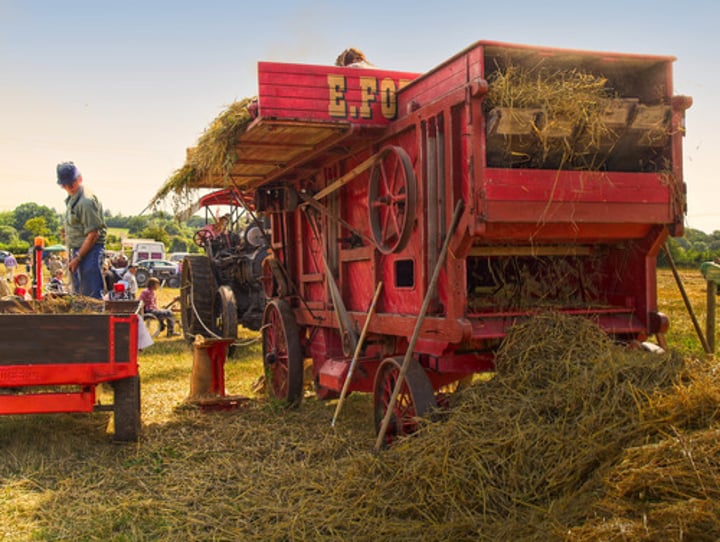
However, one key image is of the threshing machine at Flintcomb-Ash, presented as the "primium mobile" in an omnipotent tone. Thus the machine is depicted as demanding, dehumanising the workers in an unscrupulous manner. It could be argued that you could liken Alec to this machine, relentless as it evokes suffering and persistent, in a similar way that Alec continues to appear in Tess's life.
Reception of religion in Tess
Disconcerting to the Victorian reader in the views that Hardy expressed through major characters, such as Angel, as Hardy's dispute was with the dogma of the Church.
Infant Baptism
Robert Schweik denoted how Hardy was interested in religion on a personal and emotional level, and in particular with regards to infant baptism.
This is poignant in Sorrow's baptism as Hardy challenged the treatment of a young baby.
"The ecstasy of faith almost apotheosized her; it set upon her face a glowing irradiation, and brought a red spot into the middle of each cheek"
Tess is elevated by the baptism as she is given renowned strength. It is notable that this is a decision Tess solely makes within the novel, and this is of a significant scale.
The radiant imagery of Tess portrays her as ethereal and celestial, yet the depiction of "red spots" hints to her perceived societal standing as a mother to the illegitimate child she baptises.
Dichotomy of Pagan and Christian ideals
Druids and Pagans would have celebrated for the May Day Dance, celebrating the arrival of summer.
The presentation of this celebration is particularly focused upon the natural imagery against the clothing.
"She wore a red ribbon in her hair, and was the only one of the white company who could boast of such a pronounced adornment."
The red ribbon clearly foreshadows the challenge of Tess's purity that is forthcoming in the novel and the idea that Tess "boasts" such attire instantly sexualises her natural beauty.
It is this coupling of red and white that frequently conjures the controversial defence of Tess's purity.
Abandoning Christianity
Hardy's criticism of the dogma of the Christian Church is clear throughout the novel, and there is little evidence that Hardy compliments any aspect of the Church.
Felix and Cuthbert are presented as "all Church, all college", pretentious and frequent changers of their beliefs to match the times.
Garden of Eden
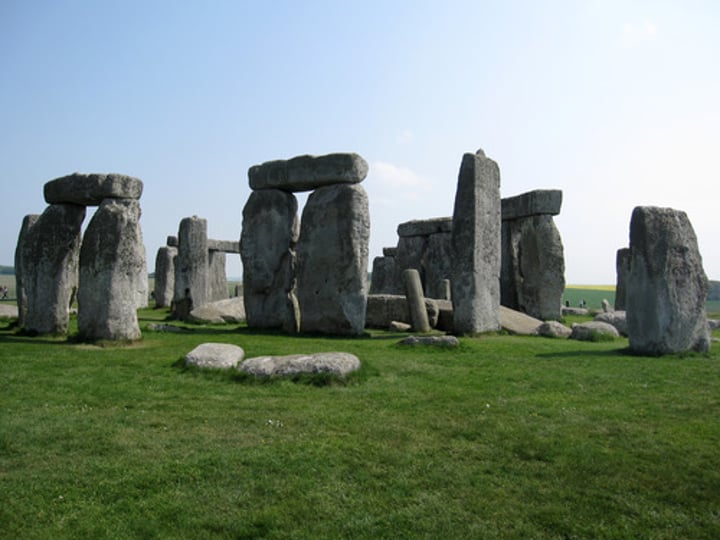
This contrasts to the Druid imagery that ultimate overrides any Christian imagery, as Tess makes the essential sacrifice at Stonehenge, "you used to say..I was a heathen."
Garden of Eden imagery is frequently referenced in relation to Angel and Alec.
At Talbothays, a perfect ideal is denoted and Angel is described to regard Tess "as Eve". That they "seemed to themselves the first persons."
It is this tranquillity and satisfaction that foreshadows the dangers of temptation, the "Old Other One" in Alec who threatens to destroy their bliss.
Even within this ideal, the use of sibilance exemplifies underlying threats of Alec, or the serpent who tempts Eve, as a hiss is replicated, "hiss of fertilisation."
The sign painter
"I cannot split hairs on this burning query."
The man is essentially not educated well enough to understand the deeper meaning of the texts he devoutly follows.
Hardy also suggests that the ordinary towns folk could have been cowed into submission as a result of fear in the striking messages posted throughout the towns.
This, alongside Alec's failed conversion, reflects Hardy's portrayal of faith as fleeting.
Tess as a religious believer
Hardy depicts Tess' religion as more simple for the reader to understand, rooting deeper in meaning, despite her lacking education.
Allusion of religion
Hardy uses his knowledge as a believer and with having the scepticism of an outsider.

