MCB- EXAM 1
 Studied by 0 people
 Call Kai
 Learn
Learn Practice Test
 Spaced Repetition
 Match
Match Flashcards
 Knowt Play
1/32

There's no tags or description
Looks like no tags are added yet.
Name | Mastery | Learn | Test | Matching | Spaced | Call with Kai |
|---|
No analytics yet
Send a link to your students to track their progress
33 Terms
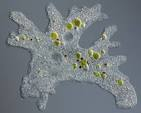
Amoeba Proteous.
Kingdom Protista (Eukaryotic)
Single cell protozoan
Heterotrophic
Group Sarcodina (Amoeba has psuedopods for locomotion)
(Bright green vacuoles and pseudopods obvious indicators)
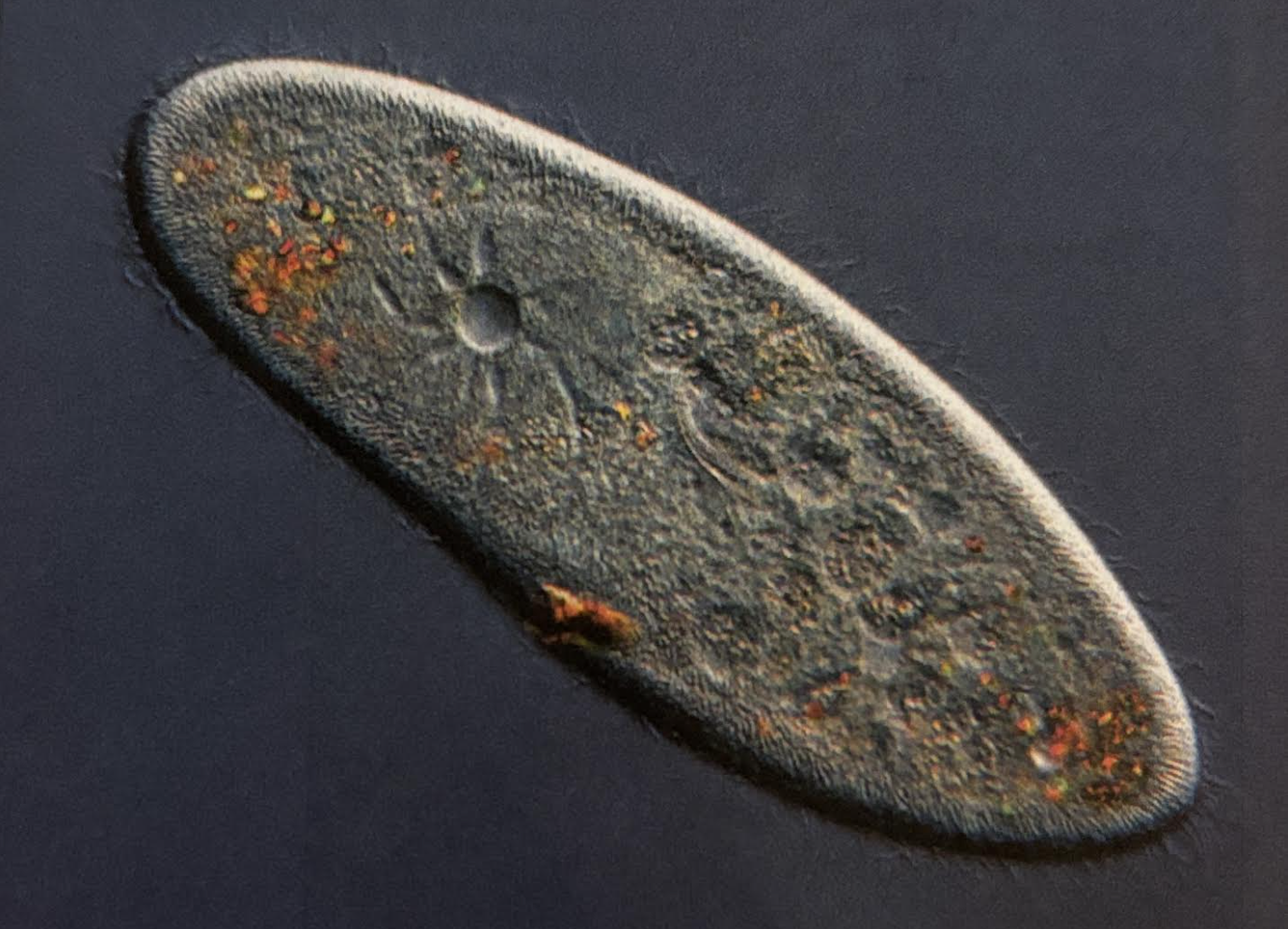
Paramecium caudatum
Kingdom Protista (Eukaryotic)
Protozoan (Heterotrophic)
Ciliophora (uses Cilia for locomotion)
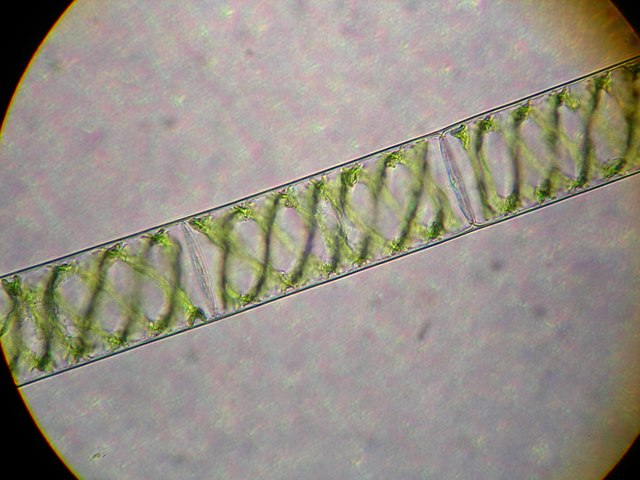
Spirogyra
Kingdom protista
Algae ( autotrophic)
filamentous algae
identifying features- the chloroplasts arranged in spiral shape
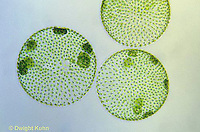
Volvox spp.
Kingdom protista
Colonial Algae (autotrophic)
Has daughter colonies (green balls) and surrounded by flagella
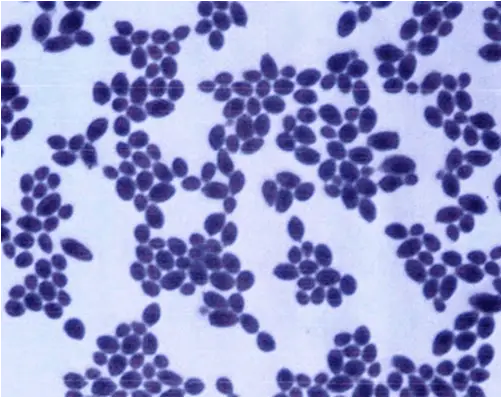
Candida Albicans
Fungi (Eukarya)
Heterotroph
Opportunistic pathogen yeast
can lead to candidiasis and occur in mouth, throat, gut or vagina.
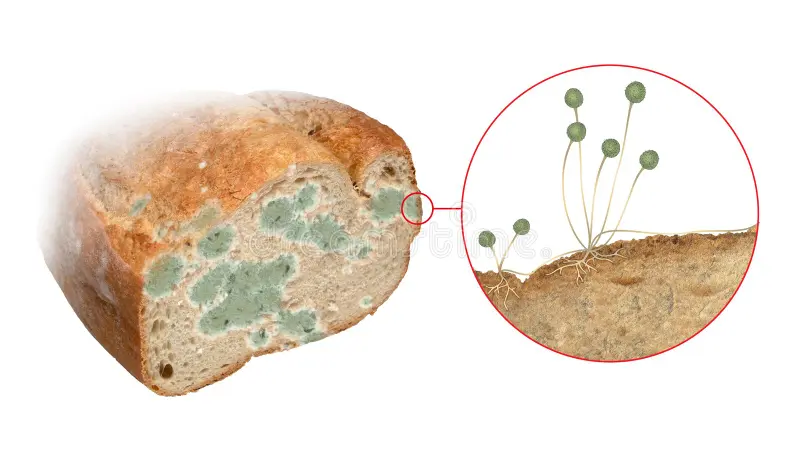
Rhizopus spp.
Fungi (eukaryotic)
Common bread mold
Could be opportunistic pathogen in diabets producing zygomycosis
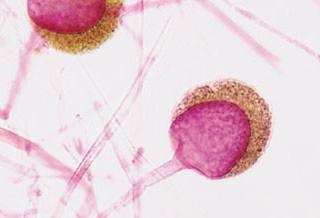
Sporangia on Rhizopus spp.
Asexual stage Mold
hundred of haploid sporgangiospores.
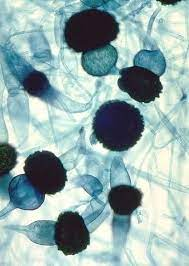
Zygospore
Sexual stage of rhizopus spp.
Zygospore produced when two different mating types of hyphae merge.
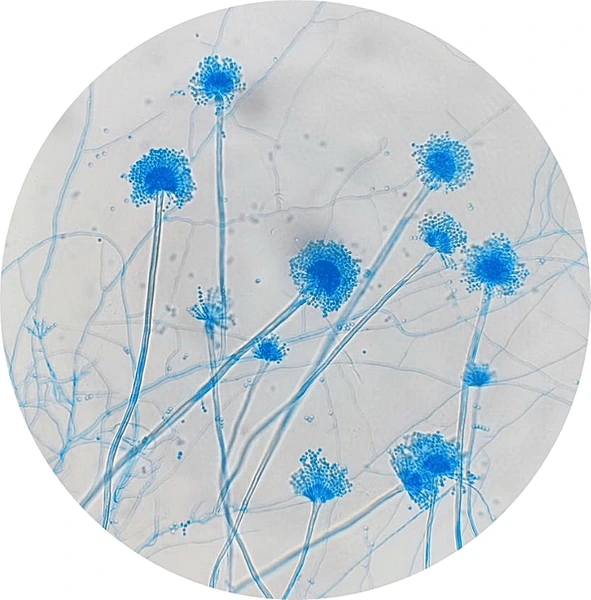
Aspergillus spp. with conidia
Protista ( Eukaryotic)
Fungi
Mold
Opportunistic pathogen can lead to aspergillosis.
Identifying: little flowers outward sprouting out compared to penicillum conidia
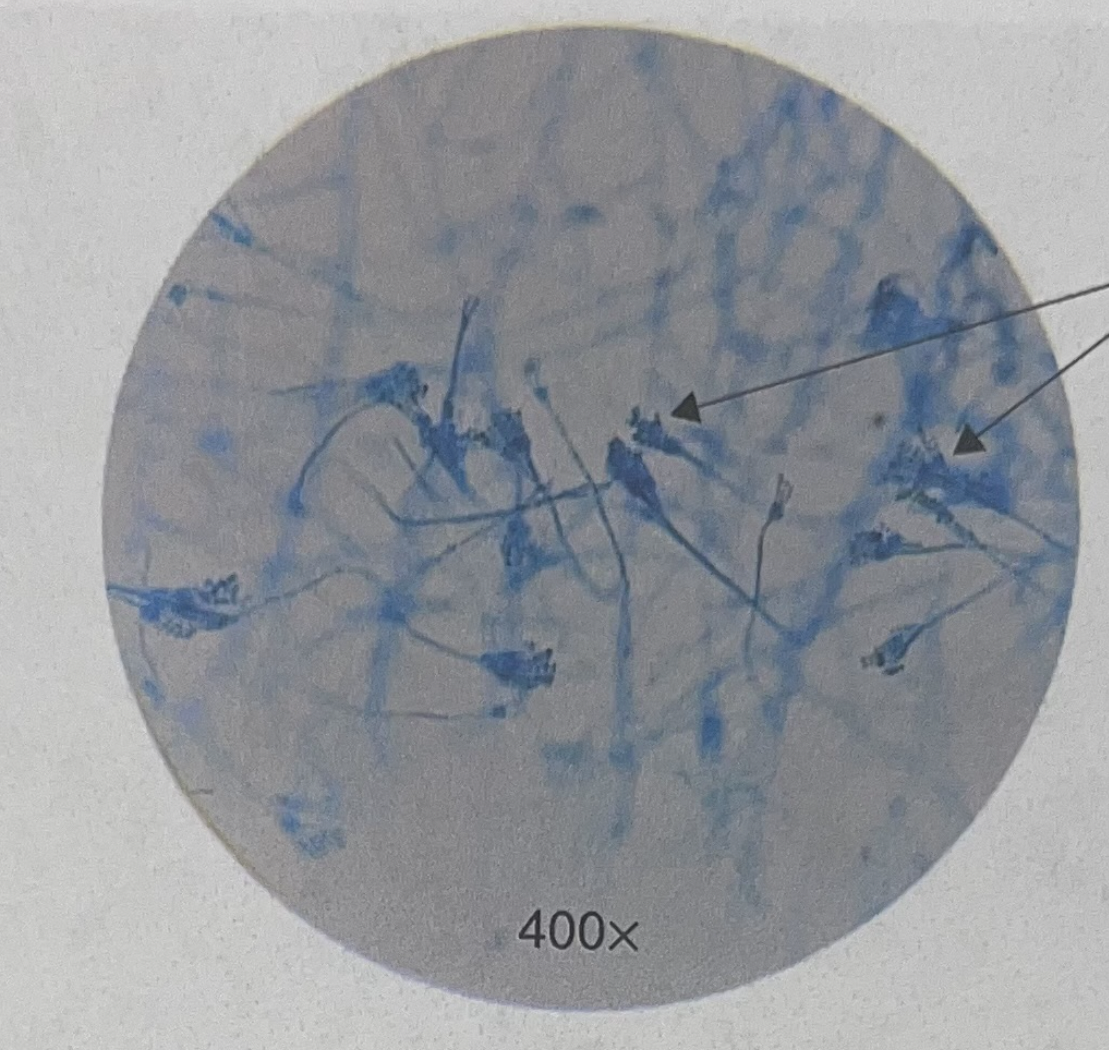
Penicillium spp. with conidia
Protista (Eukaryotic)
Fungi
Mold
Famous for production of penicillin
more skinnier brush like conidia
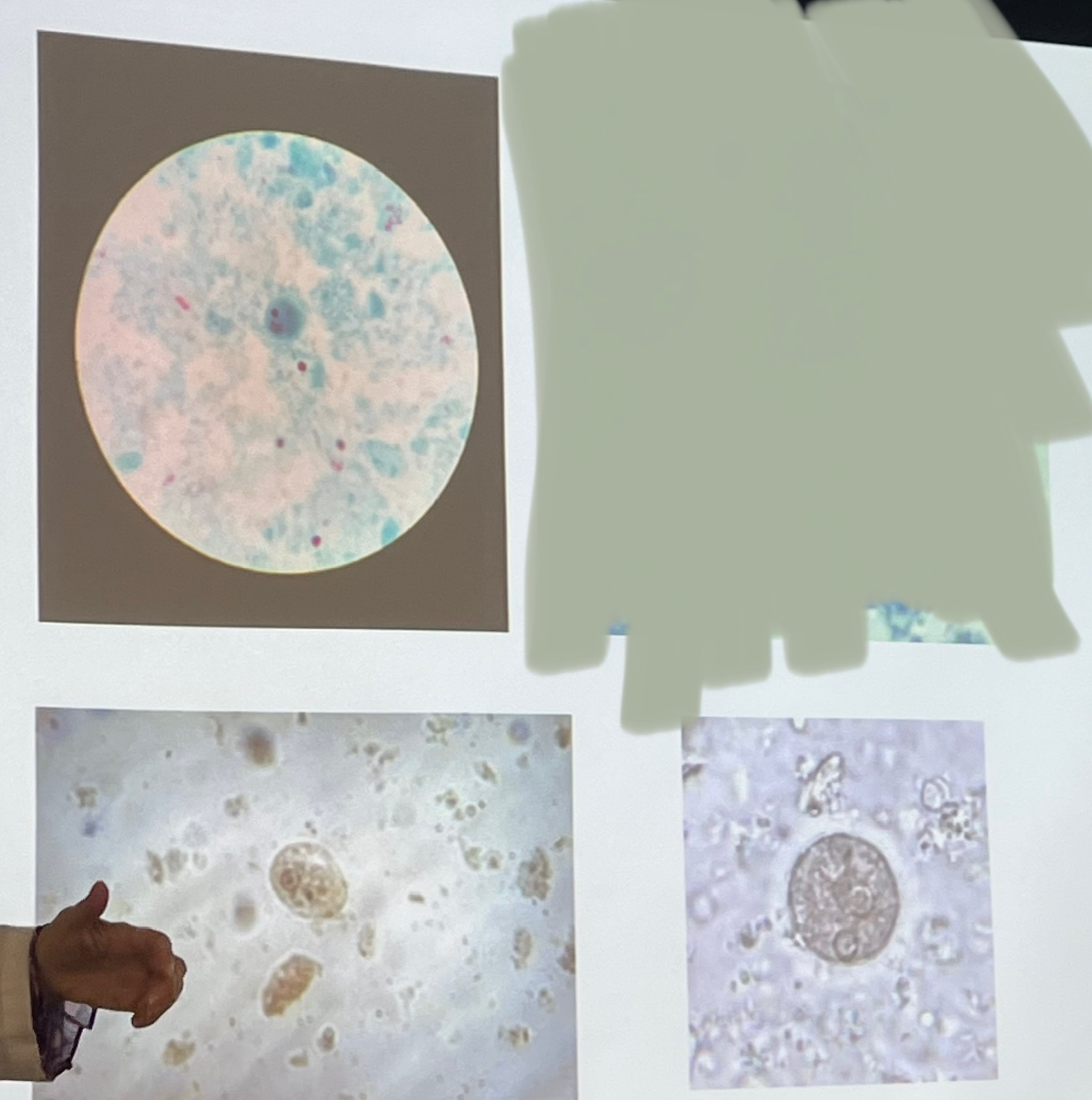
Entamoeba histolytica Cyst
CYSTS HAVE MULTIPLE NUCLEUS (little purple dots) AND SPHERICAL IN SHAPE
Protozoa (Eurakaryotic)
Sarcodina (Amoeboids, move by pseudopodia)
Amoebic dysentery or amobiasis (gotten thru digestion of cysts from contaminated water)
Diagnosis from finding cysts & trophozoites in stool samples.
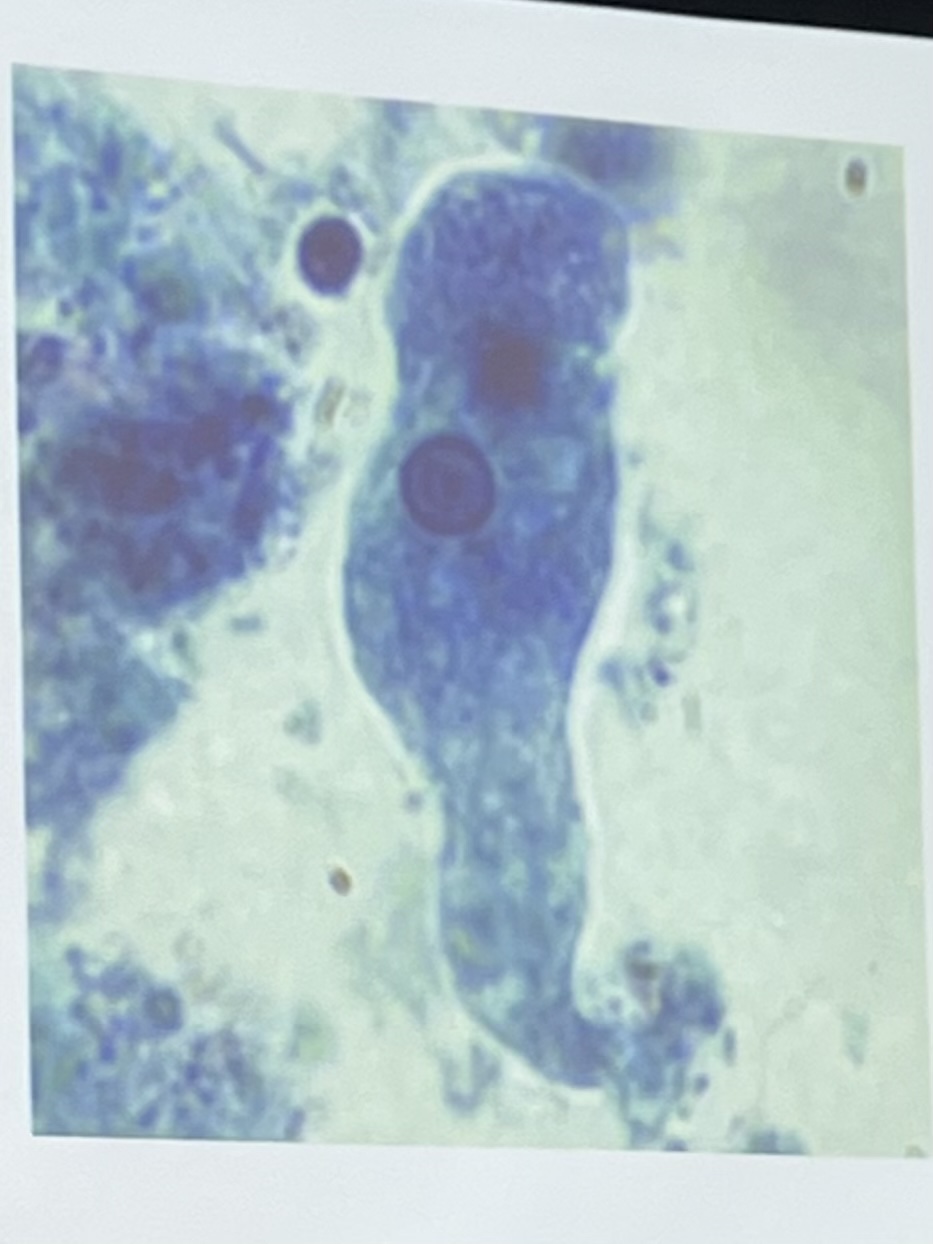
Entamoeba histolytica trophozoite
little blue worm
TROPHOZOITES have single nucleus and cytoplasm has granular appearance.
Protozoa (Eurakaryotic)
Sarcodina (Amoeboids, move by pseudopodia)
Amoebic dysentery or amobiasis (gotten thru digestion of cysts from contaminated water)
Diagnosis from finding cysts & trophozoites in stool samples.
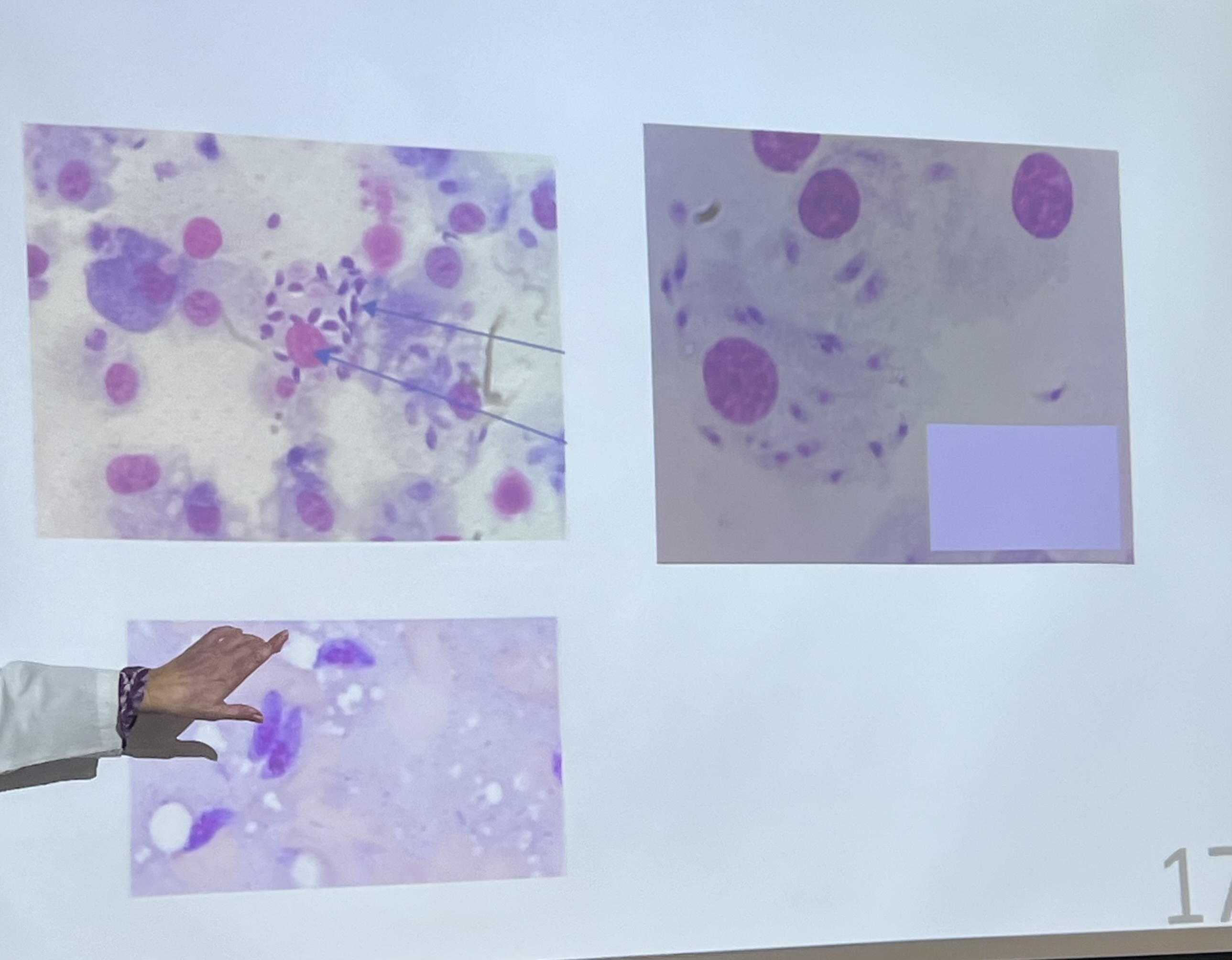
Toxoplasma gondii
Disease: toxoplasmosis (cats)
Protozoa (Phylum ciliophora)
Unicellular
You get it from ingestion of cysts can cause still births.
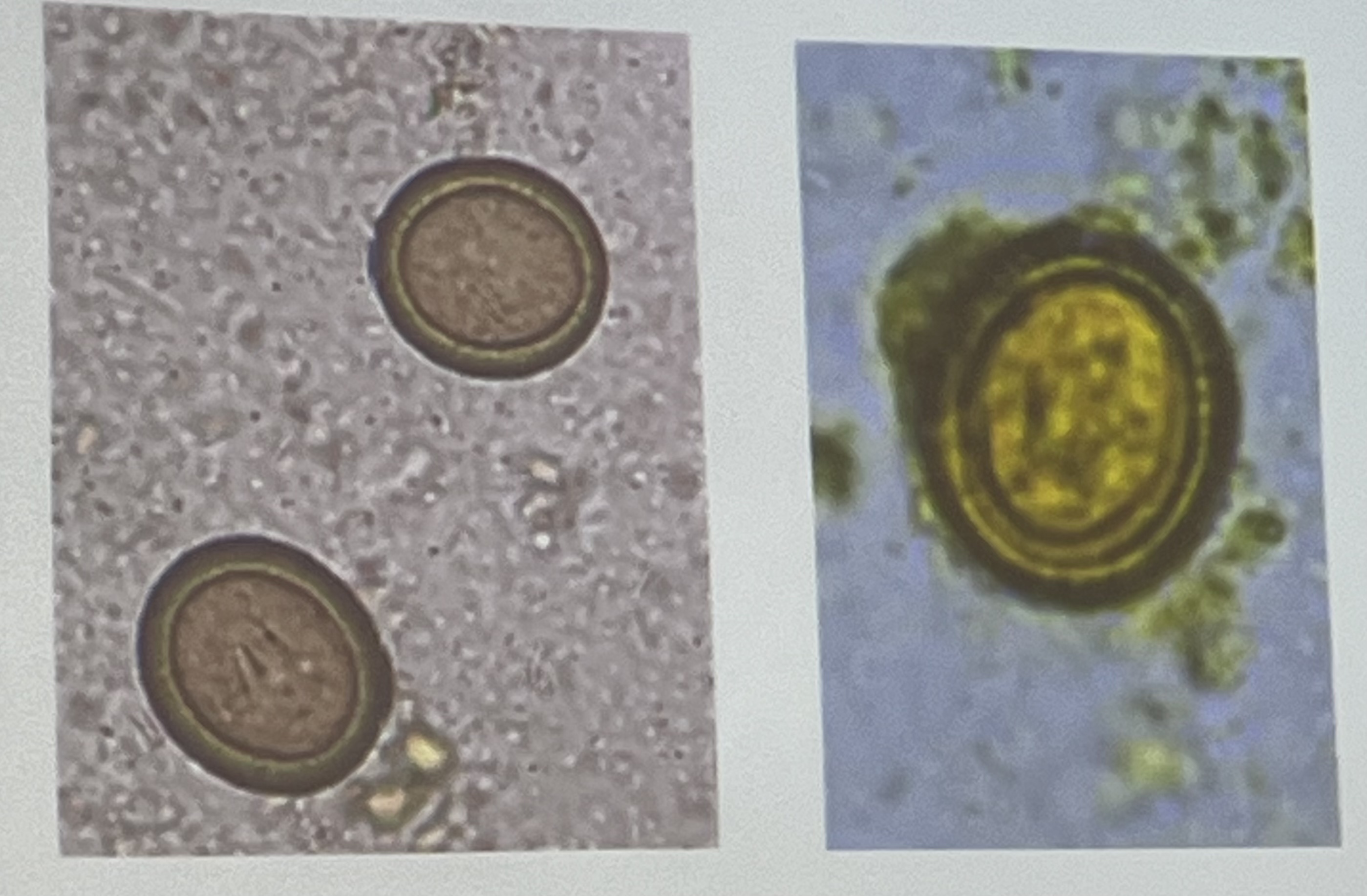
Taenia spp. eggs
Taeniasis
Eukarya> Helmyths
Class Cestoda (Tapeworms)
Cattle becomes infected by eatting vegetation contaminated with the eggs.Humans become infected by eating raw or uncooked meats.
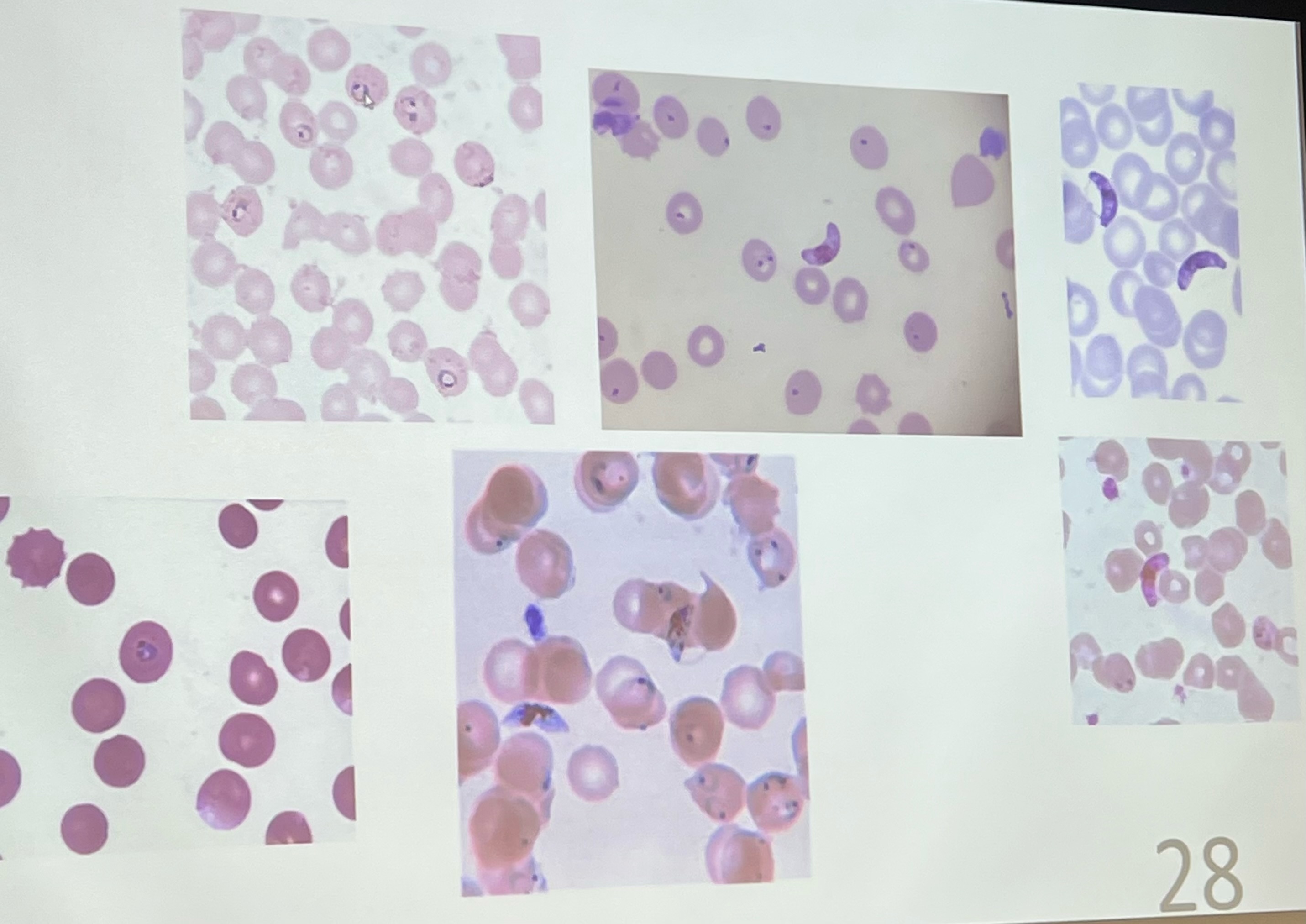
Plasmodium spp.
Causes malaria
diagnosis done by observing parasites as asexual ring stage or gametocyte stage in blood smear.
ring stage has rings
gameotocyte has cresent sausage shape
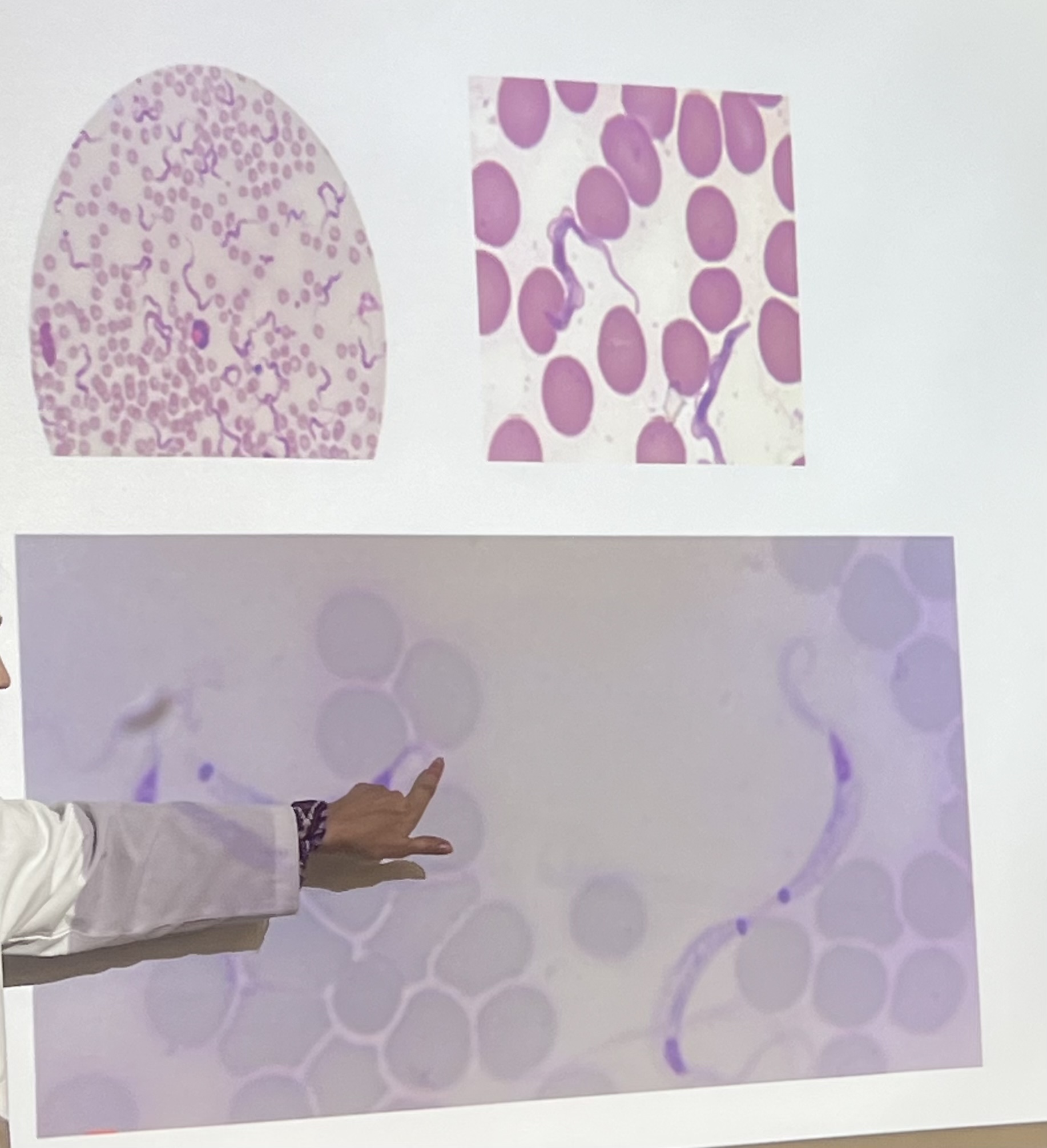
Trypanosoma brucei
Causes trypanosomiasis (african sleeping sickness)
Disease transmitted by tseste fly.
Subphylum mastigophora (flagellates)
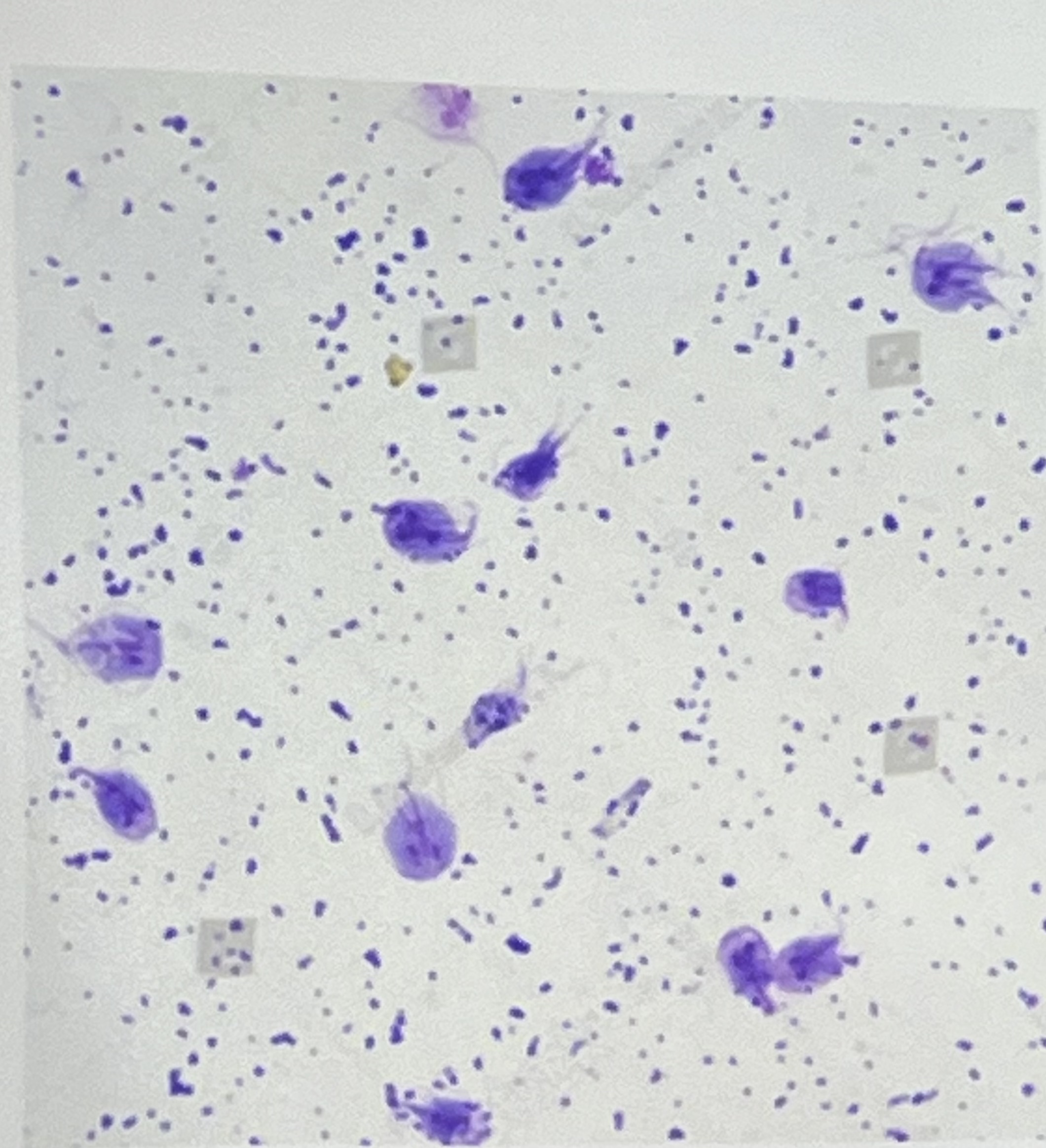
Giarda lambia
Causeses diarrheal disease giardiasis
Subphylum Mastigophora (flagellates)
Spread through contaminated water,food,surfaces or objects.
2 large nucleus visable.
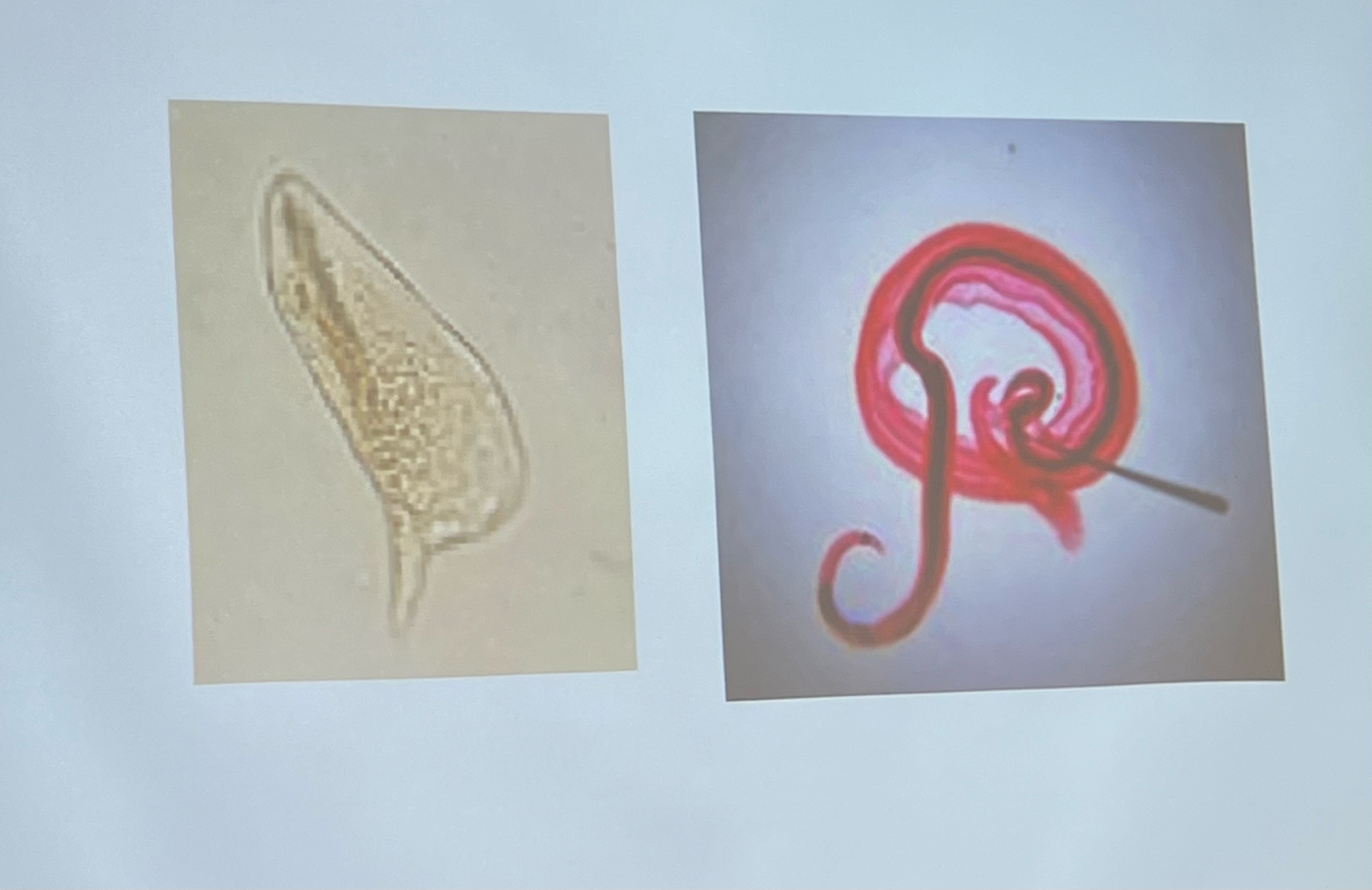
Schistosoma mansoni (Blood Fluke)
Trematoda (unsegmented fluke)
Causes schistomiasis
Infection occurs through the skin when in contact with contaminated water
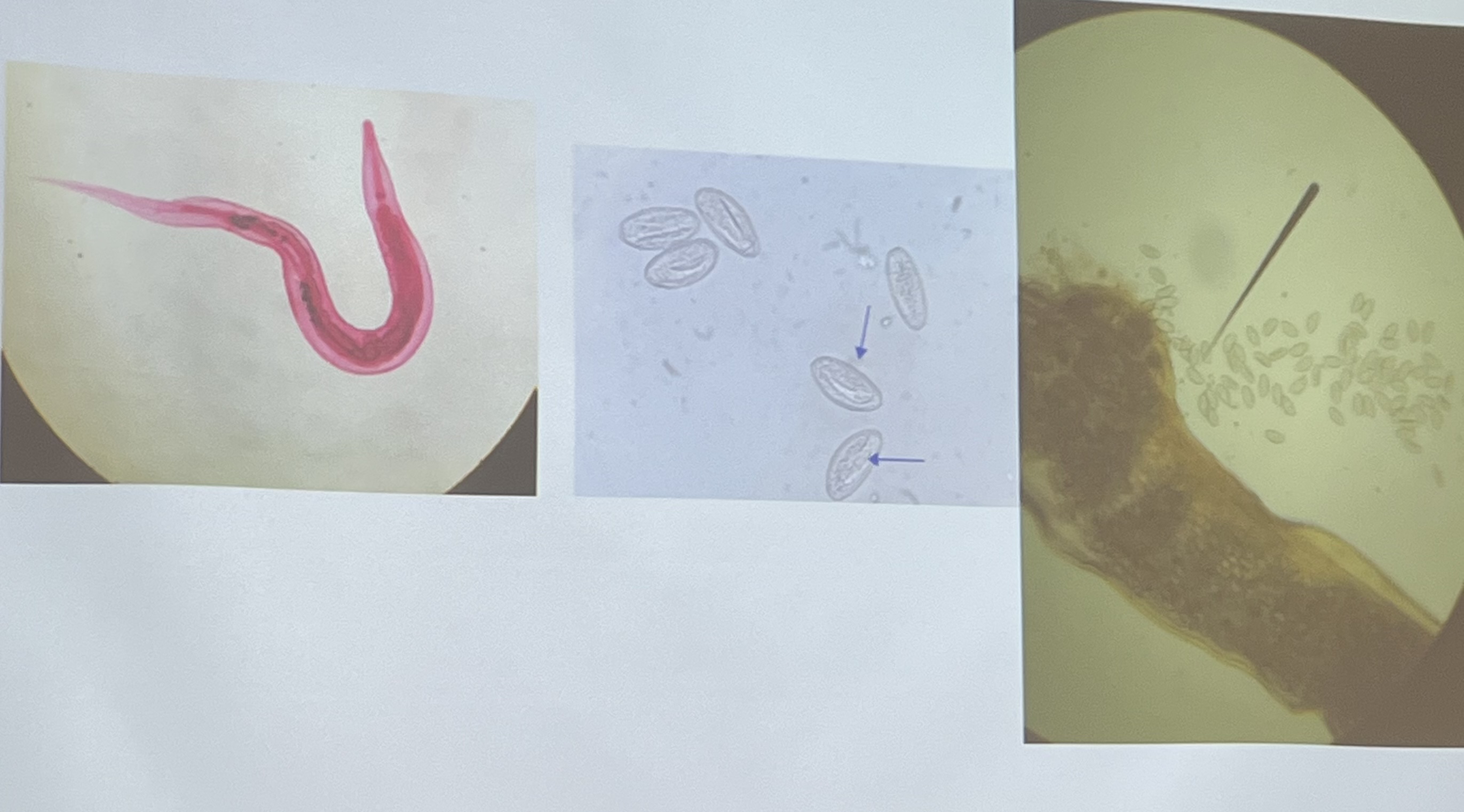
Enterobius vermicularis (Pinworms)
Phylum Nematoda (Roundworms)
Infection occurs through self-contamination or from contaminated surfaces like bedding or clothing.
Eggs are oval and have lat side, adult female have pointed tail.
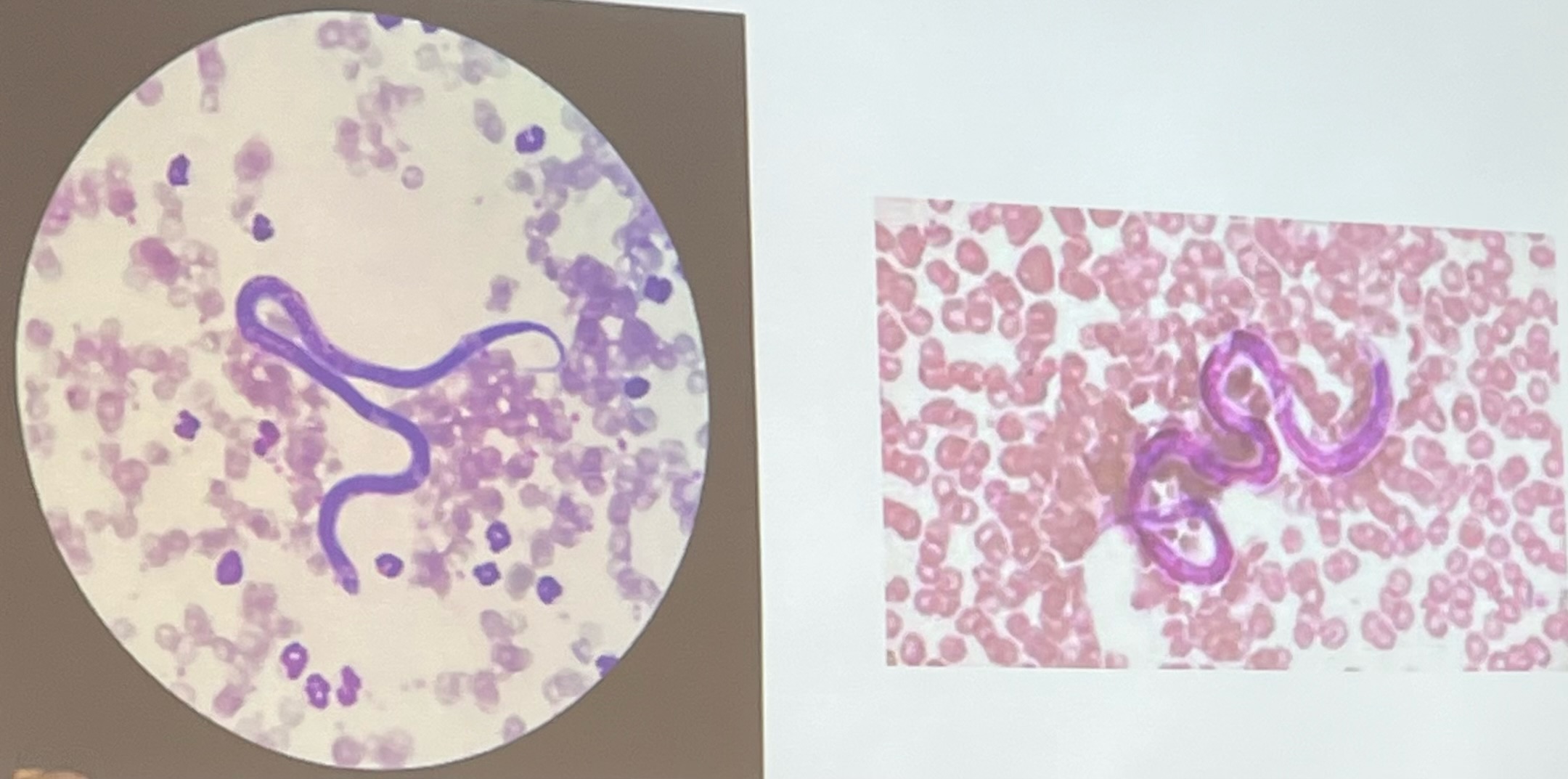
Dirofilaria immitis (Filarial Worm) blood smear blood vessels
Multicellular
Also known as heart worm in dogs
Phylum nematoda (Round worms)
Transmitted by mosiquitos often causes pulmonary dirofilariasis in humans.
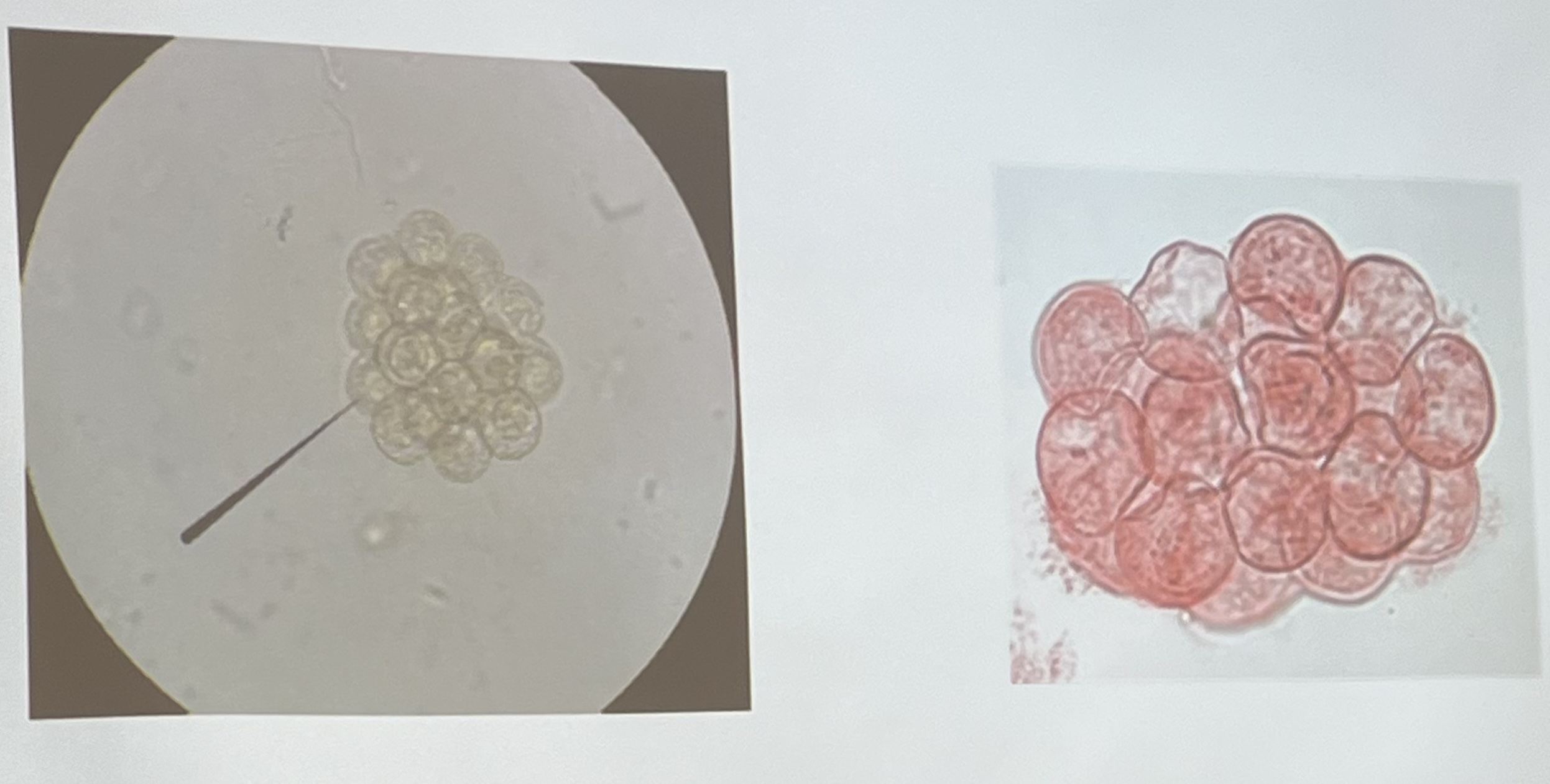
Dipylidium caninum (flea tapeworm, cucumber tapeworm)
Class Cestoda (Tapeworms)
Dogs and cats are primary host
Monotiosis
DIagnosis by identifying egg packets
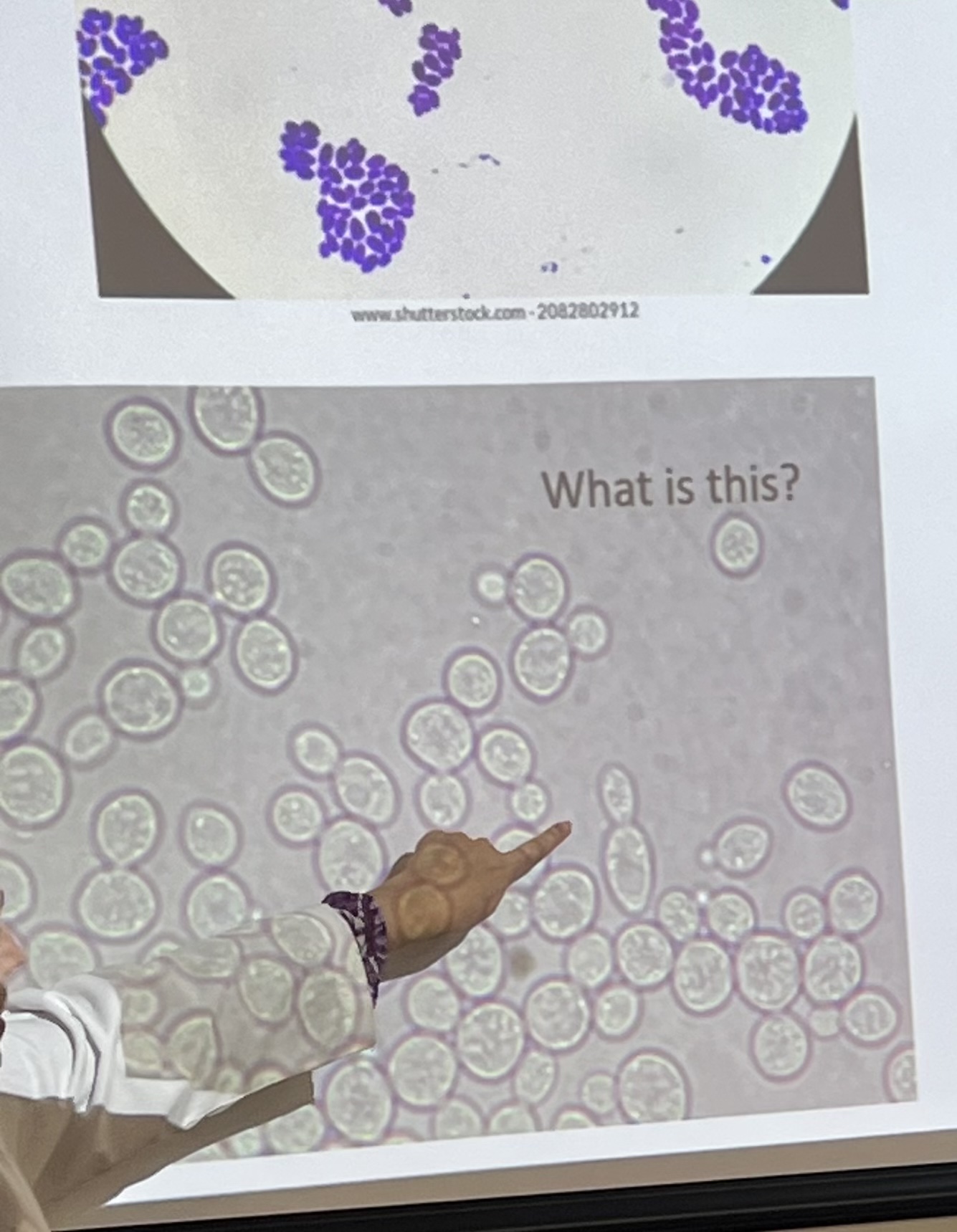
Blastosphore of candida albicans
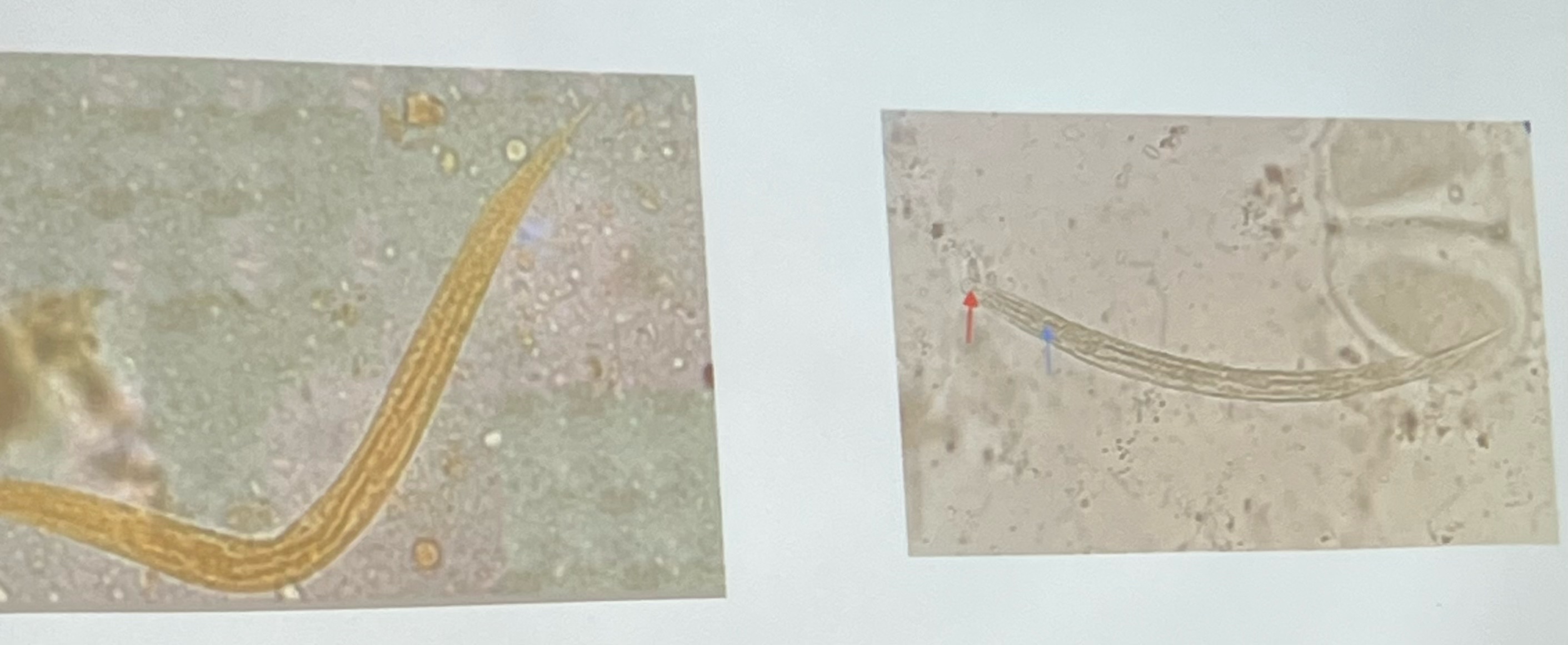
Strongyloides stercoralis (Human threadworm) in fecal smear
phylum nematoda (roundworms)
strongylodiasis
happens when you step into contaminated soil
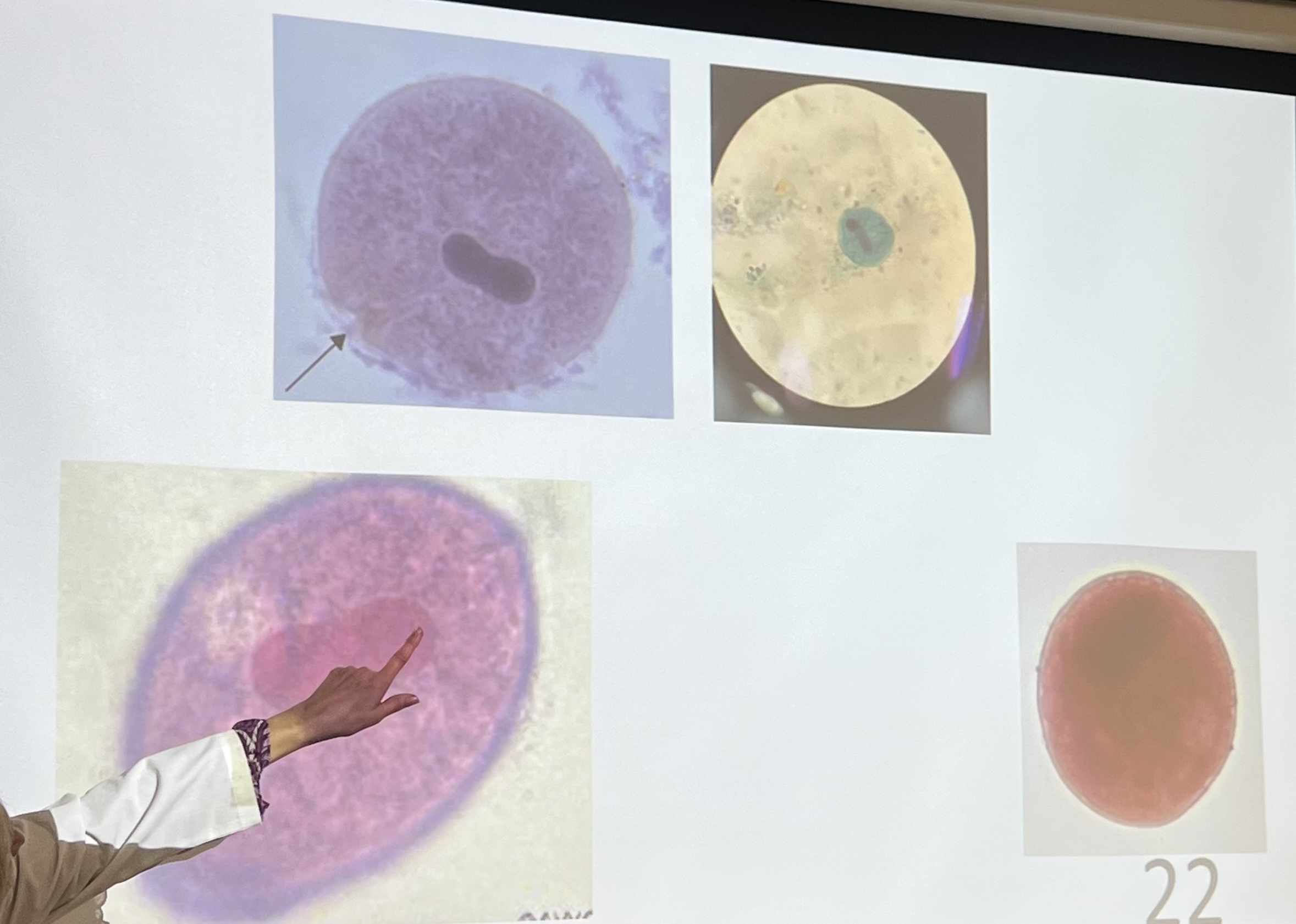
Balantidium coli
Phylum Ciliophora (ciliates)
Causes balantidium
diagnosis done by stool samples
Trophozites/ bean shaped nucleus and cillia
Cyst, spherical and cilia absent circular nucleus visible.
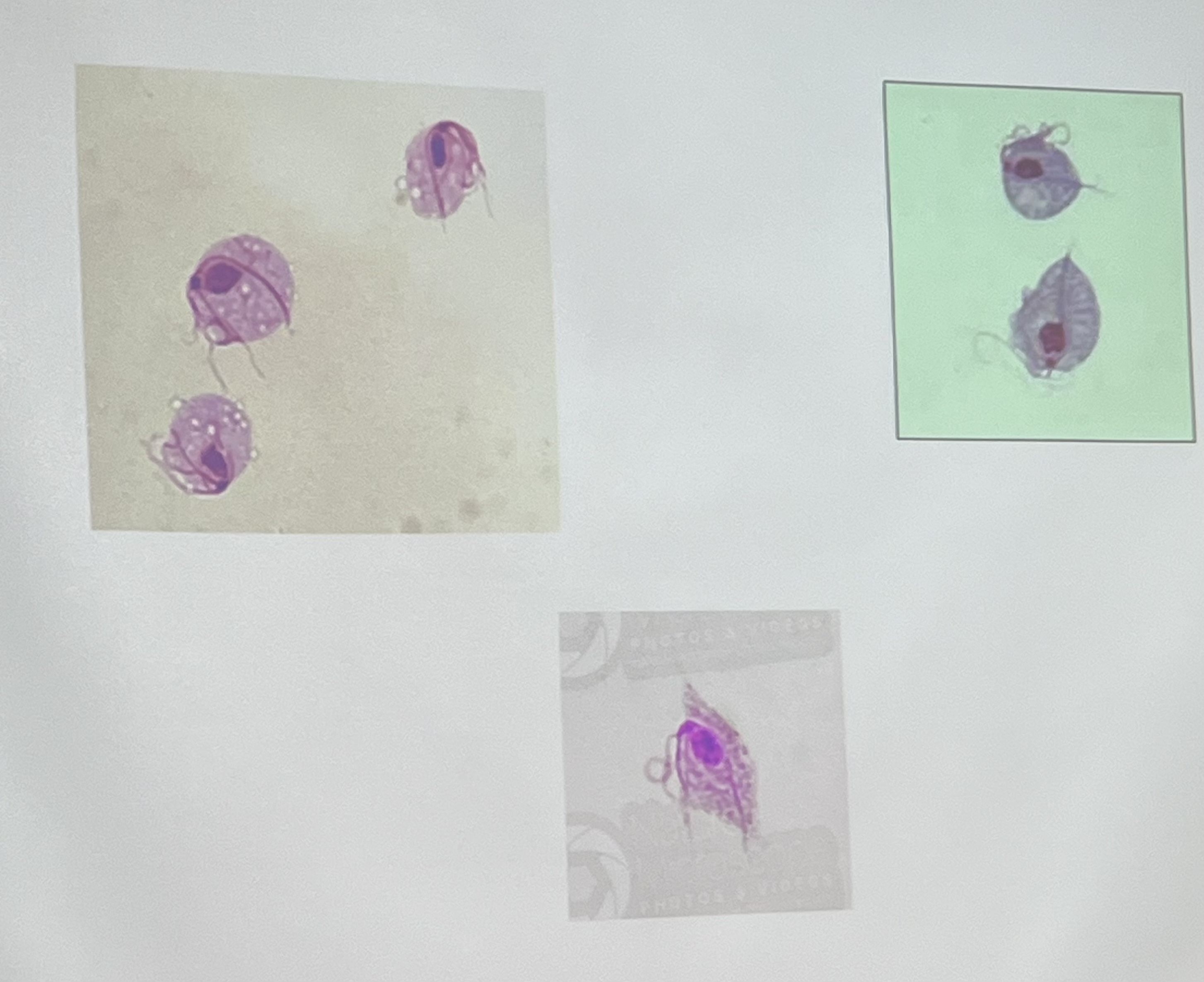
Trichomonas vaginalis (trophozoite)
Subphylum Mastigophora (flagellates)
Causes trichomoniasis/ vulvovaginitis in females
Transmitted by intercourse usually
More like jelly fish than giardia
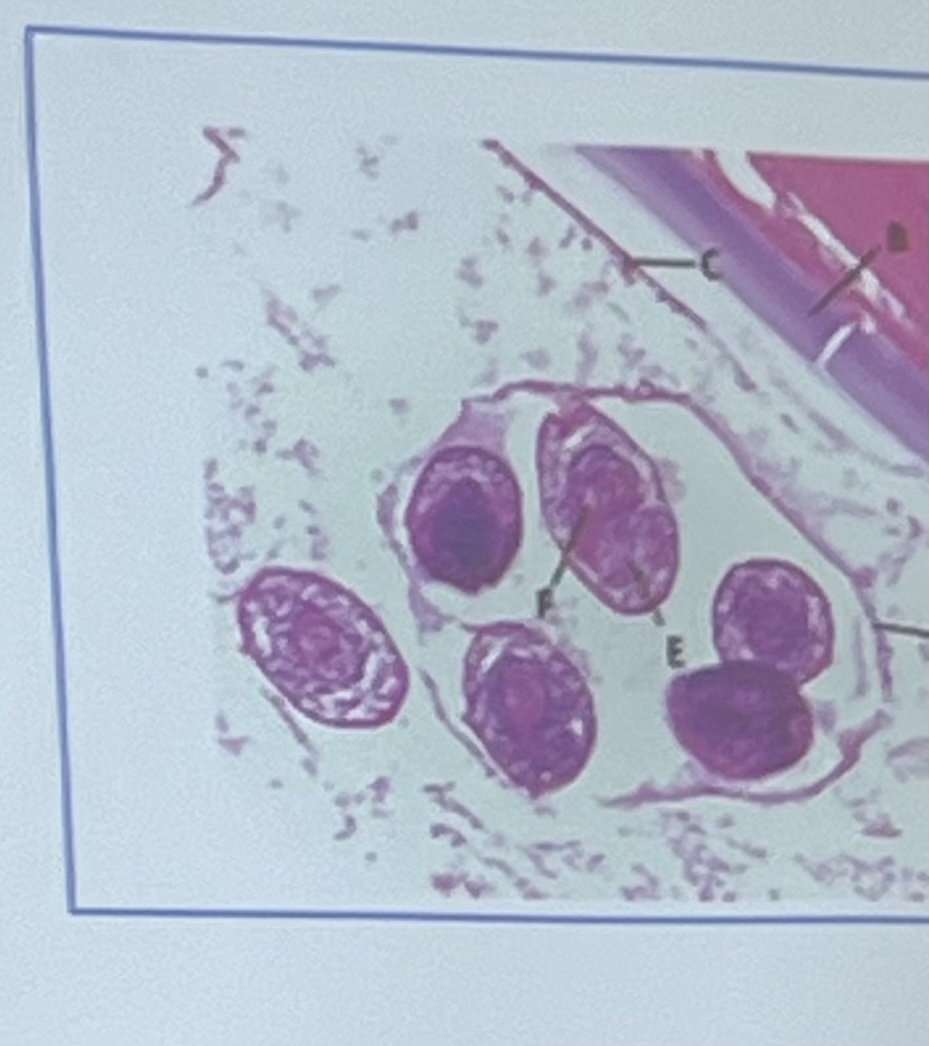
Hydatid cyst of echinococcus granulosus
typically not a human parasite
Class cestoda (tapeworms)
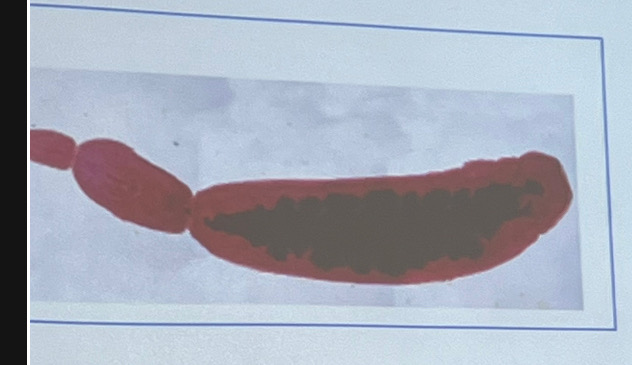
Echinococcus granulosus adult
Class cestoda (tapeworm)
Typically not human parasite
3 proglottids and scolex
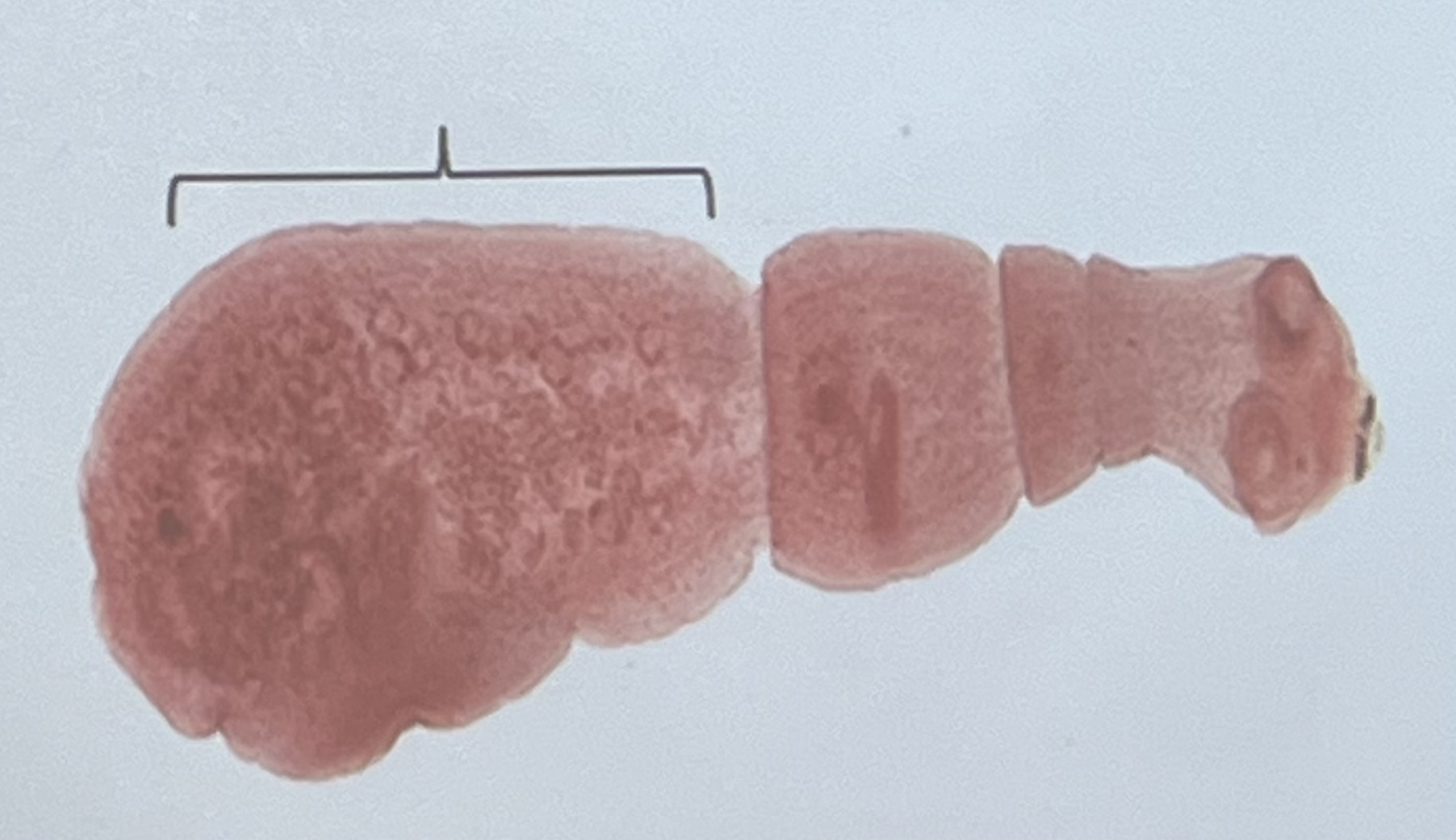
What is body called and head?
Head- scolex and body proglottids
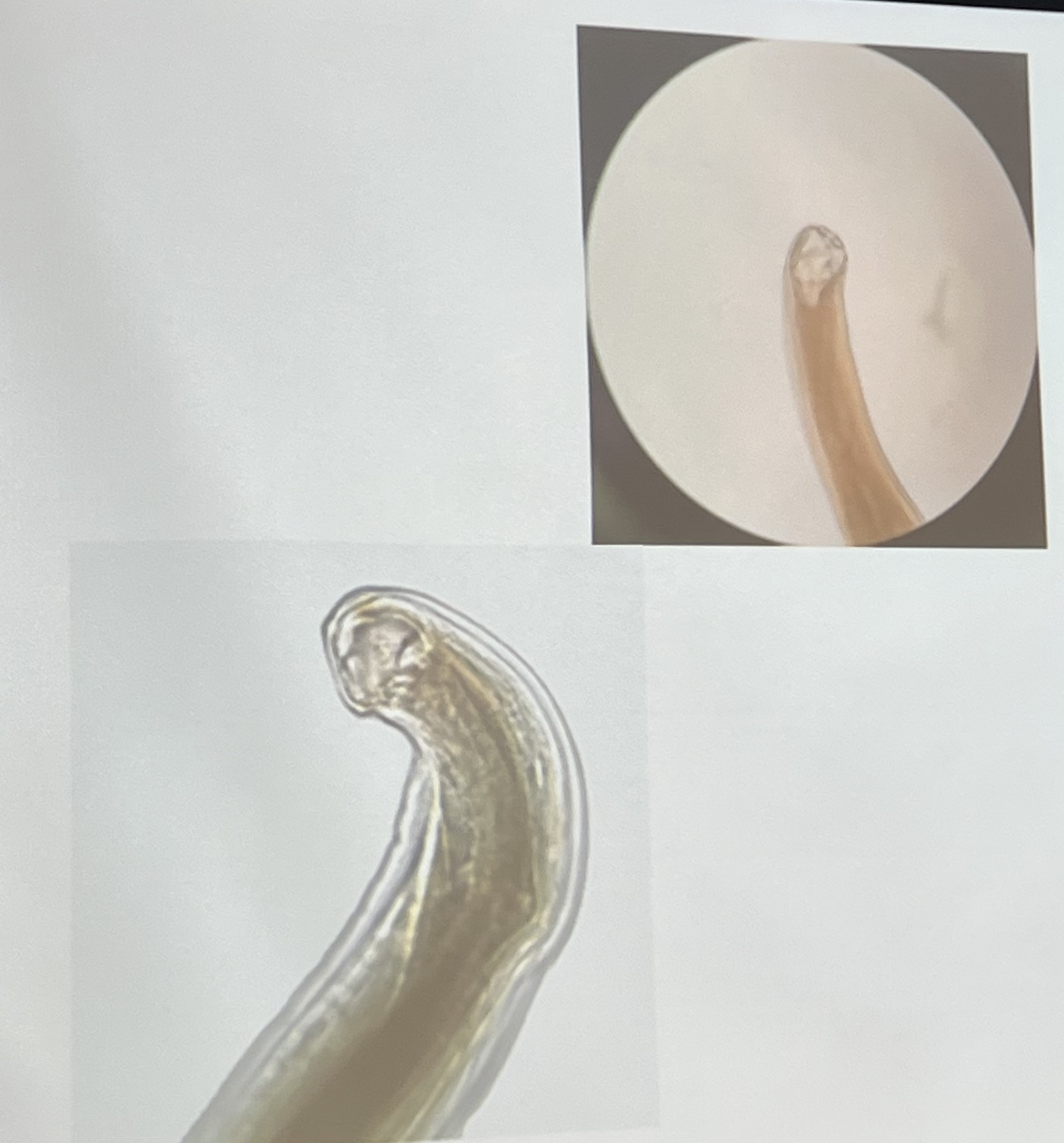
Nector americanus/ ancylostoma duodenale (Hookworms)
Phylum nematoda (roundworms)
Hook worm disease
attach to intestinal wall
eggs are passed with feces and larvae hatch in soil
infection occurs when larvae penetrate through the skin and are carried thru blood vessels to heart and lungs.
BEND / HOOK IN HEAD
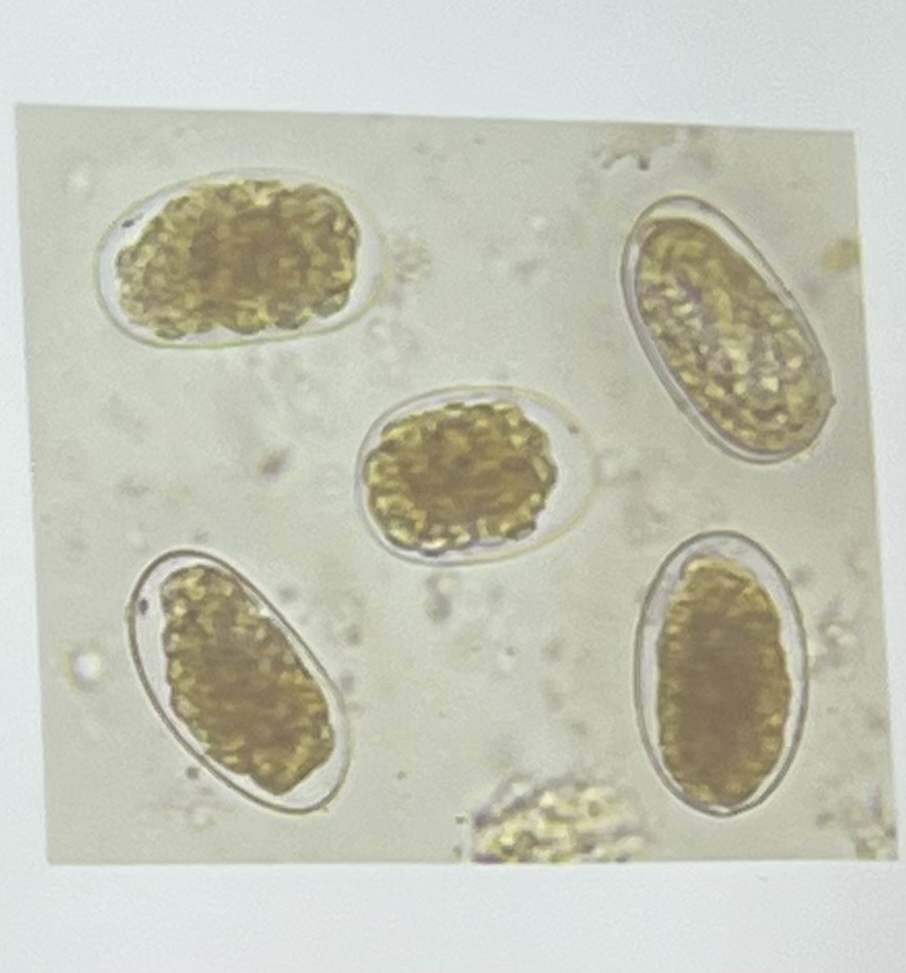
Hookworms eggs (Ancylostoma duodenale or necator americanus)
Causes hookworm disease
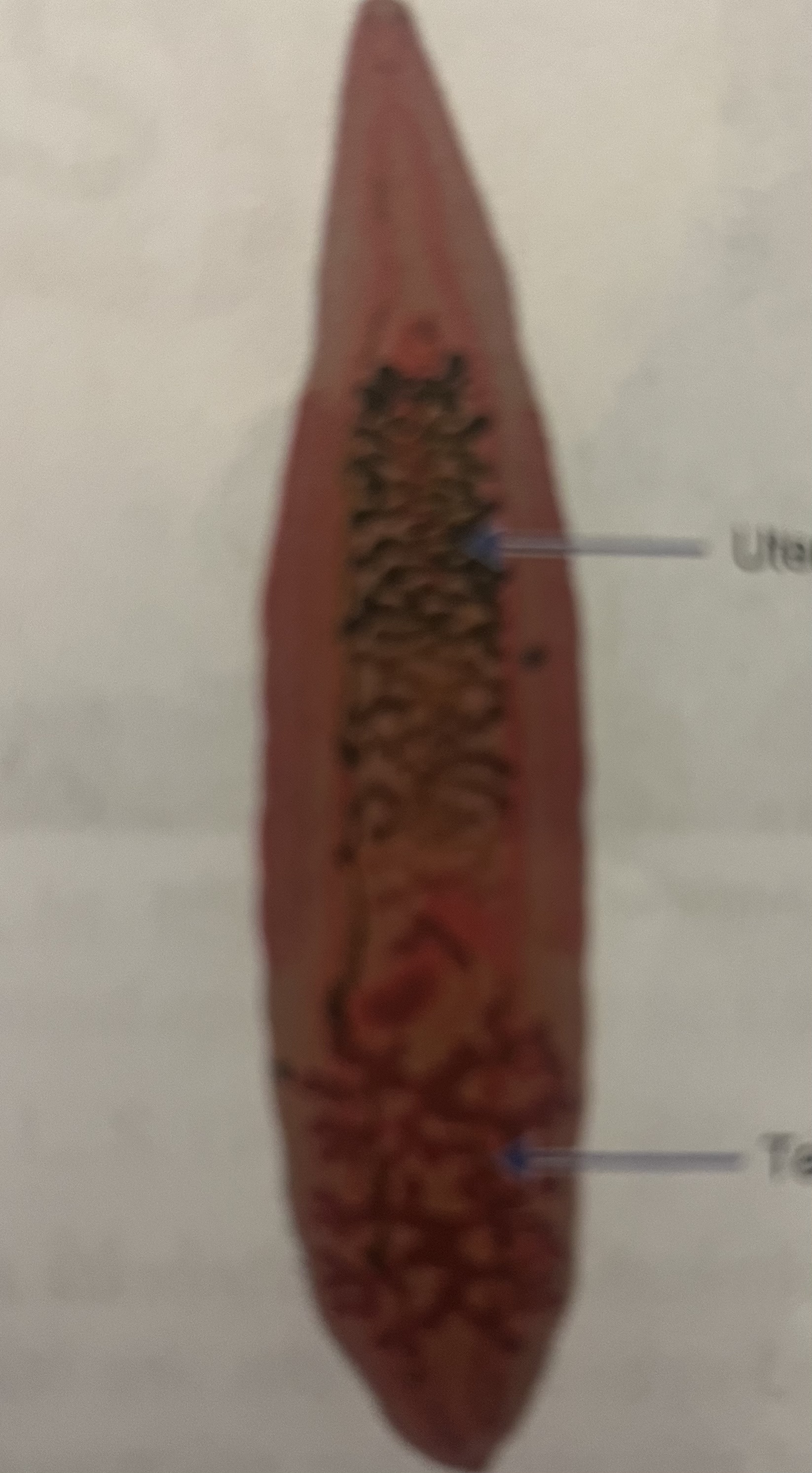
Clonorchis sinensis (oriental liver fluke)
Class trematoda (flukes)
Causes clonorchiasis whenever people eat undercooked infected fish
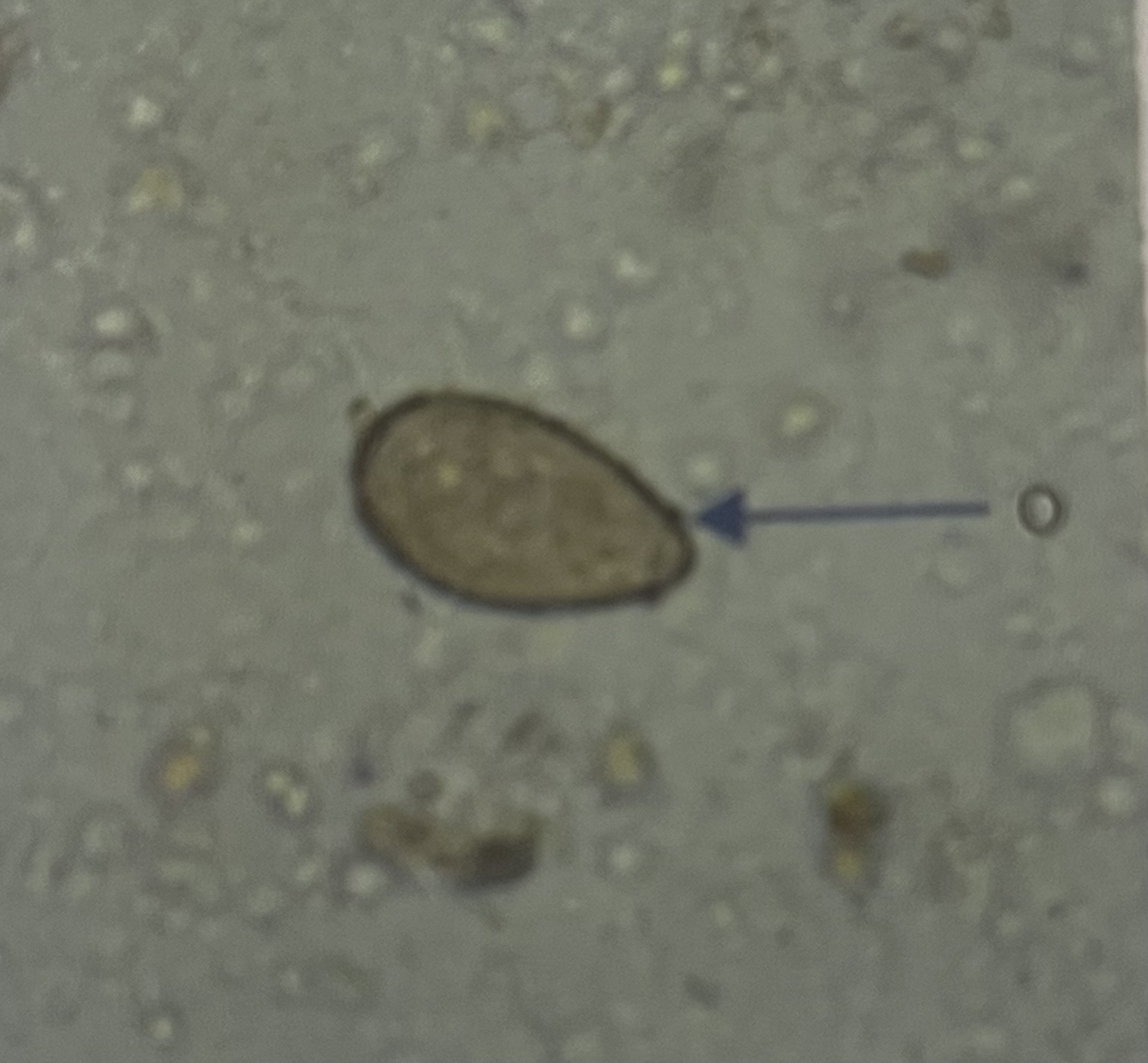
Clonorchis sinensis egg (liver fluke)
Class trematoda (flukes)
Diagnosis whenever this is found in stool people get this from eatting undercooked infected fish.
Operculum (o on tip is visible)
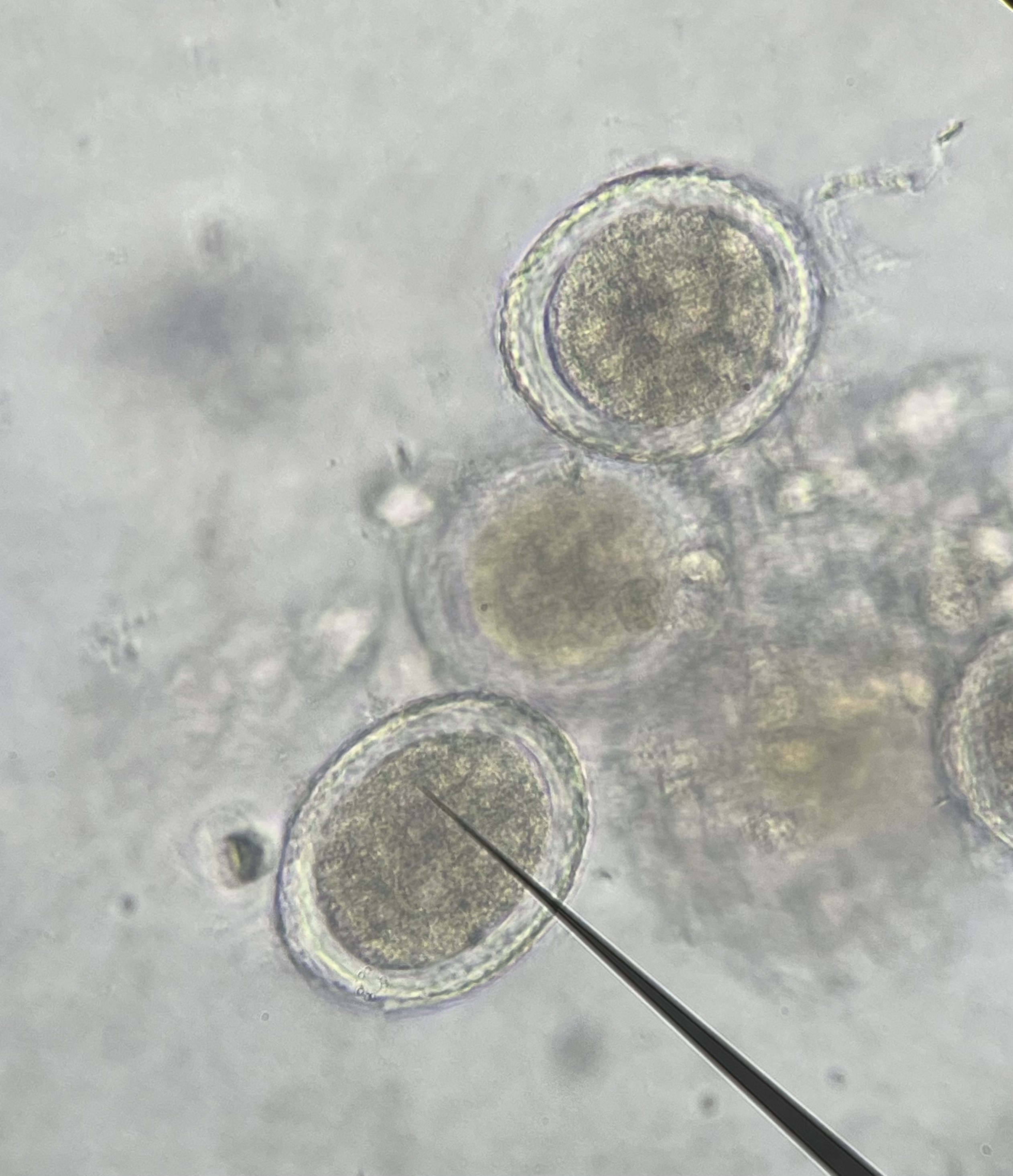
Ascaris spp. egg
Phylum nematoda (roundworms)
causes ascariasis or ascaris pneumonia
common identification of disease is finding eggs in stool sample
surface of egg has small bumps
 Note
Note  Flashcards (105)