AP Micro Unit 5 Factor Markets
 Call Kai
 Learn
Learn Practice Test
 Spaced Repetition
 Match
Match Flashcards
 Knowt Play
1/66

There's no tags or description
Looks like no tags are added yet.
Name | Mastery | Learn | Test | Matching | Spaced | Call with Kai |
|---|
No analytics yet
Send a link to your students to track their progress
67 Terms
wages, interest, rent
factors of production respond to factor prices including ________, _______ and ________.
suppliers
in resource markets, households are
demanders
in resource markets, firms are
the price of the good, the productivity of the resource being used
what determines the demand for a resource?
factor prices
prices of factors of production are known as ________ (wages, rent, etc)
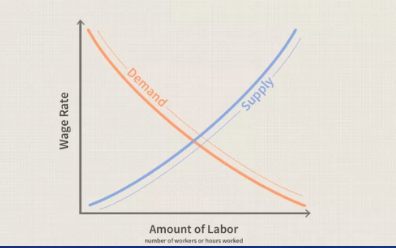
supply and demand
factor markets can be analyzed by using
producers
factor prices allocate resources among
product market
market for goods and services
derived demand
a product market’s demand is
reduce their costs
firms seek to _________ for buying resources (resource prices play the main role in determine the quantities of land, labor, capital, and entrepreneurship that will be combined in producing each good or service)
allocation of resources
the efficient ___________ over time calls for the continuing shift of resources from one use to another (resource pricing is a major factor in producing those shifts)
wage takers
in a purely competitive resource market using resource demand, they are
resource demand
demand curve shows the amount of resource that buyers are willing and able to purchase at various prices over some period of time (derived from product demand)
derived demand
derived from the demand for the products that the resource helps to produce - distinguishes factor markets from goods and services market
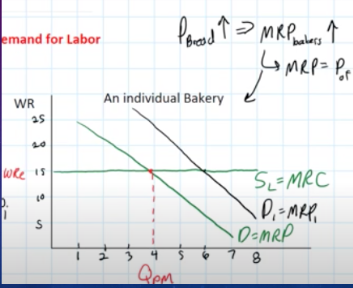
marginal revenue product (MRP)
is the marginal revenue created by using one additional unit of resource (additional revenue one additional worker brings in)
MRP
is used to make critical decisions on business production and determine the optimal level of a resource, assumes that the expenditures on other factors remain unchanged
MRP = MP x Price
MRP equation
resource demand
MRP curve is the __________ curve for the individual firm
falls
MRP _____ as employment increases
hiring labor
for marginal revenue product, the wage rate is the cost of
inverse
there is a(n) _________ relationship between the price of a resource and the quantity of that resource firms will demand
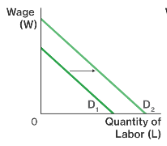
increased
higher price of a good leads to an _________ demand for labor
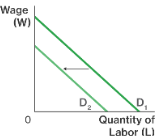
decreased
lower price of a good leads to a _____________ demand for labor
increase
if workers become more productive, this would lead to an ___________ in the demand for labor
decrease
if workers become less productive, this would eat to a _________ in the demand for labor
demand for labor increases
demand for labor decreases
greater
greater demand for the good produced leads to _________ demand for the resources used to produce it
increase, increase
an _________ in productivity of labor leads to an __________ in demand for labor
price, productivity
demand for a resource is derived from both the __________ of the good being produced and the ________ of the resource labor itself
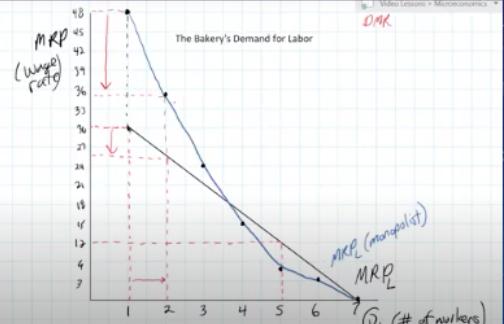
MRP in a monopoly
to sell more, must lower the price of the product
faster
in a monopoly, MRP falls at a ________ rate than with the perfect competitor
MRC = change in total cost / change in quantity of labor = wage
MRC equation
wage
if a factor market is competitive, MRC =
should
if MRP > or equal to MRC, the the resource _______ be used
fewer
if MRP < MRC, we should employ _________ resources
do not
a market in which a large number of firms are competing to hire an even larger number of workers; wages __________ increase with each additional worker
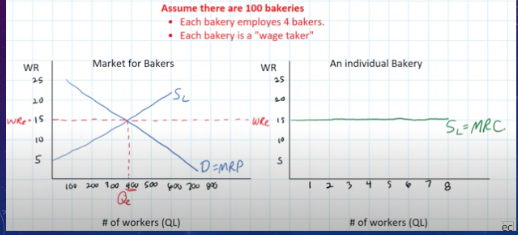
MRP = MRC
profit-maximizing quantity of labor
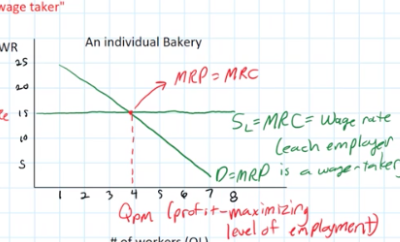
positive marginal profit
when MRP > MRC, the firm creates
MRP = MRC
a firm maximizes its profits by continuing to hire inputs used in production if MRP > MRC up until the profit maximizing point where
labor supply
there is a positive correlation between the wage rate in a particular industry and the number of workers willing and able to work in that industry
more
high wages will lead to _______ workers supplying their labor
equilibrium wage rate
determined by the supply and demand for labor
decreased
if competing industries offer higher wages, there will be _________ supply of labor
increased
if competing industries offer lower wages, there will be an __________ supply of labor
increase
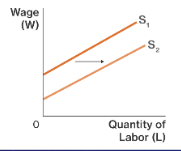
reduced barriers will _________ the supply of labor
decrease
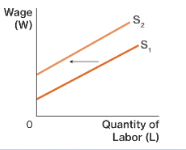
increased barriers will _________ the supply of labor
supply of labor increases
supply of labor decreases
MRP - MFC
marginal profit equation
increases
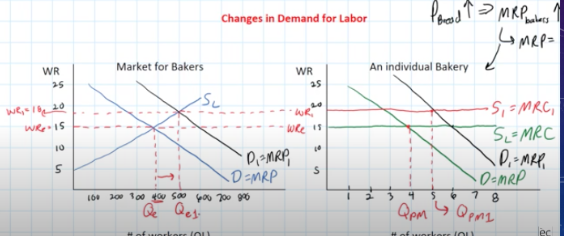
if the price of bread increases, MRP/Demand for bakers
increase
If the price of bread increases, the market demand for labor is going to
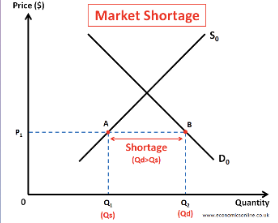
shortage
if wages don’t increase, there will be a _______ of workers
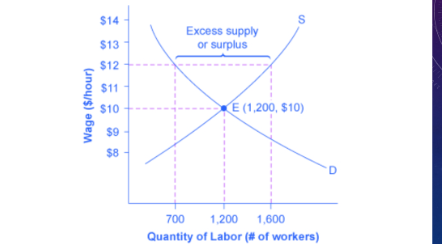
surplus
increased supply of labor creates a ________ of workers
decreases, shortage
when labor supply _______ at the original wage rate, there will be a ________ of labor
same
the firm needs to have a resource combination so that the marginal product per dollar is the _______ for all resources
MPl/Pl = MPk/Pk
the least-cost hiring rule in perfect competition is
monopsony
one buyer: a dominant firm that employs all of a certain type of labor
lower
in a monopsony, because of the lack of competition, workers typically have to work for ______ wages
higher
to hire more workers, a monopsony must offer ________ wages
MRP = MP x MR
mrp equation 2
upward sloping
in a monopsony, MRC curve is
increases at an increasing rate
TVC in a monopsony
greater
in a monopsony, MRC increases at a _______ rate than wage rate because the firm must raise wages for all workers in order to hire more workers
monopsonistic employer
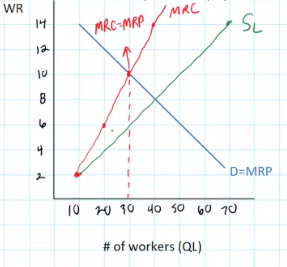
fewer, less
in a monopsony, MRC > WR, so the firm will hire ________ workers than would be hired in a competitive labor market AND they are paid _______
deadweight loss
monopsonies creates

