Brain and Nervous System Divisions
 Call Kai
 Learn
Learn Practice Test
 Spaced Repetition
 Match
Match Flashcards
 Knowt Play
1/20

There's no tags or description
Looks like no tags are added yet.
Name | Mastery | Learn | Test | Matching | Spaced | Call with Kai |
|---|
No analytics yet
Send a link to your students to track their progress
21 Terms
components of nervous system
brain
spinal cord
sensory organs
nerves
functions
sensory
takes in information
integration
makes sense of info
motor
responds
3 main components of the brain
brain stem
basic life functions like breathing/heart rate
cerebellum
balance and coordination “muscle memory”
cerebrum
conscious thought, voluntary movement, reasoning, emotion
Parts of it: frontal, parietal, temporal, and occipital lobes
Division of Nervous system
Central Nervous System (CNS)
brain
spinal cord
Peripheral nervous system (PNS)
cranial nerves
spinal nerves
PNS
contain a sensory division and motor division
sensory division
contains sensory receptors that convert info from stimulus into a nerve impulse and transmit it back to the CNS to make sense of it
monitors environmental changes such as light and sound
detects changes in homeostasis
Types of sensory receptors
photoreceptors - detect light (eyes)
chemoreceptors - detect chemicals change (skin, muscle)
thermoreceptors - detect temperature change (skin)
mechanoreceptors - (movement) they detect pressure change (skin, muscle)
nociceptors - detect pain (everywhere)
Motor division
uses peripheral neurons to carry impulses from the CNS to an effector which will cause a response
ex: muscle contraction, gland secretion
somatic nervous system
controls skeletal muscle and voluntary movement
autonomic nervous system
controls effectors that are involuntary
ex: heart, smooth muscle, certain glands
Autonomic Nervous system parts
parasympathetic nervous system
sympathetic nervous system
parasympathetic nervous system
“rest and digest” - normal state
salivation
sexual arousal
lacrimation (crying)
urination
digestion
defecation (poop)
sympathetic nervous system
“fight or flight” - triggered under stress or intense emotion
accelerated breathing and heart rate (increases blood flow)
inhibition or slowing of digestion
pupils dilate
tunnel vision
increased muscle tension for extra strength and speed
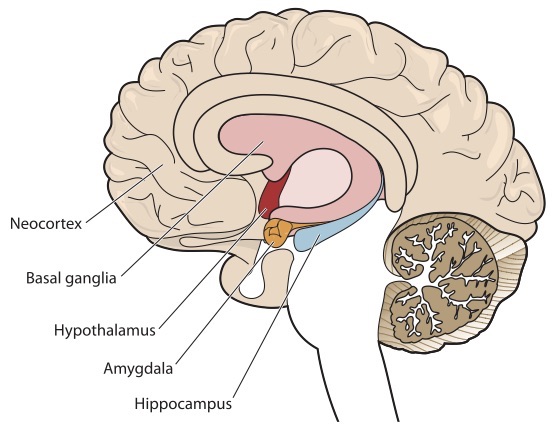
Amygdala
processes threats/fear
regulates emotion
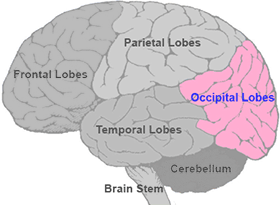
frontal lobe
voluntary movement, speech production, decision making, personality expression
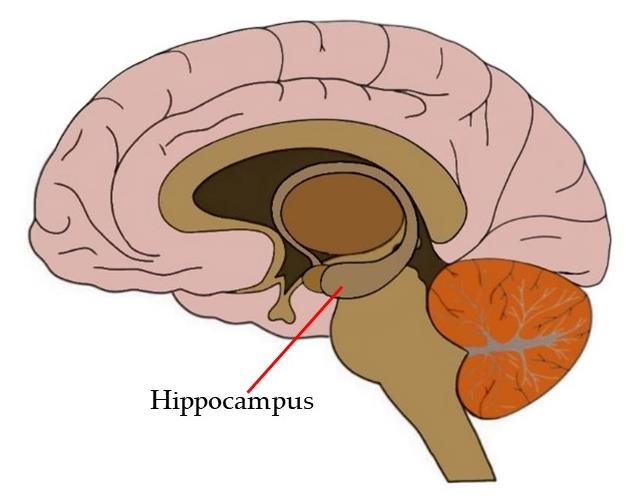
hippocampus
creates long-term memories
connects memories with emotions
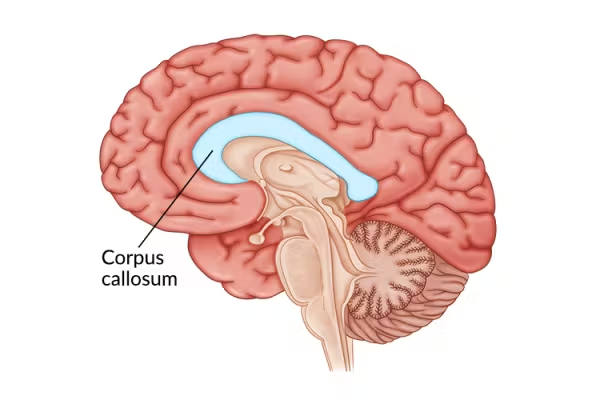
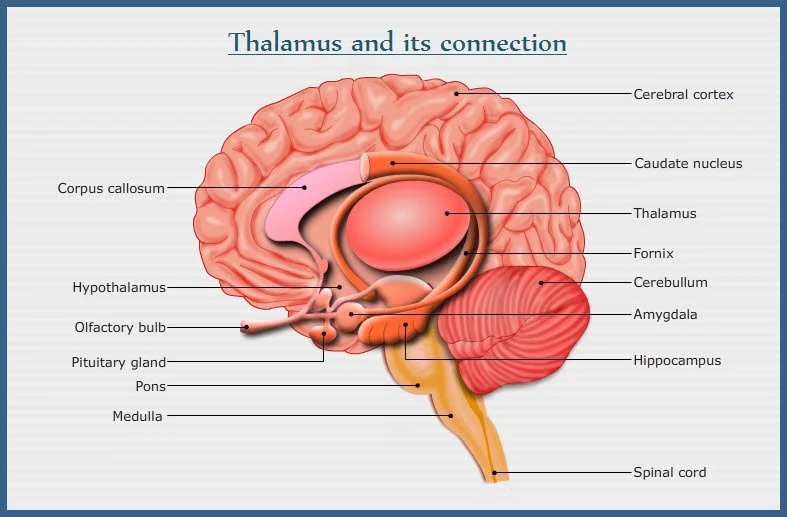
corpus callosum
transfers info between the brains hemispheres
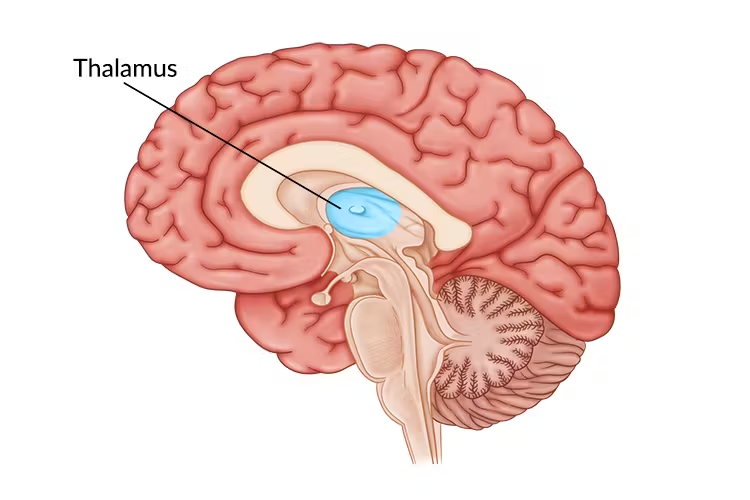
thalamus
manages sensory perception, motor functions, alertness, sleep and memory
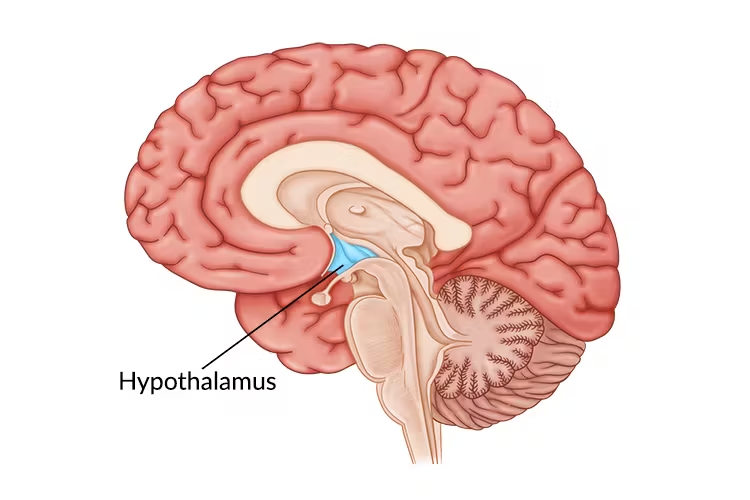
hypothalamus
maintains homeostasis by regulating temperature, hunger, thirst, sleep, and mood
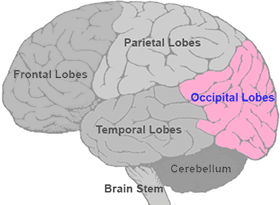
occipital lobe
interpretes retinal signals into images, color, motion, and depth