Chapter 3: Explain Demand and Supply , drawing a graph; shifts
 Studied by 0 people
 Call Kai
 Learn
Learn Practice Test
 Spaced Repetition
 Match
Match Flashcards
 Knowt Play
1/27

Earn XP
Description and Tags
consumers looking at goods and services; businesses suppliers and producers
Name | Mastery | Learn | Test | Matching | Spaced | Call with Kai |
|---|
No analytics yet
Send a link to your students to track their progress
28 Terms
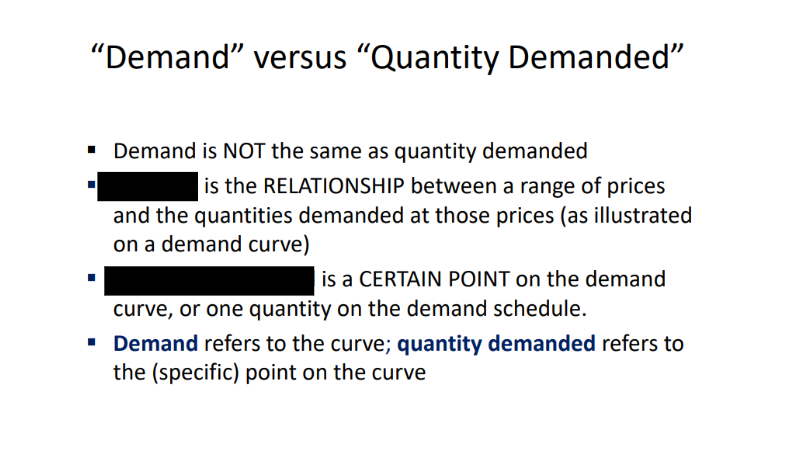
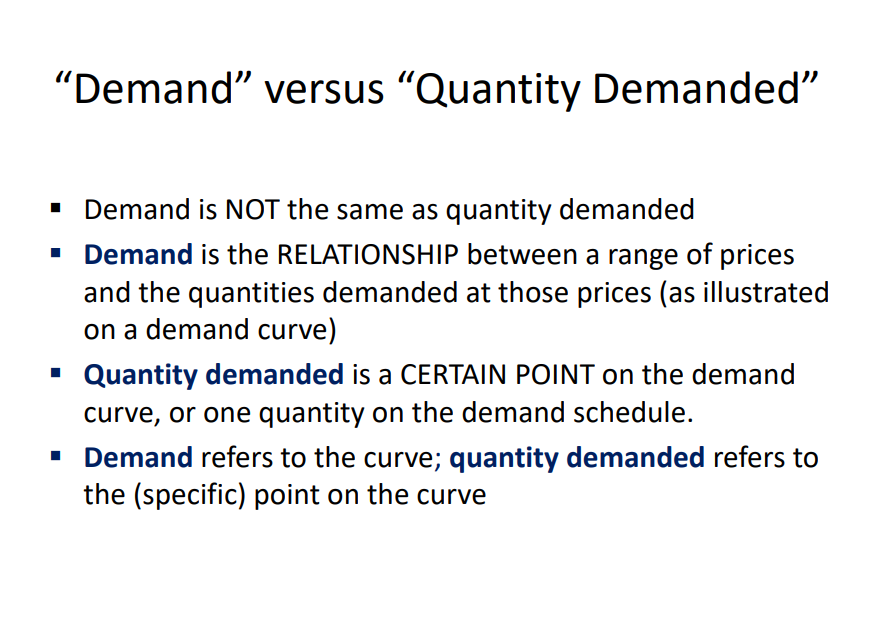
the amount of some good or service consumers are willing and able to purchase at each price; the relationship between price and the quantity demanded of a certain good or service. HINT: Consumers are cheap
Demand
______________ the total number of units of a good or service consumers are willing to purchase at a given price
Quantity demanded
Law of ______ the inverse relationship between price and quantity demanded; the common relationship that a higher price leads to a lower quantity demanded of a certain good or service and a lower price leads to a higher quantity demanded, while all other variables are held constant
Demand
______ schedule a table that shows a range of prices for a certain good or service and the quantity demanded at each price
Demand
________ curve a graphic representation of the relationship between price and quantity demanded of a certain good or service, with quantity on the horizontal axis and the price on the vertical axis
Demand
the amount of some good or service a producer is willing to supply at each price; the relationship between price and the quantity supplied of a certain good or service
Supply
Quantity __________ the total number of units of a good or service producers are willing to sell at a given price
supplied
Law of _____________ the positive relationship between price and quantity supplied – a higher price leads to a higher quantity supplied and a lower price leads to a lower quantity supplied; the common relationship that a higher price leads to a greater quantity supplied and a lower price leads to a lower quantity supplied, while all other variables are held constant
Supply
________ schedule a table that shows a range of prices for a good or service and the quantity supplied at each price
Supply
______ curve a graphic illustration of the relationship between price, shown on the vertical axis, and quantity, shown on the horizontal axis
Supply
the situation where quantity demanded is equal to the quantity supplied; the combination of price and quantity where there is no economic pressure from surpluses or shortages that would cause price or quantity to change
Equilibrium
Equilibrium _____ the only price where the plans of consumers and the plans of the producers agree; the quantity at which quantity demanded is equal to quantity supplied
price
_________ quantity the quantity at which quantity demanded and quantity supplied are equal for a certain price level vertical axis, and quantity, shown on the horizontal axis
Equilibrium
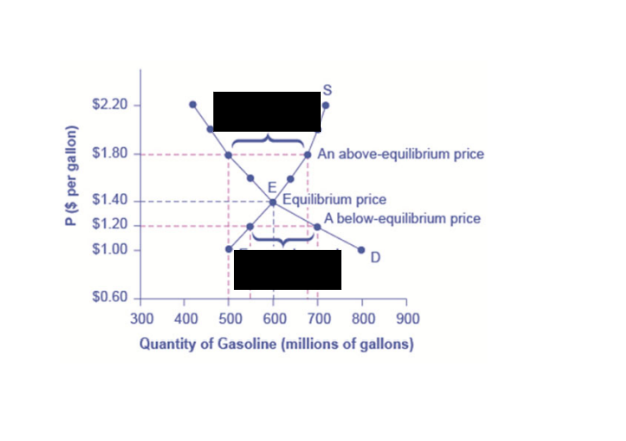
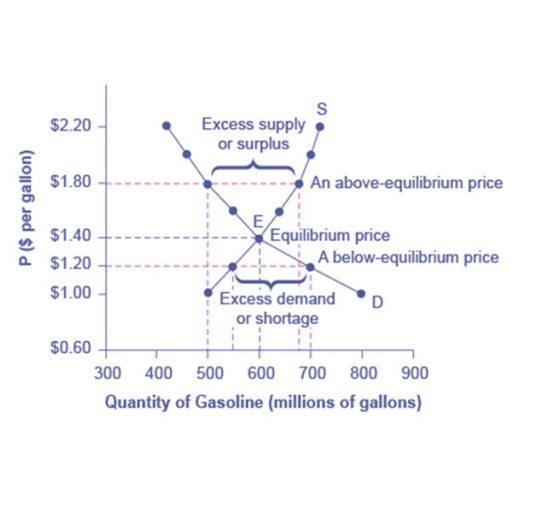
Excess demand / shortage & Excess supply / surplus
Ceteris paribus means ______
“other things being equal”
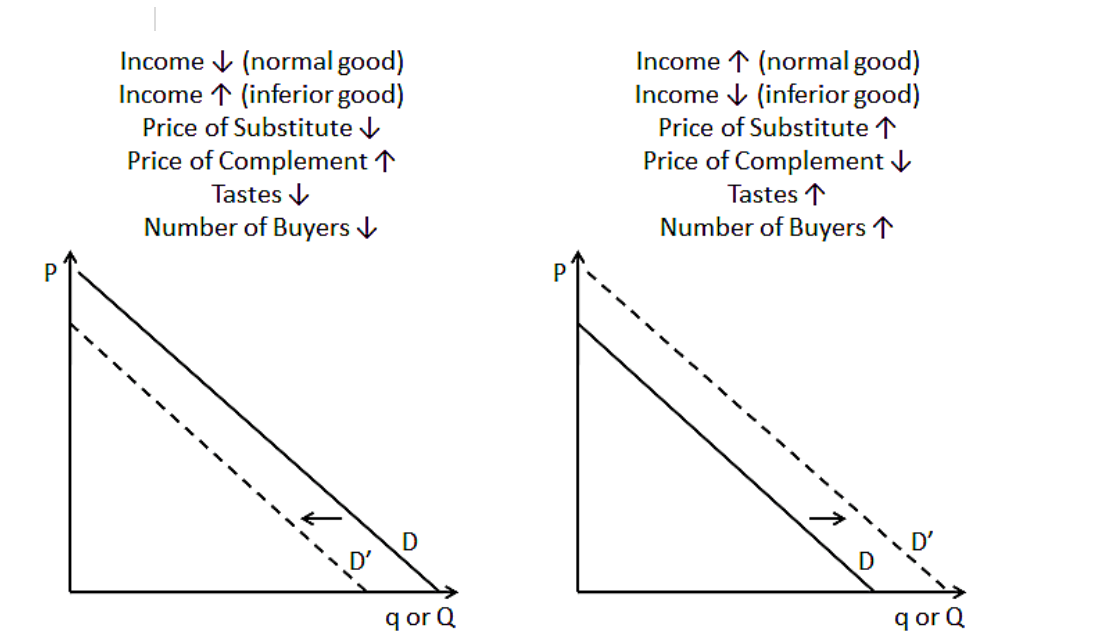
Name all the shifters for demand
WHEN *normal goods: consumers income, consumer taste and preferences, price of related goods, future expectations, and numbers of consumers
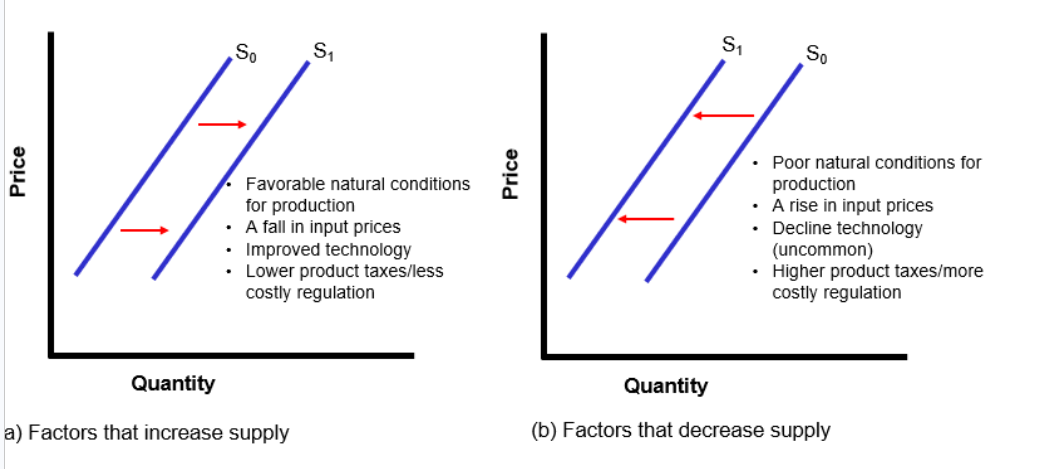
Name all the shifters for supply
WHEN *normal goods: cost/availability of resource, actions of the government (taxes or subsidies), Production and technology, future expectations, and numbers of sellers
Describe a normal good
a good in which the quantity demanded rises as income rises, and in which quantity demanded falls as income falls
Describe an inferior good
a good in which the quantity demanded falls as income rises, and in which quantity demanded rises and income falls
Government’s involvement … __________ = government laws to regulate prices instead of letting market forces determine prices
price control
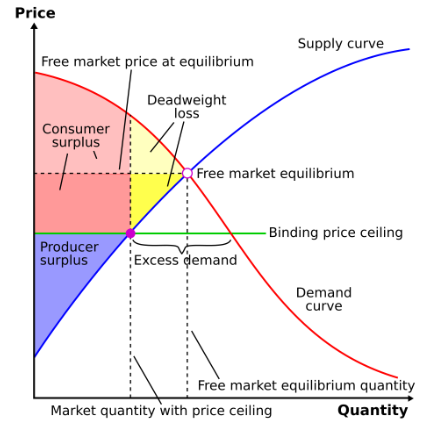
_______ A price ceiling is a government- or group-imposed price control, or limit, on how high a price is charged for a product, commodity, or service. Governments impose price ceilings to protect consumers from conditions that could make commodities prohibitively expensive. (below the equilibrium)
Price ceiling
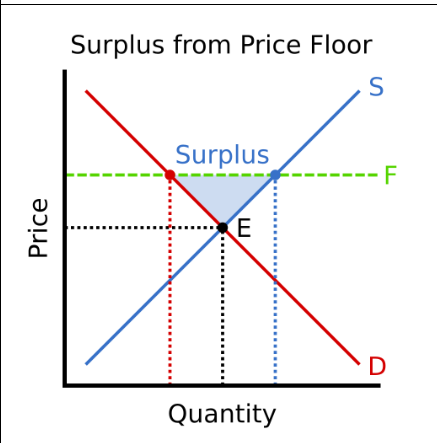
a legal minimum price; keeps a price from falling below a certain level; the lowest legal price that can be paid in markets for goods and services, labor, or financial capital. Example: minimum wage, agricultural price supports (above the equilibrium)
Price floor
Consumer _________ the extra benefit consumers receive from buying a good or service, measured by what the individuals would have been willing to pay minus the amount that they actually paid
surplus
Producer ______the extra benefit producers receive from selling a good or service, measured by the price the producer actually received minus the price the producer would have been willing to accept
surplus
Social ________ (aka economic surplus aka total surplus) = the amount of consumer surplus PLUS producer surplus
surplus
What is Ms. Ozoa advice why Price floor/ceiling is inefficent for an economy?
Price floors and price ceilings prevent a market from adjusting to its equilibrium price and quantity -> inefficient outcome
Price floors and price ceilings also transfer some consumer surplus to producers, or some producer surplus to consumers