L5 - Viruses
 Studied by 4 people
 Call Kai
 Learn
Learn Practice Test
 Spaced Repetition
 Match
Match Flashcards
 Knowt Play
1/130

There's no tags or description
Looks like no tags are added yet.
Name | Mastery | Learn | Test | Matching | Spaced | Call with Kai |
|---|
No analytics yet
Send a link to your students to track their progress
131 Terms
History of virology - Dimitri Ivanoski (1892)
infectious tobacco mosaic virus isolated in filtered, bacteria-free fluid.
Felix D’Herelle
Discovered bacteriophages (coined term “plaque”)
Walter Reed (and colleagues)
Showed that yellow fever was a virus transmitted by mosquitoes in 1901.
Structure of virus
what kind of parasites?
dimensions?
how long are genomes typically?
intracellular obligate parasites
10-100nm
genome typically a few thousand to 200,000 nucleotides long
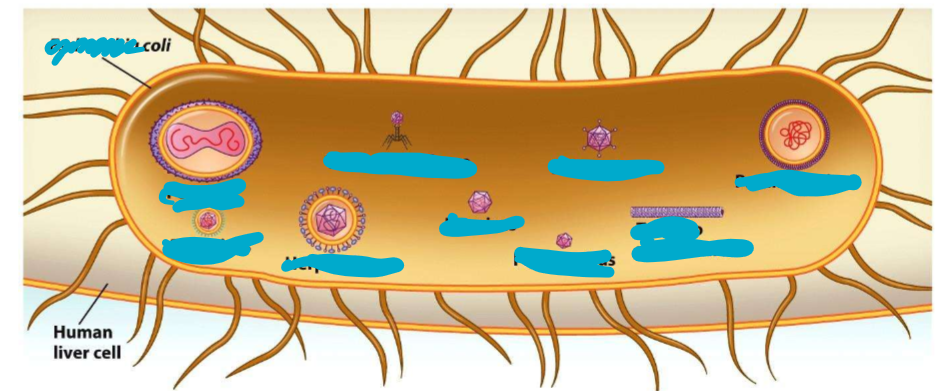
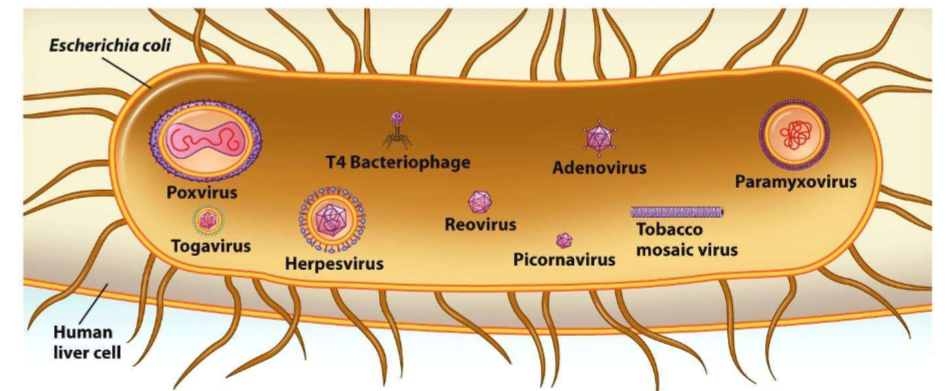
Exceptions to small size of viruses
Megavirus
mimivirus
pandoravirus
Megavirus chilensis
Exceptions to small size of viruses
dsDNA virus of amoebas, geom >1.2 megabase pairs, encodes 1200 proteins
Mimivirus
Exceptions to small size of viruses
dsDNA virus of amoebas, can be 400nm in diameter with a 1.2 megabase pair genome coding for 979 proteins
Pandoravirus
Exceptions to small size of viruses
2013; dsDNA virus of amoebas
~2.5 megabase genome, 1 micron in diameter
Viral structure
DNA/RNA
shell?
envelope?
single or double-stranded DNA or RNA (linear or circular)
protein shell (capsid) around genome
possible envelope (cell-derived membrane around capsid)
In viral structure, what is the protein shell (capsid) around genome?
Composed of many capsomere proteins. Capsid & genome together = nucleocapsid.
Poliovirus (picornavirus) - host
humans
Poliovirus (picornavirus) - structure
non-eneveloped; icosahedral
Poliovirus (picornavirus) - size (nm)
30 diameter
Poliovirus (picornavirus) - genome size (bp)
7700
Poliovirus (picornavirus) - genetic material
ssRNA (single stranded RNA)
Tobacco mosaic virus (TMV) - host
Tobacco & related plants
Tobacco mosaic virus (TMV) - structure
non-enveloped, helical
Tobacco mosaic virus (TMV) - size (nm)
300 × 18
Tobacco mosaic virus (TMV) - genome
6400
Tobacco mosaic virus (TMV) - genetic material
ssRNA
T2 (bacteriophage) - host
e-coli
T2 (bacteriophage) - structure
non-enveloped, complex
T2 (bacteriophage) - size (nm)
200 × 90
T2 (bacteriophage) - genome size (bp)
170,000
T2 (bacteriophage) - genetic material
dsDNA
Smallpox virus (poxvirus) - host
humans
Smallpox virus (poxvirus) - structure
enveloped, complex
Smallpox virus (poxvirus) - size (nm)
300 × 250
Smallpox virus (poxvirus) - size (bp)
186,000
Smallpox virus (poxvirus) - genetic material
dsDNA
Mimivirus - host
amoeba
Mimivirus - structure
enveloped, complex
Mimivirus - size (nm)
400 - diameter
Mimivirus - genome size (bp)
1,200,000
Mimivirus - genetic material
dsDNA
Capsids shape
Often exhibit either helical or icosahedral
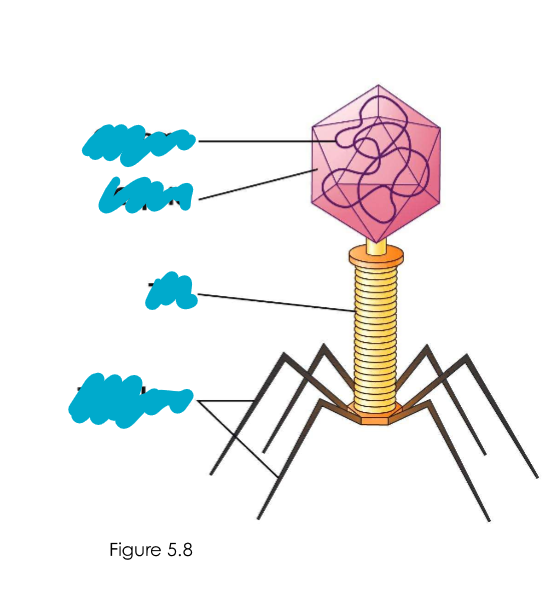
Virus shape can be…?
Irregular or complex
Viral envelopes - enveloped virus
Plasma membrane surrounds nucleocapsid
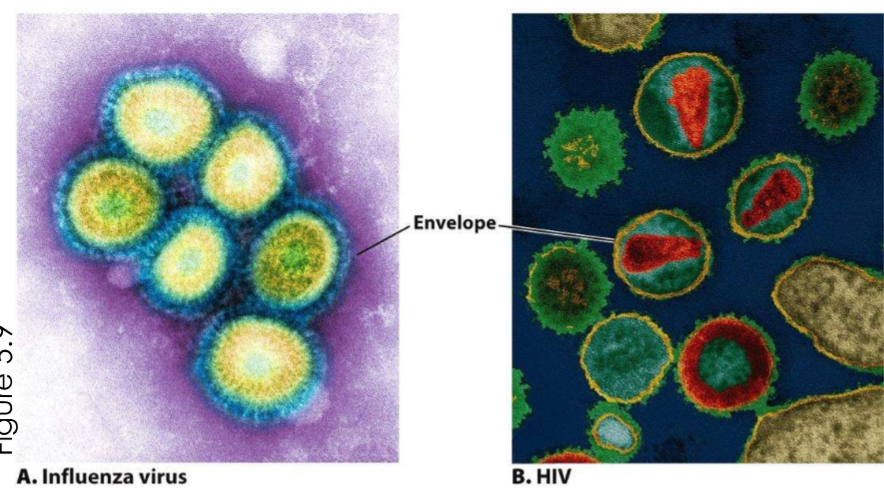
Viral envelopes - unenveloped/naked virus
No plasma membrane
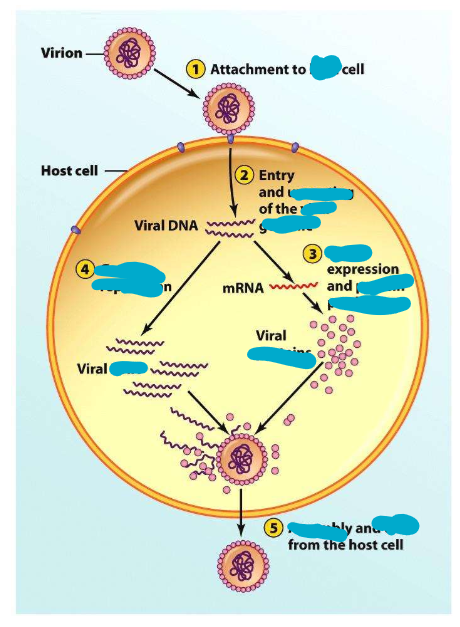
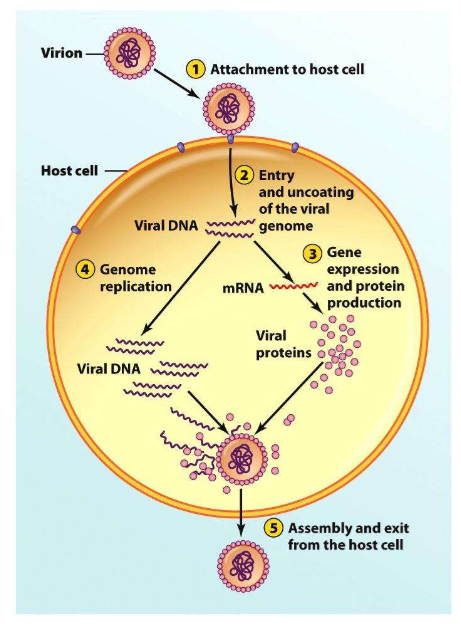
Virus replication methods
adhere: stick to host cell
enter
uncoat: release genome
synthesis: express & replicate genome
assembly: create new virus particles
exit: new particles leave cell
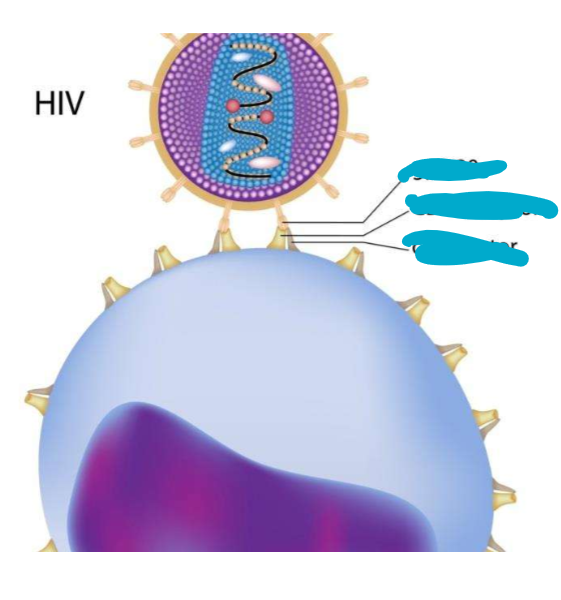
HIV & CD4 - How does virus enter a cell (replication cycle)?
HIV & CD4 receptors on T cells
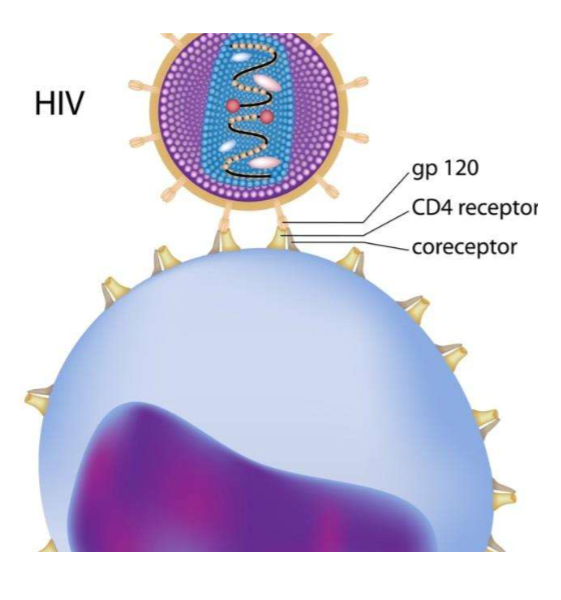
How does virus enter a cell (replication cycle)?
Mechanisms vary on host cell. E.g., animal viruses don’t have to contend with a cell wall.
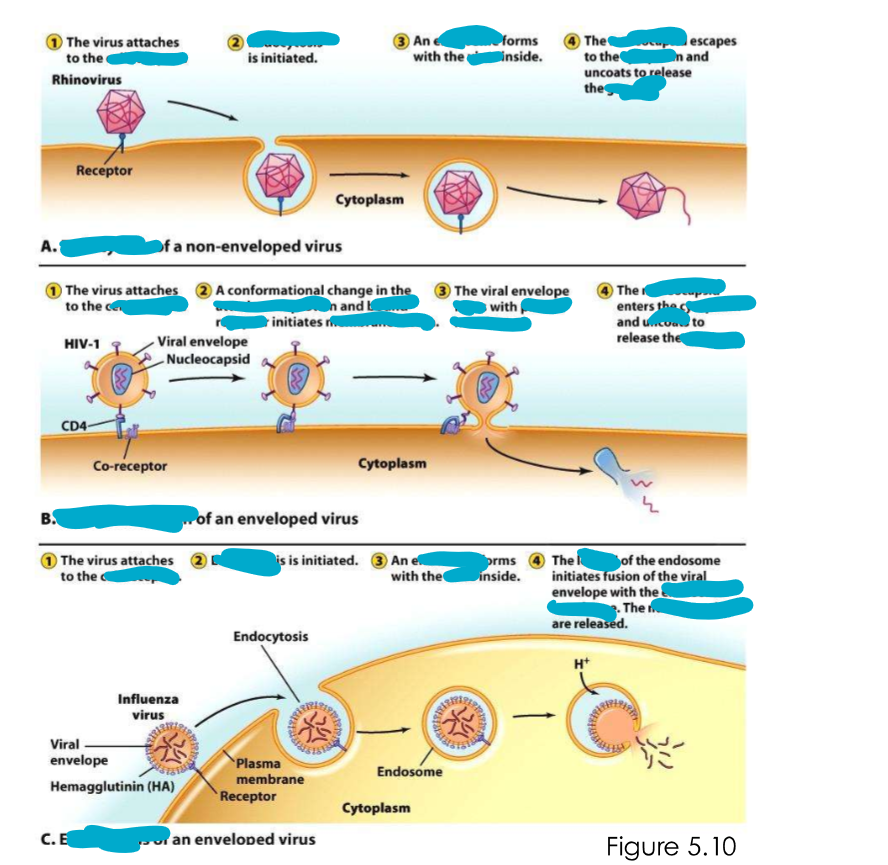
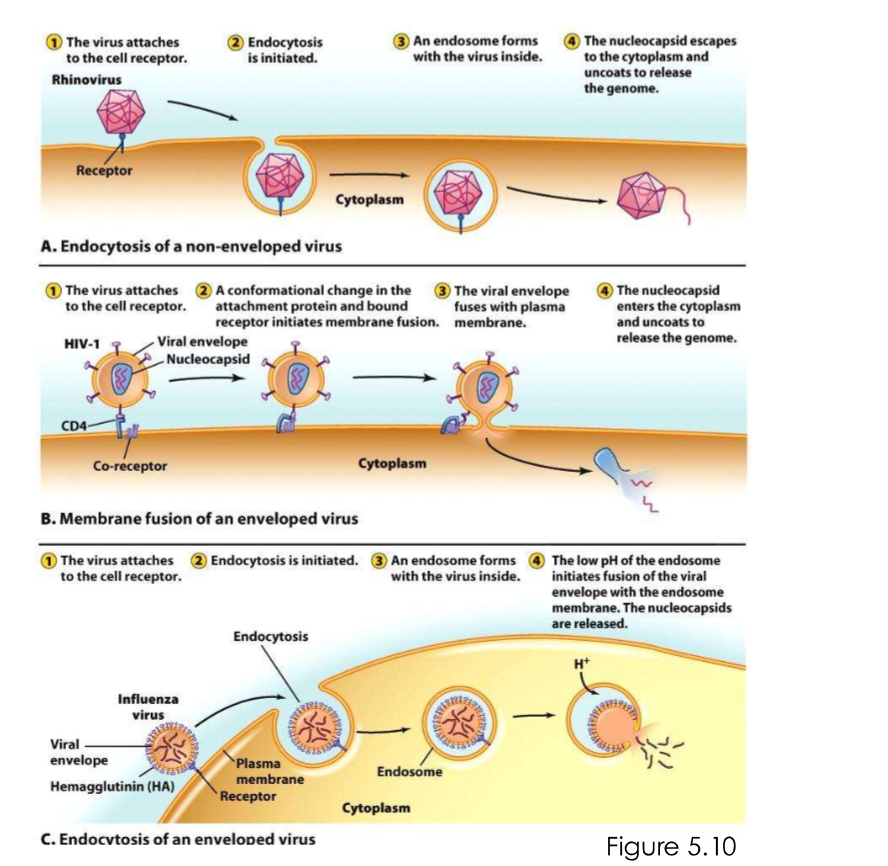
How do viruses enter animal cells?
Endocytosis, membrane fusion
How do viruses enter plant cells?
Often depends on damage to plant tissues to open a spot in cell wall. E.g., insects feeding on plants, wind/rain/hail/fire/human-induced damage
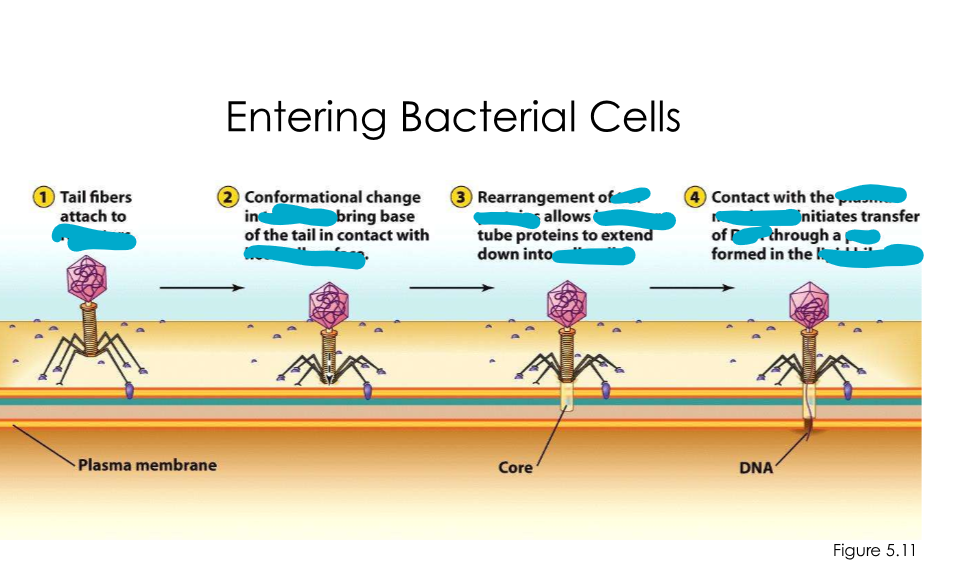
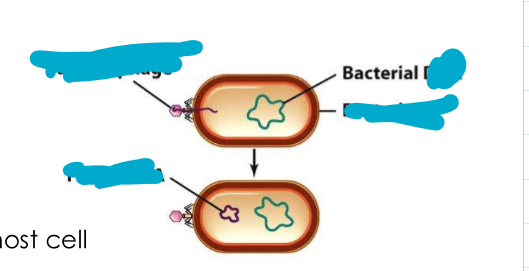
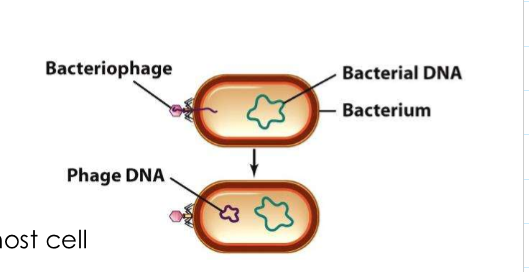
Virus entering bacterial cells
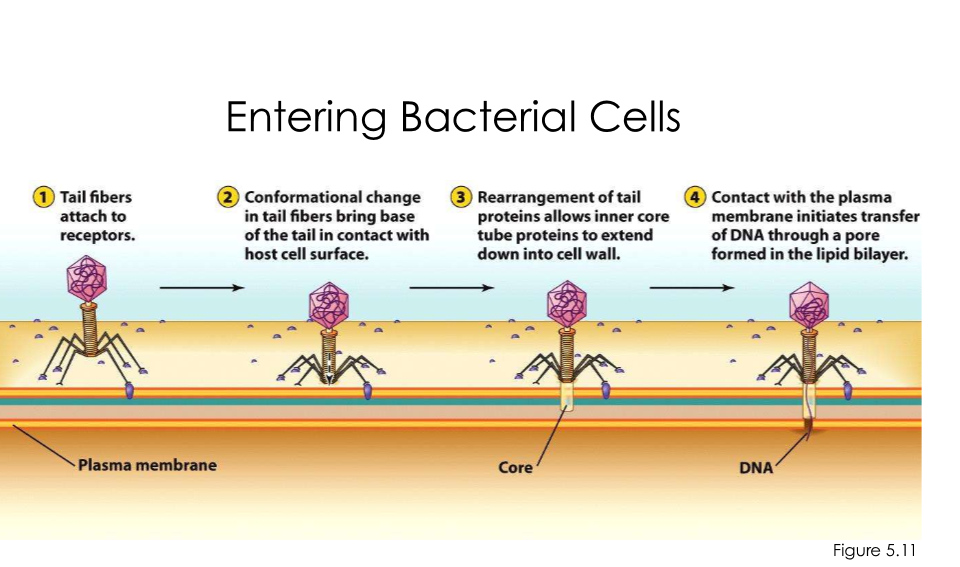
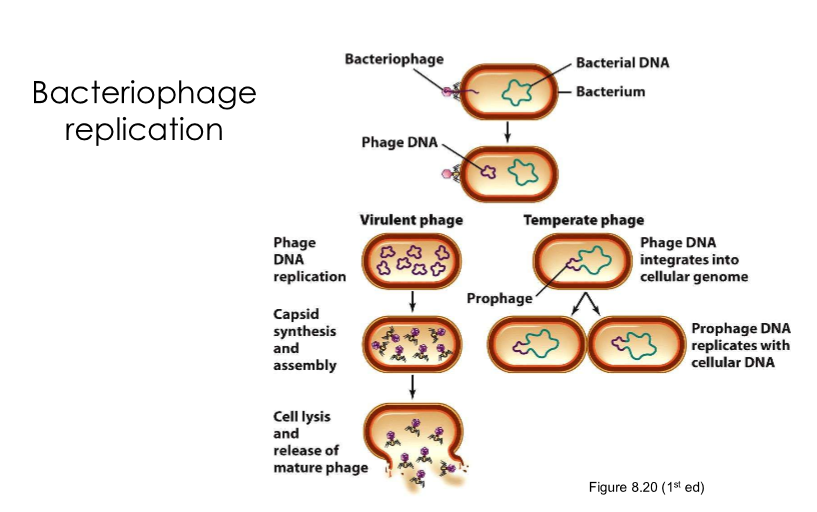
Bacteriophage replication - cycles/phases? (3)
lytic cycle
lyosgenic cycle (“temperate phage”)
temperate phage vs virulent phage
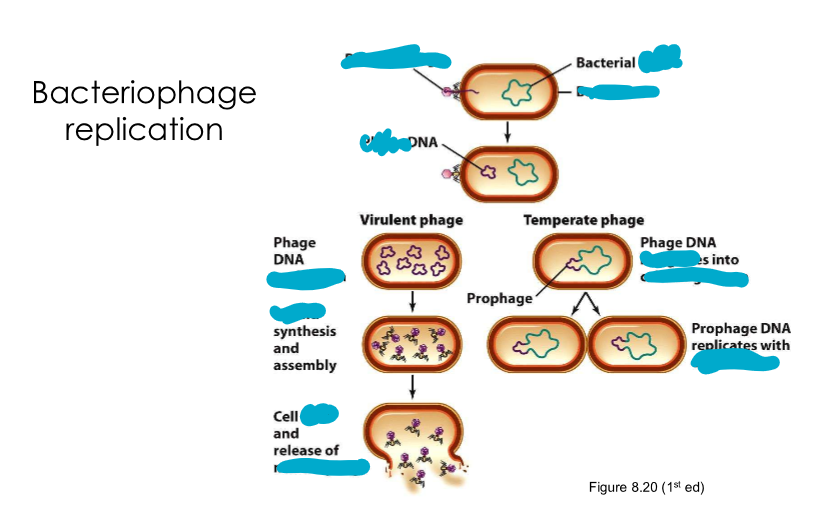
Bacteriophage replication - lytic cycle
Viruses enter, replicate, and lyse host cell
Bacteriophage replication - lysogenic cycle (“temperate phage”)
Phage integrate their genome into host (i.e., “lysogen”) cell’s genome, becoming a “prophage”. Prophage genome is replicated along with the host cell’s until stress. Can then enter lytic cycle
Bacteriophage replication - temperate phage vs virulent phage
Temperate phage can be both lytic or exist as a prophage (“lysogeny”). Virulent phage are always lytic.
bacteriophage replication
Where did viruses come from? (i.e. name 3 hypotheses)
Coevolution, regressive, progressive
Coevolution hypothesis
Viruses originated about the same time as other microbes and have been coevolving with them.
Regressive hypothesis
Viruses are previously alive organisms that have evolutionarily regressed into host-dependent particles.
Progressive hypothesis
Viruses originated from genetic material that gained the ability to replicate & be transmitted semi-autonomously
Are viruses alive?
No b/c they are subcellular parasites that have no metabolism & don’t replicate independently.
Bacteriophage
Used in the early 1900s to describe viruses that infect bacteria
Are viruses bigger or smaller than prokaryotes & eukaryotes?
Usually smaller - 10-100 nm.
Virus structure, morphology
small RNA or DNA genome protected by protein capsid
Vary in size & morphology. Sometimes exhibit helical or icosahedral symmetry
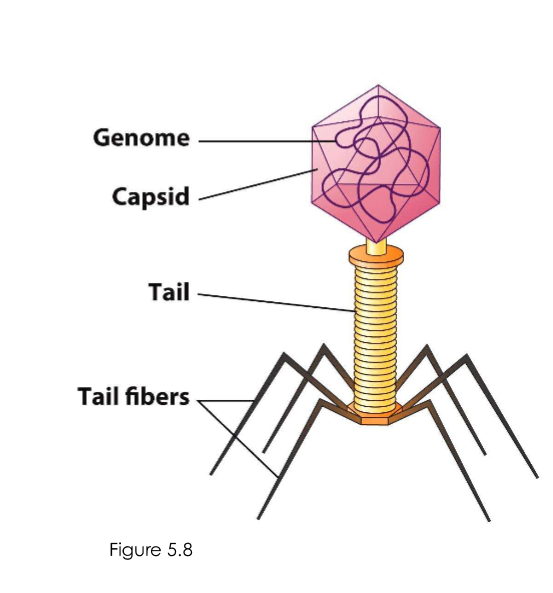
Many bacteriophages have an ___ head and a ___ tail.
icosahedral, helical
Non-enveloped viruses
Capsid protecting genome
Enveloped viruses
Cell-derived lipid bilayer taken from cytoplasmic membrane of host cell, or occasionally derived from membranes of the golgi, endoplasmic reticulum or nucleus depending on virus
Are SARS-CoV-2 (covid-19) non-enveloped or enveloped viruses?
enveloped
How can most viruses enter a host cell?
Most viruses have an attachment protein that binds to a receptor protein on the surface of the host.
Do non-enveloped viruses & enveloped viruses have the same entry mechanism to enter a host cell?
No
How do bacteriophage enter host cell?
Use their tails to penetrate host cell’s plasma membrane & inject their genomes.
What happens when a virus enters a host cell?
All lytic viruses replicate their genome and produce new viral proteins. These particles assemble to form new viruses, which exist the host to infect more cells.
What are the hypothesis for the origin of viruses?
Coevolution
Regressive
Progressive
Coevolution hypothesis - origin of viruses
Viruses originated about the same time as other microbes and have been coevolving with them
Regressive hypothesis - origin of viruses
Viruses are previously alive organisms that have evolutionarily regressed into host-dependent particles.
Progressive hypothesis - origin of viruses
Viruses originated from genetic material that gained the ability to replicate and be transmitted semi-autonomously.
Can viruses be cultivated?
Yes, by inoculating the appropriate host cells and collecting the replicated viral particles. Particles can be purified by centrifugation or filtration.
Replication strategies for viruses
Lytic or lysogenic
Can viruses can be lysogenic?
not all
After a virus enters a cell or inserting their DNA into the cell in the case of ____, many viruses undergo a ___ cycle.
bacteriophages, lytic
Lytic viruses
Replicate & lyse infected host cells, and subsequently, surrounding cells. In isolated culture, all host cells eventually die and only viral particles remain.
Temperate viruses
Abstinence from lytic cycle. Can remain integrated thru many generations yet can enter the lytic cycle again.
For temperate viruses that infect bacteria, what is prophage?
Virus genome inserted within host genome. i.e. temperate bacteriophage
What results in reversion of prophage back into lytic cycle?
Environmental & cellular cues, usually related to some form of stress (e.g., exposure to UV light, DNA damage), and influx of nutrients (cells begin dividing & copying their own genomes).
Disadvantages for a temperate phage to go through lytic cycle?
Always kill host and lyse host’s cell after infection = may result in too few host cells for continued infection
Advantages for a temperate phage to go through lysogenic cycle?
Allowing virus to “hide and wait” for conditions to be right (e.g., more nutrients = more cells to infect) or just before a cell dies (e.g., DNA dies, virus moves).
Although there are eukaryotic cell viruses that can also undergo ____, the mechanisms for these are less well understood. E.g., ?
lysogeny, HIV (AIDS), herpes simplex (cold sores), human papilloma virus (HPV; warts)
How to quantify viral particles?
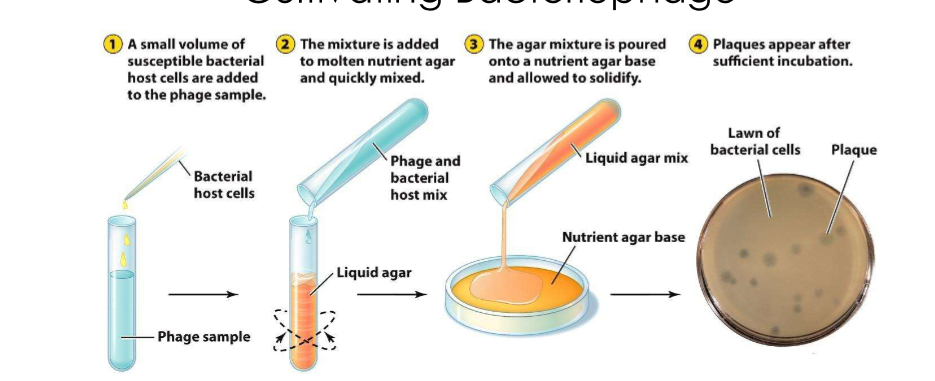
Direct count with an electron microscope or an assay such as a hemagglutination or plaque assay.
Viruses are named for many different reasons. Official virus classification system uses what kind of system in the following groups?
Order, family, sub-family, genus, species
Why are viruses usually grouped by physical & biological features?
no common ancestor
What is the Baltimore Classification System based on?
Physical & biological features of virus. E.g., nucleic acid characteristics of viruses
How can viruses be identified?
Through electron microscopy & nucleic acid analyses.
Viruses are the only sub-cellular particles to exist. T/F?
False - viroids, prions exist
Viroids
Naked RNA genome usually less than 400 nucleotides in length. Most likely replicated by host enzymes.
Prions
Proteinaceous infectious particles. Do not possess any sort of genome yet can replicate and infect host cells. Responsible for transmissible spongiform encephalopathies (TSEs), such as mad cow disease.
CRISPR
Clustered regularly interspaced short palindromic repeats.
Mechanism that bacteria use to prevent infection by bacteriophage. CRISPR-associated (Cas) proteins use snippets of DNA collected from previous (failed) virus infections to help identify & cut any identical incoming viruses entering the cell. Any new viral genomes entering the cell can also be cut by Cas proteins and added to CRISPR region of genome.
What can CRISPR/Cas system be used for?
virus defence mechanism used by bacteria
form of genome editing
Cultivating bacteriophage
What are the requirements for cultivating animal viruses?
Tissue culture of host cells used to grow targets for viruses (or in embryonated chicken or duck eggs for < $$).
cultures must be kept sterile & bacteria-free
HeLa cells
1st human cell line. Henrietta Lacks
Viral purification
Usually begins with simple filtration to remove large cells and cellular debris. Viruses then purified and concentrated with centrifugation.
What are the types of centrifugation in viral purification?
differential, gradient
 Note
Note  Flashcards (23)