Geometry Midterms
 Studied by 0 people
 Call Kai
 Learn
Learn Practice Test
 Spaced Repetition
 Match
Match Flashcards
 Knowt Play
1/43

There's no tags or description
Looks like no tags are added yet.
Name | Mastery | Learn | Test | Matching | Spaced | Call with Kai |
|---|
No analytics yet
Send a link to your students to track their progress
44 Terms
An __ is a transformation about a point with a given angle measure
rotation
Reflections, Translations, Rotations, and Glide Reflections are the four types of ___
Rigid Motions
A line that a figure is reflected across so that it maps onto itself is called an ___
Line of Symmetry
The Composition of a reflection and a translation is called a
Glide reflection
The set of points that a transformation acts on is the __
Pre-image
The result of a transformation is called the _
Image
A statement accepted without proof is a __
Postulate
Arriving at a conclusion by observing patterns is ___
Inductive Reasoning
A __ is the combination of a conditional and its converse
bi-conditional
According to the ___, if a conditional statement and its hypothesis is true, then its conclusion is also true
Law of Detachment
A conjuncture that has been proven is a ___
theorem
A statement of the form if not Q, then not P is a ___ of the conditional if p, then q
Contra-positive
You use ___ when you logically come to a valid conclusion based on given statements
deductive reasoning
Angles that are outside the space between parallel lines and that lie on the same side of a transversal are __
Same Side interior Angles
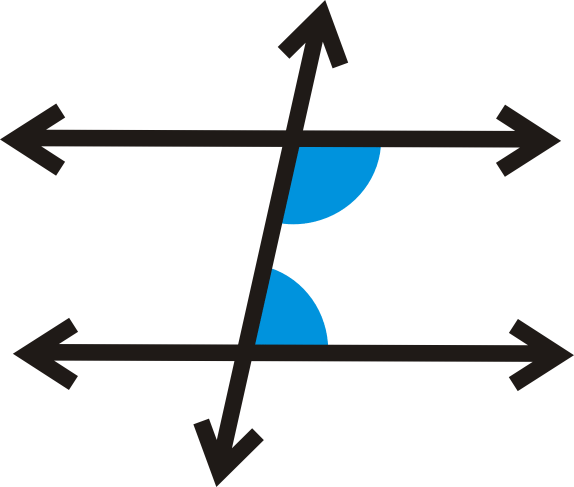
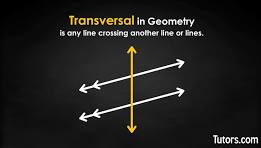
A ___ intersects co-planar lines at distinct points
transversal
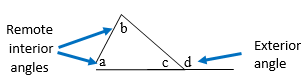
Two angles inside a triangle that correspond to the nonadjacent exterior angle are the
remote interior angles
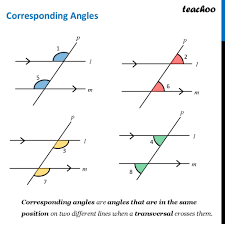
___ lie on the same side of a transversal of parallel lines and are in corresponding positions relative to the parallel lines.
Corresponding Angles
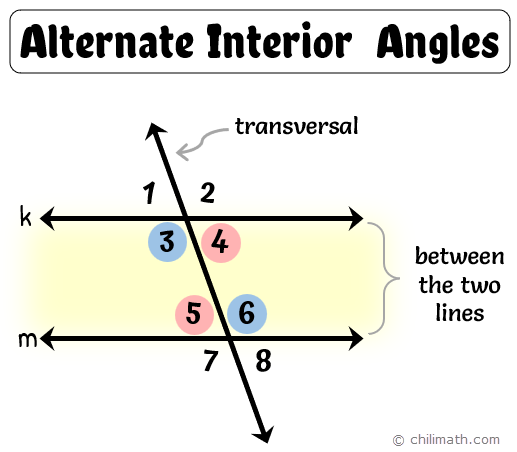
Angles between parallel lines that are nonadjacent and that lie on opposite sides of a transversal are
Alternate interior angles
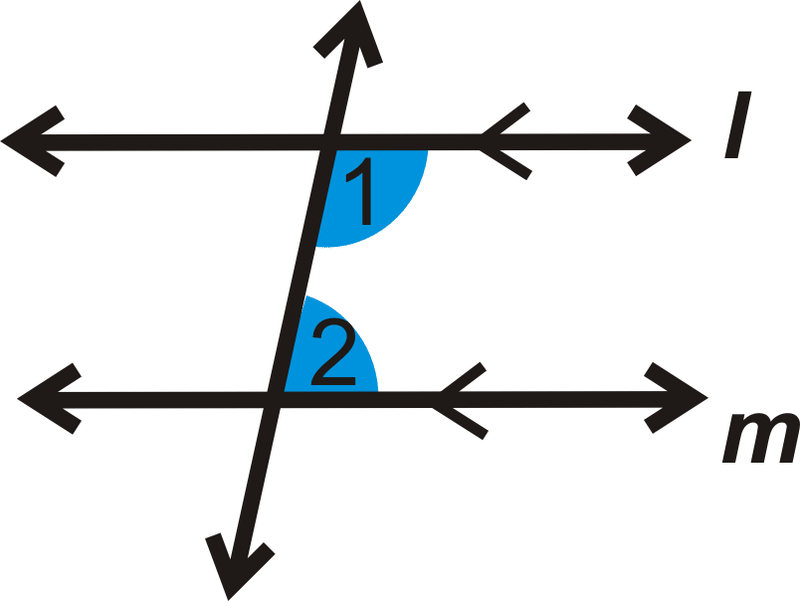
Angles Between parallel lines that are on the same side of a transversal are
Same-side interior angles
Figures that have the same size and shape are said to be ___
congruent
The side of an isosceles triangle that is opposite the vertex is called the _
Base
A rigid motion is sometimes called a __ because it maps a figure with the same shape and size
(congruence) transformation
The legs of a isosceles triangle form an angle called the
Vertex
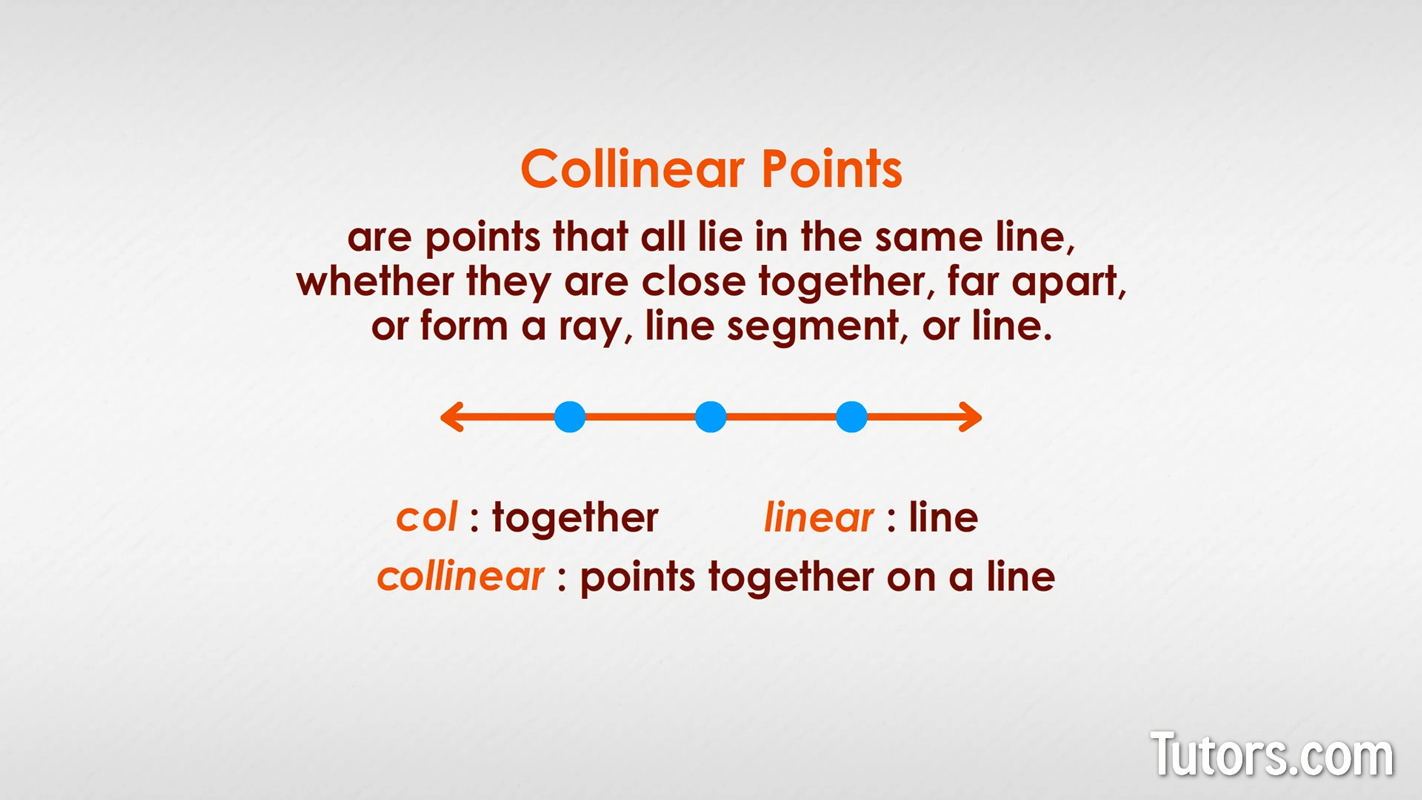
Colinear Points
Points that all lie on the same line
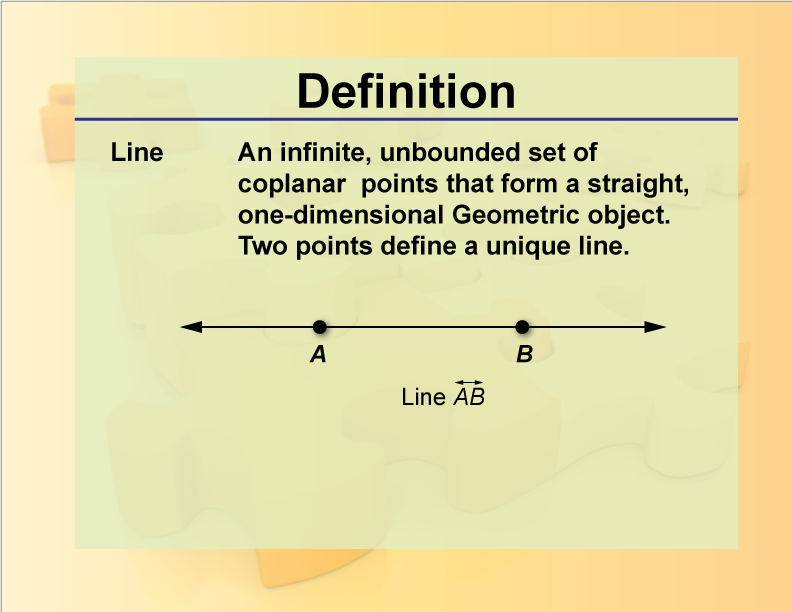
Line
A one-dimensional, forever going line. When two points are on it, they make a segment of the line.
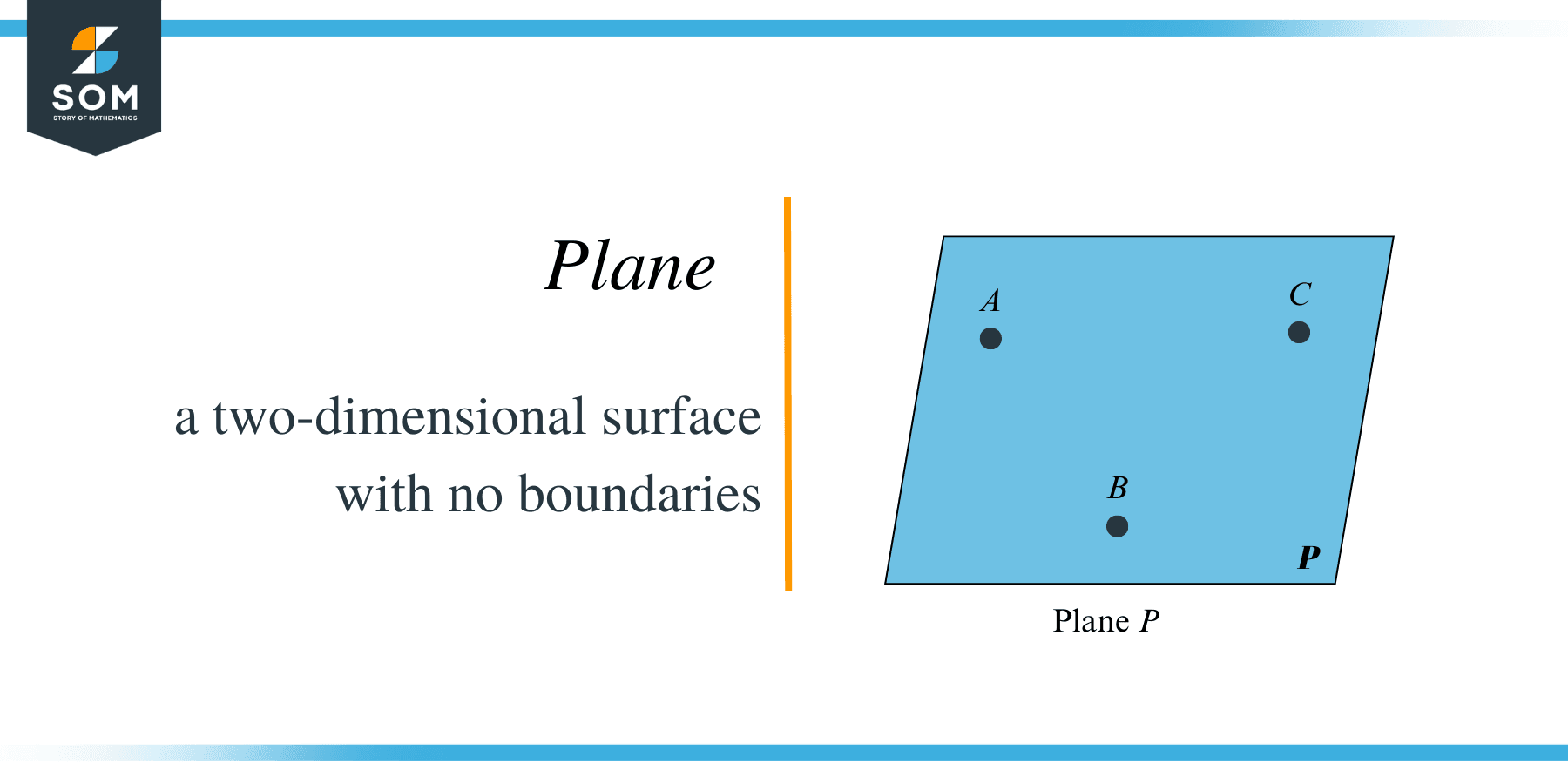
Plane
A two dimensional surface with no boundaries
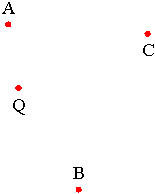
Point
A point in space
Segment Addition Postulate
AB+BC=AC
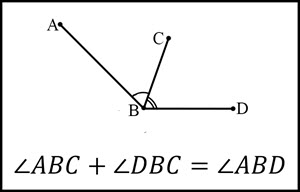
Angle Addition Postulate
m∠ABC+m∠DBC = m∠ABD
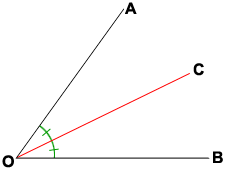
Angle Bisector
An angle bisector is defined as a ray, segment, or line that divides a given angle into two angles of equal measures.
Segment Bisector
A segment bisector is a line, a ray, a line segment, or a point that cuts a line segment at the center dividing the line into two equal parts.
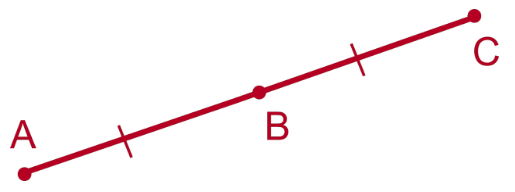
Midpoint
The midpoint of a line segment is the point at the exact middle of the line segment. The midpoint splits the line segment into two parts of the exact same measure
Midpoint Formula
(x1+x2 /2) , (Y1+Y2 /2)
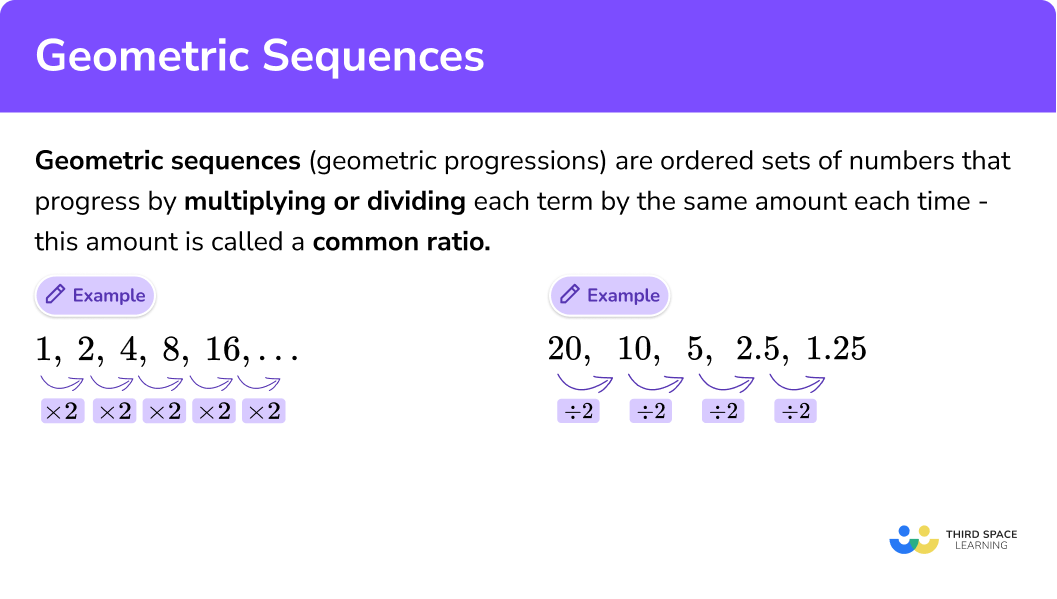
Sequence
A geometric sequence is a special type of sequence. It is a sequence in which every term (except the first term) is multiplied by a constant number to get its next term.
conjecture
An unproven guess.
Conditional
Conditional Statement: A statement with a hypothesis followed by a conclusion. Can be written in “if-then” form.
Converse
A statement where the hypothesis and conclusion of a conditional statement are switched.
Inverse
The inverse of a conditional statement is when both the hypothesis and conclusion are negated; the “If” part or p is negated and the “then” part or q is negated. The Inverse is referred to as ~p → ~q where ~ stands for NOT or negating the statement.
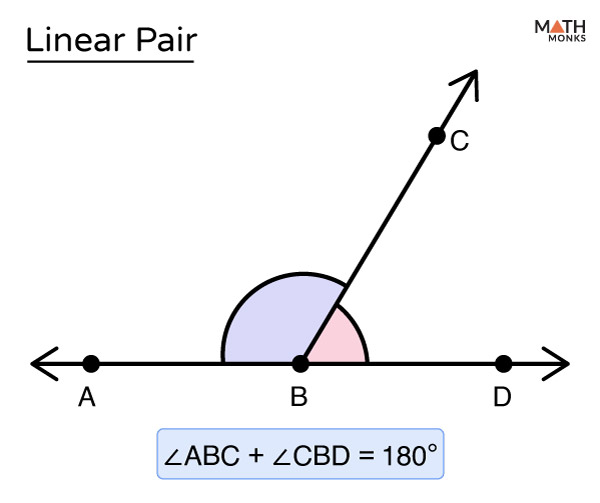
Linear Pair
The definition of a linear pair is two angles that make a straight line when put together. A linear pair also follows the linear pair postulate which says the angles add up to 180°.
Triangle Angle Sums
are always 180 Degrees
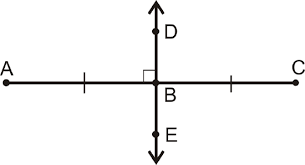
Perpendicular Bisector
A perpendicular bisector has two requirements: perpendicular and bisector. Perpendicular lines or line segments intersect at right, or 90 degree, angles.
Orientation
Orientation is how the relative pieces of an object are arranged
 Note
Note  Flashcards (58)