Exam 2 Figures

0.0(0)
Studied by 0 people
call kaiCall Kai
learnLearn
examPractice Test
spaced repetitionSpaced Repetition
heart puzzleMatch
flashcardsFlashcards
GameKnowt Play
Card Sorting

1/3

encourage image

There's no tags or description

Looks like no tags are added yet.

Last updated 3:51 PM on 4/6/26
Name
Mastery
Learn
Test
Matching
Spaced
Call with Kai

No analytics yet

Send a link to your students to track their progress

4 Terms
1
New cards
<p>What are the stages of a beef tapeworm cycle?</p>

What are the stages of a beef tapeworm cycle?

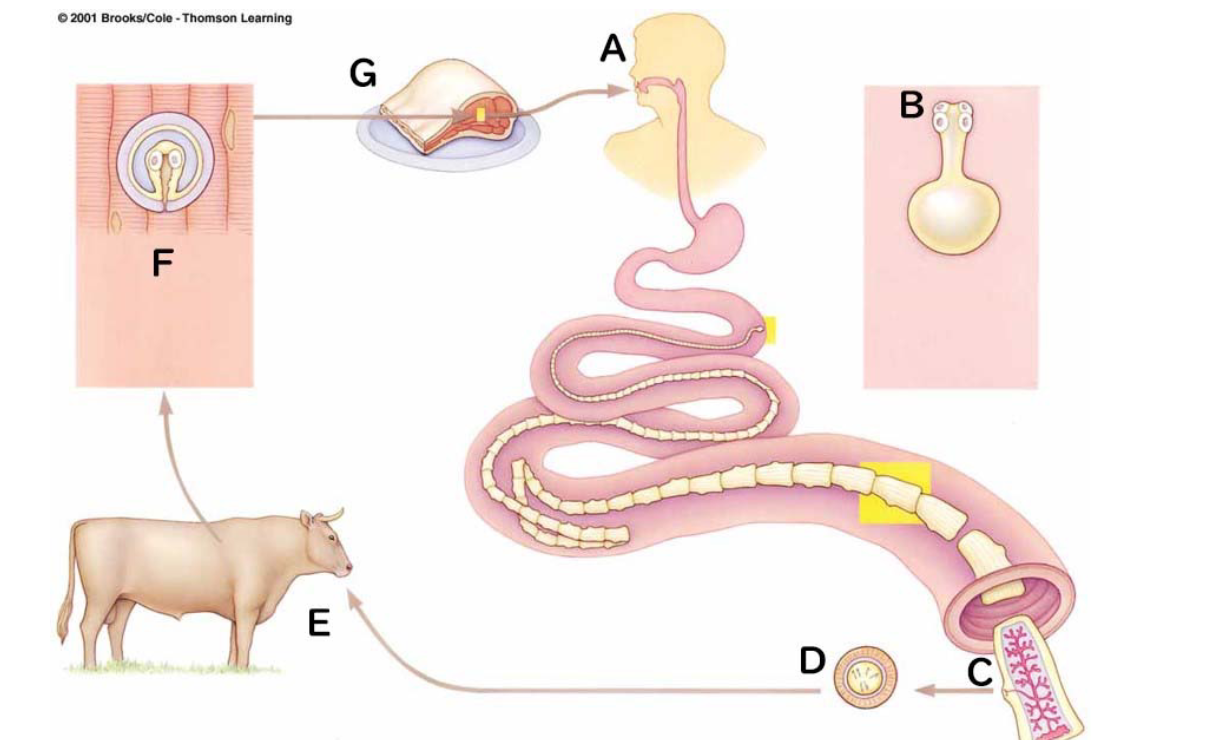
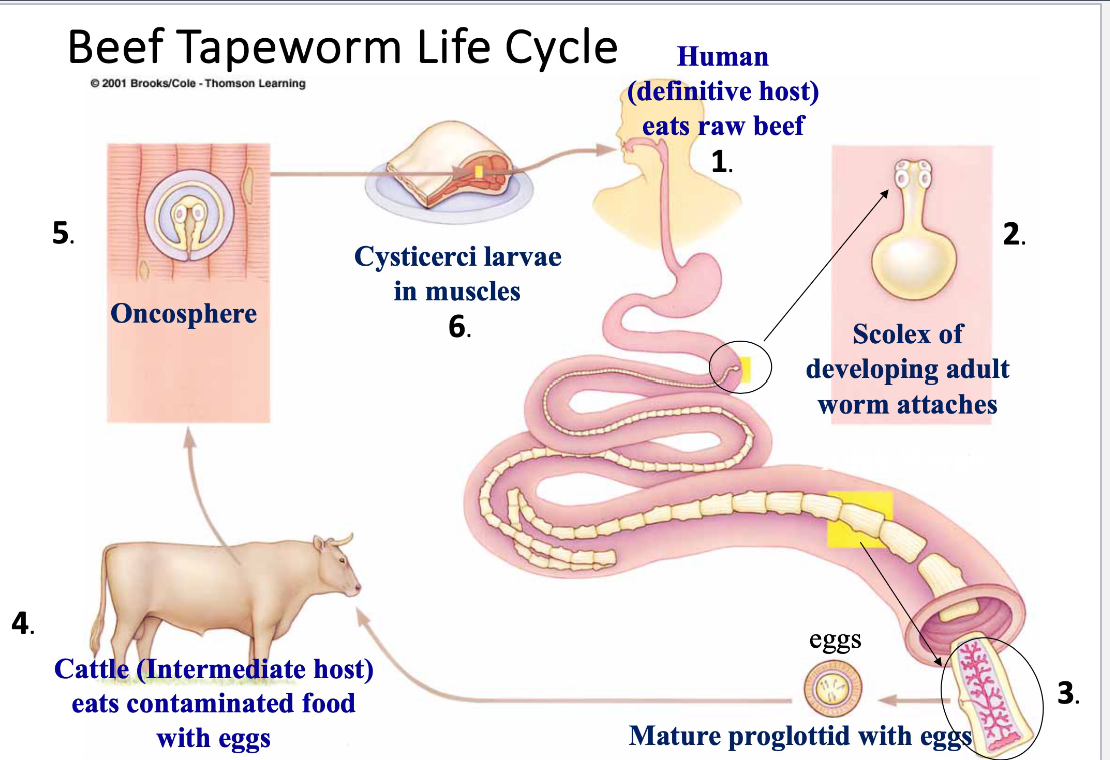
1. Human (definitive host) is infected by eating raw or undercooked beef that contains cysticerci larvae. Sexual reproduction occurs

2. An adult tapeworm will develop from the cysticeri larvae. The scolex (head) develops first, allowing the tapeworm to attach to the small intestine of the human using its hooks and suckers. Start producing proglottids

3. Mature proglottids produce fertilized eggs with other beef tapeworms infecting the same host or from self fertilization Fertilized eggs will be released into the environment with host feces

4. Cattle (intermediate host) is infected by eating tapeworm contaminated foods which contain the eggs (produced by the human host). Asexual reproduction occurs

5. Eggs in the cattle develop into oncospheres and penetrate the intestinal wall and migrate to muscles

6. Oncospheres will develop into Cysticeri larvae and are found in the muscle of cattle. Cattle is slaughtered and the infected meat is sold. The cycle continues as humans eat infected and improperly cooked beef.
<p>1. Human (definitive host) is infected by eating raw or undercooked beef that contains cysticerci larvae. Sexual reproduction occurs</p><p></p><p>2. An adult tapeworm will develop from the cysticeri larvae. The scolex (head) develops first, allowing the tapeworm to attach to the small intestine of the human using its hooks and suckers. Start producing proglottids</p><p></p><p>3. Mature proglottids produce fertilized eggs with other beef tapeworms infecting the same host or from self fertilization Fertilized eggs will be released into the environment with host feces</p><p></p><p>4. Cattle (intermediate host) is infected by eating tapeworm contaminated foods which contain the eggs (produced by the human host). Asexual reproduction occurs </p><p></p><p>5. Eggs in the cattle develop into oncospheres and penetrate the intestinal wall and migrate to muscles</p><p></p><p>6. Oncospheres will develop into Cysticeri larvae and are found in the muscle of cattle. Cattle is slaughtered and the infected meat is sold. The cycle continues as humans eat infected and improperly cooked beef.</p><p></p>
2
New cards

Describe the development/stages of disease

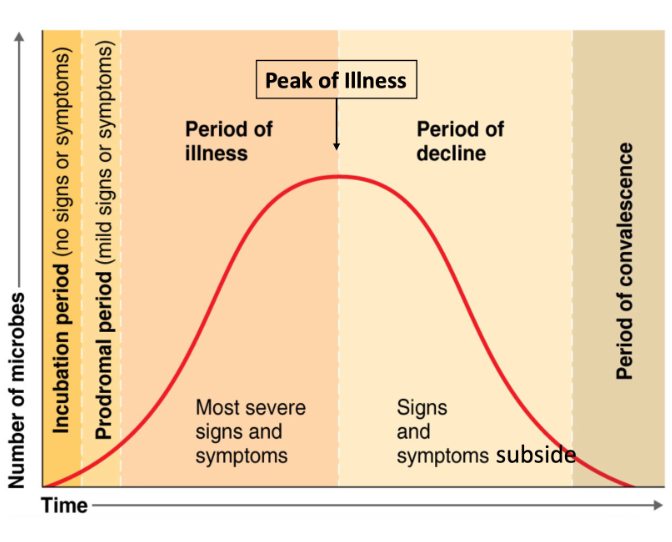
1. Incubation Period

• No signs or symptoms present; interval between your initial infection and first signs & symptoms

• Pathogen is attached and growing

• Time between your exposure to the pathogen and the onset of symptoms and signs

2. Prodromal period

• Early stage, mild signs & symptoms

• Person is often contagious at this period (if the disease is communicable) like Fatigue, Slight fever, Headache

3. Period of illness

• Most severe signs and symptoms

• Patient is considered most contagious

• When your body starts producing antibodies = Immune system is fully active

4. Peak of illness

• Highest amount of microbes = Highest number of Antibodies

• Leads to 2 outcomes: strong immune system → Period of decline OR weak immune system → Death

5. Period of decline

• Signs and symptoms minimize

• Number of pathogens decrease

6. Period of convalescence/recovery

• Body returns to its pre-diseased state

• Normal function returns

• Patient still infectious in this stage + microbes are still present (Asymptomatic carriers)
<p><strong>1. Incubation Period</strong></p><p>• No signs or symptoms present; interval between your initial infection and first signs &amp; symptoms</p><p>• Pathogen is attached and growing </p><p>• Time between your exposure to the pathogen and the onset of symptoms and signs</p><p></p><p><strong>2. Prodromal period</strong></p><p>• Early stage, mild signs &amp; symptoms</p><p>• Person is often contagious at this period (if the disease is communicable) like Fatigue, Slight fever, Headache</p><p></p><p><strong>3. Period of illness</strong></p><p>• Most severe signs and symptoms</p><p>• Patient is considered most contagious </p><p>• When your body starts producing antibodies = Immune system is fully active</p><p></p><p><strong>4. Peak of illness</strong></p><p>• Highest amount of microbes = Highest number of Antibodies </p><p>• Leads to 2 outcomes: strong immune system → Period of decline OR weak immune system → Death</p><p></p><p><strong>5. Period of decline</strong></p><p>• Signs and symptoms minimize</p><p>• Number of pathogens decrease</p><p></p><p><strong>6. Period of convalescence/recovery</strong></p><p>• Body returns to its pre-diseased state</p><p>• Normal function returns</p><p>• Patient still infectious in this stage + microbes are still present (Asymptomatic carriers)</p>
3
New cards

fdsa

4
New cards

fsa

Explore top flashcards

flashcards
Latin vocab
44
Updated 525d ago
0.0(0)
flashcards
Psy 203 Unit 3
66
Updated 1078d ago
0.0(0)
flashcards
science final
443
Updated 1048d ago
0.0(0)
flashcards
NEURO DIENCEPHALON MIXED
29
Updated 1114d ago
0.0(0)
flashcards
M.1 - Musical
27
Updated 1104d ago
0.0(0)
flashcards
Leçon 2 (copy)
113
Updated 442d ago
0.0(0)
flashcards
Latin vocab
44
Updated 525d ago
0.0(0)
flashcards
Psy 203 Unit 3
66
Updated 1078d ago
0.0(0)
flashcards
science final
443
Updated 1048d ago
0.0(0)
flashcards
NEURO DIENCEPHALON MIXED
29
Updated 1114d ago
0.0(0)
flashcards
M.1 - Musical
27
Updated 1104d ago
0.0(0)
flashcards
Leçon 2 (copy)
113
Updated 442d ago
0.0(0)



