Lecture 06
 Studied by 0 people
 Call Kai
 Learn
Learn Practice Test
 Spaced Repetition
 Match
Match Flashcards
 Knowt Play
1/18

Earn XP
Description and Tags
Transformation, Minimum Inhibitory Concentration (MIC), Siderophores
Name | Mastery | Learn | Test | Matching | Spaced | Call with Kai |
|---|
No analytics yet
Send a link to your students to track their progress
19 Terms
What is bacterial horizontal gene transfer?
Intact gene transfer from the same or different bacterial species
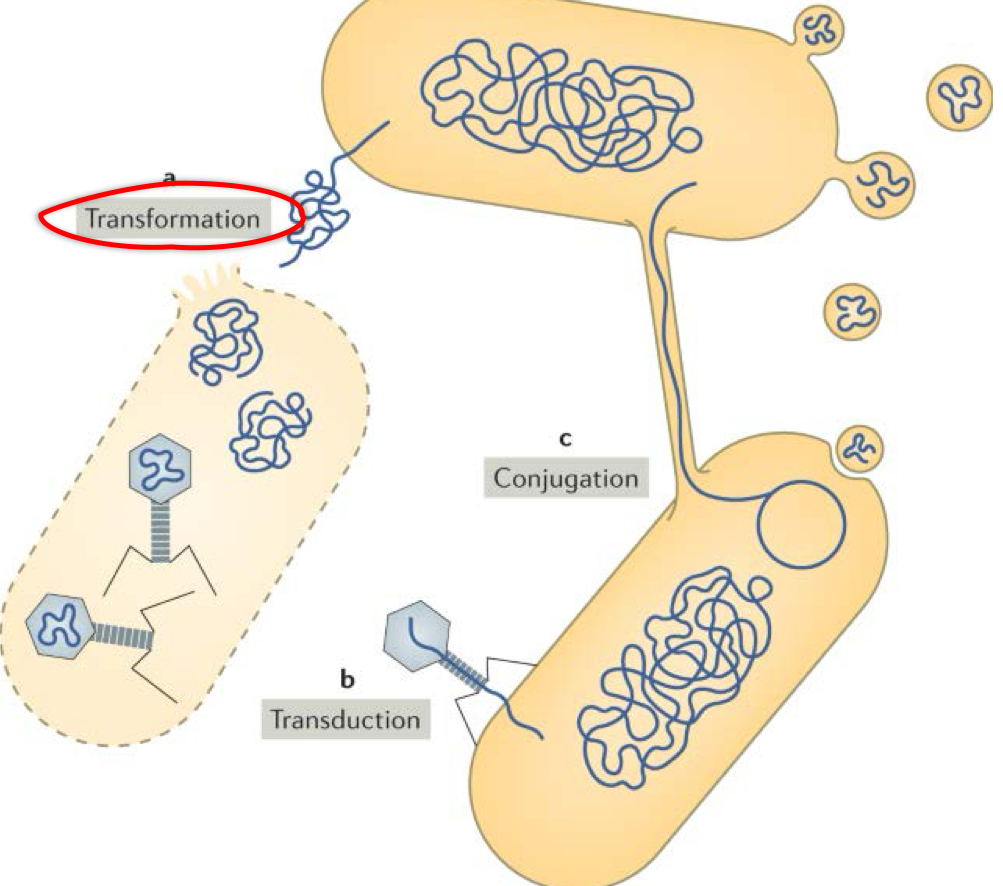
What is bacterial transformation?
A stable genetic change, brought about by the uptake of exogenous naked DNA
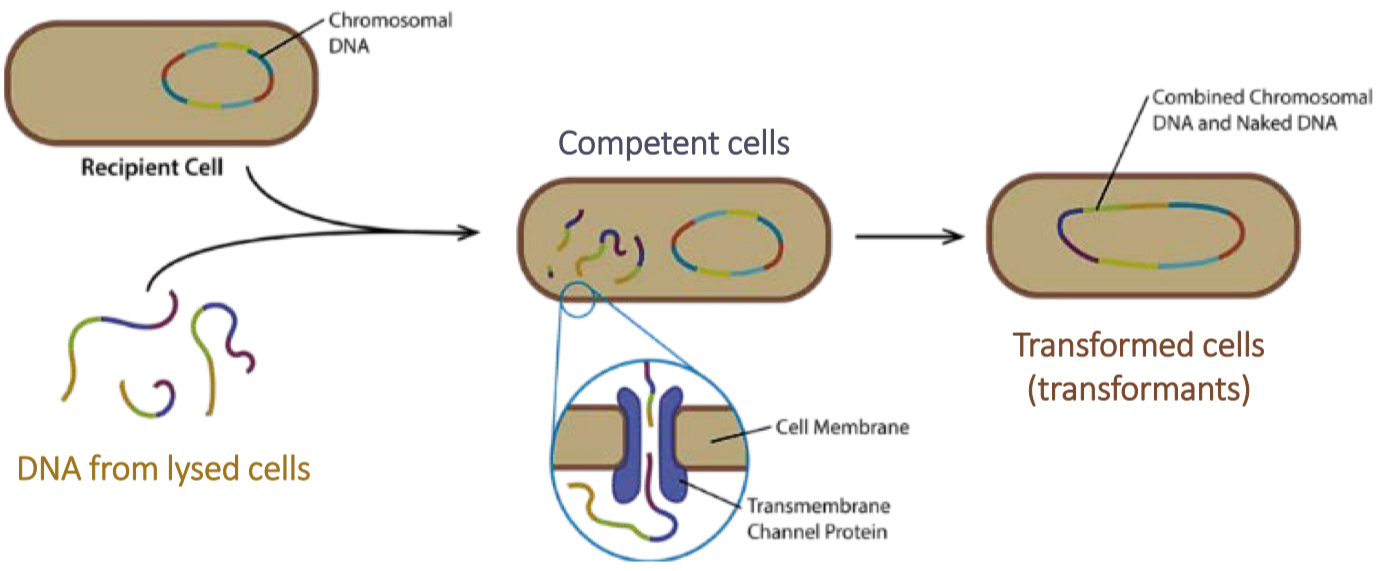
What is does inducing competence refer to?
Changing the cell in such a way that enables DNA to easily travel through the cell membrane
E. coli, artificial cell competence is made possible chemically or through electroporation, creating temporary pores that allow DNA to enter the cell.
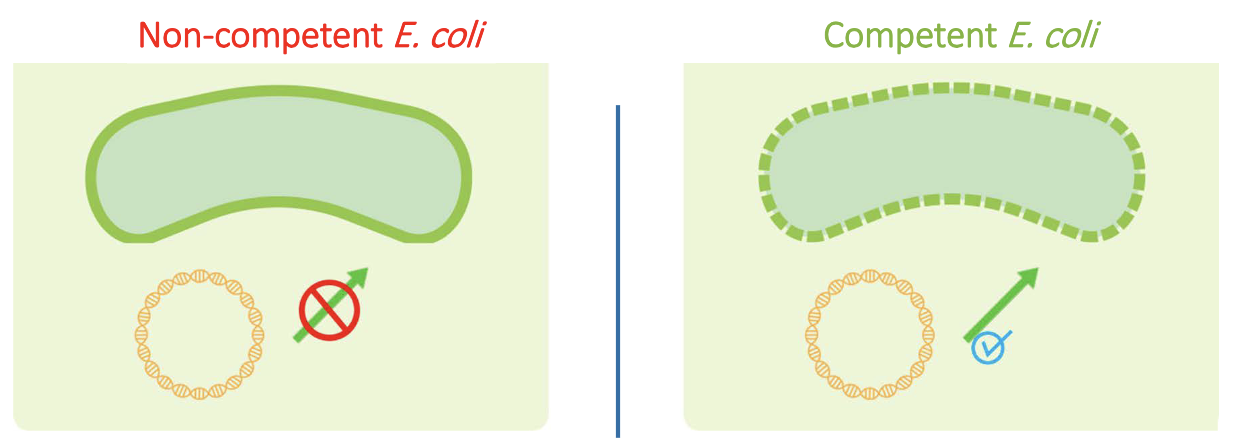
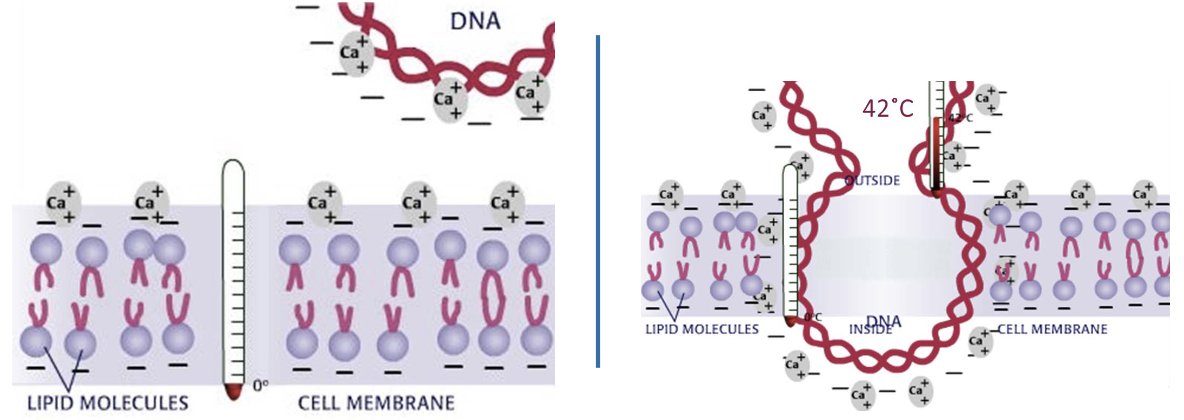
For chemically induced competence ( CaCl2 and heat-shock), what does ice and heat shock do?
Ice: helps DNA adhere to surface & CaCl 2: promotes DNA binding and pore formation
Heat shock: membranes more fluid and some DNA moves through membrane
Cold temperature help membrane regain rigidity
What are ampR and GFP?
Marker genes
What happens to ampR (bla) and araC?
They are constitutively expressed
GFP expression is regulated by what?
AraC promoter
In GFP regulation, what does AraC control?
The promoter, PBAD is fused to GFP
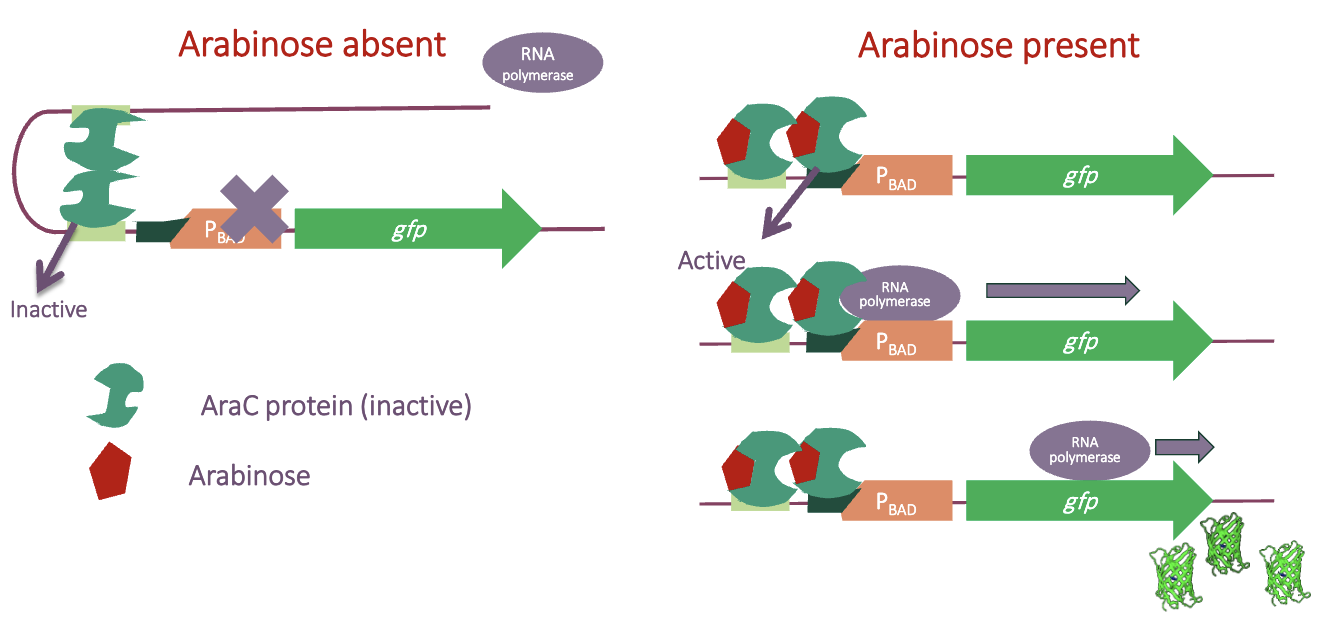
What is the standard protocol for E. coli transformation with pGlo?
Induce chemical competence by washing E. coli cells mid-log (during exponential growth) with CaCl2
Place in ice
Add 10 ul pGLO plasmid to +DNA tube. Incubate on ice 10 min
Heat shock for 50 sec
Ice for 2 min
Add LB to each tube. Incubate at 37oC for 30 min
Transfer and spread 100ul onto selective plates
What do you expect from the following plates:

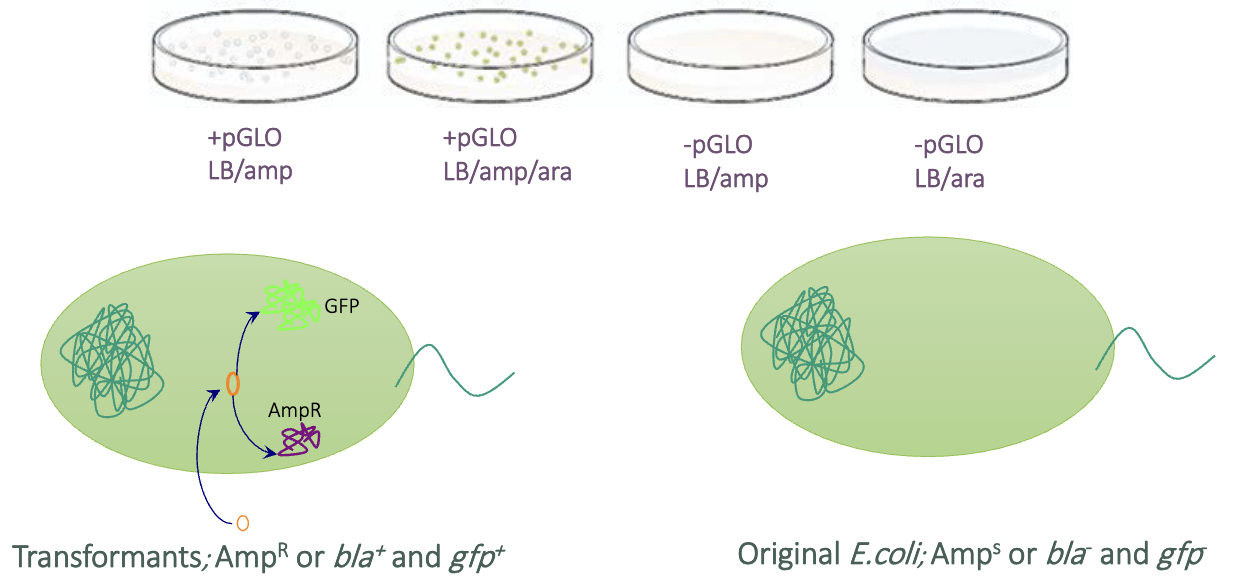
What is transformation efficiency?
Number of cells transformed per 1 micro-gram of DNA
TE = number of transformants/amount of DNA used
Shock temperature, incubation, plasmid size…etc will influence TE
How will we determine the MIC of Kanamycin for a planktonic culture of Pseudomonas?
Prepare 2-fold dilutions of an antibiotic
Inoculate with bacterium
Incubate 24hrs
What is Pyoverdine?
High Fe(III) affinity fluorescent siderophore, produced by Pseudomonas sp.
Pyoverdine production is regulated by soluble iron available in environment
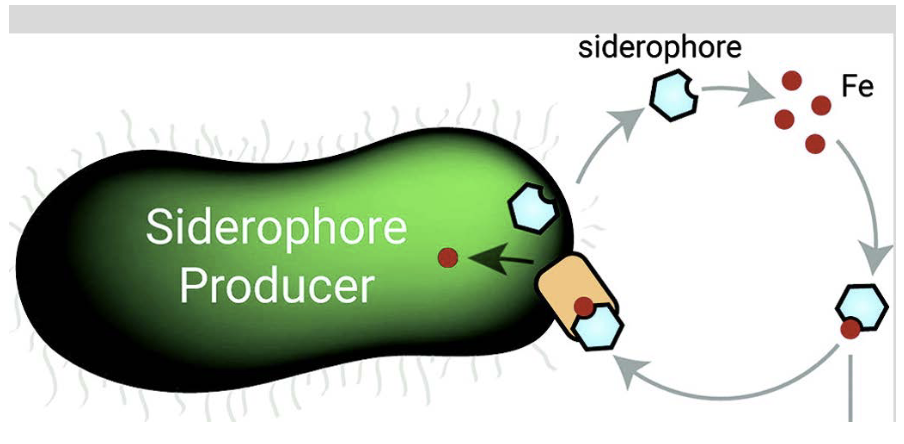
What are siderophores?
Siderophores are synthesized then secreted outside the cell
Chelate the insoluble iron and transport into cells via receptors
Iron released inside the cell in a soluble form
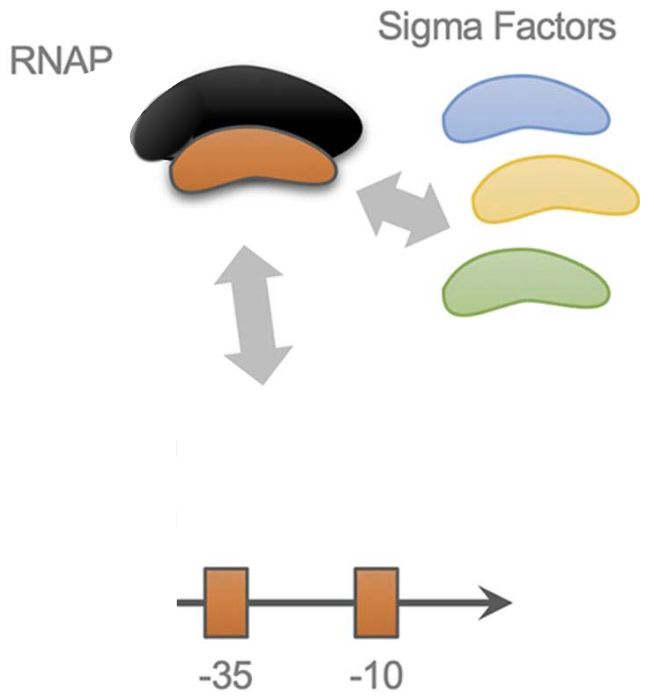
What are sigma factors?
Sigma factors provide promoter recognition specificity to RNA polymerase holoenzyme
Sigma factors can provide effective mechanisms for simultaneously regulating expression of large numbers of prokaryotic genes
How is pyoverdine biosynthesis regulated?
The pvdS sigma factor is required for the expression of the PVD operon
Ferric uptake regulator (Fur); repressor protein inducible by iron
Fur-controls pvdS gene (sigma factor) expression, required for the biosynthesis of pyoverdine
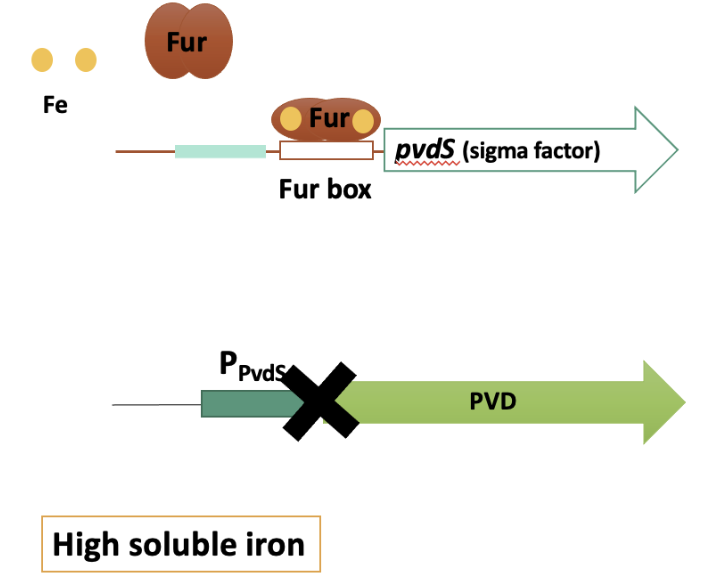
How is pyoverdine produced and regulated?
High affinity and low affinity siderophores
Pyoverdine is a high affinity siderophore
Can strip Fe away from Dipyridyl
What is competing via siderophores?
Secreted siderophores can be used by other strains that DO NOT make their own siderophores
These strains are called pirates or
social cheaters
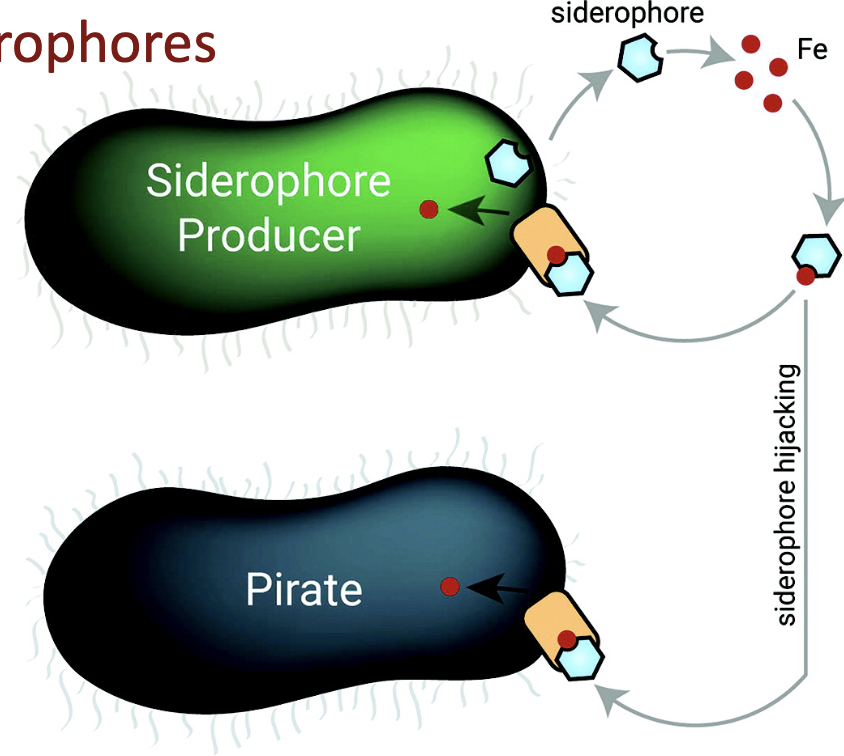
How do you identify a cheater?
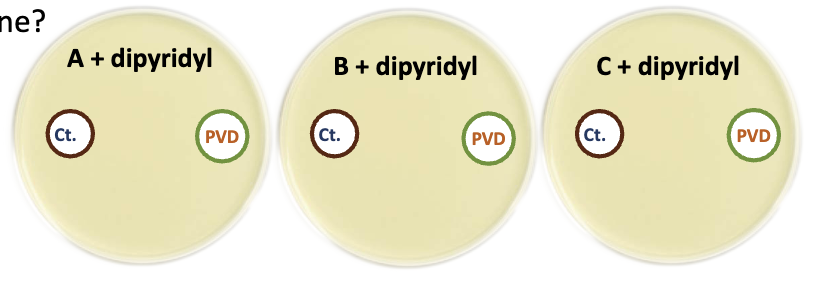
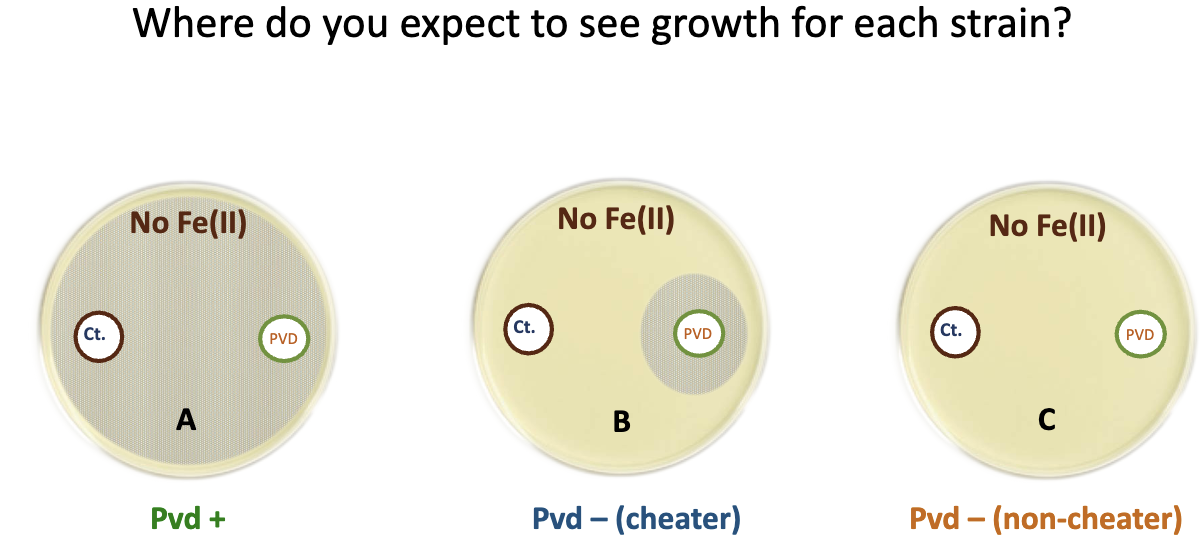
Pyoverdine producers and non-producer strains
Which Pvd - strain(s) can use pyoverdine?
Spread strains on CAA agar + dipyridyl
Add a source of PVD on top of overlay
PVD: CFS of strain A, grown in CA-broth
 Note
Note  Flashcards (20)