Activate P2.1 Electricity and Magnetism
 Call Kai
 Learn
Learn Practice Test
 Spaced Repetition
 Match
Match Flashcards
 Knowt Play
1/72

There's no tags or description
Looks like no tags are added yet.
Name | Mastery | Learn | Test | Matching | Spaced | Call with Kai |
|---|
No analytics yet
Send a link to your students to track their progress
73 Terms
P2.1.1 What are the two types of electric charge?
positive and negative
P2.1.1 What do positive charges do to other positive charges?
repel
P2.1.1 What do negative charges do to other negative charges?
repel
P2.1.1 What do negative charges do to positive charges?
attract
P2.1.1 What are the particles that everything is made from called?
atoms
P2.1.1 What are the three types of particles in atoms?
protons, neutrons and electrons
P2.1.1 What is the charge of a proton?
positive
P2.1.1 What is the charge of an electron?
negative
P2.1.1 What is the charge is a neutron?
Neutral (no charge)
P2.1.1 Which particle is transferred when a balloon is rubbed on a jumper?
electrons
P2.1.1 Why do a balloon and jumper become charged when they are rubbed together?
Because negatively charged electrons move from the jumper to the balloon.
P2.1.1 If a balloon gains electrons, what overall charge does it have?
Negative
P2.1.1. If a jumper loses electrons, what overall charge does it have?
Positive
P2.1.1. How do two objects with the same charge (positive and positive or negative and negative) behave when they are near each other?
The repel each other.
Like charges repel
P2.1.1. How do two objects with the opposite charge (positive and negative) behave when they are near each other?
They attract each other.
Opposite charges attract
P2.1.1 Why is it possible to charge a balloon, but not a spoon?
A balloon is made of rubber, which is an insulator, so the charges don't move on the balloon. (Static charge). A spoon is made of metal, which is a conductor, so the charges will flow away from the surface.
P2.1.1 What is an electric field ?
An electric field is a region where a charged particle experiences a force.
P2.1.2 What moves in circuits to create a current?
Charged particles. (In wires, these are electrons).
P2.1.2 What is current?
Current is the amount of charge that flows every second.
P2.1.2 What do you need to do to a switch to allow current to flow in a circuit?
Close it.
P2.1.2 What do you use to measure the current in a circuit?
An ammeter
P2.1.2 What is the unit of current?
The amp (symbol A)
P2.1.2 What does a battery or cell do?
A battery or cell pushes the charges around the circuit.
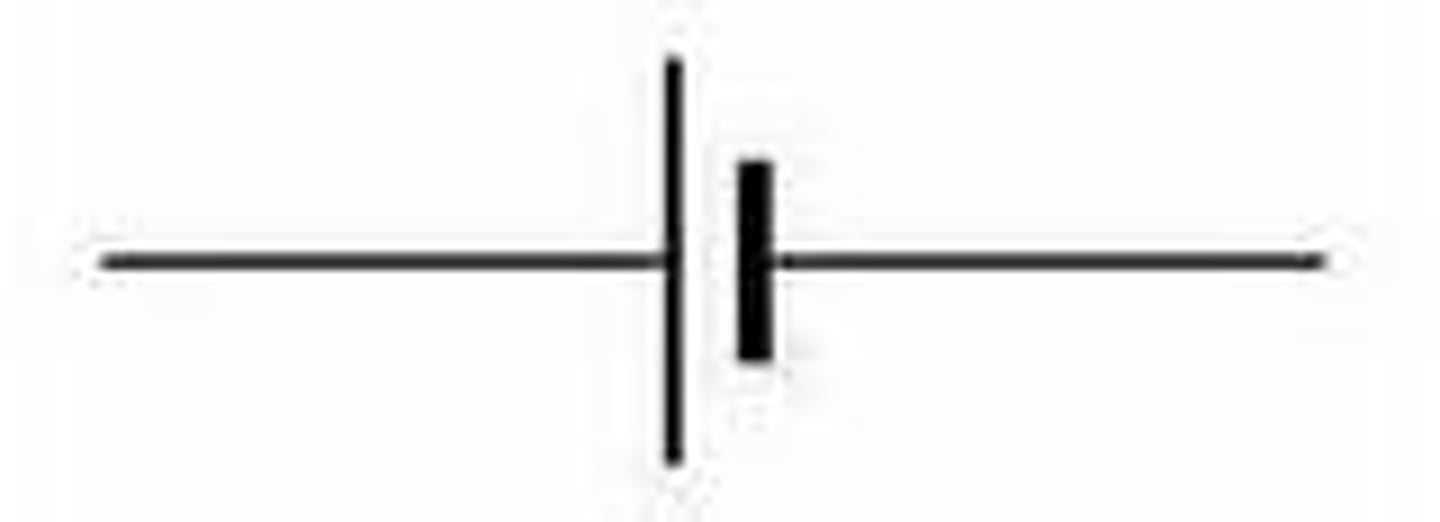
P2.1.2 What is the circuit symbol for a cell?
.
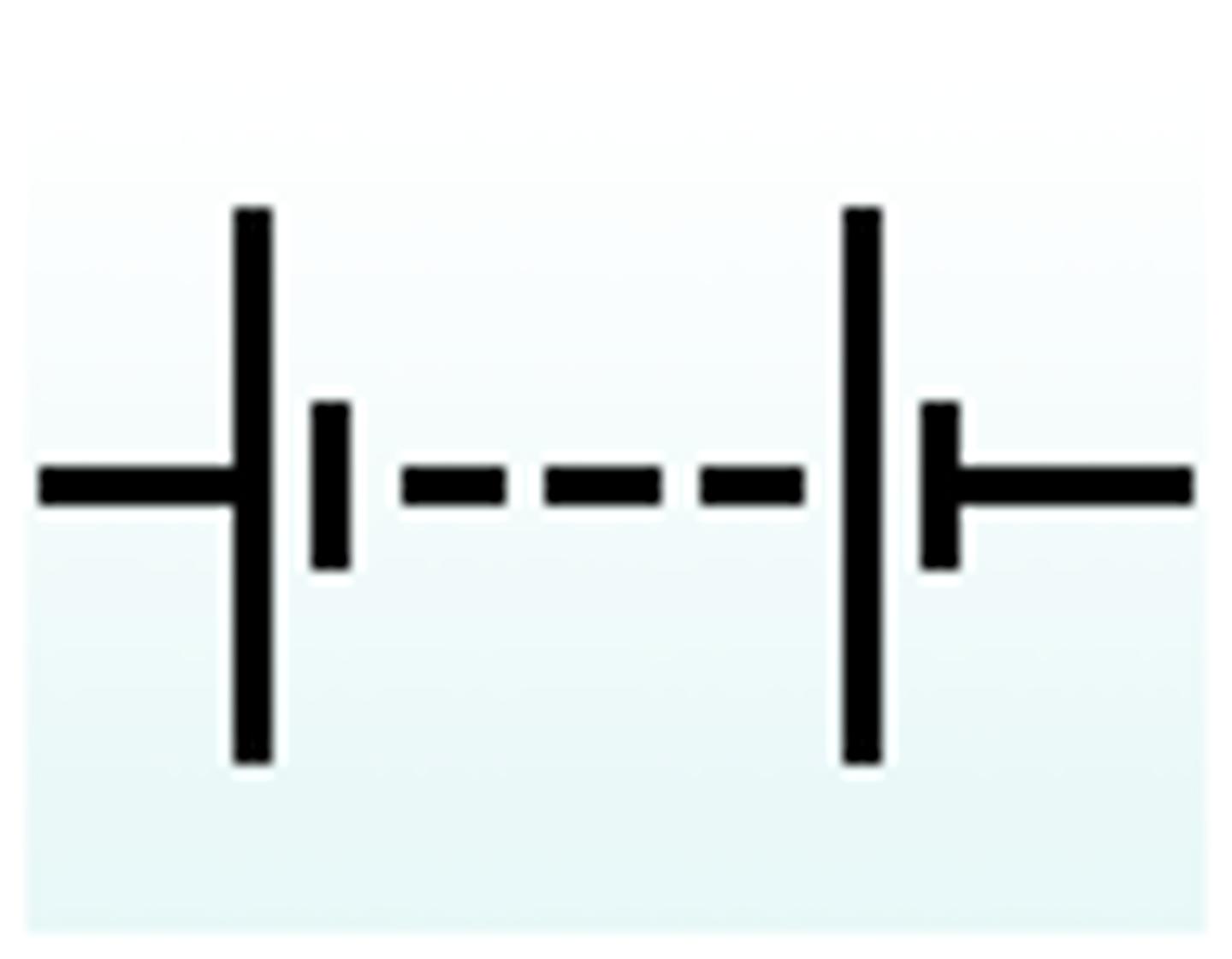
P2.1.2 What is the circuit symbol for a battery?
.
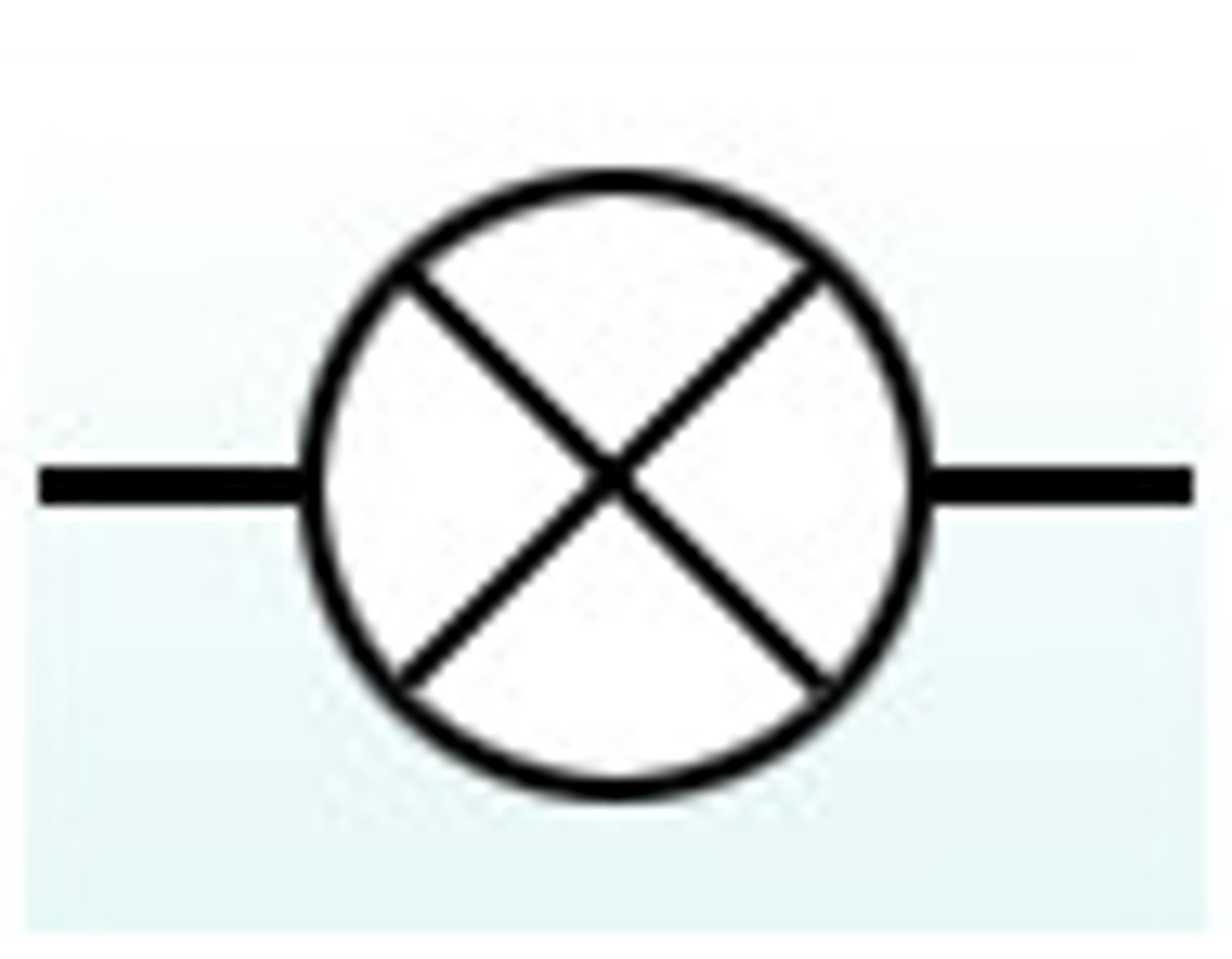
P2.1.2 What is the circuit symbol for a bulb?
.
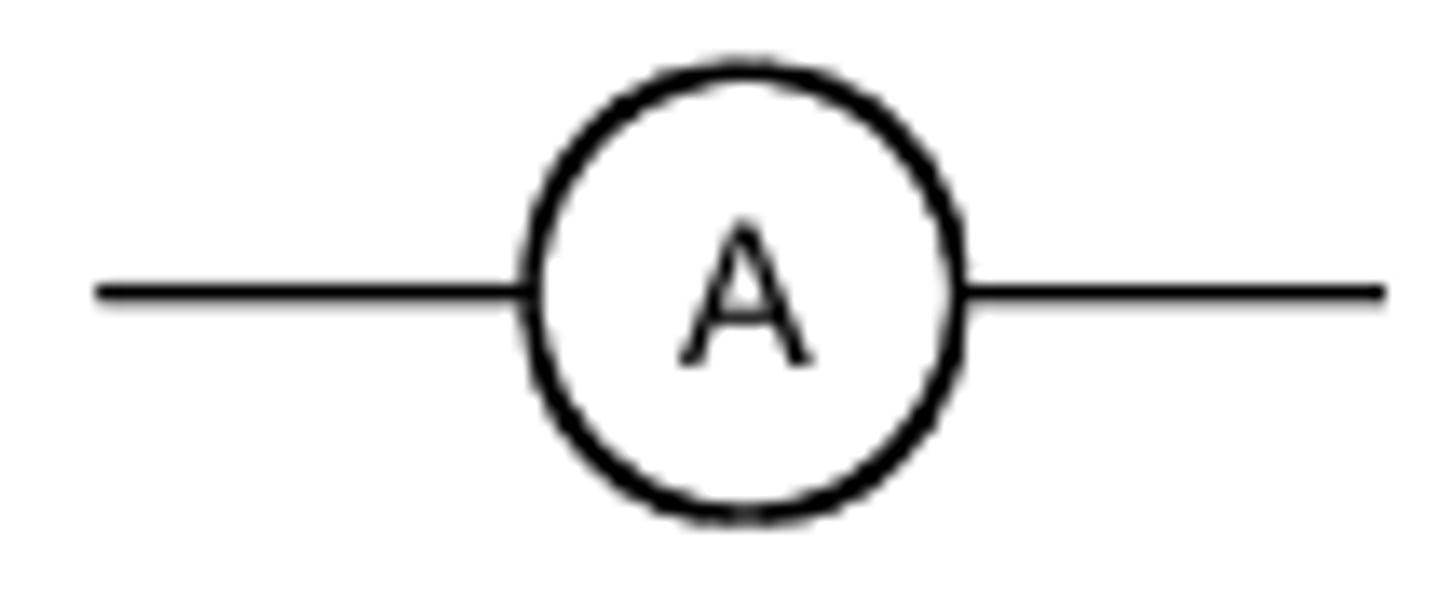
P.2.1.2 What is the circuit symbol for an ammeter?
.
P2.1.2 What is the circuit symbol for a motor?
.

P.2.1.2 What is the circuit symbol for a buzzer?
.
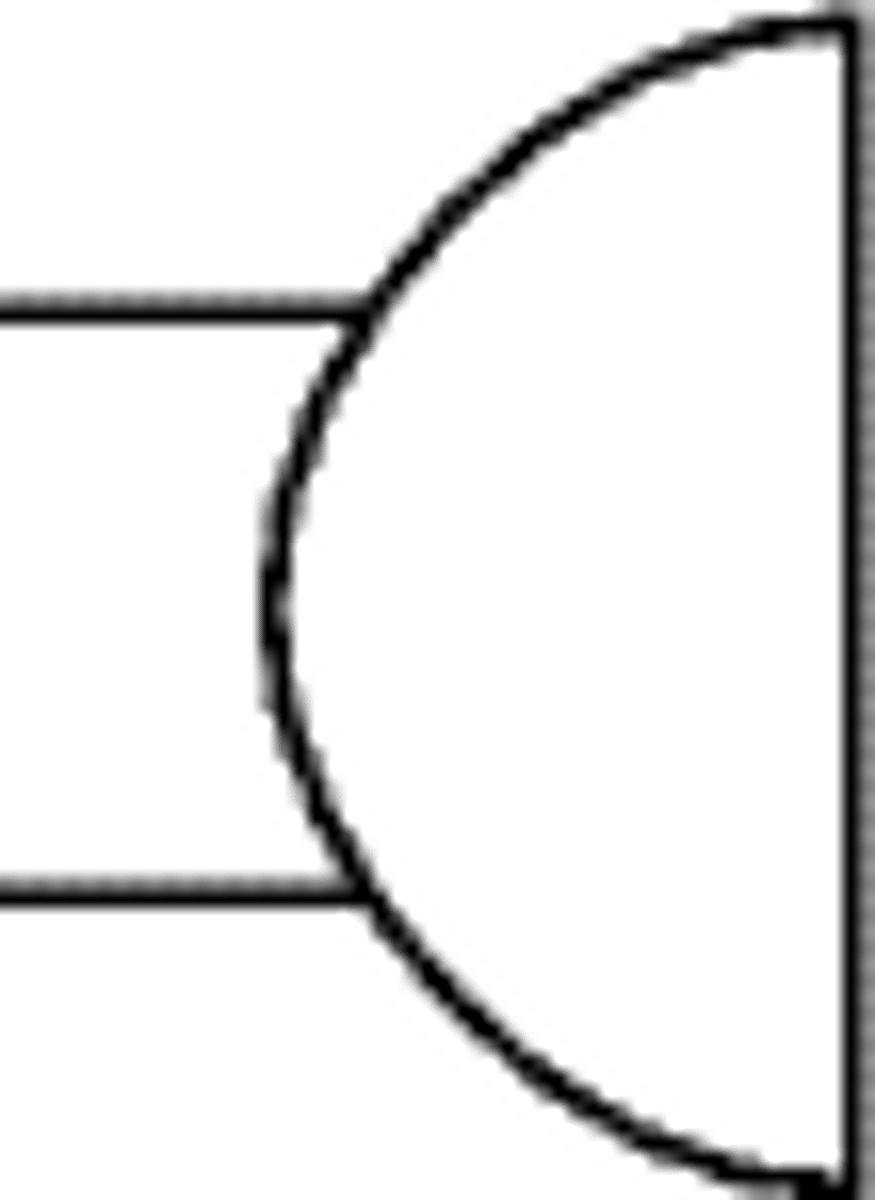
P2.1.2 What is the circuit symbol for a switch?
.
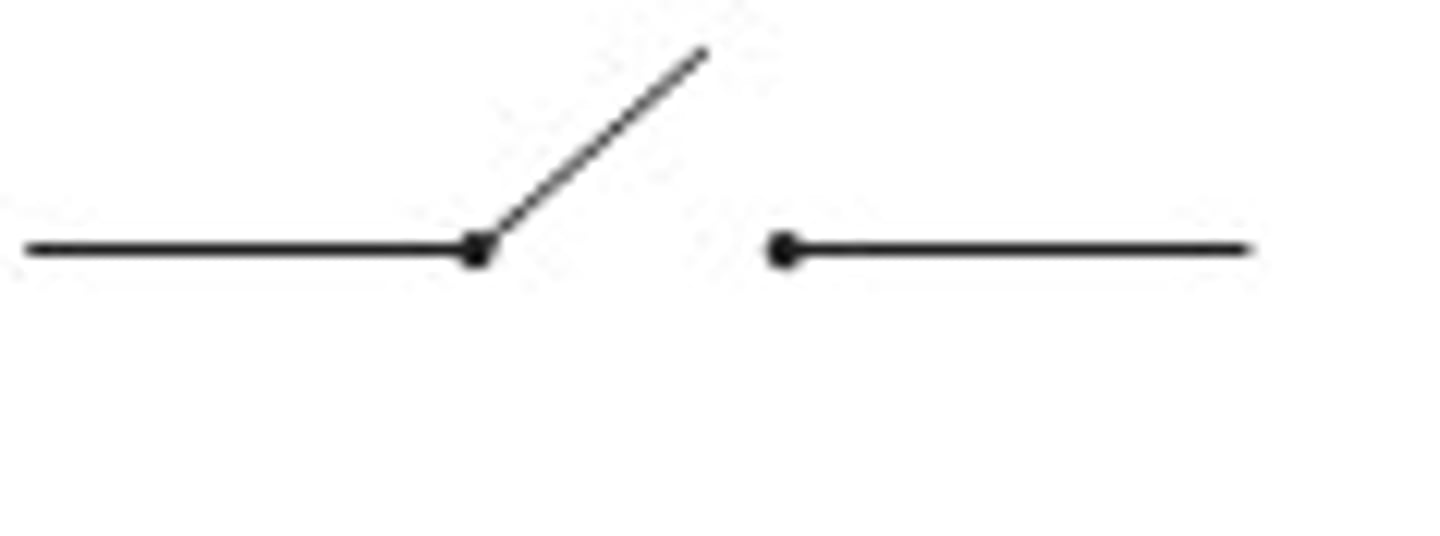
P2.1.3 What two things does the potential difference tell you about an electrical circuit?
P.D. tells you about the sizes of forces on charges
It also tells you about how much energy can be transferred to the components by the charges.
P2.1.3 What do you use to measure the potential difference?
A voltmeter
P2.1.3 What is the unit of potential difference?
The volt.
P2.1.3 What is meant by the 'rating' of a battery or cell?
The potential difference across the battery or cell.
P2.1.3 What does the 'rating' of a bulb tell you?
The maximum current that can flow through it, or the maximum potential difference across it, before it will get too hot and break.
P2.1.4 What are the two types of circuit?
Series and parallel
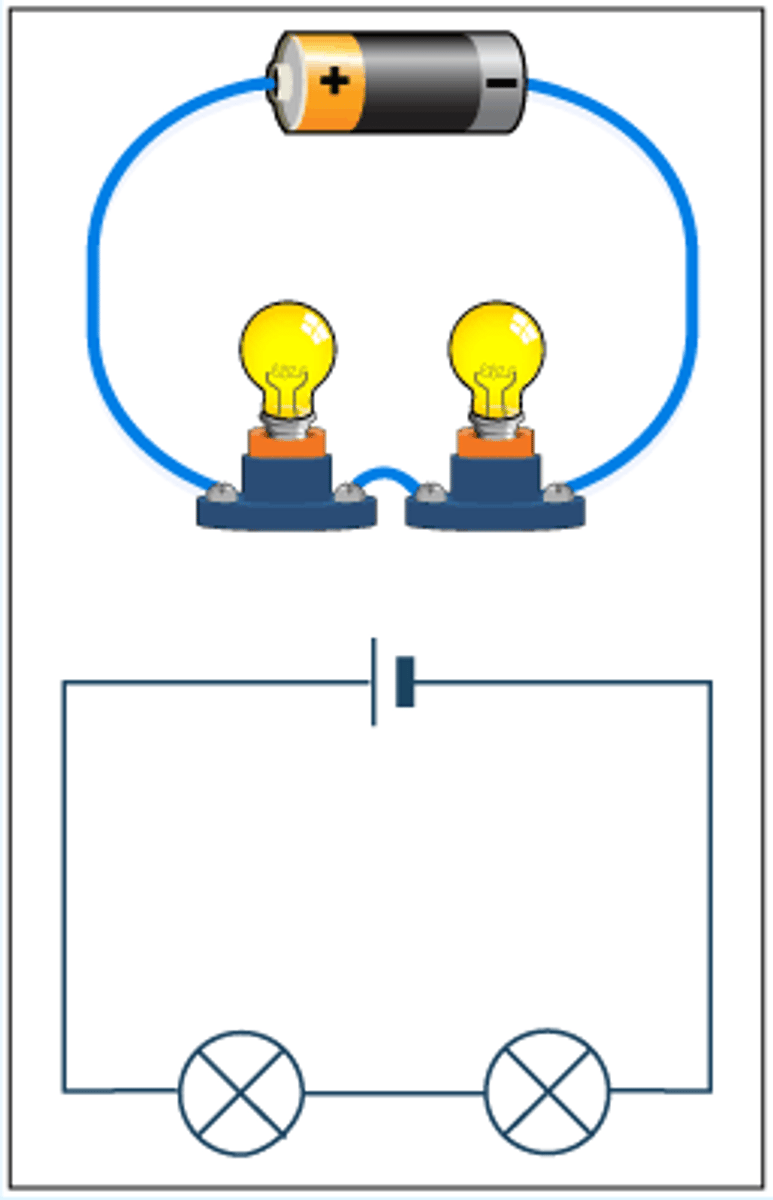
P2.1.4 What is a series circuit like?
All the components (bulbs, switches, cells) are on one loop.
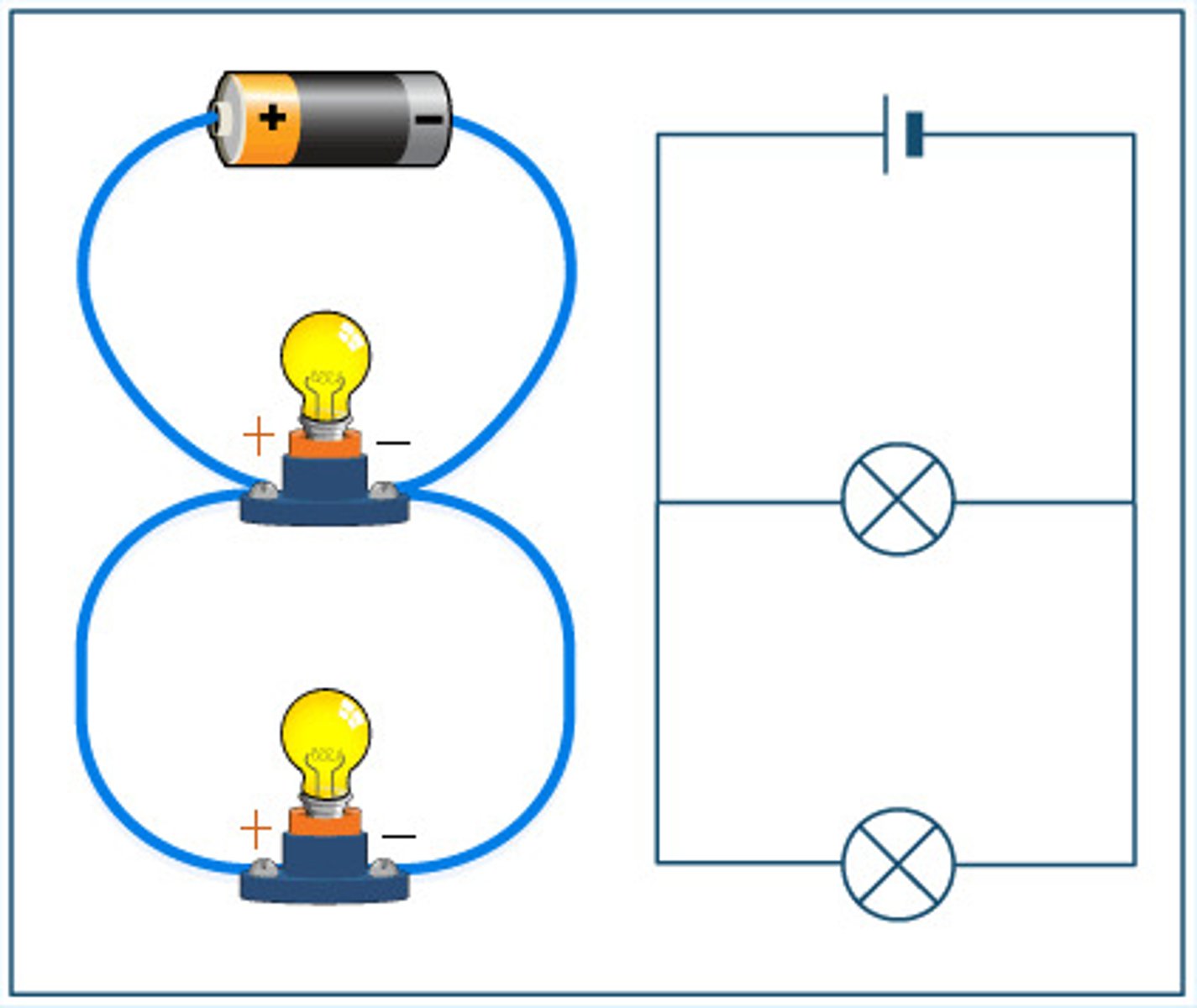
P2.1.4 What is a parallel circuit like?
There is more than one loop or branch.
P2.1.4 What happens to the other bulbs in a series circuit if one of them breaks?
The rest go out.
P2.1.4 What happens to the other bulbs in a parallel circuit if one of them break?
The bulbs on the other branches stay on.
P2.1.4 How can we control whether the bulbs on each branch of a parallel circuit are on or off?
Add a switch to each branch.
P2.1.4 How does the current in a series circuit vary as it goes around the circuit?
Current is the SAME everywhere in a series circuit.
P2.1.4 How does the current in a parallel circuit vary around the circuit?
The current flowing through the battery/cell splits when it reaches the junction for the branches.
P2.1.4 What happens to the potential difference in a series circuit?
The potential difference of the bulbs (buzzers and motors) adds up to be equal to the potential difference of the battery/cell.
P2.1.4 What happens to the potential difference in a parallel circuit?
The potential difference of the bulbs in the branches is the same as the potential difference of the battery/cell.
P2.1.5 What is resistance?
It tells you how easy of difficult it is for current to pass through a component.
P2.1.5 What is the unit of resistance?
Ohm (Ω)
P2.1.5 What happens to the resistance of a circuit if you add more bulbs?
The resistance will increase.
P2.1.5 How do you calculate current if you have resistance and potential difference?
current(A) = potential difference(V) ÷ resistance(Ω)
P2.1.5 How do you calculate resistance if you have current and potential difference?
resistance(Ω) = potential difference(V) ÷ current (A)
P2.1.5 What is the resistance of a metal like?
It is low because metals are good conductors.
P2.1.5 What is the resistance of an insulator like?
It is high, so current doesn't flow.
P2.1.6 What are the names of the two poles of a magnet?
North and south
P2.1.6 Which poles of the magnet will attract each other?
North and South poles attract each other
P2.1.6 Which pole of the magnet repel each other?
North repels north
and
south repels south
P2.1.6 What are magnetic materials?
Materials that are attracted by magnets.
P2.1.6 What are three magnetic materials?
Iron, nickel and cobalt.
P2.1.6 What is a magnetic field?
A region where a magnetic material experiences a force.
P2.1.6 What does the magnetic field around a bar magnet look like?
.
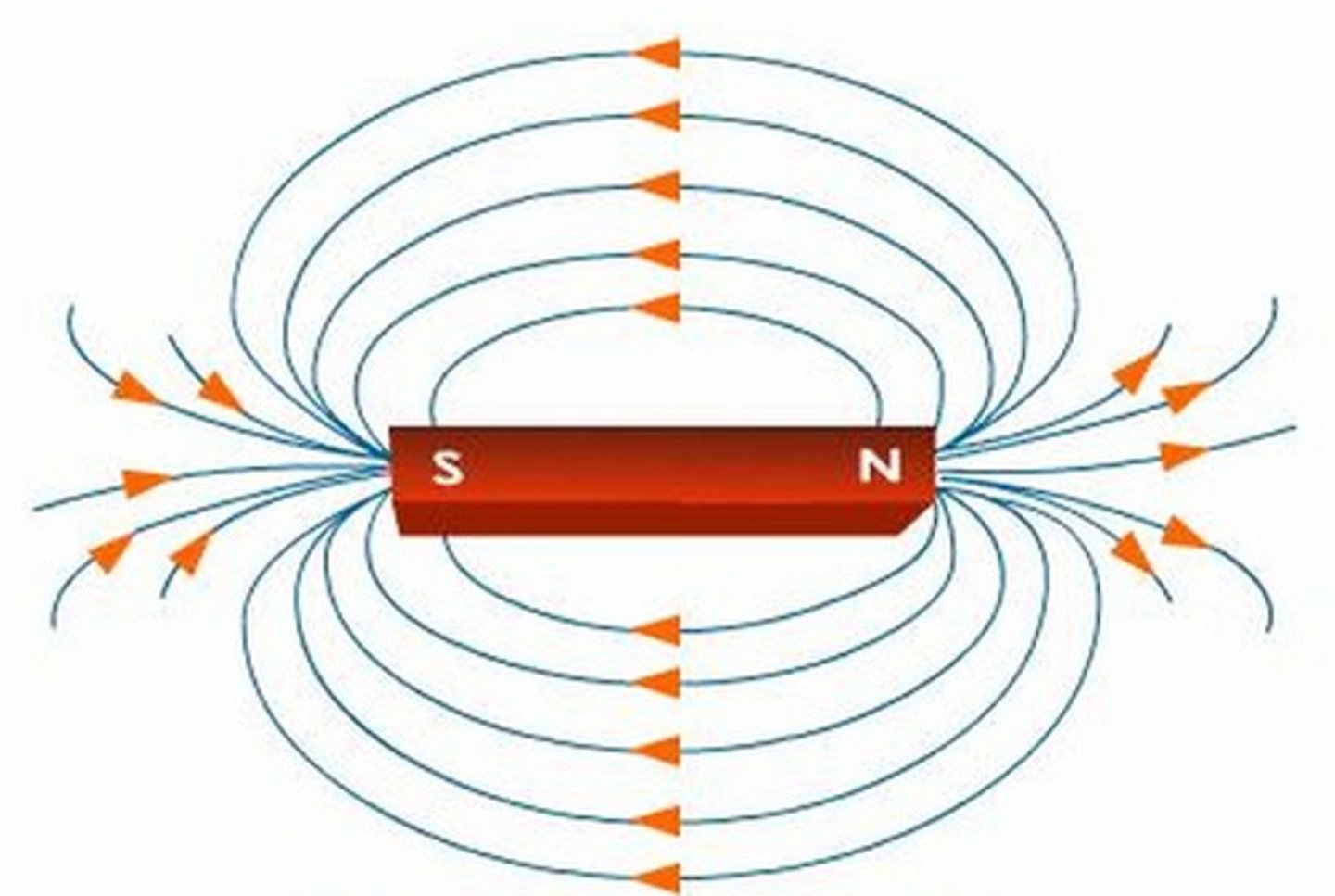
P2.1.6 Why is it possible to use a compass to plot magnetic field lines?
The needle of a compass lines up with magnetic field lines.
P2.1.6 What direction do magnetic field lines go?
From the north pole to the south pole of the magnet.
P.2.1.6 How do the field lines show how strong a magnetic field is?
The closer the field lines the strong the magnetic field in that area.
P2.1.6 Where is the strongest part of the magnetic field?
Near the poles.
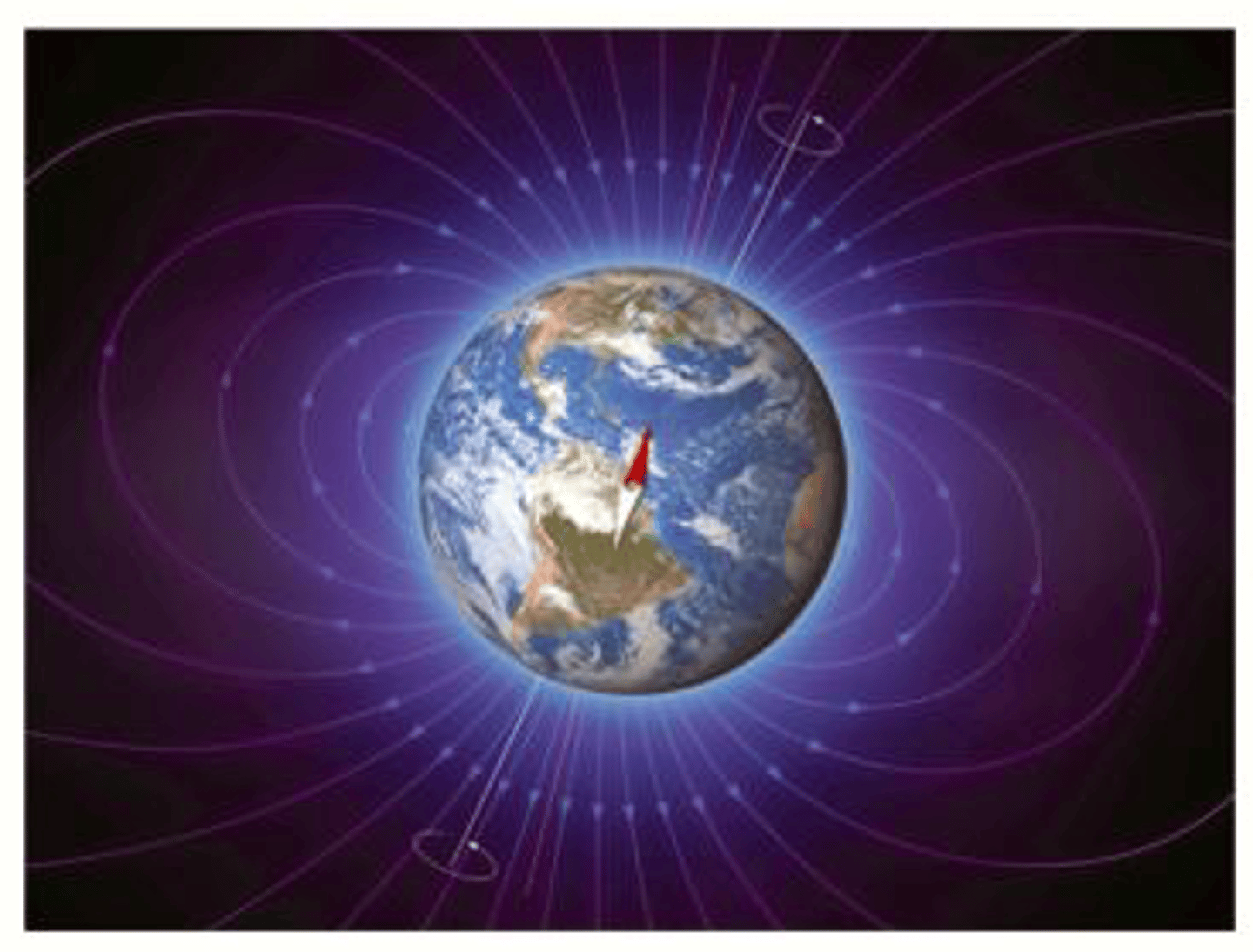
P2.1.6 What is the magnetic field around the Earth like?
It is like the one around a bar magnet.
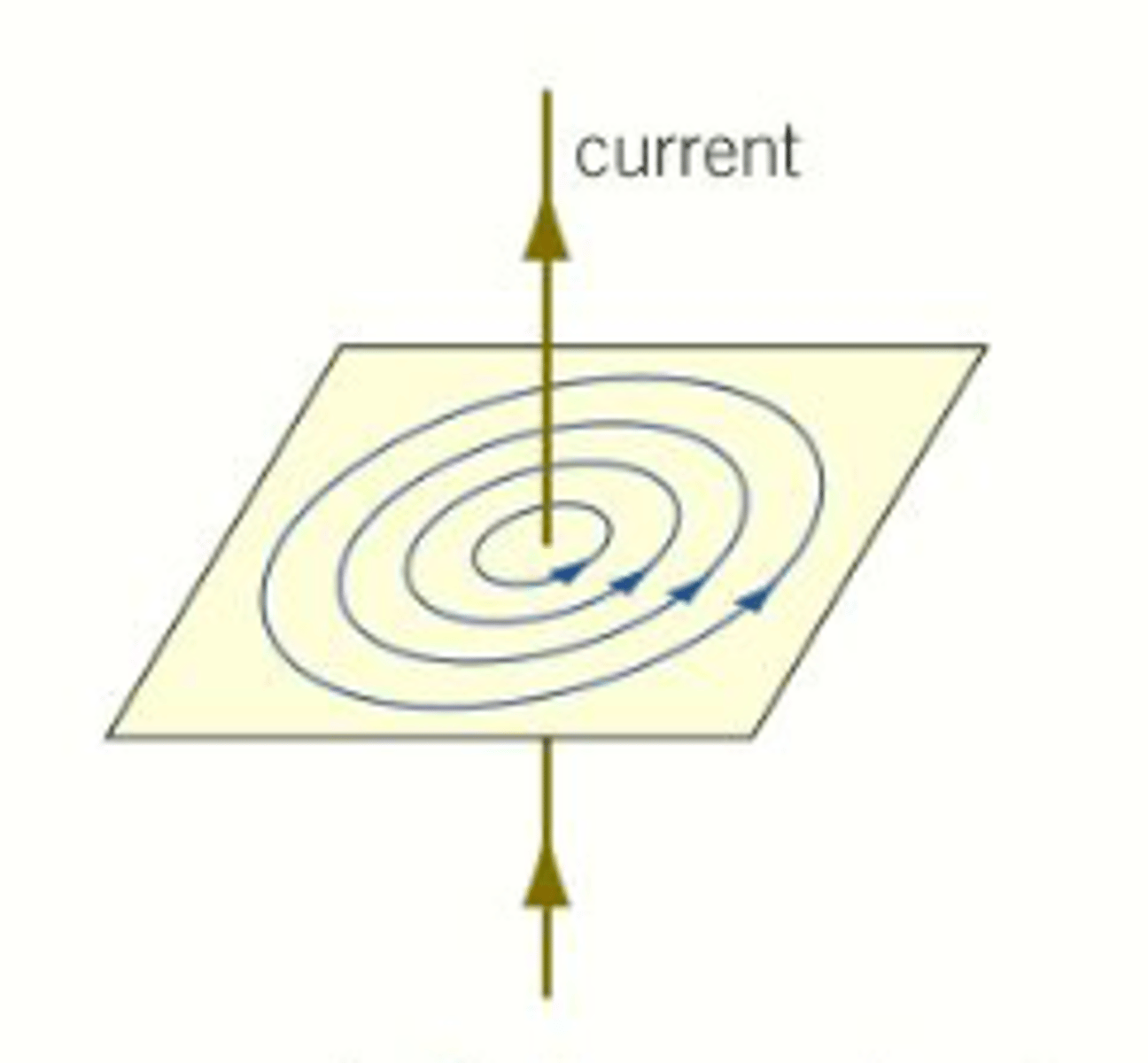
P2.1.7 How do you produce a magnetic field around a wire?
Switch the current on.
P2.1.7 What is the magnetic field like around a wire?
It is circular.
P2.1.7 What does the magnetic field around an electromagnet look like?
Like a bar magnet.
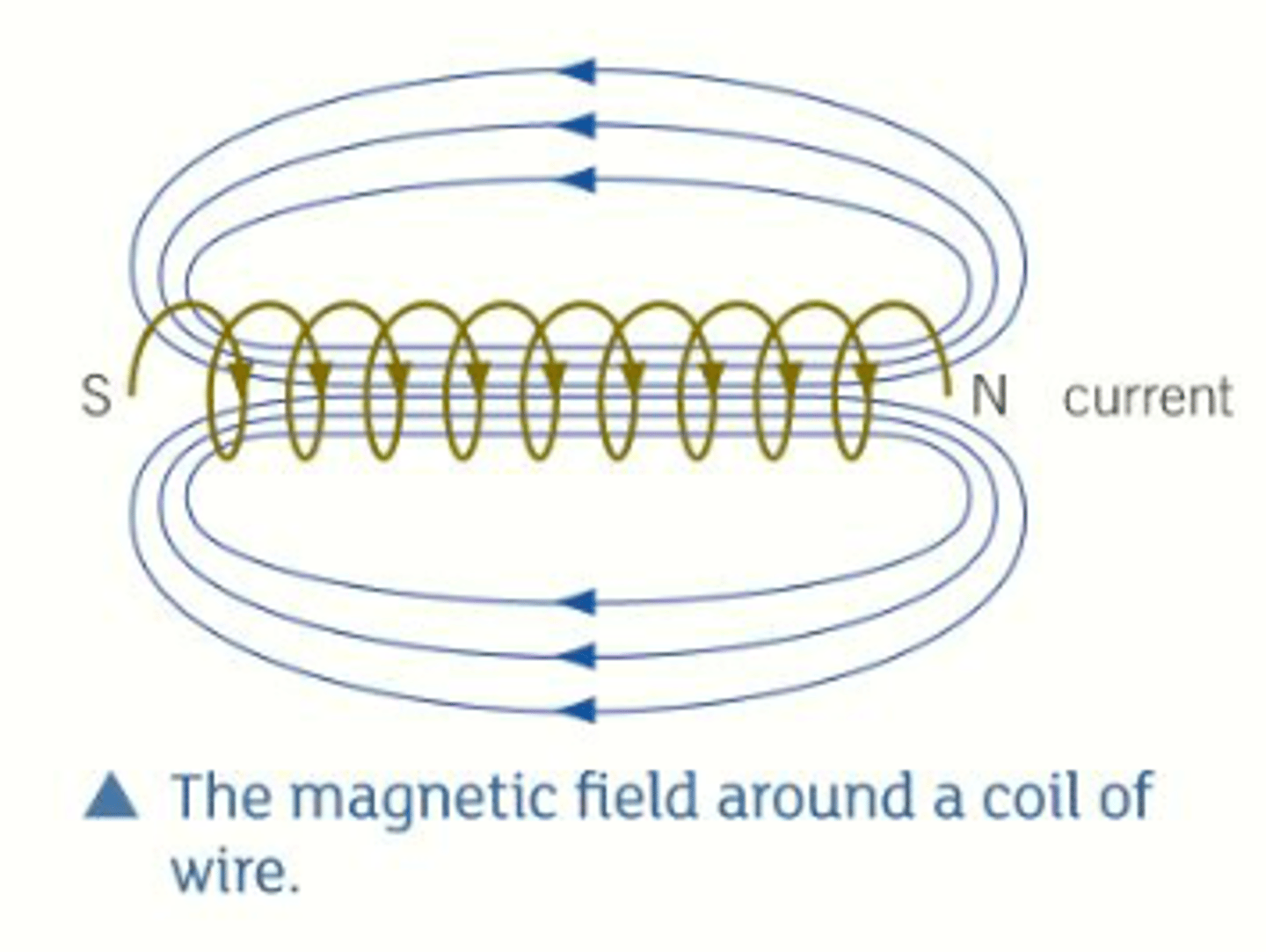
P2.1.7 How do you make an electromagnet stronger?
Increase the current
Increase the number of coils
Use an iron core
P2.1.7 What are the advantages of using an electromagnetic over a permanent magnet?
1. electromagnets can be switched off
2. electromagnets can be made much stronger than permanent magnets
P2.1.8 What is the name of the train that uses magnetism to help it levitate above the track to reduce friction and go faster?
The Maglev.
P2.1.8 What is a relay?
An electrical component that uses magnetism to allow a small current in one circuit to switch on a large current in another circuit.
P2.1.8 How are electromagnets used in a scrap yard?
They are strong enough to lift iron or steel cars and help move them by lifting.
P2.1.8 What can you use to make a simple motor?
A coil of wire, a power supply (battery) and a magnet.

