C6 Rate of Reaction
 Studied by 1 person
 Call Kai
 Learn
Learn Practice Test
 Spaced Repetition
 Match
Match Flashcards
 Knowt Play
1/8

Earn XP
Description and Tags
IGCSE Chemistry
Name | Mastery | Learn | Test | Matching | Spaced | Call with Kai |
|---|
No analytics yet
Send a link to your students to track their progress
9 Terms
What do you need in order for a chemical reaction to occur?
For the activation energy (Ea) to be overcome, and molecules of the reactants to undergo a collision in the correct orientation
What are successful collisions?
When reactants collide with sufficient energy to overcome the activation energy, they form new products in the reaction
What is collision theory?
States that for a reaction to take place, reactant molecules must collide with each other, and that these colliding molecules must posses sufficient energy and be properly orientated for a collision to be effective
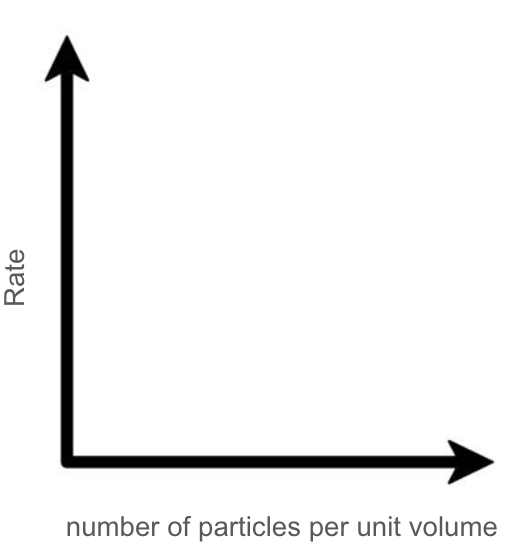
How does this affect rate of reaction?
Increasing concentration will increase the rate of reaction because more particles in the same space will lead to more frequent collisions between reactant molecules, so there’s a higher chance of successful collisions resultig in a reaction
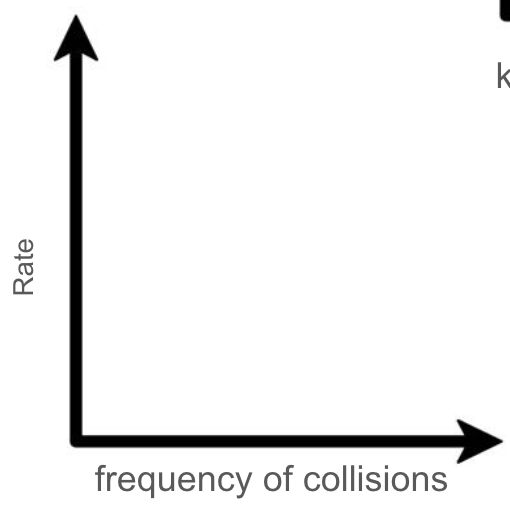
How does this affect rate of reaction?
Increasing frequency of collisions between particles increases the rate of reaction, given that the increase in temperature or pressure leads to more frequent collisions
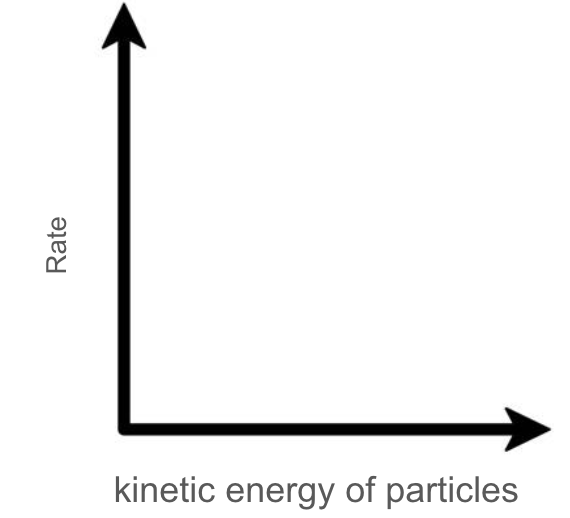
How does this affect rate of reaction?
Increasing the temperature increases the kinetic energy (KE) of particles, leading to more frequent collisions, which in turn increases the rate of reaction
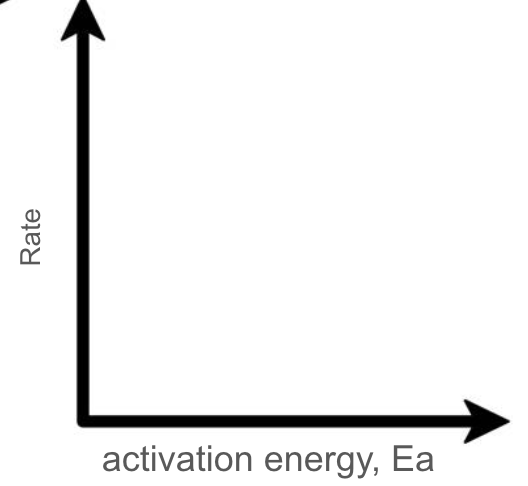
How does this affect rate of reaction?
A higher activation energy (Ea) will slow down the reaction (slower rate of reaction), while a lower Ea will accelerate it (higher rate of reaction)
What are some physical changes present in a reaction? Give examples
Change of state, easily reversible without the need for a chemical reaction
Ex: Separating mixtures
What are some chemical changes present in a reaction? Give examples
Requires a chemical reaction to occur, impossible to reverse without another chemical reaction happening. 2 conditions are required to occur: Ea must be overcome, and molecules of the reactants must undergo a collision in the correct orientation
Ex: Iron rusting, photosynthesis
 Note
Note  Flashcards (44)