Economics Definitions Unit 3 & 4 Year 12 2022
0.0(0)
 Studied by 1 person
 Call Kai
 Learn
Learn Practice Test
 Spaced Repetition
 Match
Match Flashcards
 Knowt Play
Card Sorting
1/156

Last updated 2:37 PM on 11/10/22
Name | Mastery | Learn | Test | Matching | Spaced | Call with Kai |
|---|
No analytics yet
Send a link to your students to track their progress
157 Terms
1
New cards
Absolute Advantage
When a country / producer can provide a good or service in greater quantity for the same cost than its competitors
2
New cards
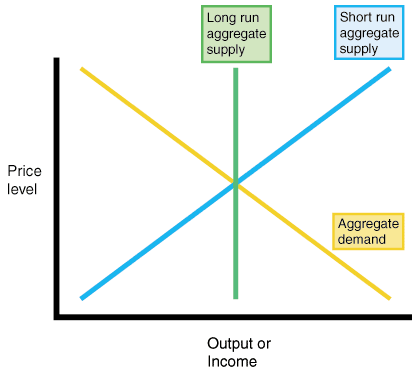
AD / AS model
3
New cards
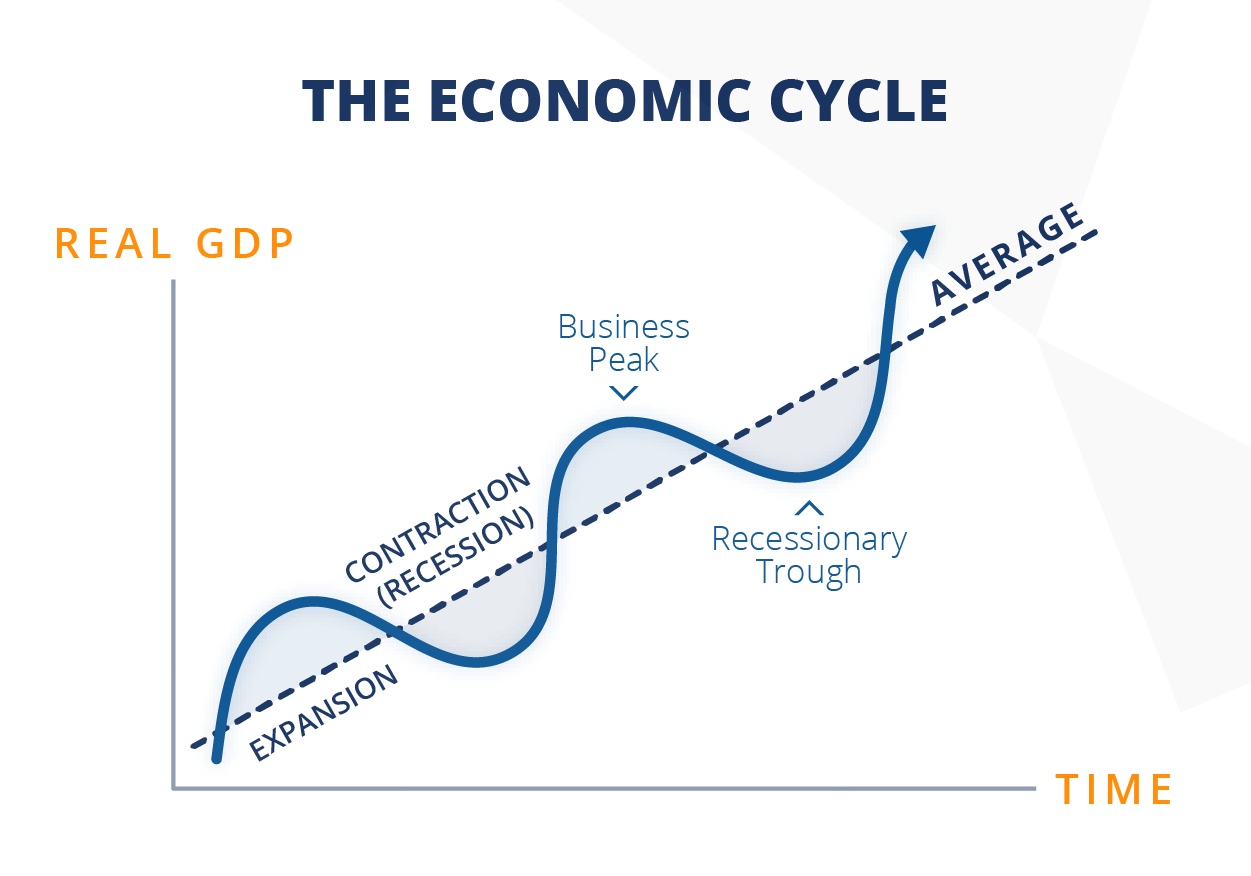
Business cycle
The circular movement of an economy as it moves from expansion to contraction and back again
4
New cards
Aggregate Demand
The total demand for goods and services within a particular market
5
New cards
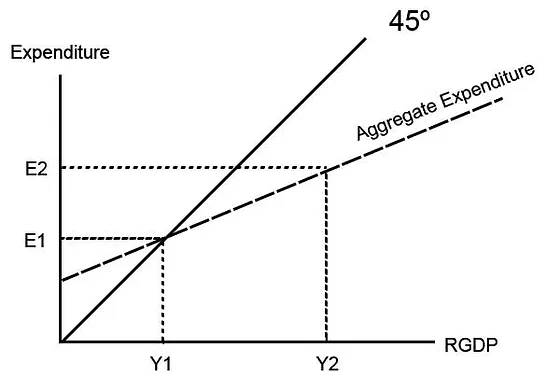
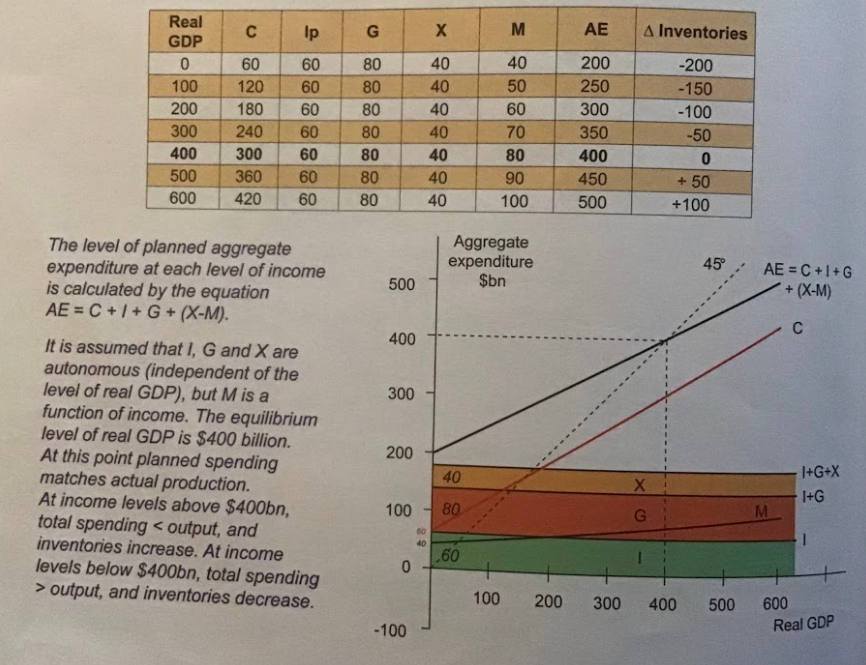
AD and AE Formula
Consumption + Investment + Government Expenditure + Net Exports
6
New cards
Aggregate demand management
Monetary or Fiscal policies that aim to stabilise the business cycle; it manages Aggregate ______ in the short term
7
New cards
AE model
8
New cards
Consumption Function Formula
Total Consumption = Basic Consumption + (Marginal Propensity to Spend x Income)
9
New cards
AE determinants
Interest rates, expectations, fiscal policy, wealth and exchange rates are the determinants of what?
10
New cards
Keynesian Model
11
New cards
Aggregate supply
The total supply of goods and services produced within an economy at a given overall price in a given period
12
New cards
SRAS and LRAS
The positive relationship between aggregate price and amount of aggregate output supplied in an economy vs The relationship between price level and real GDP that shows that output will be optimal in the long run and is independent to price level
13
New cards
Appreciation and Depreciation
The rise in value of a country's currency due to high demand, low supply vs the fall in value of a country's currency due to low demand, high supply
14
New cards
Trade Protection
Policies that protects domestic industries from foreign competition.
E.g: tariffs, subsidies, quotas, and currency manipulation
E.g: tariffs, subsidies, quotas, and currency manipulation
15
New cards
Trade liberalisation
The removal or reduction of restrictions or barriers on the free exchange of goods between nations.
E.g: removing tariffs, quotas, non-tariff barriers (licenses, embargoes, forex restrictions, and import deposits)
E.g: removing tariffs, quotas, non-tariff barriers (licenses, embargoes, forex restrictions, and import deposits)
16
New cards
Arguments for Protection
- Anti dumping argument - Vital
- Infant industry argument - Vital
- Diversification argument - Vital
- National security argument - Vital
- Increased employment argument
- Cheap foreign labour argument
- Favourable balance of trade argument
- Infant industry argument - Vital
- Diversification argument - Vital
- National security argument - Vital
- Increased employment argument
- Cheap foreign labour argument
- Favourable balance of trade argument
17
New cards
Arguments for Liberalisation
- Increases real incomes and living standards
- Increases efficiency through greater competition
- Increases productivity through efficient resource allocation
- Domestic producers gain through lower input prices
- Enables greater specialisation and economies of scale
- Increases efficiency through greater competition
- Increases productivity through efficient resource allocation
- Domestic producers gain through lower input prices
- Enables greater specialisation and economies of scale
18
New cards
Commodity Currency
A currency that co-moves with the world pries of primary commodity products. In other words, a currency that is heavily dependent on their commodities (e.g: AUD and iron ore)
19
New cards
AUD recent trends
Between 2010 and 2020, the average value of AUD was USD 0.84, which was well above the long term average of USD 0.76 and reached its highest peak at July 2011 due o the mining boom, valued at USD 1.10
20
New cards
Balance of Payments
The summary of all the economic transactions of an economy with the rest of the world.
Current + Capital + Financial = ______
Current + Capital + Financial = ______
21
New cards
Current Account
The account recording net trade of goods and services, investment income (primary) and transfer payments (secondary).
22
New cards
Capital Account
The account recording capital transfers and acquisitions / disposals of non-produced / non-financial assets (e.g: patents).
23
New cards
Financial Account
The account recording foreign investment into Australia and Australian investment abroad (e.g: Direct investment to Toyota).
24
New cards
Primary Income
The income residents receive through wages and salaries, as well as the income receivable by the owner of a financial asset through dividends interest payments, etc.
25
New cards
Secondary Income
The income where real or financial resources are provided but nothing of economic value is received in return, an example of such would be foreign aid.
26
New cards
Net Exports
The net difference between the export and import of goods and services, X - M
27
New cards
Automatic Stabilisers
Mechanisms, economic policies and programs that automatically help stabilise an economy during a boom or a trough. e.g: unemployment, welfare, tax revenue
28
New cards
MPC vs APC
How much more individuals will spend for every additional dollar of income (ΔC/ΔY) vs The percentage of income that is spent rather than saved (C/Y)
29
New cards
MPS vs APS
How much mroe individuals will save for every additional dollar of income (ΔS/ΔY) vs The percentage of income that is saved rather than spent (S/Y)
30
New cards
Debit vs Credit
Negative entry, imports of goods and services, increase in foreign assets, import of currency vs Positive entry, exports of goods and services, increase in foreign liabilities, export of currency
31
New cards
Deficit vs Surplus
When negative entries have the highest value vs when positive entries have the highest value.
In a budget surplus, the government is receiving more money than it is spending
In a current account deficit, the nation is importing more than it is exporting.
In a budget surplus, the government is receiving more money than it is spending
In a current account deficit, the nation is importing more than it is exporting.
32
New cards
Big Mac Index
An index that measures the purchasing power parity between nations, using the price of a Big Mac in that nation as the benchmark. e.g: Comparing the price of a Big Mac in the US and AU.
33
New cards
Government Budget Balance
The prepared amount money a nation's government has been using during a given period of time, its budget outcomes show the current actions a government is taking
34
New cards
Budget Deficit vs Surplus
When government expenditure exceed revenue vs when government revenue exceeds expenditure
35
New cards
Budget Outcome
The outcome of a government's budget after a period of time or event has occurred, e.g: A budget surplus during levels of high economic activity.
36
New cards
Business and Consumer Confidence
The degree to which consumers and firms feel confident about their financial position and overall state of the economy, affects decisions in consumption, investment, net exports and even government spending due to infrastructure or programs.
37
New cards
International Competitiveness
The degree to which a country's goods and services can meet the test of international markets while simultaneously maintaining and expanding the incomes of its people in the long term. The competitiveness of a nation's goods and services in the global market
38
New cards
Capital Stock
The amount of common and preferred shares that a company is authorised to issue, according to its corporate charter.
39
New cards
Capital Good
The assets used by businesses in the course of producing their products and services, includes buildings, machinery, tools and equipment
40
New cards
Cash Rate
The interest rate which banks pay to borrow funds from other banks in the money market on the overnight basis, generally causes the interest rates throughout an economy to change.
41
New cards
Cash Rate Target
The RBA's current interest rate target that must be achieved to increase or reduce actual GDP in relation to potential GDP
42
New cards
Types of Indicators
Leading (Future Prospects), lagging (Confirmation) and coincident (Current Hints)
43
New cards
Comparative Advantage
An economy's ability to produce a particular good or service at a lower opportunity cost than its trading partners.
44
New cards
Composition of Trade
The makeup of an entire country's international trades regarding the exports and imports.
45
New cards
Trade Weighted Index
An average of foreign exchange rates weighted against the amount of trade conducted with that country.
46
New cards
Consumer Price Index
A measure of the average change overtime in the prices paid by urban consumers for a market basket of consumer goods and services.
47
New cards
Consumer and Producer Surplus
The difference between what a consumer is willing to pay and what they paid for a product vs the difference between the market price and the lowest price a producer is willing to accept to produce / sell a good.
48
New cards
Interest Rates
The proportion of a loan that is charged as interest to the borrower, it is the rate that a borrower is charged for the privilege of borrowing money.
49
New cards
Contractionary vs Expansionary Gap
A gap that occurs when the economy's real GDP is lower than its potential GDP (At full employment), also known as recessionary gaps vs a gap that occurs when the economy's real GDP exceeds its potential GDP.
50
New cards
Contractionary vs Expansionary Policy
Fiscal (Taxes) or Monetary (Cash rate) policies that aim to reduce the expansionary gap to avoid hyperinflation vs policies that aim to reduce the contractionary gap to avoid an economic crisis.
51
New cards
Monetary Policy
Policies that aim to change interest rates or the money supply, targeting inflation and is independent from the government. Has side effects on exchange rate and housing market. Suffers impact lag heavily.
52
New cards
Fiscal Policy
Policies that aim to change the tax rates or government spending, targeting the economy at large and depends on government orders. Has side effects on budget and borrowing. Suffers from decision lag heavily.
53
New cards
Countercyclical
Policies that counteract the effects of the economic cycle, aiming to control periods of instability / volatility during a boom or trough.
54
New cards
Exchange Rate
The relative price of one currency expressed in terms of another currency.
55
New cards
Cost-push Inflation
The phenomenon that occurs when overall prices increase due to increases in the cost of wages and raw materials. Occurs when higher costs of production decreases AS in the economy.
56
New cards
Crowding In
When higher government spending results in higher demand, an increase in private investment occurs due to an increase in public investment. E.g: Improvement of infrastructure increases private investment due to higher productivity.
57
New cards
Crowding Out
When higher government spending results in lower demand, a decrease in private investment occurs due to an increase in public investment. E.g: Improvement of infrastructure causes interest rates to increase because government has been borrowing too much.
58
New cards
Supply and Demand of Currency
The supply of currency provided in the forex market and the demand of that currency from foreign countries looking to obtain the currency
59
New cards
Indicators
A piece of economic data that is used by analysts to interpret and determine the current state of the economy and its future prospects.
60
New cards
Income Deficit
When the negative entries in the primary and secondary income accounts exceeds positive entries. Usually occurs due to a high volume of currency importing to pay for imported goods.
61
New cards
Foreign Liability
The stock of domestic assets owned by overseas residents and the total amount of money Australia owes to overseas firms. In other words, the assets that WE have to pay for because they are owned by overseas firms.
62
New cards
Foreign Debt
Money borrowed by a government, corporation or private household from another country's government or private lenders. Private sector debt has the highest share of all foreign debt in AU.
63
New cards
Cyclical Unemployment
Unemployment that occurs due to the changes in economic activity over the business cycle. Peaks during an economic downturn due to the lack of available jobs.
64
New cards
Structural Unemployment
Unemployment that occurs due to shifts in an economy as time goes on. Long-lasting and occurs over time due to new jobs being available and old jobs becoming redundant, or a mismatch between company needs and available workers.
65
New cards
Natural Rate of Unemployment
The minimum employment rate resulting from real or voluntary economic forces. Acts as the target unemployment rate in economies. E.g: Recent uni graduates looking for work.
66
New cards
Cyclical Balance
The changes that occur in the budget balance as the economy moves through the business cycle, following the fluctuations of economic activity, unemployment, etc.
67
New cards
Deadweight Loss
A cost to society created by market inefficiency, which occurs when supply and demand are out of equilibrium. Generally occurs when subsidies, tariffs, price ceilings / floors, etc. are implemented.
68
New cards
Decision Lag
The period between the time when the need for action is recognised and the time when action is taken; a weakness of fiscal policy.
69
New cards
Dirty Float
A floating exchange rate where a country's central bank occasionally intervenes to change the direction or the pace of change of a country's currency value.
70
New cards
Real Float
A floating exchange rate where a country's currency price is determined by the foreign exchange market, depending on the relative supply and demand of other currencies.
71
New cards
Discretionary Fiscal Policy
Fiscal policy that involves changing tax rates or levels of government spending, opposite to automatic stabilisers.
72
New cards
Disposable Income
Income remaining after taxes, available to be spent or saved by the individual.
73
New cards
Multiplier effect
The effect on national income and product of an exogenous increase in demand, formula is 1 / 1 - MPC.
74
New cards
Direct Investment
A long term investment that involves acquiring 10% or more worth of shares of a company, generally done to capitalise on an overseas economy's future prospect.
75
New cards
Portfolio Investment
A short term investment that involves acquiring less than 10% worth of shares of a company, generally done to make money.
76
New cards
Dutch Disease
The phenomenon where rapid development of one sector of the economy (usually natural resources) indirectly causes a decline in other sectors. Characterised by a substantial appreciation of the domestic currency making export of other goods and services difficult.
77
New cards
Economic Growth
An increase in the size of a country's economy over a period of time, measured by GDP.
78
New cards
Economic Objectives of Government
Full employment, price stability, sustainable rate of economic growth, and rising standard of living.
79
New cards
Economic Transaction Types
Goods, services, income, financial assets, and financial liabilities are examples of?
80
New cards
Economic Welfare
The level of prosperity in the economy and standard of living of people living in a country. Also defined as the sum of consumer and producer surplus.
81
New cards
Subsidy vs Tariff
A direct or indirect payment to individuals or firms from the government to support their production vs A tax imposed by one country on the imported goods and services from another country.
82
New cards
Effects of Subsidy
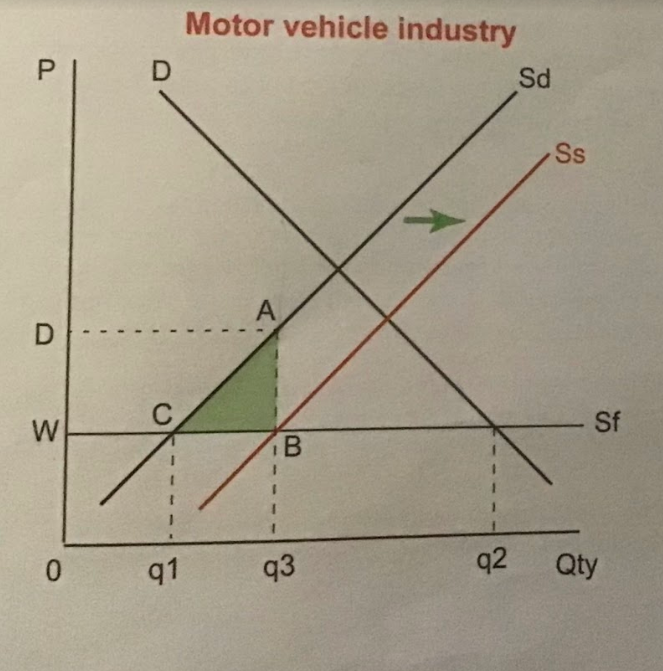
Lowers domestic producer's cost so they can compete more favourably against imports. The cost of the subsidy (DABW) exceeds the increase in producer surplus (DACW), resulting in a deadweight loss (ABC).
83
New cards
Effects of Tariff
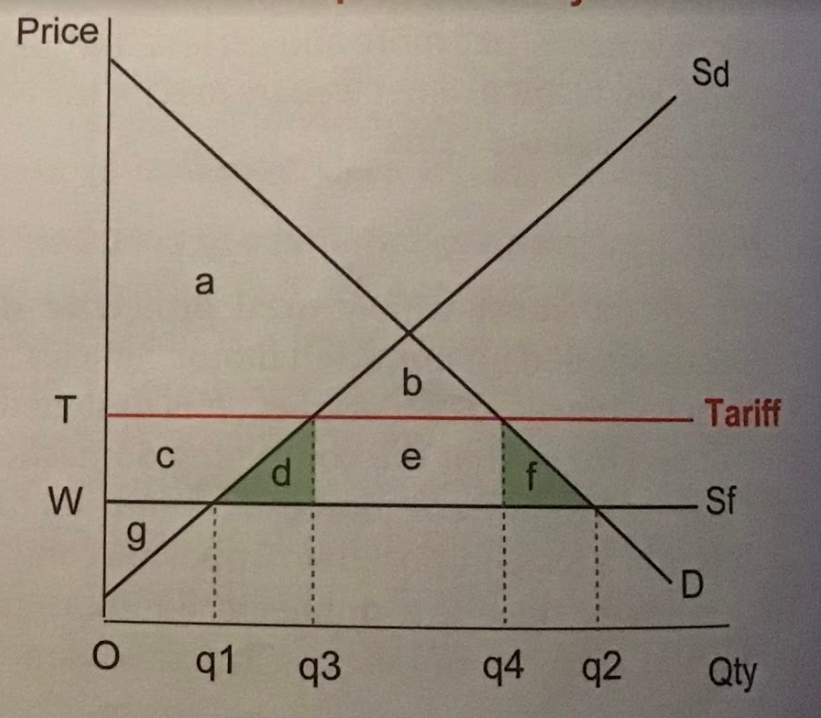
Increases the price of imports so they compete less favourably against domestic goods. Domestic producers gain by increasing output, but other producers exporters suffer because tariffs increase their costs (resource imports), thus a deadweight loss is created (d + f) between the foreign supply and the tariff.
84
New cards
Elasticity
The degree to which the quantity demanded of a good or service in relation to price movements of that good or service.
85
New cards
Equitable Distribution of Income
An macroeconomic objective of the government that ensures welfare is distributed to ensure fairness and allowing members of the economy to have the same opportunity to accumulate wealth.
86
New cards
External Shocks
An unexpected events that dramatically changes an entire economy's direction.
87
New cards
Hedging
The method of reducing the risk of loss caused by price fluctuation.
88
New cards
Mining Boom
One of the largest shocks to the Australian economy that caused a period of high economic growth, full employment and high inflation due to the discovery and development of the gathering of a natural resource.
89
New cards
GFC of 2008
The period of extreme stress in global financial markets and banking systems between 2007 and 2009, caused by a housing bubble that eventually left bank holding trillions of dollars of worthless investments in mortgages.
90
New cards
Export Price Index
An index that measures the changes in the prices of the domestic goods and services that are exported overseas. Formula = Year 2 Price / Year 1 Price
91
New cards
Fiat Currency
A type of currency that is not backed by a physical commodity, but rather by the government that issued it. E.g: The AUD.
92
New cards
Fiscal Policy Weaknesses
- Suffers from recognition and decision prominently
- Considered inflexible
- Cannot be changed too often
- Can cause crowding out effect
- Considered inflexible
- Cannot be changed too often
- Can cause crowding out effect
93
New cards
Fiscal Policy Strengths
- Impact lag is less prominent
- Considered direct
- More effective in recession
- Encourages employment via government spending and tax cutting
- Considered direct
- More effective in recession
- Encourages employment via government spending and tax cutting
94
New cards
Monetary Policy Weaknesses
- Impact lag is prominent due to the public interest not focusing on interest rates
- Less effective in a contraction or trough
- Considered blunt; it cannot impact a specific sector
- Less effective in a contraction or trough
- Considered blunt; it cannot impact a specific sector
95
New cards
Monetary Policy Strengths
- Recognition and decision lag or less prominent due to independence from the government
- More effective in an upswing or boom
- Affects net exports (Income and financial account)
- Affects exchange rate (interest rate differential)
- The bluntness allows for interest rates to be changed more often because of public disinterest.
- More effective in an upswing or boom
- Affects net exports (Income and financial account)
- Affects exchange rate (interest rate differential)
- The bluntness allows for interest rates to be changed more often because of public disinterest.
96
New cards
Floating vs Fixed Exchange Rate
The exchange rate is determined by supply and demand of the country's currency vs the exchange rate is determined by the country's government.
97
New cards
Problematic Foreign Debt
When foreign debt is used to finance things that do not increase the living standards or welfare of an economy, or when the economy is borrowing the wrong amount.
98
New cards
Foreign Equity
The level of foreign ownership of domestic assets, see foreign asset and direct investment.
99
New cards
Foreign Exchange Market
The global market place that determines the exchange rate for currencies around the world, participants buy, sell and exchange currency to import / export things.
100
New cards
Full Employment
The macroeconomic object where by the unemployment rate equals the (nonaccelerating) inflation rate of unemployment, no cyclical unemployment exists, and GDP is at its potential. Generally achieved during a boom.
 Note
Note  Flashcards (73)