SCI part 1
 Call Kai
 Learn
Learn Practice Test
 Spaced Repetition
 Match
Match Flashcards
 Knowt Play
1/39

There's no tags or description
Looks like no tags are added yet.
Name | Mastery | Learn | Test | Matching | Spaced | Call with Kai |
|---|
No analytics yet
Send a link to your students to track their progress
40 Terms
injury at spinal cord is LMN or UMN issue?
UMN
Which vertebral level does spinal cord end at?
Does it go into sacral levels?
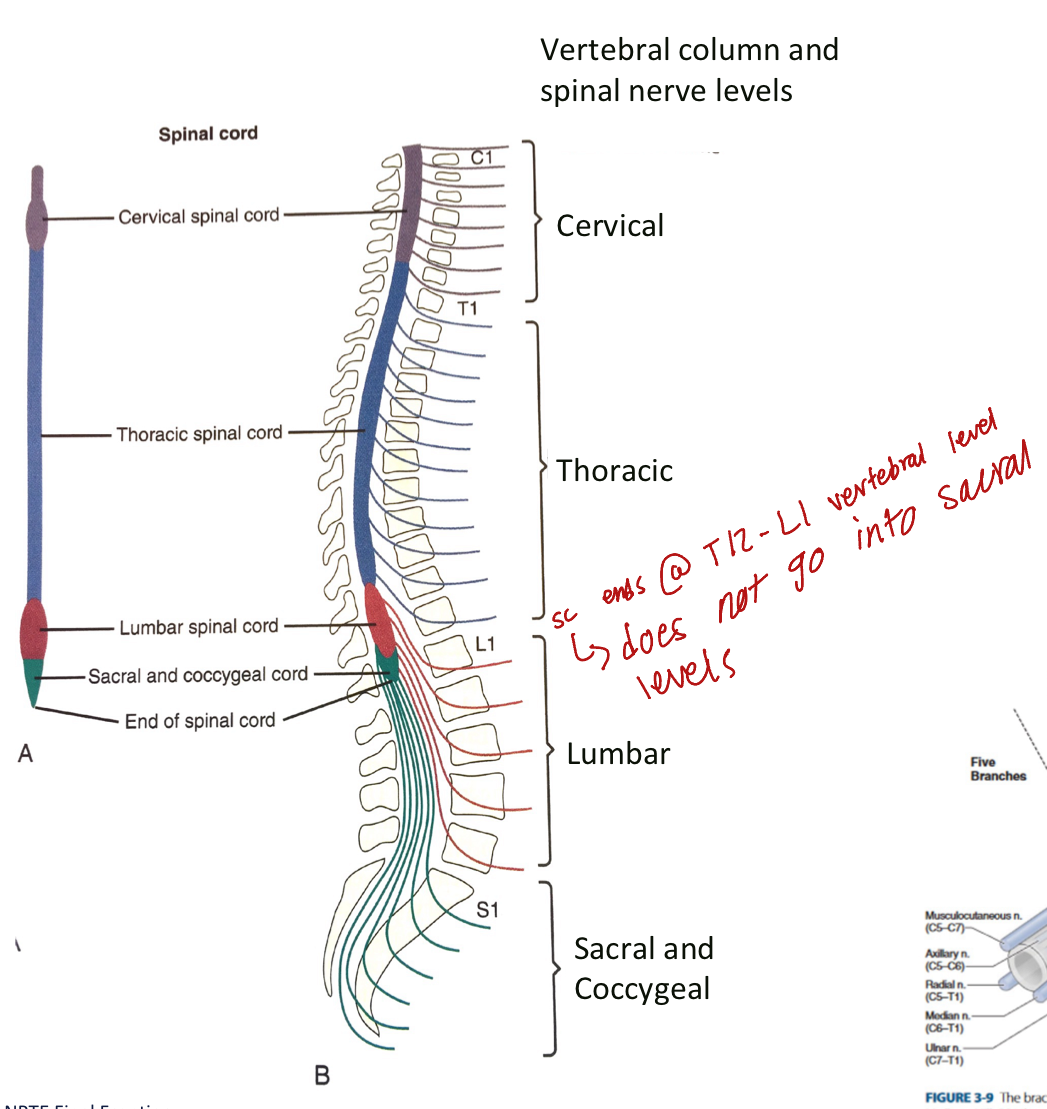
Where does the spinal level end at?
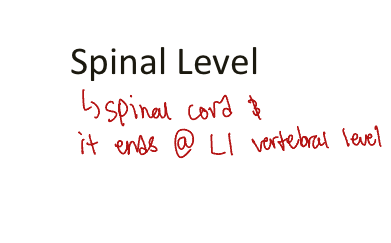
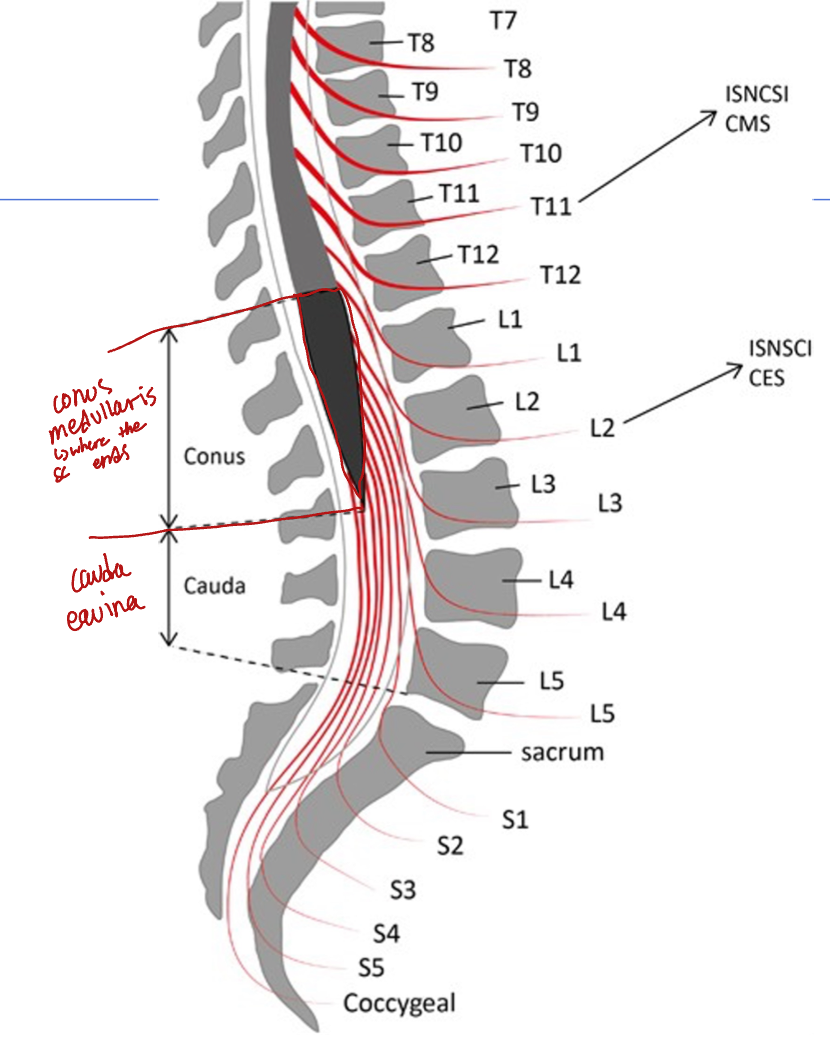
Does the spinal cord end at conus medullaris Or equina? Where does that end?
Tracts and Their Functions:
What are the 2 sensory - ascending tracts?
What’s the motor - descending tract?

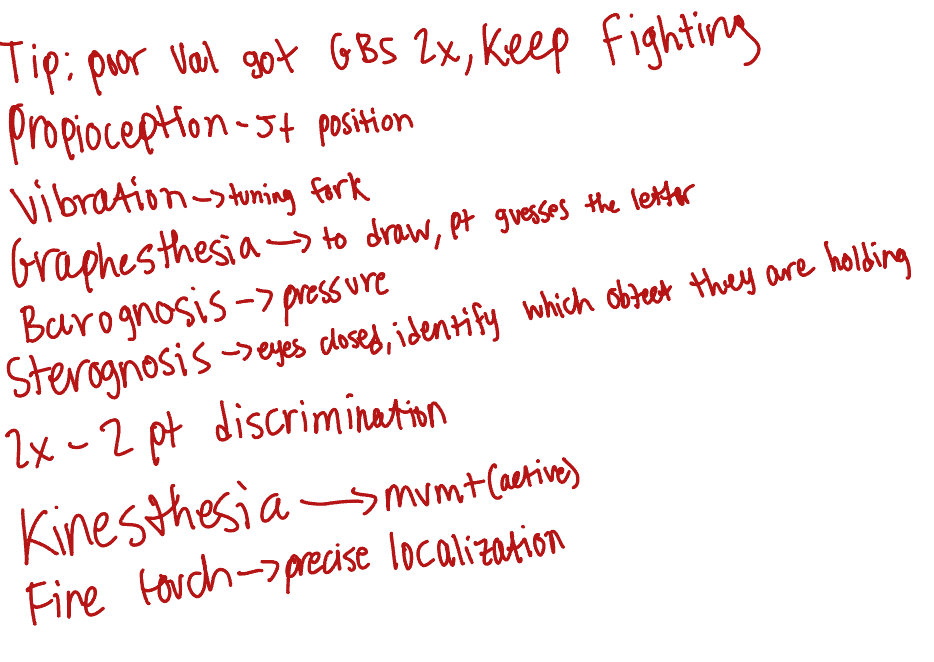
Dorsal column medial lemniscus:
What are the fxns? And whats the tip?
Anterolateral system/spinothalamic tracts:
What are the 2 types?
What are their fxns?
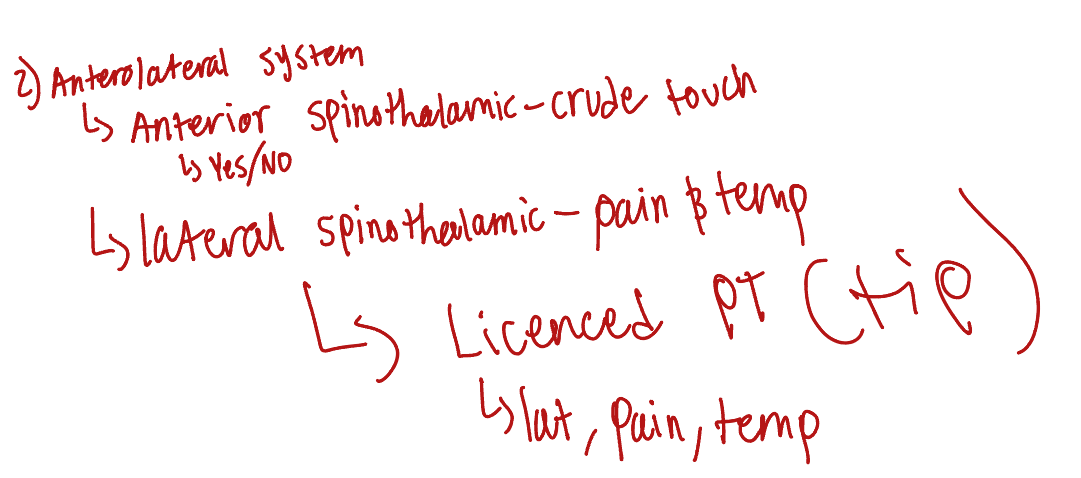
for NPTE:
How do you assess touch for DCML?
Light touch
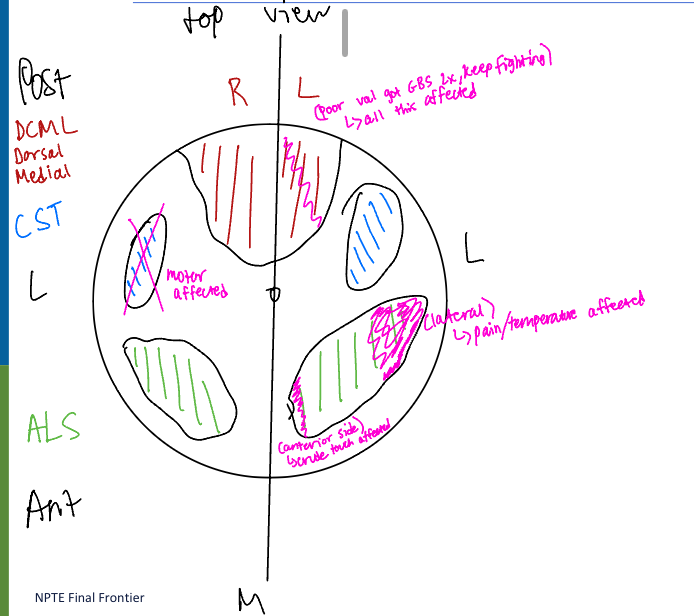
study and explain it
A patient presents with the inability to sense and name the alphabets that the physical therapist is drawing on the patient’s hand. Which of the following is MOST LIKELY to be affected along with this presentation?
A. Inability to sense temperature difference B. Inability to identify objects with eyes closed C. Inability to sense pin prick with eyes closed D. Inability to sense crude touch
B
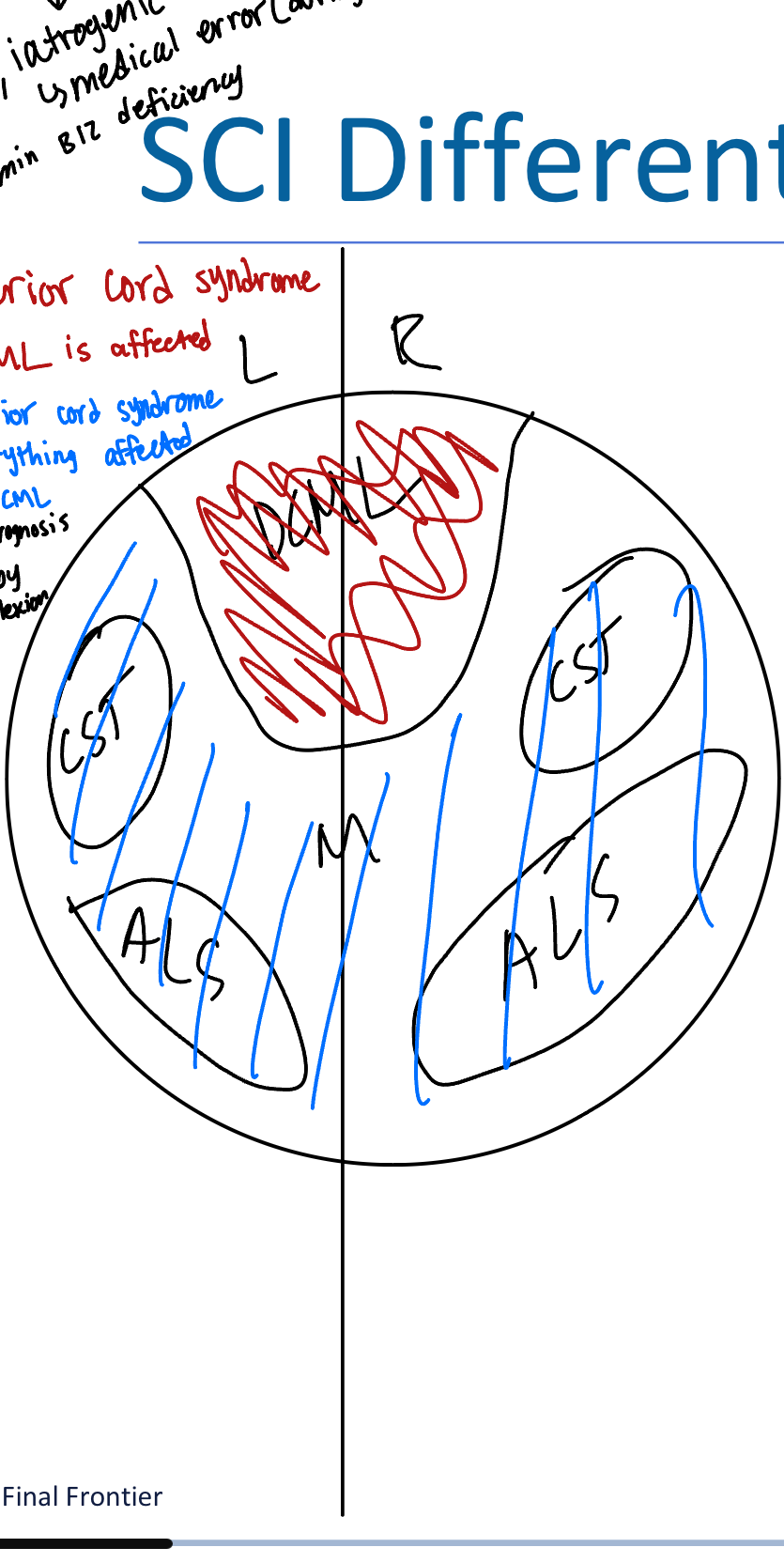
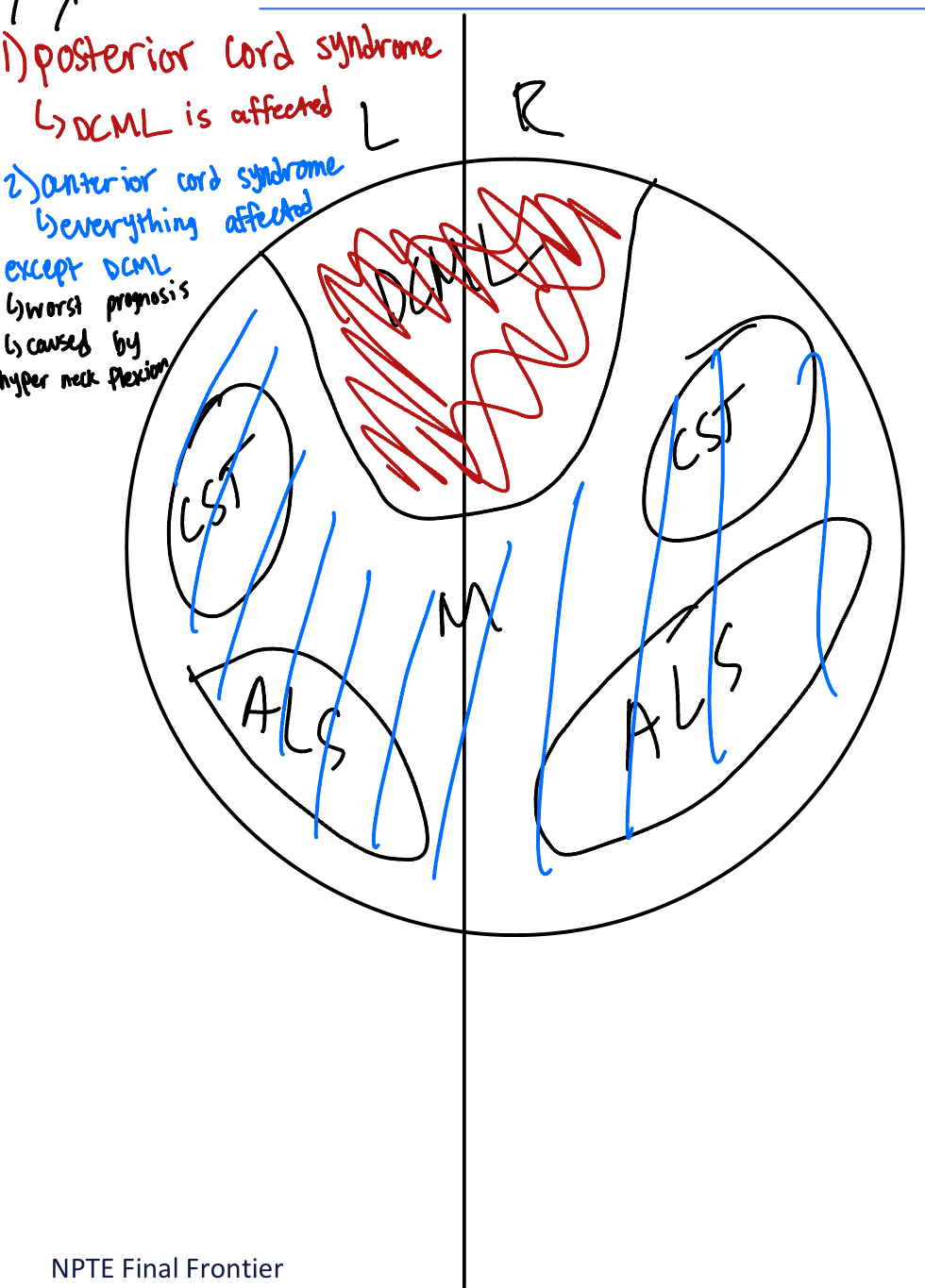
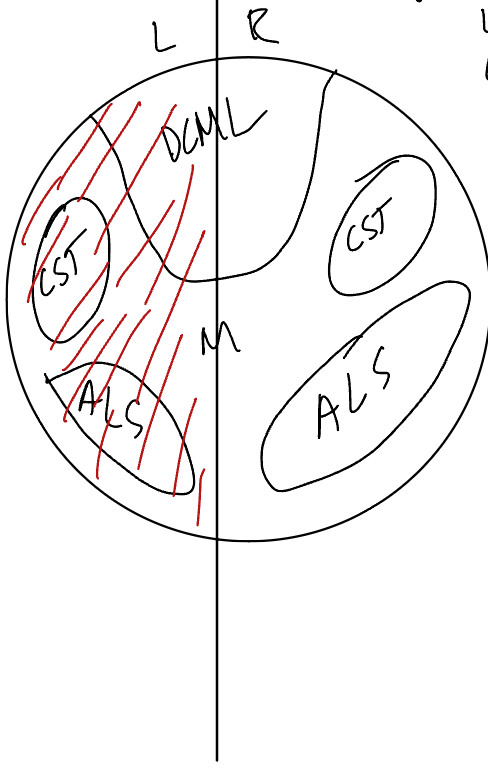
What’s damaged and which side of symptoms are affected?
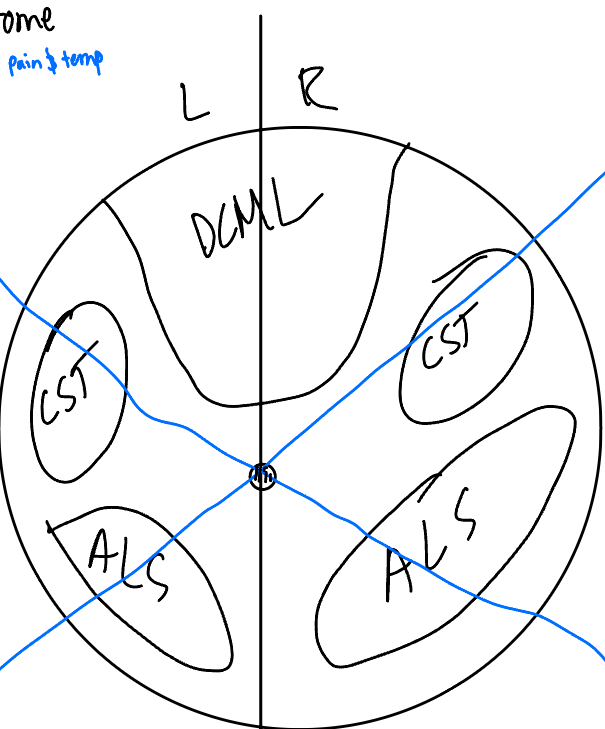
What’s damaged? What are the 2 types of lesion?
What’s affected for both lesions?
What are the 2 tips?
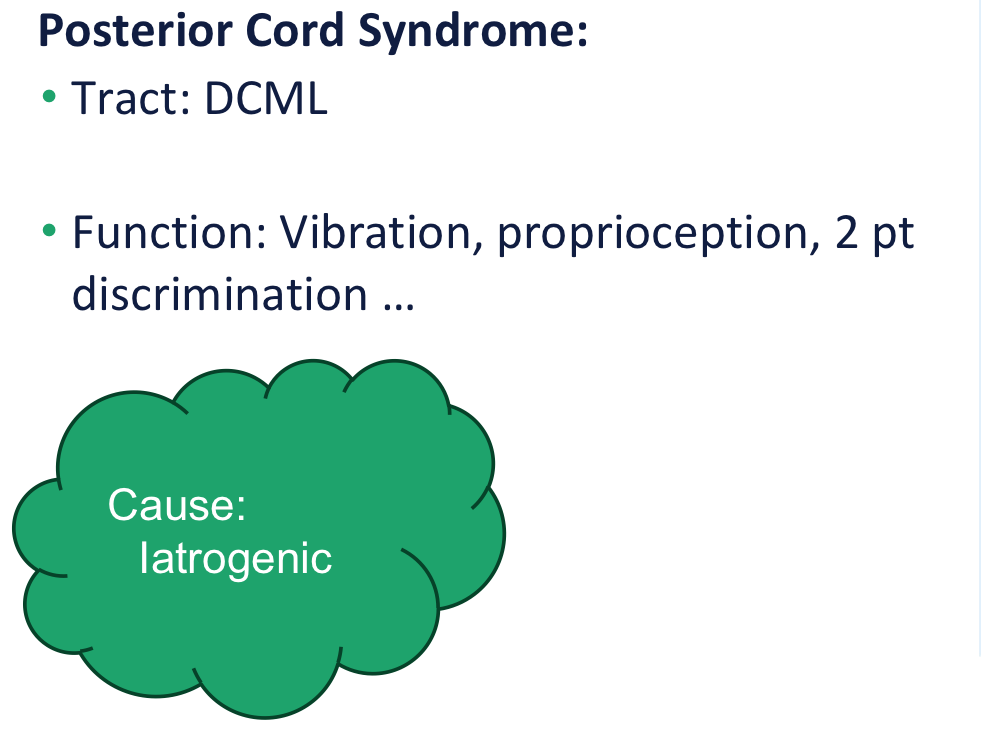
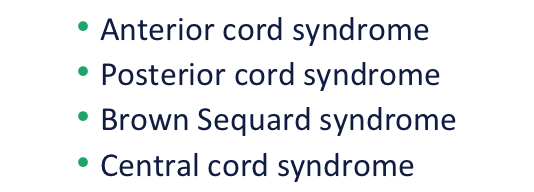
Posterior cord syndrome:
Which tract is affected?
What fxns are affected?
What’s the cause?
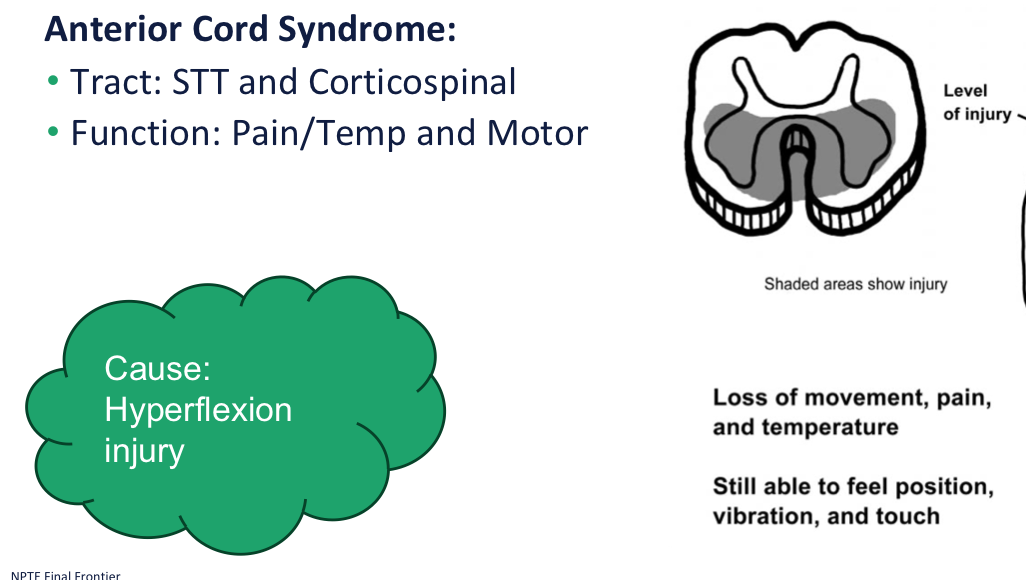
Anterior cord syndrome:
Which tract is affected?
What fxns are affected?
What’s the cause?
Are still able to feel touch, position, vibration?
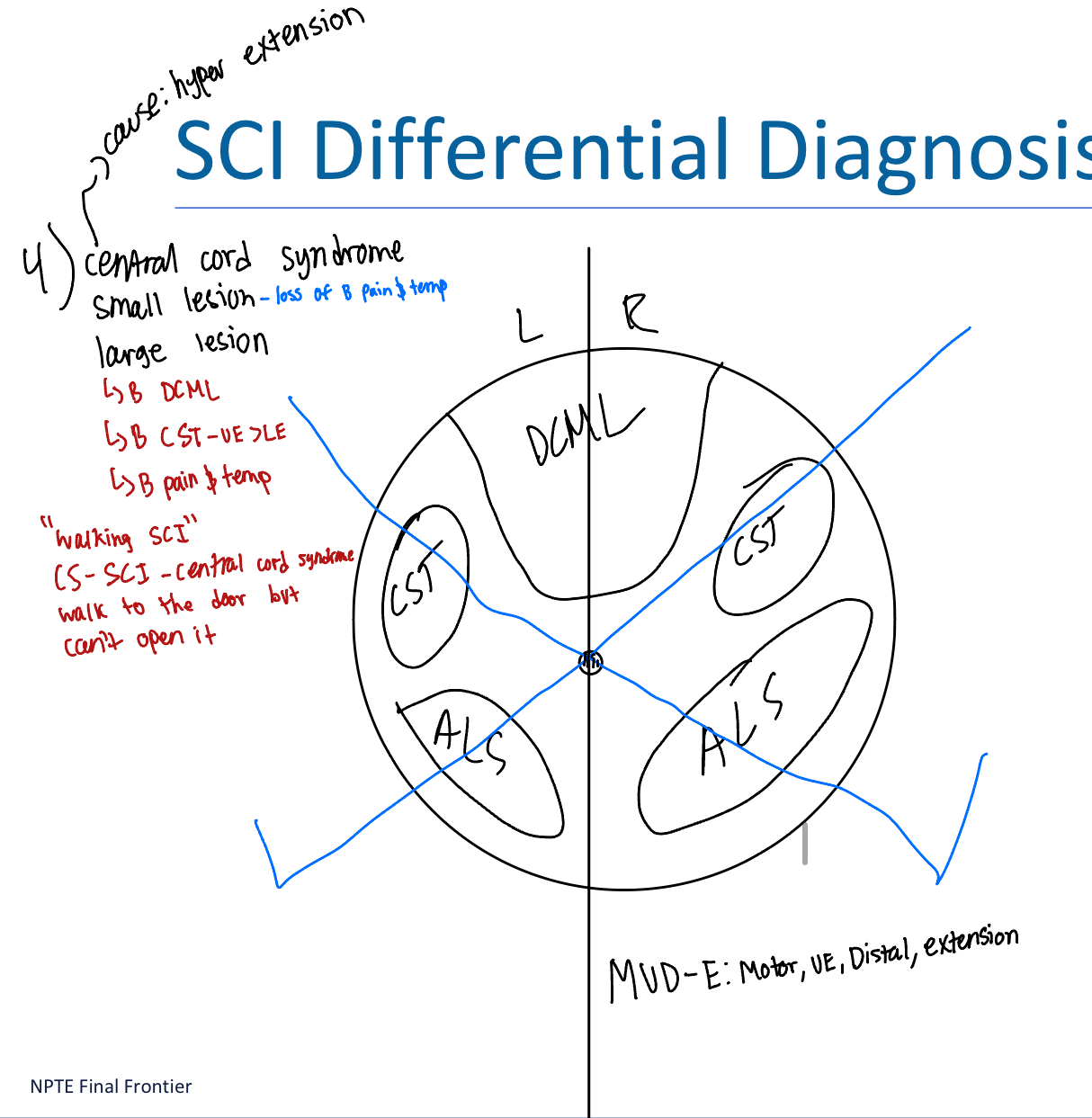
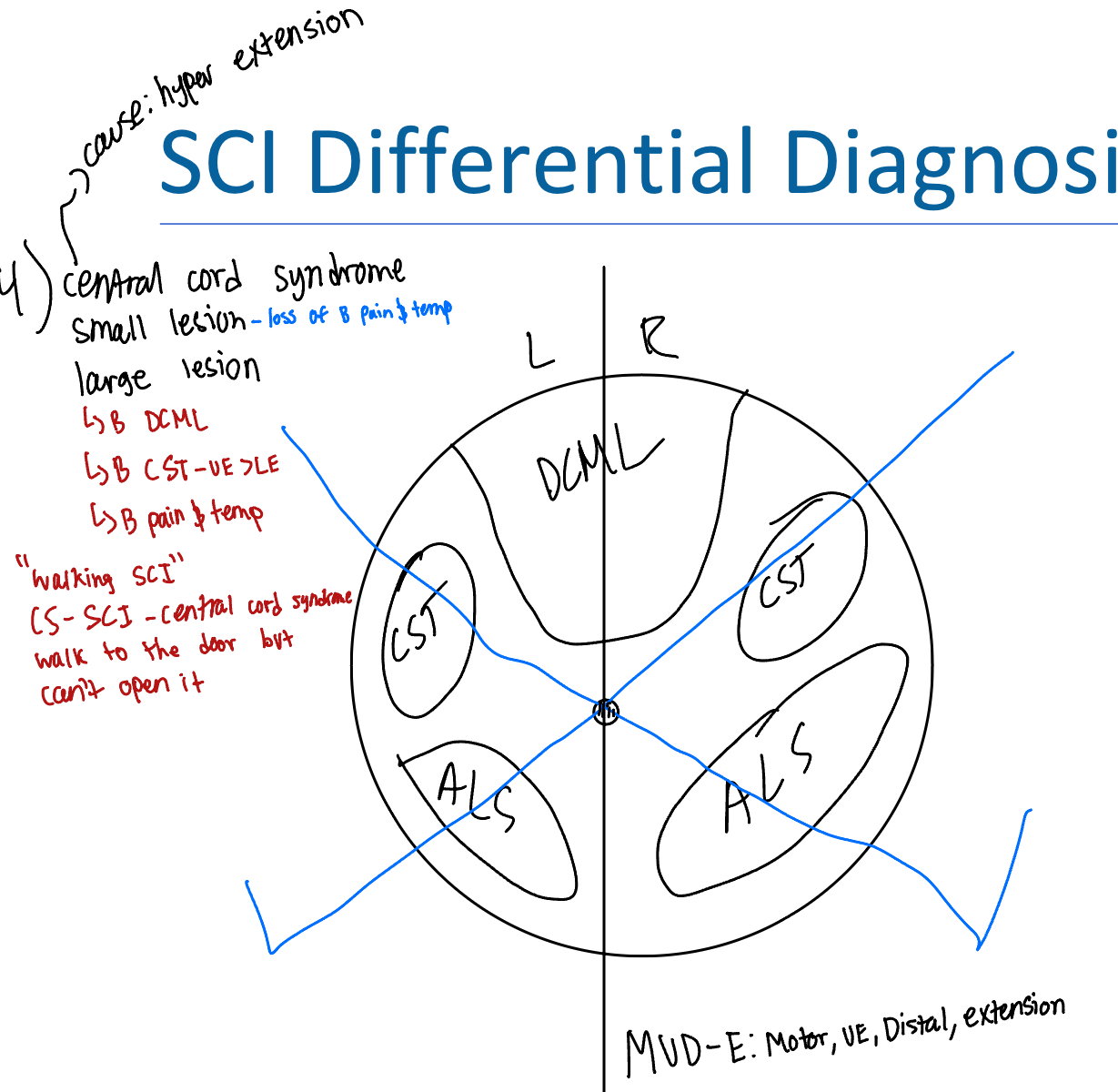
Central cord syndrome: what are the 2 types of lesions?
Which tract is affected?
What fxns are affected?
What’s the cause?
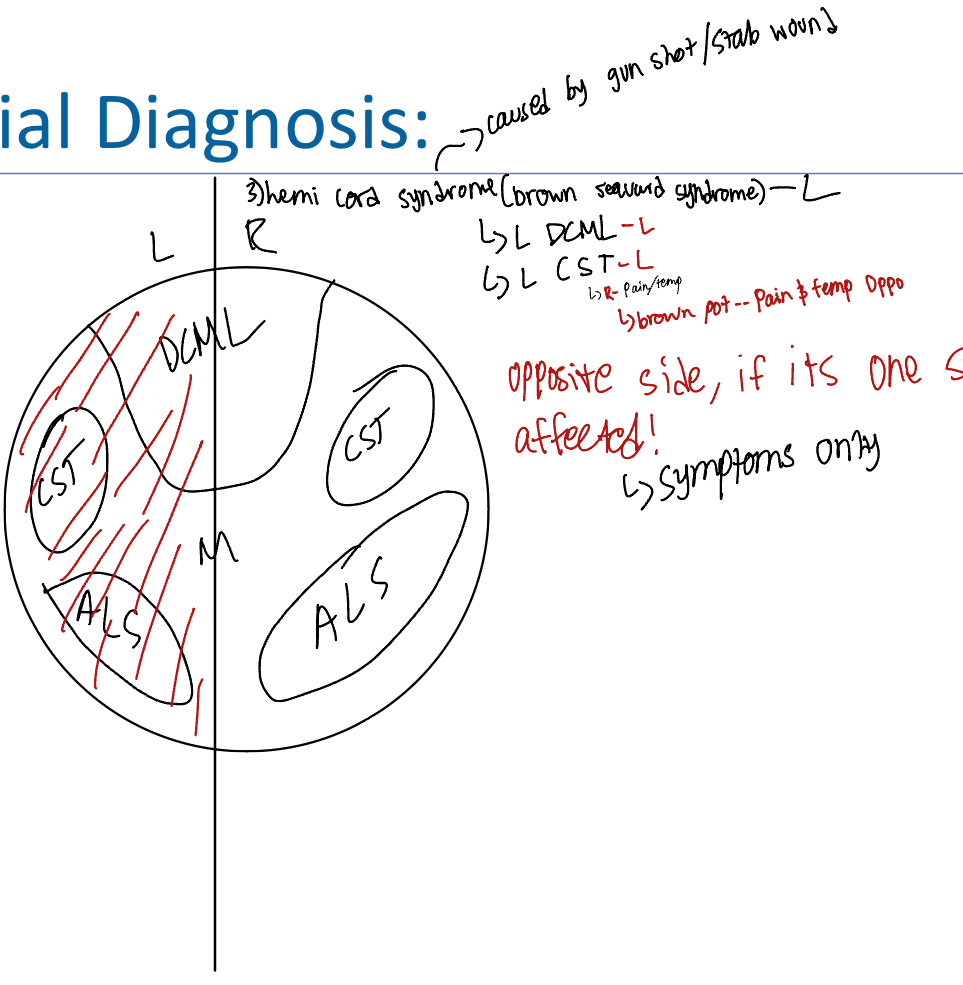
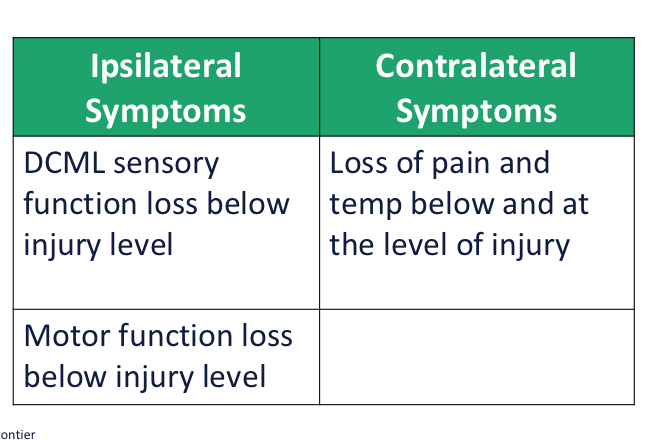
Brown Sequard Syndrome: Hemi-section of spinal cord
Which fxns are affected? Ipsilateral/contralateral?
What’s the cause?
cause: stab wound or gun wound
A patient with a history of a stab wound, disrupting the left side of the spinal cord, is being evaluated by the therapist. Which of the following is the MOST LIKELY presentation for this patient?
A. Symptoms of damage to corticospinal tract and spinothalamic tract seen on the right side of the body and symptoms of damage to the dorsal column medial lemniscus seen on the left side of the body
B. Symptoms of damage to corticospinal tract and dorsal column medial lemniscus seen on the right side of the body and symptoms of damage to the spinothalamic tract seen on the left side of the body
C. Symptoms of damage to corticospinal tract and spinothalamic tract seen on the left side of the body and symptoms of damage to the dorsal column medial lemniscus seen on the right side of the body
D. Symptoms of damage to corticospinal tract and dorsal column medial lemniscus seen on the left side of the body and symptoms of damage to the spinothalamic tract seen on the right side of the body
D. Symptoms of damage to corticospinal tract and dorsal column medial lemniscus seen on the left side of the body and symptoms of damage to the spinothalamic tract seen on the right side of the body
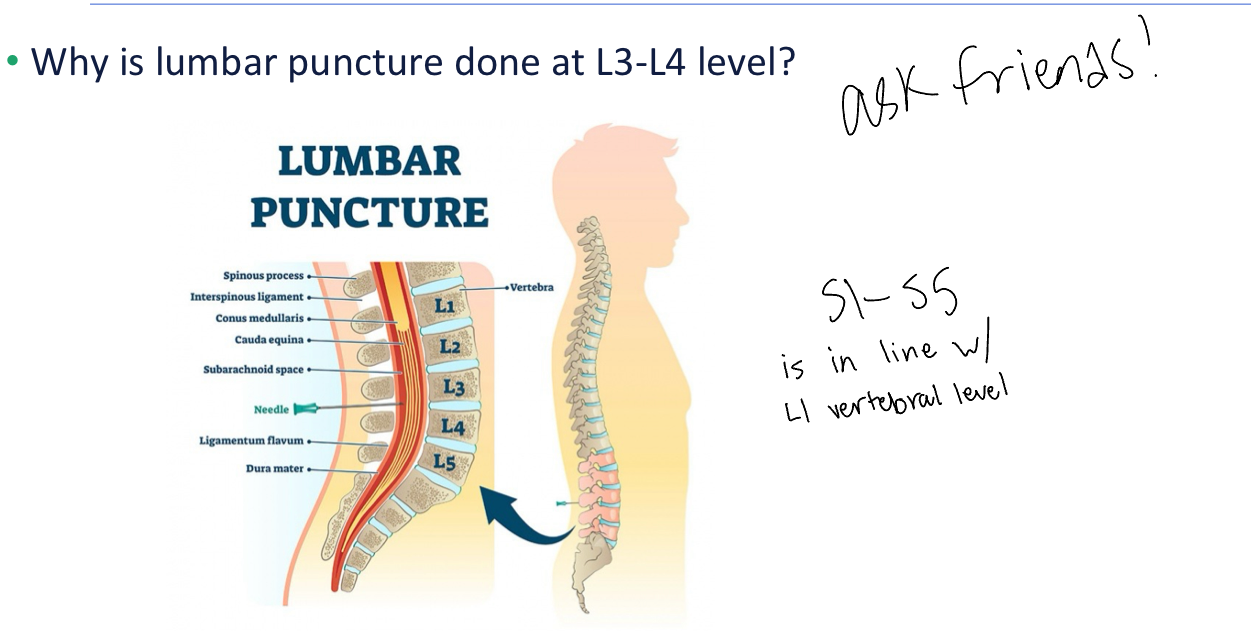
S1-s5 is in line w/ which vertebral level?
Conus Medullaris vs Cauda Equina:
Location
Sensory
Motor
Type
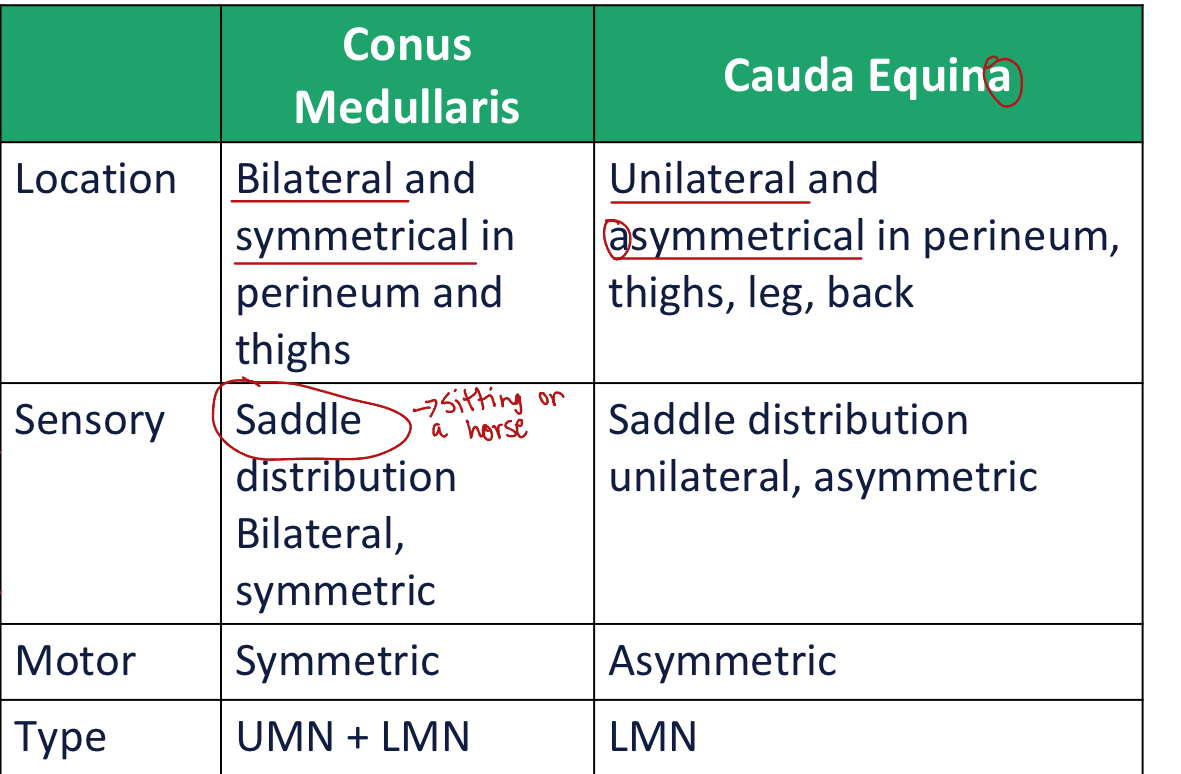
Study it
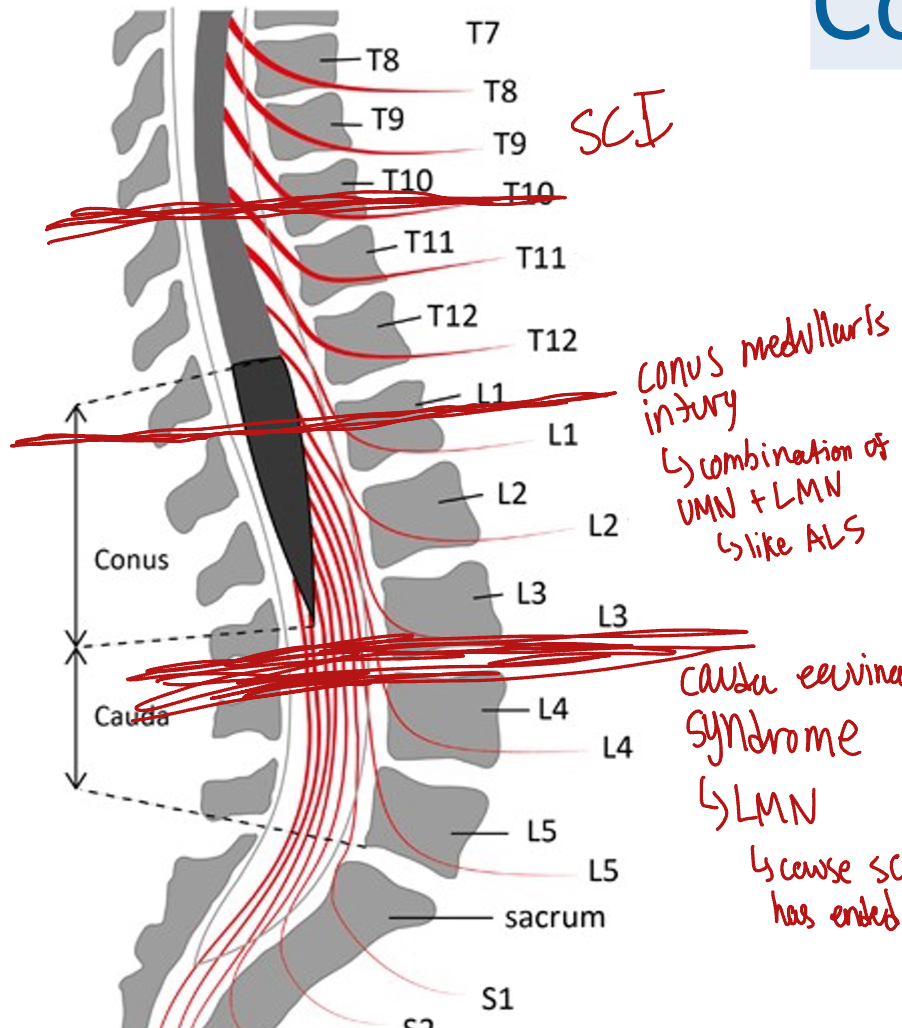
Where does medullaris end? Is it UMN/LMN?
Where does equina end? Is it UMN/LMN?
Where does SC end?
Types of Injury:
compete vs incomplete?

Are these incomplete or complete SC injuries?
Incomplete
what are the 3 things we need for the Asia scale?
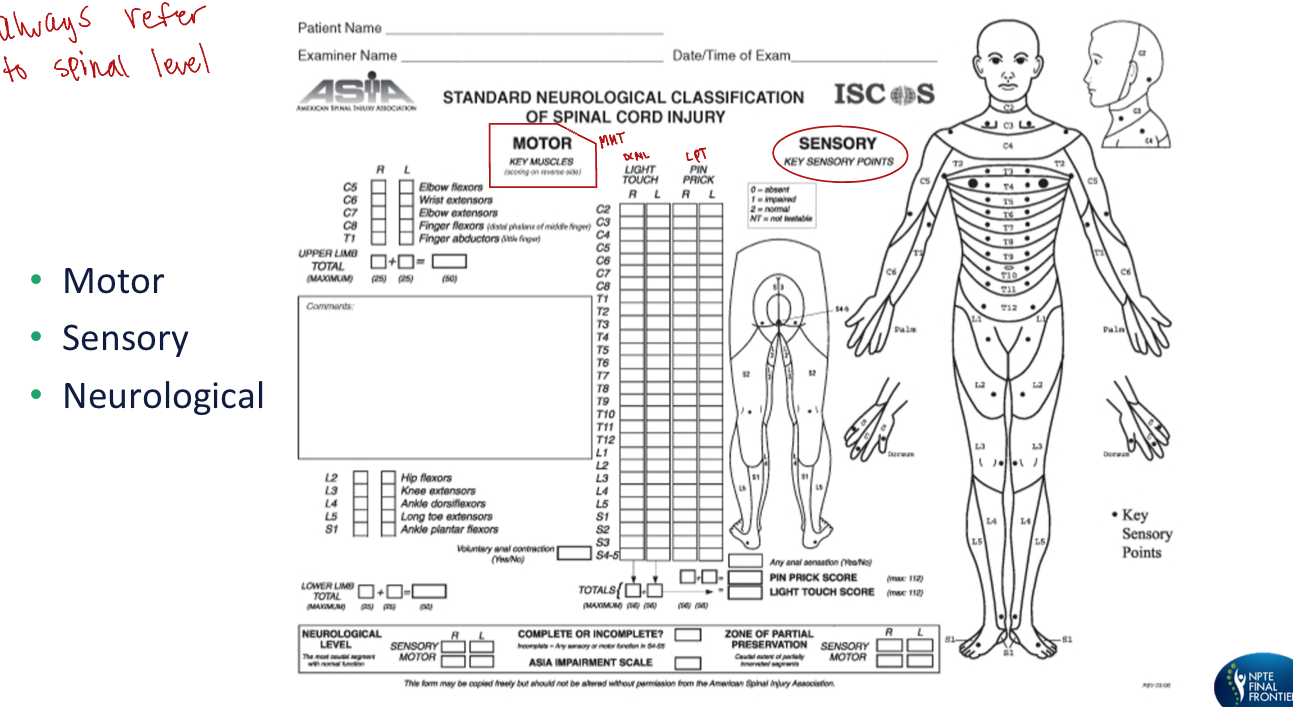
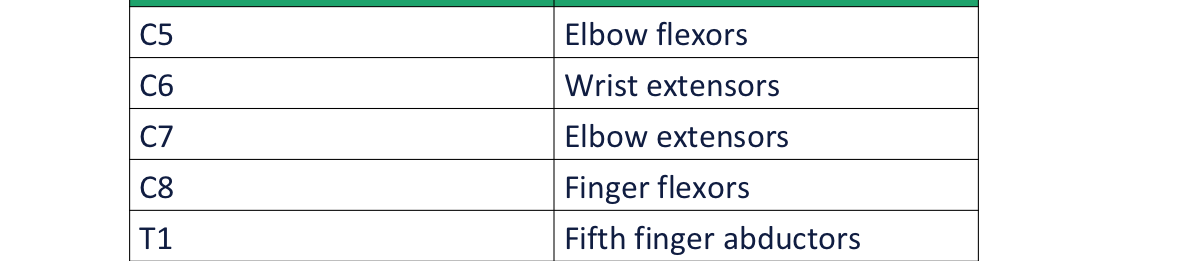
For C5-T1? Muscle groups
L2-S1?
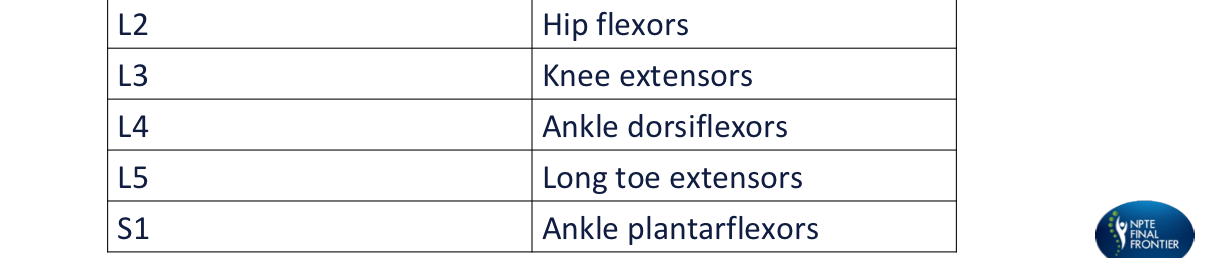
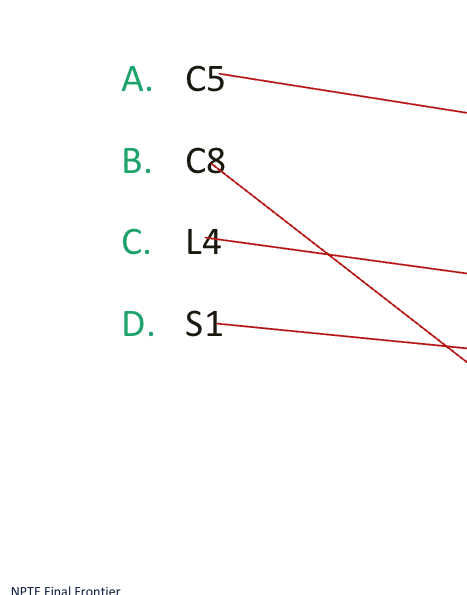
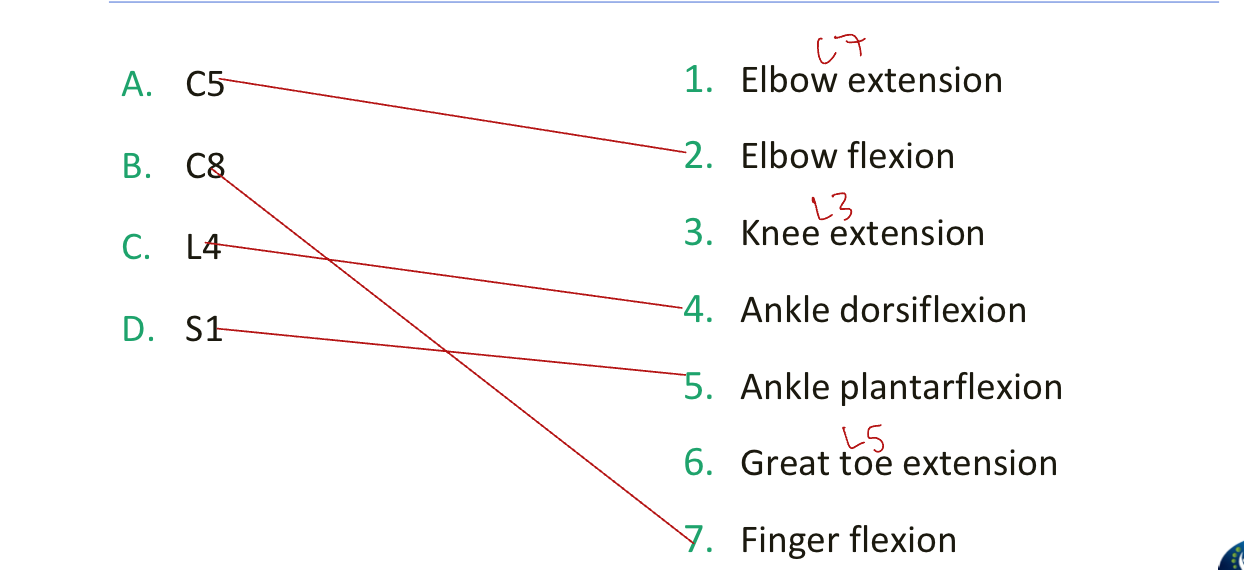
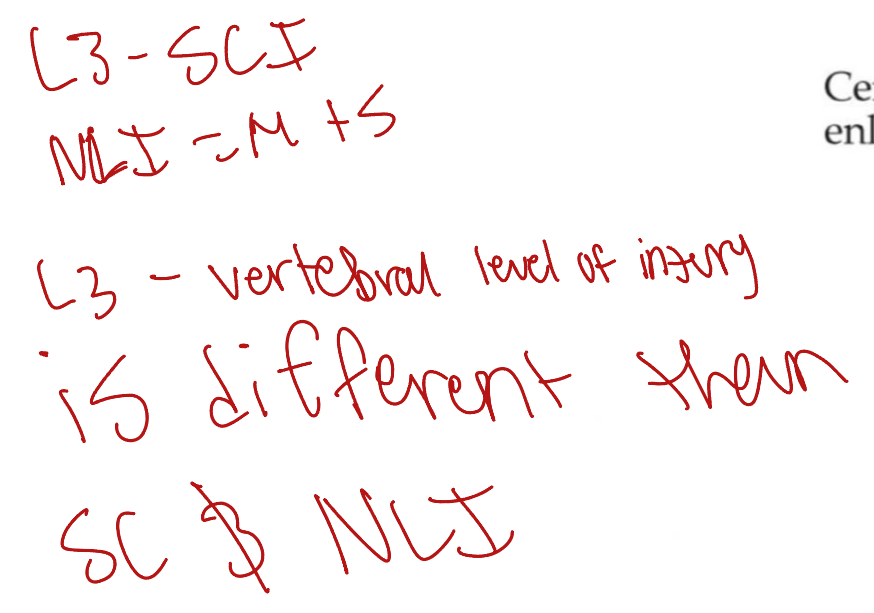
Study it
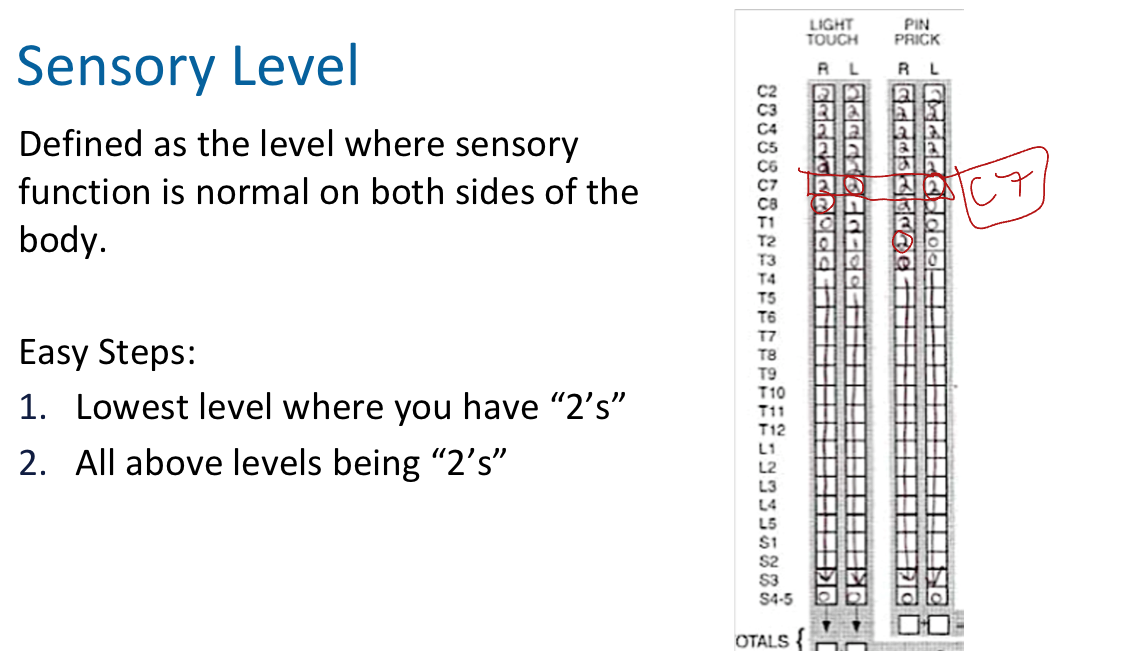
sensory level:
How do you find it?

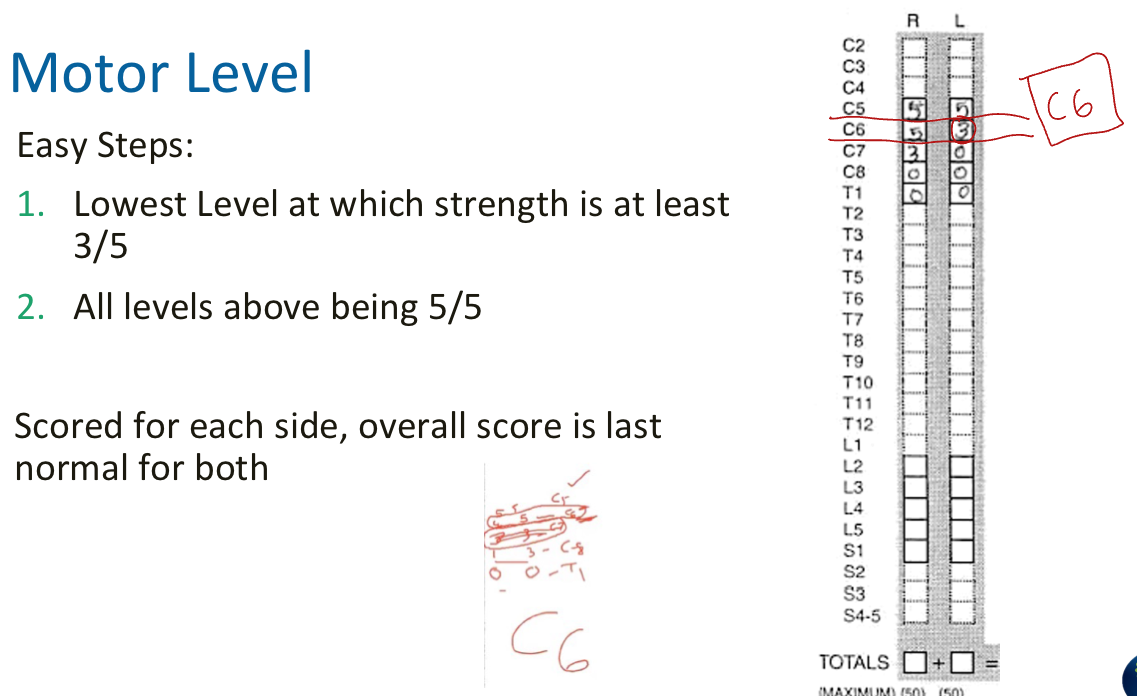
motor level: how do you find it?

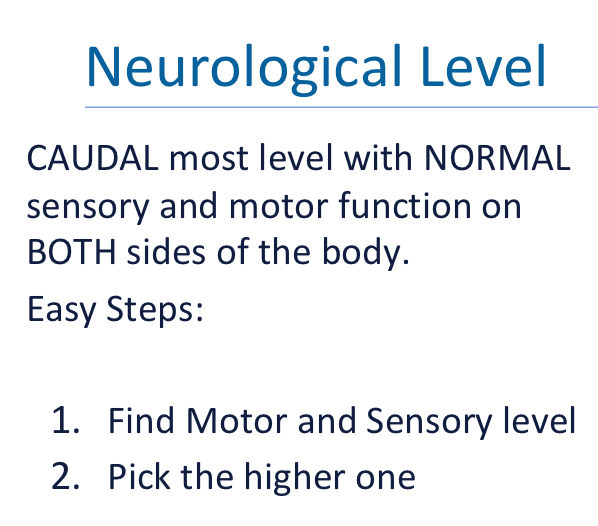
Neurological/functional level:

Motor level: 2 steps ?
Sensory level: 2 steps?
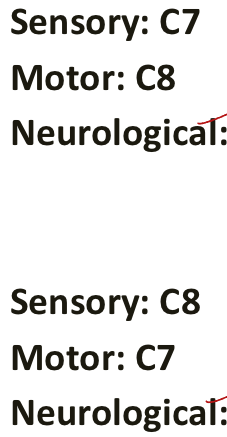
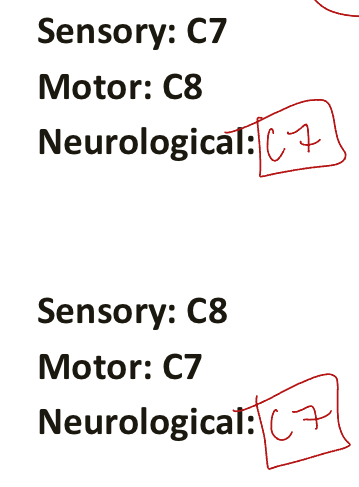
Neurological level:
ASIA Scale: are they complete/incomplete?
Describe A?
Describe B?
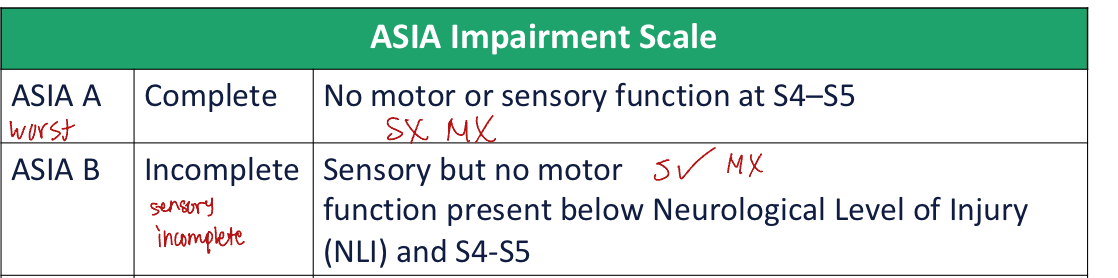
ASIA Scale:
Describe C?
Describe D?
Describe E?
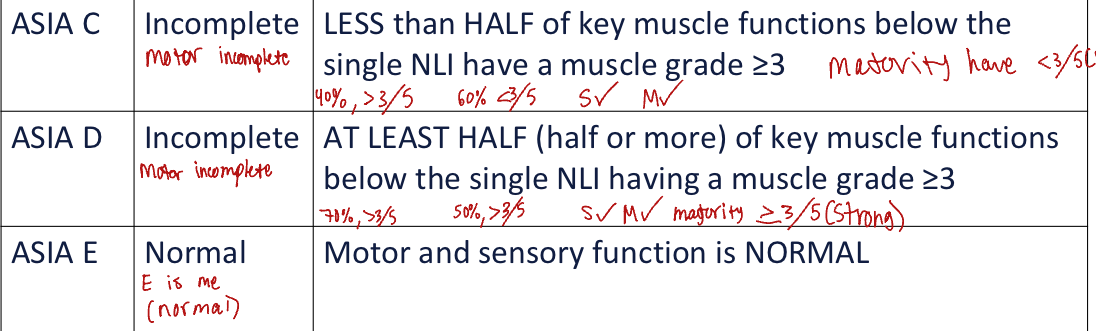
O n examination a patient with spinal cord injury, they have full motor and sensory function above the T10 level. Below the level of injury, they have some preserved motor function, and voluntary anal contraction is present. Key muscle testing reveals that more than half of the muscles below the neurological level have a muscle grade less than 3/5, including hip flexors, knee extensors, and ankle dorsiflexors. Sensory testing reveals light touch and pinprick intact through S4–S5 dermatomes. Which of the following ASIA Impairment Scale classifications is MOST APPROPRIATE?
A. ASIA A B. ASIA B C. ASIA C D. ASIA D
C. ASIA C
C omplications with SCI and PT Interventions:
2 cardiac issues?
1 pulmonary issue?
GI issue?

C omplications with SCI and PT Interventions:
1 integumentary issue?
3 MSK issues?


