3-3/4/5 (Amino Acids and Peptides)

0.0(0)
Studied by 0 people
call kaiCall Kai
learnLearn
examPractice Test
spaced repetitionSpaced Repetition
heart puzzleMatch
flashcardsFlashcards
GameKnowt Play
Card Sorting

1/71

encourage image

There's no tags or description

Looks like no tags are added yet.

Last updated 12:10 AM on 4/4/26
Name
Mastery
Learn
Test
Matching
Spaced
Call with Kai

No analytics yet

Send a link to your students to track their progress

72 Terms

1
New cards
What are proteins encoded by?
Genetic information stored in DNA.
2
New cards
How are proteins related to DNA sequences?
Each unique DNA sequence encodes a specific protein.
3
New cards
What are proteins made of?
Amino acid monomers linked into polymers.
4
New cards
What is a protein?
A folded polypeptide with biological function.
5
New cards
What determines protein folding?
Amino acid sequence and chemical properties.
6
New cards
What components form the amino acid backbone?
Amino group, alpha carbon, and carboxyl group.
7
New cards
Alpha carbon (Cα)
Central carbon atom to which all amino acid groups attach.
8
New cards
What four groups attach to the alpha carbon?
Amino group, carboxyl group, hydrogen, and R group.
9
New cards
What does the R group often contain?
A beta carbon connected to additional chemical groups.
10
New cards
Chirality
Property where a molecule cannot be superimposed on its mirror image.
11
New cards
What are mirror-image molecules called?
Enantiomers.
12
New cards
What property differs between enantiomers?
Their rotation of plane-polarized light.
13
New cards
What chirality form is found in biological amino acids?
L-amino acids.
14
New cards
What does the prefix L mean?
Levo, meaning rotates polarized light to the left.
15
New cards
What chirality form is rare in cells?
D-amino acids.
16
New cards
What structural feature causes chirality in amino acids?
Alpha carbon attached to four different groups.
17
New cards
Which amino acid is achiral?
  • Glycine.

  • Its side chain is hydrogen, so the alpha carbon has two identical groups.

18
New cards
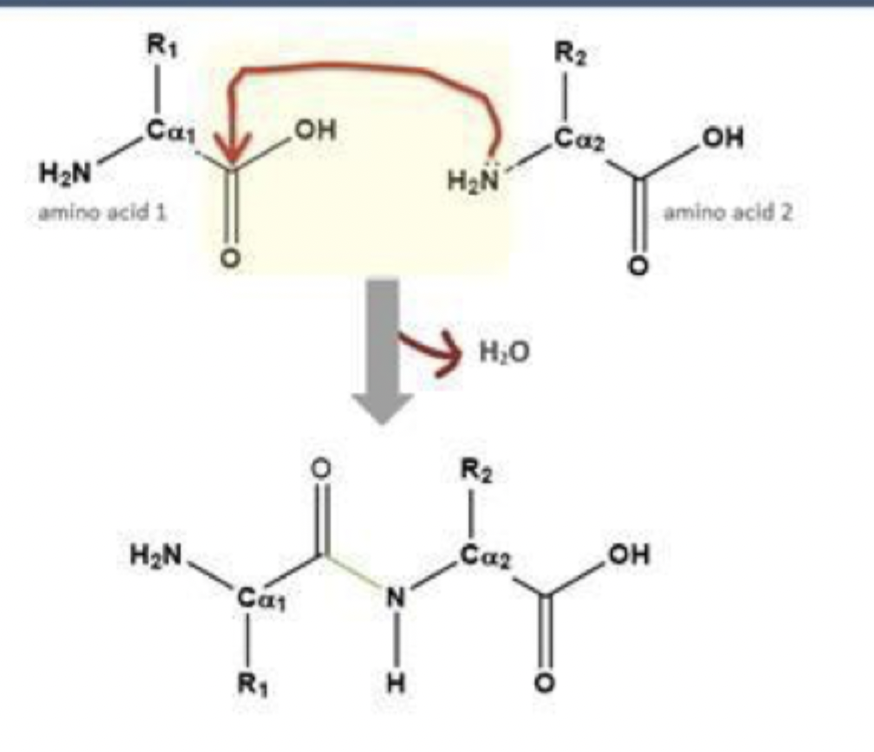
Peptide bond
Covalent bond linking amino acids together.
19
New cards
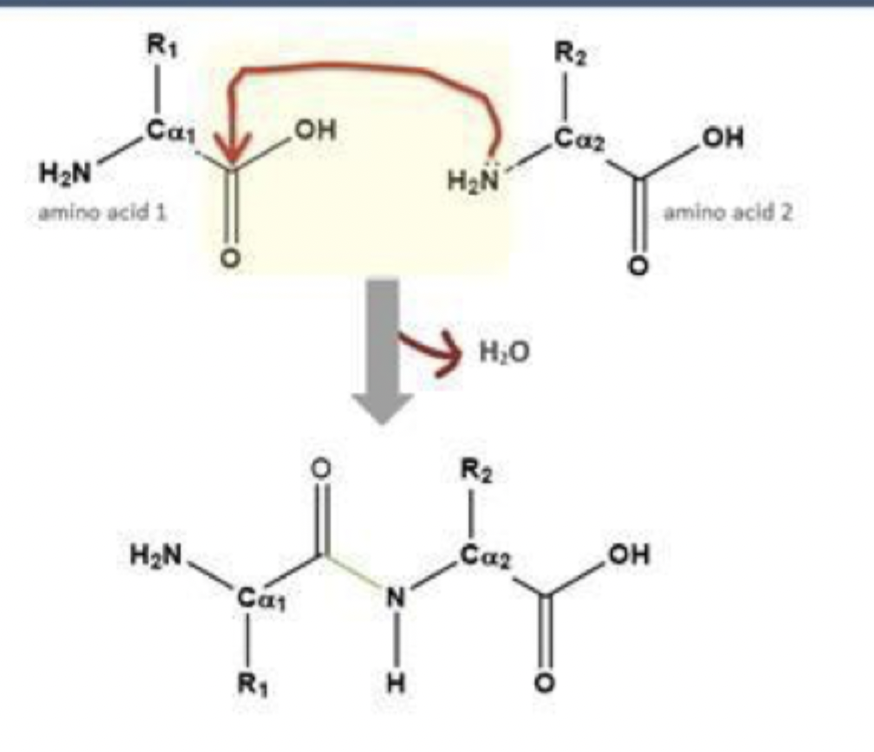
How is a peptide bond formed?
  • Through a condensation (dehydration) reaction.

  • removes H2O per reaction

  • forms between the carboxyl group of one amino acid and the amino group of another.
20
New cards
What type of chemical mechanism forms peptide bonds?
Nucleophilic addition-elimination reaction.
21
New cards
What initiates peptide bond formation?
Nucleophilic attack by the amino group.
22
New cards
Which atom is attacked during peptide bond formation?
The carbonyl carbon of the carboxyl group.
23
New cards
Dipeptide
Two amino acids linked by one peptide bond.
24
New cards
Polypeptide growth
Continued addition of amino acids through repeated peptide bond formation.
25
New cards
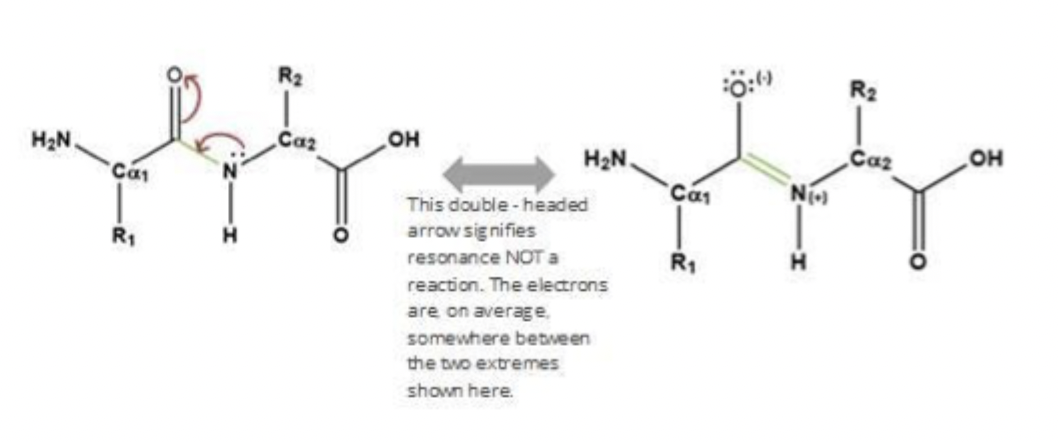
Why is the peptide bond rigid?
  • It has partial double-bond character.

  • so its bc os the Resonance delocalization of electrons.

  • it’s Rigid and planar with restricted rotation.
<ul><li><p>It has partial double-bond character.</p></li><li><p>so its bc os the Resonance delocalization of electrons.</p></li><li><p>it’s Rigid and planar with restricted rotation.</p></li></ul><p></p>
26
New cards
Does peptide bond rigidity make proteins completely rigid?
No, rotation occurs around adjacent single bonds.
27
New cards
Which bonds in the backbone can rotate freely?
Cα–N and Cα–C bonds.
28
New cards
Why are rotating bonds important?
They allow protein folding into specific shapes.
29
New cards
What repeating pattern forms the polypeptide backbone?
Nitrogen–alpha carbon–carbonyl carbon sequence.
30
New cards
What determines polypeptide directionality?
  • Different chemical groups at each end.

  • N-terminus: Start of polypeptide with a free amino group

  • C-terminus: End of polypeptide with a free carboxyl group.

31
New cards
Why do proteins fold into specific shapes?
Due to chemical interactions among side chains.
32
New cards
What determines protein structure?
Amino acid sequence.
33
New cards
How many rotating bonds exist per amino acid backbone unit?
Two freely rotating single bonds.
34
New cards
What defines the beginning of a protein sequence?
The N-terminal amino acid.
35
New cards
What defines the end of a protein sequence?
The C-terminal amino acid.
36
New cards

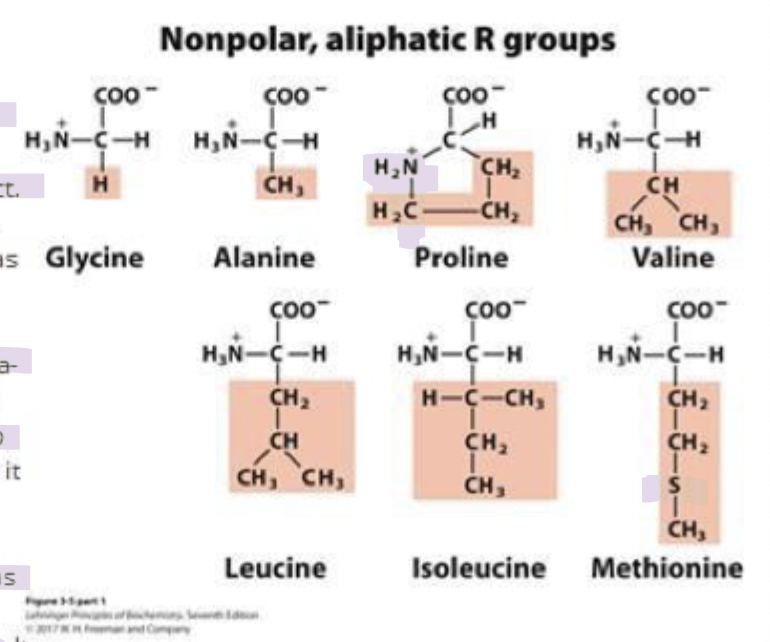
what are the non-polar aliphatic amino acids (7)

  • NP and hydrophobic

  • glycine (gly) G

  • alanine (ala) A

  • proline (pro) P

  • valine (val) V

  • leucine (leu) L

  • isoleucine (ile) I

  • methionine (met) M

<ul><li><p>NP and hydrophobic</p></li><li><p>glycine (gly) G</p></li><li><p>alanine (ala) A</p></li><li><p>proline (pro) P</p></li><li><p>valine (val) V</p></li><li><p>leucine (leu) L</p></li><li><p>isoleucine (ile) I</p></li><li><p>methionine (met) M</p></li></ul><p></p>
37
New cards

ala, val, leu, ile

  • cluster together within proteins

  • stabilizes them through hydrophobic effect
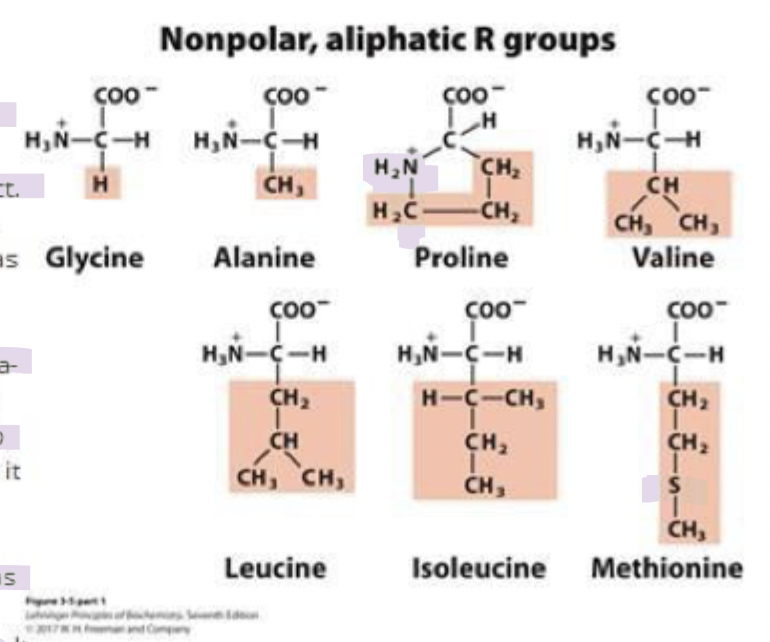
<ul><li><p>cluster together <em>within</em> proteins </p></li><li><p>stabilizes them through hydrophobic effect </p></li></ul><p></p>
38
New cards

gly and ala

  • ambivalent (mixed)

  • they can reside outside or inside

  • since they have smaller side chains, their hydrophobic effects aren’t so extreme
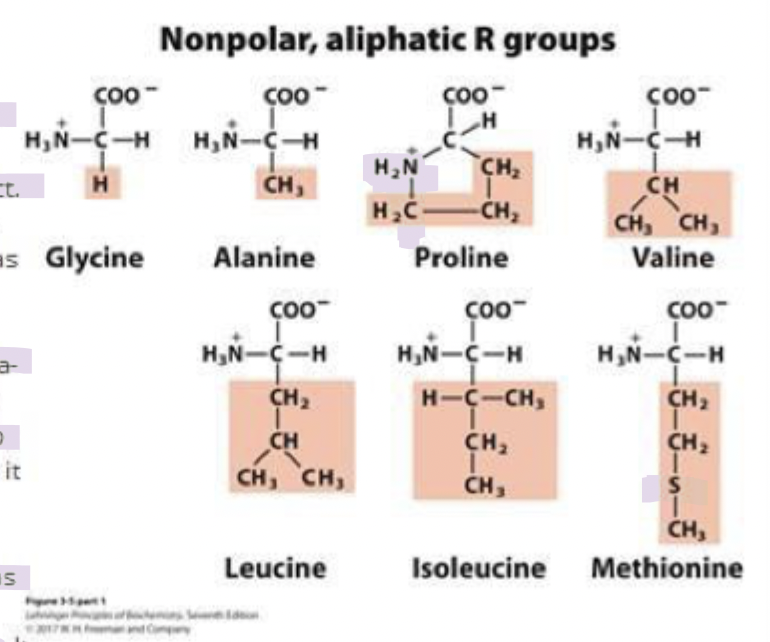
<ul><li><p>ambivalent (mixed)</p></li><li><p>they can reside outside or inside </p></li><li><p>since they have smaller side chains, their hydrophobic effects aren’t so extreme </p></li></ul><p></p>
39
New cards

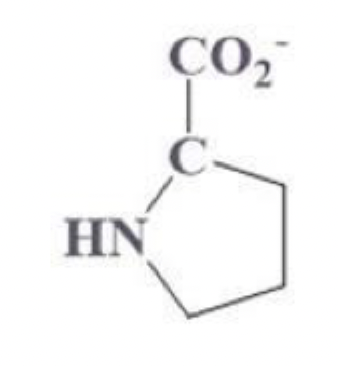
why is proline unique?

  • has a secondary amino group

  • the side chain of proline forms a covalent bond with the amino group, making it cyclic

  • it’s usually on the surface of proteins bc the rigid ring structure is suited for U turns in protein structures

  • it’s still in the aliphatic classification
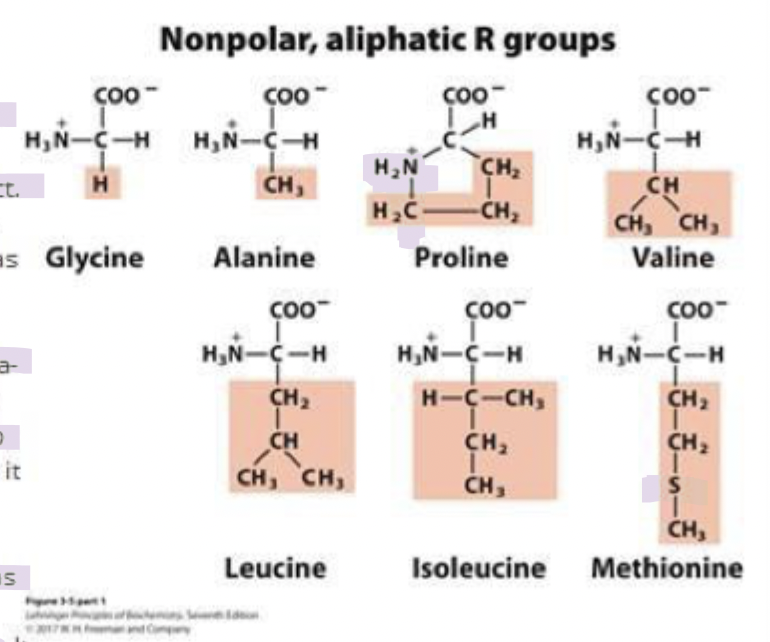
<ul><li><p>has a secondary amino group</p></li><li><p>the side chain of proline forms a covalent bond with the amino group, making it cyclic </p></li><li><p>it’s usually on the surface of proteins bc the rigid ring structure is suited for U turns in protein structures </p></li><li><p>it’s still in the aliphatic classification </p></li></ul><p></p>
40
New cards

methionine

  • one of the 2 sulfur containing aa in R group

  • has a slightly nonpolar thioether side chain
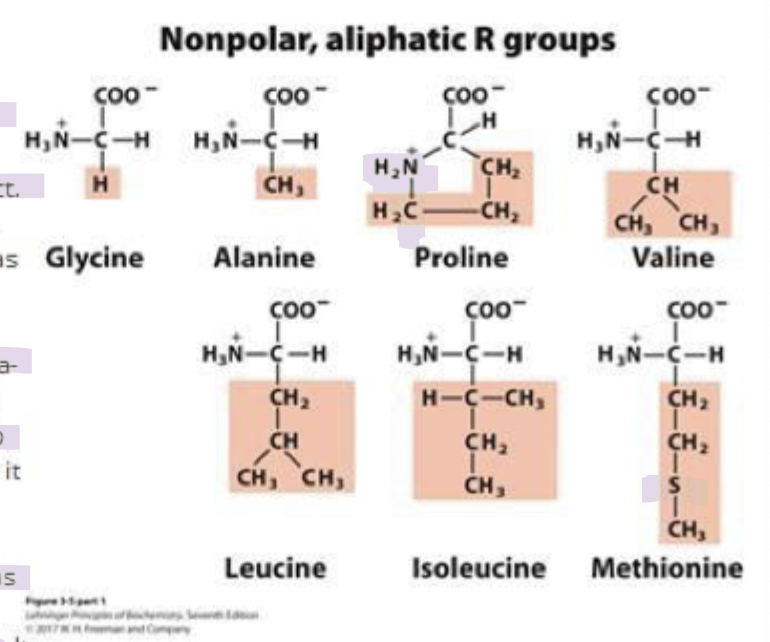
<ul><li><p>one of the 2 sulfur containing aa in R group </p></li><li><p>has a slightly nonpolar thioether side chain </p></li></ul><p></p>
41
New cards

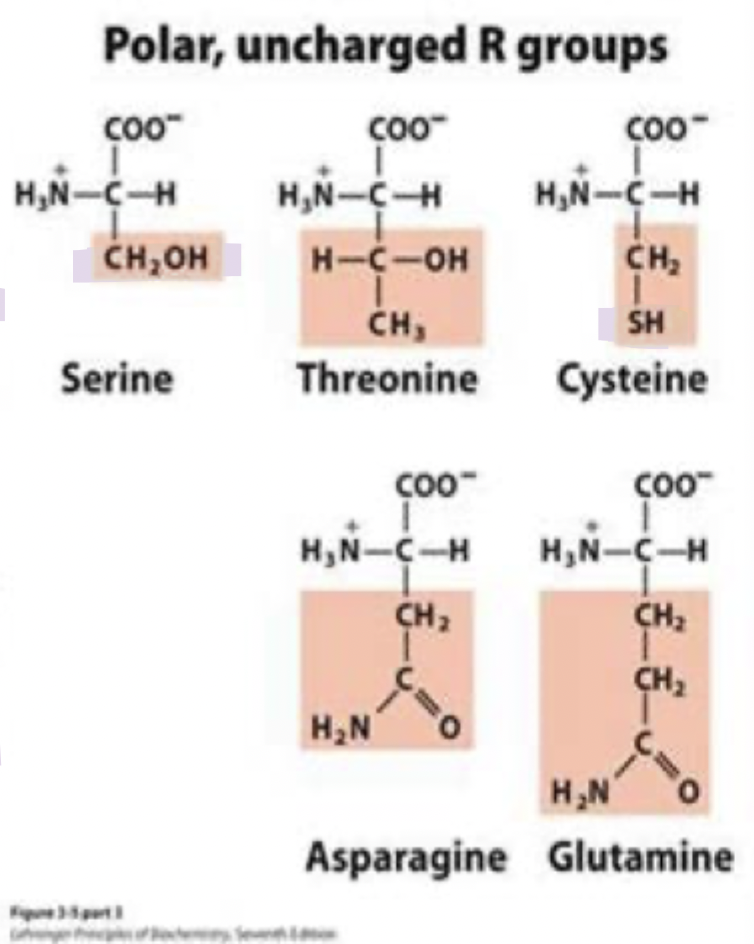
what are the polar uncharged amino acids? (5)

  • polar side chains that form H bonds with water/other polar molecules

  • Serine (Ser) S

  • Threonine (Thr) T

  • Cysteine (cys) C

  • Asparagine (asn) N

  • Glutamine (gln) Q

<ul><li><p>polar side chains that form H bonds with water/other polar molecules </p></li><li><p>Serine (Ser) S</p></li><li><p>Threonine (Thr) T</p></li><li><p>Cysteine (cys) C</p></li><li><p>Asparagine (asn) N</p></li><li><p>Glutamine (gln) Q</p></li></ul><p></p>
42
New cards

ser and thr

  • often found on protein surfaces

  • they make great contact with (aq) end

  • the -OH is a good nucleophile

    • serine typically found in enzyme active sites

    • threonine is secondary alcohol -OH so it’s not as good
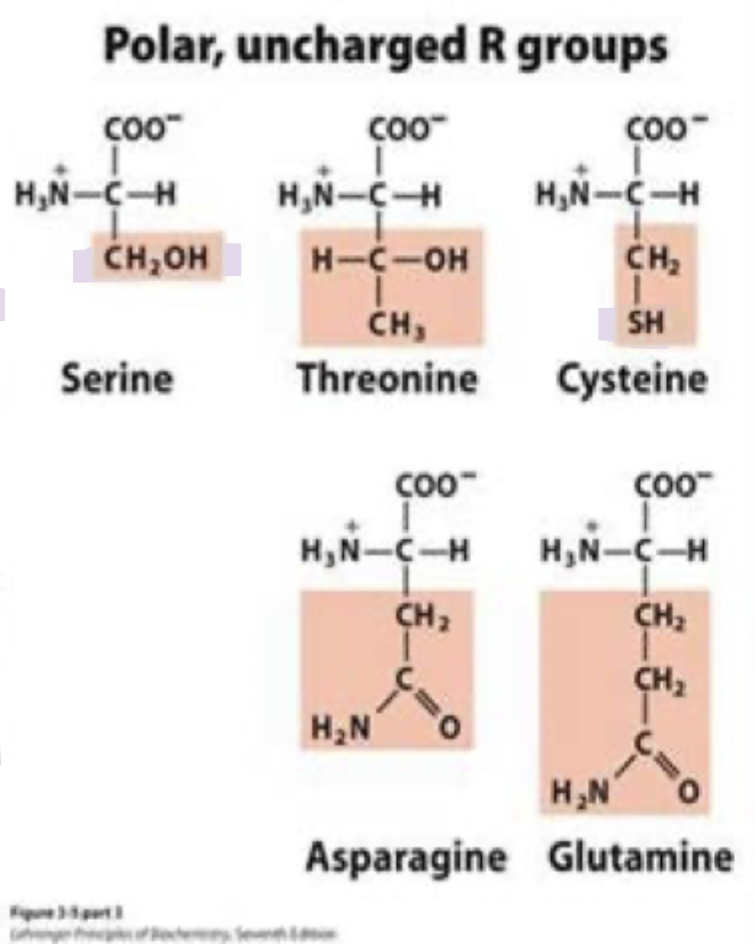
<ul><li><p>often found on protein surfaces</p></li><li><p>they make great contact with (aq) end </p></li><li><p>the -OH is a good nucleophile </p><ul><li><p>serine typically found in enzyme active sites </p></li><li><p>threonine is secondary alcohol -OH so it’s not as good </p></li></ul></li></ul><p></p>
43
New cards

cysteine

  • can form H-bonds with water or other polar molecules

  • often found on protein surfaces

  • -SH group is a great nucleophile

  • typically found in active sites of enzymes
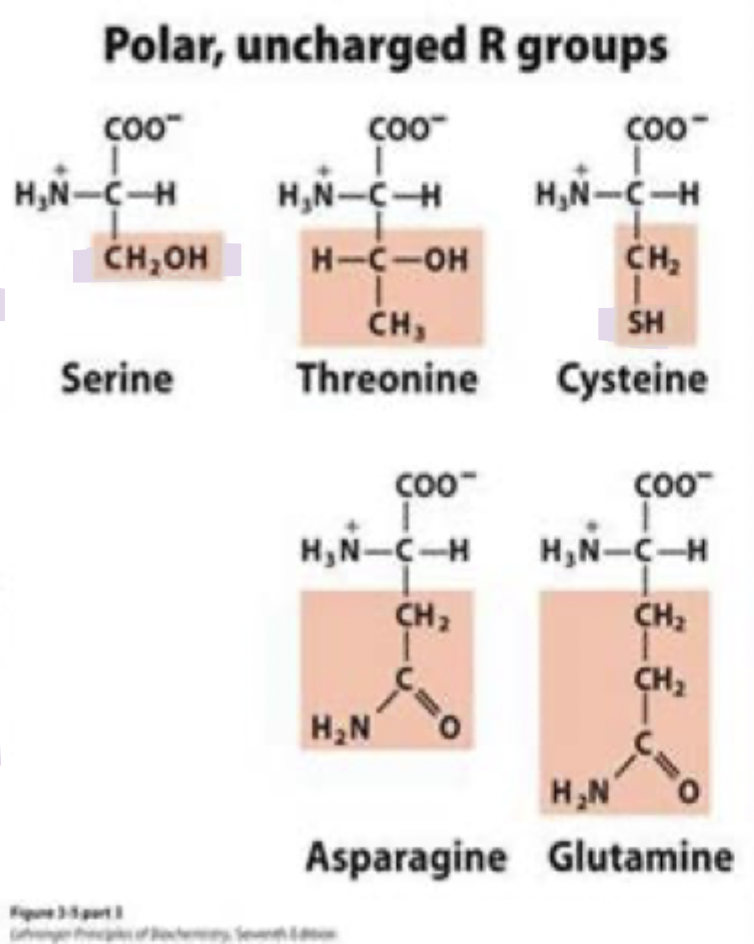
<ul><li><p>can form H-bonds with water or other polar molecules </p></li><li><p>often found on protein surfaces </p></li><li><p>-SH group is a great nucleophile</p></li><li><p>typically found in active sites of enzymes </p></li></ul><p></p>
44
New cards

asn and gln

  • asparagine and glutamine

  • have non-ionizable un-charged polar side chains

  • they’re amide counterparts of asp (aspartic acid) and glu (glutamate)
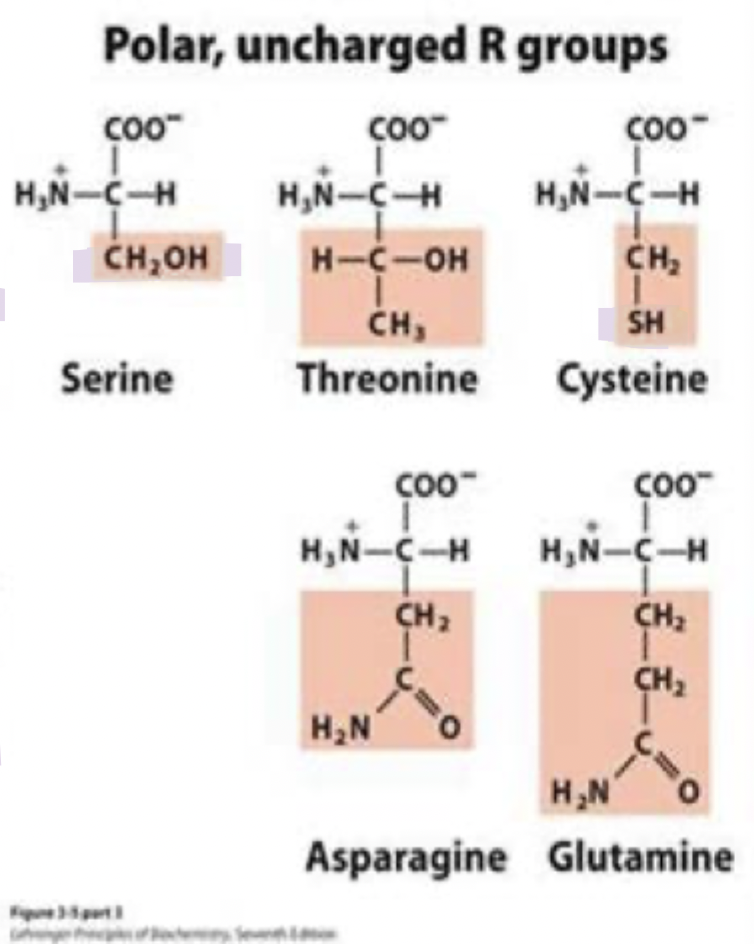
<ul><li><p>asparagine and glutamine </p></li><li><p>have non-ionizable un-charged polar side chains </p></li><li><p>they’re amide counterparts of asp (aspartic acid) and glu (glutamate) </p></li></ul><p></p>
45
New cards

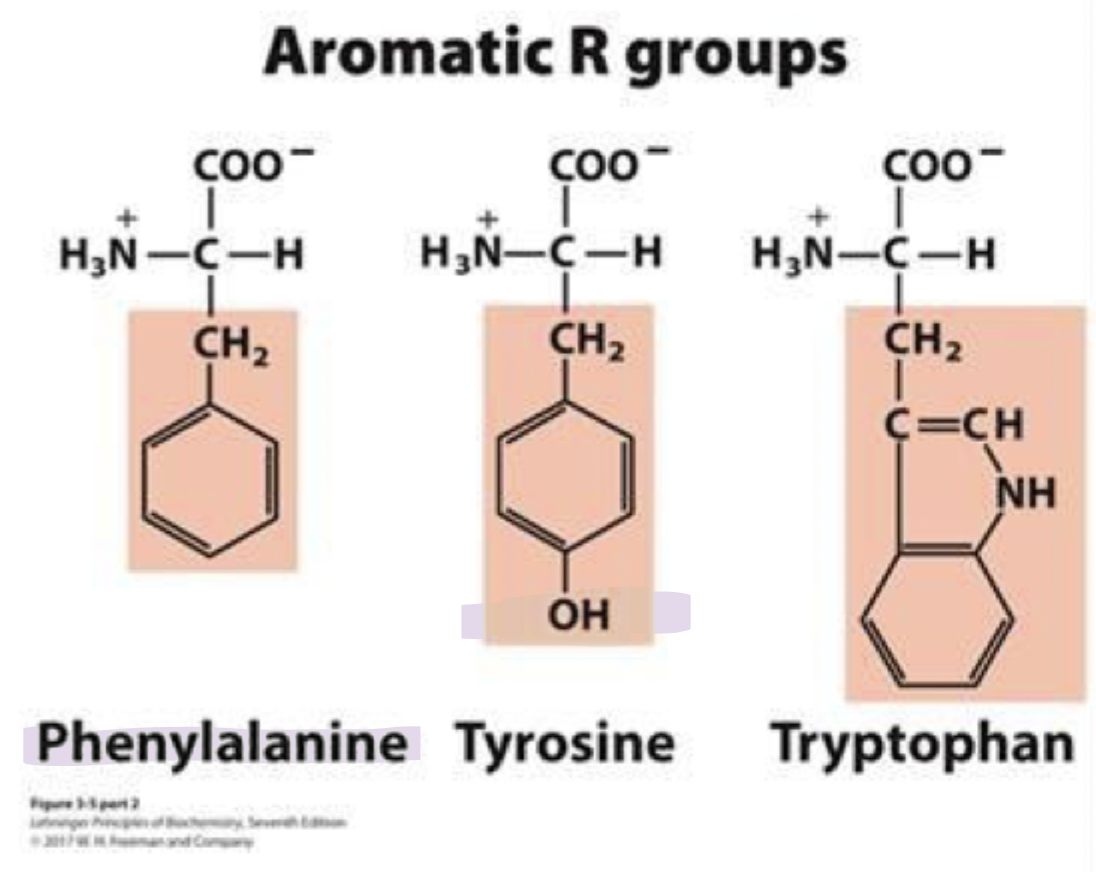
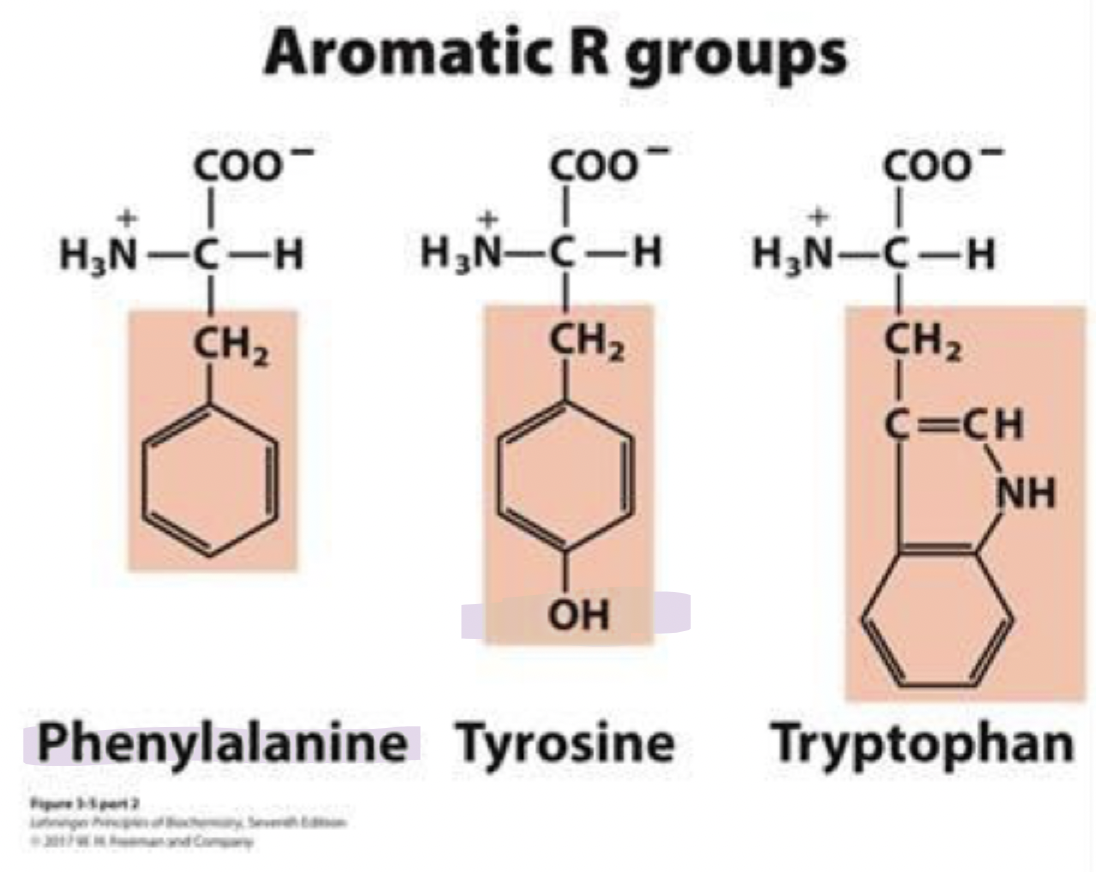
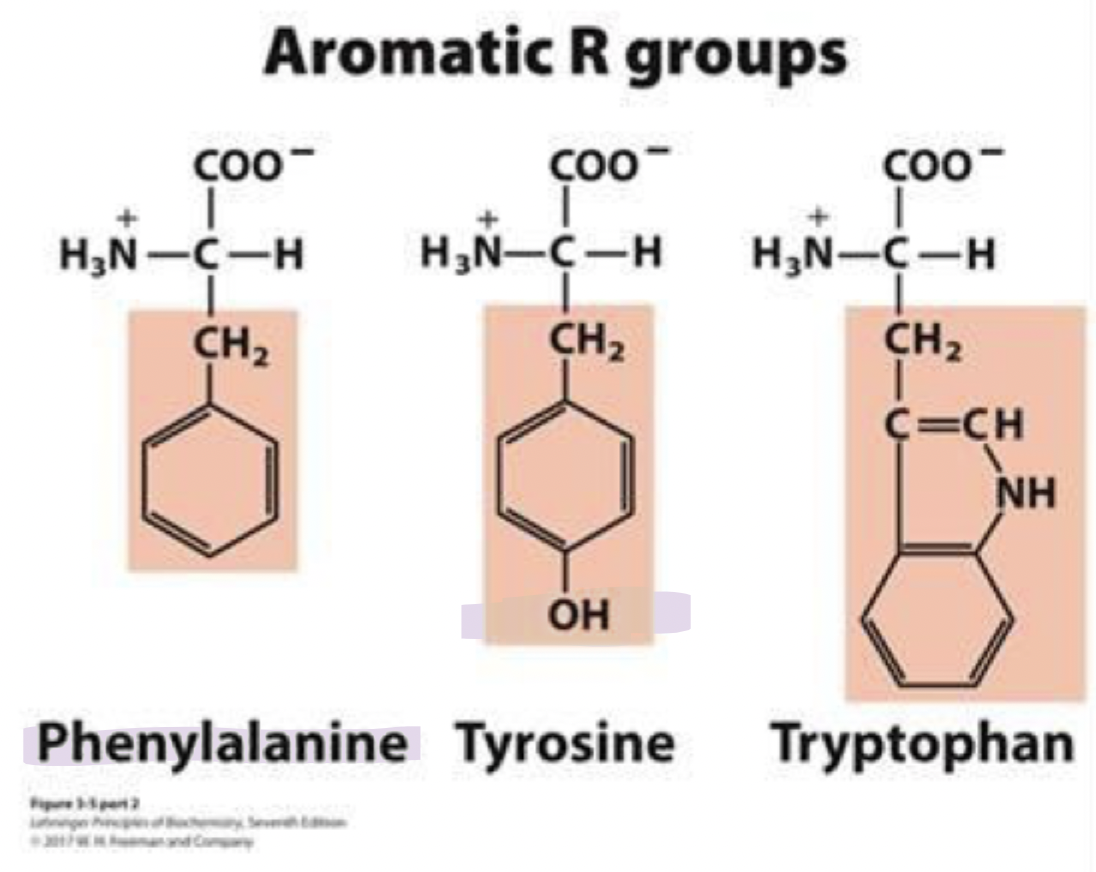
what are the aromatic r group amino acids (3)

  • they’re hydrophobic and absorb UV light at 280nm

  • this can be used to measure protein concentrations

  • phenylalanine (phe) F

  • tyrosine (tyr) Y

  • tryptophan (trp) W

<ul><li><p>they’re hydrophobic and absorb UV light at 280nm</p></li><li><p>this can be used to measure protein concentrations </p></li><li><p>phenylalanine (phe) F</p></li><li><p>tyrosine (tyr) Y</p></li><li><p>tryptophan (trp) W</p></li></ul><p></p>
46
New cards

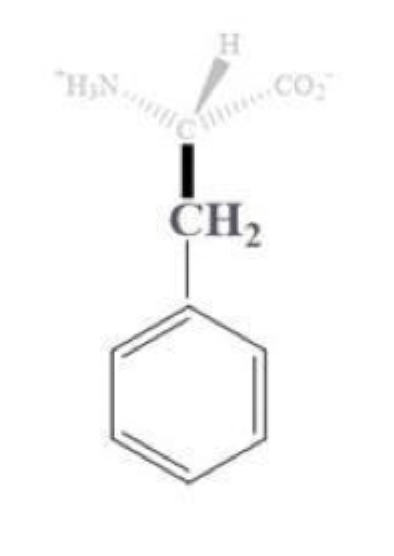
phenylalanine

  • phe, F

  • most hydrophobic among the aromatic amino acids
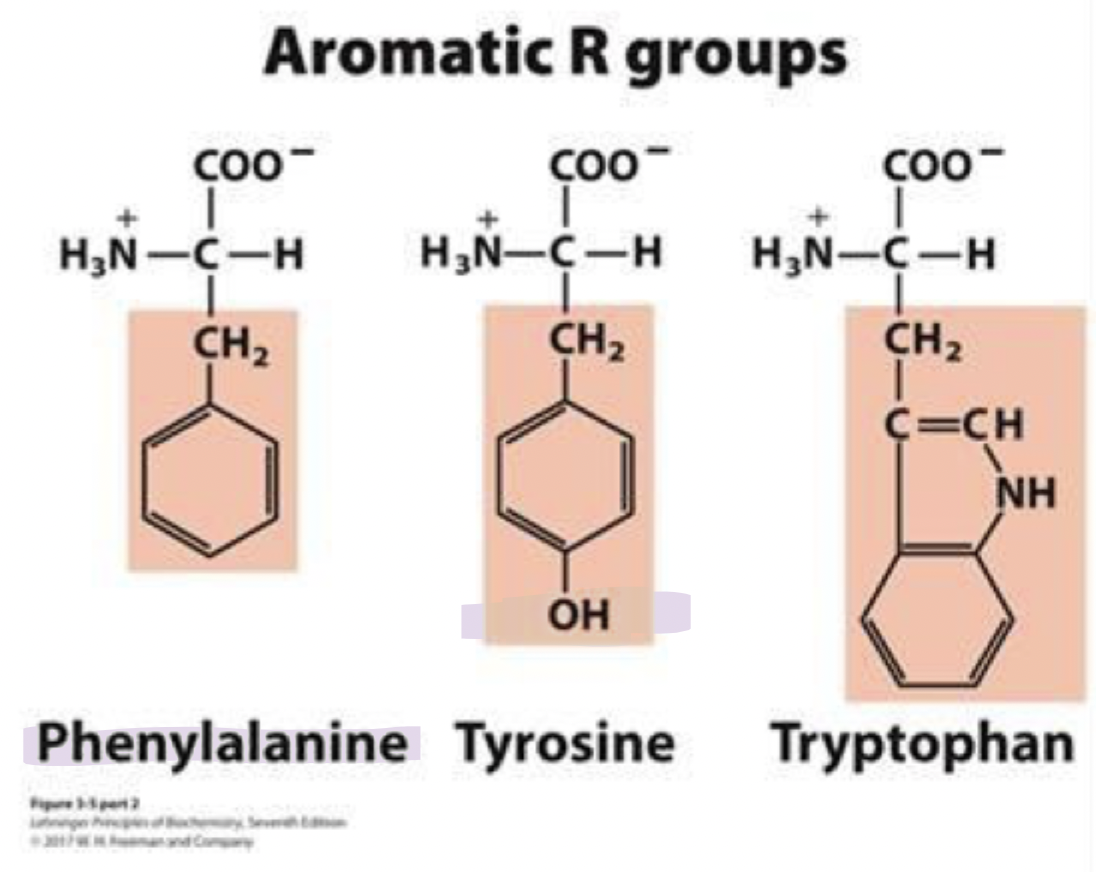
<ul><li><p>phe, F</p></li><li><p>most hydrophobic among the aromatic amino acids </p></li></ul><p></p>
47
New cards

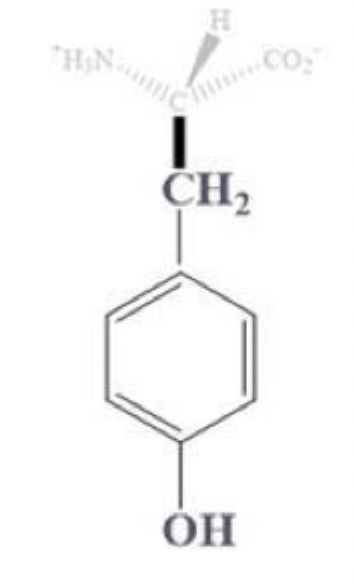
Tyrosine

  • tyr, Y

  • has an ionizable group that can form H-bonds

  • so it’s important in some enzymes

<ul><li><p>tyr, Y</p></li><li><p>has an ionizable group that can form H-bonds </p></li><li><p>so it’s important in some enzymes </p></li></ul><p></p>
48
New cards

tryptophan

  • trp, W

  • bulky af

<ul><li><p>trp, W</p></li><li><p>bulky af </p></li></ul><p></p>
49
New cards

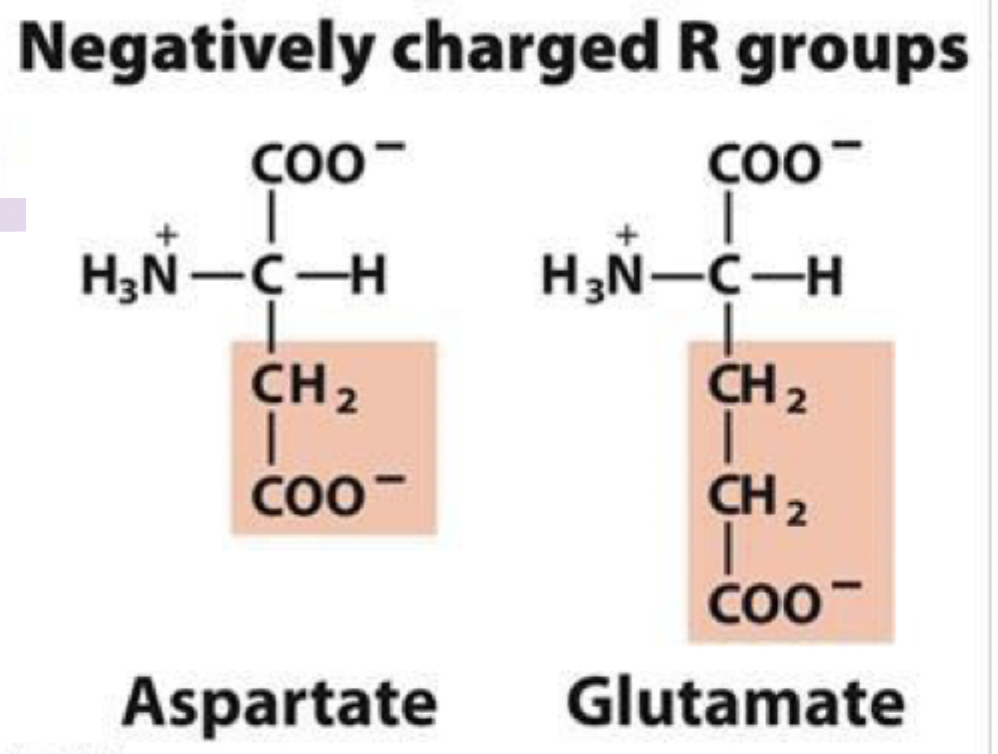
negatively charged R grouped amino acids (2)

  • they’re (-) at pH 7 and hydrophilic

  • they’re usually found on protein surfaces

  • aspartate (aspartic acid) (asp) D

  • glutamate (glutamic acid) (glu) E

<ul><li><p>they’re (-) at pH 7 and hydrophilic </p></li><li><p>they’re usually found on protein surfaces</p></li><li><p>aspartate (aspartic acid) (asp) D</p></li><li><p>glutamate (glutamic acid) (glu) E</p></li></ul><p></p>
50
New cards

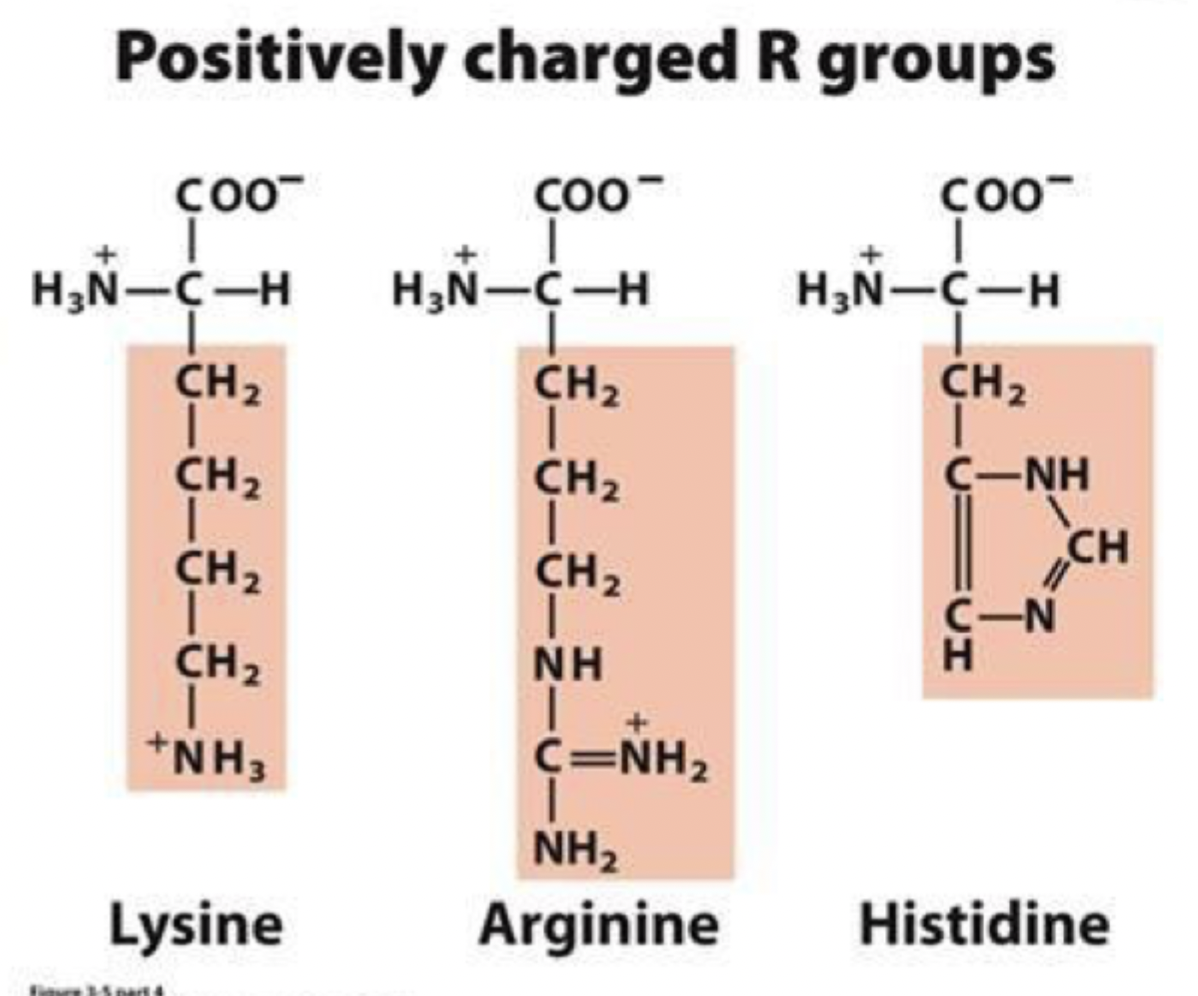
positively charged R grouped amino acids (3)

  • they’re basic at pH 7

  • they’re very polar and found on the protein exterior

  • histidine is the least basic

  • Lysine (lys) K

  • arginine (arg) R

  • histidine (his) H

<ul><li><p>they’re basic at pH 7</p></li><li><p>they’re very polar and found on the protein exterior </p></li><li><p>histidine is the least basic </p></li><li><p>Lysine (lys) K</p></li><li><p>arginine (arg) R</p></li><li><p>histidine (his) H</p></li></ul><p></p>
51
New cards

alanine info and side chain

  • ala, A

  • CH3 side chain

  • NP and aliphatic

  • ambivalent (mixed)

  • can reside outside or inside bc of a smaller side chains
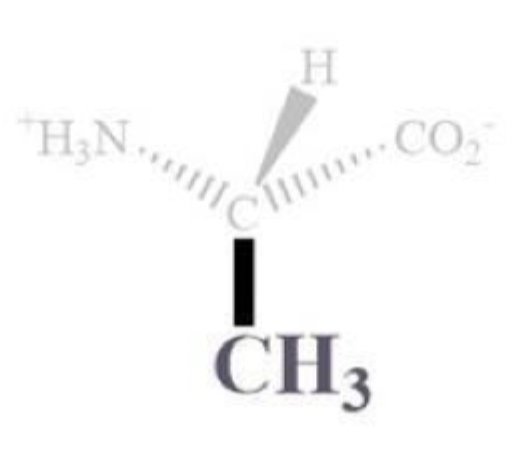
<ul><li><p>ala, A</p></li></ul><p></p><ul><li><p>CH3 side chain</p></li></ul><p></p><ul><li><p>NP and aliphatic</p></li><li><p>ambivalent (mixed)</p></li><li><p>can reside outside or inside bc of a smaller side chains</p></li></ul><p></p>
52
New cards

valine info and side chain

  • val, v

  • CH bound to CH3 and CH3 side chain

  • NP and aliphatic

  • clusters inside protein bc it’s hydrophobic
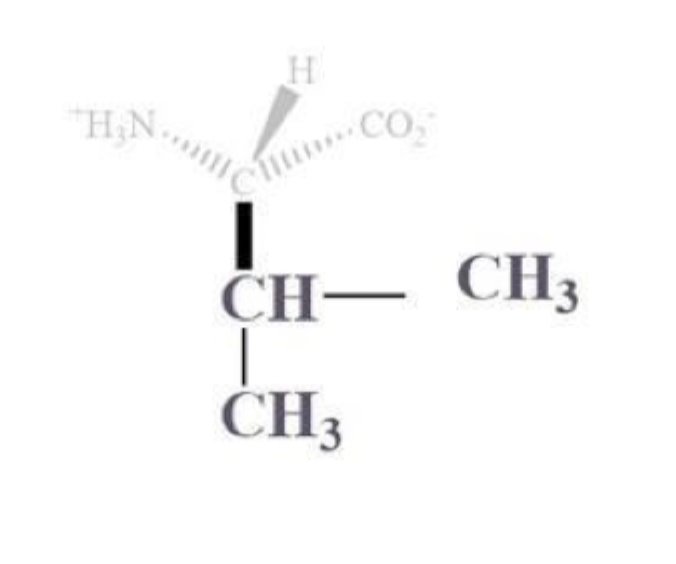
<ul><li><p>val, v</p></li></ul><p></p><ul><li><p>CH bound to CH3 and CH3 side chain </p></li></ul><p></p><ul><li><p>NP and aliphatic </p></li><li><p>clusters inside protein bc it’s hydrophobic </p></li></ul><p></p>
53
New cards

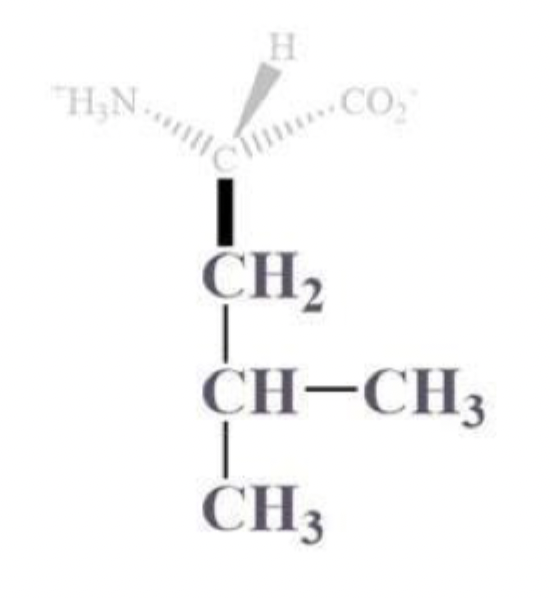
leucine info and side chain

  • leu, L

  • CH2 - CH where the CH is bound to CH3 and CH3 sidechain

  • NP and aliphatic

  • clusters inside protein bc it’s hydrophobic
<ul><li><p>leu, L </p></li></ul><p></p><ul><li><p>CH2 - CH where the CH is bound to CH3 and CH3 sidechain </p></li></ul><p></p><ul><li><p>NP and aliphatic</p></li><li><p>clusters inside protein bc it’s hydrophobic</p></li></ul><p></p>
54
New cards

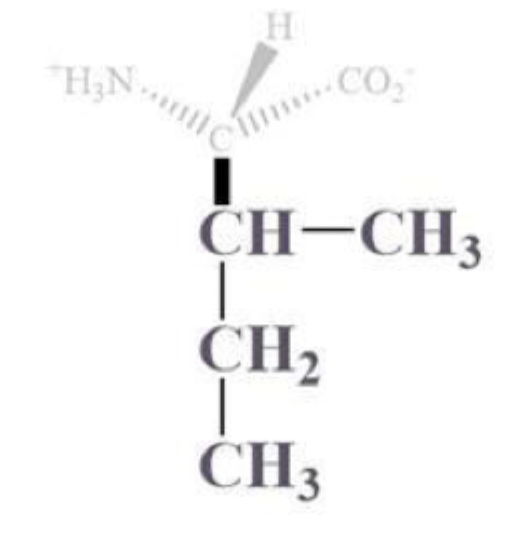
isoleucine info and side chain

  • ile, I

  • CH bound to a CH3 and CH2-CH3 side chain

  • NP and aliphatic

  • clusters inside protein bc it’s hydrophobic

<ul><li><p>ile, I</p></li></ul><p></p><ul><li><p>CH bound to a CH3 and CH2-CH3 side chain </p></li></ul><p></p><ul><li><p>NP and aliphatic</p></li><li><p>clusters inside protein bc it’s hydrophobic</p></li></ul><p></p>
55
New cards

glycine info and side chain

  • gly, G

  • H side chain

  • NP and aliphatic

  • ambivalent (mixed)

  • can reside outside or inside bc of a smaller side chains
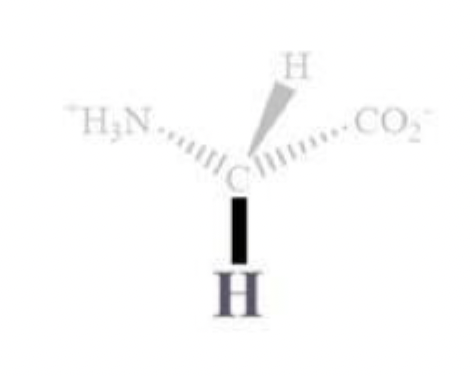
<ul><li><p>gly, G</p></li></ul><p></p><ul><li><p>H side chain </p></li></ul><p></p><ul><li><p>NP and aliphatic</p></li><li><p>ambivalent (mixed)</p></li><li><p>can reside outside or inside bc of a smaller side chains</p></li></ul><p></p>
56
New cards

proline info and side chain

  • pro, P

  • 4 C ring including the secondary carbon (pentagon ring)

  • has NH within the ring

  • NP and aliphatic

  • good for U turns

<ul><li><p>pro, P</p></li></ul><p></p><ul><li><p>4 C ring including the secondary carbon (pentagon ring)</p></li><li><p>has NH within the ring</p></li></ul><p></p><ul><li><p>NP and aliphatic</p></li><li><p>good for U turns </p></li></ul><p></p>
57
New cards

phenylalanine info and side chain

  • phe, F

  • has a CH2 - benzene side chain

  • aromatic amino acid

  • most hydrophobic among the aromatics

<ul><li><p>phe, F</p></li></ul><p></p><ul><li><p>has a CH2 - benzene side chain</p></li></ul><p></p><ul><li><p>aromatic amino acid</p></li><li><p>most hydrophobic among the aromatics </p></li></ul><p></p>
58
New cards

tyrosine info and side chain

  • tyr, Y

  • has a CH2 - benzene - OH side chain

  • aromatic (hydrophobic)

  • can form H-bonds

  • so it’s important in some enzymes

<ul><li><p>tyr, Y</p></li></ul><p></p><ul><li><p>has a CH2 - benzene - OH side chain</p></li></ul><p></p><ul><li><p>aromatic (hydrophobic)</p></li><li><p>can form H-bonds</p></li><li><p>so it’s important in some enzymes</p></li></ul><p></p>
59
New cards

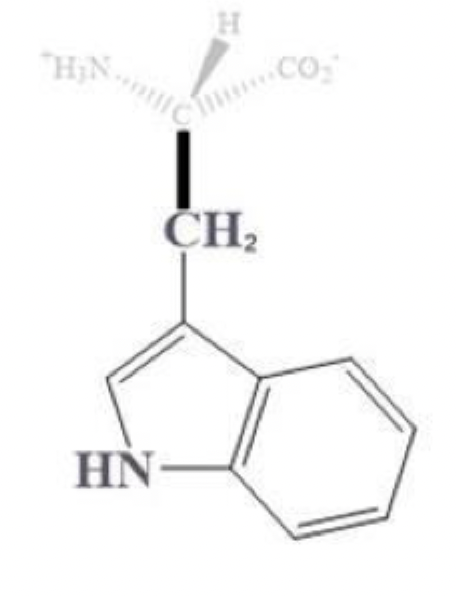
tryptophan info and side chain

  • trp, W

  • has 2 rings side chain

  • aromatic (hydrophobic)

  • bulky af

<ul><li><p>trp, W</p></li></ul><p></p><ul><li><p>has 2 rings side chain </p></li></ul><p></p><ul><li><p>aromatic (hydrophobic)</p></li><li><p>bulky af</p></li></ul><p></p>
60
New cards

serine info and side chain

  • ser, S

  • CH2 - OH side chain

  • polar and uncharged

  • often found on protein surfaces

  • the -OH is a good nucleophile

    • serine typically found in enzyme active sites
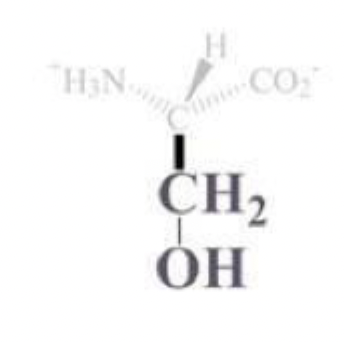
<ul><li><p>ser, S</p></li></ul><p></p><ul><li><p>CH2 - OH side chain</p></li></ul><p></p><ul><li><p>polar and uncharged </p></li><li><p>often found on protein surfaces</p></li><li><p>the -OH is a good nucleophile</p><ul><li><p>serine typically found in enzyme active sites</p></li></ul></li></ul><p></p>
61
New cards

threonine info and side chain

  • thr, T

  • CH bound with OH and CH3 side chain

  • polar and uncharged

  • often found on protein surfaces

  • the -OH is a good nucleophile, but not the best bc secondary alcohol
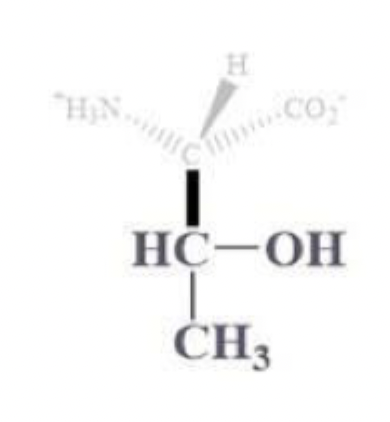
<ul><li><p>thr, T</p></li></ul><p></p><ul><li><p>CH bound with OH and CH3 side chain </p></li></ul><p></p><ul><li><p>polar and uncharged</p></li><li><p>often found on protein surfaces</p></li><li><p>the -OH is a good nucleophile, but not the best bc secondary alcohol </p></li></ul><p></p>
62
New cards

cysteine info and side chain

  • cys, C

  • CH2 - SH side chain

  • polar and uncharged

  • usually found on protein surface

  • -SH is a great nucleophile so it’s in enzyme active sites
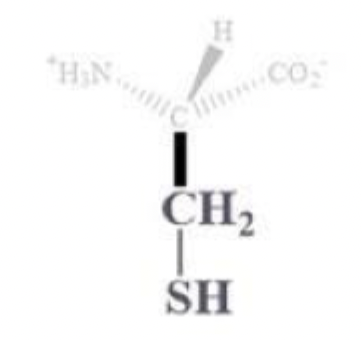
<ul><li><p>cys, C</p></li></ul><p></p><ul><li><p>CH2 - SH side chain </p></li></ul><p></p><ul><li><p>polar and uncharged</p></li><li><p>usually found on protein surface</p></li><li><p>-SH is a great nucleophile so it’s in enzyme active sites </p></li></ul><p></p>
63
New cards

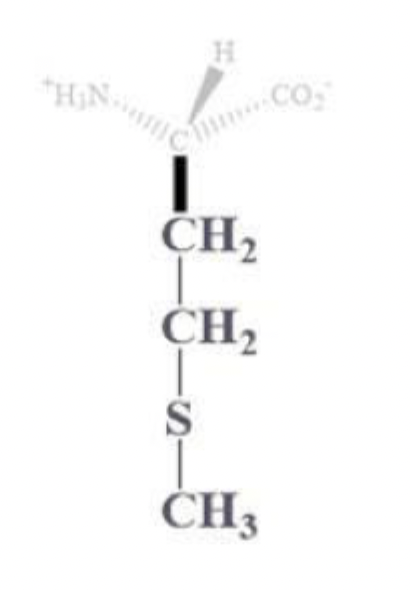
methionine info and side chain

  • met, M

  • CH2 - CH2 - S - CH3 side chain

  • NP and aliphatic

<ul><li><p>met, M</p></li></ul><p></p><ul><li><p>CH2 - CH2 - S - CH3 side chain</p></li></ul><p></p><ul><li><p>NP and aliphatic </p></li></ul><p></p>
64
New cards

aspartic acid info and side chain

  • asp, D

  • CH2 - C which is bound to (=O) and OH (or O-) side chain

  • (-) charged amino acids at pH 7

  • hydrophilic and found on protein surface
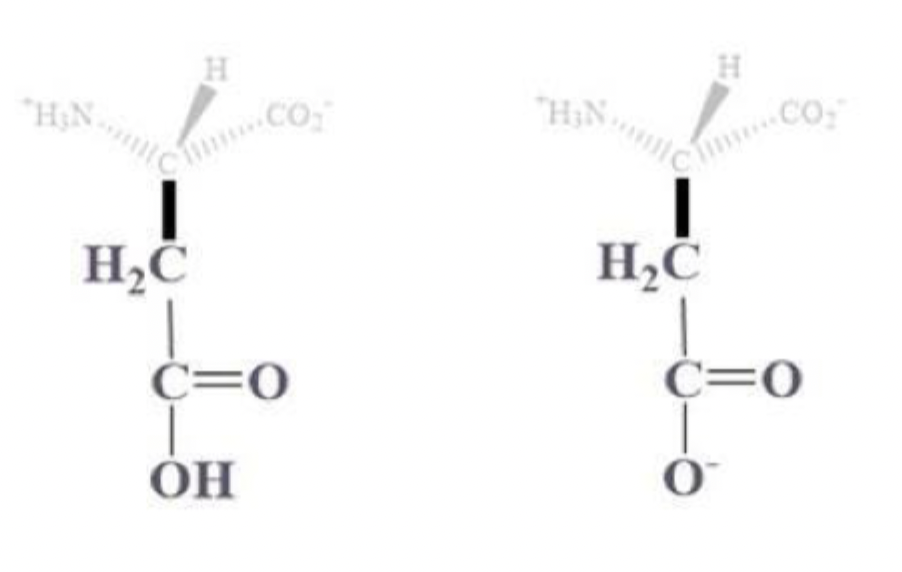
<ul><li><p>asp, D</p></li></ul><p></p><ul><li><p>CH2 - C which is bound to (=O) and OH (or O-) side chain</p></li></ul><p></p><ul><li><p>(-) charged amino acids at pH 7</p></li><li><p>hydrophilic and found on protein surface </p></li></ul><p></p>
65
New cards

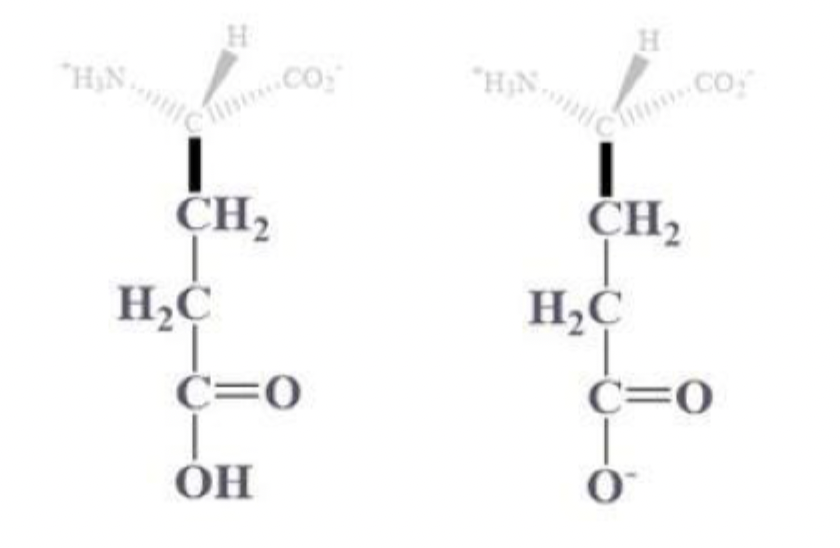
glutamic acid info and side chain

  • glu, E

  • CH2 - CH2 - C which is bound to (=O) and OH (or O-) side chain

  • (-) charged amino acids at pH 7

  • hydrophilic and found on protein surface

<ul><li><p>glu, E</p></li></ul><p></p><ul><li><p>CH2 - CH2 - C which is bound to (=O) and OH (or O-) side chain</p></li></ul><p></p><ul><li><p>(-) charged amino acids at pH 7</p></li><li><p>hydrophilic and found on protein surface </p></li></ul><p></p>
66
New cards

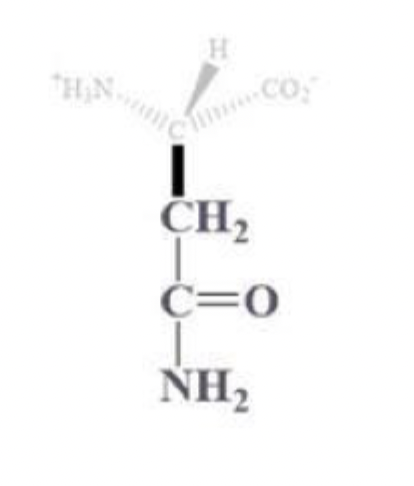
asparagine info and side chain

  • asn, N

  • CH2 - C that is bound to (=O) and (-NH2)

  • amine derivative of aspartic acid

  • polar uncharged amino acid

<ul><li><p>asn, N</p></li></ul><p></p><ul><li><p>CH2 - C that is bound to (=O) and (-NH2)</p></li></ul><p></p><ul><li><p>amine derivative of aspartic acid</p></li><li><p>polar <em>uncharged</em> amino acid </p></li></ul><p></p>
67
New cards

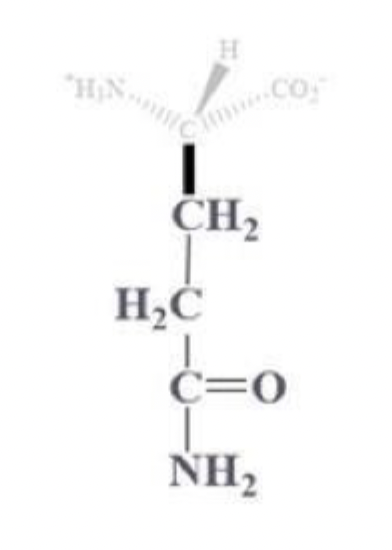
glutamine info and side chain

  • gln, Q

  • CH2 - CH2 - C that is bound to (=O) and (-NH2)

  • amine derivative of glutamic acid

  • polar uncharged amino acid

<ul><li><p>gln, Q</p></li></ul><p></p><ul><li><p>CH2 - CH2 - C that is bound to (=O) and (-NH2)</p></li></ul><p></p><ul><li><p>amine derivative of glutamic acid</p></li><li><p>polar <em>uncharged</em> amino acid </p></li></ul><p></p>
68
New cards

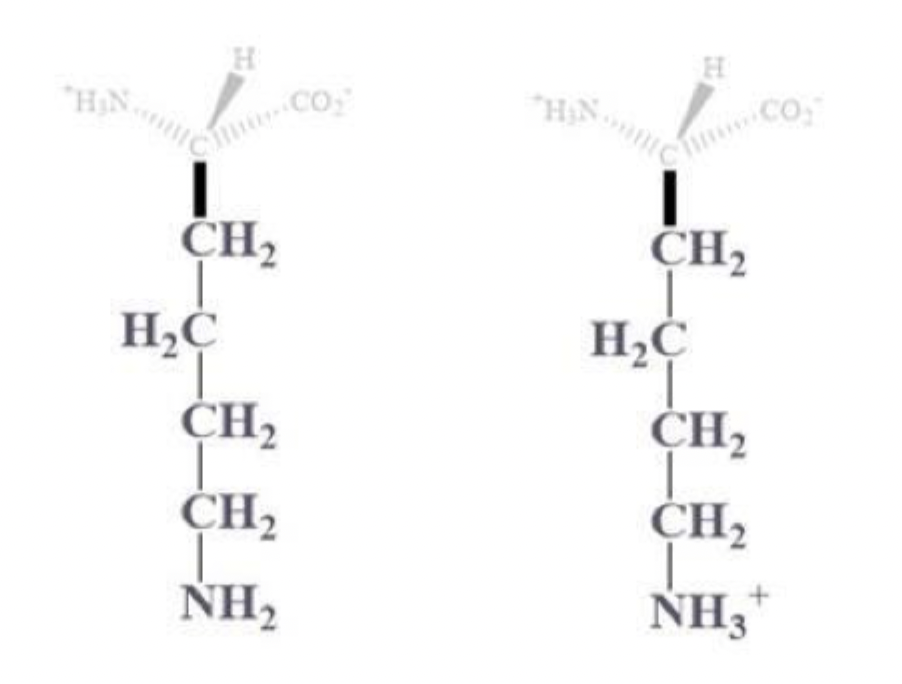
lysine info and side chain

  • lys, K

  • CH2 - CH2 - CH2 - CH2 - NH2 or NH3+ side chain

  • (+) charged at pH 7, basic and polar

<ul><li><p>lys, K</p></li></ul><p></p><ul><li><p>CH2 - CH2 - CH2 - CH2 - NH2 or NH3+ side chain </p></li></ul><p></p><ul><li><p>(+) charged at pH 7, basic and polar </p></li></ul><p></p>
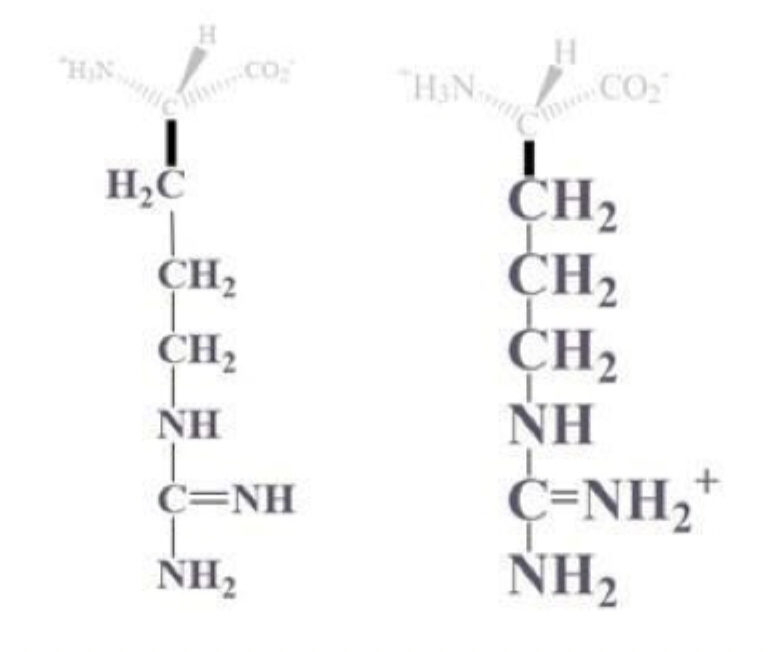
69
New cards

arginine info and side chain

  • arg, R

  • CH2 - CH2 - CH2 - NH - C bound to NH2 and (=NH or =NH2+)

  • (+) charged at pH 7, basic and polar

<ul><li><p>arg, R</p></li></ul><p></p><ul><li><p>CH2 - CH2 - CH2 - NH - C bound to NH2 and (=NH or =NH2+)</p></li></ul><p></p><ul><li><p>(+) charged at pH 7, basic and polar </p></li></ul><p></p>
70
New cards

histidine info and side chain

  • his, H

  • CH2 - 5 point ring

    • 3C and 2 N

  • (+) charged at pH 7, basic and polar

  • least basic among the (+) charged amino acids
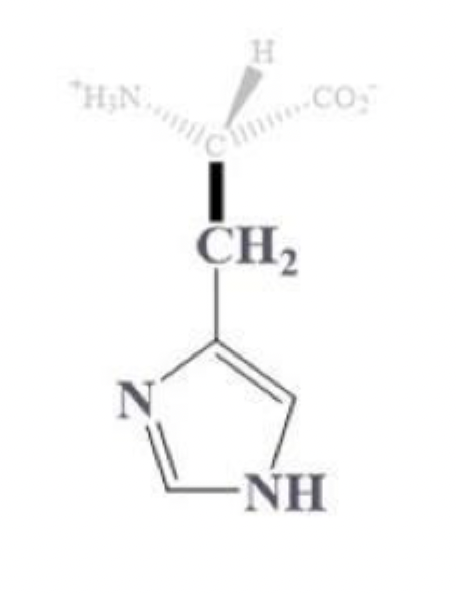
<ul><li><p>his, H</p></li></ul><p></p><ul><li><p>CH2 - 5 point ring </p><ul><li><p>3C and 2 N</p></li></ul></li></ul><p></p><ul><li><p>(+) charged at pH 7, basic and polar </p></li><li><p>least basic among the (+) charged amino acids</p></li></ul><p></p>
71
New cards

SDS Polyacrylamide gel electrophoresis endgoal

seperate proteins based on size

72
New cards

SDS Polyacrylamide gel electrophoresis mechanism

  • SDS added to a sample of proteins and heated

    • denatures them

    • surrounds them with uniform charge

    • subunits are also seperated

  • when put through Polyacrylamide gel from the top

    • it goes towards the bottom (+) bc the polypeptides are (-)

    • the smaller ones go faster and further

  • since the charge:mass ratio is the same, the difference in travel is only due to MW

    • low MW proteins are more mobile

Explore top notes

note
Basic Chem/Ph/Water practice
Updated 922d ago
0.0(0)
note
Classical Conditioning
Updated 114d ago
0.0(0)
note
AP Lang test study guide
Updated 1256d ago
0.0(0)
note
ARTERIAS
Updated 1228d ago
0.0(0)
note
Kinetics
Updated 1072d ago
0.0(0)
note
Basic Chem/Ph/Water practice
Updated 922d ago
0.0(0)
note
Classical Conditioning
Updated 114d ago
0.0(0)
note
AP Lang test study guide
Updated 1256d ago
0.0(0)
note
ARTERIAS
Updated 1228d ago
0.0(0)
note
Kinetics
Updated 1072d ago
0.0(0)

Explore top flashcards

flashcards
Semester 1 Final AP Art History
51
Updated 470d ago
0.0(0)
flashcards
scripture - mark
86
Updated 1129d ago
0.0(0)
flashcards
APUSH Unit 8 Test
46
Updated 1102d ago
0.0(0)
flashcards
Spanish 3 - Chapter 4
75
Updated 1144d ago
0.0(0)
flashcards
Semester 1 Final AP Art History
51
Updated 470d ago
0.0(0)
flashcards
scripture - mark
86
Updated 1129d ago
0.0(0)
flashcards
APUSH Unit 8 Test
46
Updated 1102d ago
0.0(0)
flashcards
Spanish 3 - Chapter 4
75
Updated 1144d ago
0.0(0)