Semester 1 Final AP Art History
 Call Kai
 Learn
Learn Practice Test
 Spaced Repetition
 Match
Match Flashcards
 Knowt Play
1/50

Earn XP
Description and Tags
Paleolithic/Neolithic, Early Civilizations, Ancient Egypt, Aegean Sea, Ancient Greece, Etruscan, Ancient Rome
Name | Mastery | Learn | Test | Matching | Spaced | Call with Kai | Chat |
|---|
No analytics yet
Send a link to your students to track their progress
51 Terms
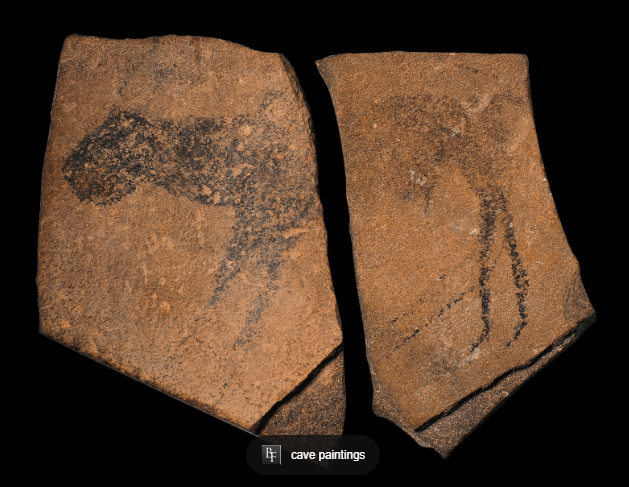
Apollo 11 Stones (Animal Facing Left)
25,000-23,000 BCE. Charcoal on stone. Namibia
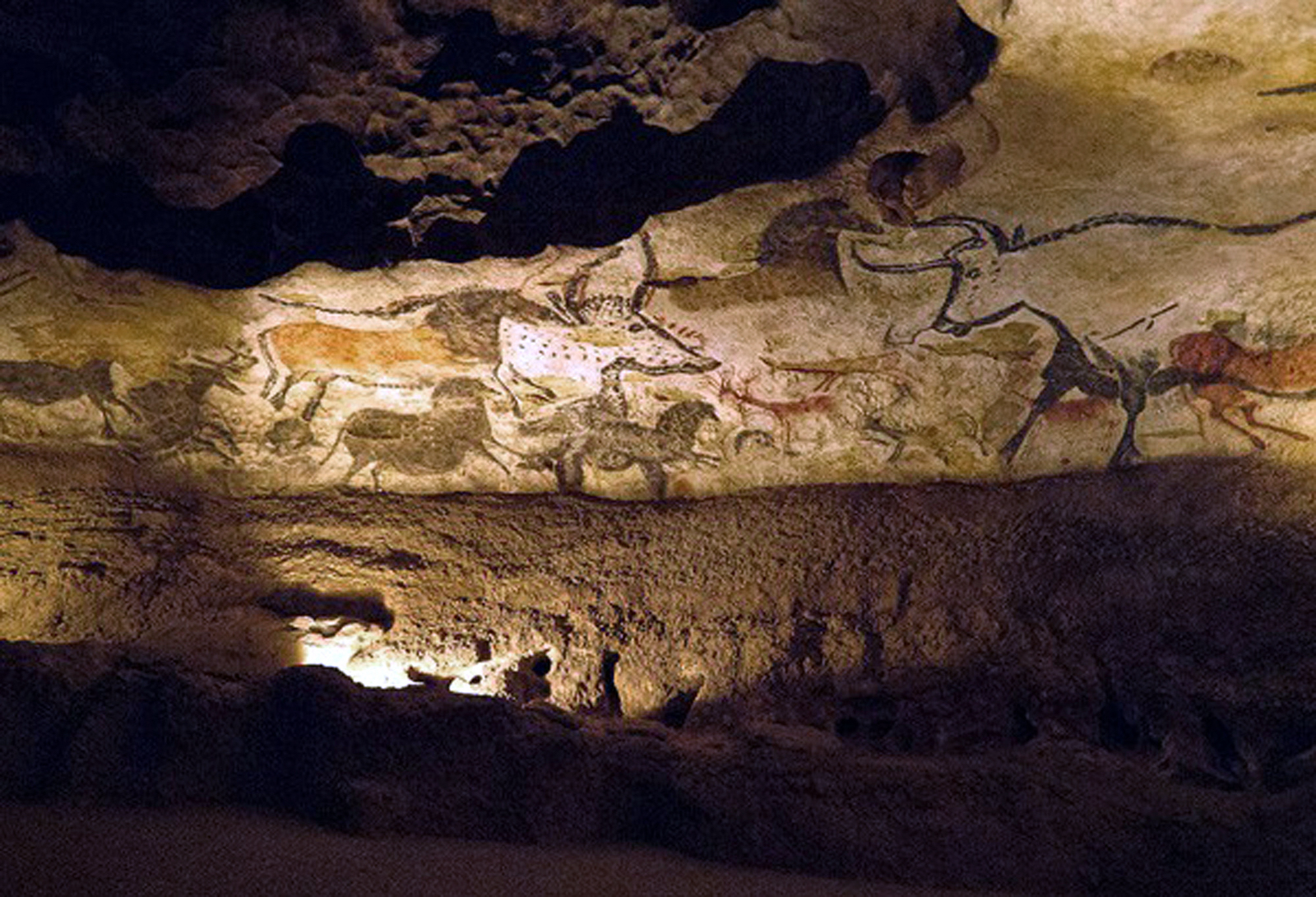
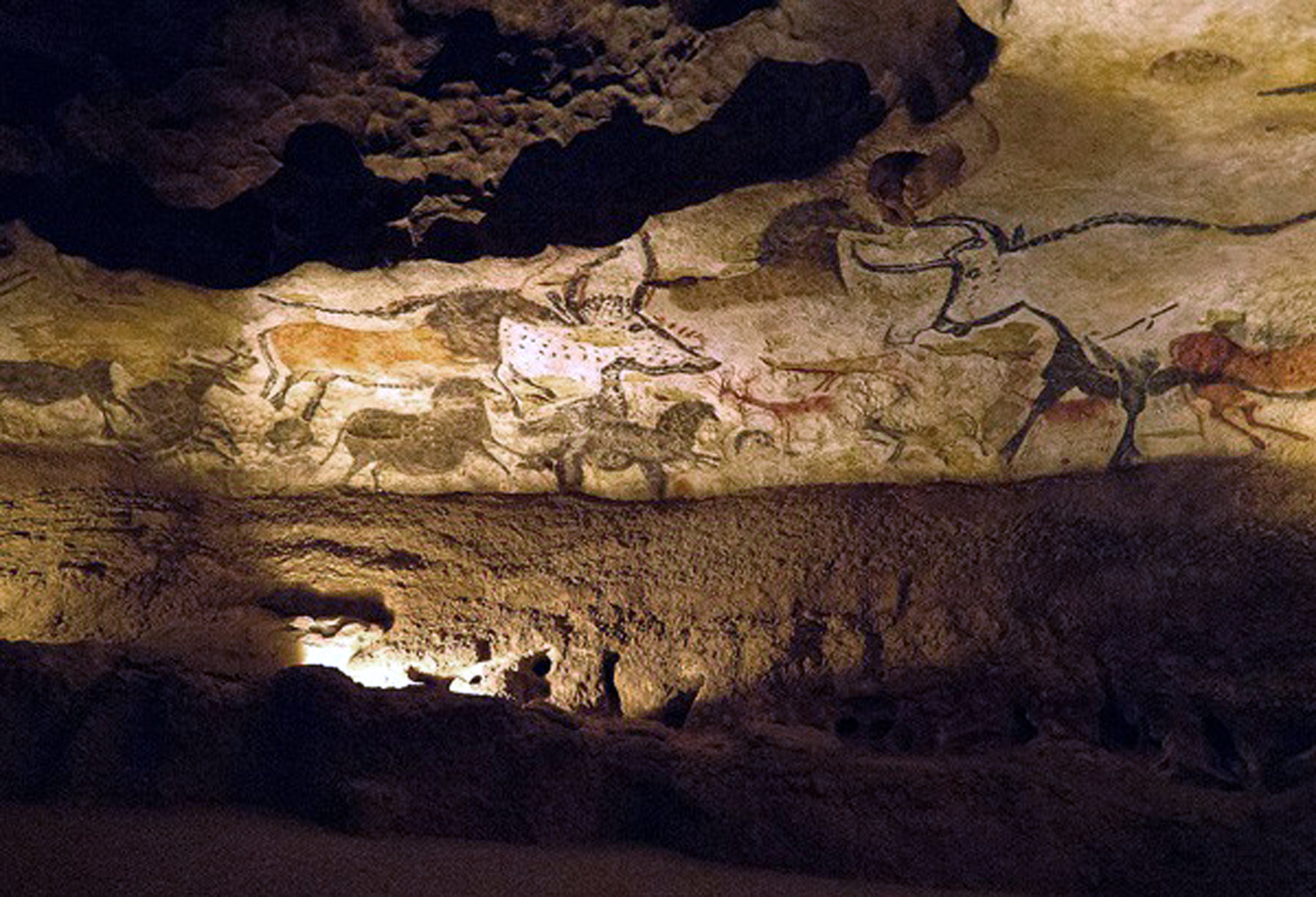
Great Hall of Bulls
15,000 BCE. Lascaux, France. Twisted perspective, hard to reach location in cave indicates ritualistic/spiritual purpose.
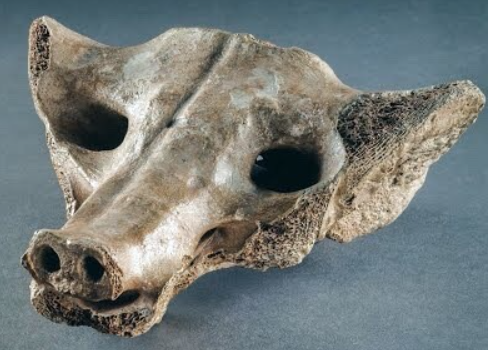
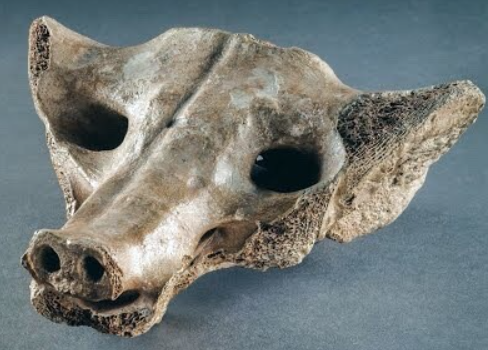
Camelid Sacrum
14,000-7,000 BCE. Mexico City Valley. Made of bone from sacral region. Considered sacred because of its proximity to reproductive organs, which symbolizes fertility and life.
Venus of Willendorf
28,000-25,000 BCE. Austria. A small statuette representing a female figure with exaggerated features, symbolizing fertility.
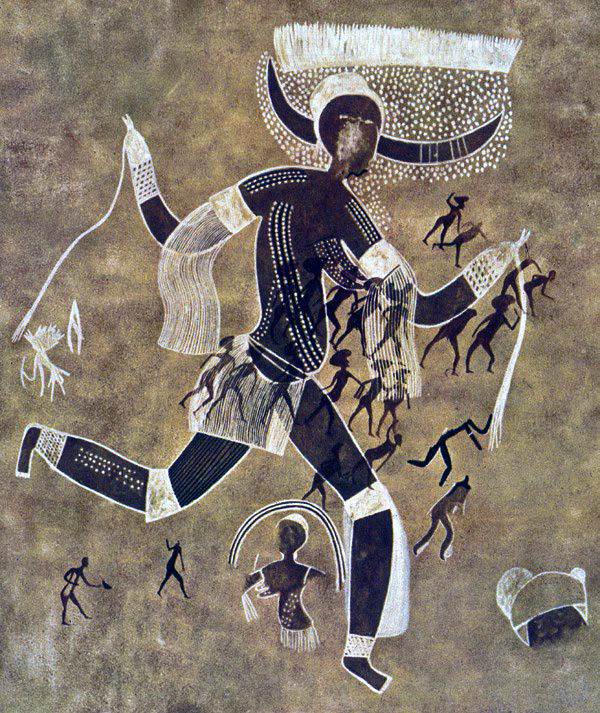
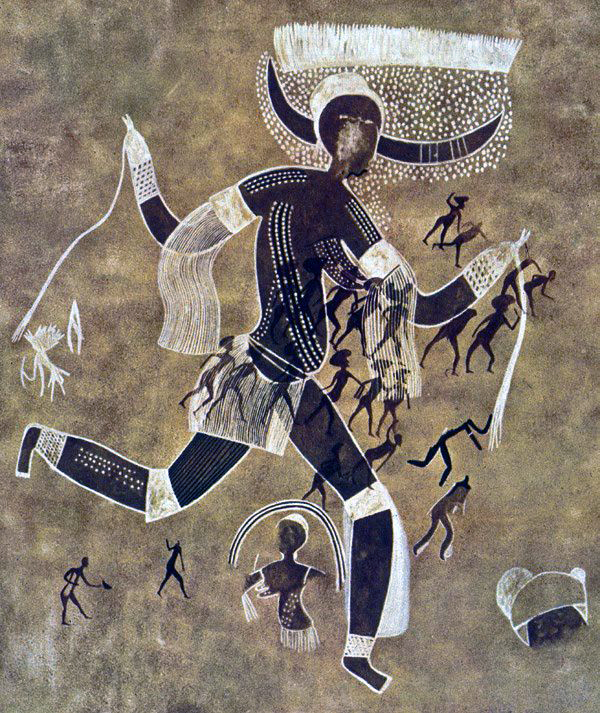
Running Horned Woman
6,000-4,000 BCE. A prehistoric rock painting from Algeria, depicting a female figure adorned with horns and elaborate body patterns, believed to represent a ritualistic or spiritual significance.
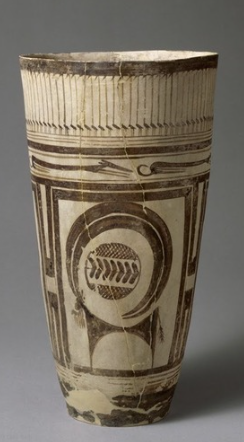
Ibex Beaker
4,500-3,500 BCE. Iran. A pottery vessel featuring stylized ibex figures, often associated with funerary practices and symbolic representation of fertility.
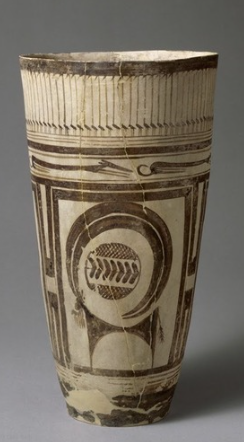
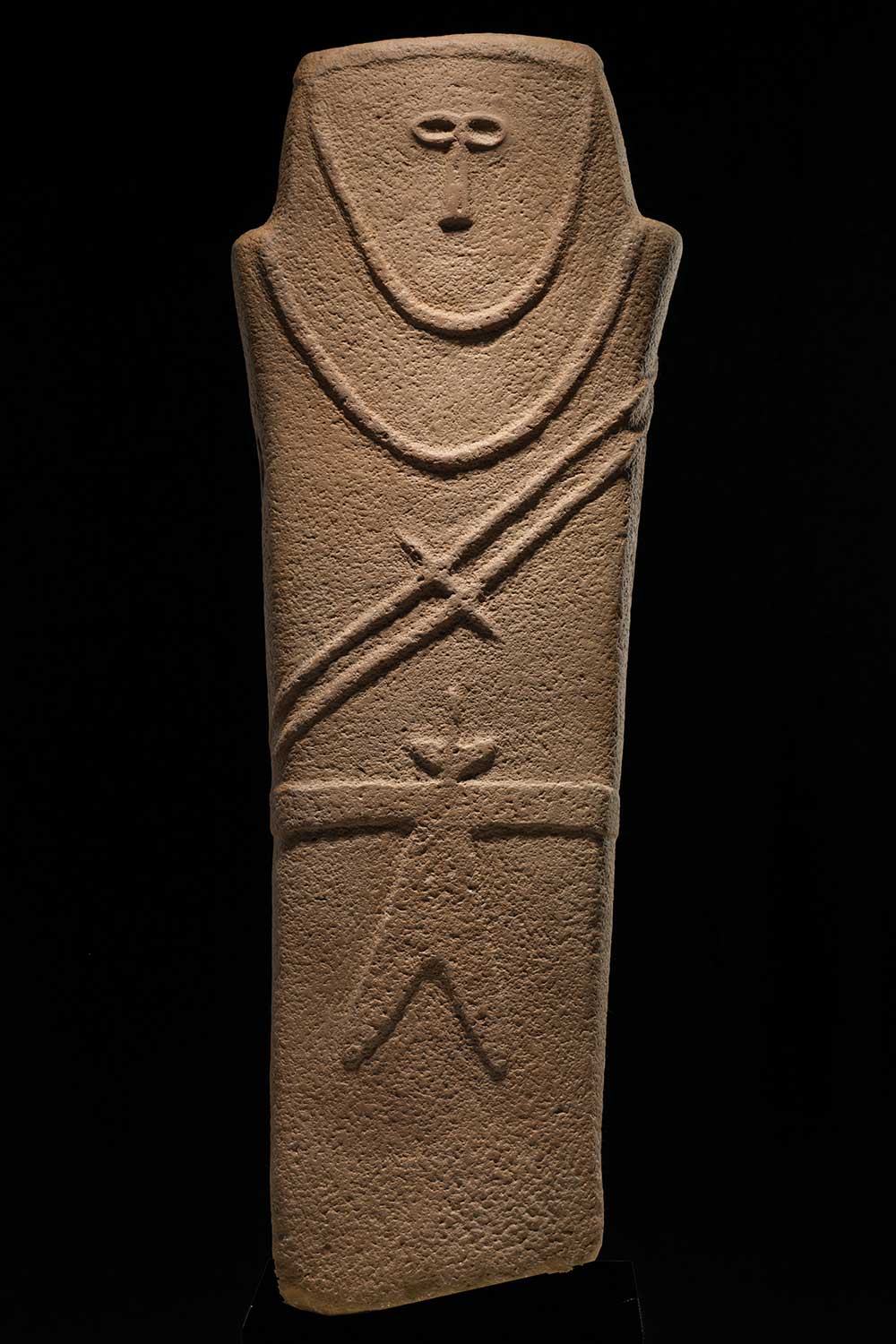
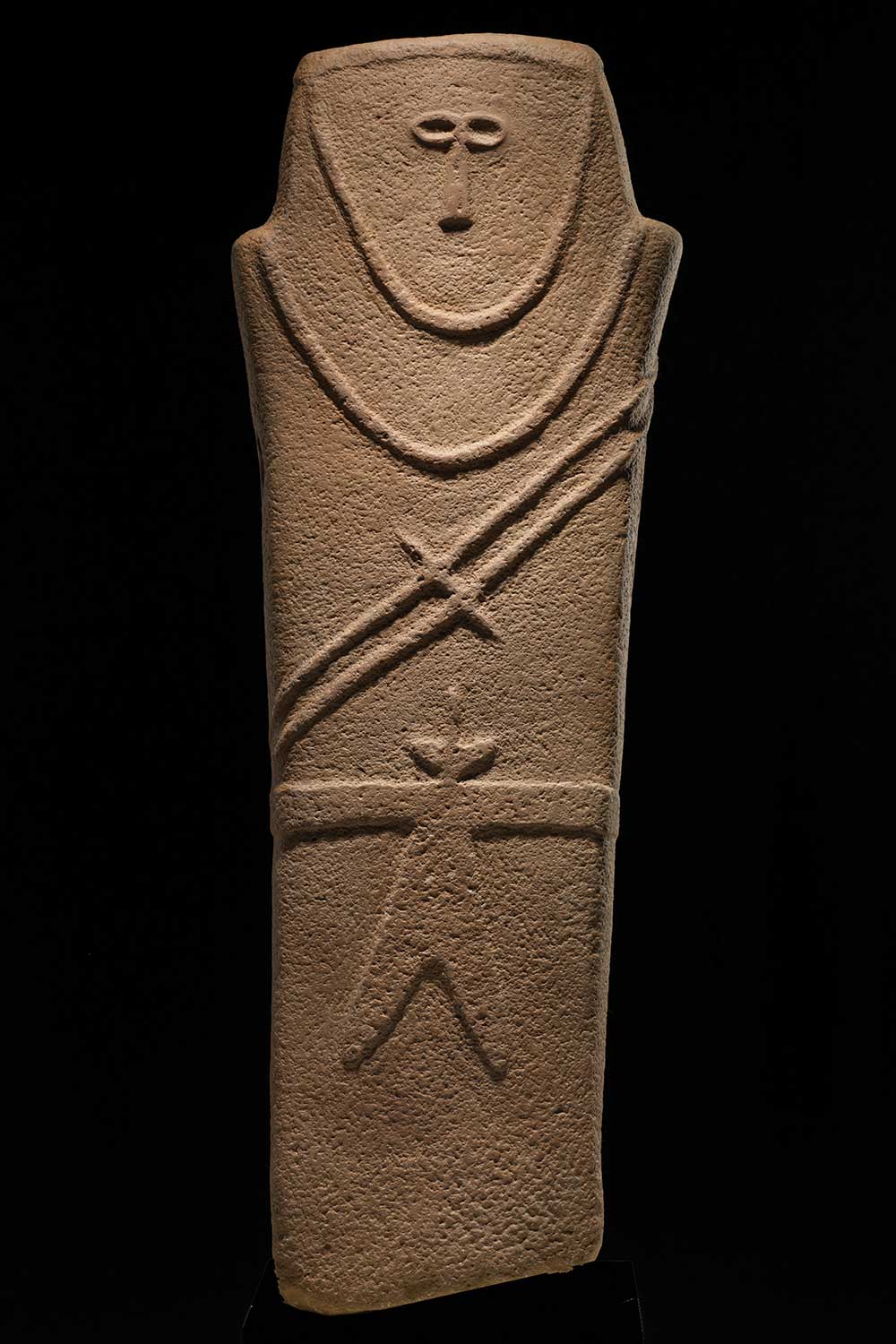
Anthropomorphic Stele
4,000 BCE. Saudi Arabia. A carved stone monument representing a human figure, often associated with burial practices and the worship of ancestors.
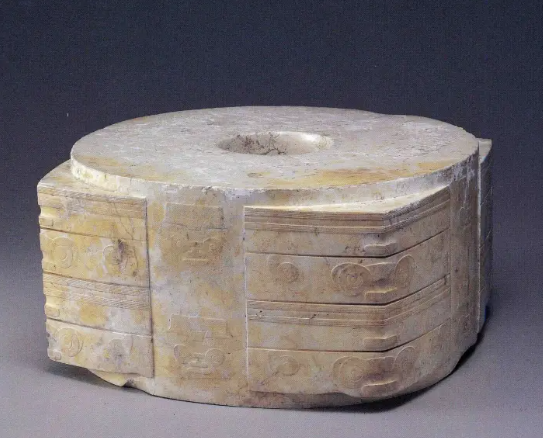
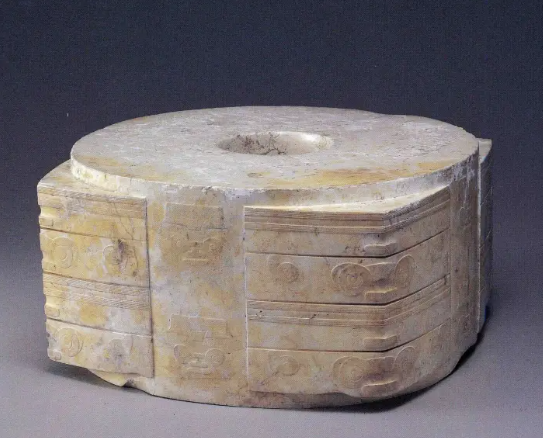
Jade cong
3,300-2,200 BCE. China. A tubular jade artifact with a square cross-section, often decorated with intricate carvings, believed to have ritualistic significance and associated with burial practices. Because jade is a difficult material to work with, it was made by sanding it down repeatedly.
Stonehenge
Prehistoric monument in England in the Salsbury Plaine, constructed between 2,500-1,600 BCE. Aligned with the sun rising/setting and appears as you move closer to it and the horizon. It consists of a circular arrangement of standing stones and is believed to have been used for ceremonial purposes, possibly related to astronomical observations.
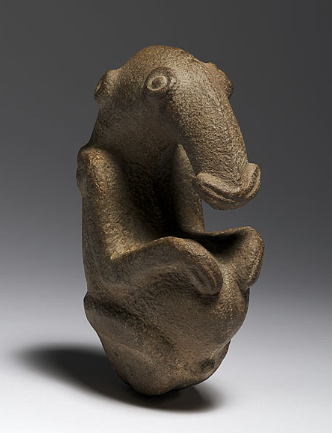
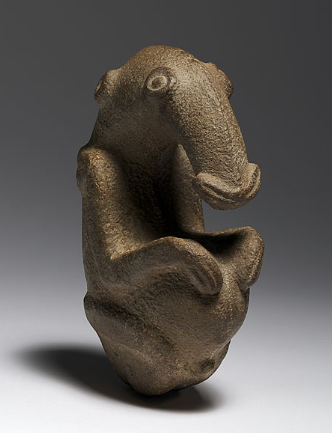
Ambum Stone
A prehistoric stone sculpture from Papua New Guinea, dating back to around 1,500 BCE, often interpreted as a ritual object possibly representing an echidna or a human figure.
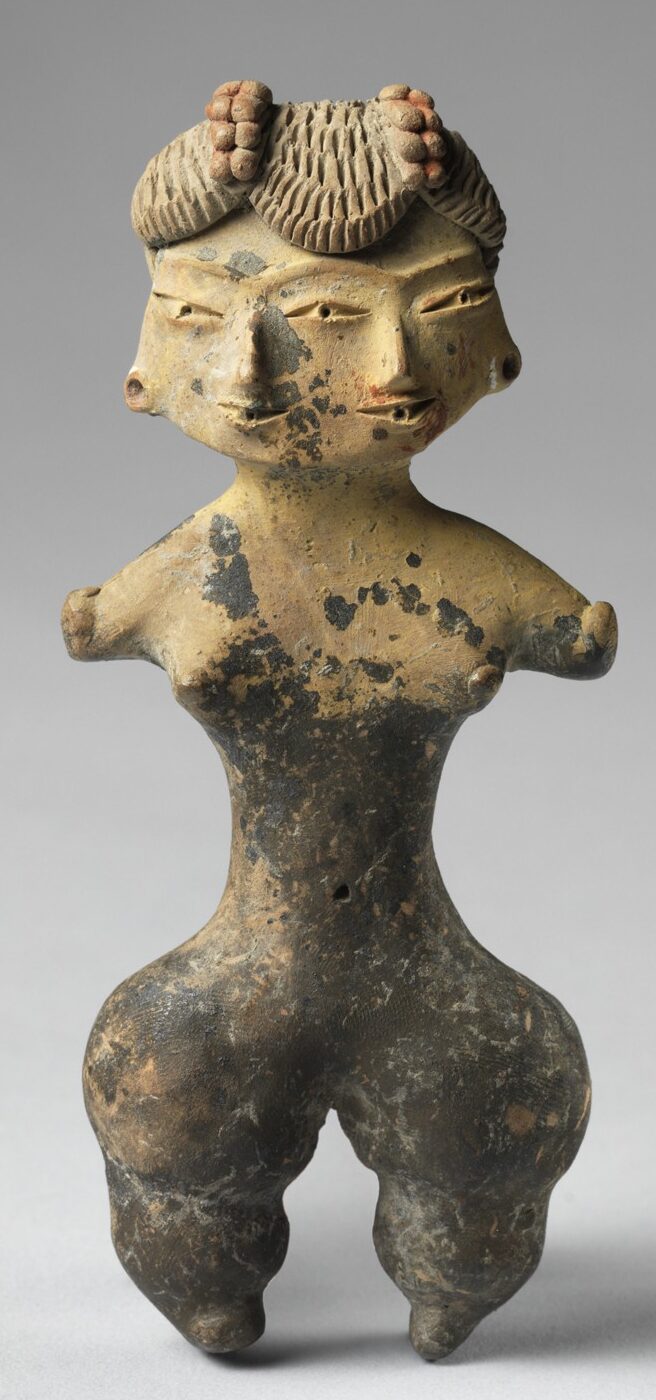
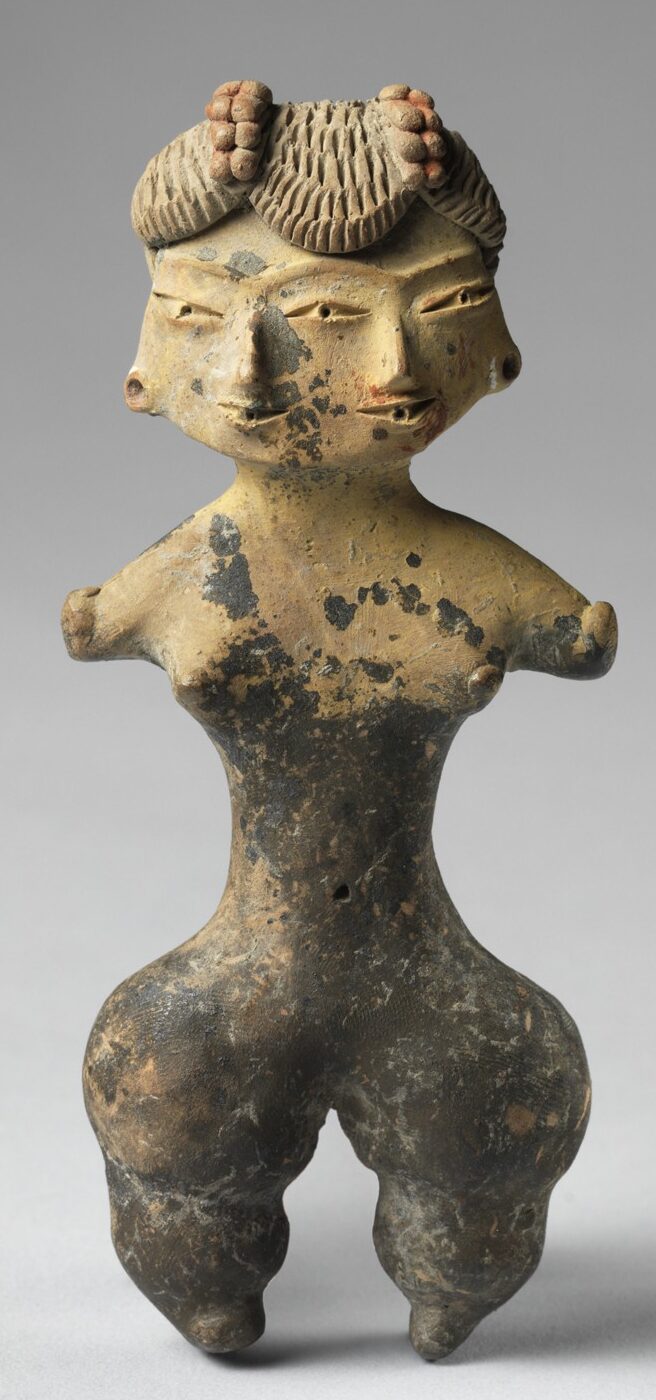
Tlatilco figurine
A small ceramic figurine from the Tlatilco culture in Mexico, dating back to around 1,200-900 BCE, often depicting human figures with exaggerated features and elaborate hairstyles, suggesting complex social and ritual practices. Features two faces and elaborate hips (fertility?).
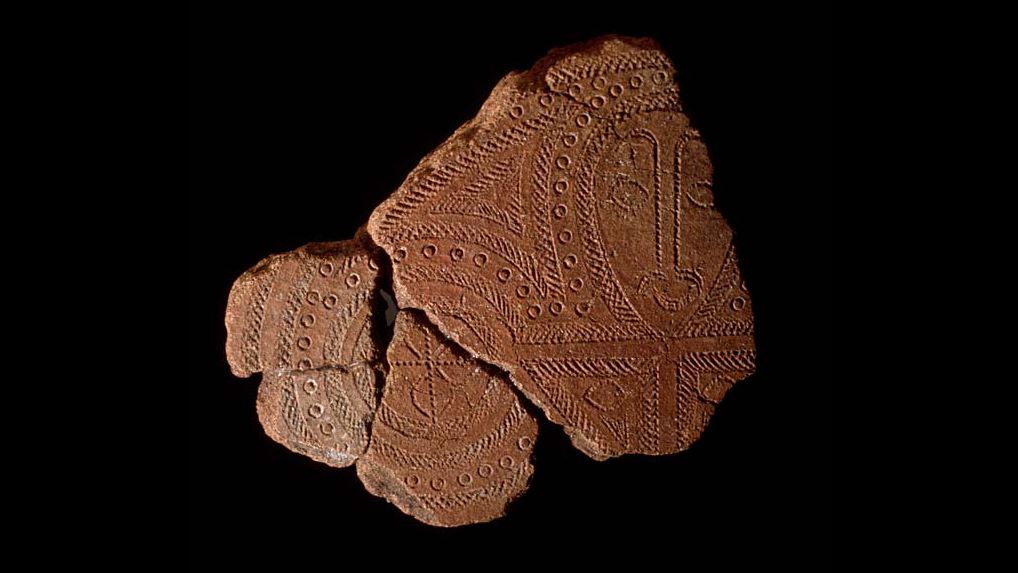
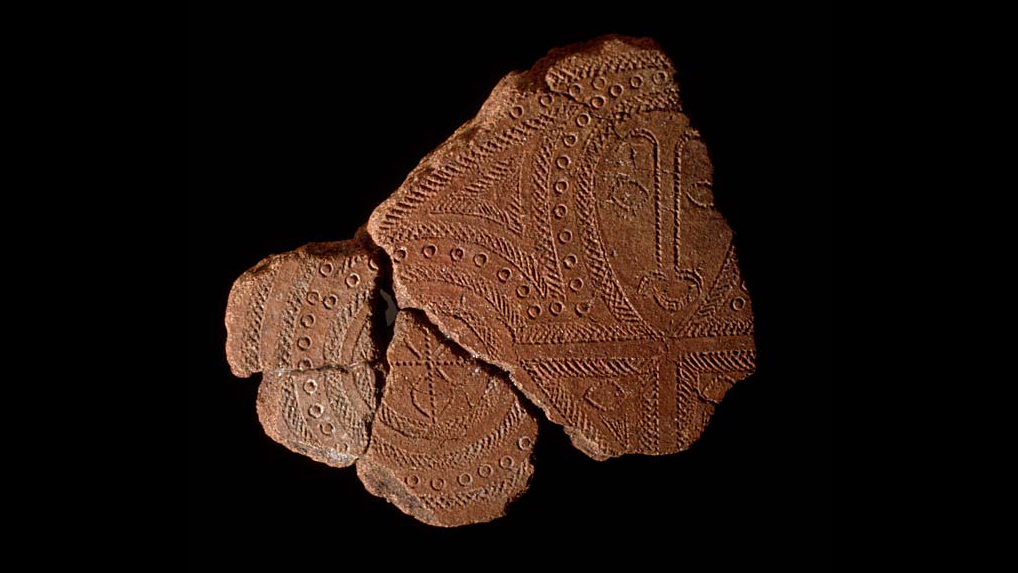
Terra cotta fragment
A piece of baked clay pottery from Polynesia, known for its intricate geometric designs “design grammar” and dating back to around 1,000 BCE. It provides insight into the artistic practices and cultural exchanges in the Pacific Islands.
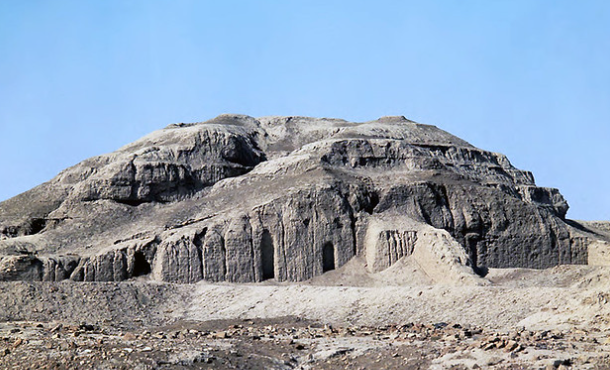
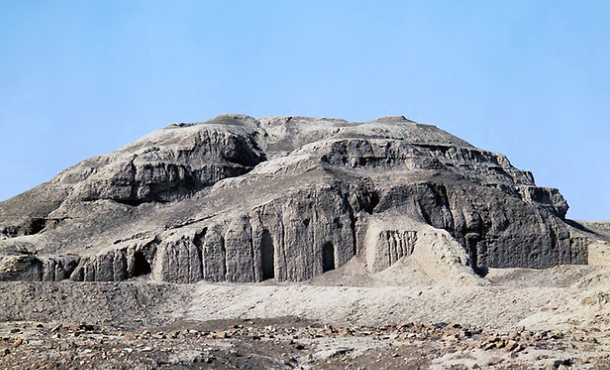
White temple and its ziggurat
Sumerian. An ancient Sumerian temple structure located in Uruk, Iraq, dating back to around 3500-3000 BCE, characterized by its elevated platform and distinct whitewashed walls, serving as a major religious center dedicated to the sky god Anu. Bent-axis approach. Temple acted as “waiting rooms” for gods.
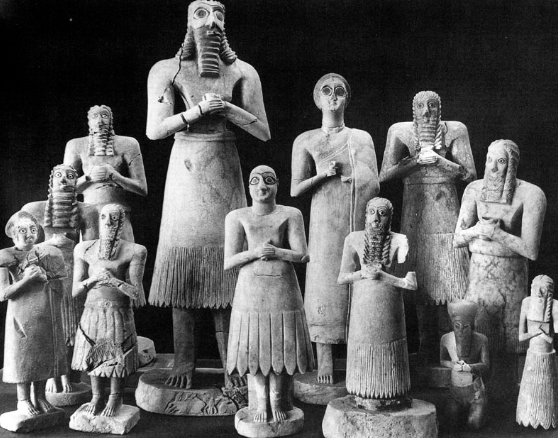
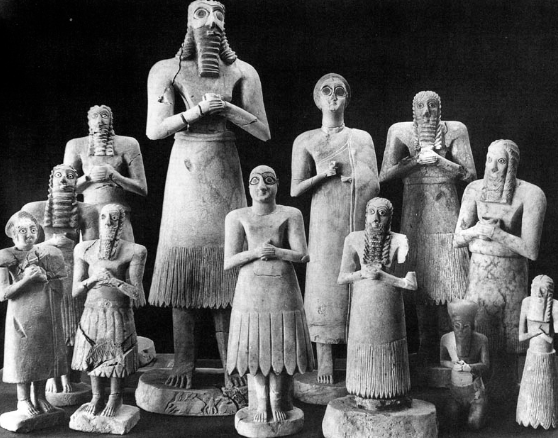
Statuette of Worshippers
Sumerian. 2,700 BCE. Small figurines from ancient Mesopotamia, typically made of gypsum or limestone, used in temples as offerings to the gods, representing worshippers in various poses of devotion.
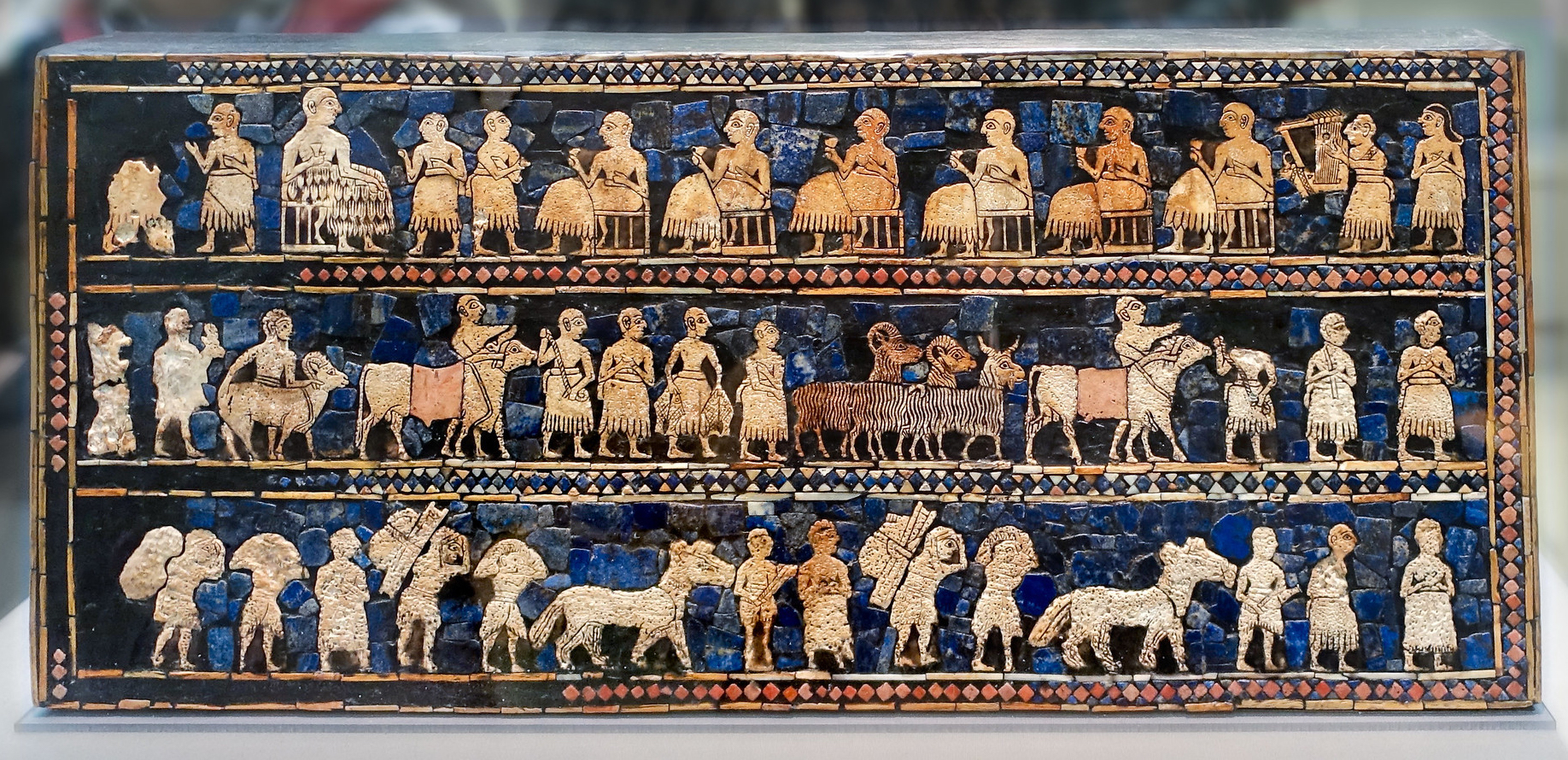
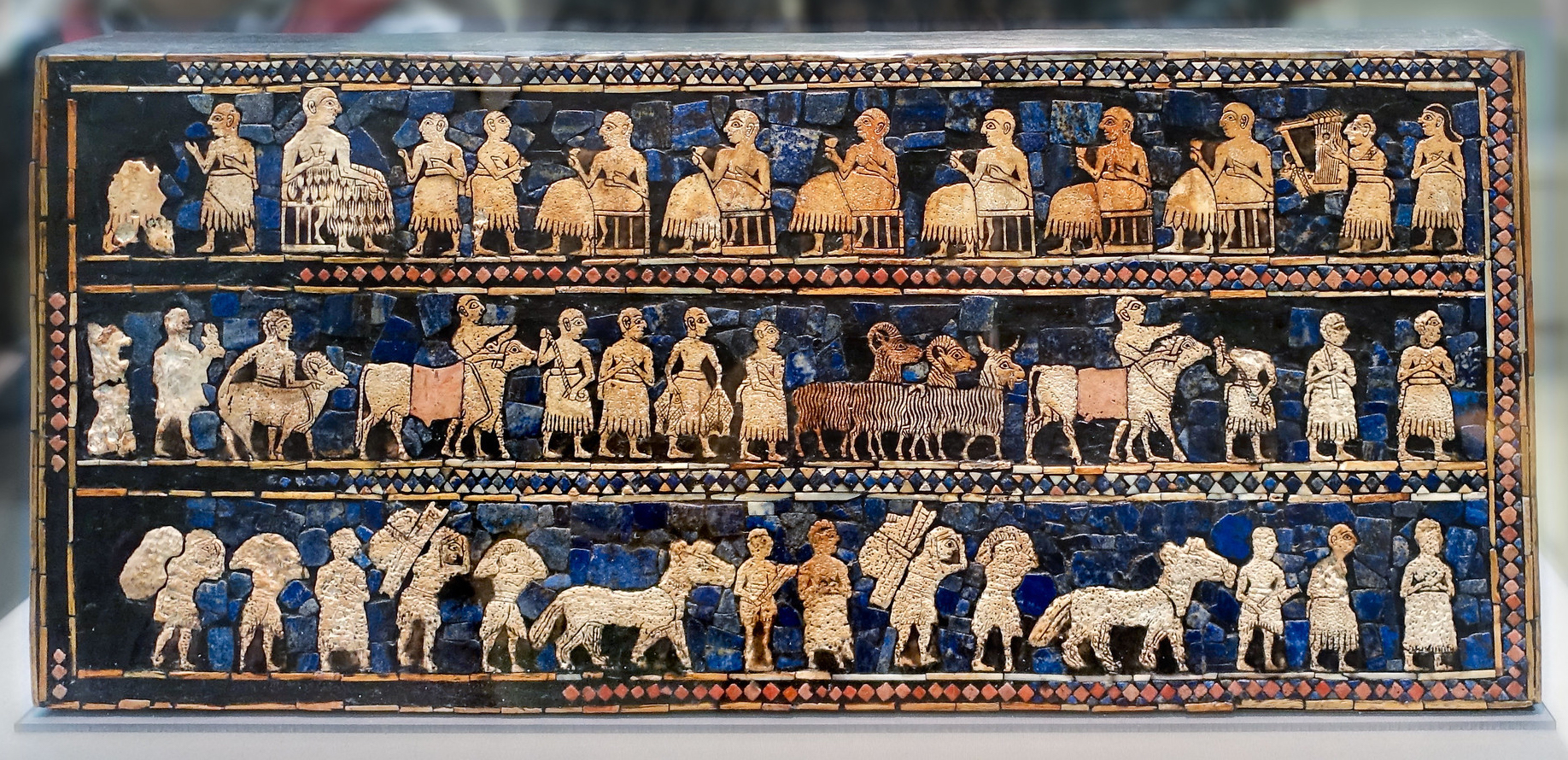
Standard of Ur
A Sumerian artifact dating back to around 2600-2400 BCE, made of wood and inlaid with lapis lazuli, shell, and red limestone. It features scenes of war and peace, illustrating the social hierarchy and cultural practices of ancient Mesopotamia. Found in Royal Grave. Hierarchy of Scale.
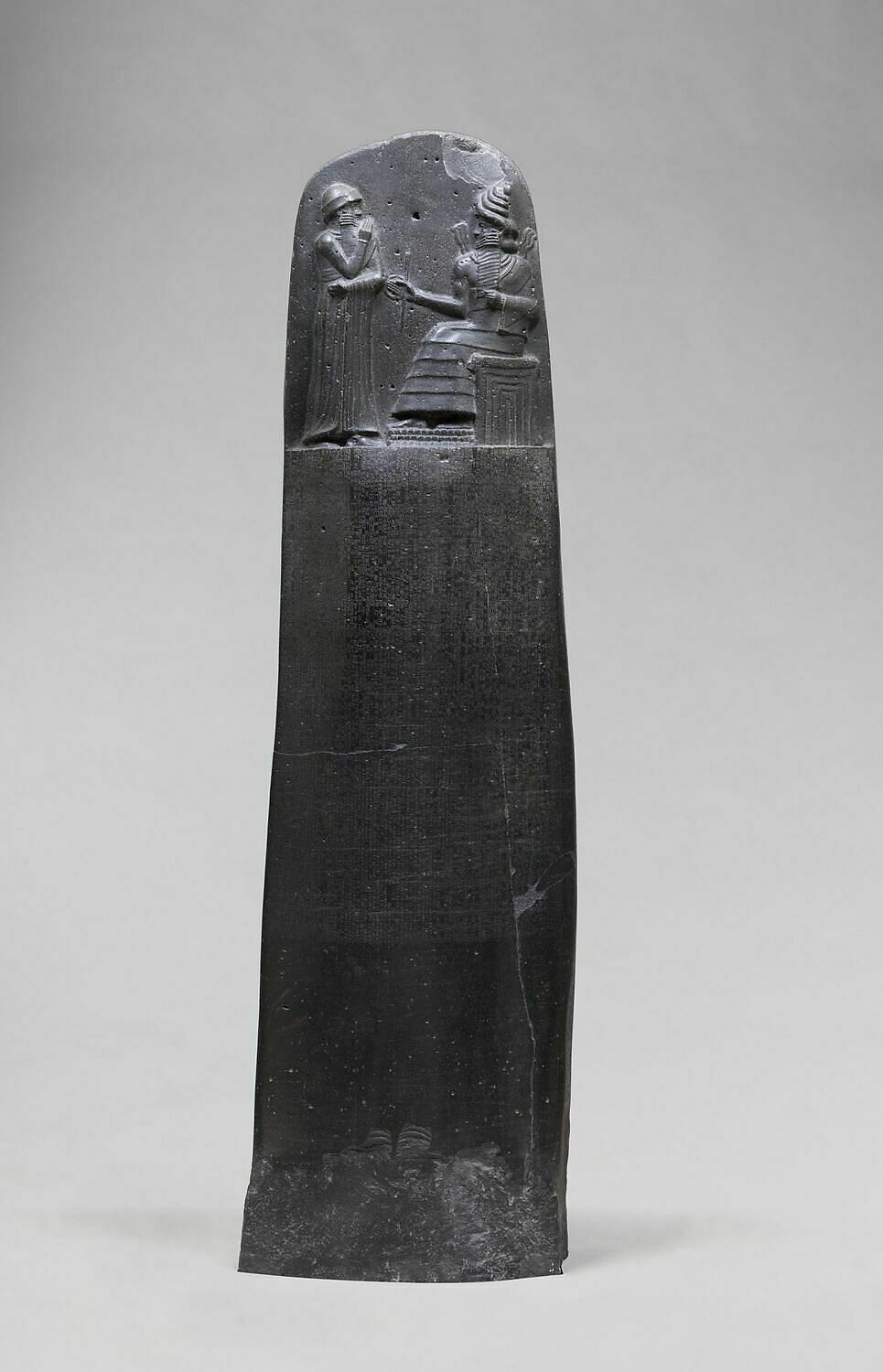
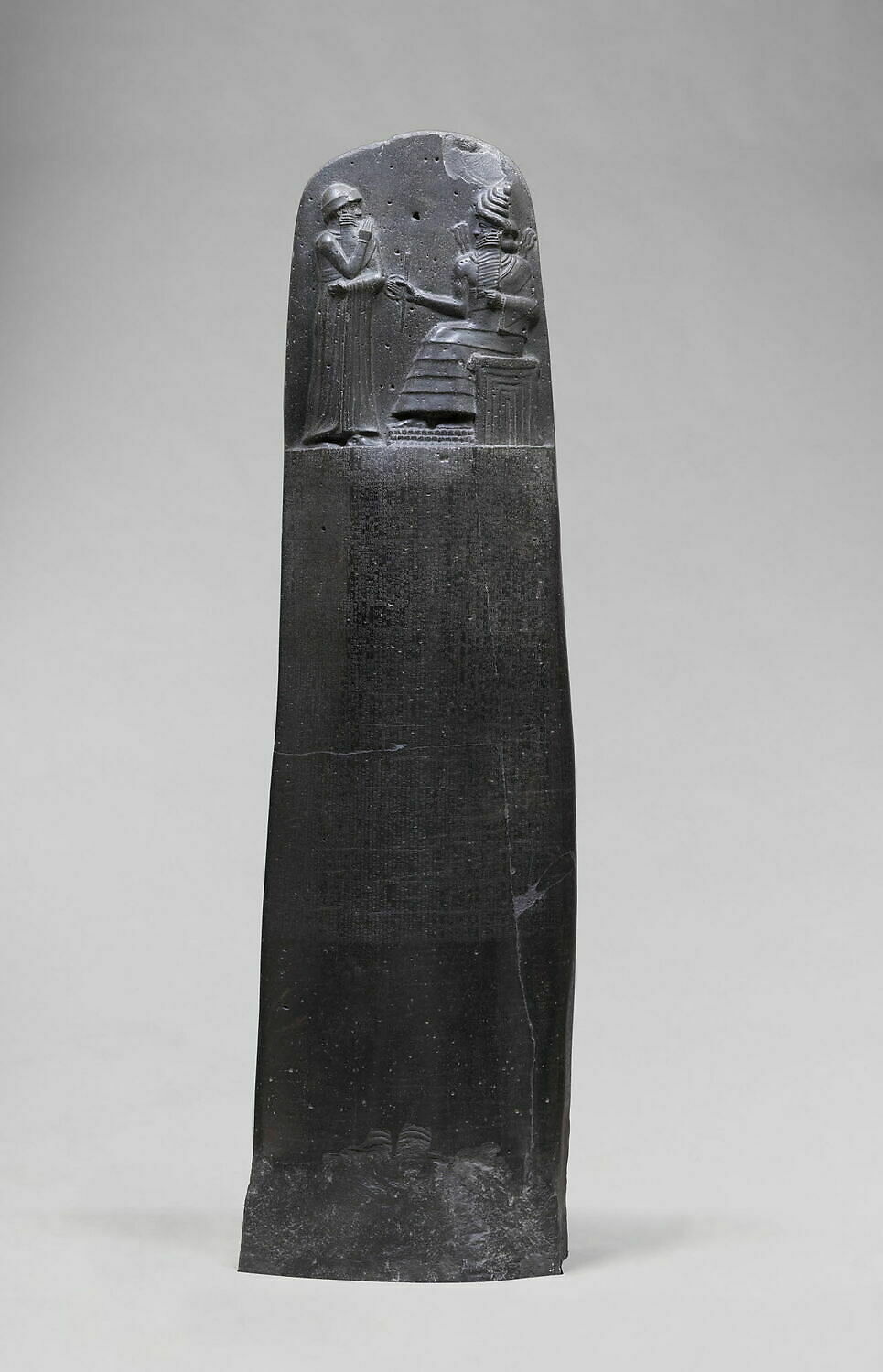
Law Code of Hammurabi
A Babylonian legal text dating to around 1754 BCE, inscribed on a stele and featuring a comprehensive set of laws governing various aspects of society, emphasizing justice and the principle of retributive justice, famously beginning with the phrase "an eye for an eye. Basalt. Hierarchy of Scale. Depicts Hammurabi receiving divine right to rule from gods.
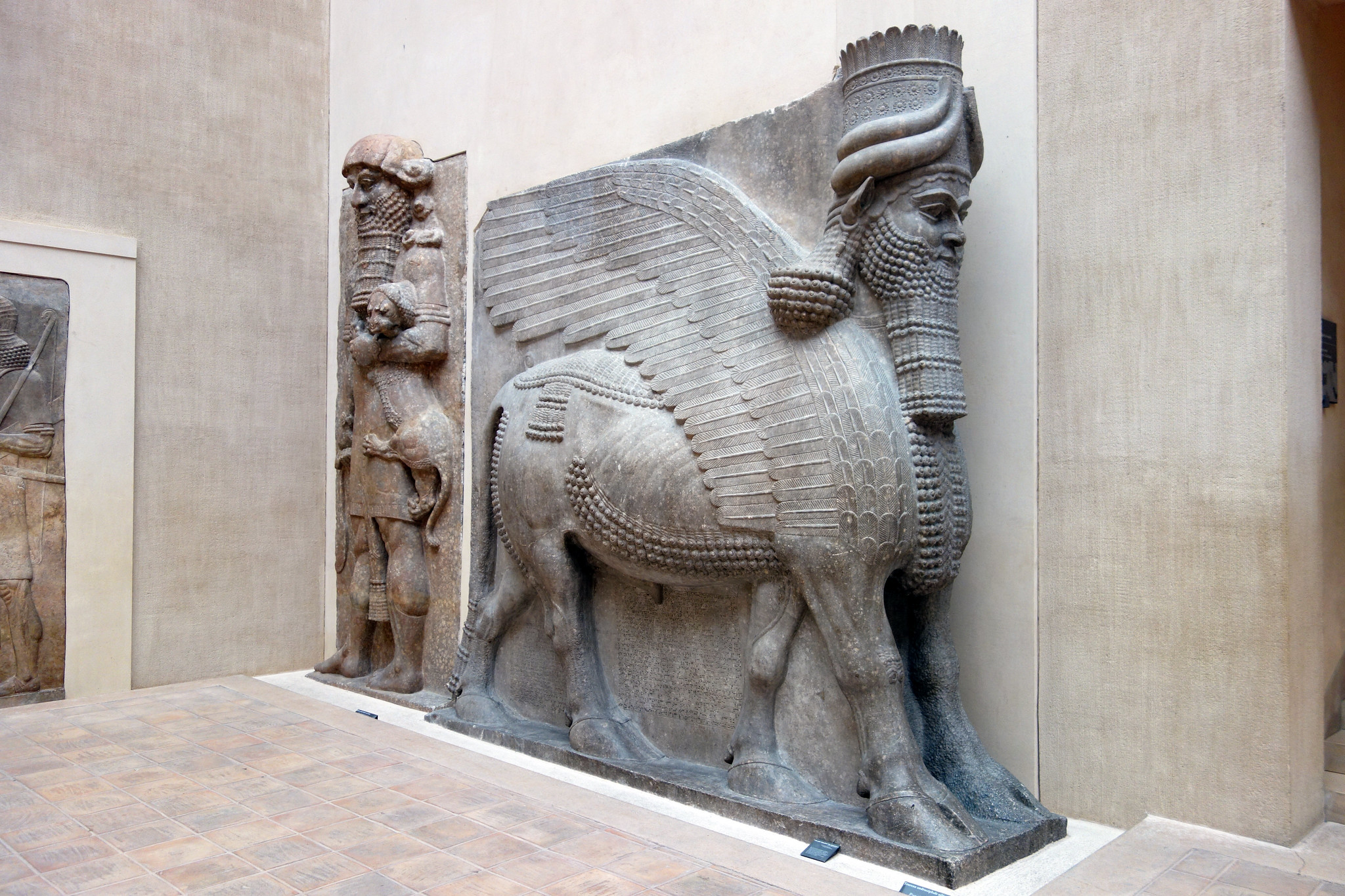
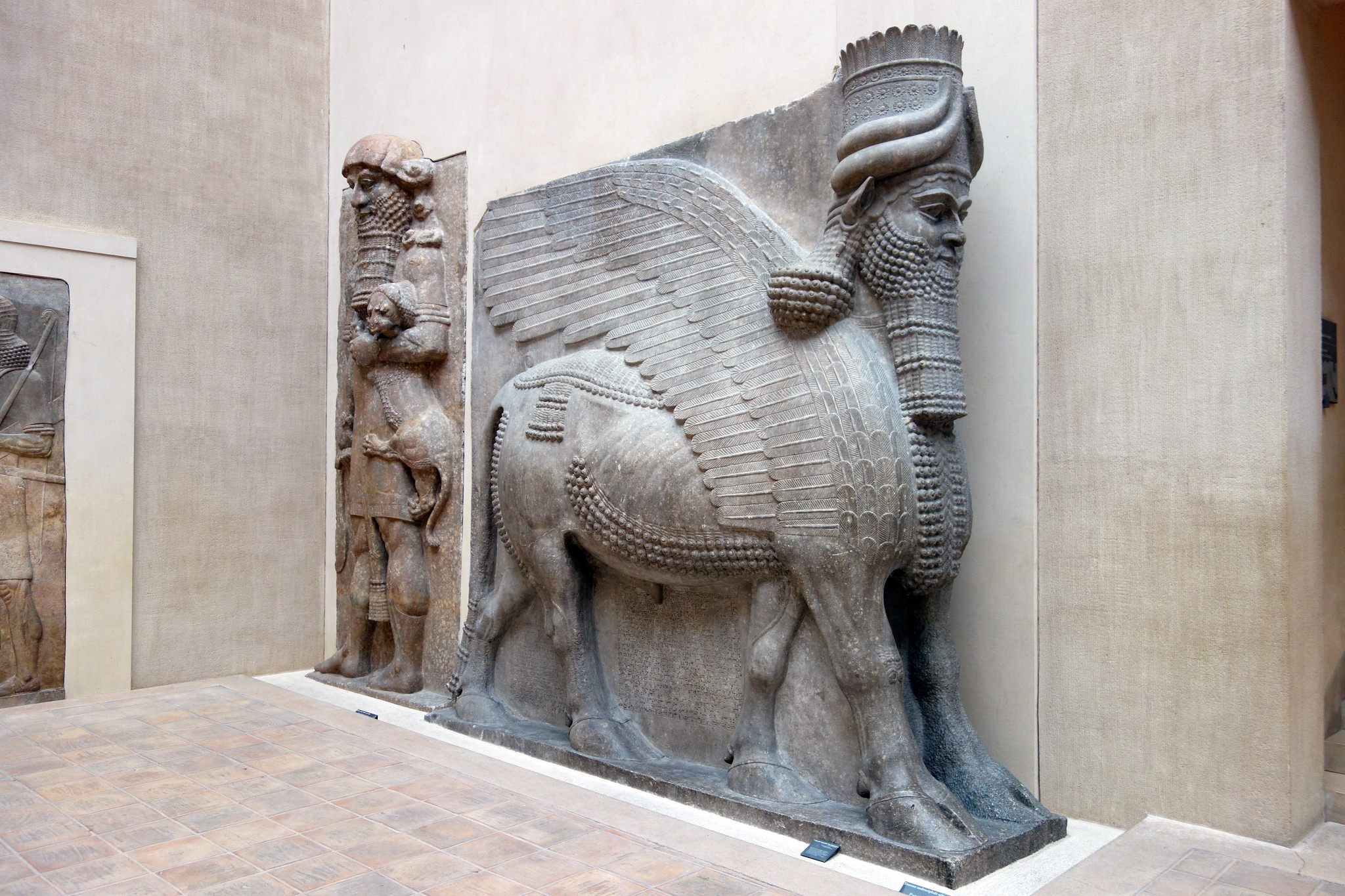
Lamassu
Assyrian. Composite creature. 720-705 BCE. Limestone. Two different angles, meant to be imposing. From citadel of Sargon II, modern day Iraq.
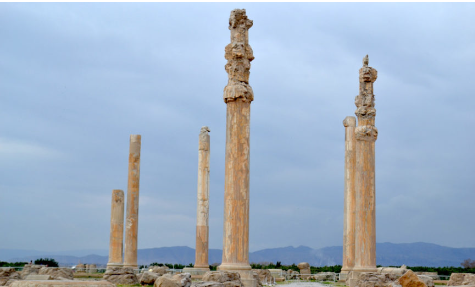
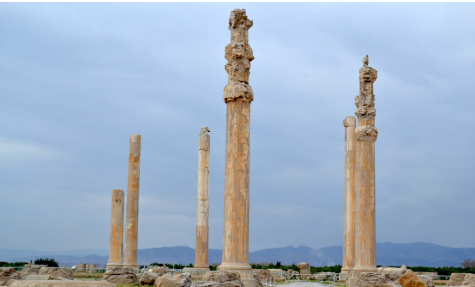
Audience Hall (apadana) of Darius and Xerxes, Persepolis
Persian city. 521-465 BCE. Features a procession of people bringing offerings and conveys Persian rule over diverse people. Tall pillars and columns in halls.
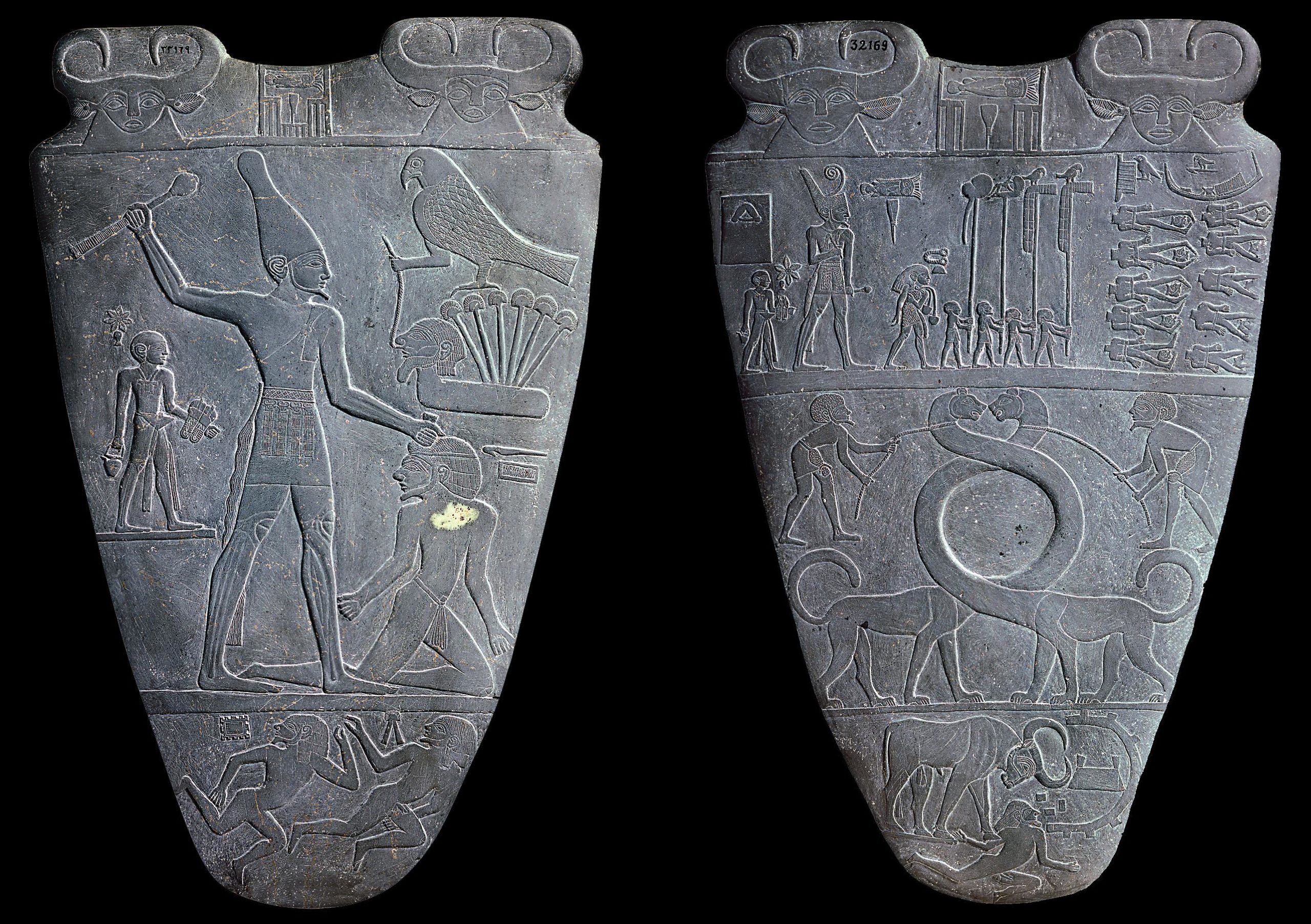
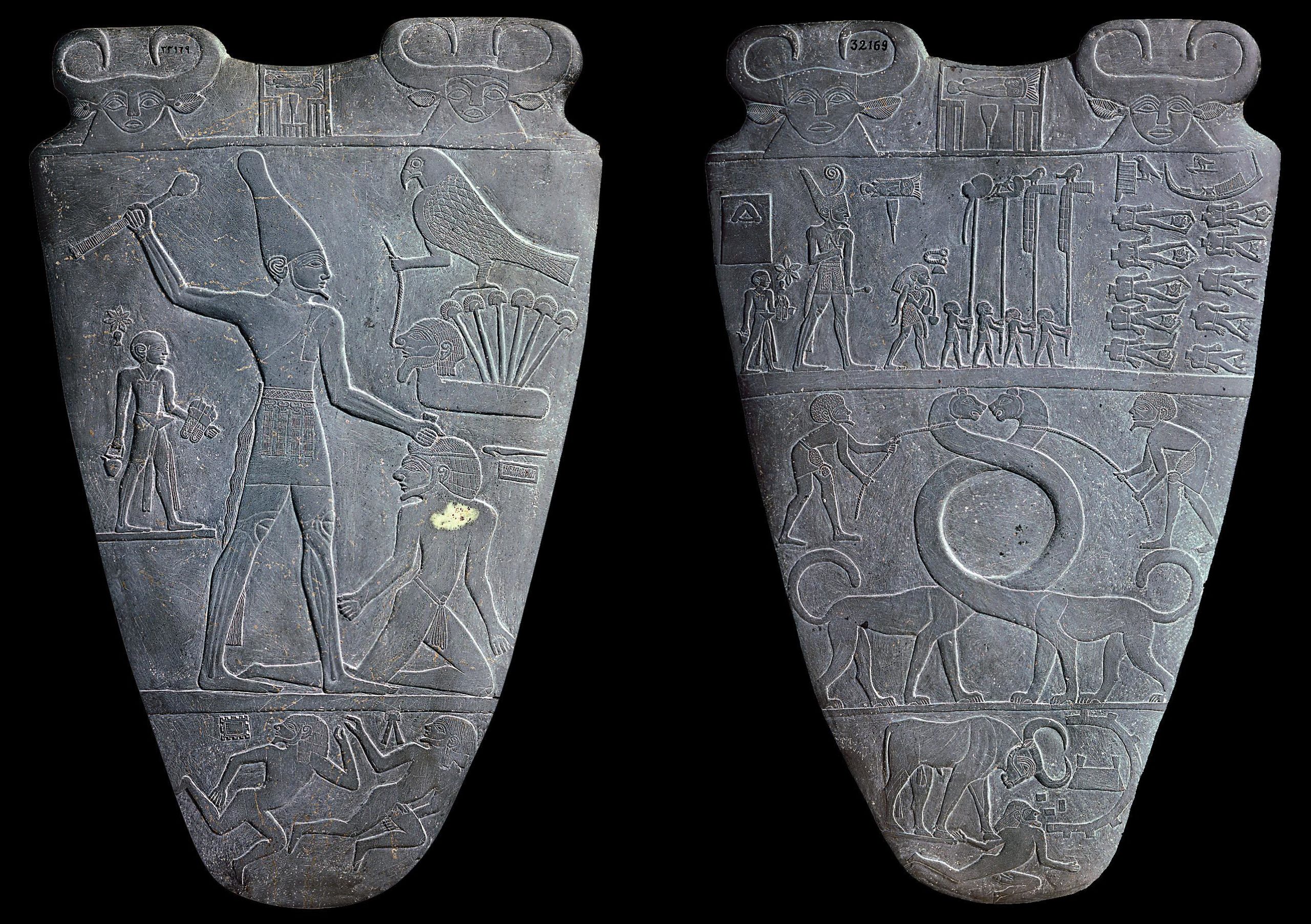
Palette of King Narmer
3,000 BCE. Predynastic. Represents the unification of Lower and Upper Egypt (on each side, see headdresses). Established the style of iconography that would not change for the next 3,000 years (twisted perspective, scale, horizontal registers). Slate.
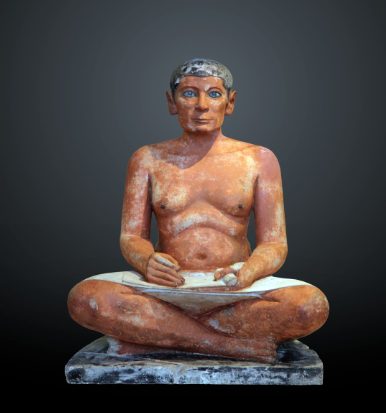
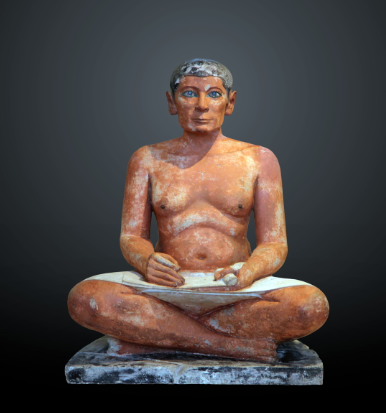
Seated Scribe
2,500 BCE. Limestone. Increase realism and relaxed formality (correlates with the importance of the subject). Old Kingdom. Egypt.
The Great Pyramids (Khufu, Khafre, Menkaure) and the Great Sphinx
Between 2,500-2,400 BCE. Old Kingdom. Khufu’s pyramid, the oldest, is the largest. Menkaure’s is the best preserved. Pyramids had two temples (valley and mortuary). Limestone. Egypt.
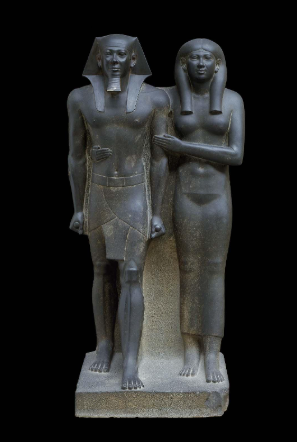
King Menkaure and His Queen, Khamerernebty II
Old Kingdom. 2,490-2,472 BCE. Slate. Rigid posture, left leg forward. Egypt.
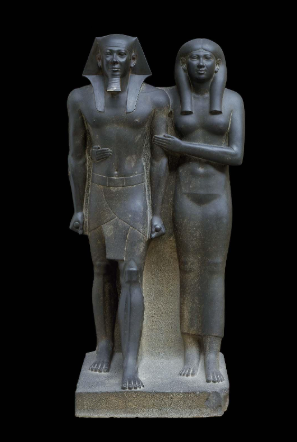
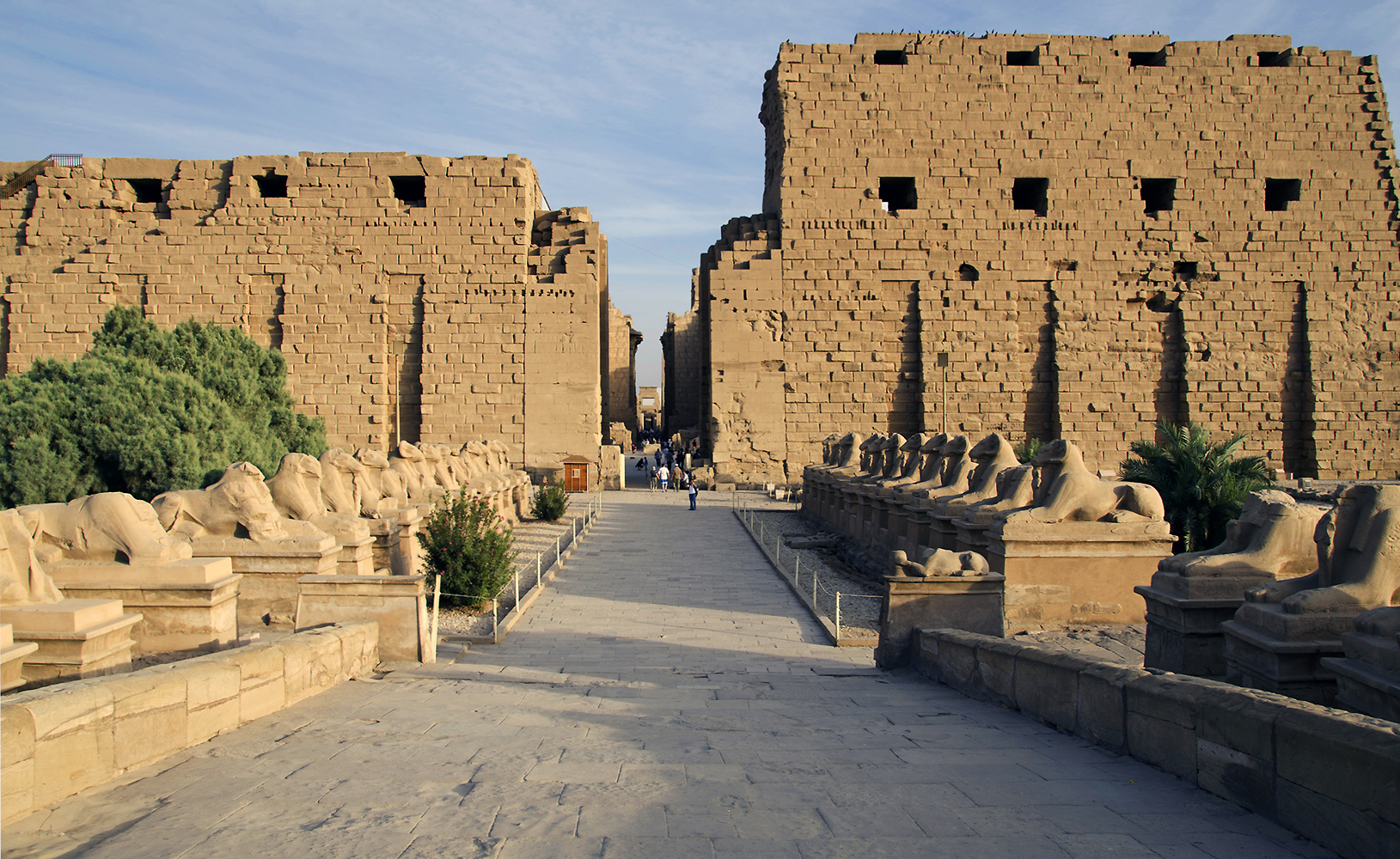
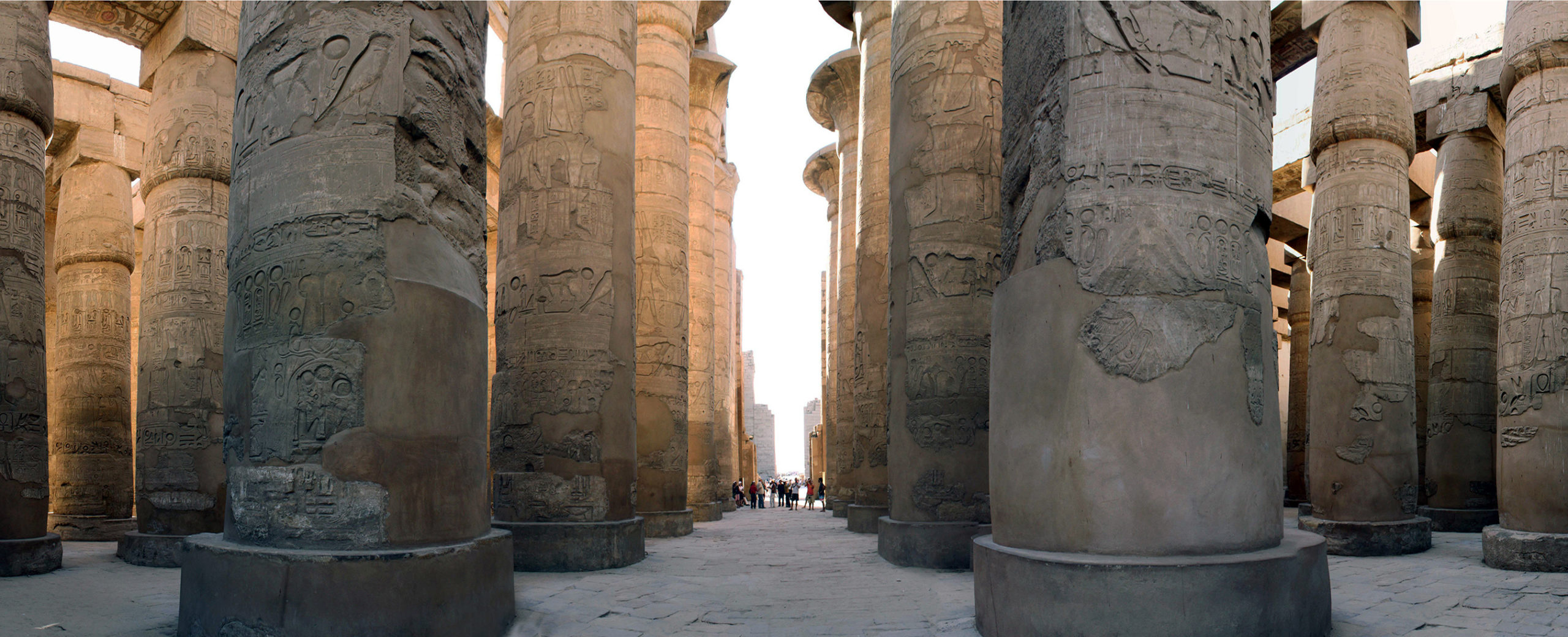
Temple of Amun-Re and the Hypostyle Hall
New Kingdom. Egypt. Pylon temples, which had a high wall to keep out general public. Hypostyle halls had many pillars to create more surfaces to paint on with sunken relief sculptures. Clerestory.
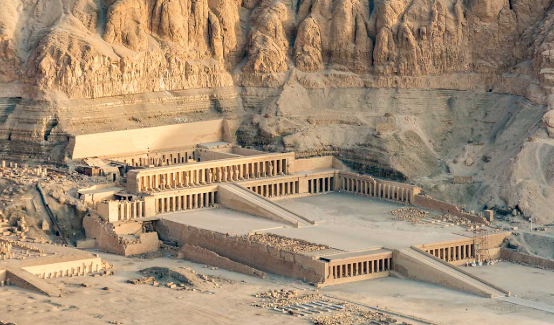
Mortuary Temple of Hatshepsut
Built against limestone cliffs with limestone, granite, and sandstone. Built in harmony with surroundings, and more of the temple is revealed as you climb the terraces. Used to be covered in sculptures and plants. Meant to be used while Hatshepsut was living and to honor her after her death. Hatshepsut often portrayed as female, male, and a sphinx. New Kingdom, Egypt.
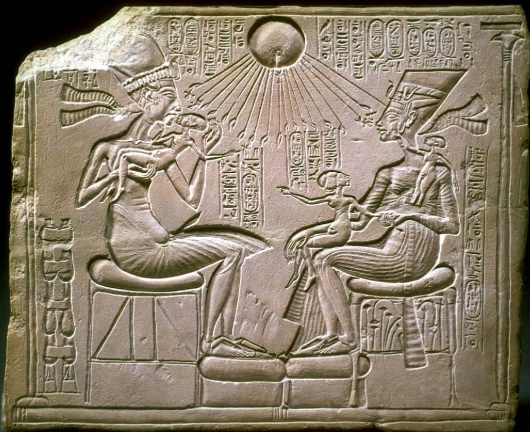
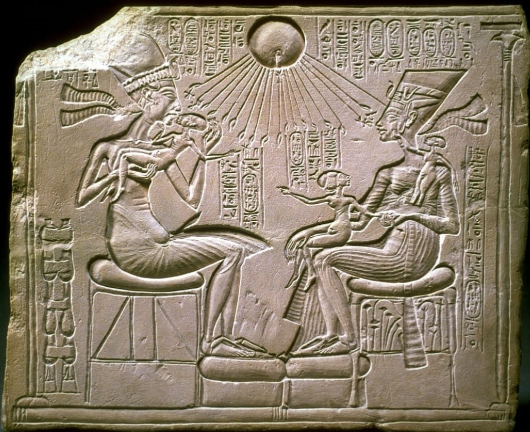
Akhenaton, Nefertiti, and three daughters
New Kingdom. 1353-1335 BCE. Limestone. Nefertiti is portrayed on same scale as Akhenaton. Sun disc (Akhen) god depicted at top (monotheistic).
Tutankhamun’s tomb (innermost coffin)
New Kingdom. 1332-1323 BCE. Buried in the Valley of Kings.
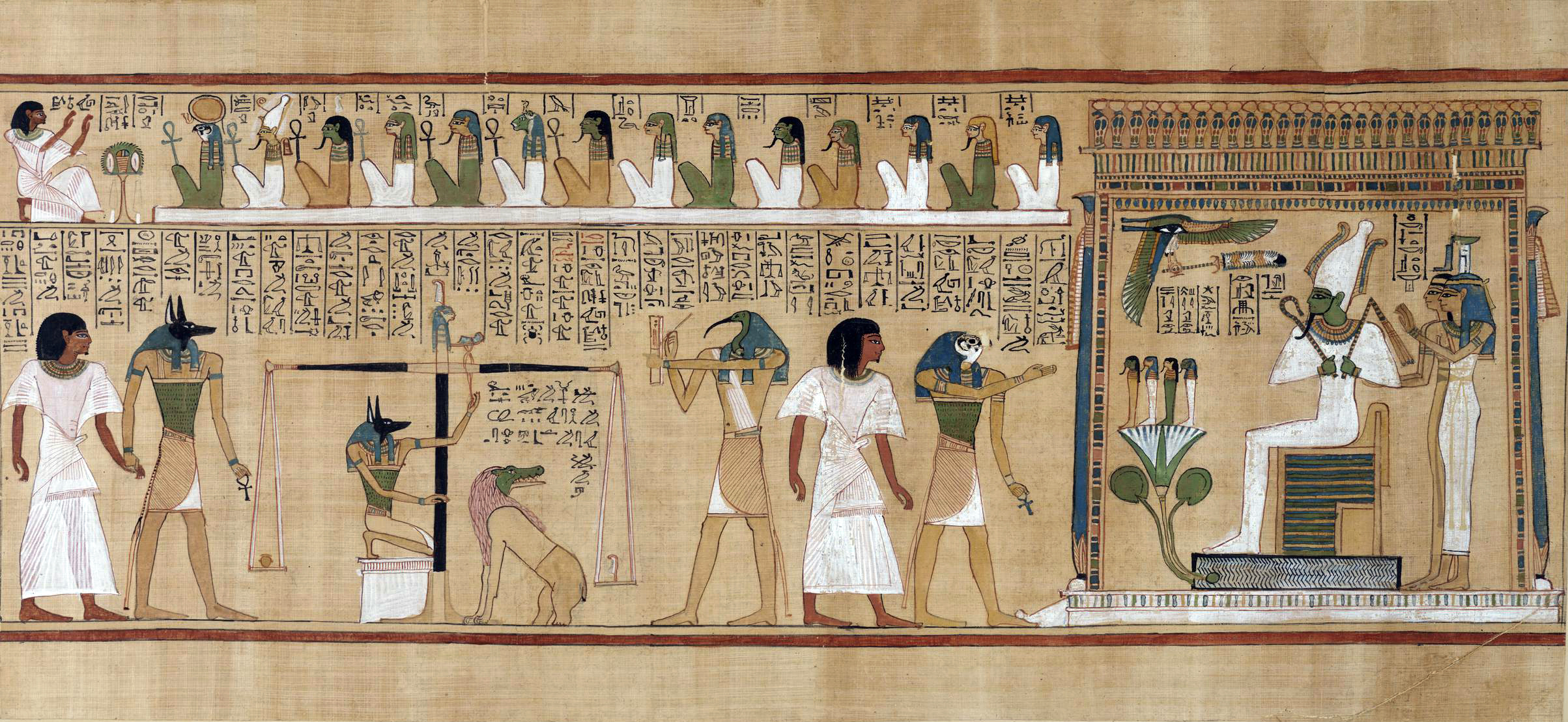
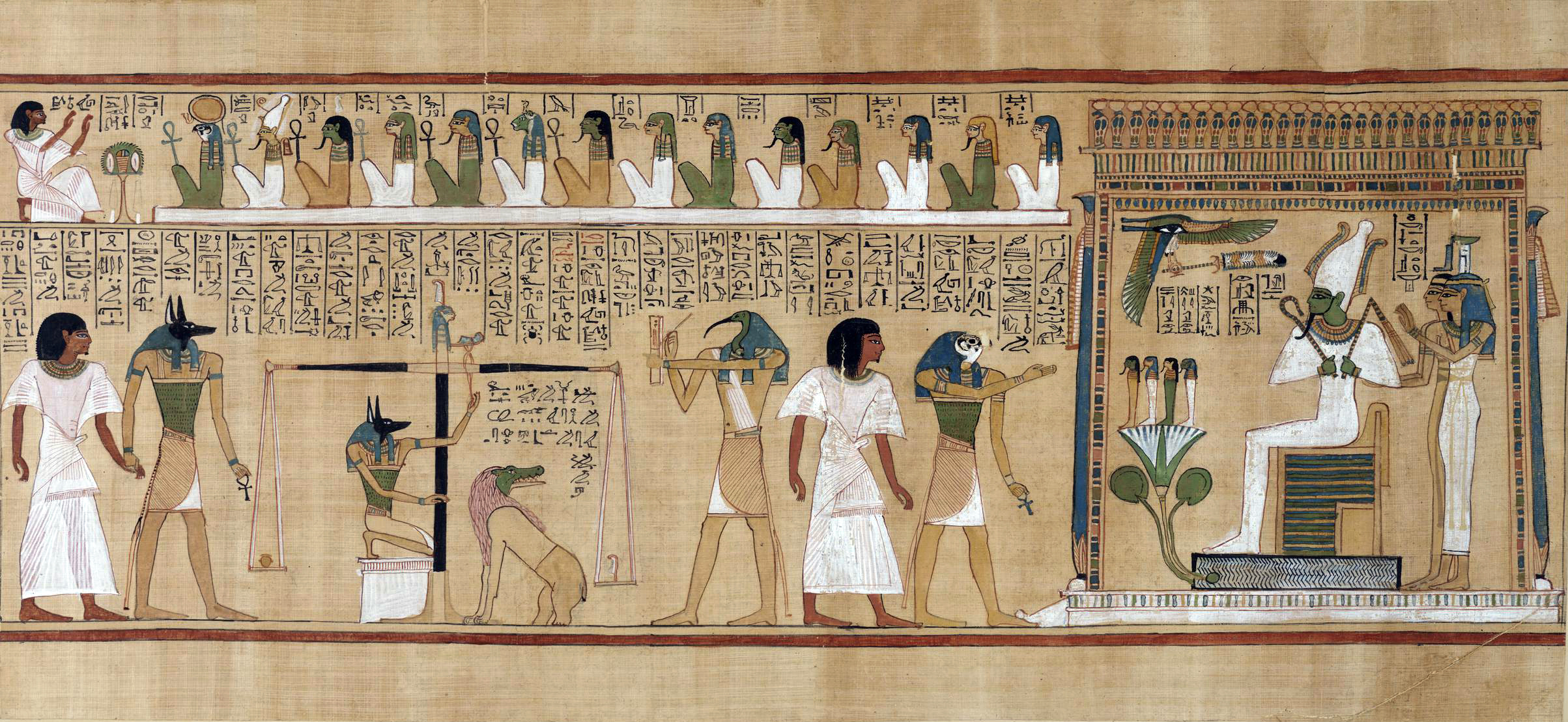
Last Judgement of Hunefer, Book of the Dead
Papyrus. New Kingdom.
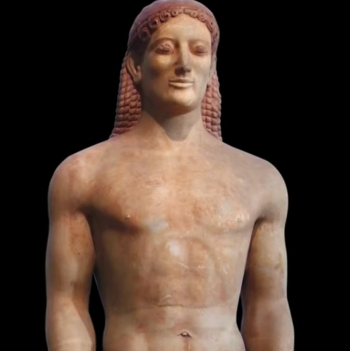
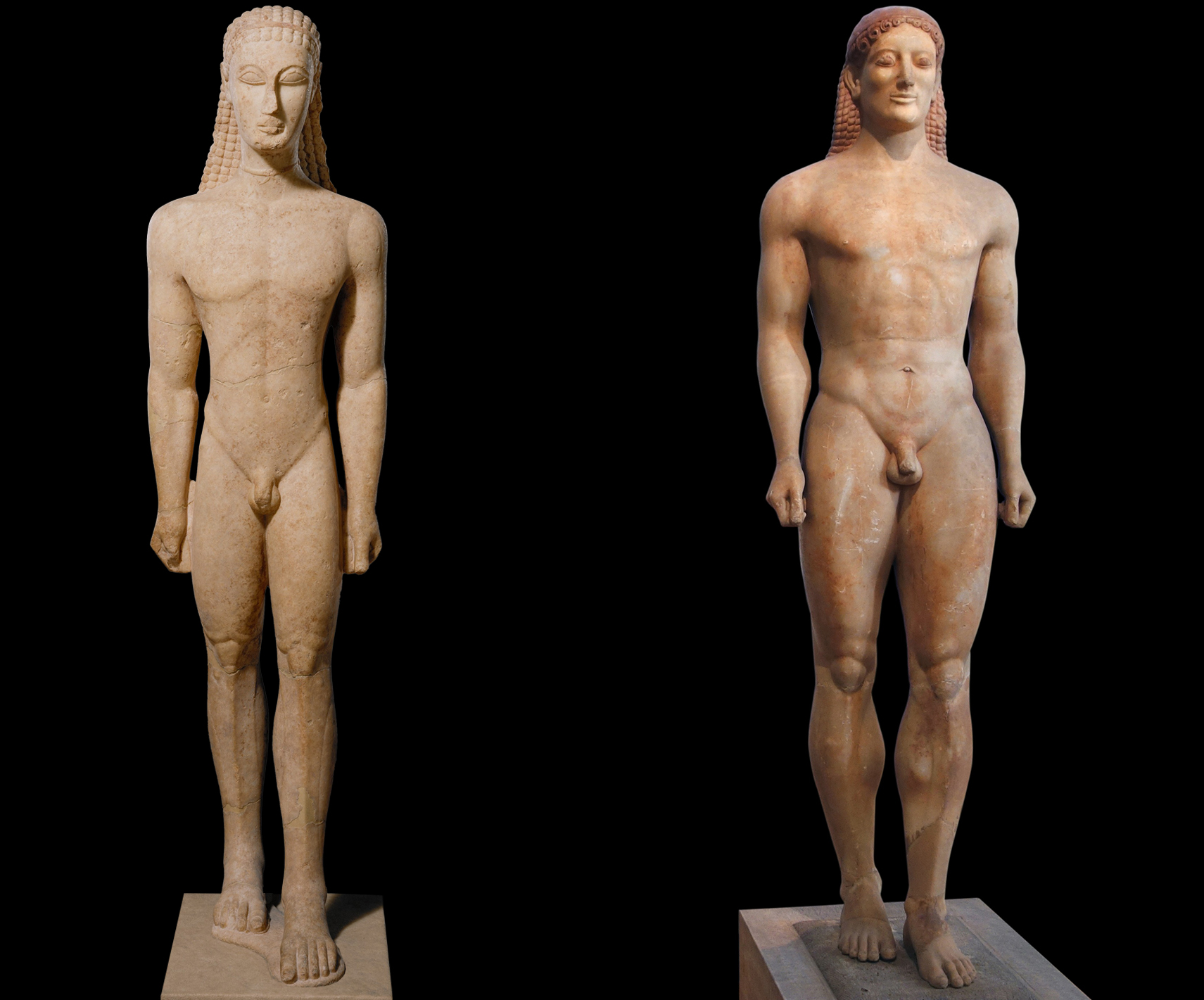
Anavysos Kouros
Archaic period. 530 BCE. Marble. Egyptian stance but rendered more naturalistically. Would have been painted. Served a funerary purpose, replacing empty-bottom jars.
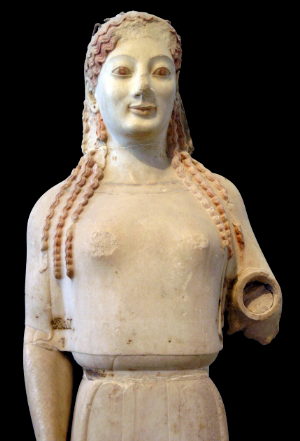
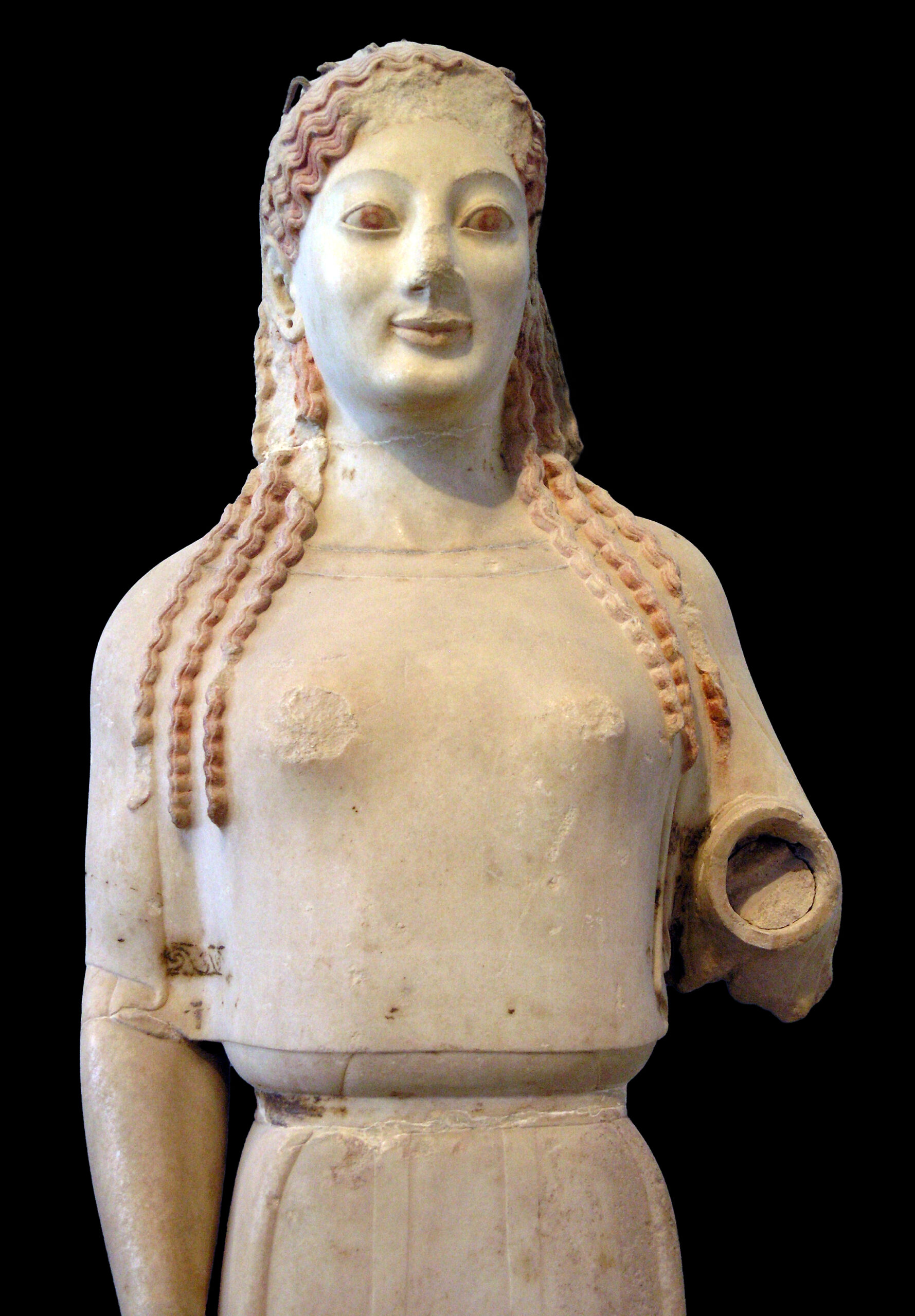
Peplos Kore
Archaic period. 520-530 BCE. Painted marble. More naturalistic features (face and hair). Women were often depicted as clothed, while men were often depicted nude.
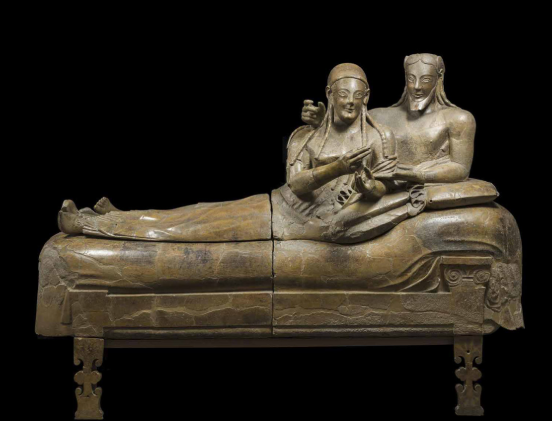
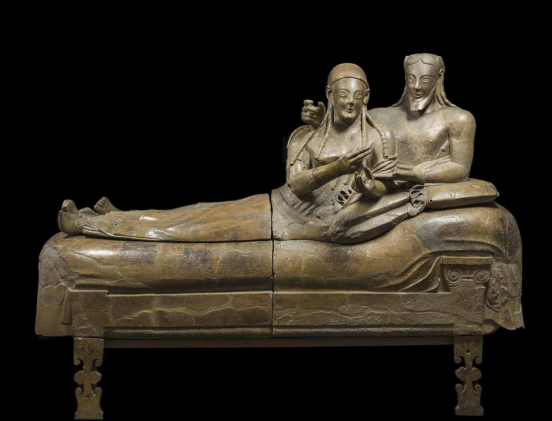
Sarcophagus of the Spouses
Etruscan. 520 BCE. Painted terracotta. Faces and elongated bodies are characteristic of archaic period. Etruscans customarily cremated bodies. Man and woman are depicted the same size and are depicted eating together, which was different from other Mediterranean cultures.
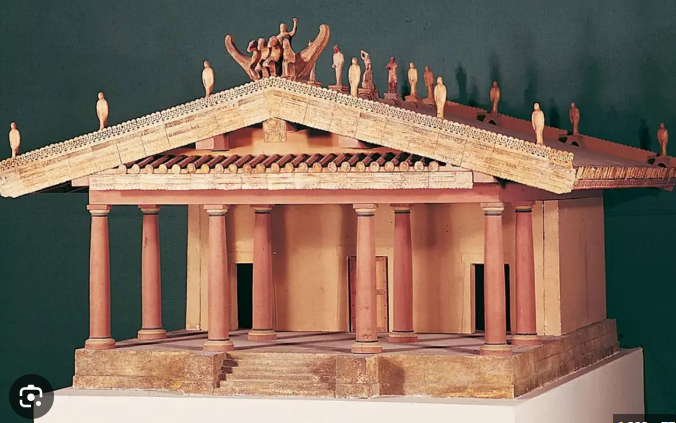
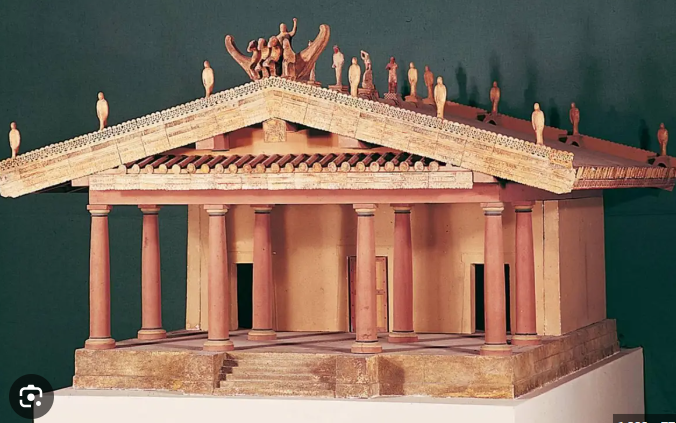
Temple of Minerva
Etruscan. 6th century BCE. Terracotta. Etruscan temples were not common since worship often took place in open-air groves and enclosures. The construction of temples was most likely a Greek influence.
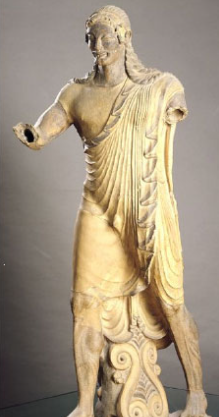
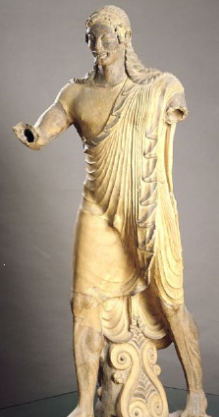
Apulu (Apollo)
Etruscan. 510-500 BCE. Painted terracotta. Archaic face, rigid posture, and braided hair. Placed at the peak of the temple roof, which was uniquely Etruscan; would have been placed with other figures to create a narrative.
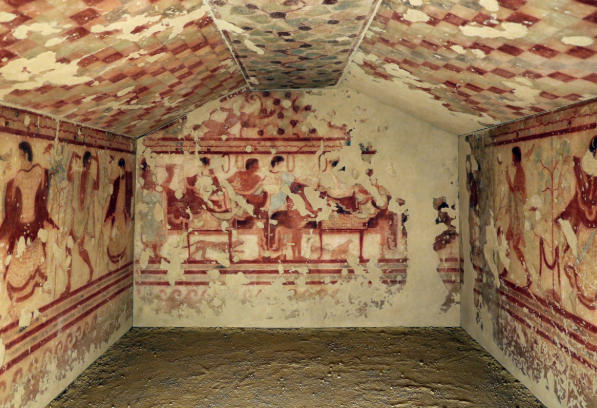
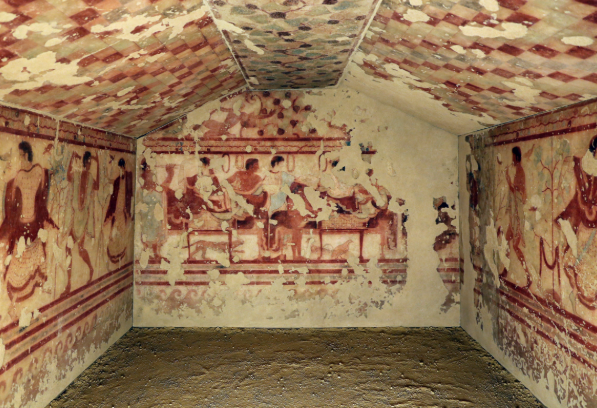
Etruscan tombs (Tomb of Triclinium)
Etruscan. 470 BCE. Etruscan tombs contained both the deceased and offerings/goods. Were painted with vivid frescos. This particular one depicts a banquet. Etruscan funeral rites were not somber in nature, but festive instead.
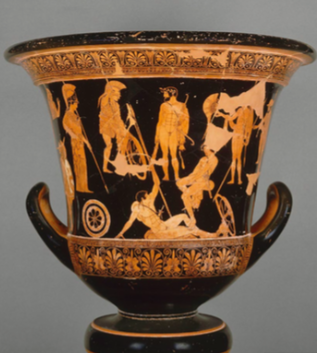
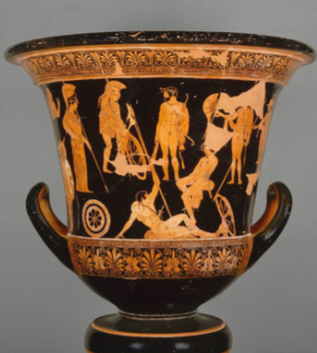
Niobides Krater
460-450 BCE. Early Classical, Athenian. Figures are not arranged in horizontal registers but are instead dispersed throughout the background. Faces are also depicted in a ¾ view which was uncommon. Depicts the slaughter of Niobe’s children by Artemis and Apollo. Terracotta.
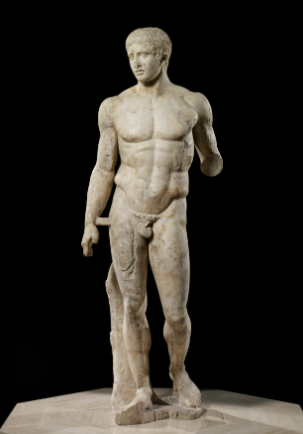
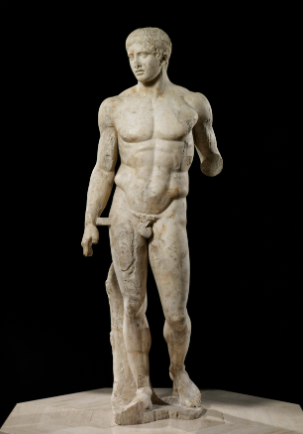
Doryphoros (Spear-Bearer or The Canon), Polykleitos
Early Classical, Greek. 450-440 BCE. One of the most widely reproduced statues (the Romans really liked it because it embodied the ideal form of the male nude). Contrapposto is more pronounced. Marble, originally in bronze.
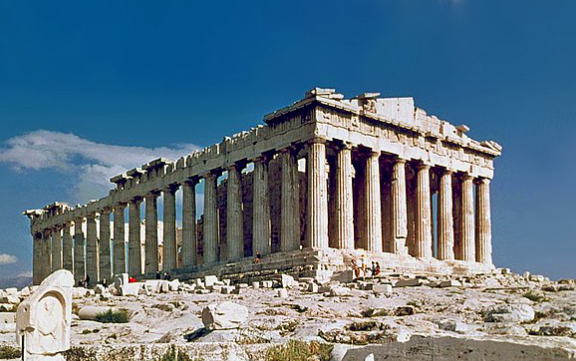
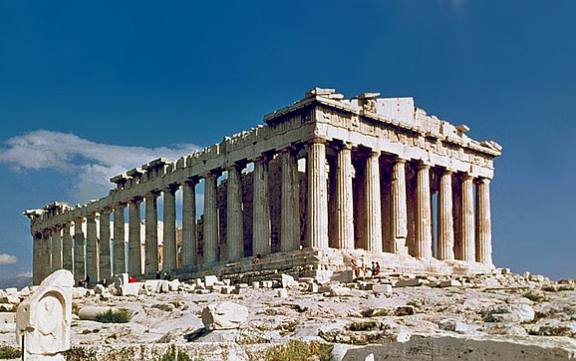
The Parthenon (Acropolis)
447-432 BCE. Early and High Classical. Marble.
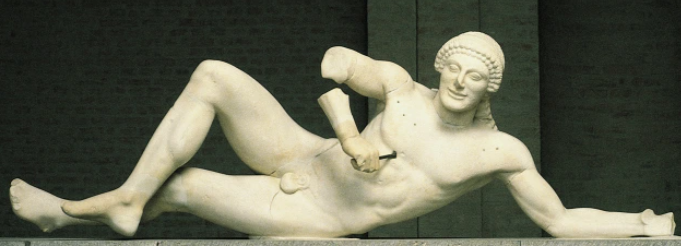
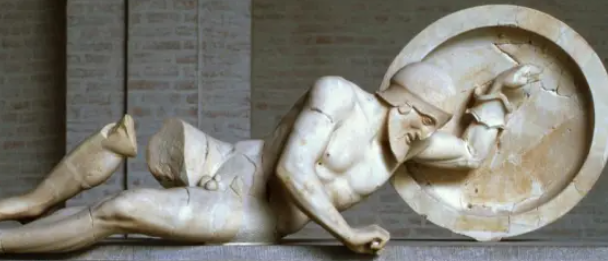
Dying Warriors on the Parthenon’s pediments
Early and high classical, Greek. West pediment is older (500-490 BCE). East pediment is newer (490-470 BCE). Marble.
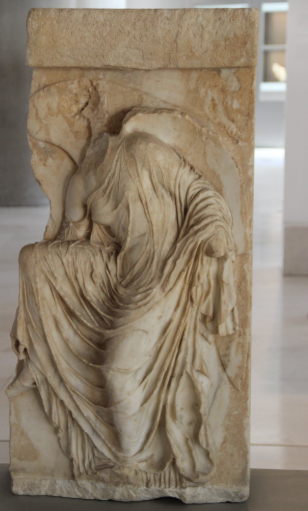
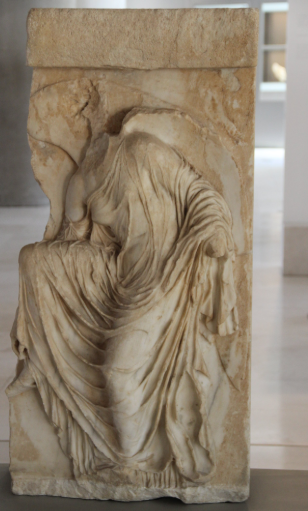
Nike Adjusting Her Sandal from the temple of Athena Nike
Early and high classical, Greek. 410 BCE. Marble. Humanized gods.
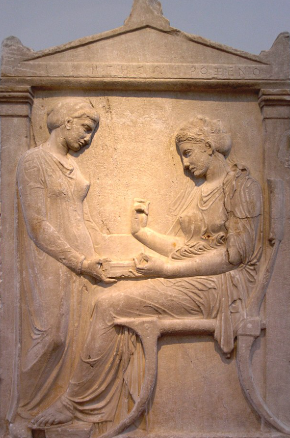
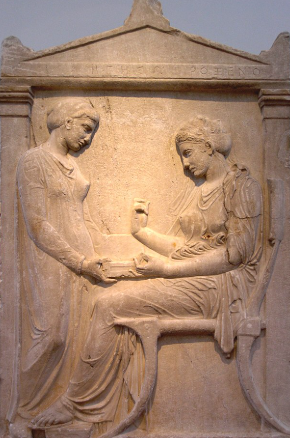
Grave Stele of Hegeso
Early and high classical, Greek. 400 BCE. Marble grave marker. Depicts (high standing) woman’s role in Athenian society, as the woman (Hegeso) is being attended tp by her maid.
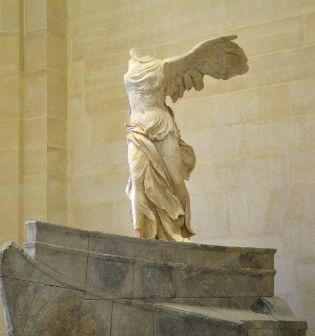
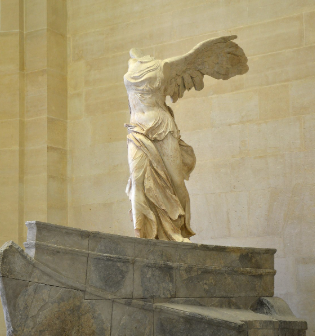
Winged Victory of Samothrace
190 BCE. Hellenistic (drama!). Drapery and movement make it seem as if she is interacting with the environment.
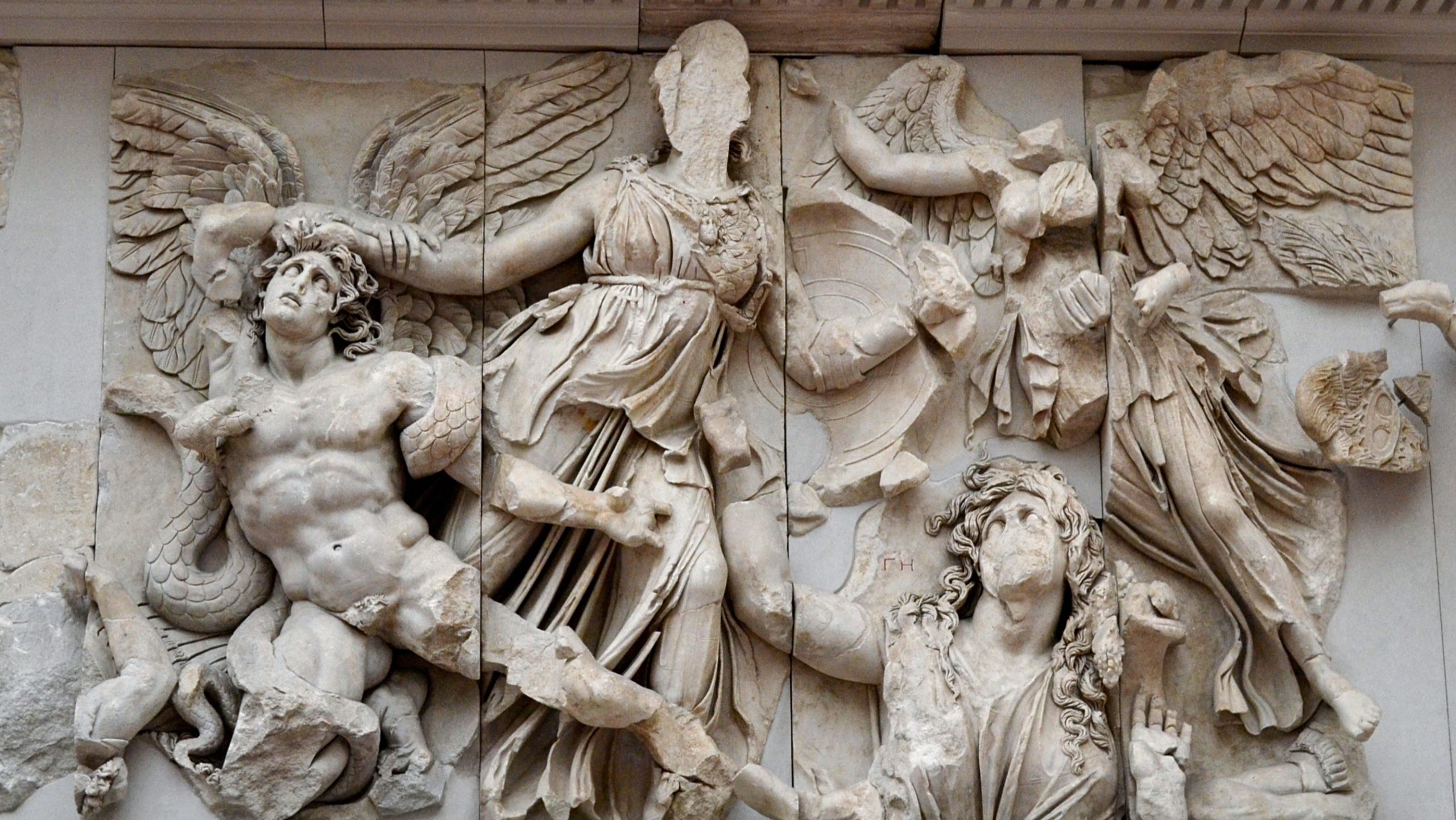
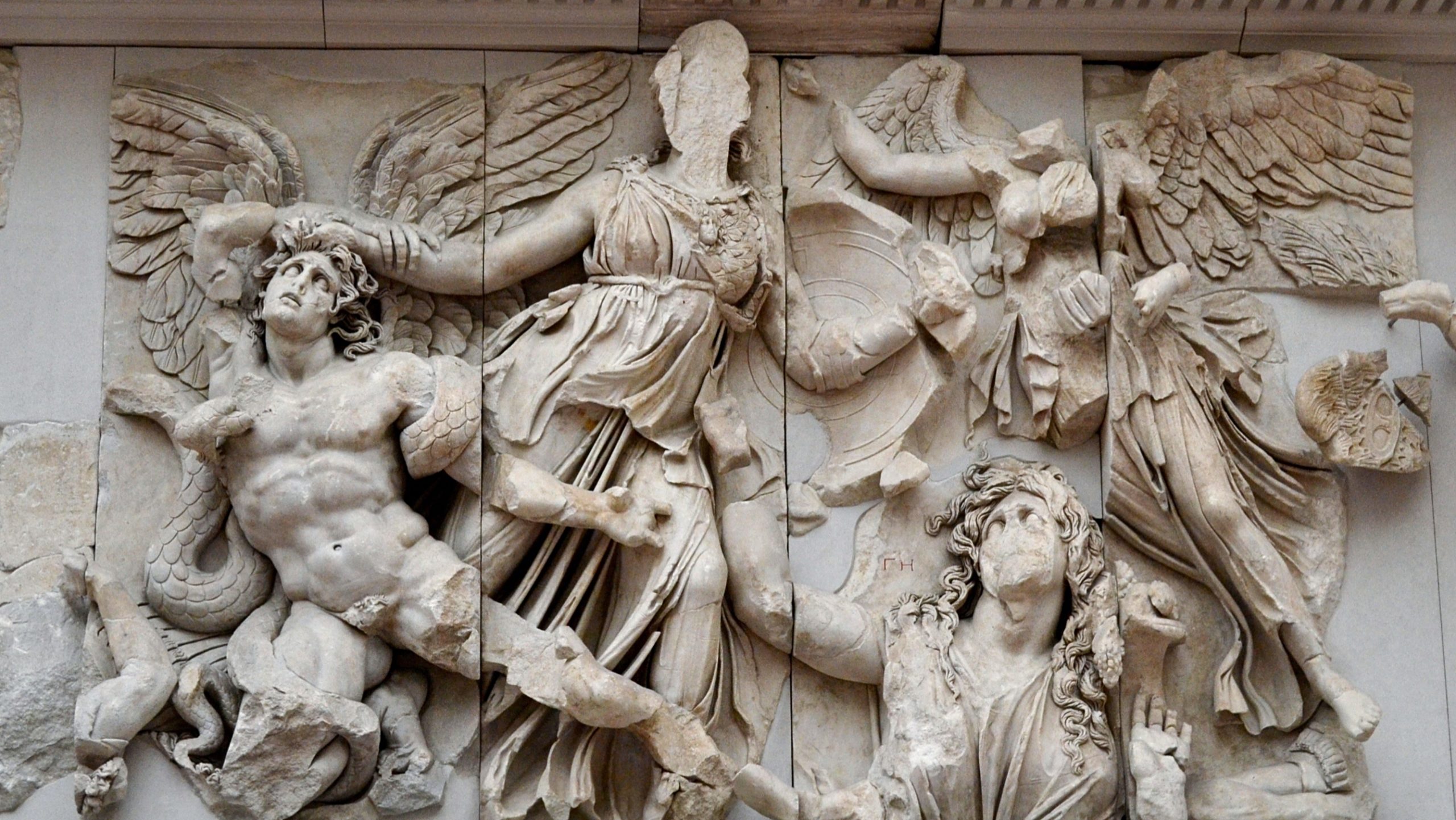
Great Altar of Zeus and Athena at Pergamon
175 BCE. Hellenistic (drama!). Depicts the gigantomachy, Athena and Nike fighting the titans. Figures are very emotional (contrast between Nike and titans). Mirrors the defeat of the Gauls by the Persians.
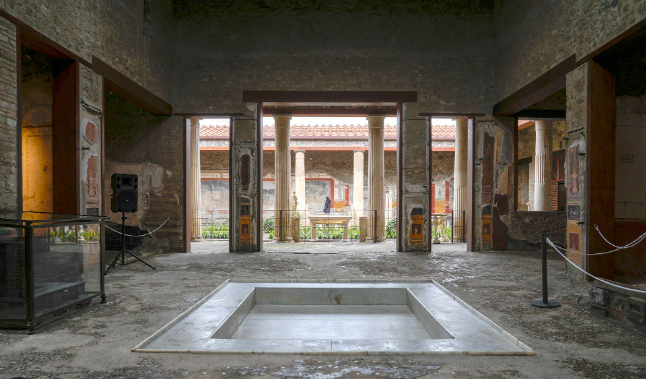
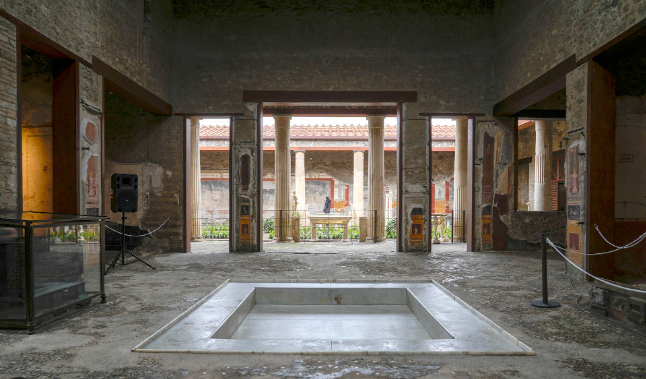
House of Vetii
2nd century BCE. Early Roman art. Pompeii. Open floor plan.
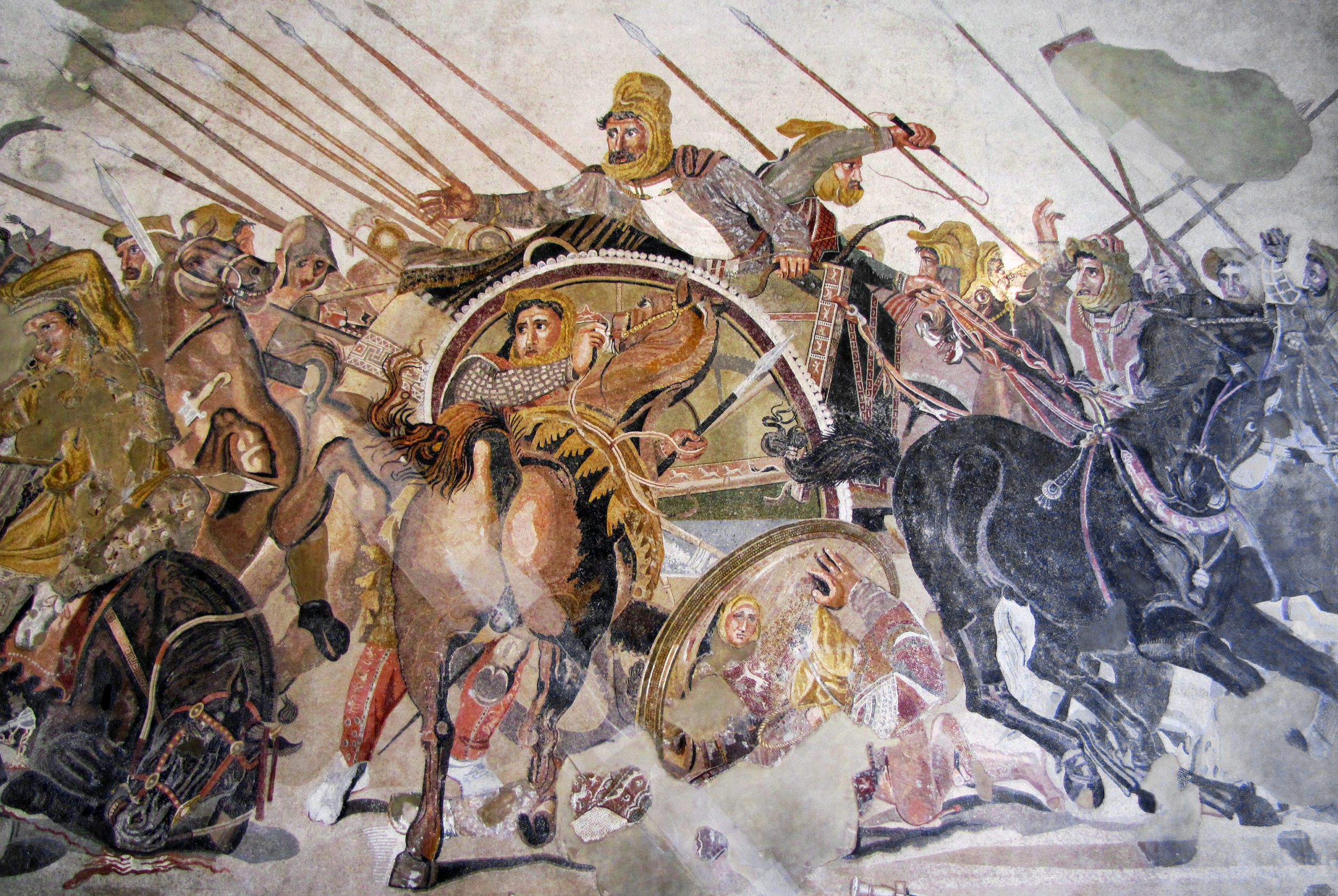
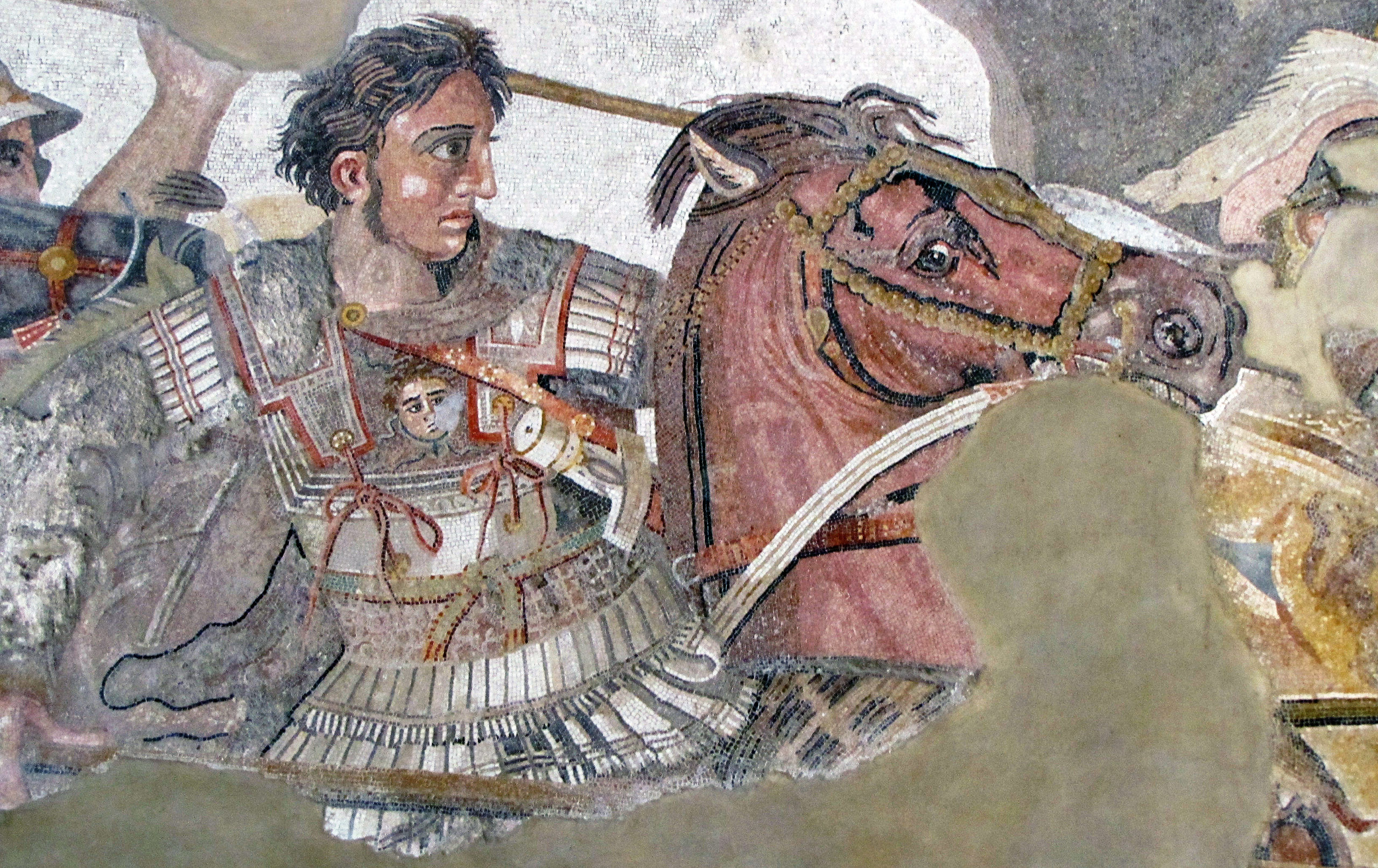
Alexander Mosaic from the House of Faun, Pompeii
2nd century BCE. Pompeii, Roman. Demonstrates that the Greeks did paint, although none survive. Mosaic.
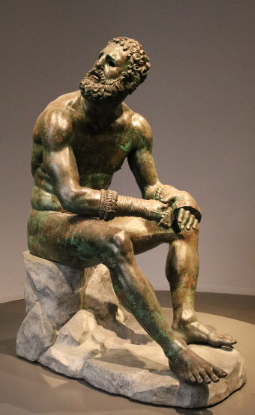
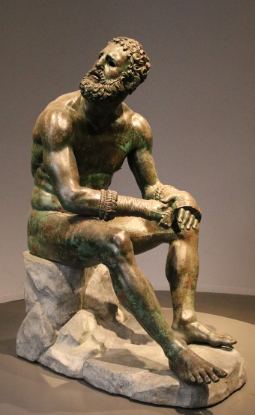
Seated Boxer
100-50 BCE. Hellenistic. Bronze original.
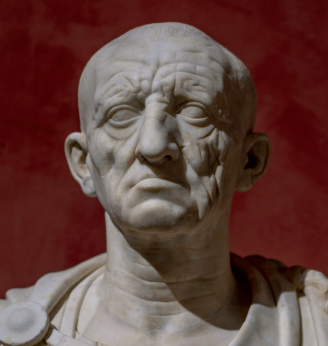
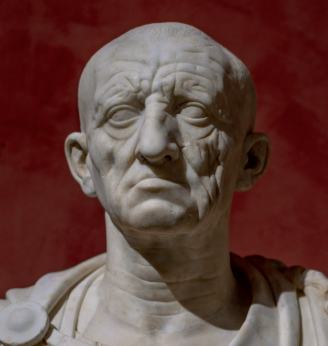
Head of a Roman Patrician
75 BCE. Early Roman. Veristic, exaggerated age.
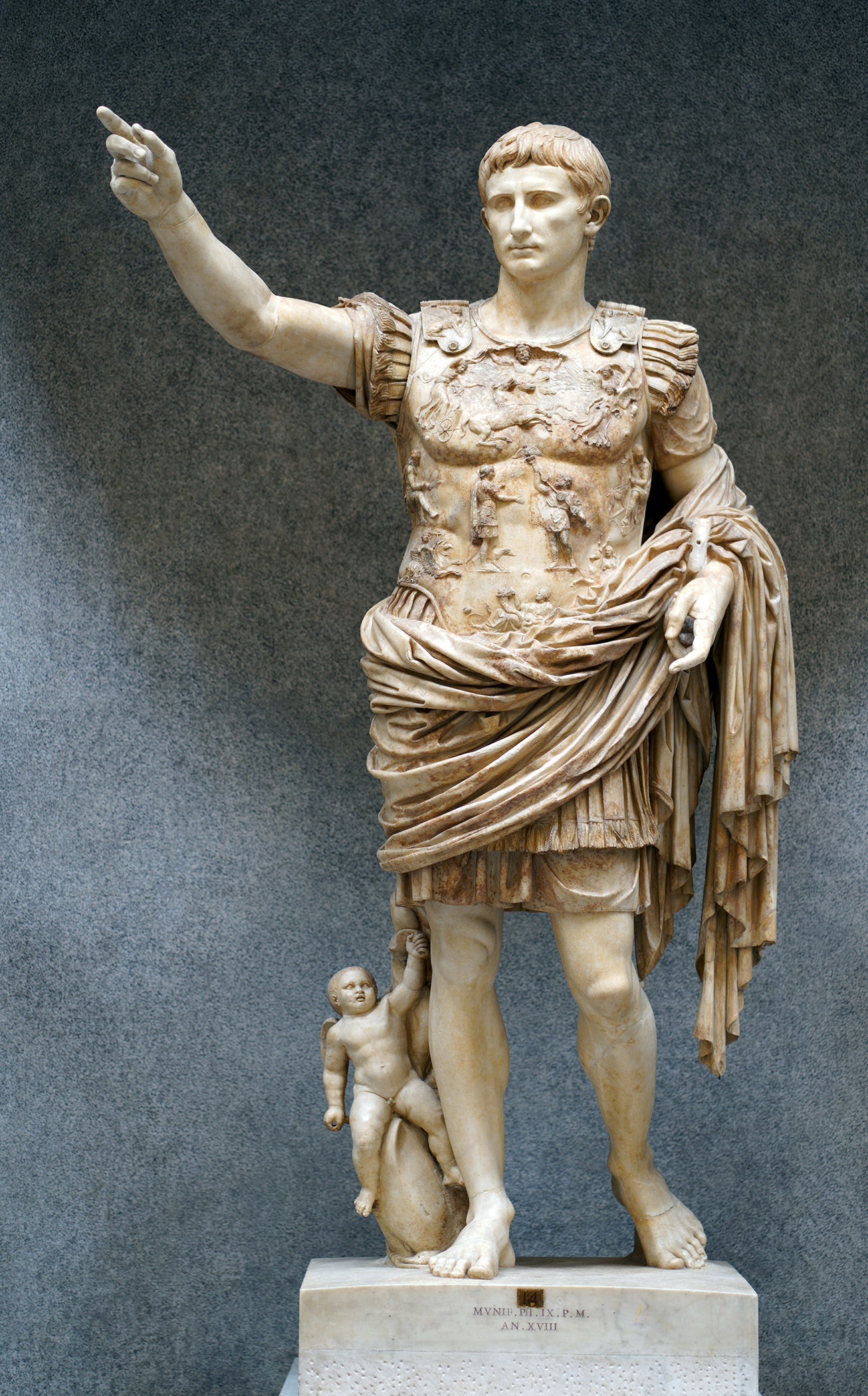
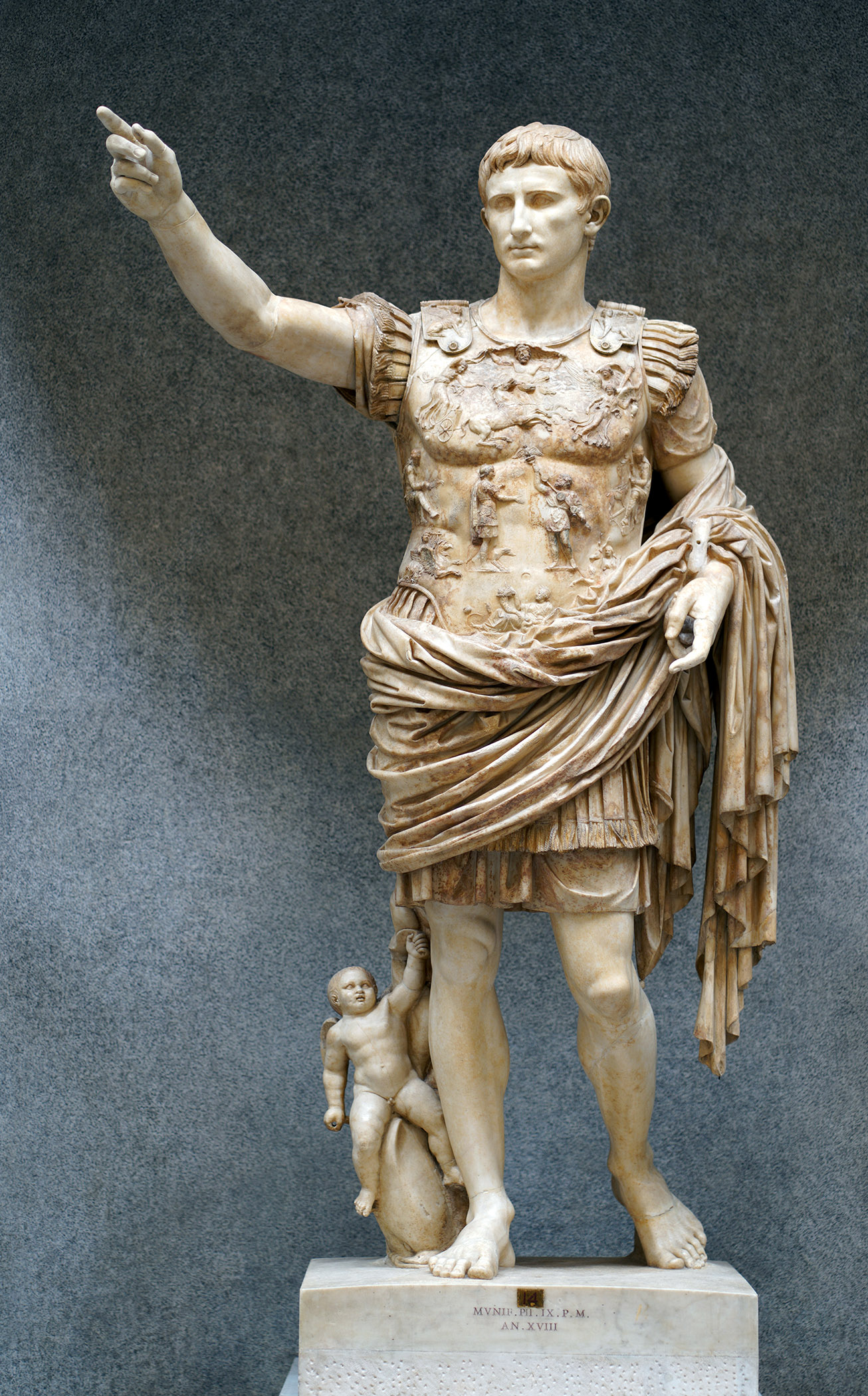
Augustus of Prima Porta
Early Roman Empire. 20 BCE. Marble (copy). Idealized body.
Colosseum (Flavian Amphitheater)
70-80 CE. Early Roman Empire. Concrete.
Forum of Trajan
112 CE. Rome.
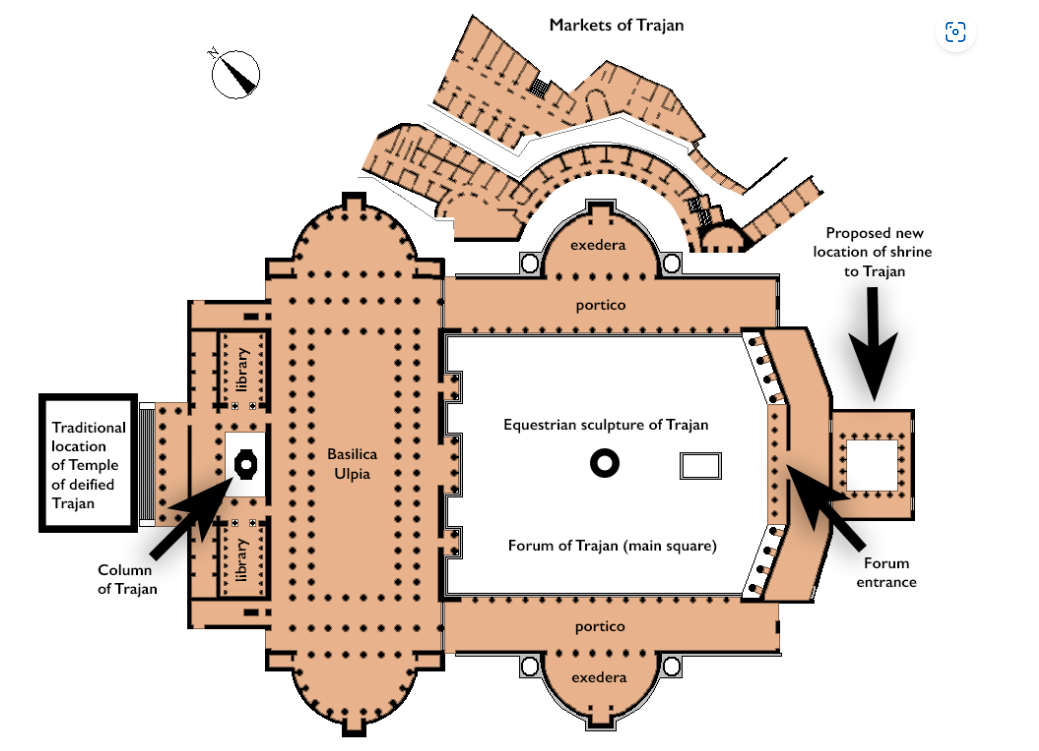
Column of Trajan
113 CE. Marble. Rome. Has horizontal registers depicting Trajan’s victory over Dacia (low relief?).
Pantheon
125 CE. Concrete. Rome. Coffers had a visual effect.
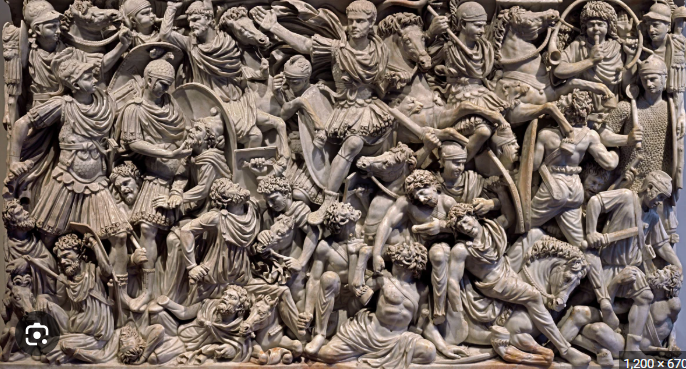
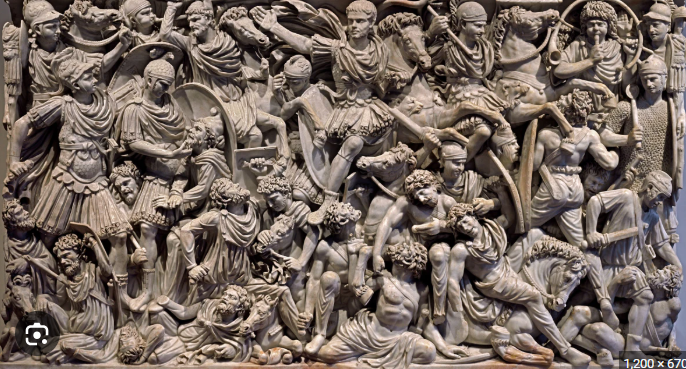
Ludovisi Battle Sarcophagus
Battle of Romans and Barbarians. 250-260 CE. Marble.