(NOT ON EXAM) Gastrointestinal Drug Continuation
 Studied by 0 people
 Call with Kai
 Learn
Learn Practice Test
 Spaced Repetition
 Match
Match Flashcards
 Knowt Play
1/10

There's no tags or description
Looks like no tags are added yet.
Name | Mastery | Learn | Test | Matching | Spaced | Call with Kai |
|---|
No analytics yet
Send a link to your students to track their progress
11 Terms
Recall: Stomach Physiology
Parietal cells (aka oxyntic cells)
• Secrete H+ and Cl-
• Proton pump: H+ is secreted from these cells into lumen of the stomach by active transport
• Pump controlled by 3 receptors:
H2 – Histamine - Mainly
Acetylcholine (Ach)
Gastrin
Chief Cells
• Secrete pepsinogen: activated to pepsin in stomach to digest proteins
G Cells (located in distal stomach and proximal duodenum)
• Secrete gastrin: when ingesta/proteins present, stomach stretches, or via PNS stimulation: causes gastrin production → relaxation to allow more food in stomach and to increase stomach acid production
• Gastrin also stimulates histamine release
Mucous cells
• Secrete protective mucus layer
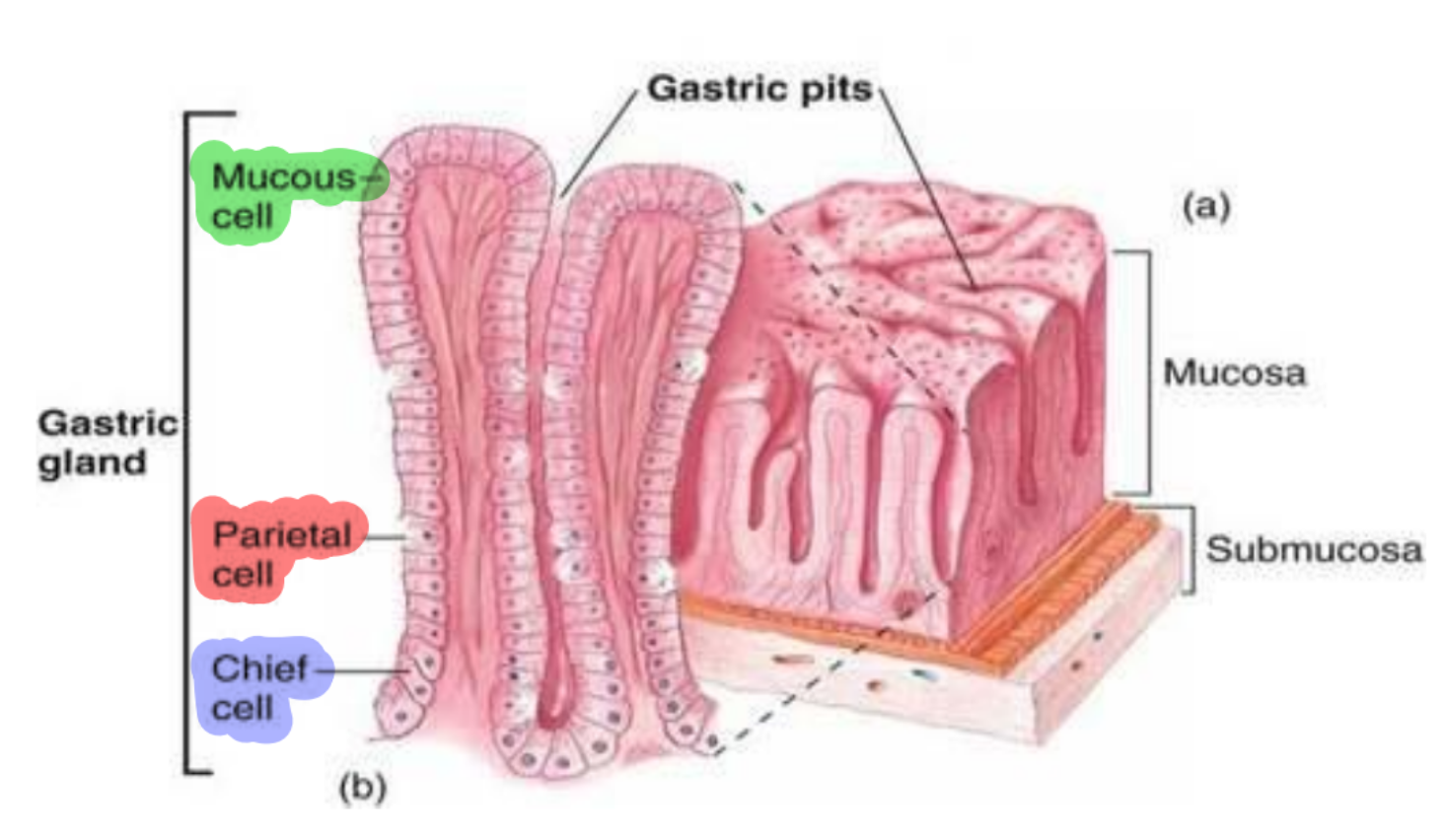
Stomach
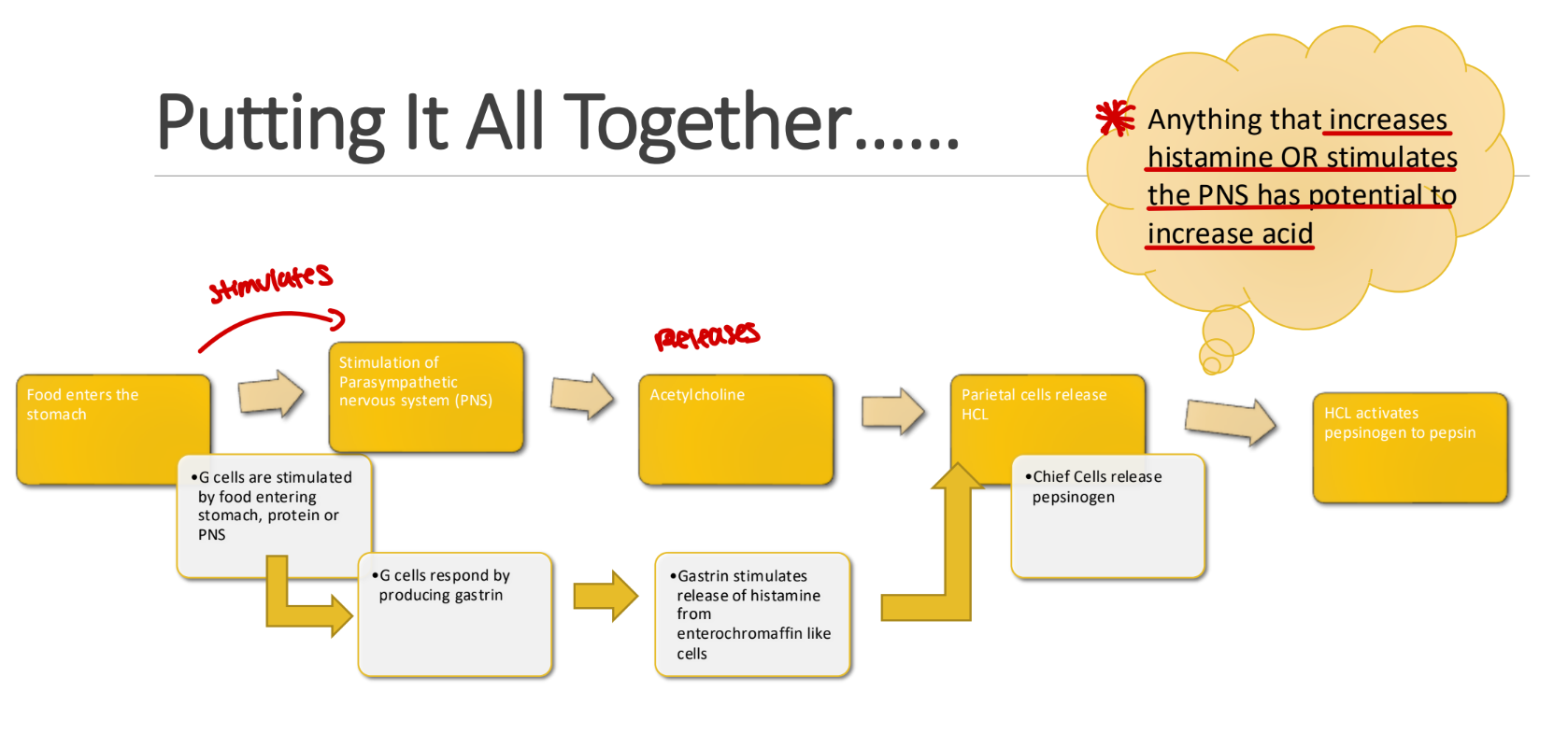
What Typically Protects the Stomach?
MUCUS
• Locally produced prostaglandins stimulate mucus cells to produce mucus
• Prostaglandins also inhibit HCl production.
Things that can alter mucus production/decrease the protective mechanisms of the stomach:
• Decrease in prostaglandins (ie: anti-inflammatory drugs - aspirin blocks prostaglandin production)
• Excessive histamine release (mast cell tumor)
• Bile acids entering stomach from the duodenum (bile reflux): may be due to abnormal/lack of normal peristaltic contractions of intestines between meals
• Increase in uremic toxins (kidney failure)
• Increase in carbohydrate intake leading to bacterial overgrowth (horses and cattle)
Decreased mucus present can lead to:
• Gastric ulcers, gastritis
Antacids
Job in Monogastrics: reduce stomach acid and ulcers
Job in Ruminants: reduce stomach acidity in order to maintain rumen microbe health and prevent ulcers (i.e., in cases of high carbohydrate ingestion - fresh grass, too much grain)
Job in Horses: reduce acidity and ulcers from stress and high-carbohydrate diets
Two classifications of Antacids
◦ Systemic - Absorbed systemically
◦ Non-Systemic - Locally acting in the stomach
Antacids: Nonsystemic
• Work by chemically neutralizing acid in the stomach or rumen
• Typically contain Ca, Mg or aluminum
Examples:
• Tums, Rolaids
• Mylanta, Maalox
• Amphogel (aluminum): most used as a phosphate binder in renal failure, not as an antacid
• For cattle: magnesium hydroxide, magnesium carbonate PO
Contraindications:
• Use caution with Mg antacids in animals with kidney disease
• Do not give antacids with other drugs. Wait 2-3 hours between because easily bind to other drugs
Antacids: Systemic (H2 Antagonists)
• Circulate in the blood stream, attach to and antagonize H2 (histamine) receptors in stomach decreasing amount of HCl production.
Examples:
• Cimetidine (Tagamet)
• Ranitidine (Zantac)
• Famotidine (Pepcid)
Contraindications: Always check formularies for interactions of drugs with systemic
antacids. (Cimetidine especially will decrease biotransformation of other drugs)
Antacids: Systemic (Proton Pump Inhibitors)
Omeprazole (ie Prilosec, Gastrogard)
• Binds to surface of parietal cells and inhibits the “proton pump”
• H+ ions will not be pumped into the stomach, therefore reducing acidity
Antiulcer Drugs: Sucralfate and Misoprostol
Sucralfate
• “Band-aid” for ulcers
• When drug molecules contact stomach acid, sticky paste is formed that adheres/protects ulcers
• Causes an increase in prostaglandin production, which causes increase in mucus
• Needs an acidic environment to work! Do not give with antacids
• Should be given 2 hours before other medications or food
Misoprostol
• Synthetic prostaglandin (PGE1)
• Causes an increase in mucus production and a decrease in acid production
• Is expensive
• DO NOT USE in pregnant animals or horses, watch human handling (gloves): can increase uterine contractions
GI Antimicrobials
• Most may not be considered common treatments for vomit/diarrhea (although metronidazole is used regularly as a general treatment for diarrhea...)
• Theoretically may lead to killing good bacteria in the GI tract leading to more diarrhea
Examples:
• Tylosin (Tylan)
• Metronidazole (Flagyl)
• Erythromycin: Macrolide; oral form works more as a prokinetic
• Sulfasalazine
Tylosin (Tylan)
• Classified as a macrolide antibiotic
Used widely in cattle
Extra-label use in dogs and cats
• Is a powder that is added to food. Has a very bitter taste, put in gel capsules to mask taste
• Treats gram +/- GI and respiratory infections in cattle as well as Chlamydia and Mycoplasma
• In dogs/cats may be useful for diarrheas associated with bacterial overgrowth: ex: IBD
• Treatment for American Foulbrood in honeybees: fatal bacterial disease
• DO NOT USE IN HORSES: causes severe diarrhea enough to cause death
Metronidazole (Flagyl)
• Antiprotozoal (Giardia) and Antibacterial; classified as nitroimidazole antibiotic
• Also effective at decreasing inflammation of the GI tract which is why it is commonly used for diarrhea
• Side effects can be seen at high doses or when given IV fast in cats and dogs
CNS symptoms:
Ataxia, head-tilt, proprioception deficiencies and seizures
Usually reversible, but may take days to months to resolve
• Very bitter taste
• Use is banned in production animals: possibly carcinogenic in humans
Pancreatic Enzyme Replacement
Viokase, Pancreazyme
Treatment for Exocrine Pancreatic Insufficiency (EPI)
◦ malabsorption and maldigestion disease
◦ underproduction of digestive enzymes by pancreas → undigested food in intestine → voluminous, pale in color, and greasy stool
How do they work?
• Typically are powders
• Added to animal’s food about 20min PRIOR to eating
• Breakdown fats, protein, and starches in food prior to ingestion
Efficacy of drugs is tricky
• Varying levels of enzyme are present
• Stomach acid decreases the efficacy of lipase, animal may still have a hard time digesting fats
• Clinically will see decrease in diarrhea and increase in weight
Rumen Drugs
- When ruminants becomes sick, one side effect may be rumen stasis
- Normal rumen contractions are needed to process food, keeping rumen microbes healthy, and balancing gas and other byproducts of the fermentation
- Stasis results in inability to digest food, bloat, excessive gas, rumen acidosis (grain overload)
◦ rumen acidosis can have systemic effects:
Weight loss, diarrhea, anorexia
Laminitis
RUMINATORICS: STIMULATE PNS THUS INCREASING GI MOTILITY
i.e., Neostigmine
Drugs that stimulate movement of rumen
Increase parasympathetic activity to increase GI motility
Bind with Acetylcholinesterase to prevent breakdown of Acetylcholine → prolonged parasympathetic effect on GI
IONOPHORES
i.e., Monensin (Rumensin)/Lasalocid (Bovitec)
Affect ion movement across membranes of certain bacteria and protozoa which kills them
Balance the rumen flora/prevent bloat
Also used to reduce coccidiosis in livestock and poultry
ANTIBLOAT DRUGS FOR TREATMENT OF FROTHY BLOAT
i.e., docusate sodium (DSS)
Reduce gas buildup in rumen
Decrease surface tension of foam in rumen (break up small frothy gas bubbles) to form larger gas bubbles cow can eructate (burp)
 Note
Note  Flashcards (29)