Marine Ecology Exam 3
 Studied by 0 people
 Call Kai
 Learn
Learn Practice Test
 Spaced Repetition
 Match
Match Flashcards
 Knowt Play
1/87

There's no tags or description
Looks like no tags are added yet.
Name | Mastery | Learn | Test | Matching | Spaced | Call with Kai |
|---|
No analytics yet
Send a link to your students to track their progress
88 Terms
T or F: Most of Earth’s surface is under the ocean?
True
What are some adaptations to the challenges of living in the deep ocean?
1) Handle long periods of time without food
2) Not have a swim bladder because of high pressure
3) Bioluminescence to attract other members of same species
Why are deep oceans suprisingly species rich despite low biomass?
Niche diversification, low comp for resources, slow (allows things to coexist)
Long term stability of conditions
Why is there a latitudinal trend?
Higher productivity → get more stuff coming down = higher species deep sea richness along coast + equator
Hydrothermal vents - where do they occur, what is the smoke?
“Black smokers”
water emerges at 400 degrees
occur at spreading of tectonic plates, heating by magma, seeps where water can enter
smoke is mostly sulfides emitted by the vent
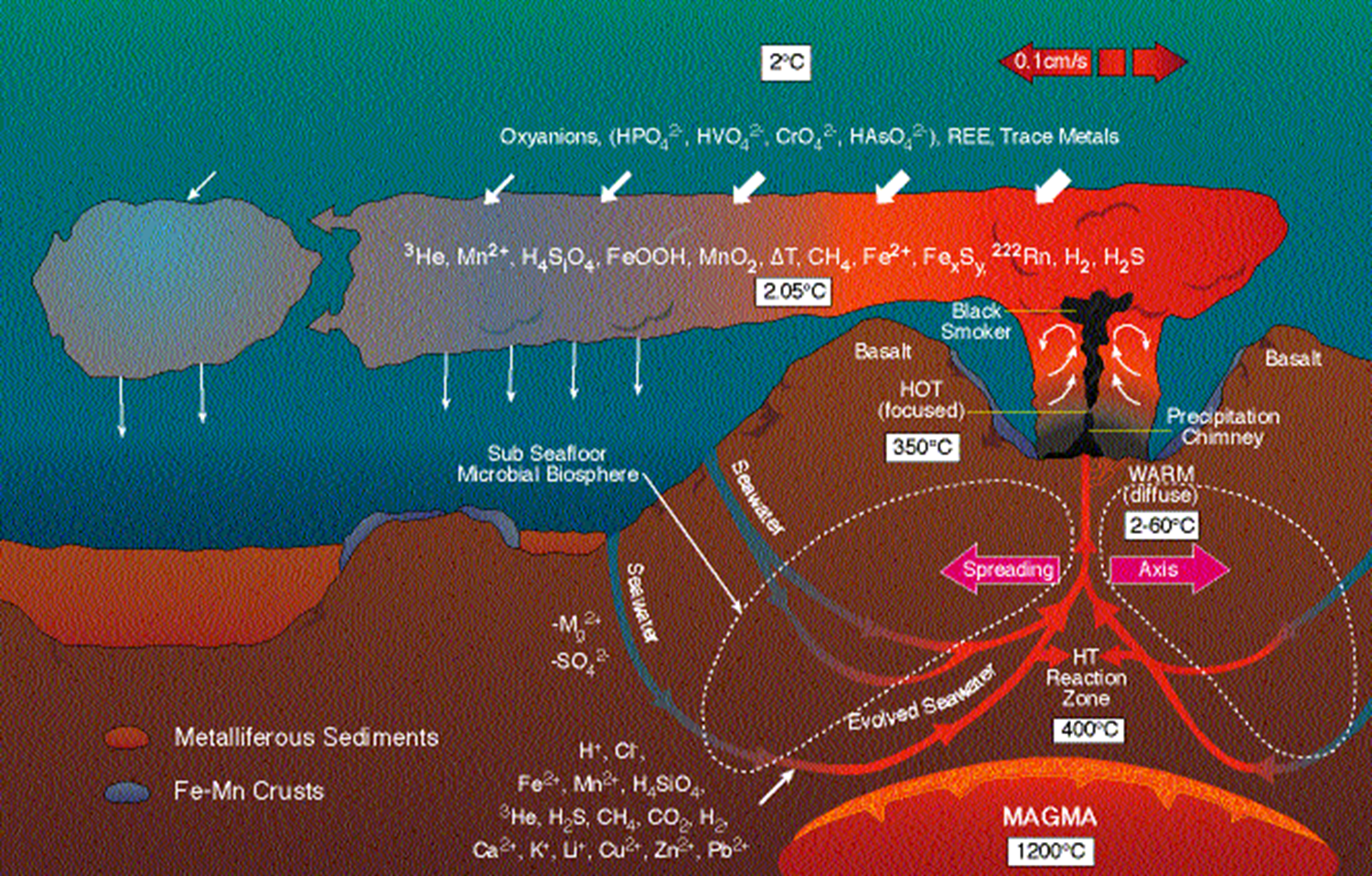
WIs water more or less turbid at vents and why?
More turbid (cloudy) because of higher productivity
What factors drive hydrothermal vent systems? In other words what are the challenges of the deep sea that vents can counteract?
High pressure
Low temperature
Lack of sunlight
Lack of photosynthesis
Scarcity of food resources
Enormous volume of water further reduces encounter probability
How do vents counteract those challenges?
Chemosynthetic bacteria (primary producers)
CO2 + O2 + 4H2S → CH2O + 4S + 3H2O
Hot, mineral-rich water
One Location (meeting place hypothesis)
How long are vents active for?
Are species the same or different at vents?
Vents active for years or decades
Animals species remarkably similar at widely separated vents (fill same niche)
Larvae drift from site to site
“Dead whale hypothesis”
Succession in hydrothermal vents
New vent forms at diverging plates
Chemosynthetic bacteria (oxidize inorganics e.g., H2S)
Grazers: Amphipods, copepods, limpets
Filter feeders: limpets, clams, mussels
Scavengers: vent crabs, worms, fish
Predators: vent crabs, octopi
Symbiotic with primary producers (bacteria): vestimentiferan worms, giant clams (tube worms/giant clams have bacteria in them which get energy from sulfide in vents, these org only house the bacteria, not heterotrophic)
Why deep sea org pigment free except red?
They can’t be seen, no light available to bounce off (don’t need to produce pigments), red is first color on spectrum to be filtered out by water, can’t see them at certain depth
Global methane seeps/cold seep
Frequency higher along areas of plates for vents
subduction zones -/ = methane seeps
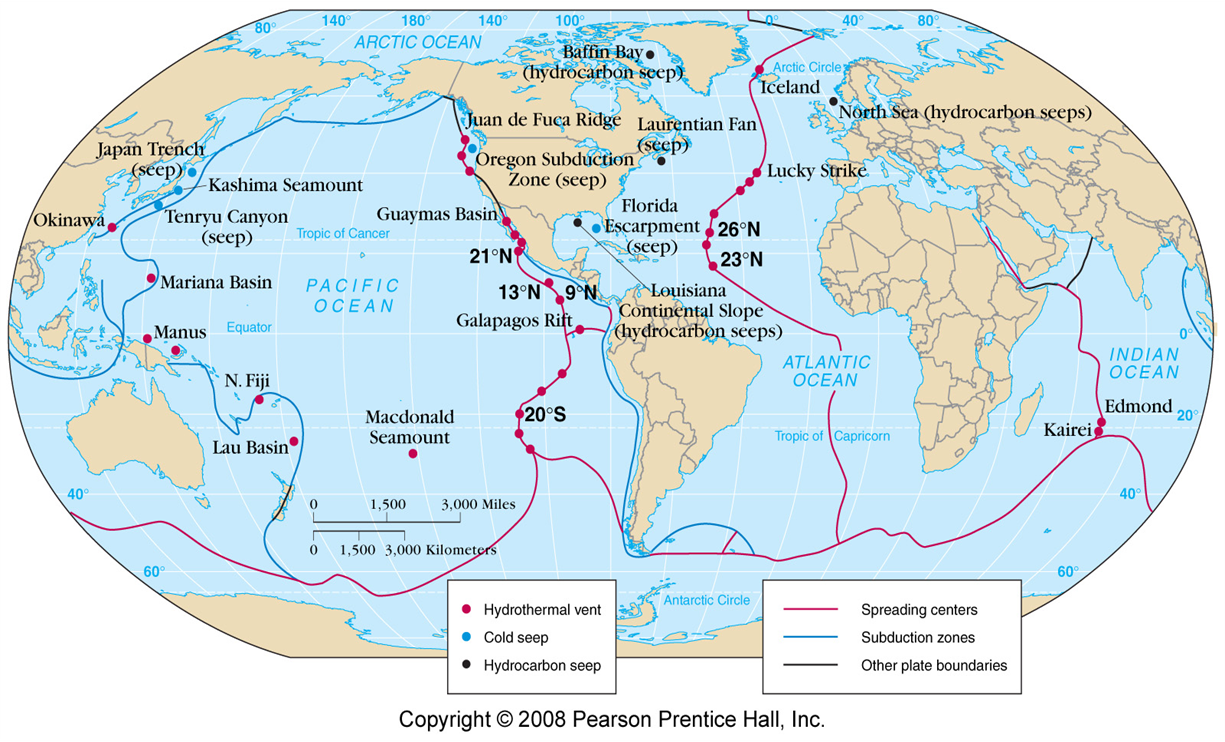
What factors drive methane vent/cold seep?
Same deep sea challenges
How do methane seeps counteract these challenges?
Chemosynthetic bacteria (primary producers)
Cold, mineral-rich water
One Location
How are methane seeps different than vents?
Chemosynthetic bacteria typically use methane
More stable than hydrothermal vents
Contain longer lived organisms
Including: Lamellibranchia worms which may be the longest lived non-colonial inverts
What is an estuary?
Partially enclosed body of water where two different bodies of water meet and mix
E.g. Freshwater from rivers and the saltwater from the ocean OR small rivers meet a very large lake that are chemically distinct from each other (Freshwater estuaries common to the Great Lakes)
Salt and fresh mix = brackish water
Close interaction between the land and sea
Estuaries and estuarine biology closely tied to watersheds
○The surrounding land that provides water input to the estuary
Estuaries are the most productive ecosystems on earth and have the most impact from and to people? T or F
T
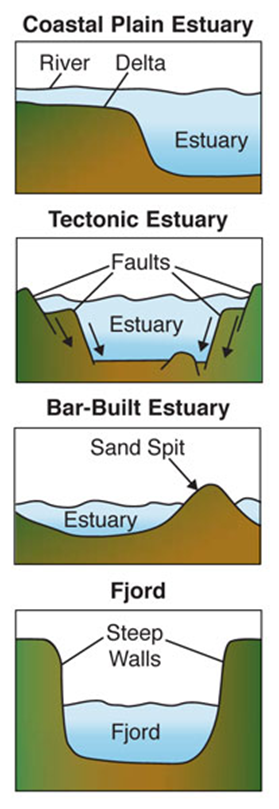
How are types of estuaries differentiated? What are the diff types?
Differences are based on surrounding landforms
and geomorphology
Coastal plain/ Drowned river valleys
rising sea levels filling an existing river valley
Tectonically produced estuaries
tectonic plates shifting together and drifting apart
Bar-built / lagoon
body of water protected from the ocean by a sand bar
or a barrier island
Fjord-type estuary
created by glaciers carving out a deep, steep valley
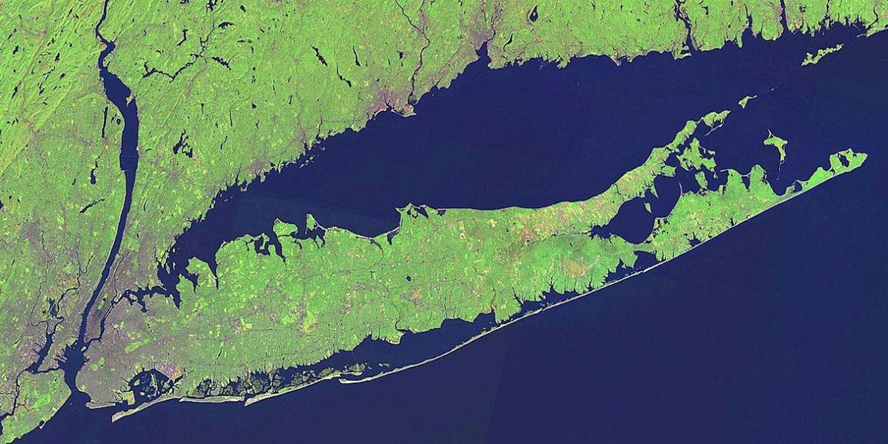
What is an estuary in CT? Where are the river inputs from? What kind of estuary is it?
River inputs from NY, CT, MA and RI watersheds (Connecticut River)
Coastal plain estuary
Salinity and temperature in an estuary?
Temporally, spatially, and vertically
Time (temporal): seasonality, daily weather, tides
Place (spatially): where in an estuary
Depth (vertically)
Which is heavier?
Salt water or fresh water
Which is heavier?
Hot water or cold water
Salt is more dense, cold more dense
Vertical differences in estuaries are based on:
densities of water input
speed of water input
Circulation depth of estuary
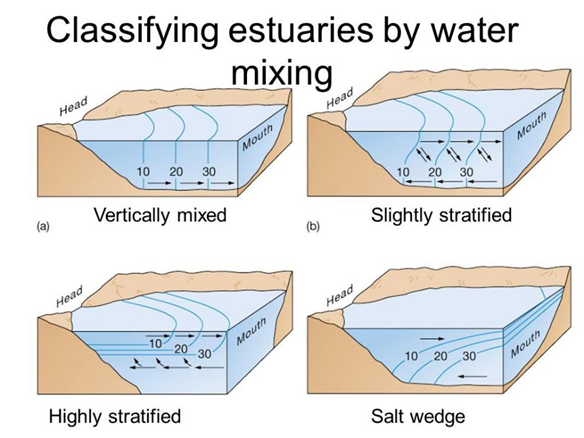
Are estuaries classified by how fresh and salt water mix?
Yes
Salt wedge: River>>Tidal currents
Partially mixed / slightly stratified: deep, River>Tidal current
Well mixed/ vertically mixed: shallow, River<Tidal currents
Inverse: River<<Tidal currents; salinity in estuary higher than the ocean, typically found in very dry climates
Why were hydrothermal vents such a paradigm-shifting discovery?
extremeophiles, lots of life living under extreme conditions
autotrophs using things other than sunlight
Apart from a lack of primary productivity, what other deep sea challenges are mitigated by hydrothermal vents and methane seeps?
finding mates, serves as a central meeting point
hard substrate
easier to find foof (org gathering producing larvae, larvae can be filter fed)
•The physical characteristics of an estuary define the communities that live there T or F
True
What is one of the greatest challenges that estuarine organisms need to adapt to in order to live in an estuary?
changes in salinity
Diff types of organisms by ability to handle salt
•Euryhaline (wide range of salinity)
•Stenohaline (narrow range of salinity)
•Osmoconformers (have same salinity as environment: jellyfish)
•Osmoregulators: can be less salty than environment, can regulate salt
Types of osmoregulators: Anadromous = go from fresh to salty, salmon Catadromous = go from salty to fresh, eel
Why anadromous and catadromous? Latitudinal trends: WHy might they have evolved?
A = Strategy more common in higher latitude, open ocean more productive
C = more common in lower latitude, because avoiding predation (more prodcutve place is freshwater)
Makes sense to breed in area where other members of the same speices are and where larvae can survive
Different species adapt and handle salinity differently, T or F
True, estuaries have salinity gradients and zonation from these gradients
What estuarine species live with salt through osmoregulation? Trhough movement/life cycles and locations?
•Through osmoregulation: Fish and marine inverts, Sharks, birds, reptiles have salt glands
•Through movement: Life cycles and locations (A vs. C)
Challenges estuaries face from humans:
•Coastal development: Increasing human population and Cities fitting more people in a small space
•Pollution: Nonpoint sources, Point sources
•Climate Change
How are estuaries changing due to climate change:
Temp: phenology (changing of the seasons, climate change will alter behavior of org that responds to changes in season based on temp), but not to org that respond to daylight (Physiology and behavior changes)
Ocean acidification: shell making becomes more costly in acidic oceans
Rising sea levels: Saltmarshes/ wetlands/ coastal habitats
getting inundated, Not keeping up with
sea level rise (RAE, Climate Central, NERRA)
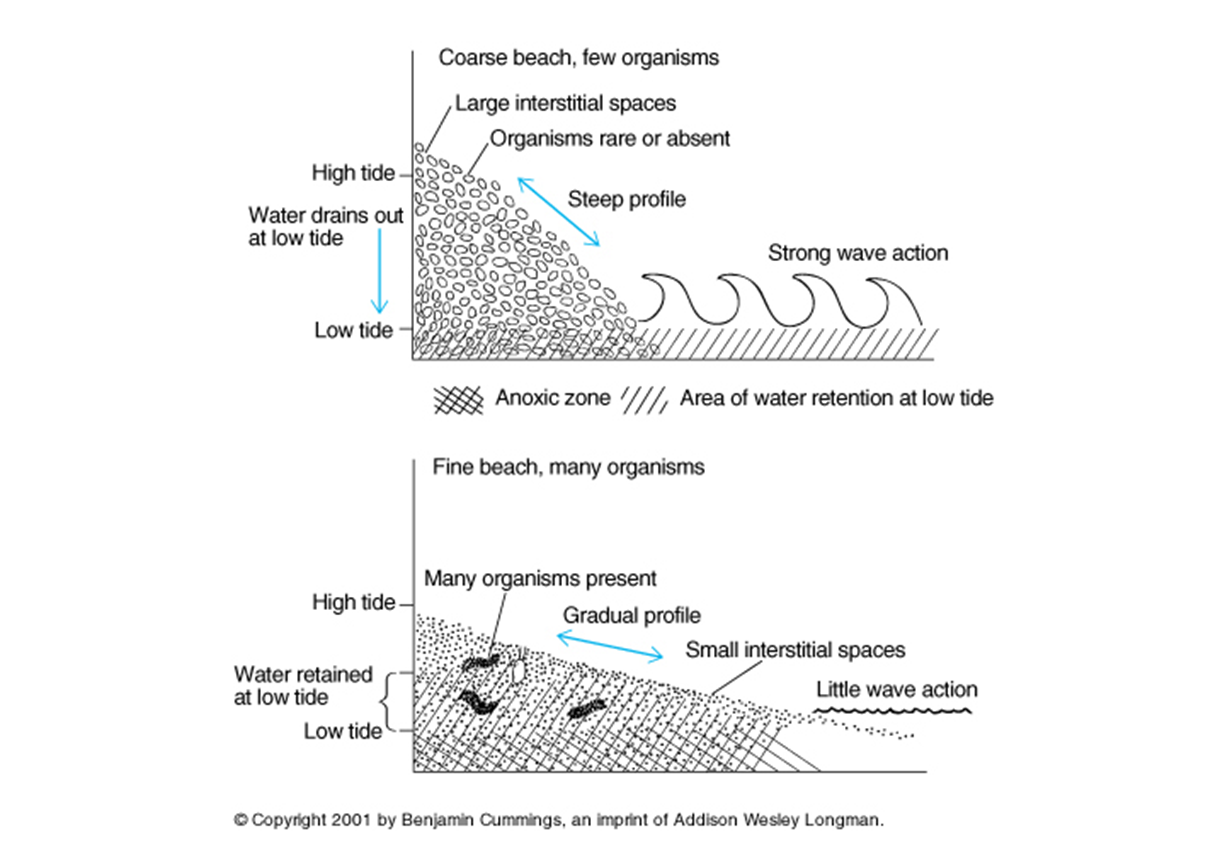
Sandy shores: particle size influences water retention
small particle = inc water retention, burrowing into the sediment
•Wave action & its effect on sediment particle size
•Particle size influences water retention & burrowing into the sediment
•Organisms in fine-sand sediment are less subject to desiccation than organisms in coarse-gravel beach
•Wave action creates unstable, constantly moving substrate on open sand beaches
Comparison of the physical conditions found on fine-grained and coarse-grained beaches
Adaptations of organisms to sandy shores
•Adaptations to unstable substrate
•Burrow deeply into the substrate below the depth of sediment affected by the passing wave (e.g. Large clams such as Tivella stultorum)
•Burrow very quickly as soon as the passing wave has removed the animal from the substrate (e.g. many annelid worms, small clams, crustaceans)
•May also burrow to anchor and filter feed.
Open sand beaches: types of organisms
•No large plants on open sand beaches
•Primary producers are certain benthic diatoms & various phytoplankton living in the surf; protected sand flats support diverse flora of benthic diatoms, dinoflagellates, cyanobacteria
•Sessile animals such as barnacles, mussels are absent
•Dominated by polychaete worms, bivalve mollusks, crustaceans
Feeding biology of organisms on sandy beaches
•Animals on sandy beaches depend on phytoplankton from seawater, organic debris brought in by waves or other beach animals
•Invertebrates on open sand beaches dominated by filter feeders (e.g. surf clam), detritus feeders (e.g. polychaetes, sand dollars), scavengers
•Protected sand flats: microflora films, seagrasses, ephemeral macroalgae
•Predators include shorebirds (at low tide), fishes (at high tide)
Generalized pattern of distribution of organisms on sandy beaches
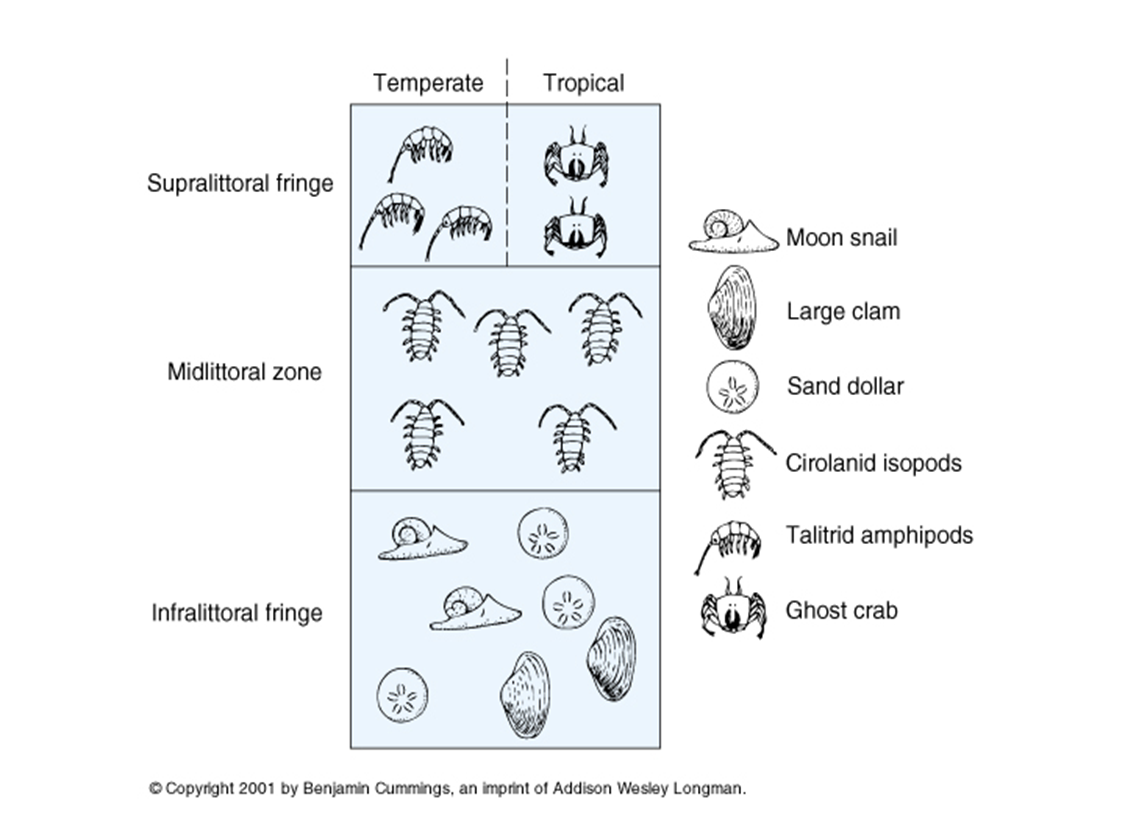
Supra = driest part
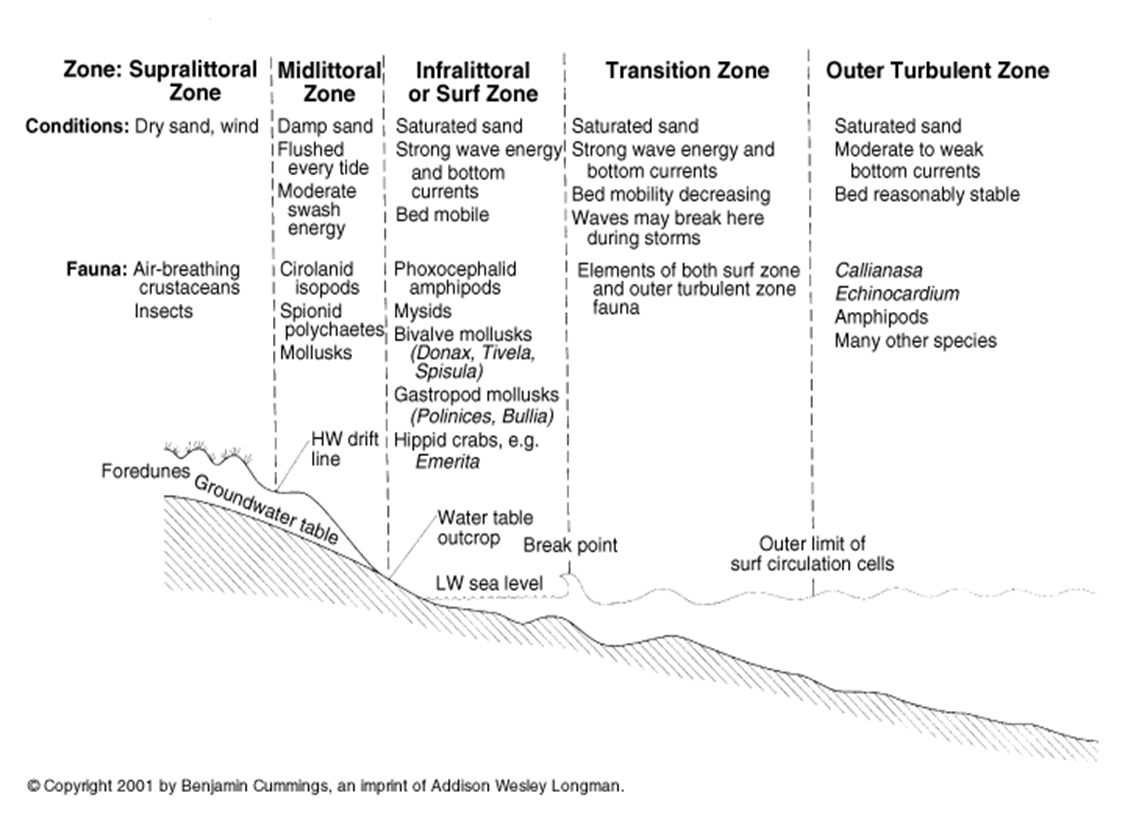
•Dominated by deposit feeders
•Main biological factors that structure sand flat communities are: predation or predation combined with disturbance; competition may may be less important
Ex. of predators having impact in sand flats
•Moon snails (Polinices sp.) prey on bivalves
•Large crabs (blue crab, green crab) dig into the sediment to locate prey
•Horseshoe crab (Limulus), seasonal predator that dig into sediment searching for infauna
•Whelks (Busycon, Thais spp.)
COMPETITION LESS IMPORTANT FOR ZONATION, predation has higher impact
Muddy shores physical factors
•Slopes are much flatter than those of sandy beaches, hence muddy shores are known as mudflats
•Muddy shores are more stable than sandy substrates; more permanent burrows could be established
•High water retention; oxygen depletion below the 1st few cms of the sediment (anaerobic condition)
Adaptations of organisms to muddy shores
•Most organisms in this area are adapted to burrowing or inhabit permanent tubes in the substrate
•Adapted to live under anaerobic conditions or must have some way of bringing the overlying surface water with its oxygen supply down to them
•Adaptations to live at low oxygen tensions: hemoglobin; use of glycogen stores for anaerobic metabolism when O2 is little or unavailable
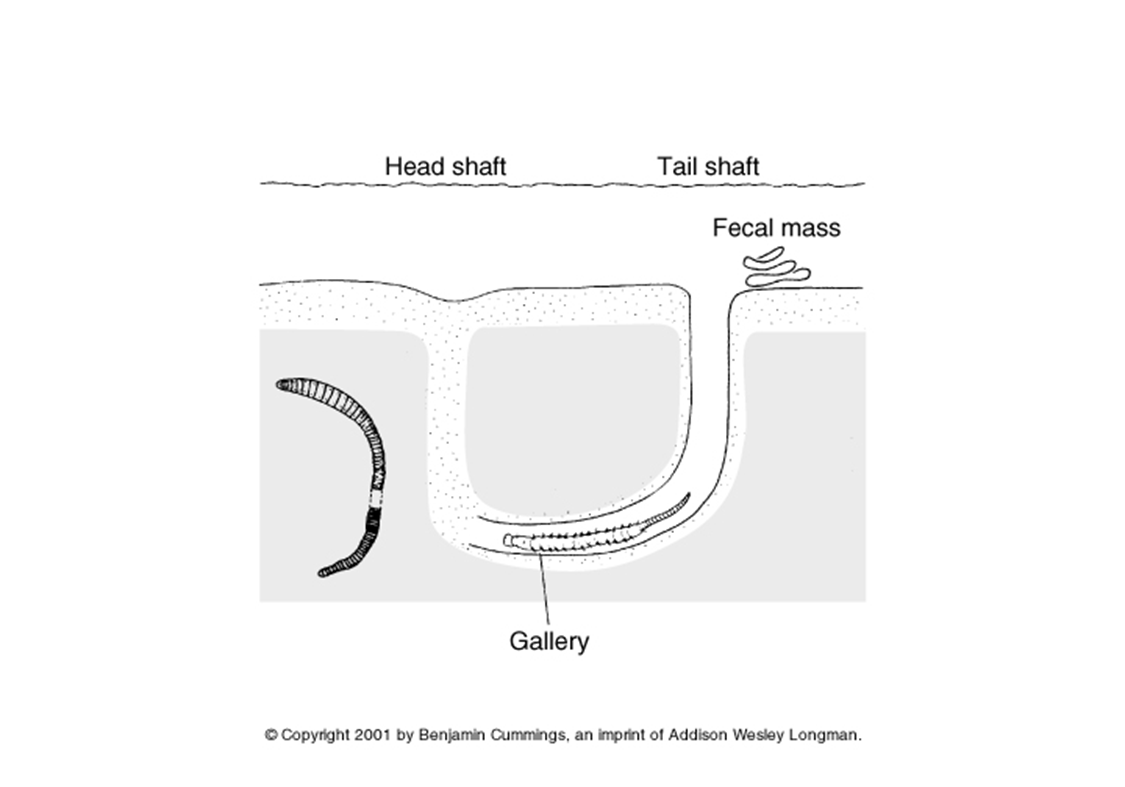
What faunal differences do you expect between sandy shores and muddy shores?
Stable tunnels, burrows to bring water down to anoxic later in muddy (relatively stable)
Why do estuaries face particular challenges due to human impacts?
Human dev, interface btwn ocean river land, overfishing, pollutants from river (terrestrial nutrient input but also toxic stuff like pesticides)
What is a coral?
niderians
have nematocysts (stinging structure to capture prey/food or for defense)
within coral are photosynthetic algae
corals are heterotrophic but gets products of photosynthesis from algae and give algae place to survive
Hermatypic (reef building corals) have what ….
zooxanthellae (ALGAE) , need symbiosis with algae, laying down calculumcarbonate skeleton as they grow (need energy)
Do coral reefs make up a large percentage of planet, are they well described, do they help with carbon?
•Cover 0.71% of area of planet
•~1 million species, only 100,000 described
•Remove ~700 billion kg of C/yr
What are the conditions for coral reef growth?
Water temp = 18-40C WARM
Light requirements : to 1% surface intensity ~70m depth
Salinity: 32-35 psu
Low sediment (can’t tolerate sediment)
Short (<1hr) emersion (can’t handle intertidal zone well)
Moderate-high water motion
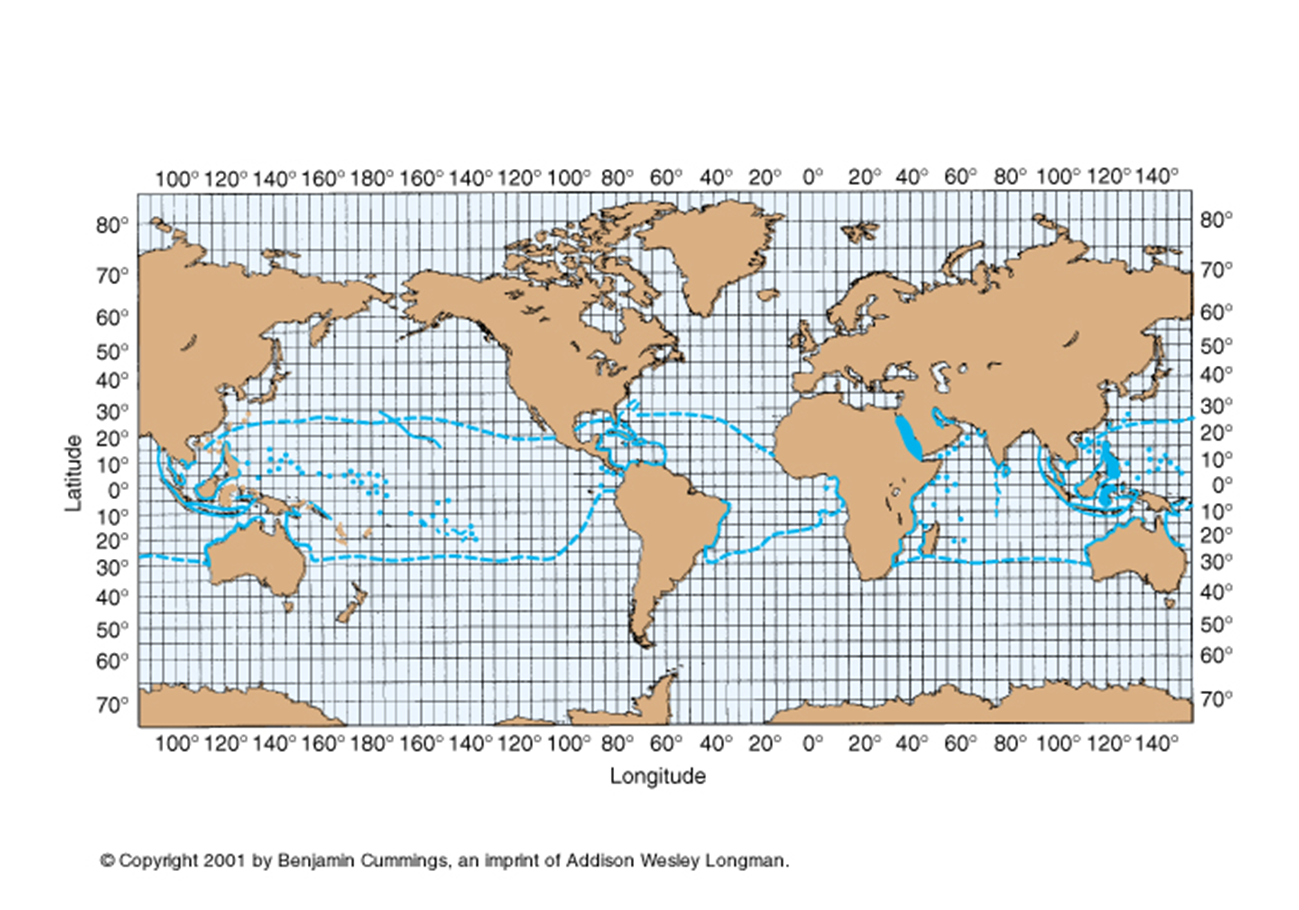
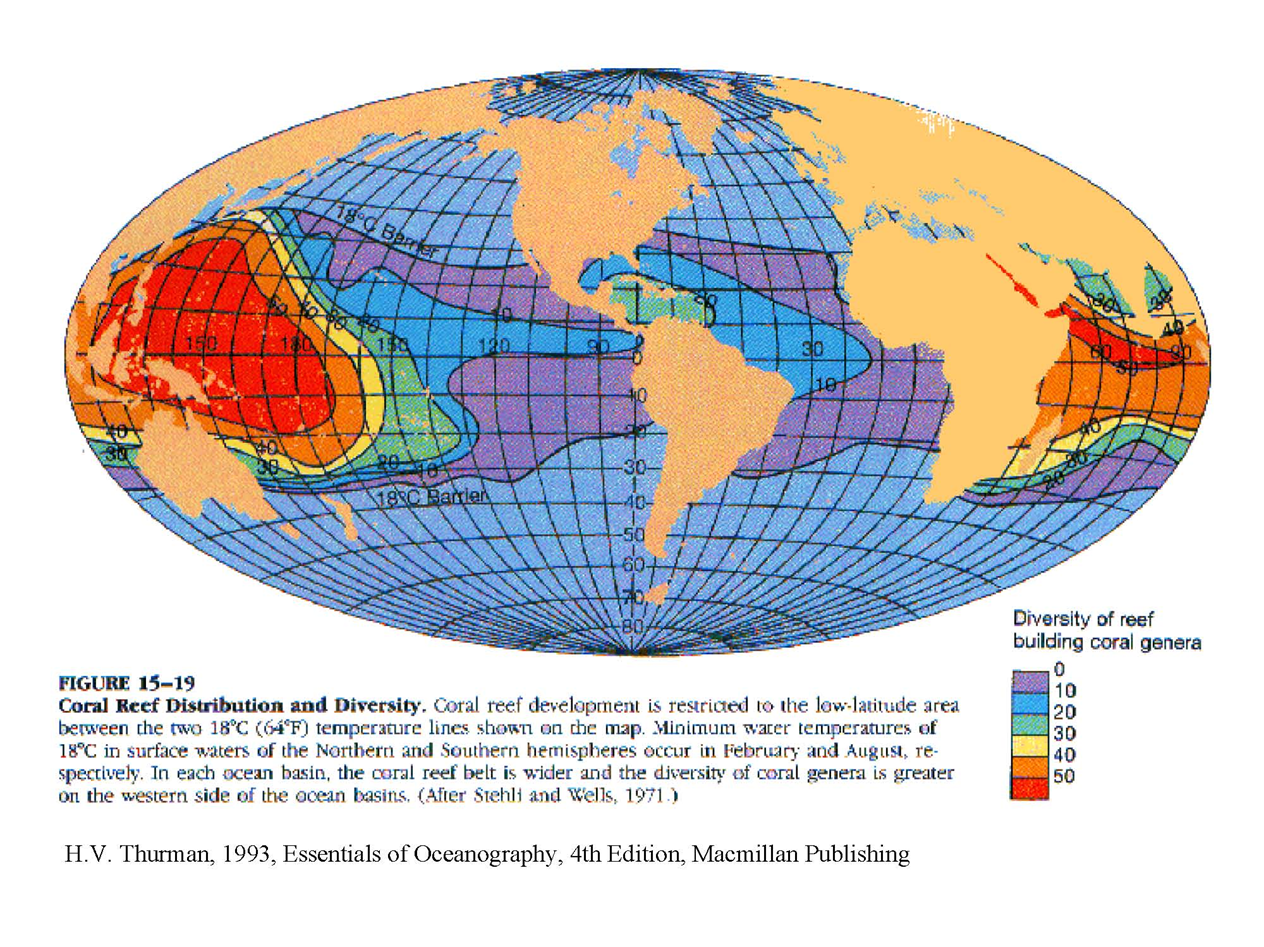
Coral world wide distribution. Where and why?
Located in tropics, near equator. Pacific split before others, had more time to accumulate species and undergo extinction
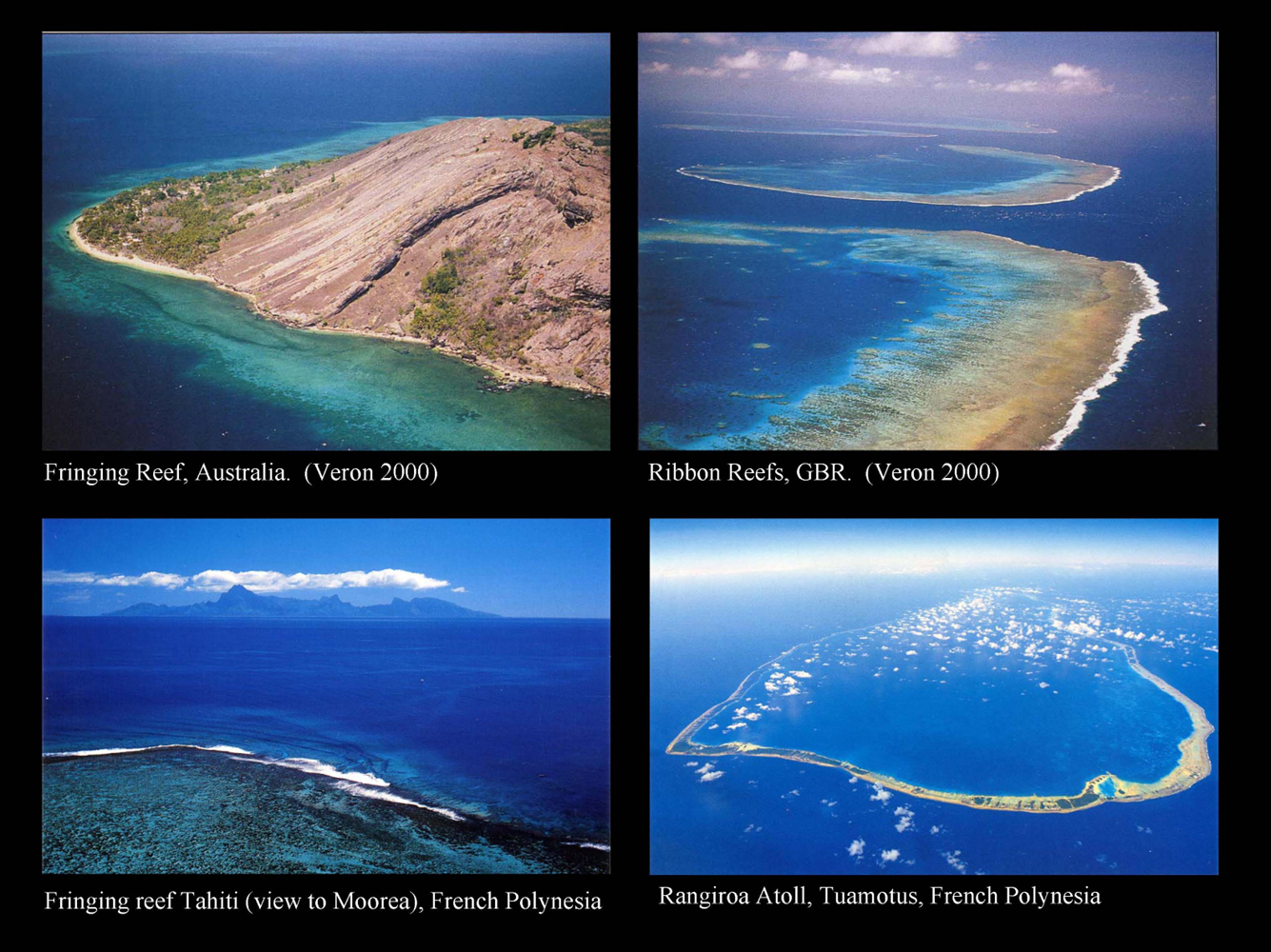
4 diff types of reefs
Rangiroa Reef: What makes a healthy reef?
Lots of diff species together and wide range of sizes
Clear water (low productivity in water column)
Rangiroa Reef: What are the primary threats to coral reefs?
Climate change = coral bleaching, water more acidic, sea level rise, intense storms.
Crown of thorns sea stars (invasive species)
Rangiroa Reef: What are the primary tools/methods researchers use to study reefs?
Types of fish present in a radius, bethic surveys at diff depths, coral identification and what size it is/how healthy it is, collect sediment samples
Rangiroa Reef: Advantages/disadvantages of private funding?
Advantage: Get good quality equipment
Disadvantage: Biases
How do corals thrive despite oligotrophic conditions?
Corals thrive in nutrient-poor (oligotrophic) waters through a symbiotic relationship with algae called zooxanthellae, which live within their tissues. This partnership allows corals to efficiently recycle nutrients, and the algae provide the coral with energy from photosynthesis, while the coral host provides the algae with essential nutrients by recycling waste
Spur and groove architecture
Wvaes carrying sand and sediment over the reef, creates grooves btwn reefs that are all sand
Zonation of corals
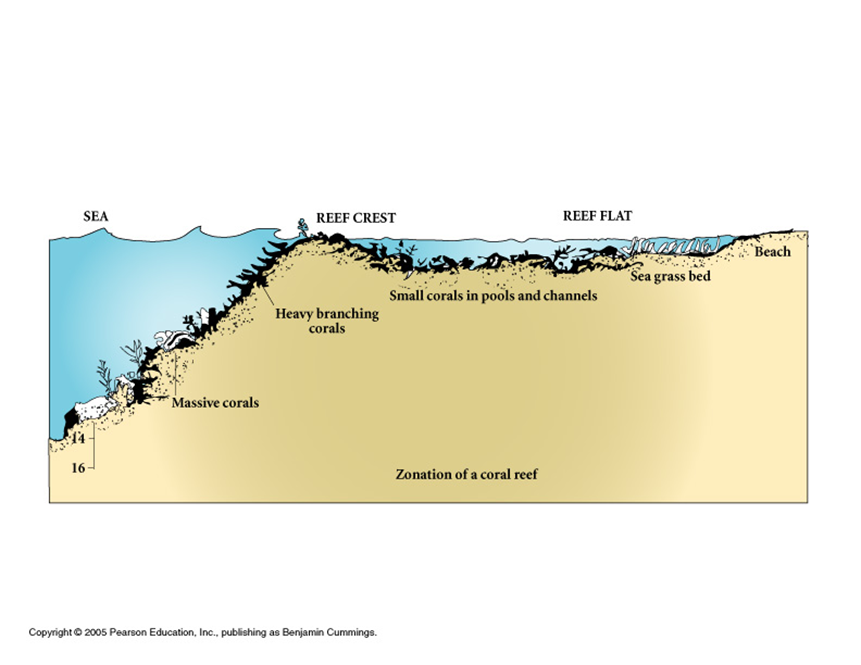
farther off shore and deeper
Coral trends in diversity
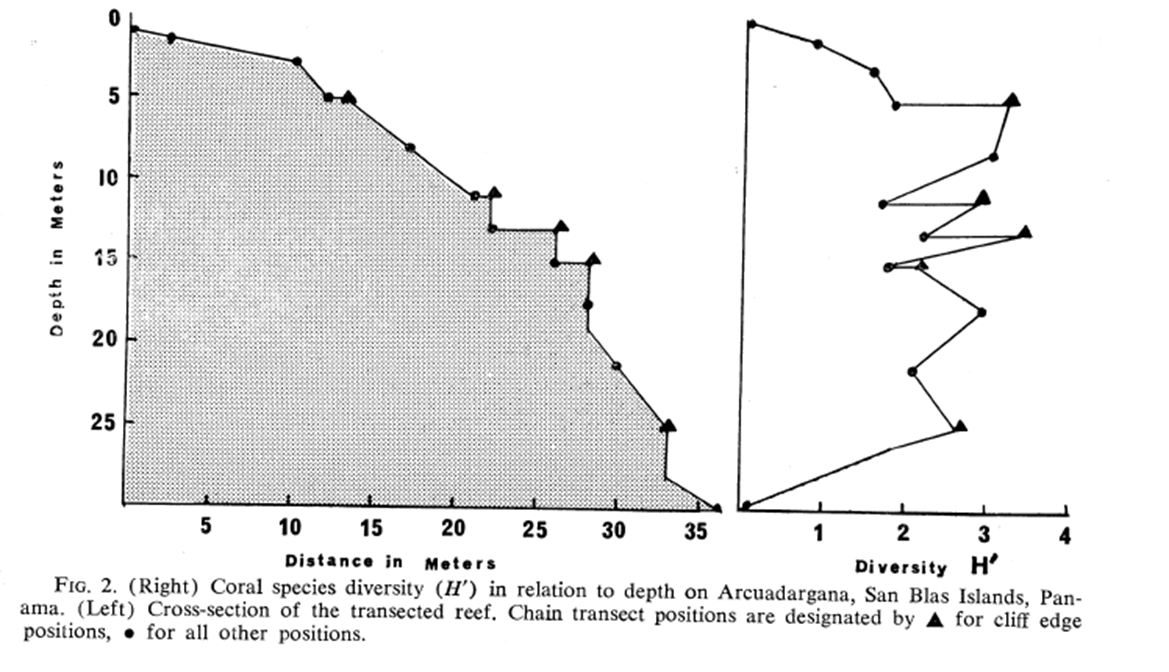
Low diversity at high depths (wave energy, intense conditions, very few species can handle conditions)
Low diveristy at low depths (light limitation, comp for space, very few species)
Intermediate diversity at medium depths
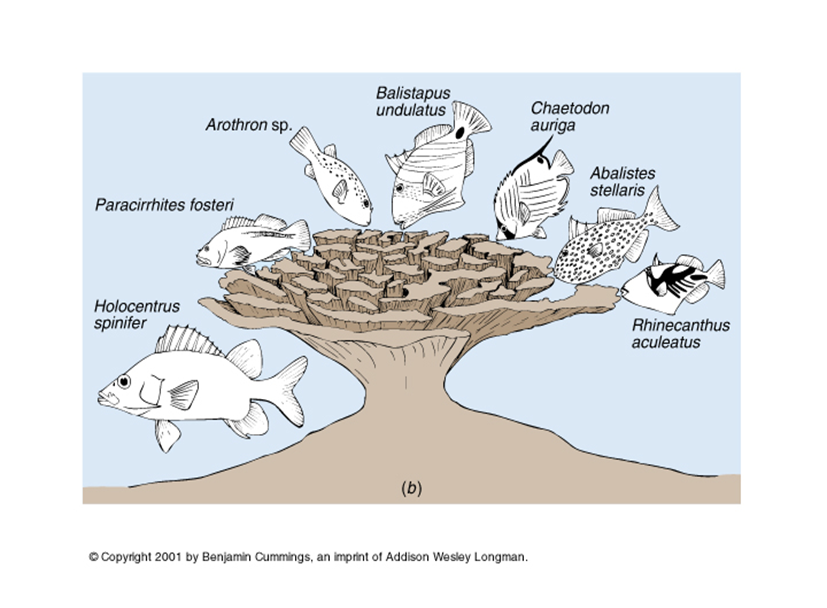
Structure provides protection
Why do we care about reefs? Biodiversity
Reefs contain a large number of the world’s species (some estimates are >million)
Why do we care about reefs? Food
They are important sources of sustenance for populations adjacent to reefs.
Why do we care about reefs? Economics
Some economies rely primarily on reef-related tourism ($$)
Why do we care about reefs? Protection
Prevent storm-driven wave energy from reaching coastal habitats (ecosystem services).
Why do we care about reefs? Nurseries
Reefs and the coastal zones they protect are important nursery habitats for commercial important species
Major players of coral reefs?
Primary Producers (algae, corals)
Herbivores (fish, urchins)
Corallivores (fish, urchins)
Filter Feeders (sponges, tunnicates)
Suspension Feeders (corals, sea stars)
Deposit Feeders (sea cucumber)
Predators (fish)
Bioeroders what are they and why are they an issue?
Coral tissue or algae embedded in coral skeleton. Problem because coral provides structure to support biodiversity, so eating corals = erodes it into rubble
Competition among corals. Why?
Competing for space to get light due to limited substratum
Ex. comp reduces ability to grow/offspring in stony corals
Tabular morphologies limit competitors - what did Bair and Hughes find?
Recruitment was limited in the acropora understory on the GBR
Limitation is attributable to low light/habitat suitability and not larval supply
How frequent is competition?
Connell (1976) found 82 competitive interactions between twelve species of corals in ONE square meter on Heron Island, GBR
What role does competition play? COMPLICATED/IT DEPENDS
Variations in environmental conditions, habitat, colony sizes and positions etc. make it difficult to predict community structure from simple competitive interactions
e.g., there are often different winners under different conditions
What did Lang propose about competitve hierarchies vs. Buss and Jackson?
Lang (1973) proposed that corals can be arranged into hierarchies based on competitive interactions
i.e., A<B<C
Buss and Jackson (1979) suggest that competitive relationships are networks rather than hierarchies
i.e., A<B<C but C<A
Networks change with environmental conditions
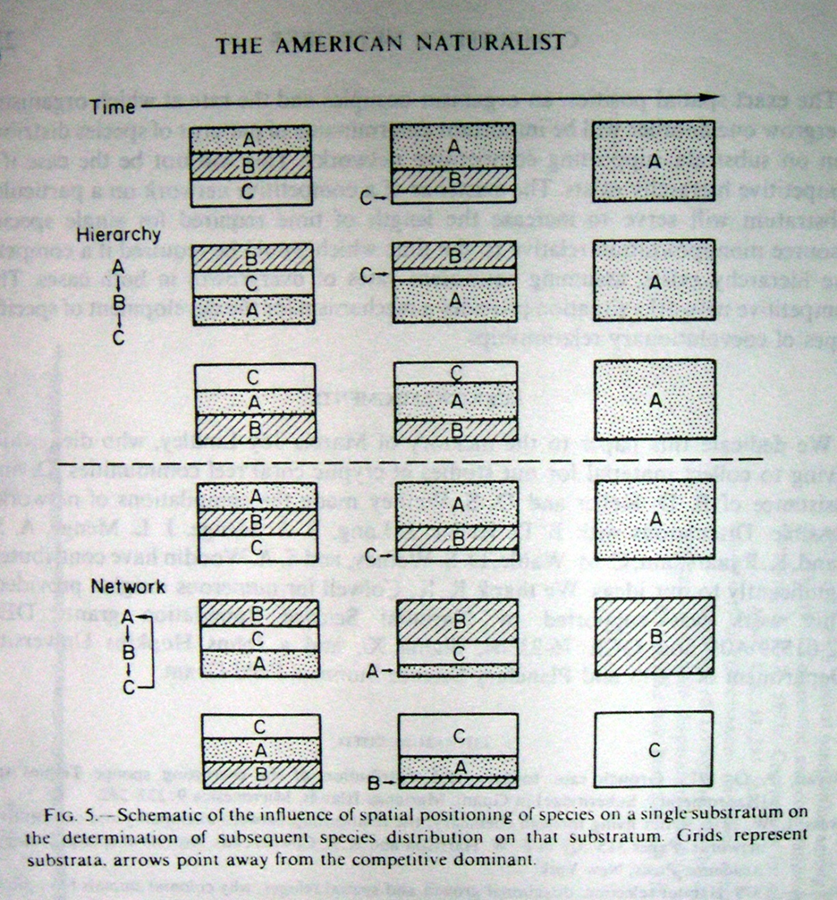
One coral could be the clear champion and is the best competitor, but is nearly absent, why?
Sucks at everything else. Investing a lot of energy in ability to compete not larvae and growth
What is competition network? Why not hierarchy?
Who survives in based on what it is next to, this explains high biodiversity of corals
Do algae have faster growth rates and how do they response to nutrients?
Faster growth rates
Faster growth response to available nutrients
Are algae outcompeting corals?
Probably not. Corals are likely to be killed by numerous other stressors and algae quickly use the open space.
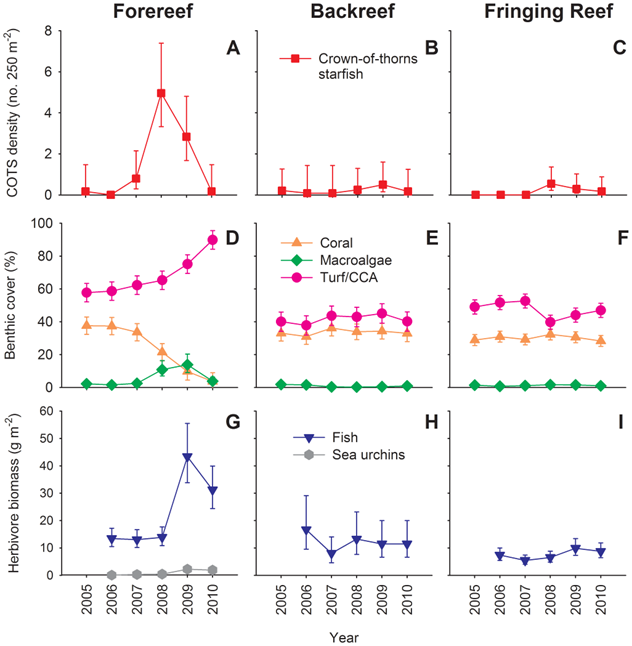
corals are killed, algae are there to take over:
coral dec → crown of thorns (eat coral) inc → algae inc → fish inc (eat algae) → algae dec → coral grows back
On some reefs, we see a lot of macroalgae instead of living coral. Does algae outcompete and kill coral?
No, coral dies from various factors, algae uses that space. Coral does not come back because nutrient input may be providing stuff for algae, when coral try to settle back the algae are in the way, not enough herbivorous fish to control algae (climate change, overfishing)
Why do reefs form “spur and groove” architecture?
Drainage channels, water and sand has got to go somewhwere, coral won’t grow there
As corals are killed by disease and bleaching, why are we concerned about bioeroders? What are some bioeroders?
Taking away physical structure, turned into rubble field. parrot fish, sea urchins
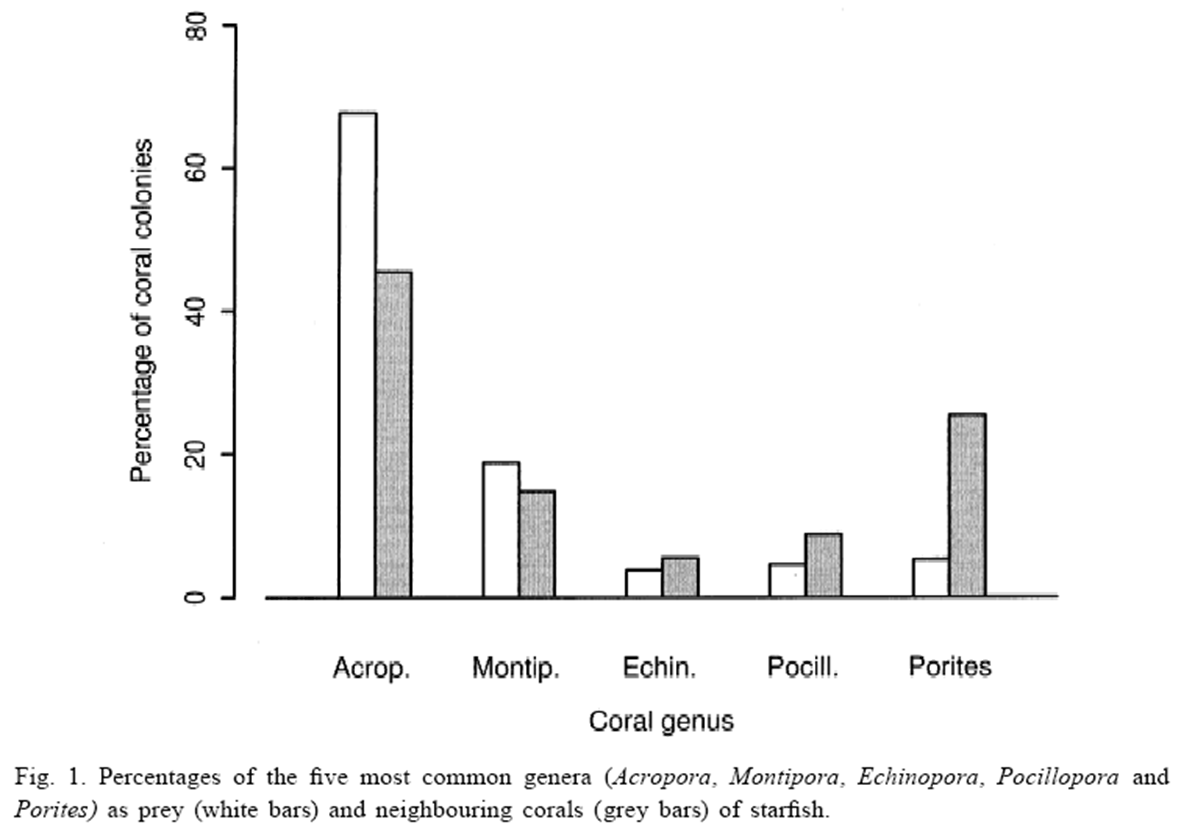
Feeding preference - what happens to corals neighboring acropora
Corals neighboring acroporia will be eaten by starfish
Positive interactions: when are they more important? What are the types in ocean:
Tend to be important in stressful or resource limited environment (deep ocean: nutrient poor, dense with predators)
Mutualism/Commensalism (Coral Crab Mutualism)
Facilitation:
Generation of habitat
Availability of resources
Refuge from predation
Coral as facilitators what do they do?
provide habitat/refuge from predators
things can grow on and in the coral
calcium carbonate = hard substratum
lots of niches (cryptic, coelobitic, low flow, high flow, low light, high light)
suitable settlement space for sessile invertebrates
fix carbon and exude mucus which can be consumed or attract bacteria which can then be consumed
Why is there a positive relationship between coral species richness and estimated invertebrate richness?
more richness = more niches (can have big coral, small coral, each which attract diff types of invertebrates)
Coral-crab mutualism
Crabs use corals as a refuge from predators and a source of food
coral provides mucus that crabs benefit from, crabs remove algae from coral
only happens in high light conditions because there is more light energy to make mucus and more light for algae to grow
Without crabs what are the trends of coral mortality, growth, and bleaching?
Mortality = high
Growth = low
Bleach = high
Shows that there is coral/crab mutualism where corals need crabs to survive
Sponge/sponge mutualisms: why do they need each other and what do they do to help each other?
Sponges are susceptible to predation and storm-induced breakage
Sponge species have differing chemical defense, tissue density, spicule structure etc
sponge is next to a diff type of sponge that doesn’t taste very good so predators will also avoid sponge 1 (sponges growing next to dissimilar sponges = benefits)
Vermetid gastropods where have they increased in density? What do they do to corals?
Eliat (Red Sea)
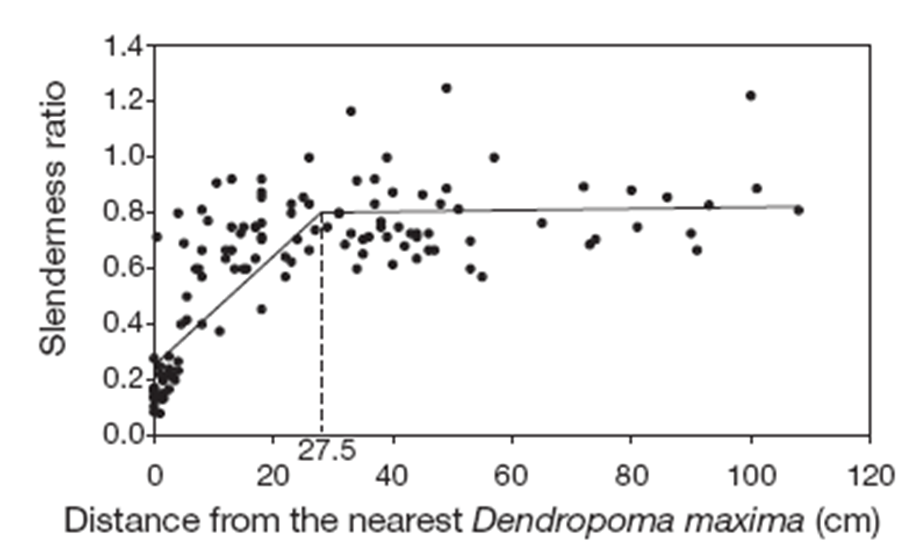
Gastropods extend mucus net to get food, the mucus overlaying the corals then changes their morphology which impacts their ability to survive (ex. ability to gather light, food)
As you get farther away from gastropod = morphology ok
close to gastropod = wide range of morphological differences
What are the main threats to coral reefs on global, regional, and local scales?
Global: warming, bleaching (takes more energy to make good skeleton), acidification
Regional: disease outbreaks (ex. stony coral tissue loss outbreak)
Local: overfishing, sediment/agricultural runoff
 Note
Note  Flashcards (393)