DP 2 The digestive system of dogs and cats

0.0(0)
studied byStudied by 0 people
call kaiCall Kai
learnLearn
examPractice Test
spaced repetitionSpaced Repetition
heart puzzleMatch
flashcardsFlashcards
GameKnowt Play
Card Sorting

1/16

encourage image

There's no tags or description

Looks like no tags are added yet.

Last updated 10:38 AM on 2/22/26
Name
Mastery
Learn
Test
Matching
Spaced
Call with Kai

No analytics yet

Send a link to your students to track their progress

17 Terms

1
New cards

Cats - food items and intake

Rattus spp, mus spp. microtus spp, insectivores, lagomorphs

Are highly opportunistic
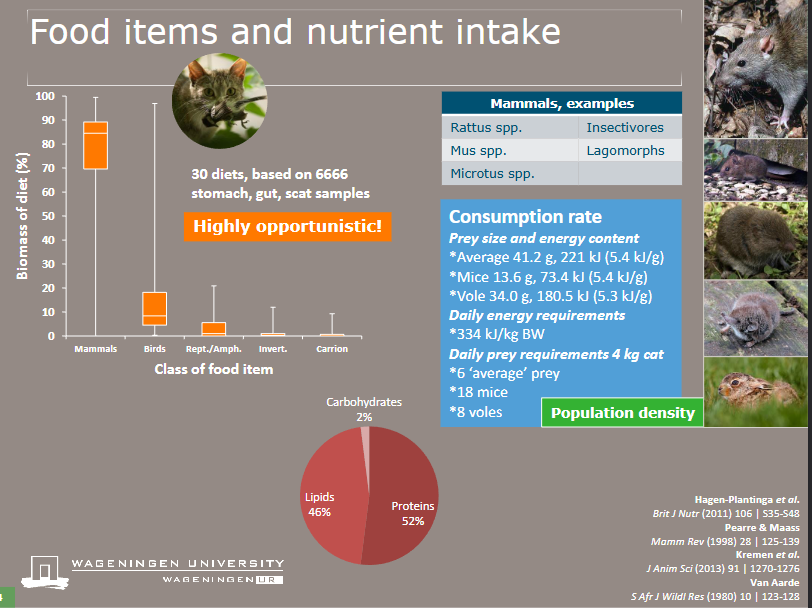
<p>Rattus spp, mus spp. microtus spp, insectivores, lagomorphs</p><p>Are highly opportunistic</p>
2
New cards

Faunivores consist of

insectivores, carnivores, piscivores and omnivores

mammals

3
New cards

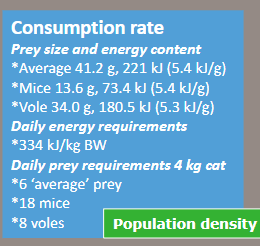
Consumption rate of cats

<p></p>
4
New cards

Food items and intake - dogs

ungulates , vegetation
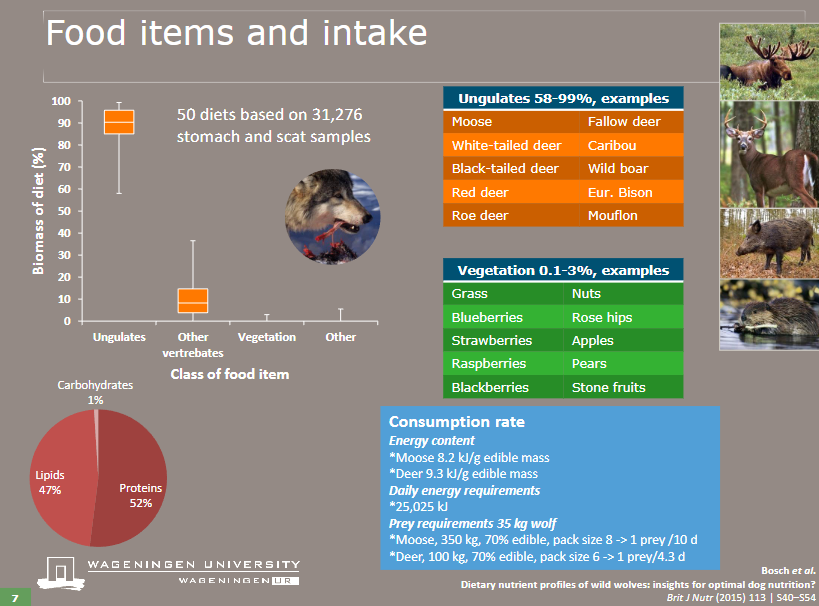
<p>ungulates , vegetation</p>
5
New cards

Consumed vegetation - wolves

Feeding ecology: wolves usually separate the rumen from the carcass and do not consume rumen contents

Wolves occasionaly eat grass and fruit (mainly berries)

6
New cards

Smell and taste

On the hunt: wolves rely more on smell, cats more on hearing

HACCP in dogs and cats: taste freshness of prey

  • protein/amino aicids, nucleotides, ATP/ADP/AMP

Limited ability to taste NaCl → natural sodium content of the prey they consume

Cats lack a functioning Tas1r2 receptor and cannot taste sweet stimuli

Cats have a relative ratio of 13, dogs 150 and human 1 for smell

Cats have less taste buds than dog, dog less than human
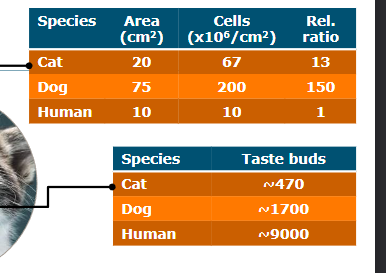
<p>On the hunt: wolves rely more on smell, cats more on hearing</p><p>HACCP in dogs and cats: taste freshness of prey</p><ul><li><p>protein/amino aicids, nucleotides, ATP/ADP/AMP</p></li></ul><p>Limited ability to taste NaCl → natural sodium content of the prey they consume</p><p>Cats lack a functioning Tas1r2 receptor and cannot taste sweet stimuli</p><p>Cats have a relative ratio of 13, dogs 150 and human 1 for smell</p><p>Cats have less taste buds than dog, dog less than human</p>
7
New cards

Dental formula

Biggest difference in the molars

cats have 1 molar (no need to grind), dogs have 2 in the uppar and 3 in the lower jaw, compared to horses and humans (dietary influenced)
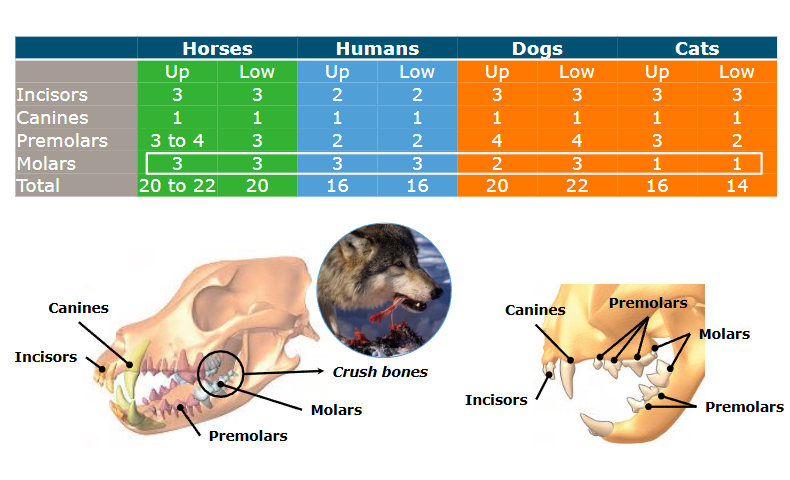
<p>Biggest difference in the molars</p><p>cats have 1 molar (no need to grind), dogs have 2 in the uppar and 3 in the lower jaw, compared to horses and humans (dietary influenced)</p>
8
New cards

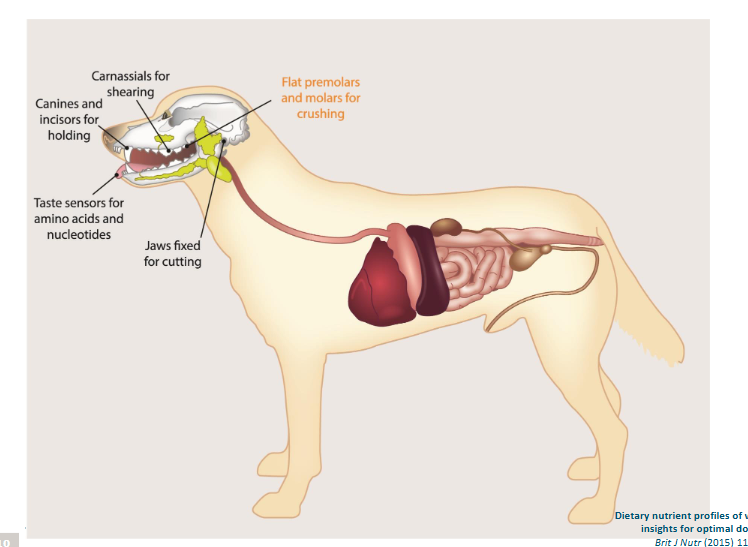
Digestive system in dogs - mouth region
knowt flashcard image
9
New cards

Meal size of cats and wolves

Cats - multiple prey per day, consists of meals around 1% of BW

Wolves - 1 prey per mutiple days - meals up to 22% of BW, expansion of gastric fundus and cardiac regions, feeding prey to pups, caching prey parts, well-developed vomiting centre

10
New cards

Digestive system

Short and simple

<p>Short and simple</p>
11
New cards

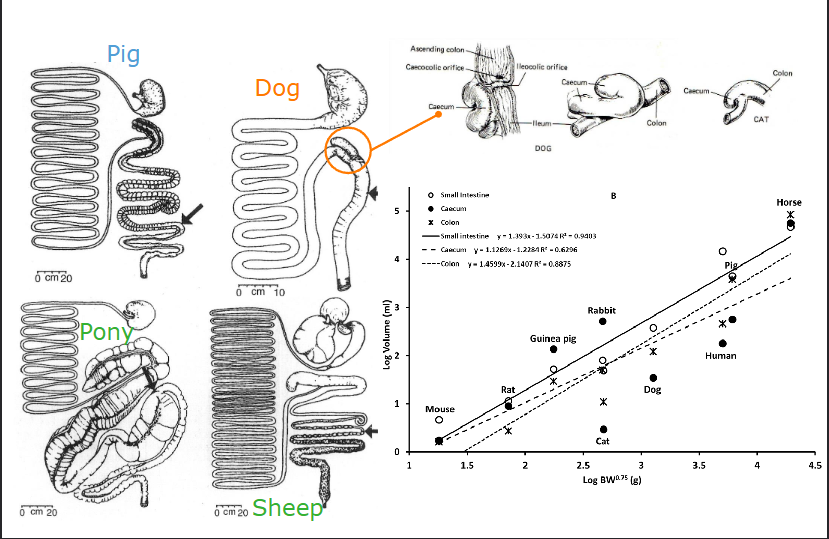
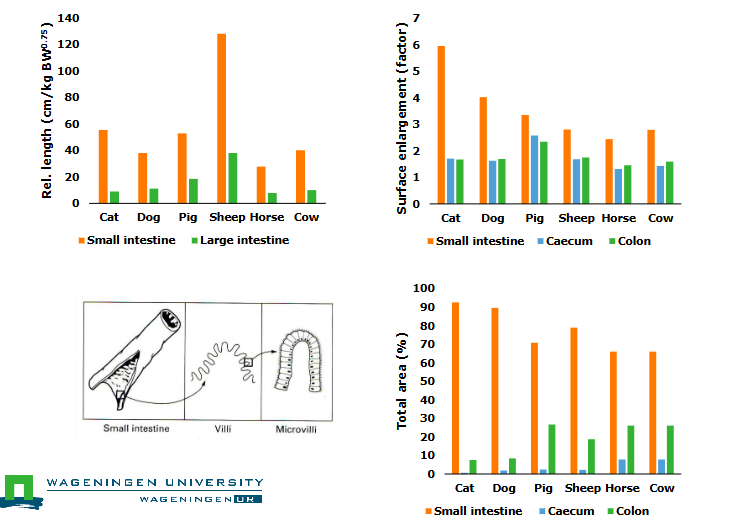
Digestive system - surface enlargements

Relative length

  • cat and dog, small intesitne higher than large intestine (for all animals), SI slightly longer compared to dogs

Surface enlargement

  • CAT SI largest, caecum and colon similar (less compared to the other animals)

  • dog SI surface enlargenemtn, caecum less than colon

Total area %

  • cat, SI large, very small caecum, small colon

    • dog, Si large, caecum still small, but more than cat, colon small
<p>Relative length </p><ul><li><p>cat and dog, small intesitne higher than large intestine (for all animals), SI slightly longer compared to dogs</p></li></ul><p>Surface enlargement</p><ul><li><p>CAT SI largest, caecum and colon similar (less compared to the other animals)</p></li><li><p>dog SI surface enlargenemtn, caecum less than colon</p></li></ul><p>Total area %</p><ul><li><p>cat, SI large, very small caecum, small colon</p><ul><li><p>dog, Si large, caecum still small, but more than cat, colon small</p></li></ul></li></ul><p></p>
12
New cards

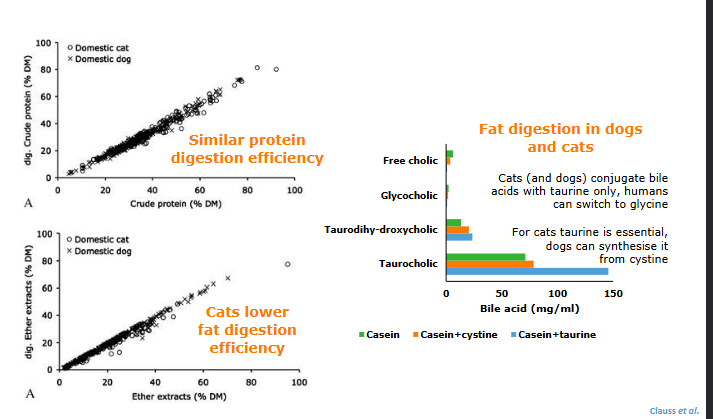
Digestive capacities

Similar protein digestion efficiency

Cats have a lower fat digestion efficiency

Fat digestion in dogs and cats

  • Cats and dogs conjugate bile acids with taurine only; humans can switch to glycine

  • For cats, taurine is essential, dogs can synthesise it from cystine

Dogs and cats lack salivary amylase
Amylase activity (U/g ww) Reference
Pancreas Small intestine
Cat 70 20-50 Kienzle, 1988
Dog 3000 50-600 Kamphues, 1987
Wean piglet 3500 400-600 Kienzle, 1987
Horse 350 10-40 Radicke, 1990
Sheep 1100 2 Kienzle, 1987
<p>Similar protein digestion efficiency</p><p>Cats have a lower fat digestion efficiency</p><p>Fat digestion in dogs and cats</p><ul><li><p>Cats and dogs conjugate bile acids with taurine only; humans can switch to glycine</p></li><li><p>For cats, taurine is essential, dogs can synthesise it from cystine</p></li></ul><p>Dogs and cats lack salivary amylase<span style="color: rgb(255, 255, 255);"><span><br></span><span>Amylase activity (U/g ww) Reference</span><span><br></span><span>Pancreas Small intestine</span><span><br></span><span>Cat 70 20-50 Kienzle, 1988</span><span><br></span><span>Dog 3000 50-600 Kamphues, 1987</span><span><br></span><span>Wean piglet 3500 400-600 Kienzle, 1987</span><span><br></span><span>Horse 350 10-40 Radicke, 1990</span><span><br></span><span>Sheep 1100 2 Kienzle, 1987</span></span></p><p></p>
13
New cards

Dietary changes throughout domestication

Paleolithic era (40.000 BP)

  • wolves and cats were hunting

Neolithic era (15.000 BP )

  • wolves followed humans - domestication

    • cats

14
New cards

Genetic changes related to domestic diets - wolves

AMY2B - amylase

MGAM - maltase-glucoamylase

SGLT1 - Na+/glucose cotransporter

Increased starch digestion and glucose uptake capacity

15
New cards

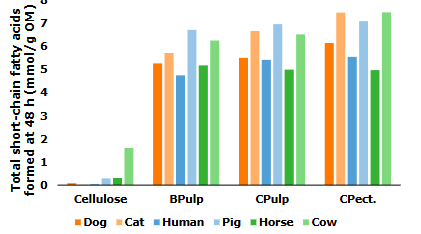
Fermentative capacity

Carnivores have distinct microbiota

Micorbiato activity varies somewhat

Large intestinal transit time varies considerably

  • cats 12-36 h, dogs 9-40 h , horses 96-129 h

    • impacts extent of fibre fermentation

<p>Carnivores have distinct microbiota</p><p>Micorbiato activity varies somewhat</p><p>Large intestinal transit time varies considerably</p><ul><li><p>cats 12-36 h, dogs 9-40 h , horses 96-129 h</p><ul><li><p>impacts extent of fibre fermentation</p></li></ul></li></ul><p></p>
16
New cards

Digestive system in dogs

knowt flashcard image
17
New cards

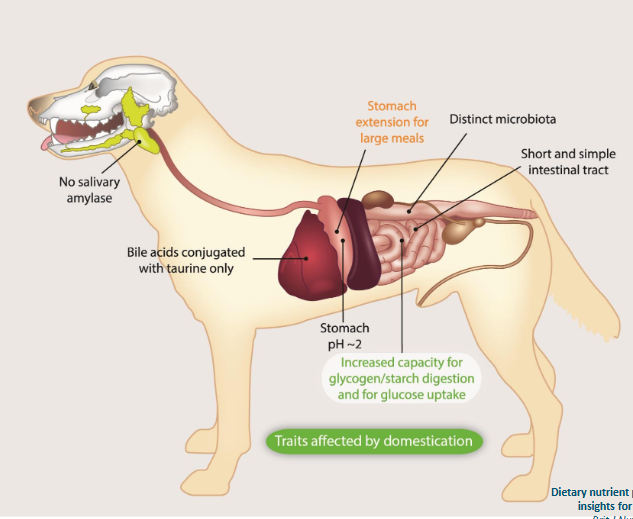
overview digestive system dogs and cats

Taste sensors for amino acids and nucleotides

Canines and incisors for holding

Carnassials for shearing

Jaws fixed for cutting

dog only: flat premolars and molars for crushing

no salivary amylase

bile acids conjugated with taurine only

stomach ph-2

dogs only: stomach extension for large meals

increased capcity for glycogen/starch digestion and for glucose uptake (domestication)

distinct microbiota

short and simple intestinal tract

Explore top notes

note
APUSH Unit 1
Updated 1393d ago
0.0(0)
note
3 | Electron Configuration
Updated 981d ago
0.0(0)
note
Prepositions (copy)
Updated 142d ago
0.0(0)
note
Civil Rights Movement
Updated 291d ago
0.0(0)
note
Advance Directives
Updated 1375d ago
0.0(0)
note
APUSH Unit 1
Updated 1393d ago
0.0(0)
note
3 | Electron Configuration
Updated 981d ago
0.0(0)
note
Prepositions (copy)
Updated 142d ago
0.0(0)
note
Civil Rights Movement
Updated 291d ago
0.0(0)
note
Advance Directives
Updated 1375d ago
0.0(0)

Explore top flashcards

flashcards
Bio Cell Organelle Test
84
Updated 1195d ago
0.0(0)
flashcards
K4 Wörterliste A
36
Updated 337d ago
0.0(0)
flashcards
AIS Chapter 2
62
Updated 514d ago
0.0(0)
flashcards
Range of motion
23
Updated 626d ago
0.0(0)
flashcards
QMB 3200 Final Part A: Symbols
42
Updated 1178d ago
0.0(0)
flashcards
Bio Cell Organelle Test
84
Updated 1195d ago
0.0(0)
flashcards
K4 Wörterliste A
36
Updated 337d ago
0.0(0)
flashcards
AIS Chapter 2
62
Updated 514d ago
0.0(0)
flashcards
Range of motion
23
Updated 626d ago
0.0(0)
flashcards
QMB 3200 Final Part A: Symbols
42
Updated 1178d ago
0.0(0)