neuronal transmission
 Call Kai
 Learn
Learn Practice Test
 Spaced Repetition
 Match
Match Flashcards
 Knowt Play
1/73

Earn XP
Description and Tags
lecture 3 & 4
Name | Mastery | Learn | Test | Matching | Spaced | Call with Kai |
|---|
No analytics yet
Send a link to your students to track their progress
74 Terms
CNS
brain and spinal cord
PNS
all other nerves
sensory neurons
info from the body
interneurons
link sensory and motor neurons
motor neurons
info to the body
neurons
do all info processing and transmitting
different types, shapes, sizes - specialised
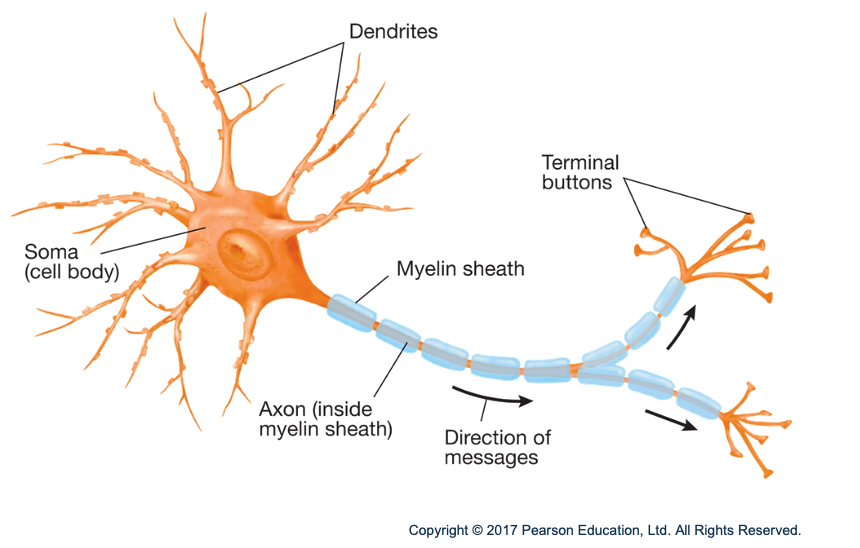
soma (cell body)
contains nucleus
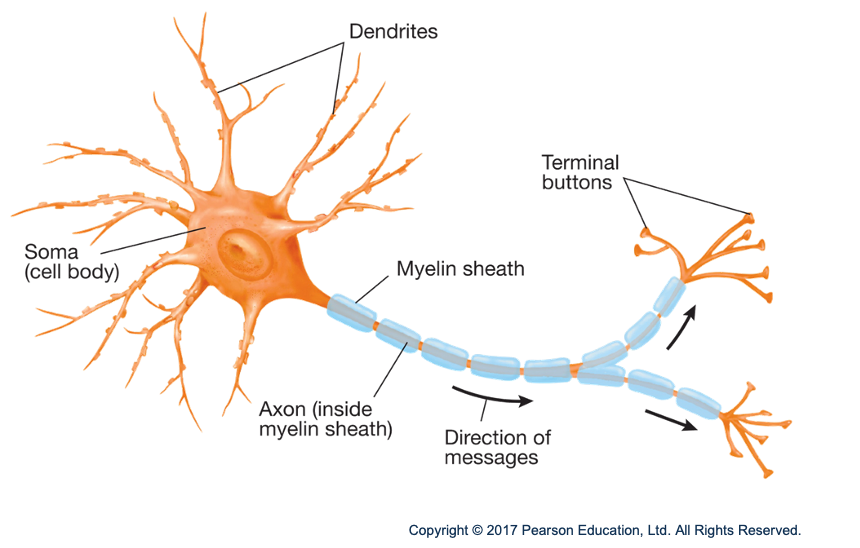
dendrites
receives messages from other neurons
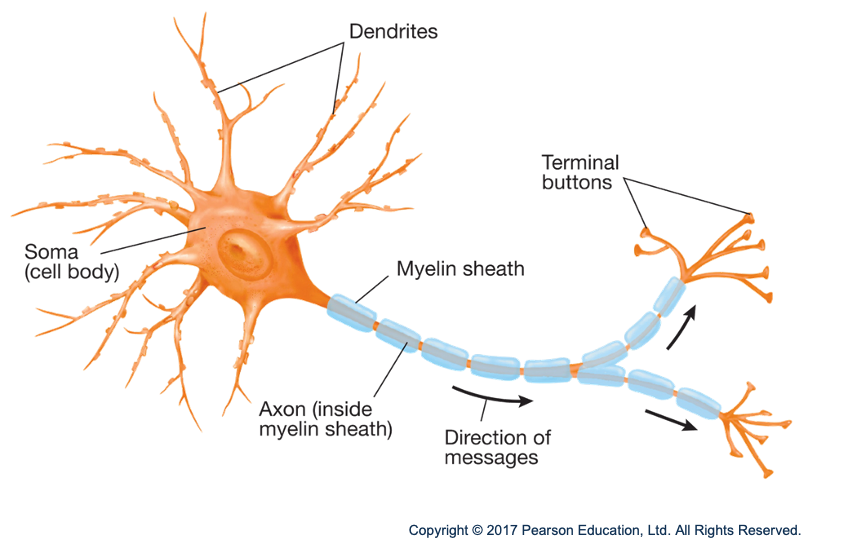
axon
carries info (action potential) from soma to terminal buttons
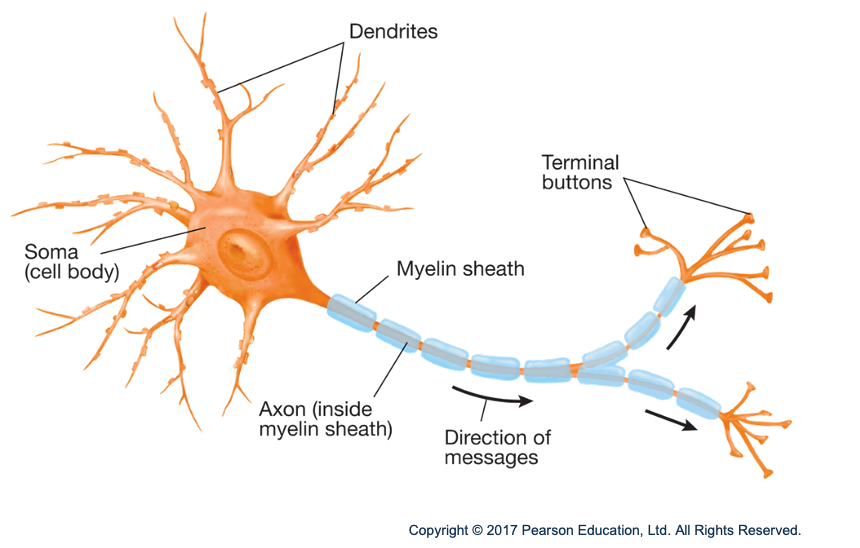
myelin sheath
wraps around axon (insulation)
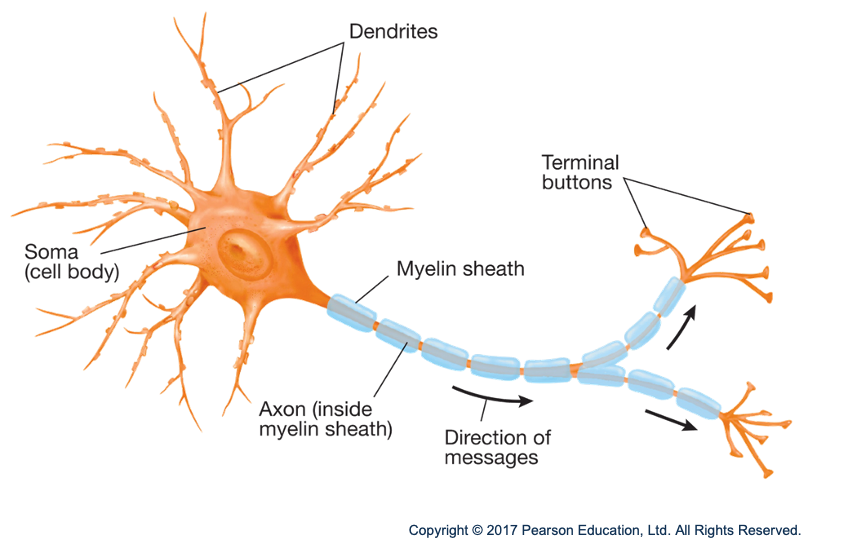
terminal buttons
end of axon branches
glial cells (glia)
astrocytes
oligodendrocytes
microglia
astrocytes
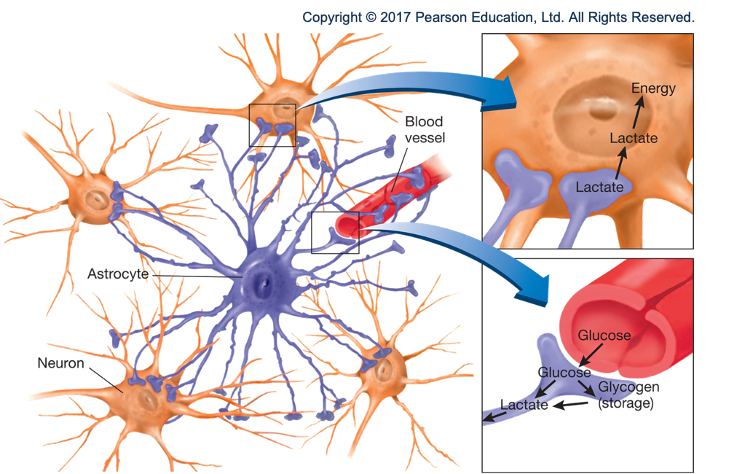
structural support - holds neurons in place
provides nutrients - receive glucose from capillaries, turns it into lactate which goes into neurons
oligodendrocytes
produce myelin sheath (similar to schwan cells)
microglia
smallest
clear dead/dying neurons
get rid of unwanted cells and repairs damaged cells
node of ranvier
naked axon
tranmission within neurons
electrical process - movement of ions across cell membrane
cells electrical charge
more negative on inside than outside - results in resting potential (store of energy)
neurons can reverse their electrical charge
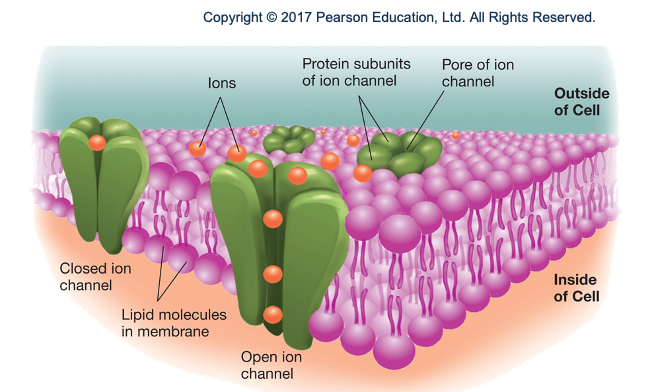
cell membrane
all cells covered in a membrane
two layers of phospholipid molecules
phospholipid molecules
head of molecule is phosphate (hydrophilic, - attracted to each other and water, point outwards), tail is fatty acid (hydrophobic - points inwards and toward each other)
ion channels (green) let in ions from outside of cell vice versa
ions
cations = positively charged
anions = negatively charged
intercellular fluid (inside neuron) contains K+ and anions (A-)
extracellular fluid (outside neuron) contains sodium (Na+) and chloride (Cl-)
brains floating in sea water
membrane potential
difference in electrical potential inside and outside of the cell
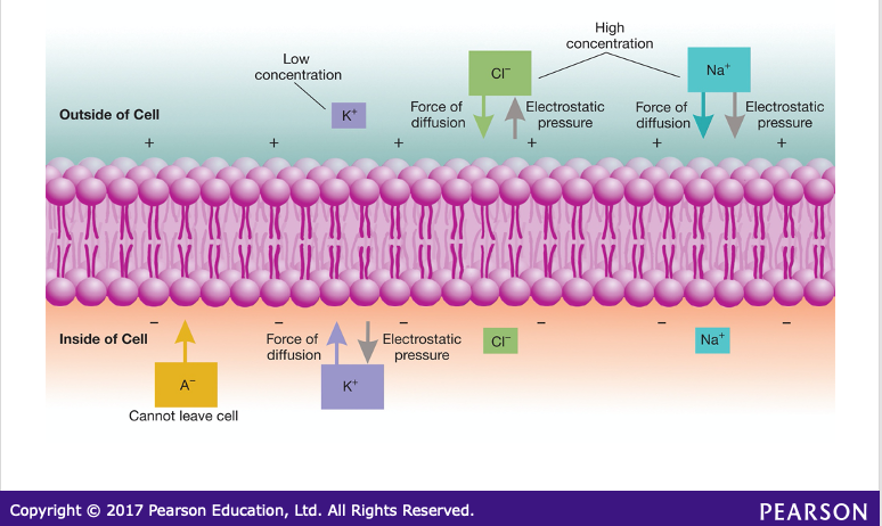
balanced by diffusion (molecules - high to low conc) + electrostatic pressure (attraction or repulsion of particles depending on their charge)
organic anions A-
concentrated inside the cell
cannot cross the membrane
potassium ions K+
concentrated inside the cell
through diffusion it wants to move out
electrostatic - attracted to the inside (-)
forces balance so they K+ stays put
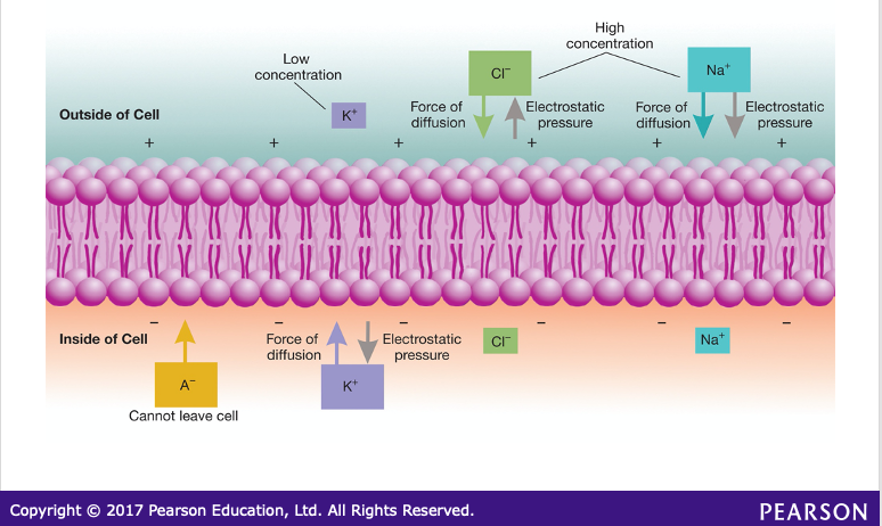
chloride ions Cl-
concentrated outside the cell
through diffusion they want to move in
electrostatic - repelled from negative inside
forces balance so Cl- stays put
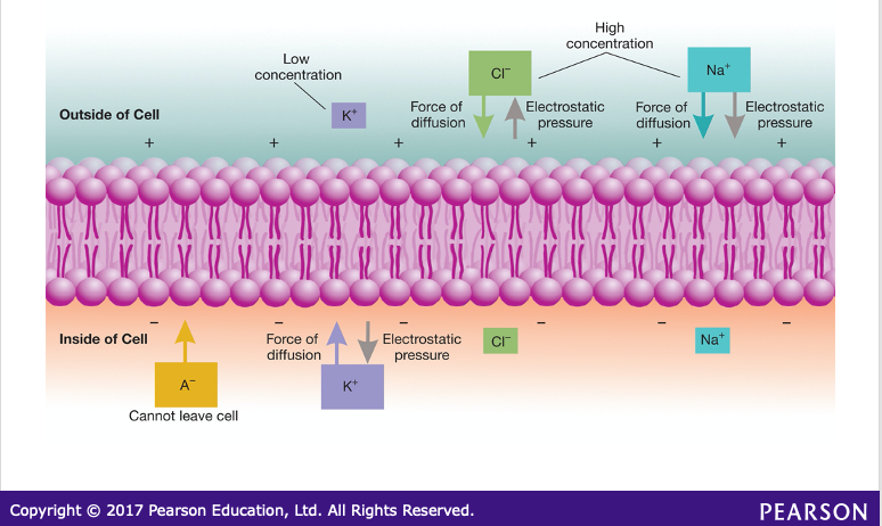
sodium ions Na+
more concentrated outside of the cell
through diffusion they want to move in
electrostatic - attracted to - inside
both force Na+ into cell
how are Na+ kept under control
sodium-potassium pumps - constantly pumps out 3x Na+ and pumps in 2 K+
what is the resting potential of a neuron
-70 mV
inside of cell
negative
outside of cell
positive
why is it important to maintain resting potential
so neuron can respond rapidly to a stimulus
action potential
rapid change/reversal in the membrane potential
electrical impulse that travels down the soma to terminal buttons and tells them to release a neurotransmitter
negative - positive - negative
all on none (fires or doesn't fire)
size of AP stays same throughout the axon to the terminal buttons
depolarisation
decrease from normal resting potential (brings membrane closer to 0 - more positive)
hyperpolarisation
increases relative to resting potential (more negative)
neuronal transmission process (across cells in membrane)
Na+ channels open, Na+ enters cell (only when threshold)
K+ channels open, K+ leaves cell
Na+ channels become refractory (no more Na+ enters, can’t open for a while)
K+ continues leaving cell, causing membrane potential to return to resting level
K+ channels close, Na+ channels reset
Extra K+ outside diffuses away
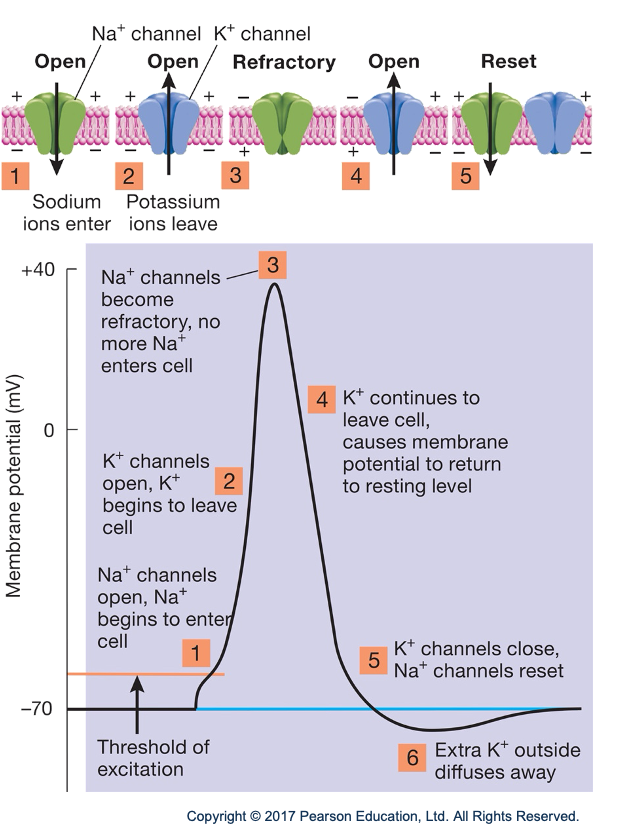
what is the threshold of excitation
-50mV
what is the highest point of depolarisation
+40mV
propagation
action potential is transmitted via propagation - regenerated at points along the axon due to entry of Na+ at the neighbouring point
1 channel opens, so neighbouring ones do, but this only goes 1 way until they become refractory (like a chain of dominos)
saltatory conduction
myelin sheath
action potential regenerated along the axon at nodes of ranvier (points between myelin sheath)
saltatory conduction benefits
fast conduction
more energy efficient - pumps use energy (but they’re only at nodes of ranvier)
transmission between neurons
neurons send messages via synaptic transmission
neurotransmitters are released from 1 neuron and attach to another, initiating a reaction resulting in postsynaptic potentials
1 neuron connects to…
15,000 other neurons
synapse
junction between 2 neurons (terminal buttons of N1 and membrane of dendrites on N2)
2 membranes
presynaptic membrane
postsynaptic membrane
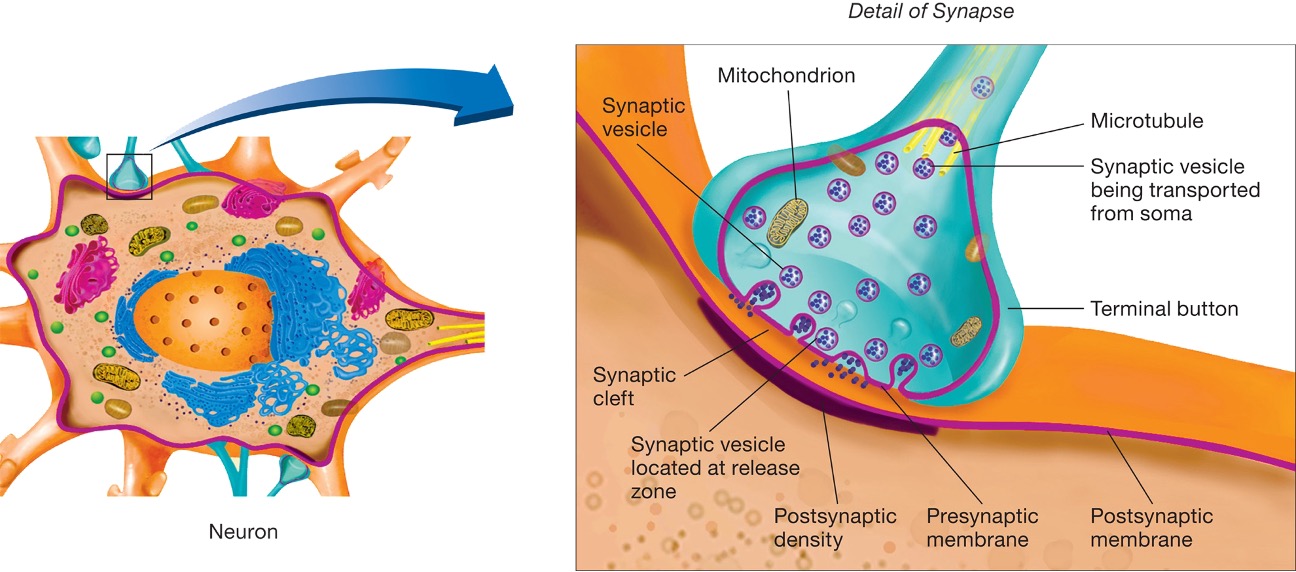
synaptic vesicles
contain neurotransmitters
some made in soma and sent down, some made in terminal buttons through recycling
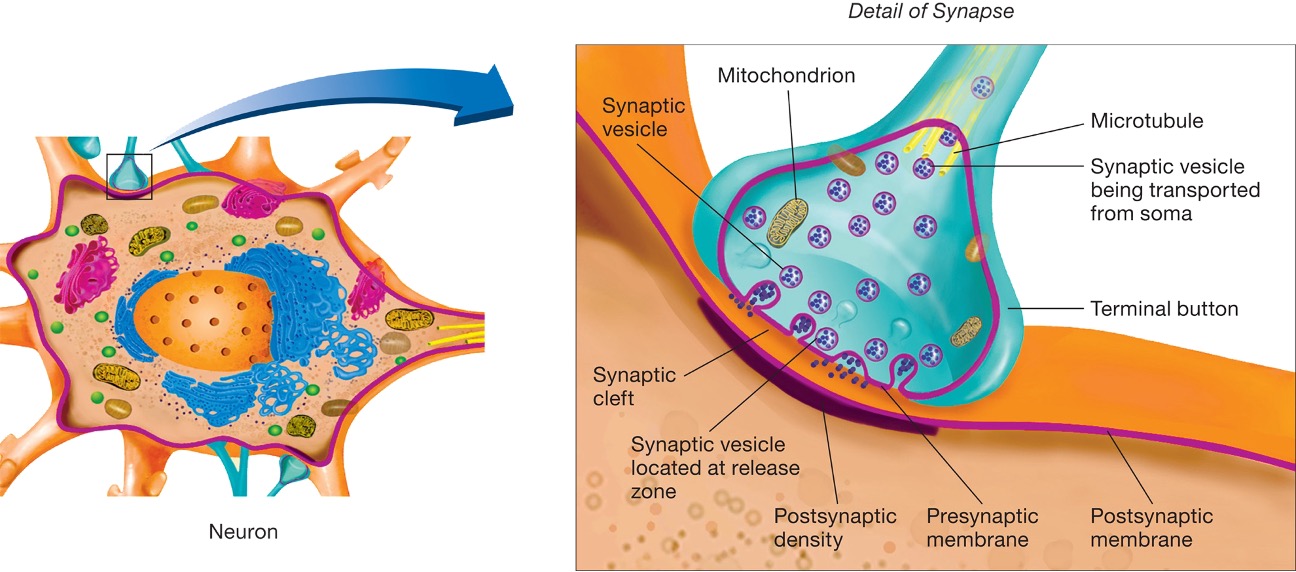
how wide is the synaptic gap
20nm
astrocytes at synapse
help clearance of neurotransmitters
take away excess glutamate
monitor and alter function at the synapse
synaptic transmission
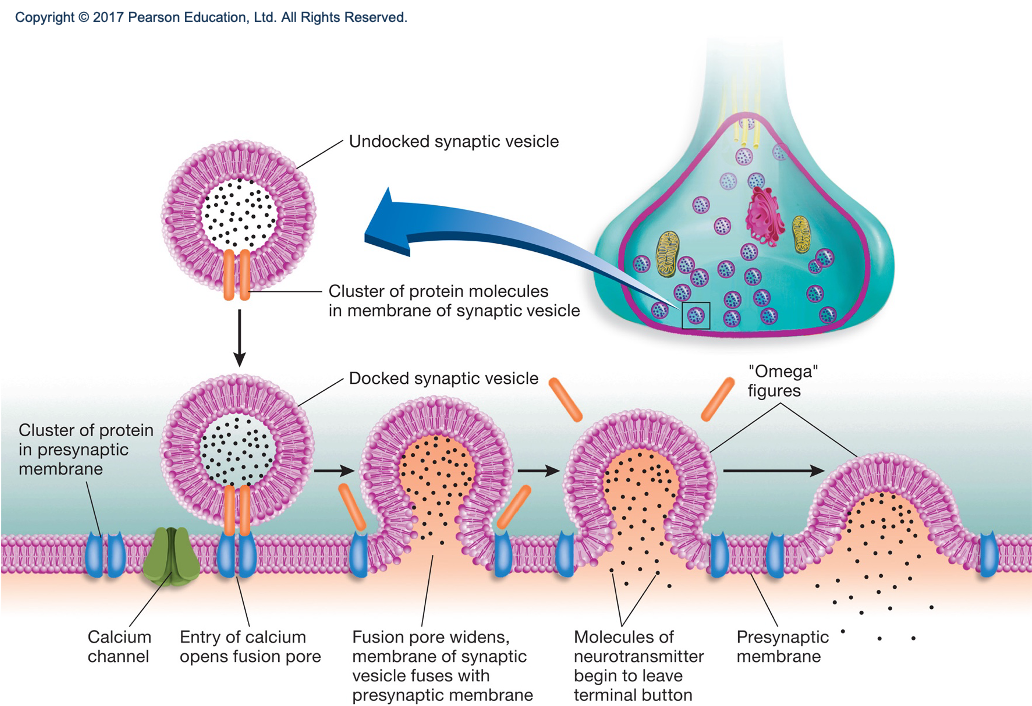
action potential passes down
Ca channel opens; Ca2+ (more concentrated outside neuron and want to enter) enters
vesicles fuse with membrane. pore opens (omega figures)
release of neurotransmitter (exocytosis)
NT diffuses, binds to post-synaptic membrane
post-synaptic ion channels open
ions flow in or out = excitatory of inhibitory post synaptic potentials
what does the neurotransmitter do on the post synapse membrane
NT alters membrane potential of post-synaptic membrane - inhibitory or excitatory
how is binding like a lock and key
NT attaches to a specific binding site of receptor on post synaptic membrane, which opens an ion channel
PSP depends on which ion channel is opened (changes which ions move in and out)
EPSP
excitatory postsynaptic potentials
(increases chance of AP produced)
IPSP
inhibitory postsynaptic potentials
(decreases chance of AP produced)
what happens if Na+ channel opens
Na+ enters, causing depolarisation (EPSP)
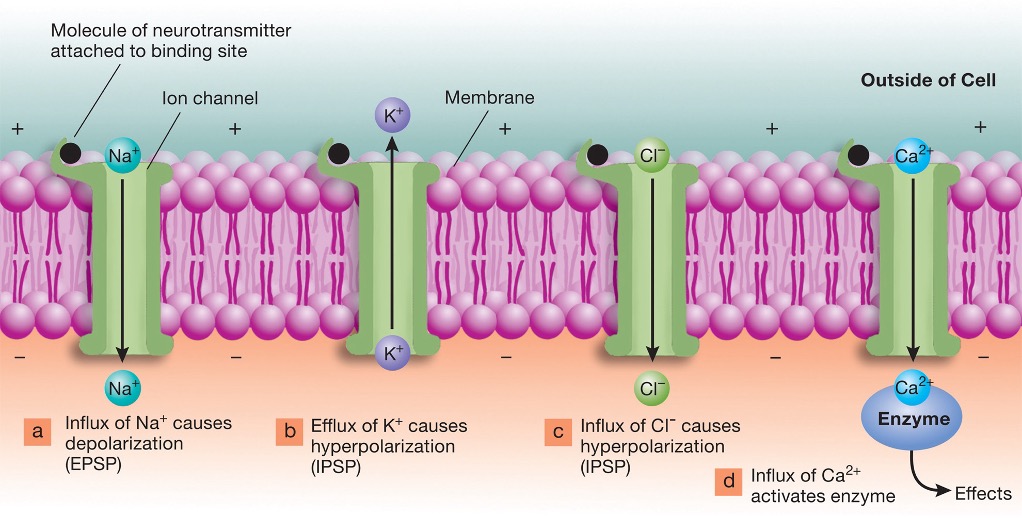
what happens if K+ channel opens
K+ leaves, causing hyperpolarization (IPSP)
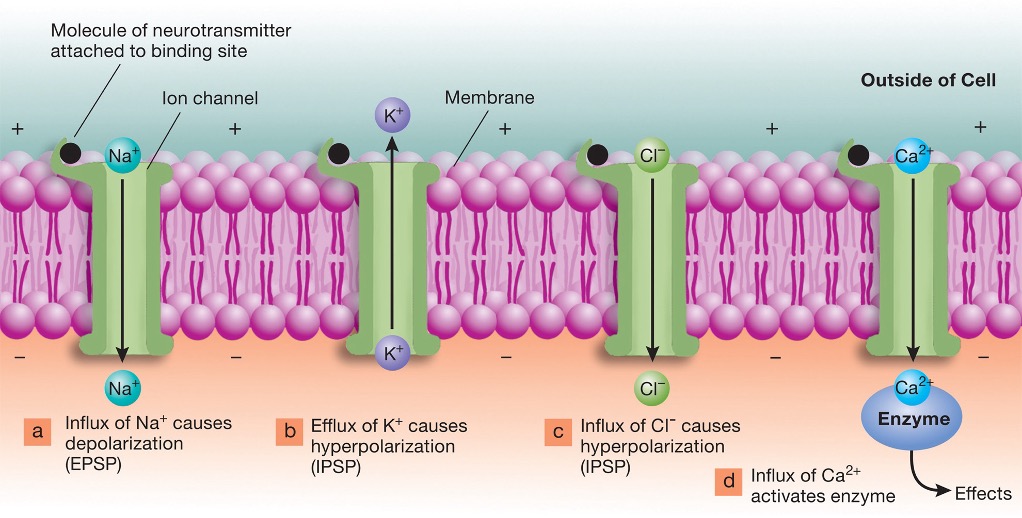
what happens if Cl- channel opens
Cl- enters, causing hyperpolarization (IPSP)
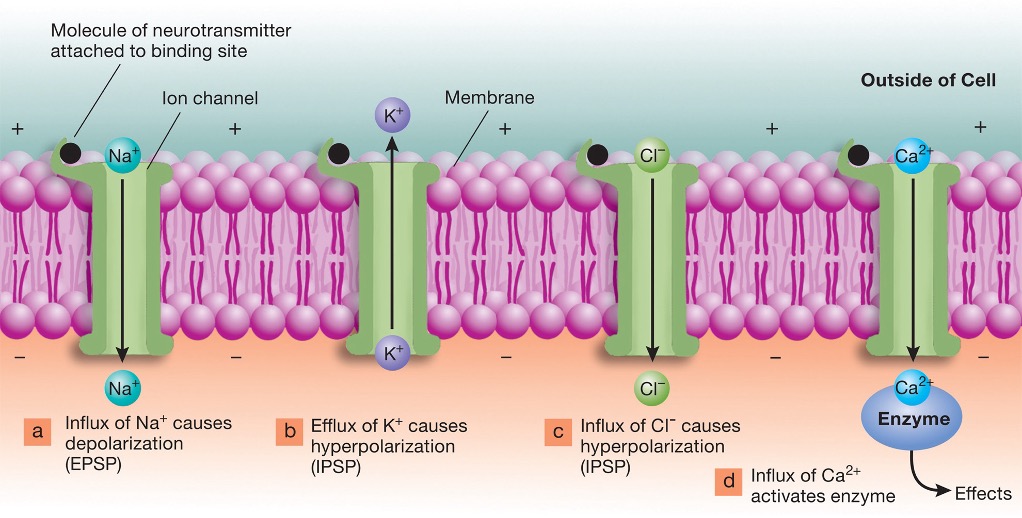
what happens if Ca2+ channel opens
Ca2+ enters, which activates the enzyme
2 types of receptors
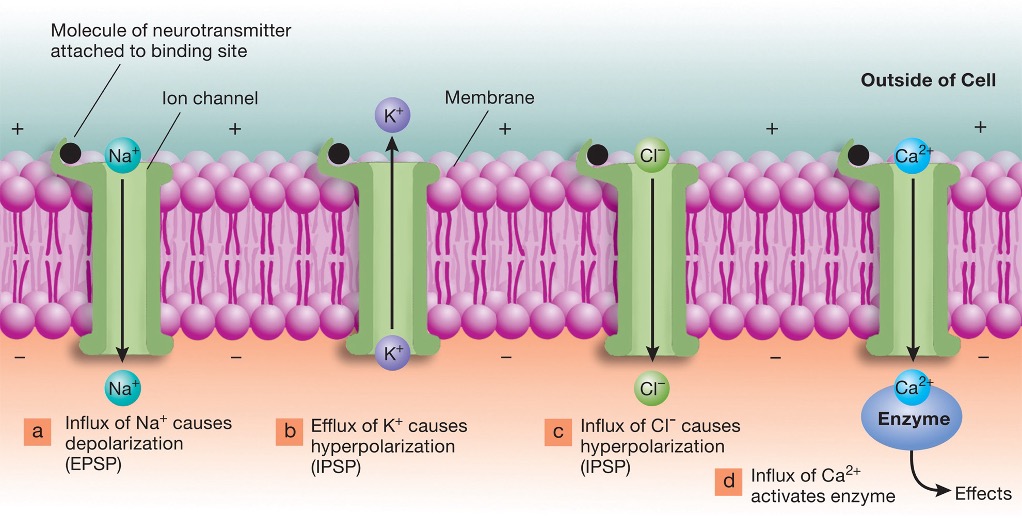
inotropic receptors
metabotropic receptor
ionotropic receptor
contains a binding site and an ion channel
NT attaches to binding site which opens the channel
direct way
metabotropic receptor
contains a binding site, but not a direct channel next to them to open
NT attaches to binding site, which initiates a chain reaction that eventually opens ion channels
requires energy
PSPs slower than ionotropic
indirect way
what is termination
remove excess neurotransmitters so we can have future release and binding
methods of termination
reuptake
enzyme deactivation/degradation
(may be a combo of both)
astrocytes may uptake excess glutamine
reuptake
transmitter is taken back by presynaptic terminal via transporter molecules
enzyme deactivation/degradation
transmitter broken down by an enzyme eg acetylcholinesterase breaks down ach into chlorine and acetic acid
integration
summation of PSPs (excitatory and/or inhibitory) in control of neuron firing, so the neuron can decide whether to fire
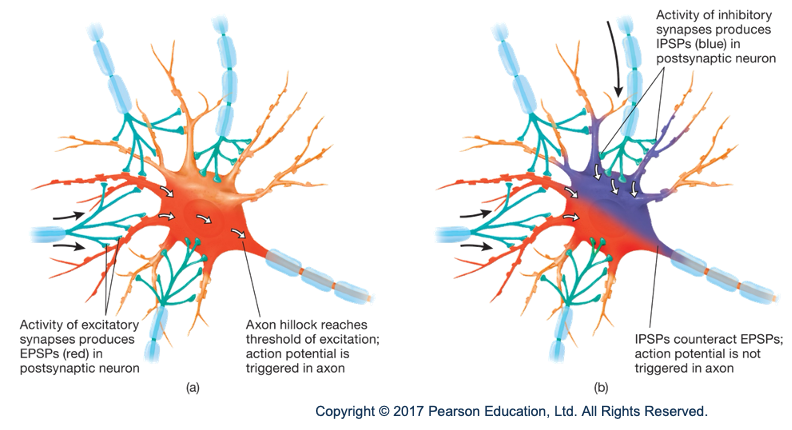
do inhibitory PSPs always inhibit behaviour?
NO
inhibition of inhibitory neurons = more likelihood of behaviour
excitation of inhibitory neurons = less likelihood of behaviour
inhibitory behaviour eg getting up and walking around in your sleep
GABA
most abundant inhibitory neurotransmitter in CNS (reduces chance of neuronal firing)
learning chemical
inhibiting too much can lead to seizures
glutamate
most abundant excitatory neurotransmitter in CNS
can bind to number of receptors
learning and memory
too much excitation leads to strokes and brain trauma
acetylcholine (ACh)
found in CNS and PNS, specifically at neuromuscular junctions
signals passed from neurons into the muscle fiber (muscular contraction)
also direct attention and neuroplasticity
dopamine
pleasure chemical
motor control
reward, decision making, memory, attention
plays role in Parkinson's, addiction, sz
seretonin
calming chemical
mood regulation, eating, sleep, decision-making
lack = depression
antagonist
drug that blocks a neurotransmitter
antagonist eg
botulinum toxin (botox) blocks release of acetylcholine and prevents muscle contraction (paralyses muscles)
agonist
drug that mimics a neurotransmitter and enhances synapse function
agonist eg
muscarine (naturally in mushrooms) - imitates acetylcholine

