art 1 - giotto and leonardo test
 Studied by 4 people
 Call with Kai
 Learn
Learn Practice Test
 Spaced Repetition
 Match
Match Flashcards
 Knowt Play
1/47

There's no tags or description
Looks like no tags are added yet.
Name | Mastery | Learn | Test | Matching | Spaced | Call with Kai |
|---|
No study sessions yet.
48 Terms
How did the Guild System train artists to learn their craft during the Renaissance period?
What 3 steps did an artist have to take? Briefly explain what they did in each step.
The guild system was in place for craftsmen and merchants to learn a trade and perform at a high standard. The first step was with a master craftsman who opened his own business or workshop. He could then either hire workers to help him produce things (much like a small factory.) He could also choose to build/make everything himself, which resulted in fewer but more unique pieces. If a young boy wanted to become a master of a craft, he would become an apprentice at about 12. The boy would either have his parents pay the master up front, or he could repay him at the end of his apprenticeship. The training lasted for about 7 years, beginning with menial chores and building up by handling more and more responsibilities. The apprentice would live with the master’s family, and continue gradually learning the skills necessary. After his apprenticeship was over, he would become a journeyman. This meant that he would travel around, finding work where he could. As he stopped at workshops, the master painters there were obligated to give the journeyman either work there or money to continue his journey. Since the guild system had supported them as young men, they were obligated to help support the new journeymen. In order to become a master, a journeyman had to produce a work of art that was considered a “good piece of work” by the guild. This would become his masterpiece, and he would then be considered a master.
Leonardo was very deliberate in his design of the pictorial space in the Last Supper. Give three examples of how Leonardo used space and shape in his work. The Italian Renaissance was rich in symbolism. Give three examples of the symbolism in the gestures of Jesus and the apostles.
gave jesus a somewhat triangular shape to convey the holy trinity
made all lines converge on jesus to draw all the focus to him
made the space feel crowded and cozy
judas is grasping the bag of silver as jesus says this
jesus is reaching for the bread and wine
jesus and judas are dipping their hands in the same bowl of water
thomas is asking if this was god’s will
peter wants to defend jesus
Discuss the 3 phases of the Renaissance period. What 3 artists’ work serves as examples of the development of each of these phases? What did each artist contribute to this period in art?
early renaissance - he was basically its originator. He started the trend of restoring the art styles of the Greek and Roman times
fresco
gesso
storytelling
father of the renaissance
mid renaissance - masaccio
1-point perspective
scientific perspective
high renaissance - leonardo
more realistic art
sfumato
more vague symbolism
proper proportions
chiaroscuro
who was Giotto’s teacher/master?
Cimabue
what time period of art was Cimabue part of?
late Byzantine/Gothic
when was the Gothic period?
before the Renaissance
what is Giotto considered?
the father of the Italian Renaissance
what was Giotto known for?
being a storyteller
being a family man
being a good businessman
what was Giotto inspired by?
classical Greek and Roman murals
what did Masaccio’s work display?
a great deal of light and form creating more depth in his work compared to Giotto
who was one of the first use the idea of scientific perspective in his paintings?
Masaccio
when did the Renaissance take place?
approximately 1400 to 1600
what were the three phases of the Italian Renaissance?
early - Giotto
mid - Masaccio
high - Leonardo
what is a Renaissance?
rebirth/a renewed interest in Art/Literature/Science
how long did it take Leonardo to paint the Last Supper?
2 years
how long did it take to restore the Last Supper?
20 years
what happened with Leonardo’s experimentations with fresco while painting the Last Supper?
he failed; the paint started chipping during his lifetime
what was Leonardo’s intent in the Last Supper?
to capture the different emotions of Jesus’s disciples
what were some of the many things Leonardo was considered?
architect
inventor
sculptor
Master paint
what was Leonardo’s work considered?
it was considered mysterious
who was the model for the Mona Lisa?
Elisabetta Gioconda, the wife of a Flemish merchant
how long did Elisabetta Gioconda model for the Mona Lisa?
4 years
who was Leonardo an apprentice to?
Verrocchio
what does sfumato mean?
to create a misty background
softening lines
no outlines
creating the illusion of space
what does gesso mean?
gesso is used to prime a surface for painting
apprentices would lay down a coat of gesso to prepare the surface for paint
what does chiaroscuro mean?
chiaroscuro means modeling from light to dark to show form
what does fresco mean?
“fresh”
wet plaster
what does foreshortening mean?
to make a figure seem to come out toward the viewer
what does value mean
the lightness and darkness of a hue
is a mural the same as a tapestry?
no, tapestries originated from paintings on sails and are made of cloth. murals are solely wall paintings.
what did Leonardo do to obtain a true and perfect knowledge of the human figure?
he dissected human corpses and sketched from models
what are the steps of the Guild system?
what did an apprentice do?
what did a journeyman do?
what did a master do?
at about what age would an apprenticeship begin?
the age of 12
about how long could the training period for an apprenticeship last?
about 7 years
what purpose did the Guild system serve?
it served to set standards for the work done by craftsmen
what was Leonardo known for doing?
he was known for not finishing his commissioned work on time —> frustrated many of his patrons
he also had a lovable disposition, though
where is the Last Supper located?
in the room where monks would eat in the church of Santa Maria delle Graze in Milan, Italy
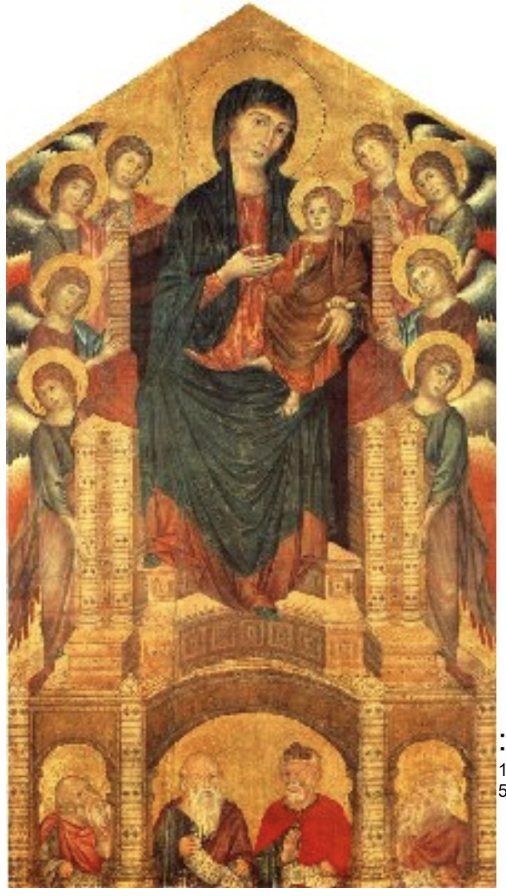
Cimabue’s Madonna Enthroned
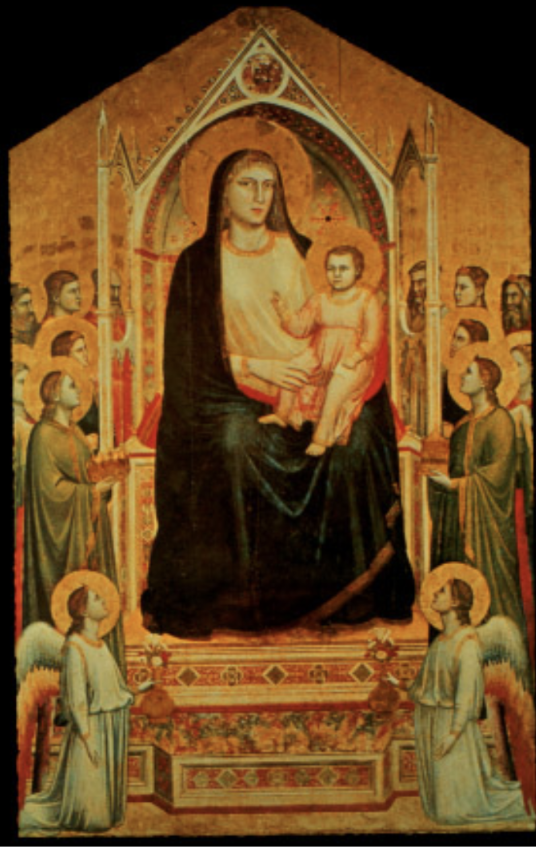
Giotto’s Madonna Enthroned
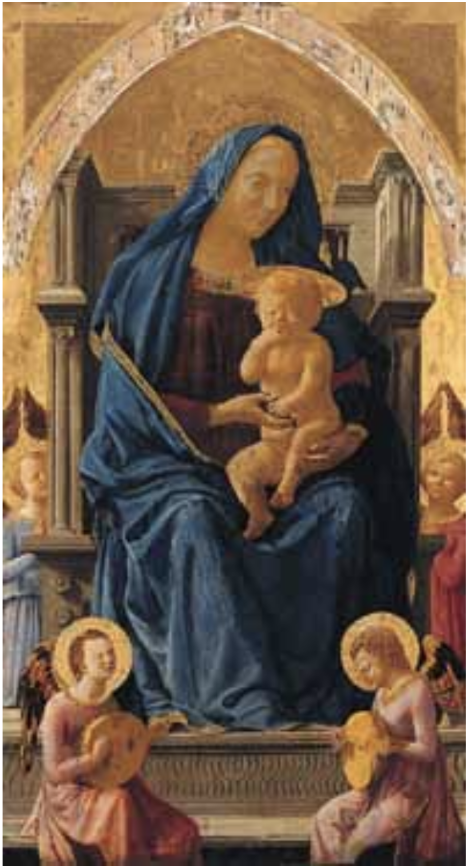
Massacio’s Madonna and Child
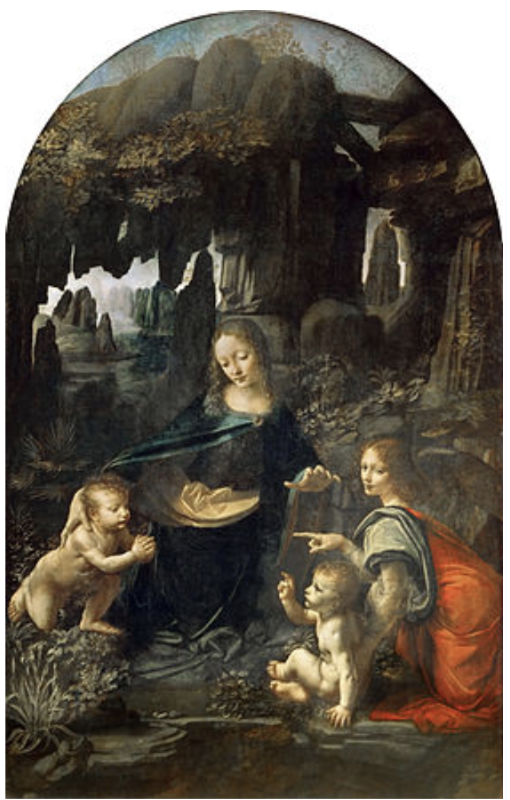
Leonardo’s Madonna of the Rocks
what is significant about the way Masaccio painted the Madonna?
he painted her in a blue veil (expensive, lapis lazuli)
the way he painted the folds of the rich cloak on Mary is an excellent example of chiaroscuro
what is common among ALL Renaissance work?
it’s all very symbolic
what’s important about lapis lazuli?
it’s a stone used to make paint
more expensive than gold, used to show royalty in paintings
what’s significant about the way Jesus gestures in the paintings we talkes about?
he gestures as a blessing
and with 2 fingers, which symbolizes the hypostatic union
 Note
Note  Flashcards (79)