Ch. 32 An Overview of Animal Diversity
 Call Kai
 Learn
Learn Practice Test
 Spaced Repetition
 Match
Match Flashcards
 Knowt Play
1/25

There's no tags or description
Looks like no tags are added yet.
Name | Mastery | Learn | Test | Matching | Spaced | Call with Kai |
|---|
No analytics yet
Send a link to your students to track their progress
26 Terms
Animals
Heterotrophs, ingest food, multicellular, cells supported by structural proteins
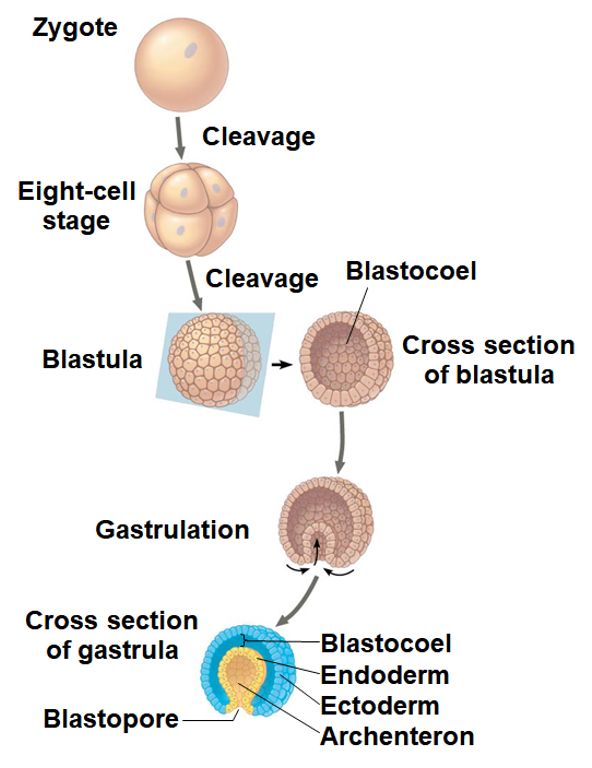
Cleavagelarva
After a sperm fertilizes an egg, the zygote undergoes rapid cell division and leads to multicellular, hollow blastula
then gastrulation to form gastrula
larva
sexually immature and morphologically distinct from the adult; it eventually undergoes metamorphosis to become juvenile (not sexually mature)
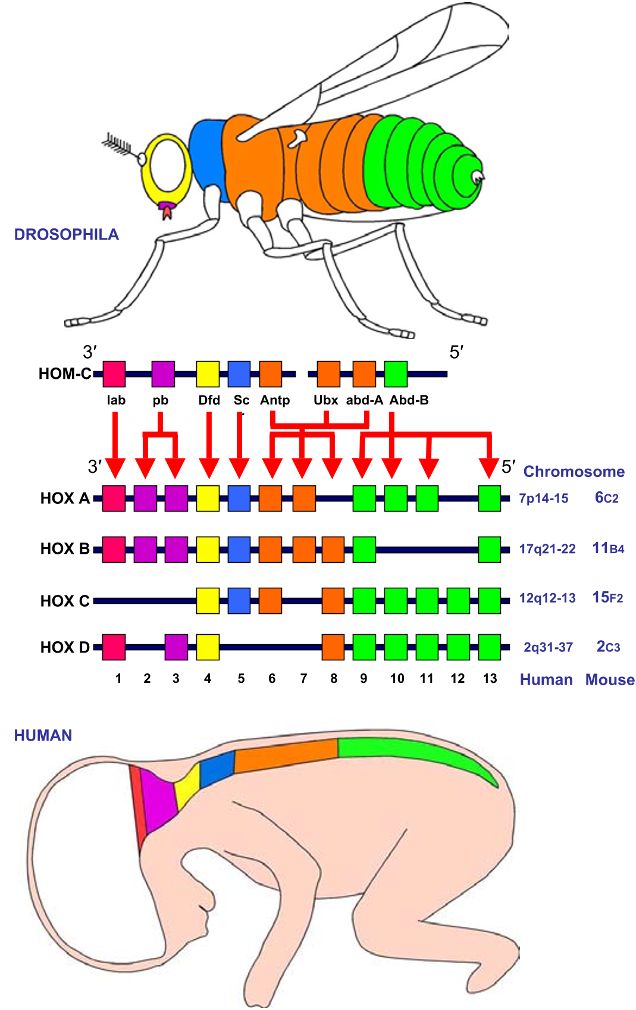
Hox genes
regulate the development of body form and can produce a wide range of animal morphology
History of Animals
~1.9 million living species
common ancestor resembled modern choanoflagellates + around 770 MYA
Multicellularity requires adhere + signal
Neoproterozoic Era (1 BYA - 541 MYA)
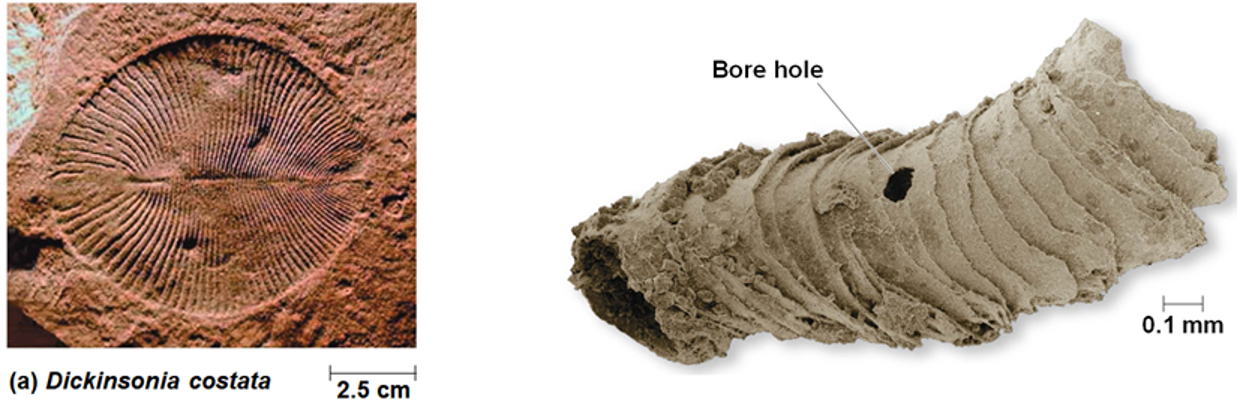
Early members of the animal fossil record include the Ediacaran biota (635-541 MYA)
fossils of embryos + predation found in rocks
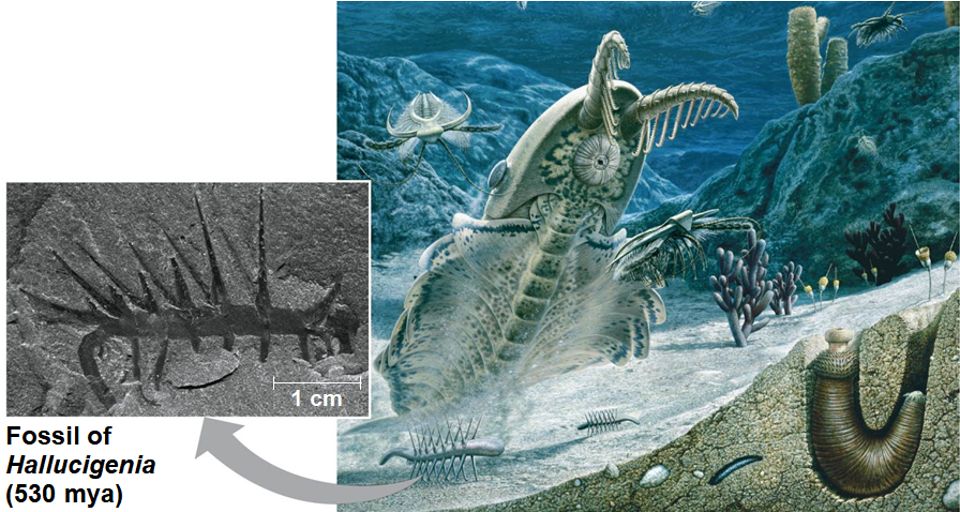
Paleozoic Era (541-252 MYA)
The Cambrian explosion (535–525 MYA) marks the earliest fossil (bilaterians) appearance of many major groups of living animals
Traits: bilateral sym, complete digest tract, one-way digest system
Causes of Cambrian explosion and Edicaran biota decline (3)
Animals on land (450 MYA)
Vertebrates on land (365 MYA)
New predator-prey relationships
A rise in atmospheric oxygen
The evolution of the Hox gene complex and addition of new microRNAs
Mesozoic Era (252-66 MYA)
Coral reefs emerged, plesiosaurs reptiles returned to water, dinos, first mammal emerged, flowering plants + insects diversified
Cenozoic Era (66 MYA - Present)
followed mass extinctions of both terrestrial and marine animals
mammals increase in size + exploited vacated ecological niches
global climate cooled
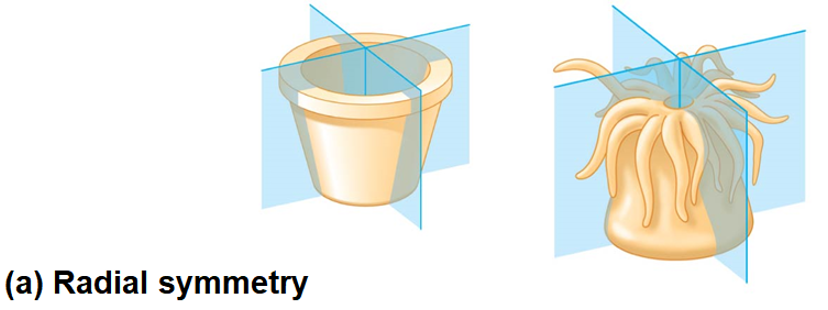
Radial Symmetry (Body Plan)
animals have a top and a bottom, but no front and back, or left and right
sessile or planktonic
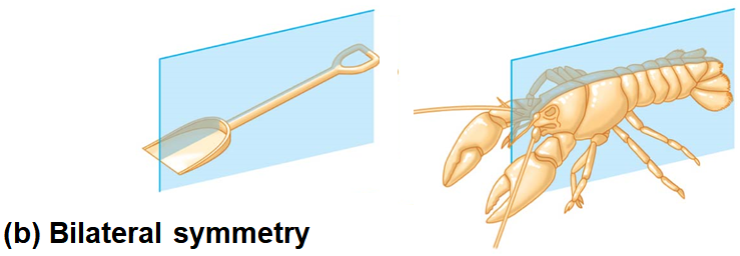
Bilateral Symmetry
animals have dorsal (top) and a ventral (bottom), right + left, anterior (front) and posterior (bottom)
active, CNS, brain
Tissues
collections of 3 germ layer, specialized cells isolated from other tissues by membranous layer
Ectoderm: cover embryo surface
Endoderm: innermost germ layer, lines archenteron (digestive tube)
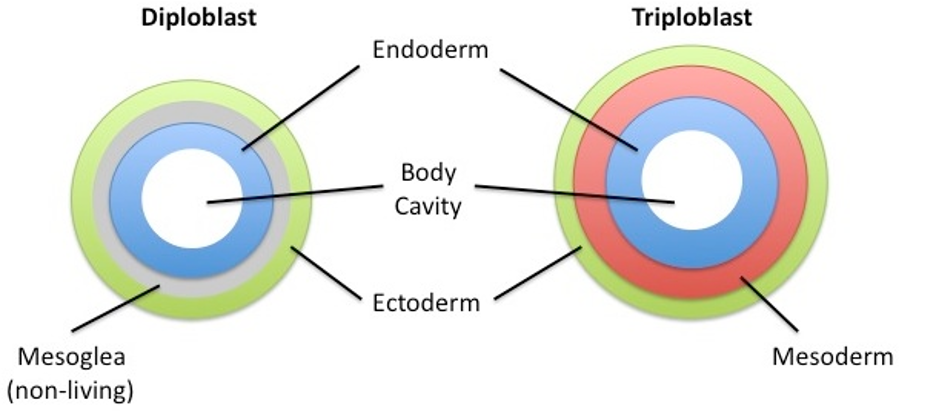
Diploblastic vs Triploblastic
sponge lacks true tissue
Dip: have only ectoderm + endoderm (onidarians)
Trip: also have mesoderm (bilateral symmetric)
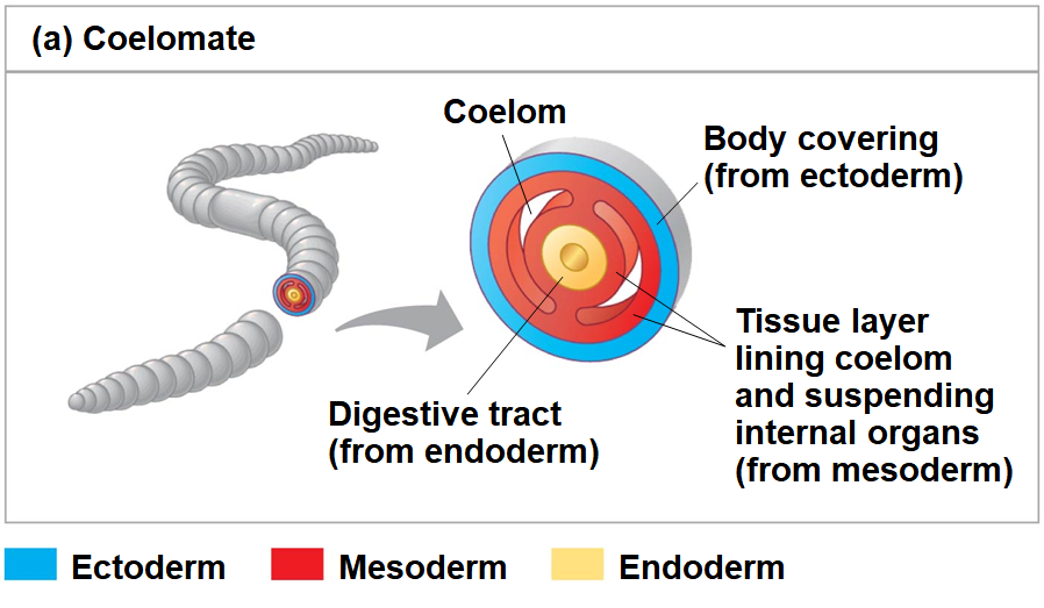
Coelom + functions (2)
True body cavity derived from mesoderm
Coelomates
fluid cushions suspended organs + acts like skeleton against muscles
enables organs to grow + move indep of outer body wall
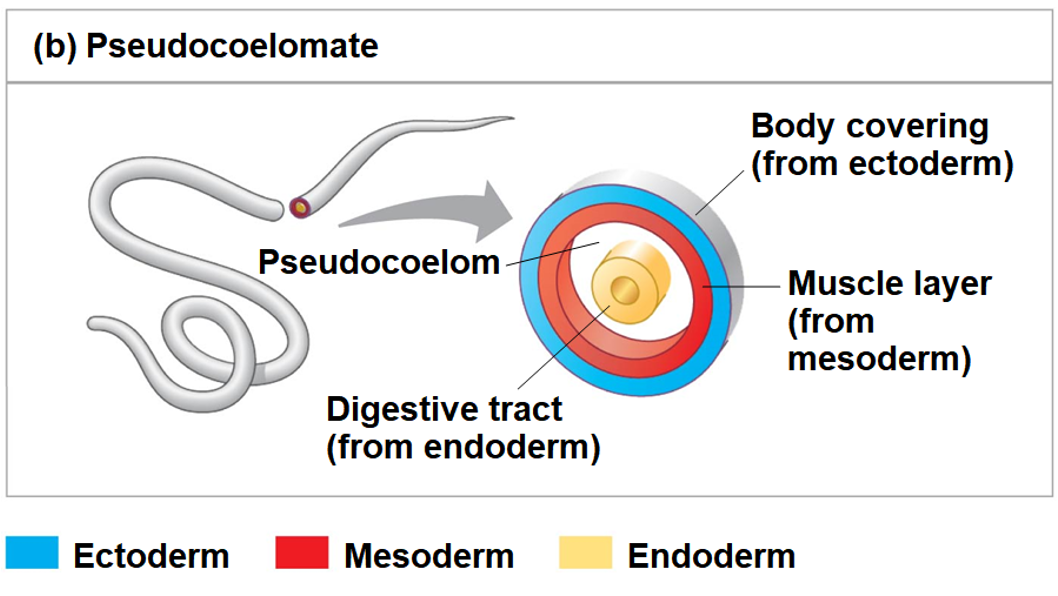
Pseudocoelom
body cavity derived from the mesoderm and endoderm
pseudocoelomates
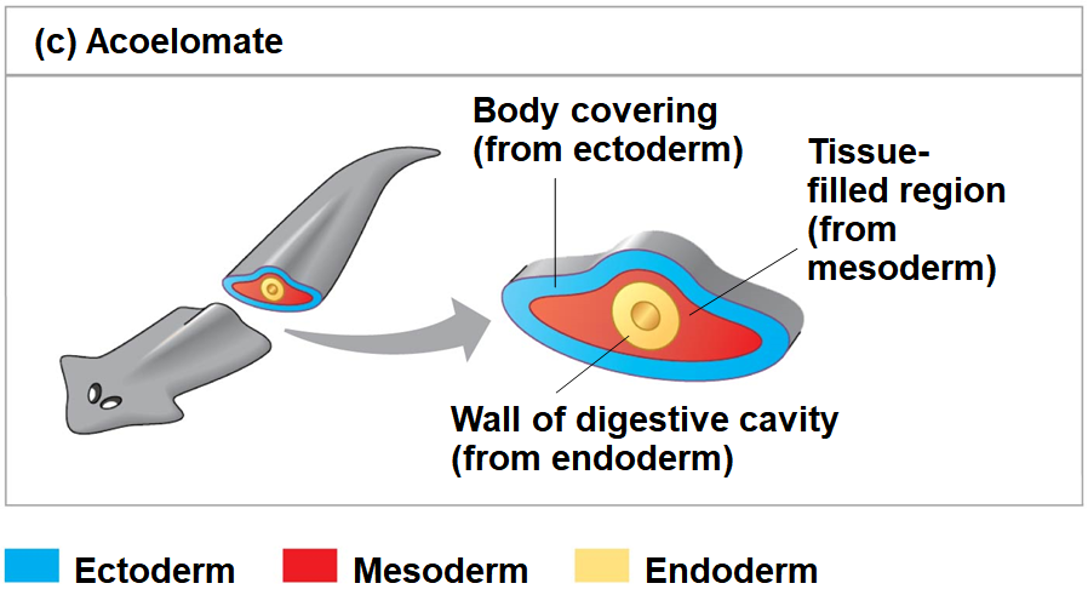
Acoelomates
Triploblastic animals that lack a body cavity
Grade
group (not clade) whose members share key biological features
EX: coelomates + pseudocoelomates have similar body plan
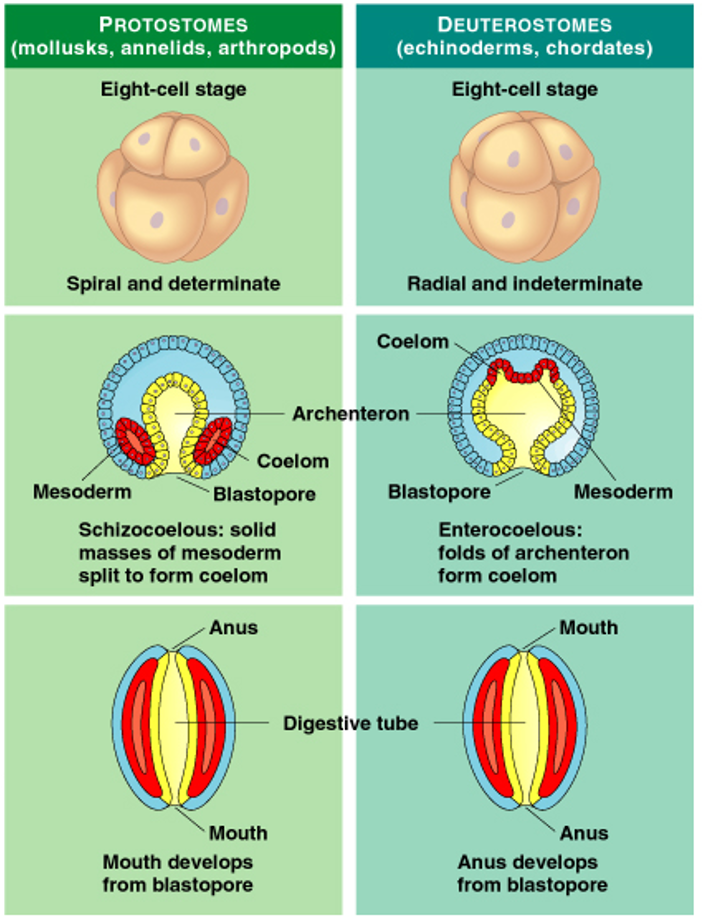
Protostome development
Cleavage: spiral + determinate (fate dermined early)
Coelom Formation: splitting of solid masses of mesoderm
Blastopore: becomes mouth
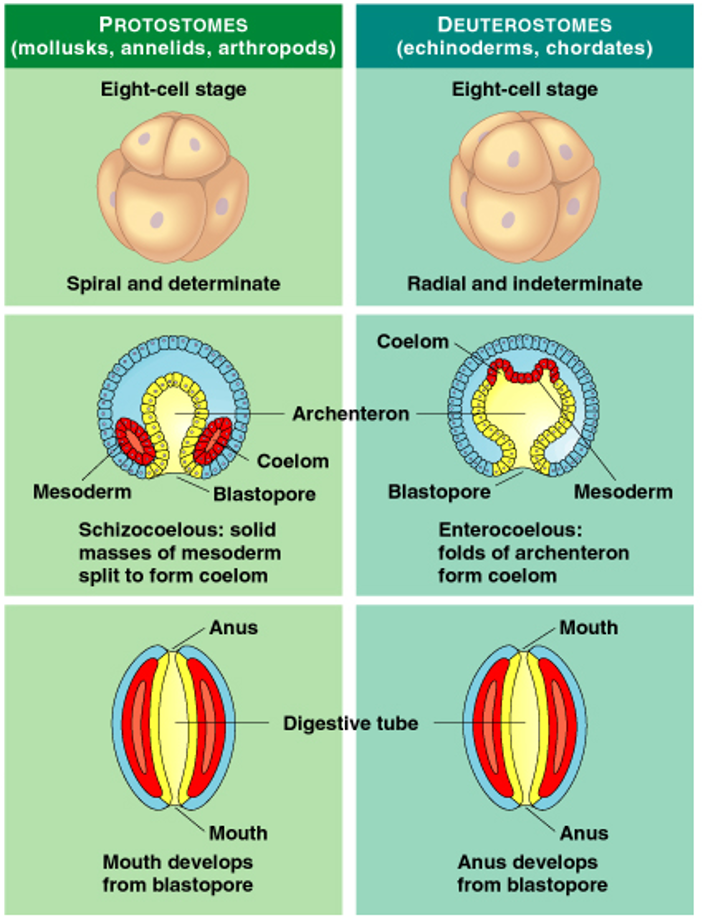
Deuterostome development
Cleavage: radial + indeterminate (can make identical twins + stem cells)
Coelom formation: mesoderm buds from wall of archenteron
Blastopore: becomes anus
Blastopore
forms during gastrulation and connects the archenteron to the exterior of the gastrula
What are animal phylogenies based on? (5)
Whole-genome analysis
Morphological traits
Ribosomal RNA (rRNA) genes
Hox genes
Protein-coding nuclear genes & Mitochondrial genes
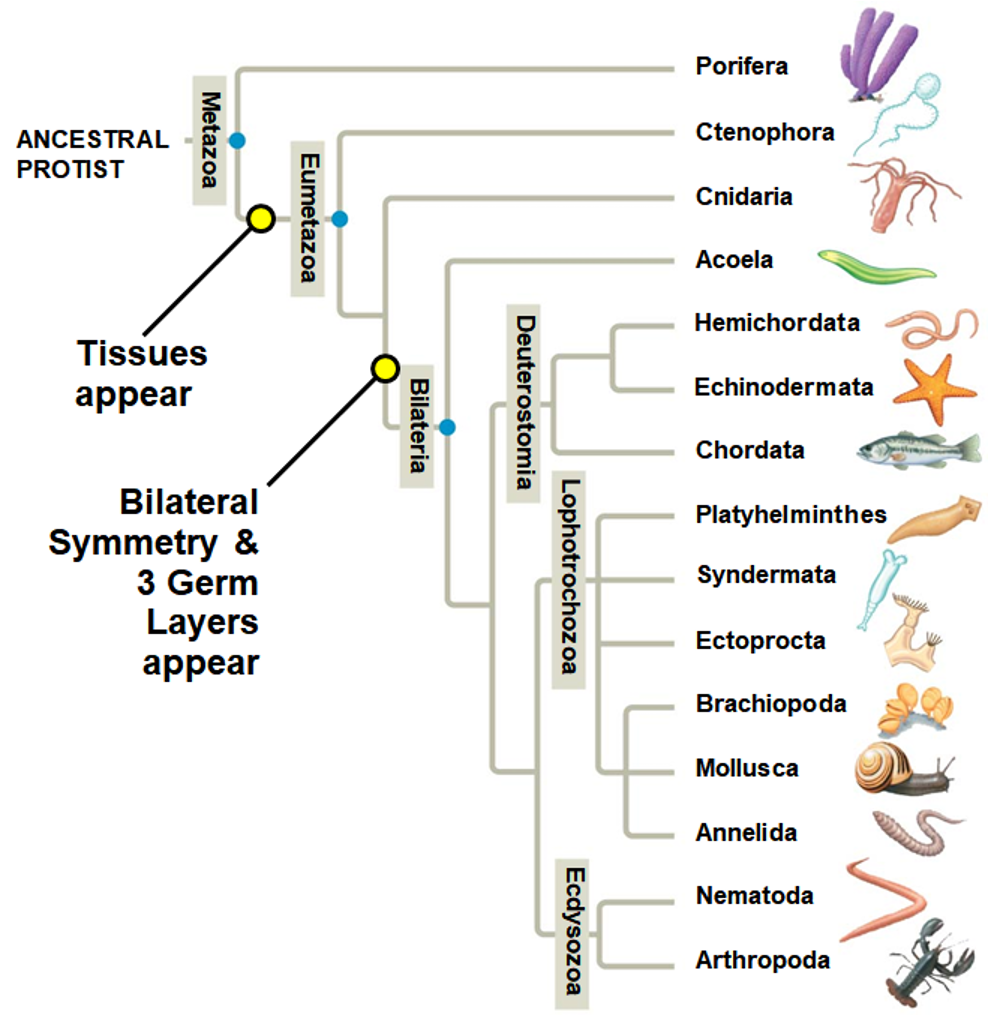
Relationships among living animals + phylogeny (4)
All animals share a common ancestor
Sponges are the sister group to all other animals
Eumetazoa (“true animals”) is a clade of animals with tissues
Most animal phyla belong to clade Bilateria (vertabrates + inv)
Deuterostomia (Bilaterian Clade)
includes hemichordates (acorn worms), echinoderms (sea stars and relatives), and chordates
vertebrates + invertebrates
Ecdysozoa (Bilaterian Clade)
secrete external skeletons (invertebrates)
Shed exoskeletons through ecdysis process
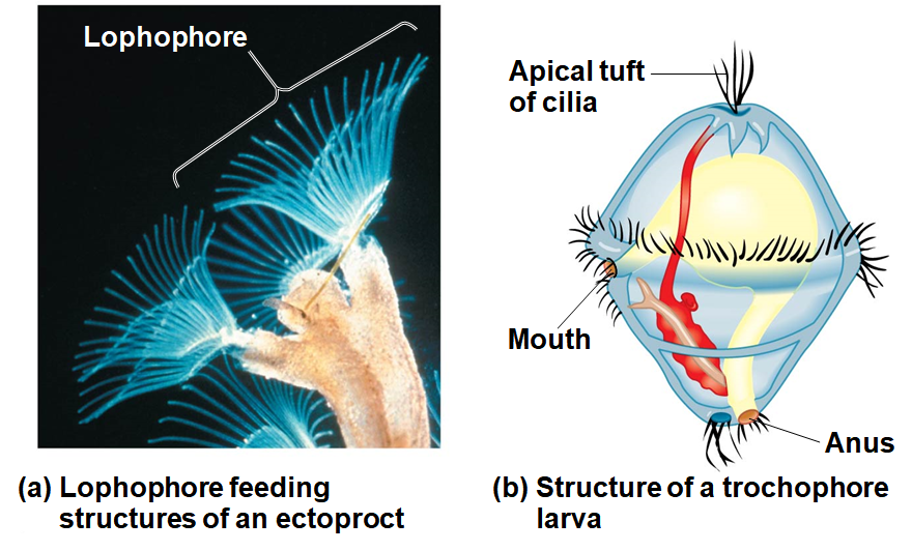
Lophotrochozoa (Bilaterian Invertebrate Clade)
Lophophore feeding structure + go through trochophore larva develop stage

