Language of Medicine Exam 1
 Call Kai
 Learn
Learn Practice Test
 Spaced Repetition
 Match
Match Flashcards
 Knowt Play
1/410

There's no tags or description
Looks like no tags are added yet.
Name | Mastery | Learn | Test | Matching | Spaced | Call with Kai |
|---|
No analytics yet
Send a link to your students to track their progress
411 Terms
what language are the components in medical terms derived from
latin/greek
used to show emphasis on “short’ sounds (ăsk… ĕgg … ĭn … pŏt … ŭnder)
bottom half of circle symbol (ă, ĕ, ĭ)
used to show emphasis on “long’ sounds (āpe … ēven … īce …ōpen … ūnit)
straight line over letter (ā, ē, ī)
4 components of a medical term
prefix
root
combining vowel
suffix
prefix
attached to beginning of word to modify the unique meaning derived from a root (often indicates number, direction, orientation, time, negation)
root
fundamental meaning
*core of word
combining vowel
used to ease pronunciation (usually an “o”)
connects two roots or a root and suffix (if suffix doesn’t have its vowel)
NOT used to connect prefix and root
suffix
word ending
attached to end of root to modify meaning
(often indicates a procedure)
word breakdown
prefix + word root + suffix
basic rule 1
all medical terms must have a suffix
basic rule 2
most medical terms have at least one root
EXCEPTIONS: apnea and anemia don’t have a root
exceptions without roots
apnea = a- (prefix) + -pnea(suffix)
anemia = an- (prefix) + -emia(suffix)
basic rule 3
Some medical terms do NOT have a prefix or combining vowel, although they all have suffix
ex: hepatic and gastritis
basic rule 4
Combining vowels are used to connect (a) two roots (NO exception) or (b) a root and a suffix
(EXCEPT initial of suffix has its vowel) encephalopathy and hematology
basic rule 5
When a suffix begins with a vowel, the combining vowel is
usually omitted:
hepatic
encephalopathy
gastritis
hematology
basic rule 6
Prefix can be directly attached to a root without the combining vowel “o”
Subhepatic > sub / hepat / ic
basic rule 7
Two word roots MUST be connected with a vowel,
regardless the root has its own vowel or not.
hemato
blood
-logy
process of studying
electro
electricity
-gram
record of information generated from an analyzer
gastro
stomach
-itis
inflammation
3 General Rules of Word Analysis
1. Read the meaning of medical terms from the suffix back to the beginning of the term and across
2. Omit the combining vowel (usually o) if the suffix beginns with a vowel: gastritis not “gastroitis”
3. Keep the combining vowel between two roots: gastroenterology not gastrenterology (missing first o)
4. When a term contains two or more roots related to parts of the body, anatomical position often determines which root is listed first (first-come –first-list).
sub
under
-ic
pertaining to
aden/o
gland
arthr/o
joint
bi/o
life
carcin/o
cancerous, cancer
cardi/o
heart
cephal/o
head
cerebr/o
cerebrum
cis/o
to cut
crin/o
to secrete
cyst/o
urinary bladder
cyt/o
cell
derm/o or dermat/o
skin
electr/o
electricity
encephal/o
brain
enter/o
intestines
erythr/o
red
gastr/o
stomach
glyc/o
sugar
gnos/o
knowledge
gynec/o
woman, female
hepat/o
liver
iatr/o
treatment, physician
leuk/o
white
log/o
study of
nephr/o
kidney
neur/o
nerve
onc/o
tumor
ophthalm/o
eye
oste/o
bone
path/o
disease
ped/o
child
psych/o
mind
radi/o
x-rays
ren/o
kidney
rhin/o
nose
sarc/o
flesh
sect/o
to cut
thromb/o
clot, clotting
ur/o
urinary tract, urine
-ac
pertaining to
-al
pertaining to
-algia
pain
-cyte
cell
-ectomy
excision, removal
cell
the fundamental unit of all living things
muscle cells
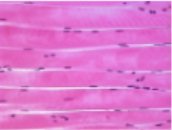
nerve cells
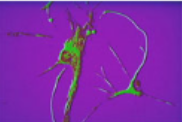
epithelial cells
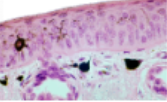
fat cells
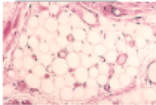
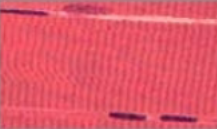
muscle tissue
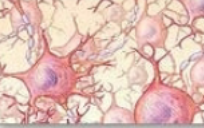
nervous tissue
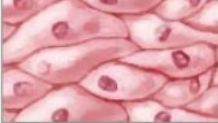
epithelial tissue
covers the whole outer surface of the body and forms the linings of internal organs
made up of closely packed cells arranged in one or more layers
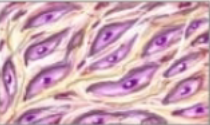
connective tissue
includes fibroblasts, adipocytes, and cartilage
nervous tissue job
conducts impulses all over the body
parts of a neuron
axon
nucleus
cell body
dendrites
neuroglia
supporting cell to neuron
dendrites
contacted by other neurons
loose connective tissue
areolar tissue
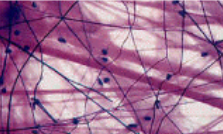
dense connective tissue
regular tissue

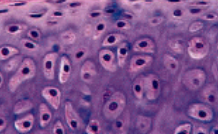
cartilage
hyaline cartilage
autoimmune disease
the body makes antibodies against its own healthy cells and tissues, causing inflammation and injury
symphysis (plural: symphyses)
growing together
joint in which the bony surfaces are united by a layer of fibrocartilage
sym-
together with
histologist
scientist who specializes in the study of tissue
organs
groups of tissues working together (heart, liver, lungs, kidneys)
systems
one or more organs working together to execute complicate functions
body cavities
spaces within the body cavity that contain internal organs
viscera
internal organs, mainly in the abdominopelvic cavity
cranial cavity
brain and pituitary gland
thoracic cavity
lungs, heart, esophagus, trachea, bronchial tubes, thymus gland, aorta
abdominal cavity
stomach, small and large intestines, spleen, pancreas, liver, gallbladder
pelvic cavity
portions of the small and large intestines, bladder, rectum, urethra, ureters (uterus and vagina in female)
spinal cavity
nerves of the spinal cord
parts of cranial cavity
cerebrum, pituitary gland, hypothalamus, cerebellum, brain stem

