Lecture 10- Living on the Land in North America
 Call Kai
 Learn
Learn Practice Test
 Spaced Repetition
 Match
Match Flashcards
 Knowt Play
1/20

There's no tags or description
Looks like no tags are added yet.
Name | Mastery | Learn | Test | Matching | Spaced | Call with Kai |
|---|
No analytics yet
Send a link to your students to track their progress
21 Terms
Four Examples of Native American Architecture
Tipi, Haida, Pueblo, Longhouse
Tipis
Great Plains, mobility, horses let to tipi sizes growing
Haida houses
houses out of cedar planks set atop posts and beams
houses modifiable for weather conditions, additional covering for heat and removing them for ventilation
Acoma Pueblo
worked with the local topography in order to build a defensible community atop a desert mesa, constructed of adobe
Longhouses
along the coast and inland throughout what is known as the Eastern Woodland- bent-timber frame covered by reed matting that could be adjusted according to the time of day and the season to let in more or less light and air.
The American Colonies
Spanish= St. Augustine
French= Quebec
Dutch= New Amsterdam
English= Jamestown
Williamsburg, Virginia
Jamestown colony attempted to renew its urban efforts by moving the capital to Williamsburg, a site on high ground midway between the York and James Rivers
Site/ Location/ Architect
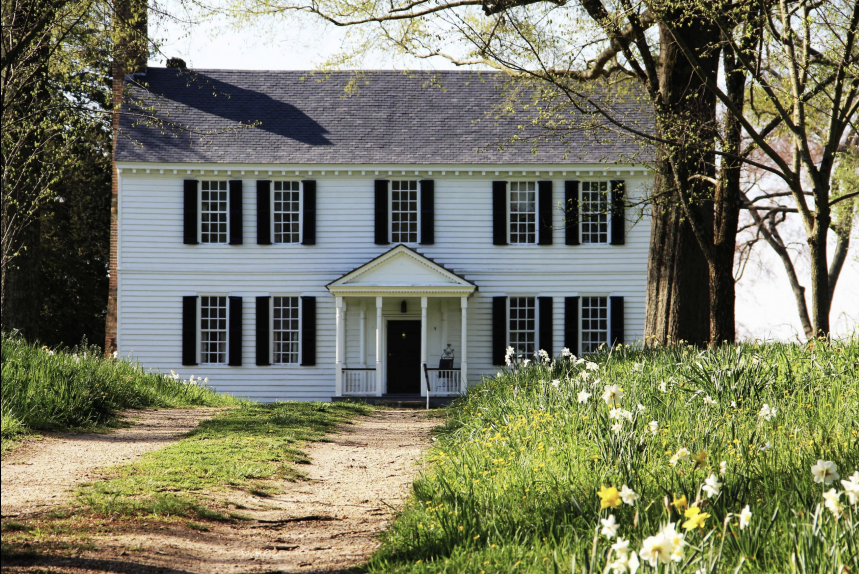
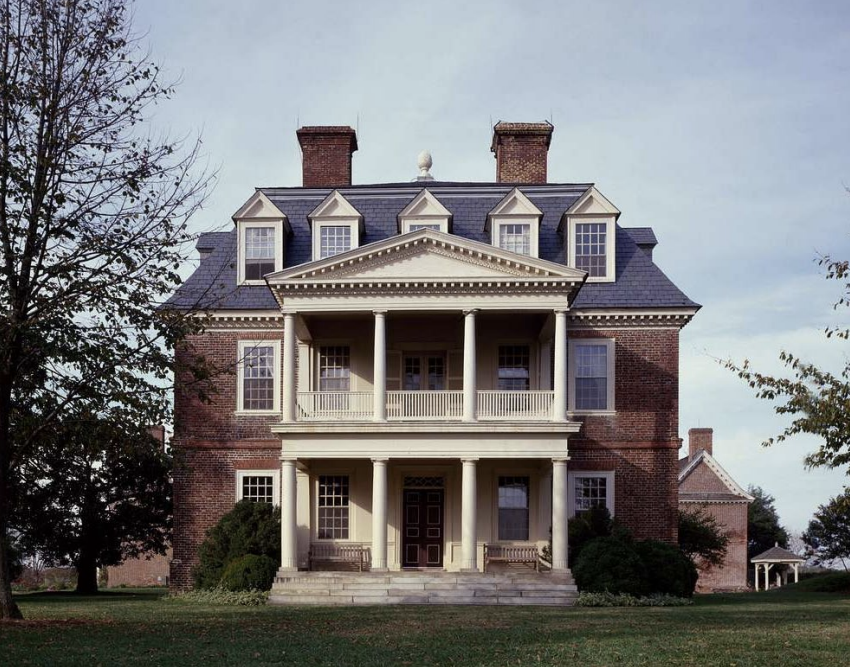
Tuckahoe
Tuckahoe, Virginia, USA
N/A
central-hall plan
American Colonial architecture
the floor plan of a house having two rooms symmetrically situated on each side of a centrally located hallway; a stair in the hallway leading to the loft space above
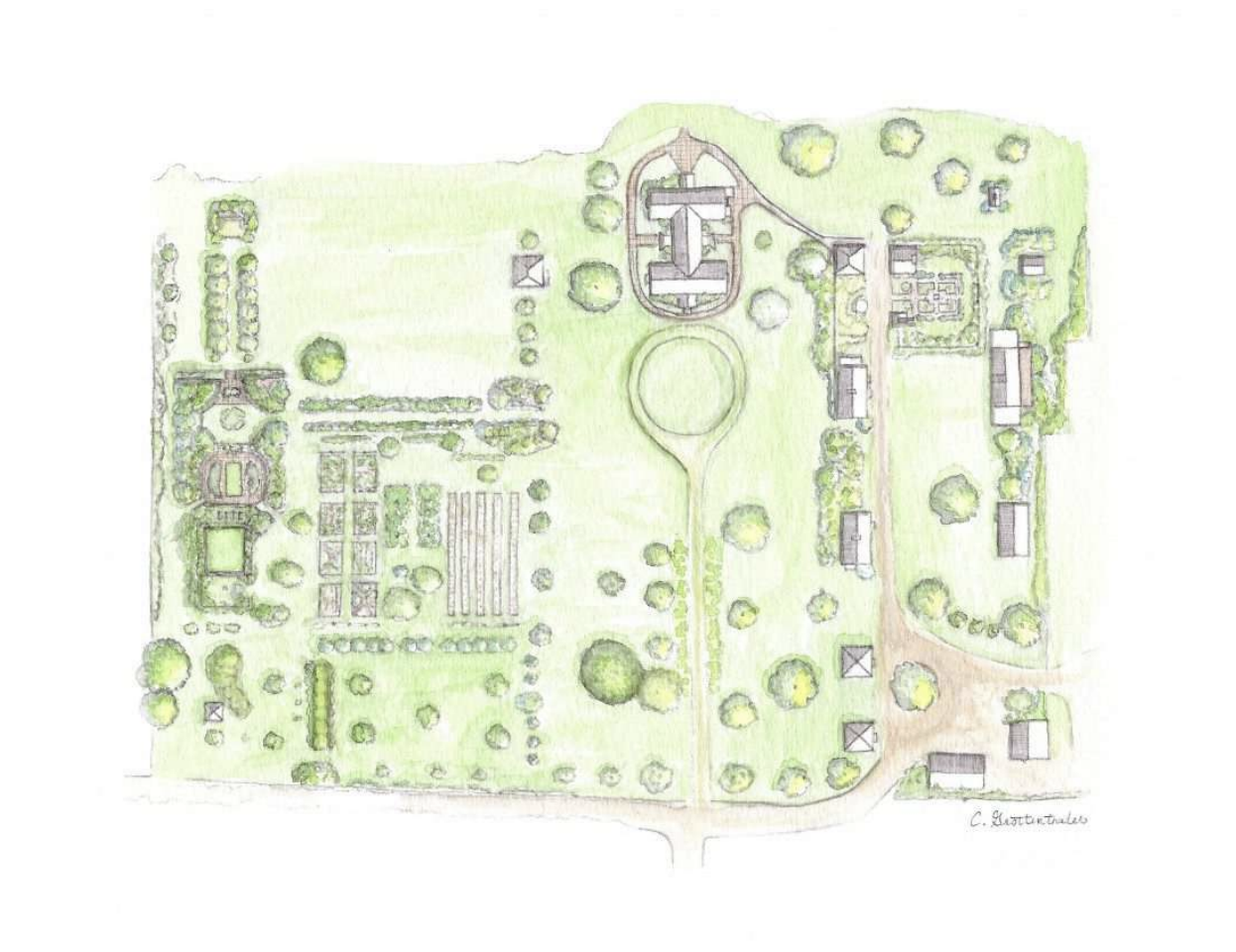
Image Identification+ Caption
birthplace of Thomas JeƯerson
served as a plantation.
central hall plan modified with two rooms on each side of the central hallway
The site plan:
grand alley that raises prominence and stature of the home despite its modest materials.
Nearby the main house, there are amenities such as the kitchen and stables at a distance to protect from fires spreading and destroying nearby buildings, most of which are built of flammable materials like wood.
Site/ Location/ Architect
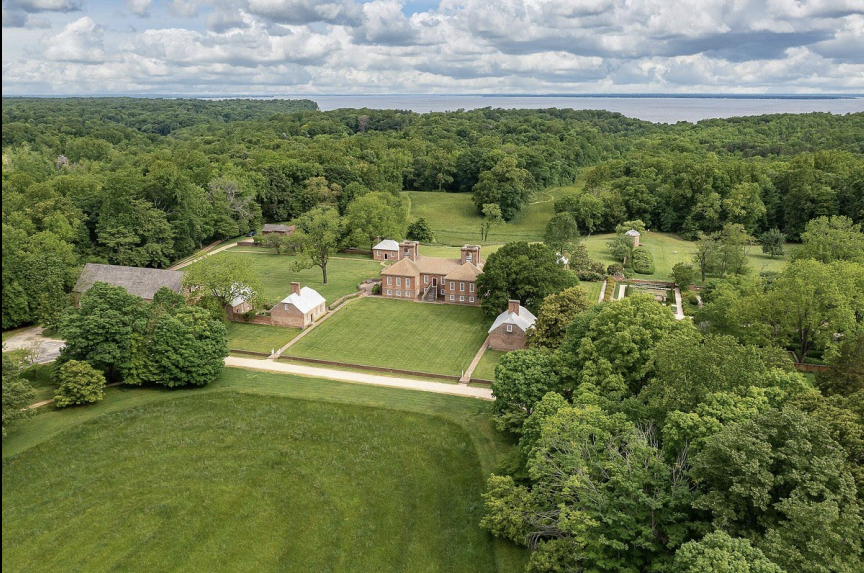
Stratford Hall
Montross, Virginia, USA
N/A
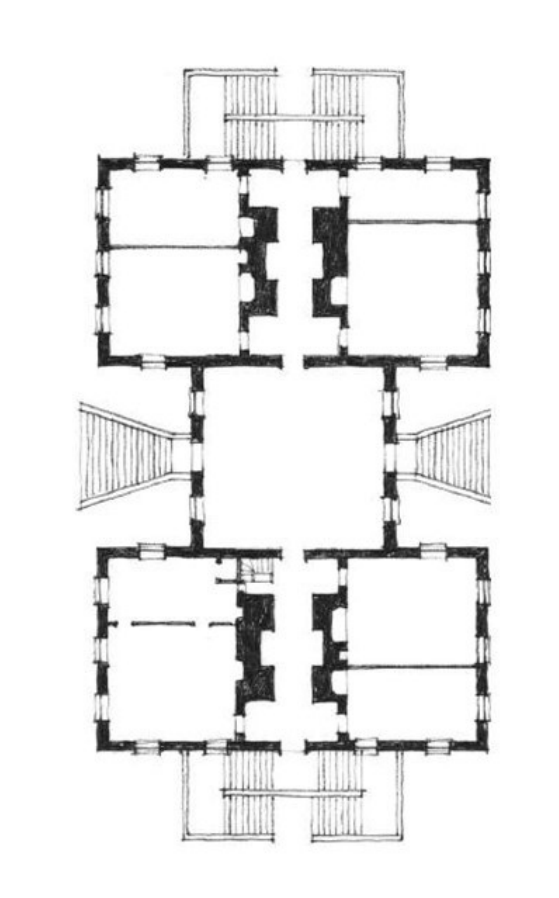
Image Identification+ Caption
head of a large estate that grew tobacco for export and designed for the governor of Virginia.
Georgian style, shows the English upper classes active interest in the colonies.
central hall plan
yard in front of the building
housing for the enslaved nearby but still at somewhat of a distance. The waterway was the main point of access for visitor and for the trading of goods.
Site/ Location/ Architect
Shirley Plantation
Hopewell, Virginia, USA
N/A
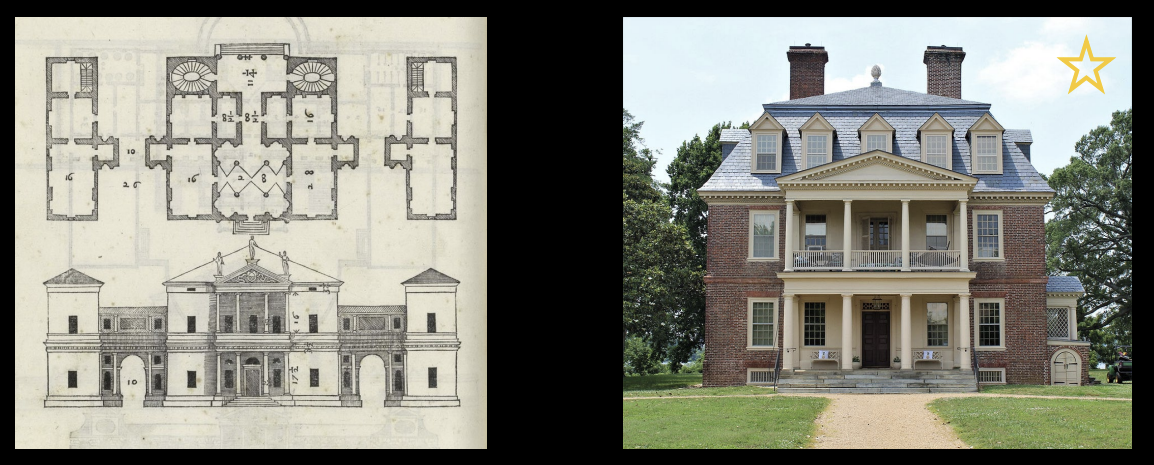
Image Identification+ Compare
Villa Pisani vs. Shirley Plantation
Both buildings display neo Palladian influences.
The Shirley plantation’s main mansion is made completely of brick. It had a two-story portico with Doric columns on two sides of the house that allowed visitors from both the James River and the land said to be greeted with an entrance.
meetinghouse
A building used for public gathering and especially for Christian worship in the past
pulpit
Partially enclosed elevated desk of wood, masonry, etc., in a church
tester
Ornate canopy over the pulpit
Site/ Location/ Architect
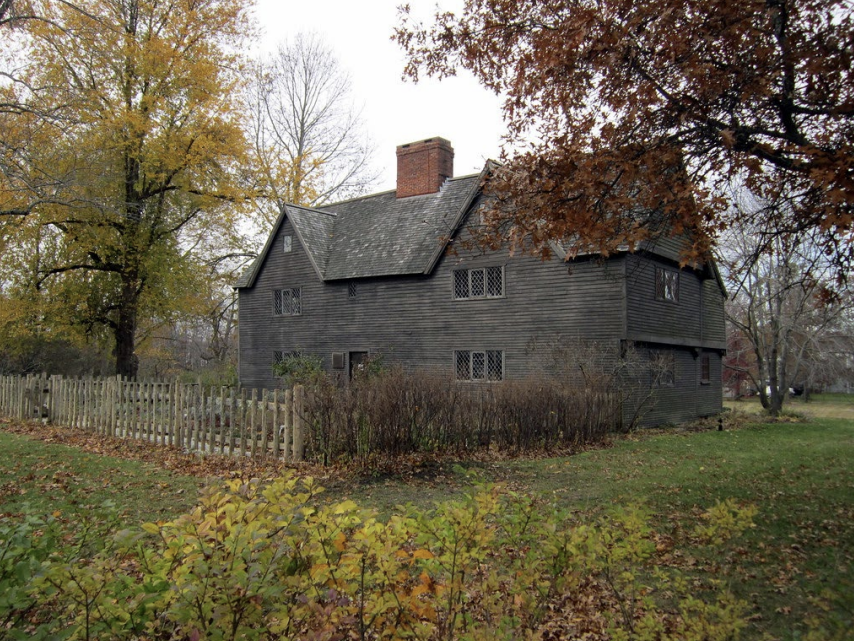
John Whipple House
Ipswich, Massachusetts, USA
N/A
saltbox
gable-roofed residential structure typically two stories in the front and one in the rear
Site/ Location/ Architect + IMAGE CAPTION
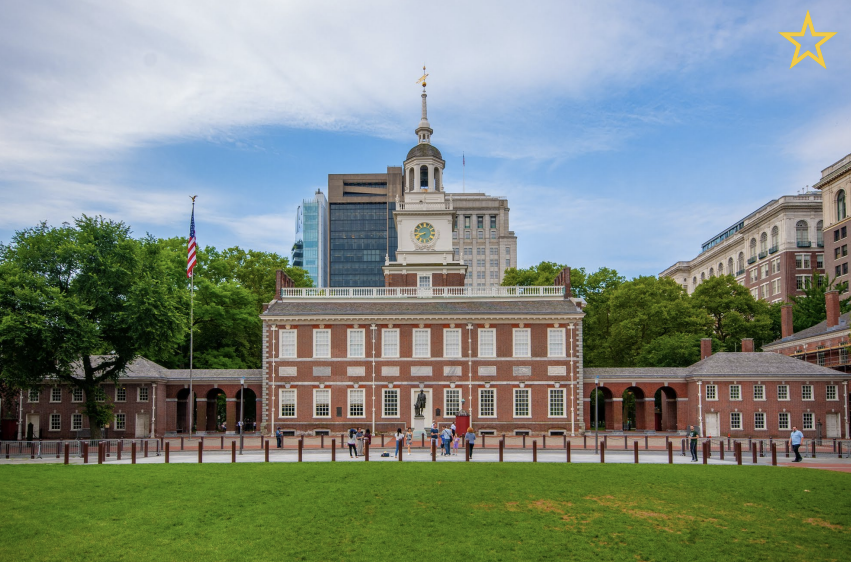
Independence Hall
Philadelphia, Pennsylvania, USA
N/A
resembled the greatest mansions of the area during the 18th century
employed a central hall plan with 9 bays and was built entirely out of brick.
The tower added later on reflects the influence of Wren’s churches.
Similarly, the galleried interior reflects Wren and Gibb’s precedent.
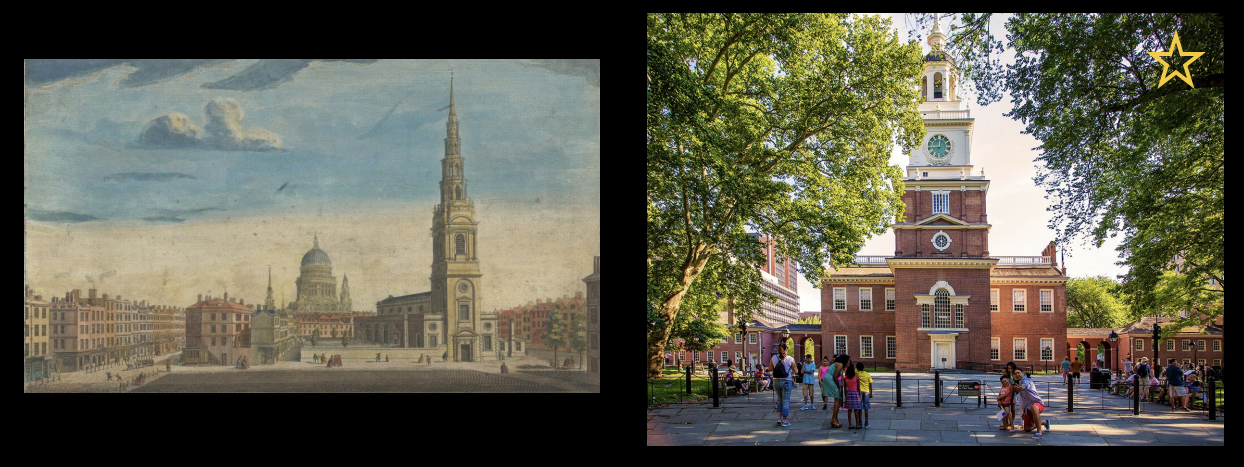
Image Identification+ Image Caption
St. Bride vs. Independence Hall
Both: reflecst Wren’s use of a great tower feature that can be seen from a distance .
Independence Hall: the tower was added later on due to Wren’s influence in church designs.
St. Bride: the tower conflated the urban the medieval urban typology with modern classical details. St.Bride also has a great dome that can be seen from a distance.

