Fixed Income

0.0(0)
studied byStudied by 0 people
call kaiCall Kai
learnLearn
examPractice Test
spaced repetitionSpaced Repetition
heart puzzleMatch
flashcardsFlashcards
GameKnowt Play
Card Sorting

1/32

encourage image

There's no tags or description

Looks like no tags are added yet.

Last updated 10:22 PM on 11/3/25
Name
Mastery
Learn
Test
Matching
Spaced
Call with Kai

No analytics yet

Send a link to your students to track their progress

33 Terms

1
New cards

Price (%of par) of a T-Period Zero-Coupon Bond

= 1 ÷ (1 + Sₜ)ᵗ

2
New cards

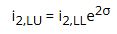
Return from bond credit migration

knowt flashcard image
3
New cards

Forward Price (%of par) (at t = j) of a Zero-Coupon Bond Maturing at (j + k)

= 1 ÷ [1 + f(j,k)]ᵏ

4
New cards

Forward Pricing Model

The price of a forward is equal to the price of the bond at time j \cdot the forward rate
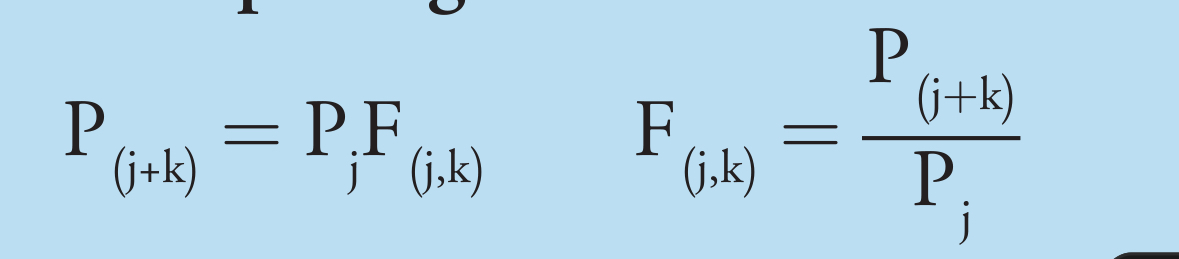
<p>The price of a forward is equal to the price of the bond at time j $$\cdot$$ the forward rate</p>
5
New cards

Forward Rate Model

How you derive a forward rate from spot rates. The spot rates at times j and j+k determine it

6
New cards

Swap Spread

= Swap Rateₜ − Treasury Yieldₜ

Represents derivative market credit and liquidity risk (swaps are traded and thus liquid is important)

7
New cards

TED Spread

= 3-Month MRR − 3-Month T-Bill Rate

Represents interbank credit risk only

MRR is unsecured interbank lending

8
New cards

MRR-OIS Spread

= MRR − Overnight Indexed Swap Rate

OIS is the expected Fed policy rate over term of swap

Measure of credit AND liquidity risk in the interbank market

9
New cards

Portfolio Value Change Due to Level, Steepness, and Curvature Movements

= −DᴸΔxᴸ − DˢΔxˢ − DᶜΔxᶜ

10
New cards

Callable Bond Value

= Vₛₜᵣₐᵢgₕₜ − Vcₐₗₗₐbₗₑ

11
New cards

Putable Bond Value

= Vstraight + Vput

12
New cards

Value of Put Option on Bond

= Vputable − Vstraight

13
New cards

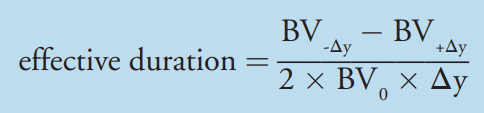
Effective Duration

<p></p>
14
New cards

Effective Convexity

<p></p>
15
New cards

Minimum Value of Convertible Bond

= Greater of Conversion Value or Straight Value

16
New cards

Market Conversion Price of a Convertible Bond

= Market Price of Convertible Bond ÷ Conversion Ratio

17
New cards

Market Conversion Premium per Share

= Market Conversion Price − Stock’s Market Price

18
New cards

Market Conversion Premium Ratio

= Market Conversion Premium per Share ÷ Market Price of Common Stock

19
New cards

Premium Over Straight Value

= (Market Price of Convertible Bond ÷ Straight Value) − 1

20
New cards

Callable and Putable Convertible Bond Value

= Straight Value + Value of Call Option on Stock − Value of Call Option on Bond + Value of Put Option on Bond

21
New cards

Recovery Rate

= % of Money Received Upon Default

22
New cards

Loss Given Default (%)

= 100 − Recovery Rate

23
New cards

Expected Loss

= Probability of Default × Loss Given Default

=PoD x e(loss) per $ x Par

24
New cards

Present Value of Expected Loss

= Value of Risk-Free Bond − Value of Credit-Risky Bond

25
New cards

Upfront Premium % (CDS)

≈ (CDS Spread − CDS Coupon) × Duration

26
New cards

Price of CDS (per $100 Notional)

≈ $100 − Upfront Premium (%)

27
New cards

Profit for Protection Buyer

≈ Change in Spread × Duration × Notional Principal

28
New cards

Cox-Ingersoll-Ross model

o   Equilibrium model

o   Higher rates means higher rate volatility

o   Interest rate movements are driven by people deciding whether to consume today or in the future

o   Mean reverting
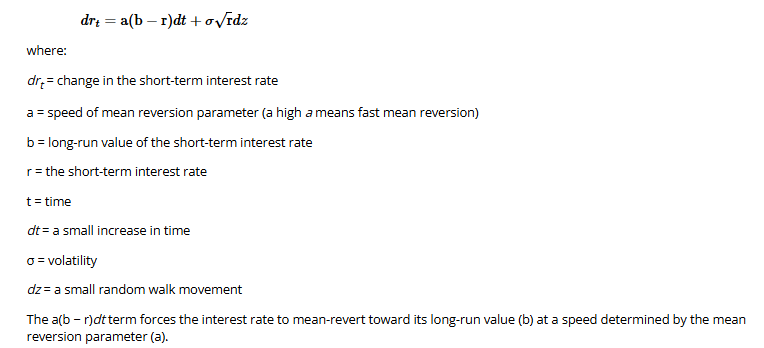
<p><span style="font-family: &quot;Courier New&quot;;"><span>o</span></span><span style="font-family: &quot;Times New Roman&quot;; line-height: normal; font-size: 7pt;"><span>&nbsp;&nbsp; </span></span><span><span>Equilibrium model</span></span></p><p><span style="font-family: &quot;Courier New&quot;;"><span>o</span></span><span style="font-family: &quot;Times New Roman&quot;; line-height: normal; font-size: 7pt;"><span>&nbsp;&nbsp; </span></span><span><span>Higher rates means higher rate volatility</span></span></p><p class="MsoListParagraphCxSpMiddle"><span style="font-family: &quot;Courier New&quot;;"><span>o</span></span><span style="font-family: &quot;Times New Roman&quot;; line-height: normal; font-size: 7pt;"><span>&nbsp;&nbsp; </span></span><span><span>Interest rate movements are driven by people deciding whether to consume today or in the future</span></span></p><p class="MsoListParagraphCxSpLast"><span style="font-family: &quot;Courier New&quot;;"><span>o</span></span><span style="font-family: &quot;Times New Roman&quot;; line-height: normal; font-size: 7pt;"><span>&nbsp;&nbsp; </span></span><span><span>Mean reverting</span></span></p>
29
New cards

The Vasicek Model

o   Equilibrium model

o   Mean reverting

o   Constant vol, doesn’t increase with rates

o   Doesn’t force non-negative rates

<p><span style="font-family: &quot;Courier New&quot;;"><span>o</span></span><span style="font-family: &quot;Times New Roman&quot;; line-height: normal; font-size: 7pt;"><span>&nbsp;&nbsp; </span></span><span>Equilibrium model</span></p><p><span style="font-family: &quot;Courier New&quot;;"><span>o</span></span><span style="font-family: &quot;Times New Roman&quot;; line-height: normal; font-size: 7pt;"><span>&nbsp;&nbsp; </span></span><span><span>Mean reverting</span></span></p><p class="MsoListParagraphCxSpMiddle"><span style="font-family: &quot;Courier New&quot;;"><span>o</span></span><span style="font-family: &quot;Times New Roman&quot;; line-height: normal; font-size: 7pt;"><span>&nbsp;&nbsp; </span></span><span><span>Constant vol, doesn’t increase with rates</span></span></p><p class="MsoListParagraphCxSpLast"><span style="font-family: &quot;Courier New&quot;;"><span>o</span></span><span style="font-family: &quot;Times New Roman&quot;; line-height: normal; font-size: 7pt;"><span>&nbsp;&nbsp; </span></span><span><span>Doesn’t force non-negative rates</span></span></p>
30
New cards

The Ho-Lee Model

o   Arb Free Model

o   Constant Vol,

o   Used to price zero coupon bonds and thus the spot curve

<p><span style="font-family: &quot;Courier New&quot;;"><span>o</span></span><span style="font-family: &quot;Times New Roman&quot;; line-height: normal; font-size: 7pt;"><span>&nbsp;&nbsp; </span></span><span><span>Arb Free Model</span></span></p><p><span style="font-family: &quot;Courier New&quot;;"><span>o</span></span><span style="font-family: &quot;Times New Roman&quot;; line-height: normal; font-size: 7pt;"><span>&nbsp;&nbsp; </span></span><span><span>Constant Vol,</span></span></p><p class="MsoListParagraphCxSpLast"><span style="font-family: &quot;Courier New&quot;;"><span>o</span></span><span style="font-family: &quot;Times New Roman&quot;; line-height: normal; font-size: 7pt;"><span>&nbsp;&nbsp; </span></span><span><span>Used to price zero coupon bonds and thus the spot curve</span></span></p>
31
New cards

The Kalotay-Williams-Fabozzi (KWF) model

o   Arb Free model

o   no mean reversion, constant Vol

o   ST rates are log normal

<p><span style="font-family: &quot;Courier New&quot;;"><span>o</span></span><span style="font-family: &quot;Times New Roman&quot;; line-height: normal; font-size: 7pt;"><span>&nbsp;&nbsp; </span></span><span><span>Arb Free model</span></span></p><p><span style="font-family: &quot;Courier New&quot;;"><span>o</span></span><span style="font-family: &quot;Times New Roman&quot;; line-height: normal; font-size: 7pt;"><span>&nbsp;&nbsp; </span></span><span><span>no mean reversion, constant Vol</span></span></p><p class="MsoListParagraphCxSpLast"><span style="font-family: &quot;Courier New&quot;;"><span>o</span></span><span style="font-family: &quot;Times New Roman&quot;; line-height: normal; font-size: 7pt;"><span>&nbsp;&nbsp; </span></span><span><span>ST rates are log normal</span></span></p>
32
New cards

Gauss+ Model

o   Central bank controls ST, MT rates revert to long term, and LT rates are also mean reverting and depend on macro

o   Hump shaped volatility, most in the middle

33
New cards

Finding Nodal Rates

knowt flashcard image