chapter 27 - animal diversity
 Call Kai
 Learn
Learn Practice Test
 Spaced Repetition
 Match
Match Flashcards
 Knowt Play
1/38

There's no tags or description
Looks like no tags are added yet.
Name | Mastery | Learn | Test | Matching | Spaced | Call with Kai |
|---|
No analytics yet
Send a link to your students to track their progress
39 Terms
are multicellular eukaryotes, heterotrophy, active movement, reproduction, embryonic development, and a body plan
what are the 6 main features of the kingdom animalia?
sexual reproduction
the most common type of reproduction for animals
- usually separate sexes
- some are hermaphroditic
hermaphrodites
organisms that contain both female and male sex organs, requiring only one organism for sexual reproduction to take place
asexually reproduction
the type of reproduction that occurs through fragmentation, regeneration, budding, or parthenogenesis in animals
parthenogensis
type of asexual reproduction in which a new individual develops from an unfertilized egg
life cycle patterns
diploid zygote undergoes mitosis -> multicellular diploid adult that then undergoes meiosis -> haploid gametes that undergo fertilization -> diploid zygote (and the cycle continues)
metamorphosis
change of form; usually occurs to allow larva to transform into an adult
gradual change
process that occurs when animal DOESN'T have a larval stage, instead they slowly go from a juvenile stage to an adult stage
gastrulation
the process in which a gastrula develops from a blastula by the inward migration (folding) of cells -> creation of germ layers
blastopore
the opening of the central cavity of an embryo in the early stage of development
archentron
cavity inside of gastrula that serves as the precursor to the digestive tract
the endoderm and ectoderm form first, then the mesoderm later forms between them
what order do germ layers form in?
ectoderm
the outermost germ layer that develops into skin and nervous tissue
endoderm
the innermost germ layer; develops into the linings of the digestive tract, internal organs, and the lungs
mesoderm
middle germ layer; develops into muscles, bone, blood and much of the circulatory, reproductive, and excretory systems
diploblastic animals
animals with two germ layers: ectoderm and endoderm
triploblastic animals
animals with three germ layers: ectoderm, endoderm, and mesoderm
protosome
an organism who's blastopore forms the mouth and their coelom forms from spilts in the mesoderm
- cleavage is spiral and determinate
- early embryonic cells are fated to become certain body parts
spiral cleavage
cleavage planes of cell division are diagonal to the vertical axis of the embryo
deuterosome
an organism who's blastopore forms an anus and the coelom forms from mesodermal outpockets of archentron (budding)
- cleavage is radial and indeterminate
- any cell can become a complete organism
radial cleavage
cleavage planes are either parallel or perpendicular to the vertical axis of the embryo
body plan
the general structure of an animal; the arrangement of its organ systems and the integrated functioning of its parts
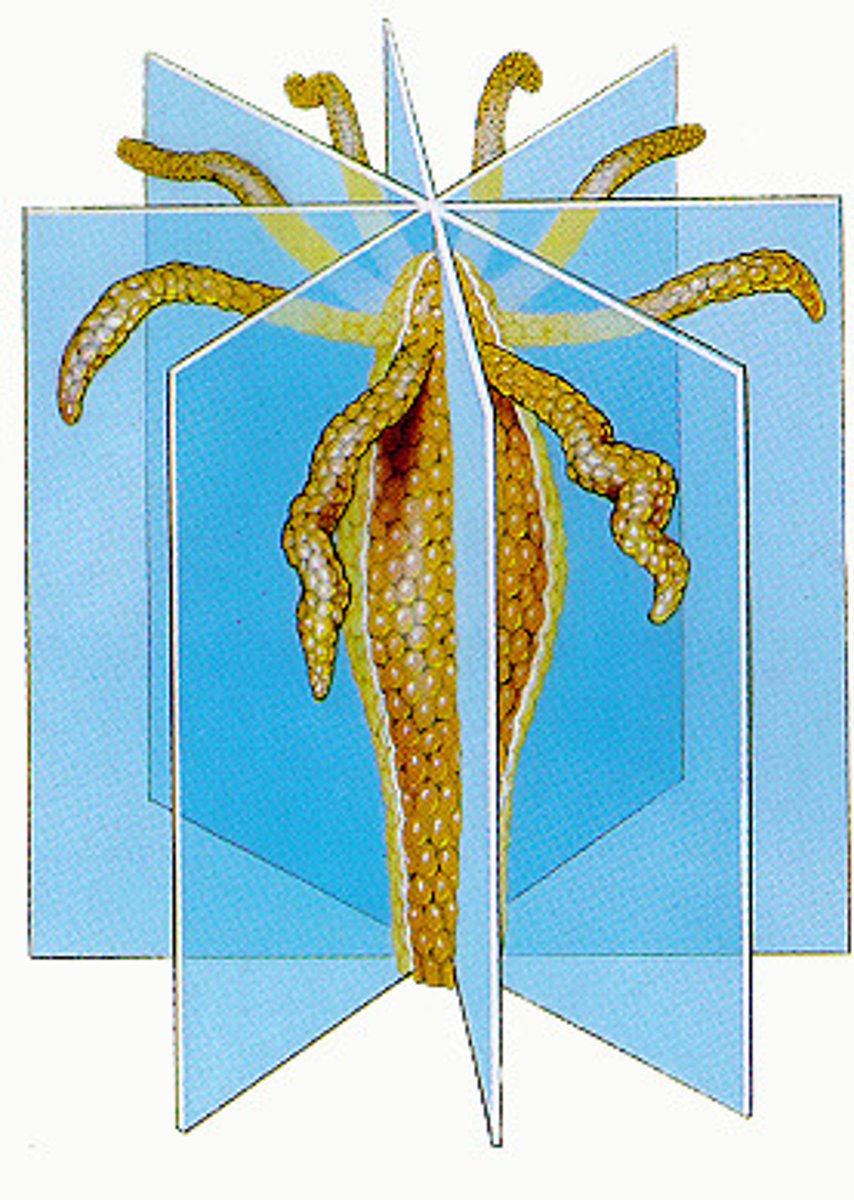
radial symmetry
body plan in which body parts repeat around the center of the body
- usually sessile (attached) or planktonic (drifiting)
- no left and right sides nor front or back
- equips sea creatures with ability to experience environment equally from all directions
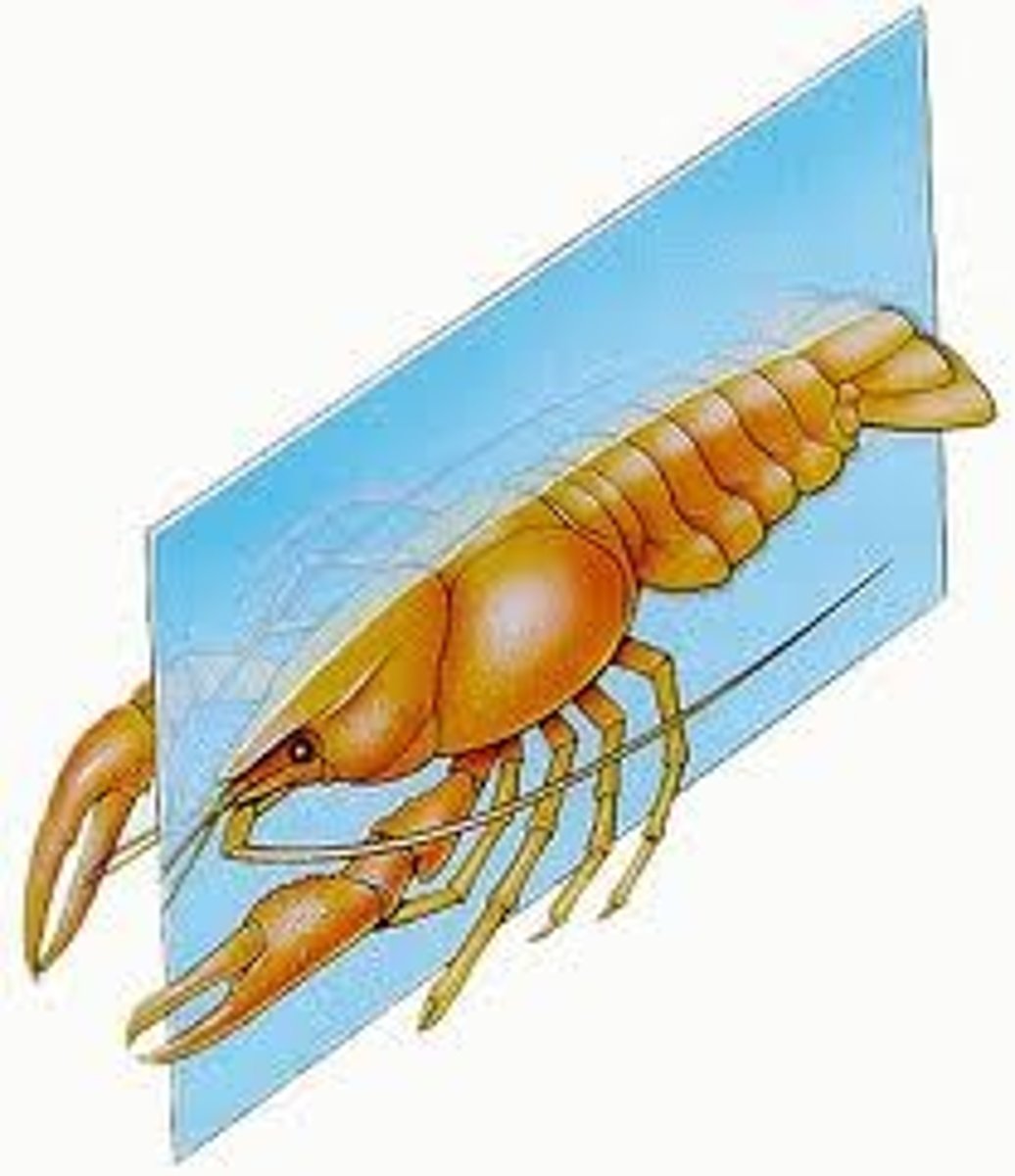
bilateral symmetry
body plan in which there exists two axes of orientation: front to back AND top to bottom
- usually have a "head" = concentration of sensory organs at the anterior plane (cephalization)
- have an active lifestyle
- animals have more specialization and complexity
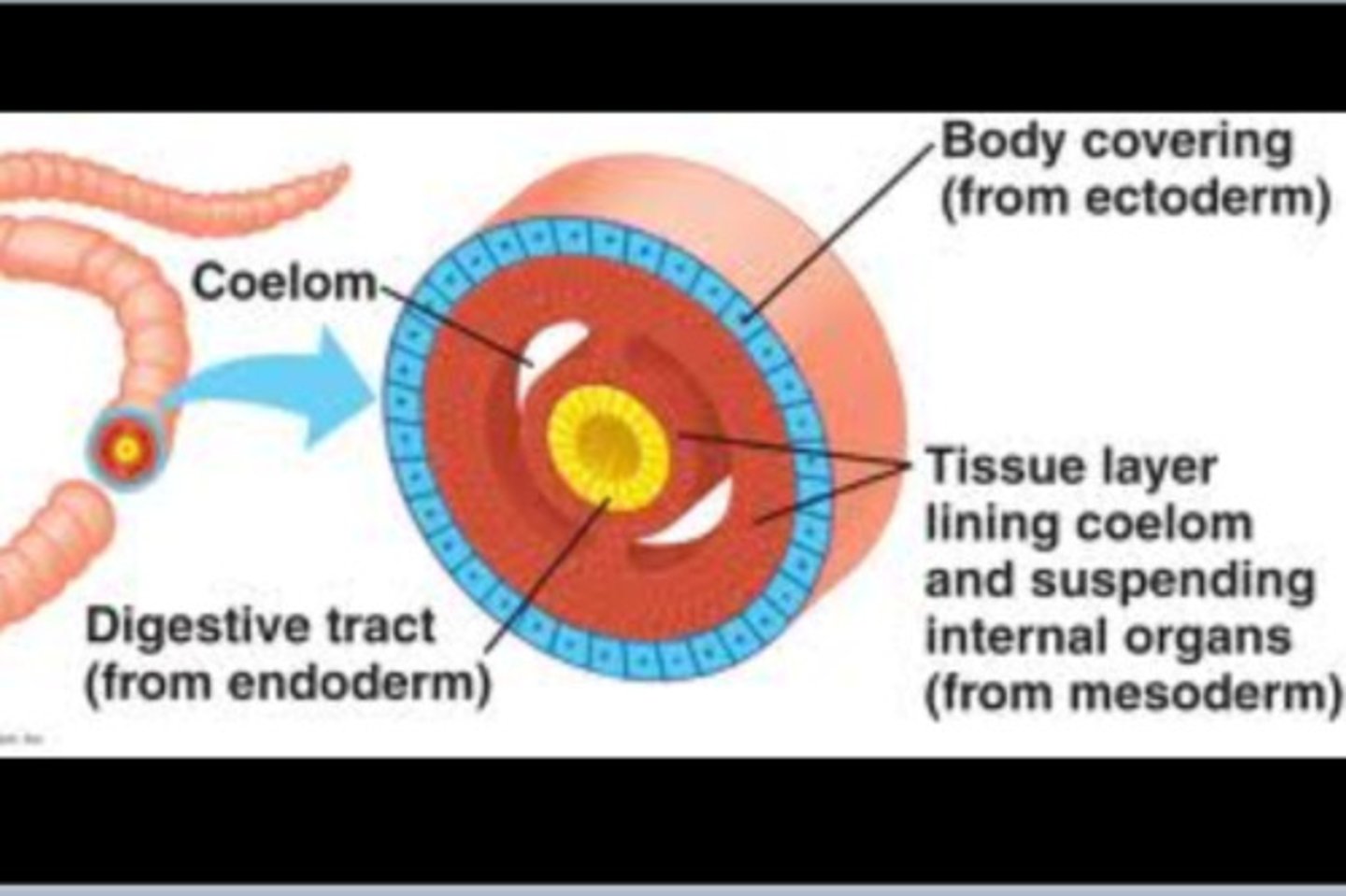
body cavity
aka "coelom"
a fluid- or air-filled space between the digestive tract and the body wall
- allows internal organs to grow and move independently of outer body wall
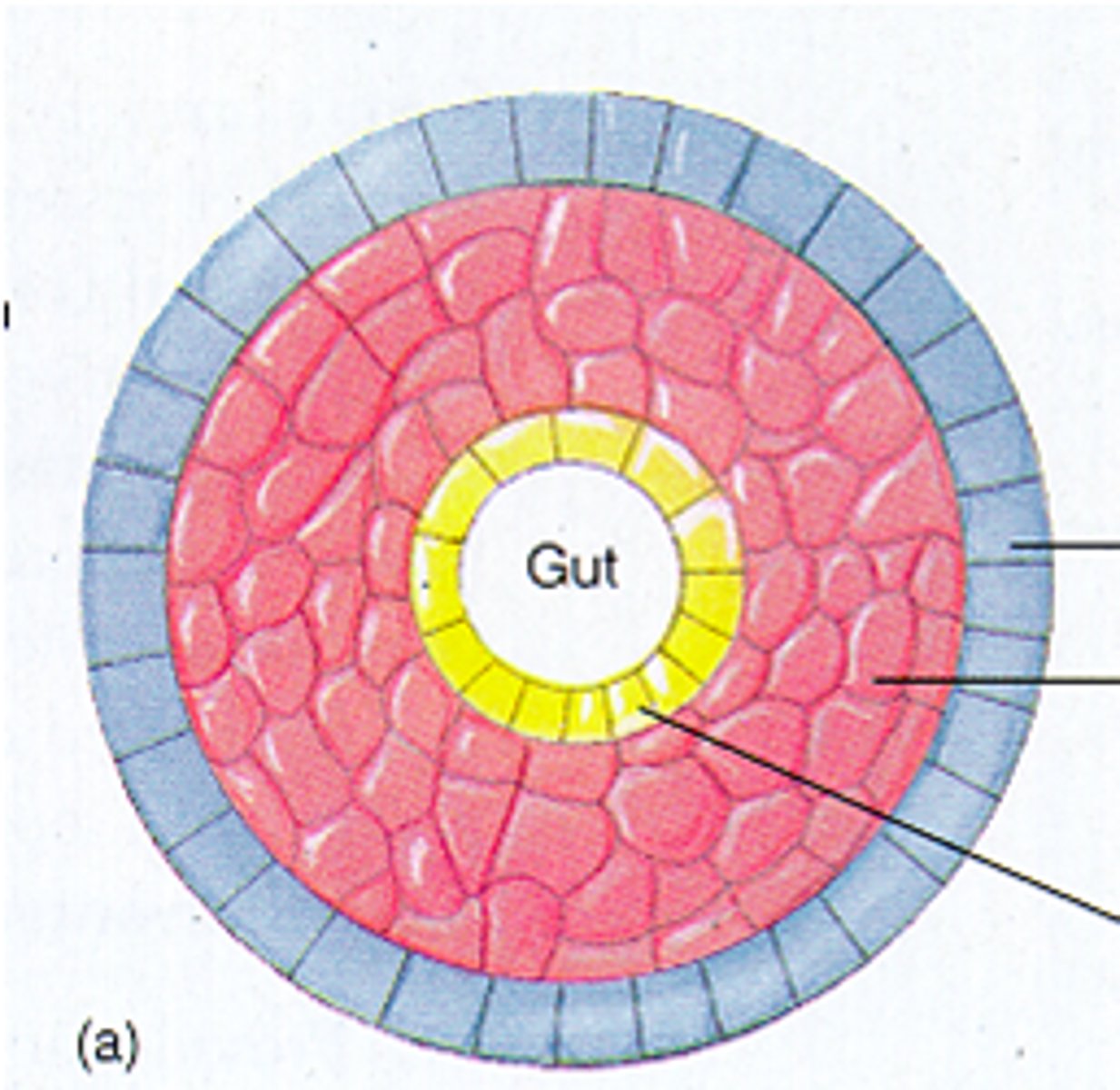
acoelomate
an animal that lacks a coelom, or body cavity
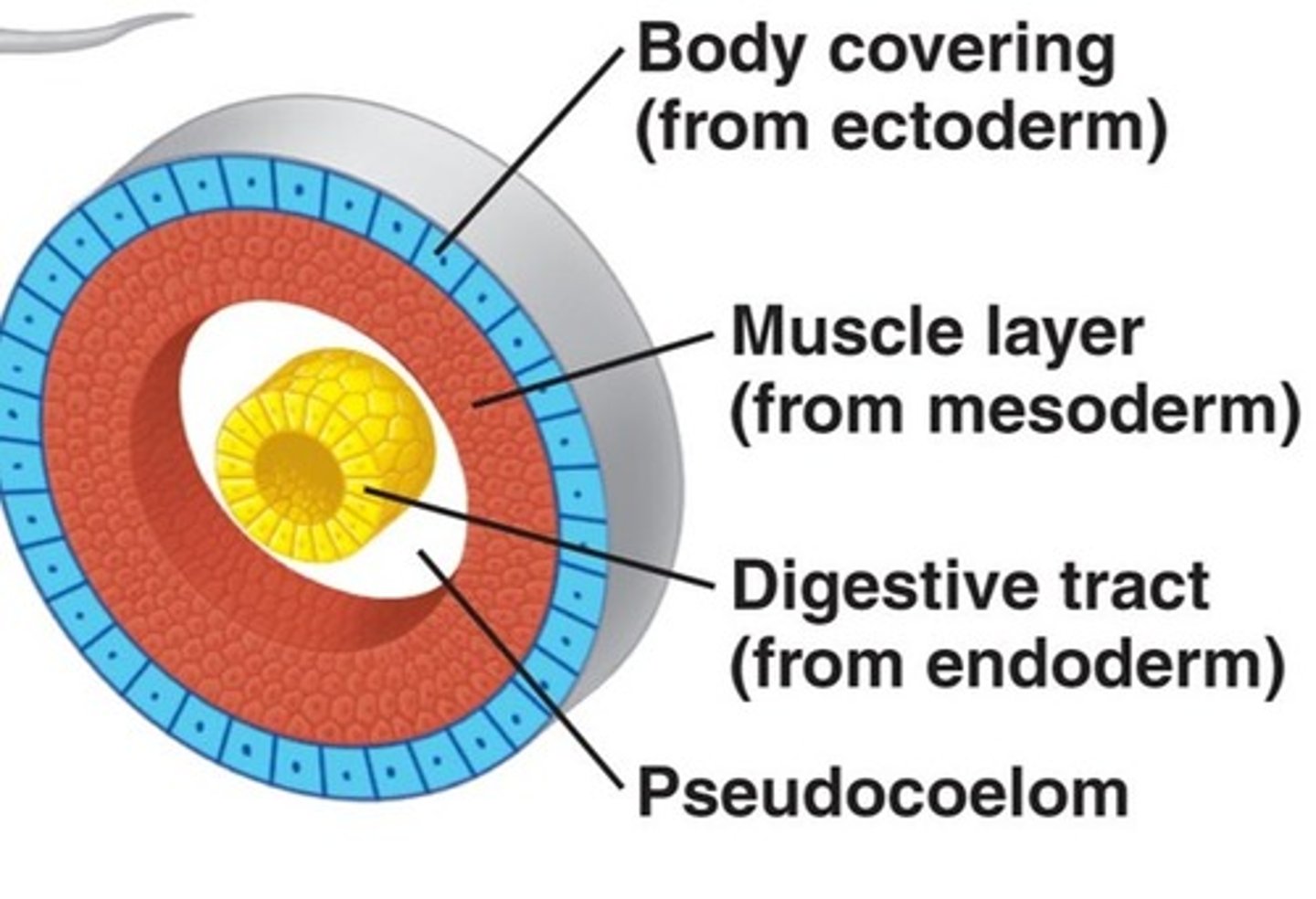
pseudocoelomate
an animal whose body cavity is not completely lined by mesoderm
coelomate
animal with a body cavity located entirely within the mesoderm (BOTH the endoderm and ectoderm and lined by the mesoderm)
Hox genes
series of genes that controls the differentiation of cells and tissues in an embryo
- determine body plan, segmentation, as well as the number and placement of appendages
- duplicated in 4 clusters: A-D
choanoflagellates
protists that are the closest living relatives of animals
proterozoic (pre-cambrian) animals
Ediacaran biota (~565 mya)
-Earliest known animal fossils; many extinct
-Soft bodied: sponges, jellyfish-like, worm-like
paleozoic era animals
"Cambrian explosion" (~535 mya) - dramatic animal diversification:
-emergence of almost all major phyla (+ other extinct ones)
- first mineralized skeletons, shells
later paleozoic era
Era in which:
- vertebrate fishes dominate seas
- arthropods first invade land, followed by vertebrates (amphibians)
- emergence of first reptile-like amniotes
mesozoic era animals
Era in which:
- dinosaurs, pterosaurs, and aquatic reptiles roamed
- origin of birds and mammals
- saw the end of cretaceous extinctions
cenozoic era animals
era in which the diversification of modern groups occurred
deuterostomia, lophotrochozoa, ecdysozoa
what are the 3 major clades of bilaterian animals?
sponges
what branch on the animal phylogenetic tree is the sister group to all other animals?
eumetazoa
what clade on the animal phylogenetic tree encompasses animals that have tissues?
bilateria
what clade do most animal phyla belong to on the animal phylogenetic tree?

