Unit 10, managing strategic change
 Call Kai
 Learn
Learn Practice Test
 Spaced Repetition
 Match
Match Flashcards
 Knowt Play
1/84

There's no tags or description
Looks like no tags are added yet.
Name | Mastery | Learn | Test | Matching | Spaced | Call with Kai |
|---|
No analytics yet
Send a link to your students to track their progress
85 Terms
What are some Internal causes of change?
culture
Changes in leadership,
Business growth
business type
What are some External causes of change?
political change
economic change
social change and attitudes
Developments in technology
legal changes and regulations
Changes in the competitive environment
What is Incremental change?
small changes made over a long period of time, usually with the business responding to external enviroment
What is step change
rapid change that is dramatic and requires a lot of internal changes
What is Disruptive change?
change is caused by a shift in the industry which managers do not see coming (unexpected event)
What is Lewin's force field analysis?
A theory of implementing change and why change is often difficult to implement
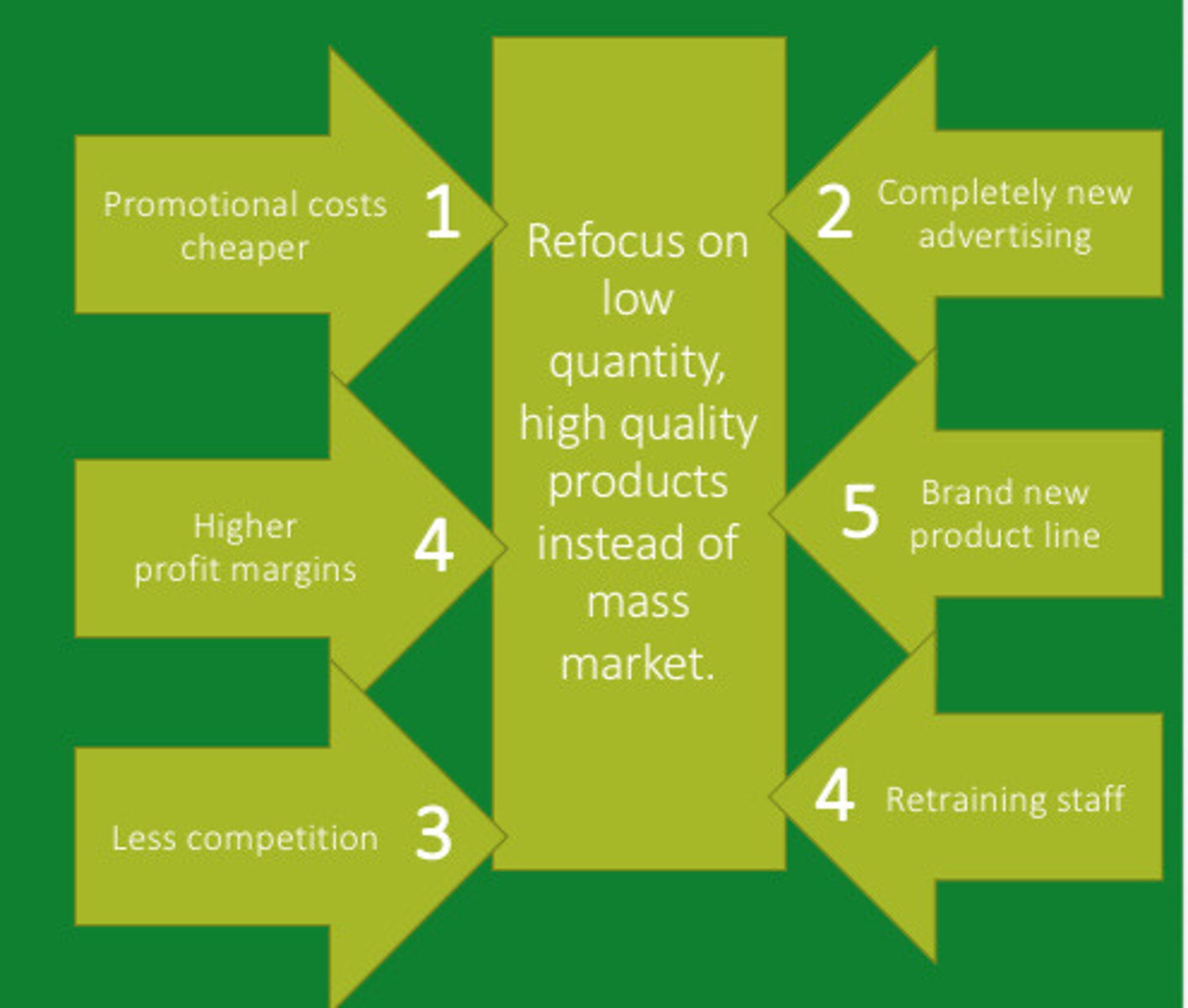
What are Driving forces?
things that are driving a business to change
What are some examples of driving forces
New ideas from staff
competitors changing
demand from shareholders for higher dividends
What are Retraining forces?
The forces that don’t want the business to change
What are some examples of restraining forces
expenses of change
staff not wanting change
disagreement of higher managers
What are the Advantages of Lewin's force field analysis?
IT is simple and shows the reasons for no change
What are the Disadvantages of Lewin's force field analysis?
may miss vital forces
what is organisational structure
the way employees are managed and organised in a business
What is the span of control referring to in the organsiational structure charts
the number of people one manager is responsable for
What does a narrow span of control mean
low no of employees per manager , meaning closer supervisions, better communications. More layers in the hierarchy
What does a wide span of control mean
More indempendance for employees, cheaper way of managing. Flatter hierarchy
What are the features of a flat hierarchy
Less layers of staff
less managers
wide spans of control meaning greater delegation
What are the features of a tall hierarchy
More layers of employees
More staff and managers
narrow spans of control
What is a flexible organisation?
A flexible organisation is one that can change easily and adapt to new situations.
What are the ways a business can seek to be more flexible?
delayering
decentralisatiton
outsourcing
project based teams
Why does delayering of the hierarchy make a business more flexable
less management, meaning quicker decision making in response to changes in the external enviroment
Why does decentralisation help make a business more flexable
more idea taking from employees, meaning business can quickly get an understanding of the enviroment aswell as allowing lower down employees make the smaller decisions speeding up response
Who proposed the model of resistance to change
Kotter and schlesinger
What is kotter and schlesinger process of when resistance to change occurs
When managers make a change there are four factors that may mean there is resistance
What are Kotter and Schlesinger 4 barriers to change/ reasons for resistance to change?
parochial self interest
low tolerance for change and inertia
different assessment of the situation
misinformation and misunderstanding (trust issues)
what is parochial self interest
When employees dont want change due to the unnecesary impact on themselves
What is low tolerance for change
Workers don’t feel as if they have the skills to change
What is different assesment of the situation to do with resistancy to change
Employees do not agree with the managers assesment and why they need to change
What is misinformation/misunderstanding (trust issue)
Don’t believe what managers tell them and feel that they are given a lack of neccesary information
What are some Reasons employees resist change?
habit
economic reasons
fear of the unknown-
What are some Organisational barriers to change?
existing power structures,
resistance from work groups,
failure of previous changes
What are some Reasons why change fails?
lack of planning,
insufficient training,
resources,
whatinadequate reward
What are the 6 ways Kotter and Shleinger stated could be used to overcome resistancy
Education and communication
participation and involvement
support
negotiation and agreement
manipulation
coercion
Why does education and communication help overcome resistancy, and who is it usually used on
Employees are explained to, and shown the LT startegy and goals. This helps employees not feel as uncertain
Why does participation and involvement help overcome resistancy, and who is it usually used on
involves shareholders in the change and motivates employees to become involved with the excitement of change
Why does facilitation and support help overcome resistancy, and who is it usually used on
It supports employees who fear their lack of skills, and ensures better training, counselling ect so they are less worried they will fail to keep up
Why does negotiation and agreement help overcome resistancy, and who is it usually used on
Uses bargains and negotiation to win agreements, used on important stakeholders, senior managers, and trade unions
Why does Manipulation help overcome resistancy, and who is it usually used on
Selectively sharing info to key members, aswell as giving them more decision making power = them being more likely to feel important and help change
Why does Coercion help overcome resistancy, and who is it usually used on
using authority, and strict threats to ensure change ie, employees who resist will be made redundant. This can occur when resitance is strong and time period is short
What is Knowledge management?
the process of capturing, developing, sharing and effectively using organisational knowledge
What is Organisational culture?
behaviour of people within an organisation that eventually leads too it becoming the norm in the business
Where does organisational culture usually come from
behaviour of leaders,
shared beliefs,
ways of working,
behaviour of individuals or groups
What is a strong organisational culture?
A strong organisational culture is when employees agree with the corporate values of the business.
What is a weak organisational culture?
In a weak organisational culture employees don't share the company's goals and usually have to be forced to do what the company wants them to do.
What are Handy's 4 categories of organisational culture?
power culture,
role culture,
Person culture
task culture
Explain power culture (Handy)?
Limited to the interests of the Main stakeholders, centralised decision making, all employees look up to top management for guidance
Explain role culture (Handy)?
beurocratic ,with a rigid hierarchy that determines power and role in the company, the higher on the hierarchy, the more power and decision making you have
Explain task culture (Handy)?
uses a matrix structure where employees are more split into groups where they can share knowledge. Those with better knowledge are heard and have more power
Explain person culture (Handy)?
Individiuals are more important than the organisation itself , individuals make decisions themselves and don’t neccesarily need to report back to organisation
Business example of power culture
Steve jobs in apple, main decision maker, looked up to
Business example of Role culture
The NHS, follow a clear hierarchy with clear job descriptions.
Business example of Task culture
NASA uses project teams in order to share knowledge more effectively
Business example of person culture
Law firms, usually the lawyers themselves are more important and make individual decisions over the entire firm.
What are the advantages of power culture (handy)?
- Few rules and procedures needed, managers set the pace and direction
- Swift decision making possible
What are the disadvantages of power culture (handy)?
- Large organisations struggle to be run in this way
- One person having total authority is not always good for decision making!
What are the advantages of role culture (handy)?
- Set procedures, maximises efficiency and accountability
- Can train individuals for role
What are the disadvantages of role culture (handy)?
- Tall hierarchy, resistant to change
- Less scope for experts to make improvements
What are the advantages of person culture (handy)?
- Can be nimble and open to change
- Benefits from expertise of staff
What are the disadvantages of person culture (handy)?
- Can be hard to establish authority to make decisions
- People can believe themselves superior to the business
What are the advantages of task culture (handy)?
- High levels of engagement and enthusiasm
- Values expertise of team
What are the disadvantages of task culture (handy)?
- Teams may develop own goals separate from the company
START HERE AGAIN
What are some Reasons for changing culture?
declining profits,
inadequate returns on investments,
low customer service standards
Growth - as they get bigger, there will be more challenges, This can necessitate a culture change.
International expansion
Change in leadership
Problems with changing culture
overuse of power tools, vision but not tools, beginning with power tools
What is Strategic implementation?
the process of allocating resources to support the chosen strategies
Functional structure
consists of activities like coordination, supervision and task allocation
What are the 4 types of organisational structure?
- functional structures
- product-based structures
- Regional structures
- matrix structures
What is a functional structure?
Organised into departments with their own functions, e.g. HR, finance, marketing, operations.
What is a Product-based structure?
Each product or product line operates almost like a separate business with their own marketing, finance, etc.
What is a Regional structure?
Based on geographical location, each area will have its own functional departments under a regional or national manager.
What is a Matrix structure?
Teams are organised based on two different criteria. For example, an accountant may report to a financial director, but be assigned to a particular project with its own manager.
What is Network analysis?
project management tool to aid the implementation of a strategic plan
Designed to support managers in finding the most efficient and cost-effective way to complete a complex project.
How to use network analysis?
- identify all the tasks that need to be done
- and assign them letters
- need to identify the dependencies between them (before starting on one task what needs to be done before).
- set the tasks out in a visual network with one task leading to another. Tasks are represented by arrows, the points where tasks begin and end are called node.
- need to work out how long each task is expected to take.
- nodes are sometimes assigned numbers as well, if so the number of the node is usually on the left.
-in the upper right of each node put the driest time that this node can be reached and the next task can begin assuming nothing gets delayed (do this from left to right).
-when two tasks lead to the same node its the latest time that goes into the node.
-in the lower right of each node put the latest time that we can reach that node without delaying the completion of the project (do this from right to left)
-tasks not on critical path can be delayed up to last finishing time 'float' time
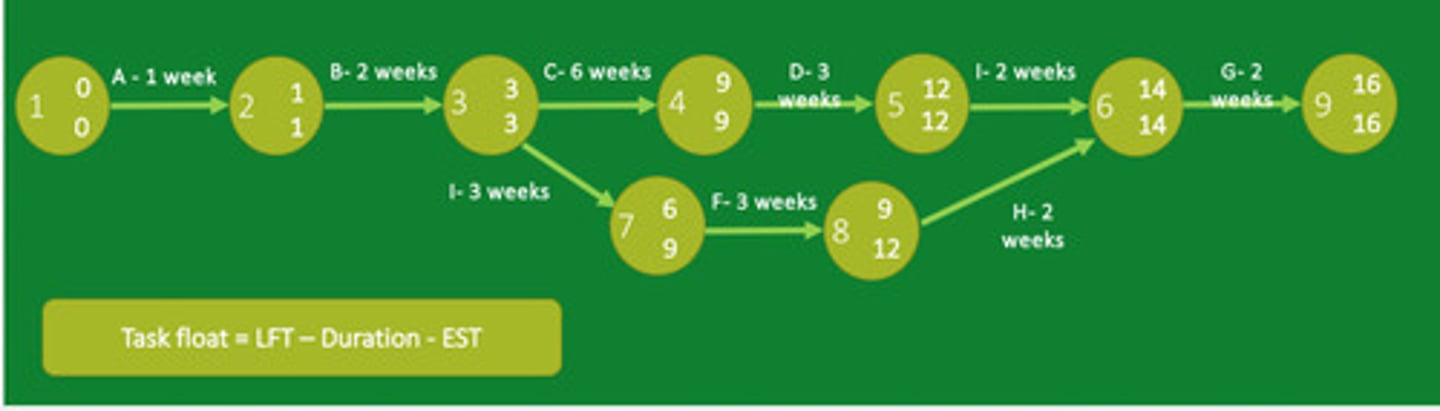
How to calculate float time?
Float = last finishing time (LFT) - duration - earliest finishing time (EST)
What is the critical path in network analysis? And how to spot it?
The critical path is the path to the end point through the network that takes the most time to complete.
It's easy to spot because this is the path where the earliest finishing time (EFT) always equals the latest finishing time (LFT).
What is a Planned strategy?
A planned strategy is one where strategy is decided in advance. It is deliberately adopted as a result of decisions made by leadership.
What is an Emergent strategy?
An emergent strategy is one that evolves over time as a business learns what it is good at and establishes patterns of behaviour through the choices it makes.
What are the strengths of planned strategies?
- Clearly stated objectives to work towards.
- (Hopefully) carefully researched and based on known data about the market.
What are the weaknesses of planned strategies?
- Can cost a lot of time and money.
- Planned strategies can become out of date as the market changes.
What are the strengths of emergent strategies?
- Can adapt to the changing environment more easily.
- Relies on the knowledge and experience of middle and junior managers with more access to market information.
What are the weaknesses of emergent strategies?
- May not have a clearly stated goal to work towards.
- When strategy changes constantly, senior managers may be unaware of what direction the business is taking.
What is strategic drift?
Strategic Drift is the name for when the strategy chosen by a business and the reality of the market grow apart.
Porter strategic plan
company strengths and weaknesses, personal values of the management, industry opportunities and threats, bread societal expectations
What is Contingency planning?
A contingency is a plan that you have for when something goes wrong. It's a backup plan for when your main plan doesn't work.
What are Kotter and Schlesinger approaches to overcome resistance?
- education = communicate honestly about what is happening and why it needs to happen.
- participation = encourage resistant individuals to get involved with the process of change to bring them on-board.
- facilitation = providing support, counselling and training to adjust to changing circumstances.
- negotiation = understand what people want and give them incentives to accept change (or leave).
- manipulation = be selective about the information you give to people about how change is to occur.
- coercion = impose negative consequences for resisting change and communicate these to employees.

