Human Anatomy: Muscles
 Call Kai
 Learn
Learn Practice Test
 Spaced Repetition
 Match
Match Flashcards
 Knowt Play
1/79

There's no tags or description
Looks like no tags are added yet.
Name | Mastery | Learn | Test | Matching | Spaced | Call with Kai |
|---|
No analytics yet
Send a link to your students to track their progress
80 Terms
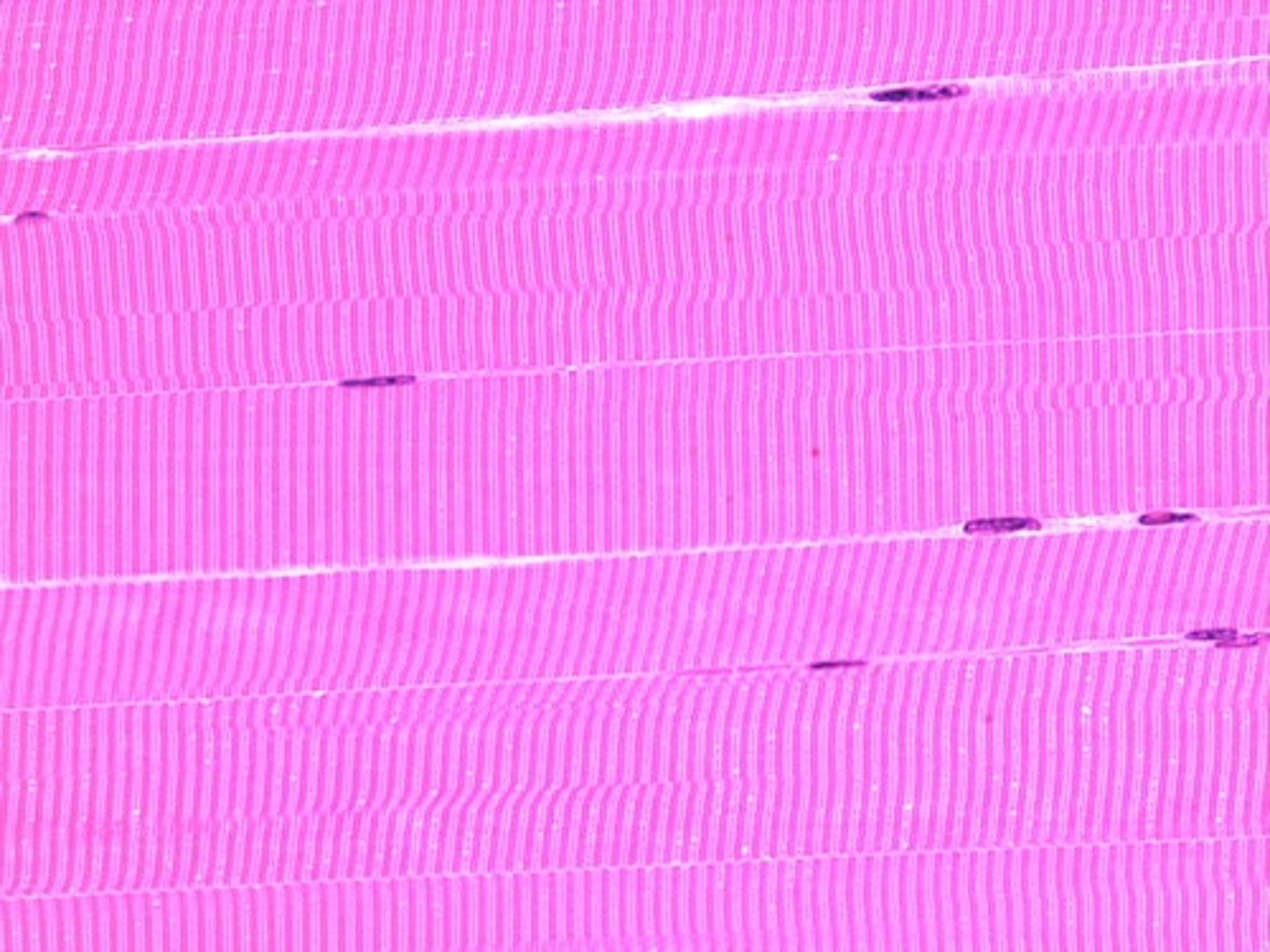
skeletal muscle
a muscle that is connected to the skeleton to form part of the mechanical system that moves the limbs and other parts of the body.
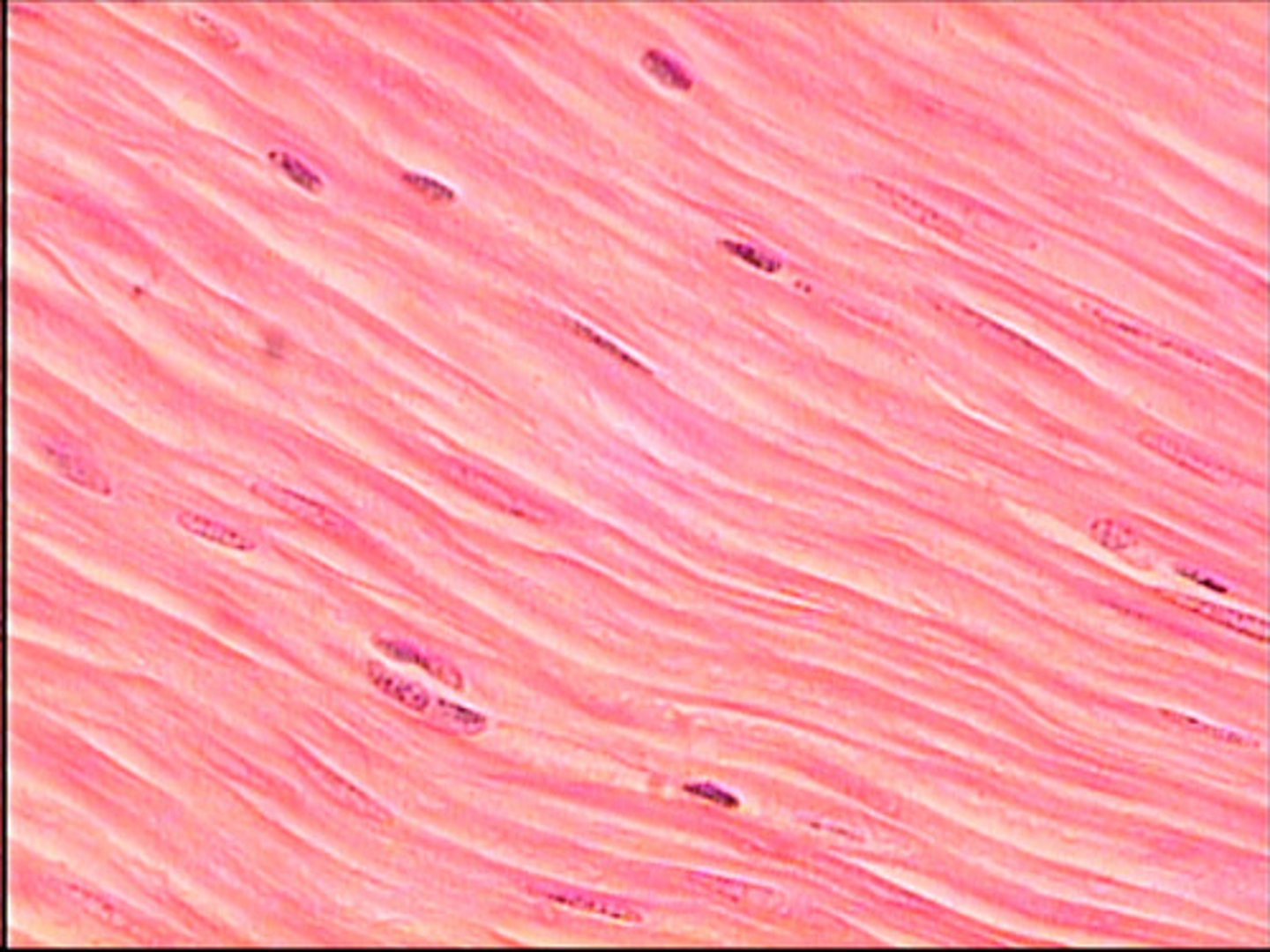
smooth muscle
Involuntary muscle found inside many internal organs of the body
cardiac muscle
Involuntary muscle tissue found only in the heart, striated

origin
attachment of a muscle's tendon to a stationary bone
Insertion
The attachment of a muscle tendon to a moveable bone or the end opposite the origin
belly
thicker, middle region of muscle between origin and insertion
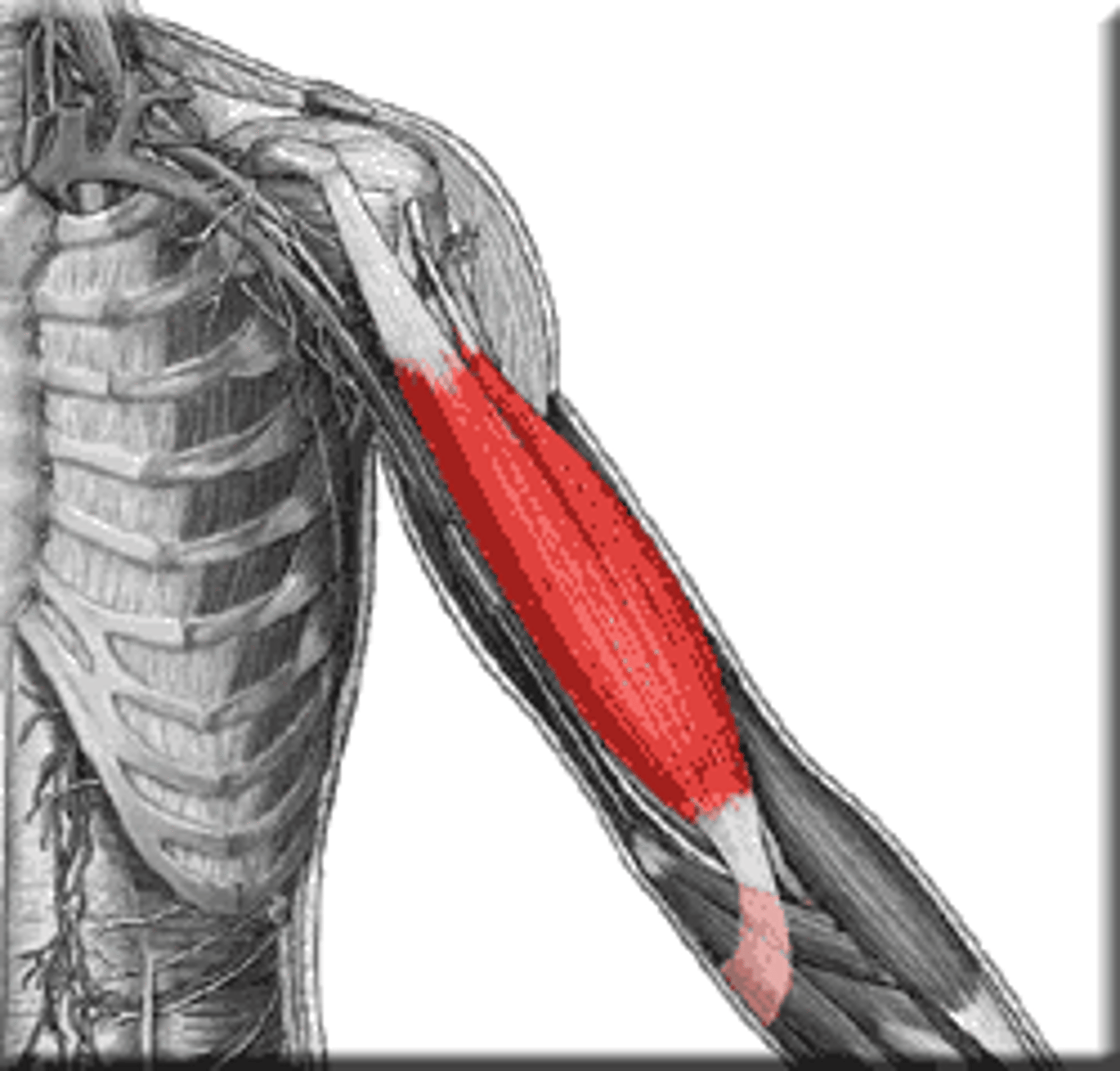
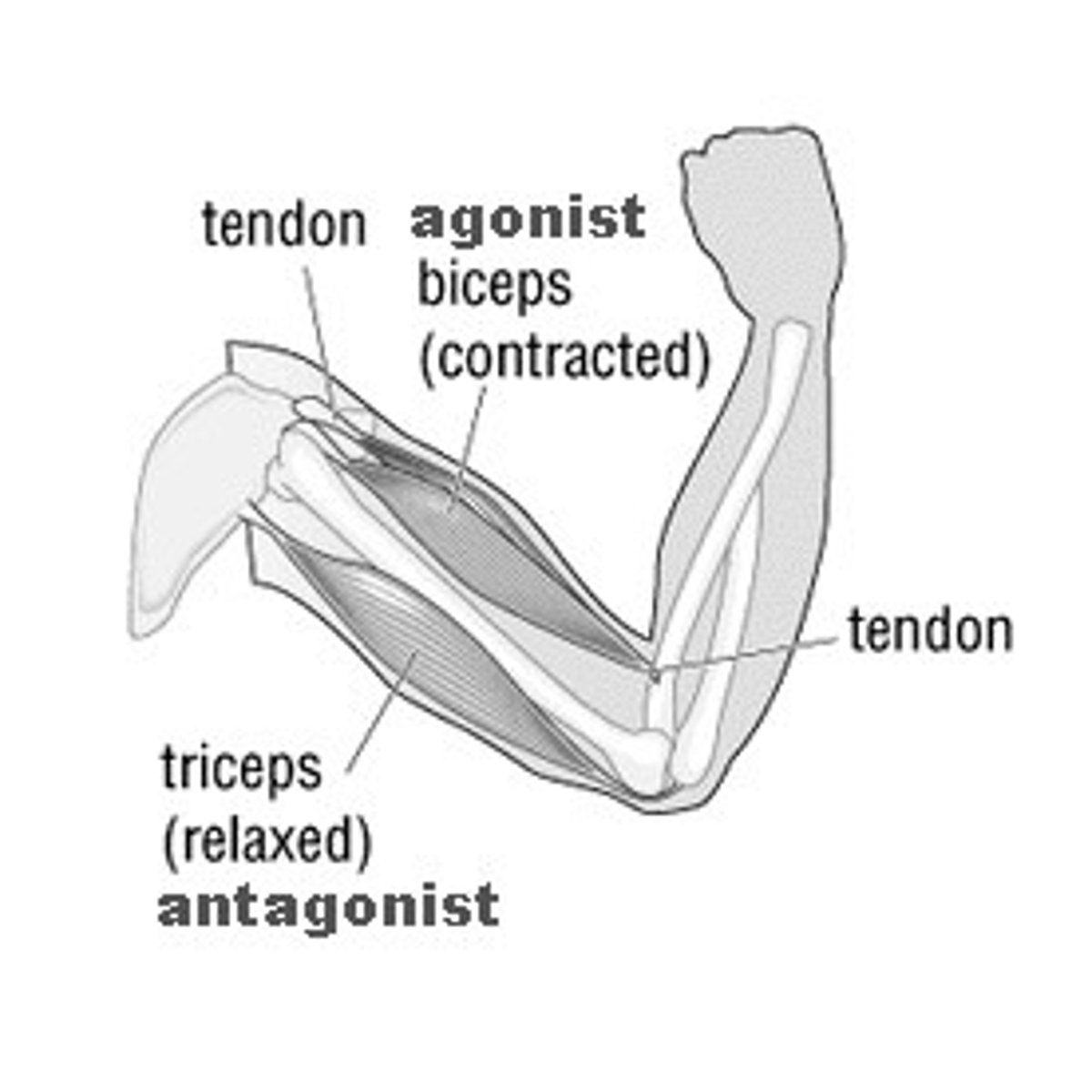
Agonist
muscle that contracts to produce a movement
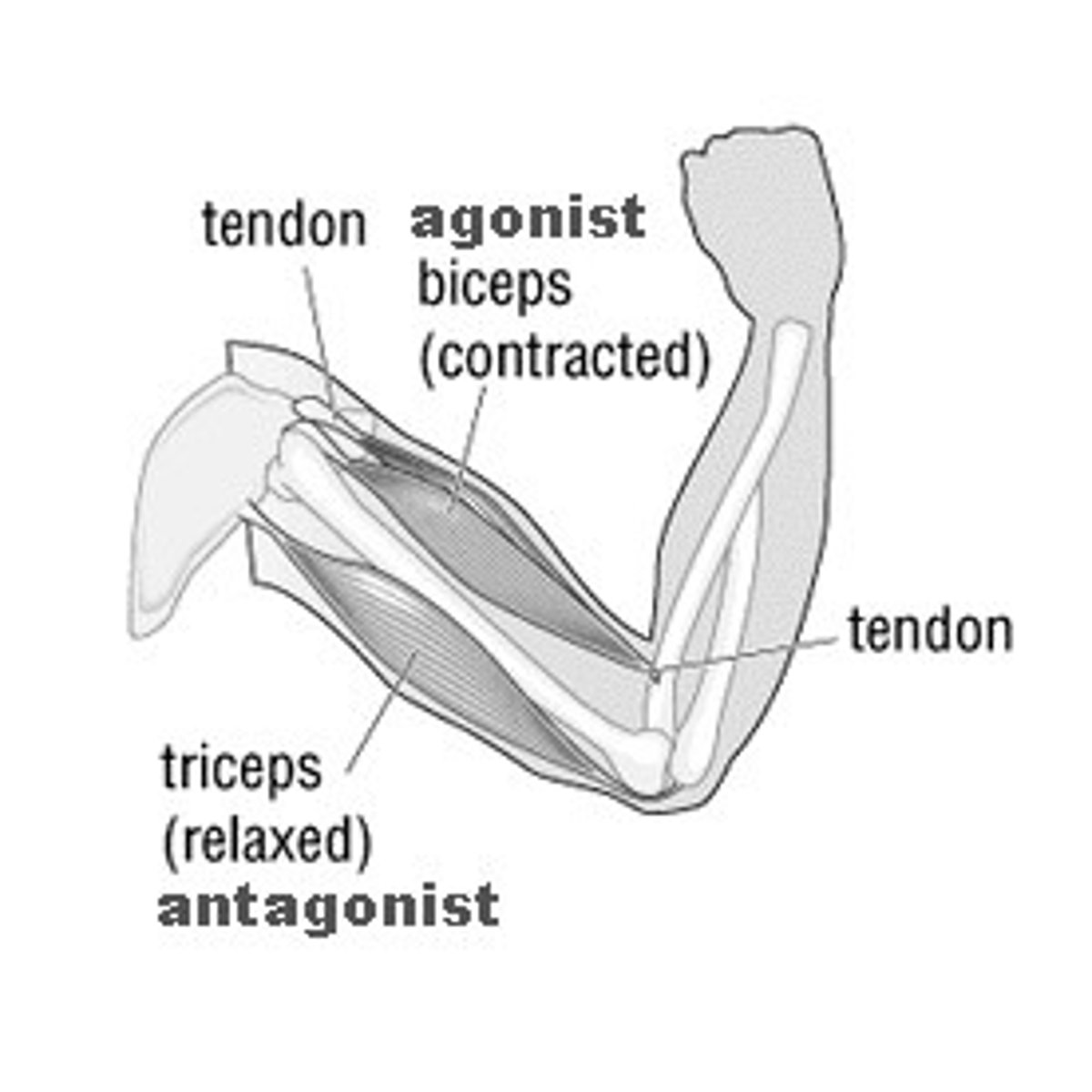
Antagonistic
muscle that relaxes to allow movement
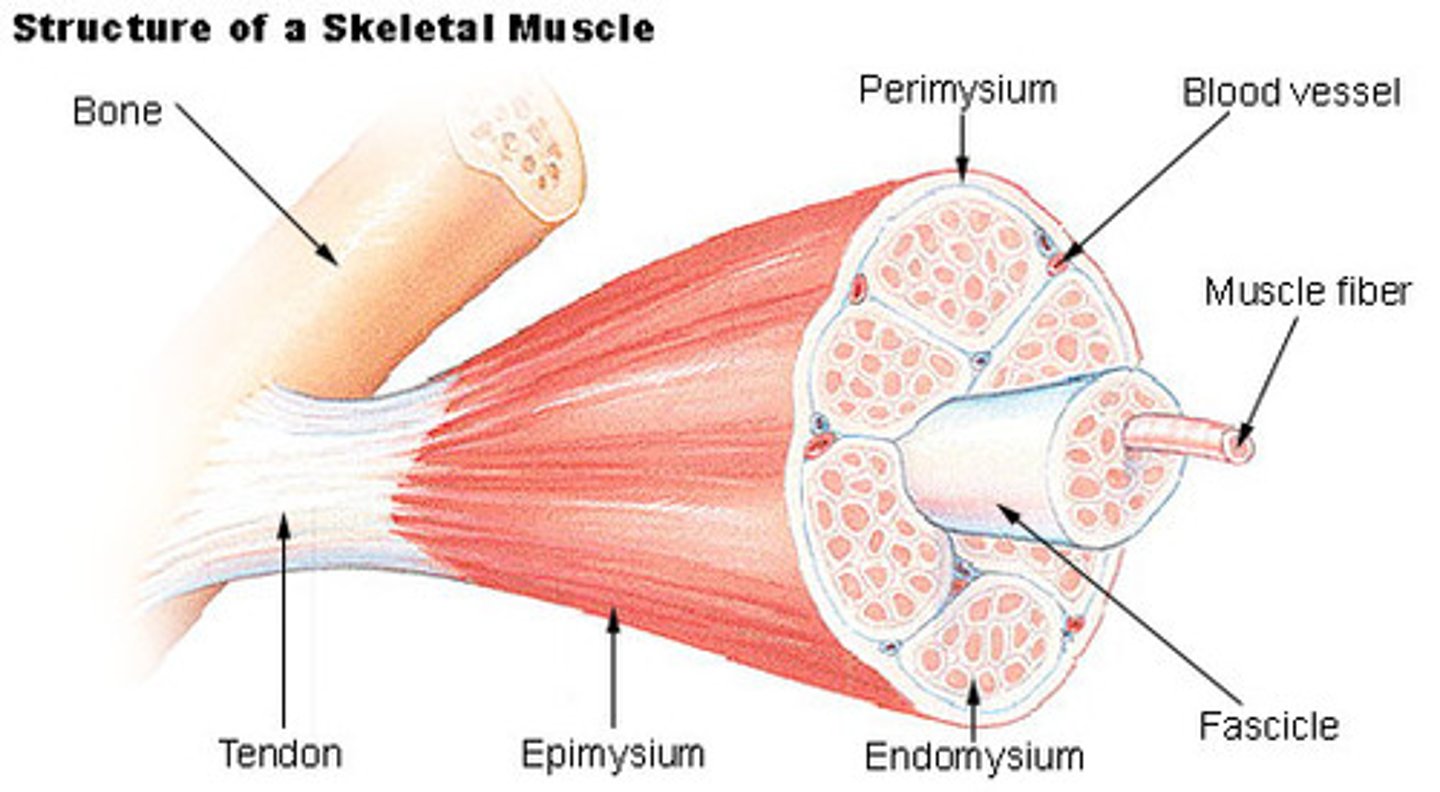
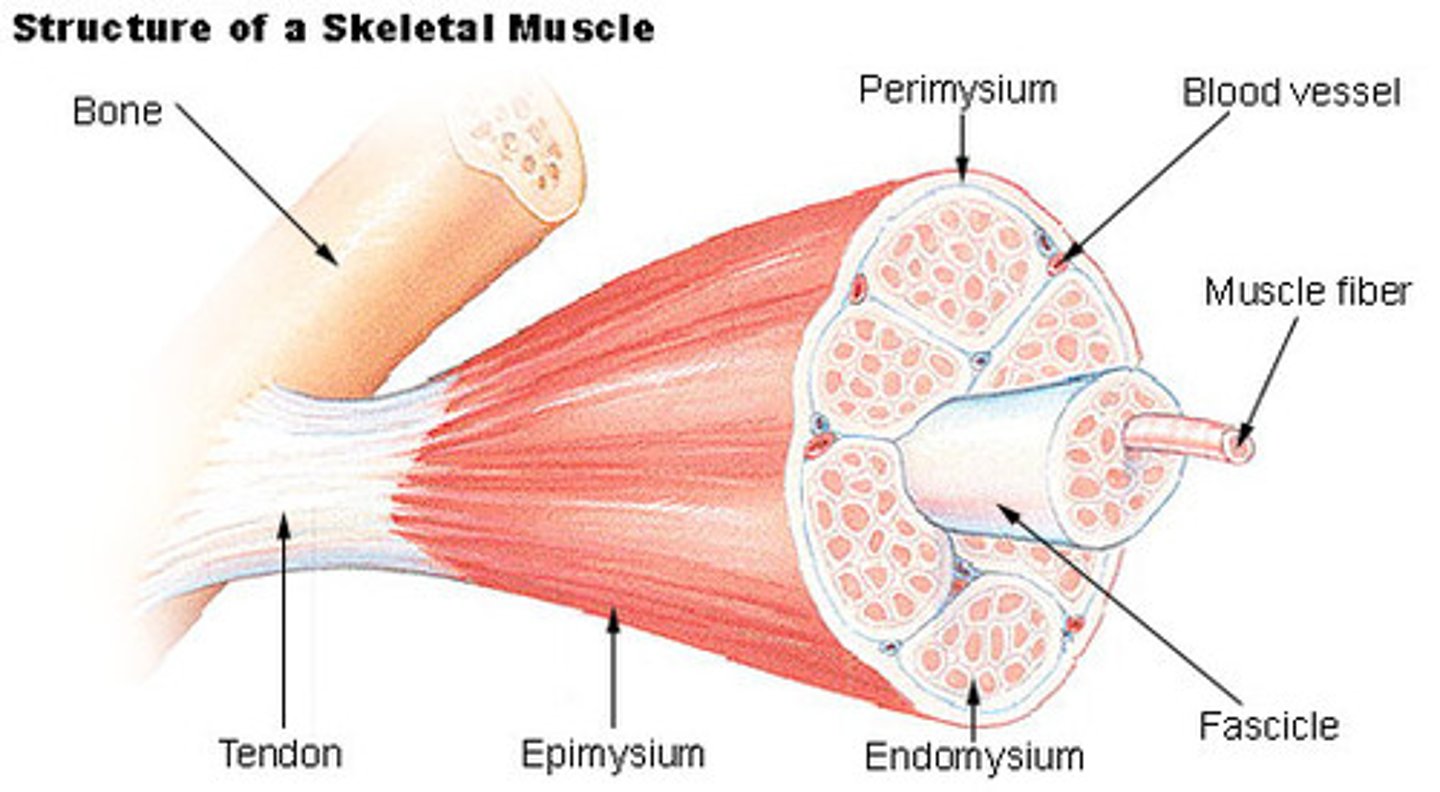
Epimysium of muscle
a sheath of fibrous elastic tissue surrounding a muscle.
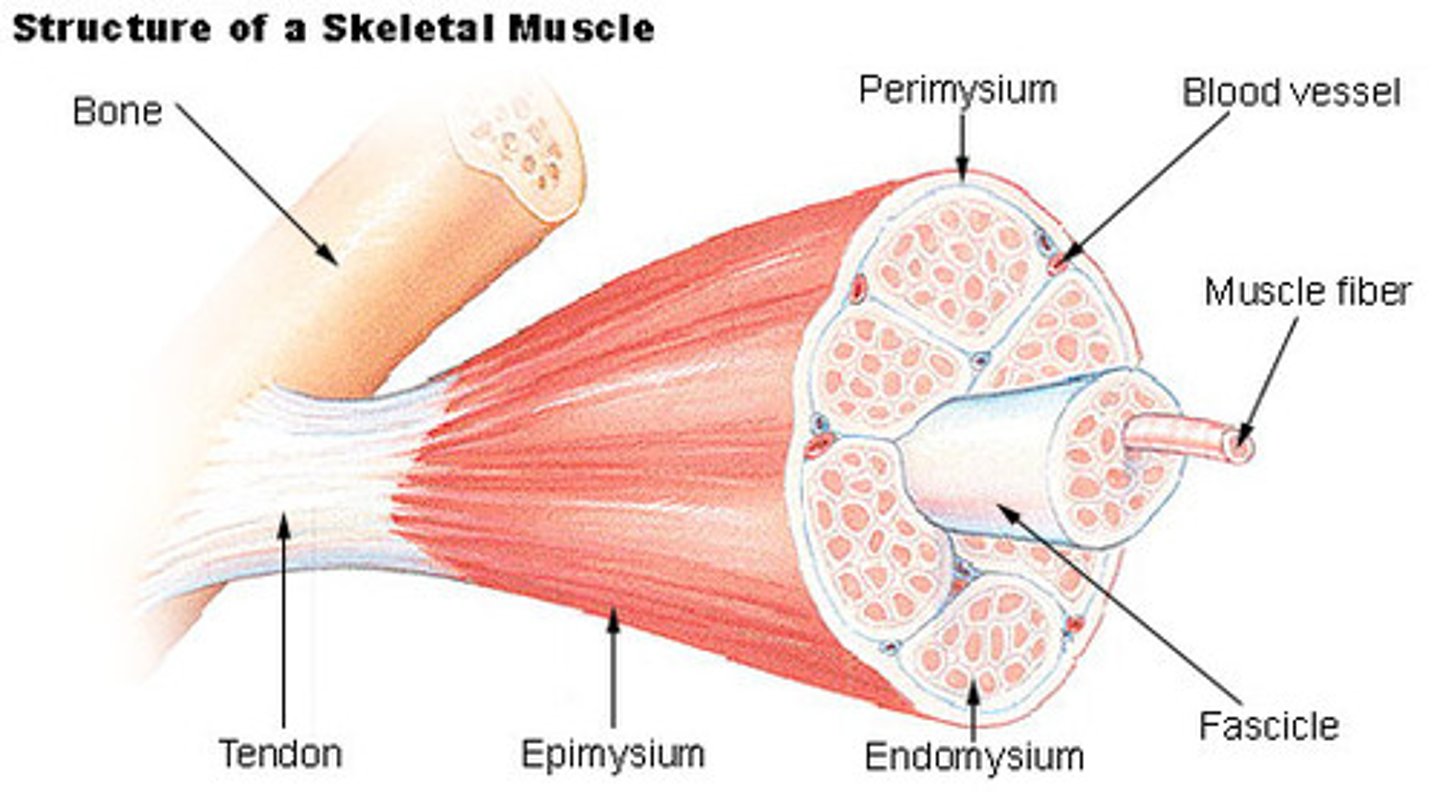
Perimysium
Connective tissue surrounding a fascicle
Endomysium
Connective tissue surrounding a muscle fiber
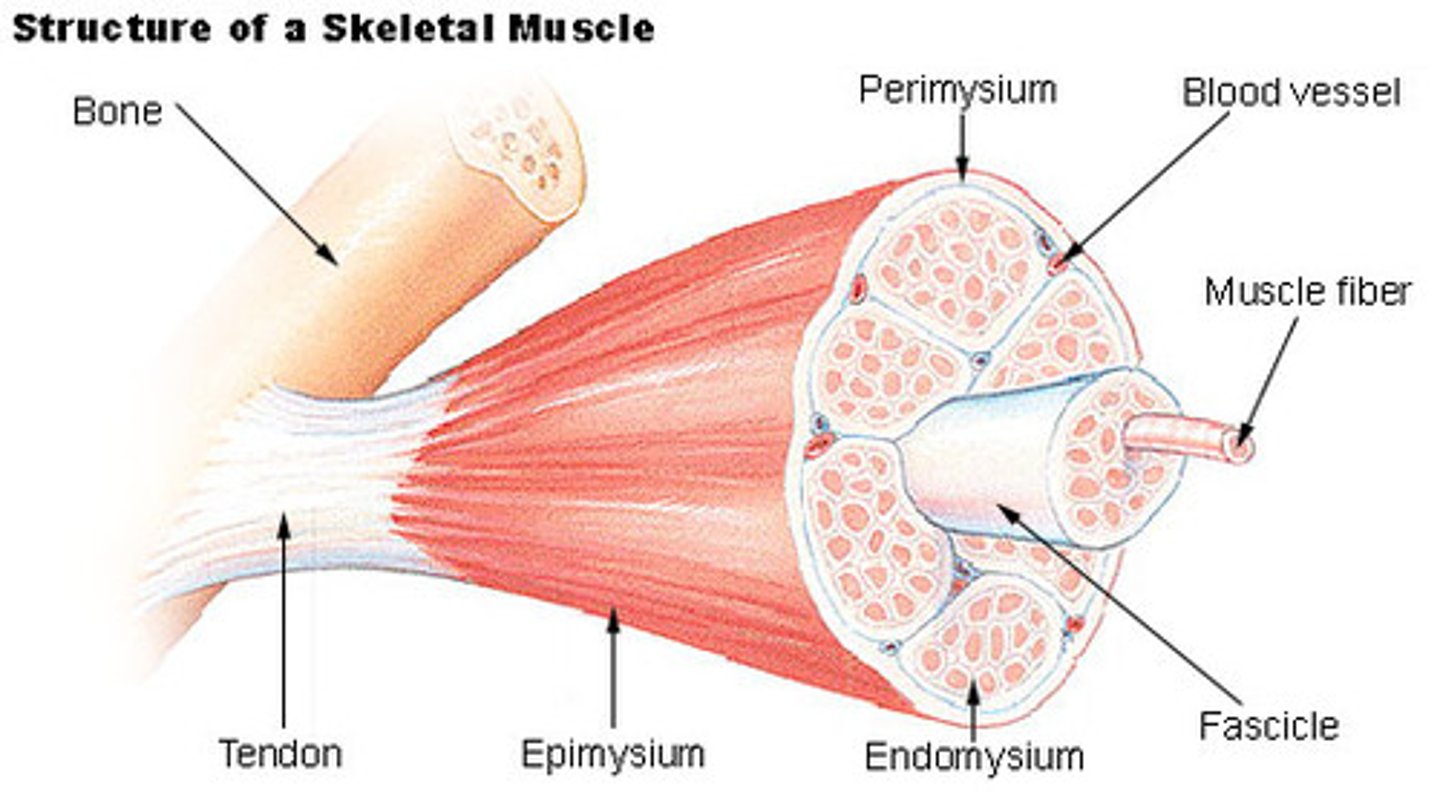
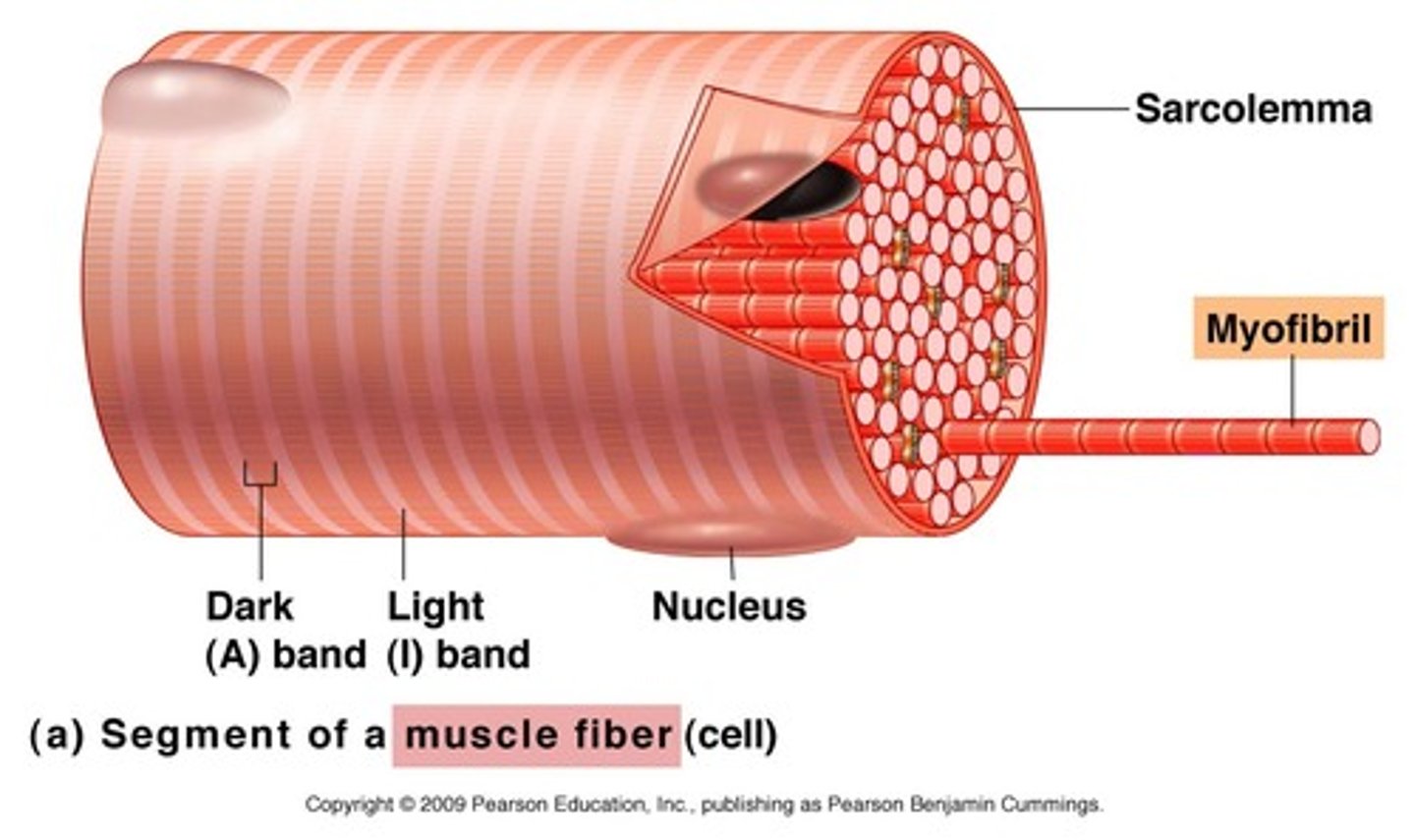
muscle fiber
muscle cell
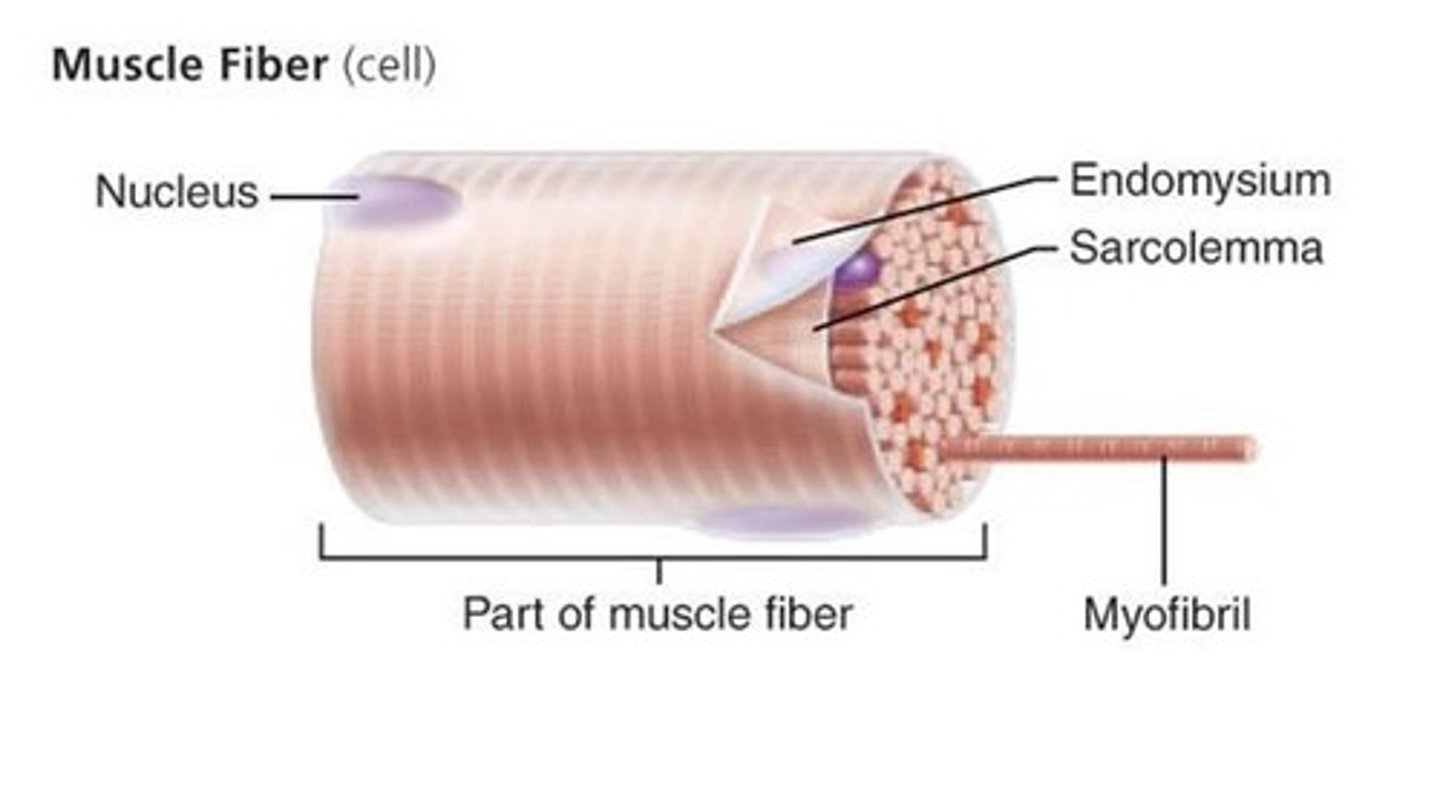
Myofibrils
contractile organelles of skeletal muscle tissue
muscle fascicle
bundle of muscle fibers surrounded by perimysium
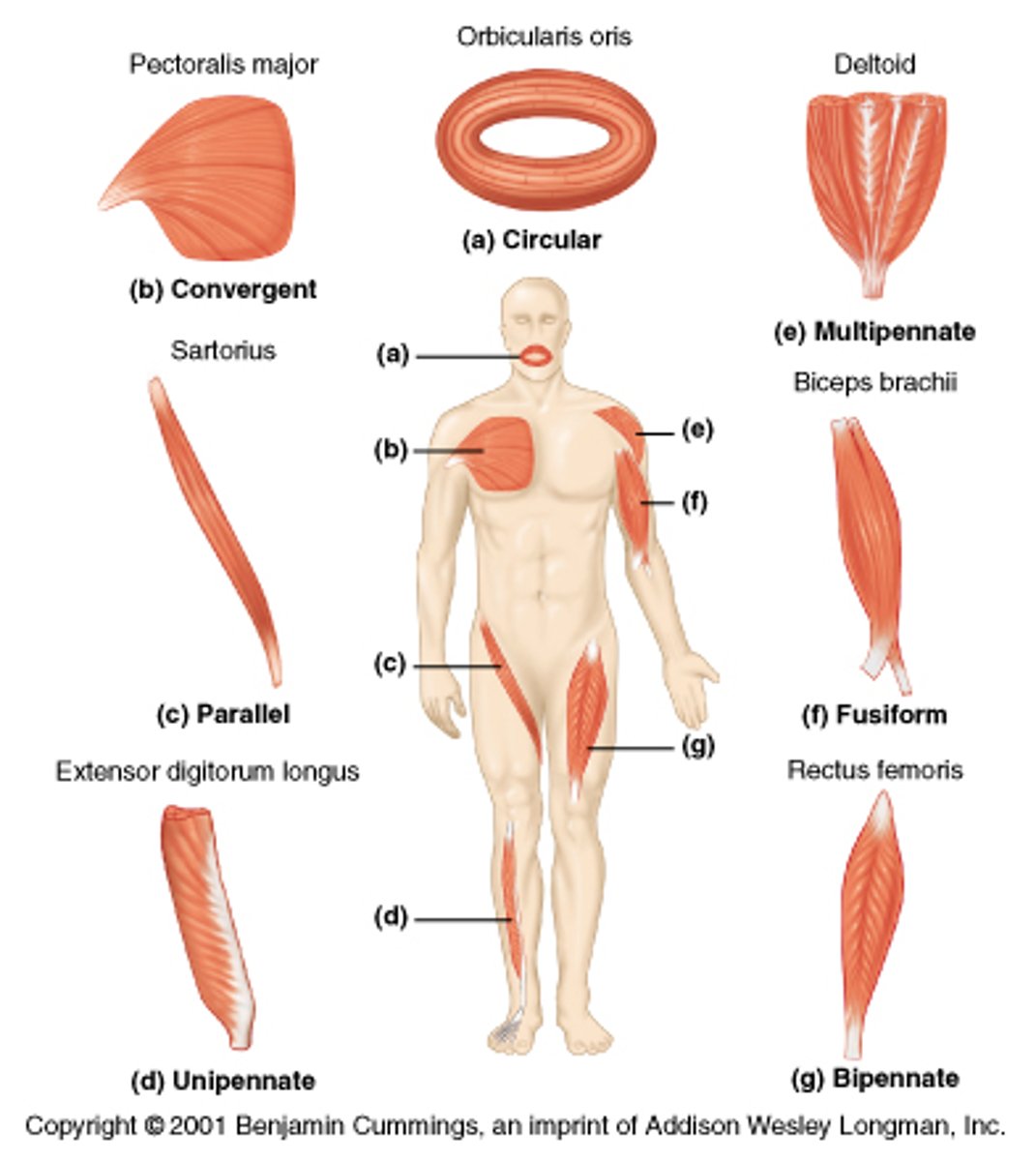
Fasicle Arrangement
parallel, fusiform, circular, triangular, unipennate, bipennate, multipennate
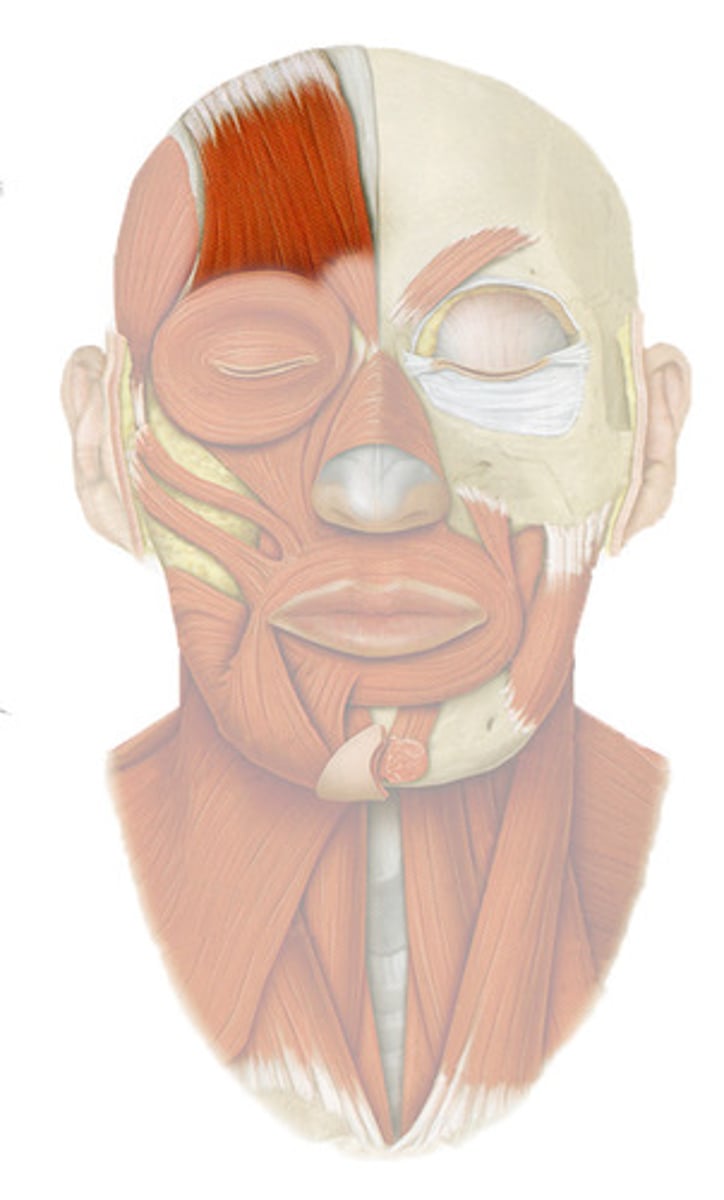
Occipitofrontalis
muscle that makes up the scalp with a frontal belly and an occipital belly
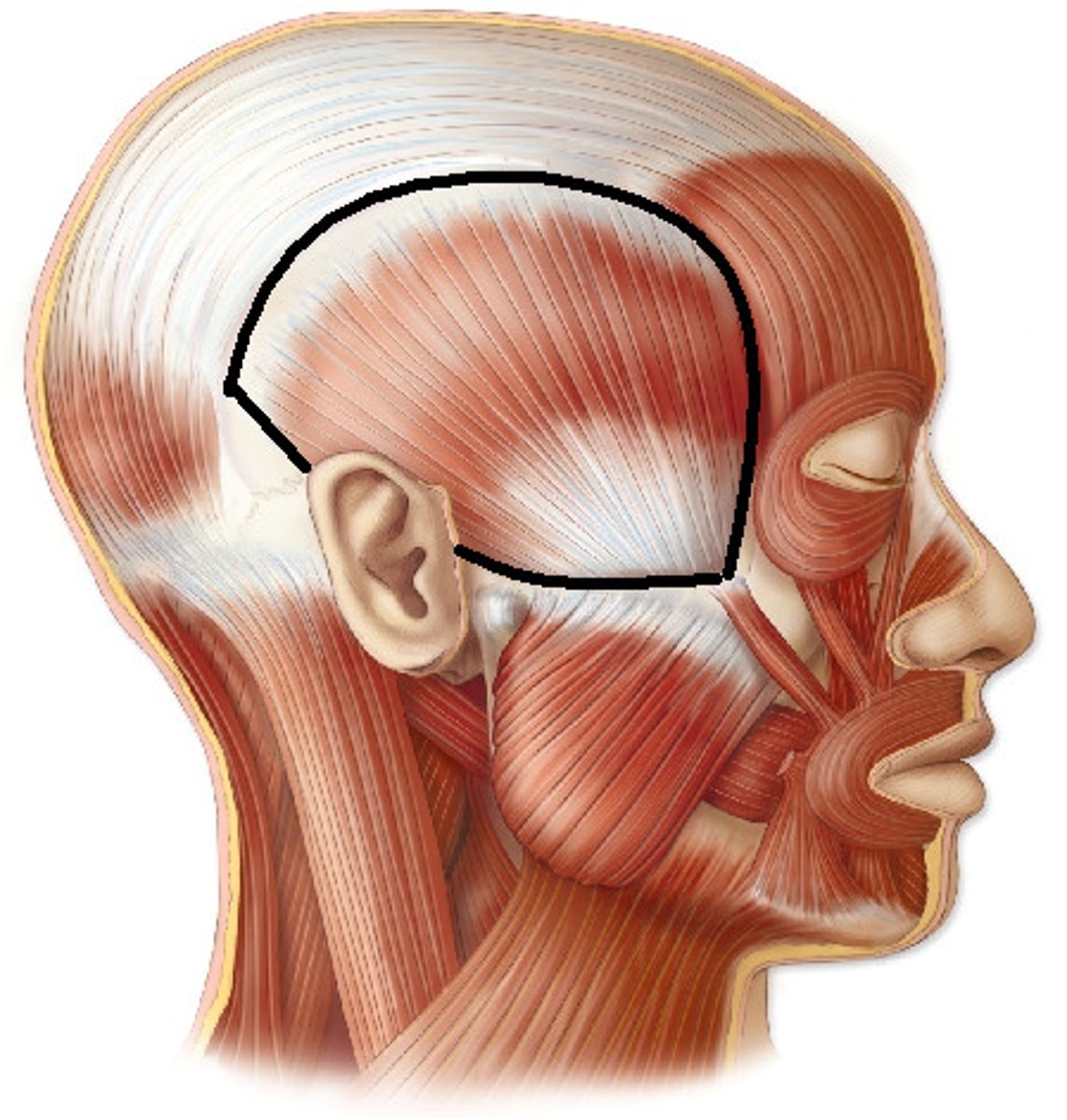
temporalis muscle
Muscle of the side of the head that moves the mandible upward and backward.
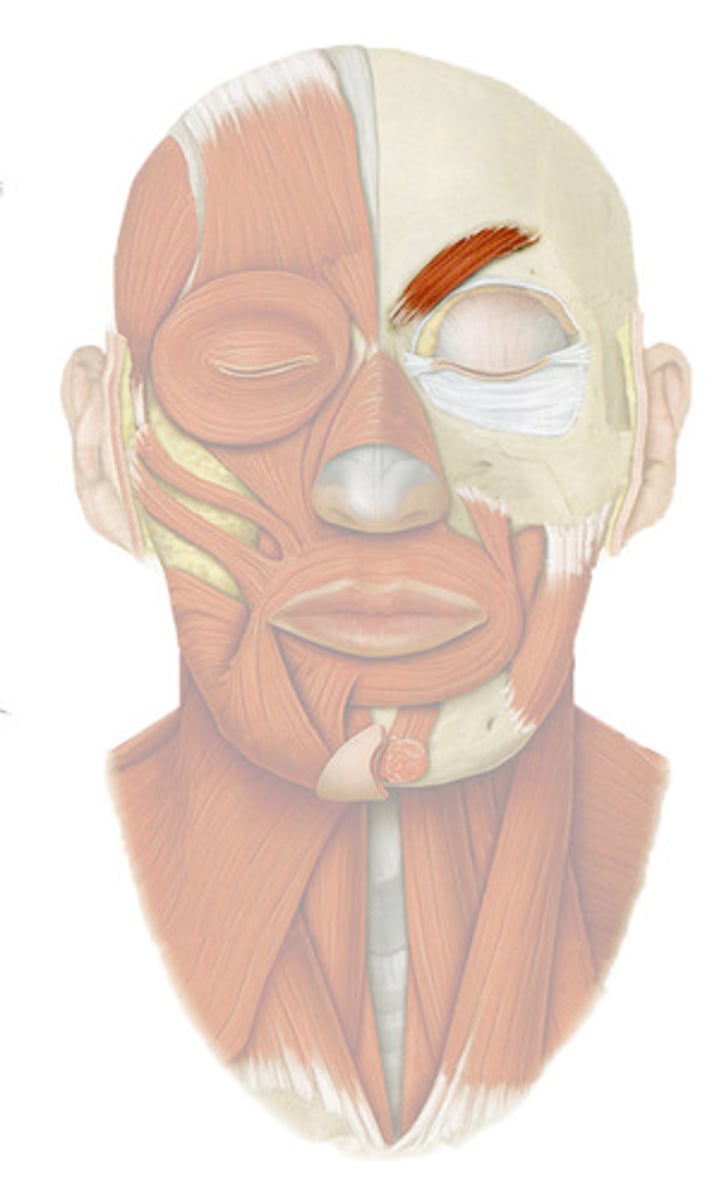
corrugator supercilii
the muscle that moves the eyebrow
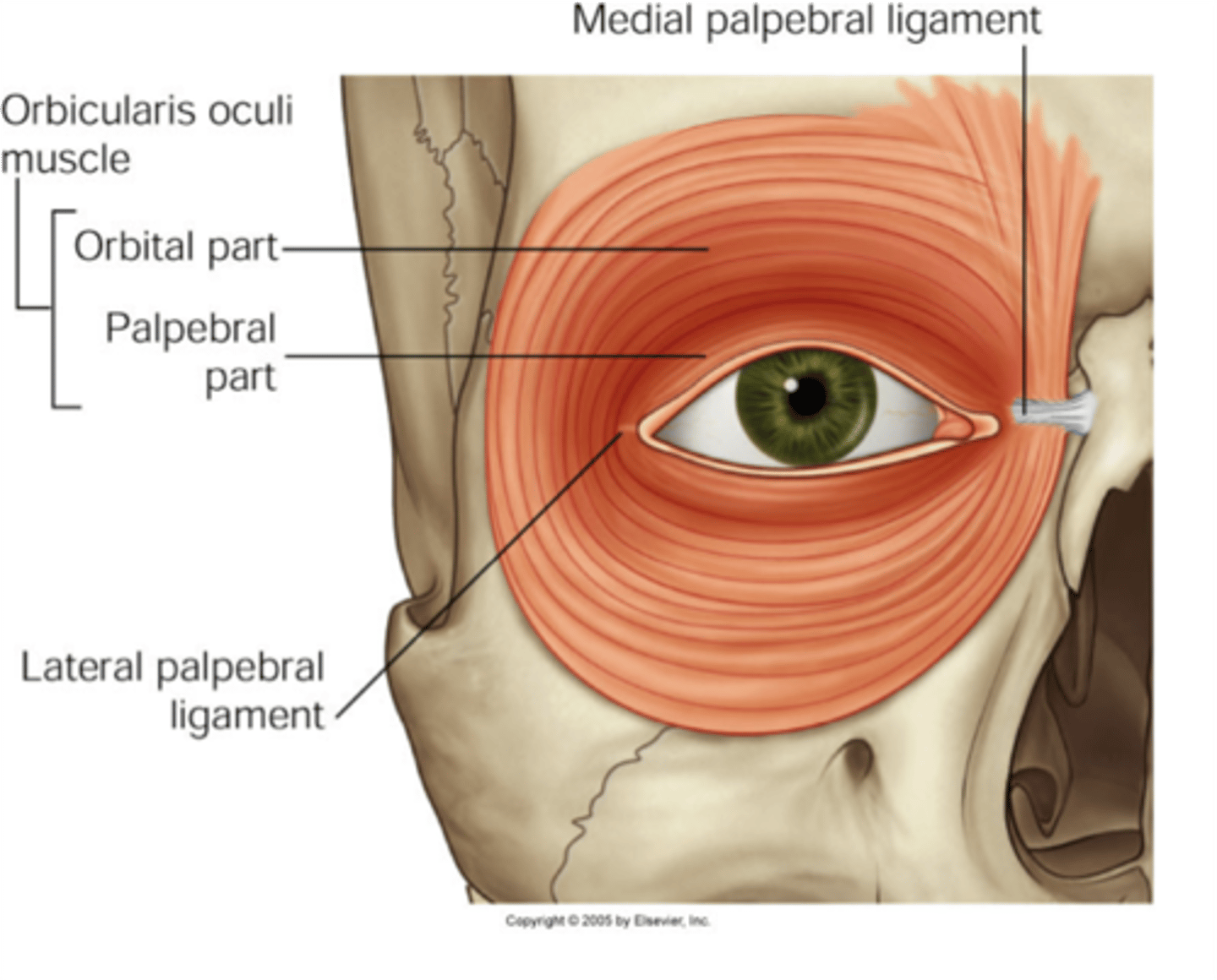
obicularis oculi
Ring muscle of the eye socket; enables you to close your eyes.
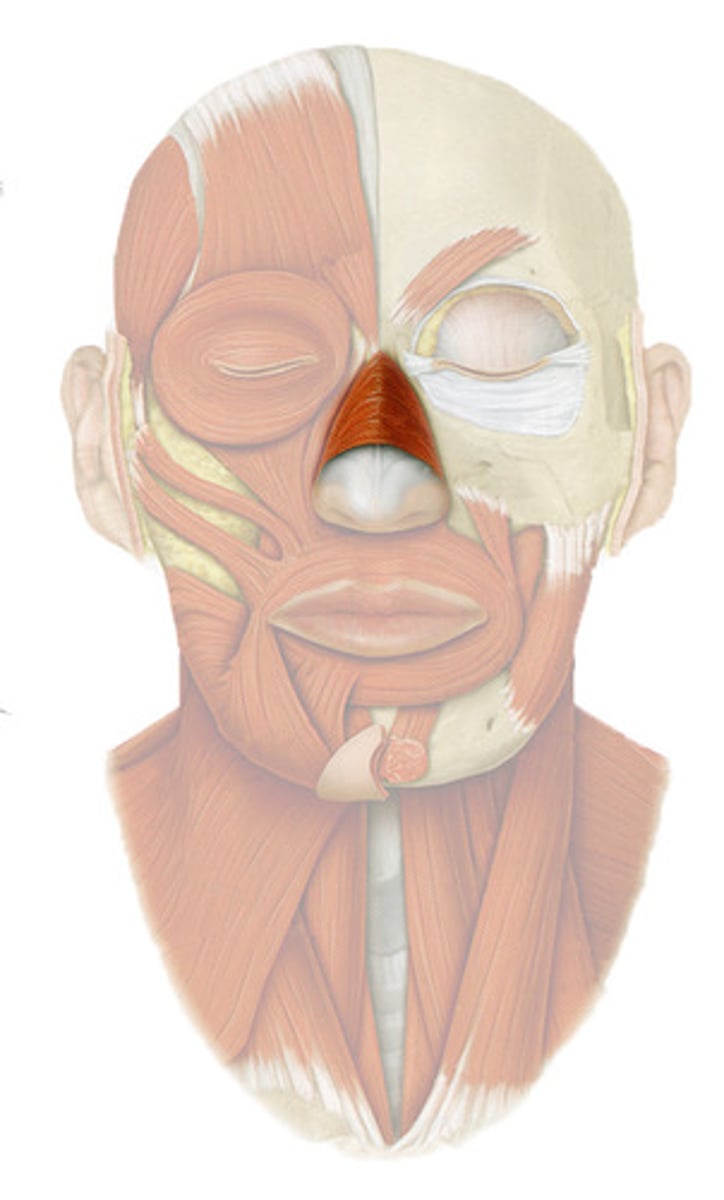
Nasalis
Two-part muscle which covers the nose
Zygomatic major and minor
Muscles on both sides of the face that extend from the zygomatic bone to the angle of the mouth. These muscles elevate the lip, pull the mouth upward and backward, as when you are laughing or smiling.
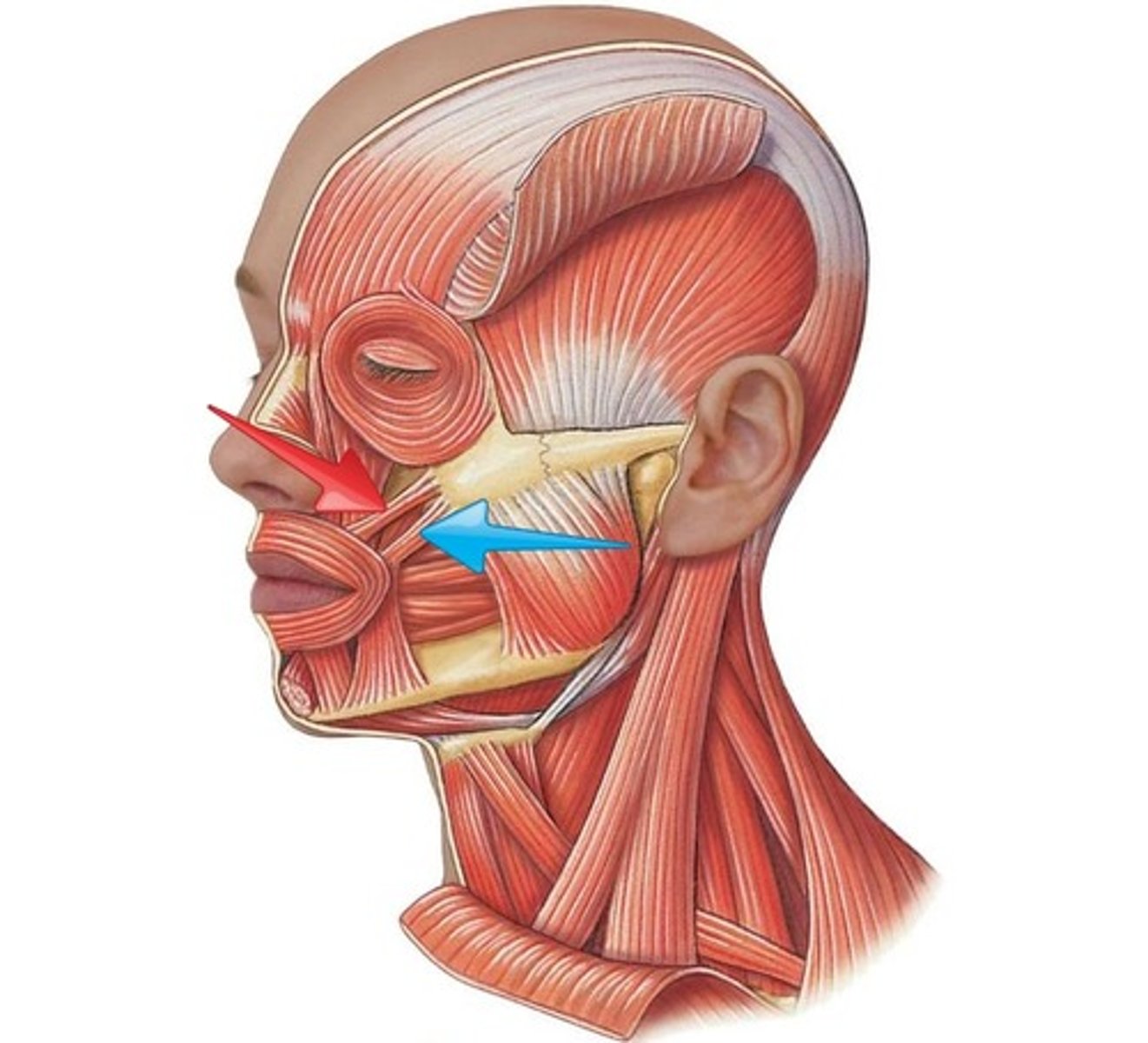
Risourius
muscle that retracts the corner of the mouth
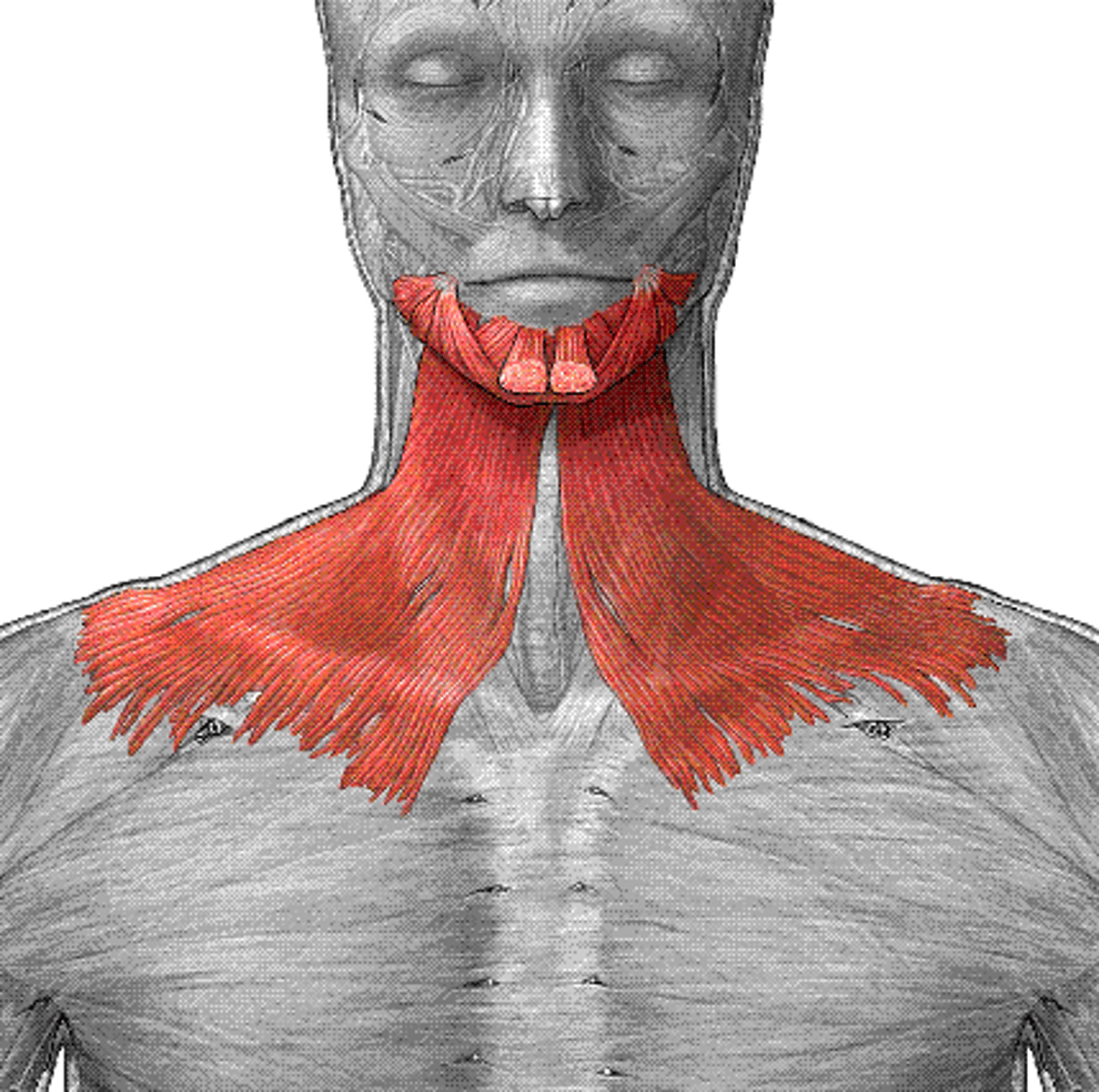
Platsyma
Muscle of the neck that moves the mandible down
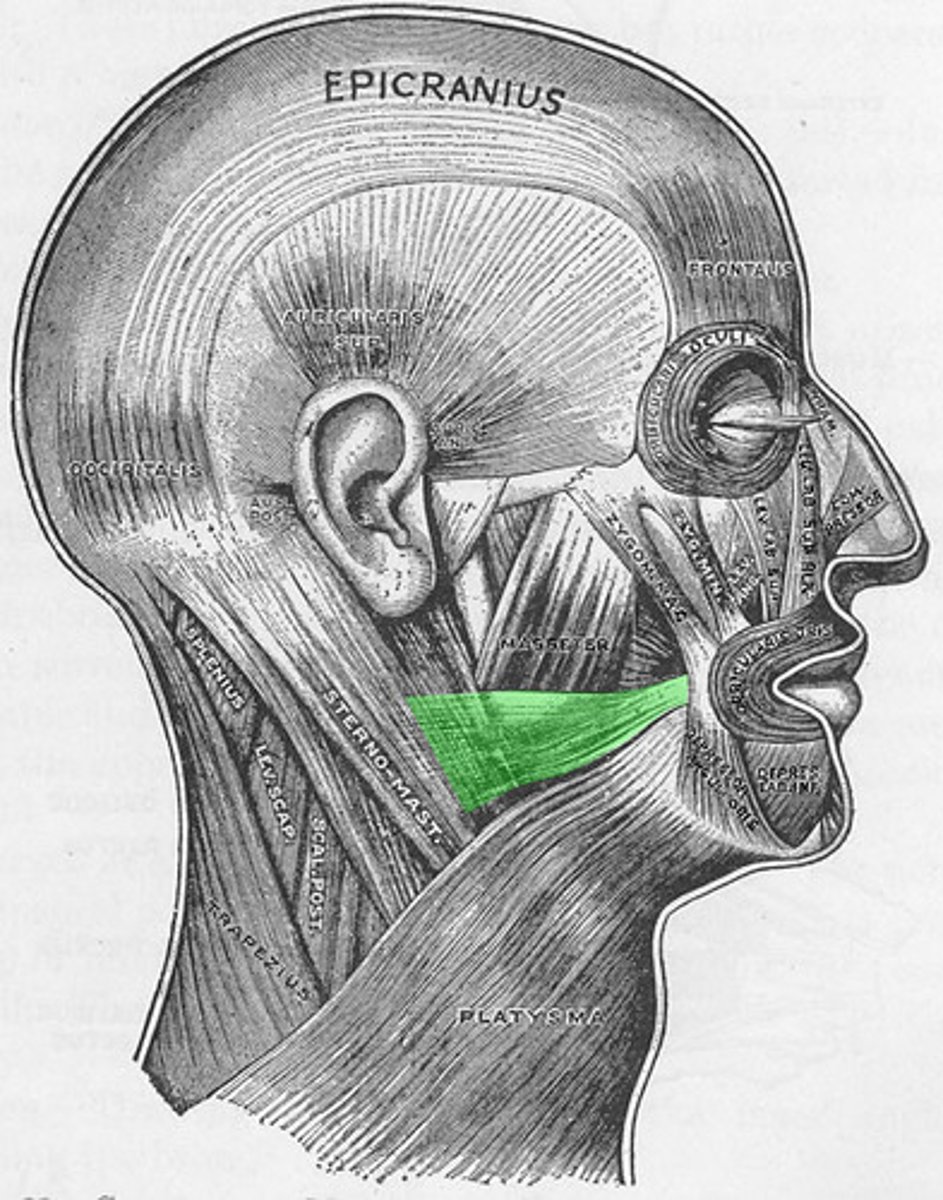
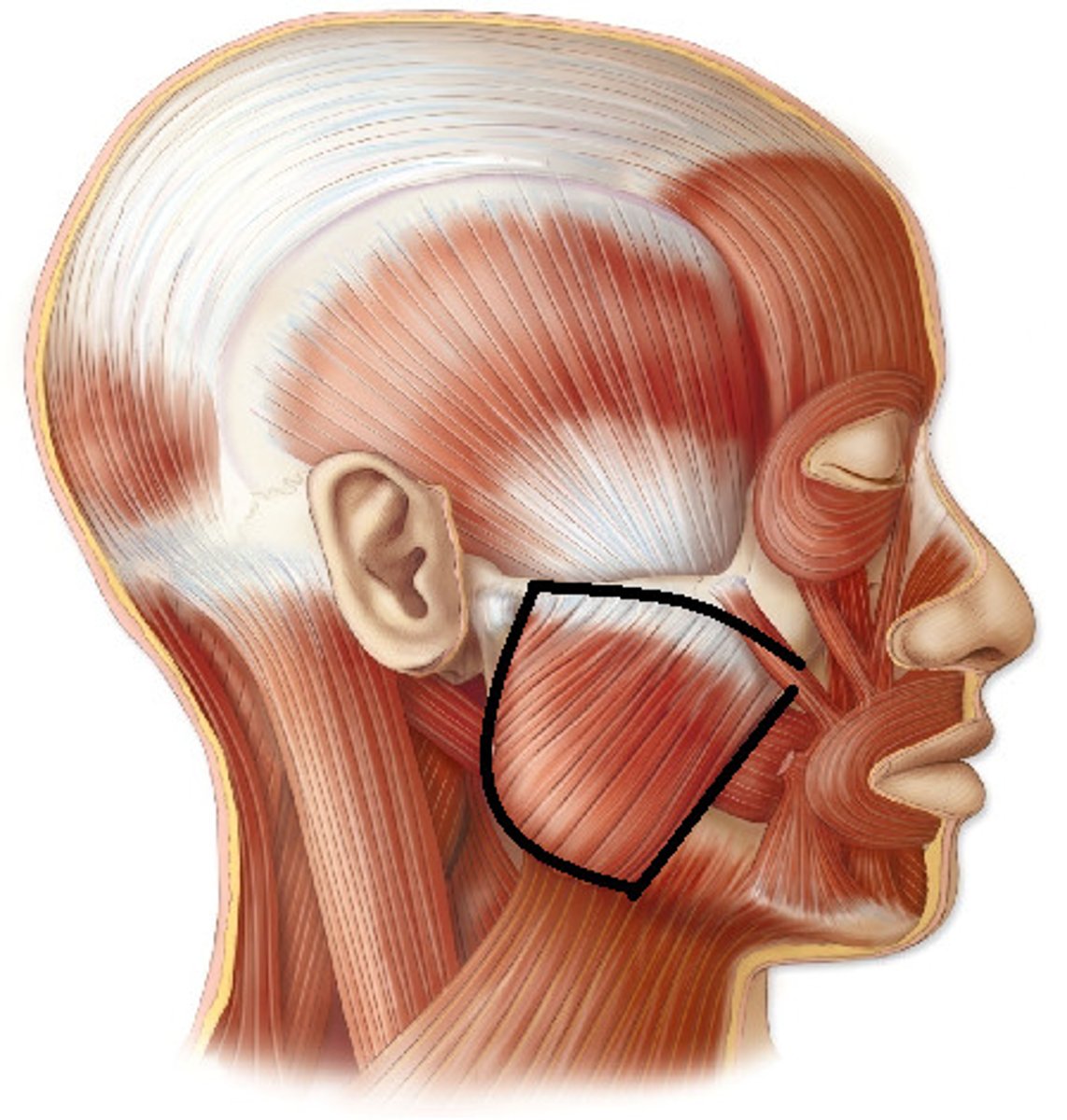
Masseter
muscle of mastication
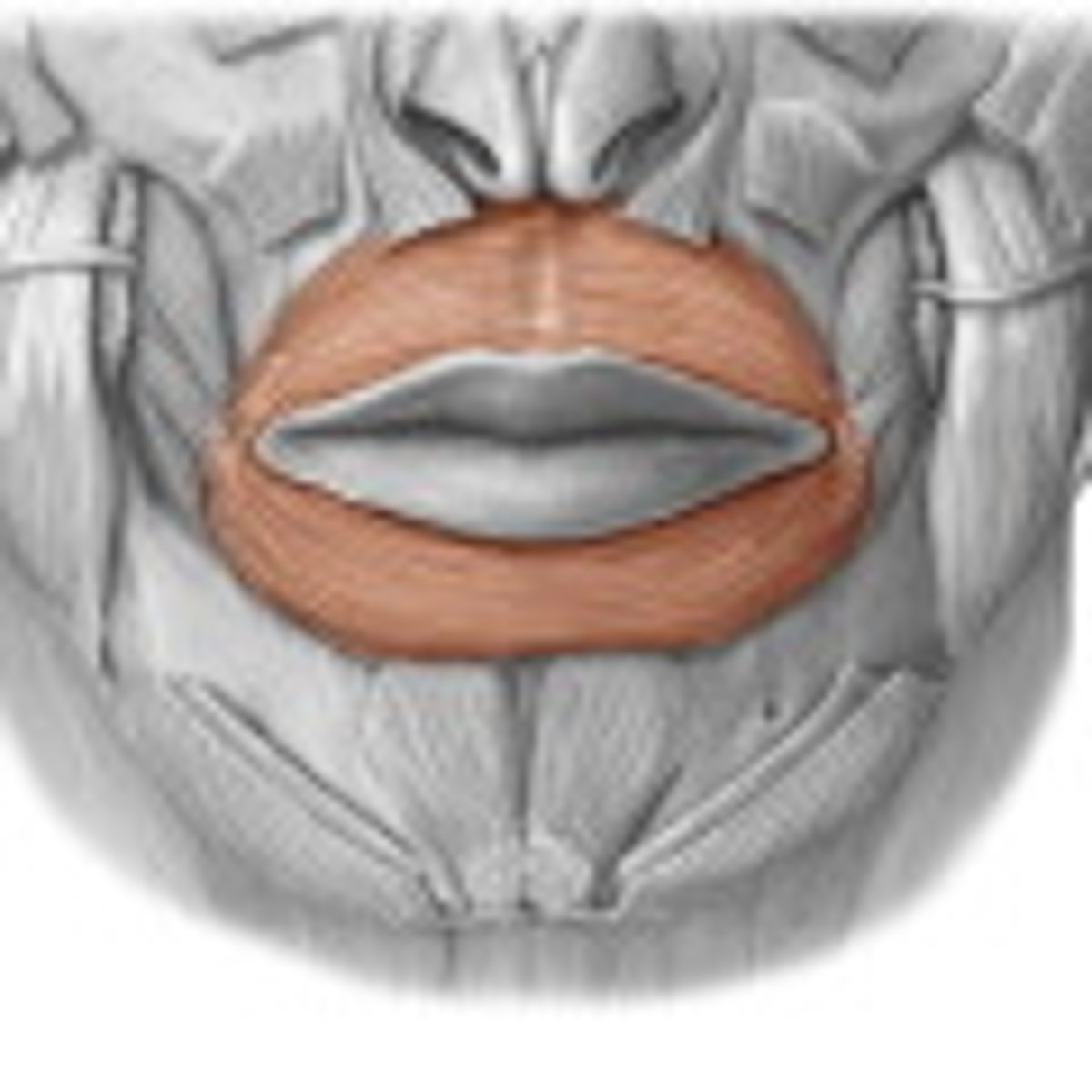
orbicularis oris
Muscle around the mouth that closes the lips
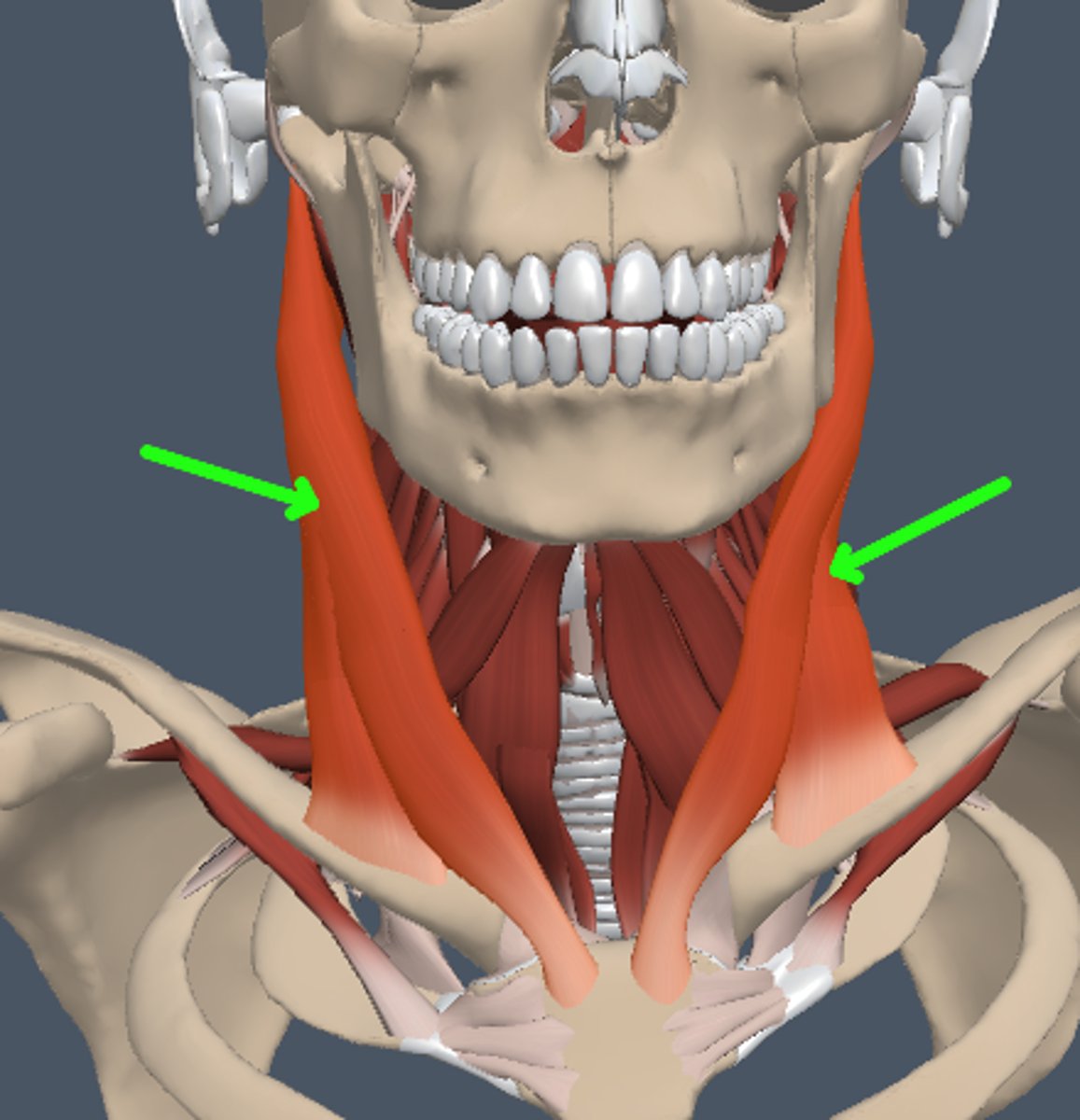
Sternocleidomastoid
muscle arising from the sternum and clavicle with its insertion in the mastoid process
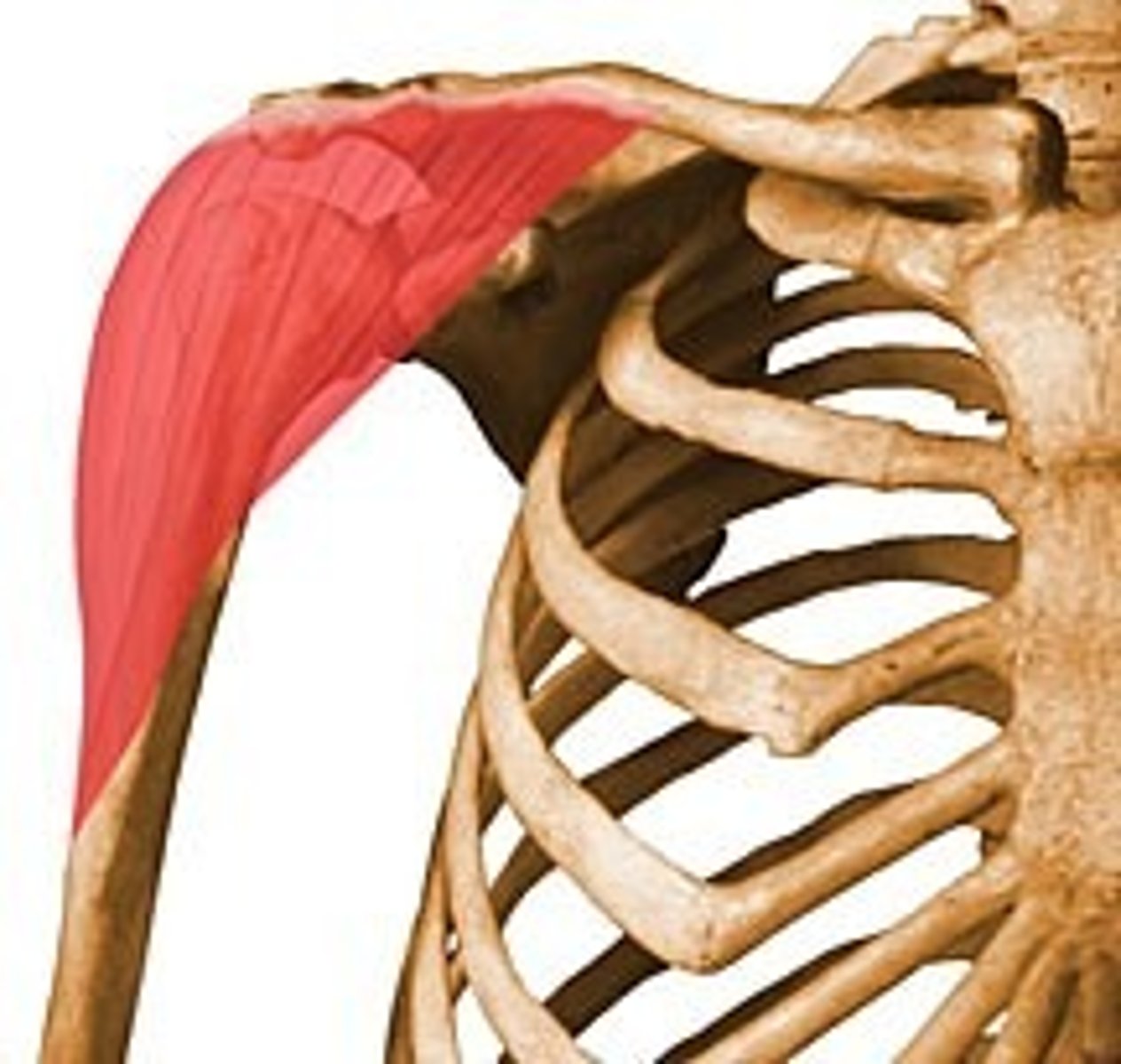
Deltoid
muscle of the shoulder that raises the arm and moves the arm away from the body (abduction)
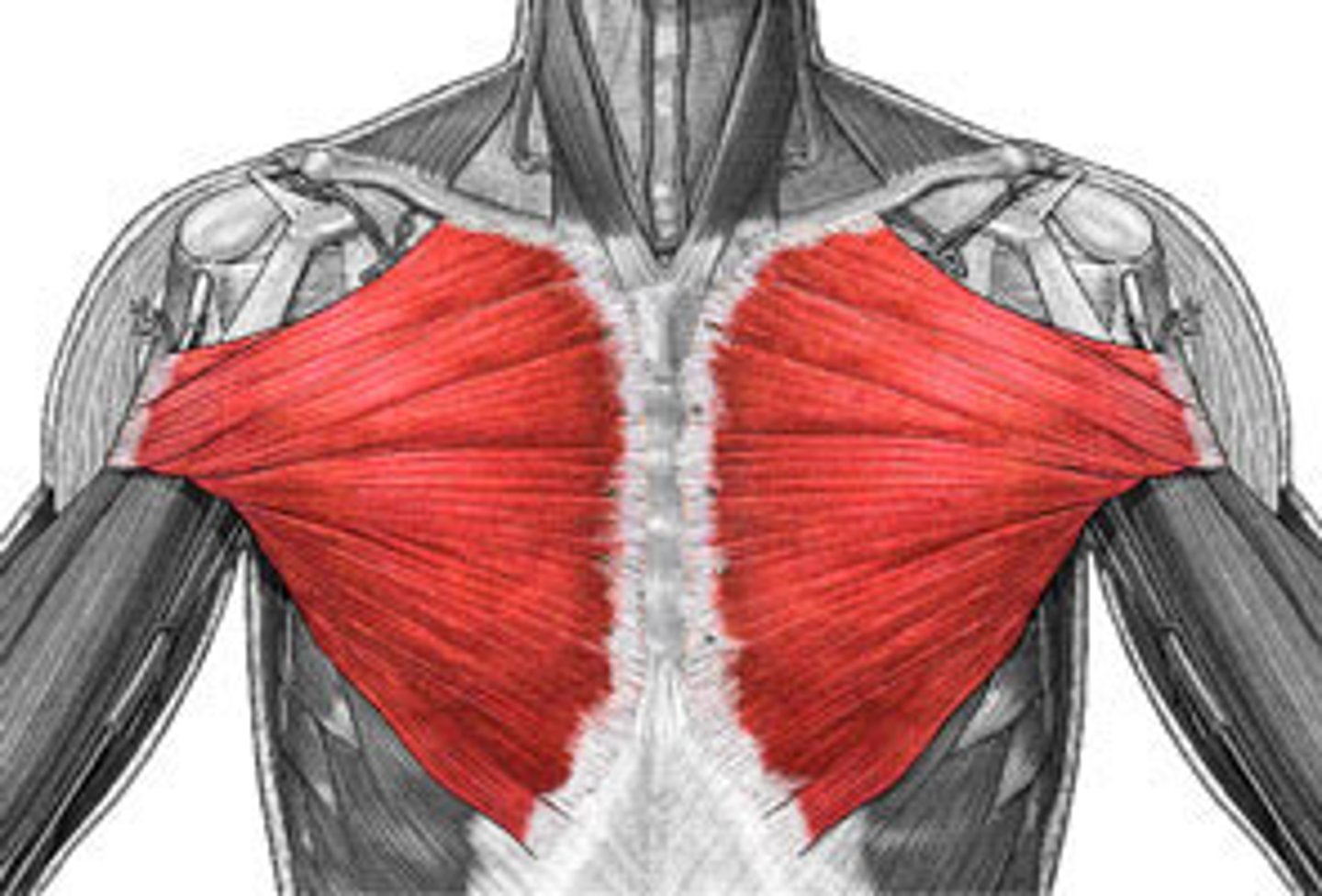
pectoralis major
chest muscle
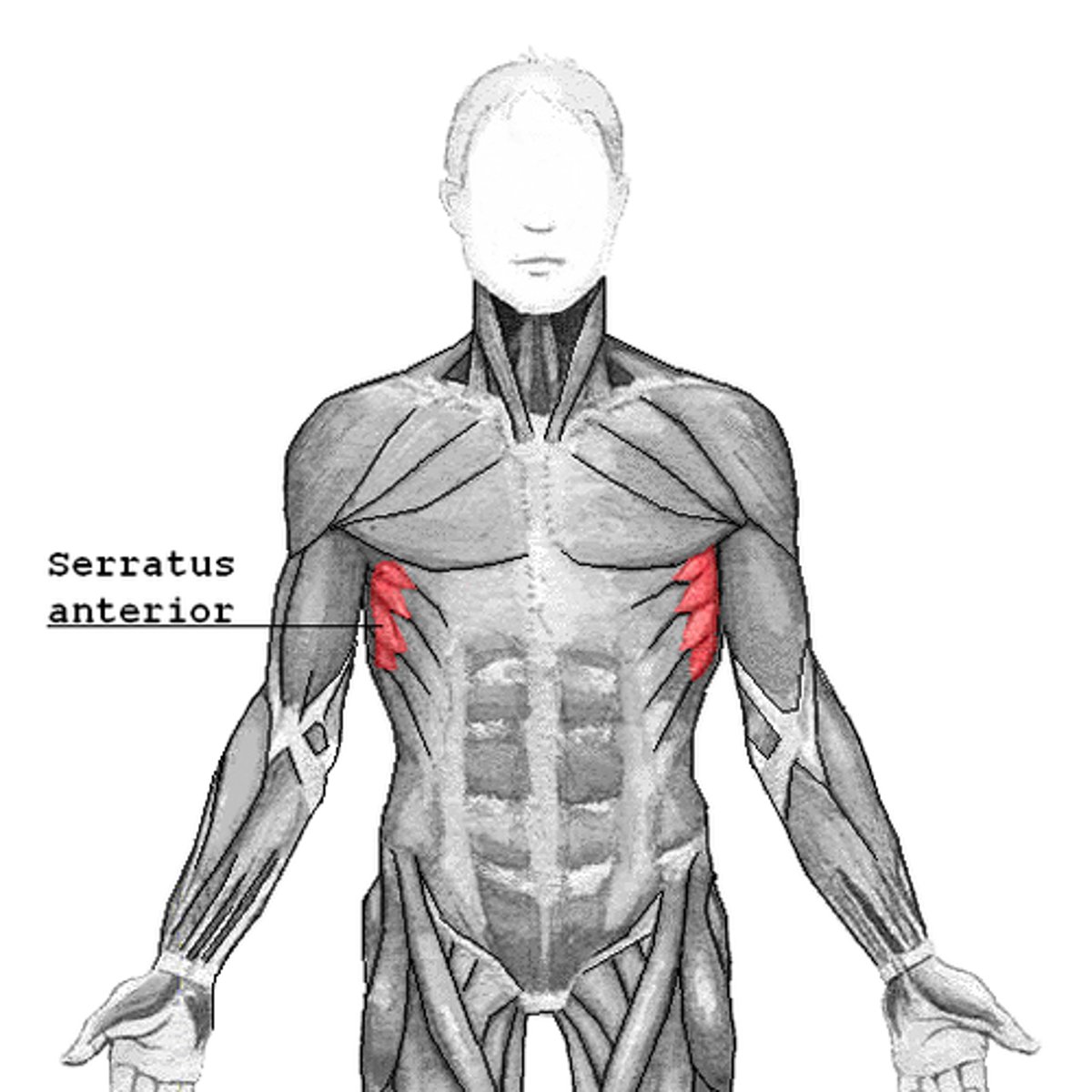
serratus anterior
muscle of the chest - assists in breathing and in raising the arm
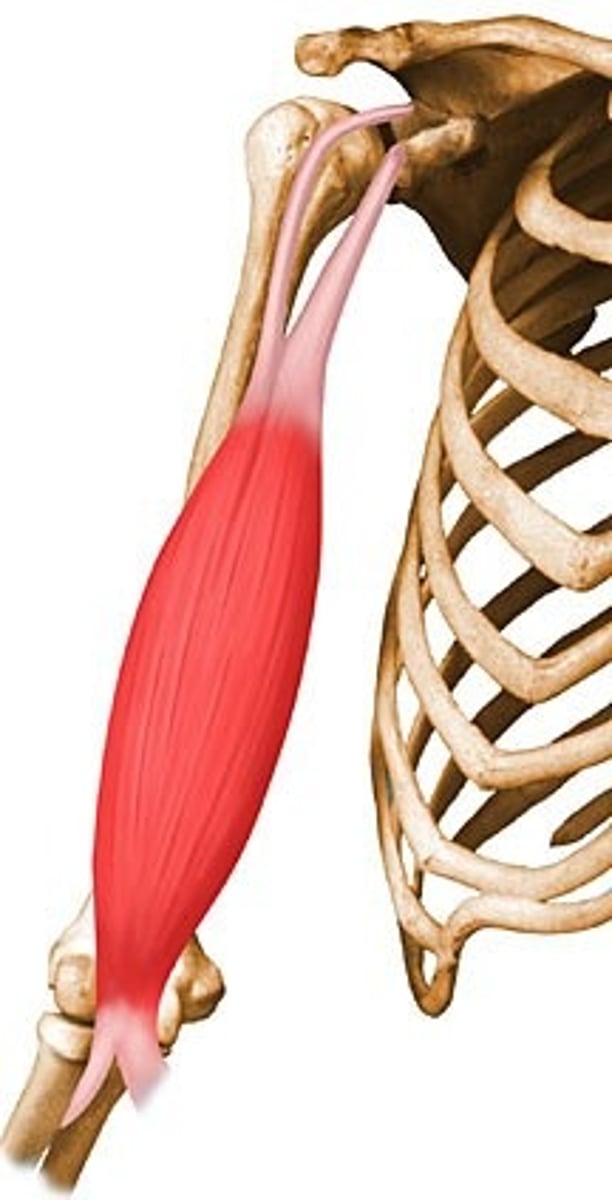
biceps brachii
Muscle of the anterior upper arm that bends the upper arm toward the shoulder (flexion) and bends the lower arm toward the upper arm (flexion). The origin of this muscle has two heads.
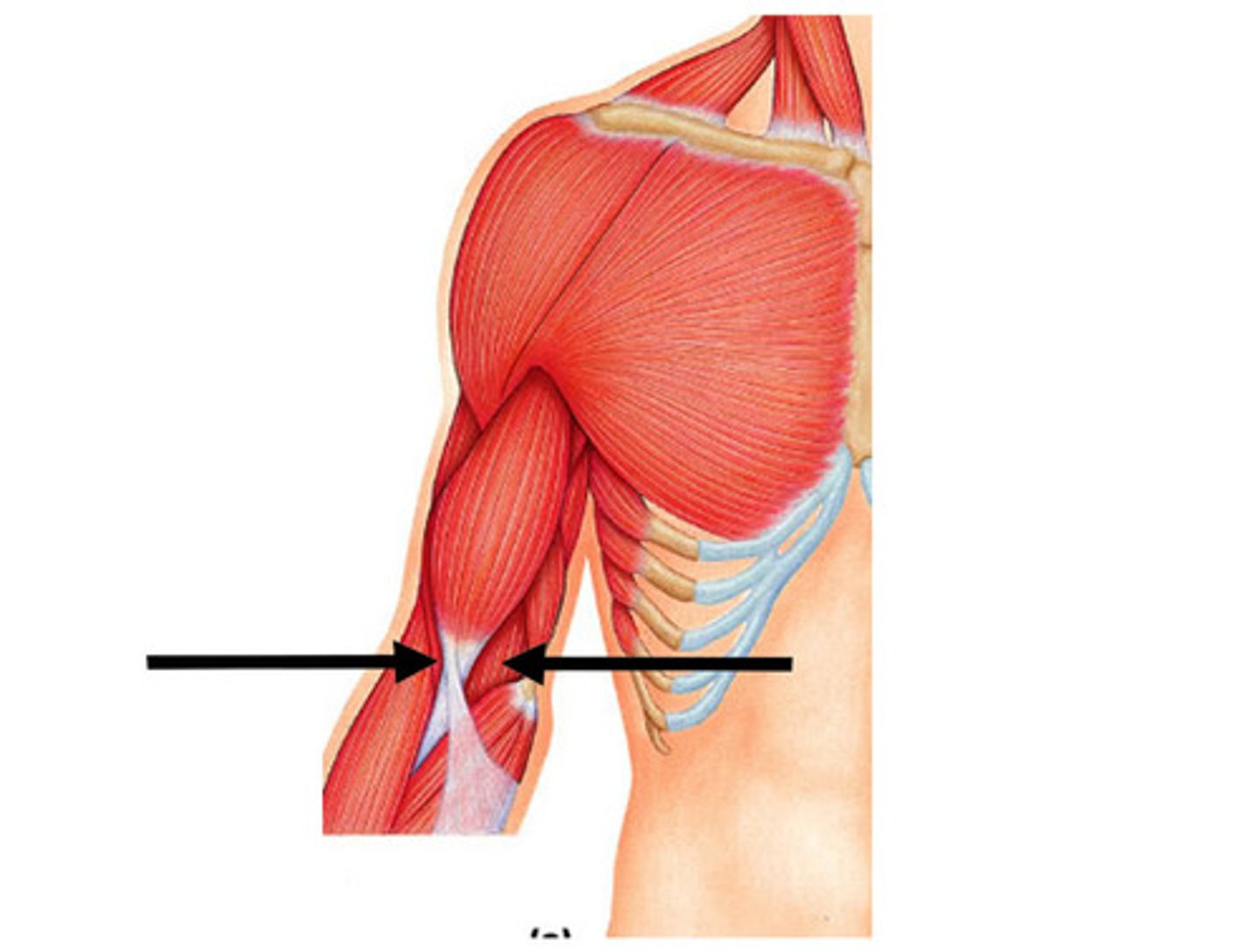
Brachialis
muscle that lies underneath the biceps and is the strongest flexor of the forearm
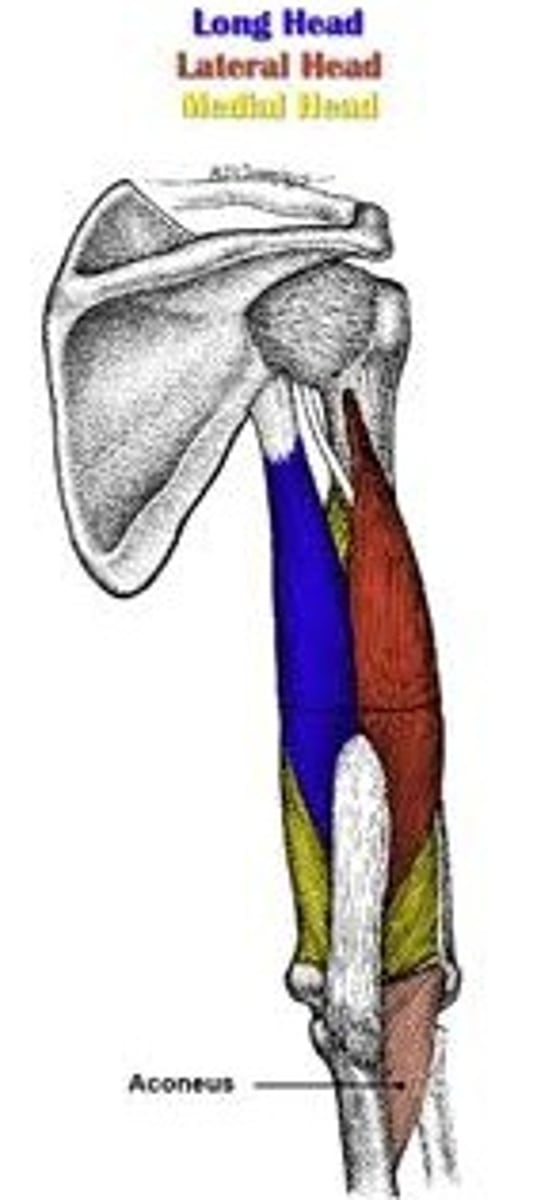
triceps brachii
The muscle of the posterior upper arm that extends the forearm. The origin of this muscle has three heads
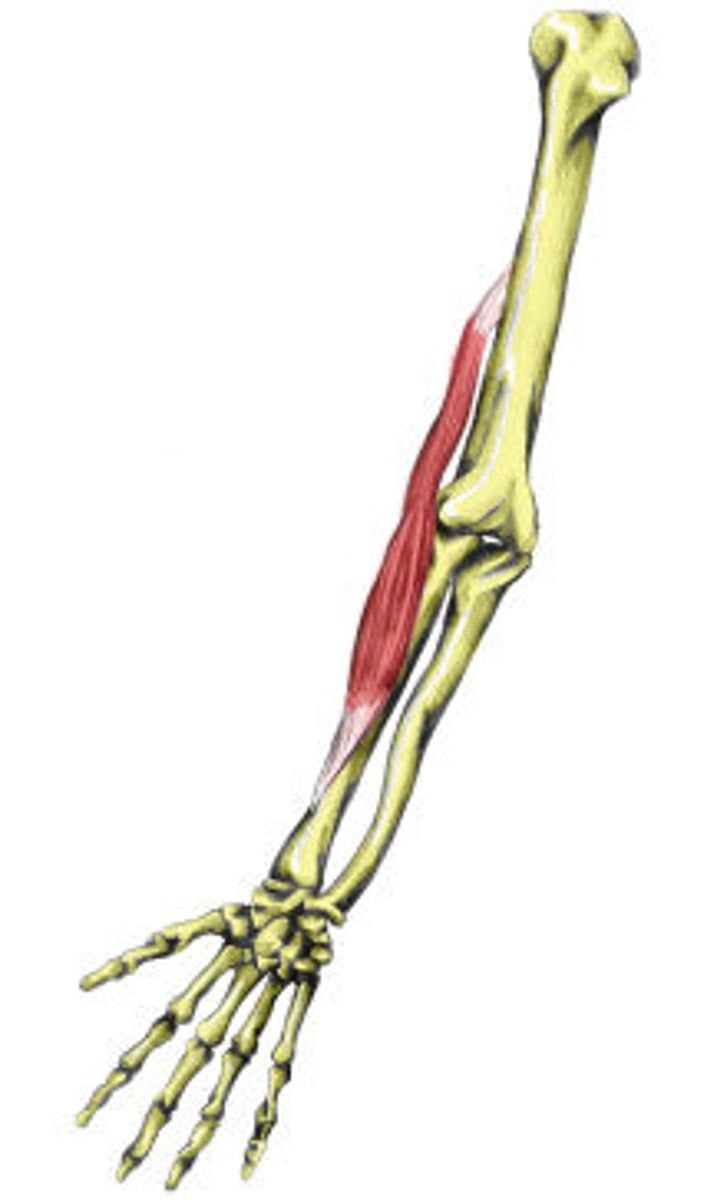
Brachioradialis
a muscle of the forearm that flexes the forearm at the elbow
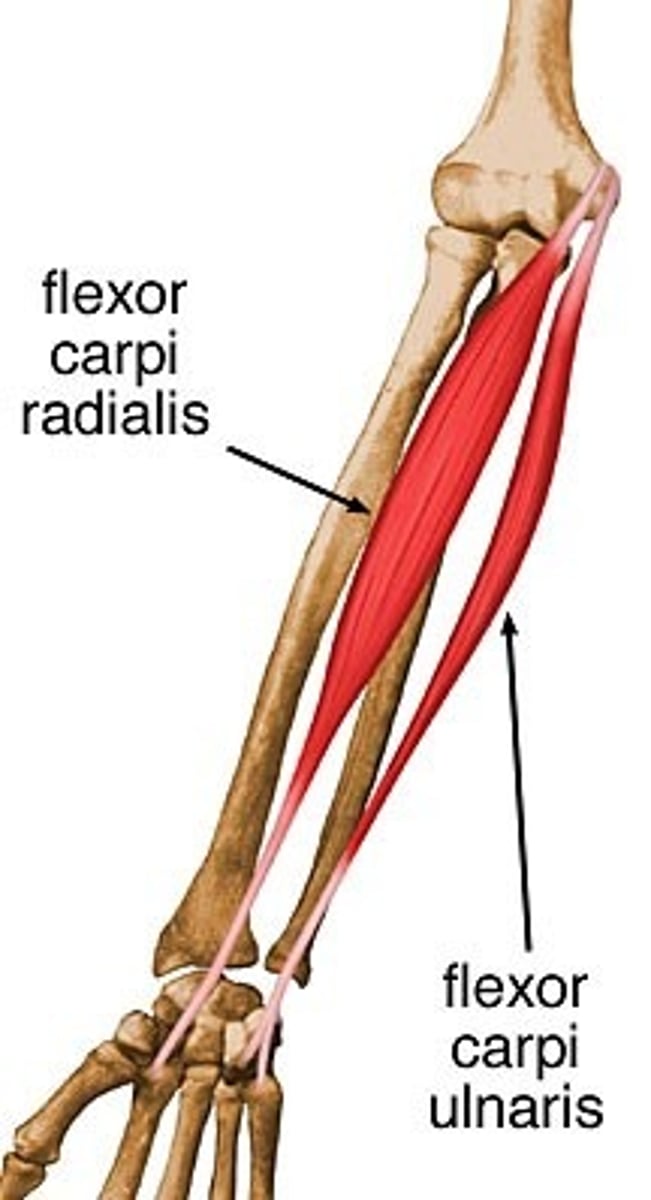
flexor carpi radialis
muscle that flexes and abducts the hand at the wrist
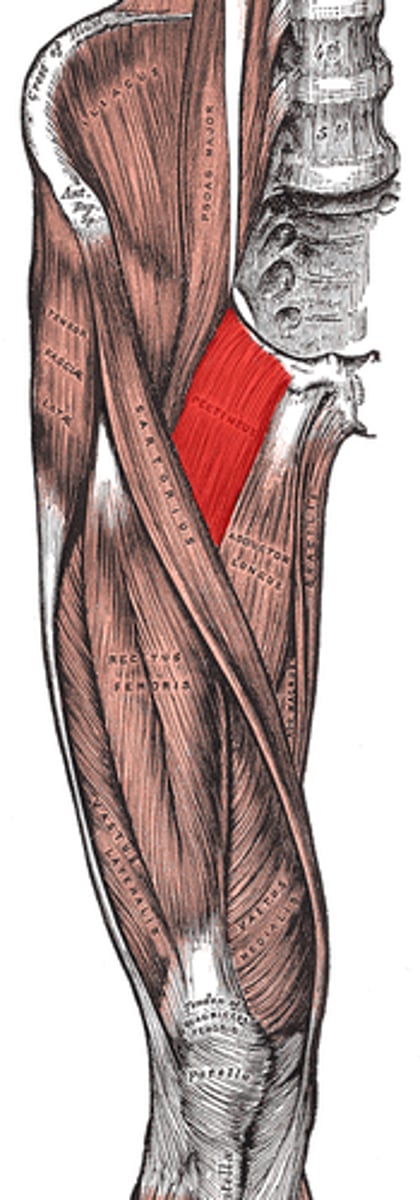
Pectineus
muscle that abducts and flexes the femur at the hip
adductor longus
muscle that adducts, medially rotates, and flexes the thigh
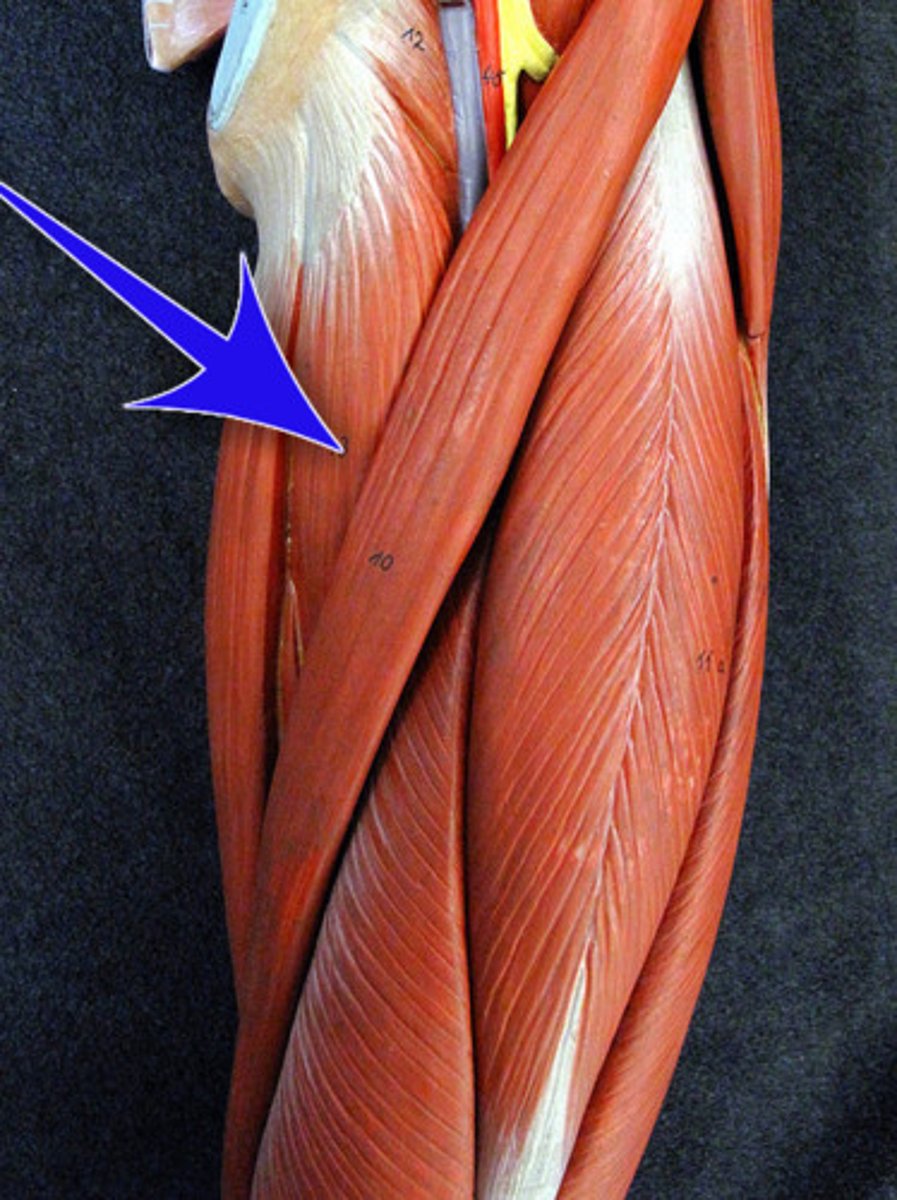
Sartorius
muscle on anterior side of thigh that abducts and flexes leg
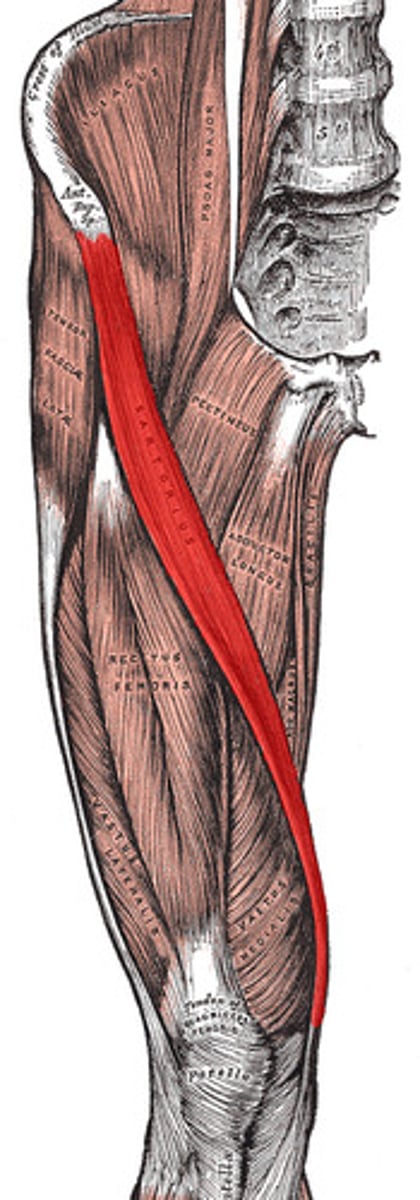
gracilis muscle
A muscle that adducts the thigh and flexes the leg
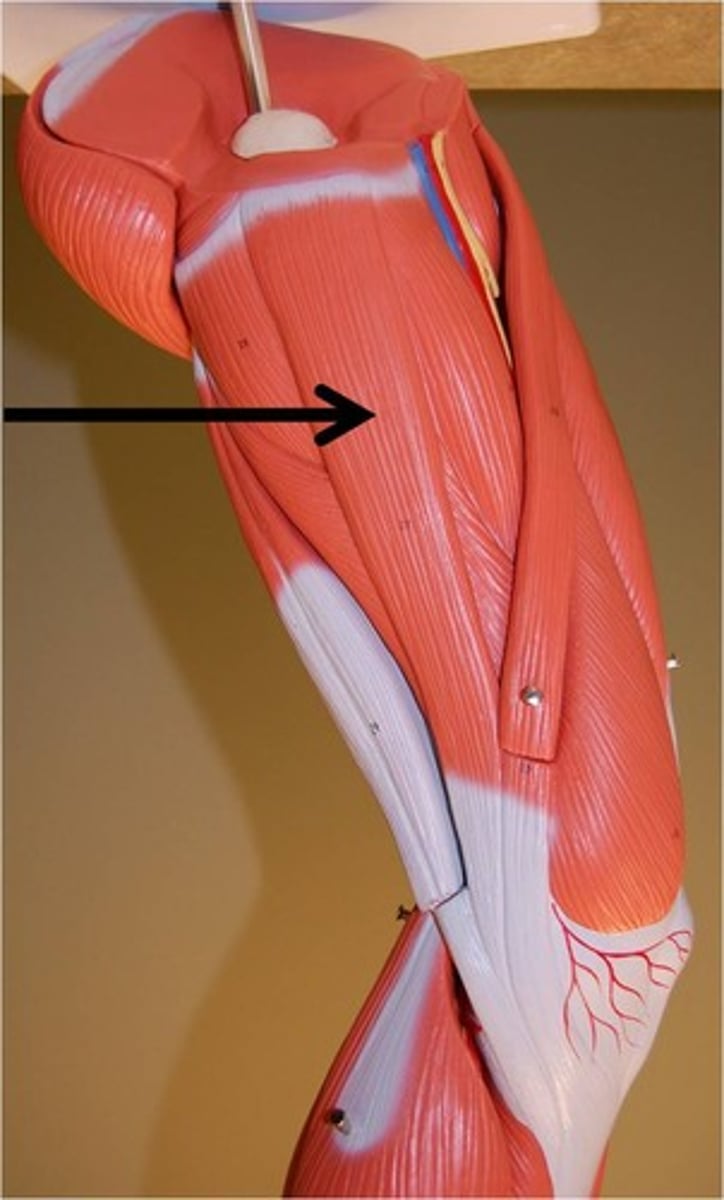
vastus lateralis
the muscle at the lateral aspect of femur that is responsible for extending the leg and the knee
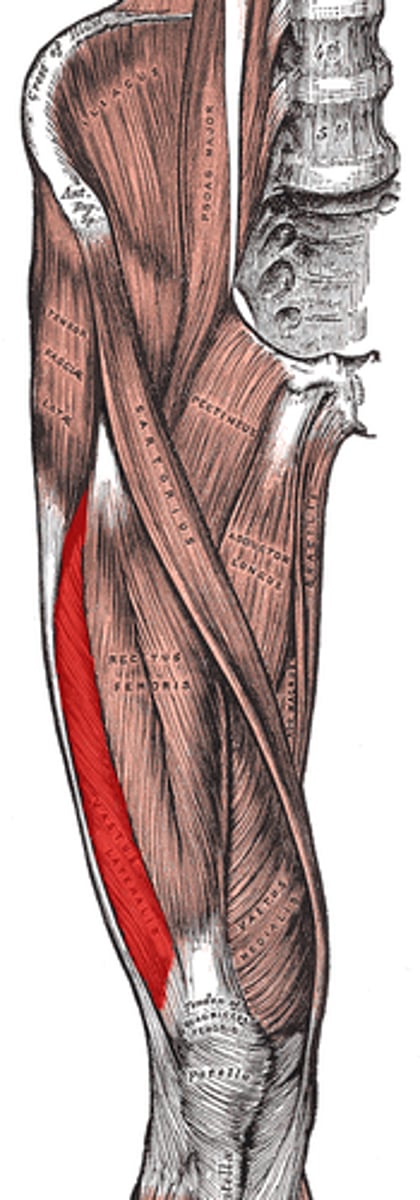
rectus femoris
The muscle of the anterior thigh that flexes the thigh and extends the leg; also called the quadricep
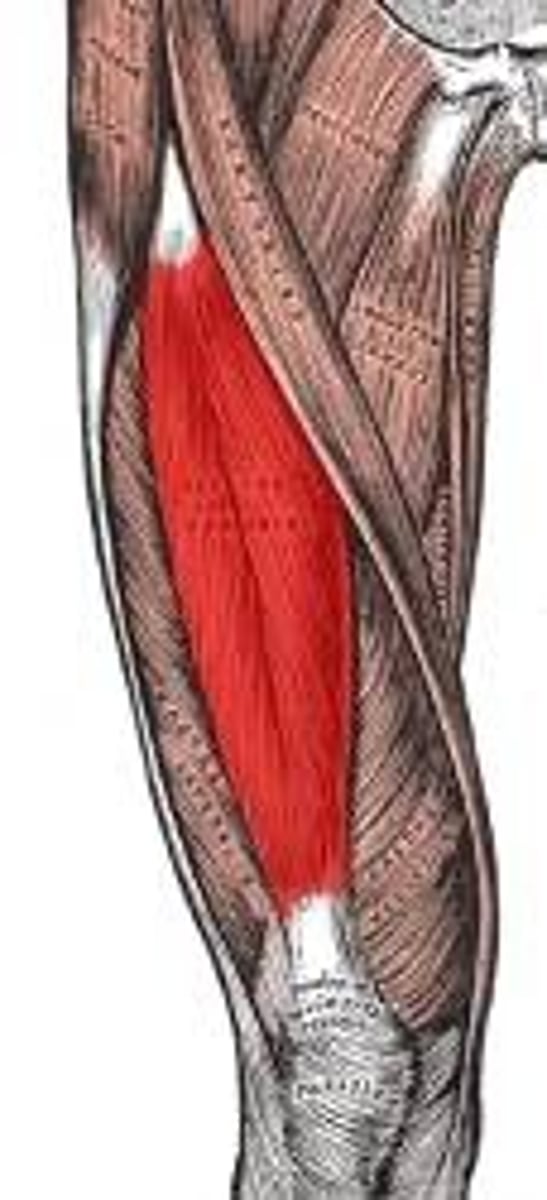
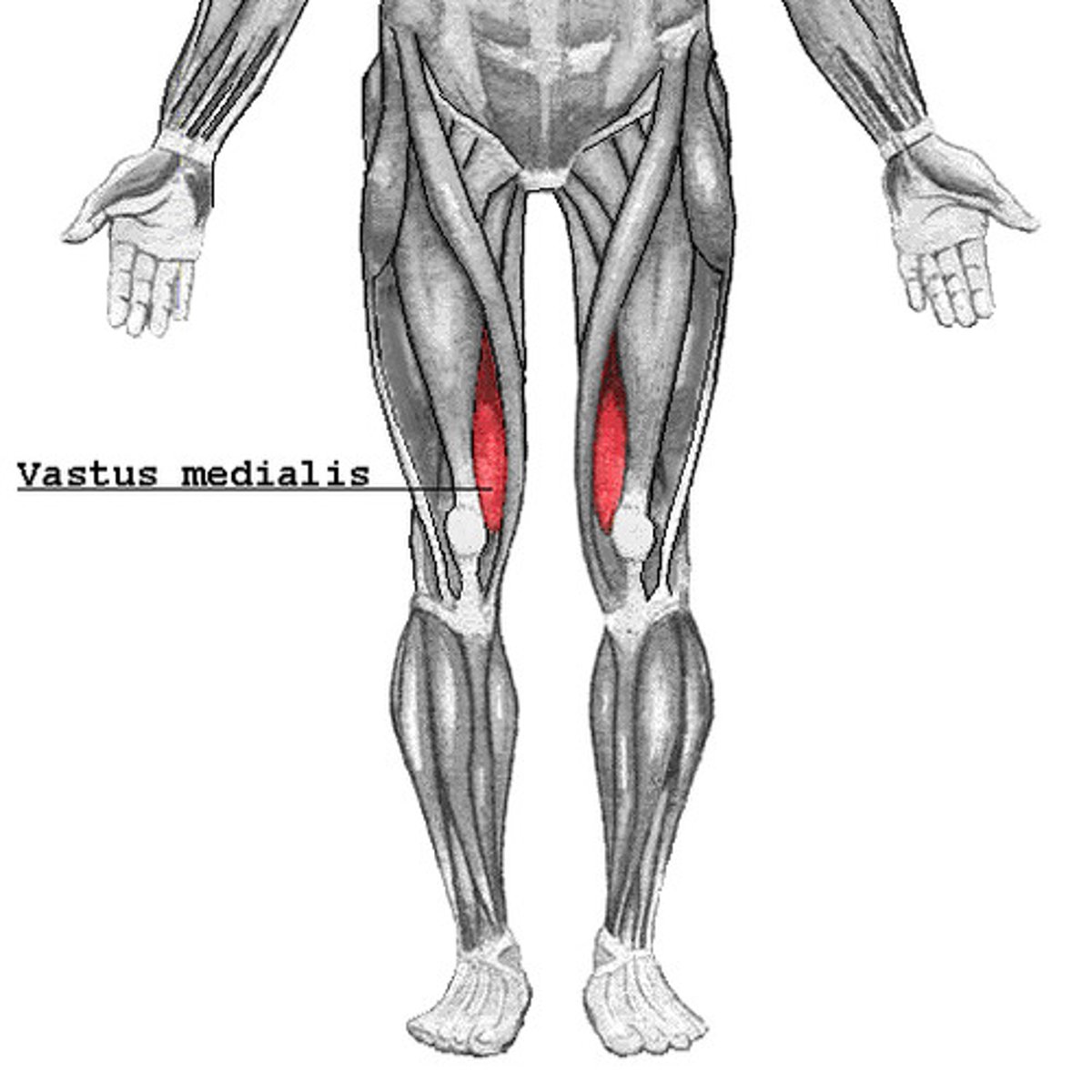
vastus medialis
a muscle toward the midline of the leg: extends the knee
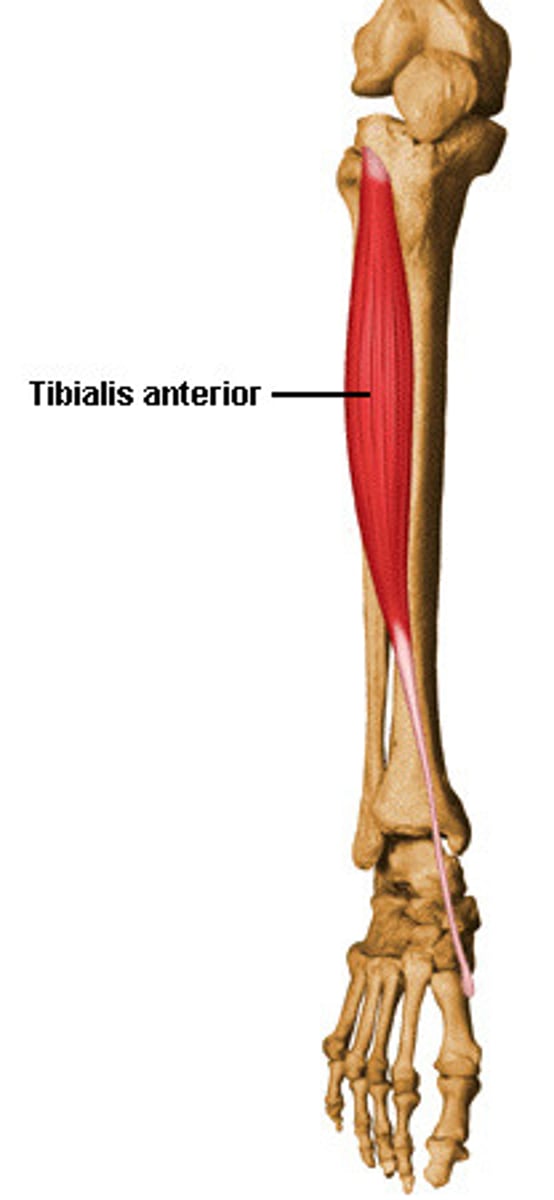
tibialis anterior
muscle on front of lower leg that flexes and inverts the foot
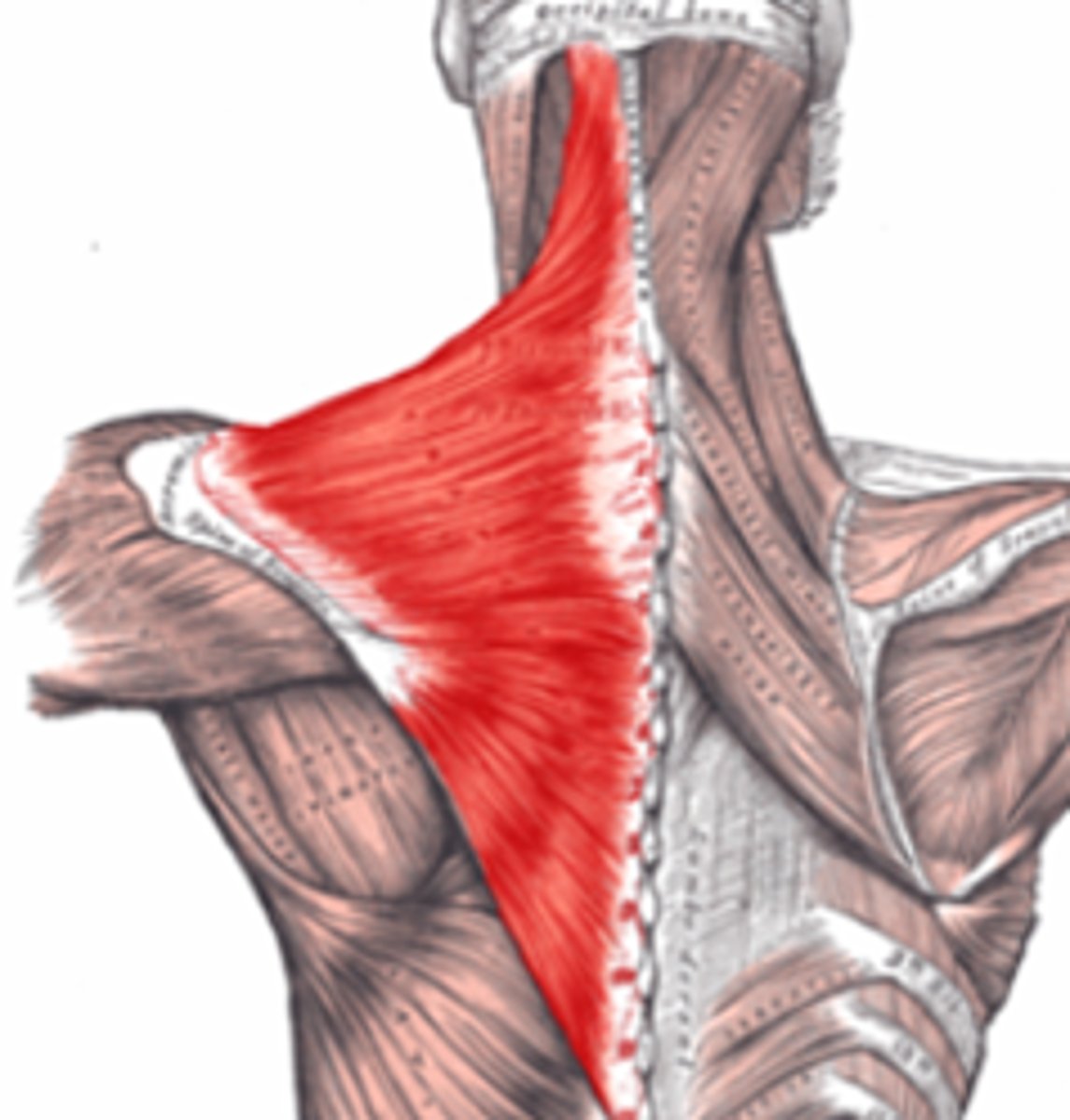
Trapezius
Muscle that covers the back of the neck and upper and middle region of the back; rotates and controls swinging movements of the arm.
levator scapulae
muscle that elevates the scapula
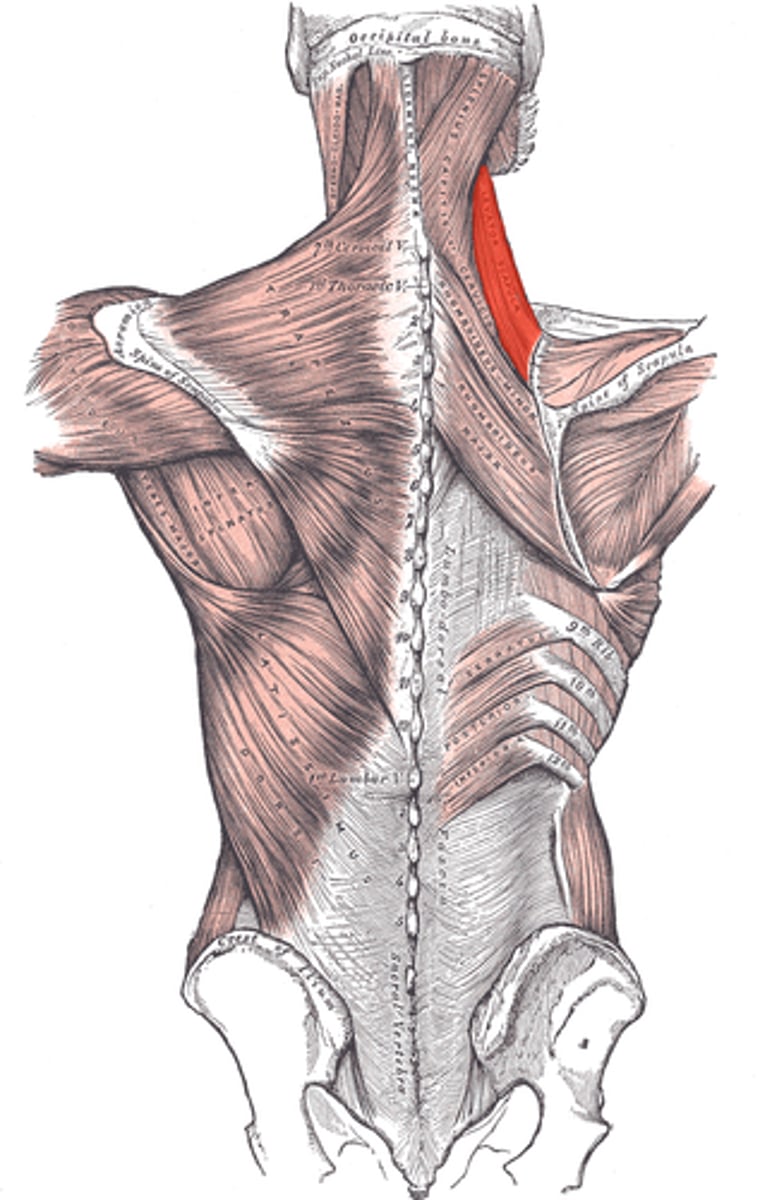
Subscapularis
the muscles move the Humerus at Shoulder joint
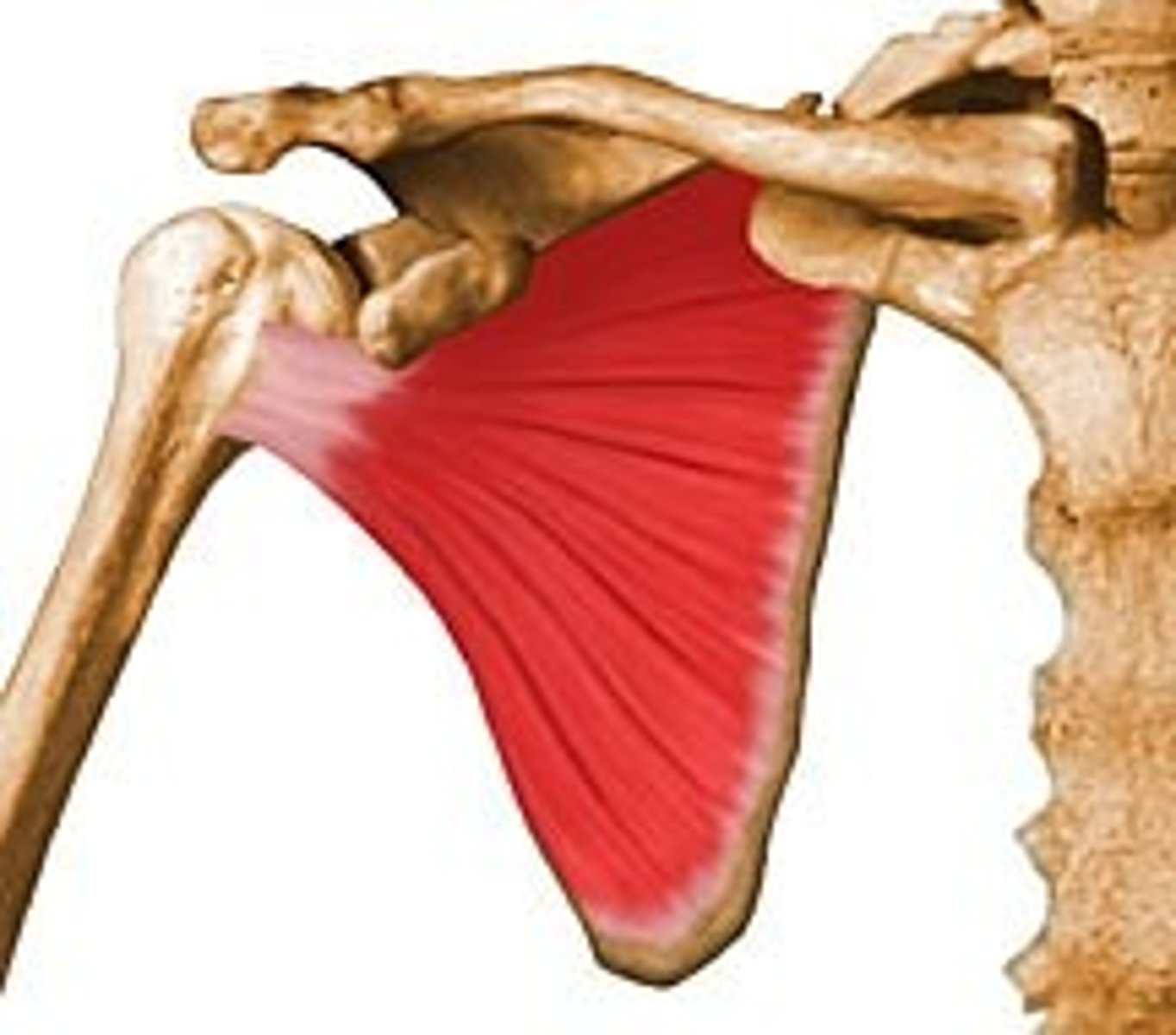
Supraspinatus
Muscle that initiates abduction of arm
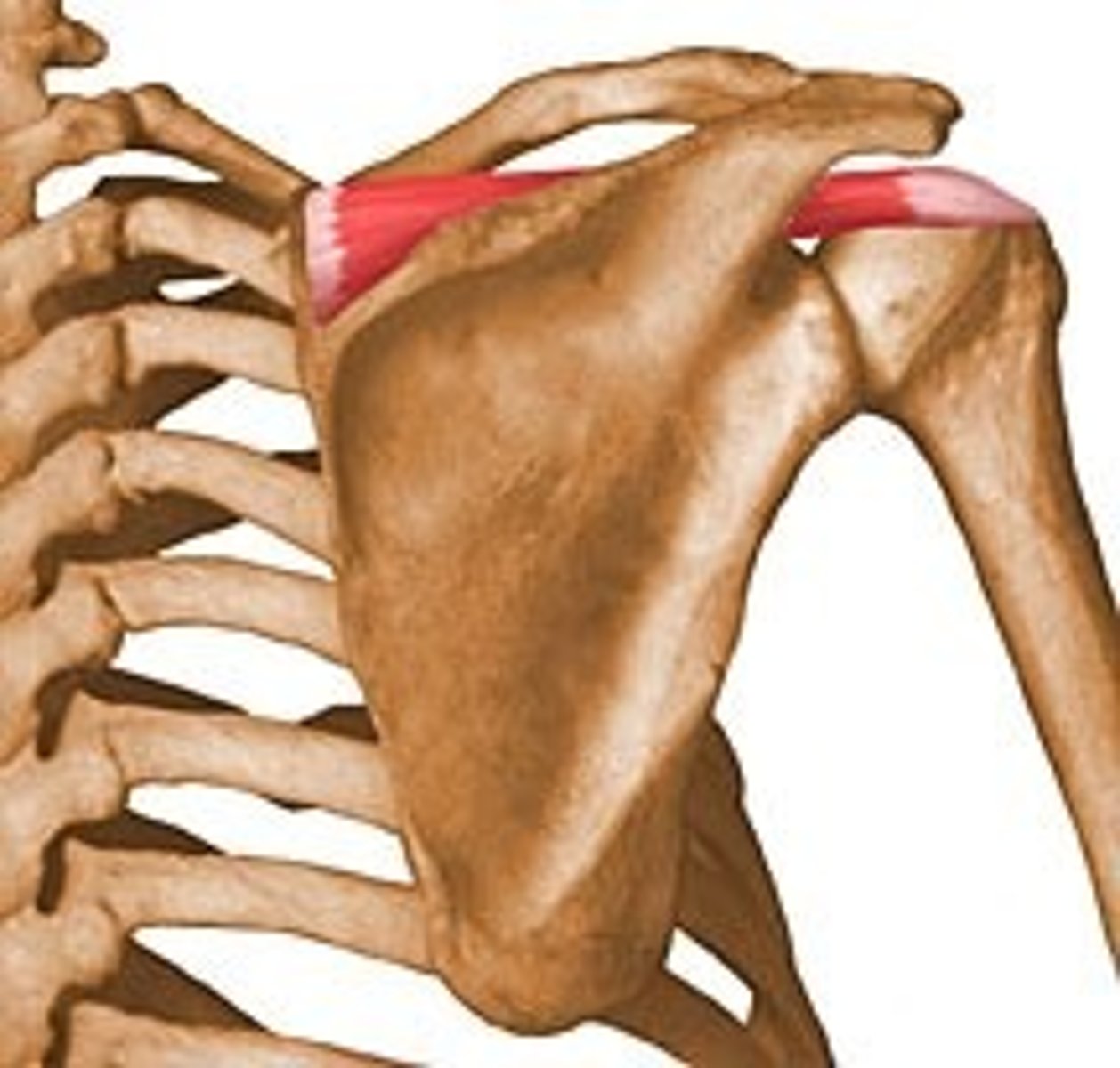
infraspinatus muscle
Rotator Cuff Muscle, originates on the infraspinous fossa of the scapula and inserts on the humerus
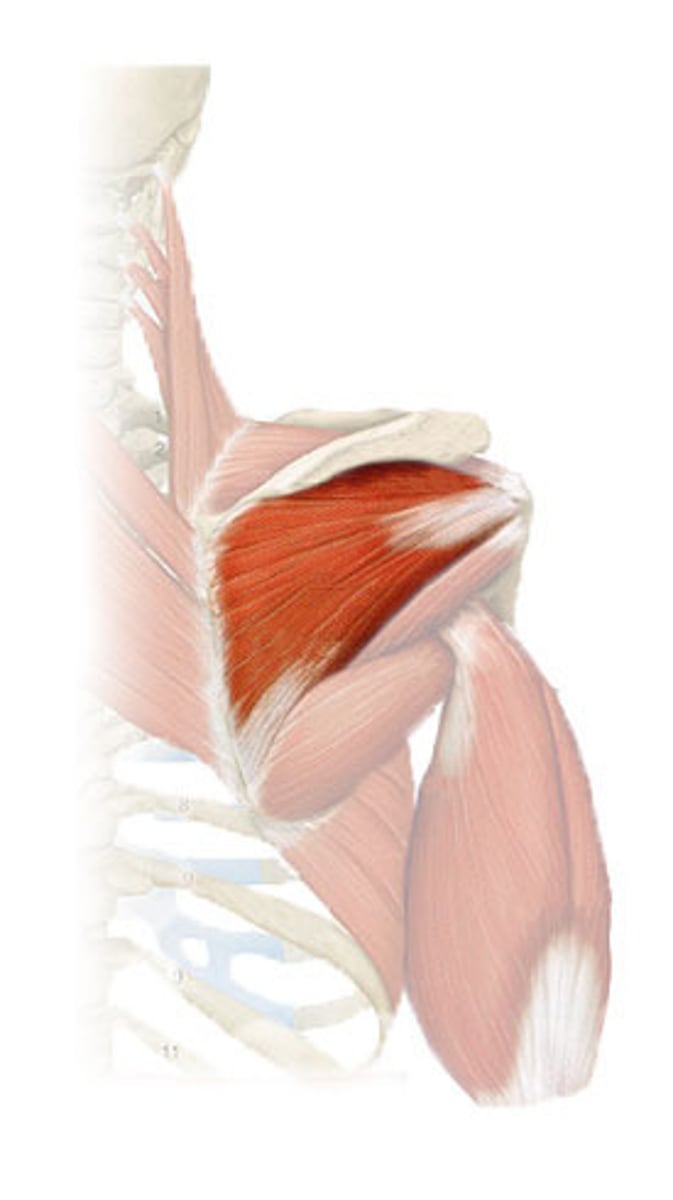
teres minor muscle
a muscle that adducts and laterally rotates the arm
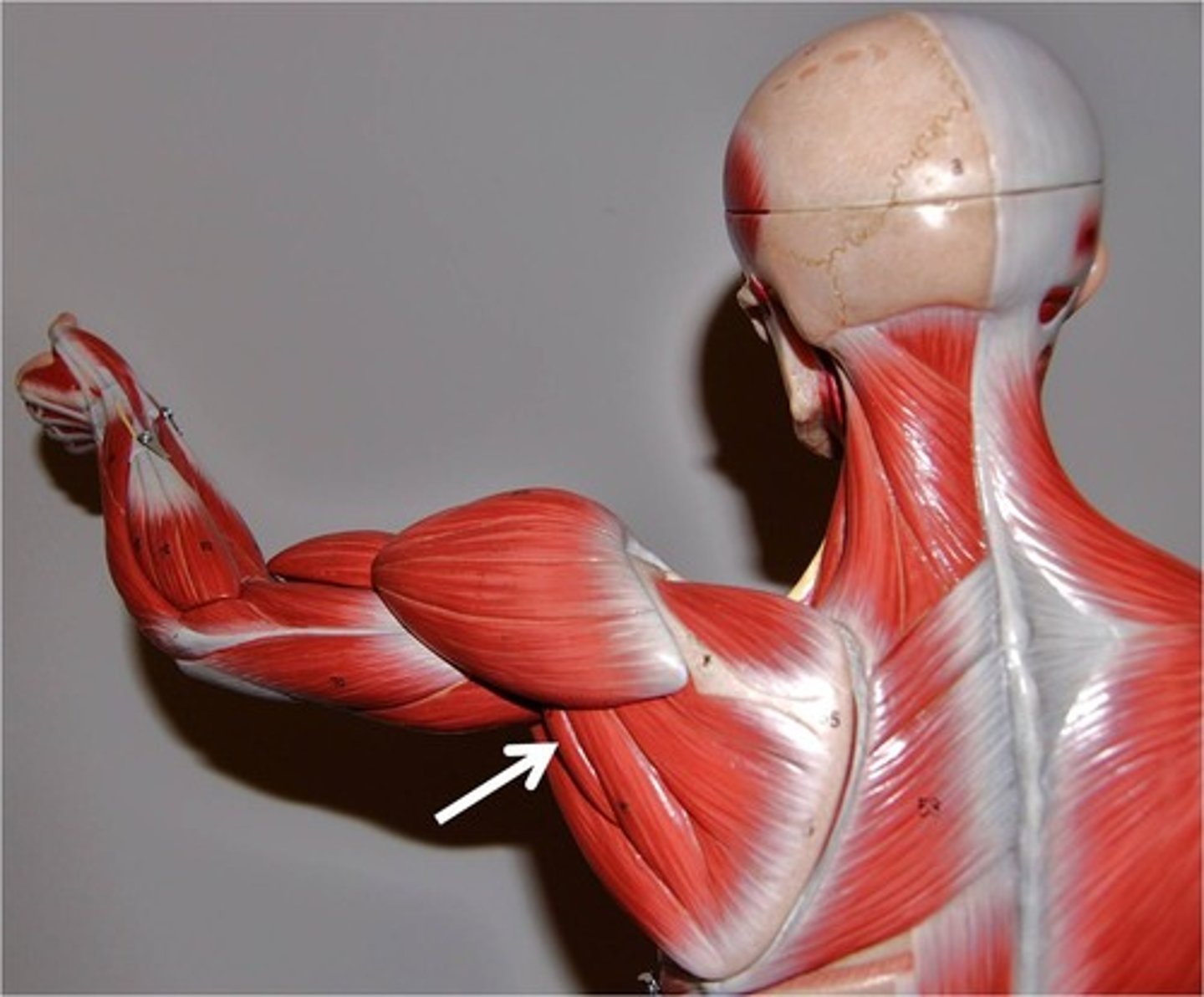
teres major muscle
This muscle attaches from the scapula to the upper part of the humerus and is involved in movements of the upper arm.
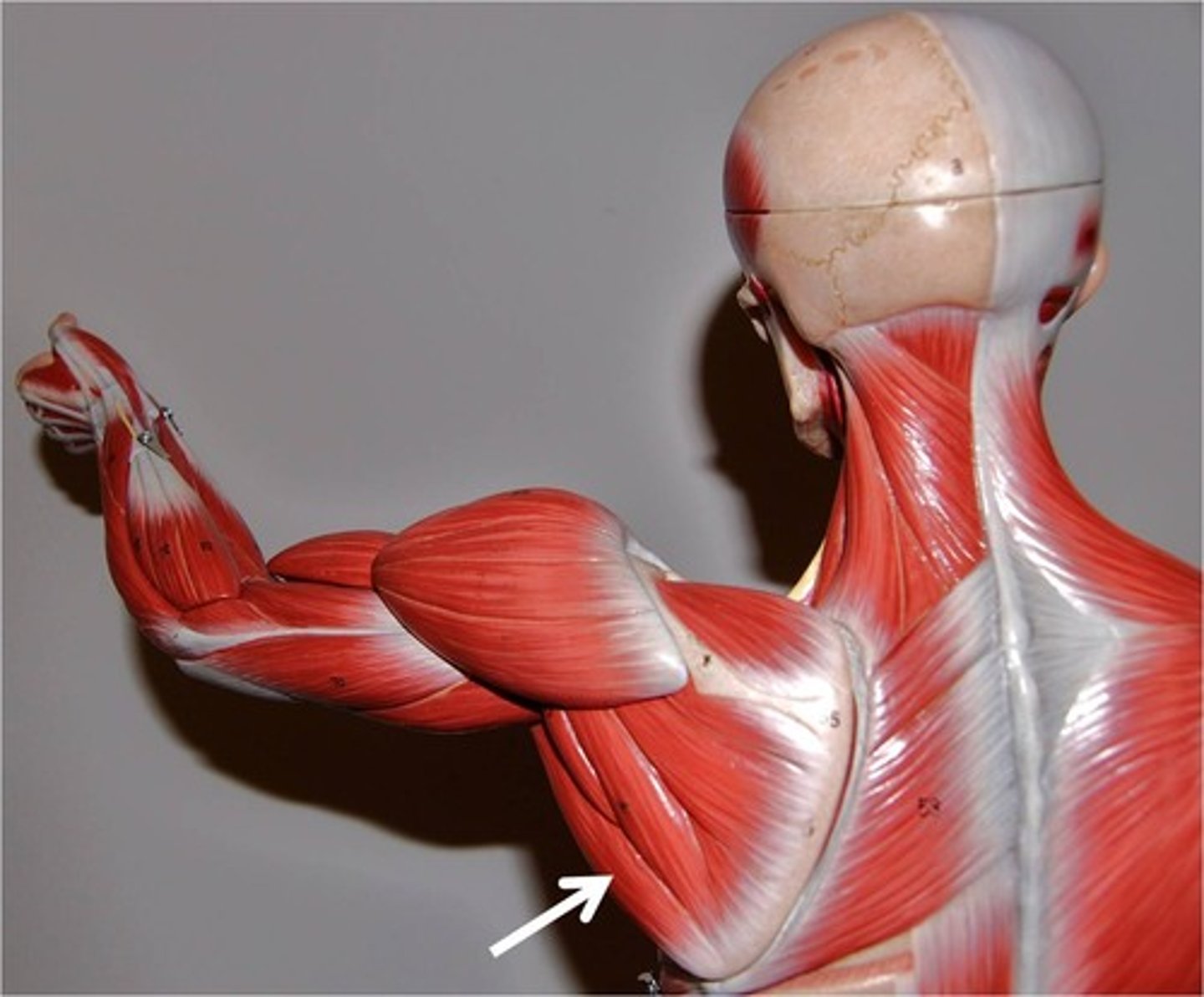
latissimus dorsi
muscle that adducts the shoulder and causes extension of the shoulder joint
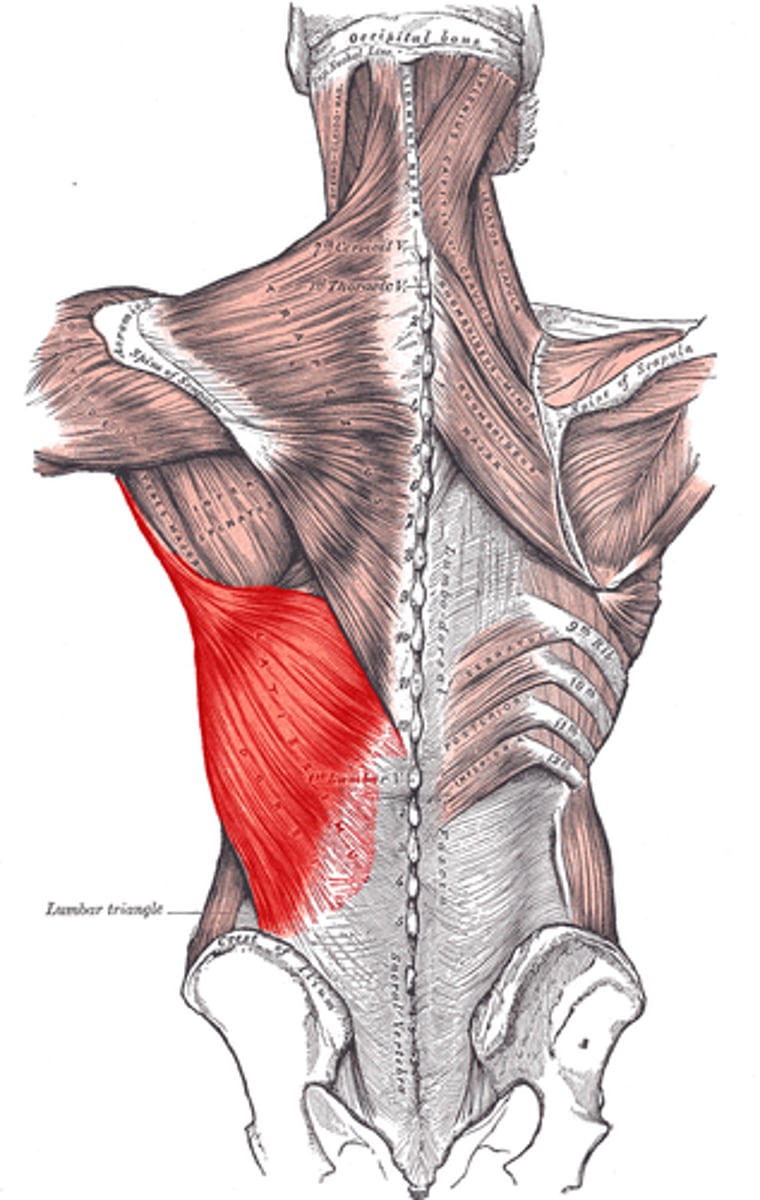
gluteus maximus
buttock muscle
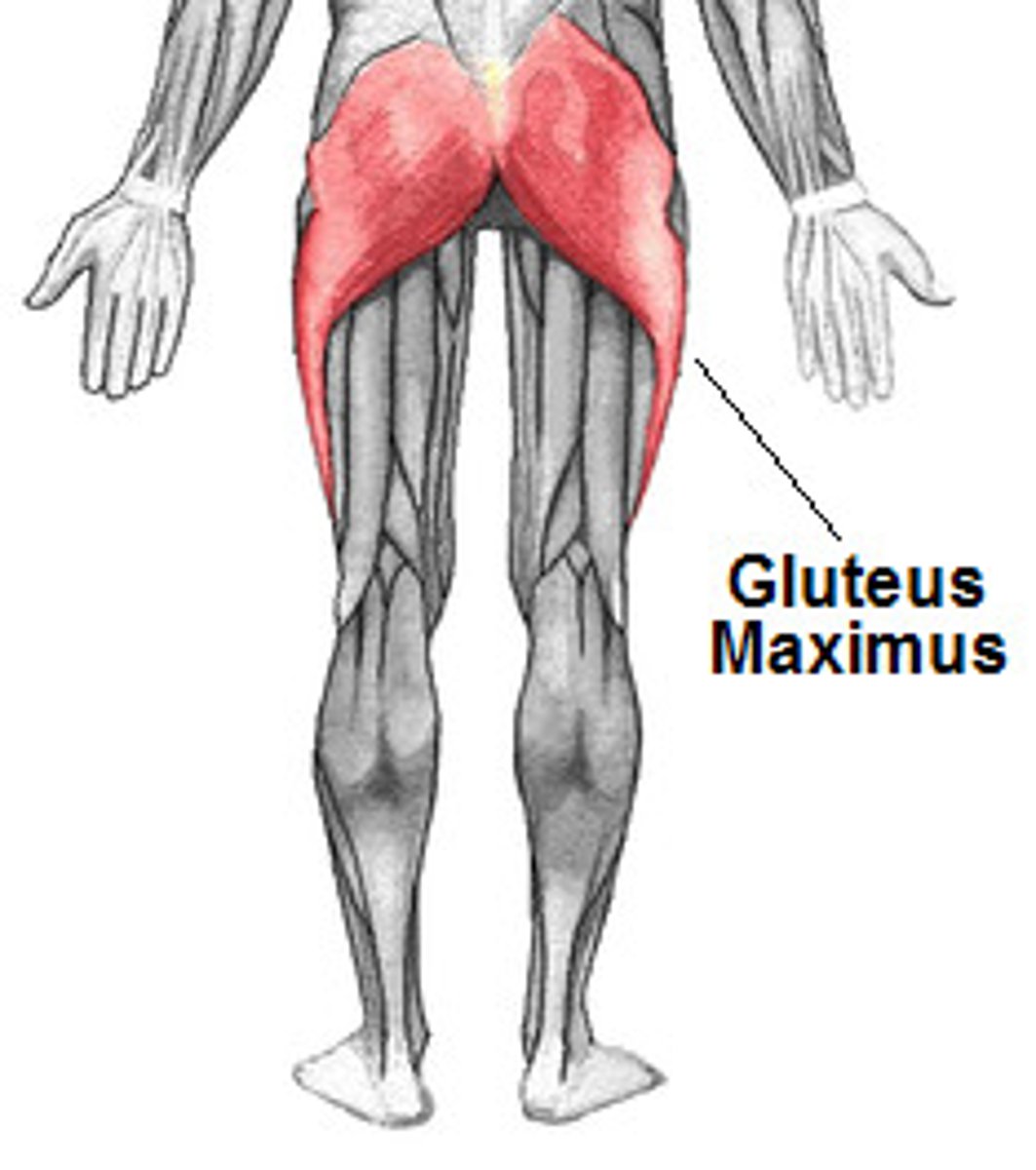
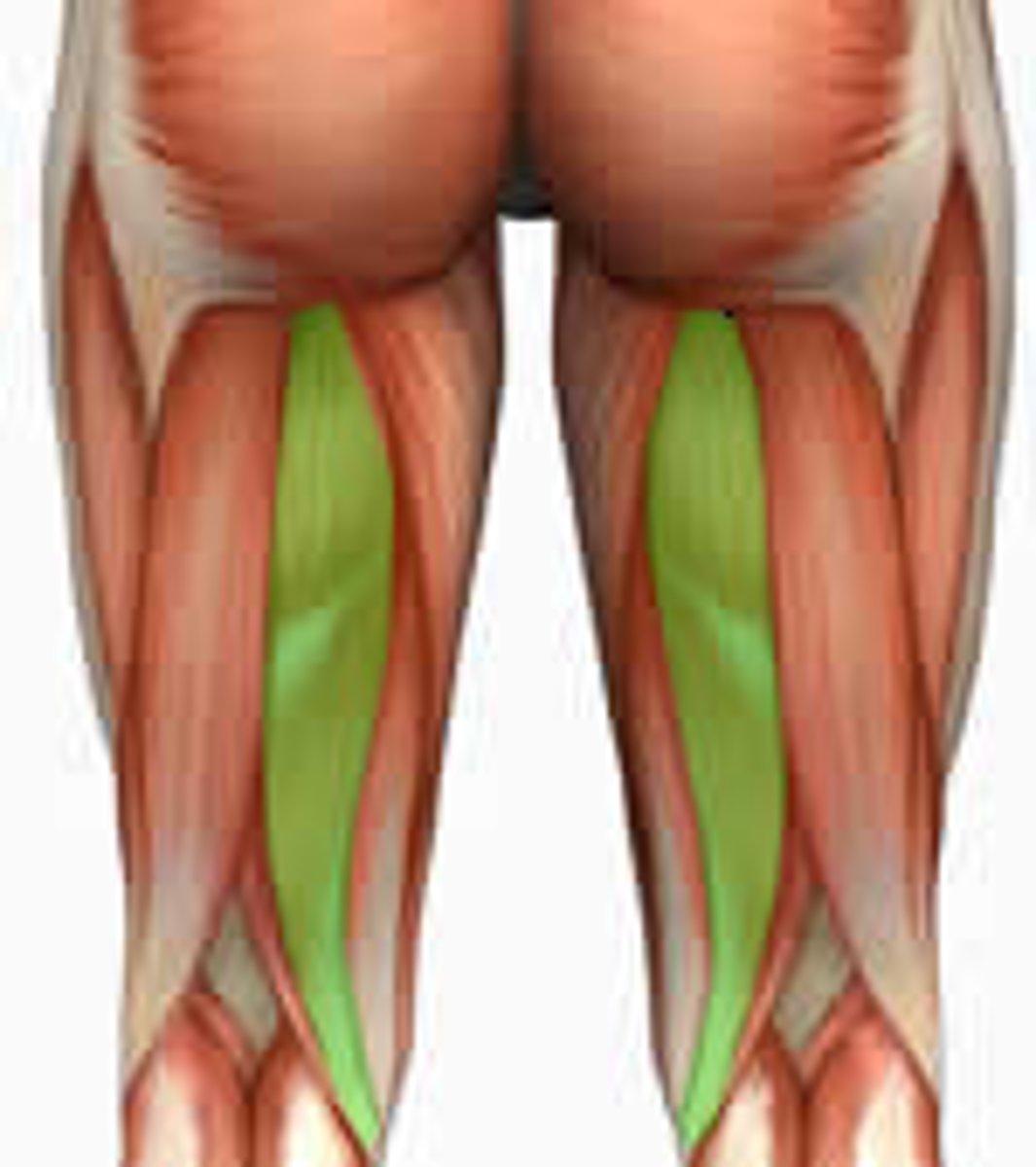
Semitendinosus
The intermediate muscle of the posterior thigh that extends the thigh and flexes the leg at the knee.
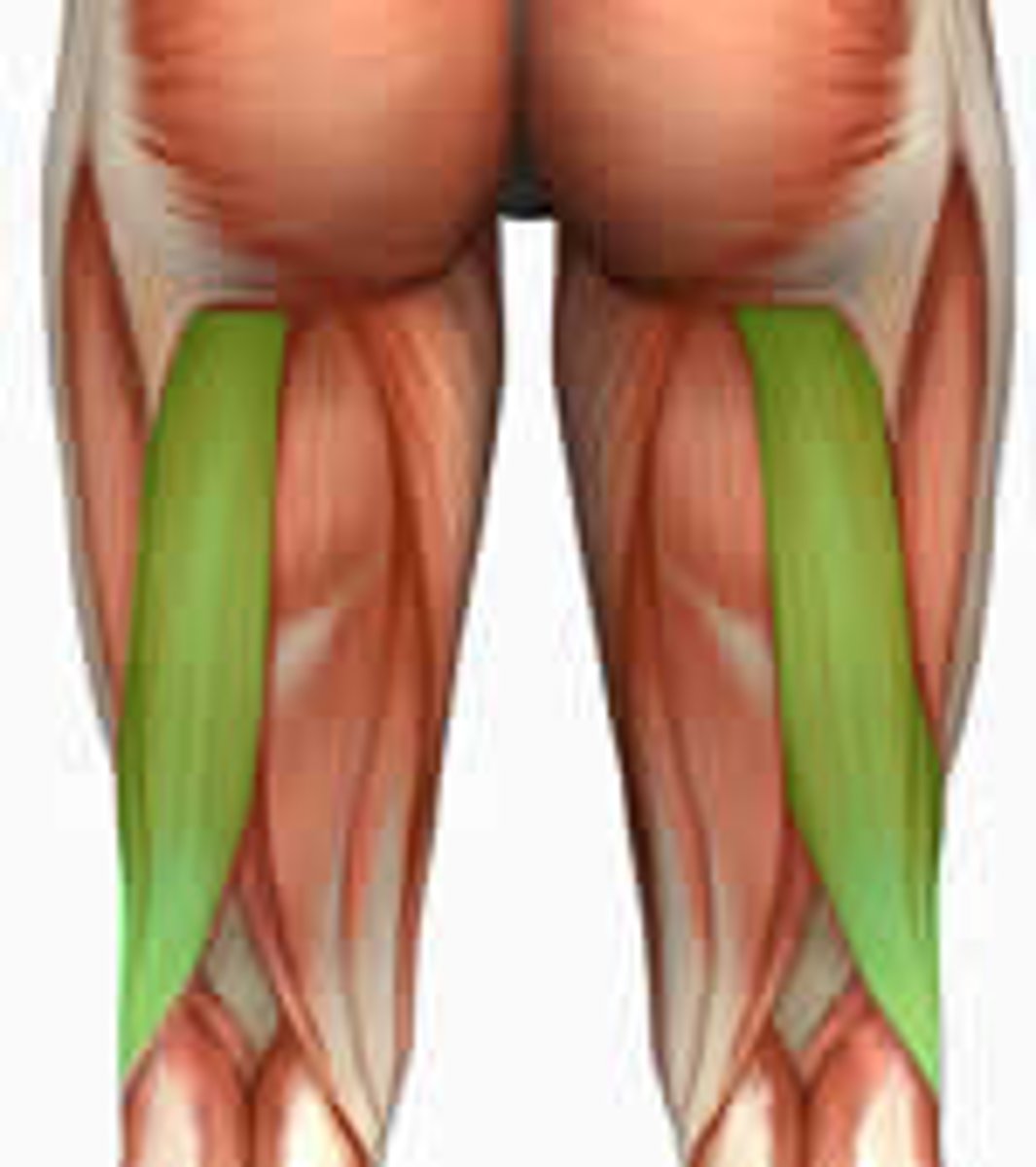
biceps femoris
The lateral muscle of the posterior thigh that extends the thigh and flexes the leg and extends the thigh.
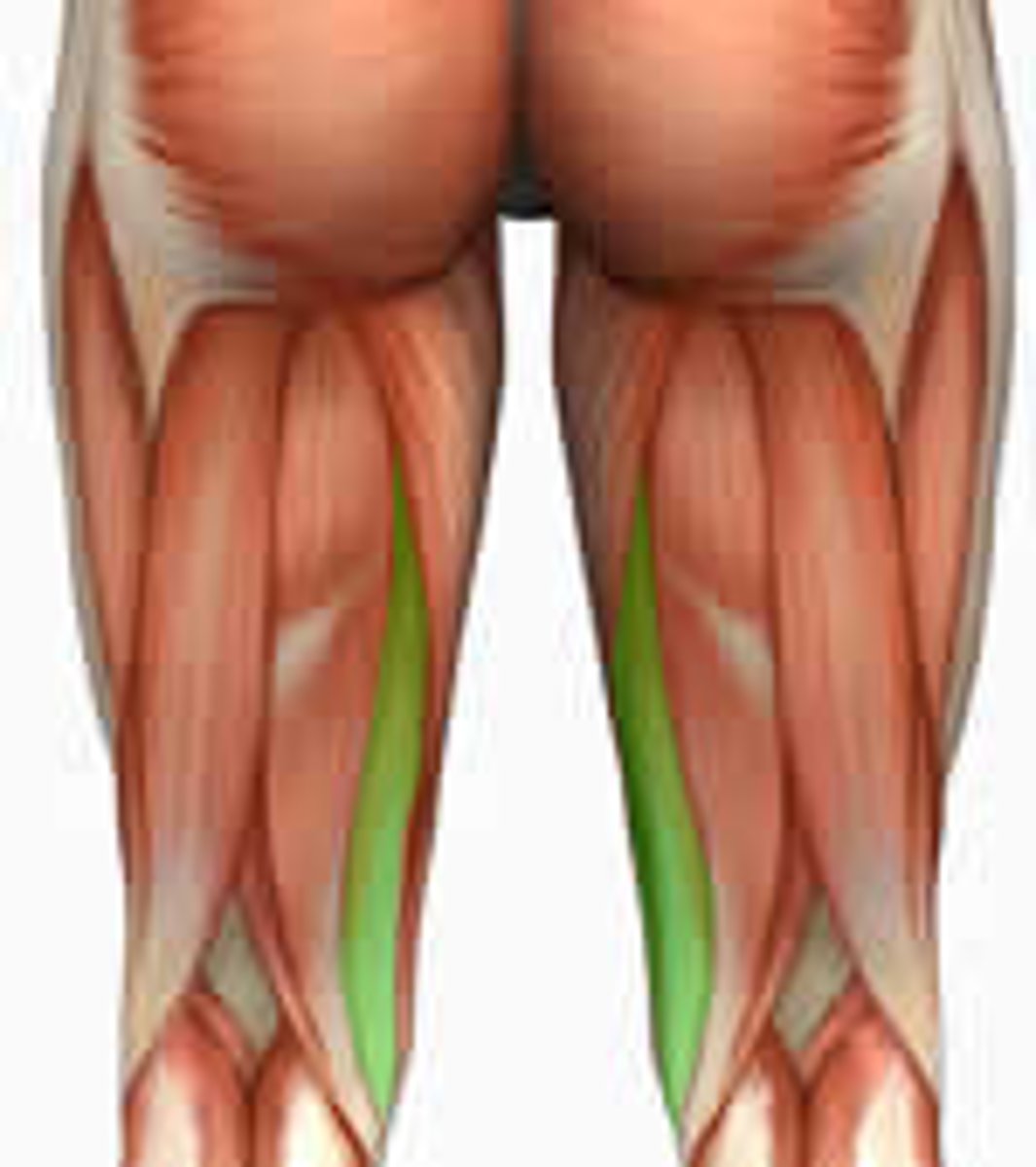
semimembranosus
The medial muscle of the posterior thigh that extends the thigh and flexes the leg at the knee and extends the thigh.
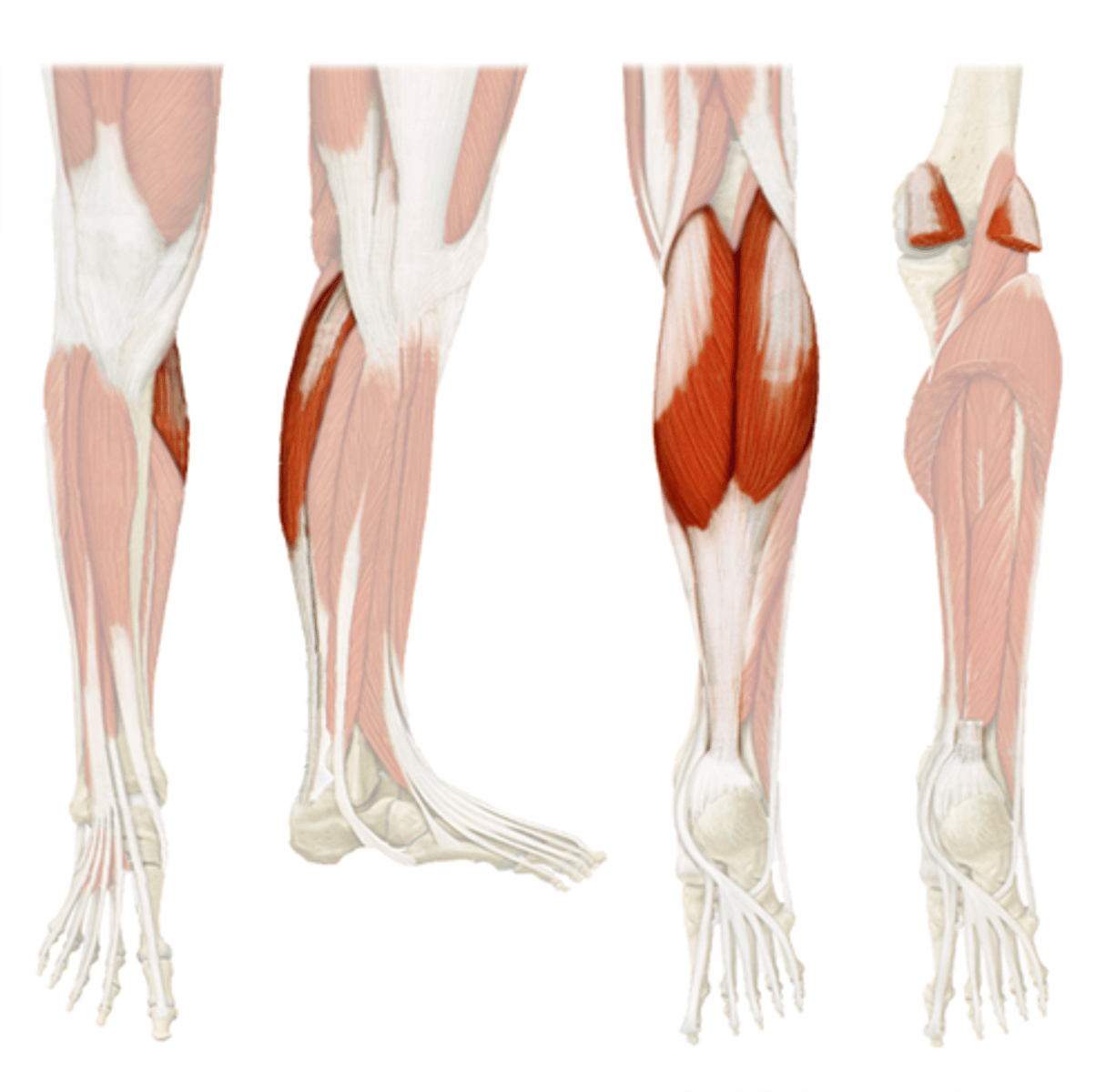
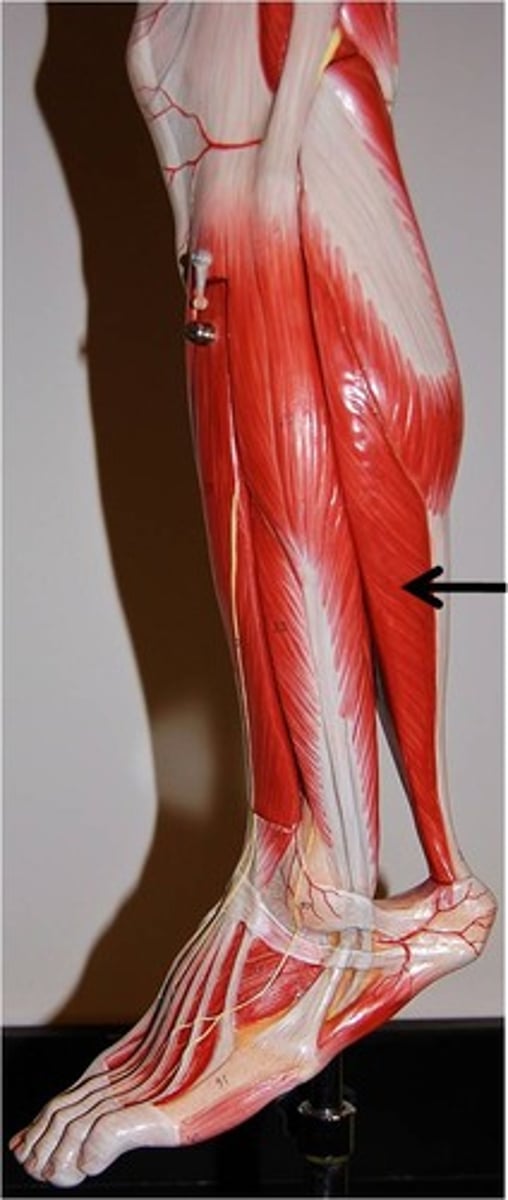
Gastrocnemius
the muscle in the posterior part of the leg that forms the greater part of the calf
soleus
muscle in the lower portion of the calf which flexes foot downward
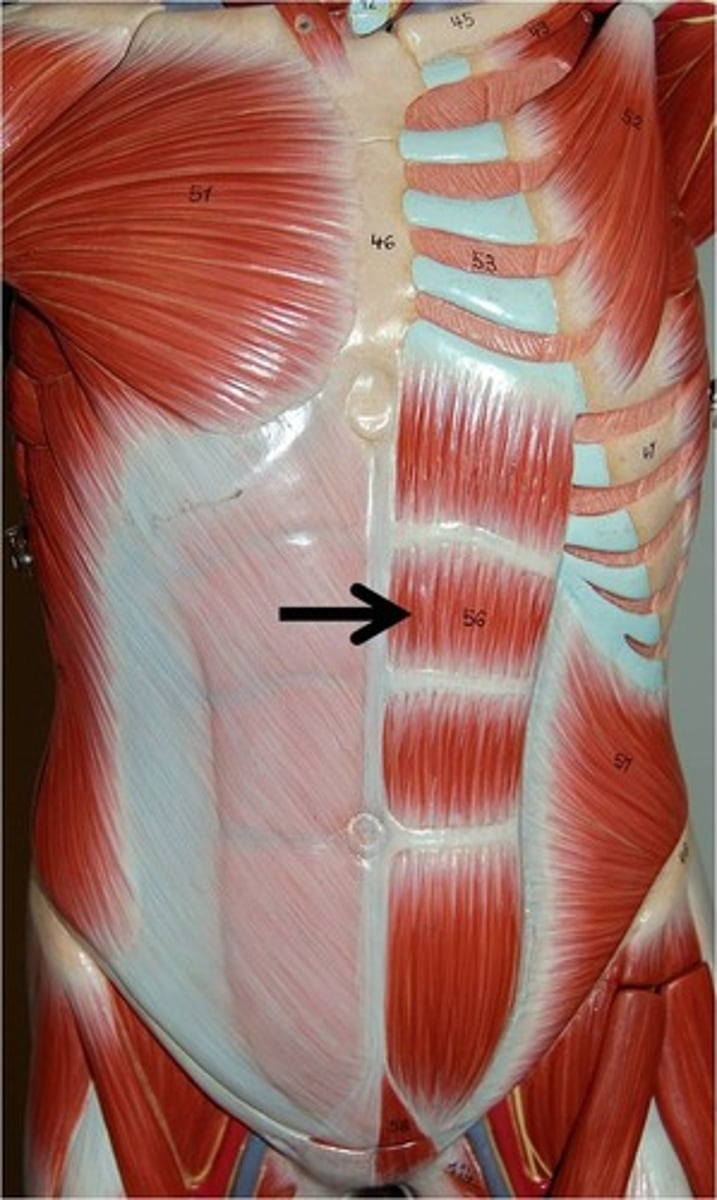
rectus abdominis
flexes and rotates vertebral column: muscle of the abs
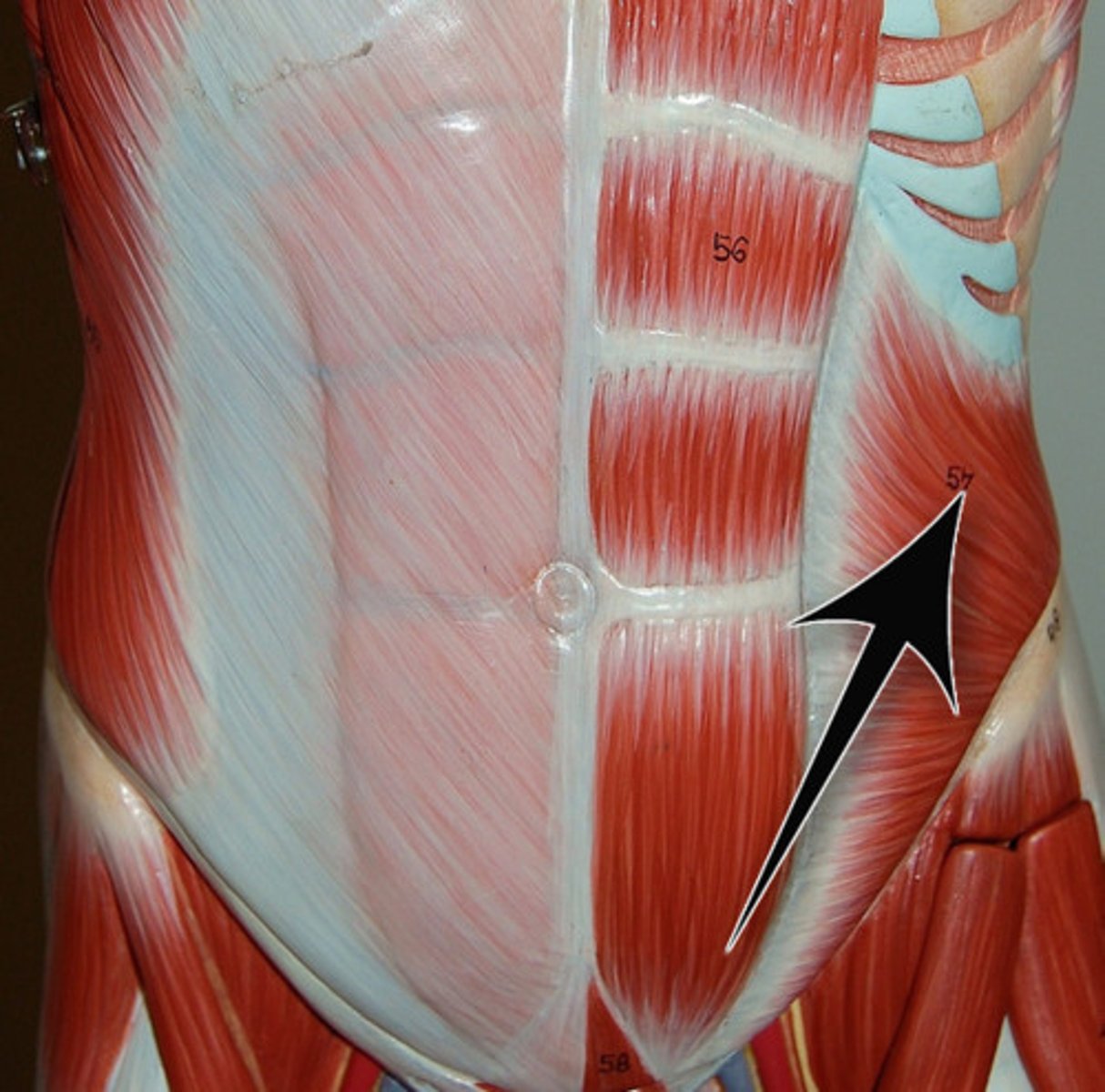
external oblique
part of the abdominal girdle; forms the external lateral walls of the abdomen
transversus abdominis
muscle that compresses abdominal contents
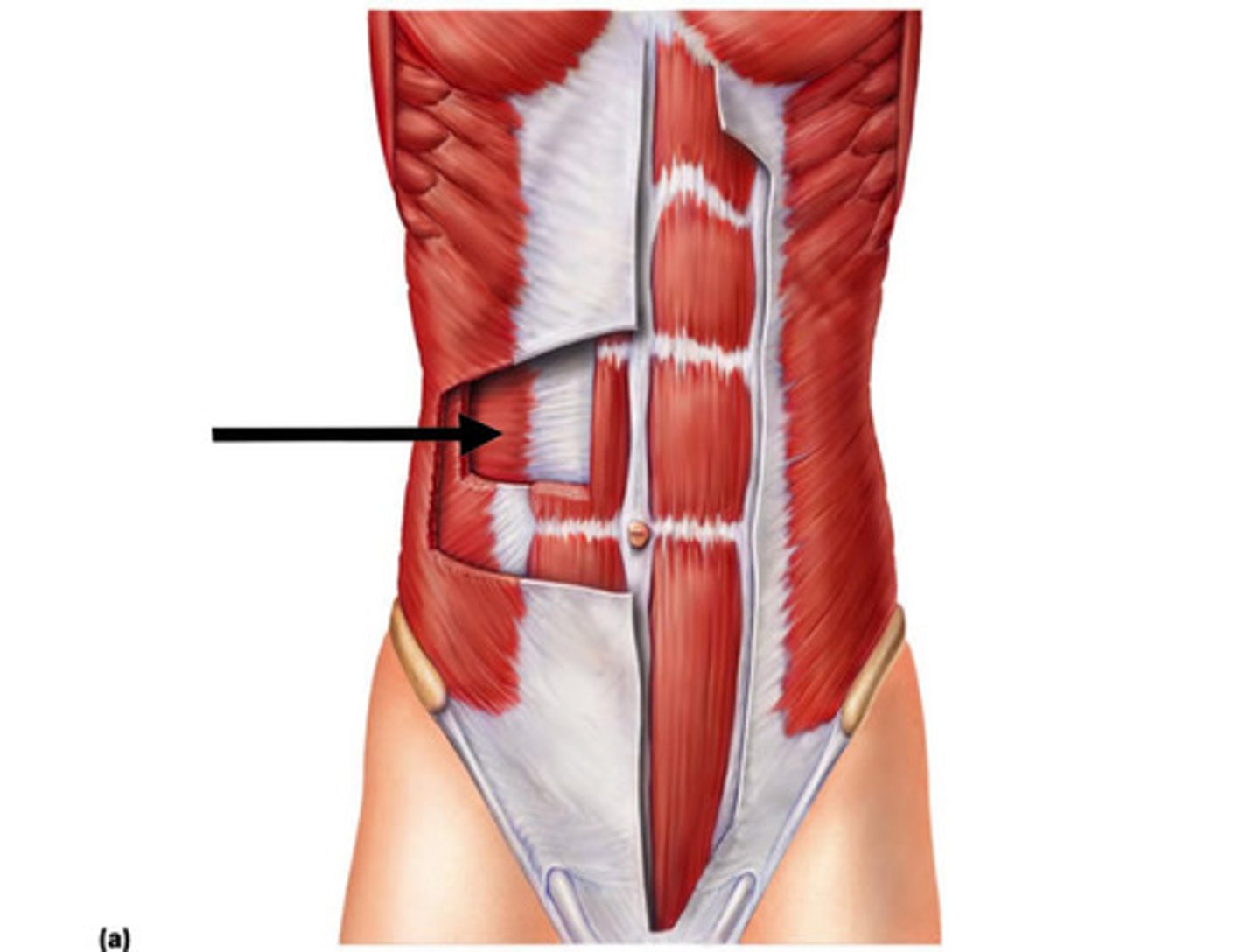
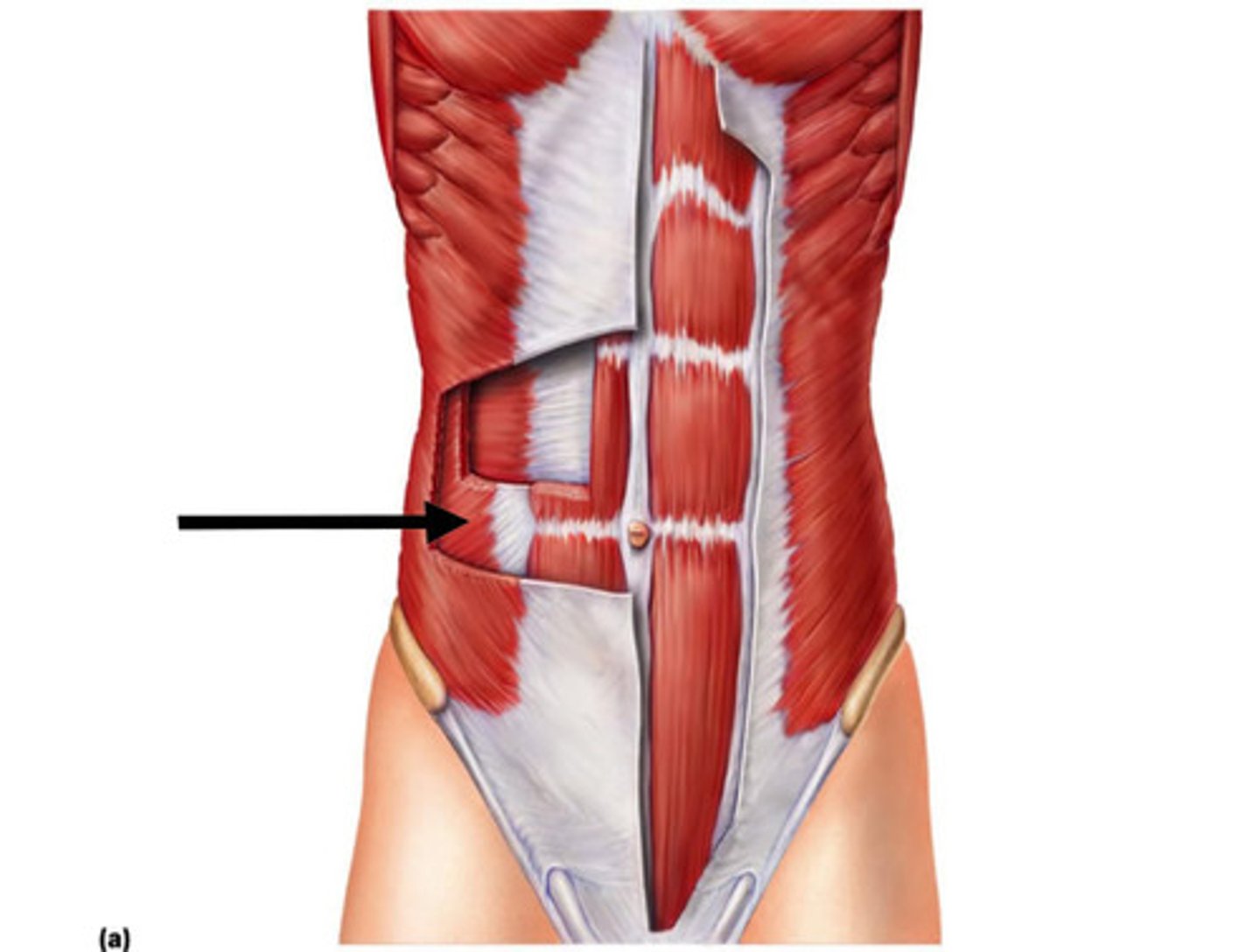
internal oblique
a muscle in the abdominal wall that lies below the external oblique and just above the transverse abdominal muscles.
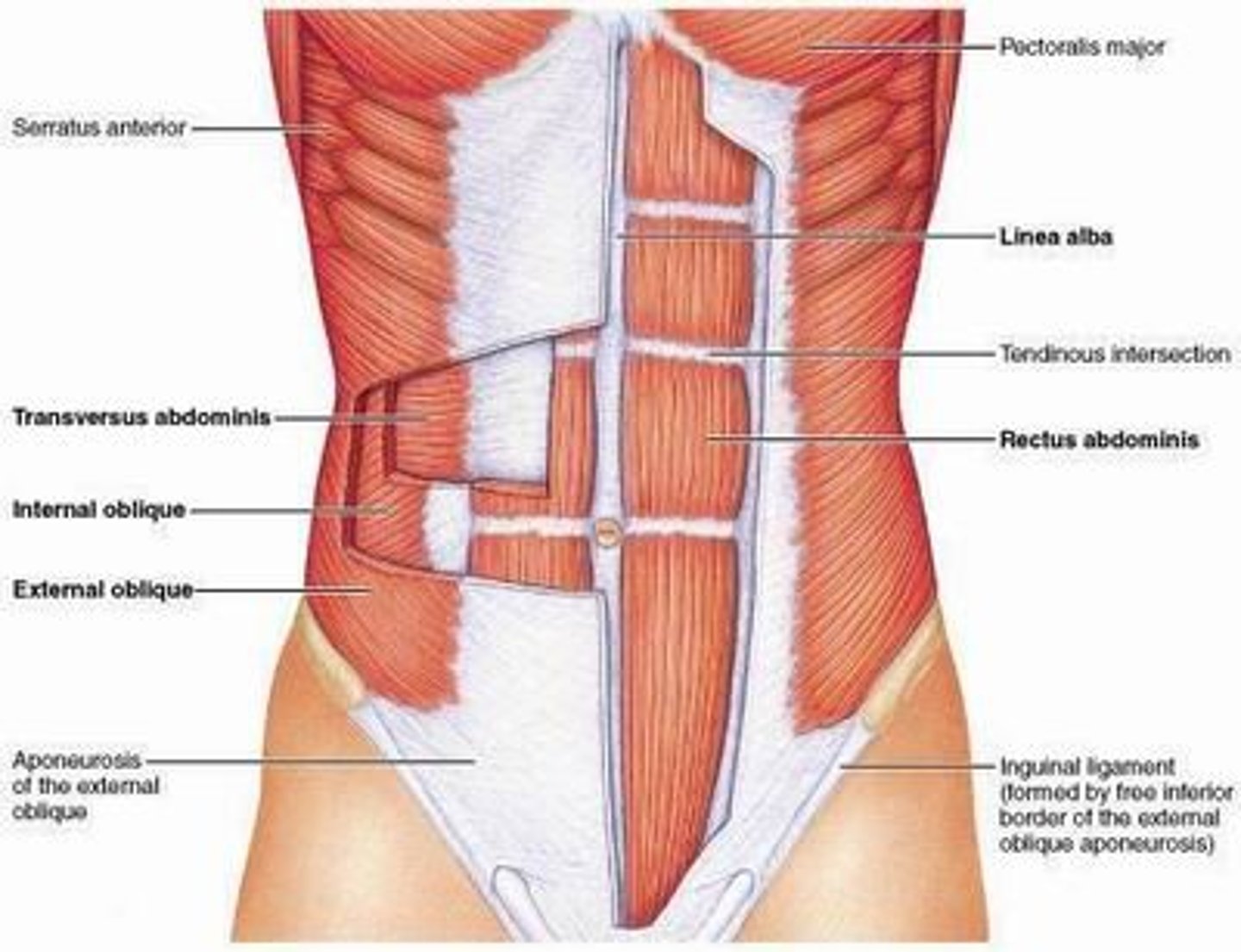
linea alba
midline tendinous seam joining the abdominal muscles
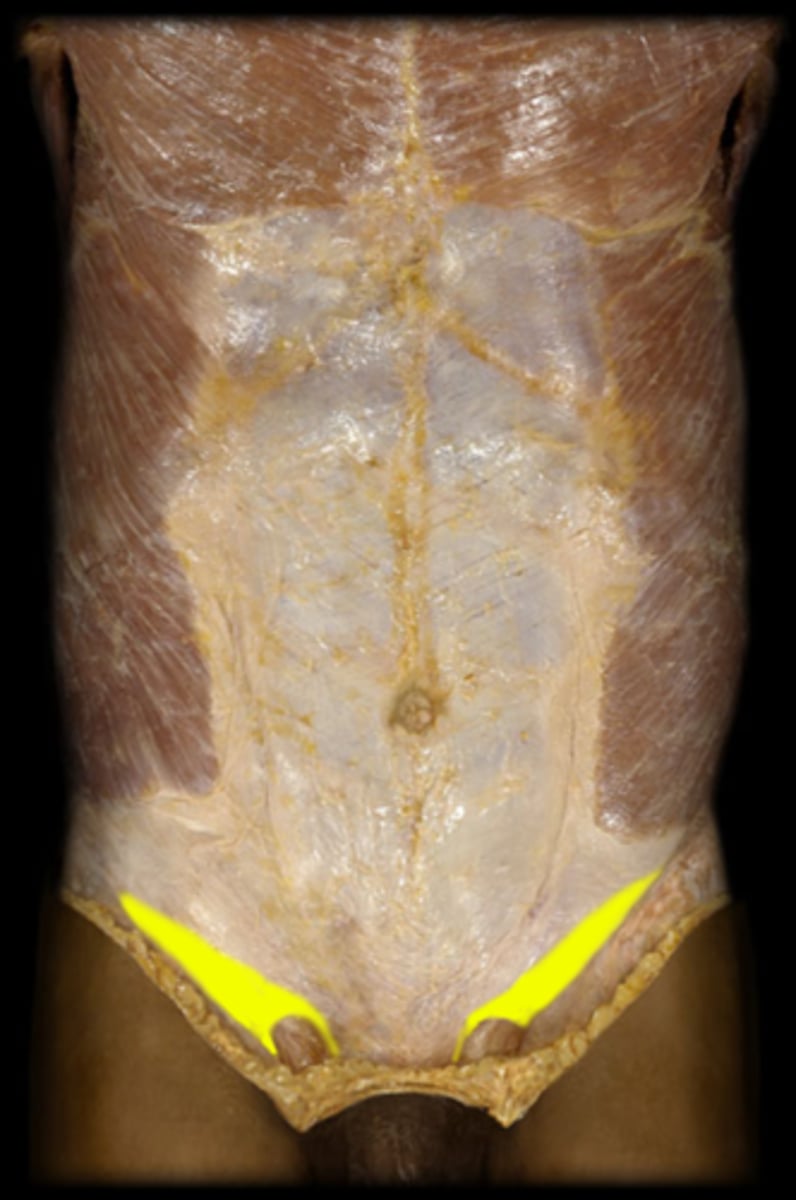
inguinal ligament
ligament extending from pubic bone to anterior superior iliac spine, forming lower border of abdomen
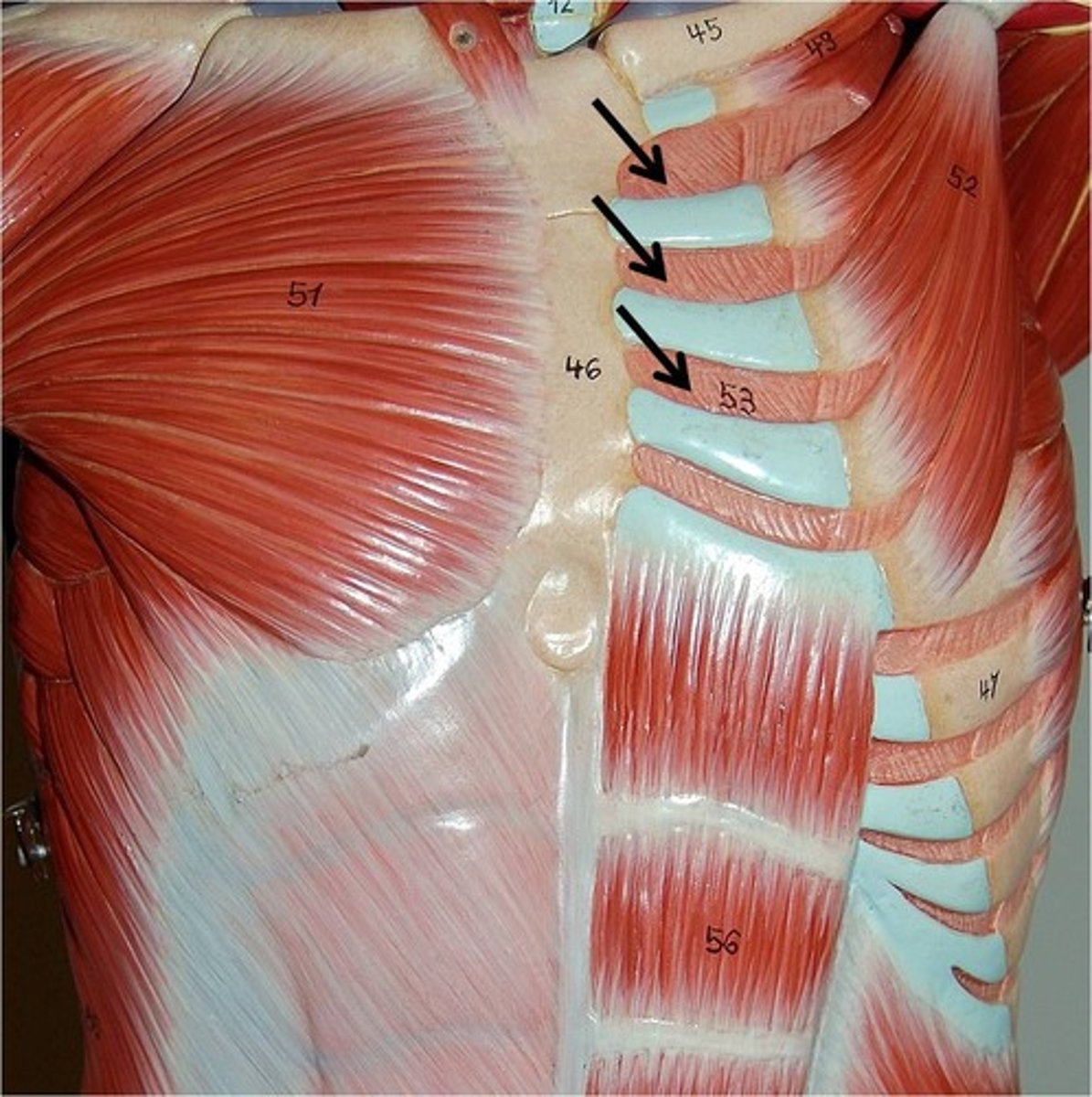
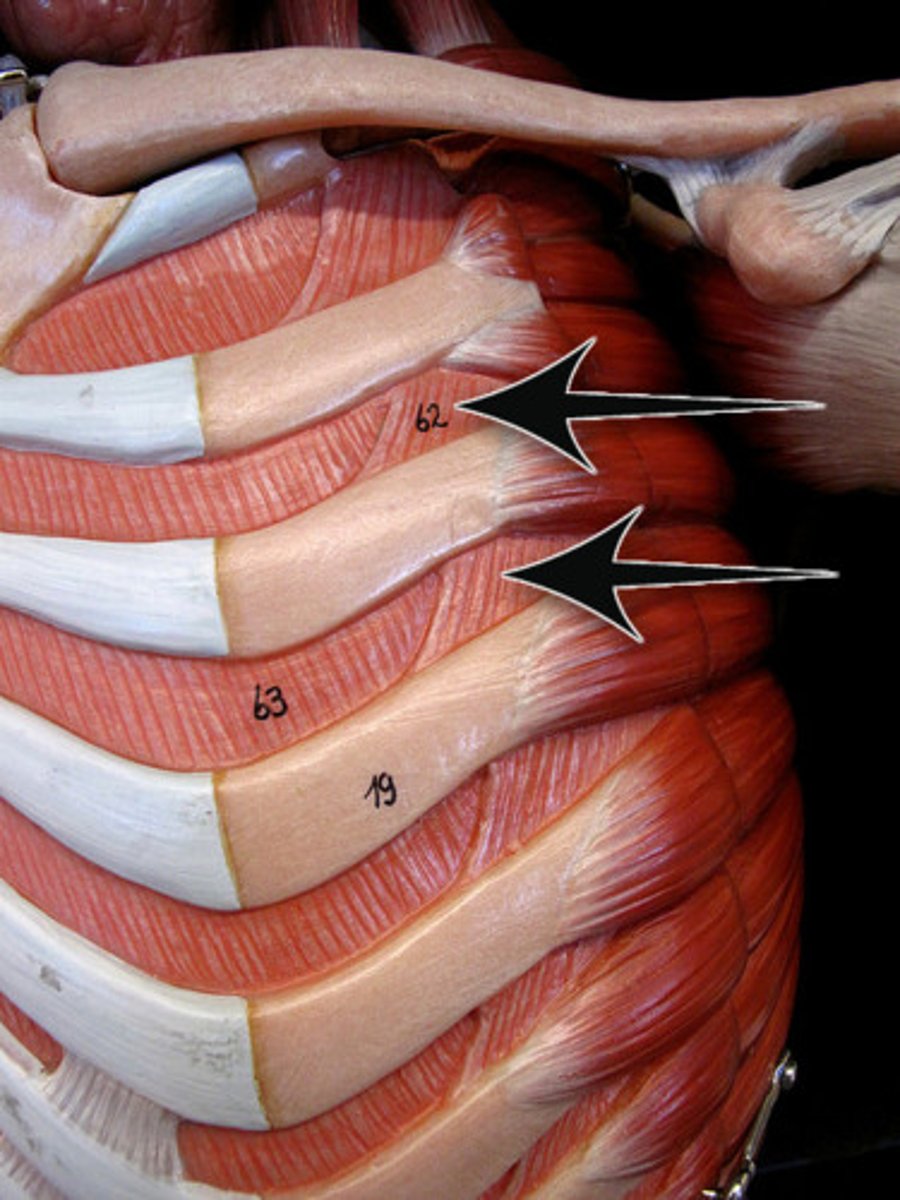
internal intercostals
a muscle that depresses the ribs during forced expiration
external intercostal muscles
A muscle that raises the rib cage during inhalation
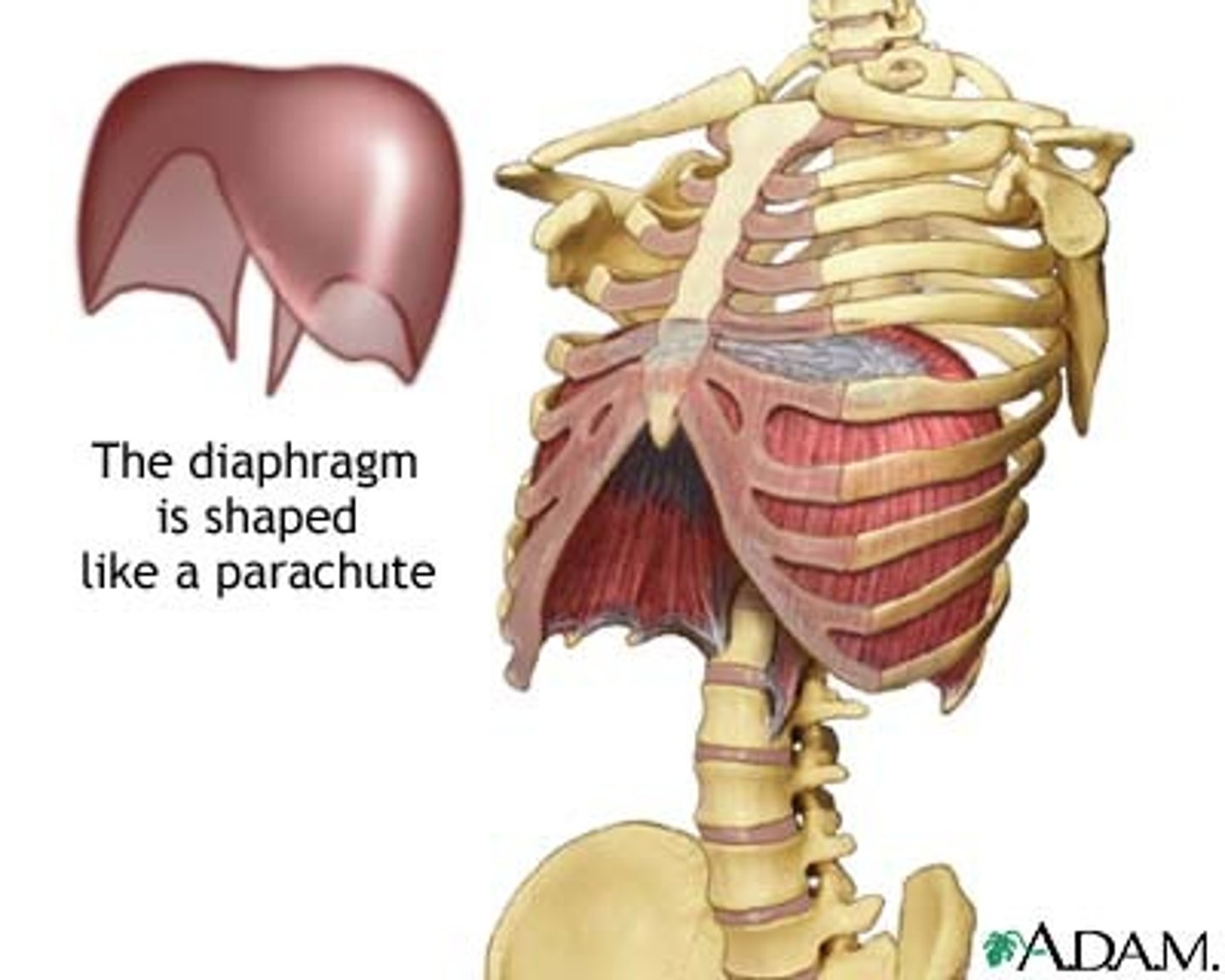
Diaphragm
Large, flat muscle at the bottom of the chest cavity that helps with breathing
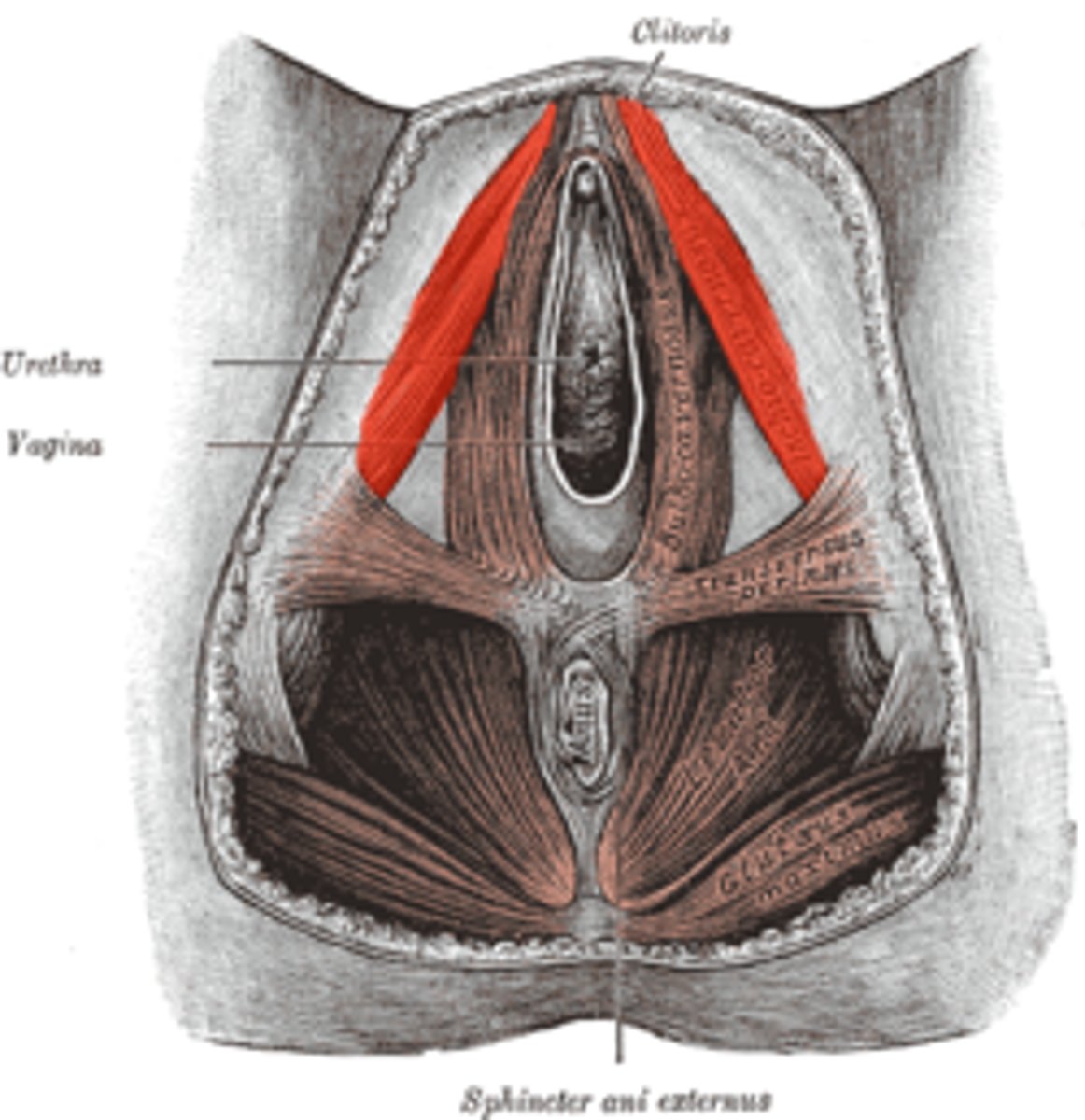
ischiocavernosus
stabilizes erection and slows the return of blood to through the veins
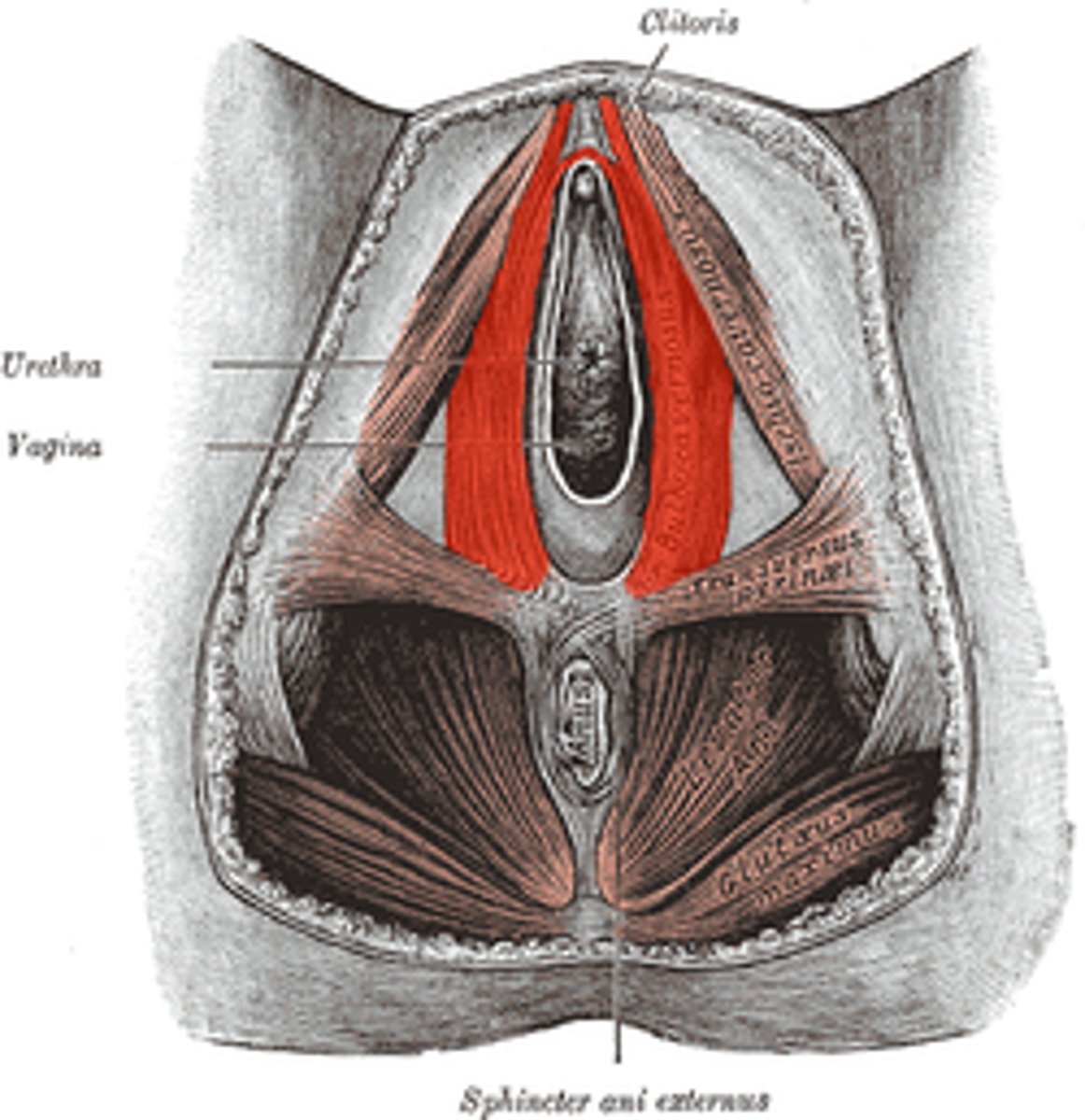
Bulbospongiosus
Helps expel urine and assists with erection
superficial transverse perineal
stabilizes central tendon of perineum
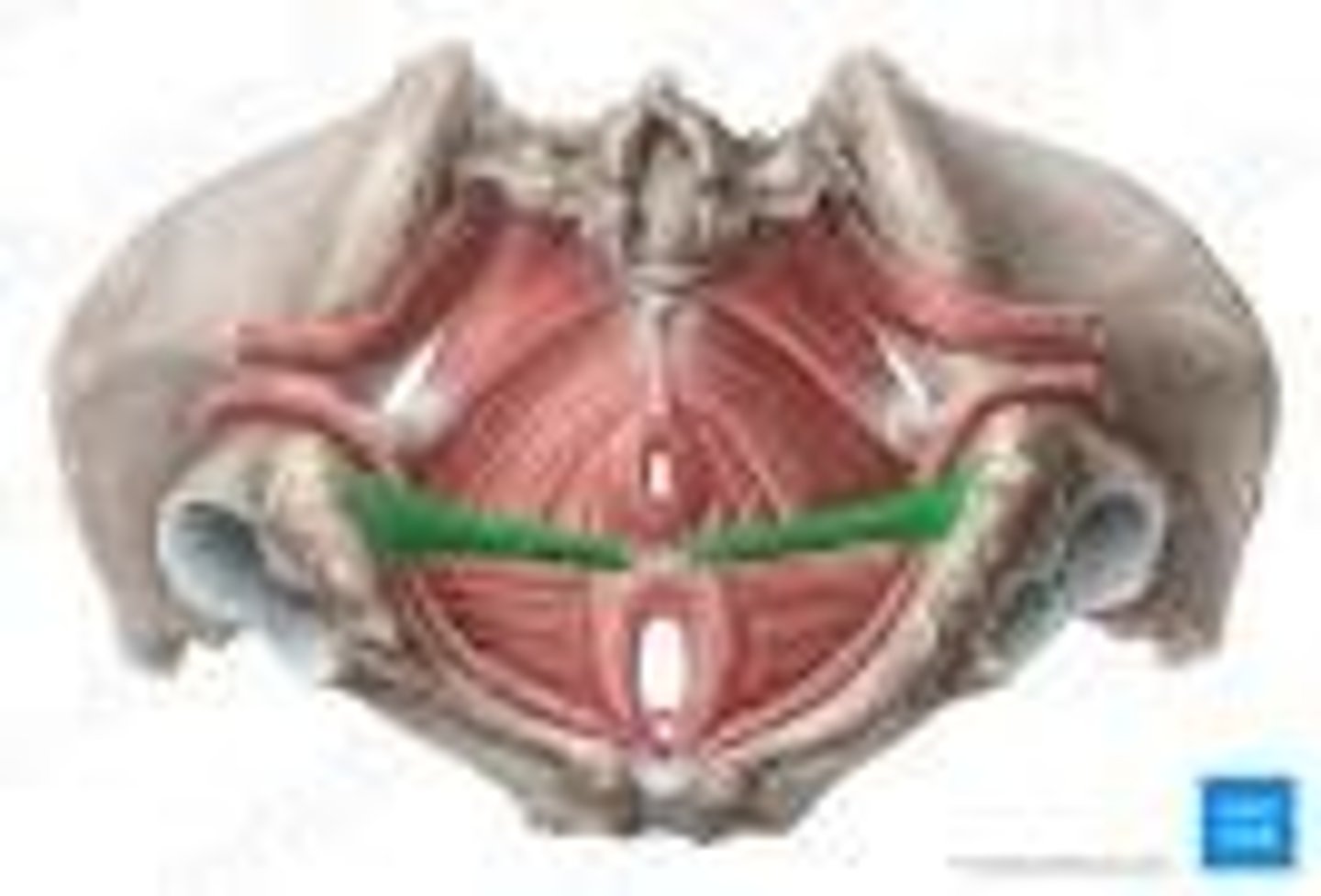
external anal sphincter muscle
made of skeletal muscle, allows the person to control bowel movements
external urethral sphincter
muscular ring that can be consciously controlled to release or hold back urine
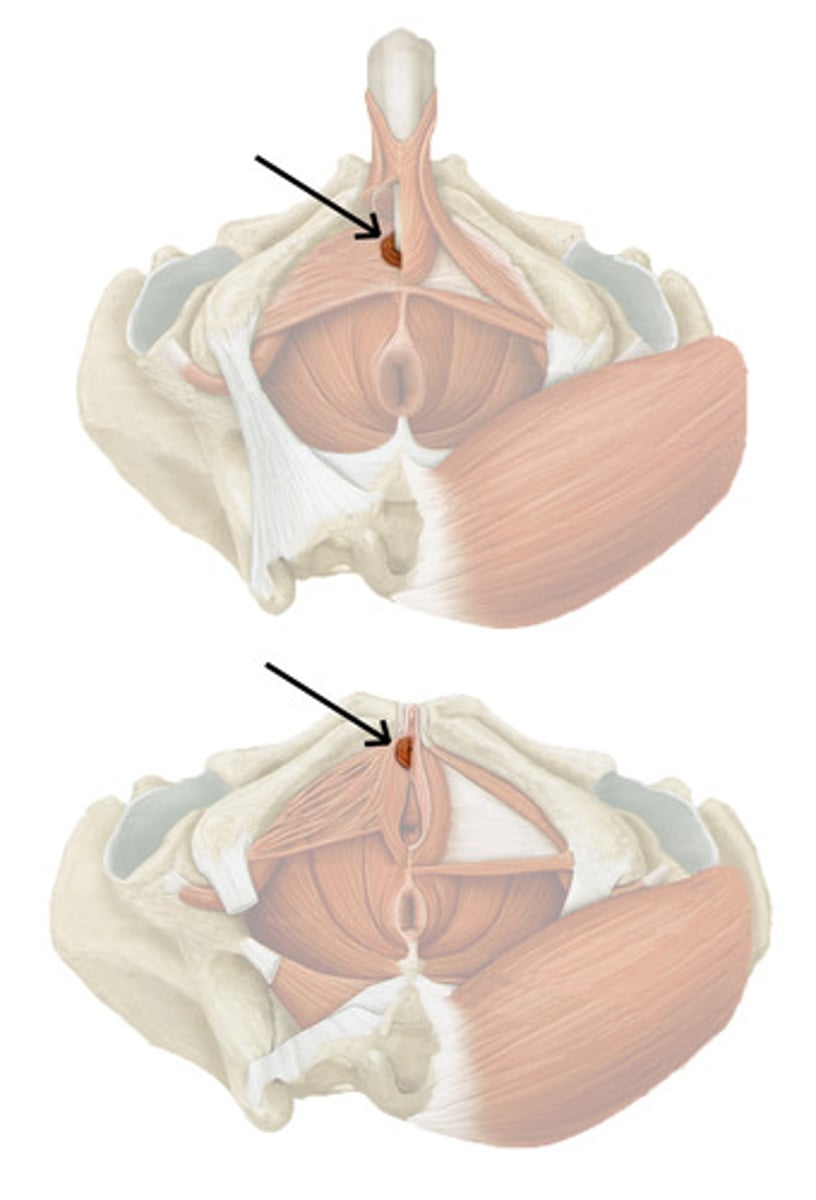
ischiococcygeus
muscle that assists the levator ani and pulls the coccyx anteriorly
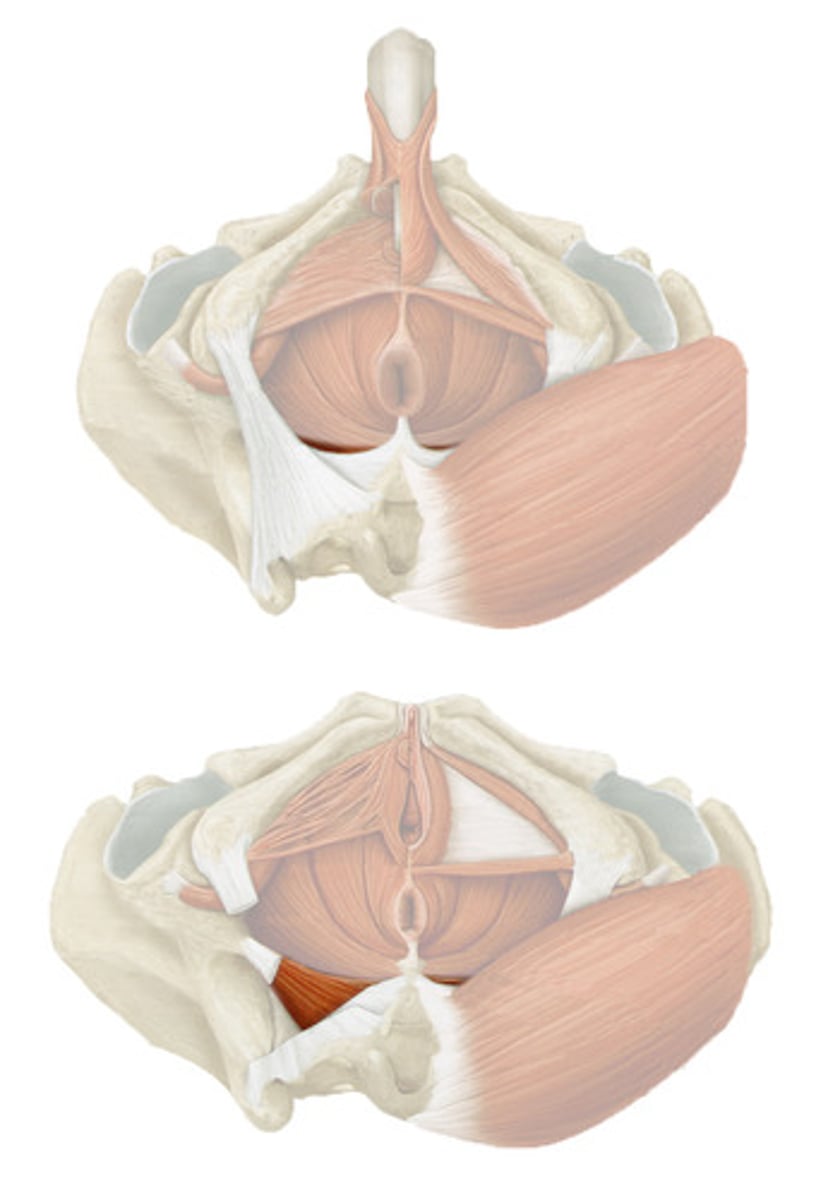
Puborectalis
muscle that forms a sling around the rectum: the muscle which obstructs fecal flow while in a standing position
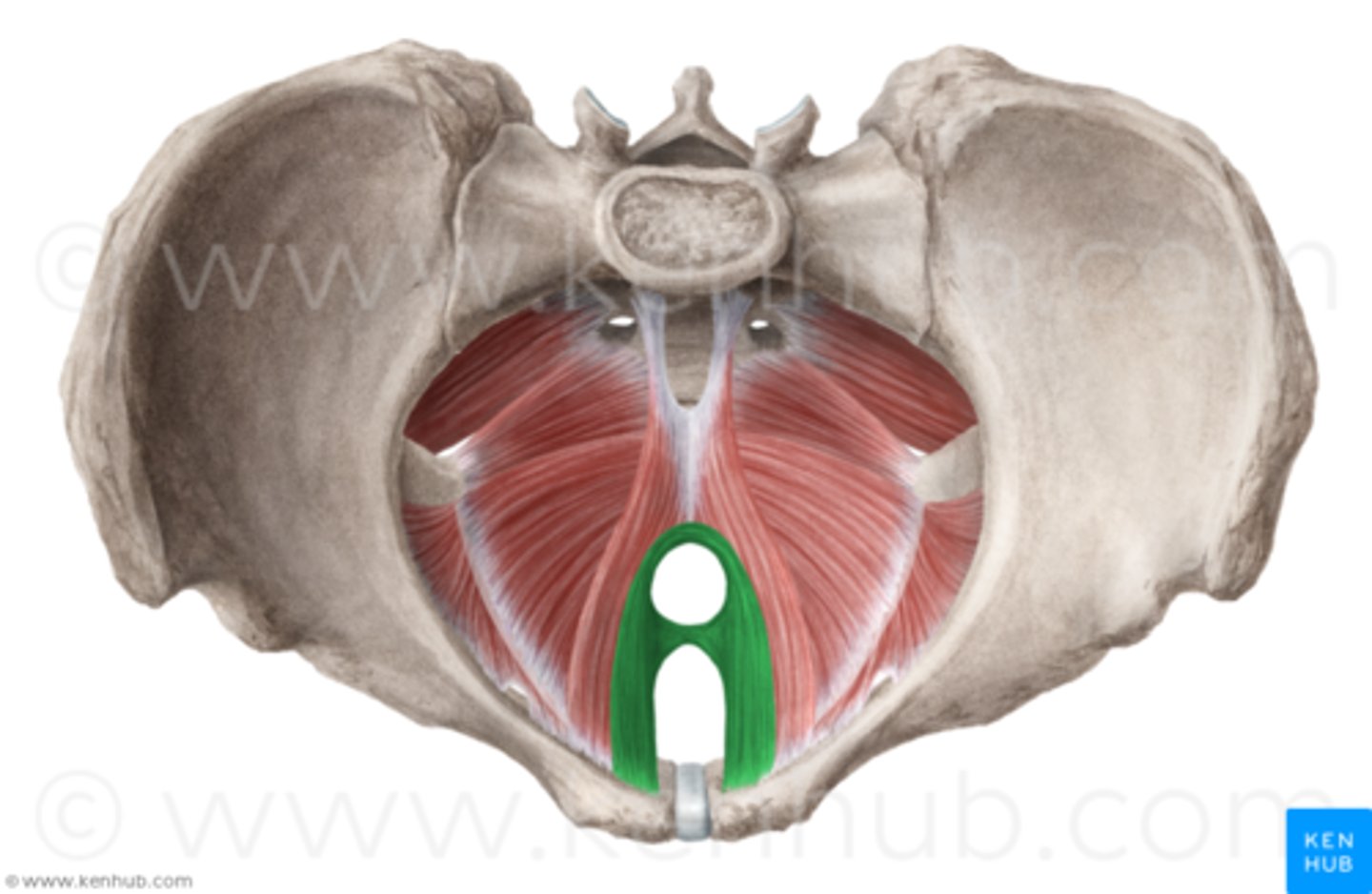
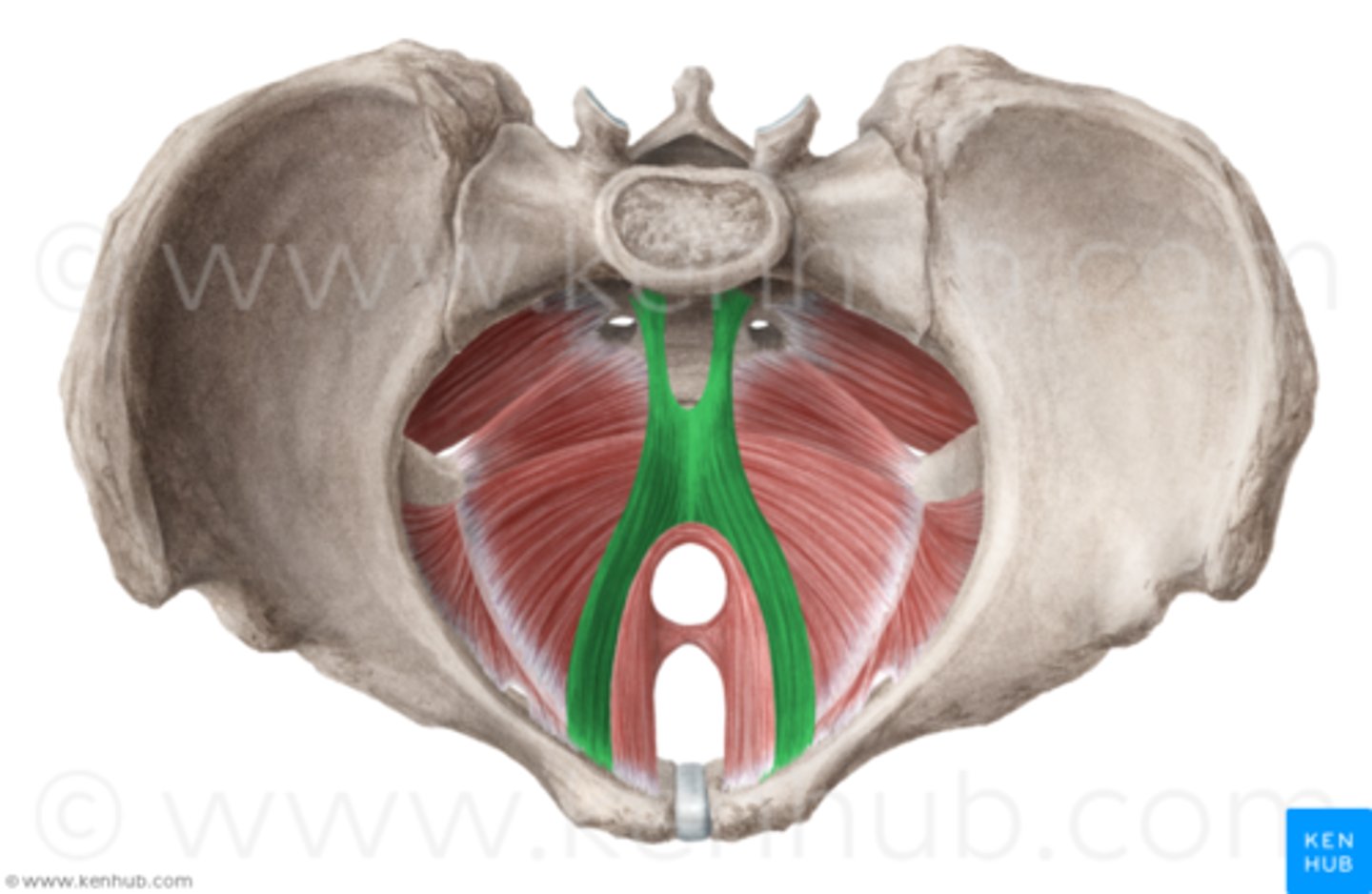
pubococcygeus
muscle that makes up the levator ani along with the iliococcygeus and puborectalis: maintains position of pelvic viscera
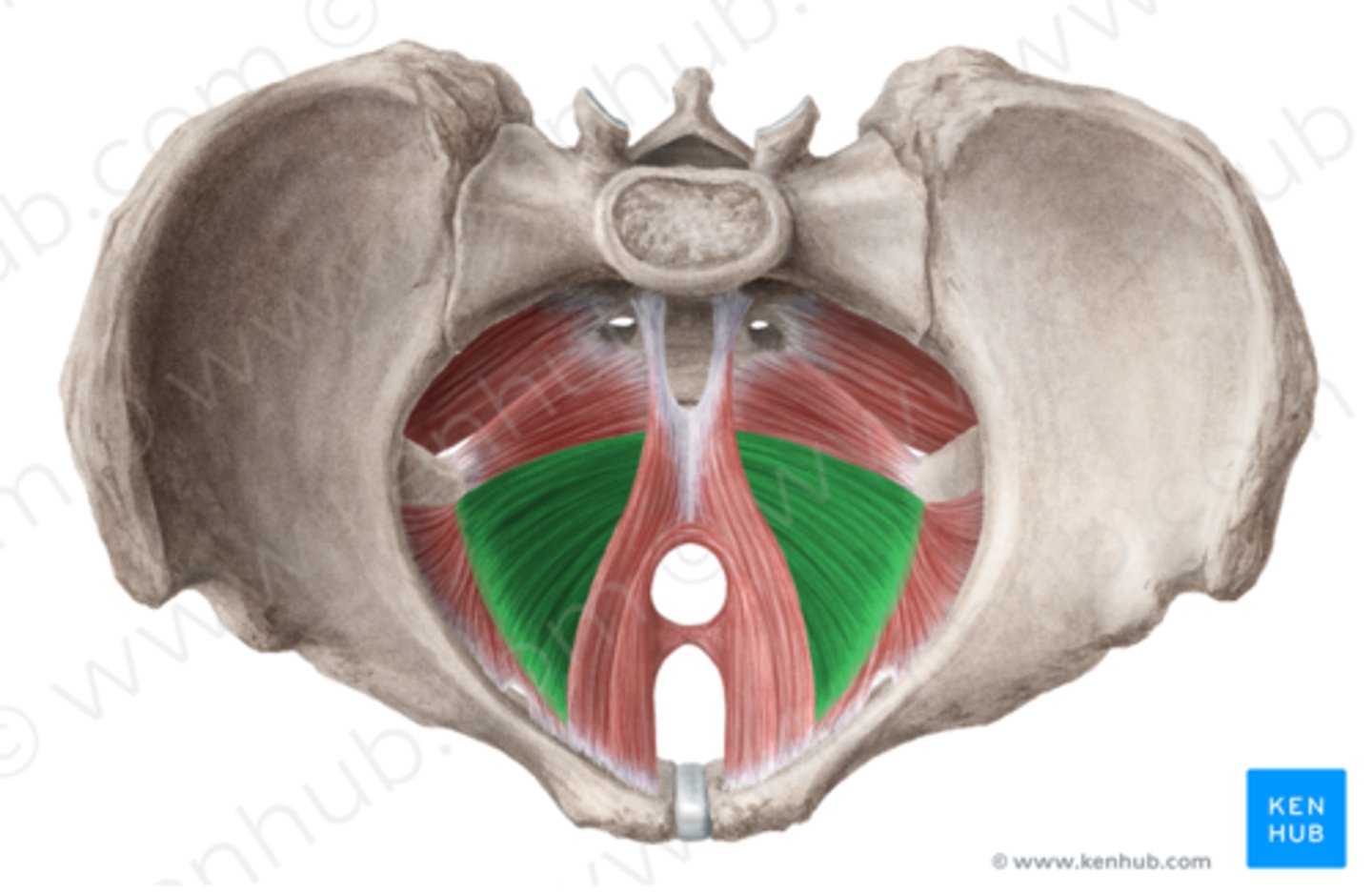
Iliococcygeus
muscle that makes up the levator ani along with the pubococcygeus and puborectalis: maintains position of pelvic viscera
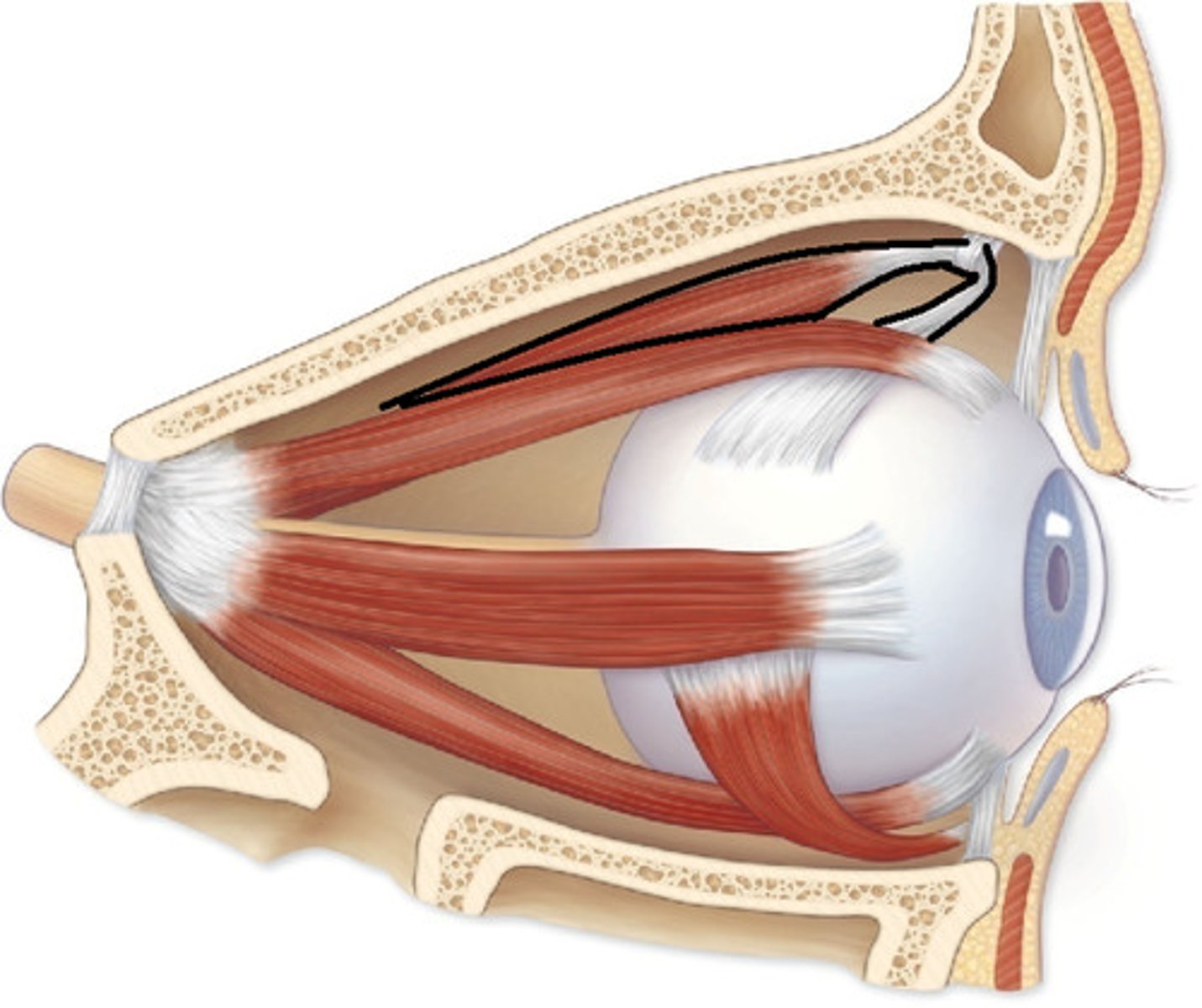
superior oblique
muscle that wraps around eye diagonally on top; latched on to blue trochlea
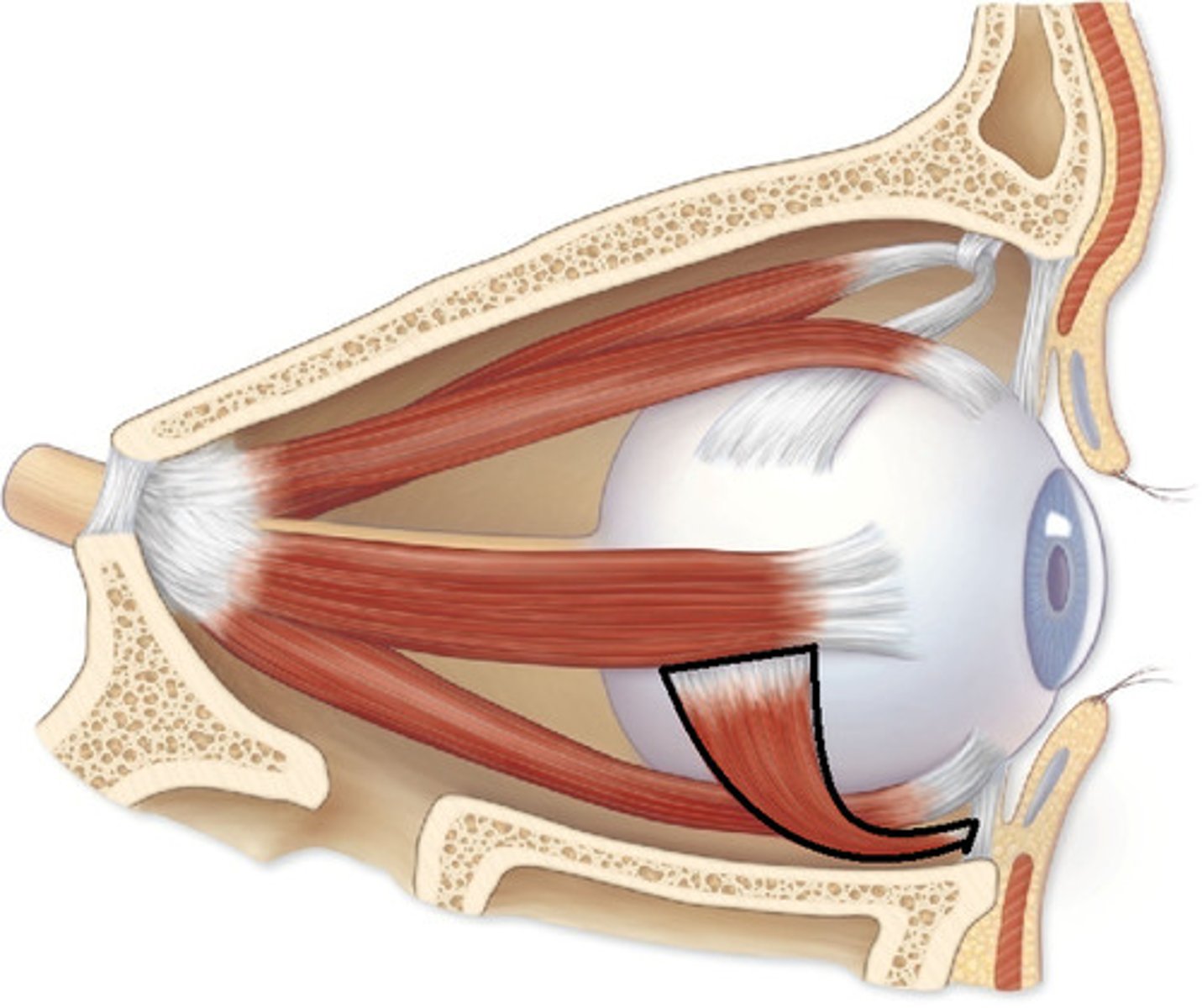
inferior oblique muscle
muscle wraps around diagonally on bottom of eye; goes from inferior rectus to lateral rectus
superior rectus
a muscle attached on the top of the eye which elevates the eye and turns it medially
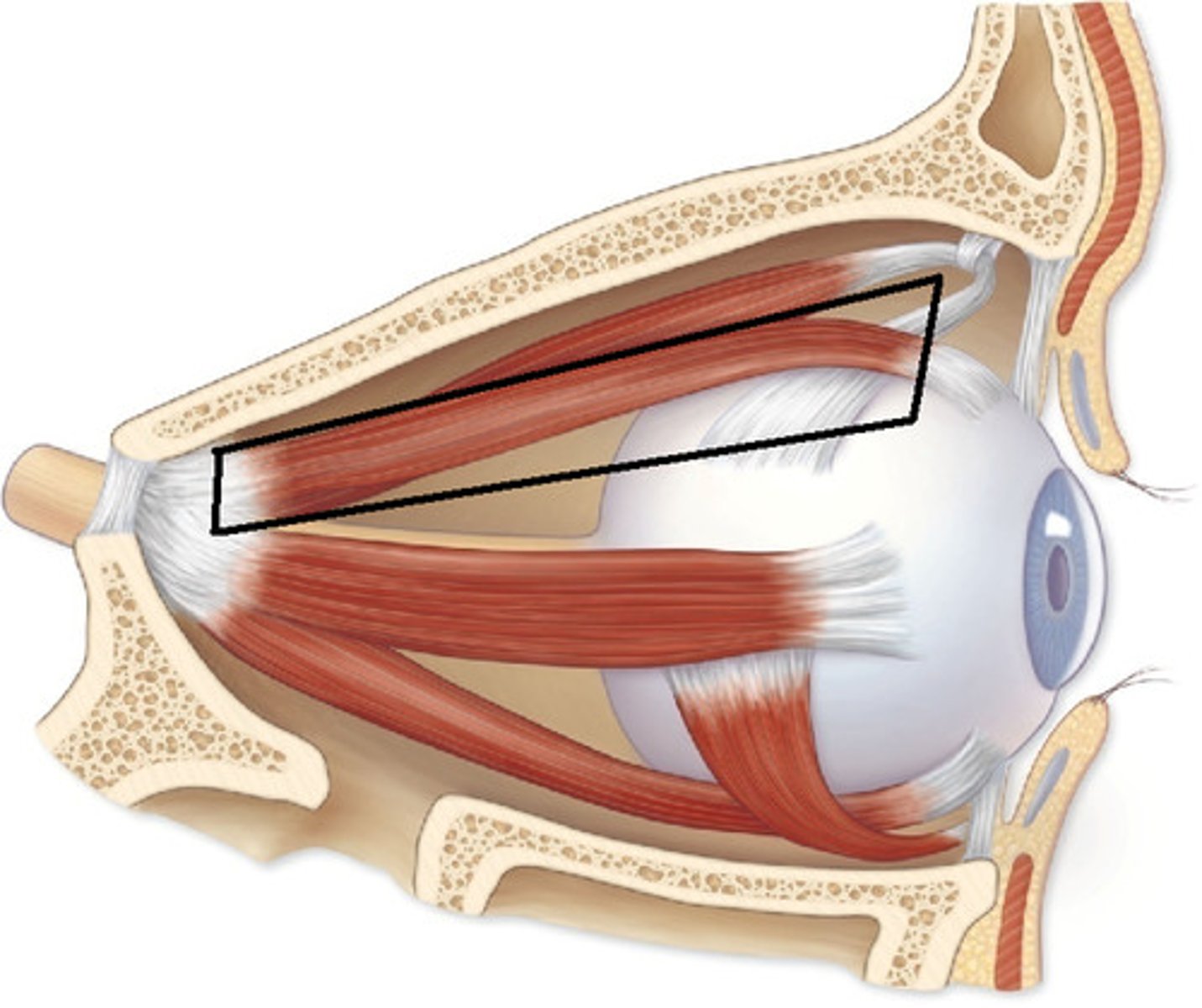
medial rectus
muscle located on the medial side of the eye; adducts eye
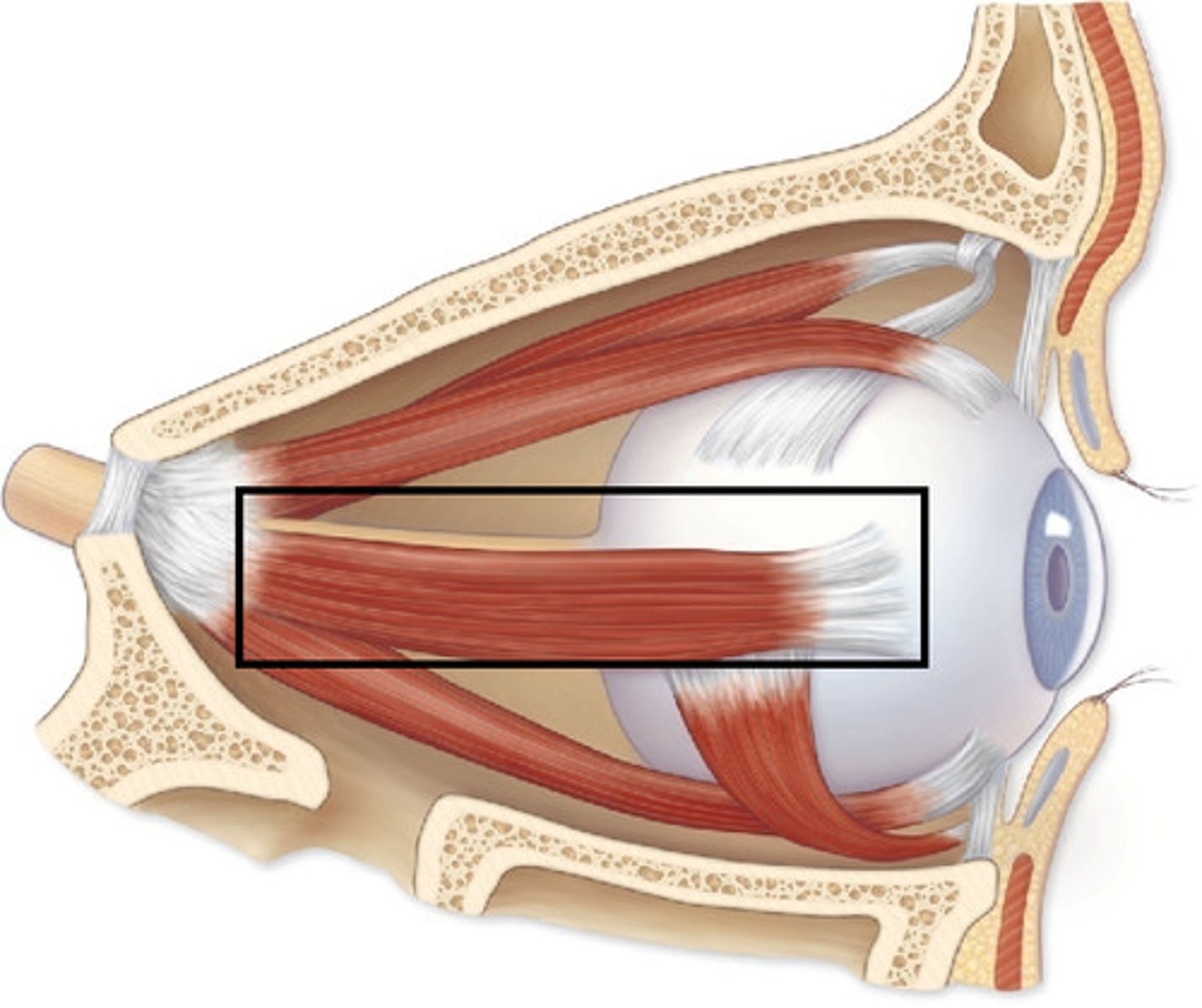
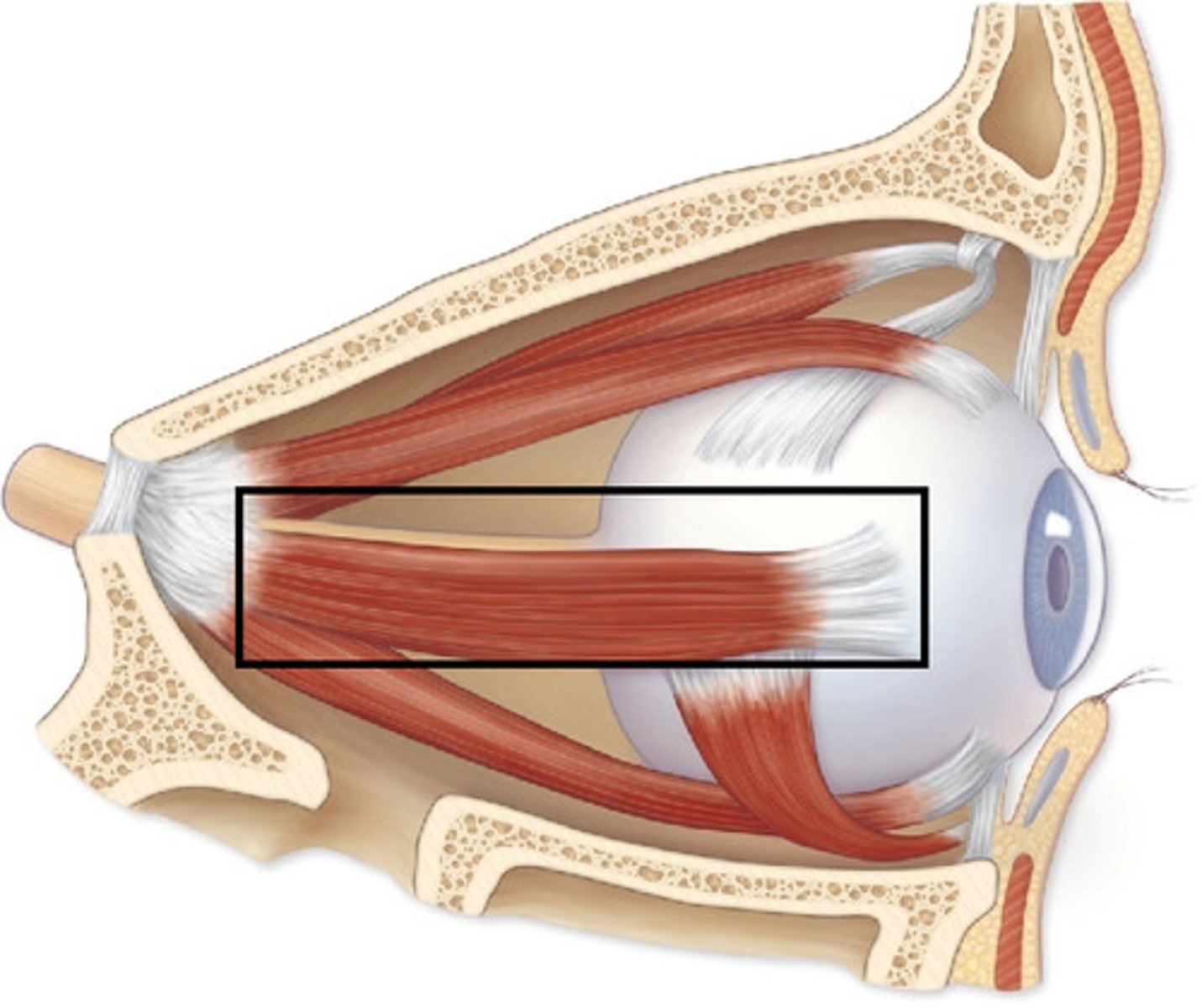
lateral rectus
muscle located on the lateral side of the eye; abducts eye; innervated by abducens nerve VI
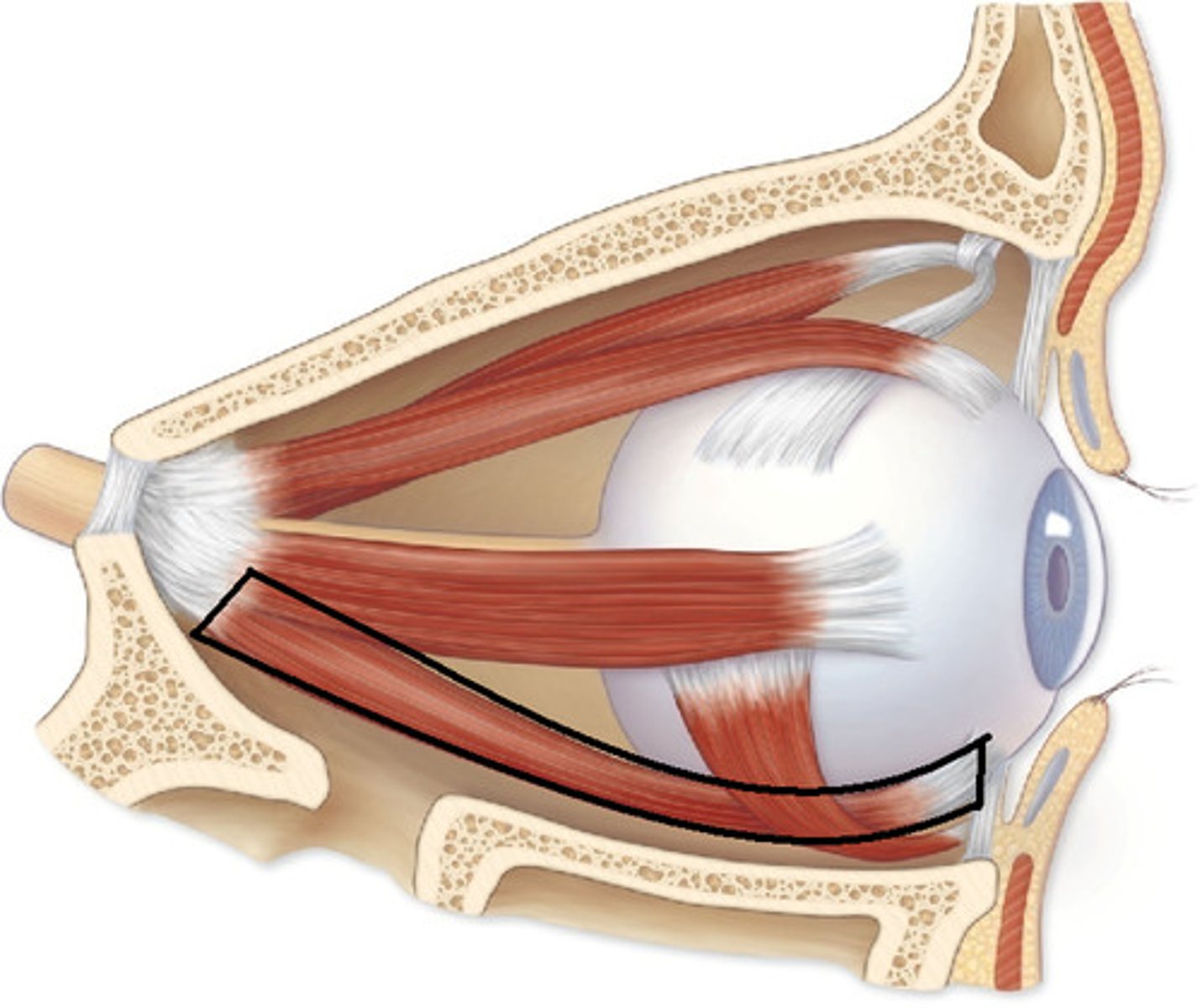
inferior rectus
muscle located on the inferior part of the eye; adducts, depresses, and laterally rotates eye
Explore top notes

