Week 24b: Endocrine System
0.0(0)
 Studied by 3 people
 Call Kai
 Learn
Learn Practice Test
 Spaced Repetition
 Match
Match Flashcards
 Knowt Play
Card Sorting
1/146

There's no tags or description
Looks like no tags are added yet.
Last updated 7:20 PM on 4/26/23
Name | Mastery | Learn | Test | Matching | Spaced | Call with Kai |
|---|
No analytics yet
Send a link to your students to track their progress
147 Terms
1
New cards
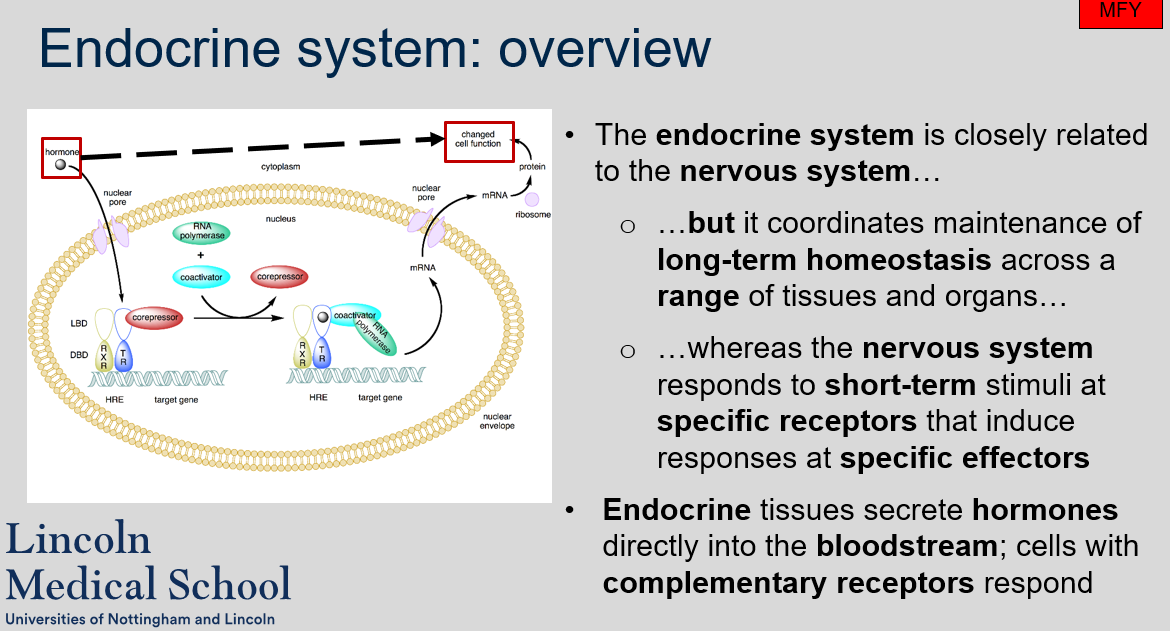
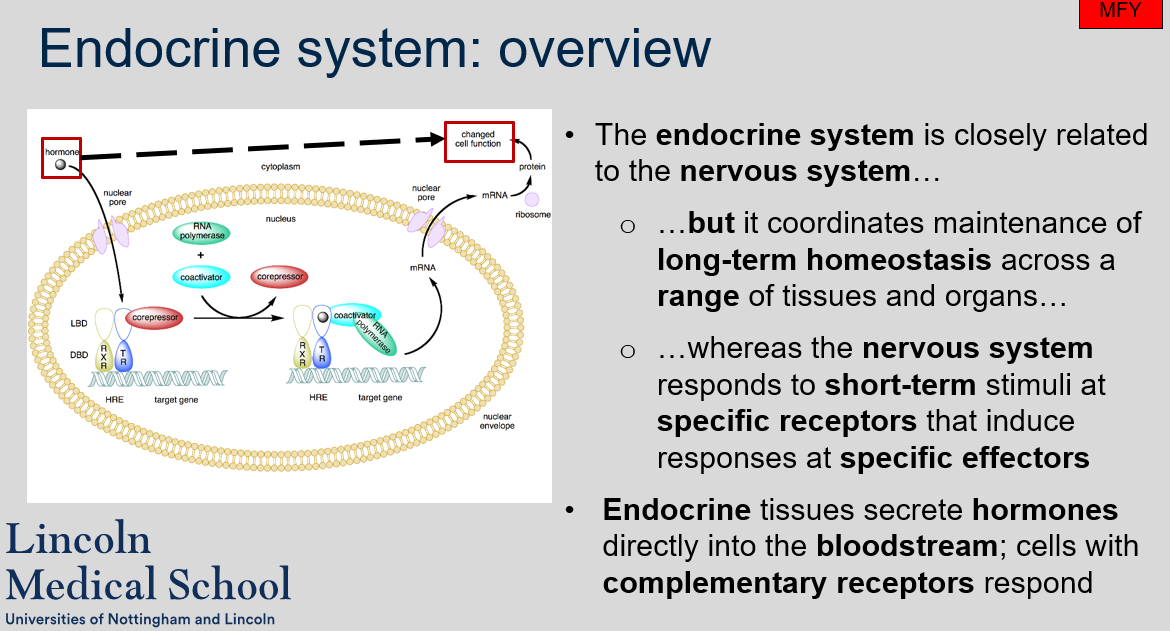
How is the endocrine system related to the nervous system?
The endocrine system is closely related to the nervous system, but it coordinates maintenance of long-term homeostasis across a range of tissues and organs, whereas the nervous system responds to short-term stimuli at specific receptors that induce responses at specific effectors.
2
New cards
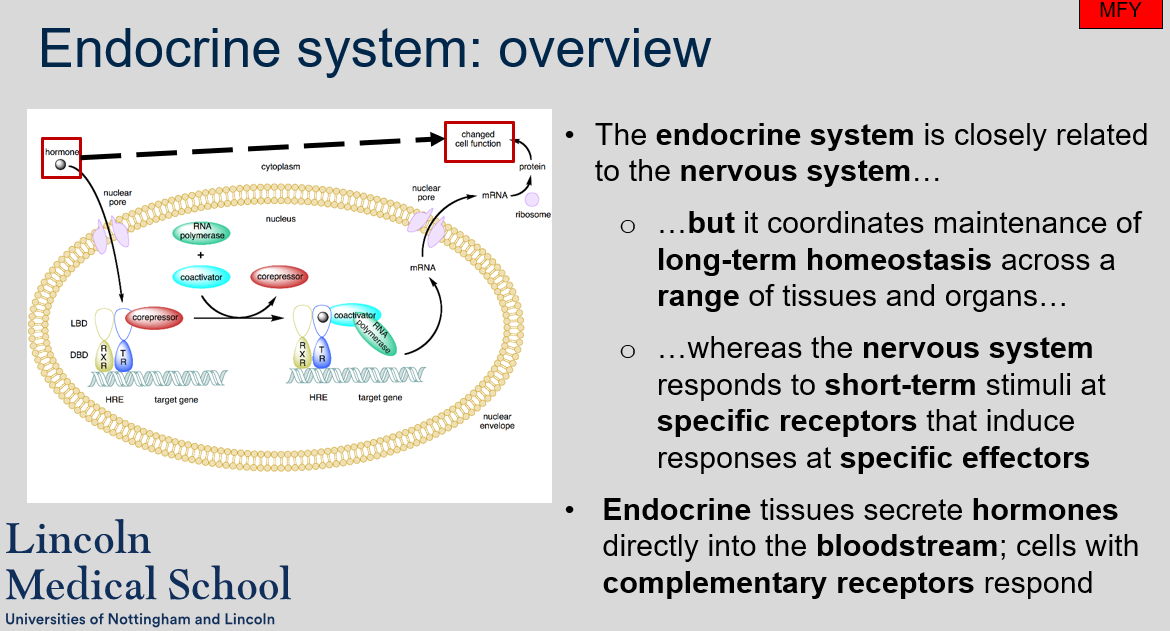
How do endocrine tissues secrete hormones?
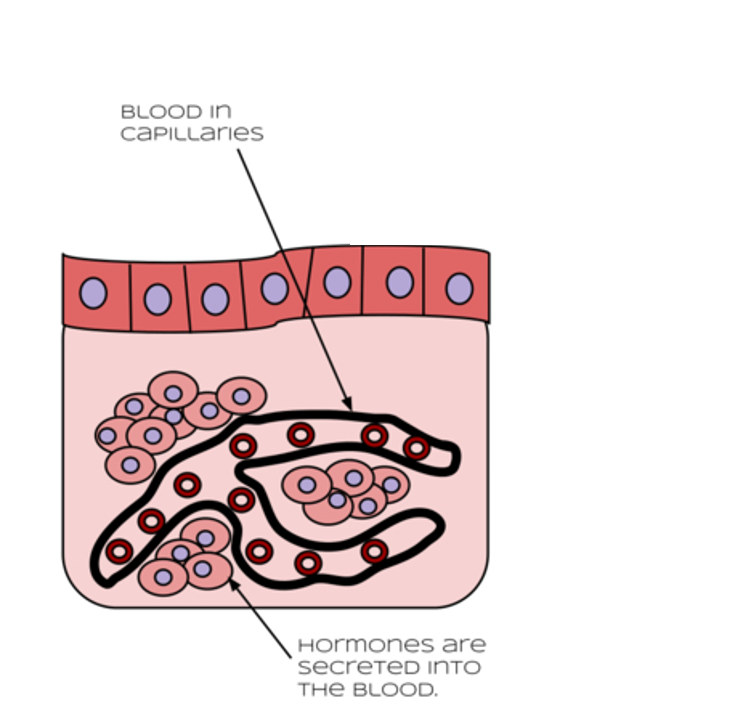
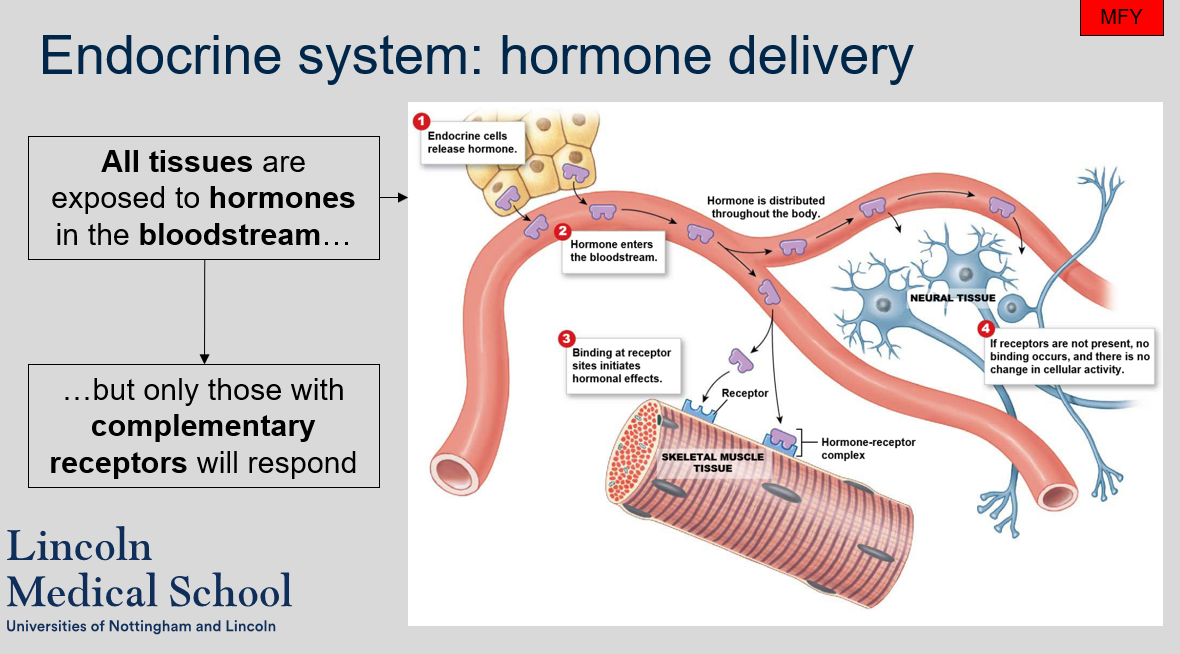
Endocrine tissues secrete hormones directly into the bloodstream, and cells with complementary receptors respond to these hormones.
3
New cards
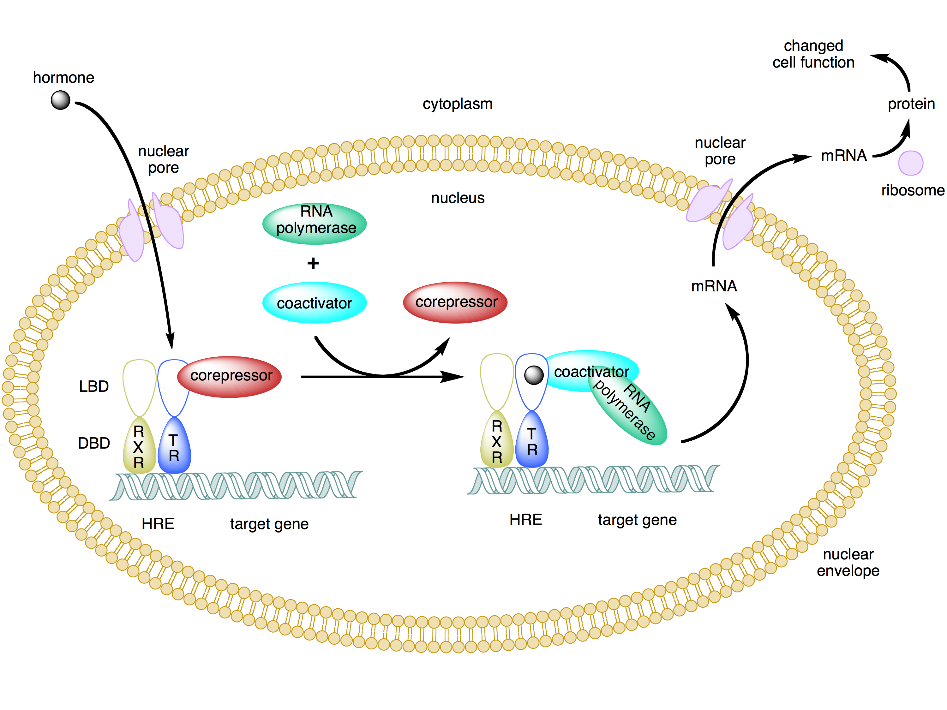
What is this and can you describe it?
4
New cards
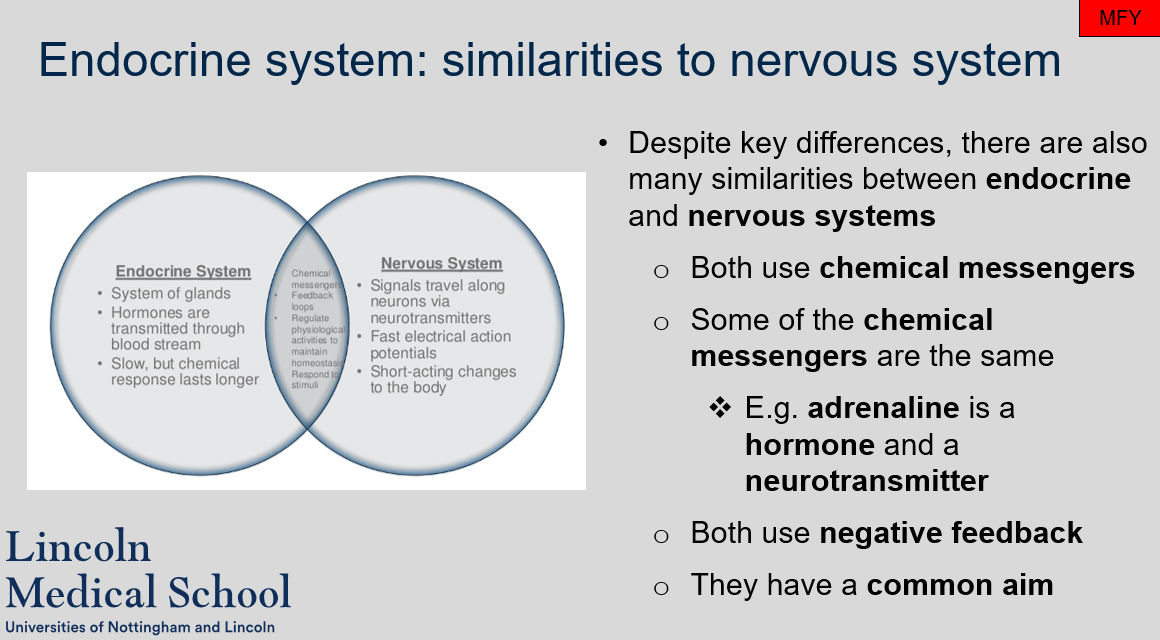
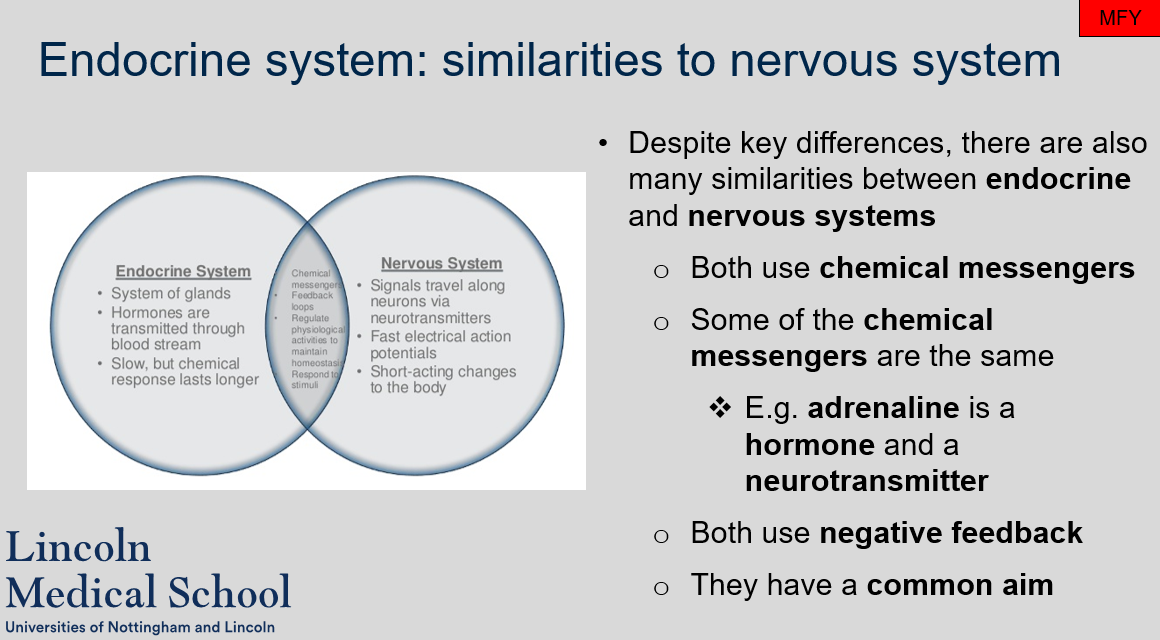
What is a similarity between the endocrine and nervous systems in terms of chemical messengers?
Both the endocrine and nervous systems use chemical messengers.
5
New cards
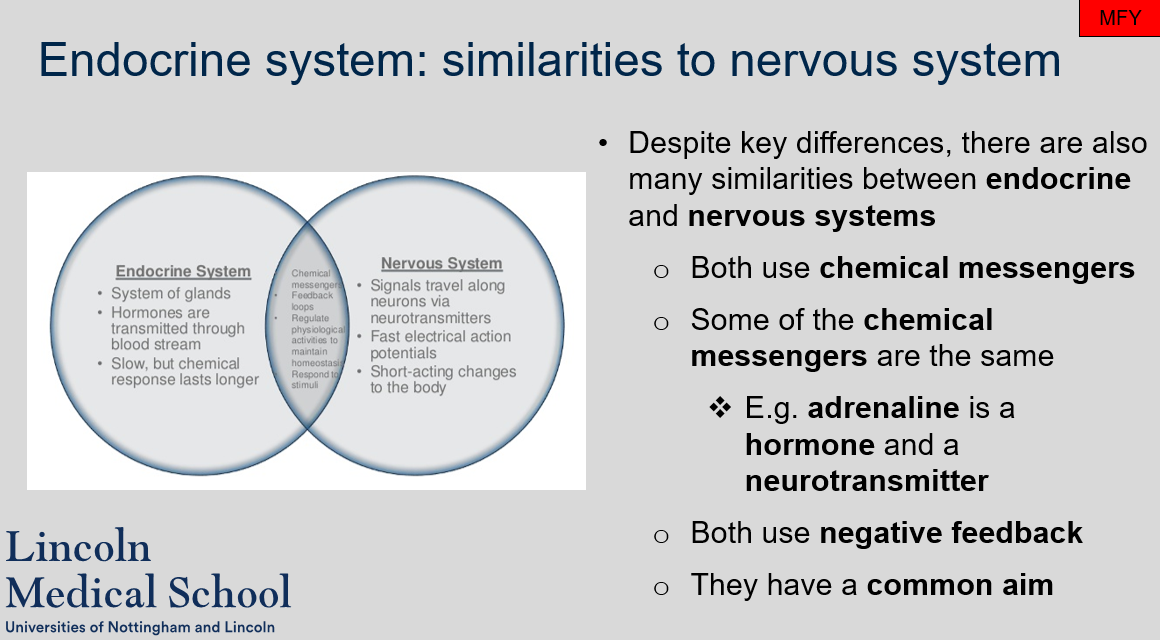
Are there any chemical messengers that are used by both the endocrine and nervous systems?
Yes, some chemical messengers such as adrenaline are used by both the endocrine and nervous systems, acting as both hormones and neurotransmitters.
6
New cards
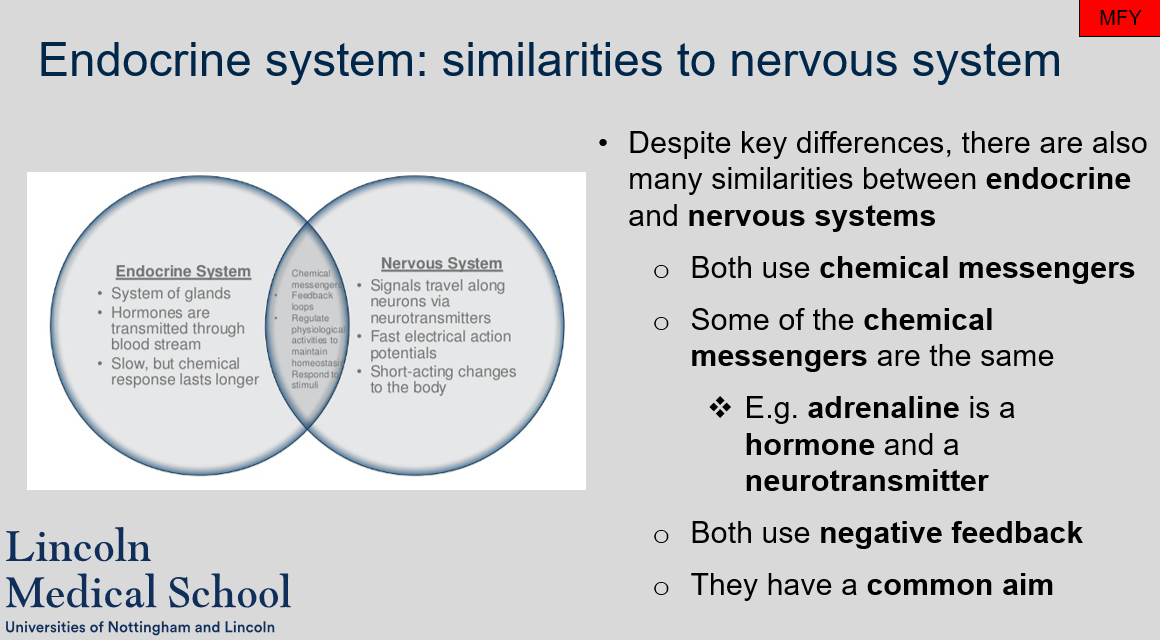
Do the endocrine and nervous systems use negative feedback?
Yes, both the endocrine and nervous systems use negative feedback.
7
New cards
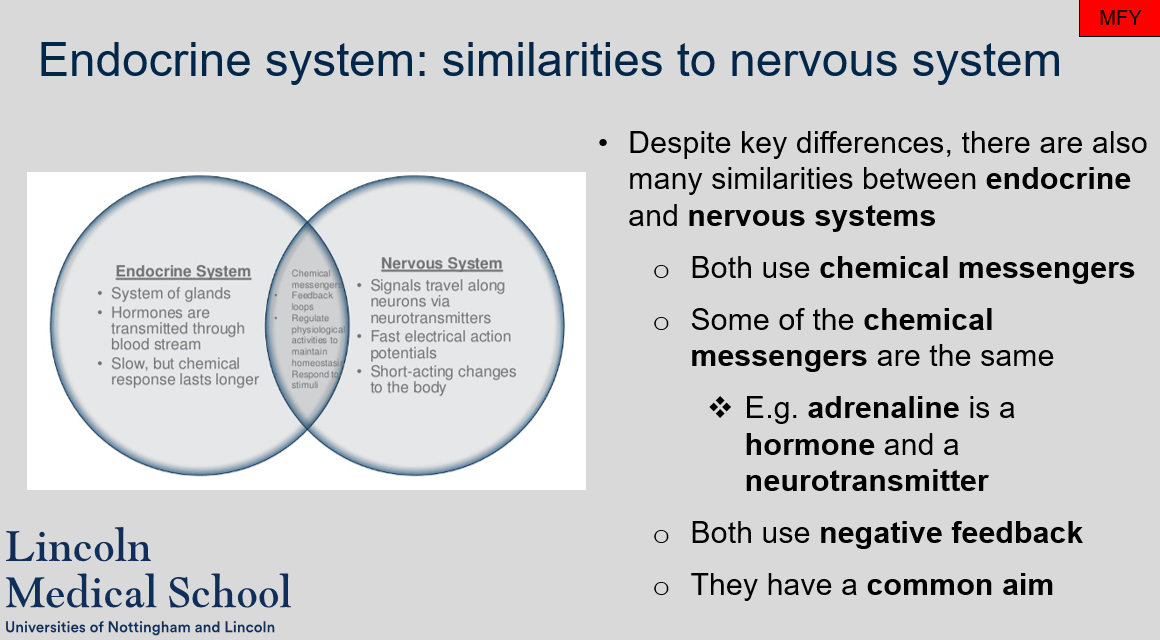
What is the common aim of the endocrine and nervous systems?
The common aim of both the endocrine and nervous systems is to maintain homeostasis in the body.
8
New cards
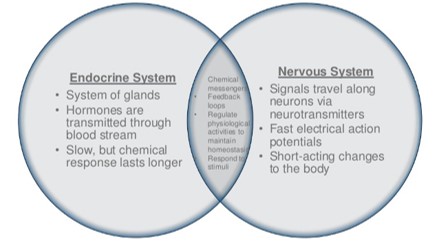
What is this and can you describe it?
9
New cards
Which cells and tissues of the body produce hormones?
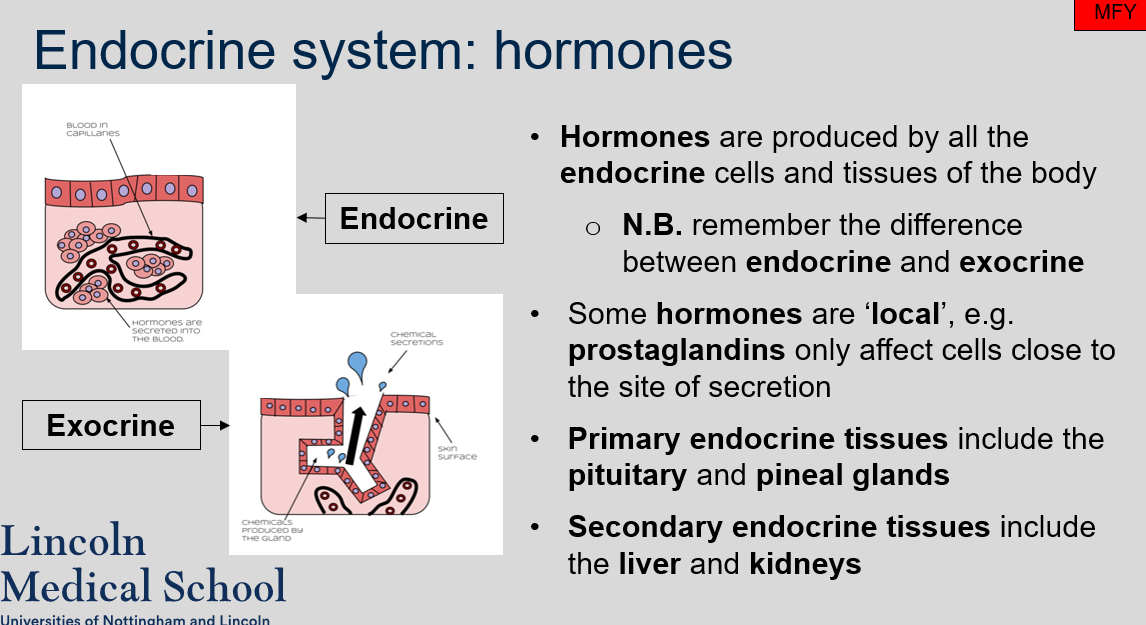
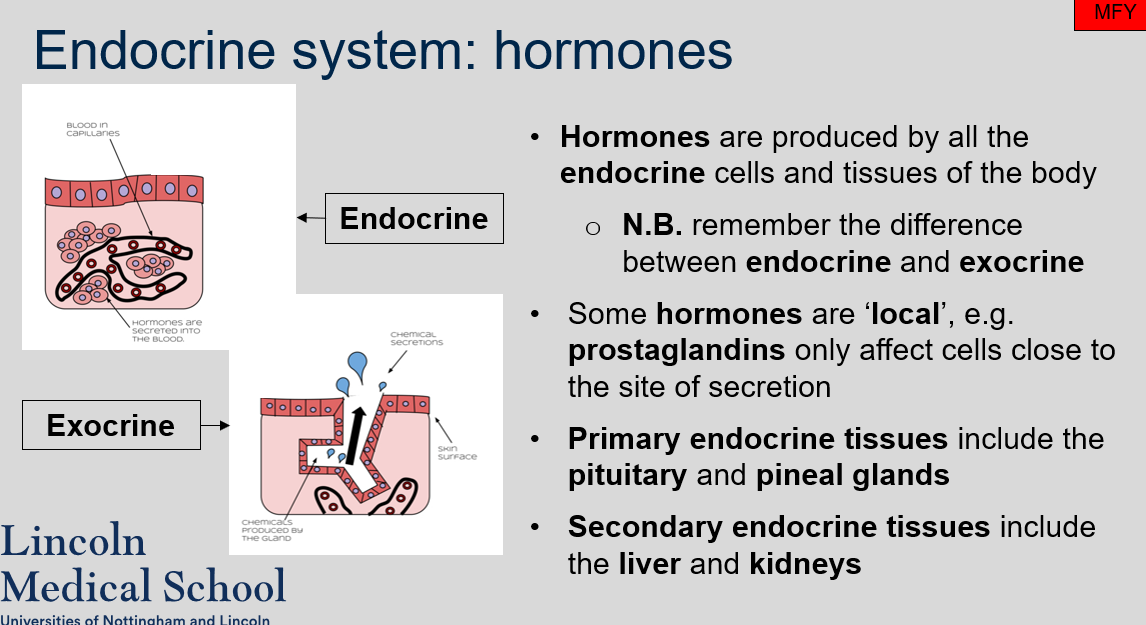
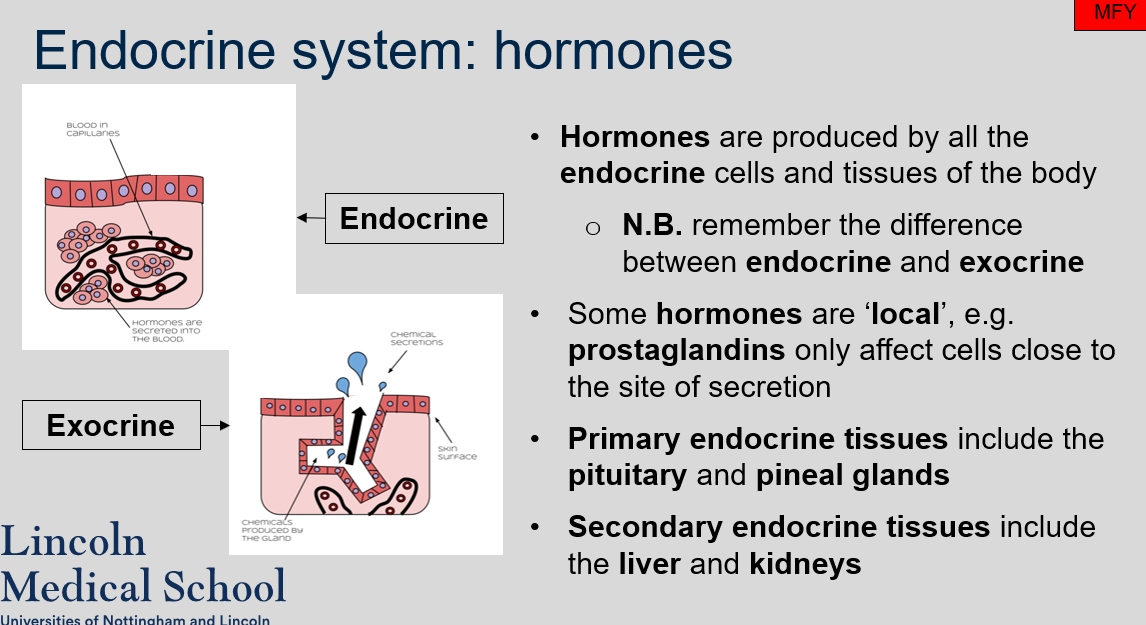
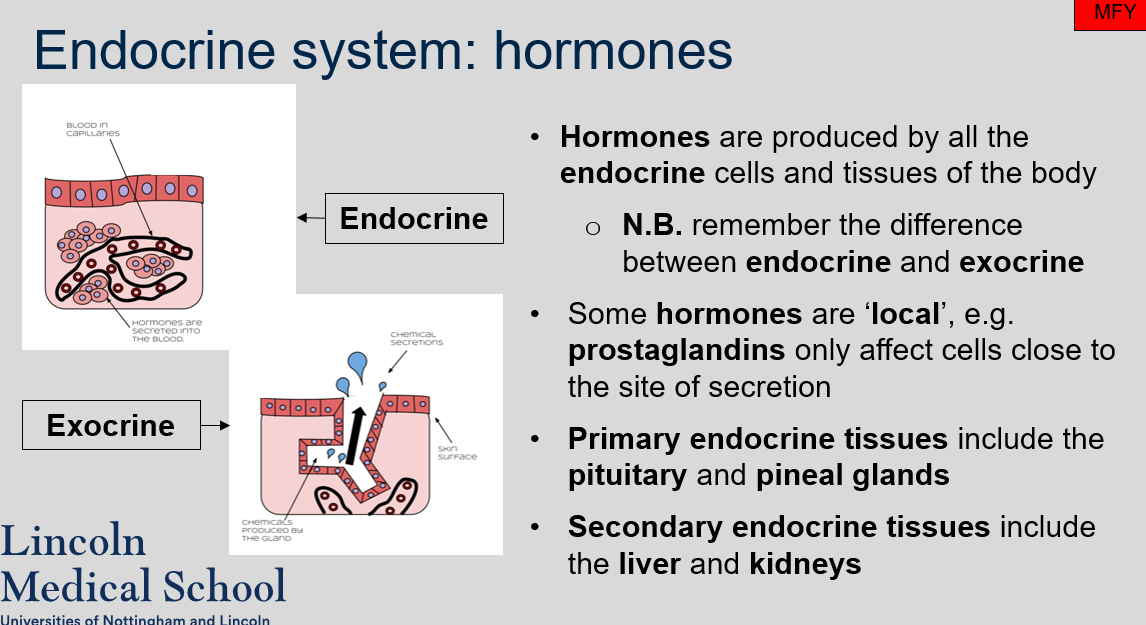
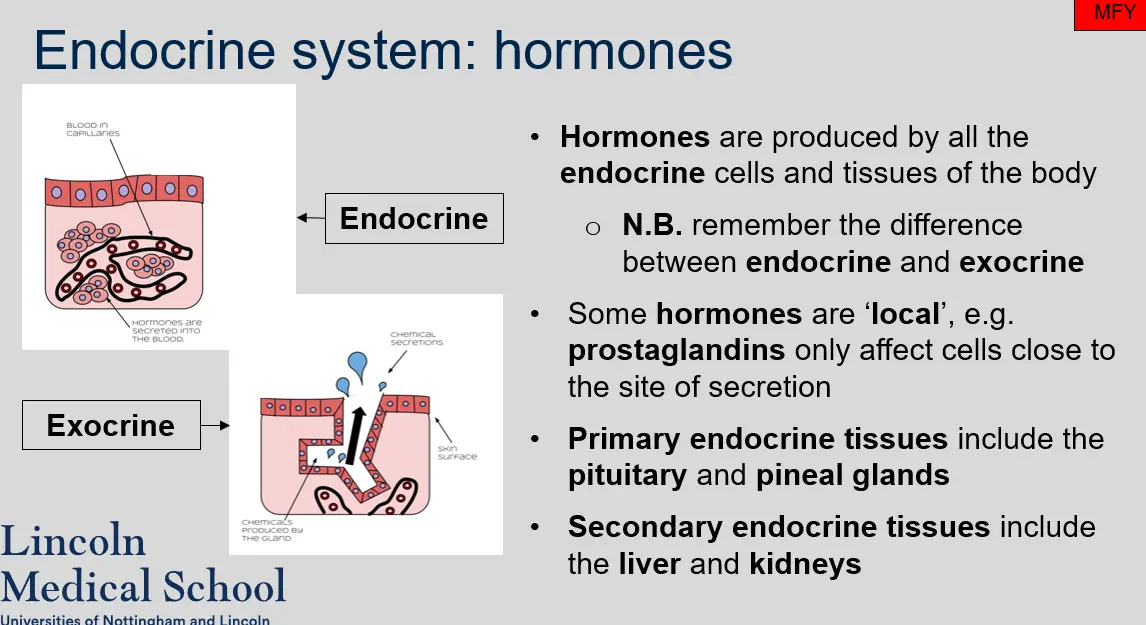
Hormones are produced by all the endocrine cells and tissues of the body.
10
New cards
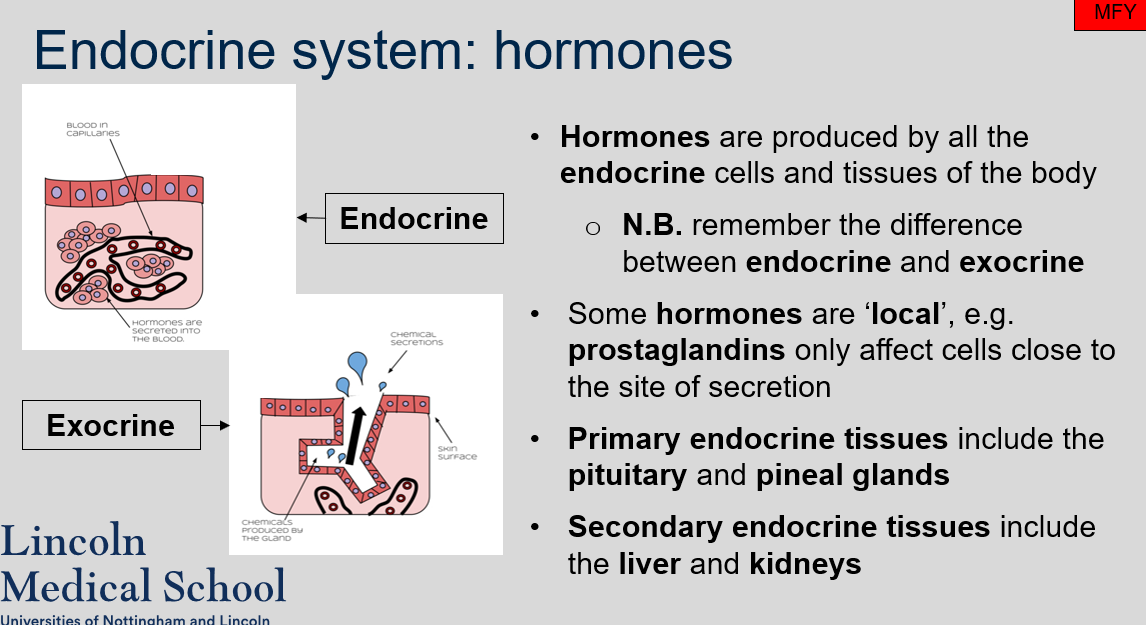
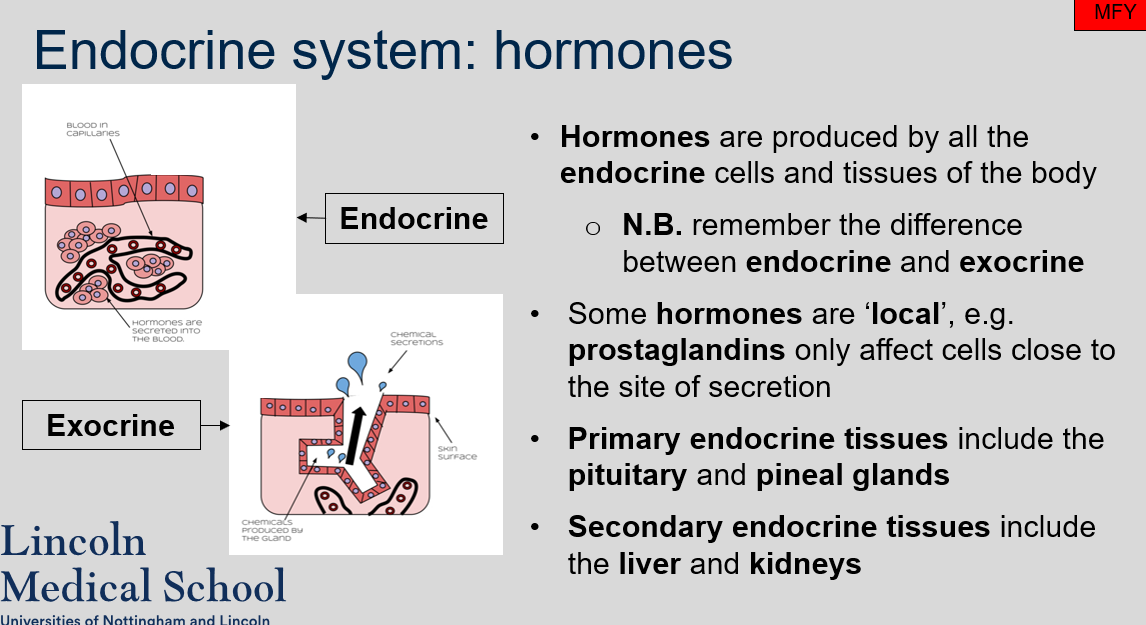
What is the difference between endocrine and exocrine?
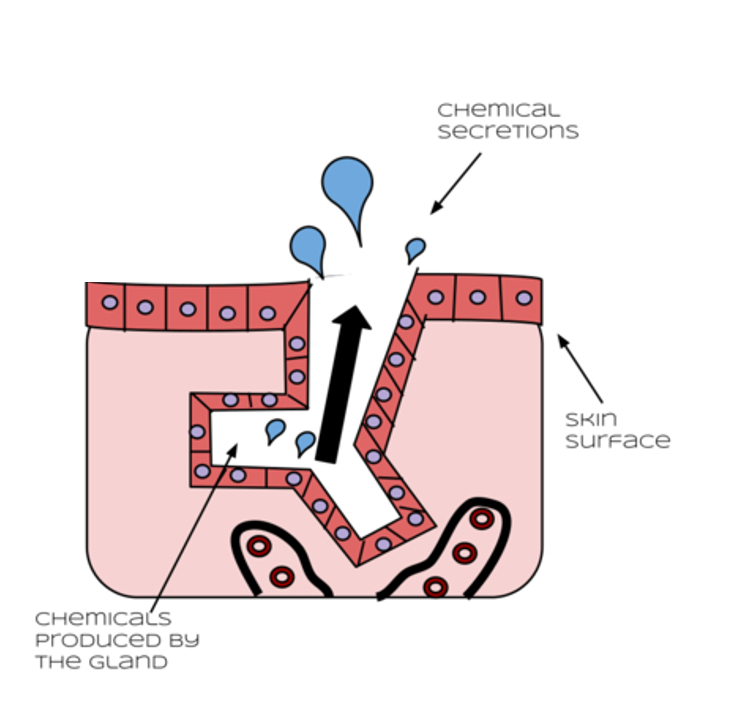
The endocrine system secretes hormones directly into the bloodstream to travel to distant target tissues, whereas the exocrine system secretes substances into ducts that lead to the outside of the body or into body cavities.
11
New cards
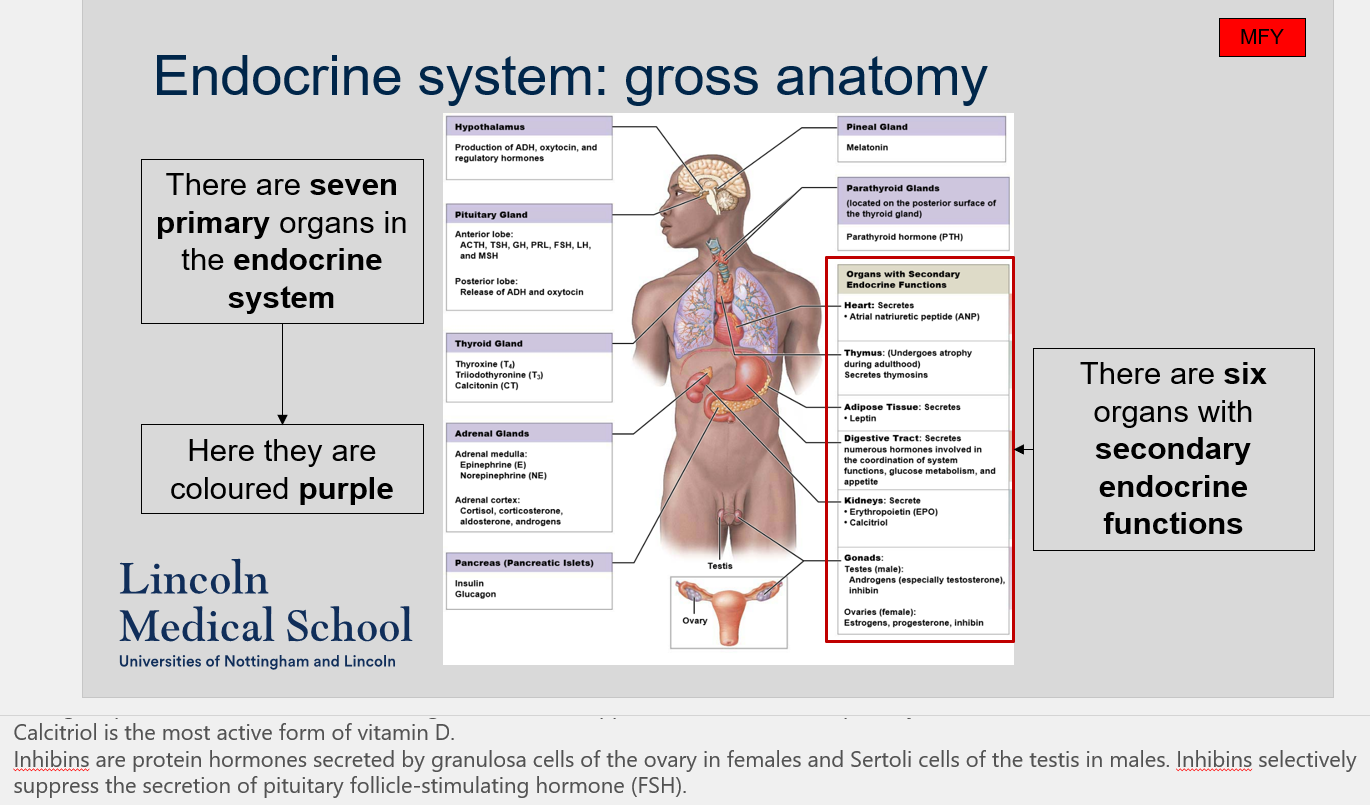
Are all hormones distributed throughout the body?
No, some hormones are "local" and only affect cells close to the site of secretion, such as prostaglandins.
12
New cards
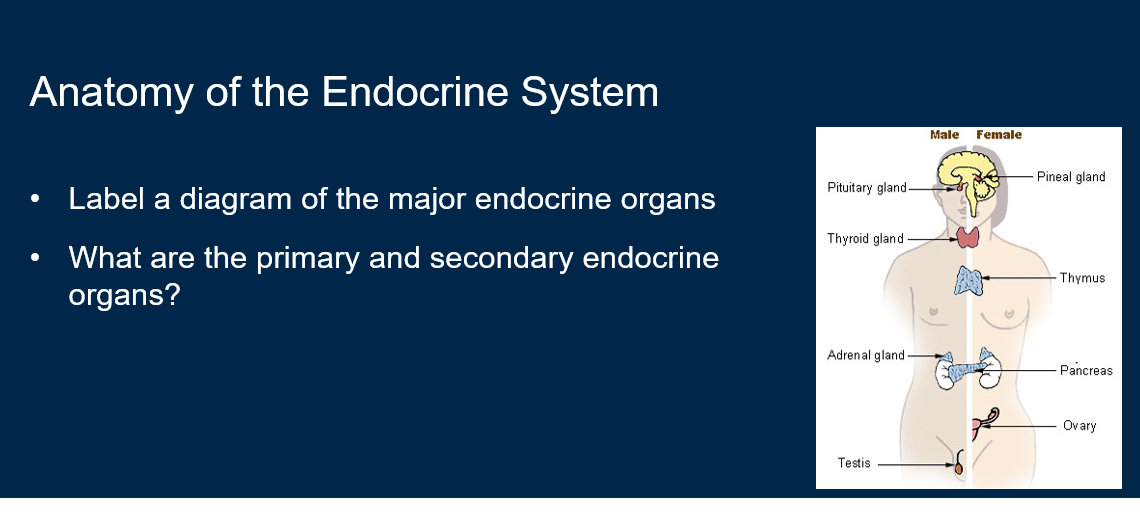
What are the primary endocrine tissues?
The primary endocrine tissues include the pituitary and pineal glands.
13
New cards
What are the secondary endocrine tissues?
The secondary endocrine tissues include the liver and kidneys.
14
New cards
Can you describe what this is?
15
New cards
Can you describe what this is?
16
New cards
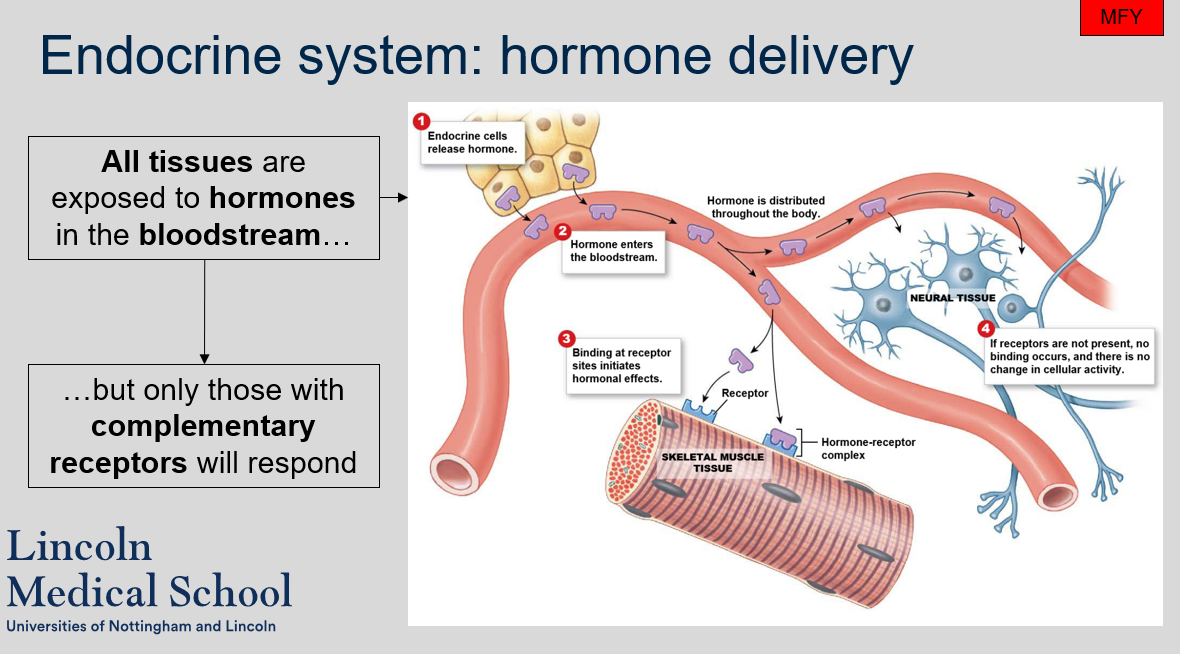
Are all tissues exposed to hormones in the bloodstream?
Yes, all tissues are exposed to hormones in the bloodstream.
17
New cards
Do all tissues respond to hormones in the bloodstream?
No, only those tissues that have complementary receptors for specific hormones will respond to them.
18
New cards
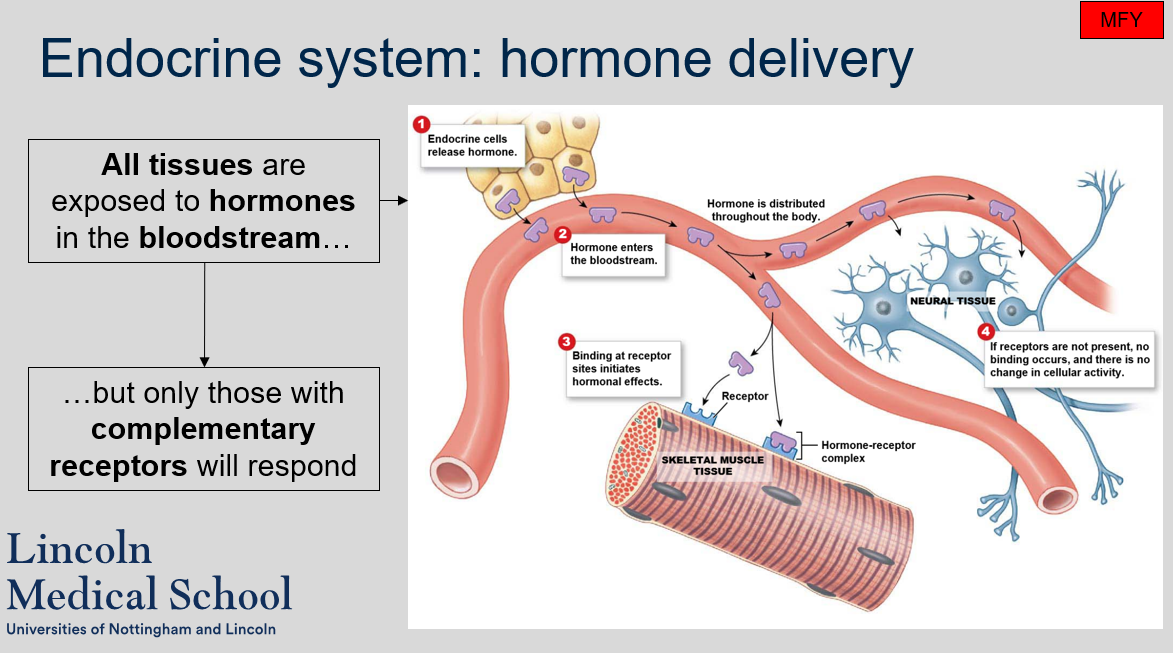
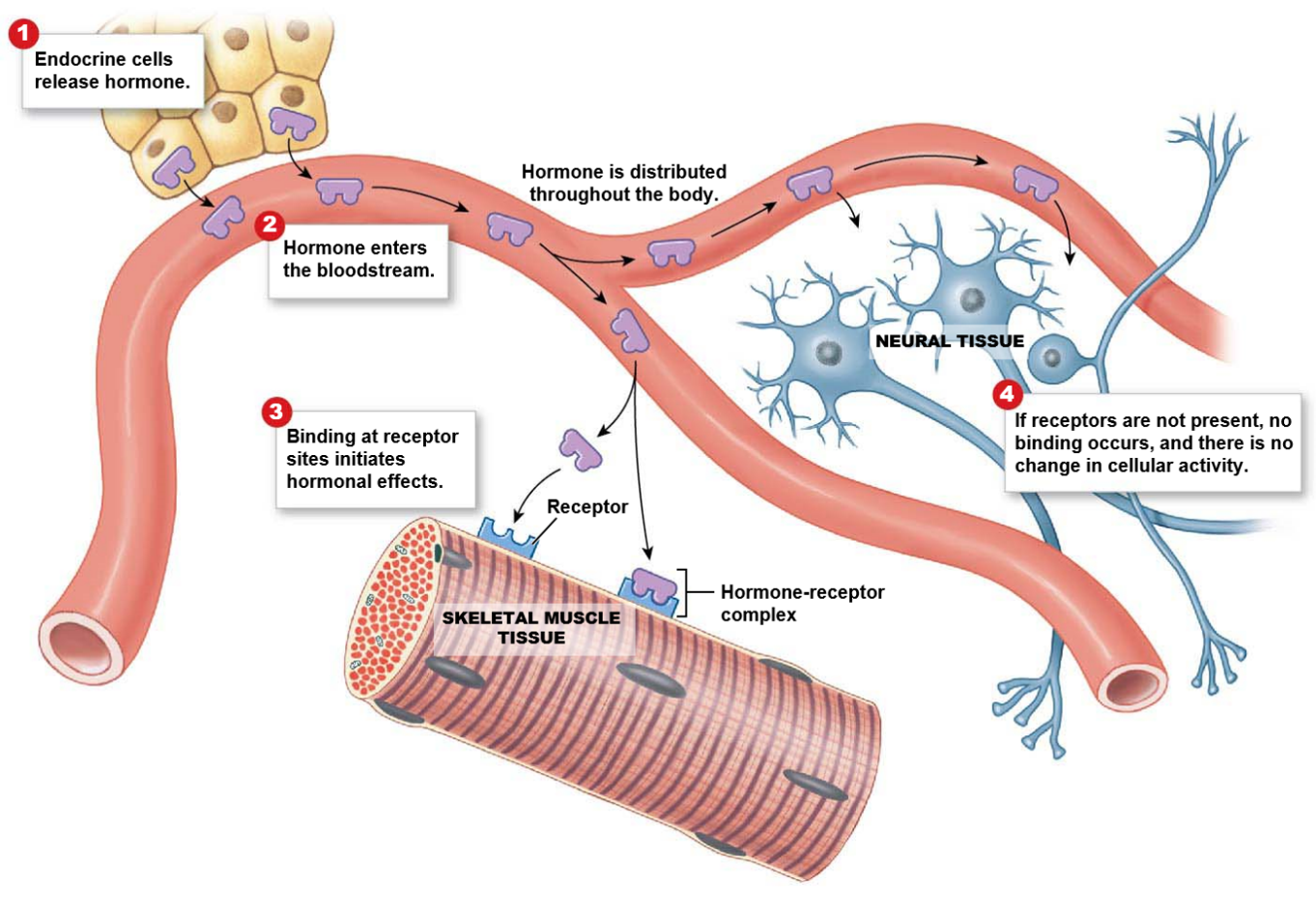
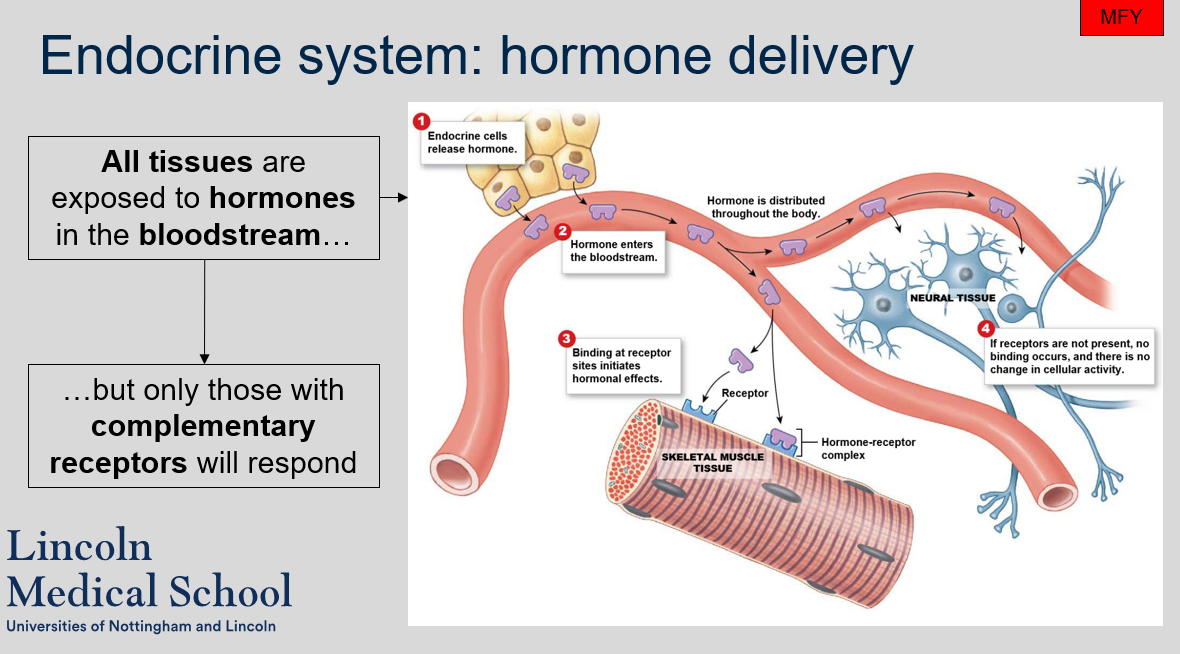
How do hormones affect the tissues in the body?
Hormones affect the tissues in the body by binding to specific receptors on the surface of or within target cells that have complementary receptors for specific hormones.
19
New cards
What is this and can you describe it?
20
New cards
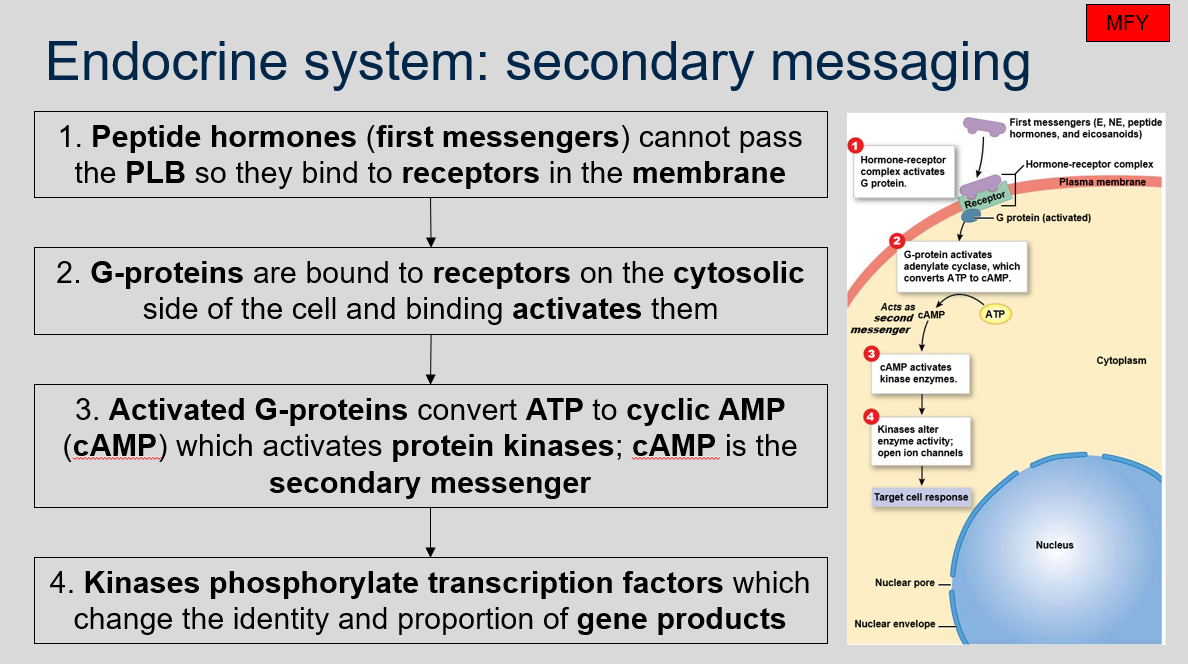
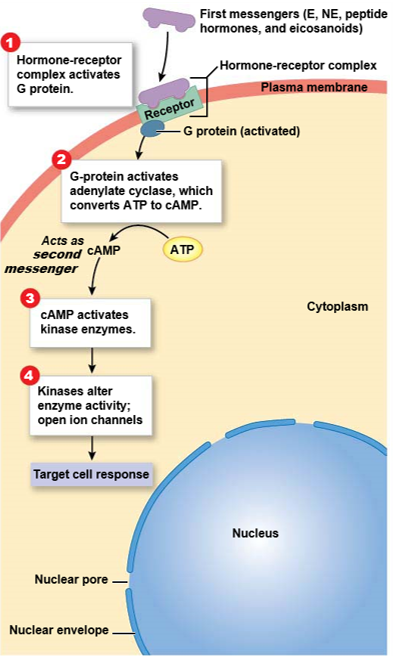
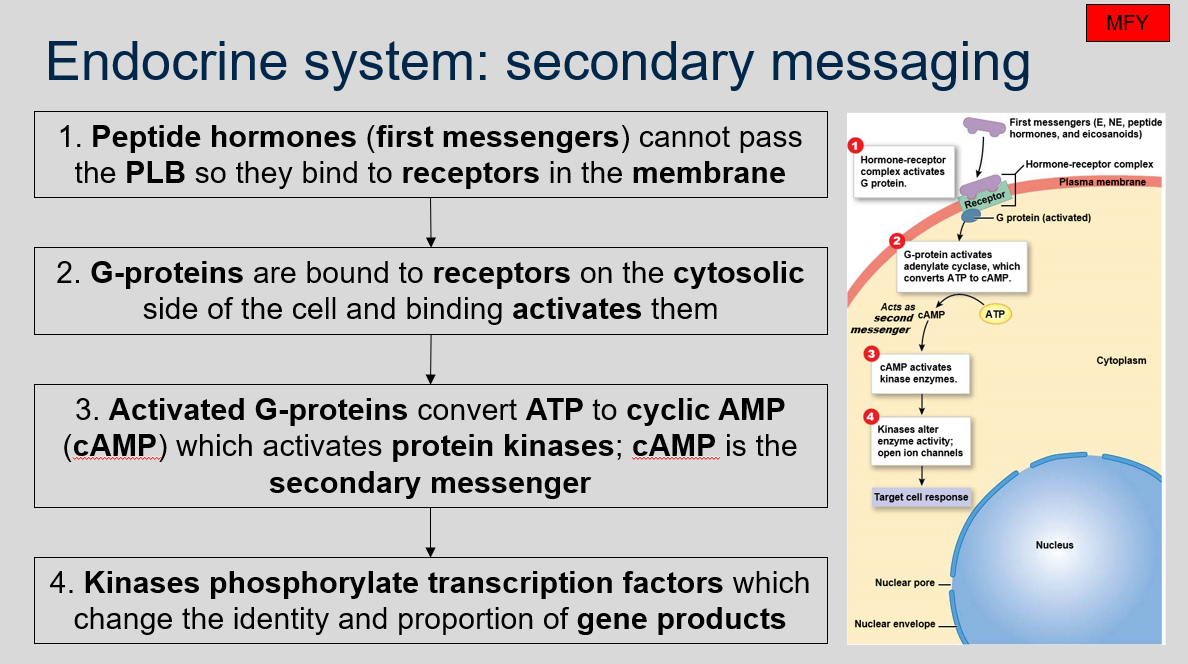
Endocrine system: secondary messaging
1\. Peptide hormones (first messengers) cannot pass the PLB so they bind to receptors in the membrane
2\. G-proteins are bound to receptors on the cytosolic side of the cell and binding activates them
3\. Activated G-proteins convert ATP to cyclic AMP (cAMP) which activates protein kinases; cAMP is the secondary messenger
4\. Kinases phosphorylate transcription factors which change the identity and proportion of gene products
2\. G-proteins are bound to receptors on the cytosolic side of the cell and binding activates them
3\. Activated G-proteins convert ATP to cyclic AMP (cAMP) which activates protein kinases; cAMP is the secondary messenger
4\. Kinases phosphorylate transcription factors which change the identity and proportion of gene products
21
New cards
What is this can you describe it?
22
New cards
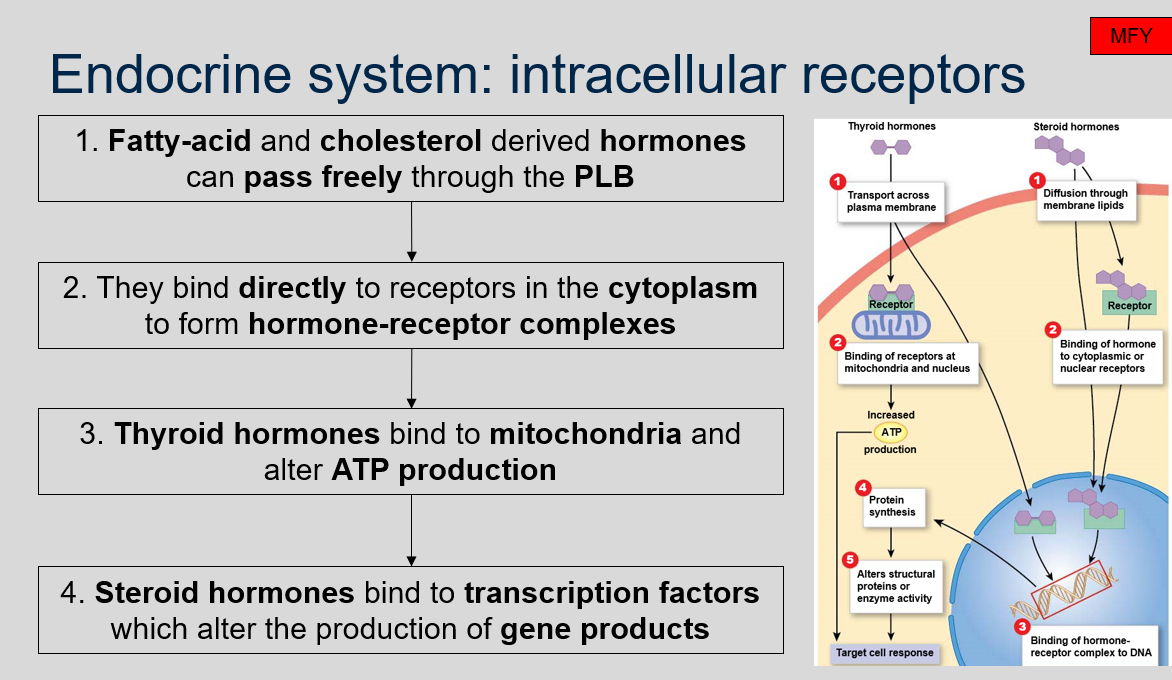
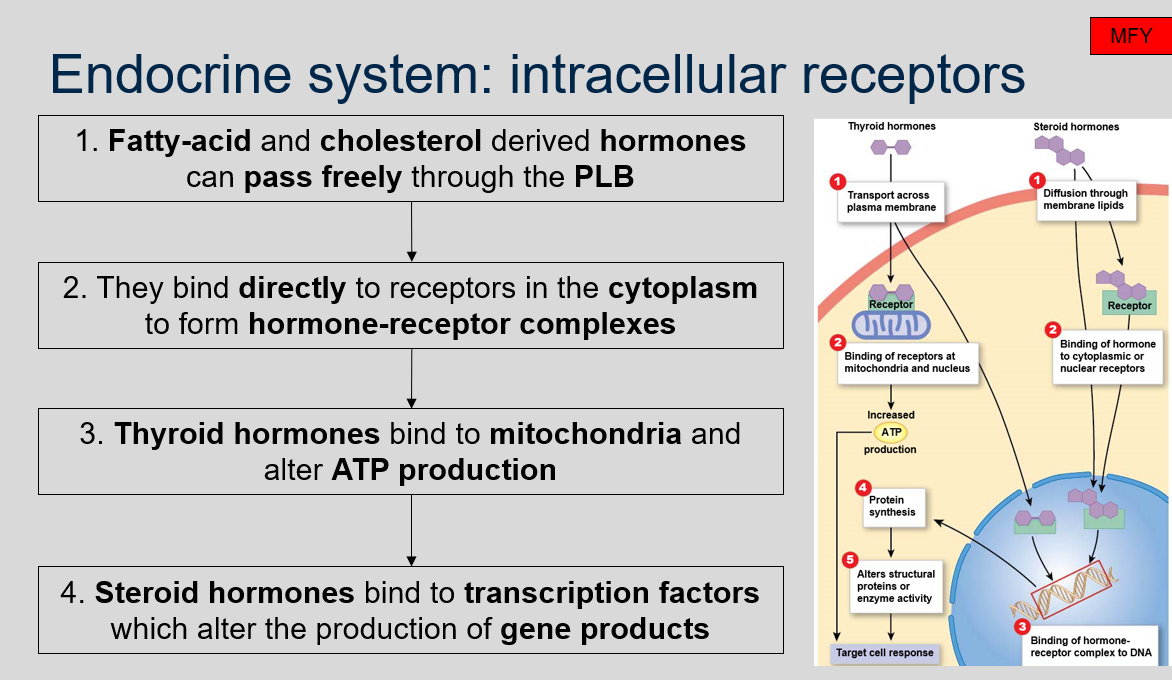
Endocrine system: intracellular receptors
1\. Fatty-acid and cholesterol derived hormones can pass freely through the PLB
2\. They bind directly to receptors in the cytoplasm to form hormone-receptor complexes
3\. Thyroid hormones bind to mitochondria and alter ATP production
4\. Steroid hormones bind to transcription factors which alter the production of gene products
2\. They bind directly to receptors in the cytoplasm to form hormone-receptor complexes
3\. Thyroid hormones bind to mitochondria and alter ATP production
4\. Steroid hormones bind to transcription factors which alter the production of gene products
23
New cards
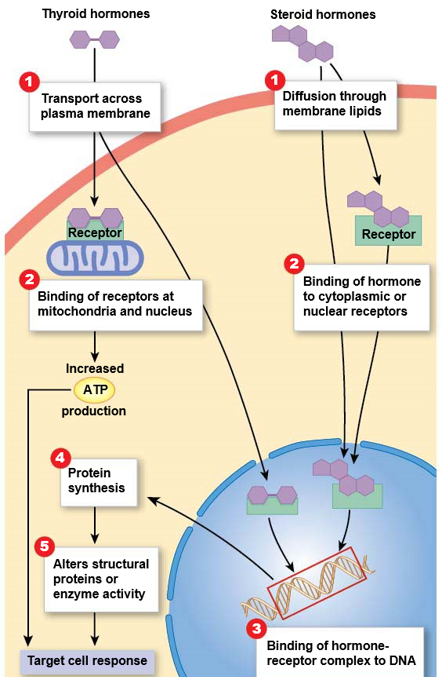
What is this and can you describe it?
24
New cards
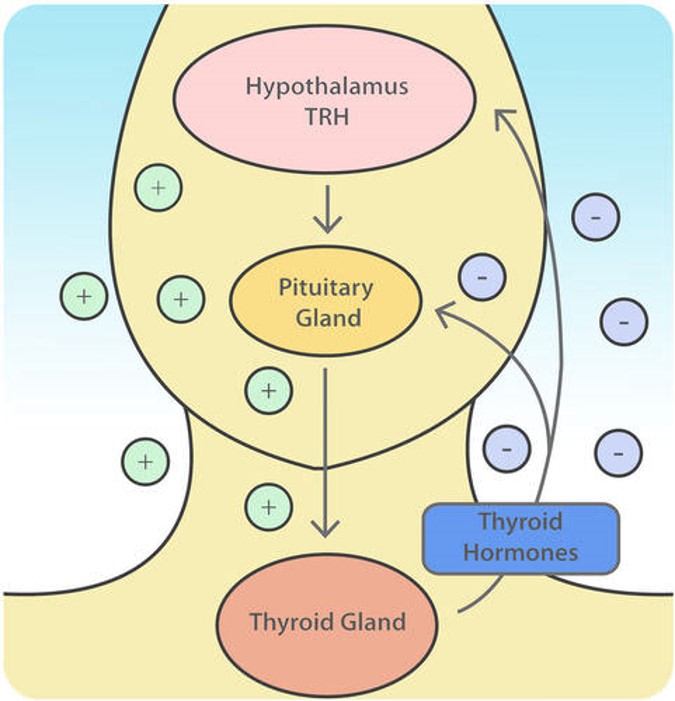
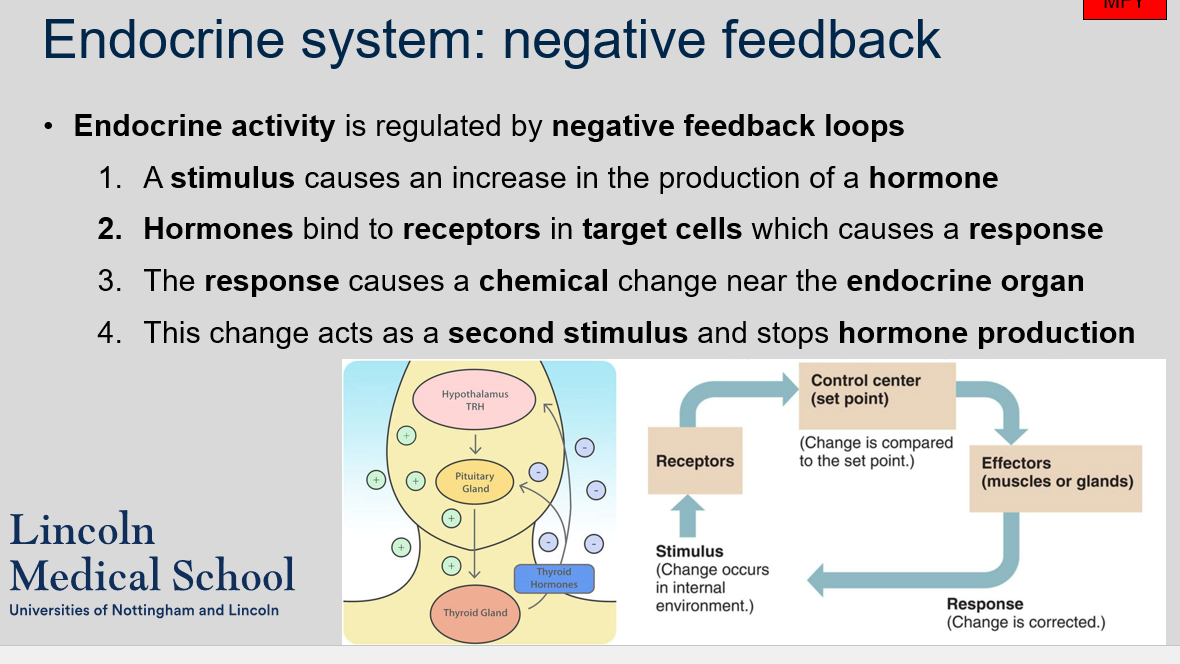
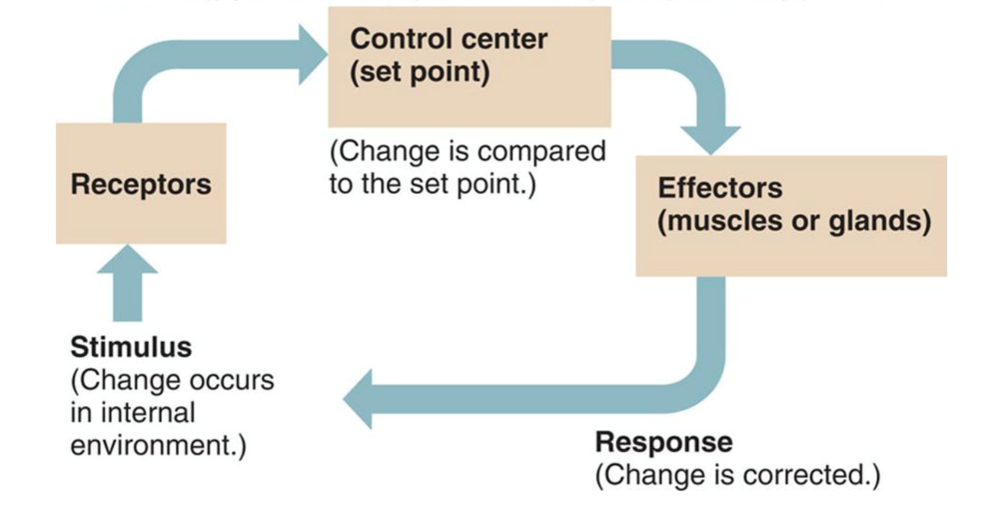
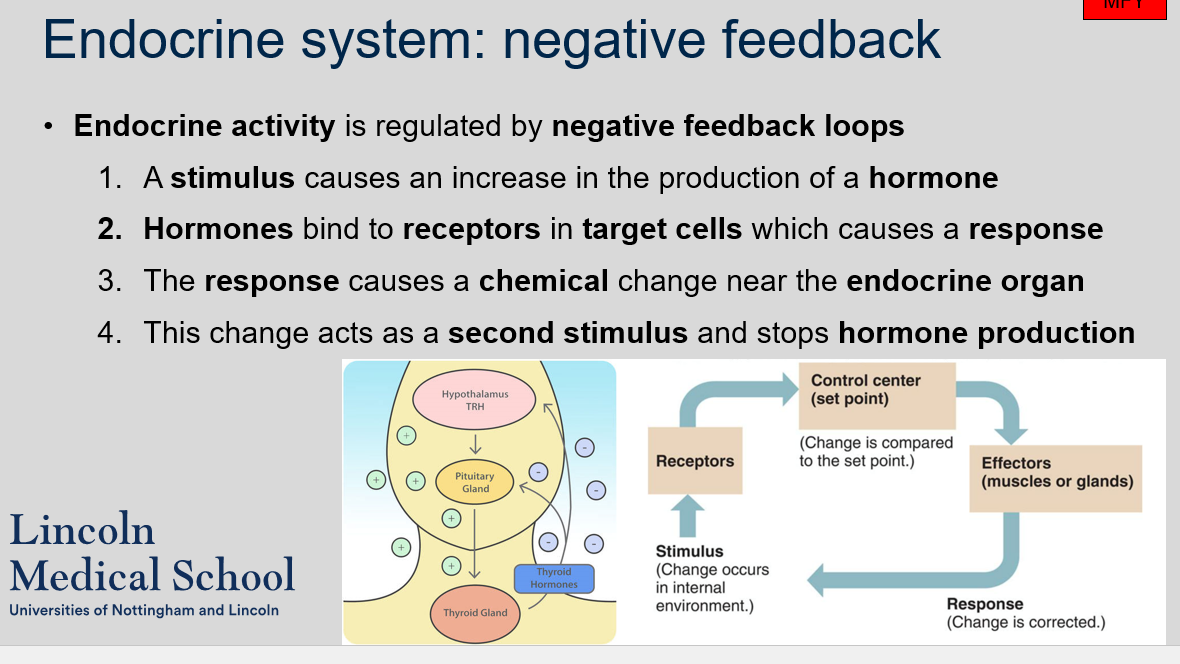
How is endocrine activity regulated?
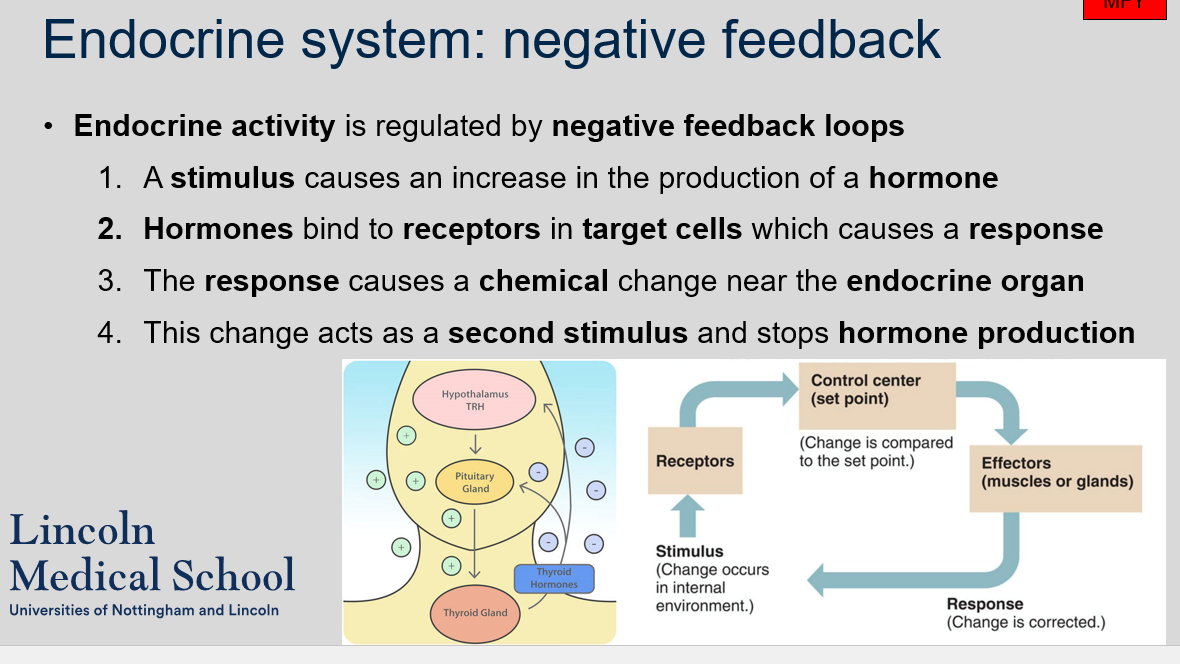
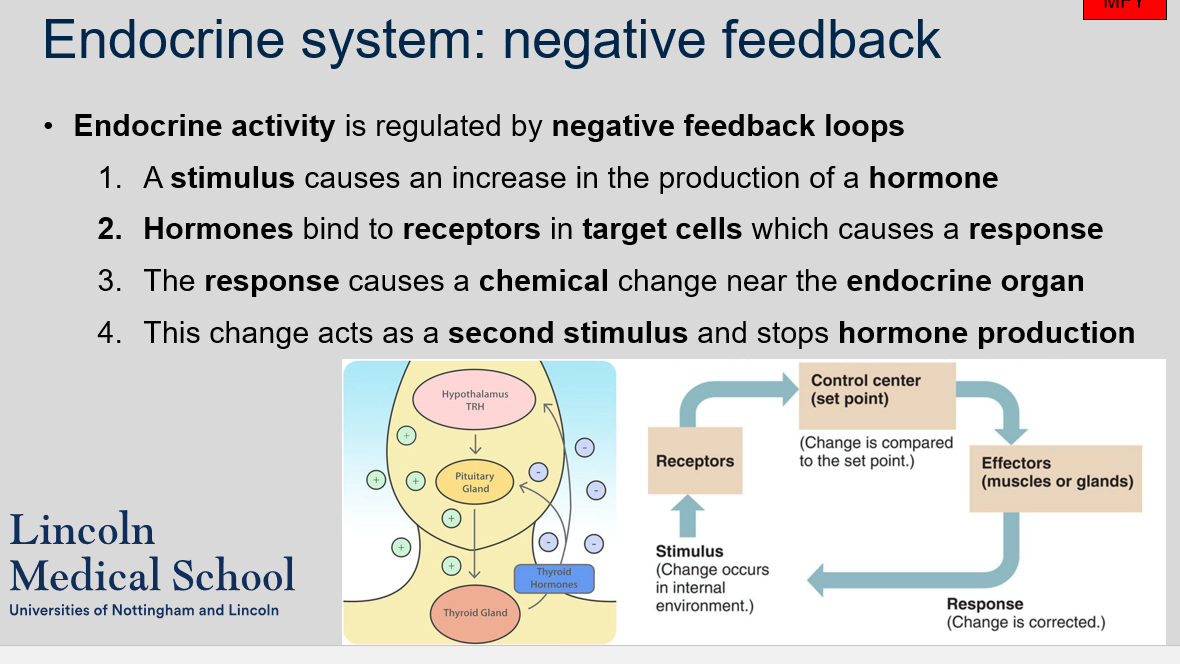
Endocrine activity is regulated by negative feedback loops.
25
New cards
Endocrine system: negative feedback
1. A stimulus causes an increase in the production of a hormone
2. Hormones bind to receptors in target cells which causes a response
3. The response causes a chemical change near the endocrine organ
4. This change acts as a second stimulus and stops hormone production
26
New cards
What is this and can you describe it?
\
27
New cards
What is this and can you describe it?
28
New cards
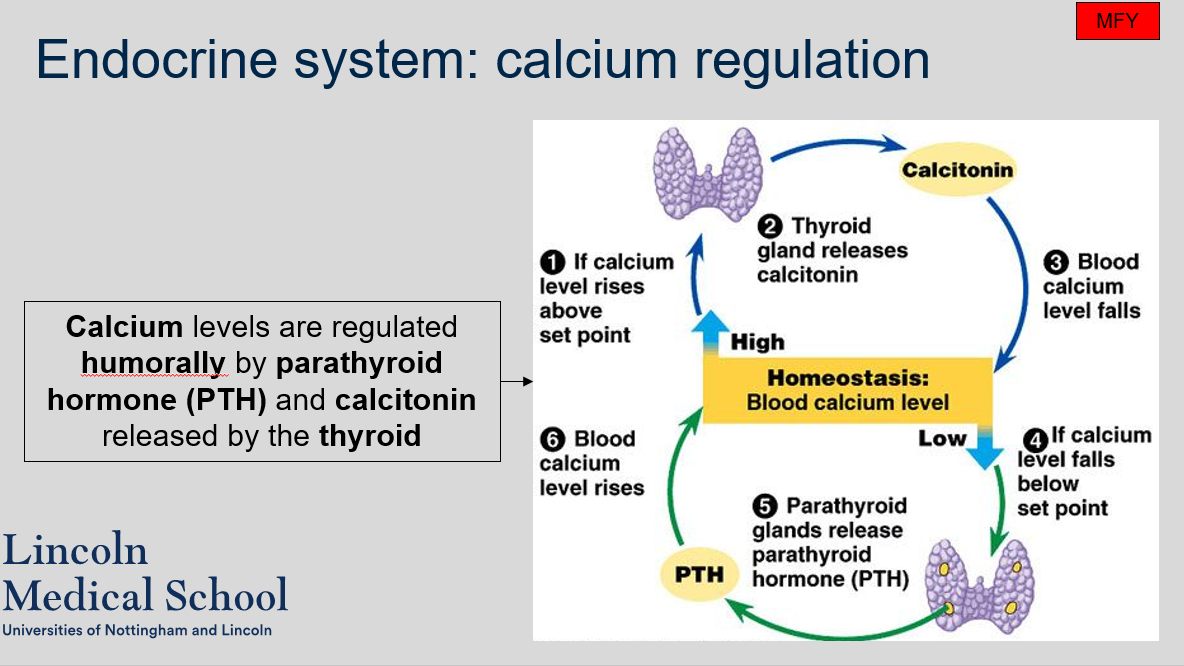
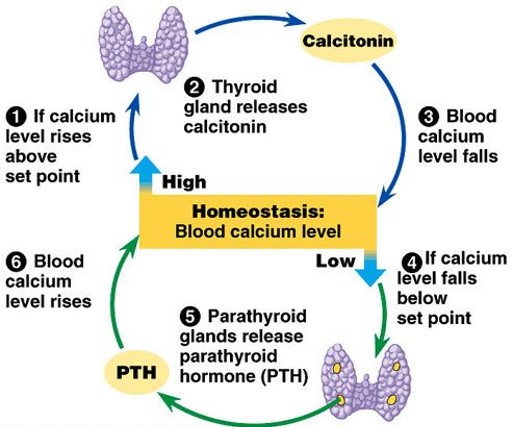
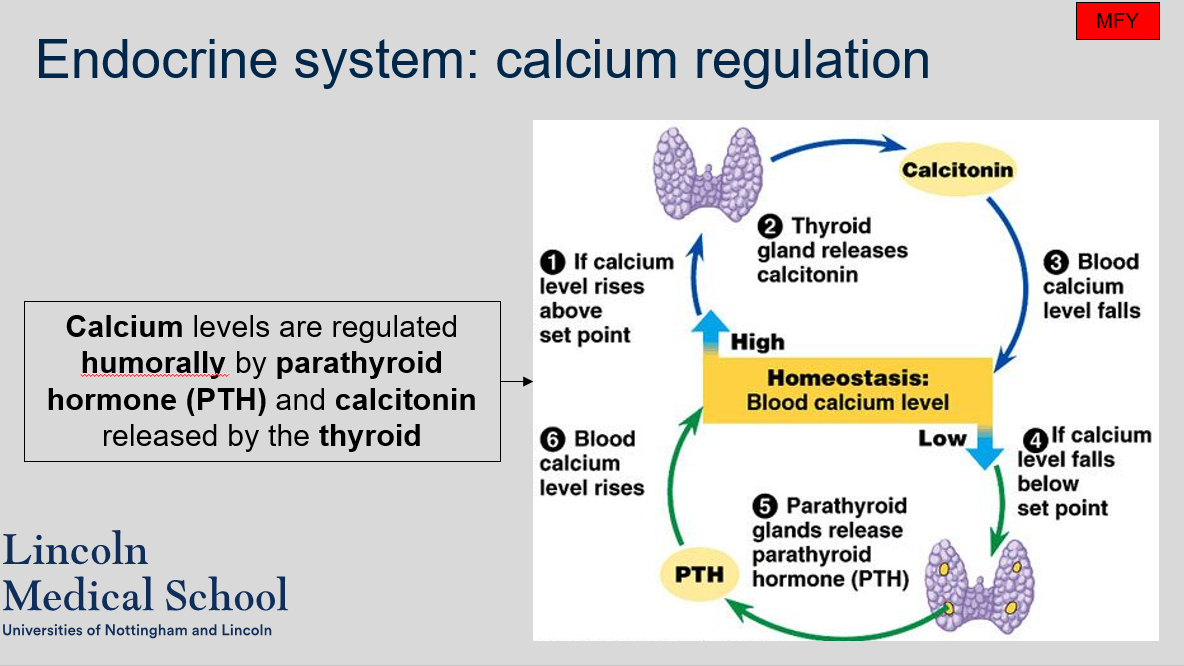
How are calcium levels regulated in the body?
Calcium levels in the body are regulated humorally by parathyroid hormone (PTH) and calcitonin released by the thyroid.
29
New cards
What is this and can you describe it?
30
New cards
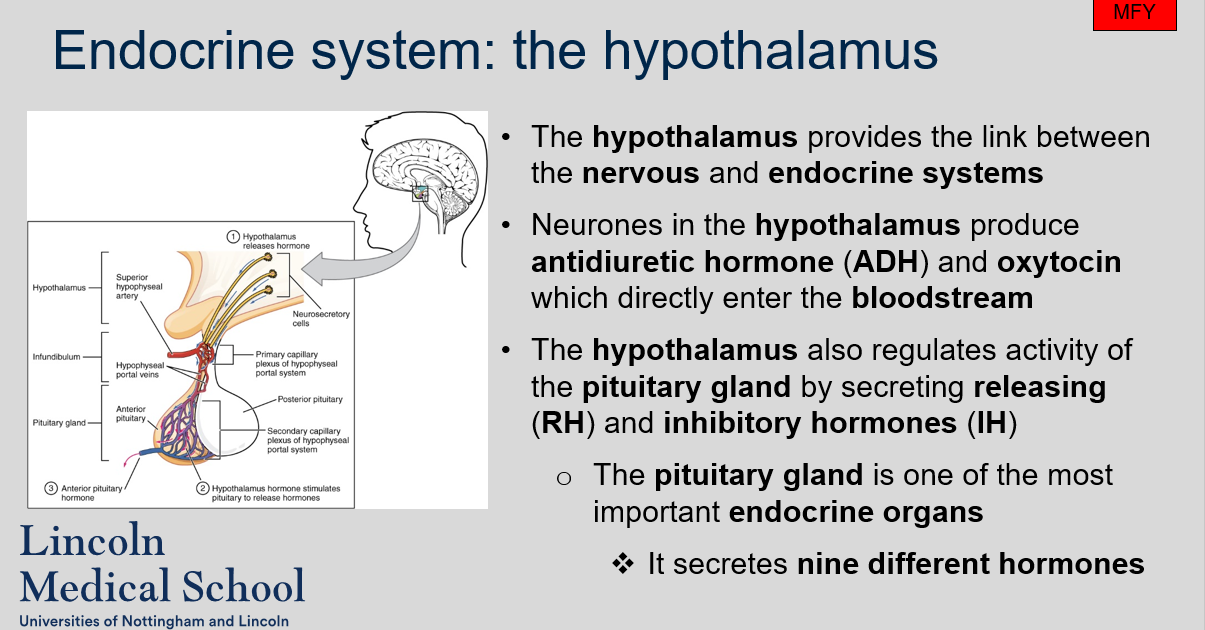
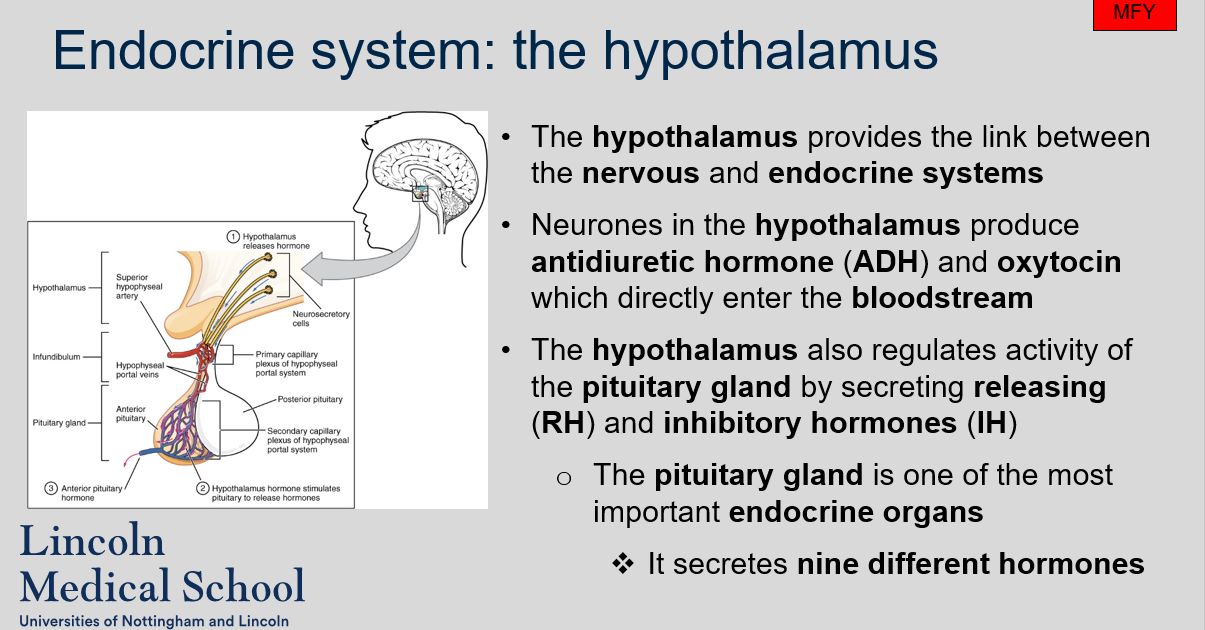
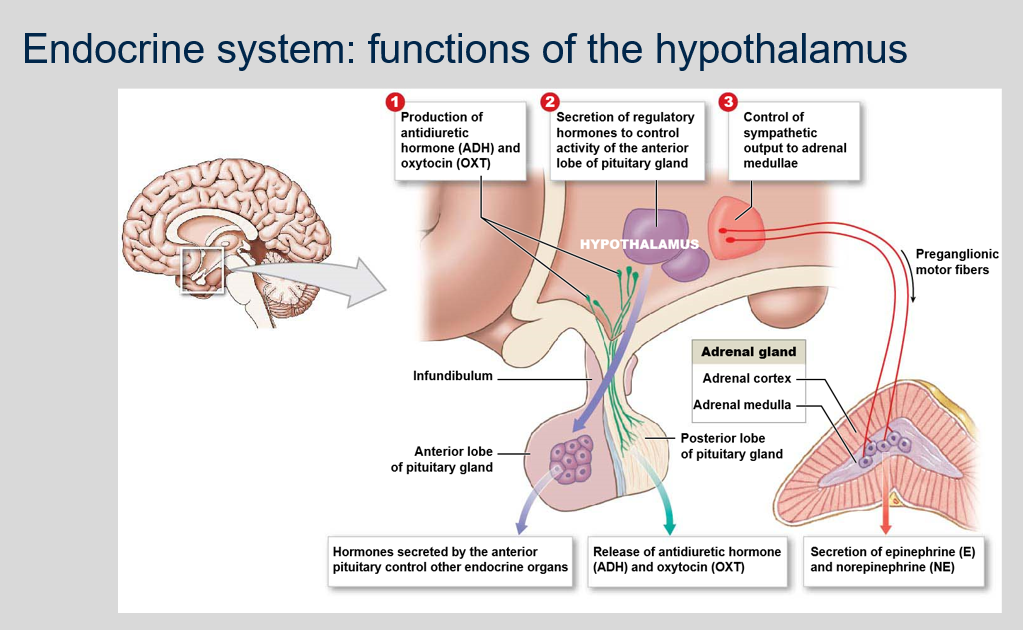
What is the role of the hypothalamus in the endocrine system?
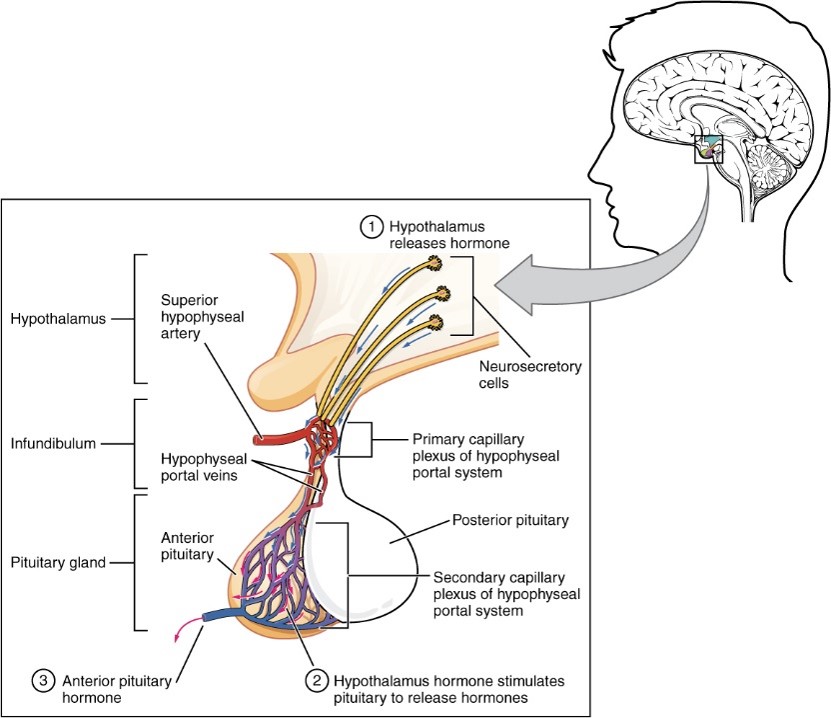
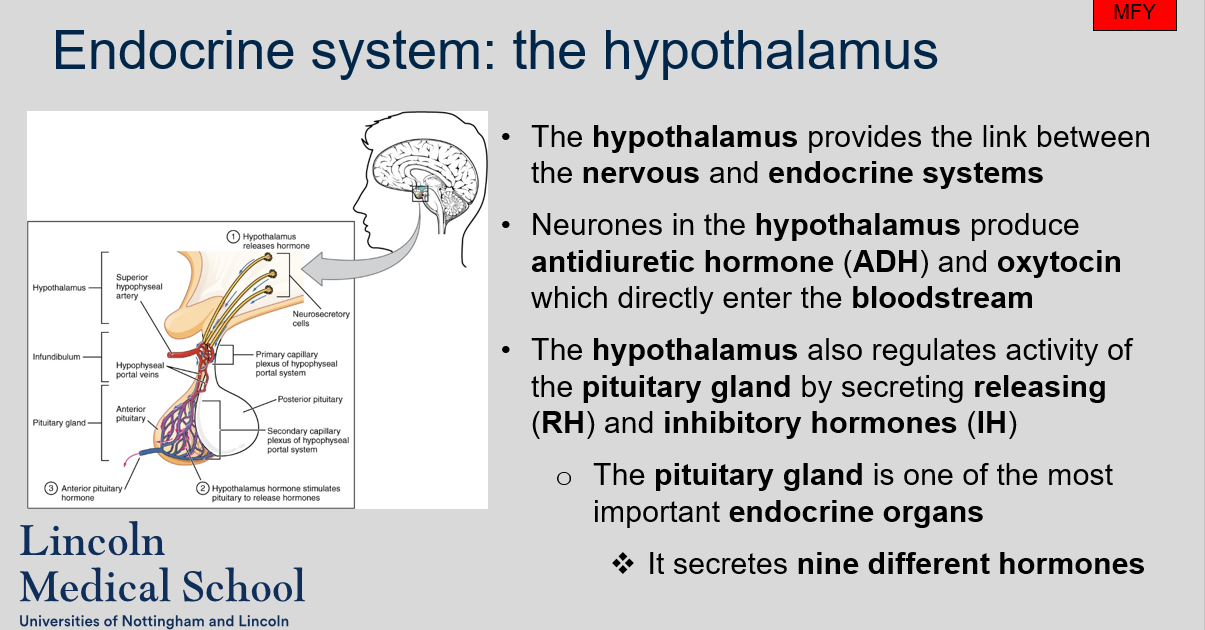
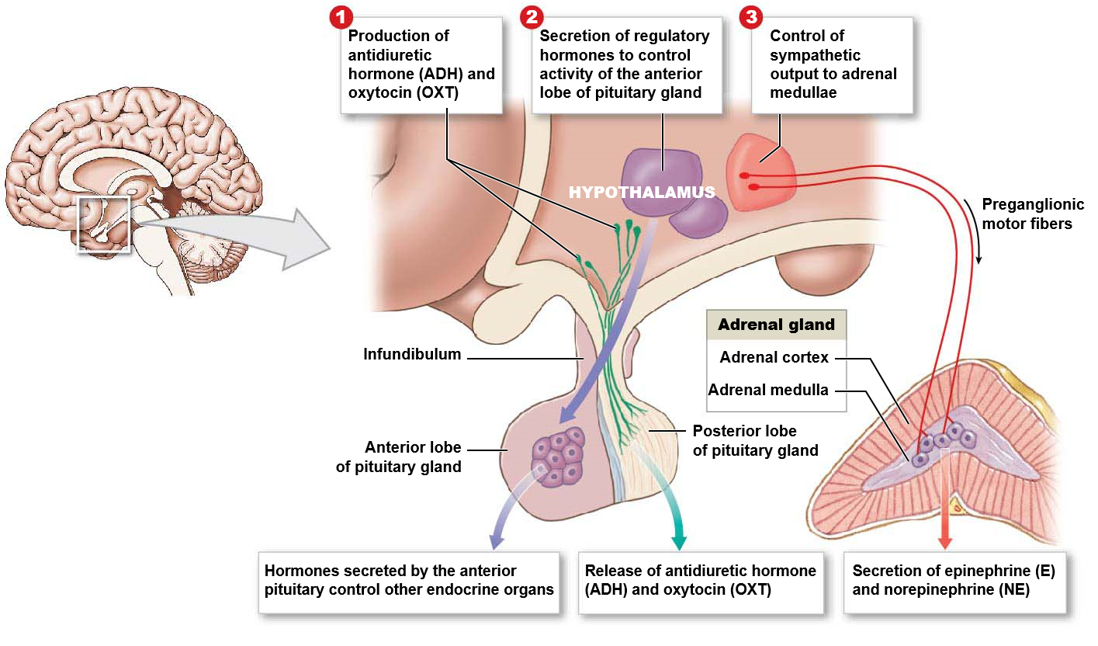
The hypothalamus provides the link between the nervous and endocrine systems
Neurones in the hypothalamus produce antidiuretic hormone (ADH) and oxytocin which directly enter the bloodstream
The hypothalamus also regulates activity of the pituitary gland by secreting releasing (RH) and inhibitory hormones (IH)
Neurones in the hypothalamus produce antidiuretic hormone (ADH) and oxytocin which directly enter the bloodstream
The hypothalamus also regulates activity of the pituitary gland by secreting releasing (RH) and inhibitory hormones (IH)
31
New cards
What is the pituitary gland?
The pituitary gland is one of the most important endocrine organs it secretes nine different hormones.
32
New cards
What is this and can you describe it?
33
New cards
What is this and can you describe it?
34
New cards
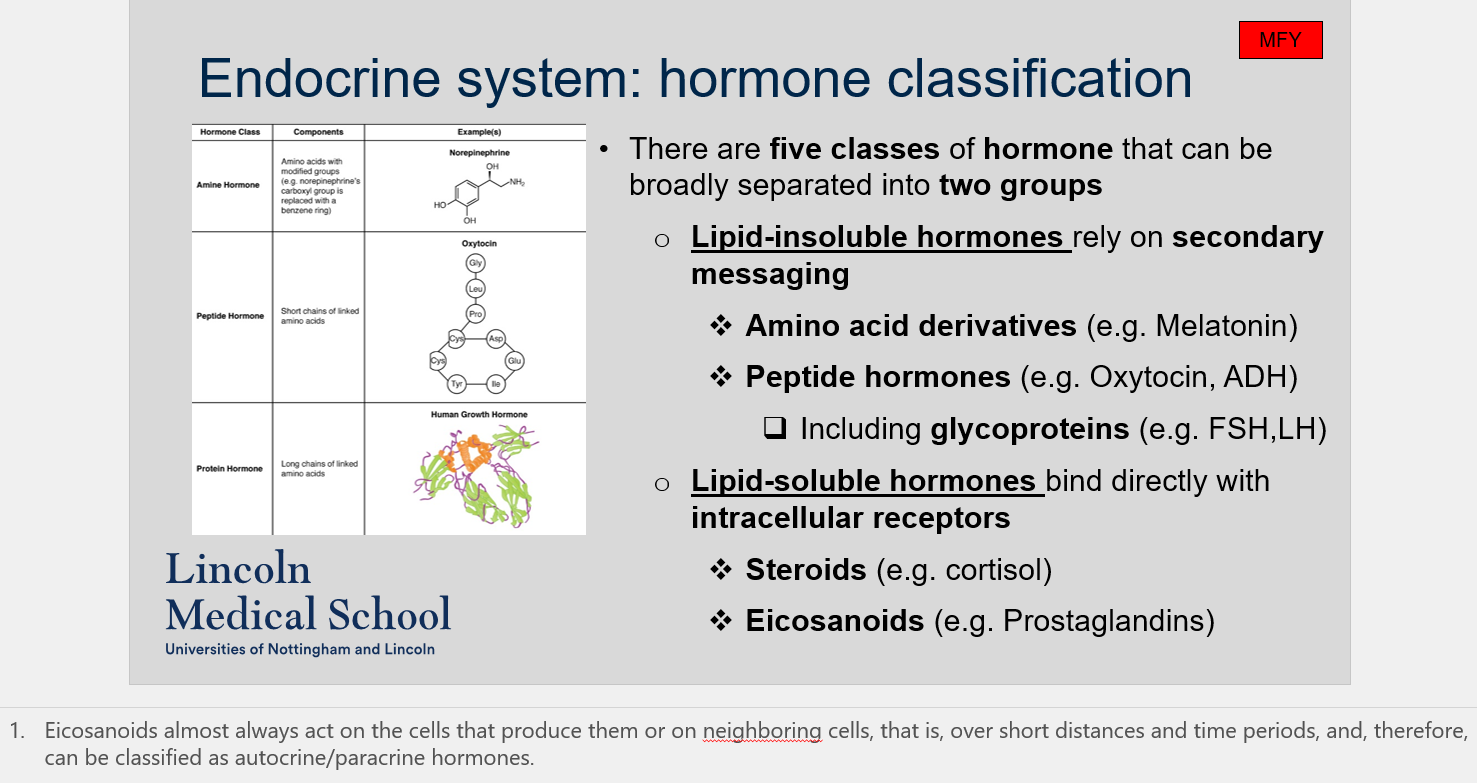
What are the five classes of hormones and how can they be broadly separated?
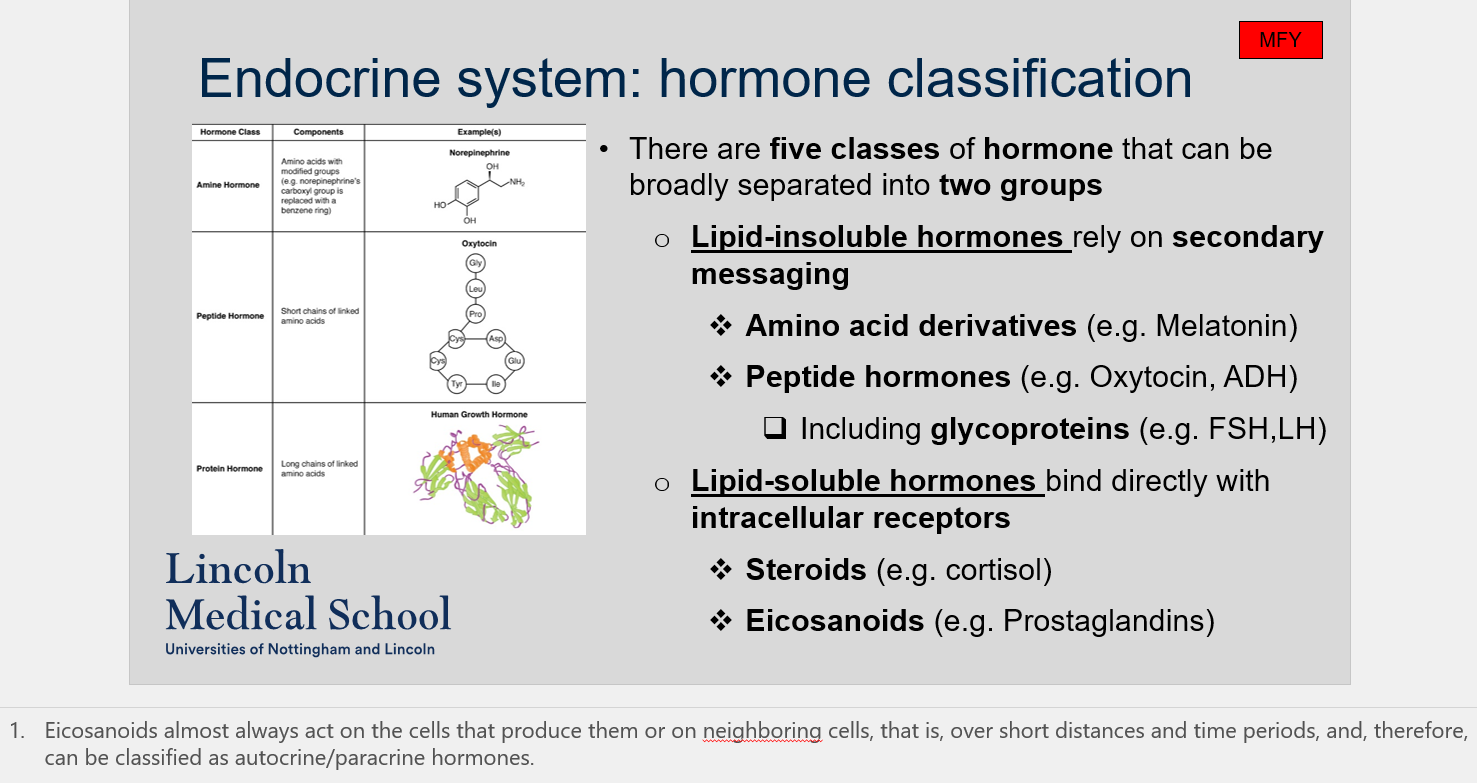
The five classes of hormones are amino acid derivatives, peptide hormones (including glycoproteins), steroids, eicosanoids, and lipid-insoluble hormones. They can be broadly separated into two groups based on their mode of action. Lipid-insoluble hormones rely on secondary messaging while lipid-soluble hormones bind directly with intracellular receptors.
35
New cards
Can you give an example of a hormone from each of the five classes?
Amino acid derivative - Melatonin,
Peptide hormone - Oxytocin
Glycoprotein hormone - Follicle-stimulating hormone (FSH)
Steroid hormone - Cortisol
Eicosanoid hormone - Prostaglandins.
Peptide hormone - Oxytocin
Glycoprotein hormone - Follicle-stimulating hormone (FSH)
Steroid hormone - Cortisol
Eicosanoid hormone - Prostaglandins.
36
New cards
What is the function of eicosanoids and how can they be classified based on their mode of action?
Eicosanoids almost always act on the cells that produce them or on neighboring cells, that is, over short distances and time periods, and, therefore, can be classified as autocrine/paracrine hormones.
37
New cards
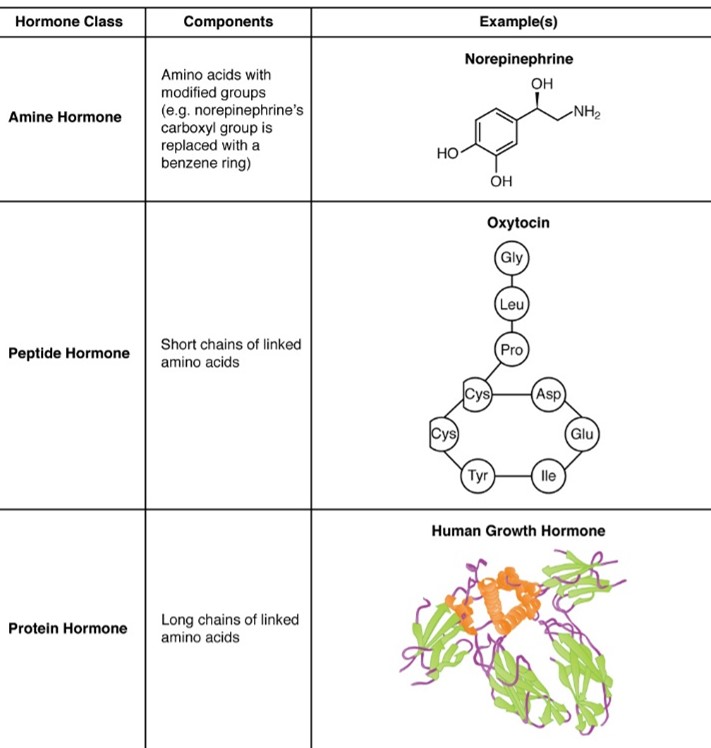
What is this and can you label it?
38
New cards
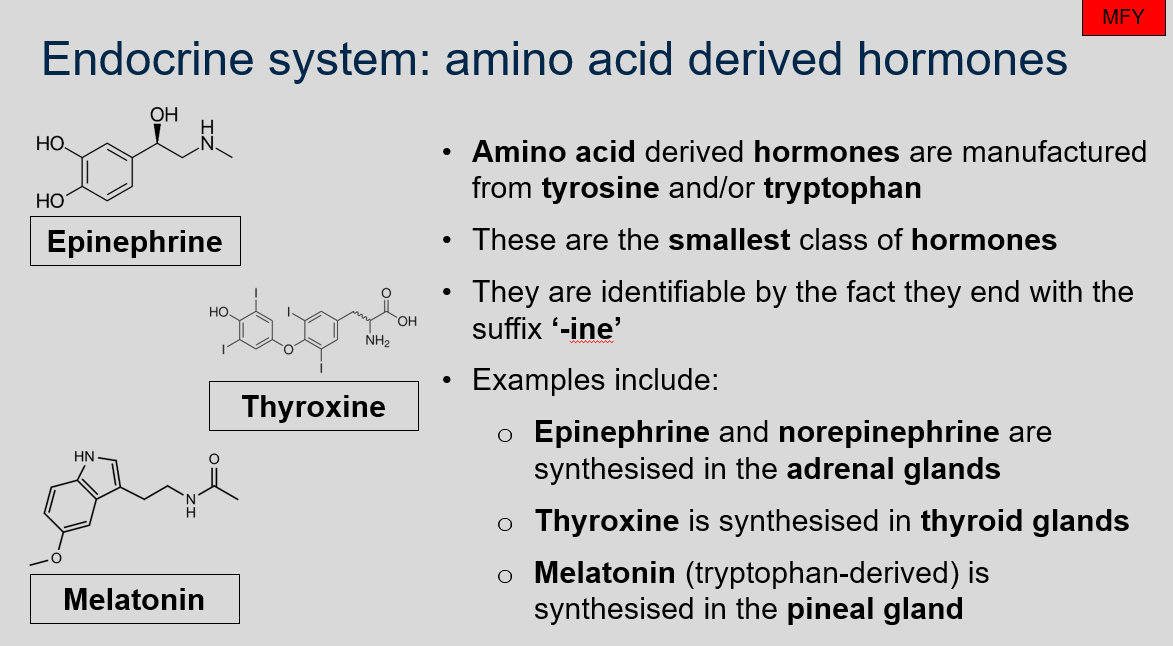
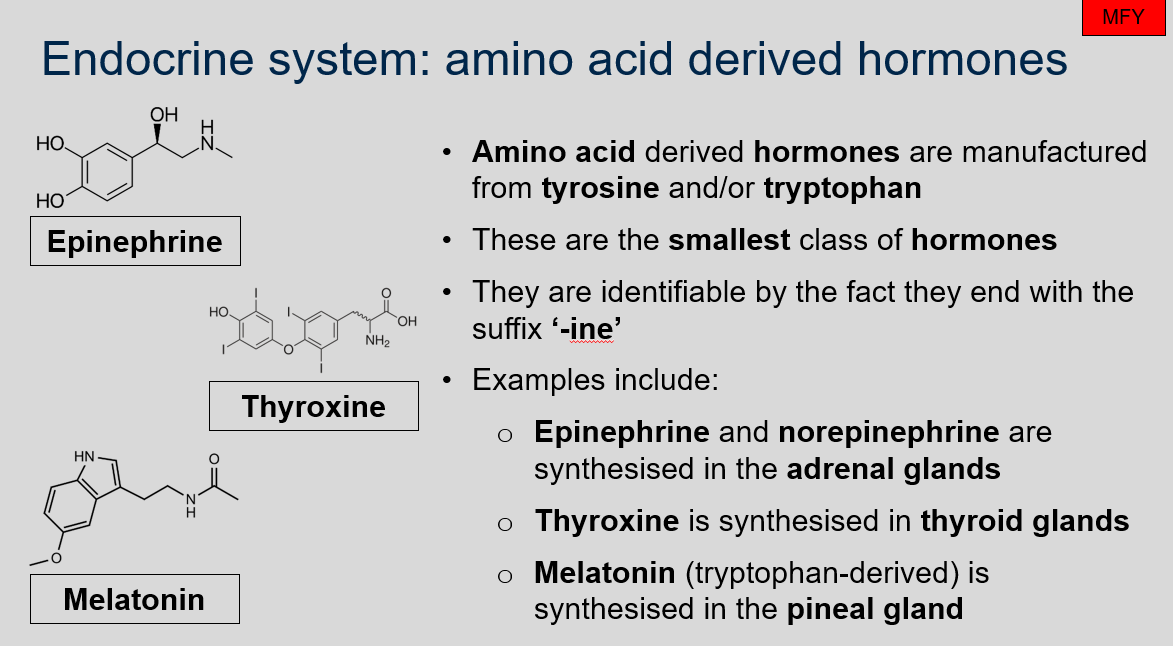
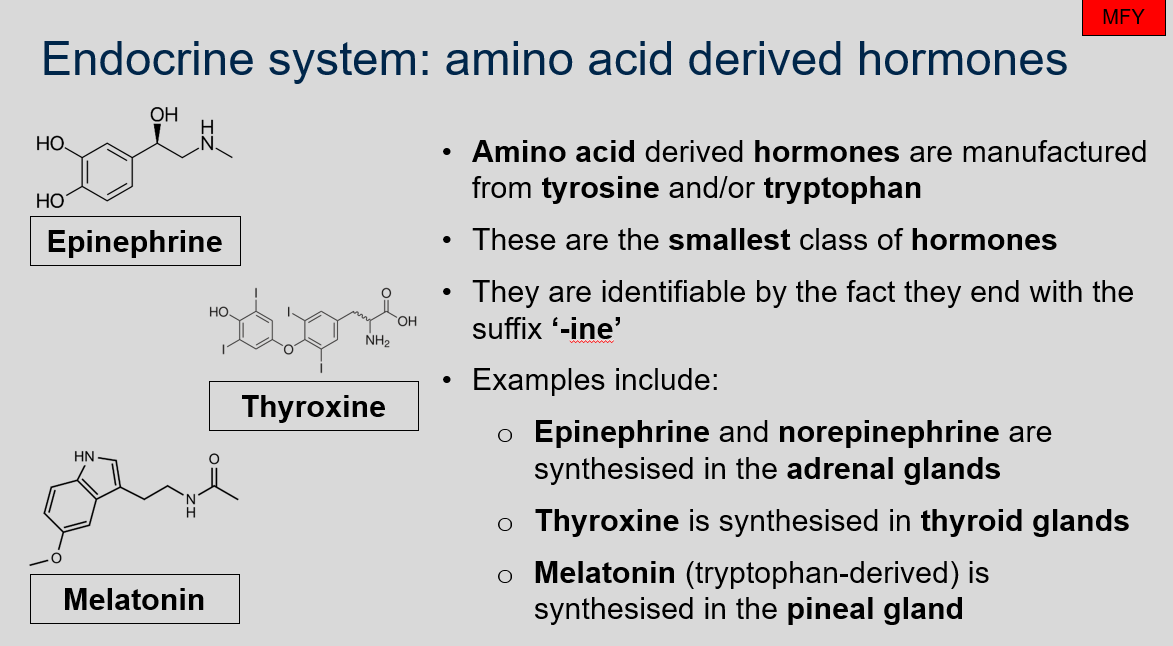
What are amino acid derived hormones and what are they manufactured from?
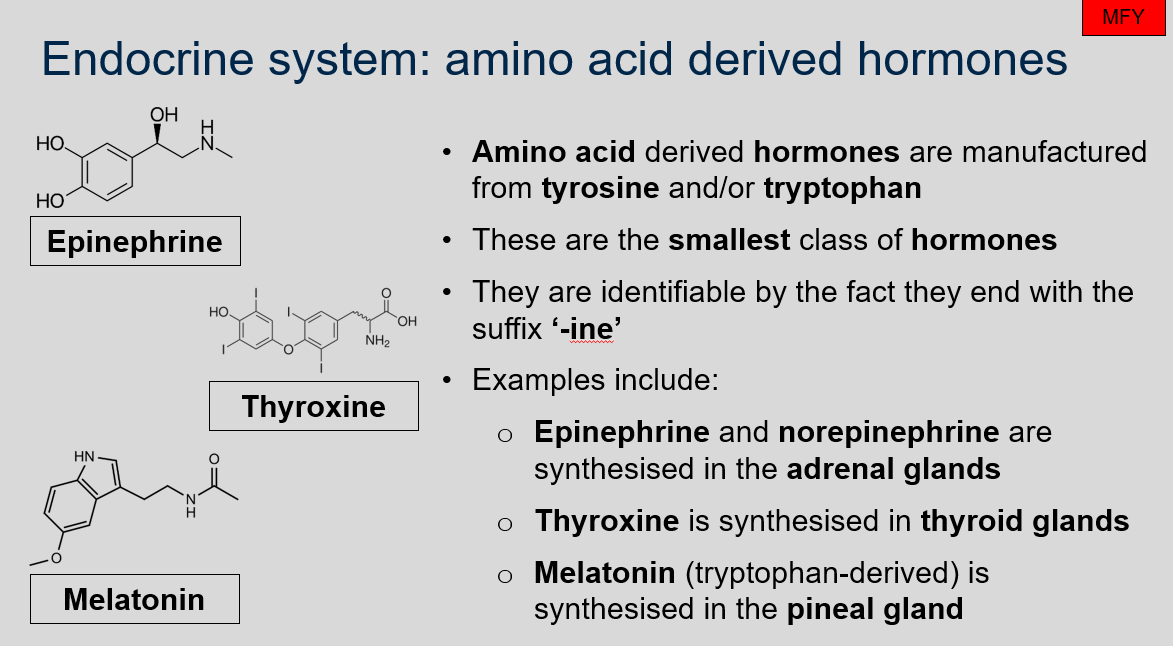
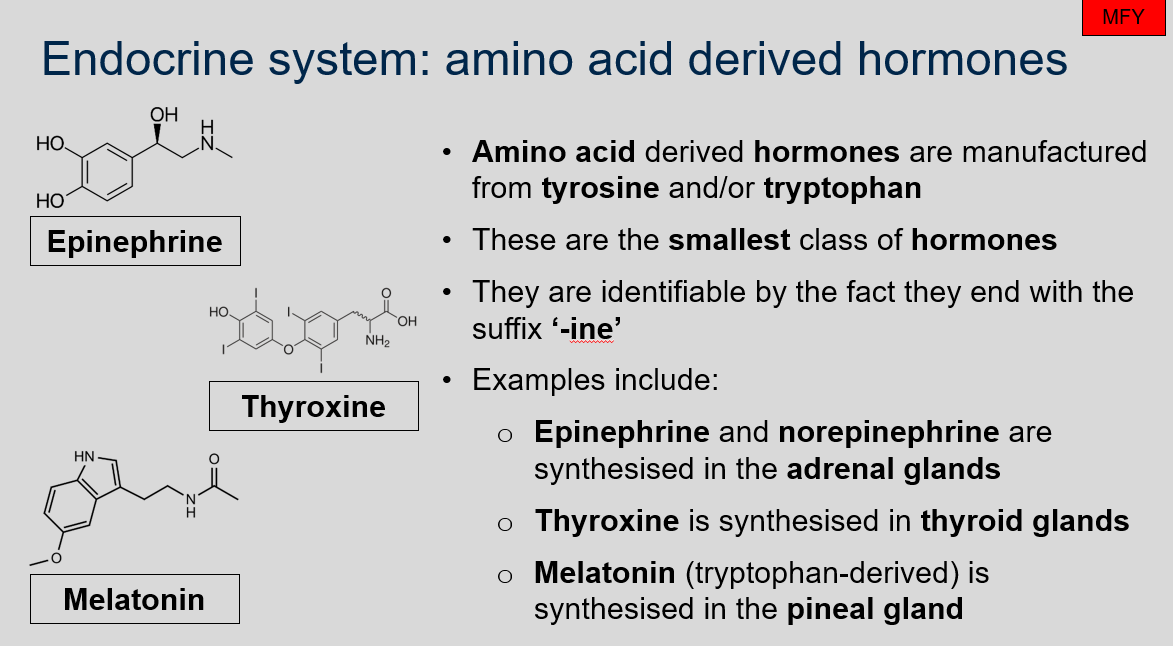
Amino acid derived hormones are a class of hormones that are manufactured from tyrosine and/or tryptophan.
39
New cards
How can you identify amino acid derived hormones?
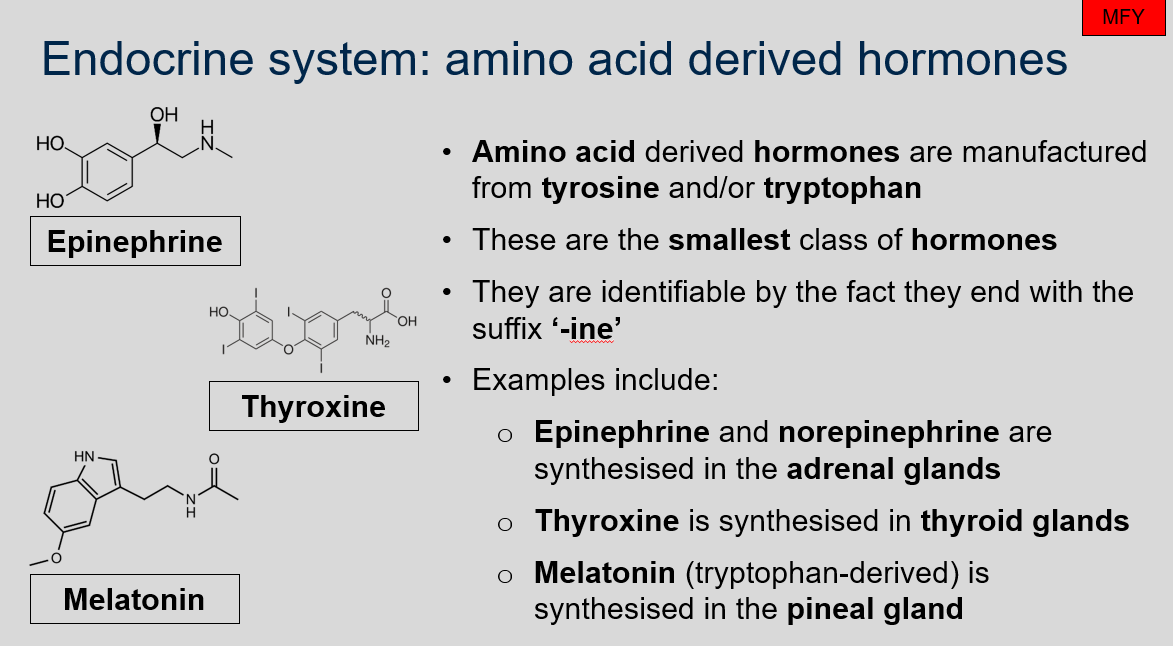
Amino acid derived hormones are identifiable by the fact they end with the suffix ‘-ine’. They are also the smallest class of hormones.
40
New cards
What are some examples of amino acid derived hormones and where are they synthesized?
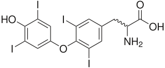
Some examples of amino acid derived hormones include epinephrine and norepinephrine, which are synthesized in the adrenal glands, thyroxine which is synthesized in thyroid glands, and melatonin (tryptophan-derived) which is synthesized in the pineal gland.
41
New cards

What is this?
42
New cards
What is this?
43
New cards

What is this?
44
New cards
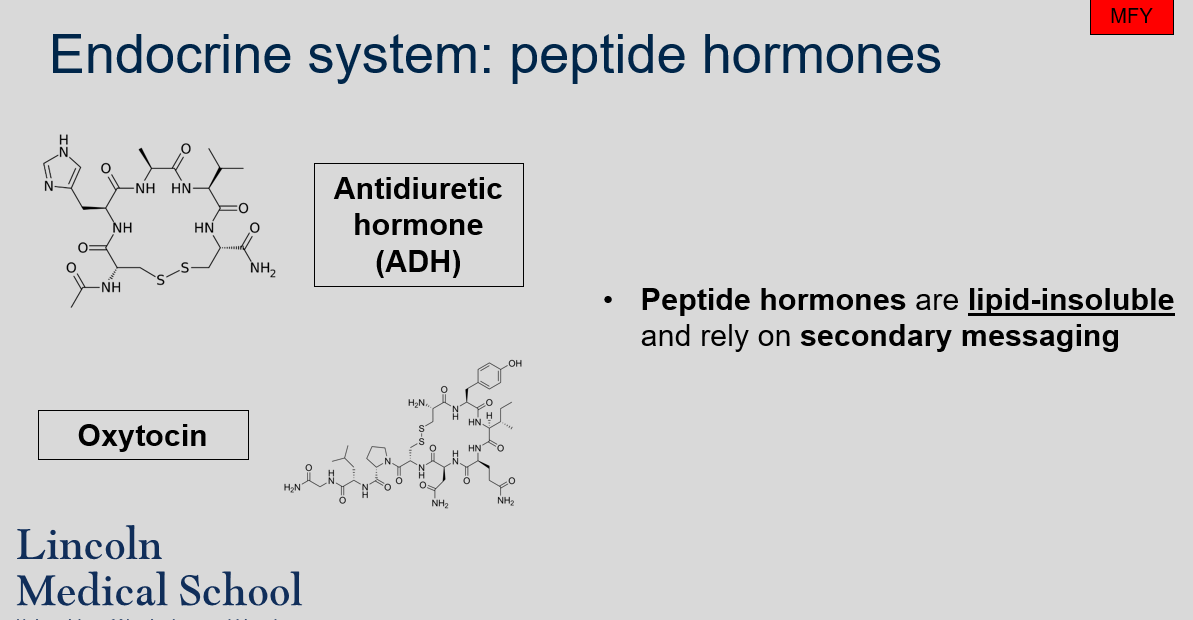
What type of hormones are peptide hormones and how do they exert their effects on target cells?
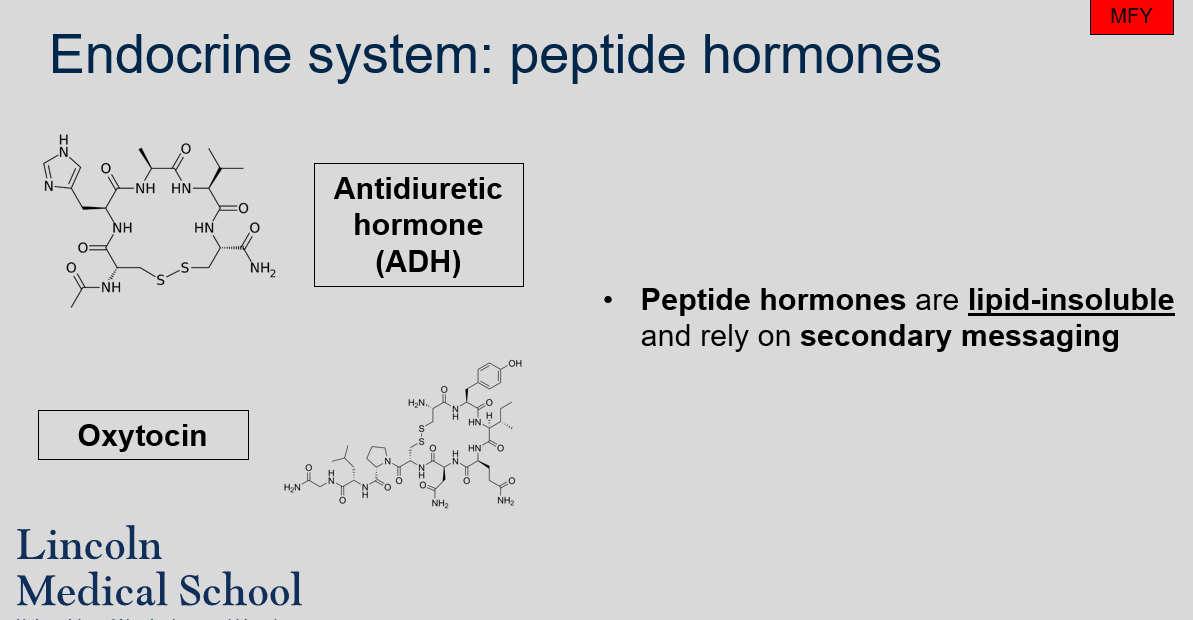
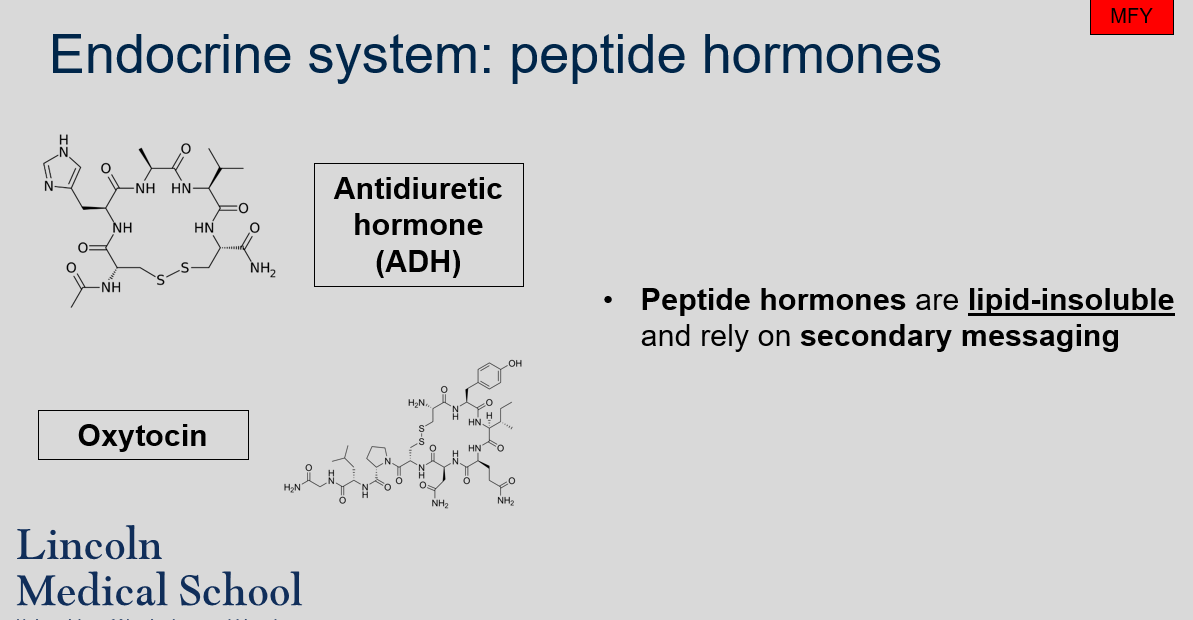
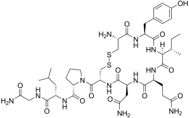
Peptide hormones are lipid-insoluble and rely on secondary messaging to exert their effects on target cells. Examples of peptide hormones include oxytocin, ADH, and glycoproteins like FSH and LH.
45
New cards

What is this?
46
New cards
What is this?
47
New cards
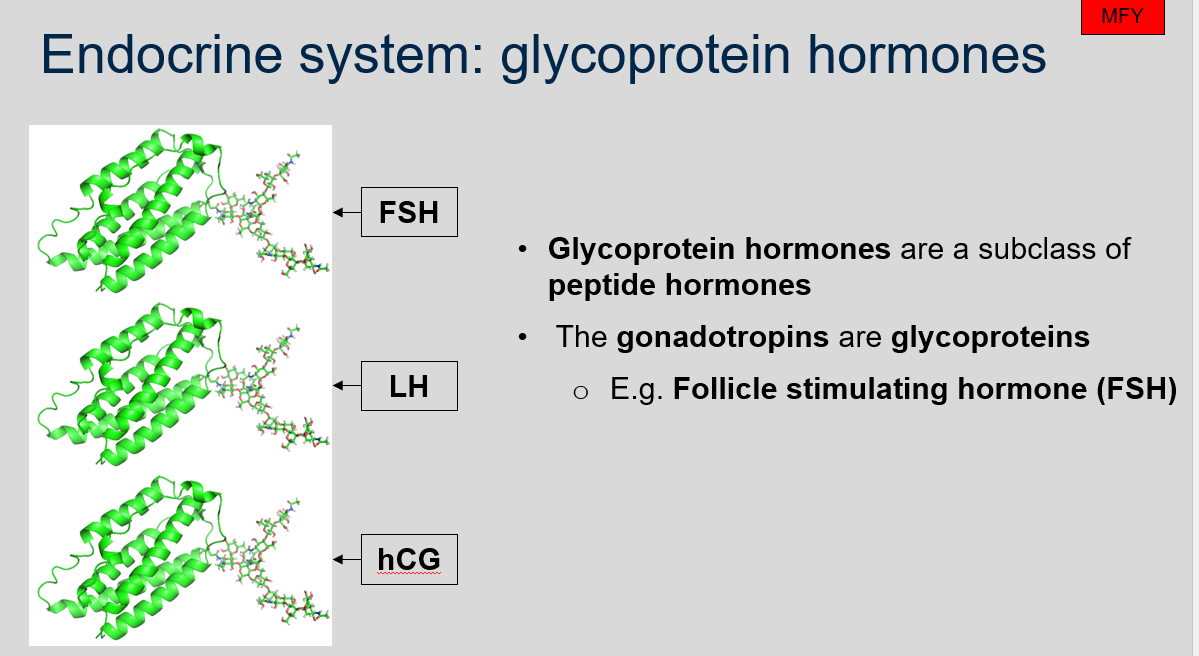
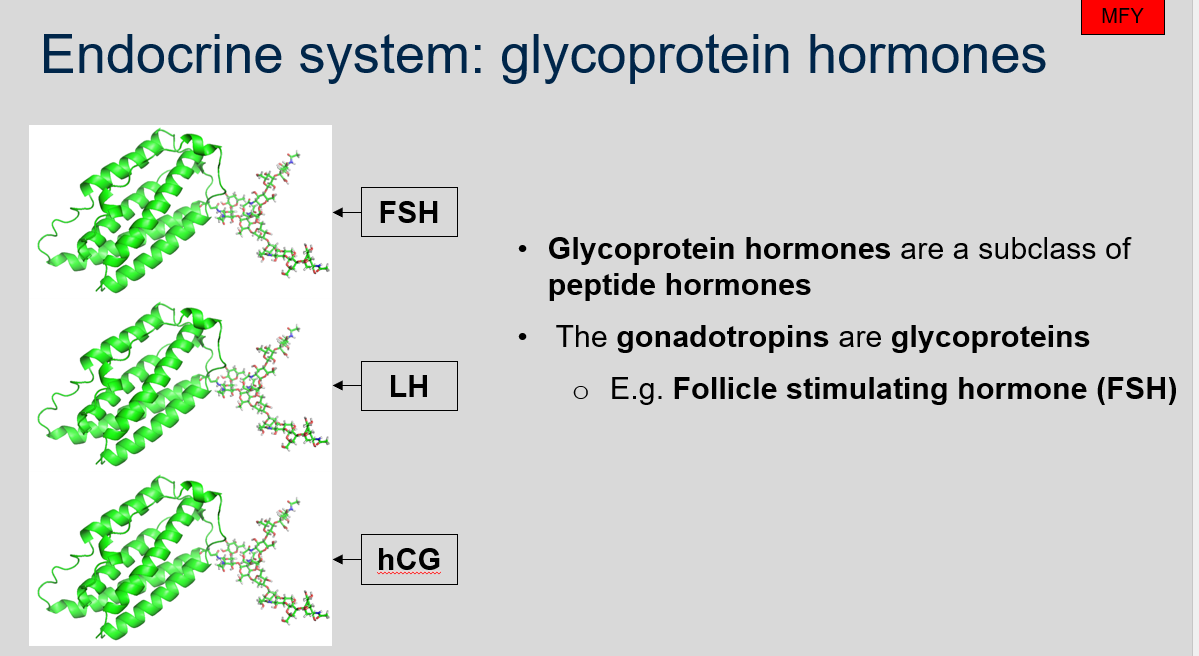
What are glycoprotein hormones?
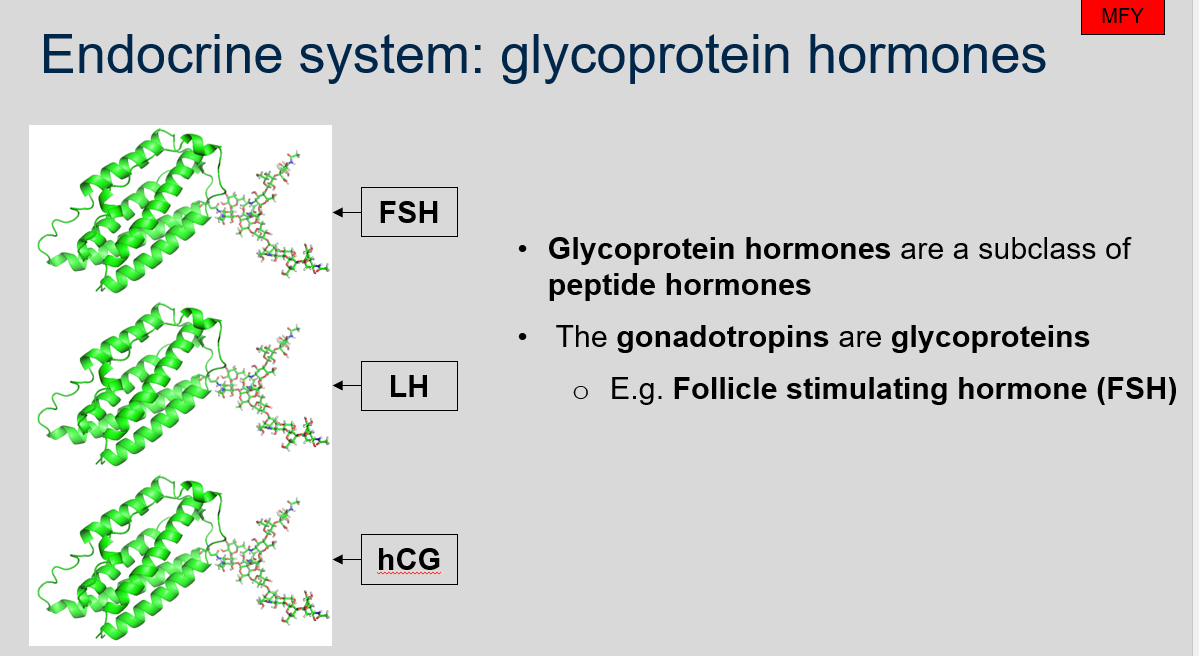
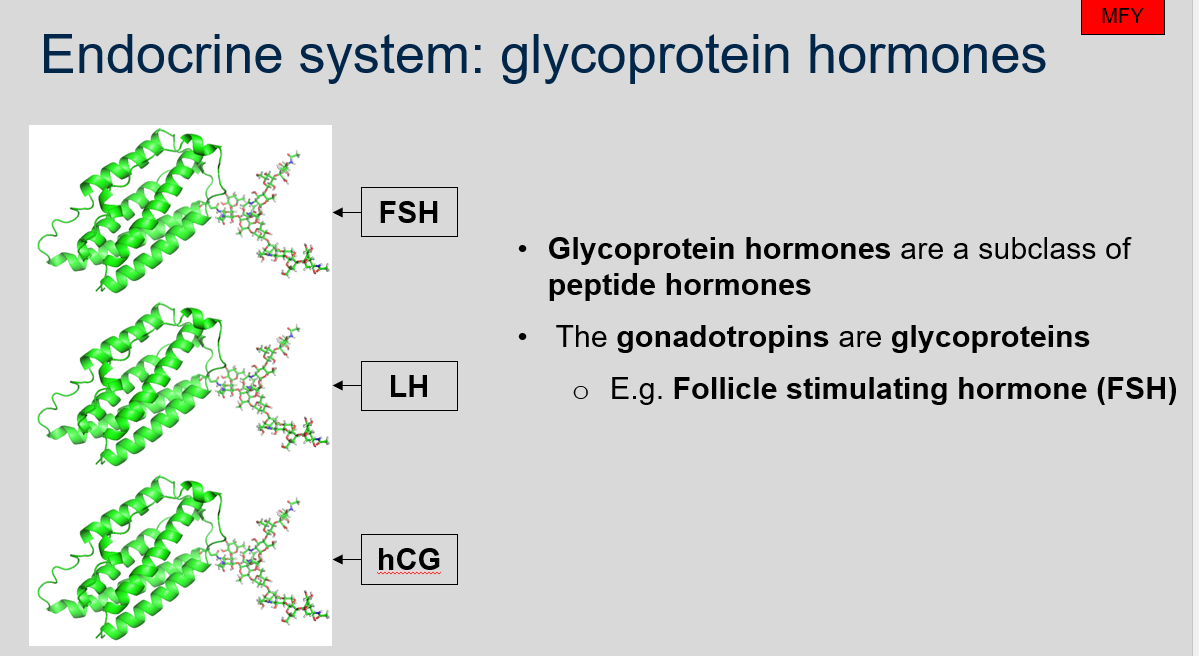
Glycoprotein hormones are a subclass of peptide hormones that include the gonadotropins such as follicle stimulating hormone (FSH).
48
New cards
What is this?
49
New cards
What is this?
50
New cards
What is this?
51
New cards
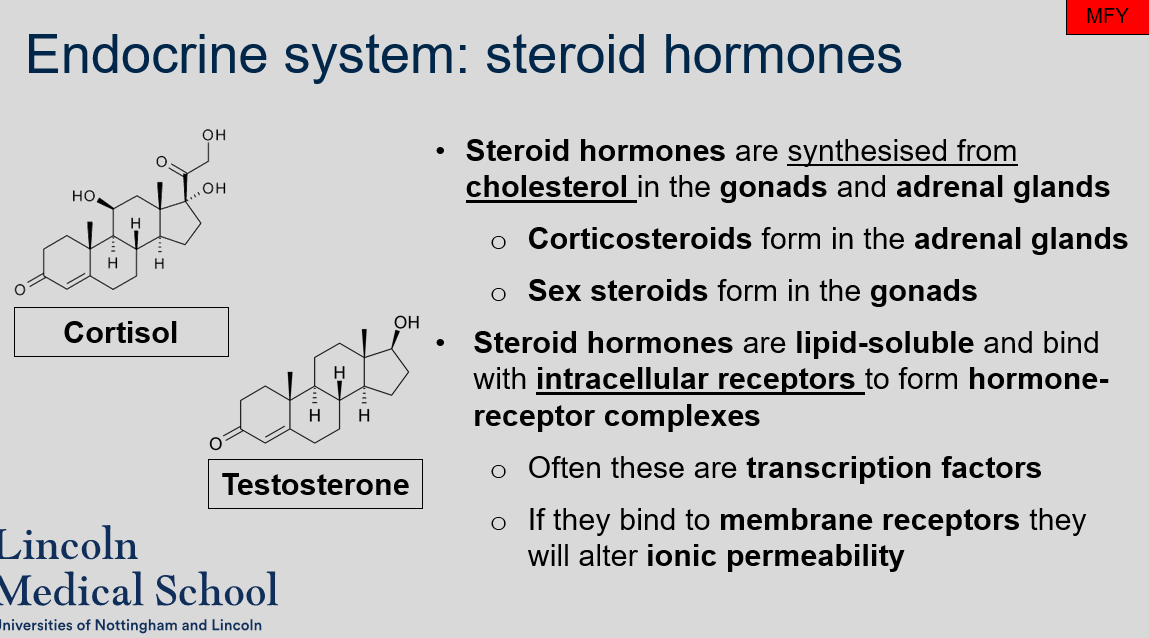
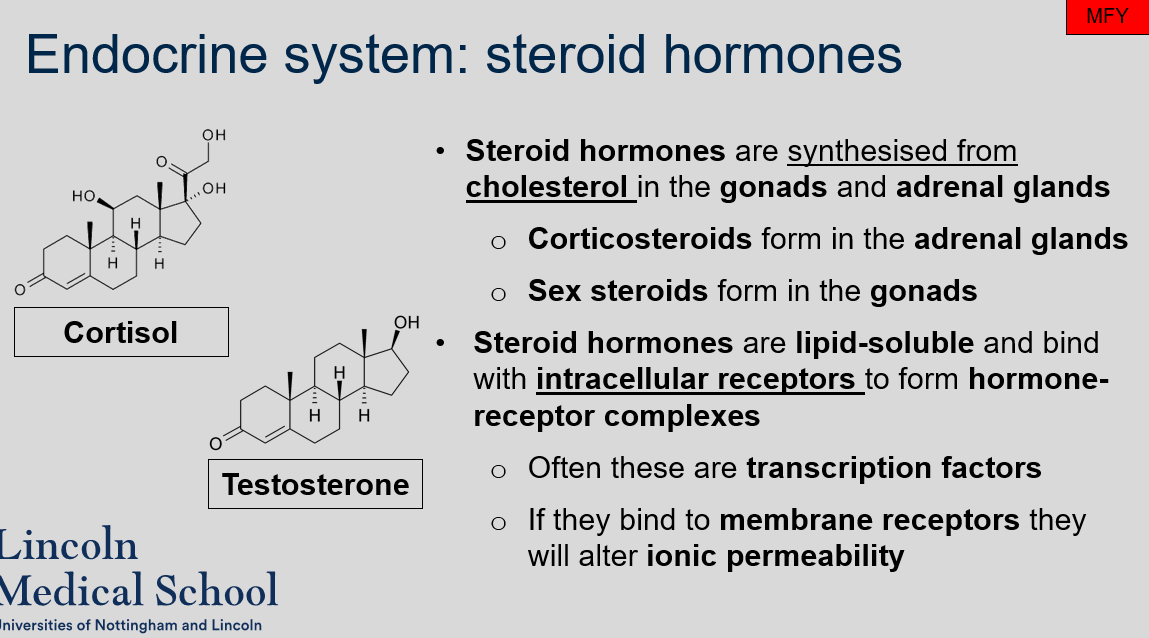
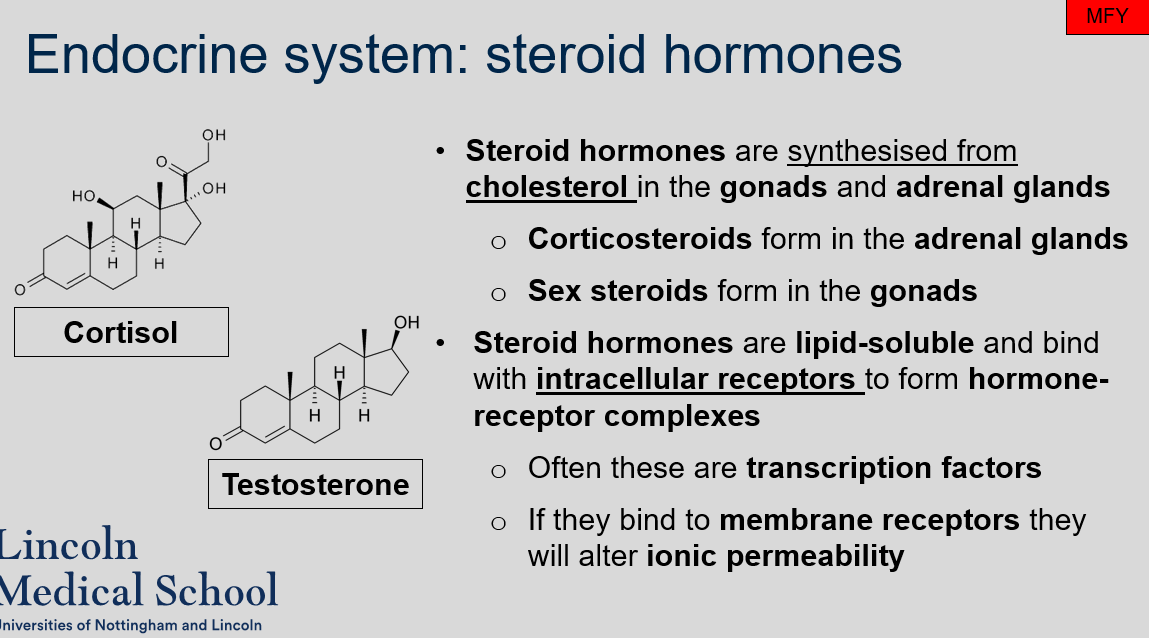
What are steroid hormones synthesized from?
Steroid hormones are synthesized from cholesterol in the gonads and adrenal glands.
52
New cards
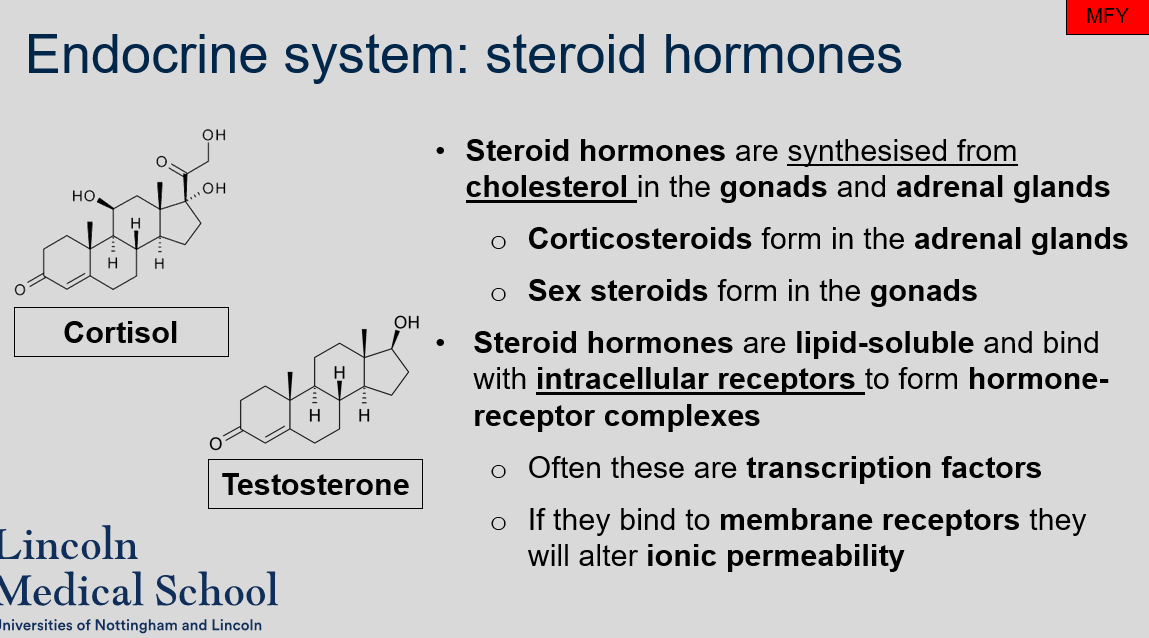
Where do corticosteroids and sex steroids form?
Corticosteroids form in the adrenal glands, while sex steroids form in the gonads.
53
New cards
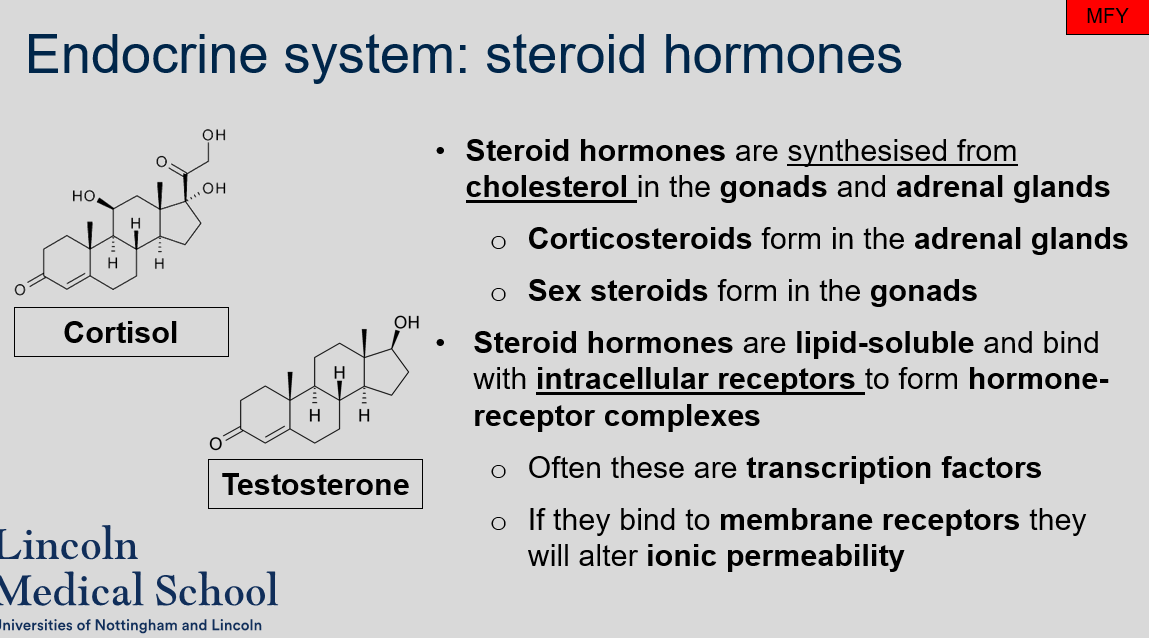
What type of hormones are steroid hormones and how do they bind?
Steroid hormones are lipid-soluble and bind with intracellular receptors to form hormone-receptor complexes. Often, these are transcription factors. If they bind to membrane receptors, they will alter ionic permeability.
54
New cards
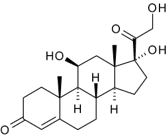
What is this?
55
New cards

What is this?
56
New cards
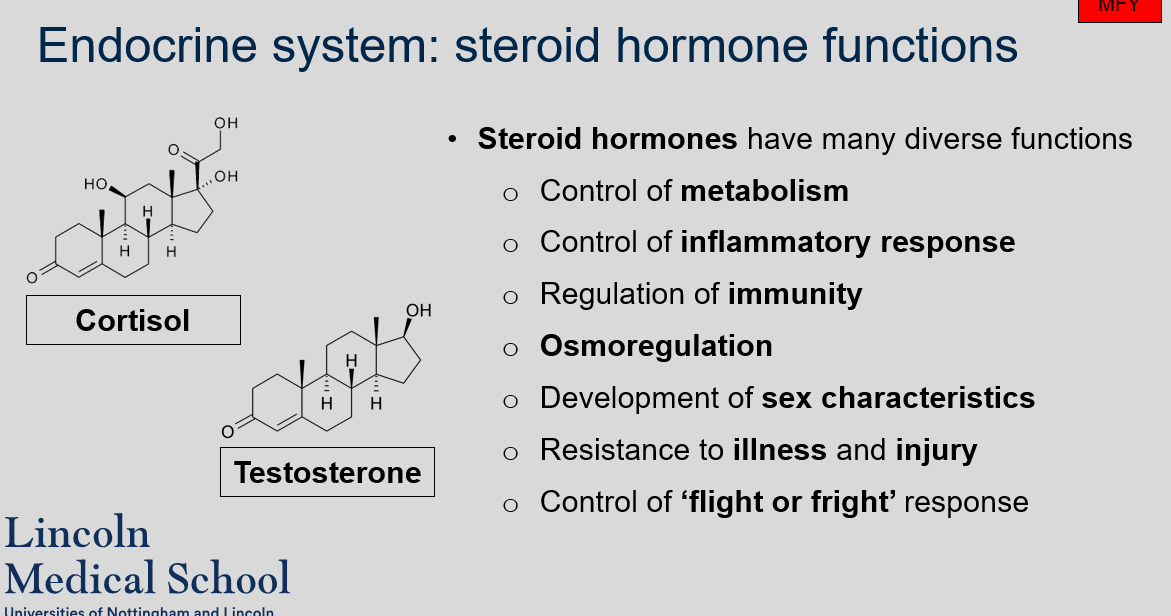
What are the diverse functions of steroid hormones?
1. Control of metabolism
2. Control of inflammatory response
3. Regulation of immunity
4. Osmoregulation
5. Development of sex characteristics
6. Resistance to illness and injury
7. Control of ‘flight or fright’ response
57
New cards
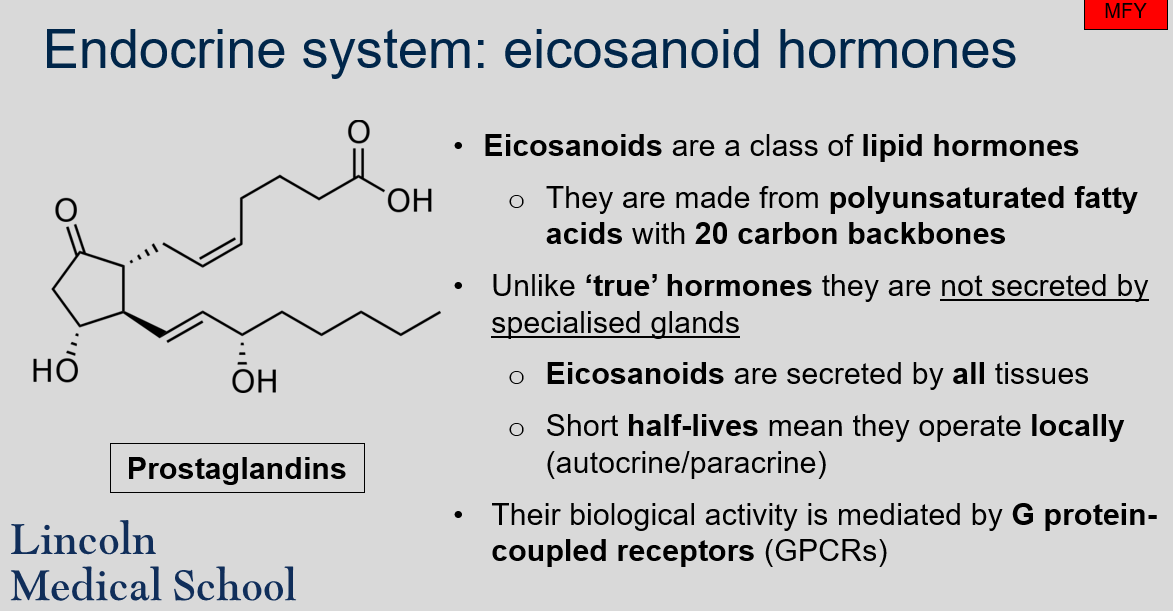
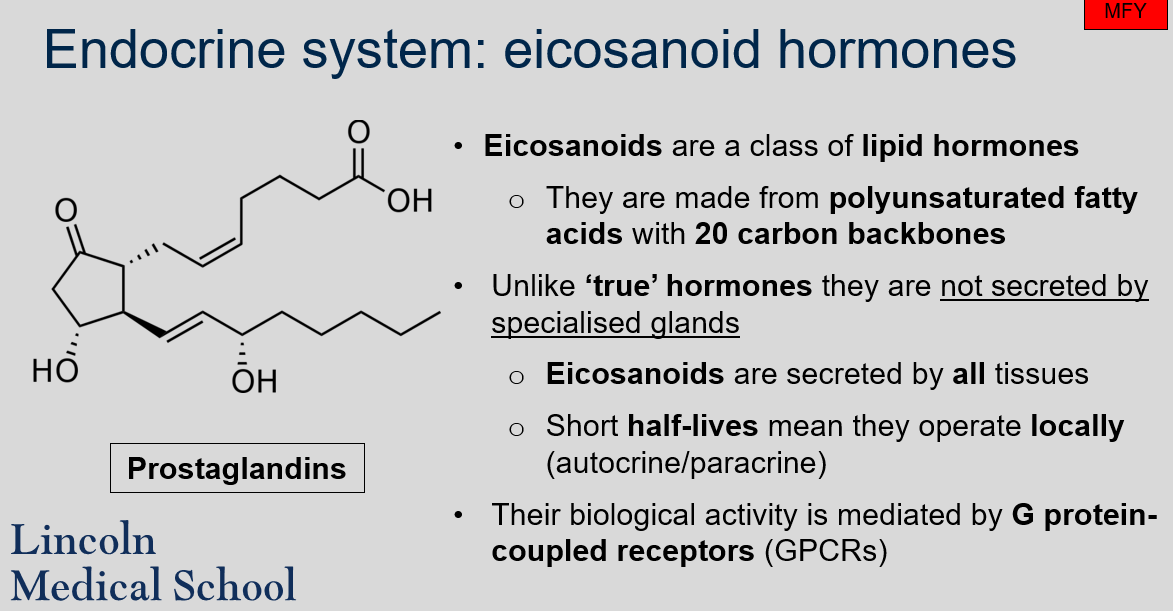
What are Eicosanoids?
Eicosanoids are a class of lipid hormones made from polyunsaturated fatty acids with 20 carbon backbones. Unlike ‘true’ hormones, they are not secreted by specialised glands, and are secreted by all tissues. Eicosanoids have short half-lives which means they operate locally (autocrine/paracrine) and their biological activity is mediated by G protein-coupled receptors (GPCRs).
58
New cards

What is this?
59
New cards
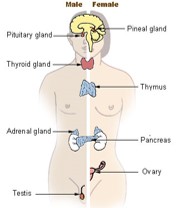
Label this:
60
New cards
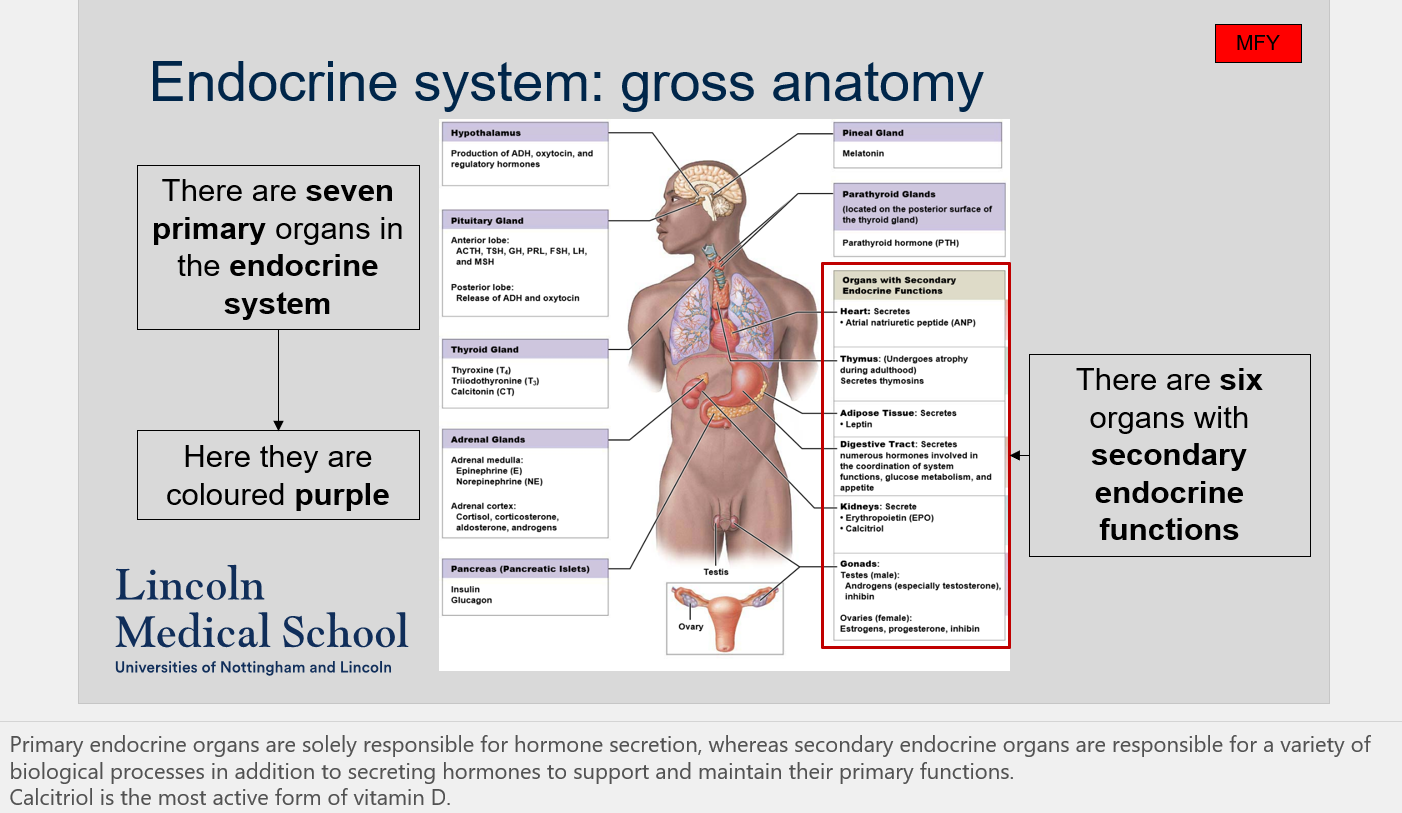
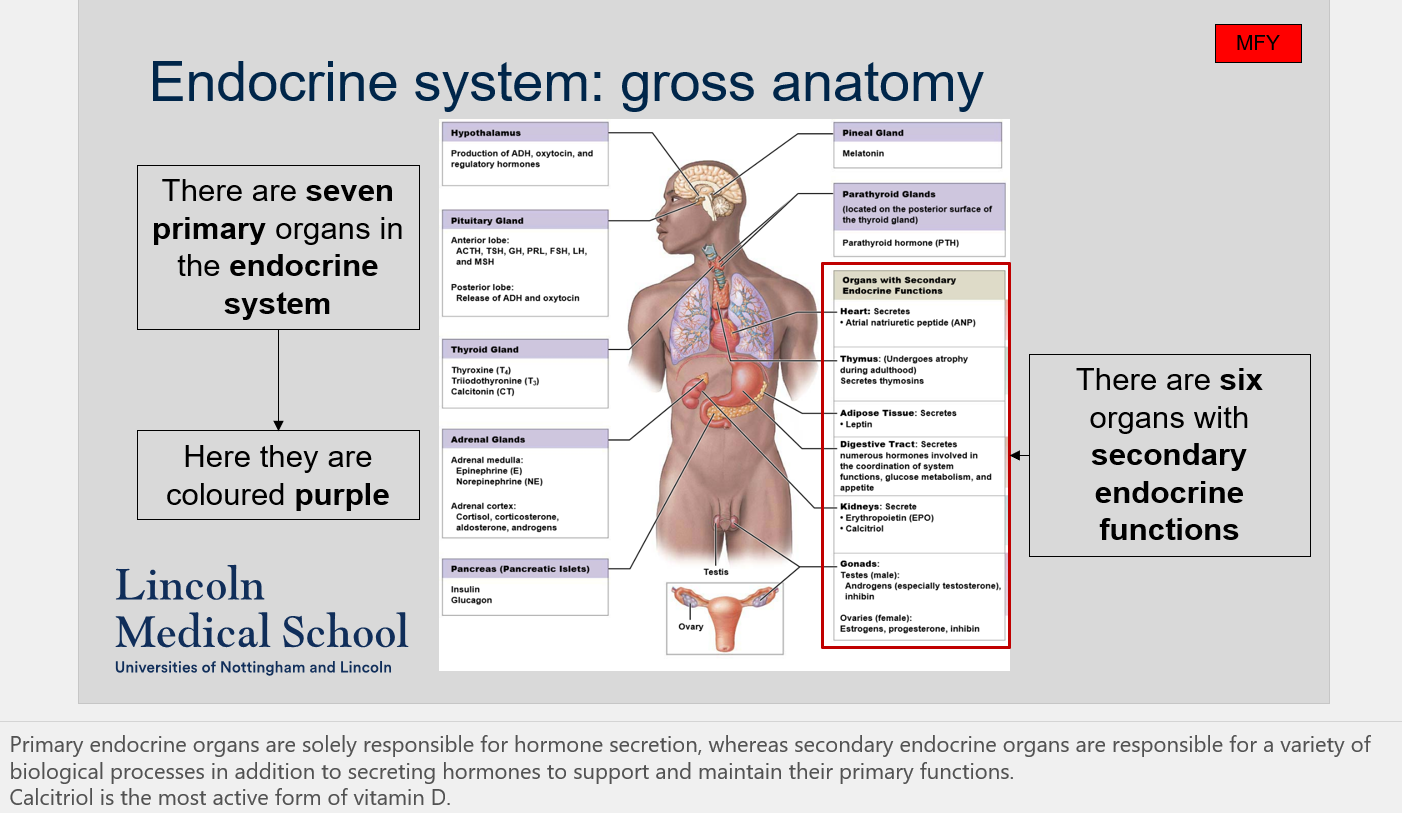
How many primary endocrine organs are there?
7
61
New cards
How many organs are there with secondary endocrine functions?
6
62
New cards
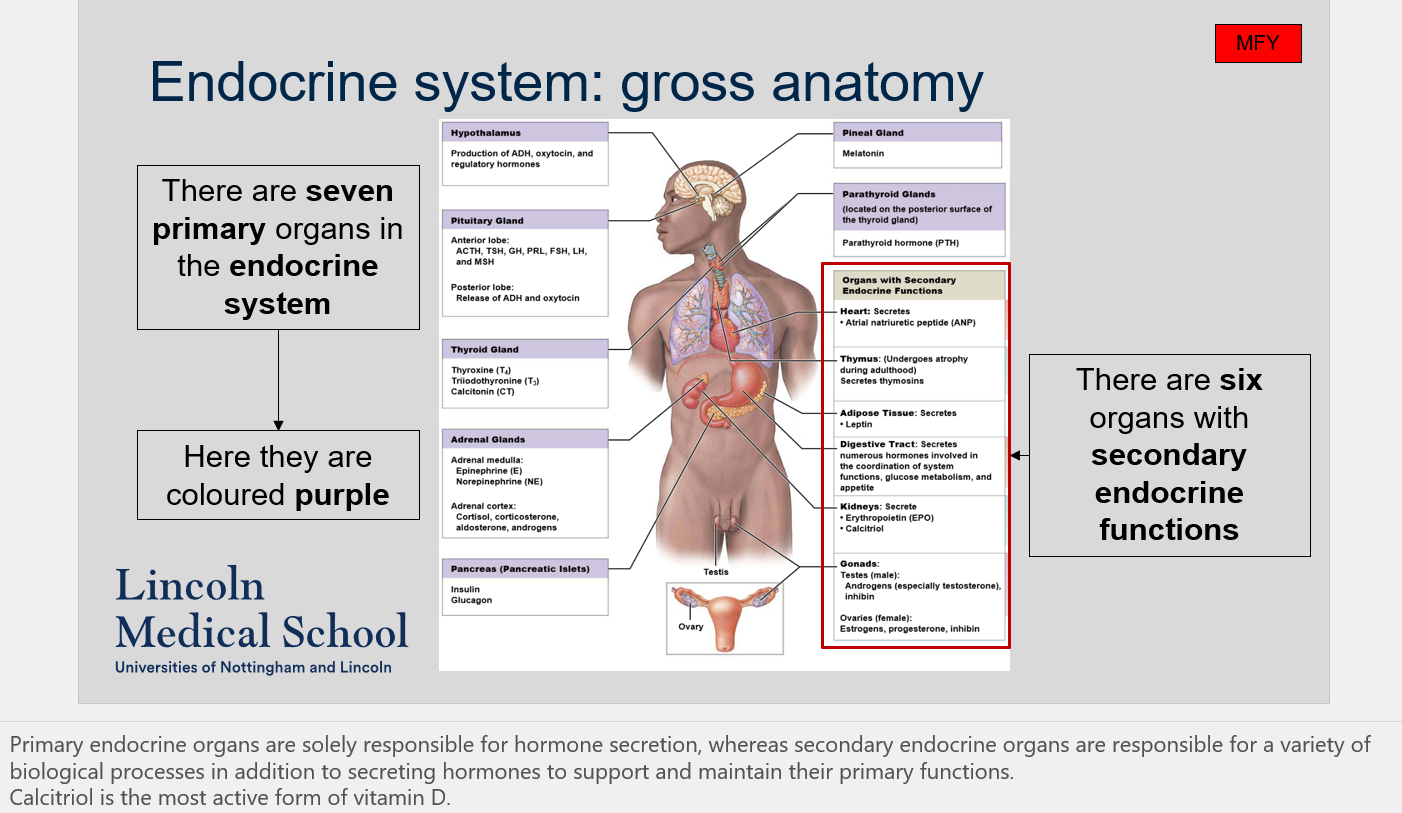
What are primary and secondary endocrine organs?
Primary endocrine organs solely secrete hormones, while secondary endocrine organs secrete hormones as well as perform additional biological functions to support their primary functions.
63
New cards
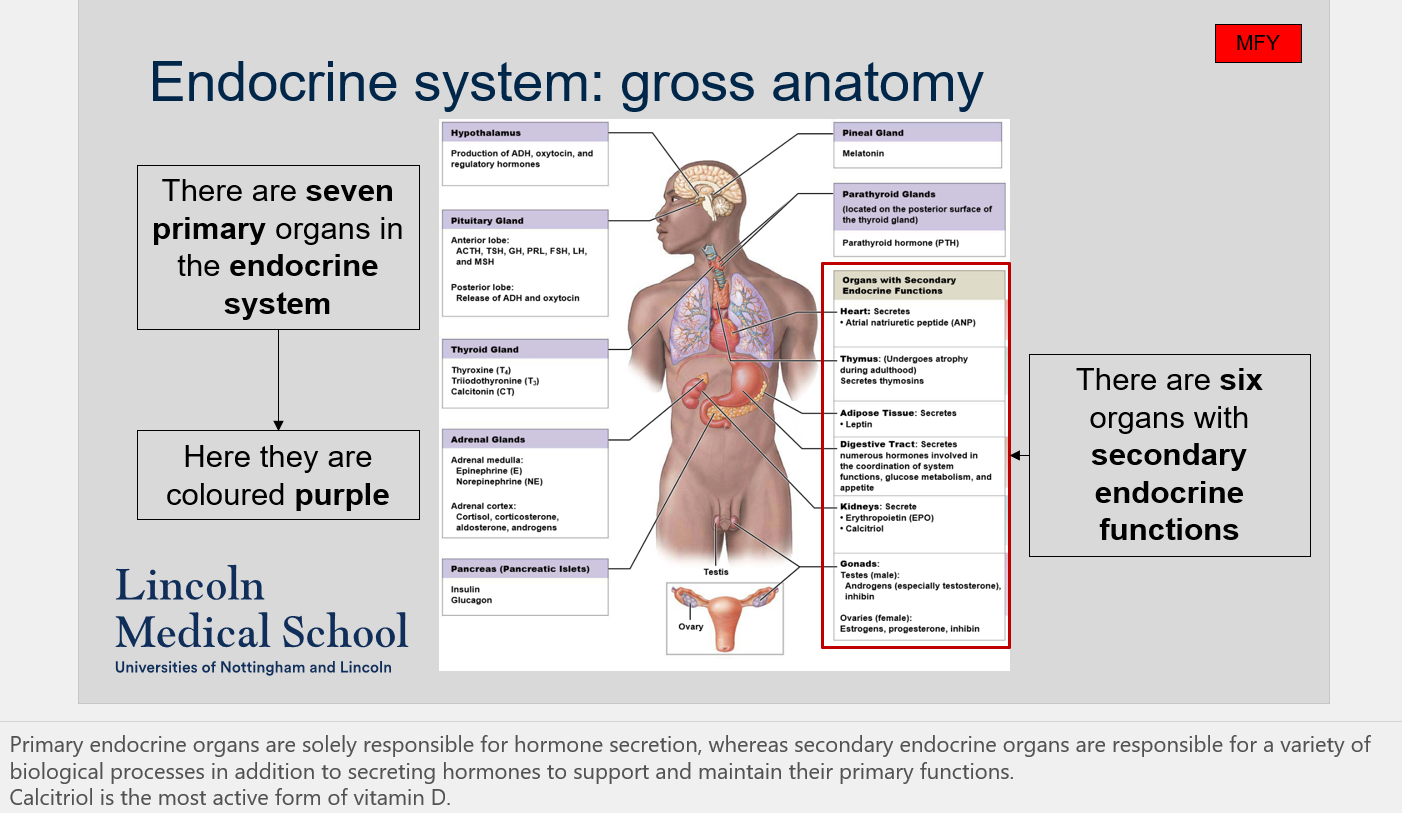
What is the most active form of vitamin D?
Calcitriol is the most active form of vitamin D.
64
New cards
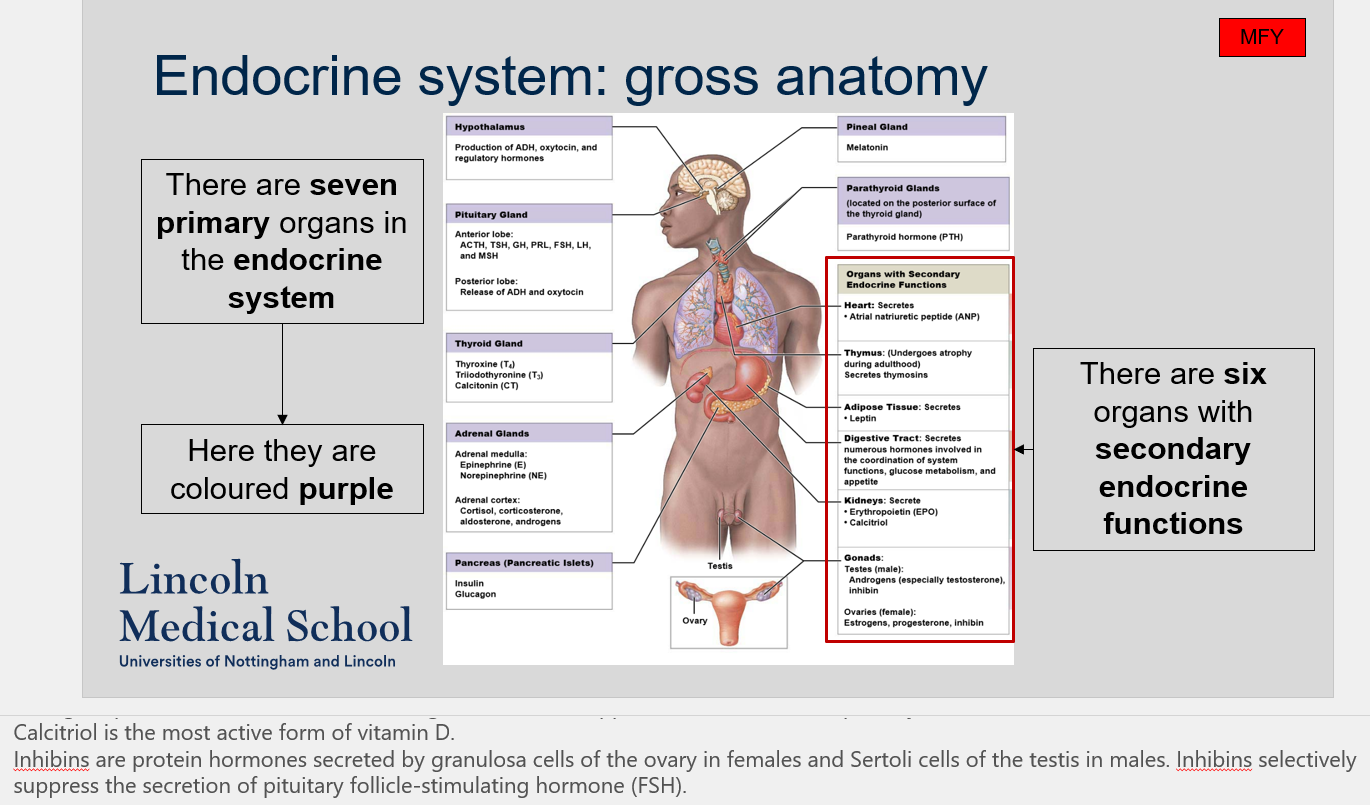
Which cells in females and males secrete inhibins, and what is their function?
Inhibins are protein hormones secreted by granulosa cells in females and Sertoli cells in males. They selectively suppress the secretion of pituitary follicle-stimulating hormone (FSH).
65
New cards
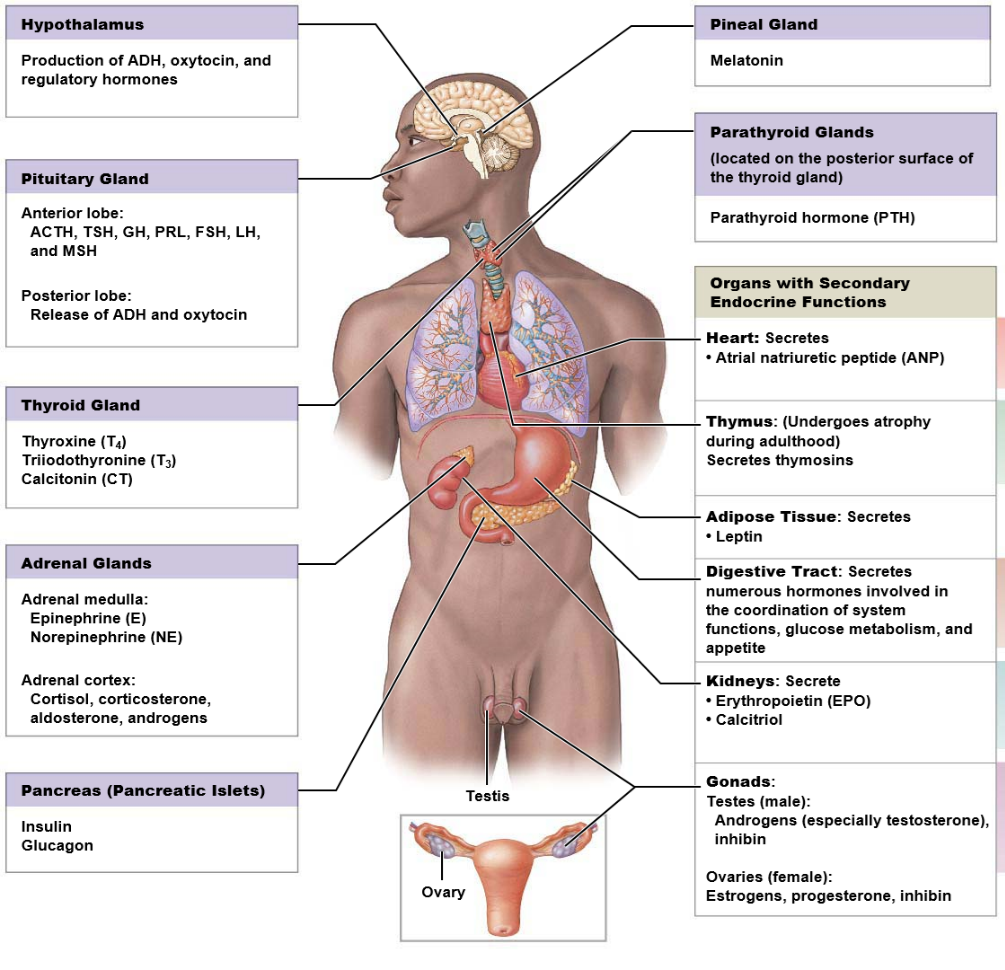
Can you describe this and label this
66
New cards
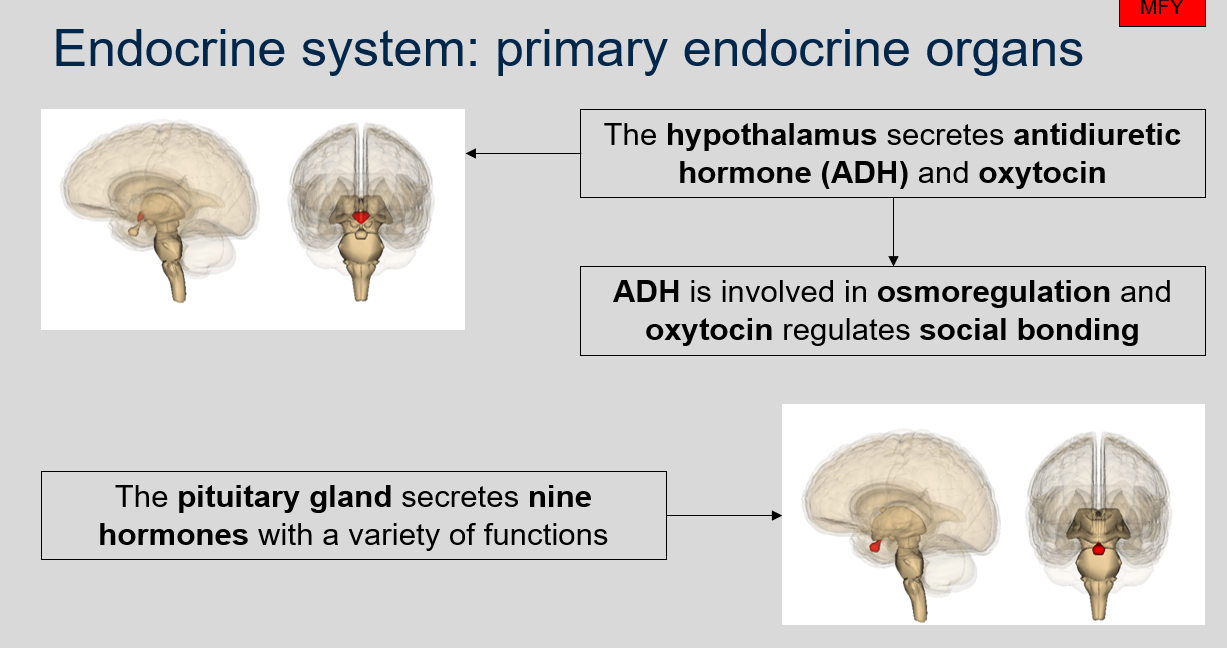
What hormones are secreted by the hypothalamus and what are their functions?
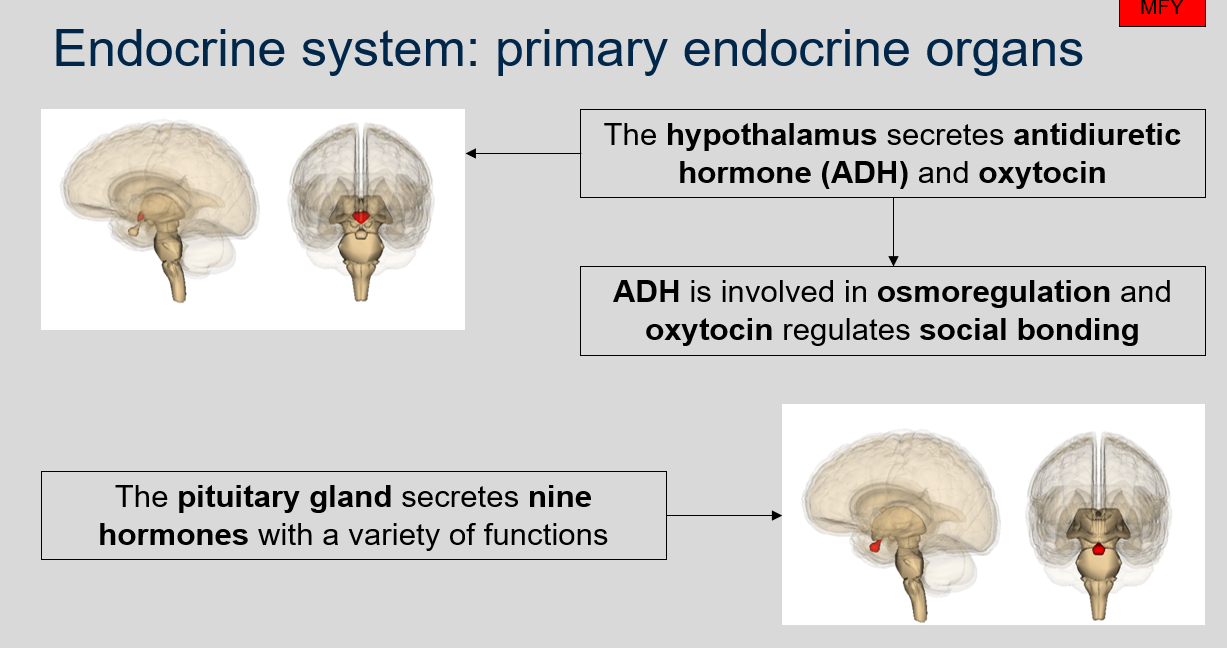
The hypothalamus secretes antidiuretic hormone (ADH) and oxytocin.
67
New cards
What is the role of antidiuretic hormone (ADH) and oxytocin in the body?
ADH is involved in osmoregulation, helping the body retain water and maintain proper fluid balance. Oxytocin regulates social bonding, including maternal behavior and romantic attachment.
68
New cards
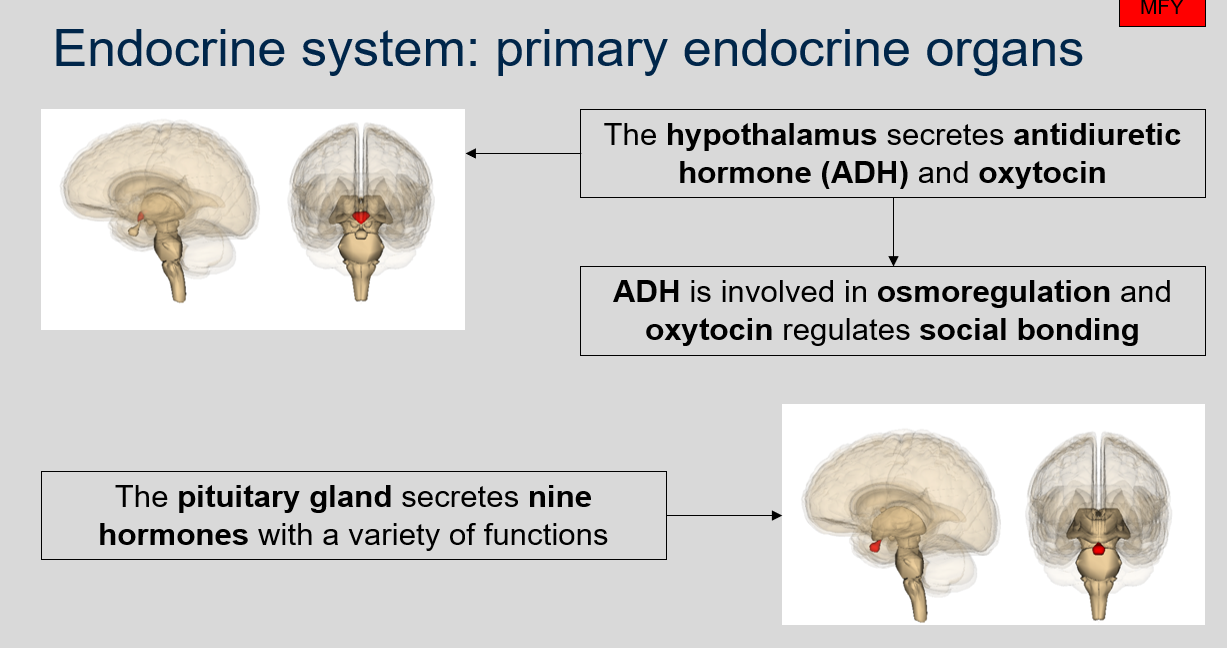
How many hormones are secreted by the pituitary gland, and what are their functions?
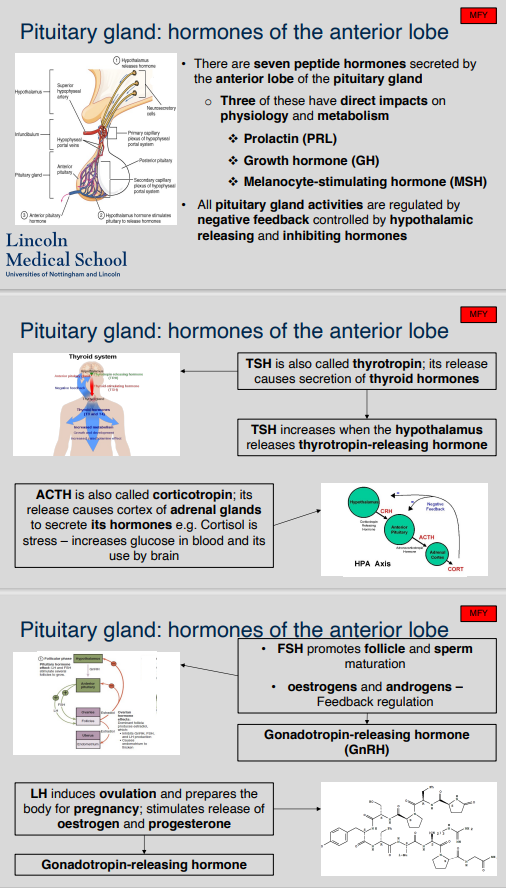
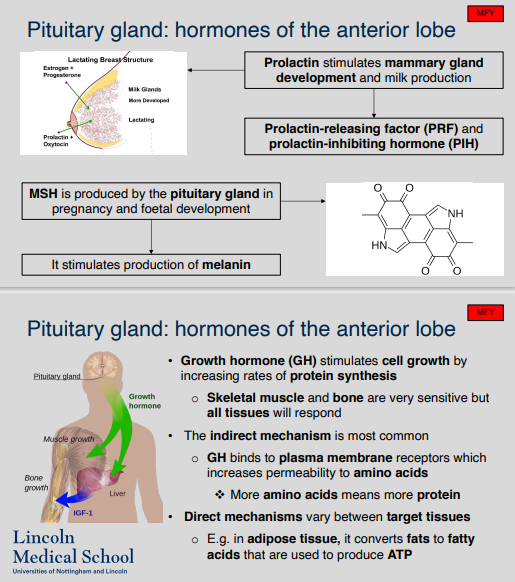
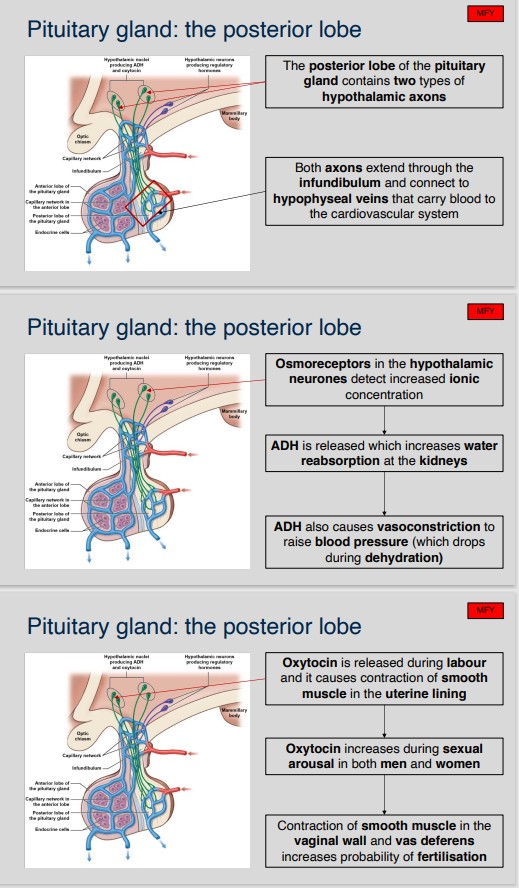
The pituitary gland secretes nine hormones with a variety of functions. These include 7 secreted by the anterior lobe which are peptide hormones. The first 4 regulate hormone production of other endocrine tissues - adrenocorticotropic hormone (ACTH), thyroid-stimulating hormone (TSH), follicle-stimulating hormone (FSH), luteinizing hormone (LH) and these three which have direct impacts on physiology and metabolism - growth hormone (GH), prolactin (PRL), melanocyte-stimulating hormone (MSH) and two secreted by the posterior lobe antidiuretic hormone (ADH) and oxytocin.
69
New cards
What are the hormones and their functions that are produced by the anterior lobe of the pituitary gland?
70
New cards
What are the hormones and their functions that are produced by the posterior lobe of the pituitary gland?
71
New cards
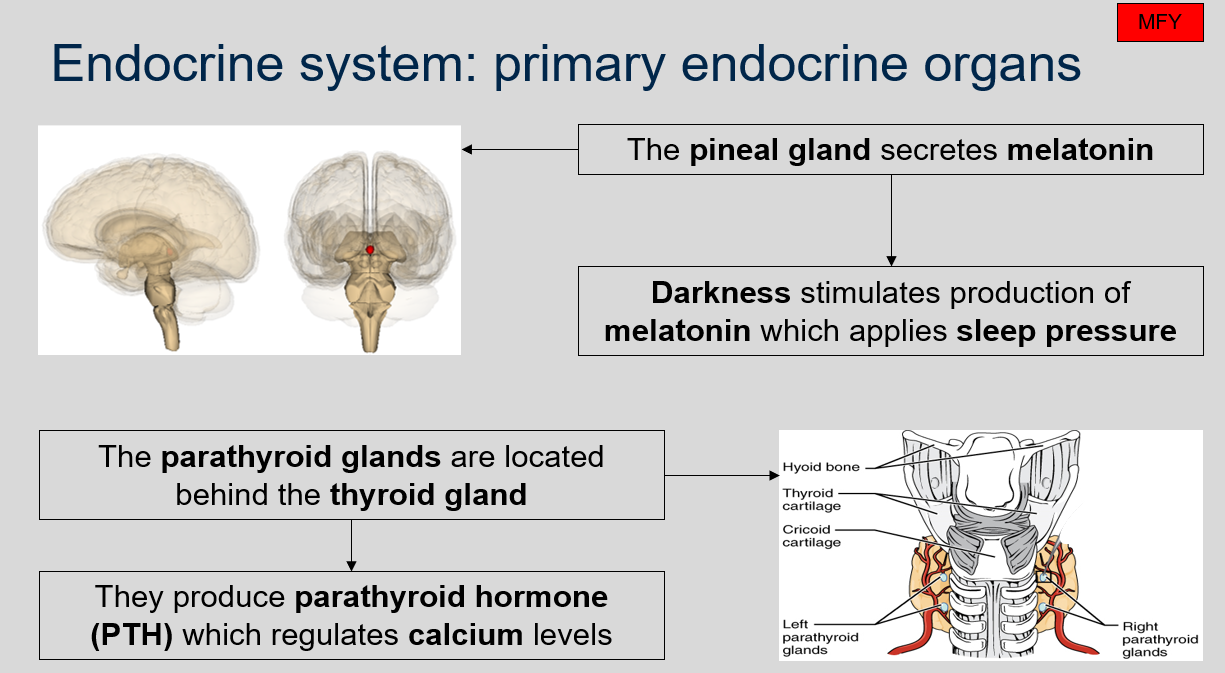
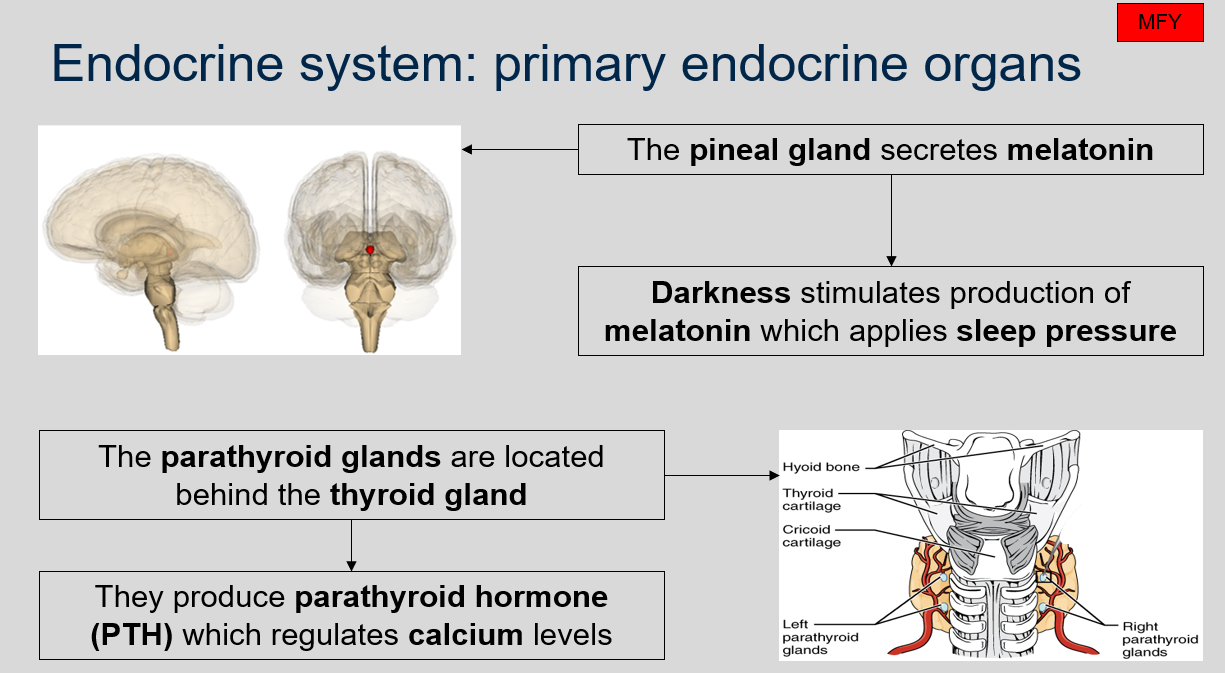
What hormone does the pineal gland secrete, and what stimulates its production?
The pineal gland secretes melatonin, and its production is stimulated by darkness.
72
New cards
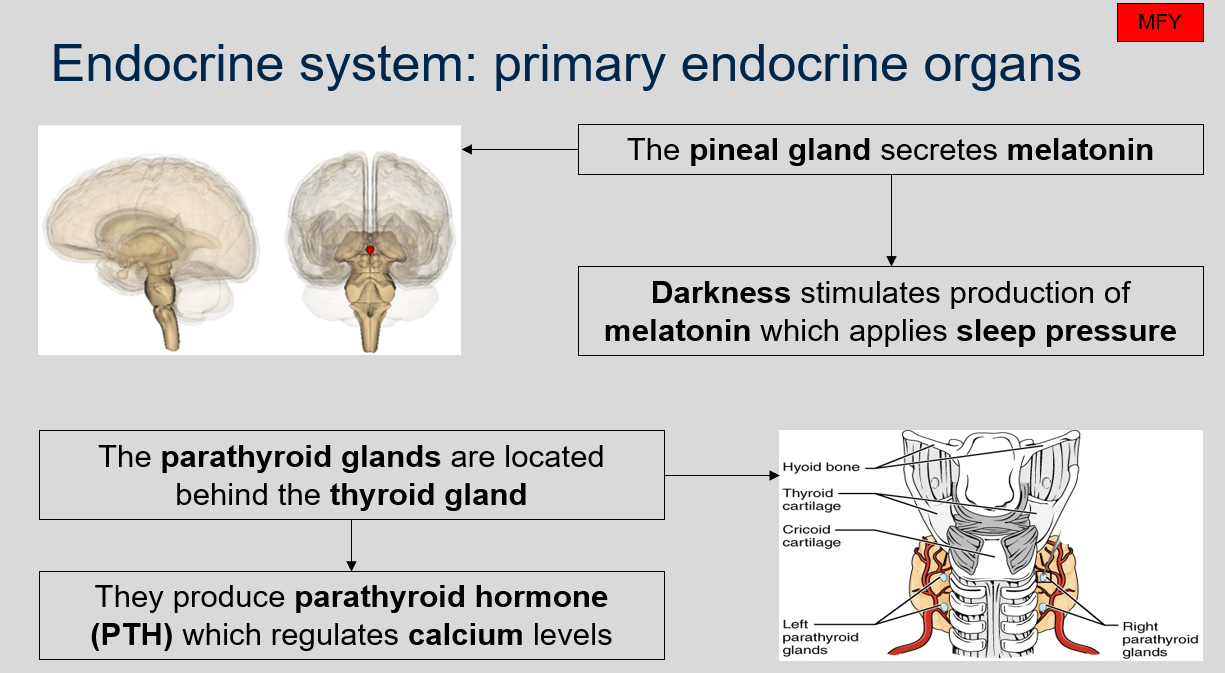
What is the role of melatonin in the body?
Melatonin applies sleep pressure and helps regulate the sleep-wake cycle.
73
New cards
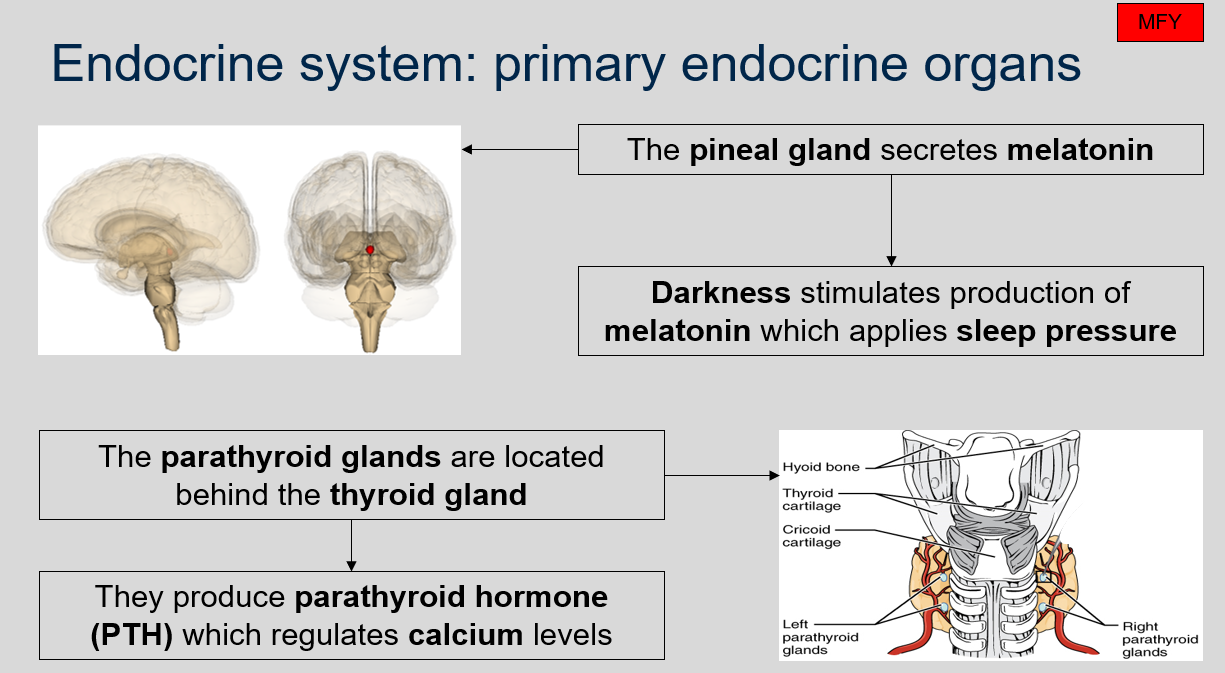
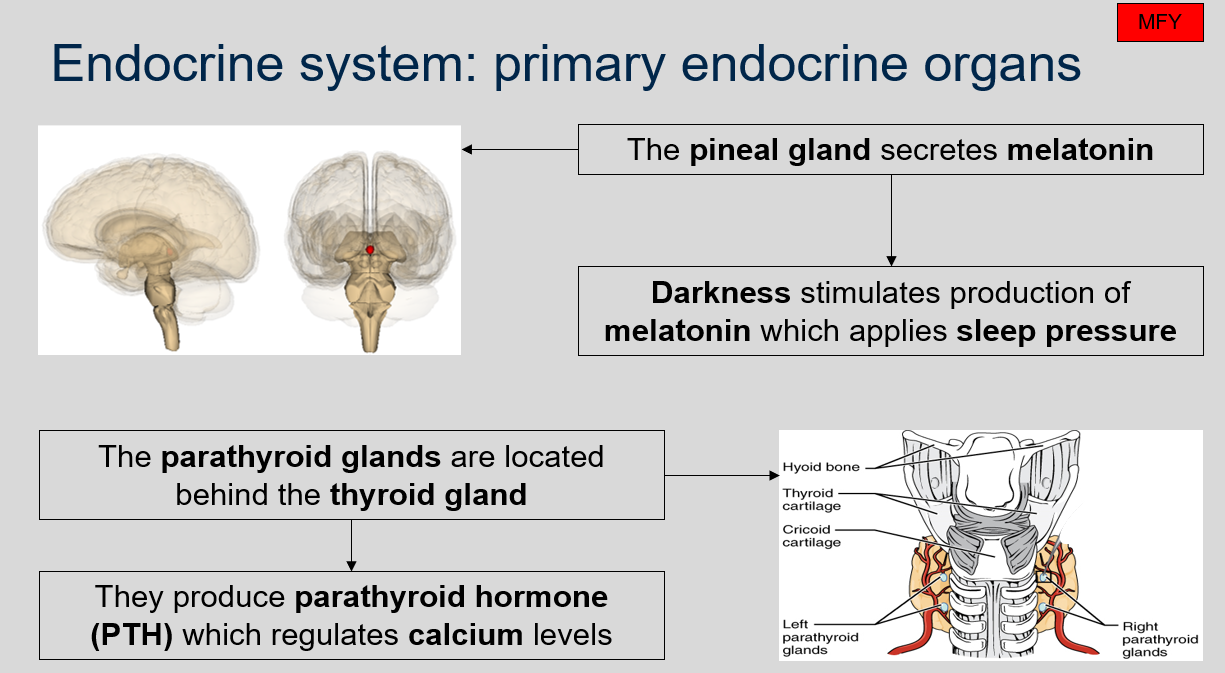
Where are the parathyroid glands located and what hormone do they produce?
The parathyroid glands are located behind the thyroid gland. They produce parathyroid hormone (PTH), which regulates calcium levels in the body by increasing the release of calcium from bones and the reabsorption of calcium in the kidneys.
74
New cards
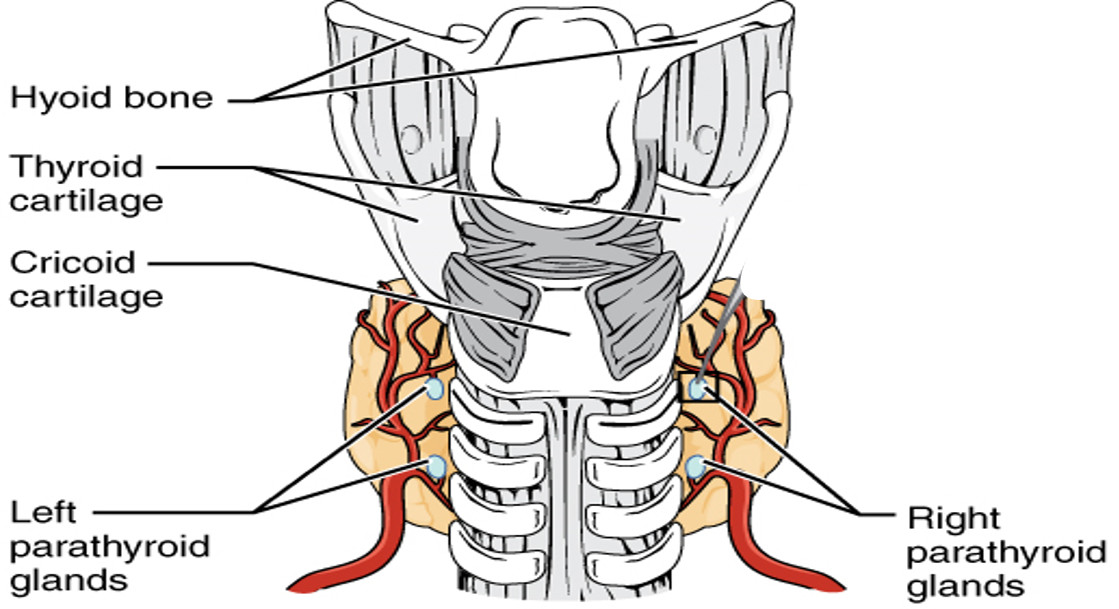
What is this and can you label it?
75
New cards
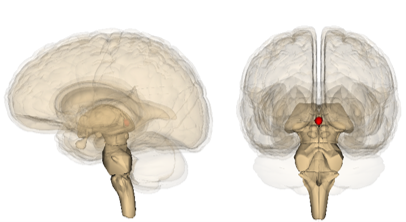
What is this
76
New cards
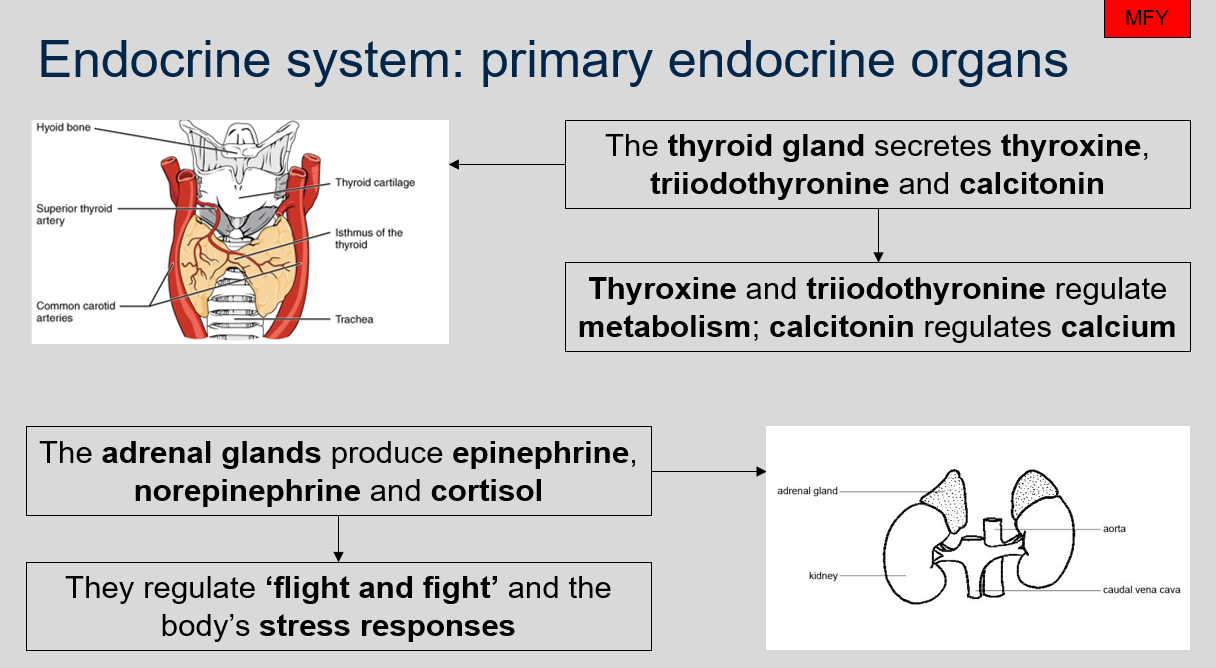
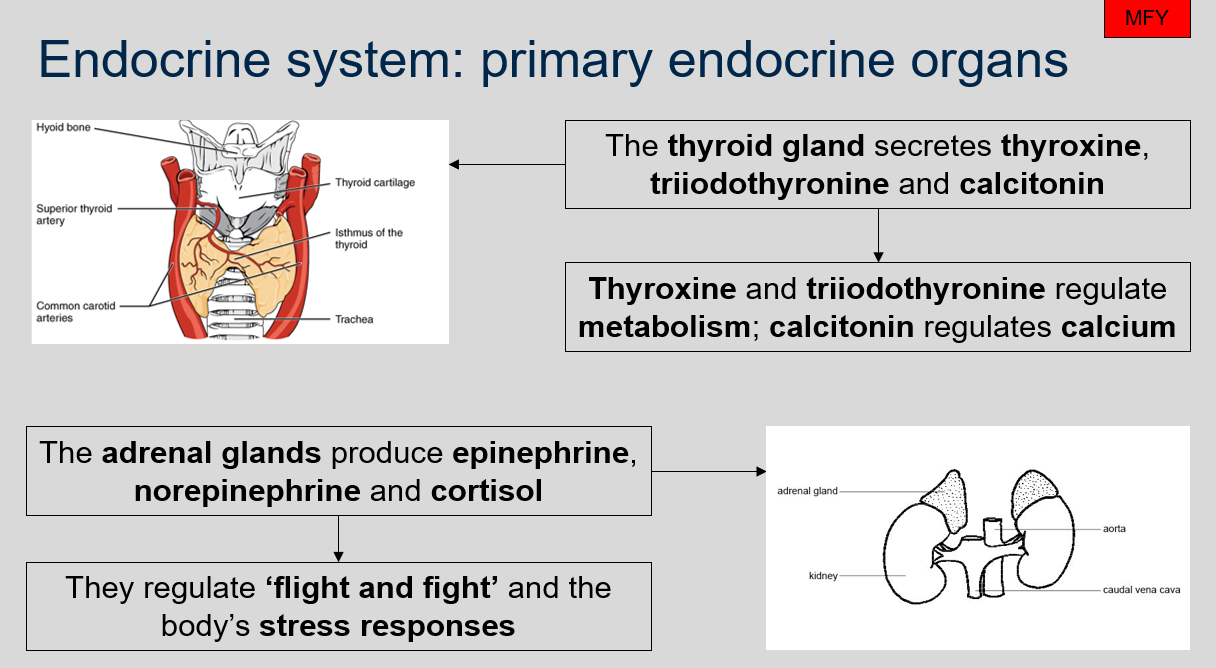
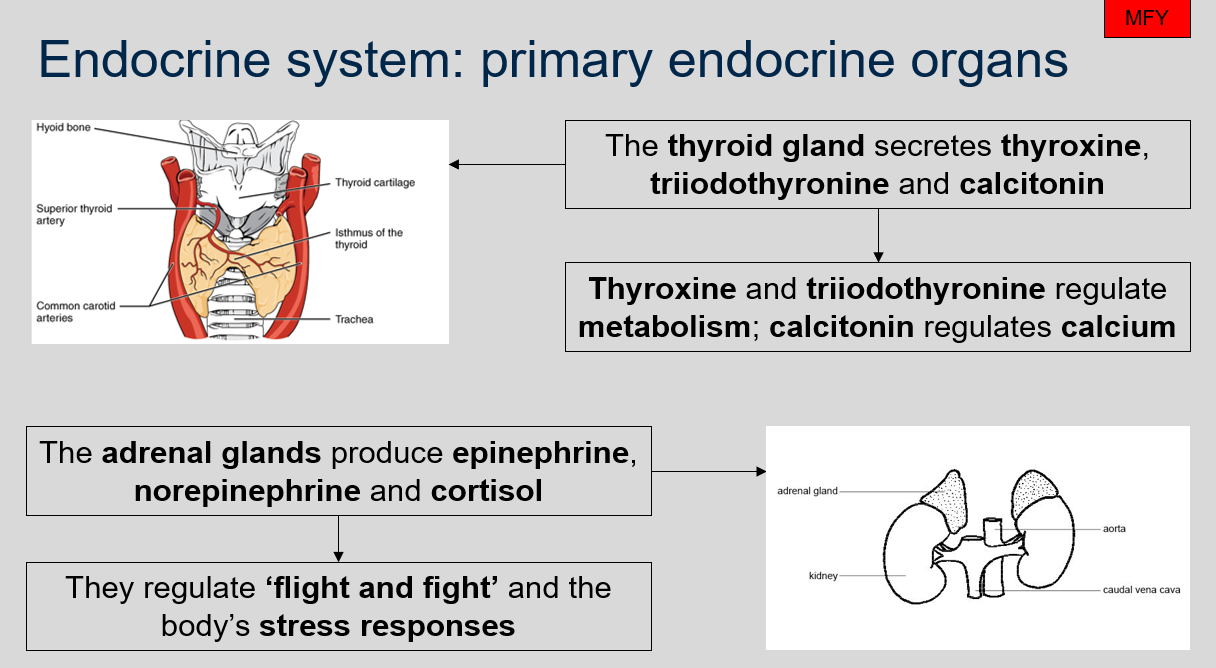
What hormones are secreted by the thyroid gland, and what are their functions?
The thyroid gland secretes thyroxine, triiodothyronine, and calcitonin. Thyroxine and triiodothyronine regulate metabolism, while calcitonin regulates calcium levels in the blood by decreasing the release of calcium from bones and increasing calcium excretion by the kidneys.
77
New cards
What is the role of calcitonin in the body?
Calcitonin helps regulate calcium levels in the body by decreasing the release of calcium from bones and increasing calcium excretion by the kidneys.
78
New cards
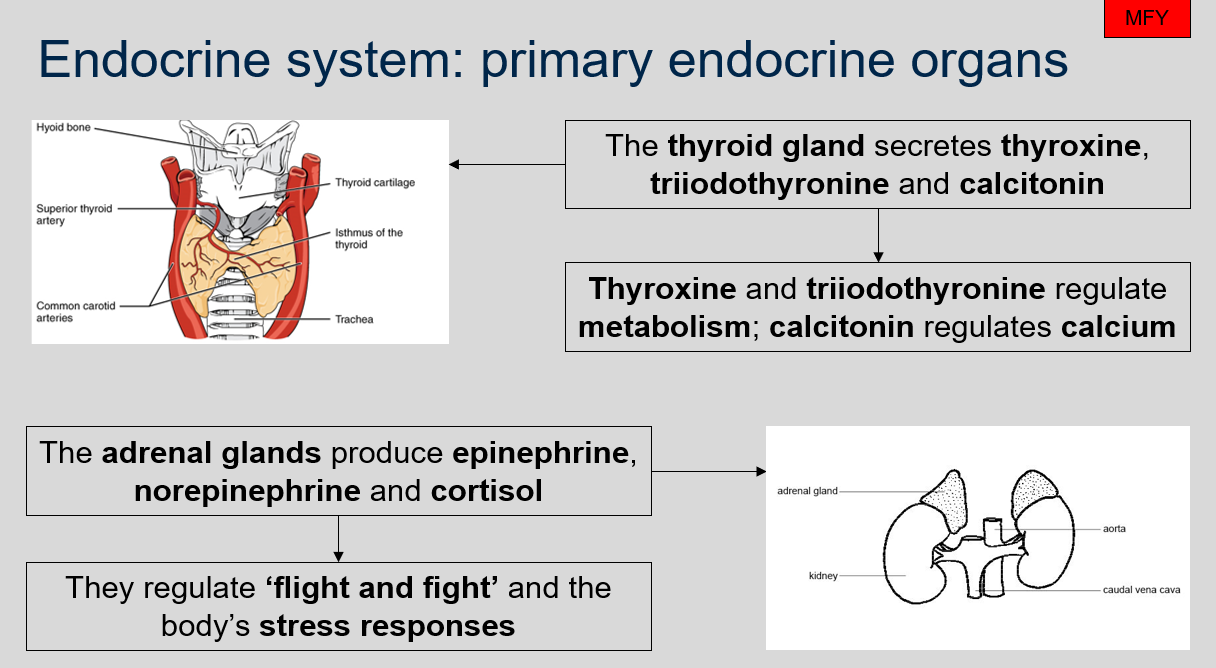
What hormones are produced by the adrenal glands, and what is their role?
The adrenal glands produce epinephrine (adrenaline), norepinephrine (noradrenaline), and cortisol. These hormones help regulate the body's response to stress, including the "fight or flight" response, blood pressure, and blood sugar levels.
79
New cards
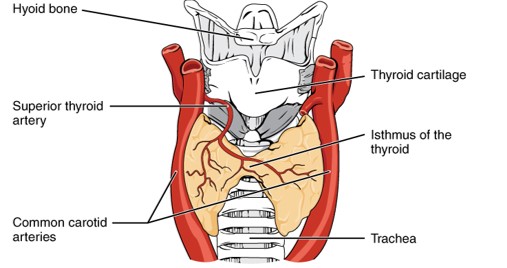
What is this and can you label it?
80
New cards
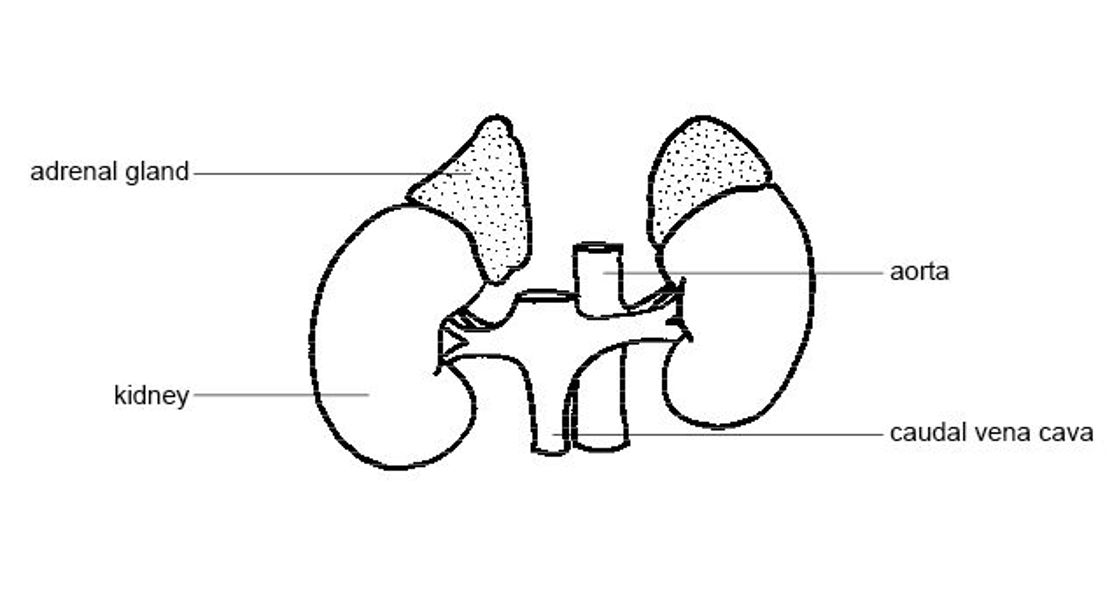
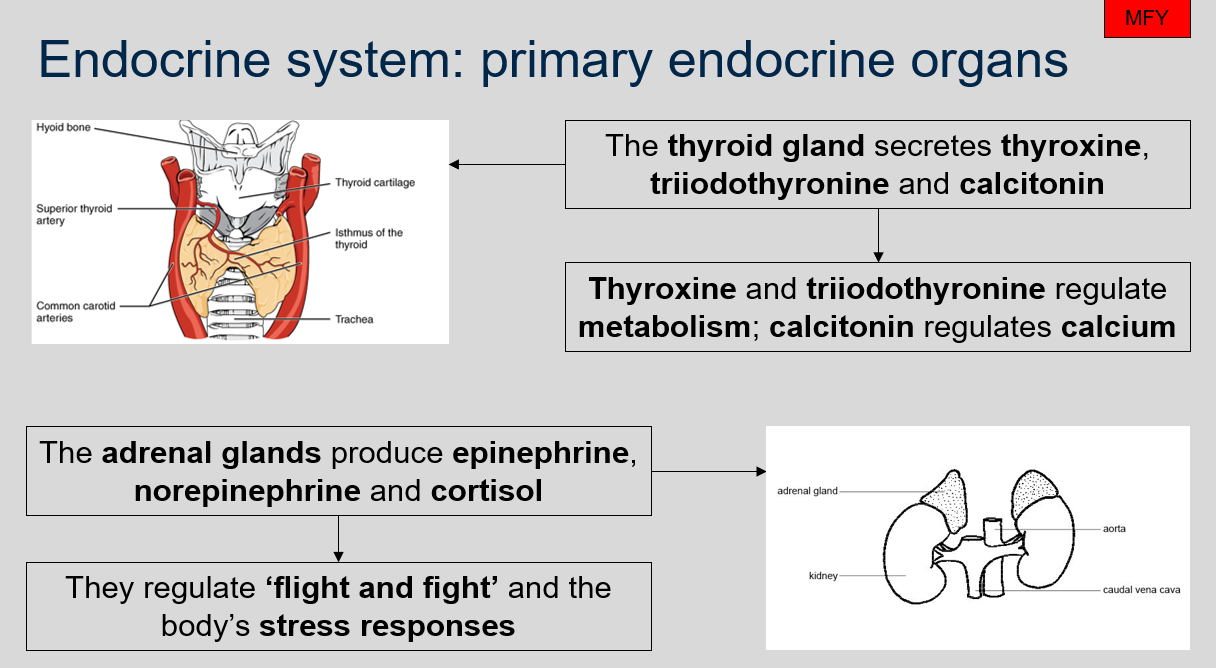
What is this and can you label it?
81
New cards
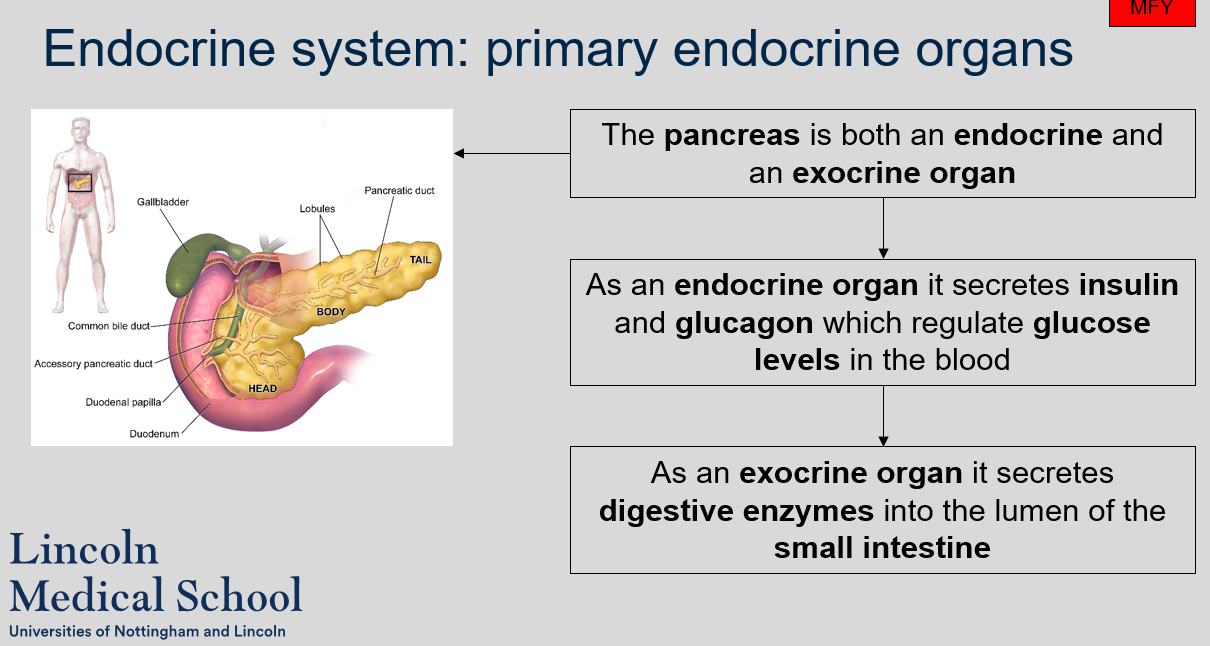
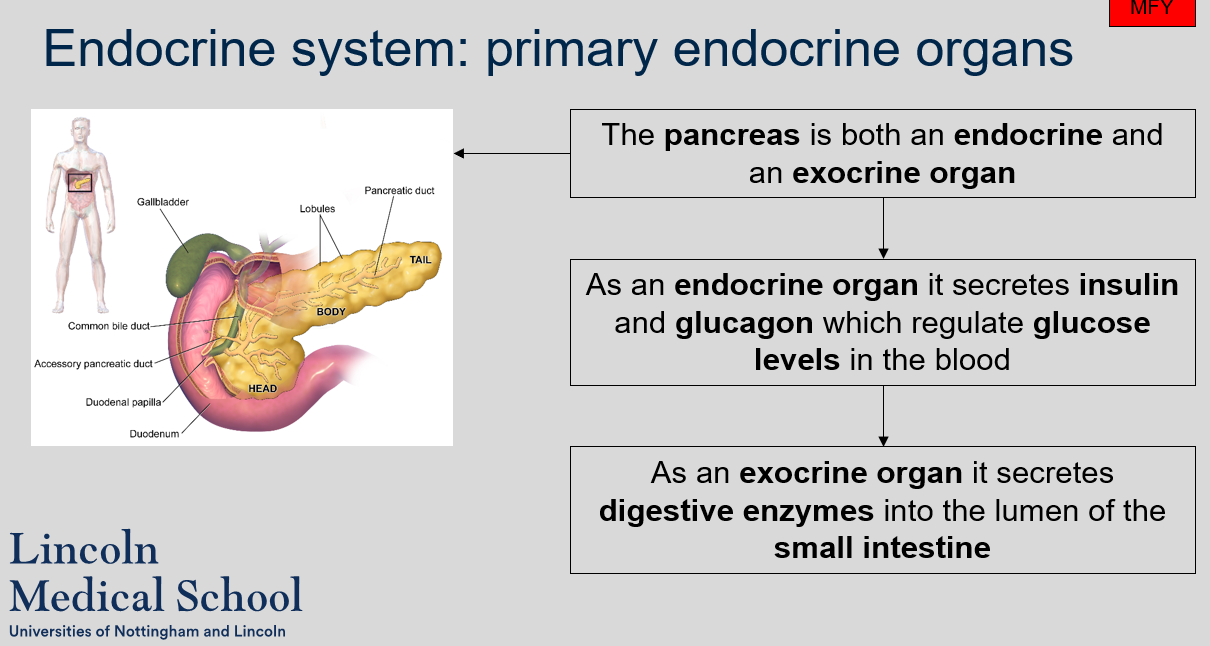
What are the dual functions of the pancreas?
The pancreas is both an endocrine and an exocrine organ. As an endocrine organ, it secretes insulin and glucagon which regulate glucose levels in the blood. As an exocrine organ, it secretes digestive enzymes into the lumen of the small intestine.
82
New cards
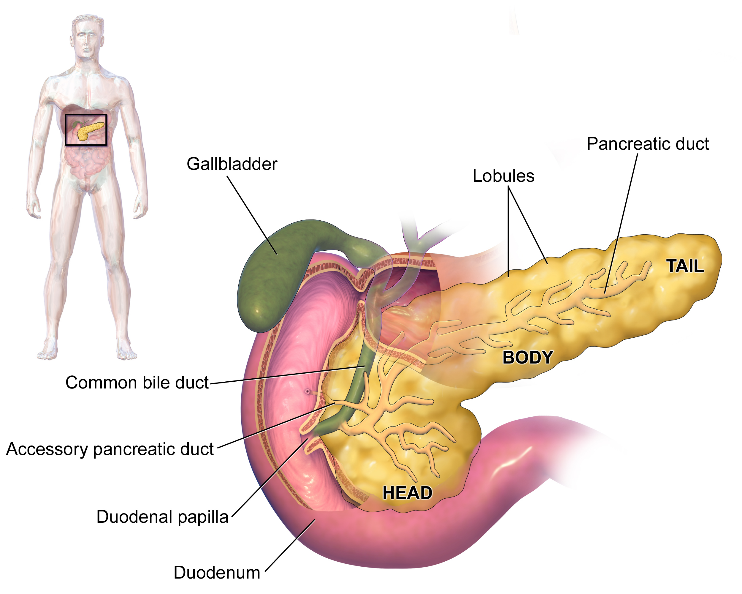
What is this can you label it?
83
New cards
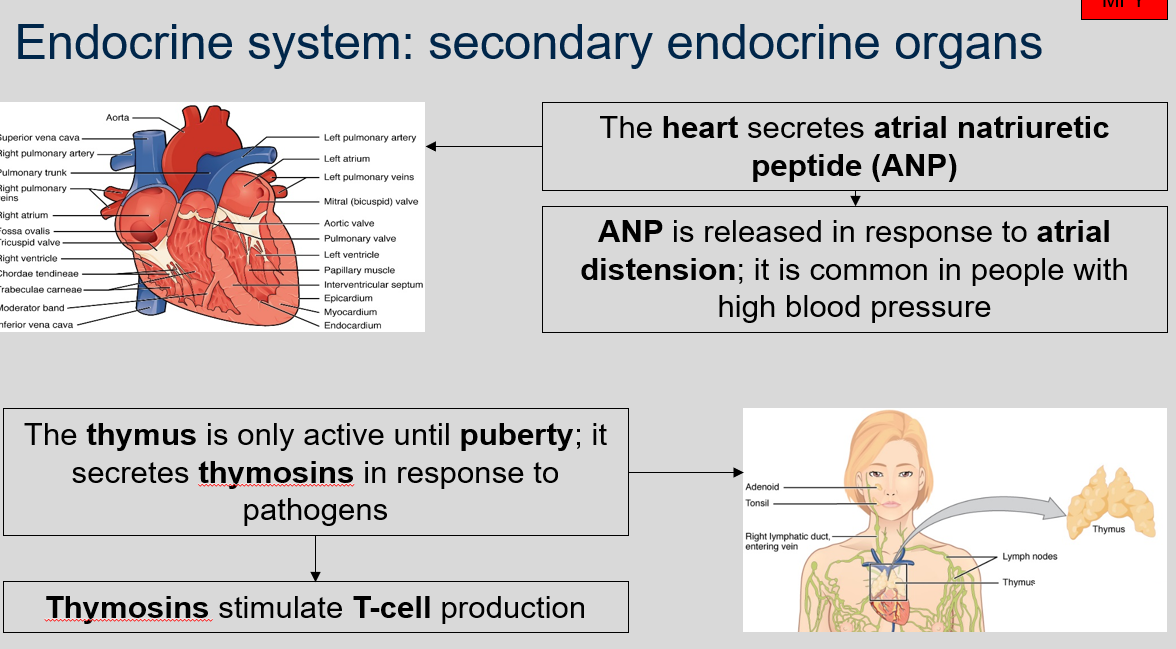
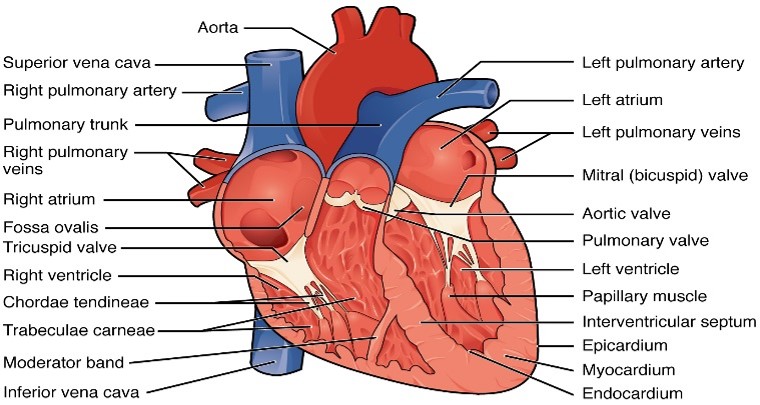
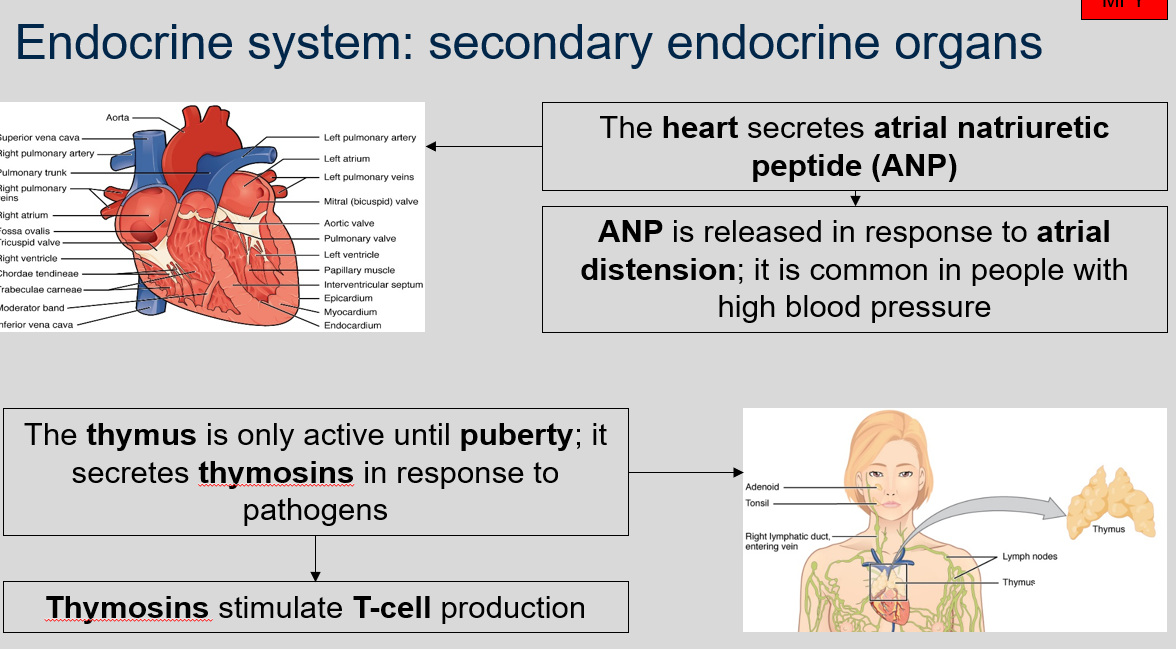
What hormone does the heart secrete, and what stimulates its release? What is its association with high blood pressure?
The heart secretes atrial natriuretic peptide (ANP). ANP is released in response to atrial distension. It is common in people with high blood pressure.
84
New cards
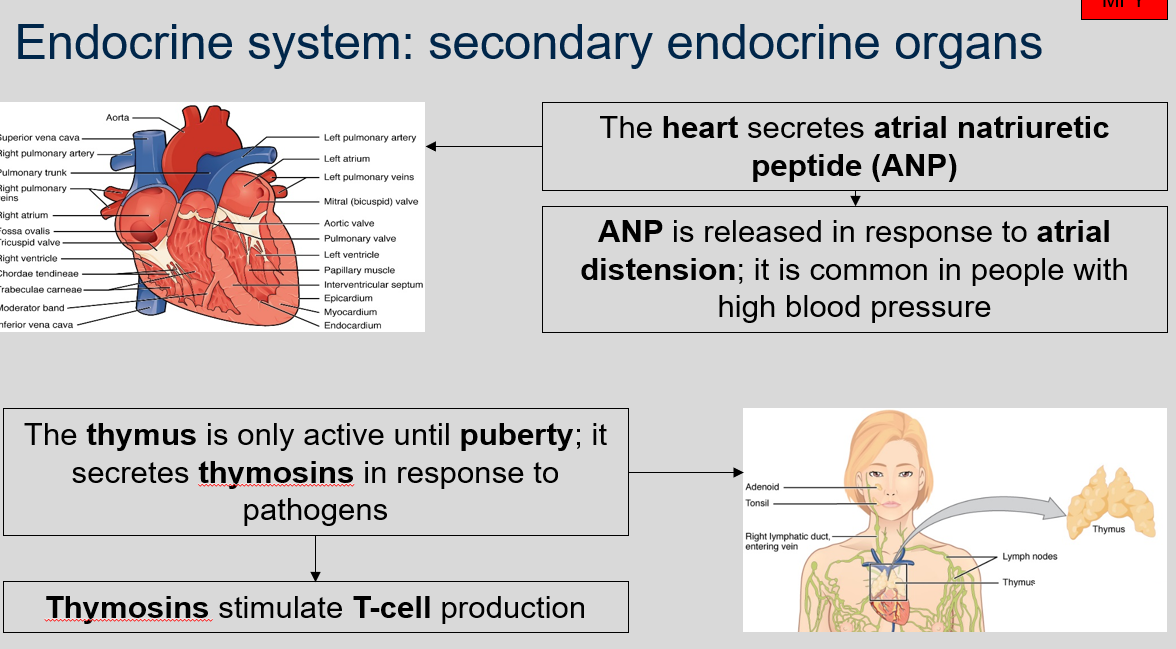
What is the function of the thymus, and what hormone does it secrete in response to pathogens?
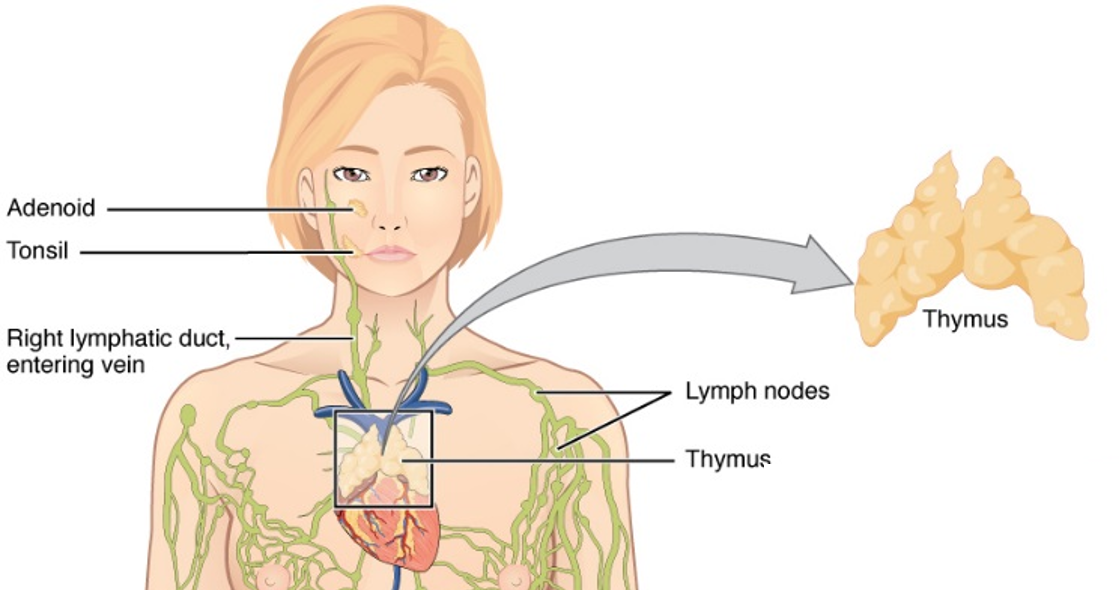
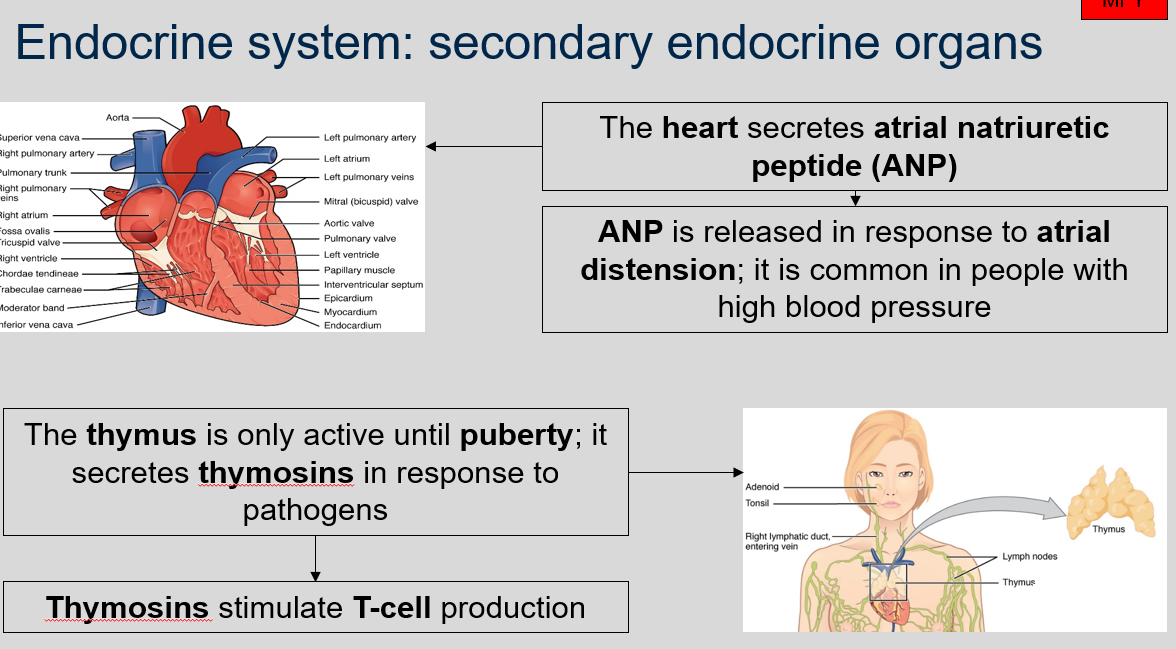
The thymus is only active until puberty. It secretes thymosins in response to pathogens. Thymosins stimulate T-cell production.
85
New cards
Can you label this?
86
New cards
Can you label this?
87
New cards
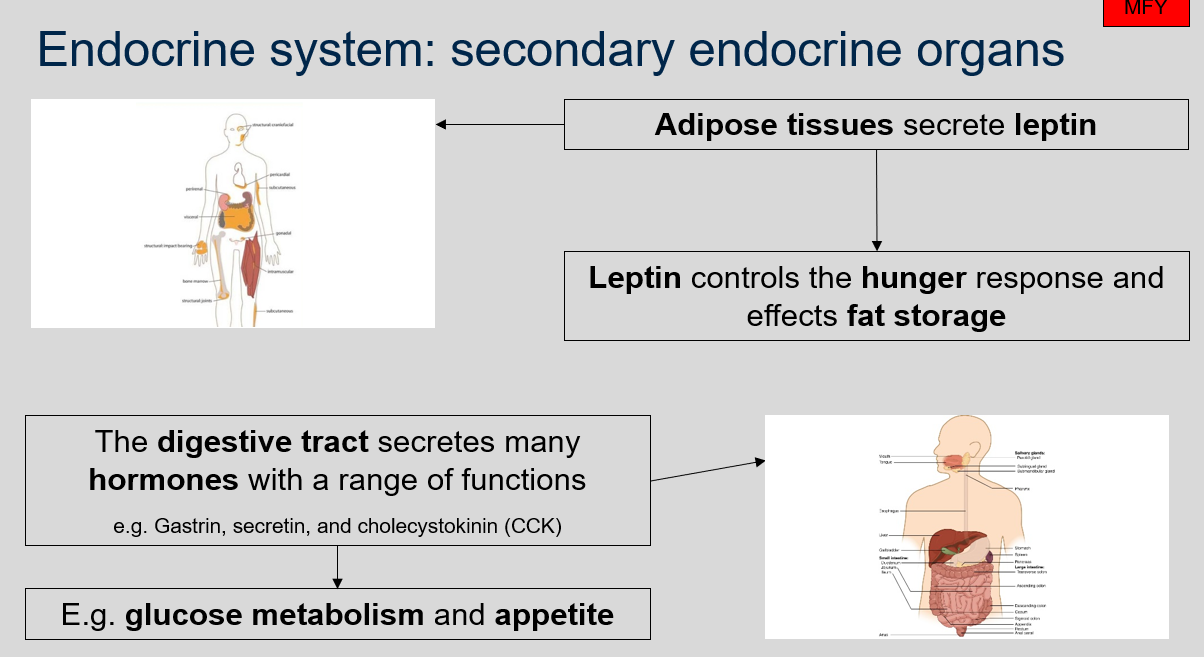
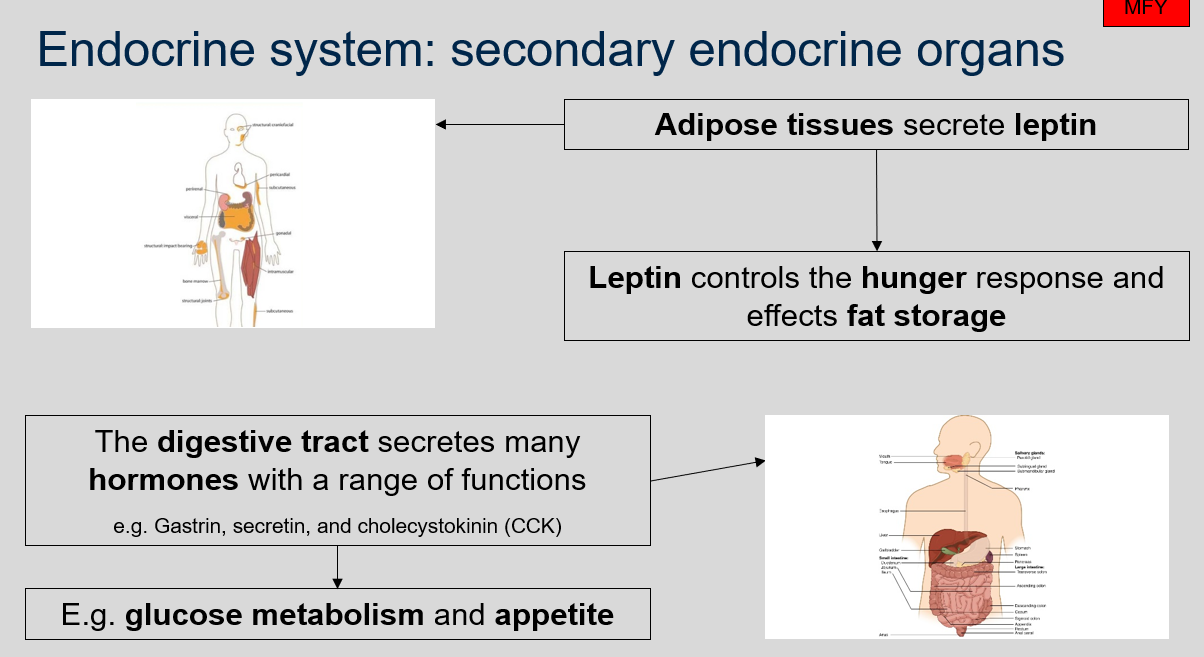
What hormone is secreted by adipose tissues, and what are its functions?
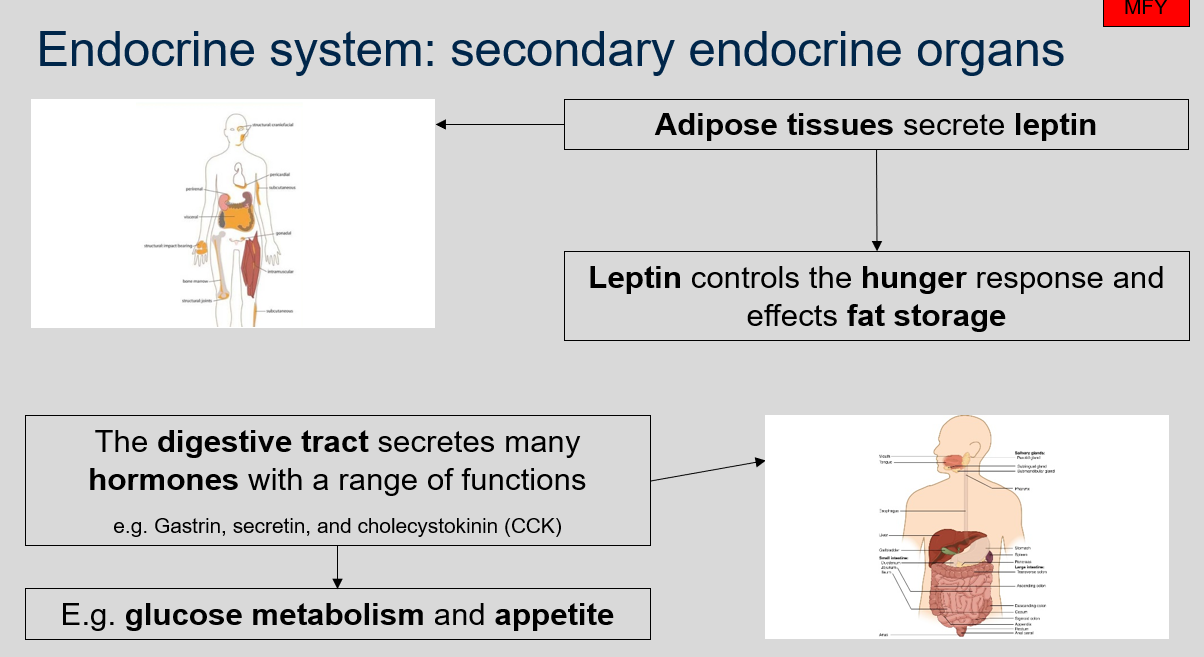
Adipose tissues secrete leptin. Leptin controls the hunger response and effects fat storage.
88
New cards
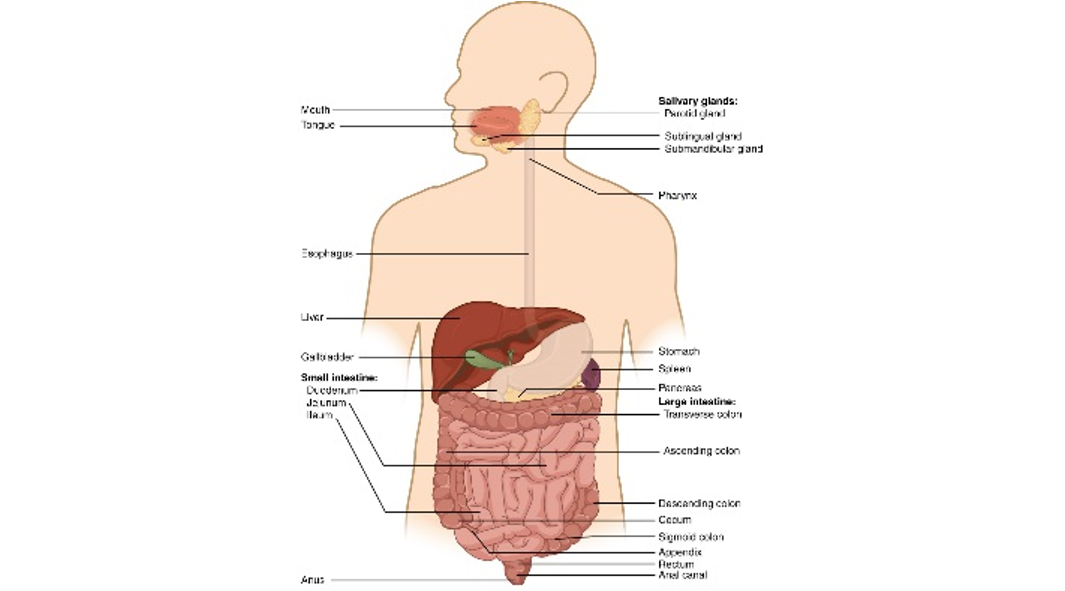
What hormones are secreted by the digestive tract, and what are their functions?
The digestive tract secretes many hormones with a range of functions, such as Gastrin, secretin, and cholecystokinin (CCK). These hormones play a role in glucose metabolism and appetite.
89
New cards
Can you label this?
90
New cards
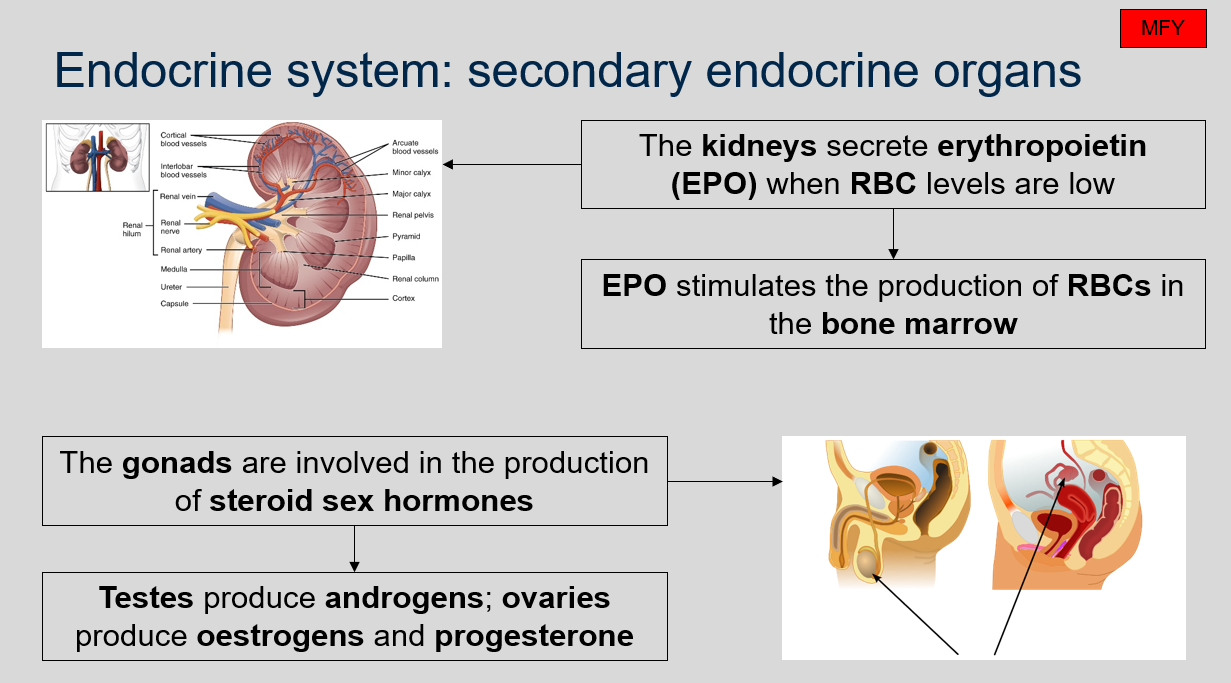
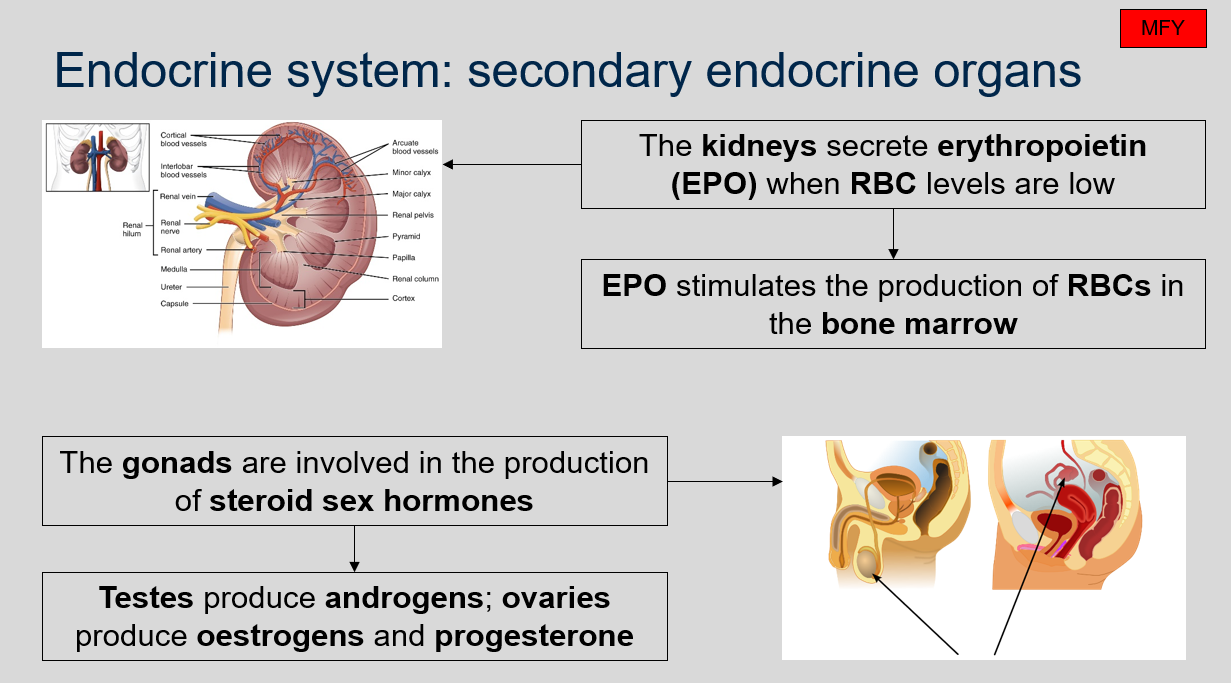
What hormone is secreted by the kidneys, and what is its function?
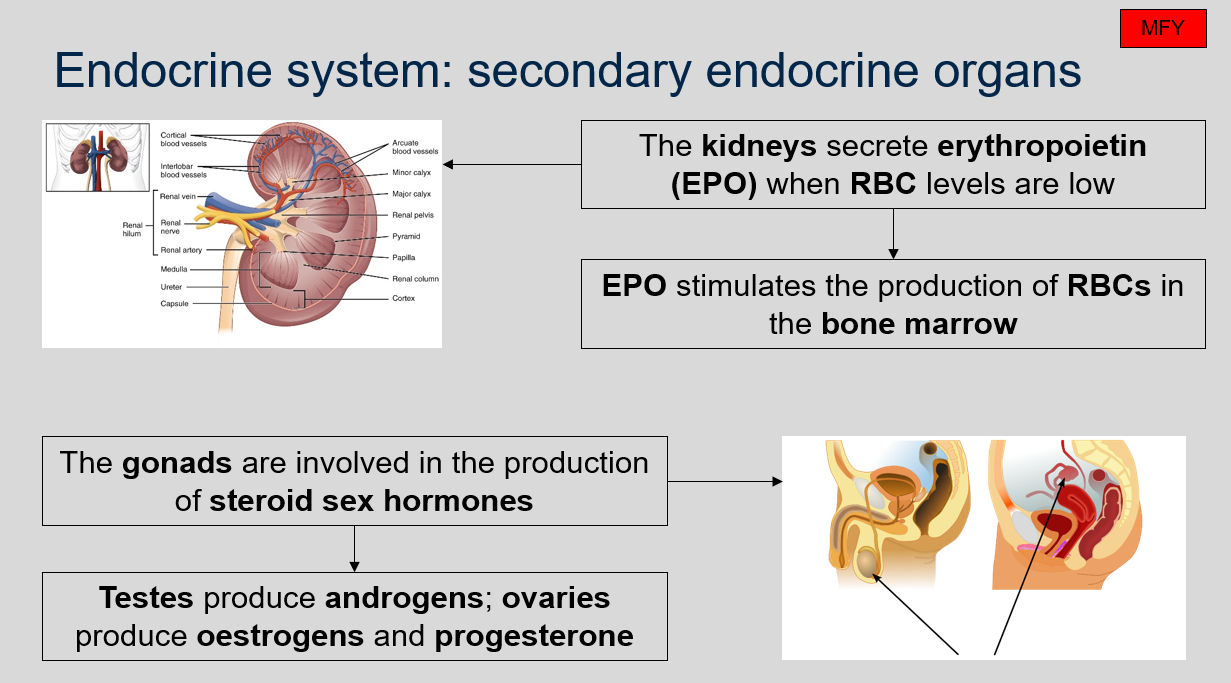
The kidneys secrete erythropoietin (EPO) when RBC levels are low. EPO stimulates the production of RBCs in the bone marrow.
91
New cards
What are the gonads responsible for, and what hormones do they produce?
The gonads are involved in the production of steroid sex hormones. Testes produce androgens, while ovaries produce oestrogens and progesterone.
92
New cards
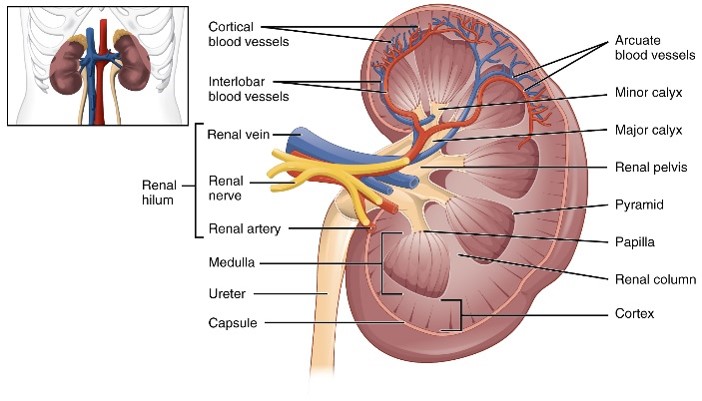
Can you label this?
93
New cards
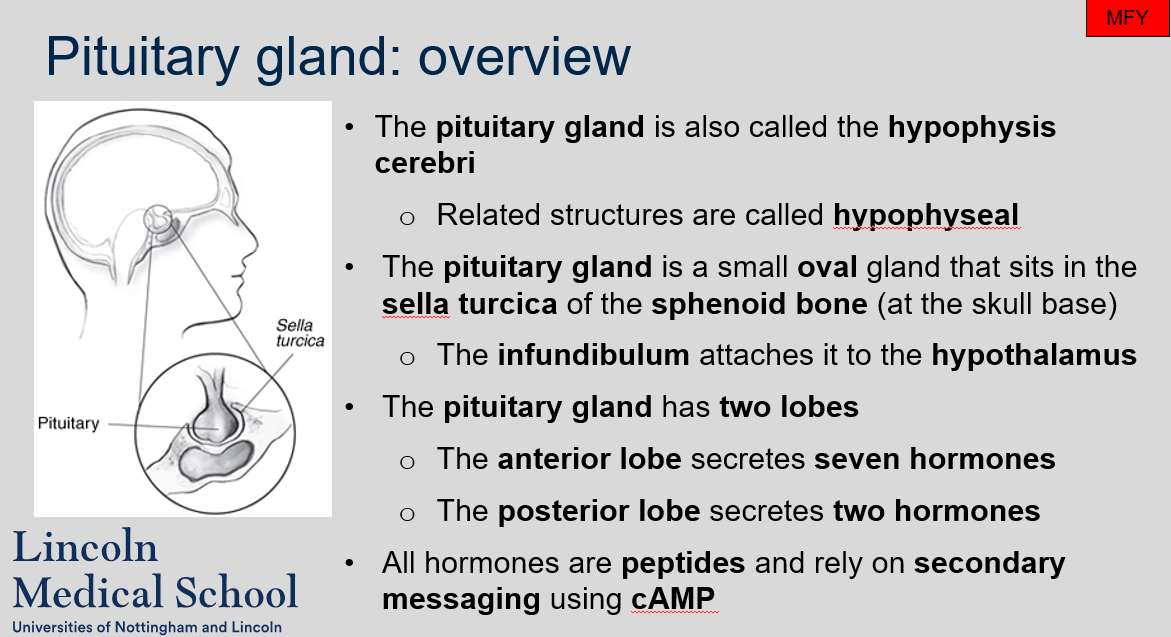
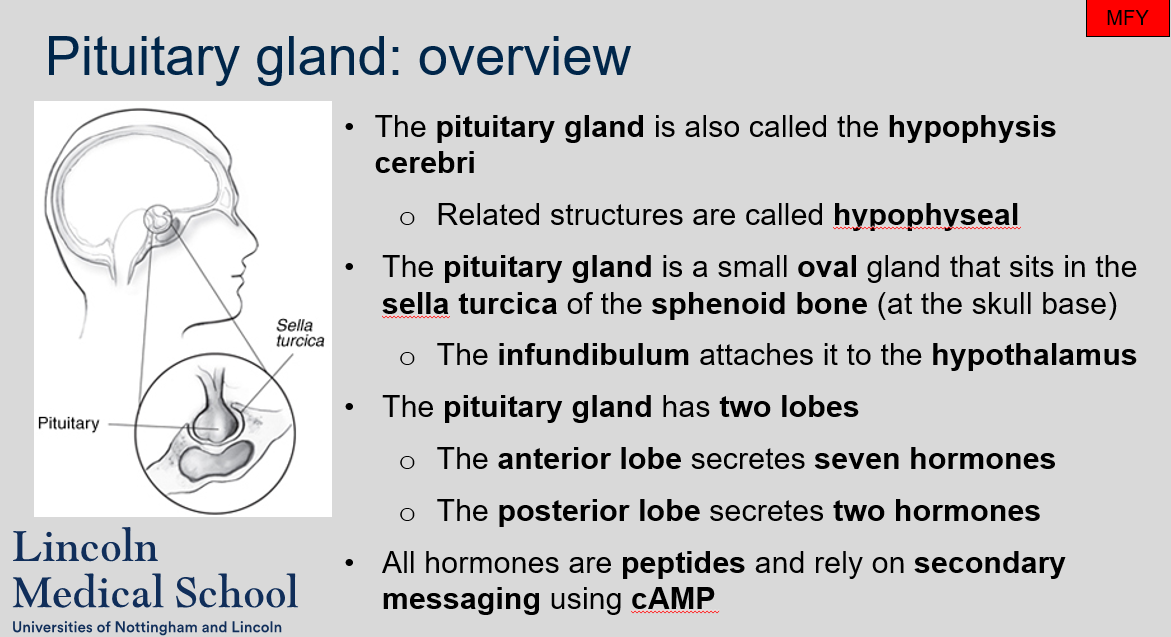
What is the pituitary gland?
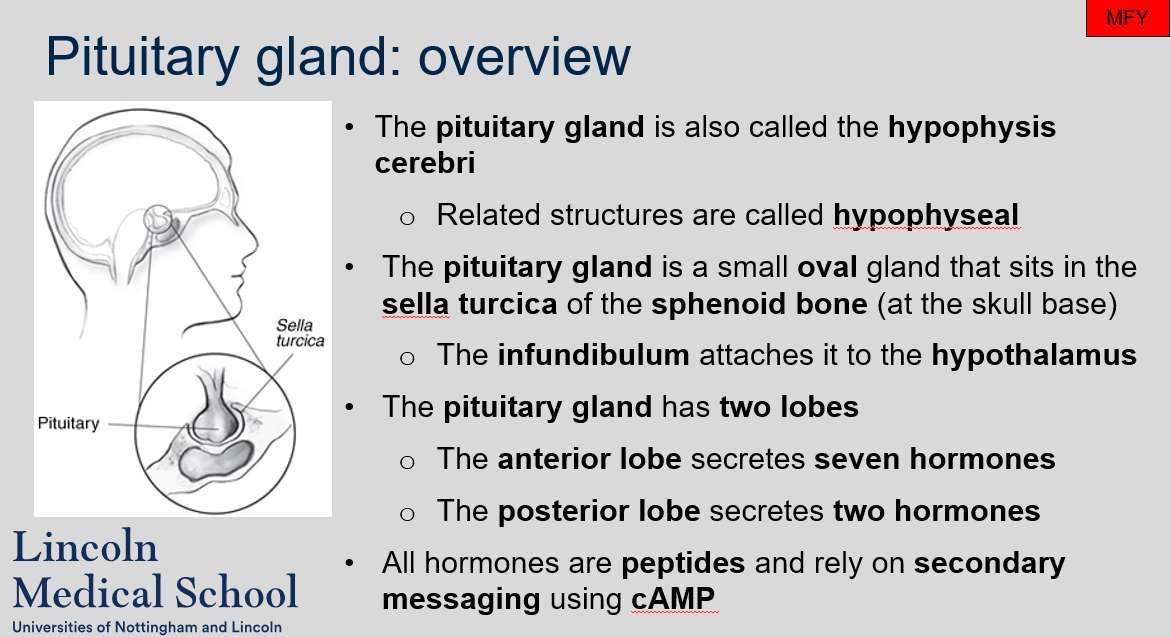
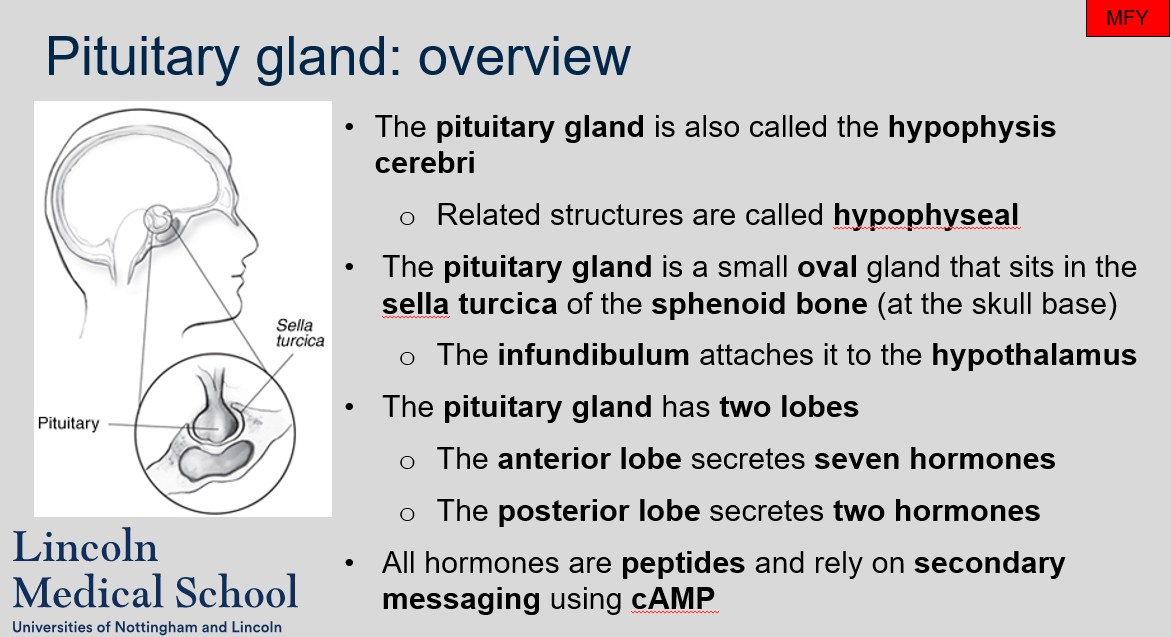
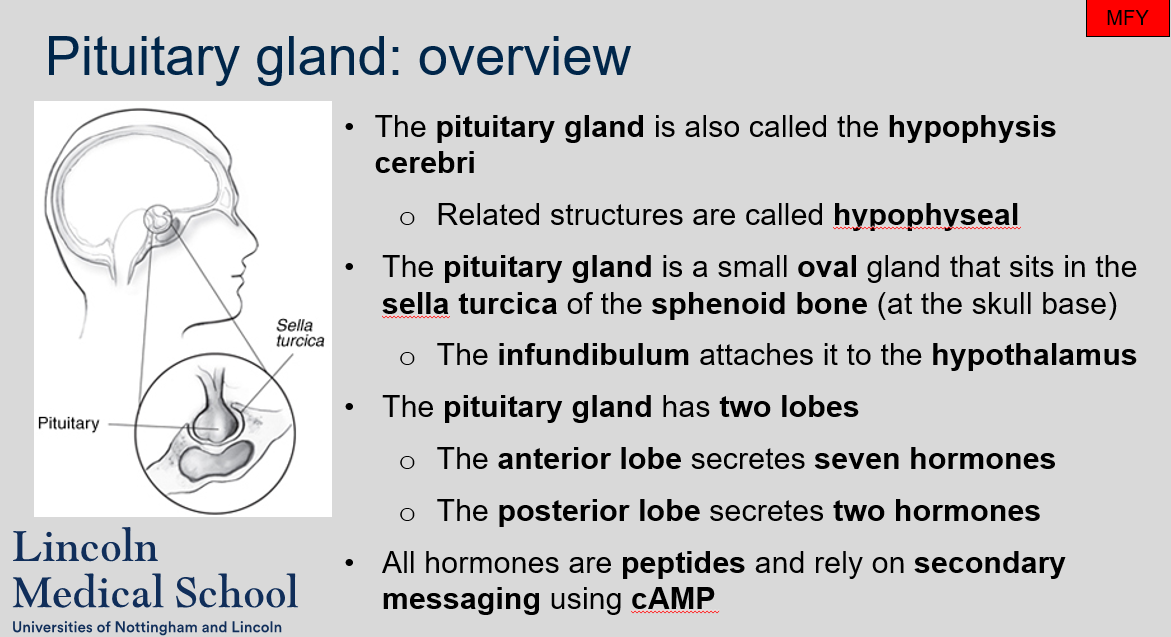
A small oval gland that sits in the sella turcica of the sphenoid bone (at the skull base). It is also called the hypophysis cerebri.
94
New cards
What are related structures of the pituitary gland called?
Hypophyseal.
95
New cards
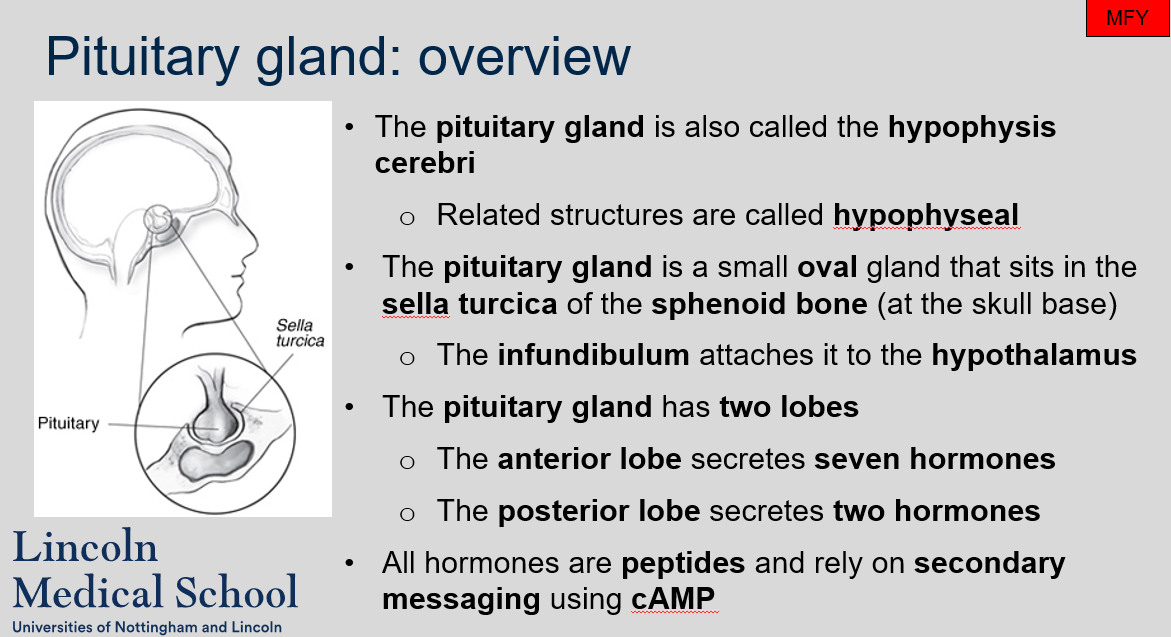
What structure attaches the pituitary gland to the hypothalamus?
The infundibulum.
96
New cards
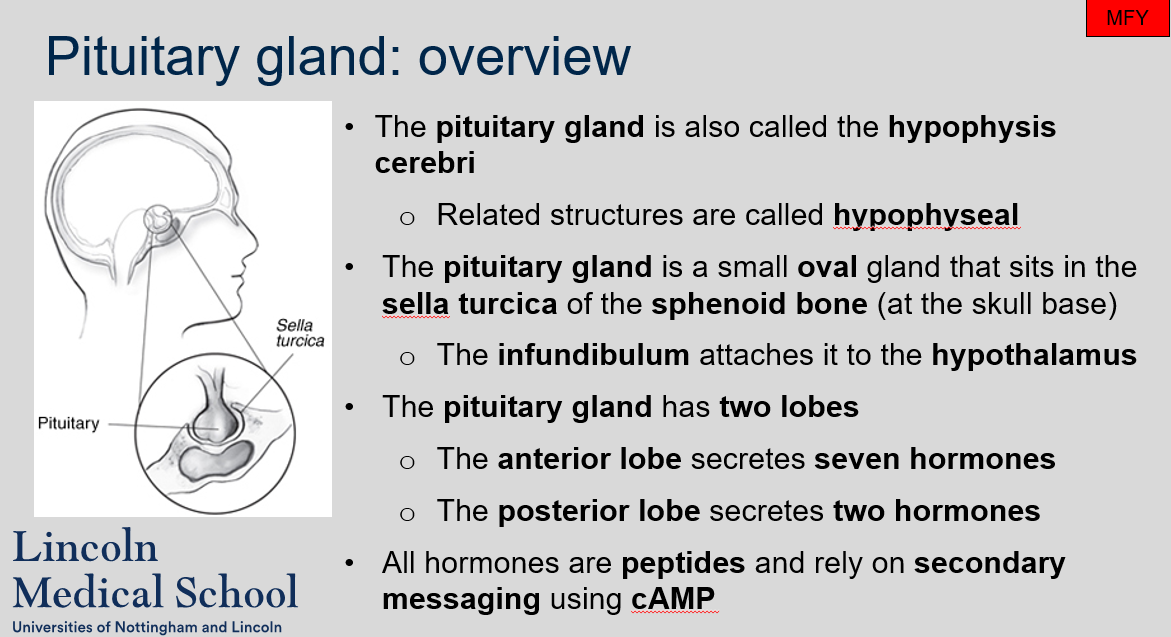
How many lobes does the pituitary gland have?
Two.
97
New cards
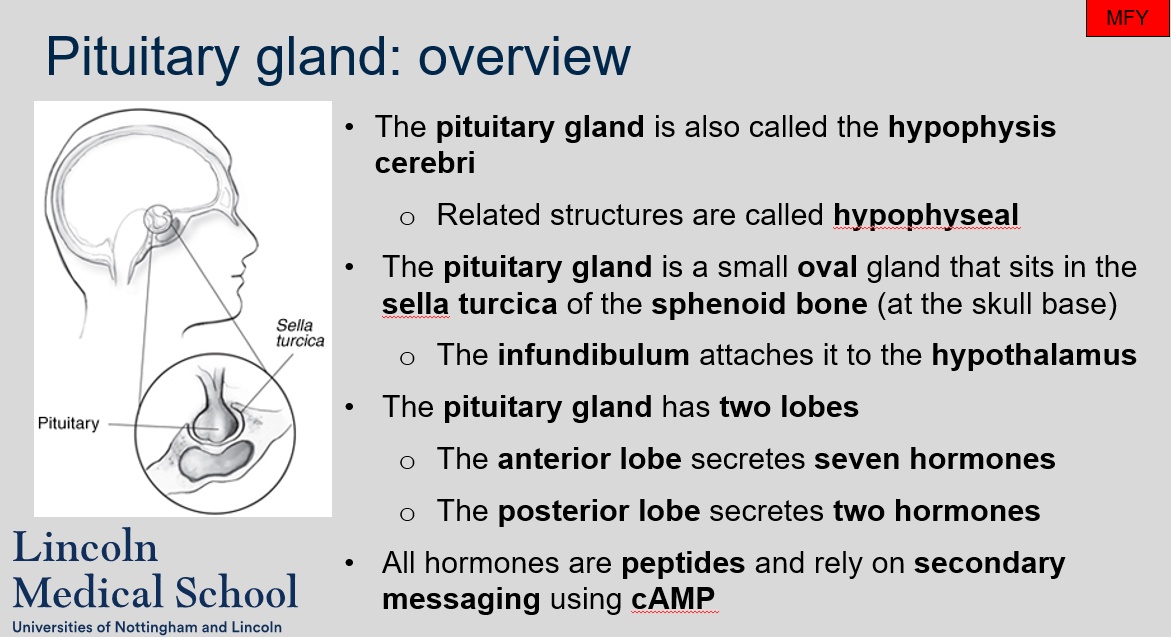
What hormones does the anterior lobe of the pituitary gland secrete?
Seven hormones.
98
New cards
What hormones does the posterior lobe of the pituitary gland secrete?
Two hormones.
99
New cards
What is the chemical nature of the hormones secreted by the pituitary gland?
Peptides.
100
New cards
What is the secondary messaging system used by pituitary hormones?
cAMP.
 Note
Note  Flashcards (47)