3.1 - behavior management
 Call Kai
 Learn
Learn Practice Test
 Spaced Repetition
 Match
Match Flashcards
 Knowt Play
1/31

There's no tags or description
Looks like no tags are added yet.
Name | Mastery | Learn | Test | Matching | Spaced | Call with Kai |
|---|
No analytics yet
Send a link to your students to track their progress
32 Terms
communication
behavior = _____________
dysregulation
_______________ may look like refusal, shutdown, avoidance, impulsivity, aggression, elopement, poor motor planning, clumsiness, and fatigue
state regulation
sensory input/reduction
physical comfort, pain, fatigue
predictability
autonomy/control
when a child shows dysregulated behavior, what are the 5 possible needs that aren’t being meant
learning
regulation comes before ____________
therapist tone, pacing, facial affect, proximity (close)
session structure
embedded regulation (warmups, breaks - jumping in a ball pit)
what are 3 ways you could regulate PT sessions to keep the child calm
A - antecedent
which part of the ABC framework:
Environment, task demands, transition timing, fatigue, pain, medical factors, and emotional load
B - Behavior
which part of the ABC framework:
Refusal/shutdown, aggression, elopement, crying/emotional dysregulation, and attention-seeking behaviors
C - Consequence
which part of the ABC framework:
Does behavior end the task? Increase attention? Reduce demand?
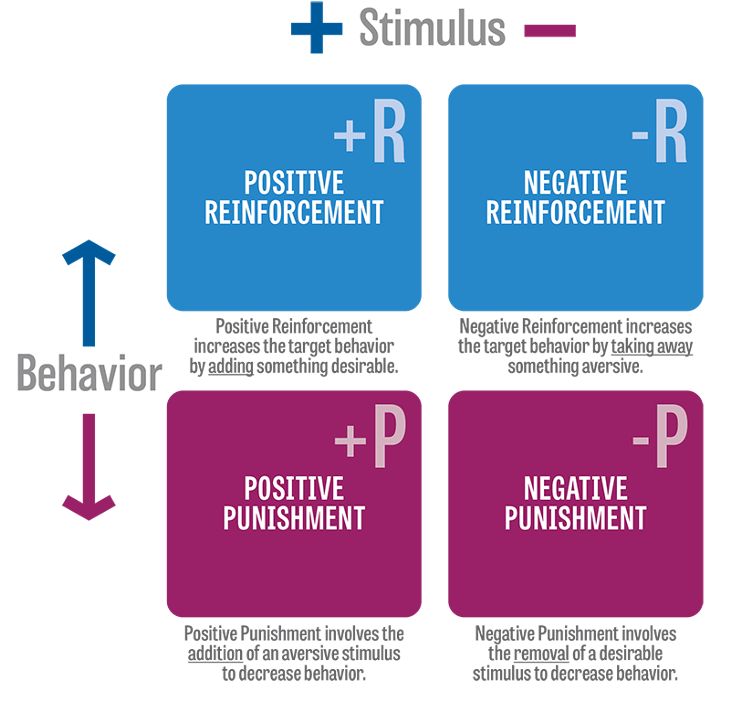
positive reinforcement
(positive or negative) (reinforcement or punishment) increases the target behavior by adding something desirable
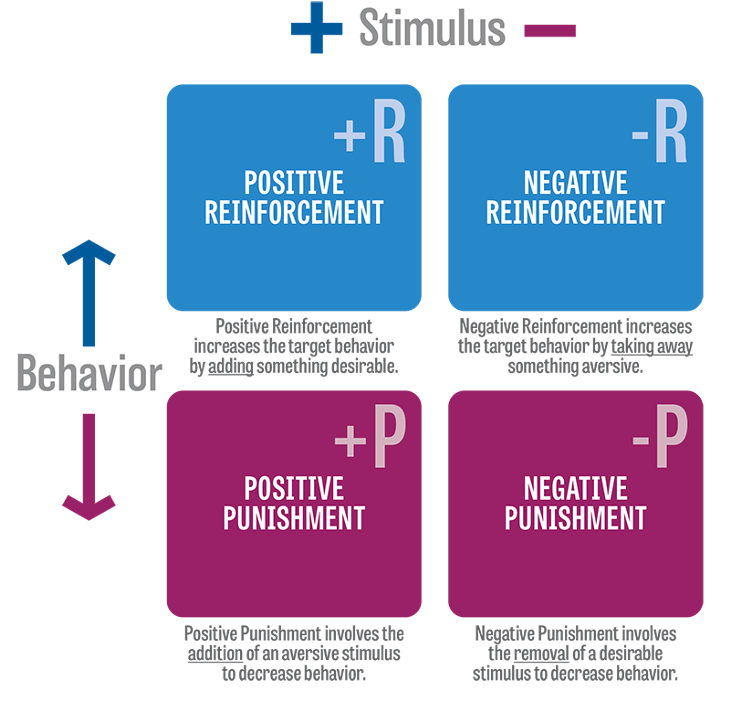
negative reinforcement
(positive or negative) (reinforcement or punishment) increases the target behavior by taking away something aversive
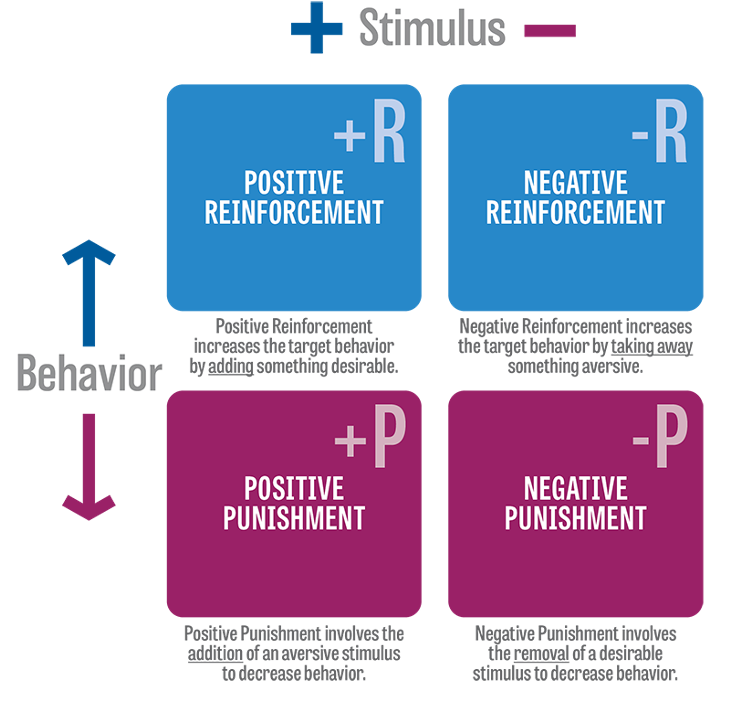
positive punishment
(positive or negative) (reinforcement or punishment) involves the addition of an aversive stimulus to decrease behavior
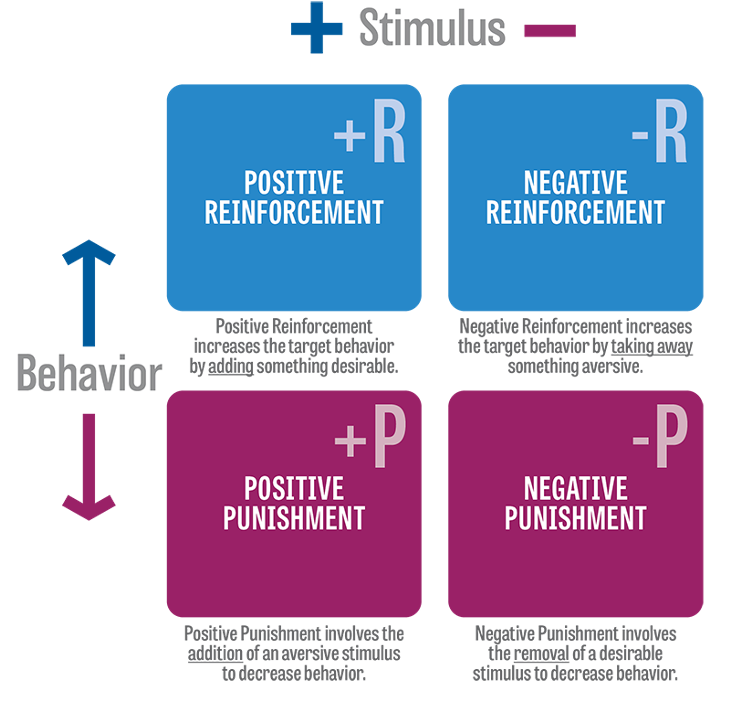
negative punishment
(positive or negative) (reinforcement or punishment) involves the removal of a desirable stimulus to decrease behavior
intrinsic
extrinsic
what are the 2 types of motivation
intrinsic
___________ motivation is doing something because it is PERSONALLY rewarding
extrinsic
____________ motivation is doing something to EARN a reward or avoid punishment
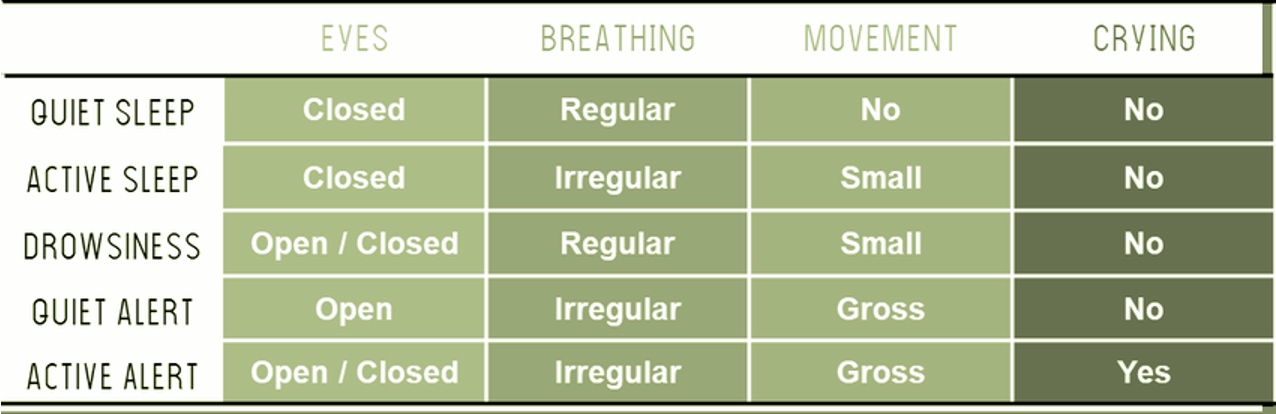
quiet sleep
active sleep
drowsiness
quiet alert
active alert
what are the 5 behavioral states of an infant
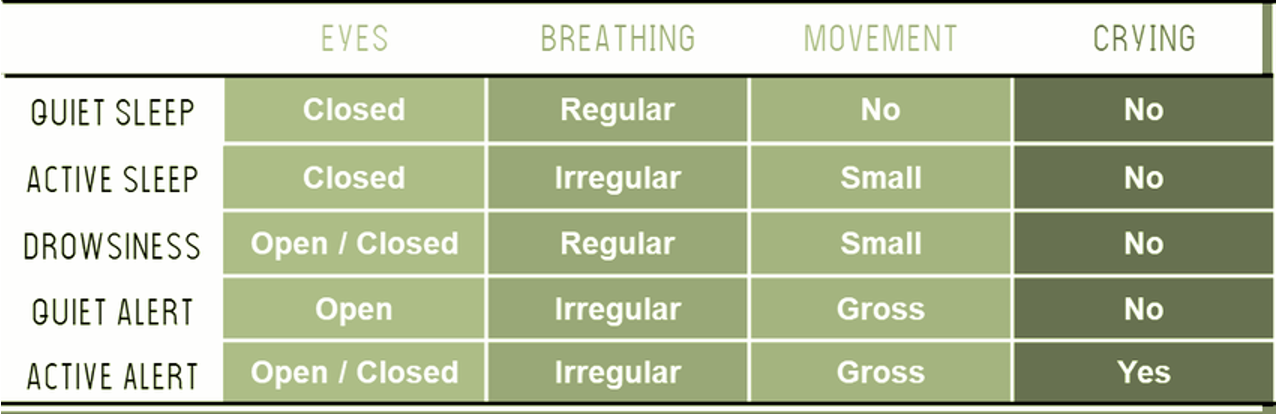
eyes = closed
breathing = regular
movement = no
crying = no
during the quiet sleep behavioral state, describe what is happening in the following:
eyes
breathing
movement
crying
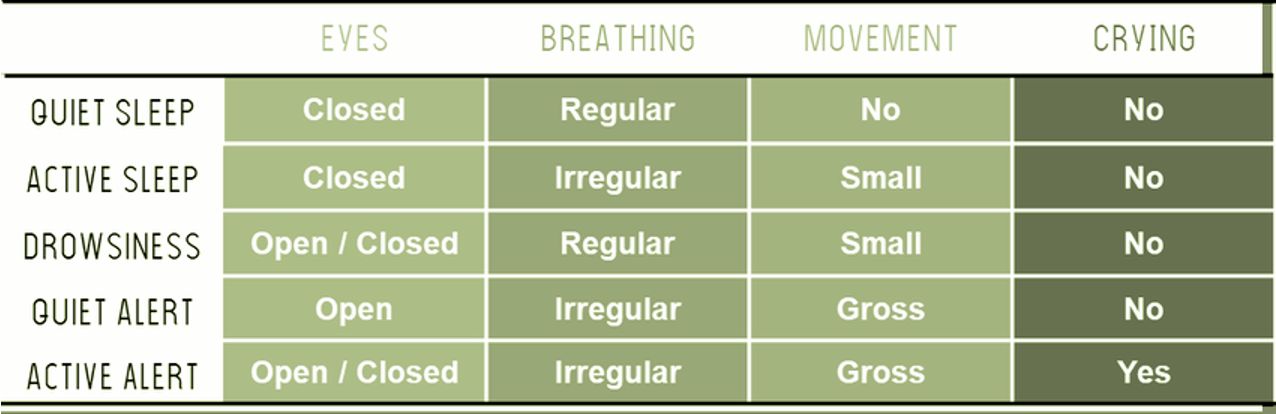
eyes = closed
breathing = irregular
movement = small
crying = no
during the active sleep behavioral state, describe what is happening in the following:
eyes
breathing
movement
crying
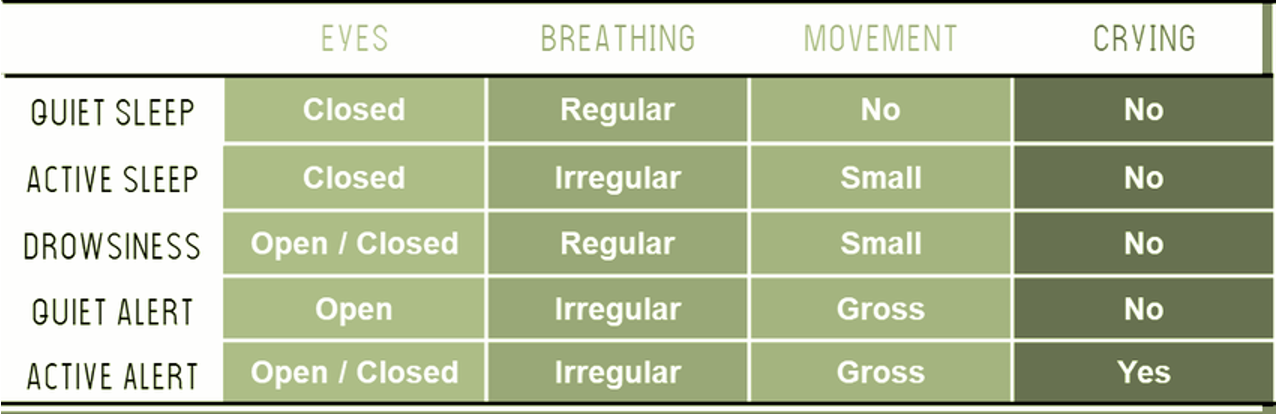
eyes = open/closed
breathing = regular
movement = small
crying = no
during the drowsiness behavioral state, describe what is happening in the following:
eyes
breathing
movement
crying
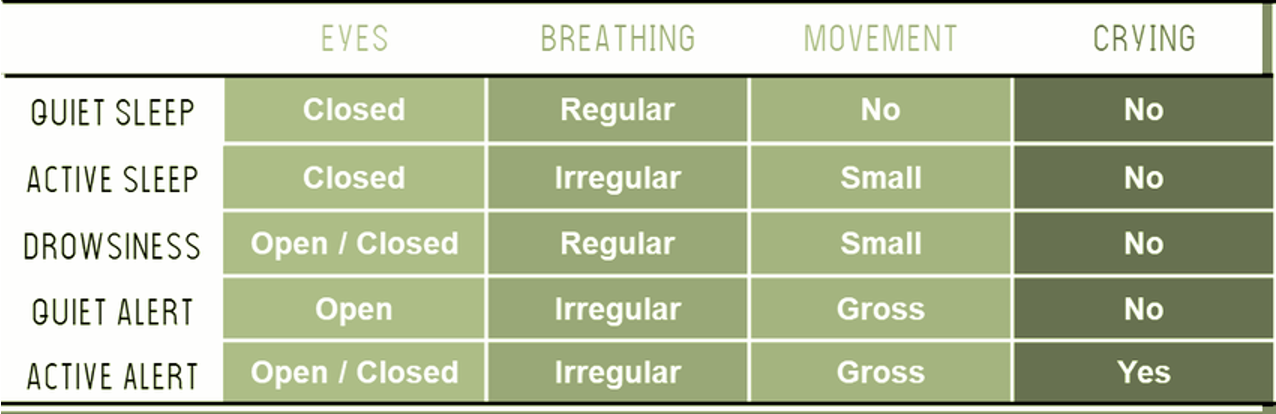
eyes = open
breathing = irregular
movement = gross
crying = no
during the quiet alert behavioral state, describe what is happening in the following:
eyes
breathing
movement
crying
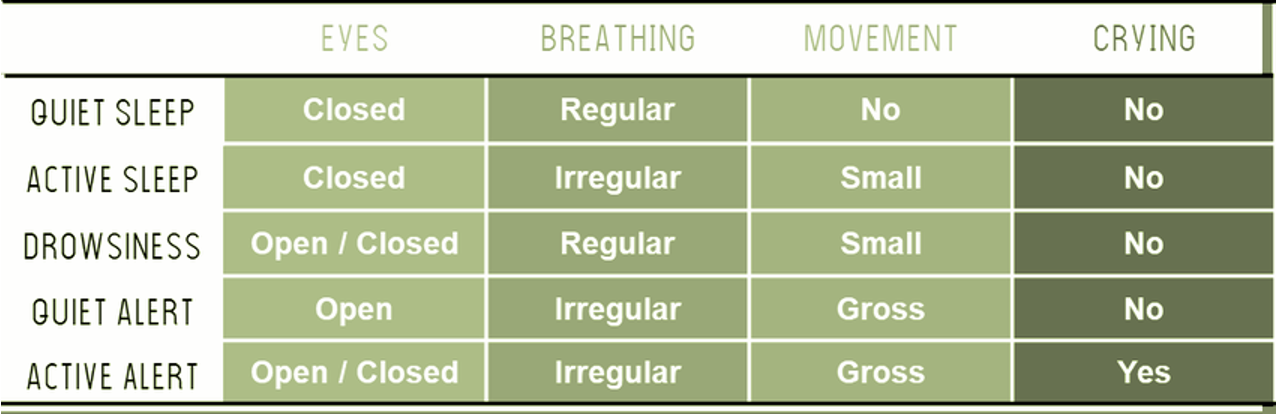
eyes = open/closed
breathing = irregular
movement = gross
crying = yes
during the active alert behavioral state, describe what is happening in the following:
eyes
breathing
movement
crying
quiet alert
the ___________ behavioral state is the ideal state we want to see the child for PT
peak of crying
unexpected
resists soothing
pain-like face
long lasting
evening
what does PURPLE stand for
period
the word _____________ means that the crying has a beginning and an end
2; 3-5
keeping “PURPLE” in mind, peak crying would be most expected at ____________ age and then less at __________ age
swaddle
side/stomach position
shush
swing
suck
what are the 5 S’s to use to regulate PURPLE response
refusal/shutdown
elopement
crying/emotional dysregulation
attention-seeking behaviors
aggression (hitting, throwing, biting)
what are the 5 common challenging behaviors
no
avoid saying ___________ to support child autonomy
protective positioning
maintain calm demeanor
give physical space
create a space for the patient to vent big emotions
express understanding when patient is ready
5 tips for de-escalation
A - antecedent
which ABC is this an example of:
Verbal cue to stop preferred scooter activity & transition to obstacle course
B - behavior
which ABC is this an example of:
Crying, dropping to the floor, refusing to move
C - consequence
which ABC is this an example of:
Visual schedule reviewed, 30 second countdown provided, child transitioned with minA

