Antibiotic Decision Making
 Call Kai
 Learn
Learn Practice Test
 Spaced Repetition
 Match
Match Flashcards
 Knowt Play
1/36

There's no tags or description
Looks like no tags are added yet.
Name | Mastery | Learn | Test | Matching | Spaced | Call with Kai |
|---|
No analytics yet
Send a link to your students to track their progress
37 Terms
law for vets around antimicrobial stewardship
in code of conduct → vets who prescribe, supply and administer medicines must do so responsibly
-development and spread of antimicrobial resistance is global public health problem that is affected by use of these medical products in both humans and animals
-vets must be seen to ensure that when using antimicrobials, they do so responsibly and be accountable for choices made in such use
what is antimicrobial stewardship
coordinated interventions designed to improve and measure appropriate use of antimicrobials by promoting selection of optimal antimicrobial drug regimen, dose, duration of therapy and route of administration
decision making on antibiotics
-good evidence of bacterial infection?
-what diagnostics will you employ that help decision making?
-when are cultures used?
-if you make the choice to use what drives your final choice of antibiotic?
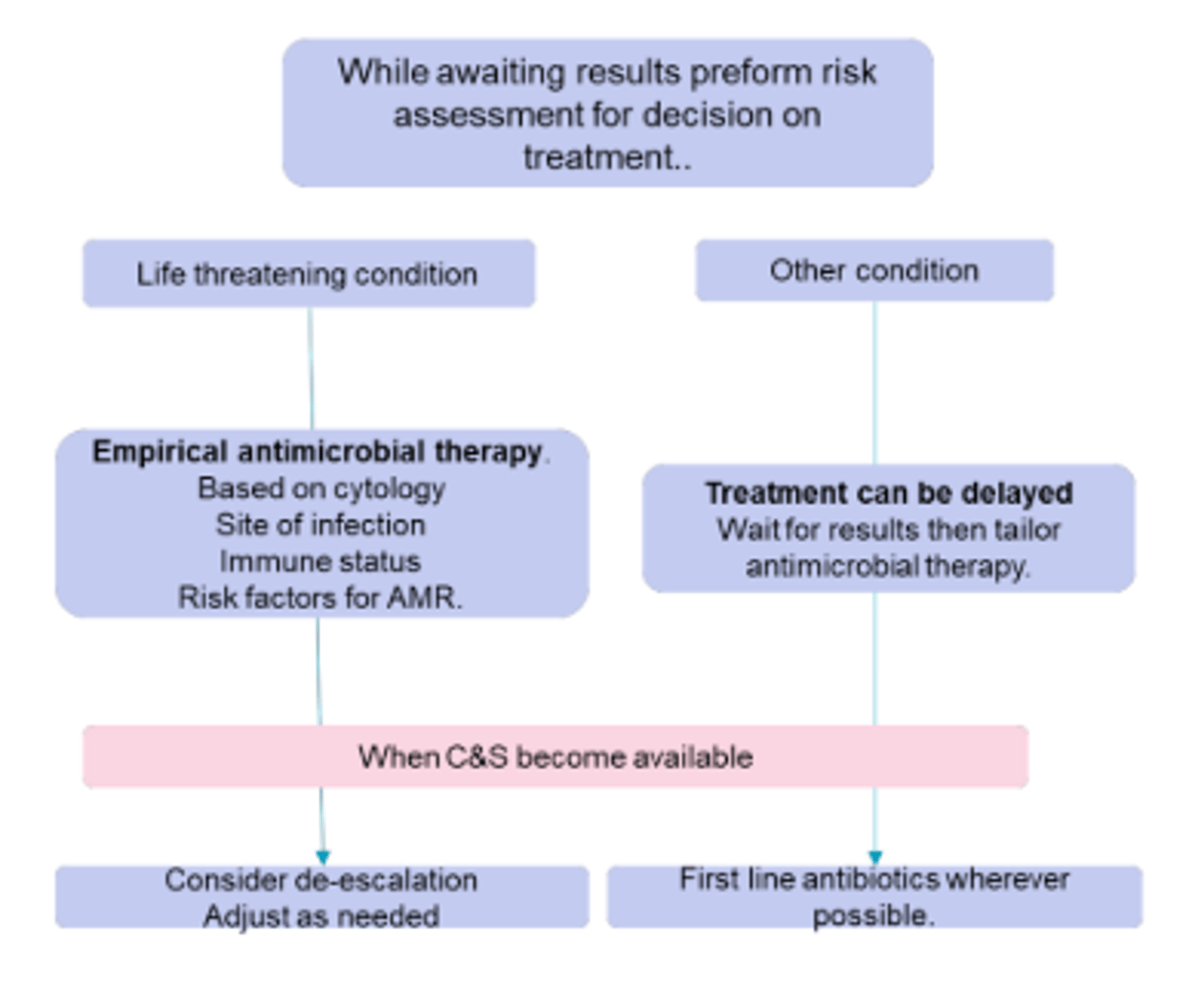
when to use culture and sensitivity
• Cultures are not necessary for first-time empirical treatment
Cultures are however important for any second-line antimicrobial treatment,
why chose to do gram staining
A Gram stain is simple and cheap and narrows the spectrum of antibiotic to Gram positive, Gram negative, or mixed. Gram stains are underutilized in companion animal practice.
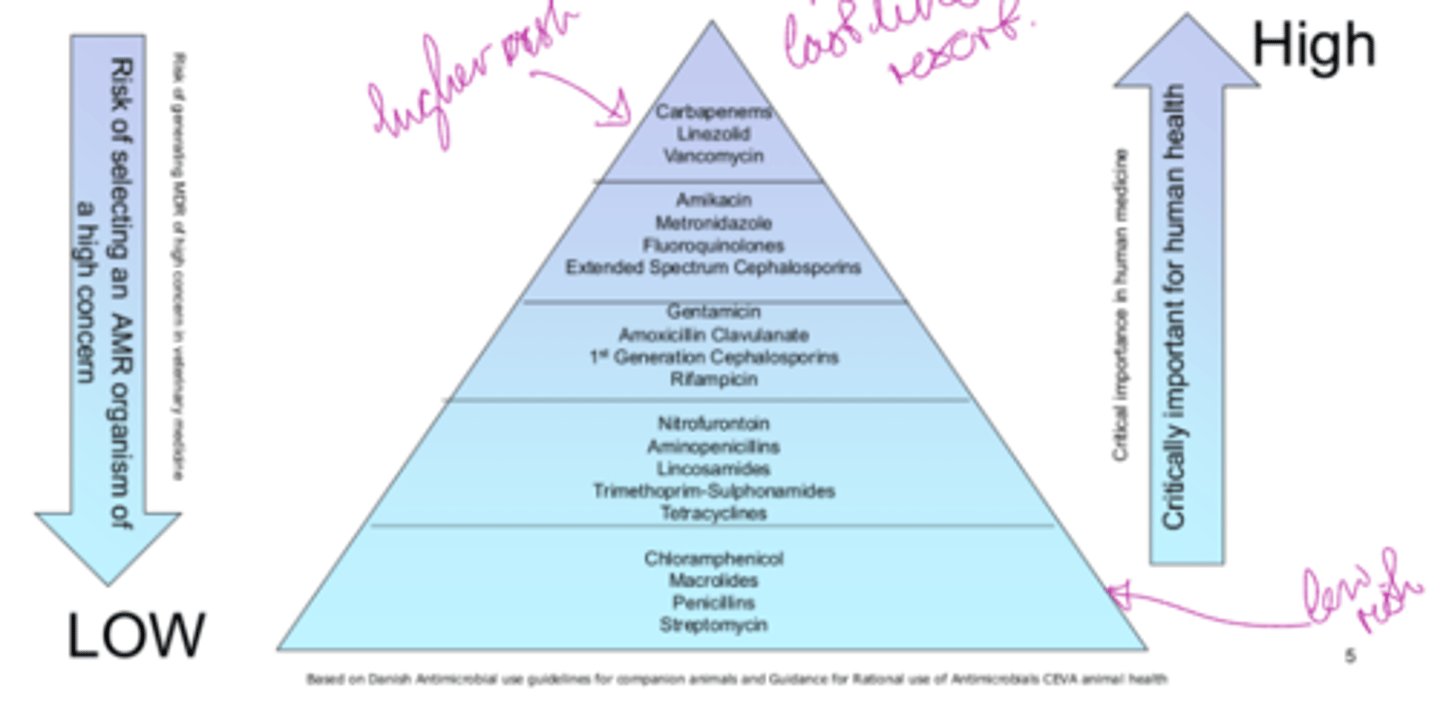
critically important antibiotics (CIAs)
-pyramid of antibiotics and their selection
-the CIAs are last resort and not used in animals
higher up= more risk of selecting an AMR organism and more important for human health
first line (Cat D) antibiotic mean
-used as treatment wherever possible
-should be used prudently, only when medically needed
-try use narrow spectrum
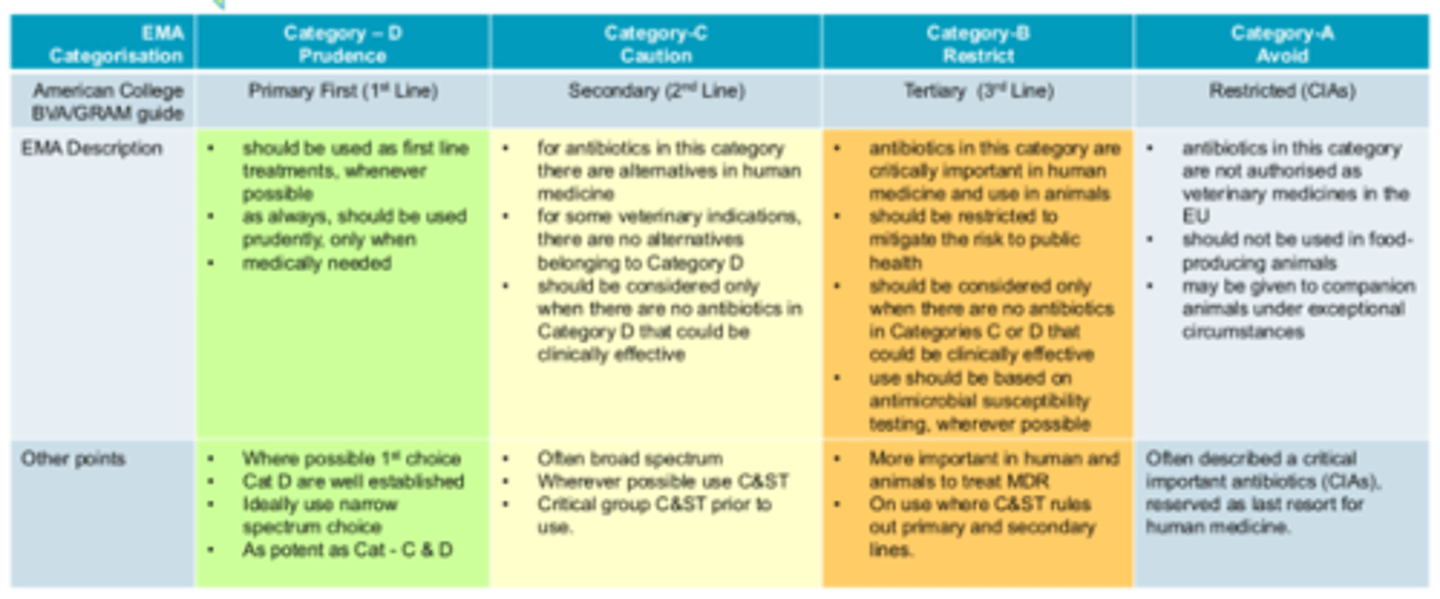
2nd line (Cat C) antibiotic mean
-there are alternatives in human medicine
-for some vet indications, no alternatives in Cat D
-considered only when no antibiotics in D could fit
-often broad spectrum
-use culture and sensitivity as much as possible
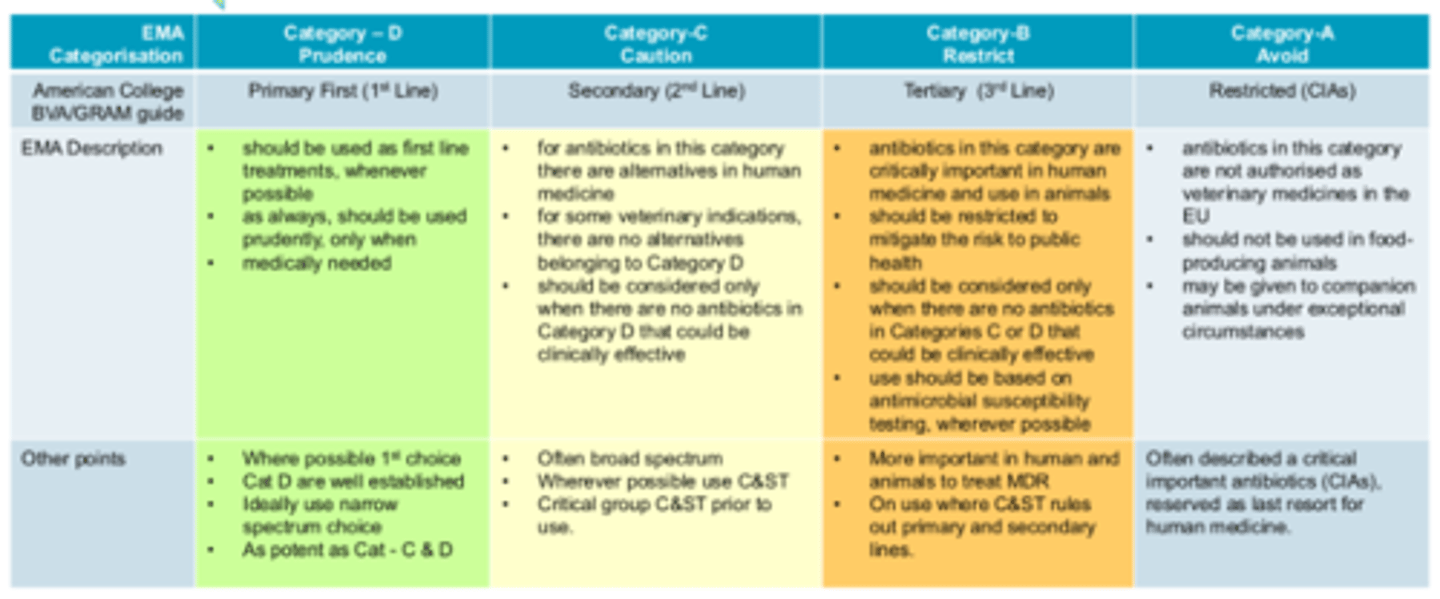
3rd line (Cat B) antibiotics means
-critically important in human meds and in animals
-use in animals restricted to mitigate risk to public health
-only when none in cat C and D
-use only based on antimicrobial susceptibility testing
-use where c+t rules out primary and secondary lines
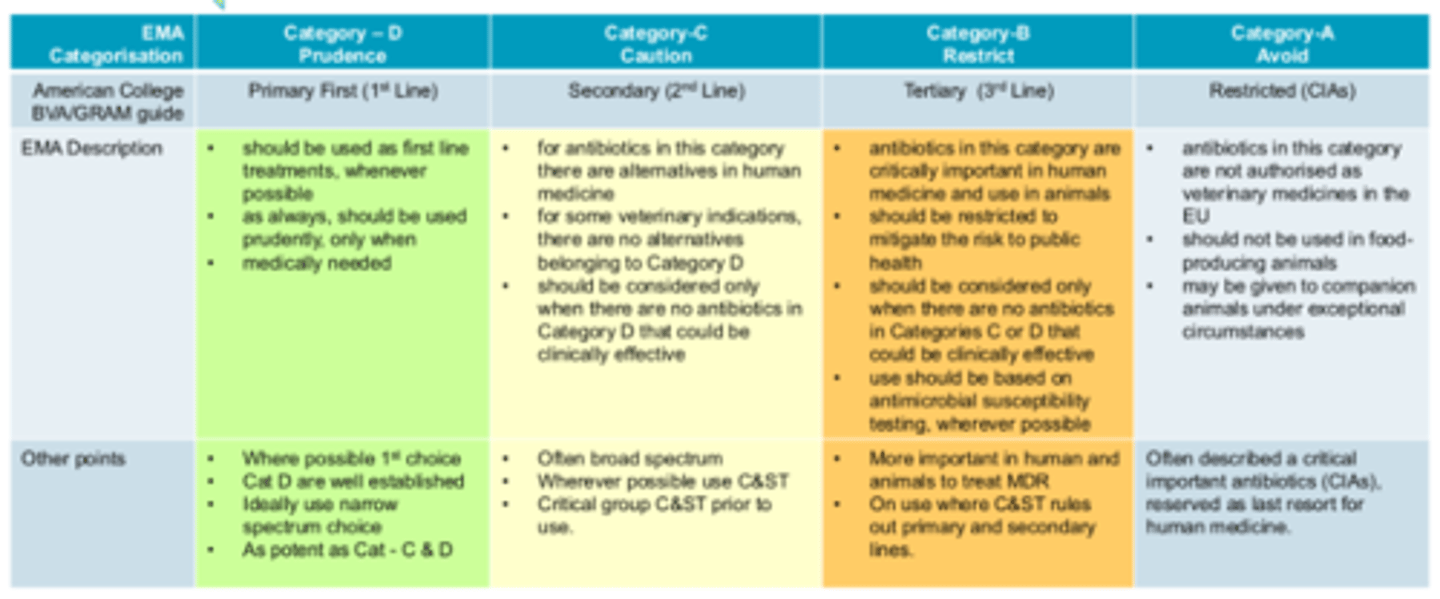
(Cat A) antibiotics avoid
-not authorised as vet meds in EU
-should not be used in food producing animals
-may be given to companion animals under exceptional circumstances
-last resort for humans
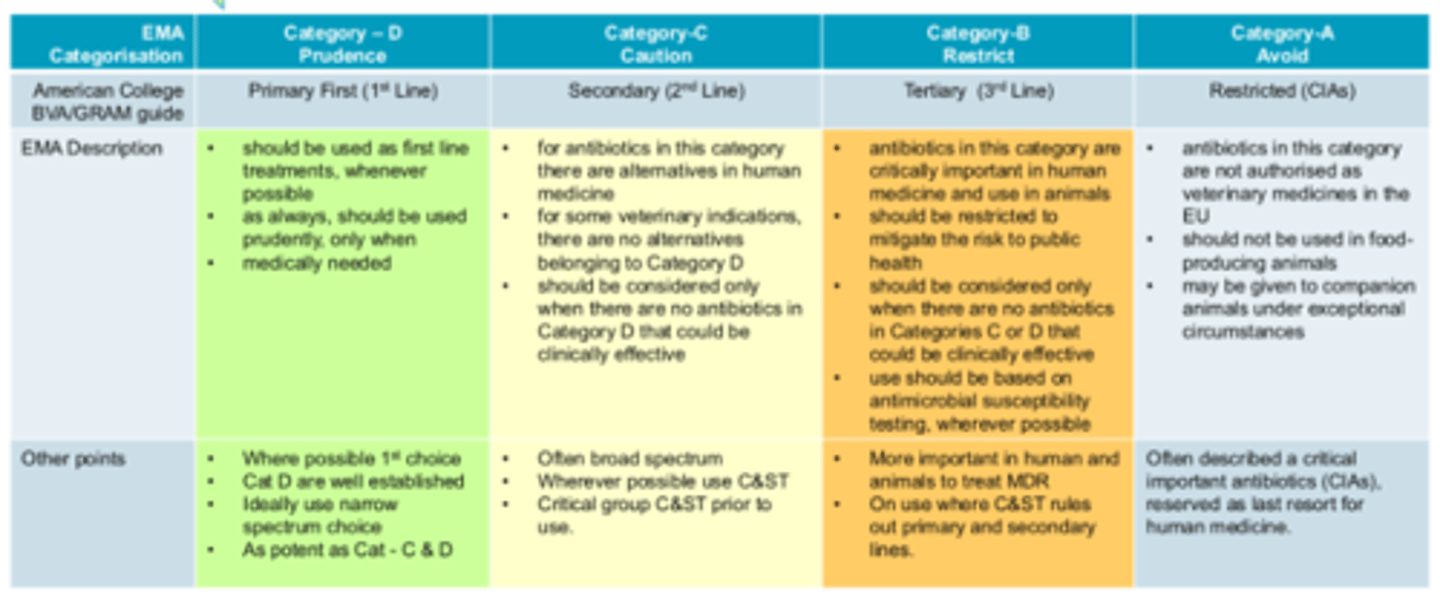
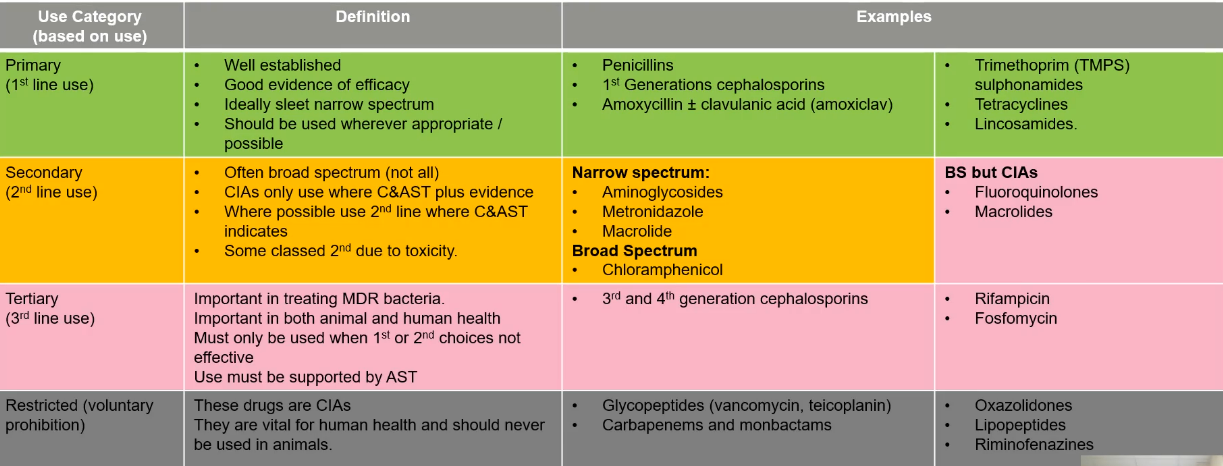
what are the categories for ab (EMA guidance)
A-Avoid (same as restricted really should not use)
B-restrict (equivalent of tertiary only with good clear justification no other lower option and good C&S)
C-Caution (equivalent of secondary not fluroquinolones and cefovecin is cleat EMA B-restrict)
D-Prudence (equivalent of primary but does indicate idea of not just using but planned prudent use)
cat D examples
penicillins
1st gen cephalosporins
TMPS
tetracyclines
lincosamides
amoxy/ clav
cat C narrow spec examples
aminoglycosides
metronidazole
macrolides
cat C broad spec examples
chloramphenicol
critically important cat C examples
-quinolones
-cefovecin
3rd line examples (catB)
-3rd and 4th gen cephalosporins
-rifampicin
-fostomycin
-colistin
cat A restricted examples
voluntary prohibition
glycopeptides
carbapenems and monbactams
oxazolidones: linezolid
lipopeptides: daptomycin
riminofenazines: clofazaime
responsible use of antimicrobials plan
7 points
1st point of responsible use of antimicrobials plan
work with clients to avoid need for antimicrobials
-inform owners about benefits of regular pet health checks
-use sympotmatic relief or topical preps where appropriate
-integrated disease control programmes
-animal health and welfare planning
-isolate infected animals wherever possible
2nd point of responsible use of antimicrobials plan
avoid inappropriate use
-uncomplicated viral infections
-restrict use to ill or at risk animals
-advise clients on correct administration and storage of products and completion of course
-avoid underdosing
3rd point of responsible use of antimicrobials plan
choose right drug for the right bug
-identify likely target organisms and predict susceptibility
-create practice based protocols for common infections based on clinical judgement of up to date knowledge
-know how they work
-use narrow spec where poss
how can we choose the right drug for the right bug
• Cytology and culture can confirm or aid diagnosis and subsequent selection of antibacterial treatment.
• However, the isolation of bacteria from an animal is not proof of pathogenicity.
• Think what is normal for the species and sites sampled – assess their significance
4th point of responsible use of antimicrobials plan
monitor antimicrobial sensitivity
-bacterial culture and sensitivity determined whenever poss so change of treatment implemented
-monitor bacterial culture and sensitivity trends
5th point of responsible use of antimicrobials plan
minimise use
-use only when necessary and evidence that usage reduces morbidity and/or mortality
-regularly assess antimicrobial use and develop written protocols for appropriate use
-use alongside strict aseptic techniques and written practice guidelines
6th point of responsible use of antimicrobials plan
record and justify deviations from protocols
-be able to justify your choice of antimicrobial and dose
-keep accurate records of treatment and outcome to help evaluate therapeutic regimens
7th point of responsible use of antimicrobials plan
report suspected treatment failure to VMD
-may be first indication of resistance
-report through Suspected Adverse Reaction Surveillance Scheme (SARSS)
what is using integrated disease control programmes
Increasing / applying good biosecurity
Good monitoring of health status for early intervention
Modifying environment to reduce risk for infection
Vaccination where possible
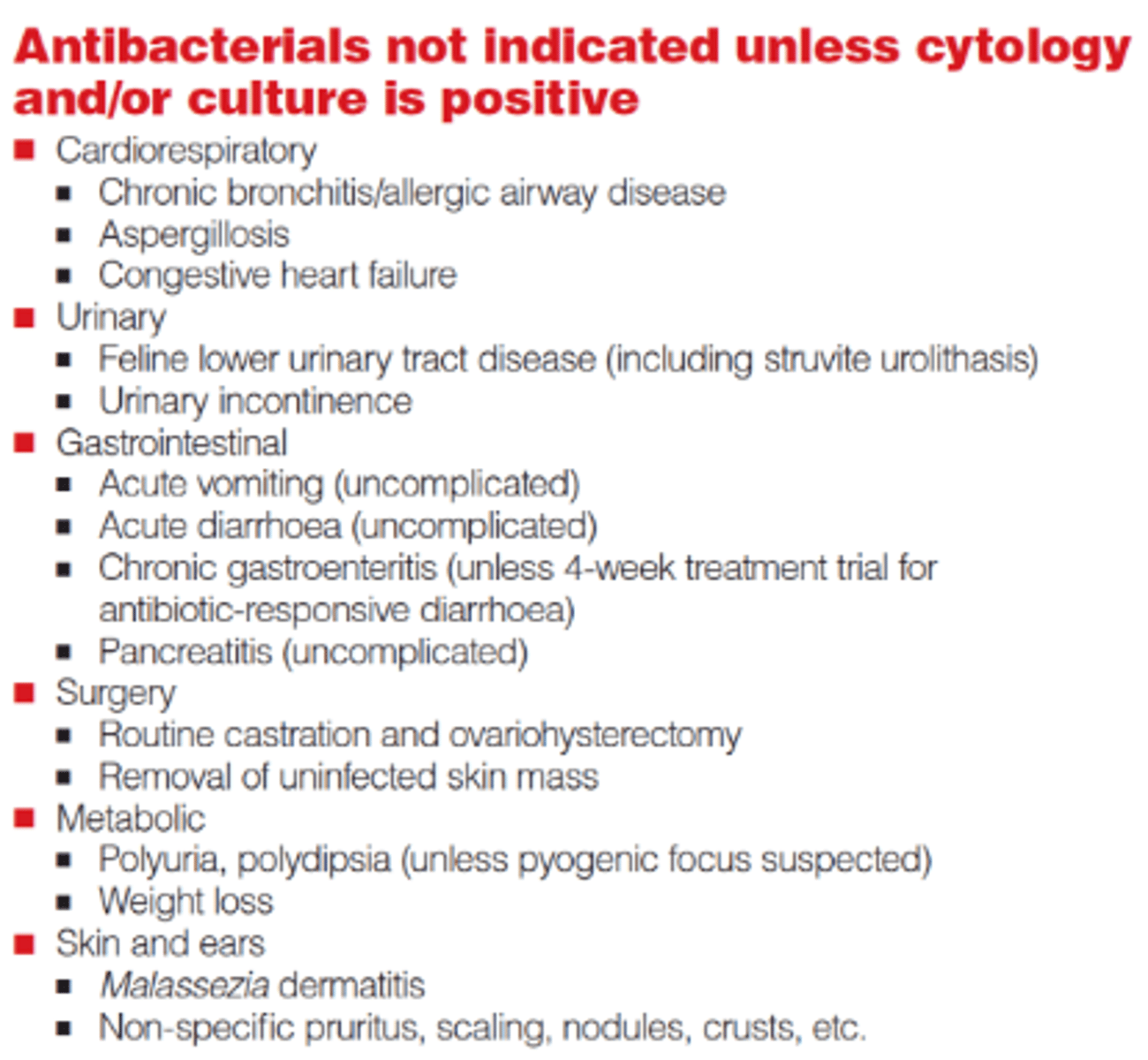
what does this show
when you wouldnt use ab unless positive for c+S
what is the protect scheme
very similar to the seven point plan
a range of boxes which are associated with infections in different body systems,
these highlight the different situations in those body systems where you would not want to use antibiotics or where antibiotics would be appropriate, and which groups of antibiotics might be used.
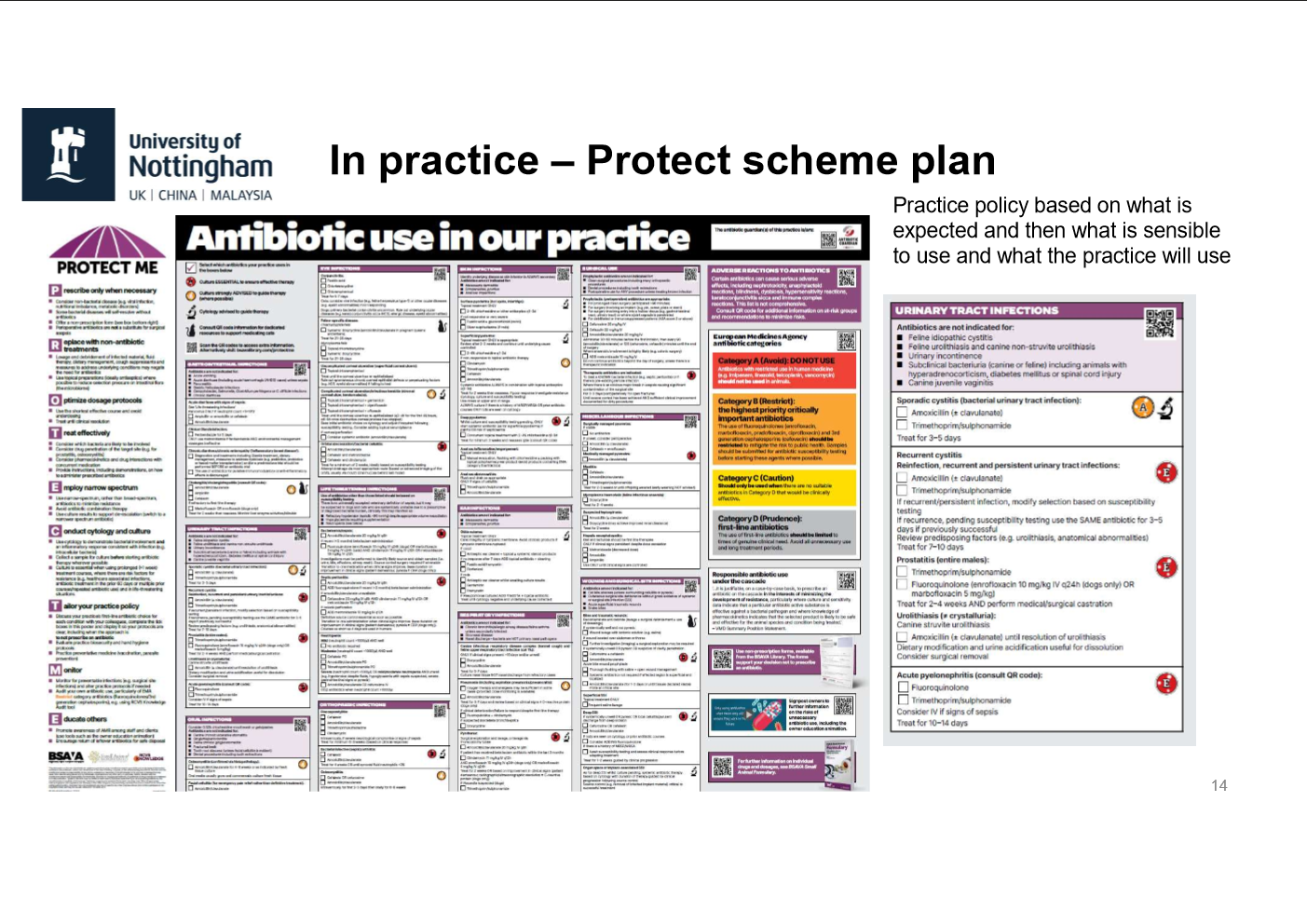
PROTECT umbrella
-practice policy
-reduce prophylaxis
-other options
-types of bacteria and drugs
-employ narrow spectrum
-culture and sensitivity
-treat effectively
antibacterial use in practice
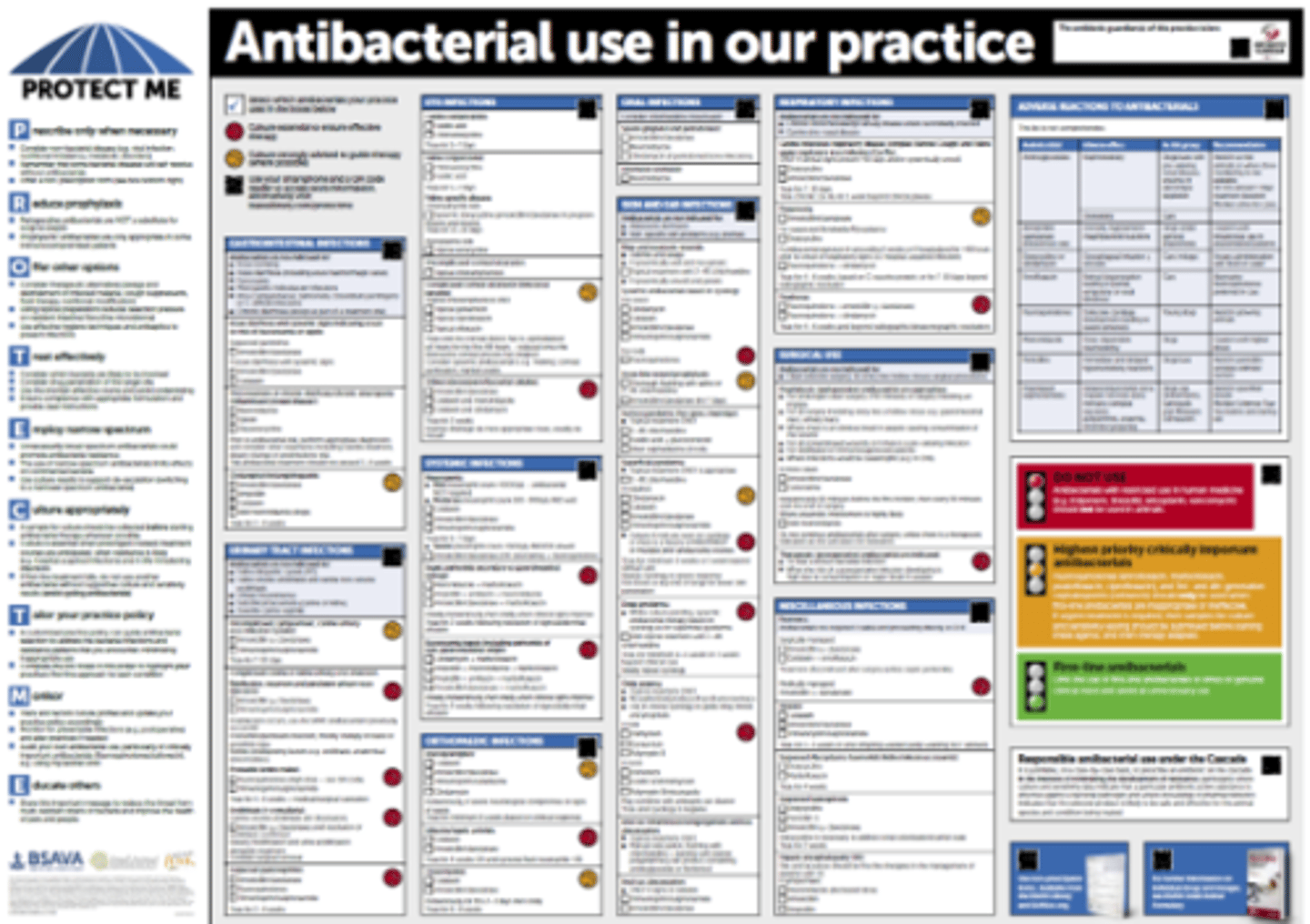
principles of treatment
-pharmokinetic factors
-dosage
-dose modification
-duration
-site of infection
-host immune status
-drug combo options
food animals
-minimal residue limits
-value of animal/loss of product
risks of drug class
-direct toxicity
-adverse interactions
-effect on flora
-promotion of resistance
-tissue injection site damage
-impairment of host defences
-age of animal/status
pharmodynamic considerations
-MIC/MBC
-time/conc dependent activity
-sub-MIC effect
-post antibiotic leukocyte enhancement
cost and client considerations
cost of treatment
value of animal/ loss of product
client choise
ability to administer
summarise the categories for ab and examples