ENGG2000 - Module 4 (Development Frameworks and Tools for Humanitarian Engineering)
 Call Kai
 Learn
Learn Practice Test
 Spaced Repetition
 Match
Match Flashcards
 Knowt Play
1/18

Earn XP
Description and Tags
Development Frameworks and Tools for Humanitarian Engineering
Name | Mastery | Learn | Test | Matching | Spaced | Call with Kai |
|---|
No analytics yet
Send a link to your students to track their progress
19 Terms
Important principles of community development approaches
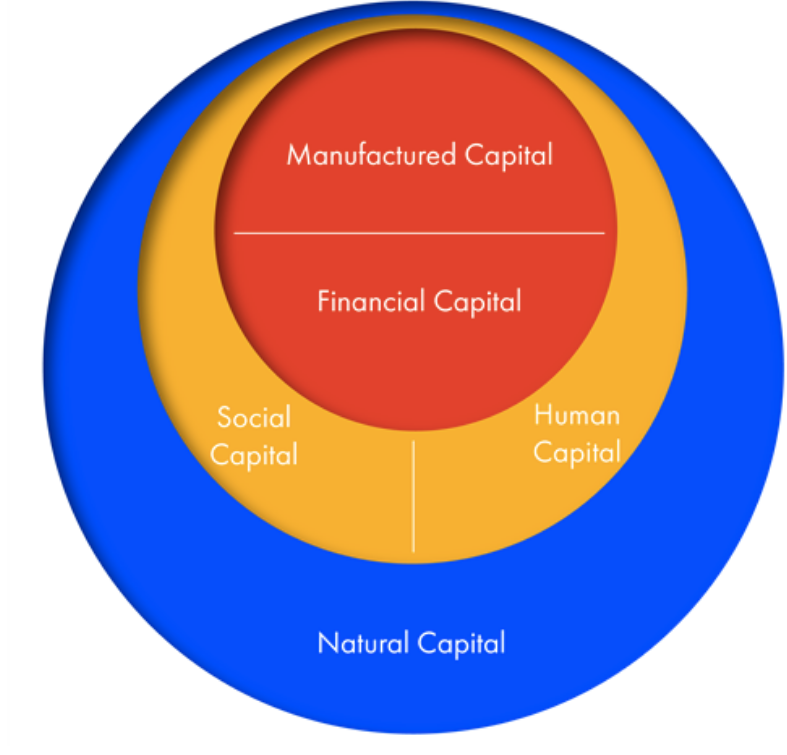
Five capital framework
Need to maintain and enhance these capitals to reach sustainability, rather then use and exploit for short term gain.
What is community development
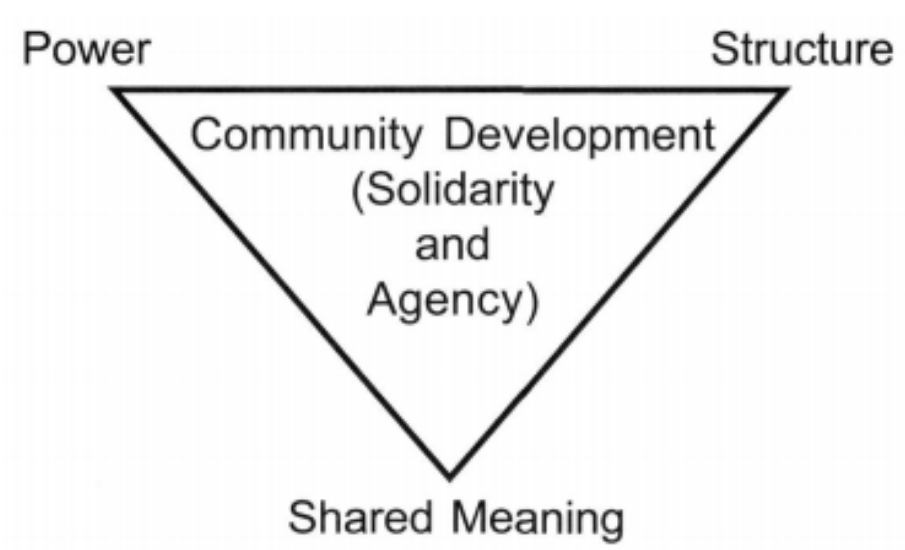
A process that supports communities to identify their issues, and take collective action to address them. Rooted in empowerment, rights and social justice issues, challenging unfair structures and redistributing power (community members as the experts).
Community development pyramid
Two approaches to community development
Should always be glass half full.
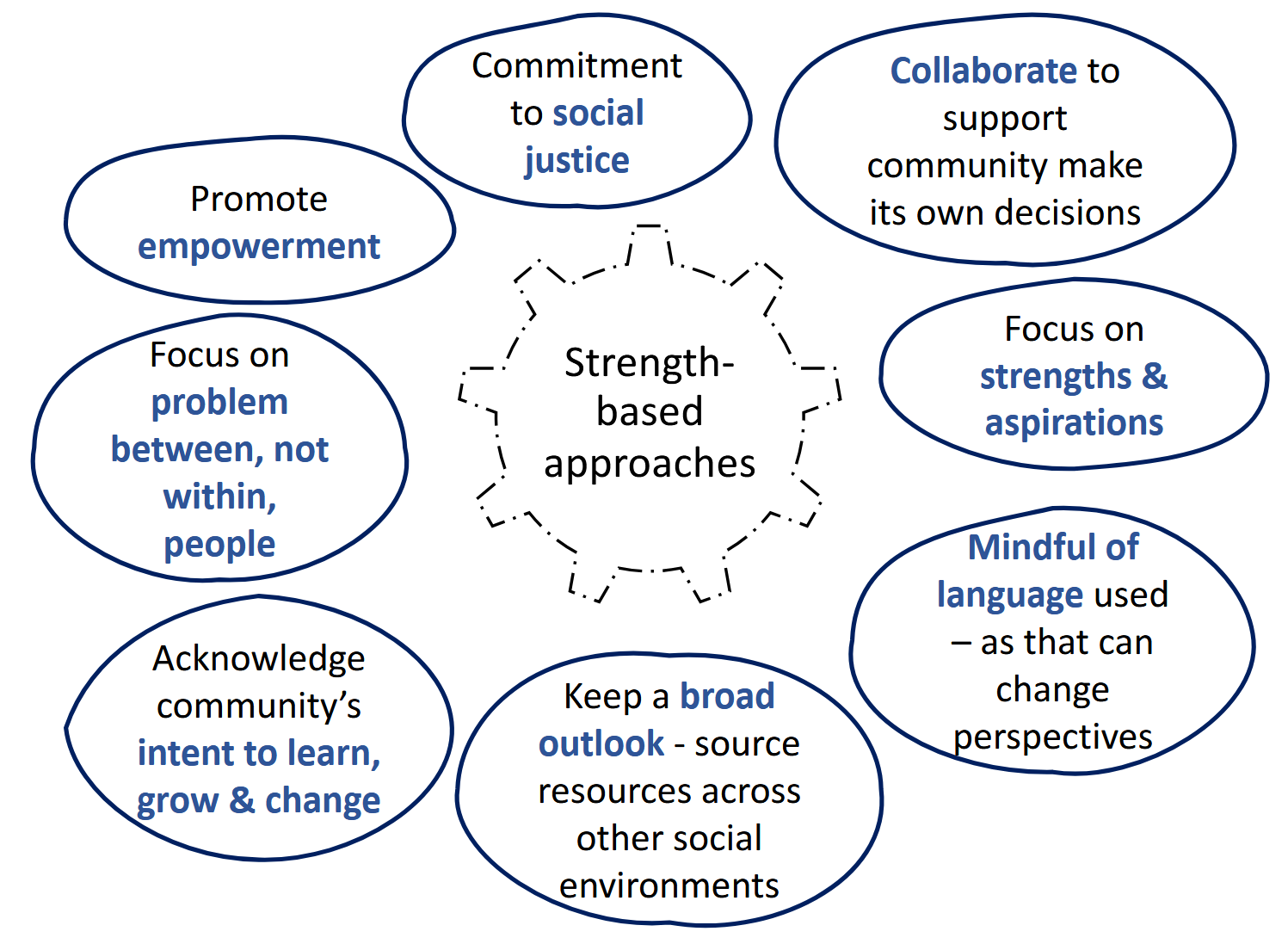
Strength based approach - build on communities strengths rather than deficits.
Asset based community development (ABCD) - Build on communities assets, rather then needs.
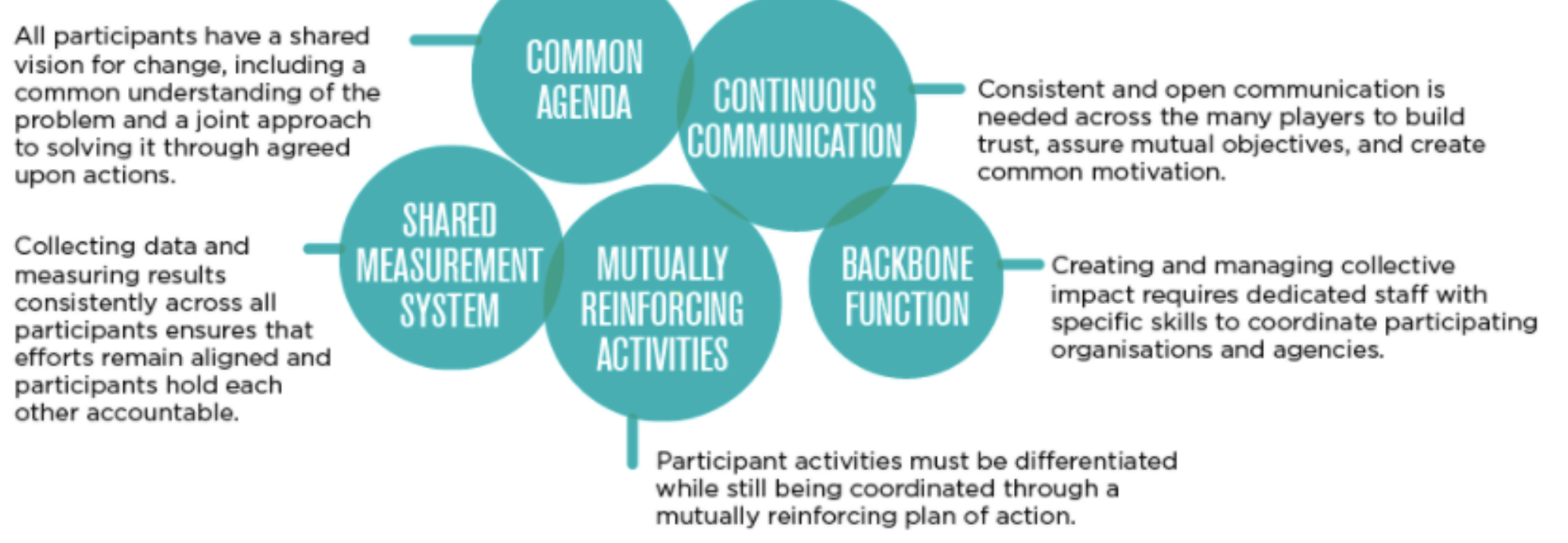
Collective impact and five conditions
Complex problems need multiple agencies/actors, and only addressing individual issues will not help. Five requirements are as follows:
Common agenda - All have shared vision for change and a common understanding.
Continuous communication - Consistent and open communication between all parties is needed.
Shared measurement system - Shared data and measuring methods are required, to ensure all agree on issues.
Mutually reinforcing activities - Participants activities should be different enough, but still contribute to the same goal.
Backbone function - Creating/managing collective impact requires dedicated staff/organizations.
Participation
Practice of involving members of public in agenda setting decision making and policy forming.
Sustainable livelihoods framework
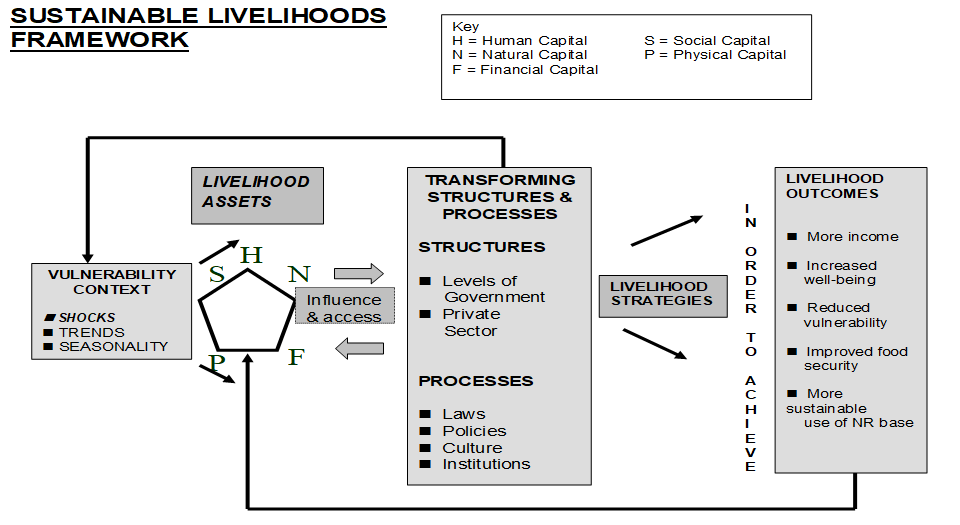
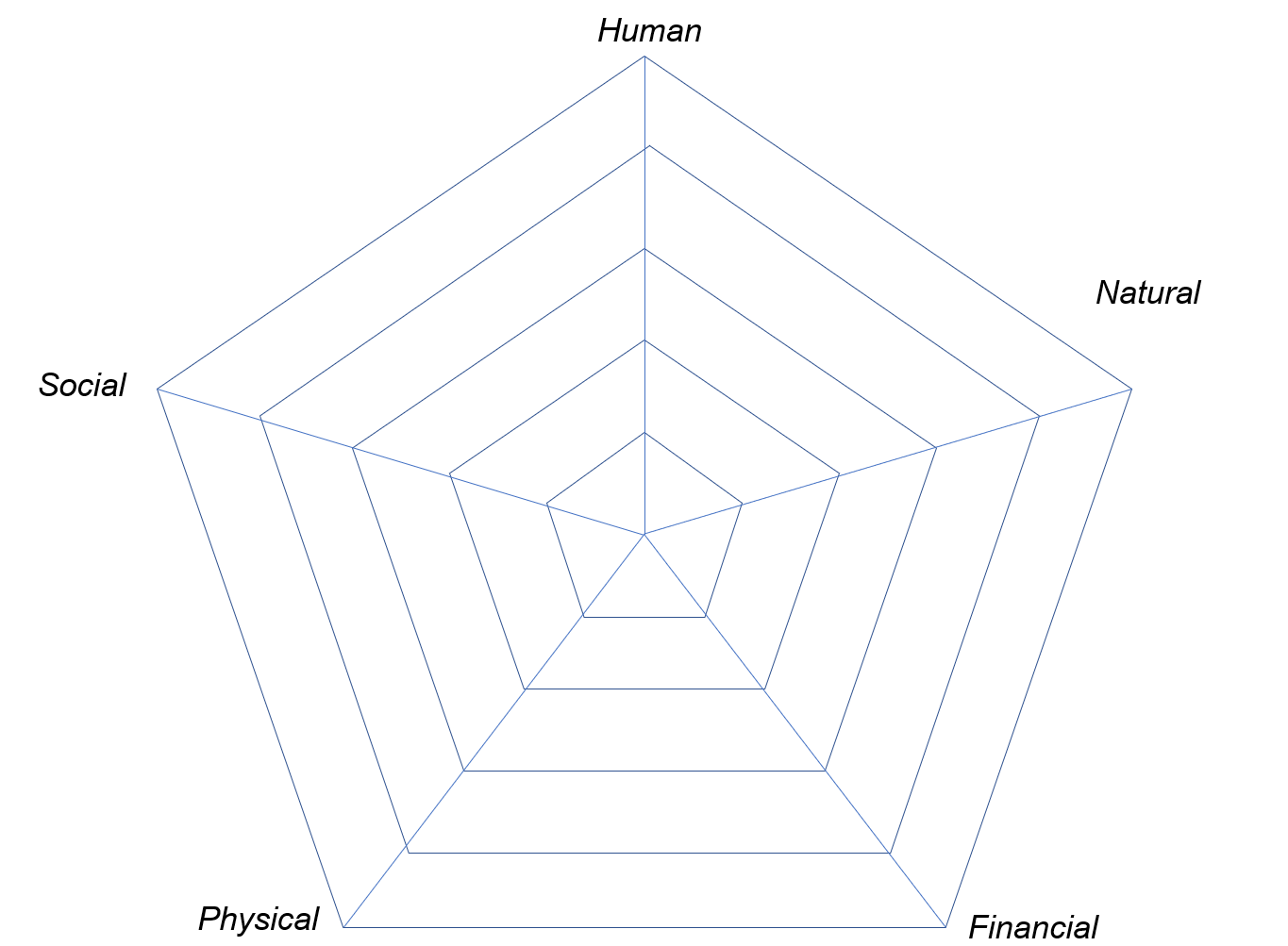
Dr Mark Moran Pentagon for assessing communities
5 sides
Human
Natural
Financial
Physical
Social
Humanitarian Engineering Selection
All have skin in the game, therefore, a large part of humanitarian engineering is deciding who, or what you need to help.
Sustainable livelihoods approach
Community driven alternative to the usually imposed externally driven solution. Draws on strengths, varies by intended livelihood outcome, location, scale, community and household.
Model of practice
Not and actual engineering/theoretical model, but more the tool to help reach decisions and improve practice and communication.
Aboriginal contexts in Australia
Colonial history of indigenous and non indigenous, relations, with an extreme gap in worldviews. Aboriginals are highly commiditised due to welfare payments, and local economy dominated by external supply, with little local economic activity.,
4 Dilemmas/issues with current engineering
Who decides whats good and bad
Thinking too heavily in systems
Role of appropriate technology
Multiple conflicting scales and systems
Climate change (Fran Curran)
Currently, large mentality of “If I don’t do it, someone else will”. We need to:
Hold healthy degrees of skepticism
Be clear on own motivation.
Engineers current issues (non-activism) (Fran Curran)
Typically engineers have leaned towards apolitical/ahistorical thinking, with technocentric and must grow approach, leading to harm and danger to surrounding community. Often distance from sociological and political implications left on users/commissioners. Should instead ask “for whose benefit do I work?”, what is the measure of my social responsibility”
6 Activist engineer considerations
Social and political impacts - Who is your work for, and what are their goals? What is their political and social capital?
Environmental and Ecological considerations - How are local, regional and larger environments and ecological systems effected by your work.
Economic consideration - How is economic value, generated by your work, distributed? Who owns the products.
Praxis, connections and feedbacks - how responsive to changing social values and dynamics should the technical systems you design be?
Alternative problem-solving approaches - What non-technical interventions, might achieve a similar outcome to the the one you are seeking to achieve?
Personal conflict - Is there anything you are doing that counters your values or the values of people you claim to serve?
Why are strength based solutions better
.Instead of focusing on communities issues and deficits, focus on their strengths and try and build around them, shown to be much more effective. Frameworks such as strength based and ABCD
Aceh reconstruction case study
In Aceh, Indonesia, after the tsunami locals were sidelined by disaster capitalism, and authoritative figures tried to take charge. Lack of meeting local needs and consultancy to local NGO’s lead to slow progress and limited ability to recover.

