Class 8 (Unit 3)
 Studied by 0 people
 Call with Kai
 Learn
Learn Practice Test
 Spaced Repetition
 Match
Match Flashcards
 Knowt Play
1/35

There's no tags or description
Looks like no tags are added yet.
Name | Mastery | Learn | Test | Matching | Spaced | Call with Kai |
|---|
No study sessions yet.
36 Terms
What will we be learning?
Populations and samples
Voluntary response sample, convenience sample
Simple random sample
Stratified random sample
Multistage sample
Systematic sample
Census
Undercoverage, nonresponse
Observational study vs. experiment
Factors, factor levels, treatments
Placebo effect, control group
Principles of experimental design
Completely randomized design
Randomized block design
Sampling (class)
The process of collecting data from a sample to make statements about the population
Sampling
is essential for statistical analysis, allowing researchers to estimate characteristics of a larger population without surveying every individual.
Why do we collect data from samples?
To obtain information about the population that the sample represents
It is typically more realistic/feasible to collect data from samples rather than the entire population
How have we looked at samples up to this point?
t, we have assumed that our samples are “good” - i.e. that the samples from which we get our data are representative of the whole population
Is (that the samples from which we get our data are representative of the whole population) true?
This might not always be true! We need to pay attention to the way we collect our samples in order for them to be useful (i.e. for them to be representative of the population we wish to examine)
If our data does not fairly represent the population, then we cannot infer any of our conclusions onto that population
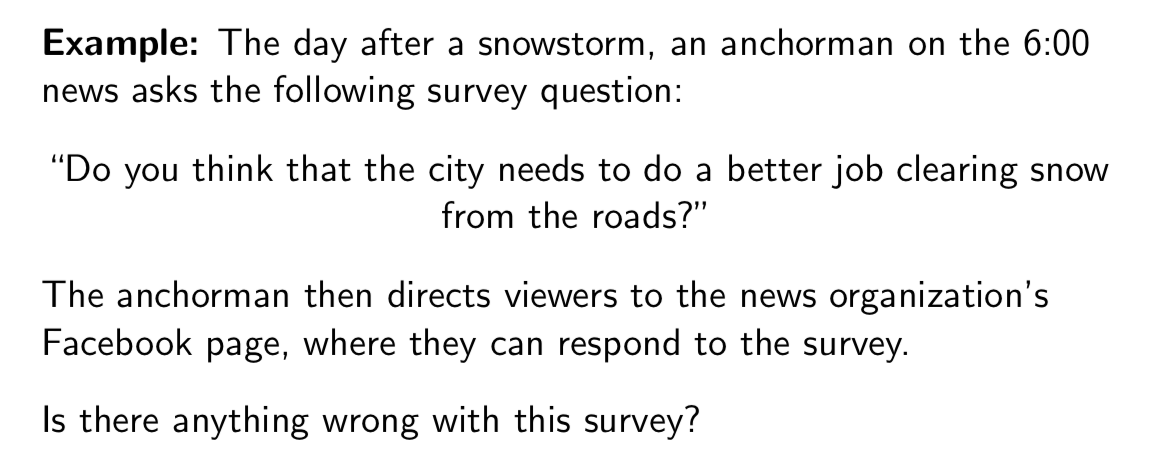
Example of sampling (voluntary response surveys)
This data will likely represent the opinions of people who feel strongly about the subject in question
Those in favour of change often feel more passionately than those in favour of keeping things the same
Someone who is satisfied with the way things are is not likely to take the time to log on to the Facebook page and answer a survey question
Voluntary response sampling
This data will likely represent the opinions of people who feel strongly about the subject in question
This type of sample consists of people who choose to include
themselves in the sample by responding to a question or survey
what do the results of a voluntary response sample reflect?
Almost certainly overestimate the true proportion of people who think the city needs to do a better job at clearing snow
Is voluntary response surveys relable?
no, almost always unreliable, and should be avoided if possible
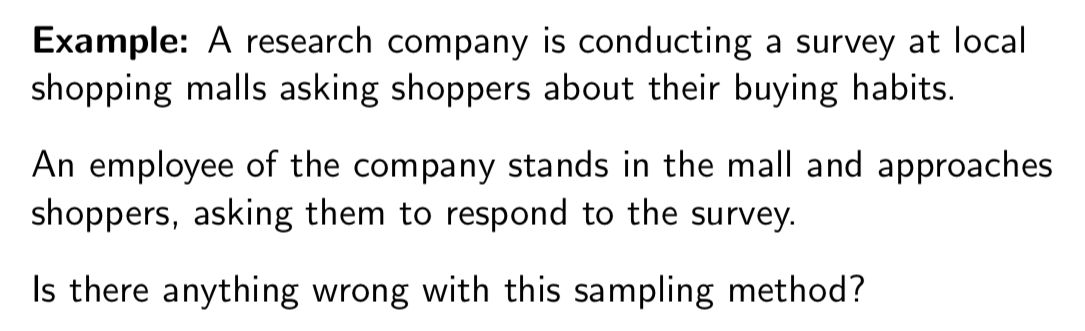
Example (convenience sample)
The surveyor is more likely to ask friendly looking people to respond to the questionnaire
The sample is supposed to represent all consumers, but it only represents those who are already shopping (and so spending behaviours will appear higher)
Convenience sample
This type of sample chooses individuals who are easiest to reach.
Are convenience samples reliable?
Are almost always unreliable
sampling bias
The design of a study is biased if it systematically favours certain outcomes over others
What types of samples are biased?
Both voluntary response samples and convenience samples are biased
How can we avoid bias
we need to choose our samples in a way such that neither the sampler nor the respondants choose the sample units
In other words, we need to choose the sample “by chance”, i.e. in a way that does not favour any of the potential units
This prevents bias by giving all individuals (regardless of age, race, gender, etc) an equal chance of being selected
Simple Random Sampling (SRS)
A method of sampling where each member of the population has an equal chance of being selected.
Simple Random Sampling (SRS) {Class}
size n consists of n individuals from the population chosen in such a way that every possible group of n individuals has an equal chance of being the sample actually selected
Random (statistics)
has two or more possible values with a known probability of being observed
When is it not ideal to use SRS
if each individual has an equal chance of being selected in to the sample, it is NOT always true that the sample is a SRS. We will see examples that illustrate this soon
How do we use SRS with a big sample size?
When a population is large, it is not realistic to think of “putting everyone’s name in a hat” to select a SRS. In reality, we use computer software to randomly select our sample
Stratified Random Sampling
is a sampling method that involves dividing a population into distinct subgroups, or strata, based on shared characteristics, and then randomly selecting samples from each stratum.
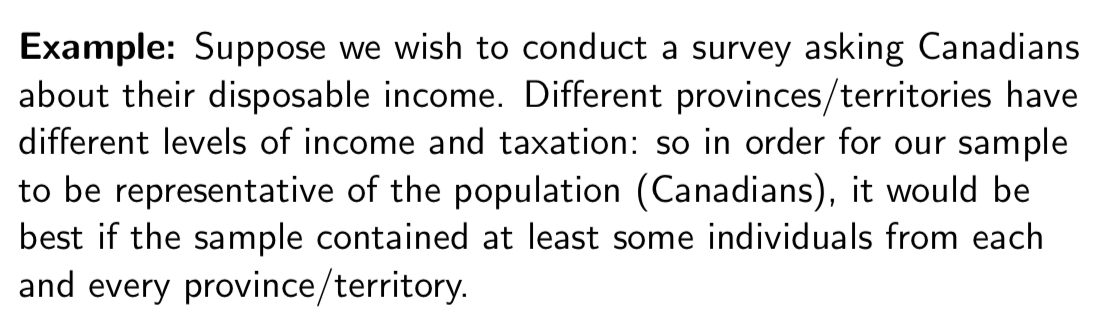
stratified example
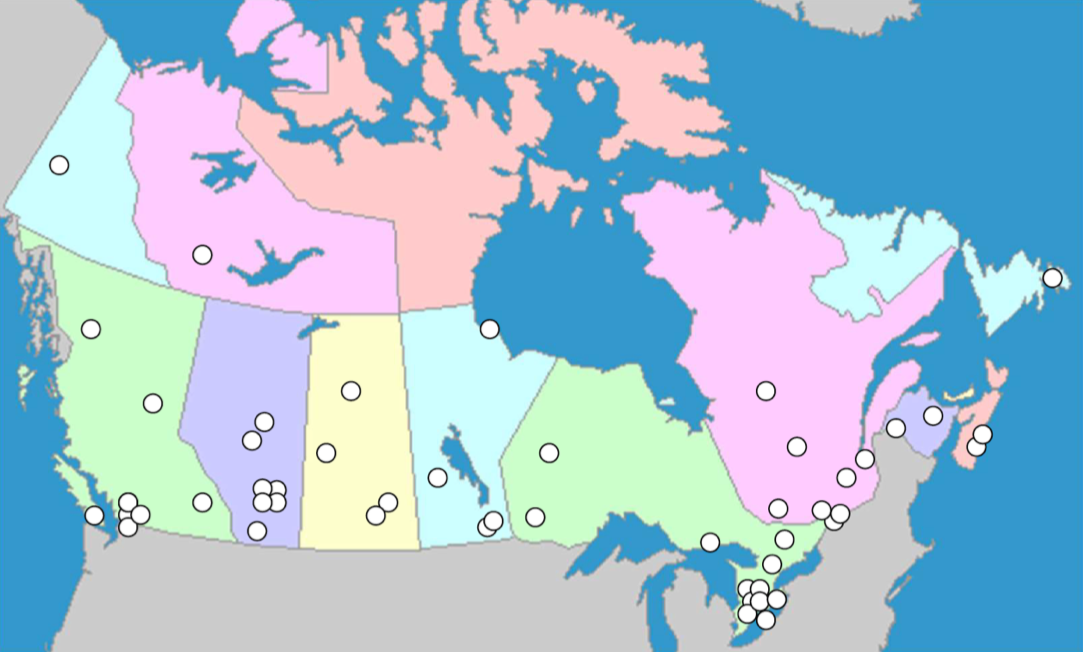
First, we will divide the country into 13 groups (10 provinces and 3 territories). These groups are called strata
The singular form of strata is called a stratum: this is a group of similar individuals (here, individuals who live in the same province/territory).
Then within each of the strata, we will take a SRS
Note: the SRS’s within the strata’s do not have to all be the same size
We will then combine the SRS’s from each strata to make our total sample.
Stratified Random Sampling (Class)
Using this sampling method, we will end up with a sample that includes individuals from each and every stratum (here, each province/territory), and is thus more likely to be representative of the population.
Why isn’t Stratified Random Sampling = Simple Random Sampling?
Not every possible group of n individuals in the population has the same chance of being chosen!
For example, it would not be possible for a group of n individuals all from Manitoba to be chosen (i.e. any group of n individuals all from MB has a 0% chance of being chosen)
It’s not even true that each individual person has the same chance of being selected
E.g. if we select a SRS of 10 people from each stratum, then a person from a province with a higher population, like Ontario, has a lower chance of being selected than a person from a province with a lower population, like Nunavut
Is simple or stratified better (more representative of the population)?
Stratified sampling
How to we further ensure that the sample is representative of the population?
Sample size from each stratum that is proportional to it’s population size
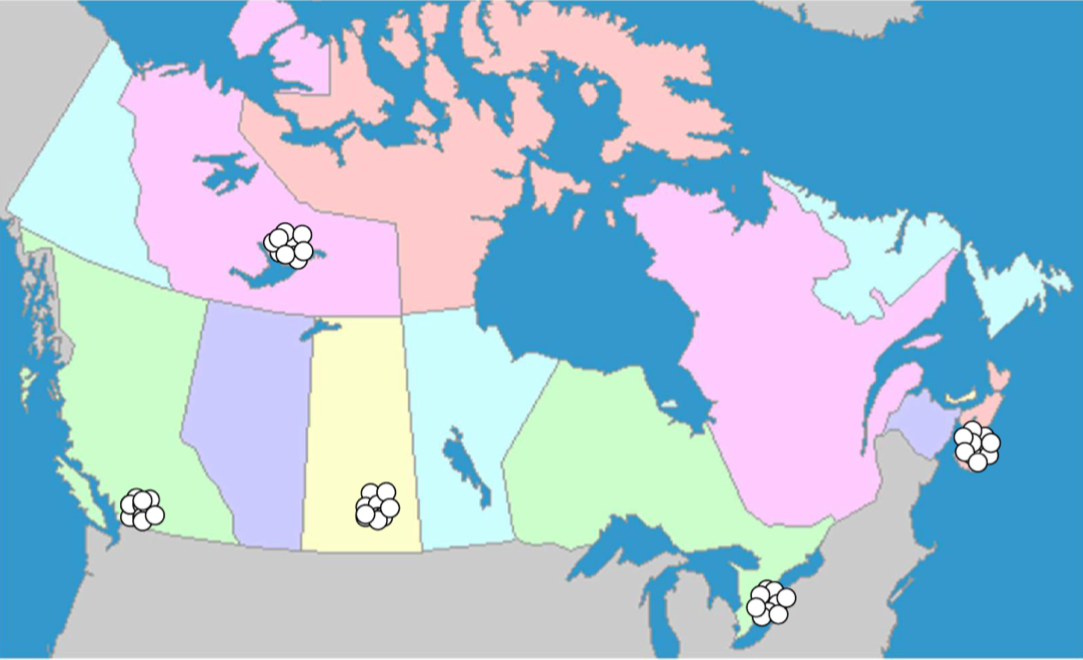
Multistage sampling
Sampling method that involves selecting groups in multiple stages, often combining random and stratified approaches, to improve efficiency and representation.

Multi stage sampling example and explanation
It is not realistic to select a SRS or stratified random sample of n people to survey - the people in our sample would likely live very far apart. Going door-to-door would cost too much, and be logistically impractical
Multistage sampling (class)
This type of sampling does NOT produce a SRS: not every group of n individuals has the same chance of being selected.
E.g. it would not be possible for our sample to consist of only Winnipeggers
Further, individual houses do not all have the same chance of being included using this sampling scheme
When should we use Multistage Sampling
Multistage sampling is often used when we need a large number of respondents in close proximity to one another.
Overall stratified random sample
viewed as “better” than a SRS in certain circumstances (bias is more strategically eliminated)
We used our knowledge of the population to make our sample more representative of the population
Overall Multistage sample
Not quite as “good” as a SRS
A multistage sample is sometimes our only option, subject to time and cost restraints
Multistage samples can, however, serve our purposes very well if they’re conducted properly
Simple Random Sample (Photo)
Stratified Random Sample (Photo)
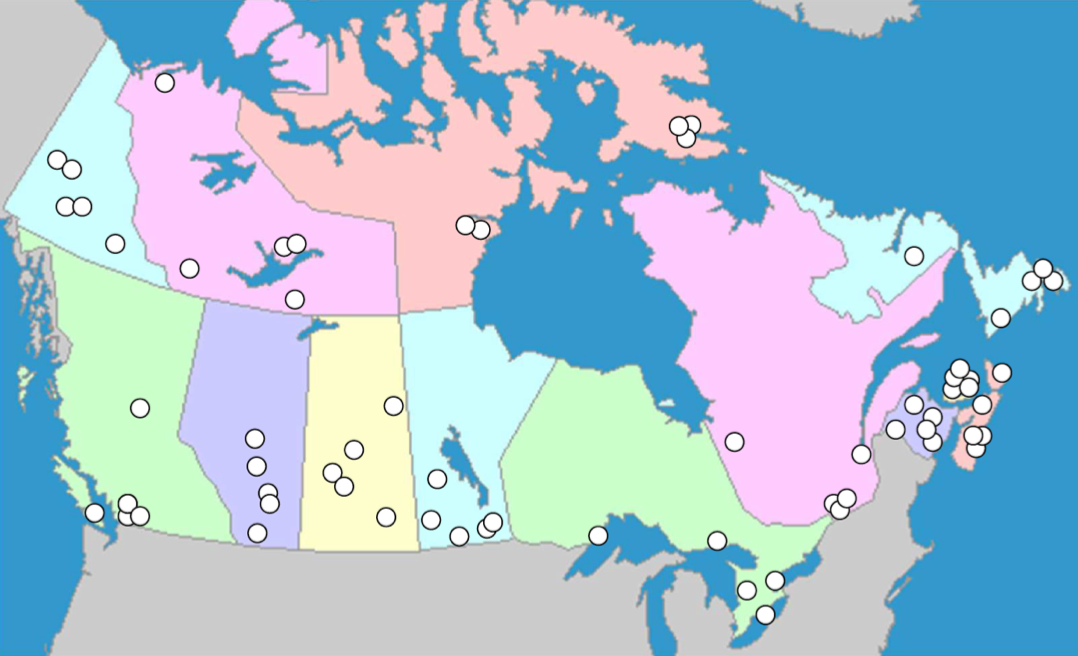
Multistage Random Sample (Photo)
 Note
Note  Flashcards (51)