Fall 2025 Midterm 1

0.0(0)
studied byStudied by 0 people
0.0(0)
call with kaiCall with Kai
learnLearn
examPractice Test
spaced repetitionSpaced Repetition
heart puzzleMatch
flashcardsFlashcards
GameKnowt Play
Card Sorting

1/23

encourage image

There's no tags or description

Looks like no tags are added yet.

Last updated 8:00 PM on 1/30/26
Name
Mastery
Learn
Test
Matching
Spaced
Call with Kai

No analytics yet

Send a link to your students to track their progress

24 Terms

1
New cards

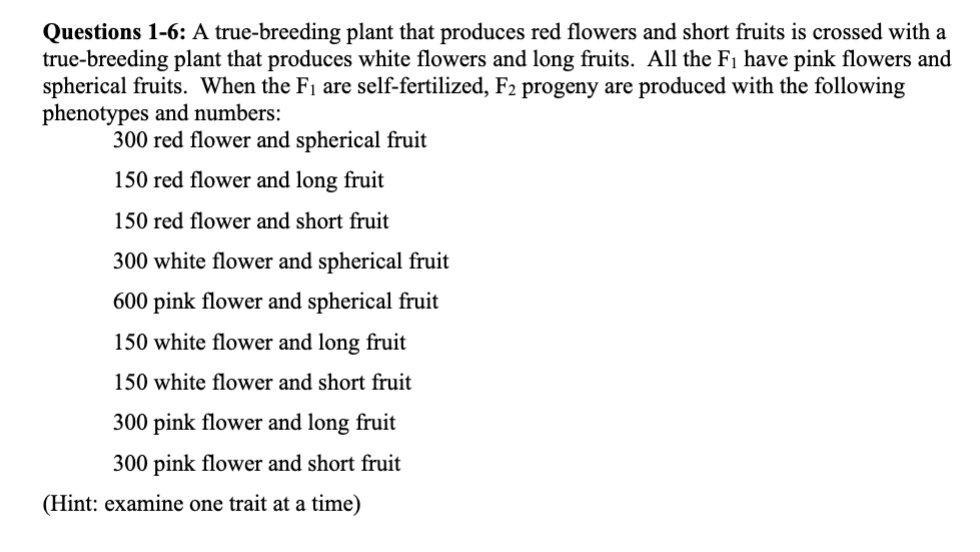
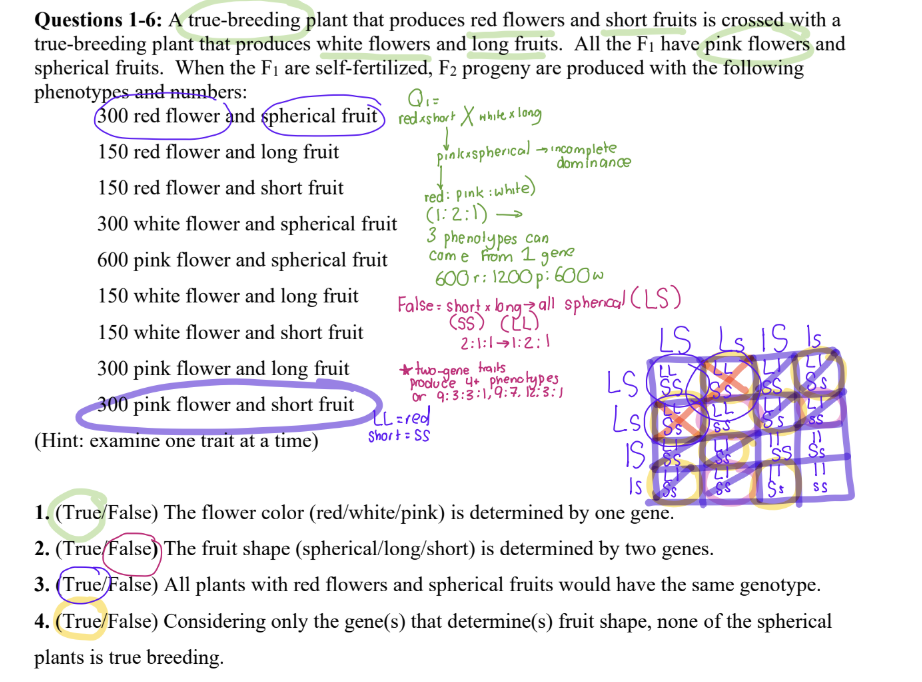
Questions 1-6: A true-breeding plant that produces red flowers and short fruits is crossed with a

true-breeding plant that produces white flowers and long fruits. All the F1 have pink flowers and

spherical fruits. When the F1 are self-fertilized, F2 progeny are produced with the following

phenotypes and numbers:

300 red flower and spherical fruit

150 red flower and long fruit

150 red flower and short fruit

300 white flower and spherical fruit

600 pink flower and spherical fruit

150 white flower and long fruit

150 white flower and short fruit

300 pink flower and long fruit

300 pink flower and short fruit

(Hint: examine one trait at a time)

1. (True/False) The flower color (red/white/pink) is determined by one gene.

2. (True/False) The fruit shape (spherical/long/short) is determined by two genes.

3. (True/False) All plants with red flowers and spherical fruits would have the same genotype.

4. (True/False) Considering only the gene(s) that determine(s) fruit shape, none of the spherical

plants is true breeding
knowt flashcard image
2
New cards
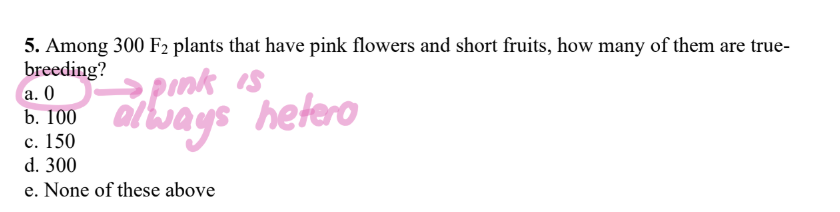
<p>Among 300 F2 plants that have pink flowers and short fruits, how many of them are true-</p><p>breeding?</p><p>a. 0</p><p>b. 100</p><p>c. 150</p><p>d. 300</p><p>e. None of these above</p>

Among 300 F2 plants that have pink flowers and short fruits, how many of them are true-

breeding?

a. 0

b. 100

c. 150

d. 300

e. None of these above
knowt flashcard image
3
New cards
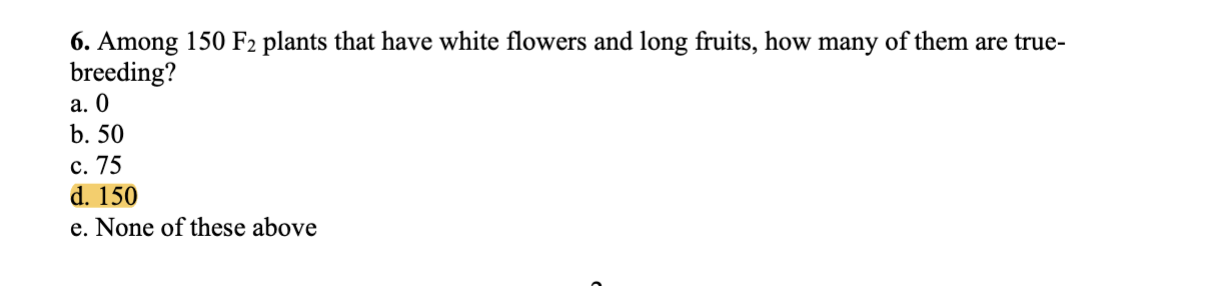
<p>Among 150 F2 plants that have white flowers and long fruits, how many of them are true-</p><p>breeding?</p><p>a. 0</p><p>b. 50</p><p>c. 75</p><p>d. 150</p><p>e. None of these above</p>

Among 150 F2 plants that have white flowers and long fruits, how many of them are true-

breeding?

a. 0

b. 50

c. 75

d. 150

e. None of these above
knowt flashcard image
4
New cards
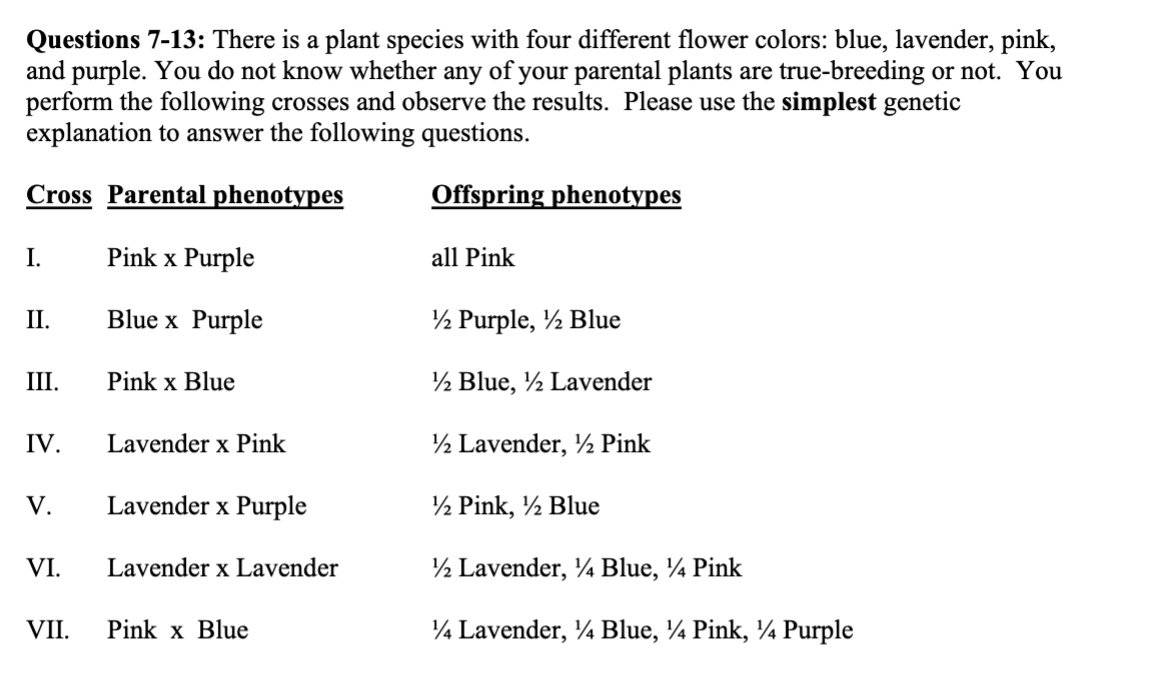
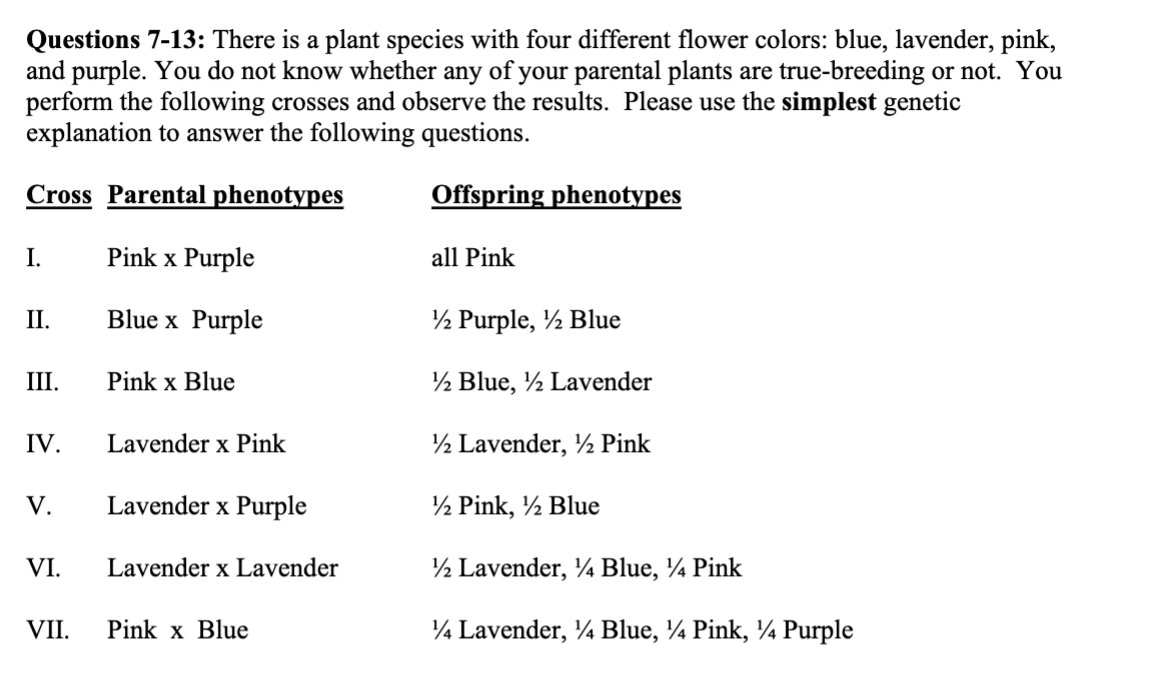
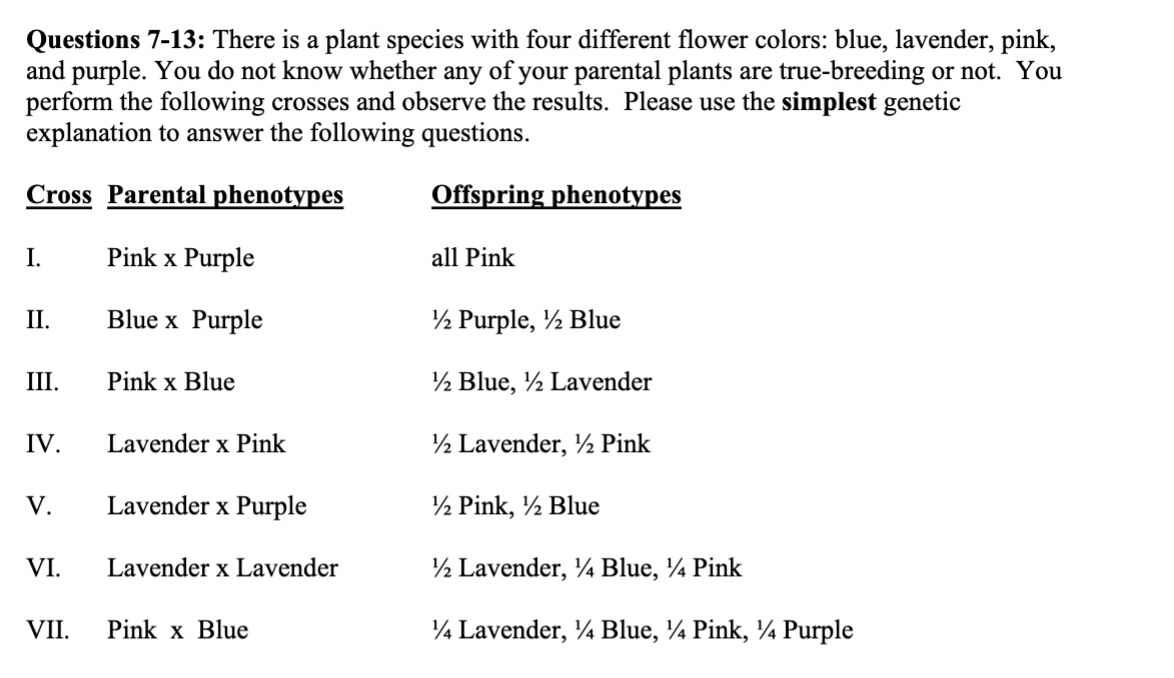
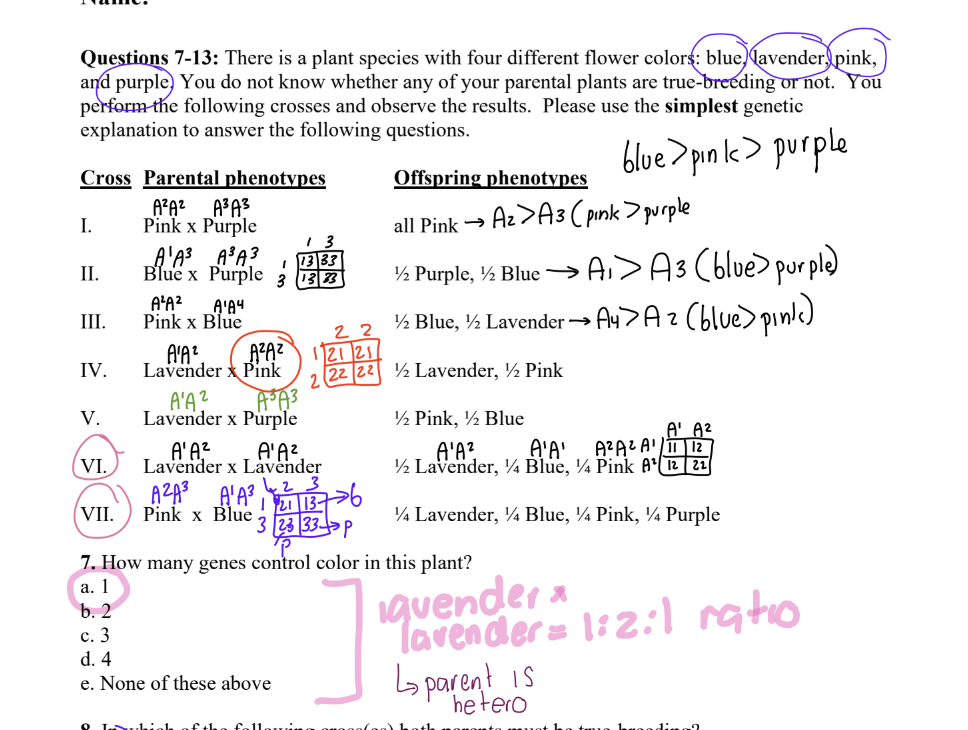
<p>7. How many genes control color in this plant?</p><p>a. 1</p><p>b. 2</p><p>c. 3</p><p>d. 4</p><p>e. None of these above<br>DONT ERASE YET</p>

7. How many genes control color in this plant?

a. 1

b. 2

c. 3

d. 4

e. None of these above
DONT ERASE YET
knowt flashcard image
5
New cards
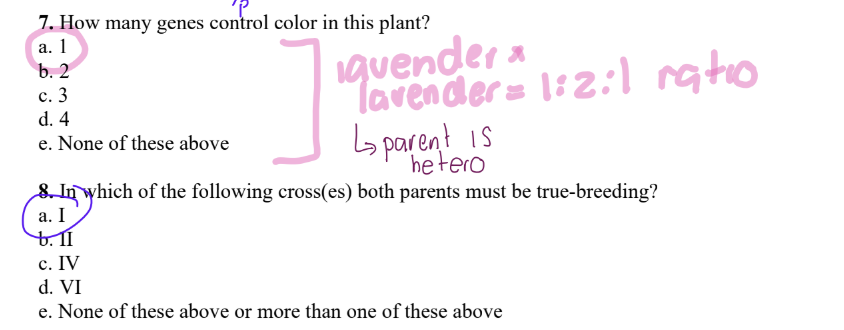
<p>8. In which of the following cross(es) both parents must be true-breeding?</p><p>a. I</p><p>b. II</p><p>c. IV</p><p>d. VI</p><p>e. None of these above or more than one of these above</p><p>DONT ERASE YET</p>

8. In which of the following cross(es) both parents must be true-breeding?

a. I

b. II

c. IV

d. VI

e. None of these above or more than one of these above

DONT ERASE YET
knowt flashcard image
6
New cards
<p>DONT ERASE YET</p><p>9. In which of the following cross(es) both parents must be heterozygous for all gene(s)</p><p>involved?</p><p>a. II</p><p>b. III</p><p>c. V</p><p>d. VI</p><p>e. None of these above or more than one of these above</p>

DONT ERASE YET

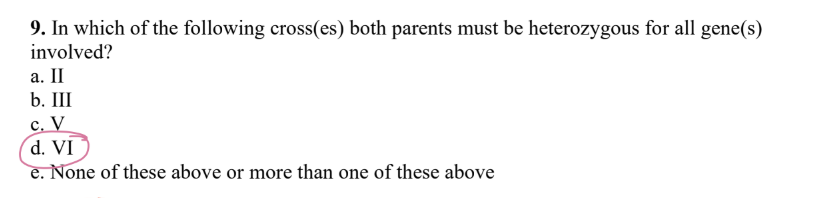
9. In which of the following cross(es) both parents must be heterozygous for all gene(s)

involved?

a. II

b. III

c. V

d. VI

e. None of these above or more than one of these above
knowt flashcard image
7
New cards
<p>10. (True/False) There are more possible genotypes for a pink than for a purple plant.</p><p></p><p>11. What proportion of the pink progeny from cross IV is true-breeding?</p><p>a. 0%</p><p>b. 1/3</p><p>c. 50%</p><p>d. 100%</p><p>e. None of these above</p>

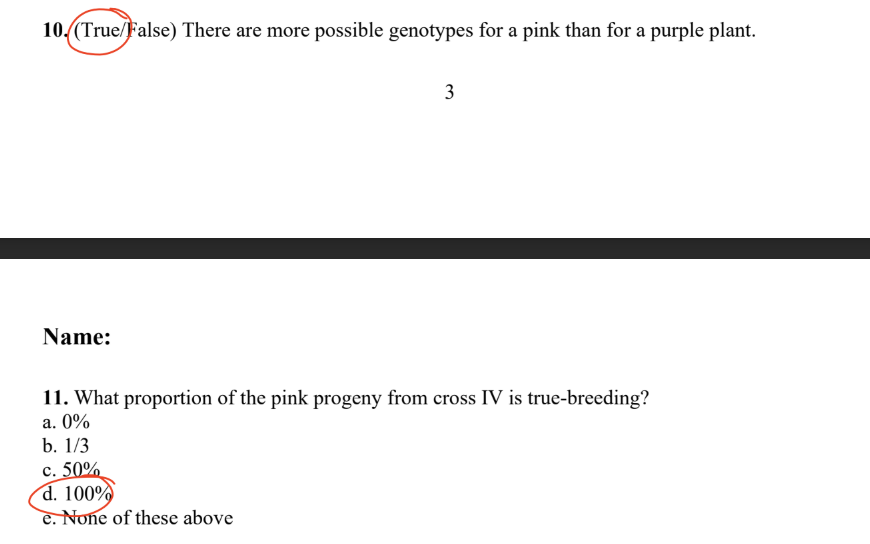
10. (True/False) There are more possible genotypes for a pink than for a purple plant.

11. What proportion of the pink progeny from cross IV is true-breeding?

a. 0%

b. 1/3

c. 50%

d. 100%

e. None of these above
knowt flashcard image
8
New cards
<p>12. What proportion of the pink progeny from cross VII is true-breeding?</p><p>a. 0%</p><p>b. 1/3</p><p>c. 50%</p><p>d. 100%</p><p>e. None of these above</p><p>13. What proportion of the lavender progeny from cross VI is true-breeding?</p><p>a. 0%</p><p>b. 1/3</p><p>c. 50%</p><p>d. 100%</p><p>e. None of these above</p>

12. What proportion of the pink progeny from cross VII is true-breeding?

a. 0%

b. 1/3

c. 50%

d. 100%

e. None of these above
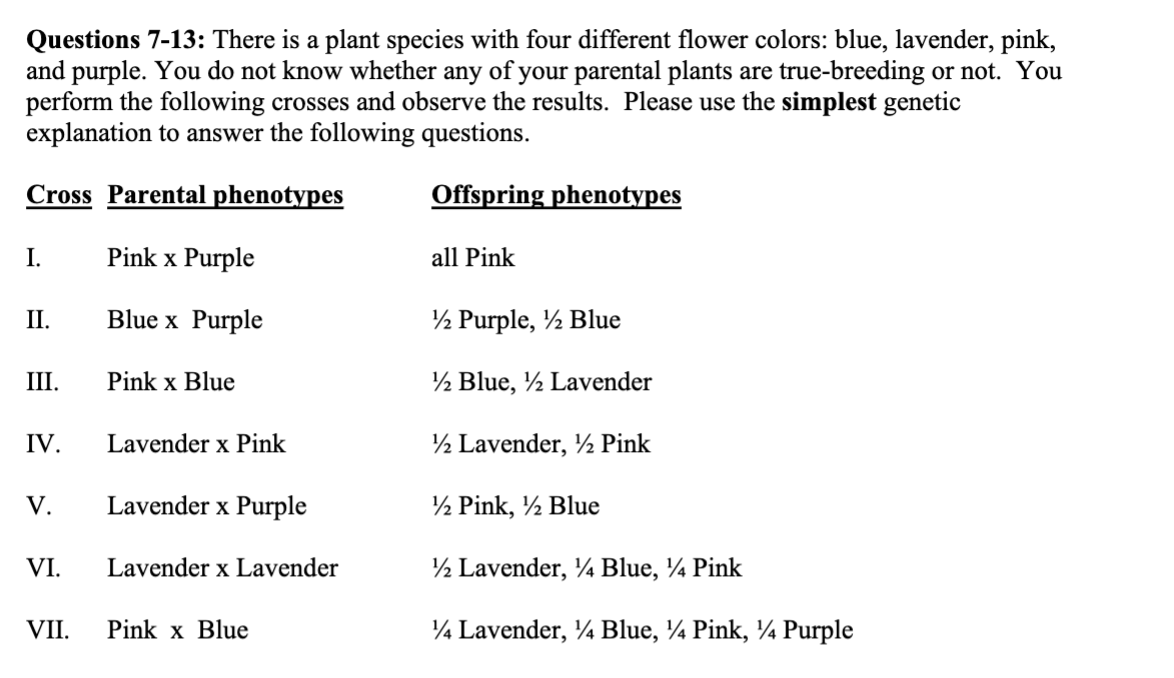
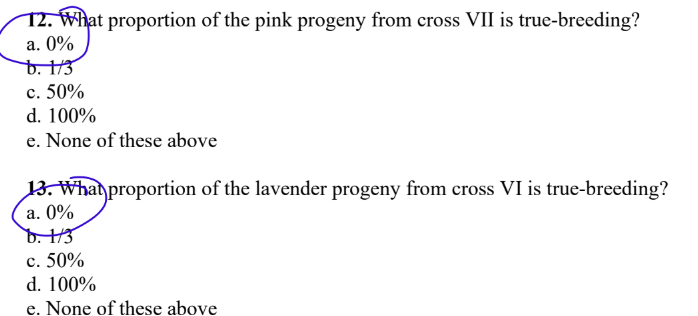
13. What proportion of the lavender progeny from cross VI is true-breeding?

a. 0%

b. 1/3

c. 50%

d. 100%

e. None of these above
knowt flashcard image
9
New cards
term image
knowt flashcard image
10
New cards
<p>MEMORIZE THIS</p><p></p>

MEMORIZE THIS

11
New cards
term image
knowt flashcard image
12
New cards

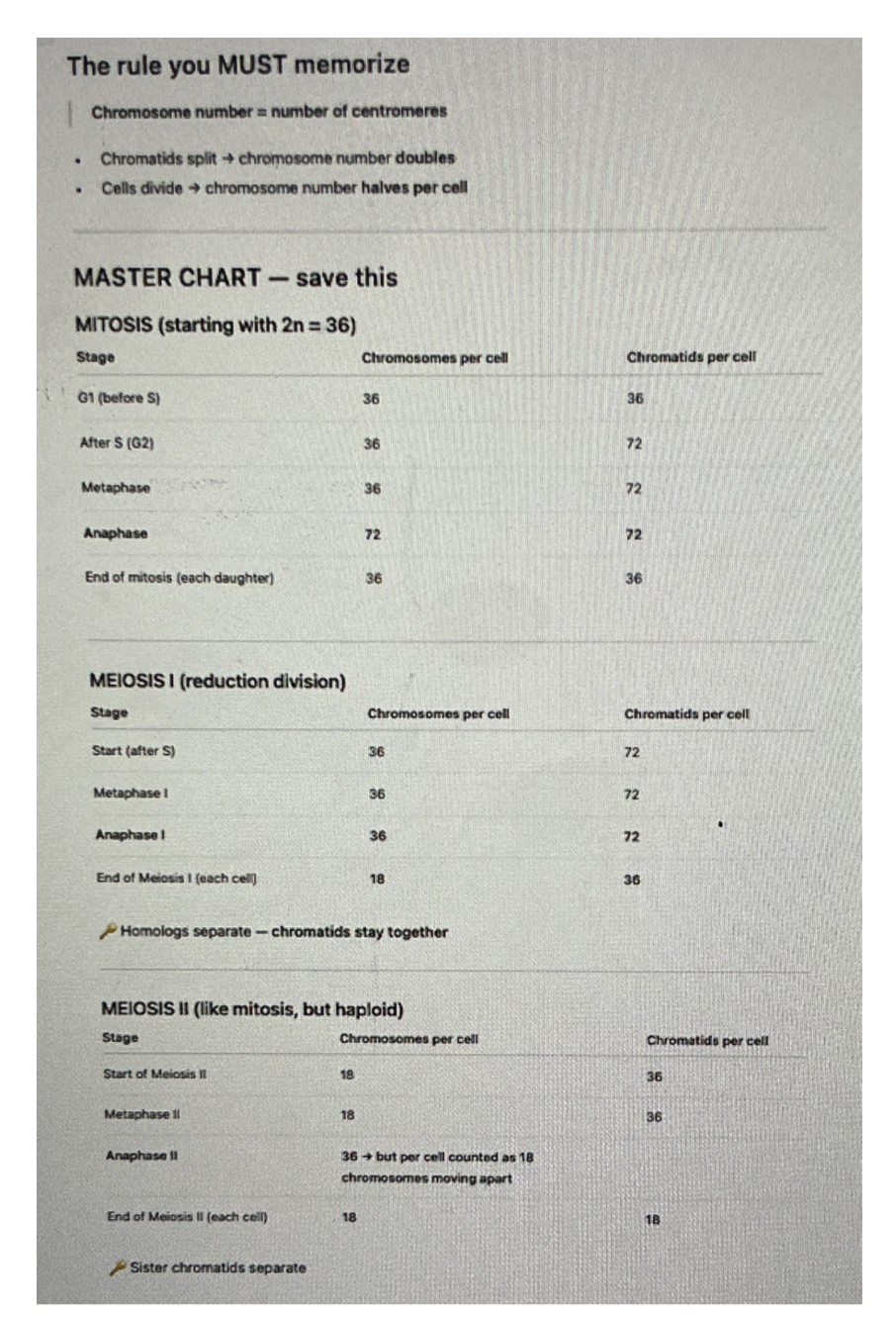
18. An organism has a diploid number of 2n = 36 chromosomes. At the end of meiotic anaphase

II, what is the number of chromosomes present in each cell?

a. 9

b. 18

c. 36

d. 72

e. None of these above

18

13
New cards
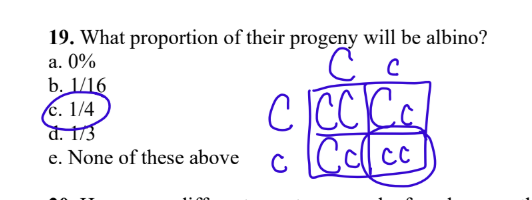
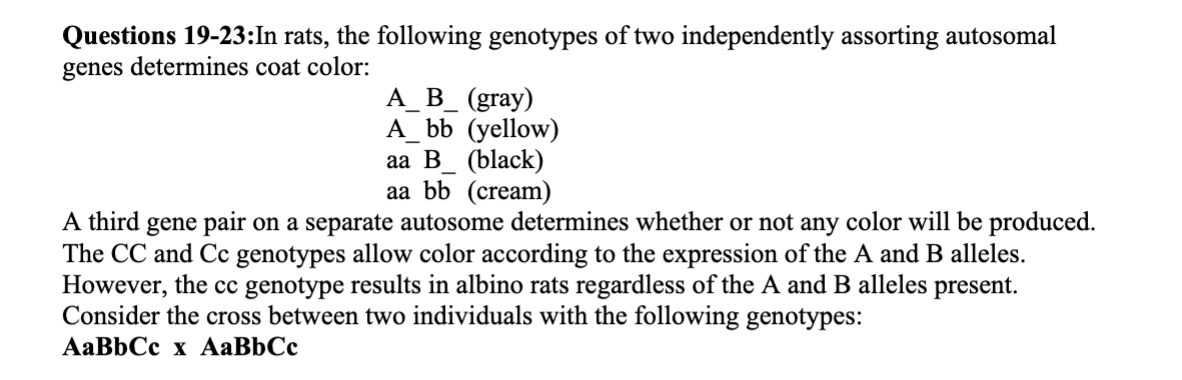
<p>What proportion of their progeny will be albino?</p><p>a. 0%</p><p>b. 1/16</p><p>c. 1/4</p><p>d. 1/3</p><p>e. None of these above</p>

What proportion of their progeny will be albino?

a. 0%

b. 1/16

c. 1/4

d. 1/3

e. None of these above

knowt flashcard image
14
New cards
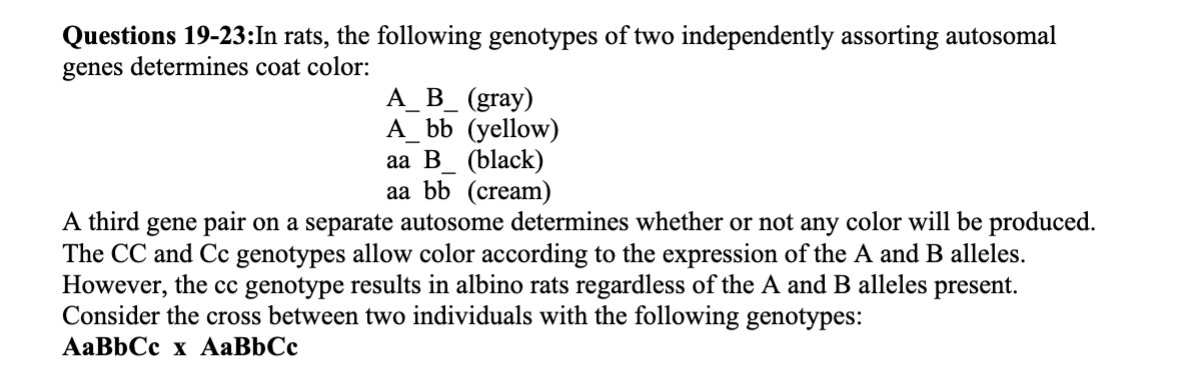
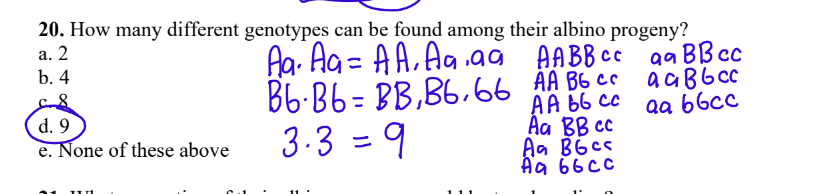
<p>20. How many different genotypes can be found among their albino progeny?</p><p>a. 2</p><p>b. 4</p><p>c. 8</p><p>d. 9</p><p>e. None of these above</p>

20. How many different genotypes can be found among their albino progeny?

a. 2

b. 4

c. 8

d. 9

e. None of these above

knowt flashcard image
15
New cards
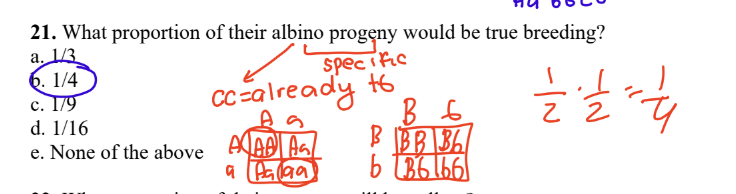
<p>21. What proportion of their albino progeny would be true breeding?</p><p>a. 1/3</p><p>b. 1/4</p><p>c. 1/9</p><p>d. 1/16</p><p>e. None of the above</p>

21. What proportion of their albino progeny would be true breeding?

a. 1/3

b. 1/4

c. 1/9

d. 1/16

e. None of the above

knowt flashcard image
16
New cards
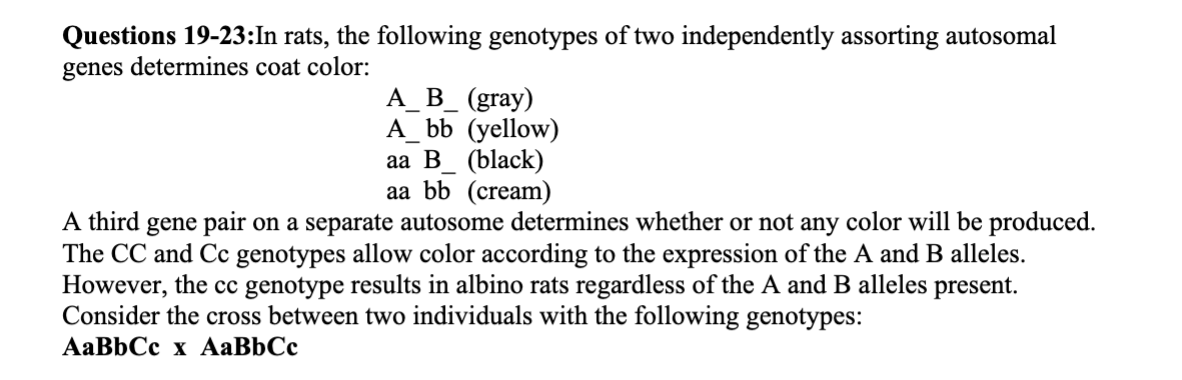
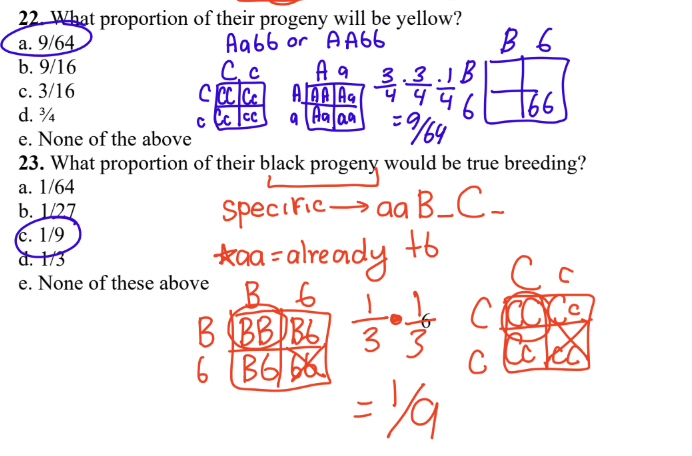
<p>22. What proportion of their progeny will be yellow?</p><p>a. 9/64</p><p>b. 9/16</p><p>c. 3/16</p><p>d. ¾</p><p>e. None of the above</p><p>23. What proportion of their black progeny would be true breeding?</p><p>a. 1/64</p><p>b. 1/27</p><p>c. 1/9</p><p>d. 1/3</p><p>e. None of these above</p><p></p>

22. What proportion of their progeny will be yellow?

a. 9/64

b. 9/16

c. 3/16

d. ¾

e. None of the above

23. What proportion of their black progeny would be true breeding?

a. 1/64

b. 1/27

c. 1/9

d. 1/3

e. None of these above

knowt flashcard image
17
New cards
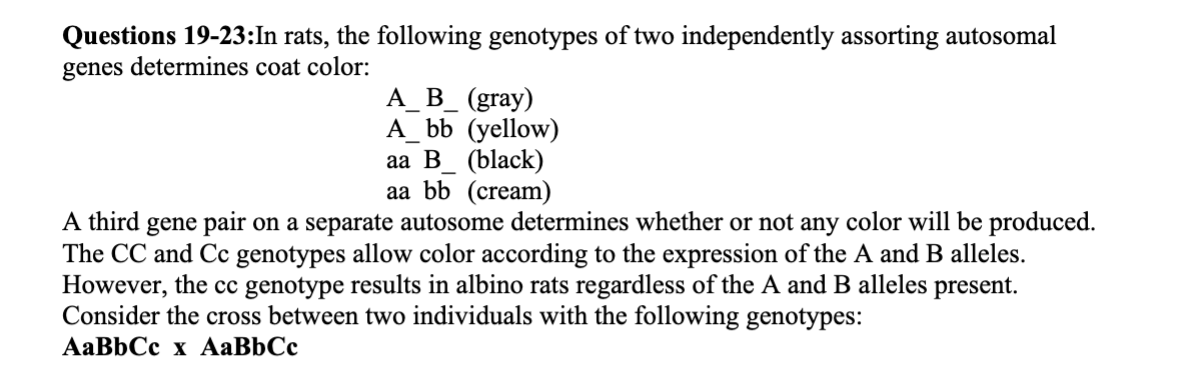
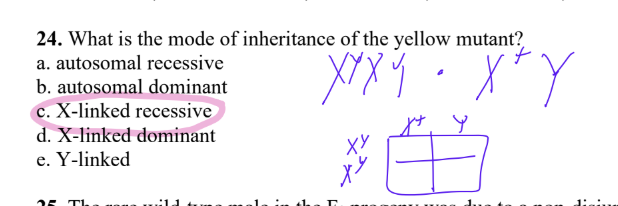
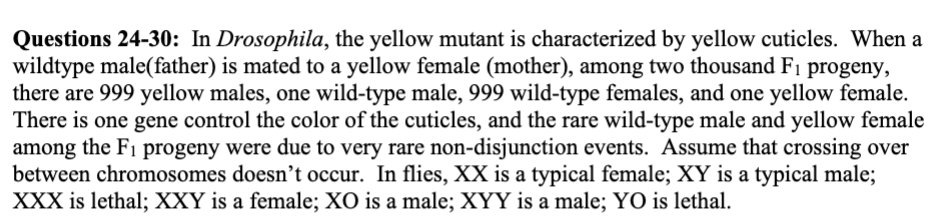
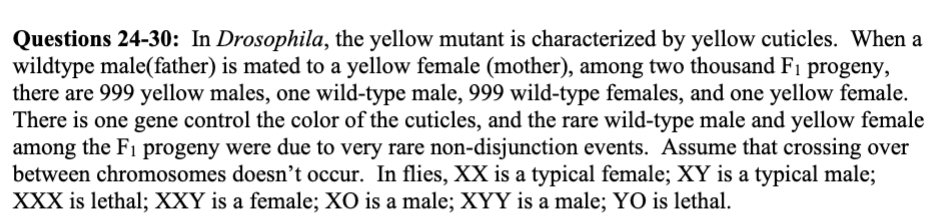
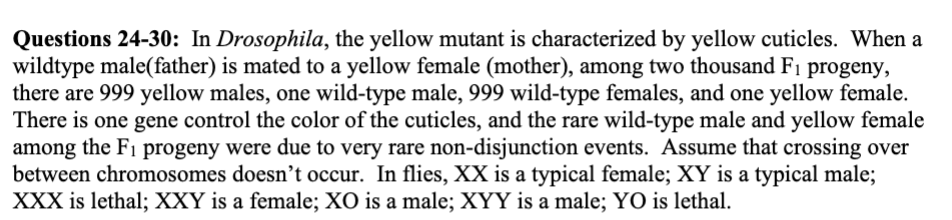
<p>4. What is the mode of inheritance of the yellow mutant?</p><p>a. autosomal recessive</p><p>b. autosomal dominant</p><p>c. X-linked recessive</p><p>d. X-linked dominant</p><p>e. Y-linked</p>

4. What is the mode of inheritance of the yellow mutant?

a. autosomal recessive

b. autosomal dominant

c. X-linked recessive

d. X-linked dominant

e. Y-linked

knowt flashcard image
18
New cards
<p>MEMORIZE<br></p>

MEMORIZE

19
New cards
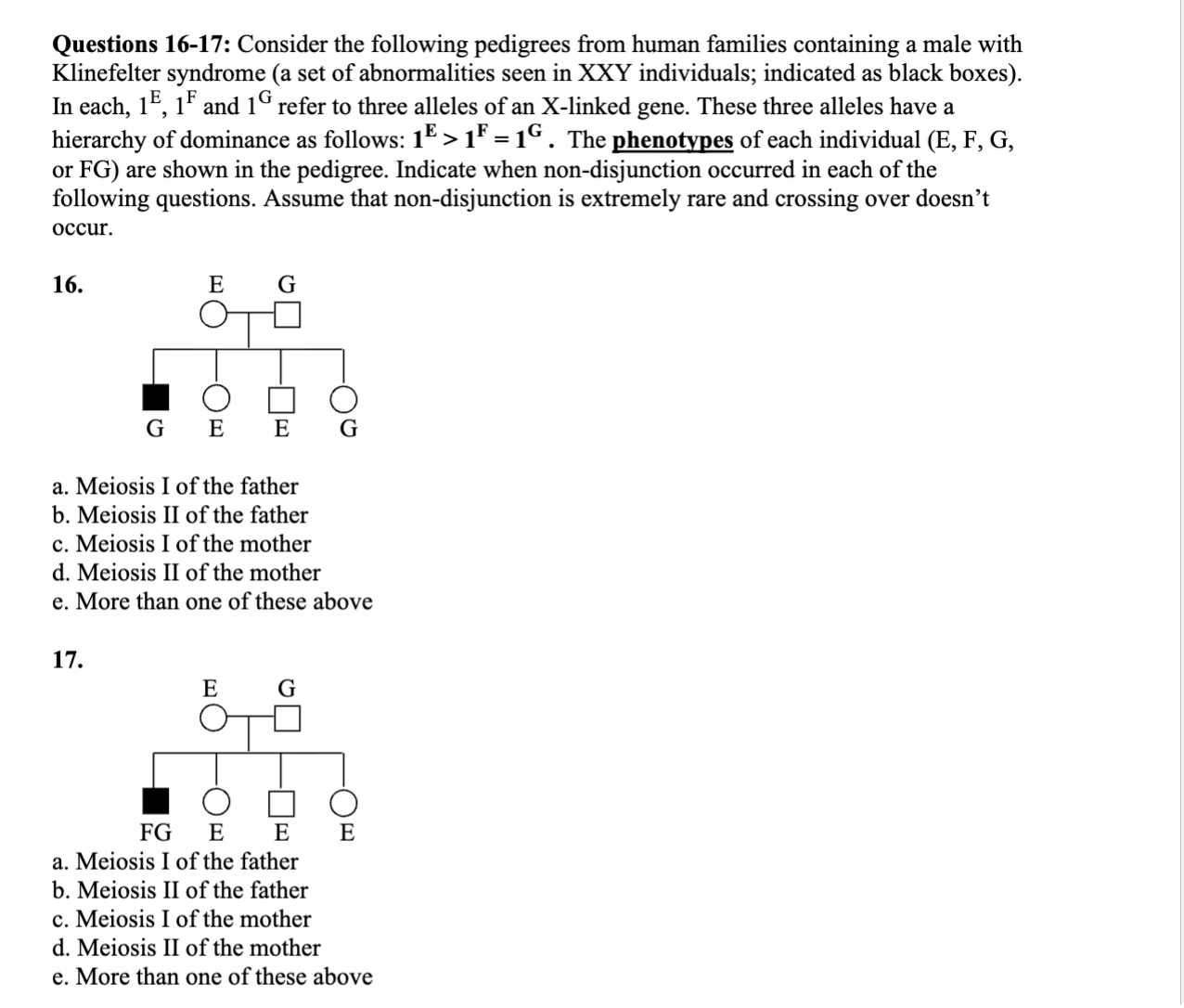
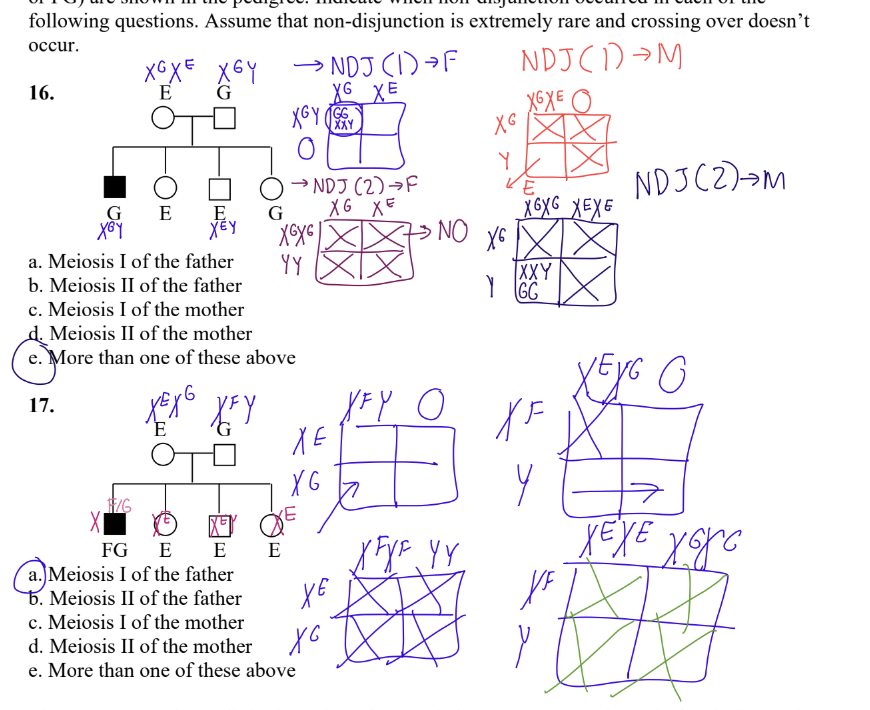
<p>25. The rare wild-type male in the F1 progeny was due to a non-disjunction event happened in</p><p>a. the father</p><p>b. the mother</p><p>c. either the mother or the father</p>

25. The rare wild-type male in the F1 progeny was due to a non-disjunction event happened in

a. the father

b. the mother

c. either the mother or the father

knowt flashcard image
20
New cards
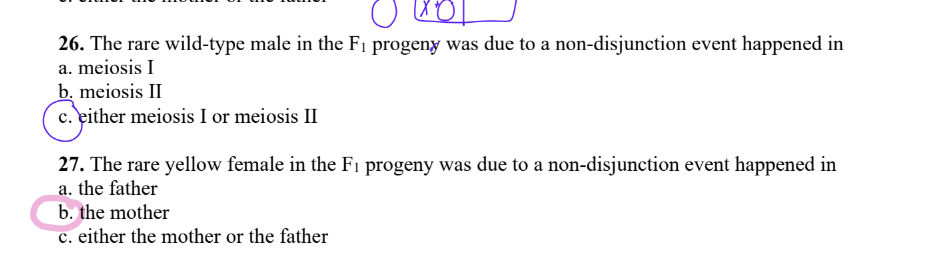
<p>26. The rare wild-type male in the F1 progeny was due to a non-disjunction event happened in</p><p>a. meiosis I</p><p>b. meiosis II</p><p>c. either meiosis I or meiosis II</p><p></p><p>27. The rare yellow female in the F1 progeny was due to a non-disjunction event happened in</p><p>a. the father</p><p>b. the mother</p><p>c. either the mother or the fathe</p>

26. The rare wild-type male in the F1 progeny was due to a non-disjunction event happened in

a. meiosis I

b. meiosis II

c. either meiosis I or meiosis II

27. The rare yellow female in the F1 progeny was due to a non-disjunction event happened in

a. the father

b. the mother

c. either the mother or the fathe

knowt flashcard image
21
New cards
<p>28. The rare yellow female in the F1 progeny was due to a non-disjunction event happened in</p><p>a. meiosis I</p><p>b. meiosis II</p><p>c. either meiosis I or meiosis II</p><p>29. (True/False) A non-disjunction event during meiosis I of the father might produce a rare</p><p>yellow female.</p><p>30. If a yellow male mated with a true-breeding wild-type female, what results would you</p><p>predict?</p><p>a. All male and female progeny are 99.9% wild-type and 0.1% yellow</p><p>b. All male progeny are wild-type; 99.9% female progeny are wild-type and 0.1% yellow</p><p>c. All male progeny are wild-type; 99.9% female progeny are yellow and 0.1% wild-type</p><p>d. All female progeny are wild-type; 99.9% male progeny are wild-type and 0.1% yellow</p><p>e. All female progeny are wild-type; 99.9% male progeny are yellow and 0.1% wild-type</p><p></p>

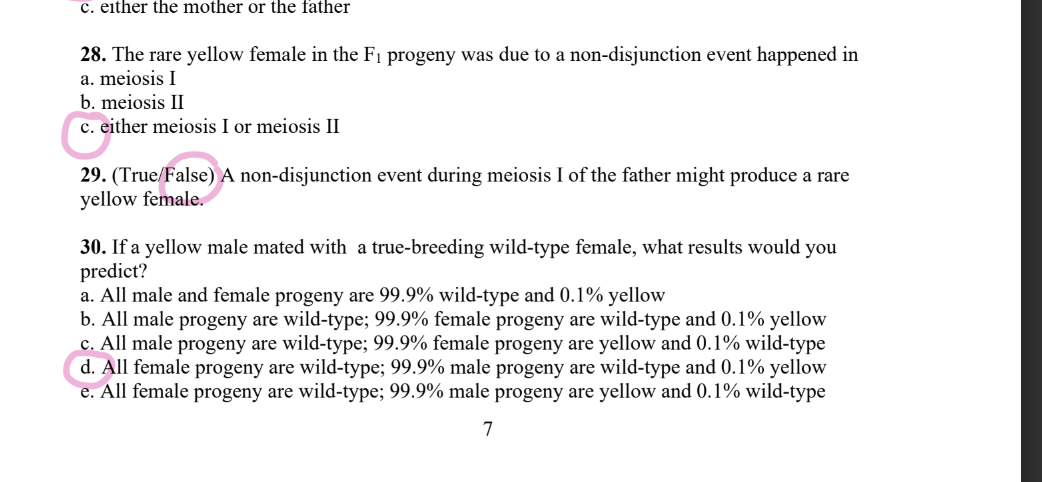
28. The rare yellow female in the F1 progeny was due to a non-disjunction event happened in

a. meiosis I

b. meiosis II

c. either meiosis I or meiosis II

29. (True/False) A non-disjunction event during meiosis I of the father might produce a rare

yellow female.

30. If a yellow male mated with a true-breeding wild-type female, what results would you

predict?

a. All male and female progeny are 99.9% wild-type and 0.1% yellow

b. All male progeny are wild-type; 99.9% female progeny are wild-type and 0.1% yellow

c. All male progeny are wild-type; 99.9% female progeny are yellow and 0.1% wild-type

d. All female progeny are wild-type; 99.9% male progeny are wild-type and 0.1% yellow

e. All female progeny are wild-type; 99.9% male progeny are yellow and 0.1% wild-type

knowt flashcard image
22
New cards
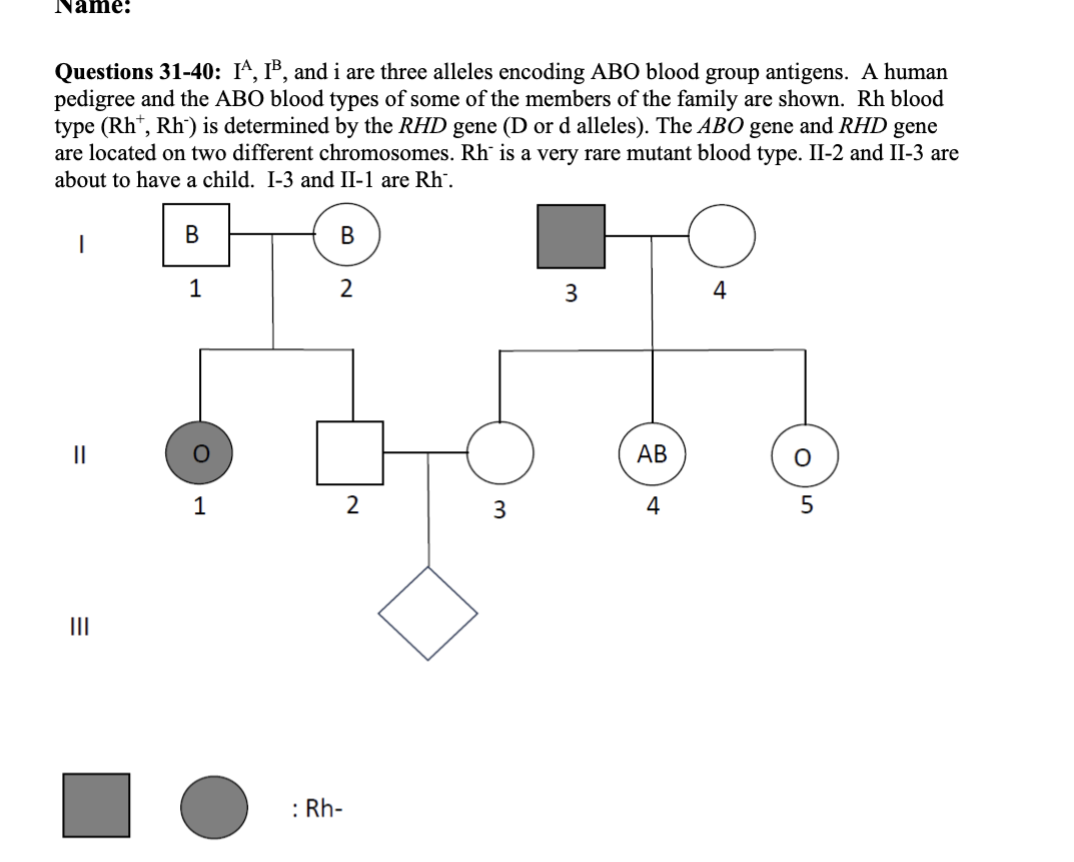
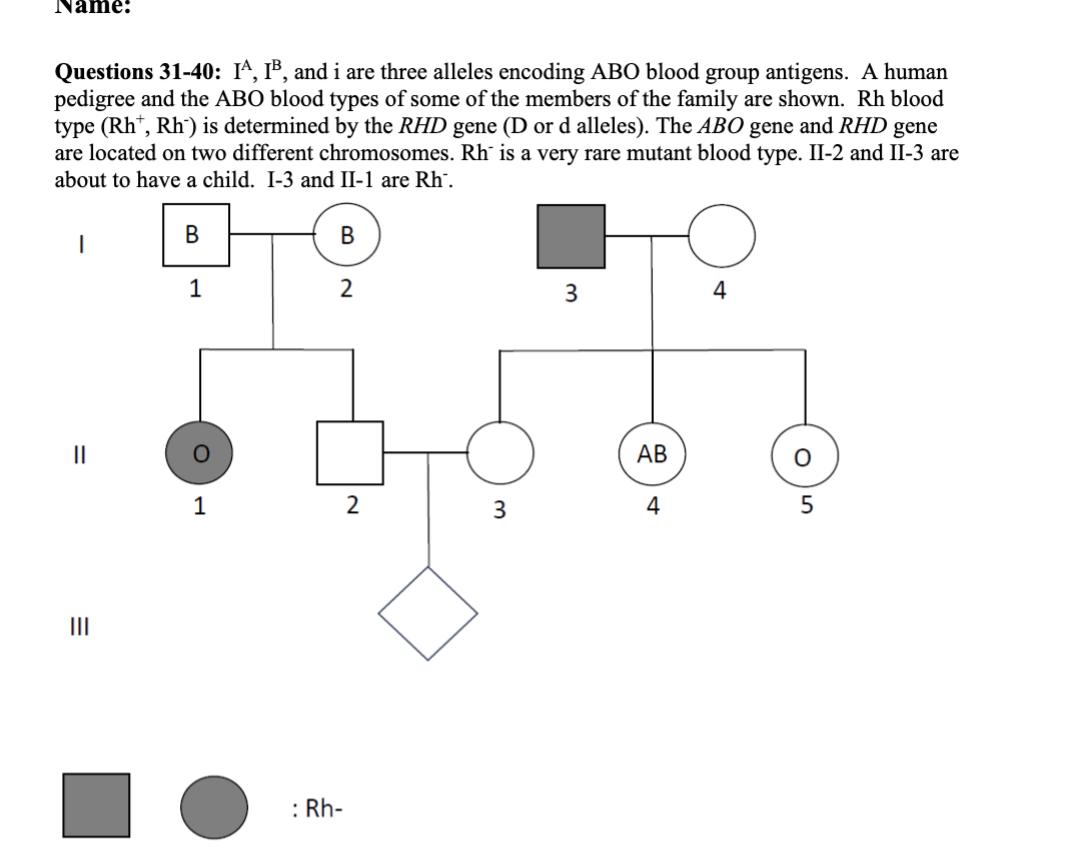
<p>31 What is the inheritance pattern of Rh blood type?</p><p>a. autosomal dominant</p><p>b. autosomal recessive</p><p>c. X-linked dominant</p><p>d. X-linked recessive</p><p>e. Y-linked</p><p>32. (True/False) I-3 must have blood type A.</p><p>33. (True/False) II-2 must have an i allele.</p><p>34. (True/False) II-5 must be heterogeneous for RHD gene.</p>

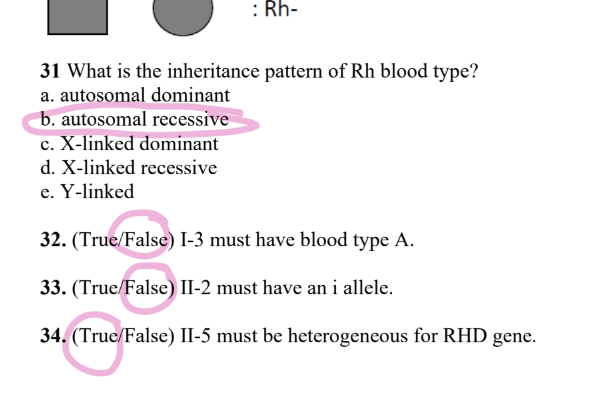
31 What is the inheritance pattern of Rh blood type?

a. autosomal dominant

b. autosomal recessive

c. X-linked dominant

d. X-linked recessive

e. Y-linked

32. (True/False) I-3 must have blood type A.

33. (True/False) II-2 must have an i allele.

34. (True/False) II-5 must be heterogeneous for RHD gene.

knowt flashcard image
23
New cards
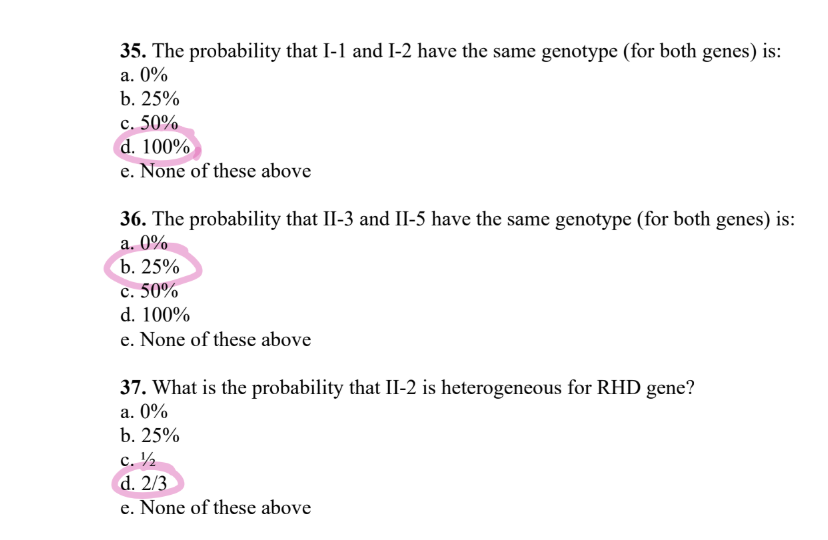
<p>35. The probability that I-1 and I-2 have the same genotype (for both genes) is:</p><p>a. 0%</p><p>b. 25%</p><p>c. 50%</p><p>d. 100%</p><p>e. None of these above</p><p>36. The probability that II-3 and II-5 have the same genotype (for both genes) is:</p><p>a. 0%</p><p>b. 25%</p><p>c. 50%</p><p>d. 100%</p><p>e. None of these above</p><p>37. What is the probability that II-2 is heterogeneous for RHD gene?</p><p>a. 0%</p><p>b. 25%</p><p>c. ½</p><p>d. 2/3</p><p>e. None of these above</p>

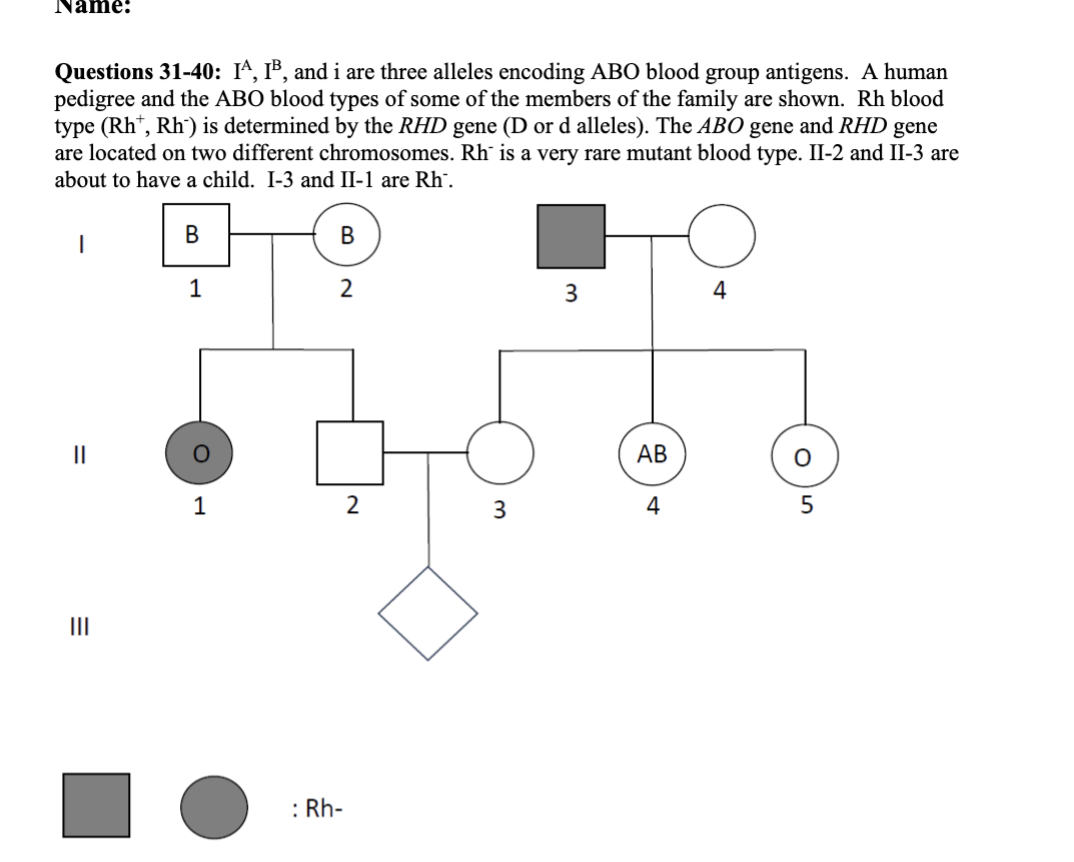
35. The probability that I-1 and I-2 have the same genotype (for both genes) is:

a. 0%

b. 25%

c. 50%

d. 100%

e. None of these above
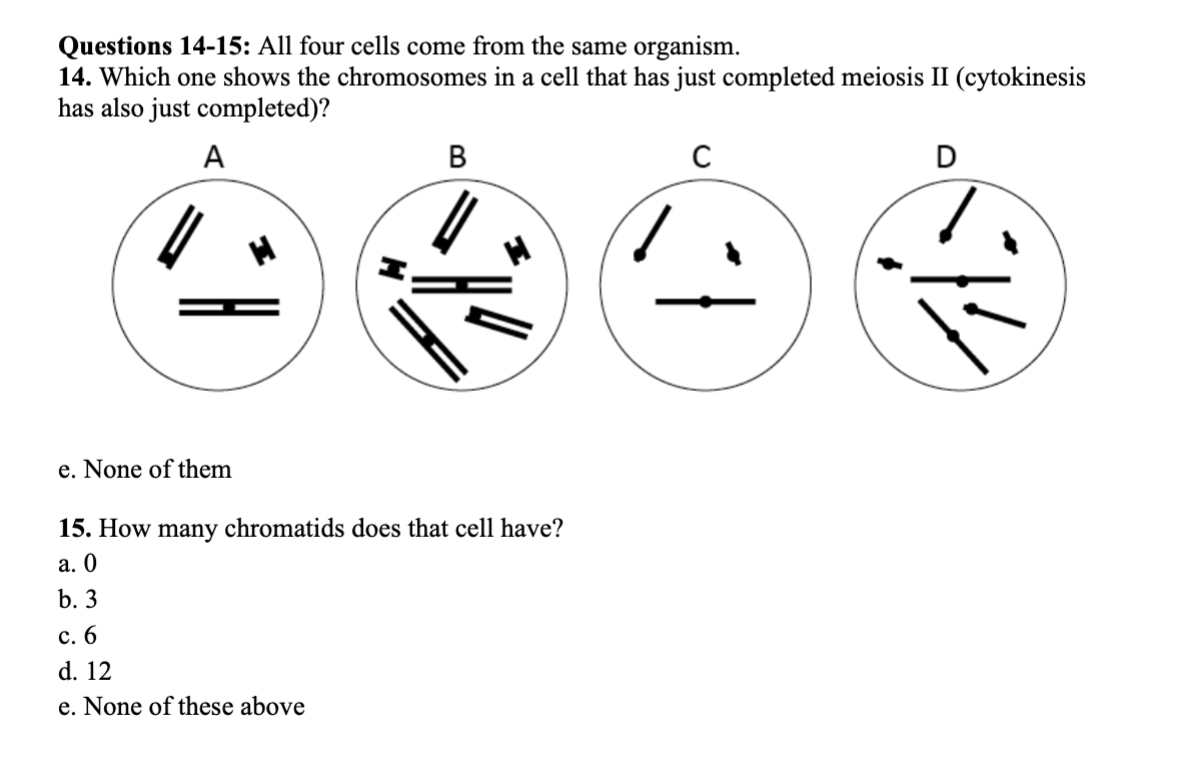
36. The probability that II-3 and II-5 have the same genotype (for both genes) is:

a. 0%

b. 25%

c. 50%

d. 100%

e. None of these above
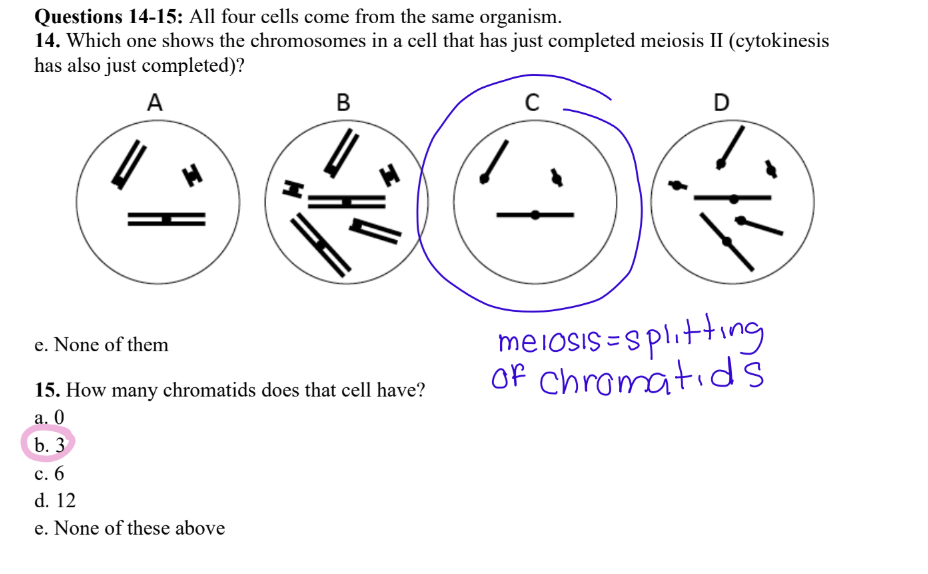
37. What is the probability that II-2 is heterogeneous for RHD gene?

a. 0%

b. 25%

c. ½

d. 2/3

e. None of these above
knowt flashcard image
24
New cards
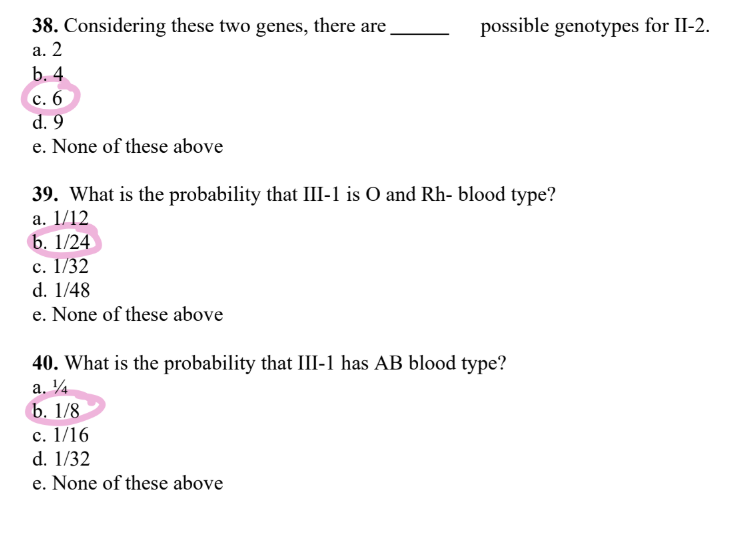
<p>38. Considering these two genes, there are possible genotypes for II-2.</p><p>a. 2</p><p>b. 4</p><p>c. 6</p><p>d. 9</p><p>e. None of these above</p><p>39. What is the probability that III-1 is O and Rh- blood type?</p><p>a. 1/12</p><p>b. 1/24</p><p>c. 1/32</p><p>d. 1/48</p><p>e. None of these above</p><p>40. What is the probability that III-1 has AB blood type?</p><p>a. ¼</p><p>b. 1/8</p><p>c. 1/16</p><p>d. 1/32</p><p>e. None of these above</p>

38. Considering these two genes, there are possible genotypes for II-2.

a. 2

b. 4

c. 6

d. 9

e. None of these above

39. What is the probability that III-1 is O and Rh- blood type?

a. 1/12

b. 1/24

c. 1/32

d. 1/48

e. None of these above

40. What is the probability that III-1 has AB blood type?

a. ¼

b. 1/8

c. 1/16

d. 1/32

e. None of these above
knowt flashcard image