FSAD 1250
 Studied by 0 people
 Call with Kai
 Learn
Learn Practice Test
 Spaced Repetition
 Match
Match Flashcards
 Knowt Play
1/136

There's no tags or description
Looks like no tags are added yet.
Name | Mastery | Learn | Test | Matching | Spaced | Call with Kai |
|---|
No study sessions yet.
137 Terms
representation
a central practice that produces culture
signifier
the visual
signified
the meaning
trademark
a word, phrase, or symbol that identifies and distinguishes the maker
trade dress
the distinctive presentation of a brand, not just its name or logo (ex., Packaging in Tiffany blue)
discourse
The issues, stories, and images that cultures work through -shapes how we understand ourselves and cultural issues.
simple weave structure
only one set of warp and weft pathways
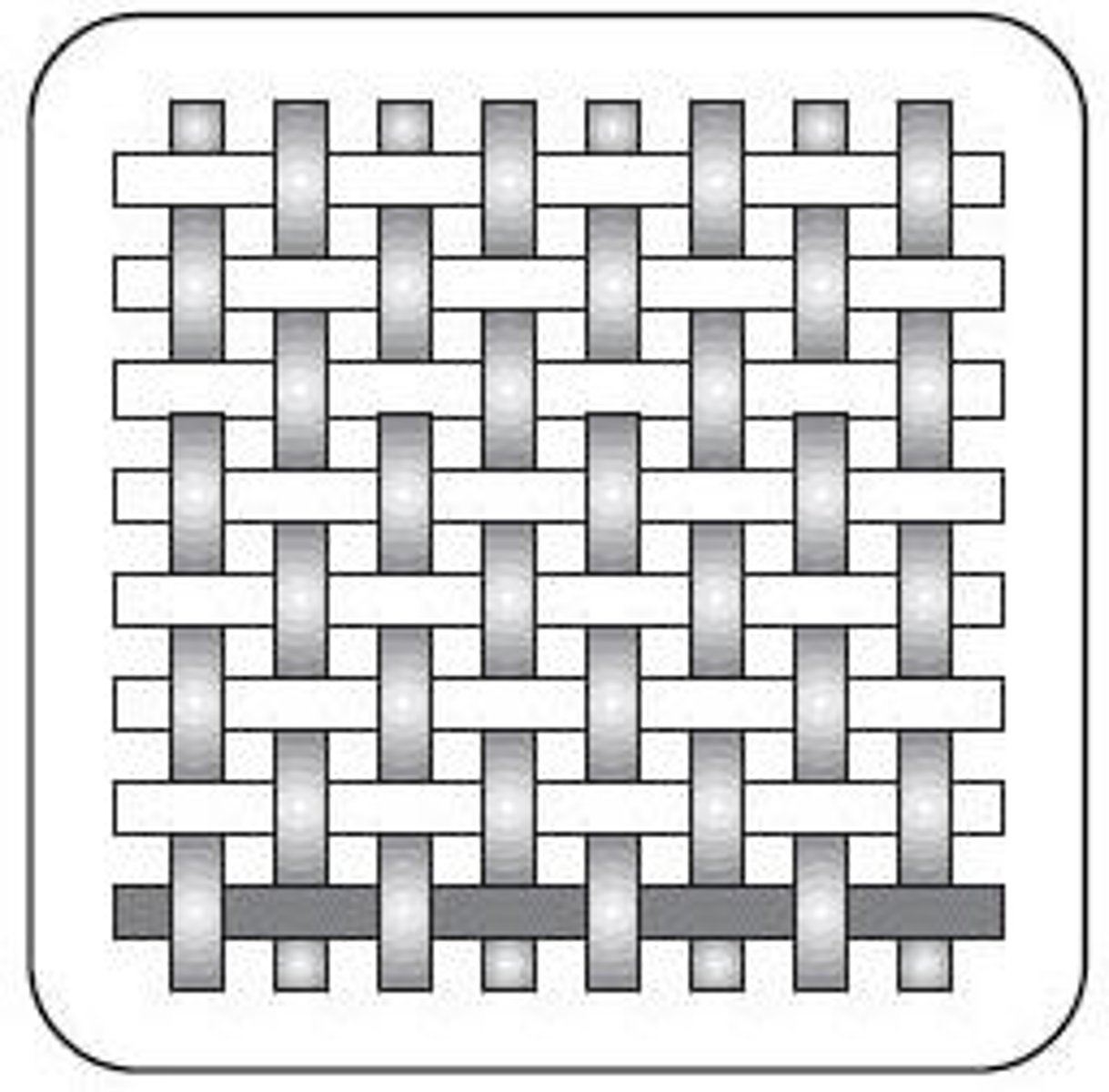
compound weave structure
more than one set of warp and/or weft pathways (brocade → jacquard)
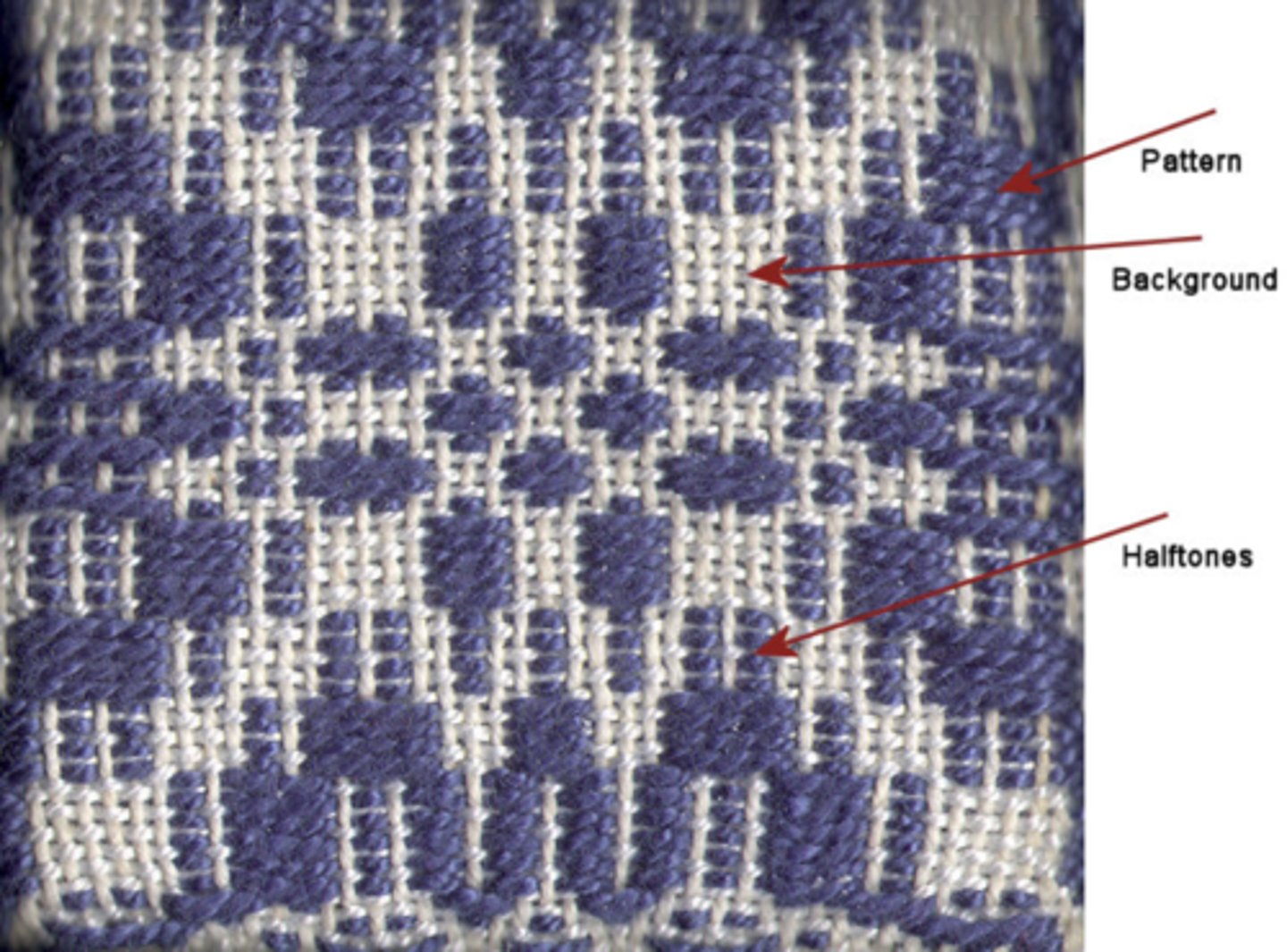
continuous weave structure
wefts travel from edge to edge of the cloth
discontinuous weave structure
wefts do not travel from edge to edge, but only in small areas where they are needed for design
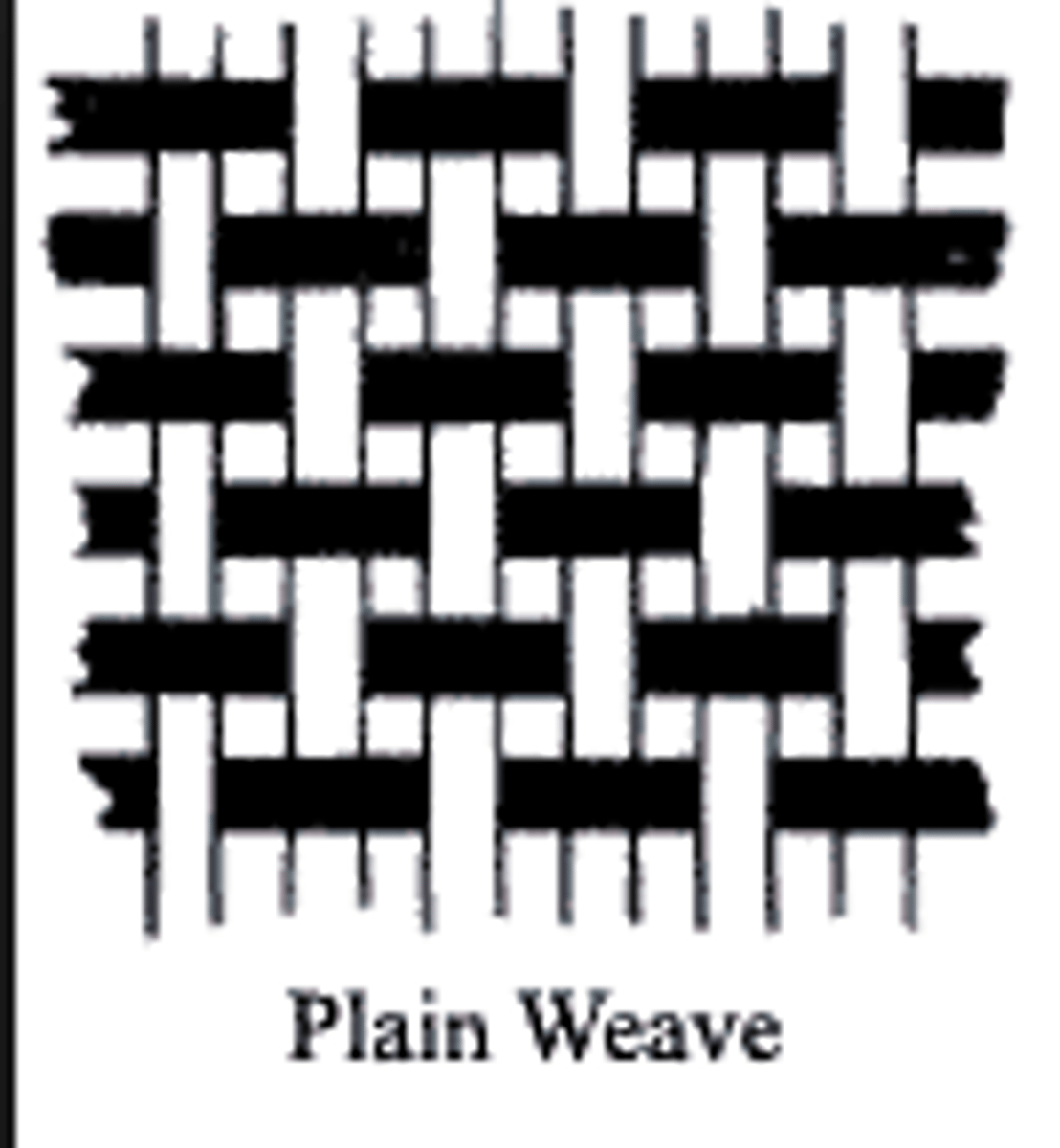
plain weave
warp/weft pathways over/under every other thread; even over all texture
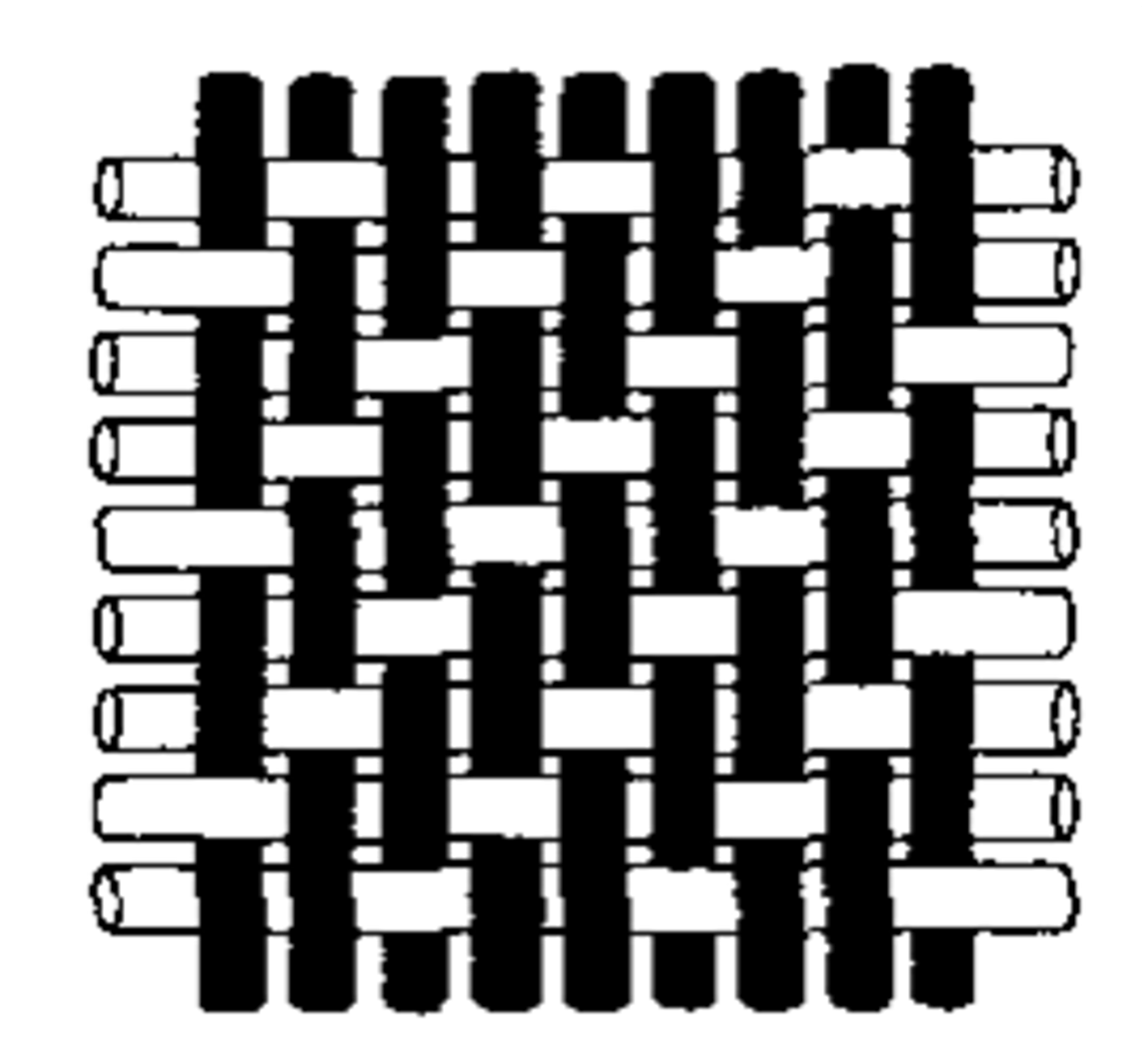
pattern weave
wefts "float" over or under groups of warps in a logical sequence that creates a pattern
e: satin and twill (denim)
warps
The parallel strings stretched from loom beam to loom beam upon which rows of knots are tied.
- vertical lines
weft
the horizontal threads interlaced through the warp in a woven fabric
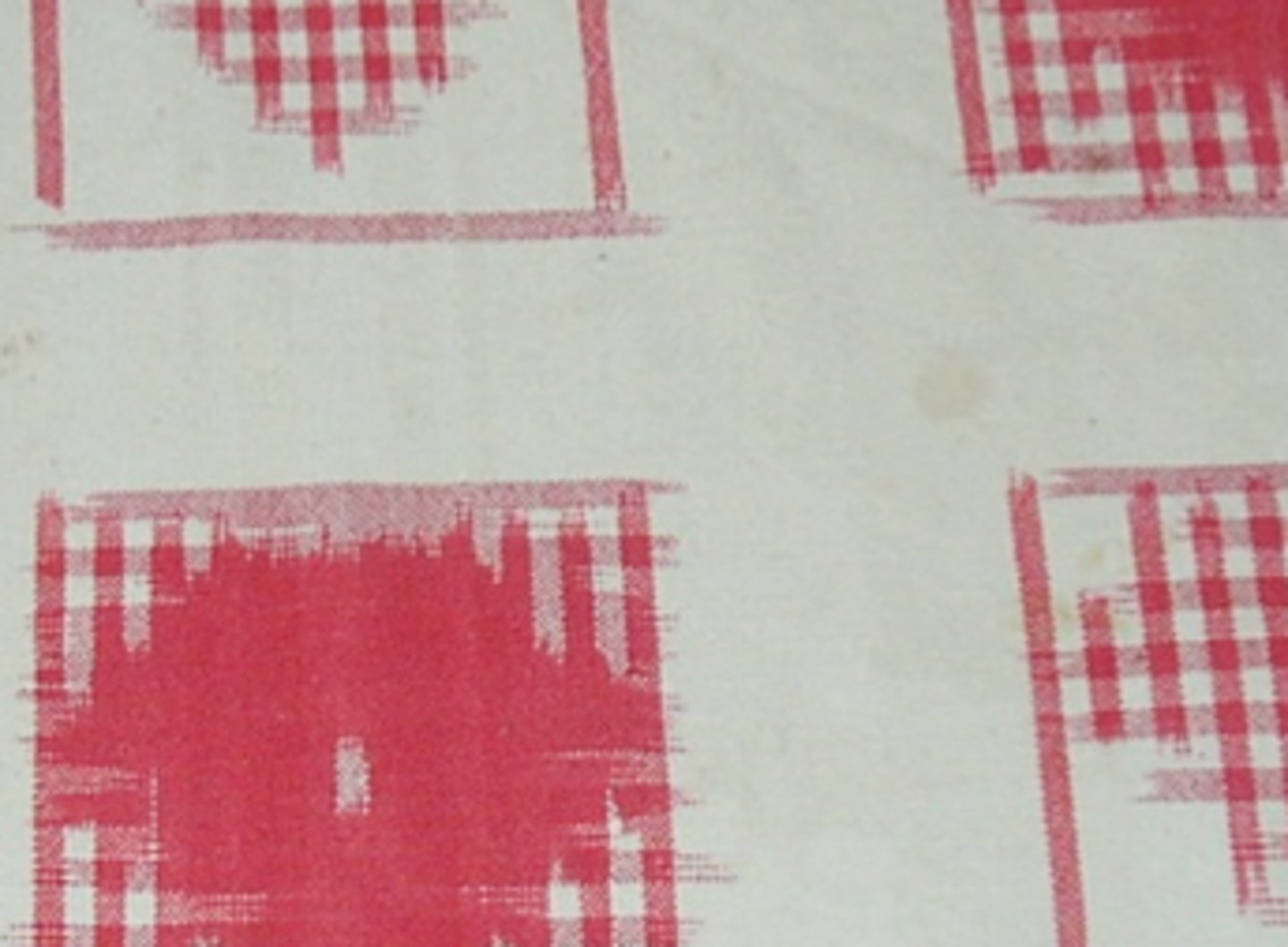
double IKAT
when both the warp and the weft are tie-dyed before weaving
two categories for natural dyes
substantive dye and adjective natural dye
substansive dye
direct dye, no mordant dye
adjective natural dye
mordant needed to dye
- natural dyes that don't adhere well on their own, making colors permanent, washfast, and lightfast
mordant
a substance used in dyeing or etching that acts as a chemical binding agent to permanently bond a dye to a fiber or "bite" into a metal plate
- improves light and color fastness
- prevents bleeding
knits
the process of making a fabric or garment by interlinking one or more yarns in a series of connected loops
knits vs wovens
Knits -
Requires only one set of yarn
Inherently has stretch b/c of looped structure
Low dimensional stability
High air permeability
Wovens -
Requires minimum two sets of yarn
Inherently low elasticity
High dimensional stability
Less air permeable
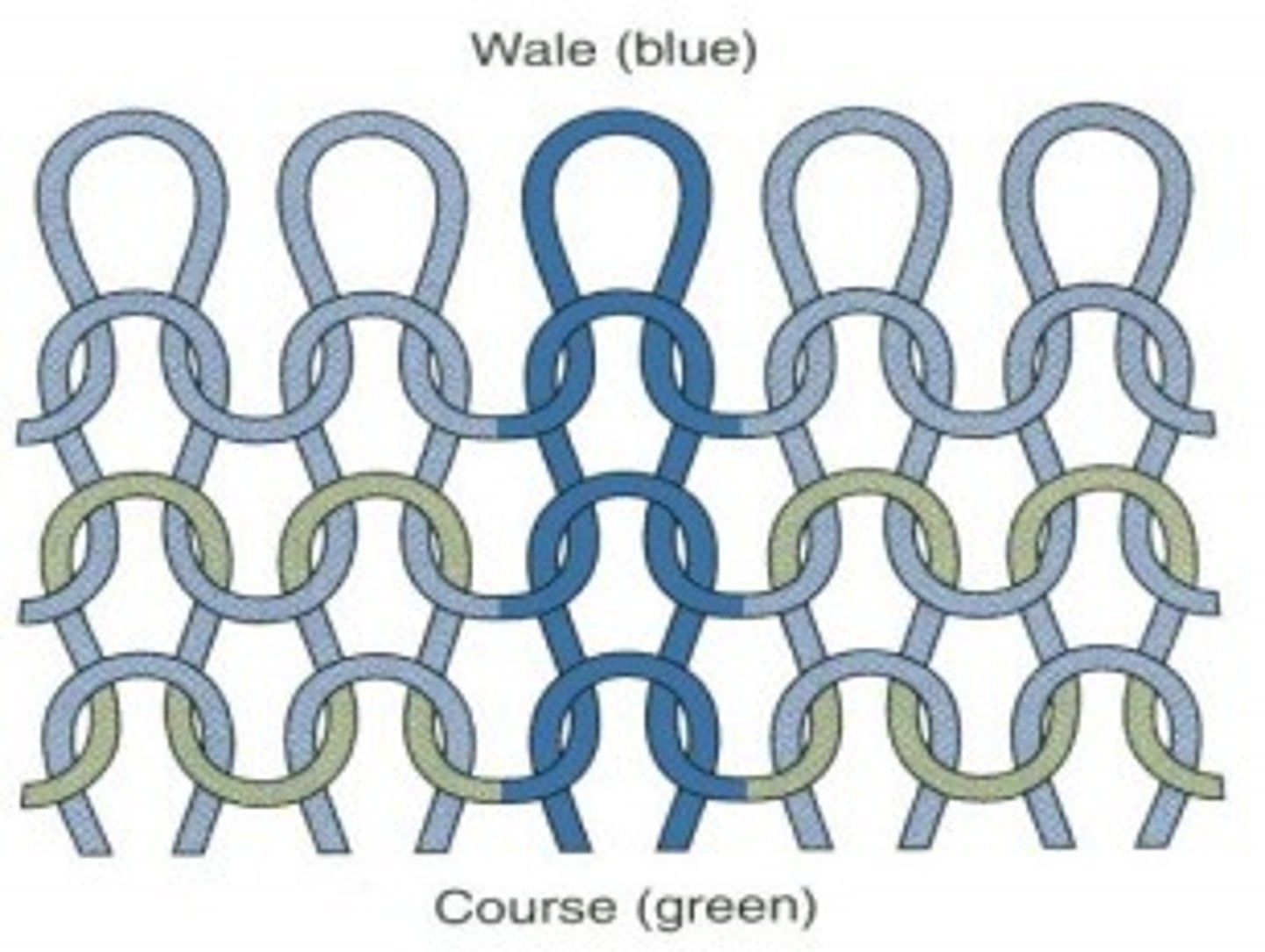
course of knit
horizontal row of stitches
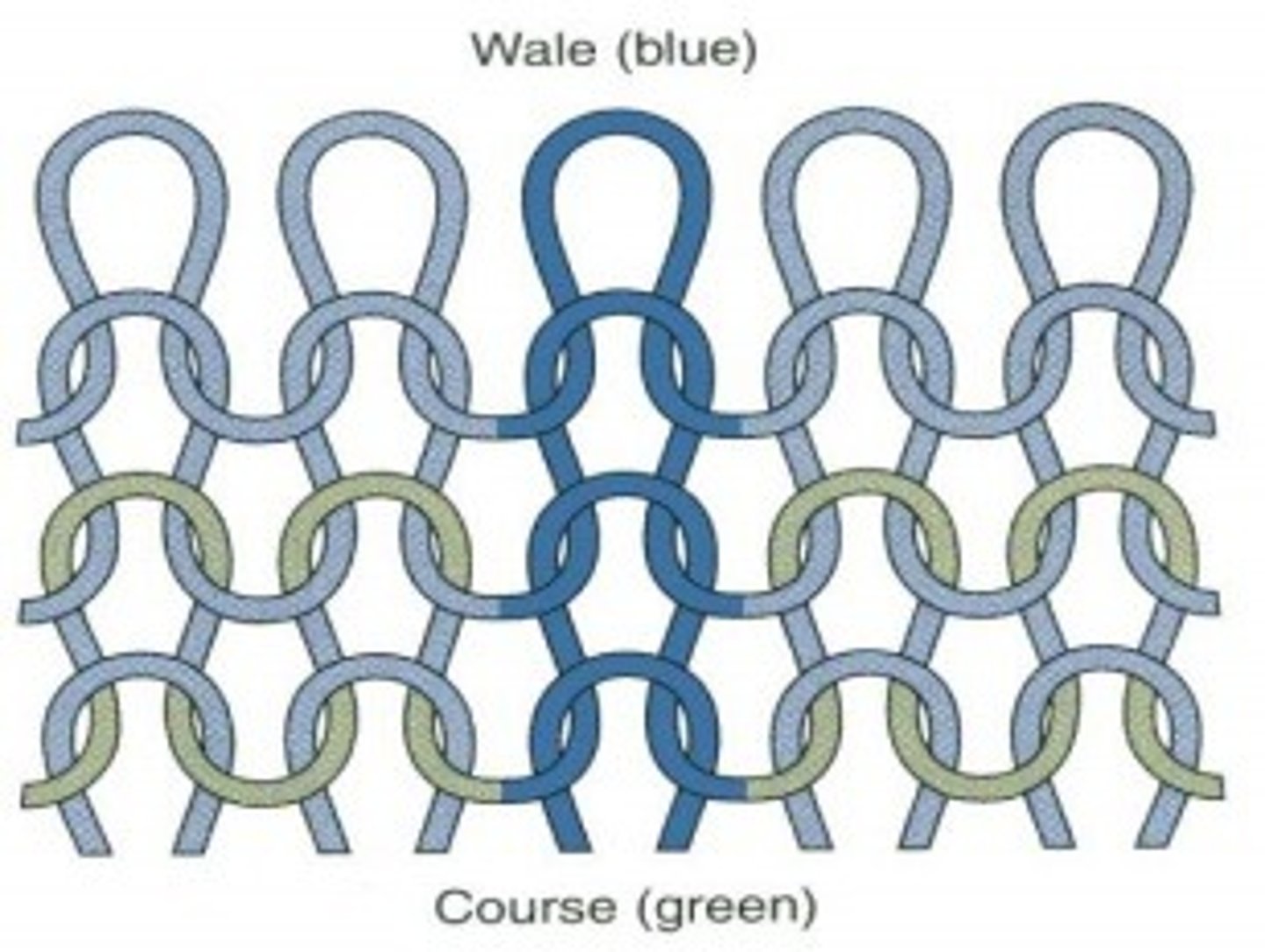
wale of knit
a vertical column of stitches running lengthwise down the fabric
rat dye
scientific technique that uses a water-based solution of the yellow food dye tartrazine to make the skin of a living rat transparent.
contact dyeing
a natural dyeing technique where dyestuffs like leaves, flowers, and berries are placed directly onto fabric and then processed with heat and a mordant to transfer color
- waterless method
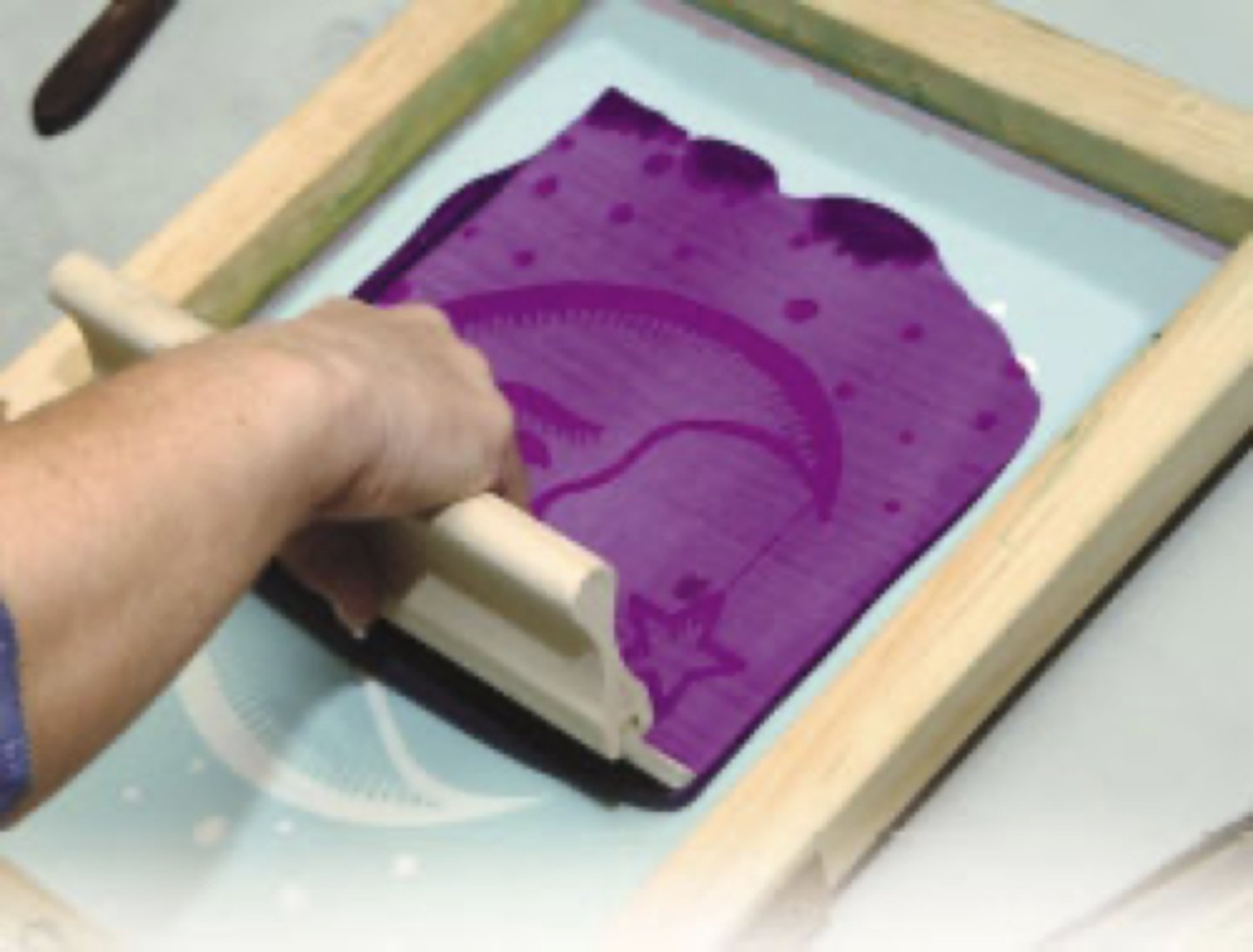
silk screen printing
uses a stencil and mesh screen to force ink through the open areas
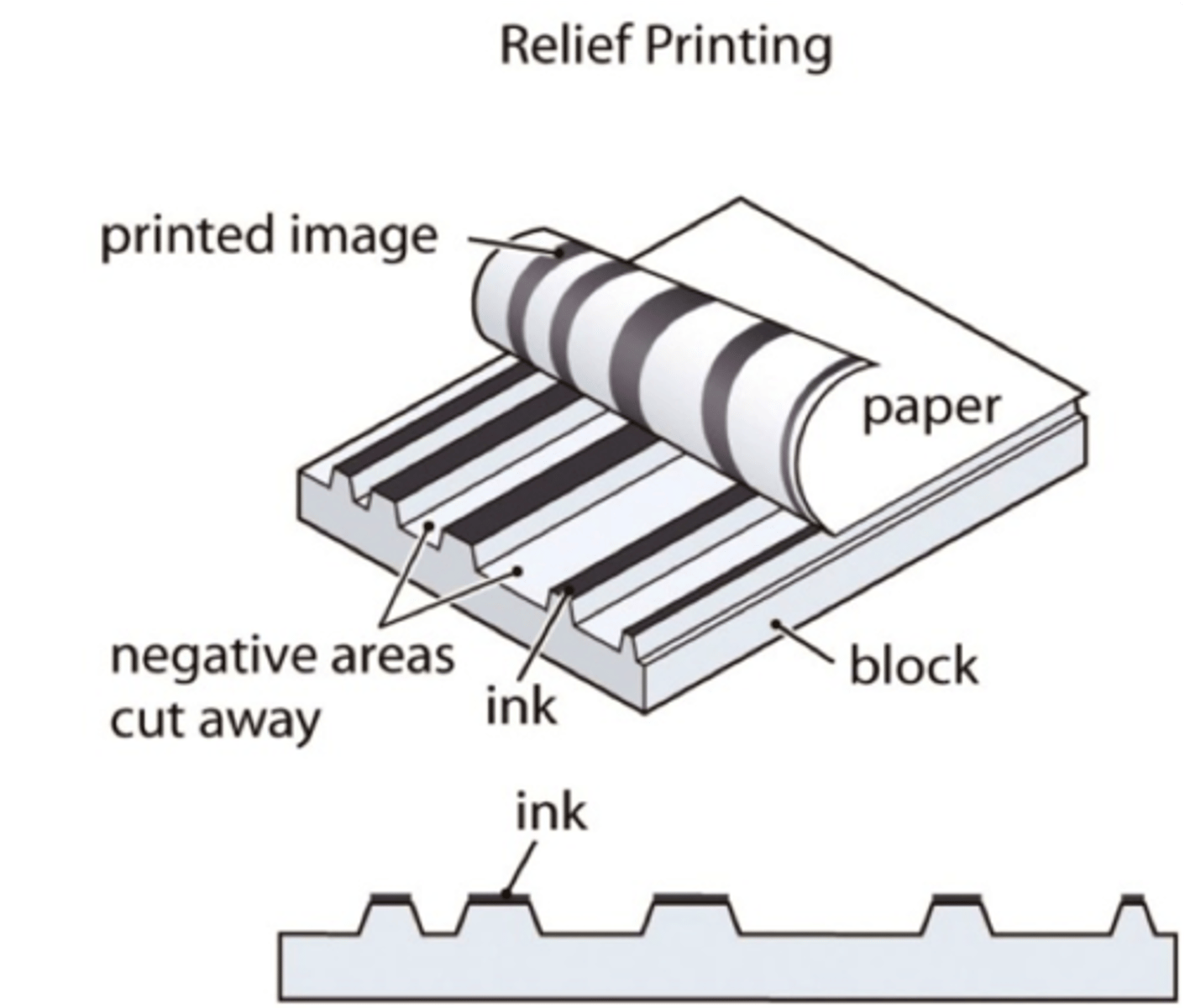
relief printing
printmaking techniques in which the image is printed from the raised areas of the printmaking block.
resist dyeing
technique of blocking or preventing color absorption during yarn and fabric dyeing
- achieved by applying a "resist" medium, such as wax or paste, or through mechanical methods like tying, stitching, or folding the fabric
ex: batik, tie dye, ikat
batik
example of resist dyeing
- method of dyeing fabric by covering certain sections with wax
are dyes soluble or insoluble
are soluble in water, used for textiles and hair.
- bond with fiber
are pigments soluble or insoluble
are not soluble in water, used for paints and cosmetics
- generally sit on top of fiber
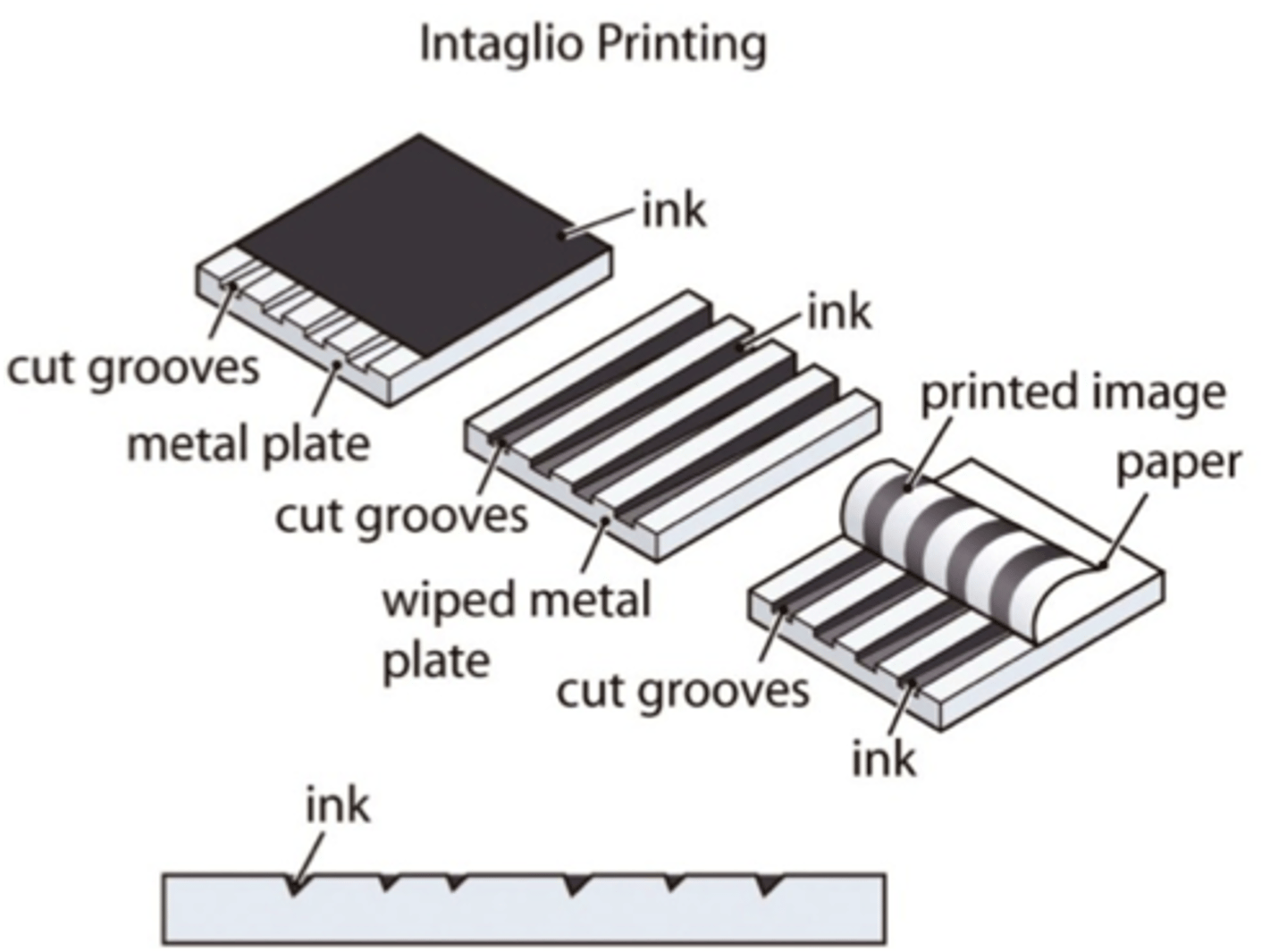
intaglio printing
a printing process that uses an etched or engraved plate
- engraving, etching, drypoint, mezzotint, and aquatint
- surface recessed unlike raised surface in relief printing
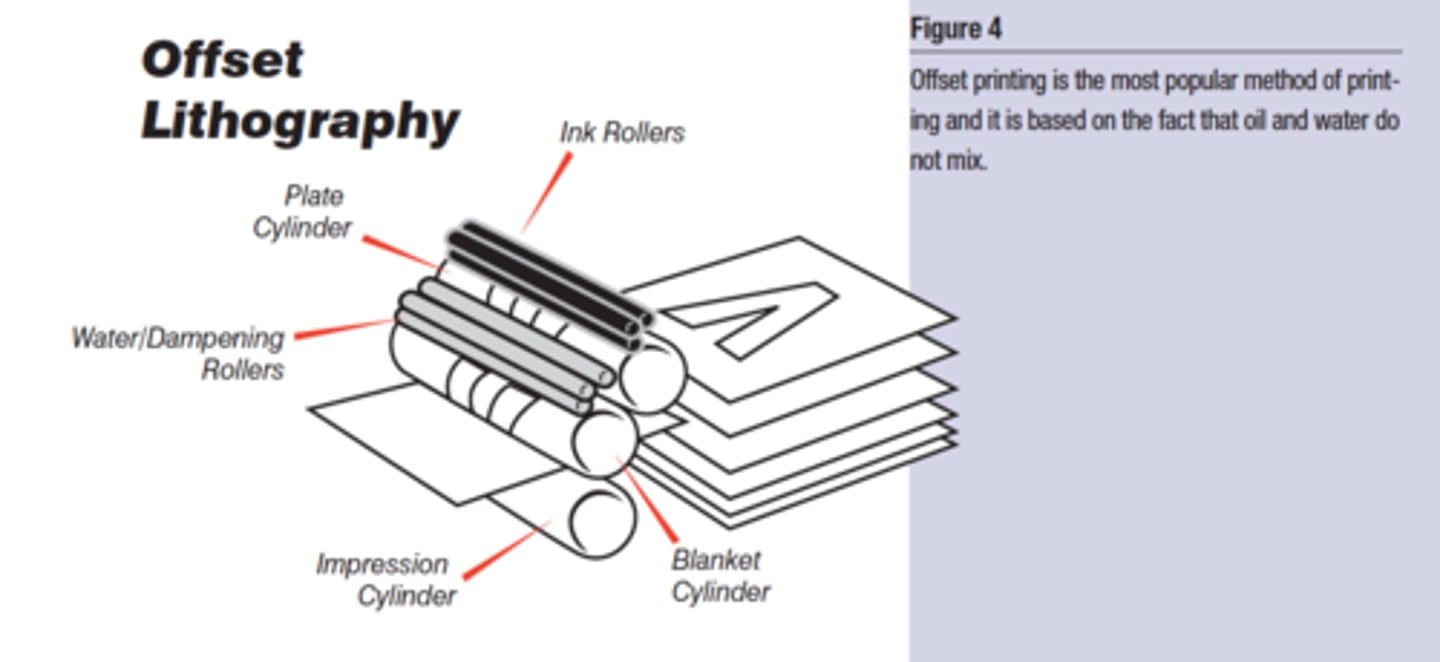
planographic printing
Any method of printing from a flat surface, such as lithography.
Design techniques that combine structure and surface:
Embroidery, beadwork, applique, patchwork, quilting
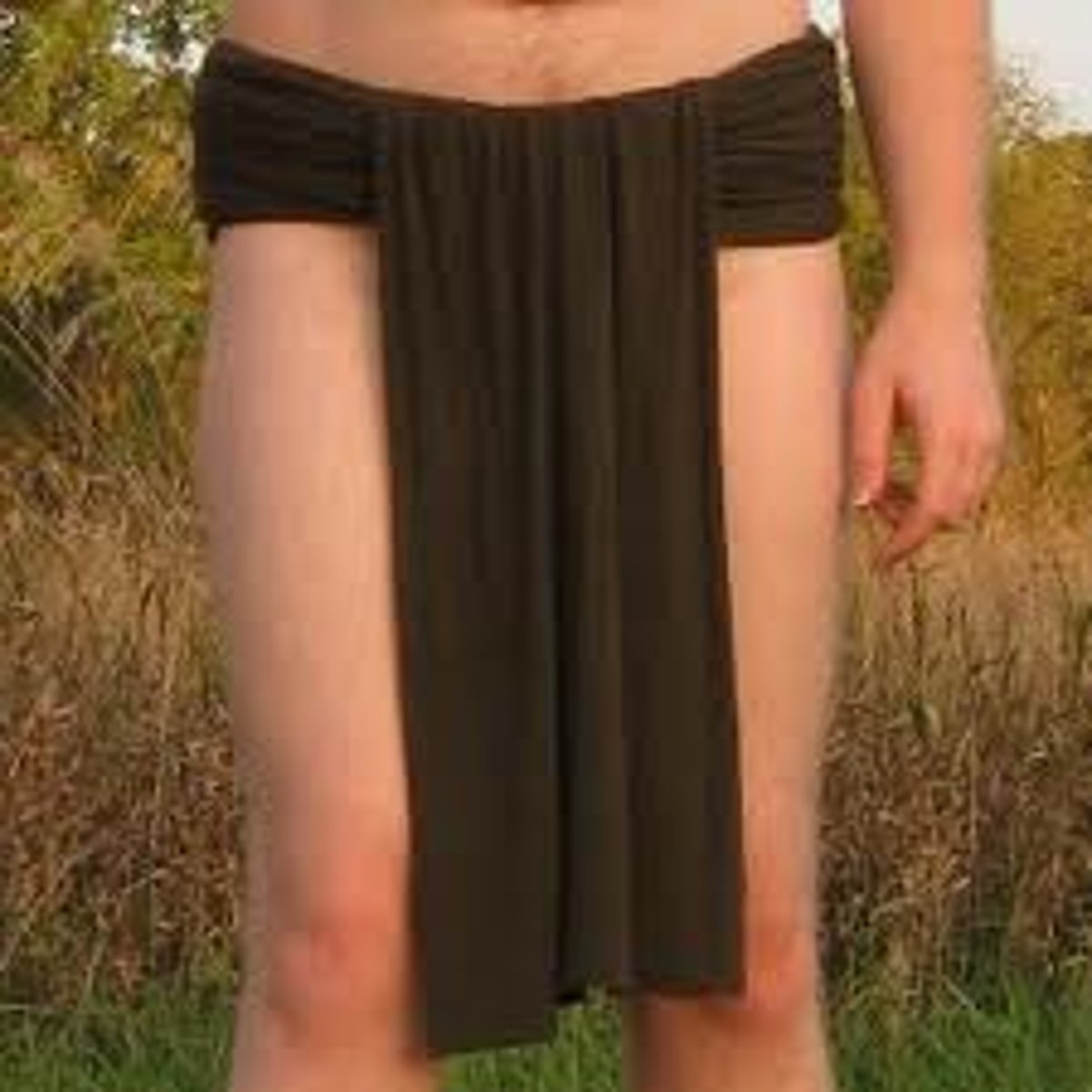
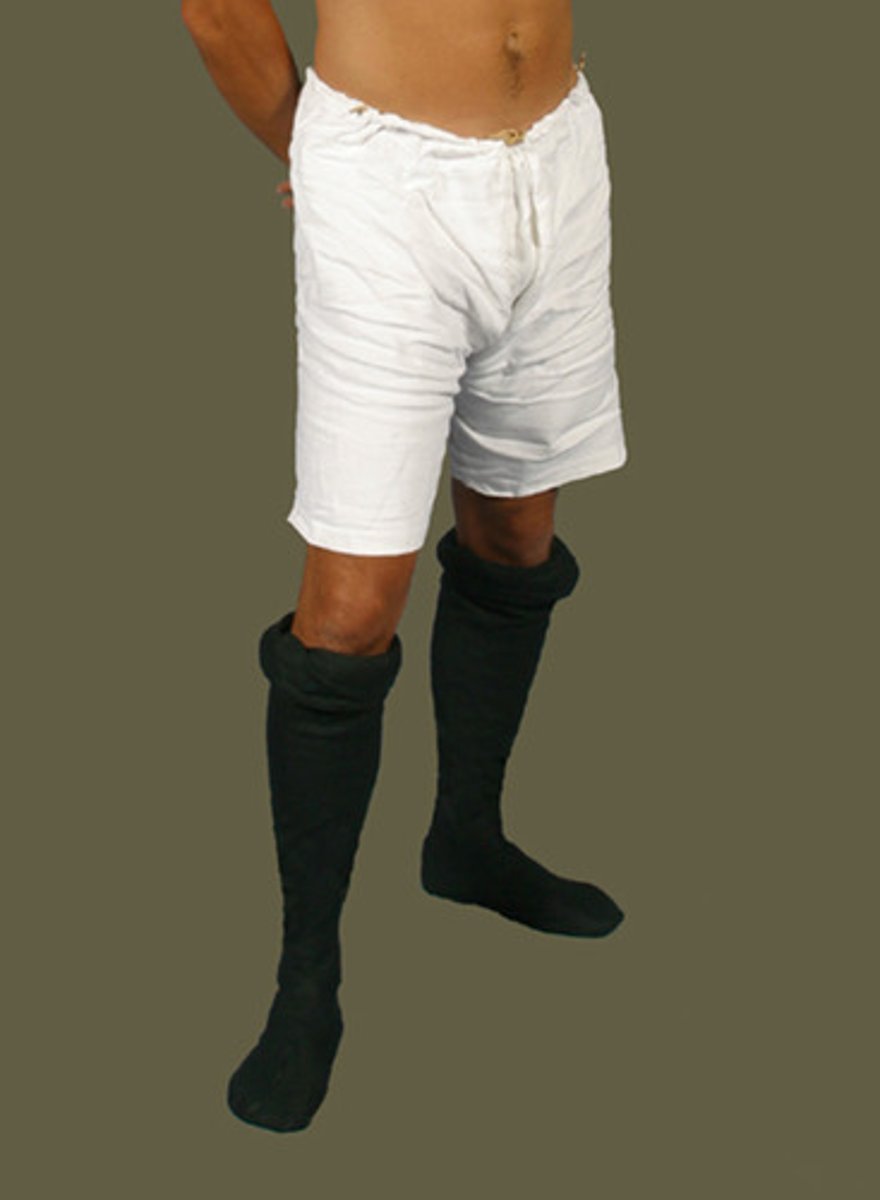
underwear in Middle Ages Europe - MEN
wore loincloths and another type of underwear called braies (loose drawers)
- also wore hose or stockings
loincloth
Middle Ages underwear
braies
loose drawers
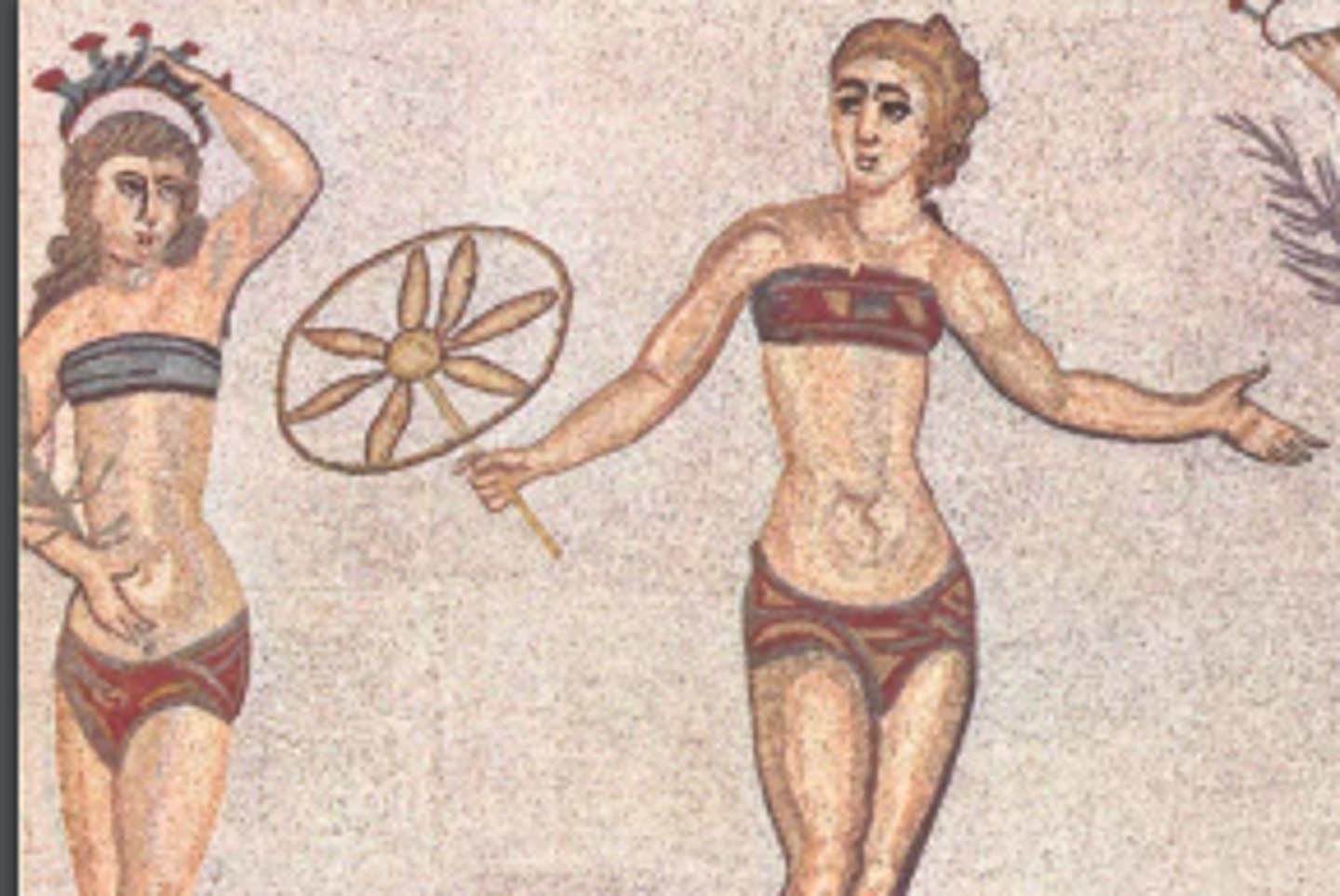
underwear in Middle Ages europe - WOMEN
wore a breast band (called stophium or mamillare)
- also wore hose or stockings
breast band stophium
strip across the breast
codpiece
a cover for the crotch in men's hose or tight-fitting breeches
- Began to be modest but then adapted as a status symbol (enlarged and decorated)
when was the codpiece most elaborate?
most elaborate in mid 16th century
corsets
a ladies undergarment designed to produce a particular effect on the figure
- became popular in europe as early as 1500s
- shapes the body using bone, and later metal
padding
- used on men as artificial calves
New forms of undergarments to shape the body
Petticoats, Crinolines, Bustles
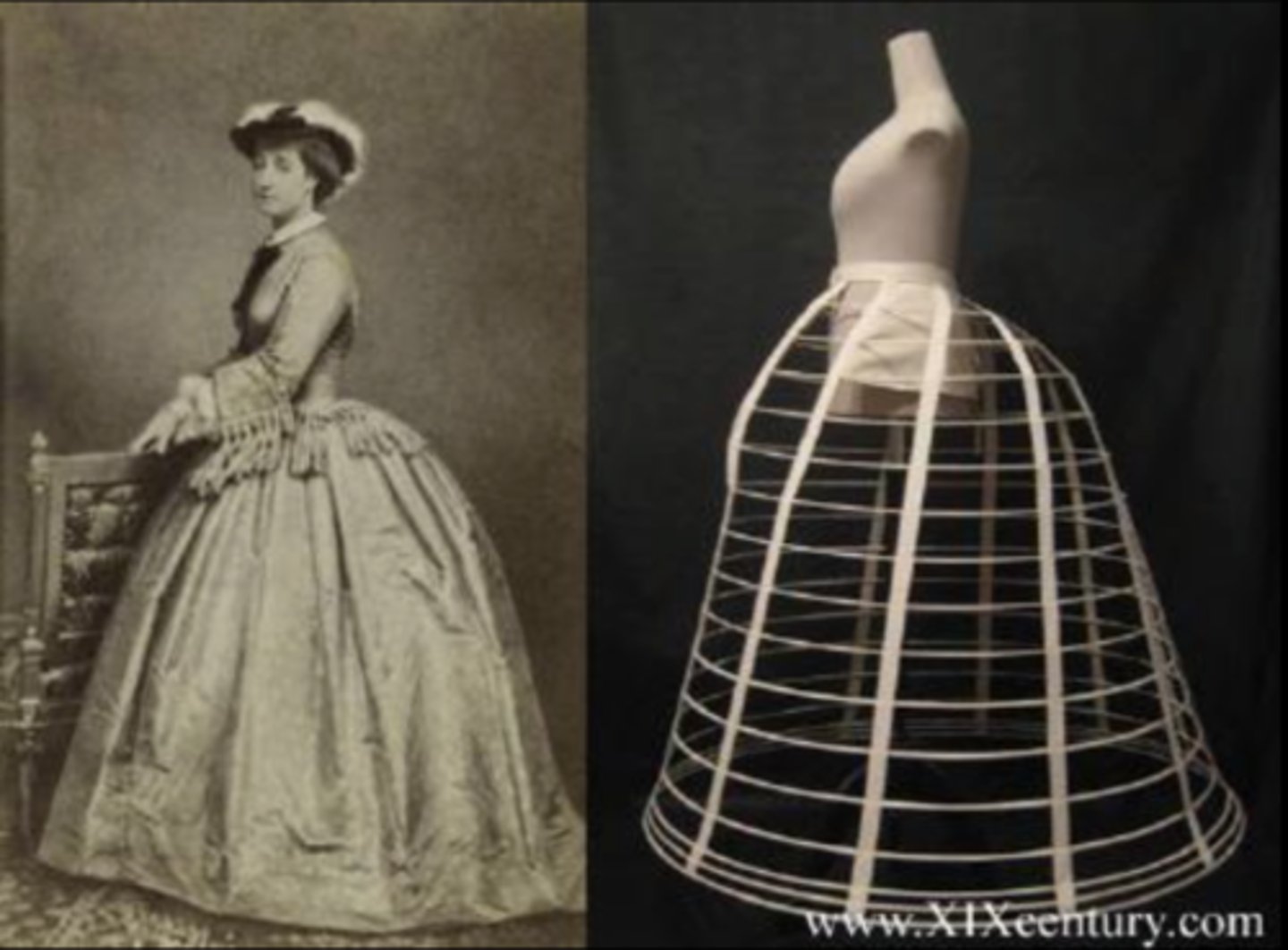
crinolines
full, stiff underskirts
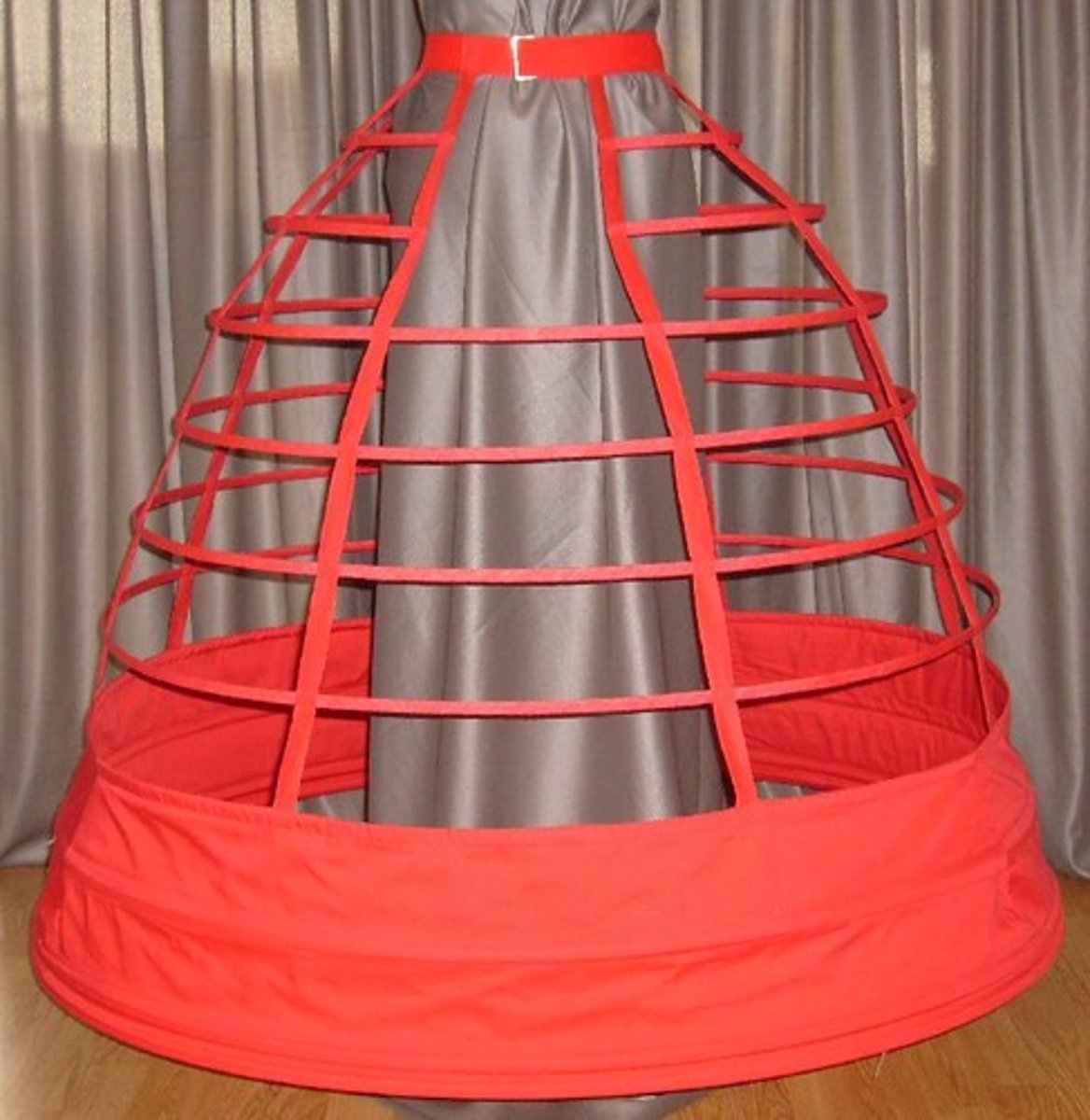
undergarment in mid-late 19th century
open drawers
- open in the body part so can go to bathroom
- worn by women
union suits
combinations worn by men untied drawers and under vests into one garment.
- from 19th century
- don't require boning
electrified undergarments
original wearable tech
- Electric belt for erectile dysfunction
- Electric corsets thought to improve health and wellness
first patented bra
made out of two handkerchiefs
- 1914
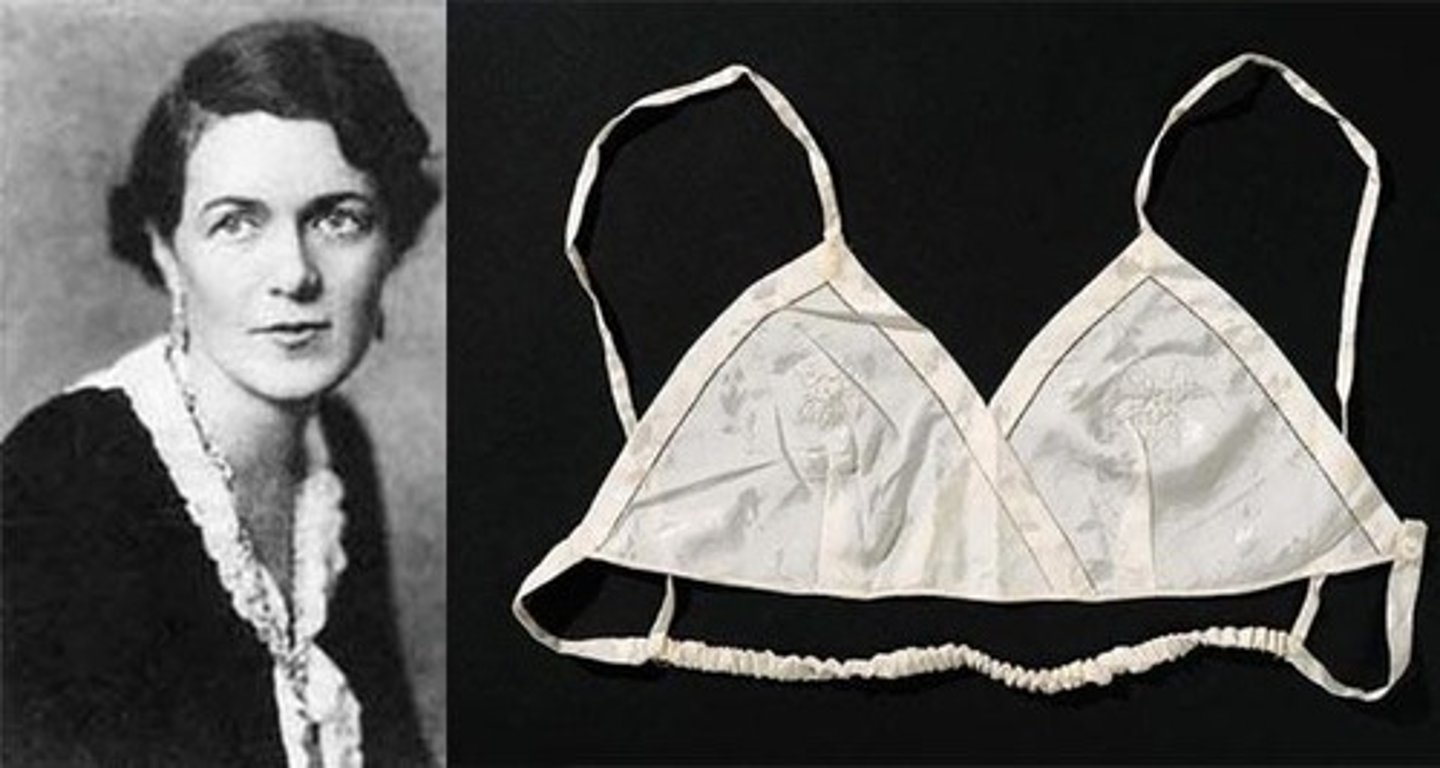
1930s bra
girdles replace corsets
1950s bra
bullet bra
1970s bra
the sports bra
- First sports bra was two jock straps sewn upside down
1980s-1990s idenitiy
branding and sexuality
2000s
thong visibility
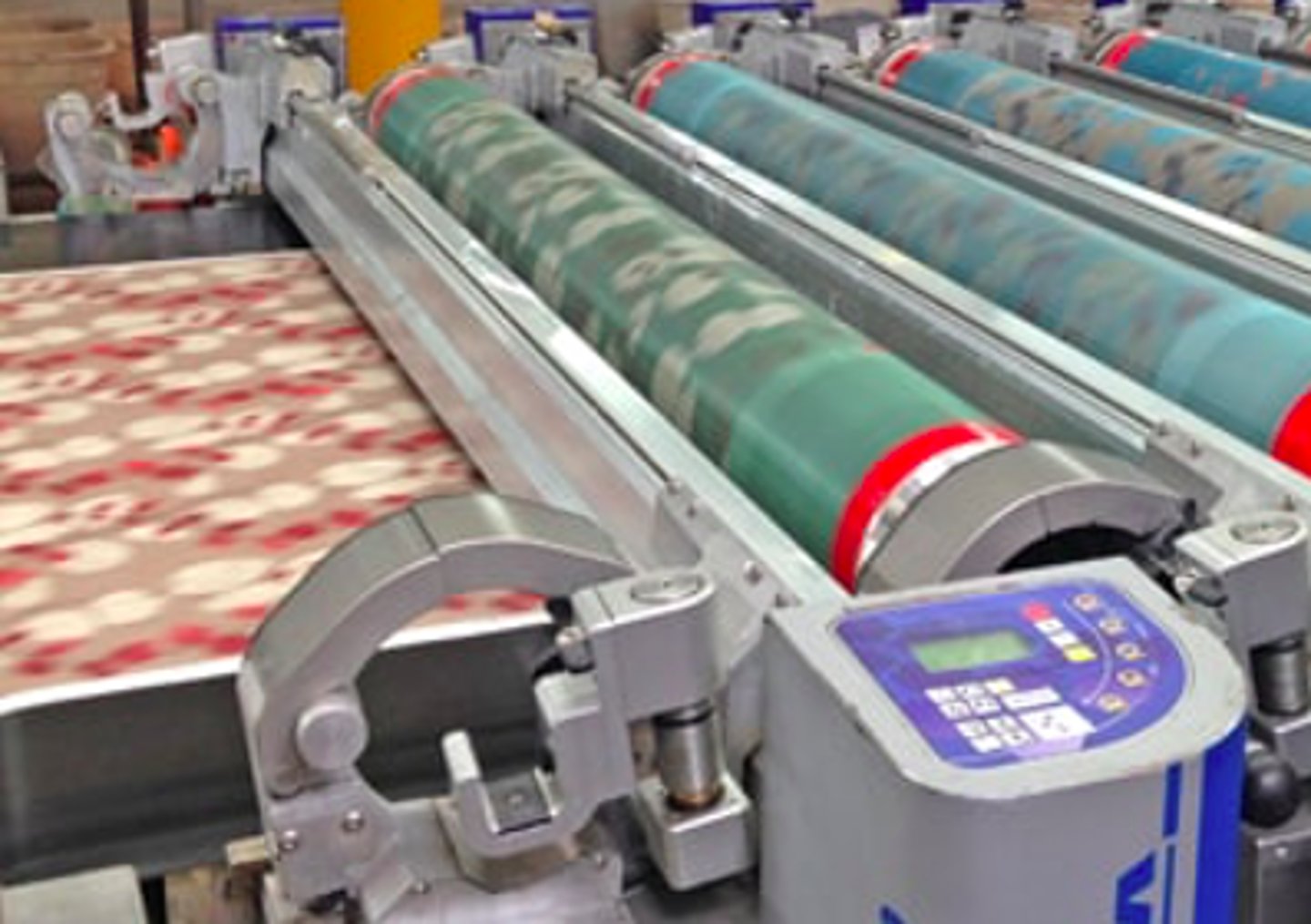
roller printing
a method of printing textiles that uses a series of engraved metal rollers each of which contains the parts of the pattern to be printed in one color.
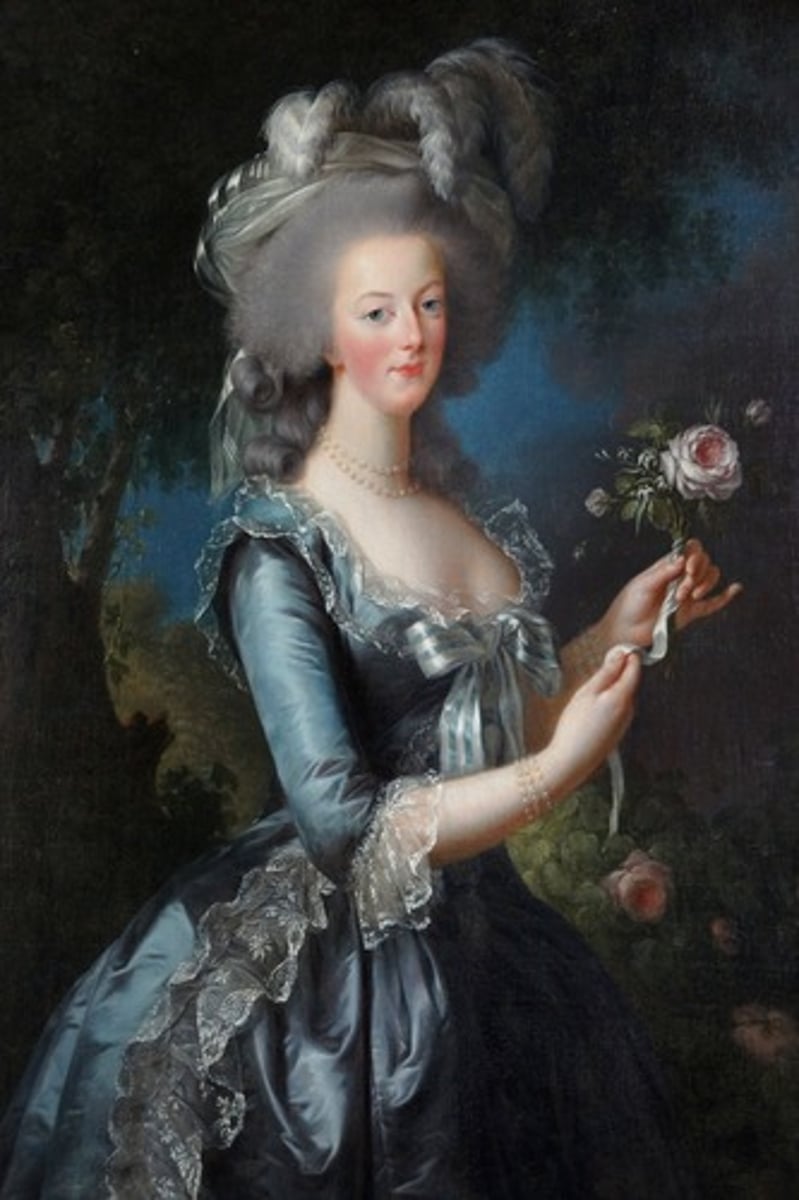
before the French revolution style
marie antoinette style dress
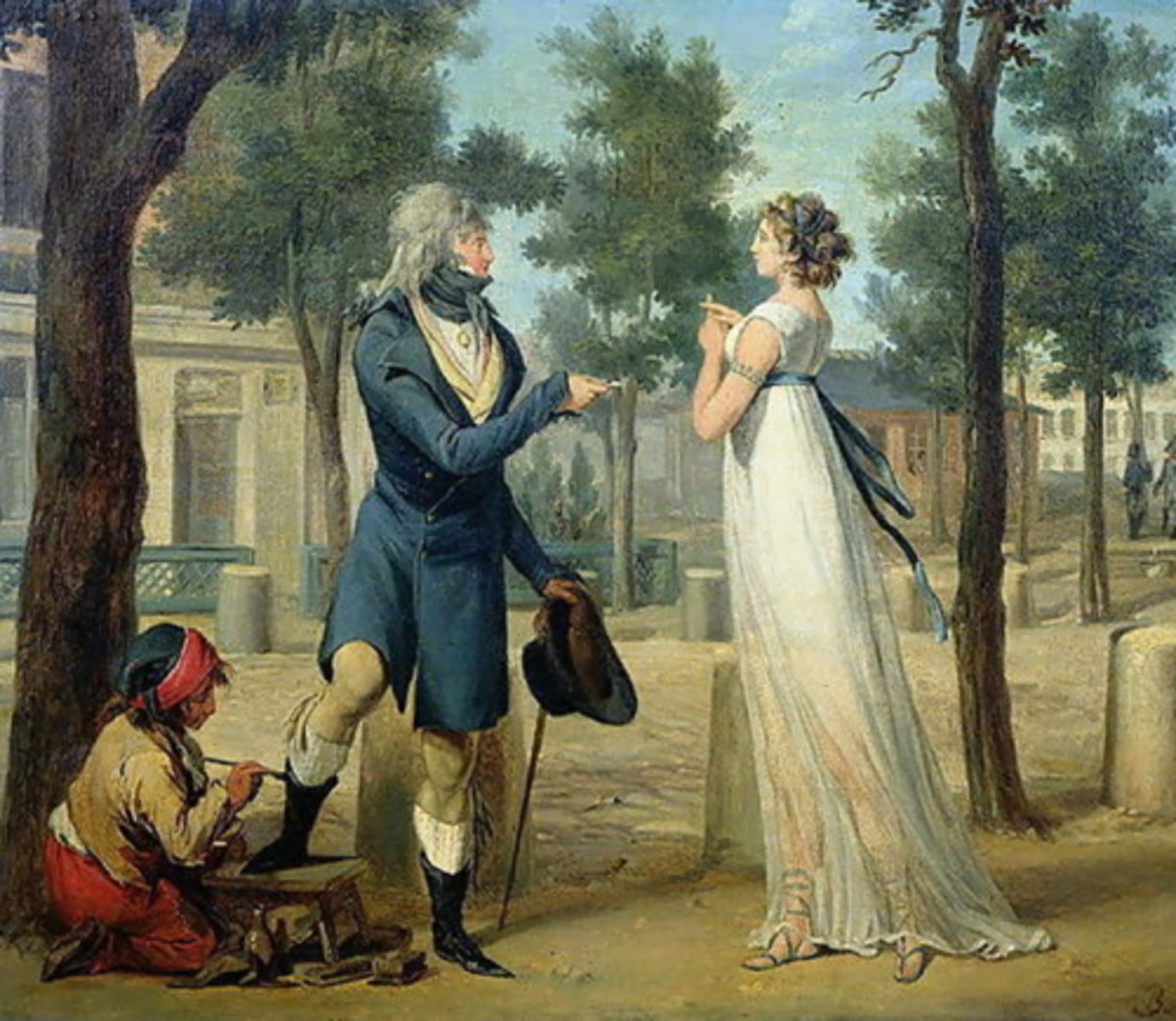
1789-1799
French revolution and reign of terror/directoire
- directoire is beginning
- Red accents on clothing showing where the guillotine would have hit
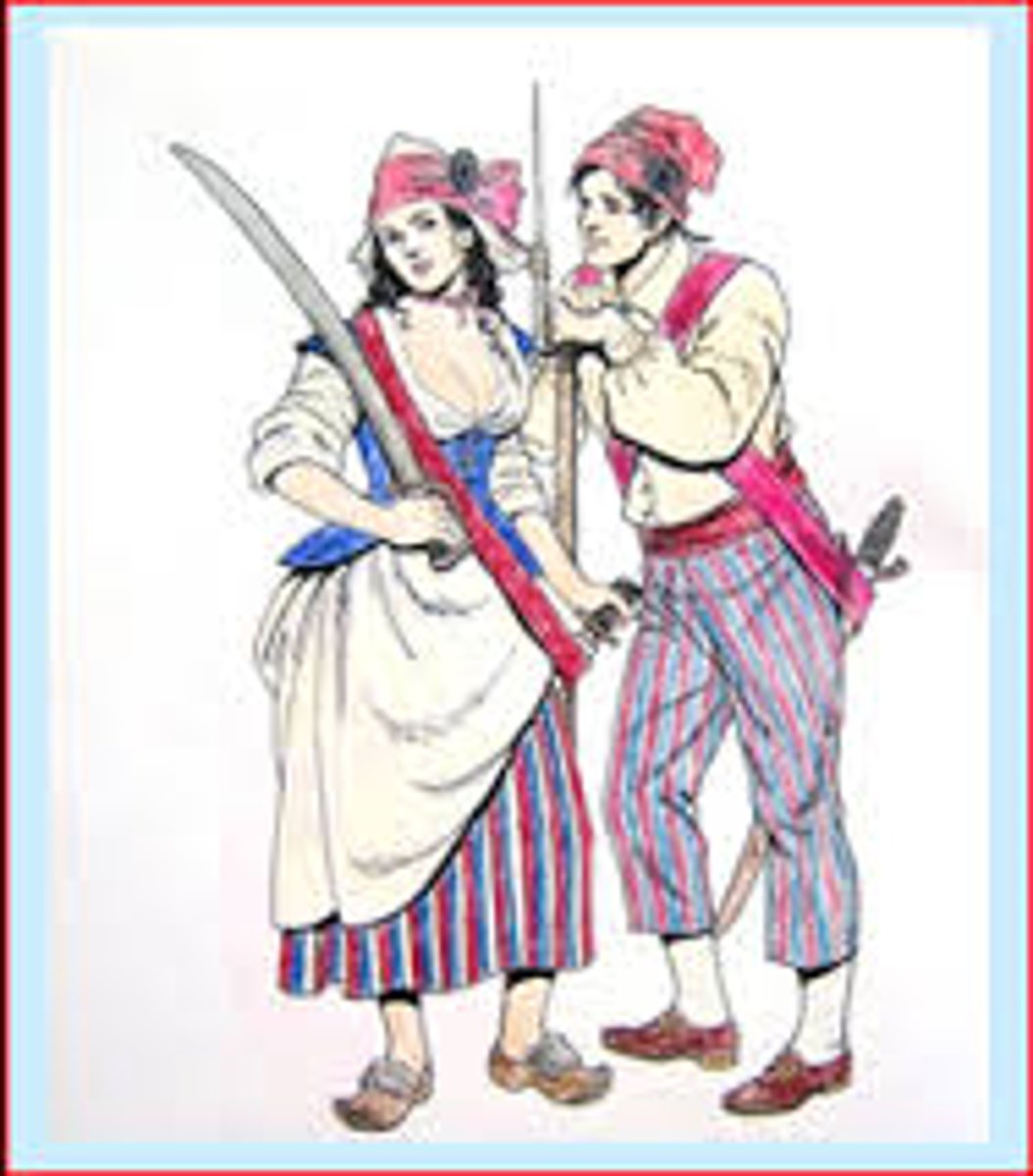
- Sans-culottes for working class
- Incroyables & merveilleuses
Incroyables & merveilleuses
Aristocratic youth movement in rebellion to the reign of terror, started fashion trends that are rooted in luxury, decadence, and even silliness
- inspired some empire trends
sans culottes
a lower-class Parisian republican in the French Revolution.
1800-1815
Empire --> empire waist (just below chest), inspired by ancient Greece and Rome focus on neoclassical forms
British expansion --> Clothing focused on grandeur and nostalgia, trade allows for importation of diff. textiles and silhouettes
- Popularity of paisley (Kashmiri shawl) and cashmere
Regency period/Industrial Revolution, fueled by the textile industry and colonial expansion
- In Britain, textiles refer to Britain's past glory --> flower prints
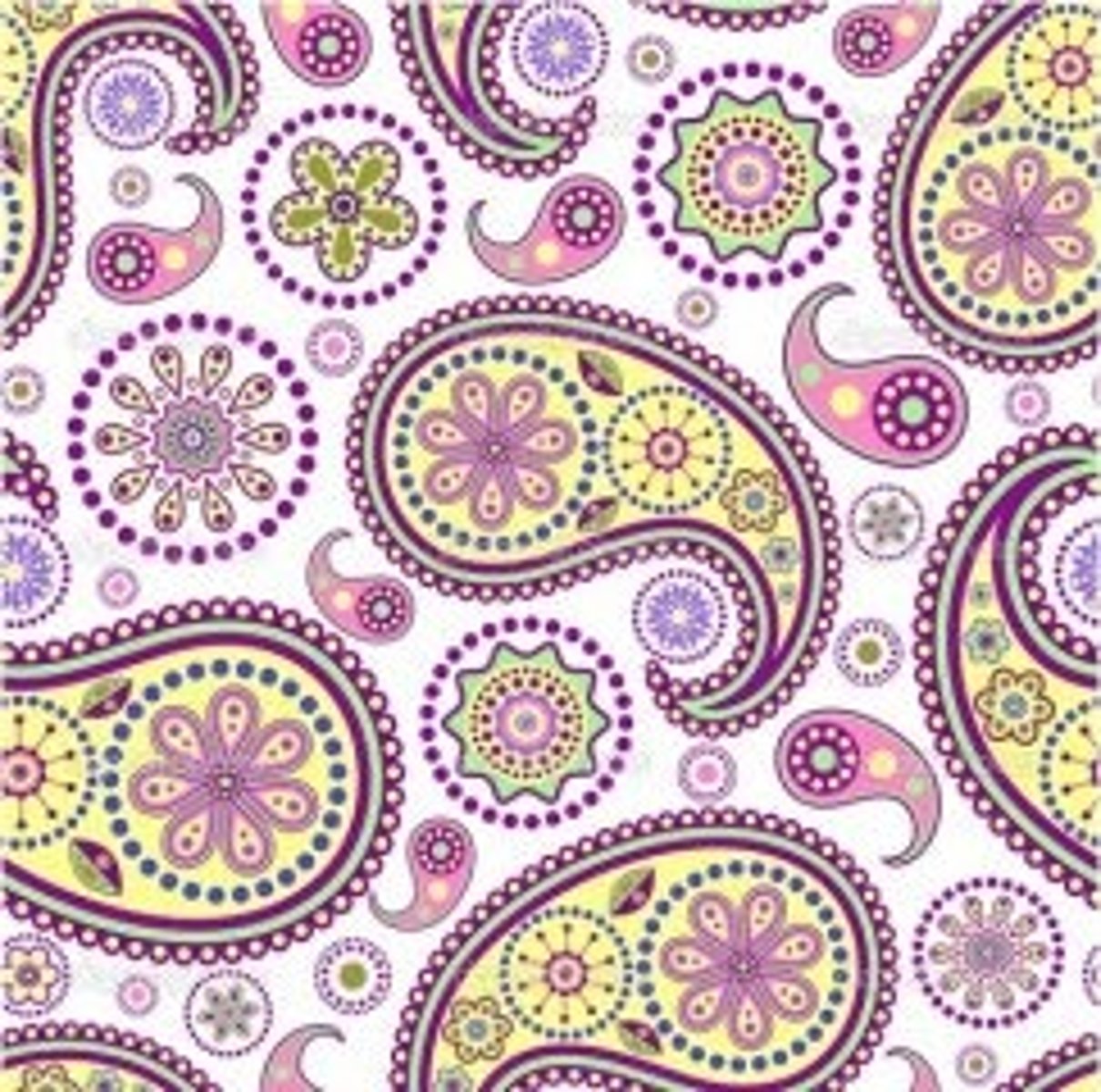
paisley
a soft wool fabric with a colorful swirled pattern of curved shapes
- becomes popular in 1800-1815
1815-1820s: early romantic era
Waistline lowers
Men's pants loosen
Introduction of the modern suit (emergence of tailoring)
late 1820s-1830s: romantic era
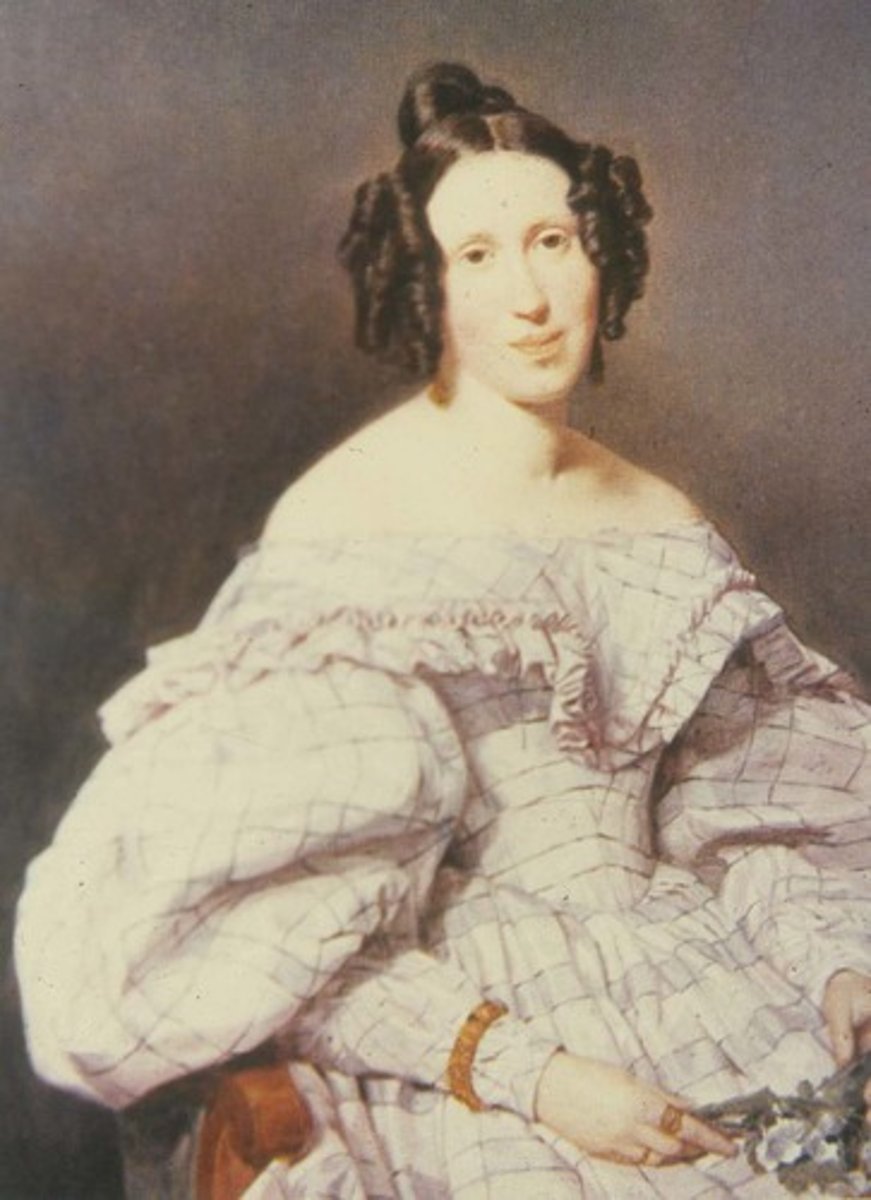
- Leg of mutton sleeves (with fullness at the elbow)
- Neckline drops off the shoulder (emphasizing elbow)
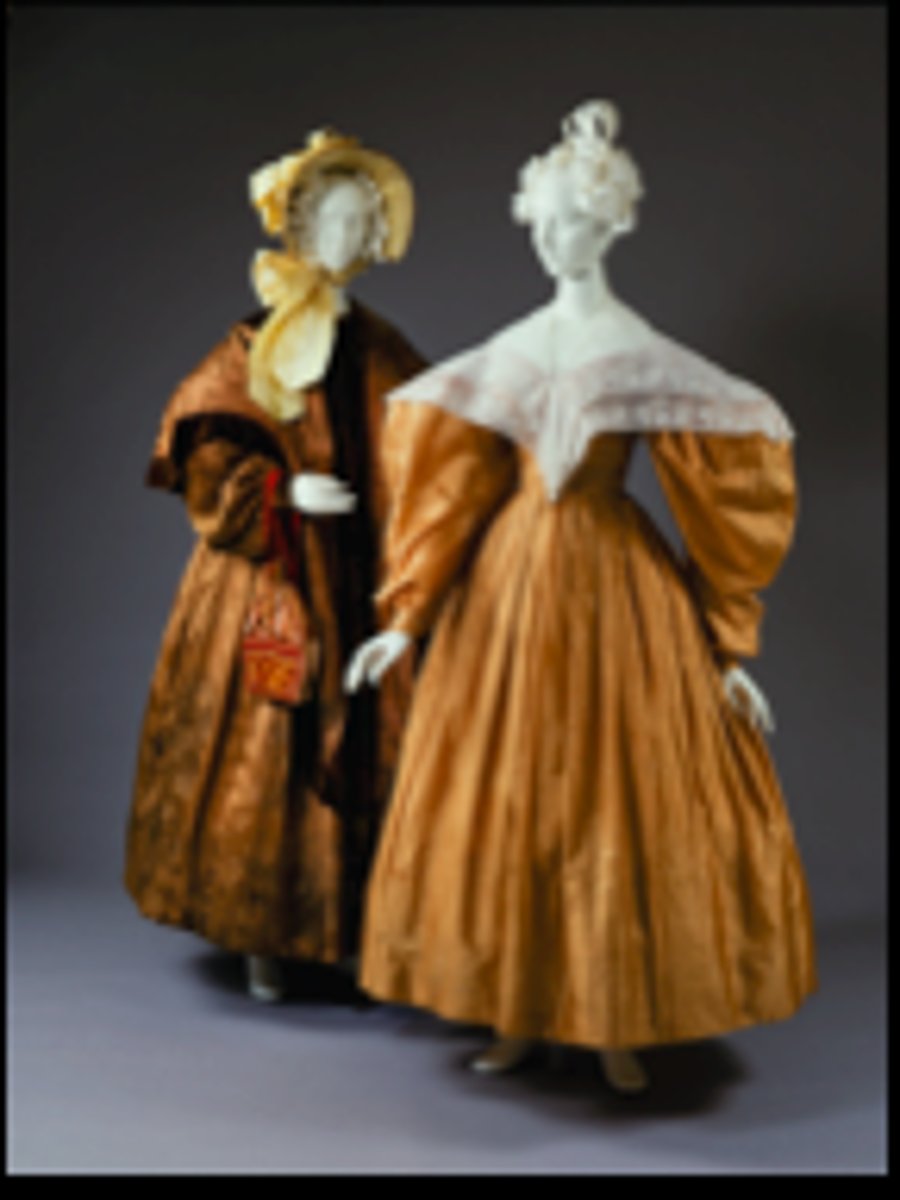
1837-1870s: early victorian
- Narrowing waist
- Tightly fitted bodice
- Wider (tiered) skirts
- Men get "pigeon chests"
- Shoulders were still sloped through the neckline
- full and puffy sleeves (gigot sleeve) which featured a large puff at the shoulder that tapered to a narrow cuff
- bloomers
Pagoda sleeve (fullness at the wrist)
Queen Victoria inspires the white wedding dress
first fashion house
Charles worth
early Victorian era (1837-1870)
- The first person to stitch their name into a garment
Instead of being told what to sew
- he designs the gowns and tell customers to wear them
Amelia bloomer
early victorian era
Female reformer who promoted short skirts and trousers as a replacement for highly restrictive women's clothing
- wants women to wear bloomers (inspired by turkey)
- becomes accepted in physical education
gigot sleeve
Extremely full at the shoulder, decreasing in size to the wrist where they end in a fitted cuff.
- early victorian era
pagoda sleeve
Open sleeve which flared widely below the elbow; drew attention to lingerie under the sleeves.
- early victorian era
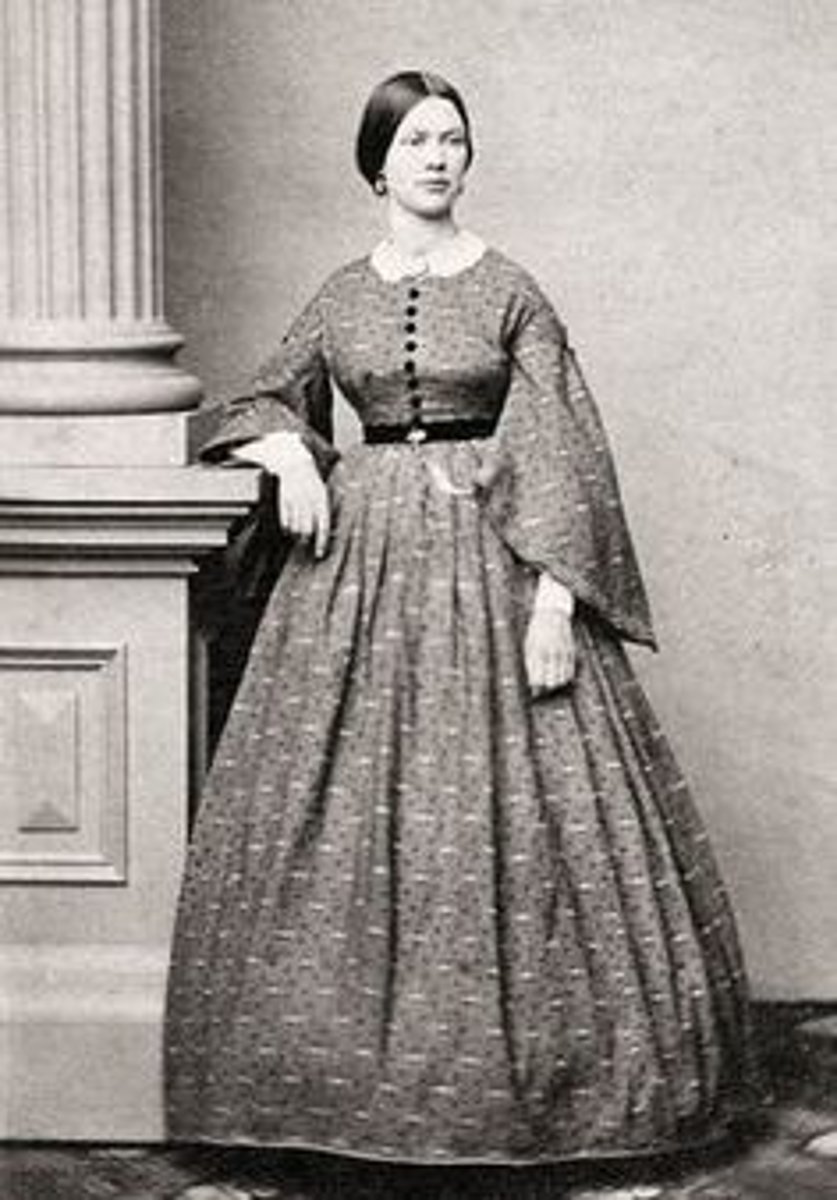
1860s
- mid victorian era
- Extremely wide hoop skirts enabled by the crinoline
- Walking Dress
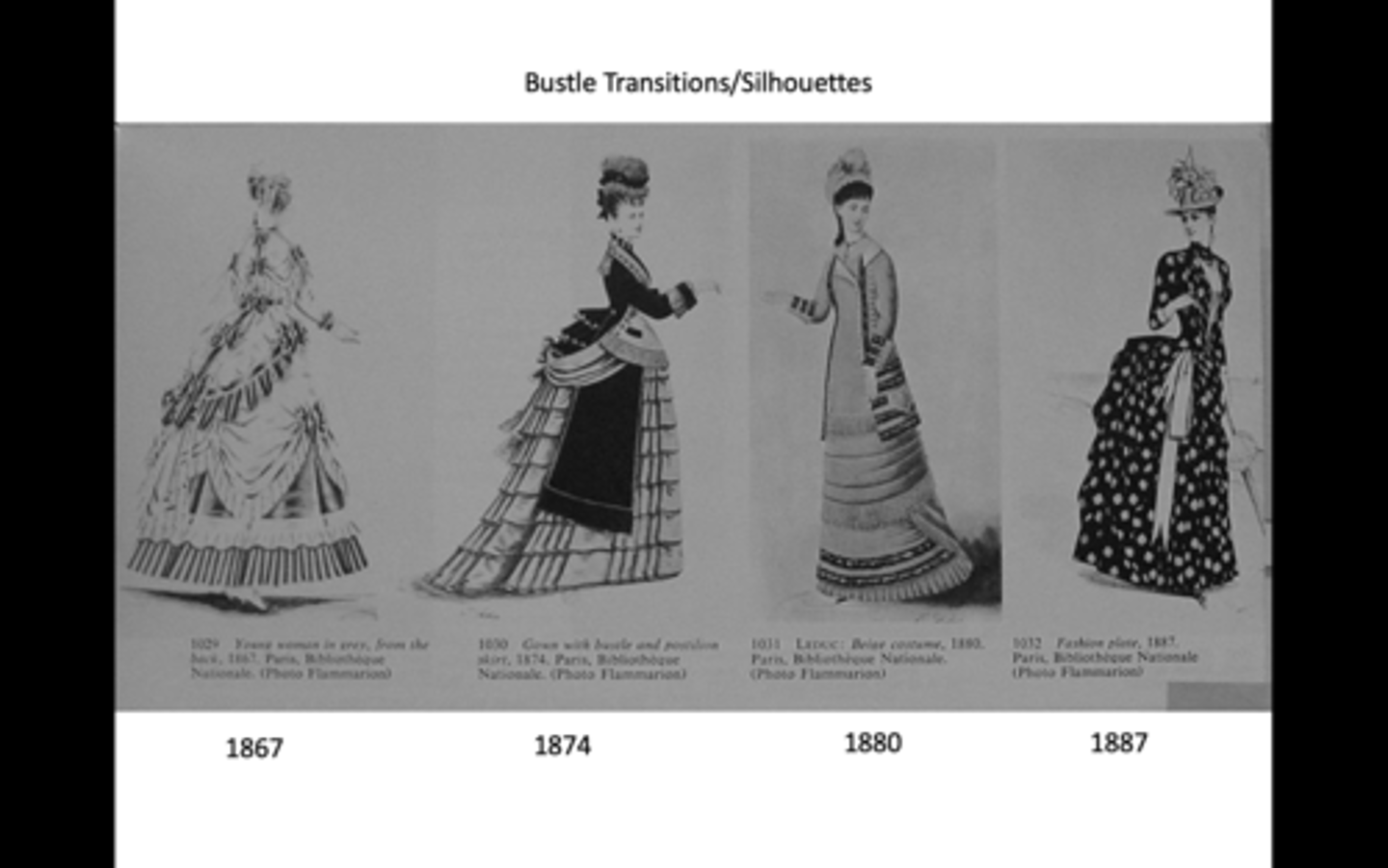
1870s-1900s: late victorian era
- Emergence of the bustle
- Dawn of department stores
- Increase of women in the workplace
gilded age --> opulence (luxurious) and extravagance
reform movement --> Less structured, loose/flowing
Arts and Crafts movement --> Concerned abt losing craftsmanship/skill
Art nouveau --> Corseting becomes super narrow, creating an S curve silhouette
Sleeve maximum size at 1895
Women began to wear bloomers
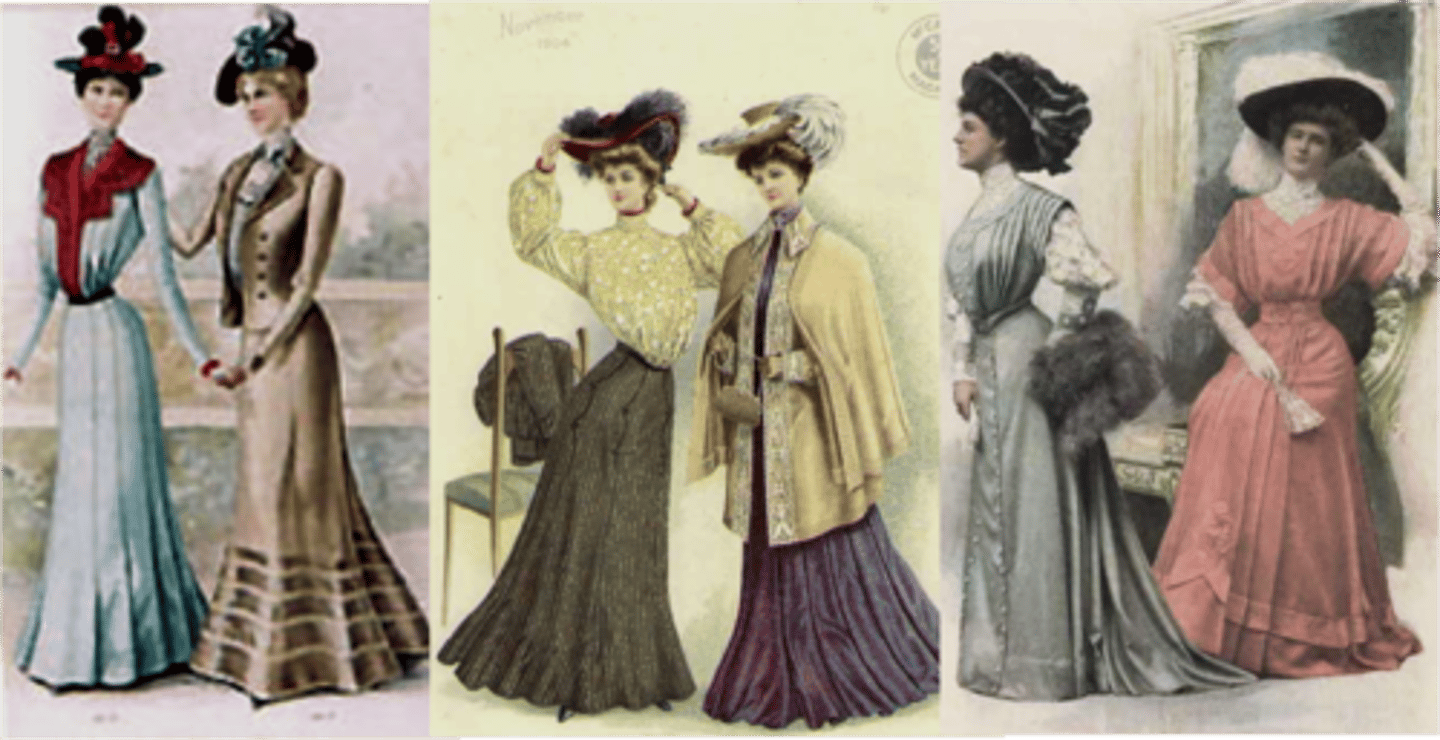
Edwardian era (1901 - 1910)
- High lace collars, puffed sleeves, long flowing skirts with a bell or gored shape, and luxurious fabrics like silk and lace
- Silhouettes loosen
- Lots of hats
- Gibson girl (the "new woman")
- Big hair
- introduction of separate tops and skirts (can be mismatched)
1911-1914: transition to early art deco
- Silhouettes loosen, return to empire waist
- Draped styles
- Fortuny gown --> iconic dress inspired by a Greek sculpture --> had fine pleating, adjustable neckline, and sleeves
- Hobble skirt --> tight at the bottom, fullness at the top
- Brighter color palette
- Little puff sleeves, layering
- black and white silenced film --> creates trends for high contrast (brighter makeup, bright lipstick
- Intro of Fashion Photography
Paul Poiret
1st innovator of new fashion of 20th century
- created slender modern woman
- Turkish trousers turbans and tassels
- hosted first fashion show
1914-1918: World War I
- Military dress influences fashion
- Women start wearing pants
- Less wool garments (wool was saved for soldiers)
- Slightly dropped waist and tubular design
1915-1929
early art deco
1920s: part of early art deco
roaring 20s
- tubular silhouttes
- shorter hemlines (knees almost visible)
- Egyptomania --> Egyptian craze inspired by the discovery of king tuts tomb
- Art deco and surrealism
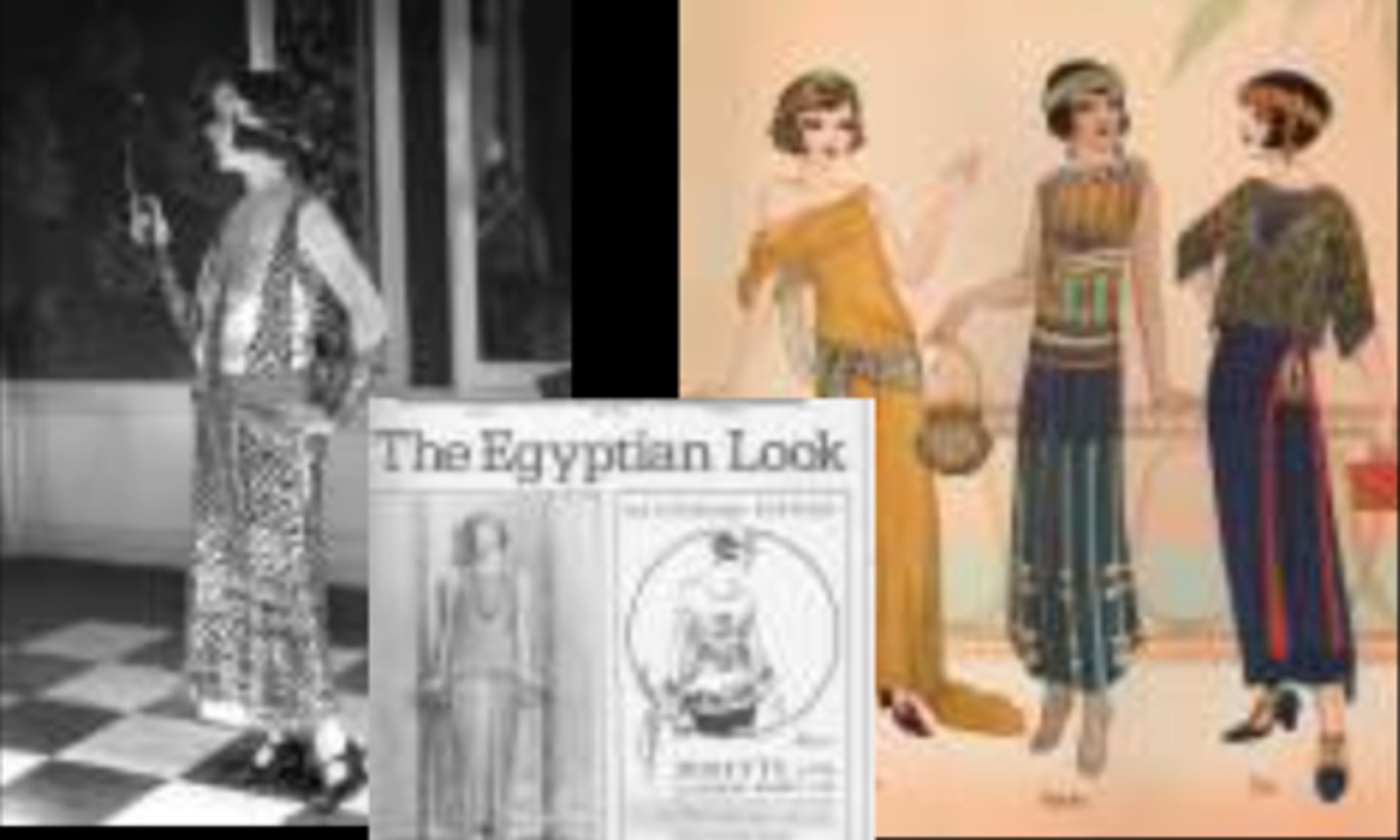
1920 specifically
- Harlem renaissance
- Jazz and and Josephine Baker
- Surrealism/Elsa Schaperelli
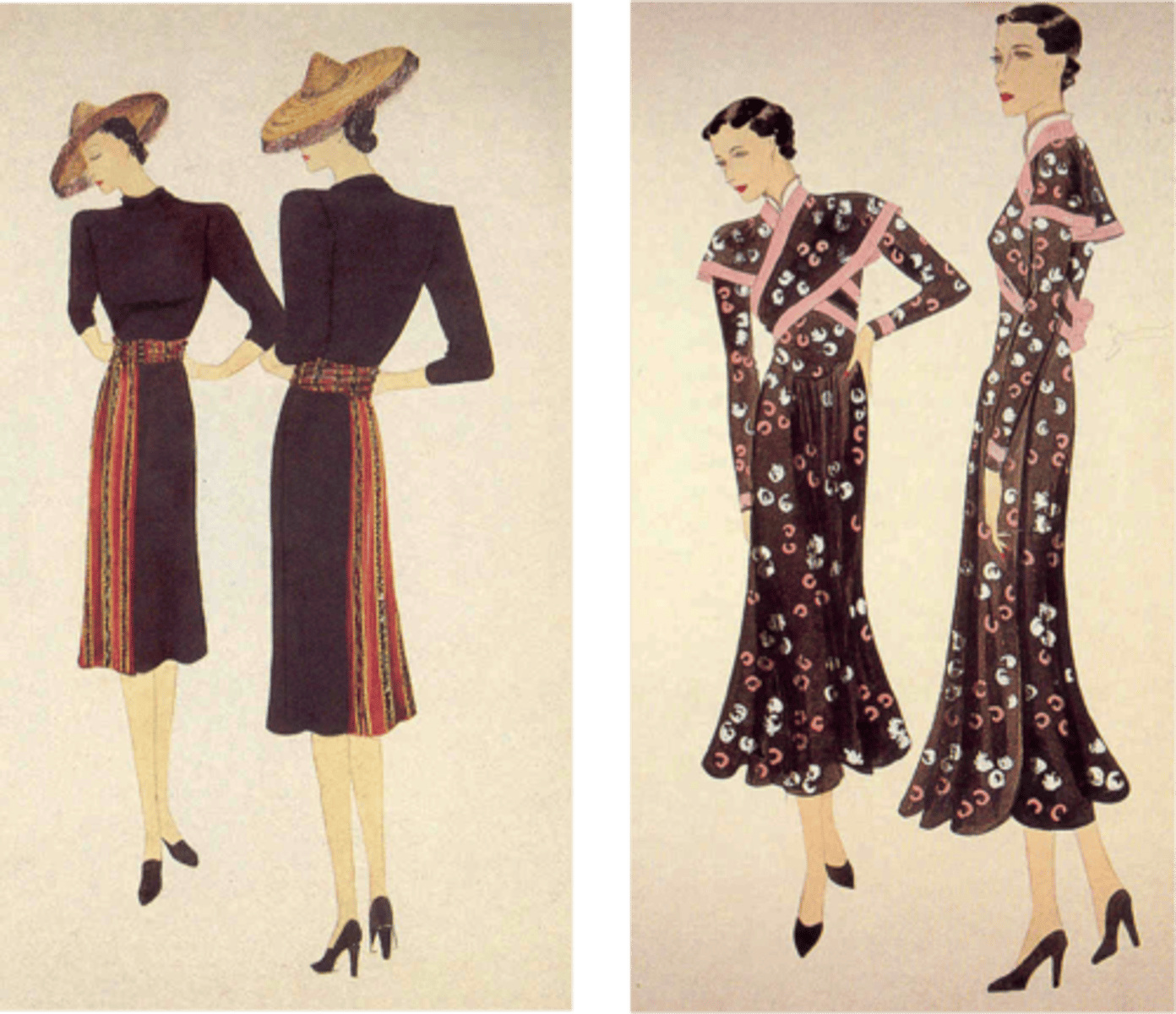
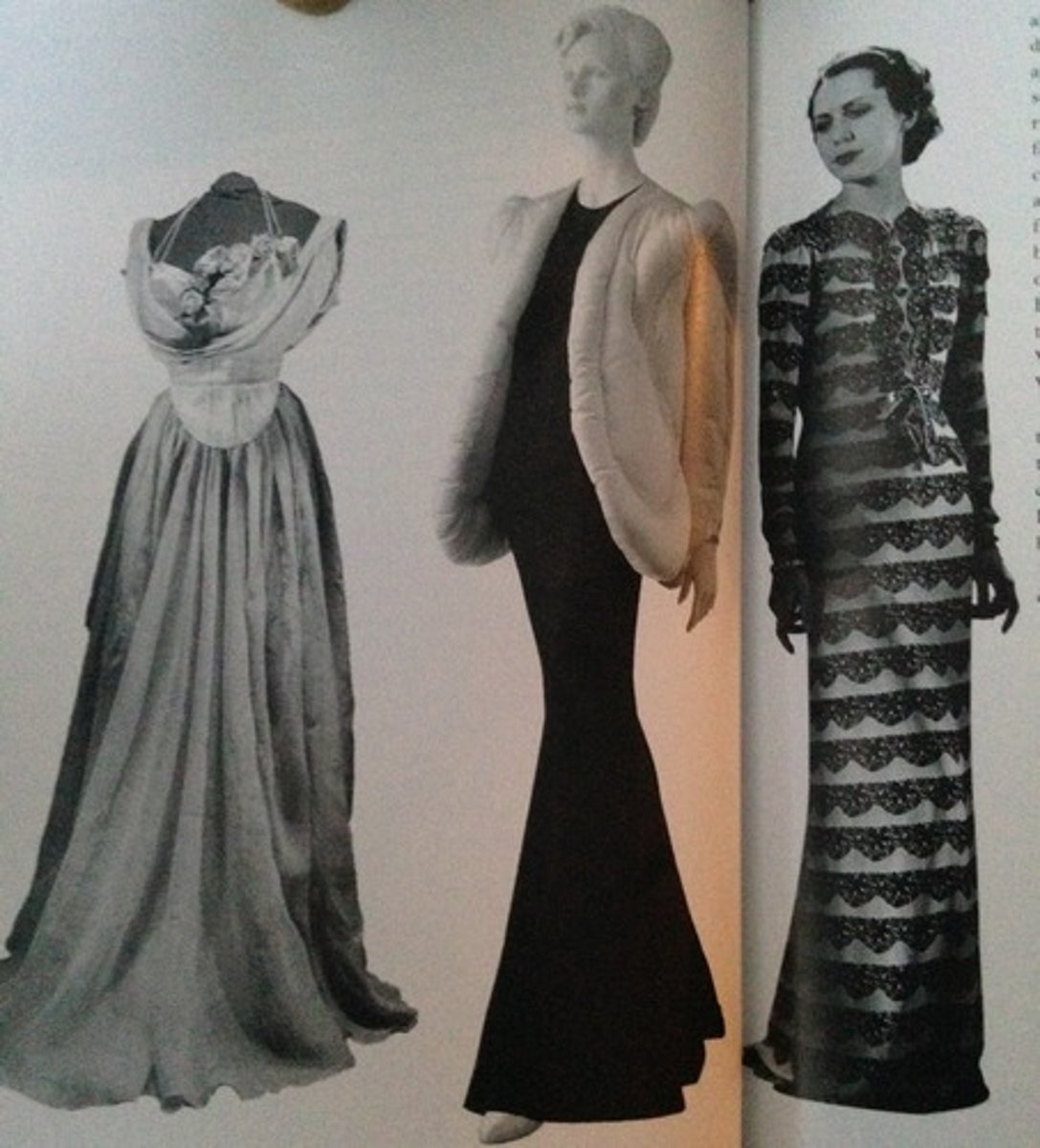
1930s: transition to late art deco
- Back is revealed
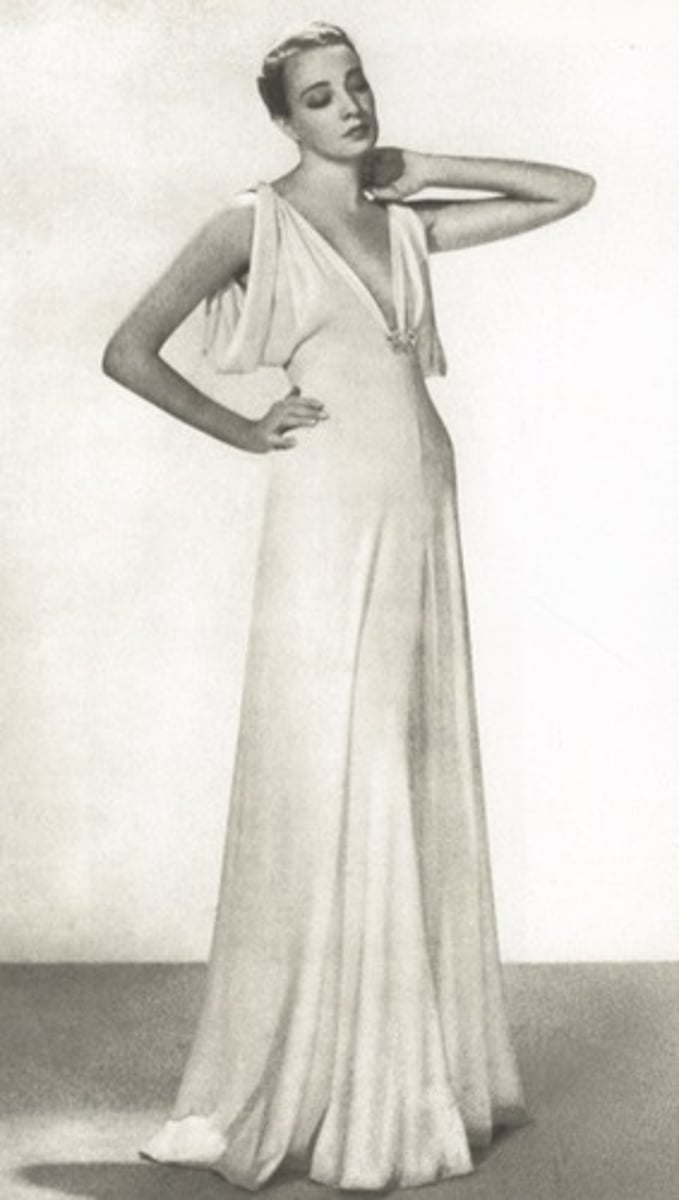
- Bias cut dresses
- Angular seaming
- Long hemlines
- Asymmetry
- Challenging gender norms --> strong shoulders thru puff sleeves and pads
bias cut dress
a draped, figure-hugging silhouette that flows and flares at the hem
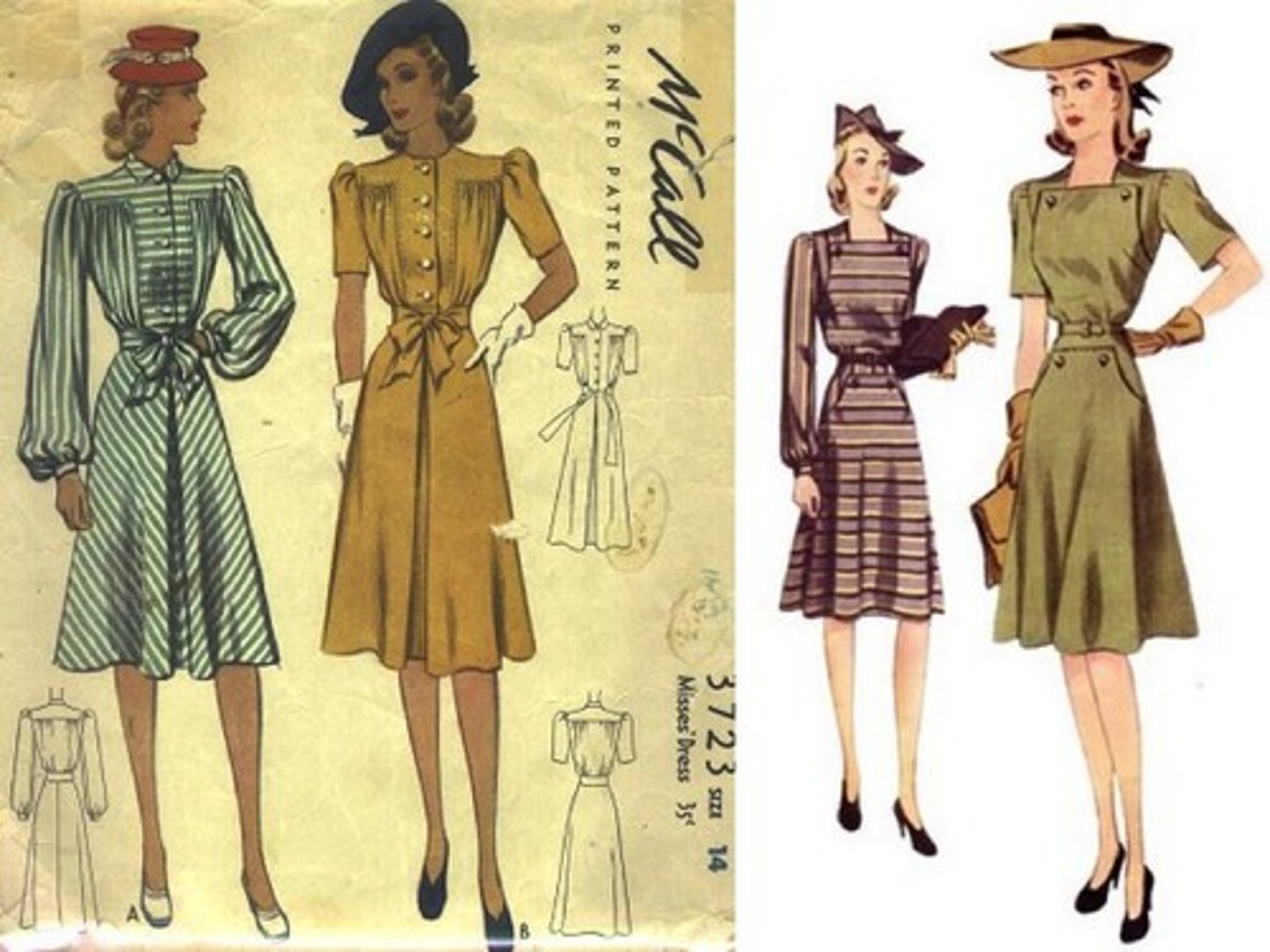
1939-1945: World War II
- Laws about how much fabric can be used (15% textile reduction) --> skirts become short again
- Less ornamental details
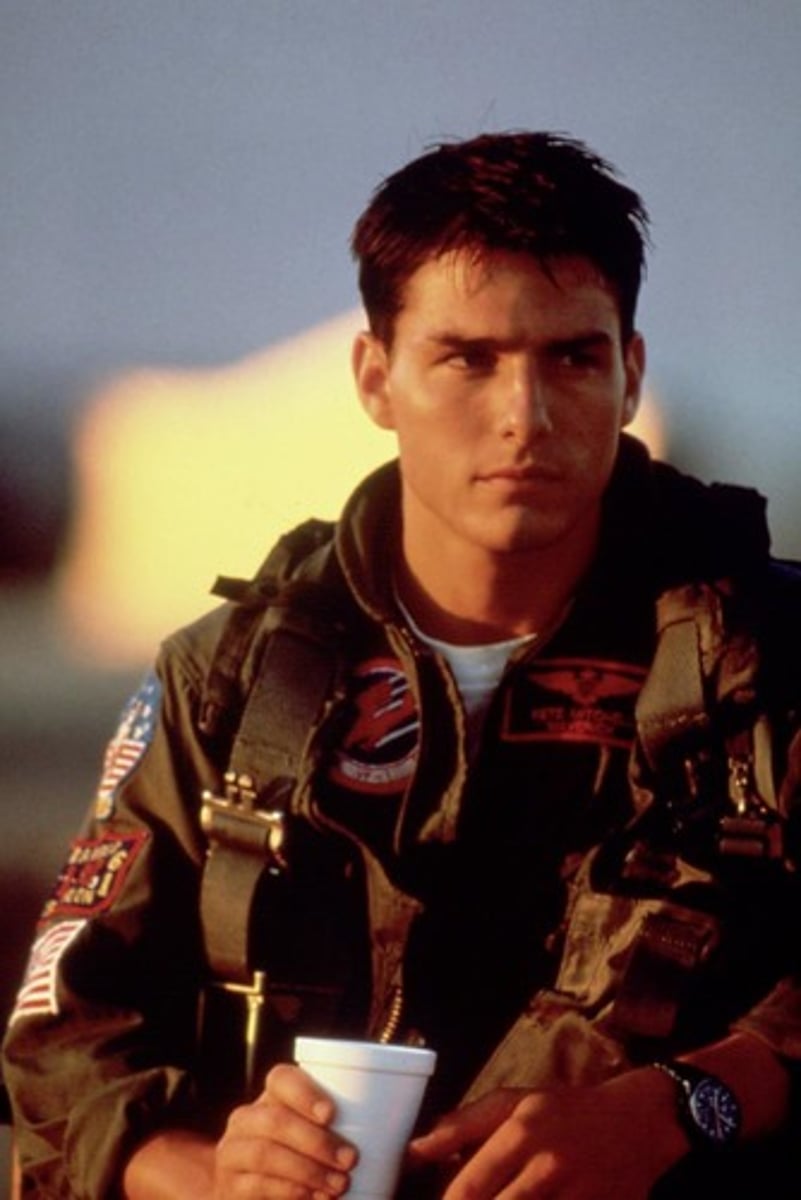
- Aviator jacket
- Menswear and military-inspired looks
aviator jacket
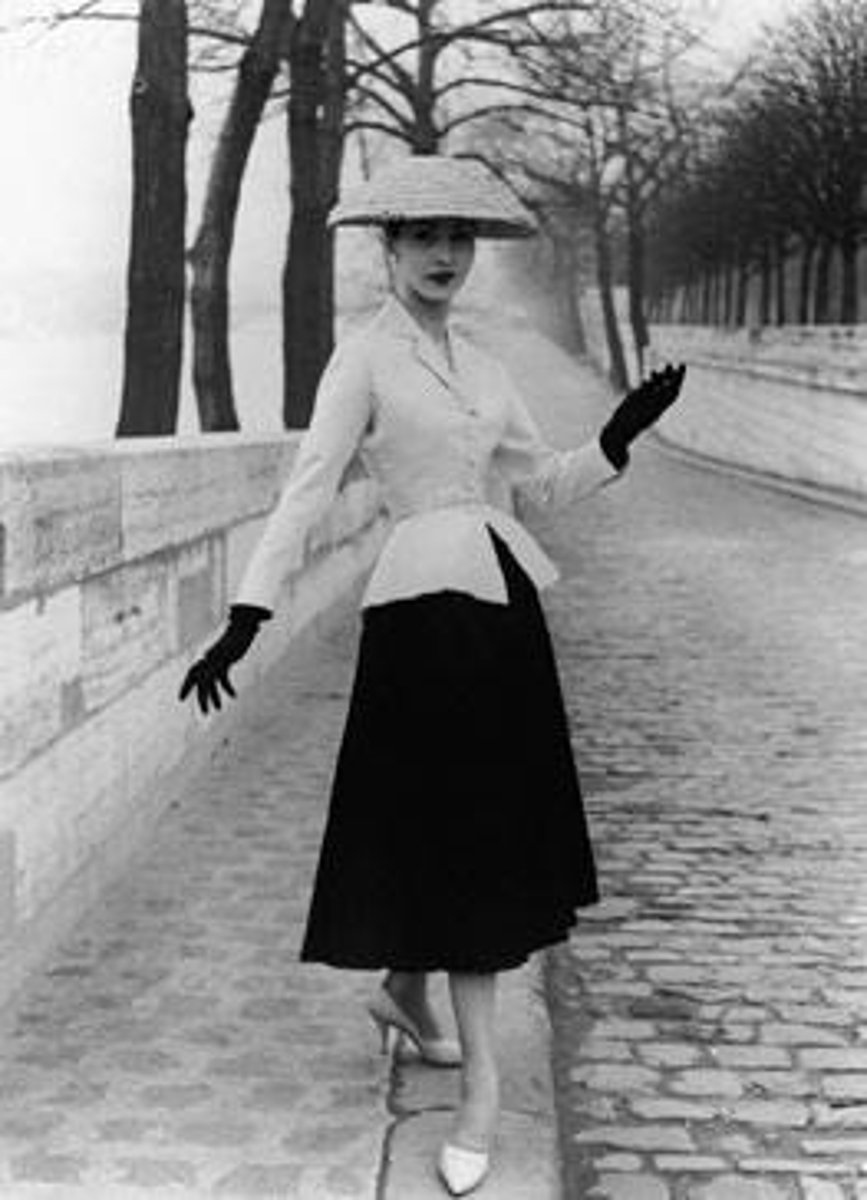
1946-1957: the new look
- Christian Dior released collection titled "the New Look", wanting women to revert back to femininity
- Hemline drops, small waist, small shoulders, full skirts
IMPORTANT: introduction of sleeveless dresses
- Commercialization of Cowboy aesthetic
- Over the top masculinity
Charles James
opulent designs and hyper femininity
1960s overall transition
after the 60s fashion trends were often associated with cultural movements instead of fashion houses/power
early 1960s
Transition to Modernity (1957-1963)
- YSL takes over Dior
- YSL = first fashion house to have ready-to-wear
- Balenciaga sack dress
- Silhouettes became softer, A line dresses
- Elastic spandex influences shorter skirts
- Softer designs, introduction of the kissing pleat
- Introduction of teen styles different from children and adults
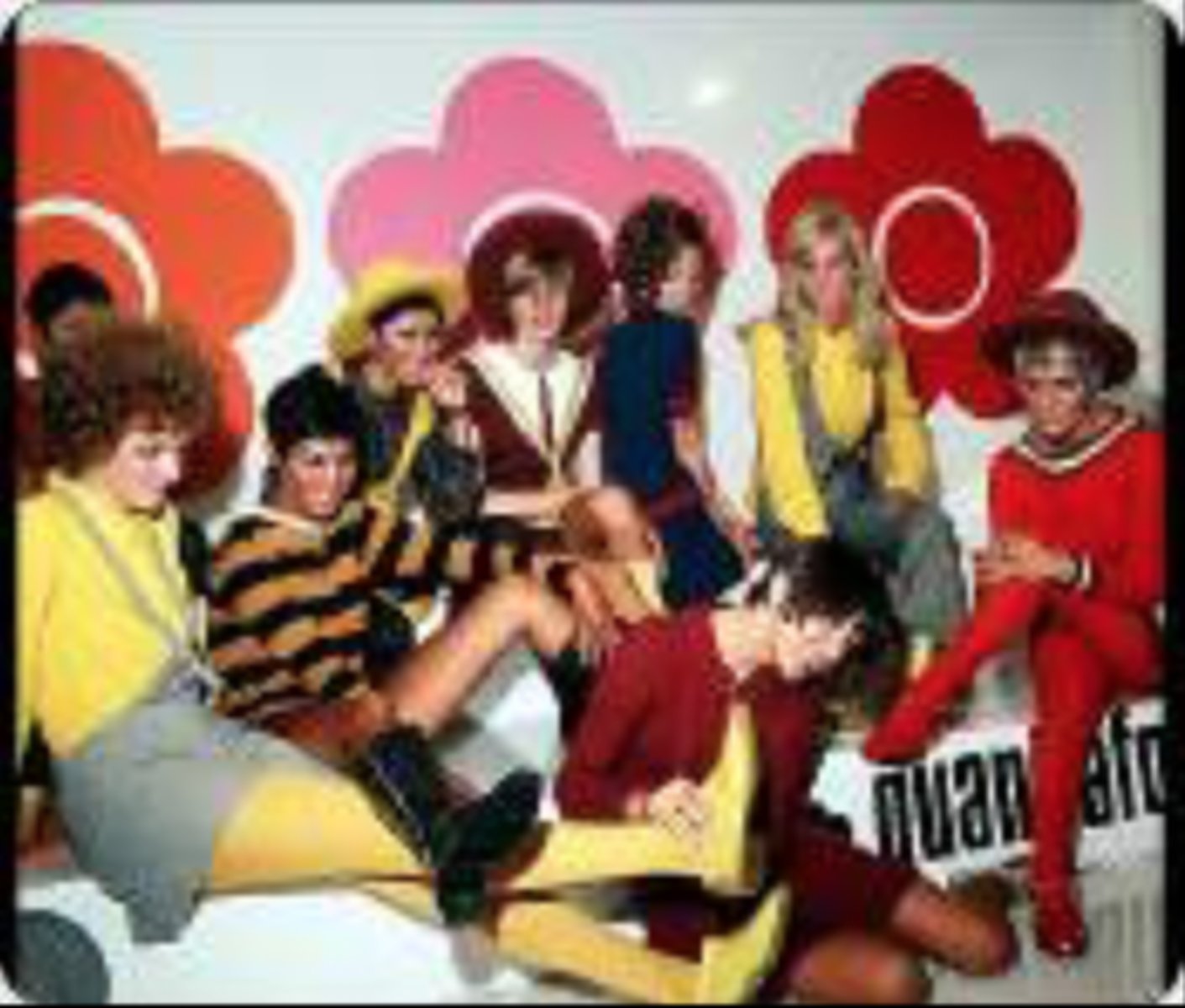
late 1960s
Peacock Revolution (spanned from the late 50s to 70s)
- Men’s dressing style broke away from traditional dress, challenging male gender norms and masculinity
- Colorful, flamboyant, and androgynous styles
- Velvet, frills, and bold patterns
- Psychedia --> Emilio Pucci
- Op Art --> Bright colors and bold patterns
- Ideal female body was stick thin --> models like Twiggy
- Mod Scene
- Mini skirts, shift dresses, and tailored suits
- male and female mods embraced sleek, often androgynous looks
Bohemian/Peasant aesthetic (late 60s - early 70s)
mod scene
- 1960s
- London-based subculture centered on modern design, sharp fashion, and soul/jazz music
- a significant focus on clean lines, bold colors, and geometric patterns.
- Mini skirts, shift dresses, and tailored suits
- male and female mods embraced sleek, often androgynous looks
1970s overall transition
Emerging technologies in knitwear started moving away from woven fabrics and military clothing as dress of resistance
1964-1970s: era of youth and change
- Mini skirts, hot pants (short shorts), go go boots
- DENIM --> Could only be distressed through wear
- worn in jeans/patchwork became a status symbol
- hyper sexualization of dress wear
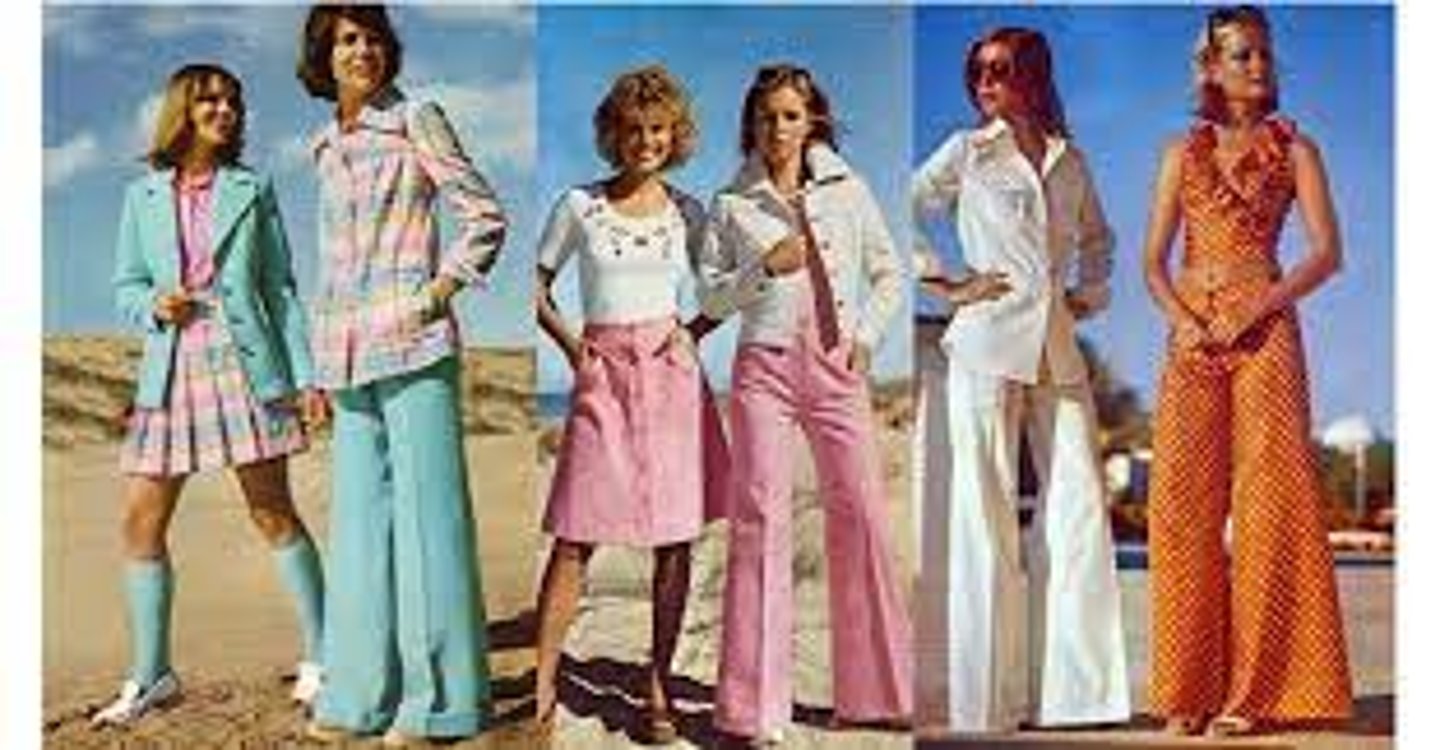
early 1970s:
soft disco --> flowy material, looser silhouettes
- continuation of peacock revolution
peacock revolution
a period during the 1970s when men's fashion became more colorful and effeminate
late 1970s
Introduction of denim distressing
- Stone washing, machine distressing, fringe, and appliques
Very high waisted
disco emerges --> Glitter, glam, bell bottoms, spandex, jumpsuits
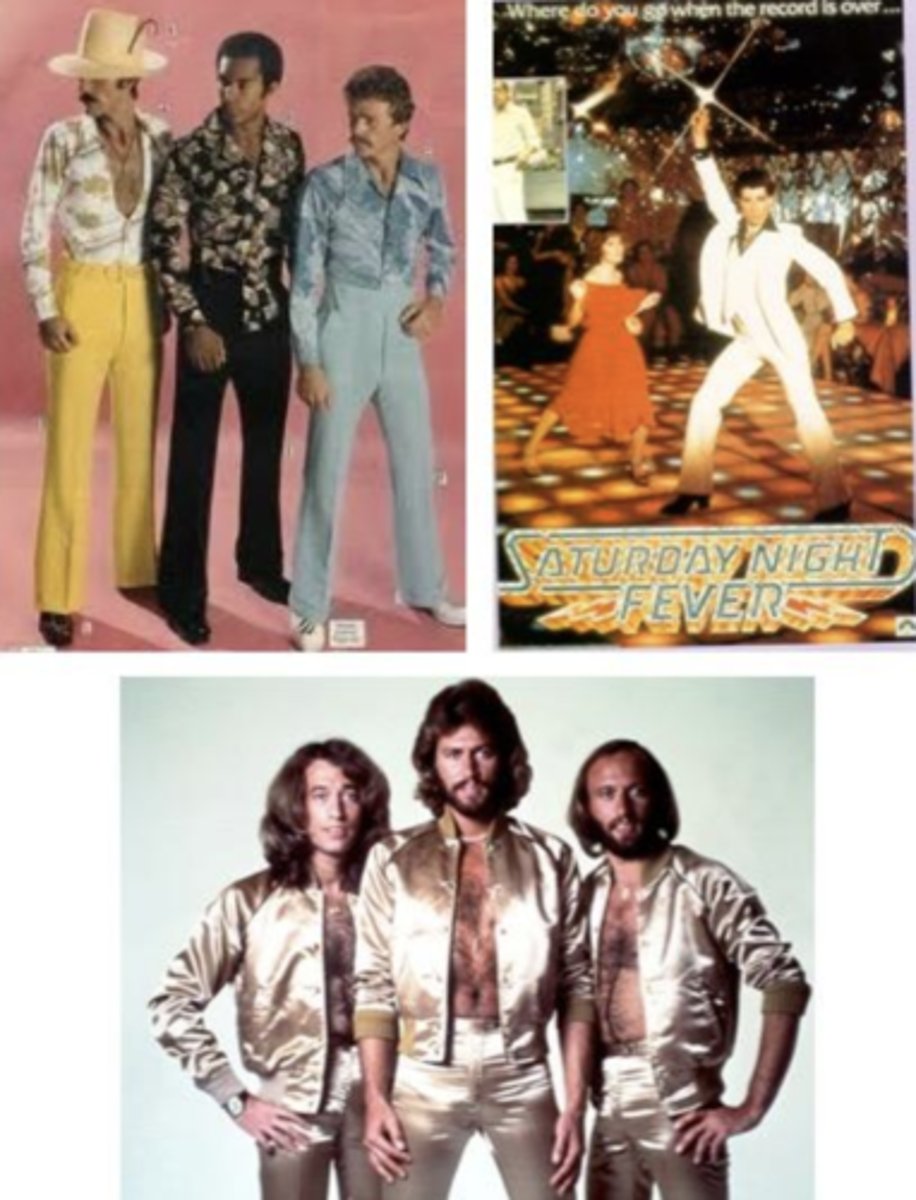
1980-1989: opulence era
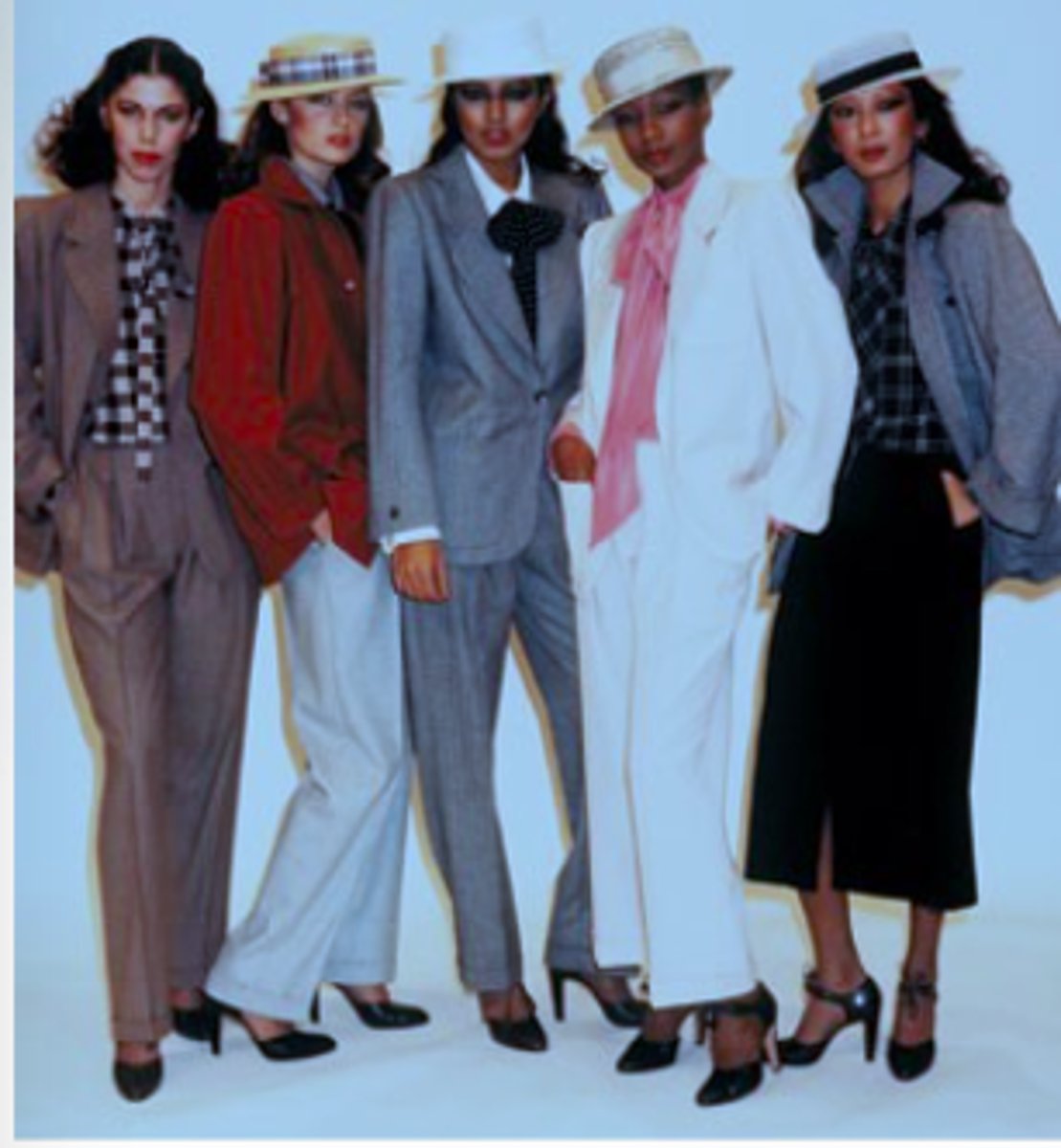
Denim
Surface embellishments (studs, rhinestones, fringe, embroidery, leather, logos)
- Acid wash or distressed jeans
- High-waisted
- Pleated
Big hair
Power suits
Wall street/relaxed streetwear resistance
Cigarette Silhouette
maximalism
Quiet Opulence (Preppy aesthetic) --> Pastel colors, simpler styles
Post Modernism --> Fitness, sports bra, bright colors, high cut leotards
1990s
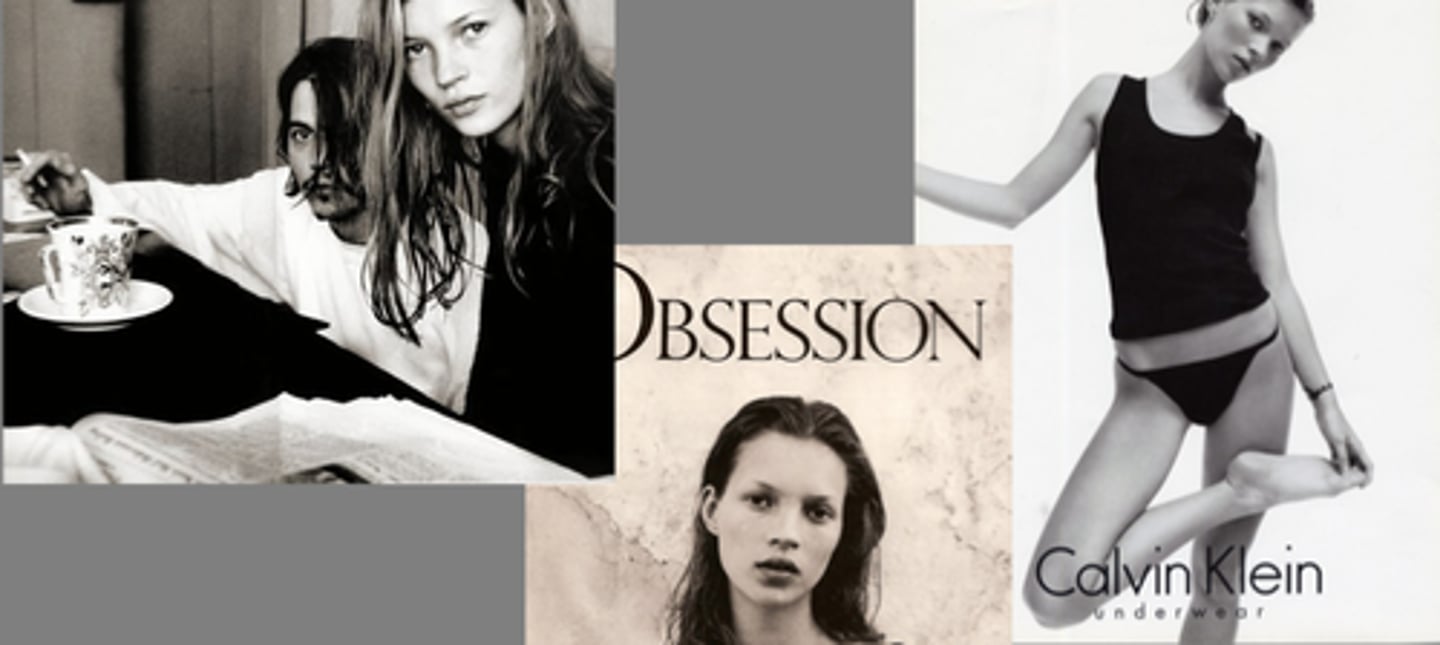
Hip hop style --> Looser silhouettes, adopting parts of 1980s styles
Grunge/skater aesthetic --> Marc Jacobs, Rei Kawakubo
(Redefine rebellion within fashion)
Minimalist/anti-fashion era --> Simplicity, purity, authenticity (Jil Sander), Introduction of causal fridays
Denim --> pushed through form, Little to no surface treatment or embellishment
- Bootcut, waistline lowers
early 2000s
Globalized digital era
Bootcut or skinny jeans
Everything super low waisted
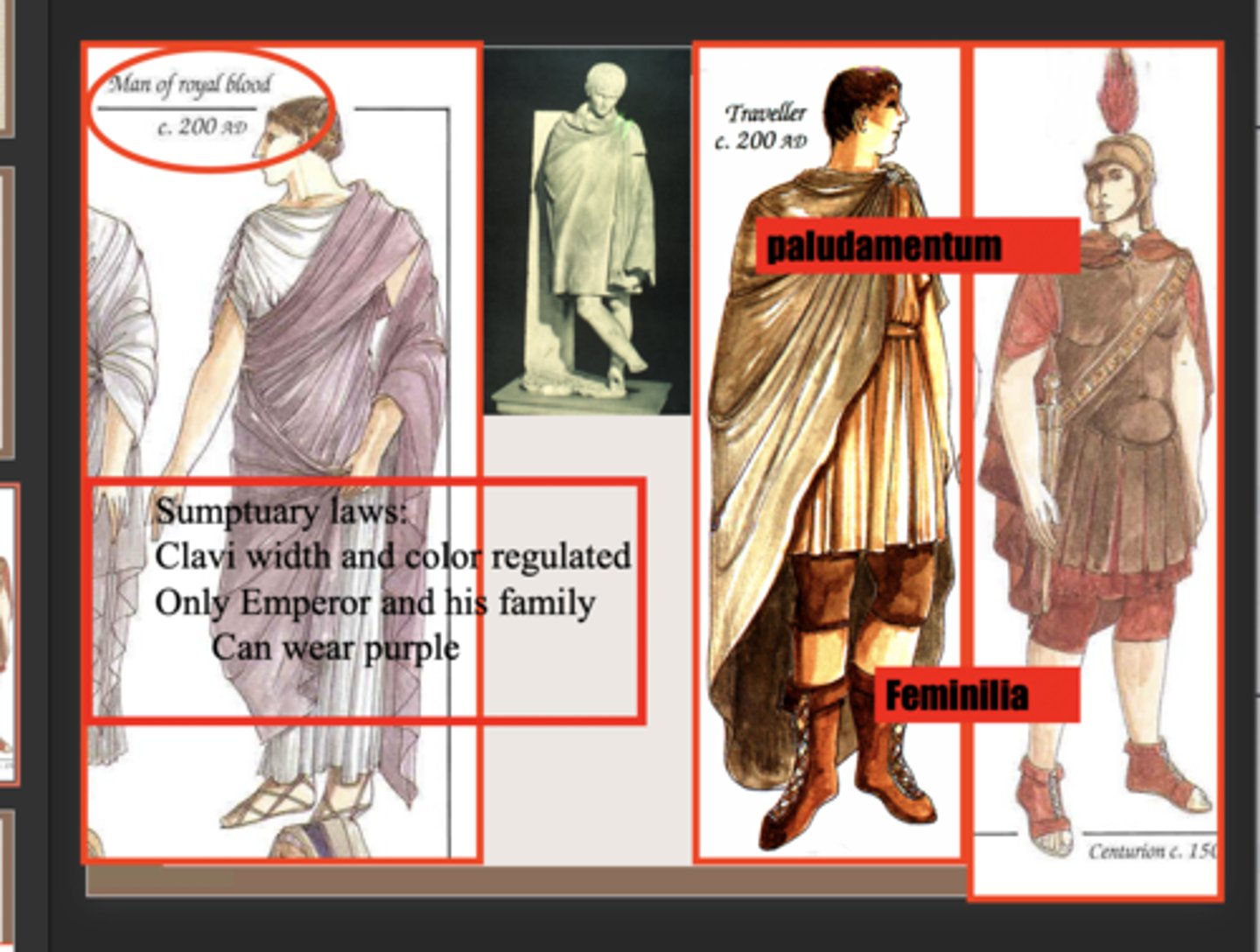
sumptuary laws
Laws that controlled consumption or how people spent their money
- limits how ppl may display wealth in clothing
Emerged in Florence in 15th-16th century
Knights' wives have the most fabric and jewelry, followed by nobles
real women have bodies
Carmen Maria Machado crafts a world in which women begin to fade, their bodies becoming translucent until they nearly disappear --> stitching gowns that contain ghostly remnants
what is carmen saying in real women have bodies?
- reveals hidden labor and emotional weight behind fashion production
- fading of women represents them fading from collective memory as they are no longer youthful and "beautiful" and lose their value to society
- the women who let themselves be sewn into dresses is an act of desperation --> allowing themselves to be commodified and objectified for worth
- garments we wear marked with handprints of the people in production chain
the flame retardant story
- case study on flame retardants --> designed to make furniture safer by reducing fire risk, but chemicals posed health hazards outweighing functional benefits
what does flame retardant story show?
- making something with good intentions can have long term negative effect --> products purpose doesn't stop at what its supposed to do, have to look at what it does to peoples lives
- scientific research doesn't align with design and manufacturing
 Note
Note  Flashcards (23)