Ani Div Lab Week 8
 Call Kai
 Learn
Learn Practice Test
 Spaced Repetition
 Match
Match Flashcards
 Knowt Play
1/14

Earn XP
Description and Tags
Chordates
Name | Mastery | Learn | Test | Matching | Spaced | Call with Kai |
|---|
No analytics yet
Send a link to your students to track their progress
15 Terms
general chordata characteristics
triploblastic coelomate deuterostomes
bilateral symmetry
closed circulatory system
endoskeleton
highly cephalized
homologous structures
highly developed respiratory, digestive, and excretory systems
under deuterostomia and next to echinodermata (sea stars)
three groups under chordata —> cephalochordata, urochordata (tunicata), and vertebrata
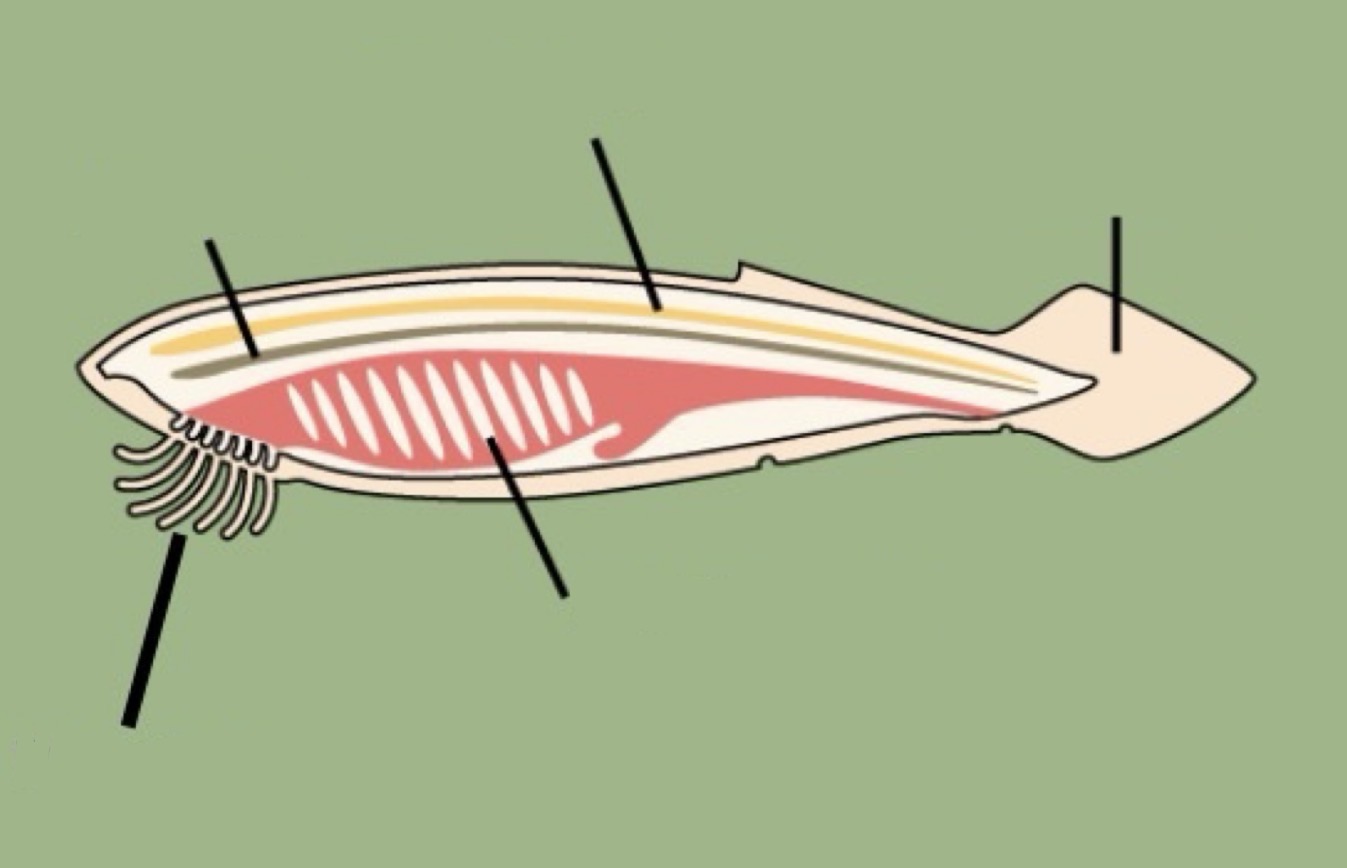
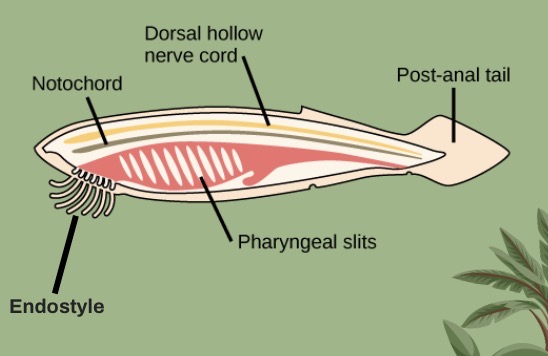
5 key characteristics of chordates
notochord —> flexible, rod-like structure for support
pharyngeal gill slits —> perforated openings that aid in filter feeding in simpler chordates, modified into gills
dorsal (hollow) nerve chord —> spinal cord and brain
post-anal tail —> tail for locomotion
endostyle —> secretes mucus for filter feeding in lower chordates, modified into thyroid gland
all of these are present at some point in chordates
clade cephalochordata
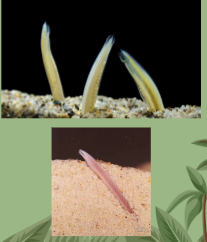
marine lancelets
show all chordate characteristics clearly as adults
burrow in the sea floor, filter feeders
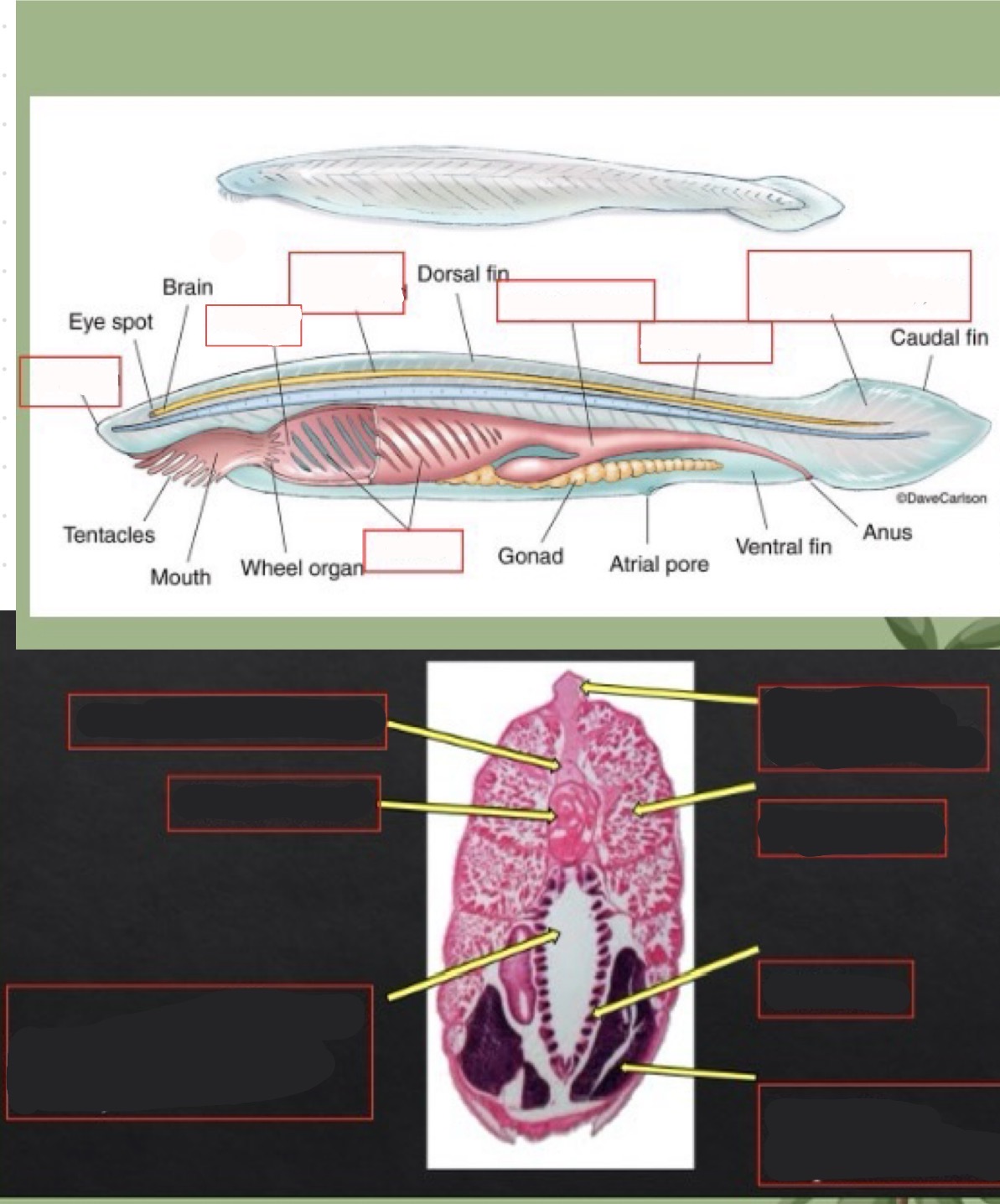
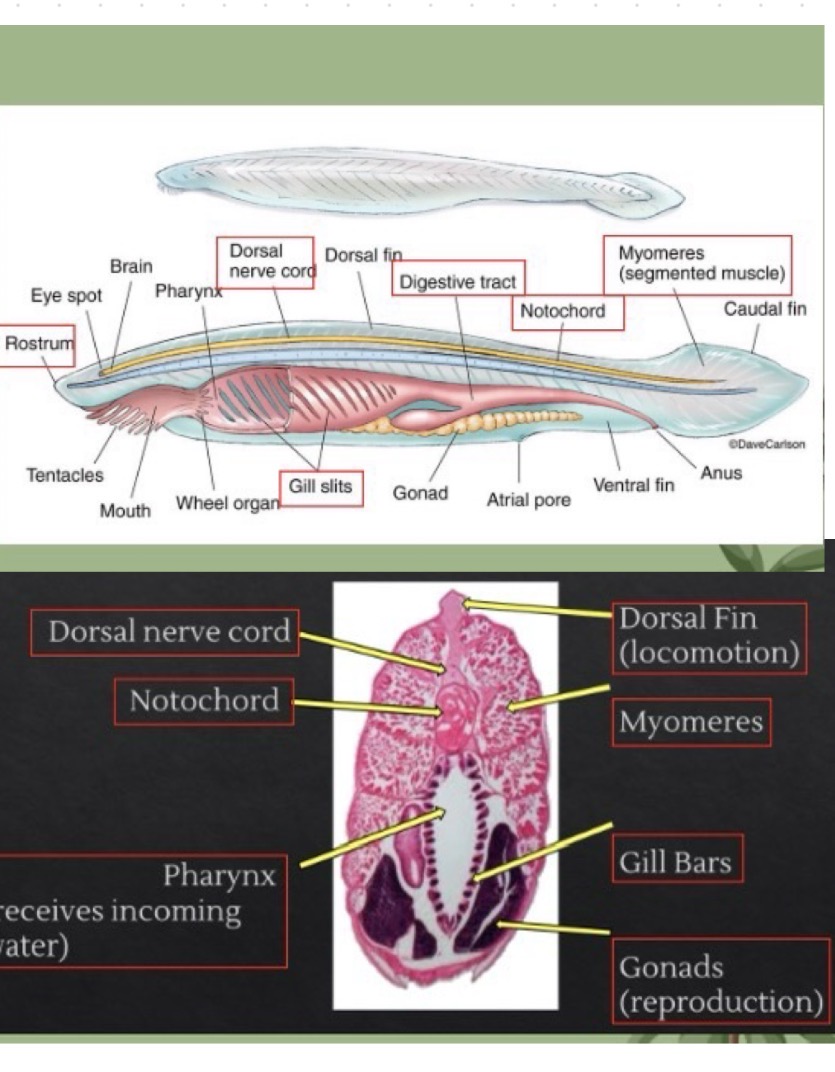
lancelet structures and functions
rostrum —> food gathering
myomeres —> structural integrity and movement
dorsal nerve cord —> central nervous system
notochord —> structural support
gill bars —> ciliated, coated with mucus. used to catch suspended food particles. structural support, protection, filter feeding gas exchange.
gill slits —> openings that lead from pharynx to exterior, allow for water to exit body, filter feeding, gas exchange.
hepatic caecum (liver) —> intracellular digestion
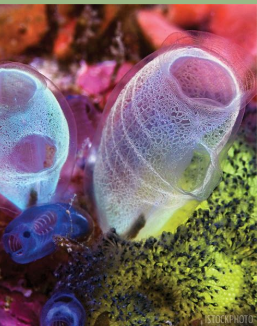
clade urochordata —> tunicates (sea squirts)
sessile filter feeders as adults
have a tunic —> tough outer test
show the chordate charactiersitcs as larvae
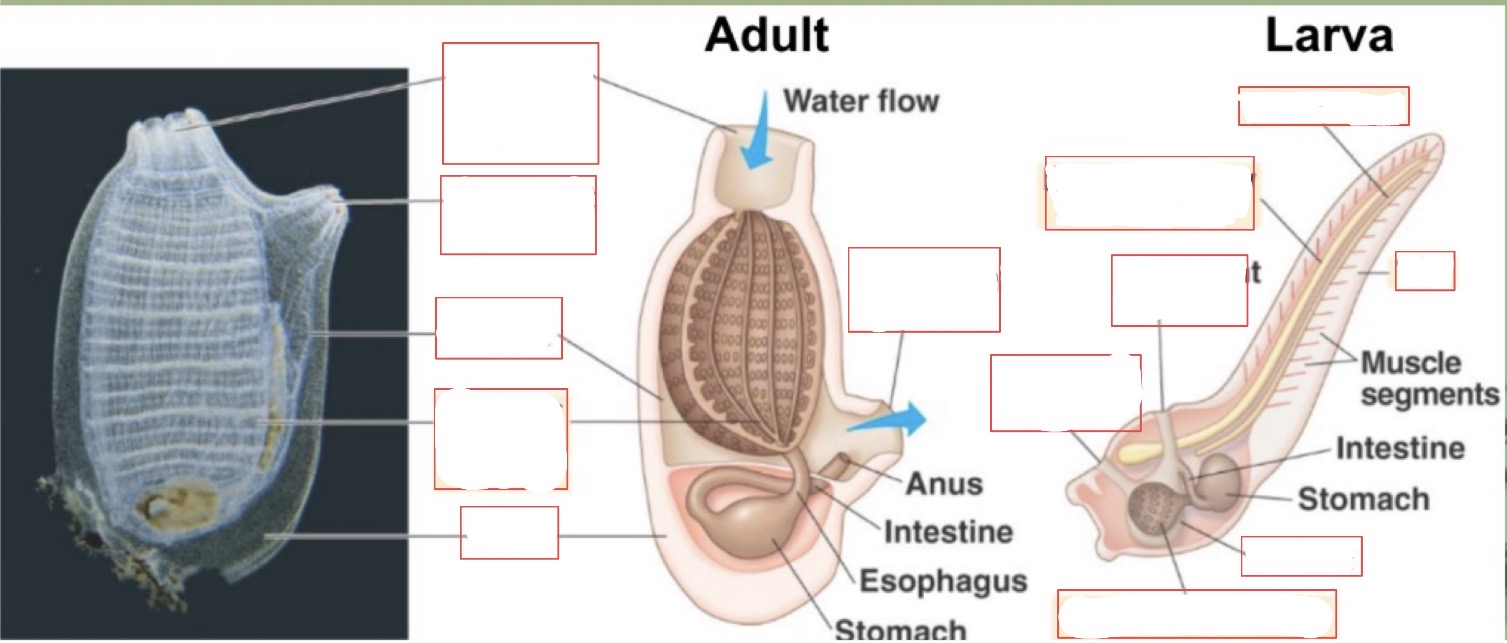
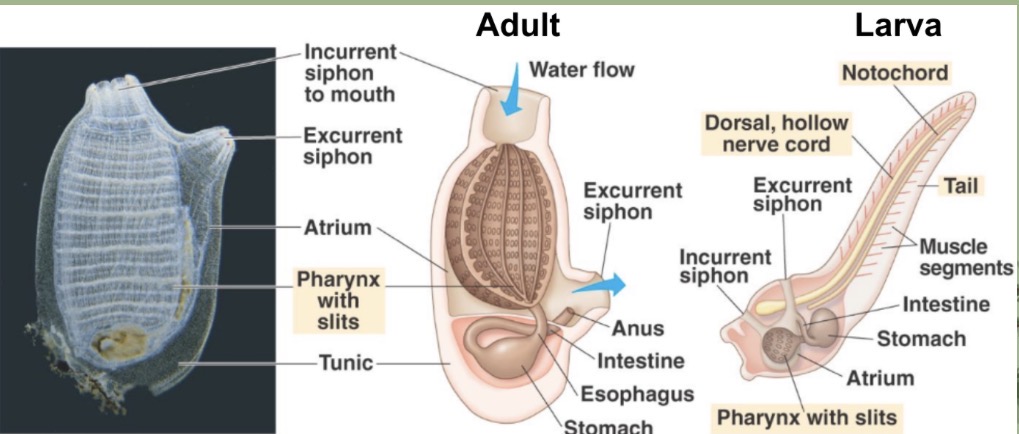
structures and functions of tunicate
pharynx with gill slits —> filter feeding
endostyle —> mucus secretion
incurrent and excurrent siphons —> respiration, draw water into body and expel
notochord —> structural support
post-anal tail —> locomotion
dorsal nerve cord —> CNS
atrium —> passage from siphon to the pharynx
tunic —> tough outer covering
stomach —> chemical and mechanical digestion
intestine —> nutrient absorbption
clade vertebrata
characterized by a vertebral column and cranium
cranium protects the brain
vertebral column protects spinal chord
have an endoskeleton of bone and/or cartilage —> its living unlike the dead exoskeleton in arthropods —> allows for growth
muscle attachment to endoskeleton
closed circulatory system
digestive and excretory system well developed (kidneys)
highly cephalized (well developed sensory organs associated with a highly differentiated brain)
bilateral symmetry
possess all chordate features at some point in life
under clade chordata
has gnathostomata under it and “agnatha” which has cyclostomata which has petromyzontida (lampreys)
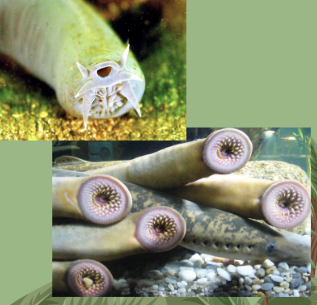
lampreys —> clade petromyzontida
parasites that attach to fish using sucker-like mouth
have horny teeth to rasp away at flesh
suck out body fluids with secreted anti-coagulants
anadromous
larvae called ammocoetes
under clade cyslotomata which is composed of living/extant members and is monophyletic
lack jaws and paired appendages
then under “agnatha” which includes living or extinct jawless fishes and is paraphyletic
anadromous vs catadromous life cycle
anadromous
spend most of adult life at sea
go to rivers/streams (freshwater) to reproduce
examples include salmon and lamprey
catadromous
spend most of adult life in freshwater
migrate downstream to saltwater to reproduce
example includes freshwater eel
lamprey lifecycle
adult freshwater spawning phase
larval (ammocoete) phase
juvenile —> downstream migration
parasitic juvenile phase —> attacks fish and does its parasite things
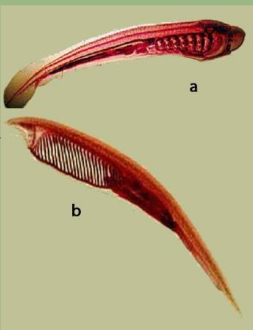
lancelet vs ammocoete
A —> ammocoete (lamprey larva)
more defined post anal tail (bigger)
rounded in shape
larger and more rounded gills/pharyngeal gill slits
B —> Lancelet (cephelochordata)
sharper and more gill slits
sharper tail
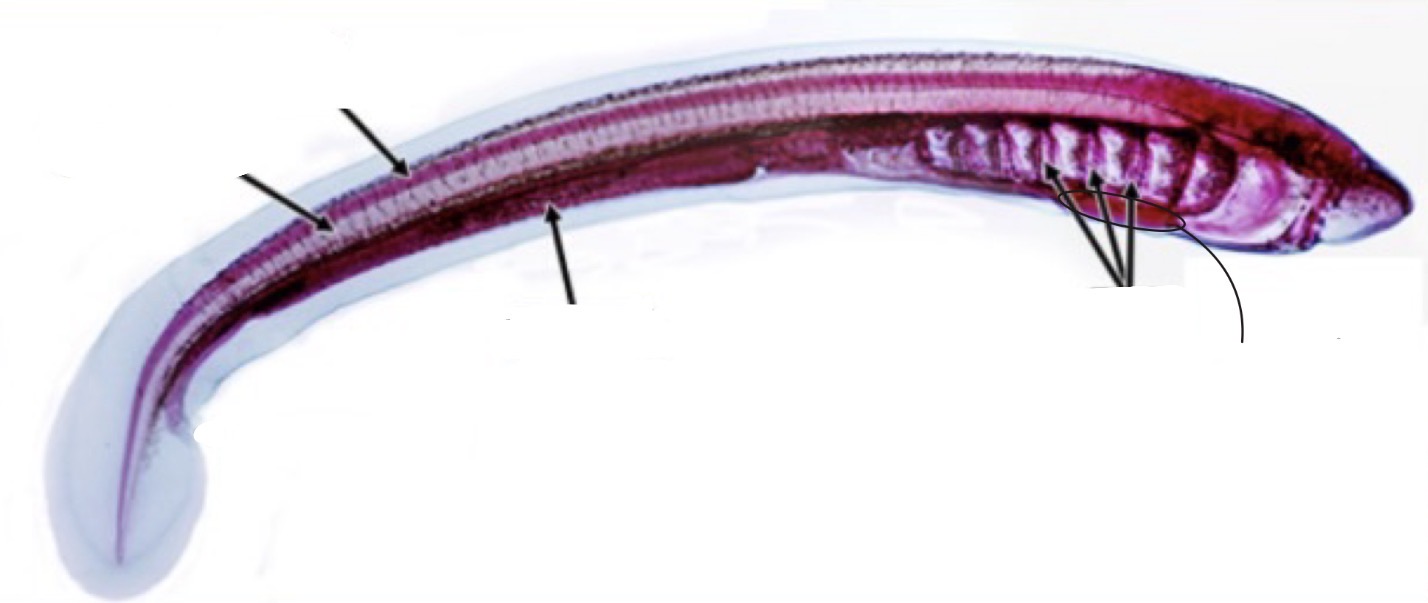
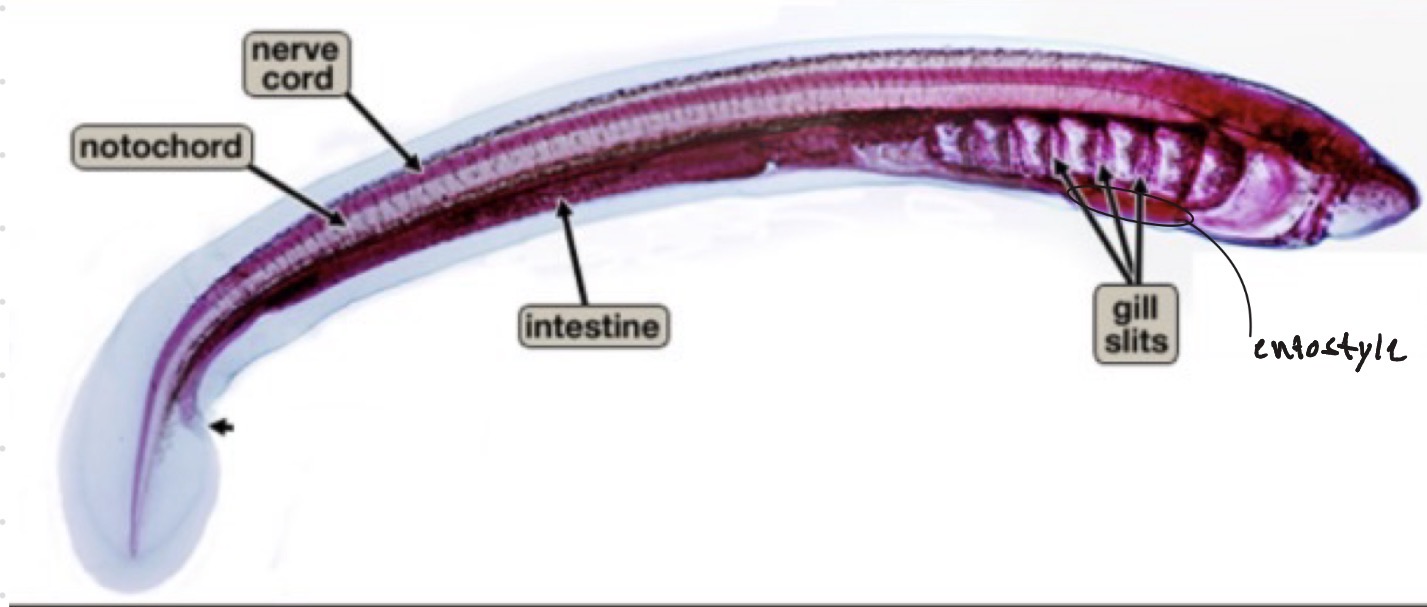
ammocoete structures and functions
pharynx with gill slits —> Gas exchange, filter feeding
endostyle —> secretes mucus onto gills
notochord —> structural support
dorsal nerve cord —> CNS
myomeres —> muscle tissue, structural integrity and movement
lamprey structures and functions
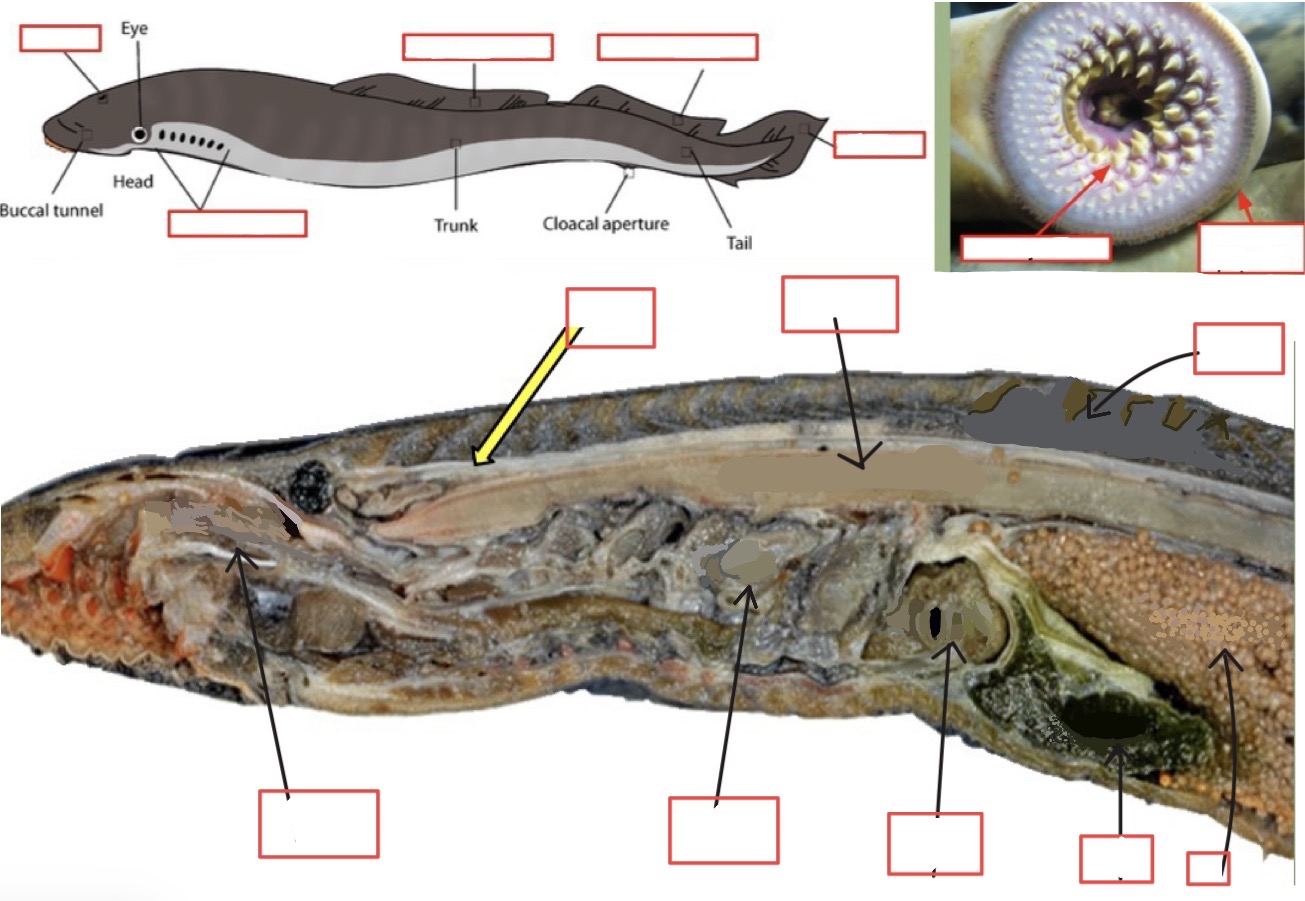
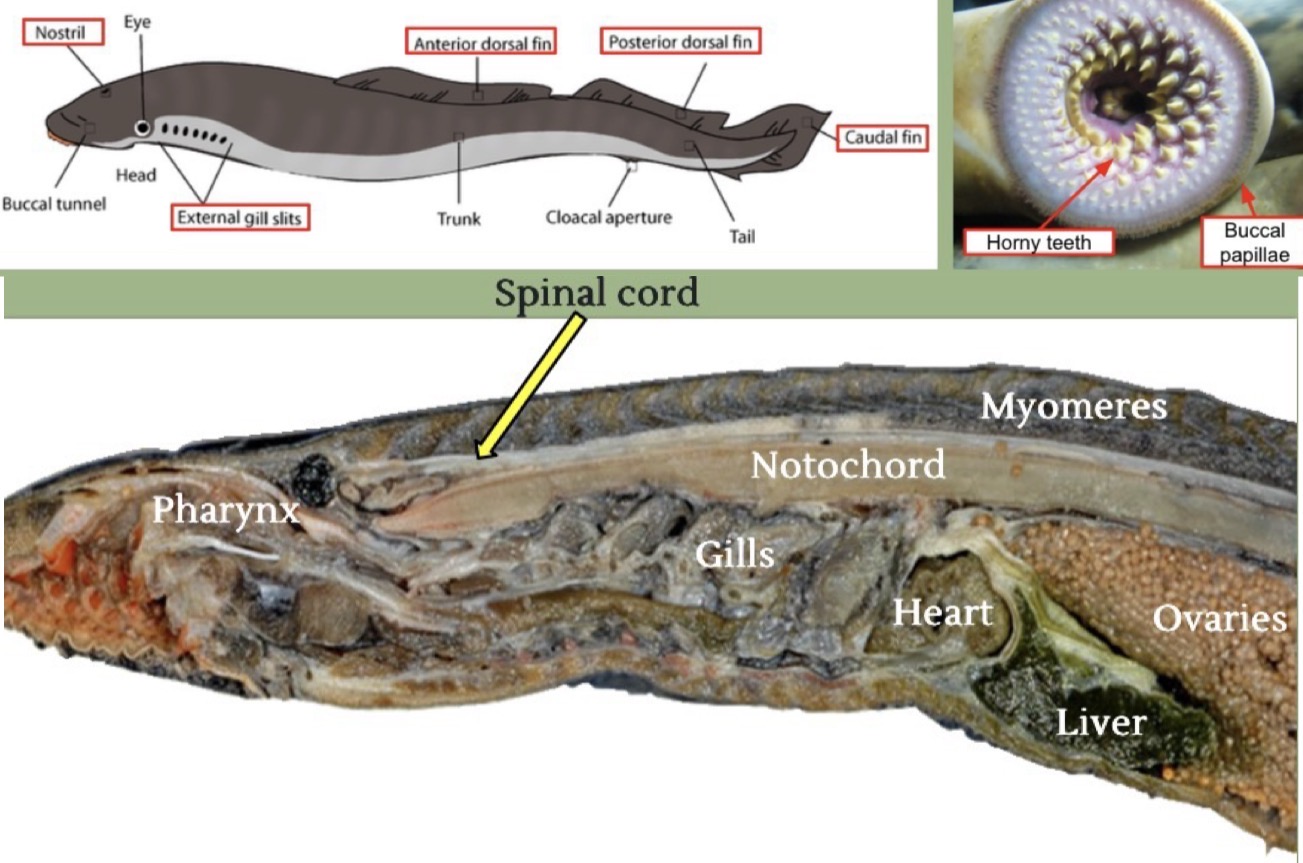
fins —> no paired fins, locomotion
gill slits —> openings to allow water flow to gills
nostril —> chemosensory organ serving olfactory function
buccal papillae —> finger like projections surrounding buccal cavity, creates a seal and good attachment to the host
horny teeth —> multiple rows, attachment to host
pharynx —> connects mouth to esophagus, enables respiration when attached to the host
gill bars —> respiration
heart —> circulation of blood
myomeres —> muscle tissue, allows for lateral undulation
notochord —> structural support
spinal cord —> CNS
liver —> secretes bile, accessory digestive organ
Gonads —> reproduction
CNS vs PNS
Central nervous system (CNS)
includes brain and spinal cord
“control center”
Peripheral nervous system (PNS)
contains nerves and ganglion that spread to rest of the body
involuntary control
sheep brain structures and function
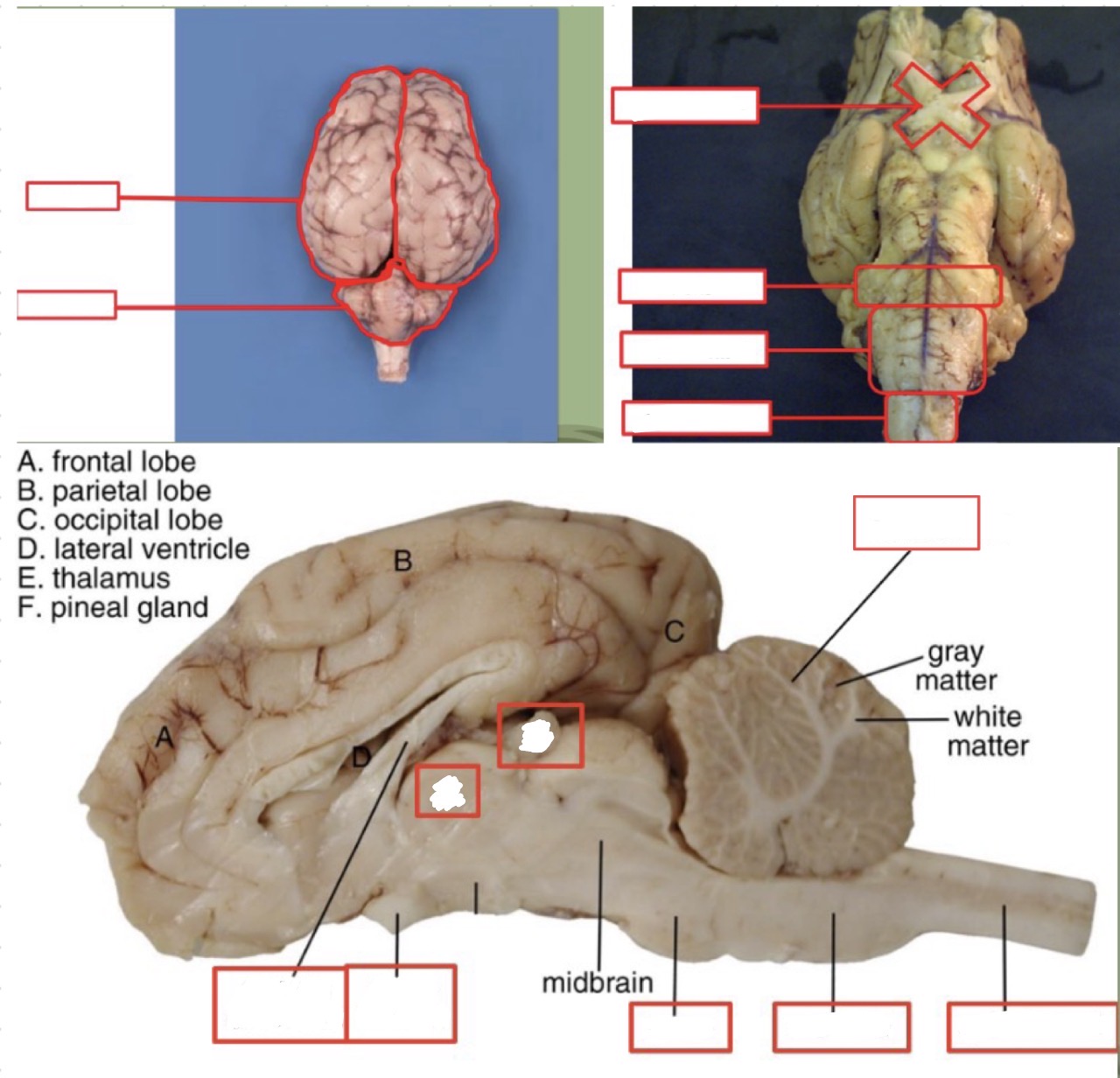
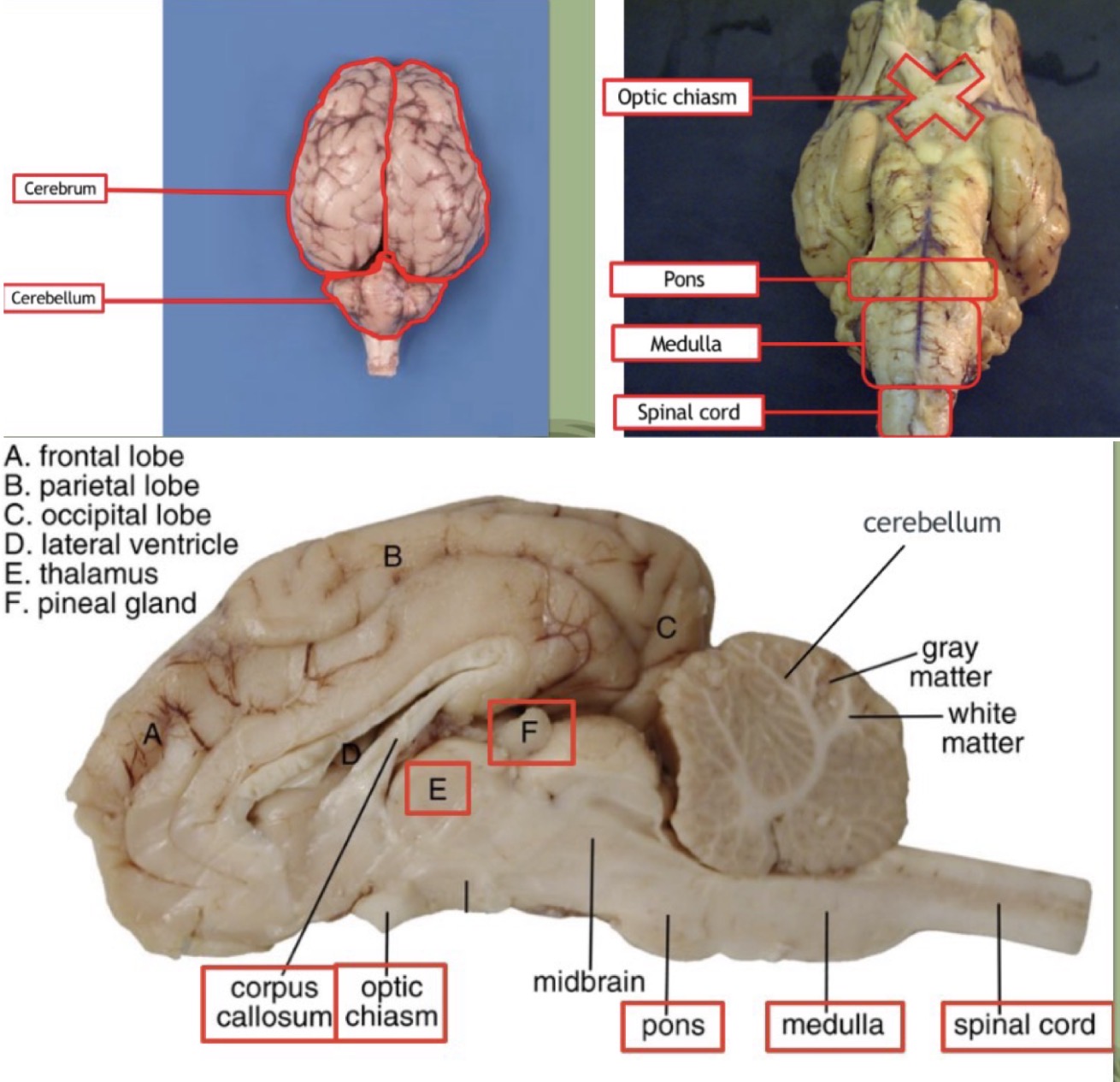
cerebrum —> sensory and motor
cerebellum —> balance
medulla oblongata —> control of automatic functions (breathing, swallowing, heartrate)
corpus callosum —> connects the two halves of the brain, inter-hemispheric communication
optic chiasma —> where the optic nerves cross one another
pituitary gland —> part of endocrine system, hormone secretion
hypothalamus —> controls pituitary, homeostasis
pons —> unites messages from cerebellum and cerebral cortex (brain halves)
pineal body —> involved in biorhythms (puberty)
thalamus —> sensory integration and relay to cerebrum
meninges —> protective covering
Explore top notes

Explore top flashcards
