Plant Biology
 Studied by 0 people
 Call Kai
 Learn
Learn Practice Test
 Spaced Repetition
 Match
Match Flashcards
 Knowt Play
1/256

There's no tags or description
Looks like no tags are added yet.
Name | Mastery | Learn | Test | Matching | Spaced | Call with Kai |
|---|
No analytics yet
Send a link to your students to track their progress
257 Terms
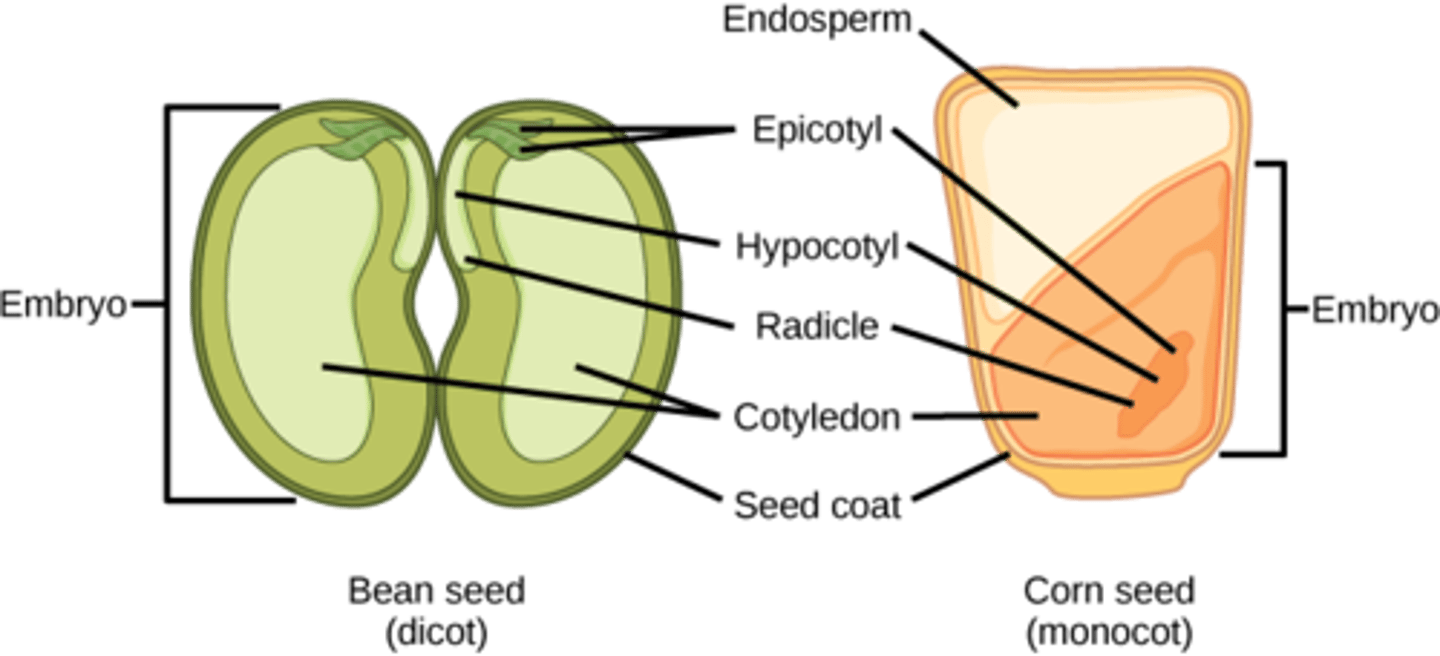
What plant structure contains a young dormant sporophyte, storage of nutritive tissue, and an outer protective coat?
seed
What catalyzes a seed to grow?
proper environmental
conditions

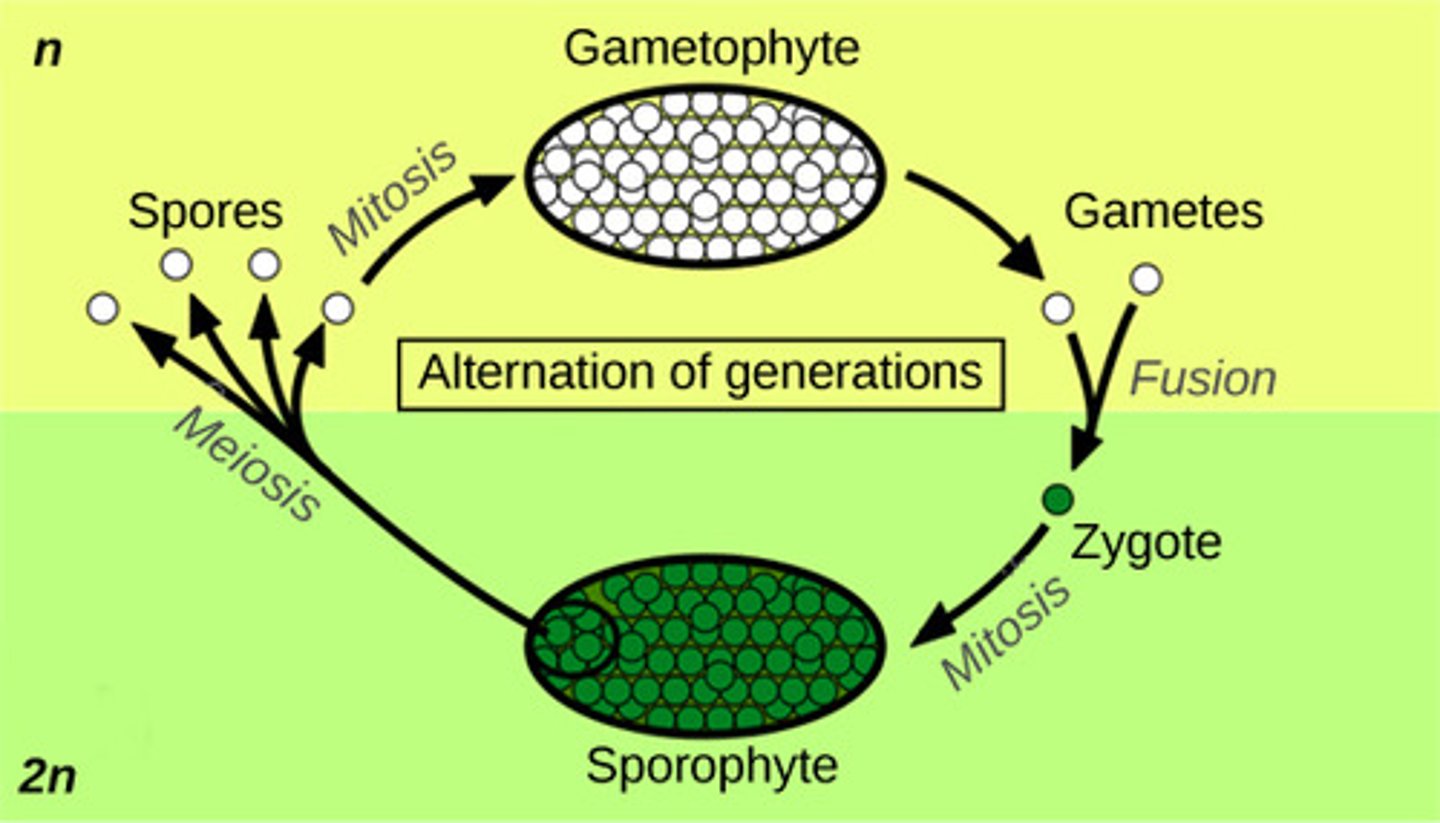
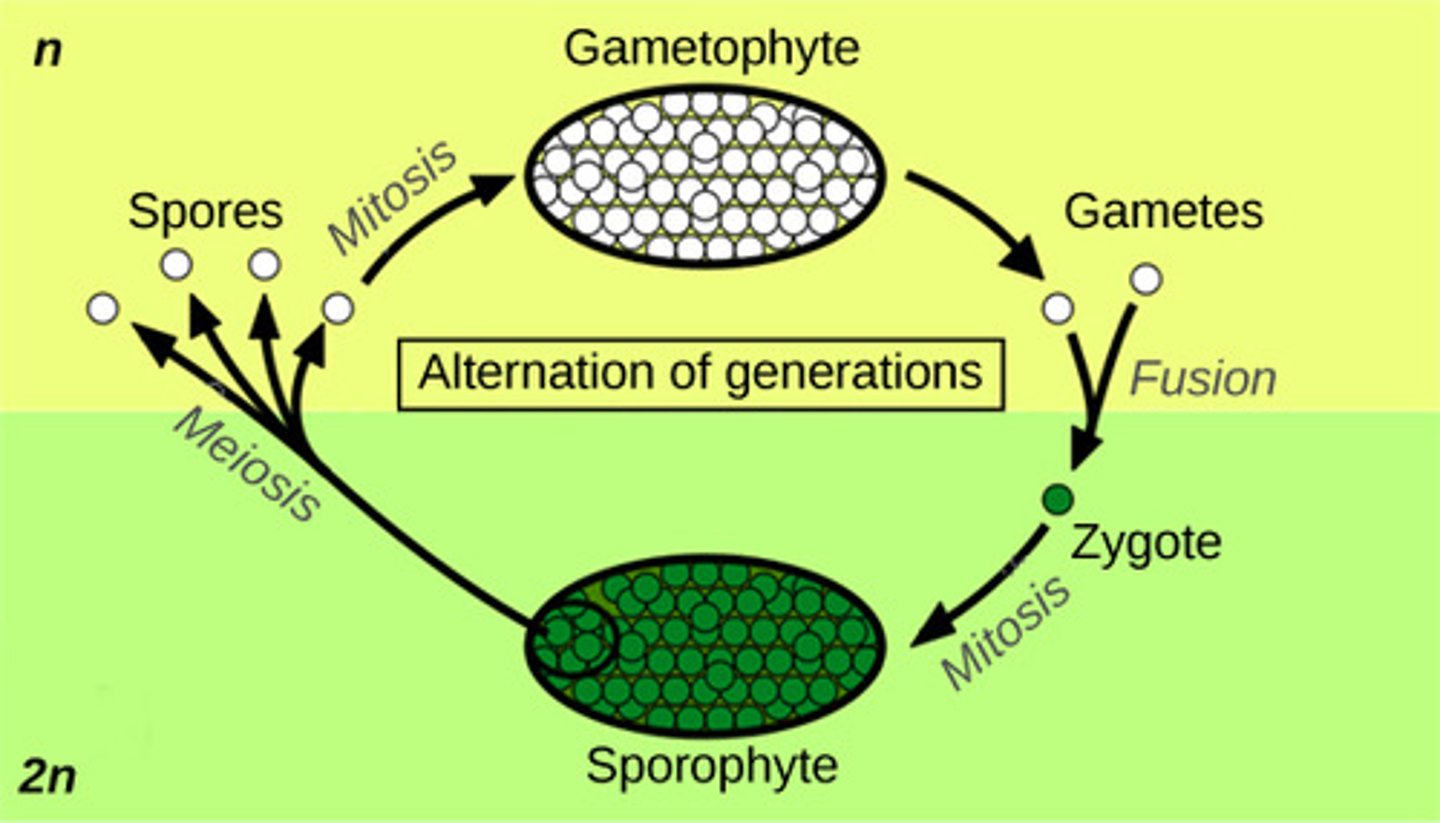
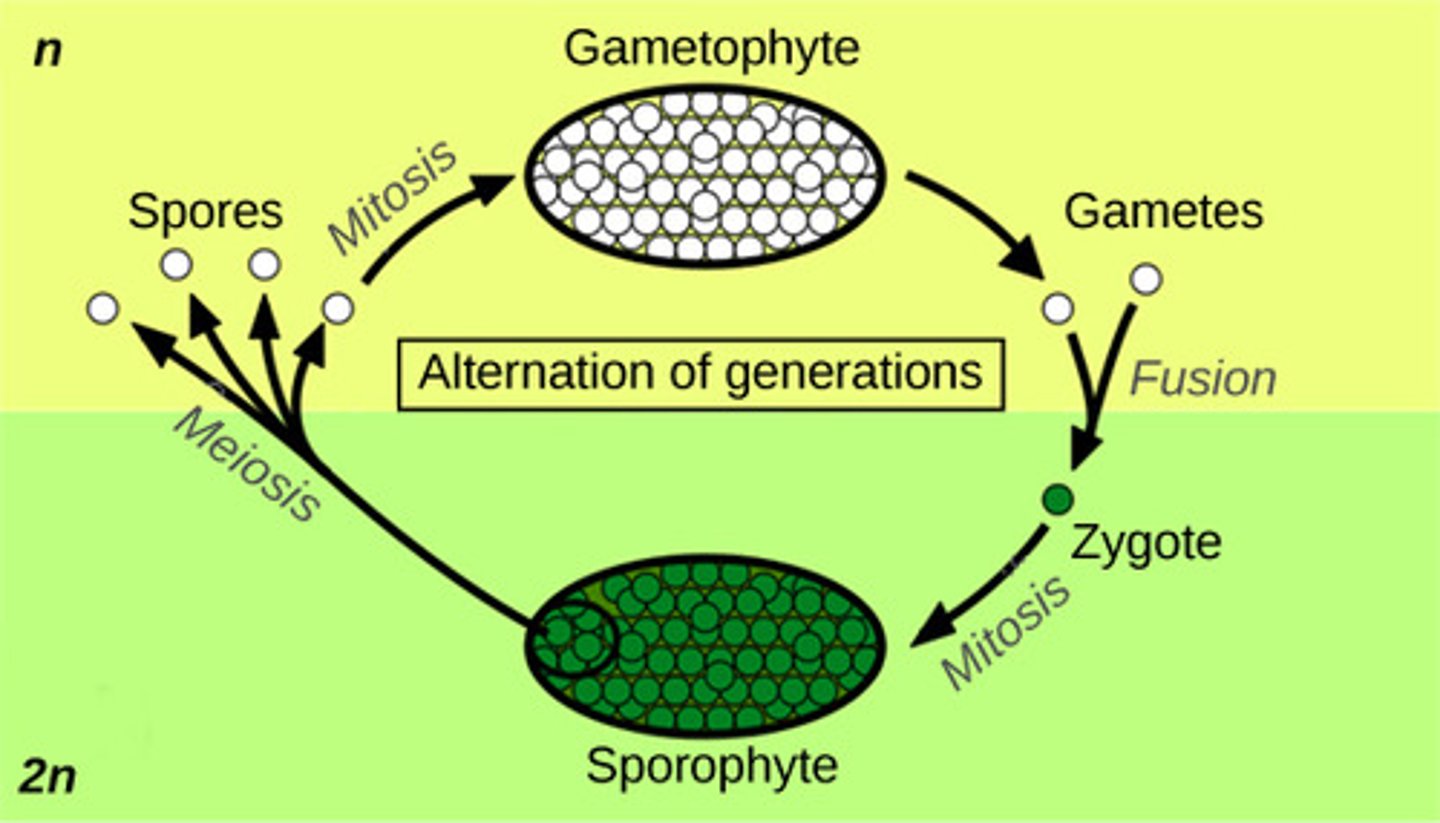
Which stages alternate in a plant's alternation of generations?
haploid (n) and
diploid (2n) stages
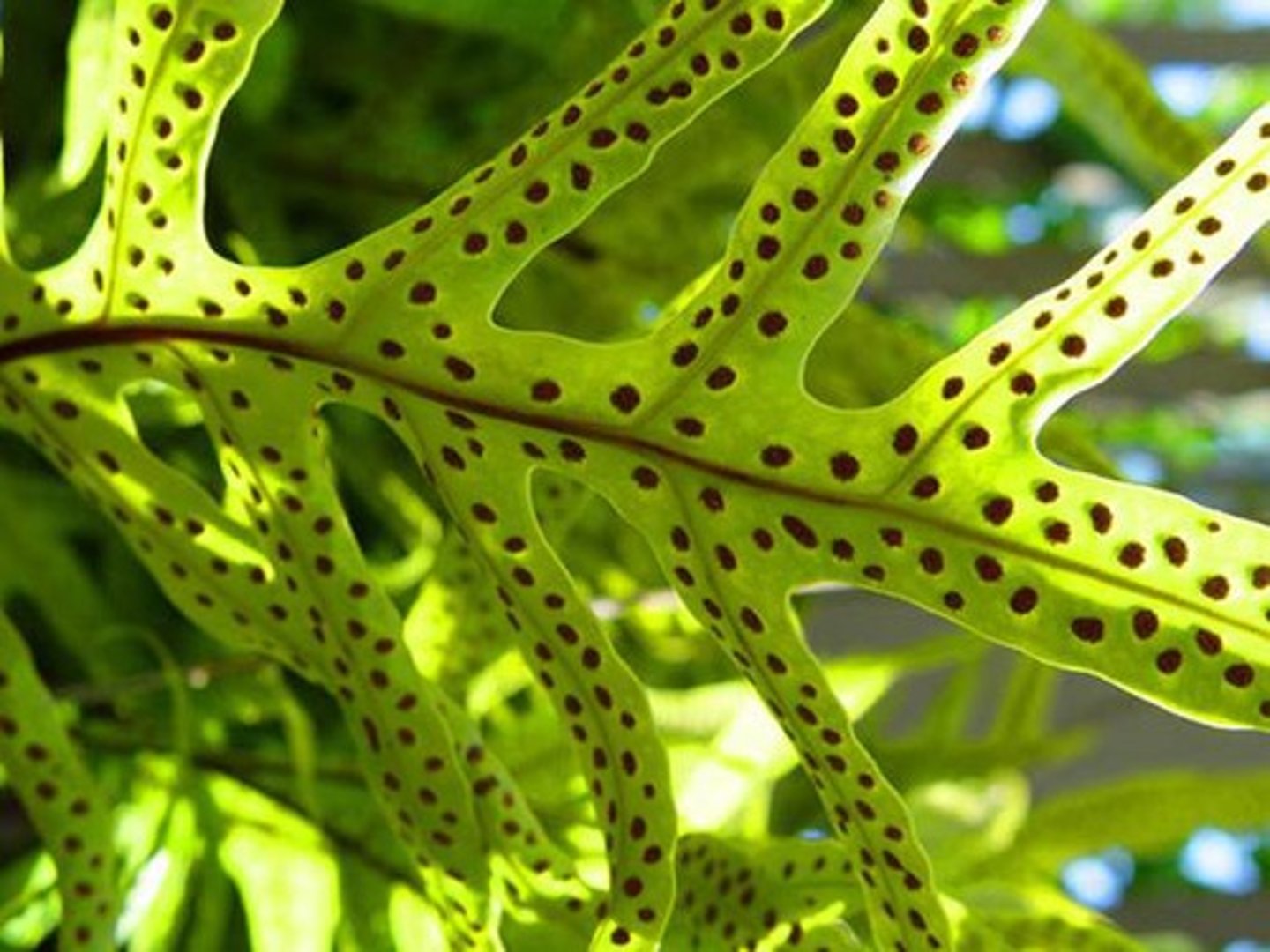
Meiosis in which structure produces haploid spores?
sporangia
Spores undergo mitosis to become what reproductive unit?
gametophyte
(Note: multicellular)
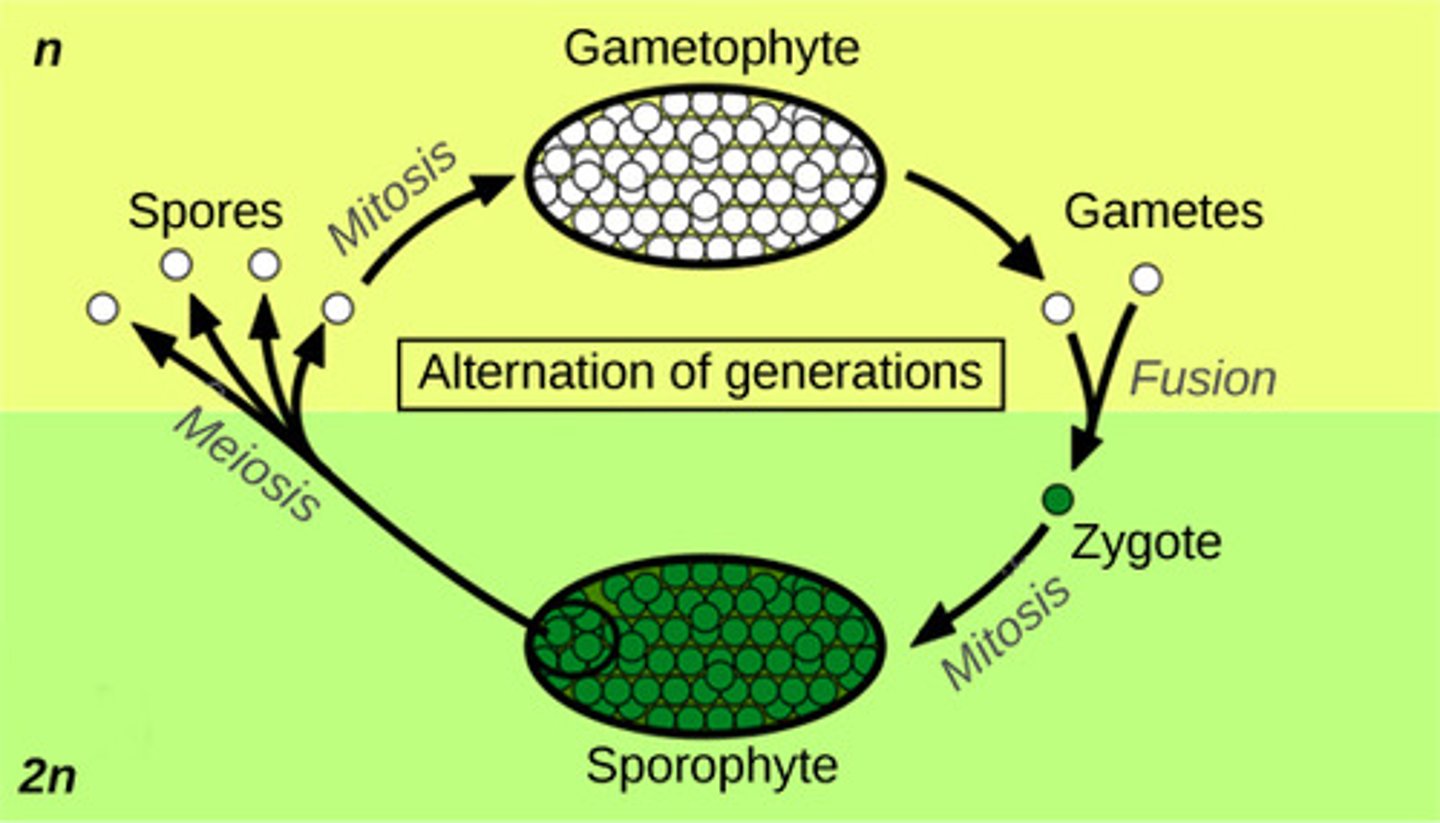
What stage is a gametophyte?
haploid (n)
(Note: mitosis from
spore still
results in haploid cells)
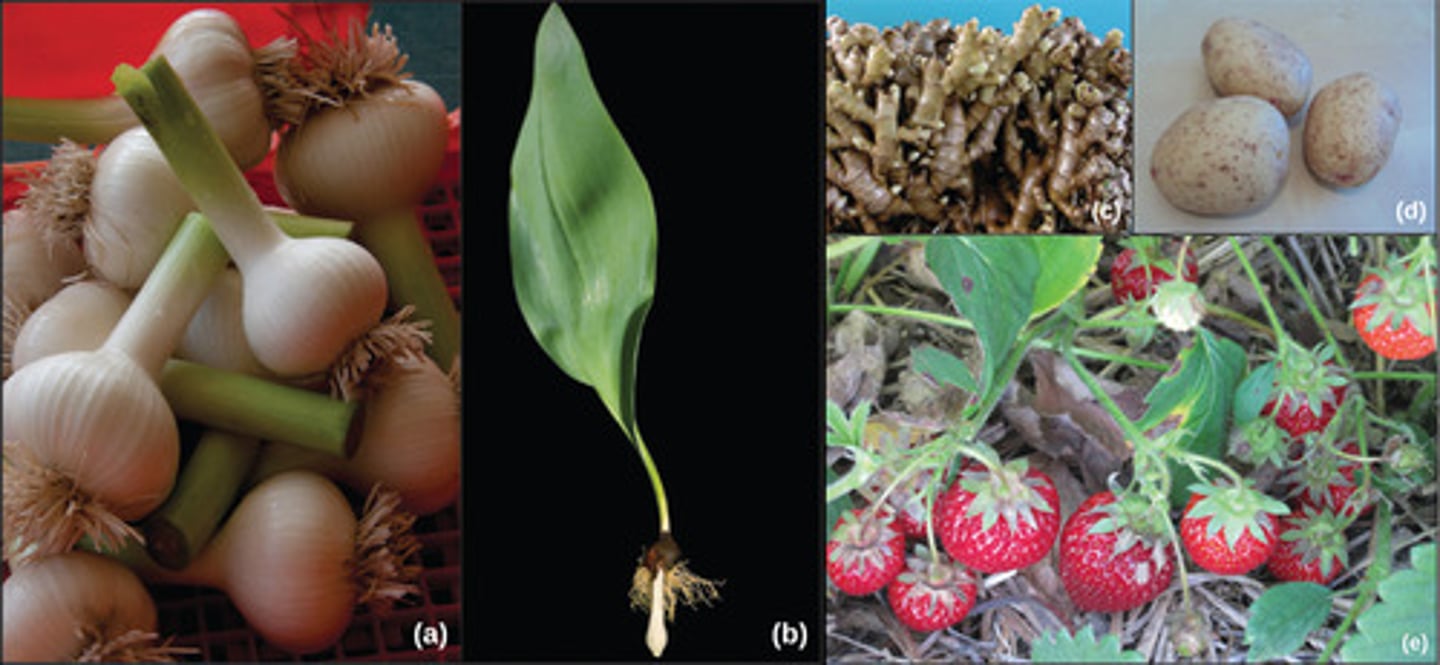
Vegetative propagation is a form of which type of reproduction in plants?
asexual reproduction
(Note: leads to genetically
identical offspring)
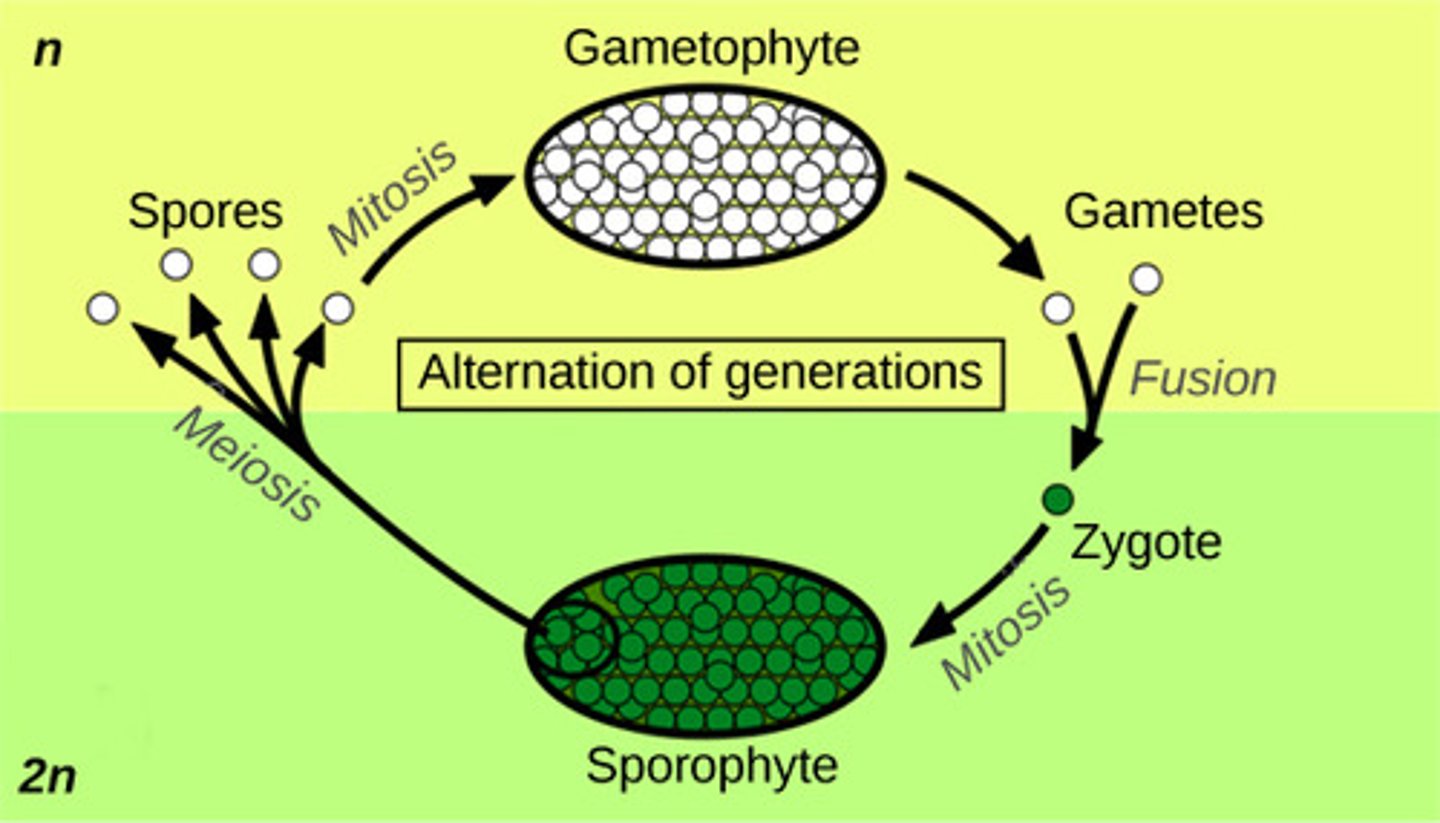
Plant gametes fuse and produce what stage of cell?
diploid cell (2n)
Fused plant gametes undergo what process to become a sporophyte?
mitosis
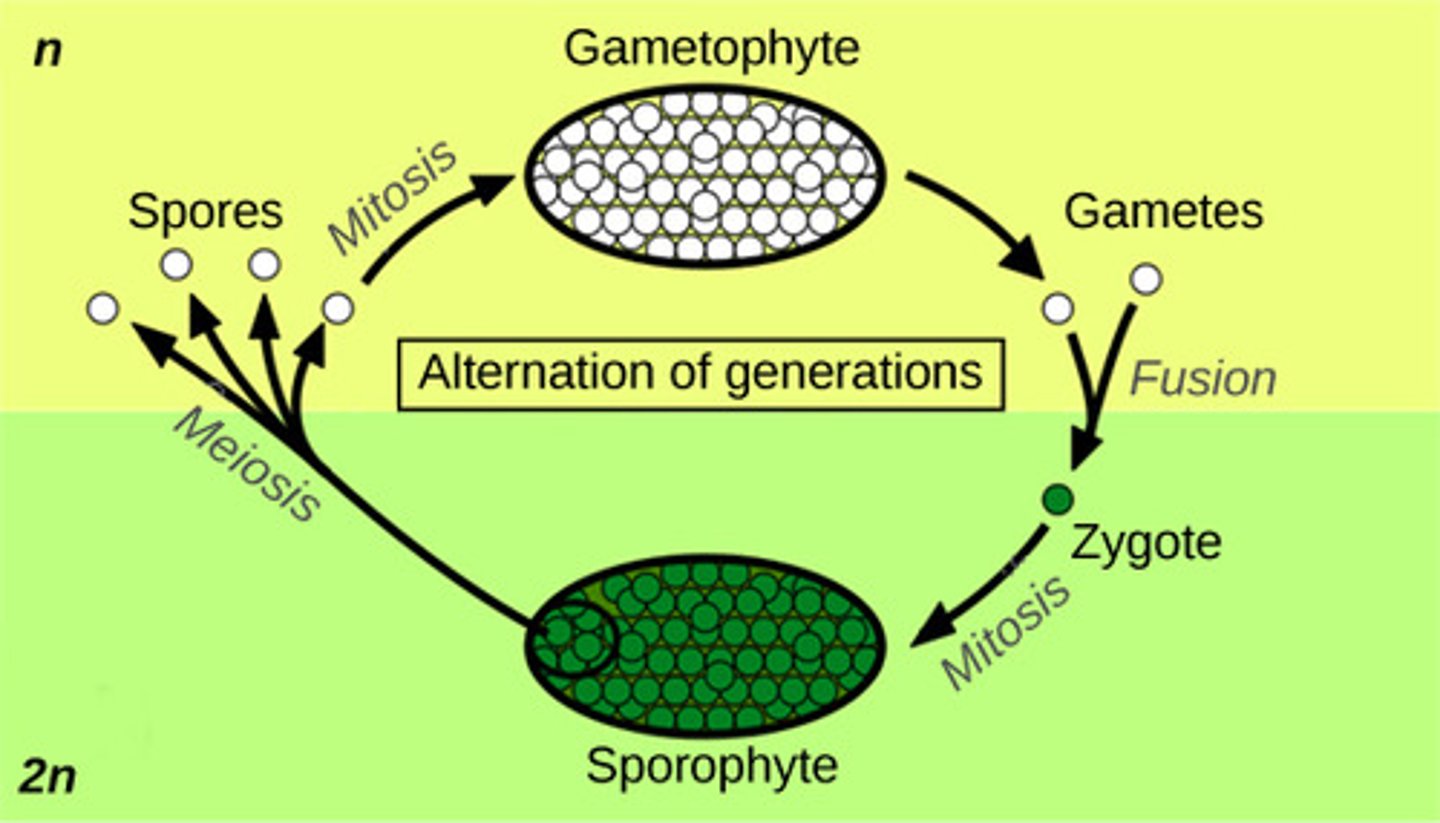
Cells in the sporangia of the sporophyte undergo which process to produce haploid spores which germinate and repeat the life cycle?
meiosis
What are storage tissues that provide nutrition to developing seedlings in plants?
cotyledons
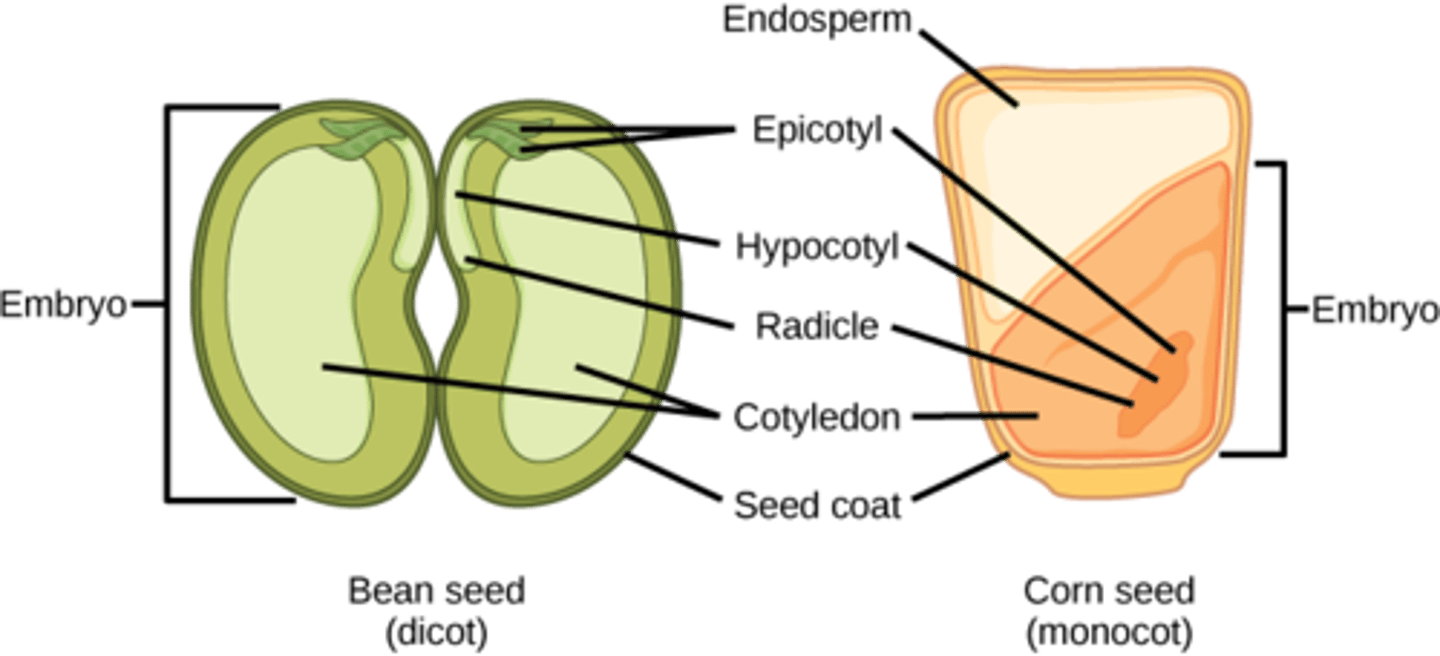
Dicots have what number of cotyledons?
2
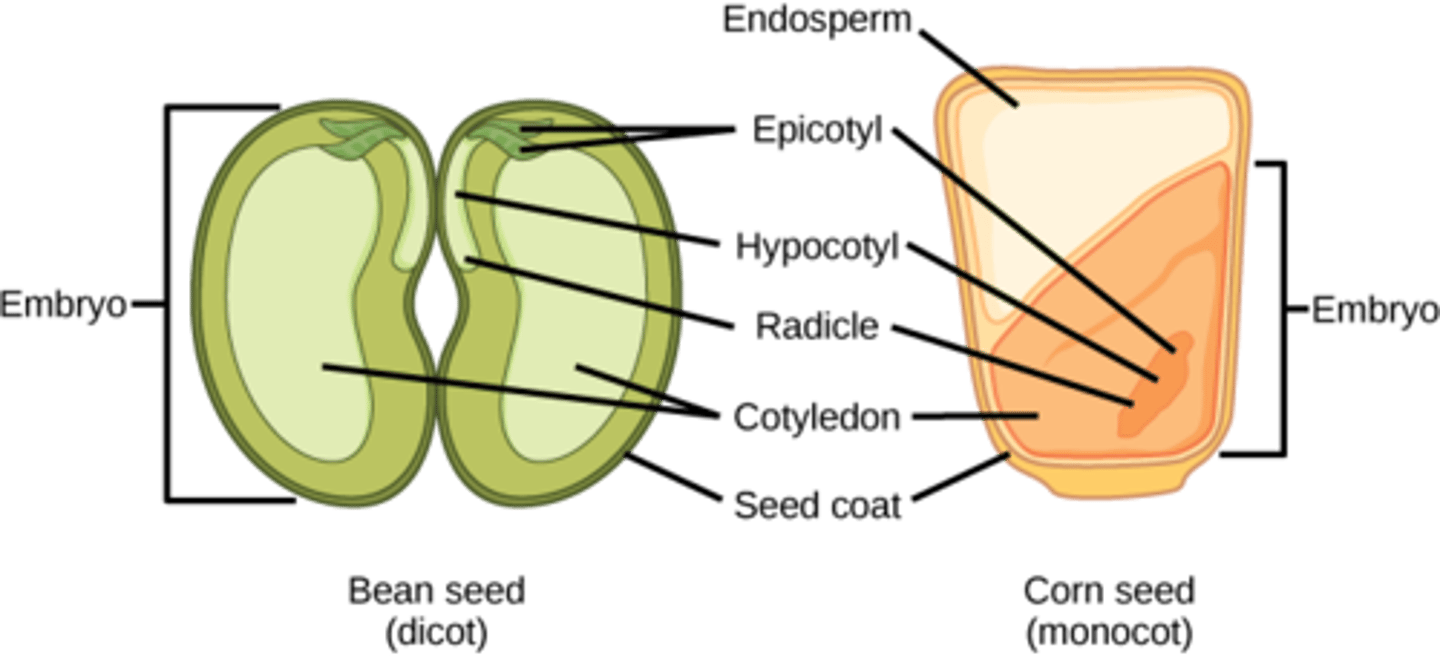
Monocots have what number of cotyledons?
1
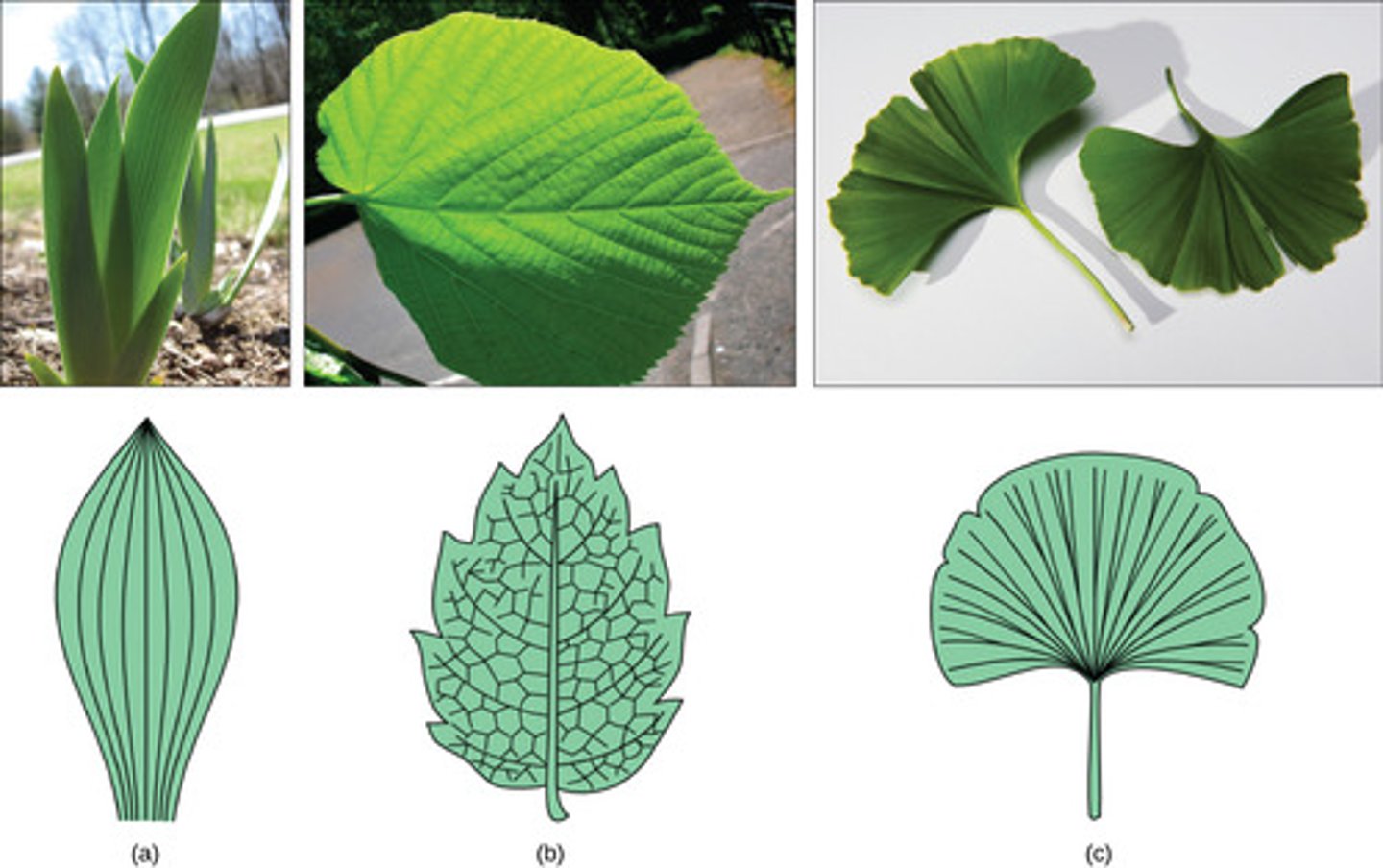
What term describes the pattern of veins in leaves
leaf venation
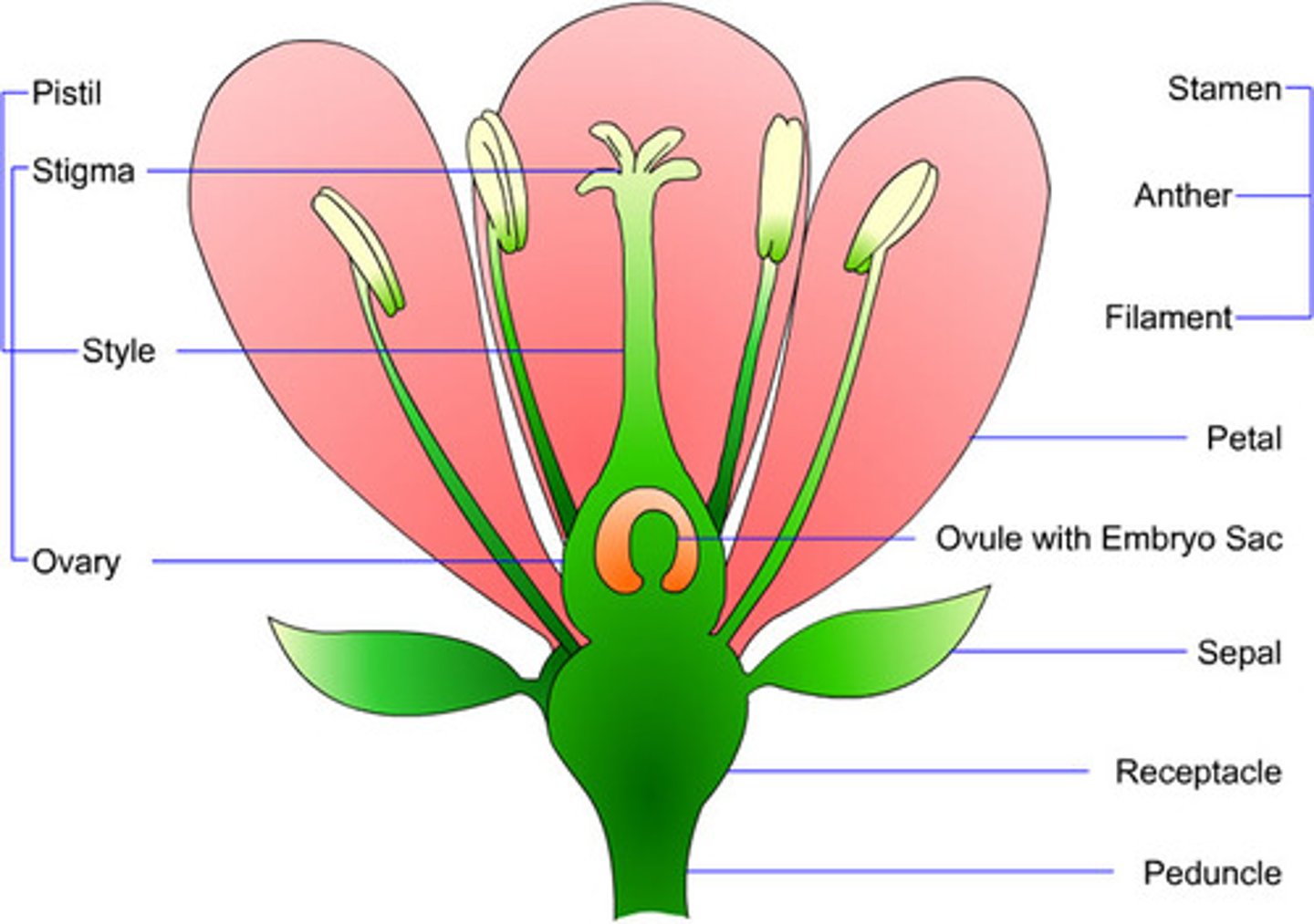
What term describes the number of petals, sepals, stamens, and other parts?
flower parts
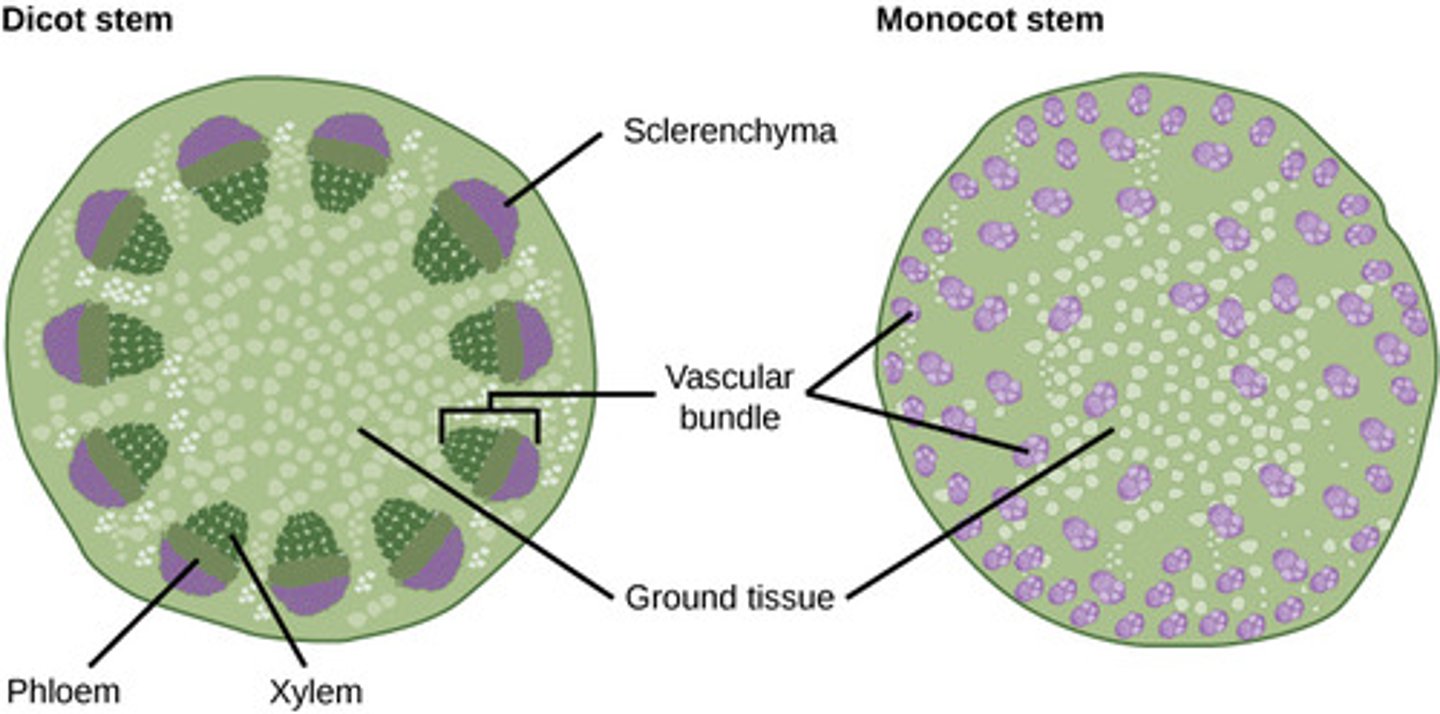
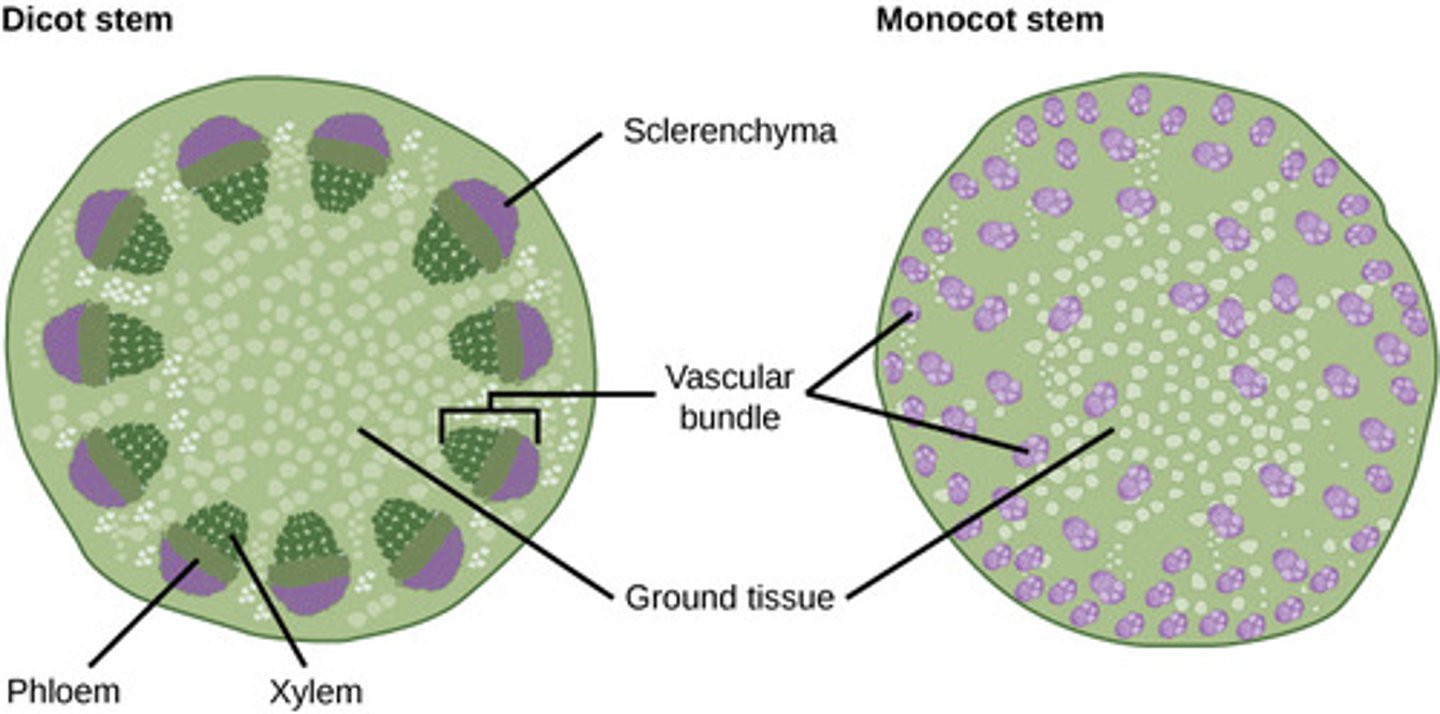
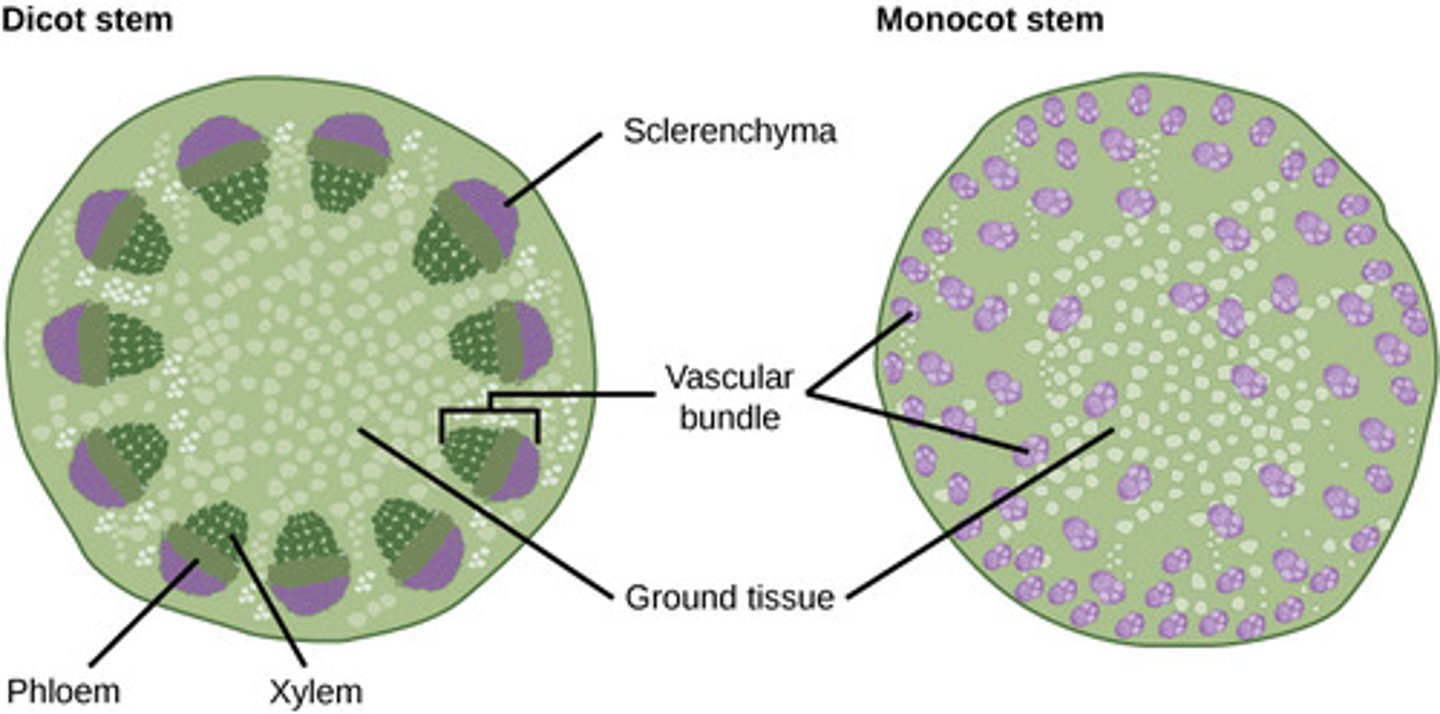
What term describes the arrangement of vascular tissues (xylem and phloem) in stems?
vascular bundles
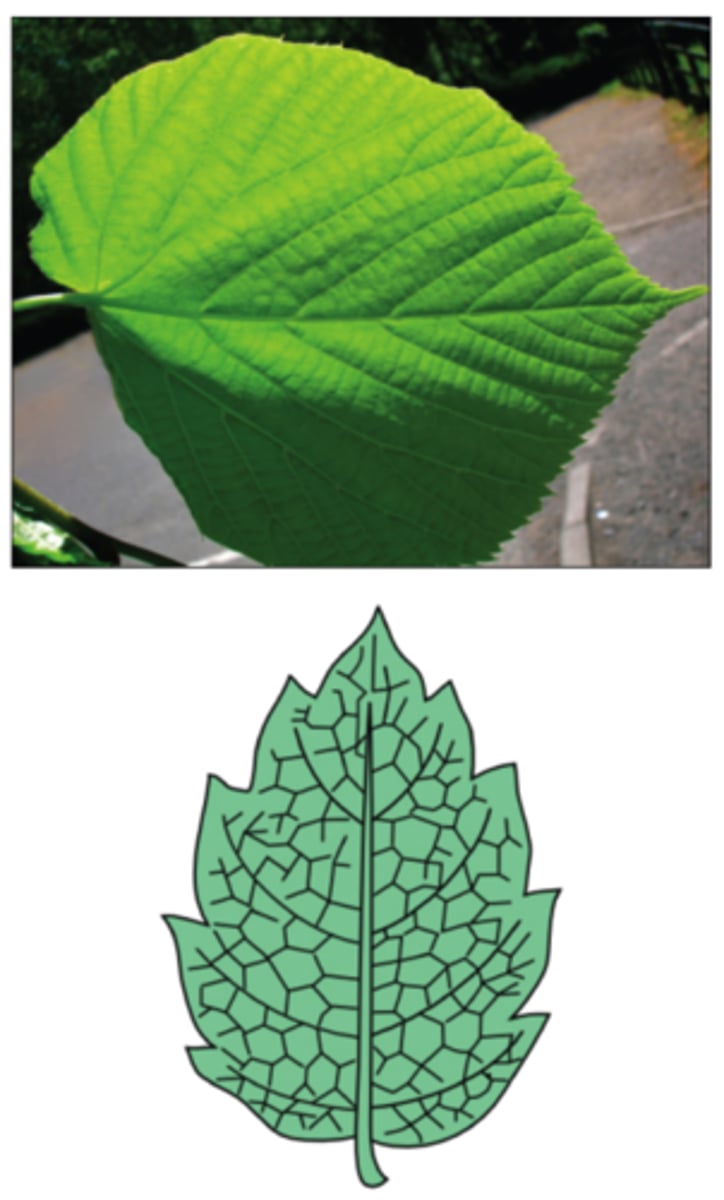
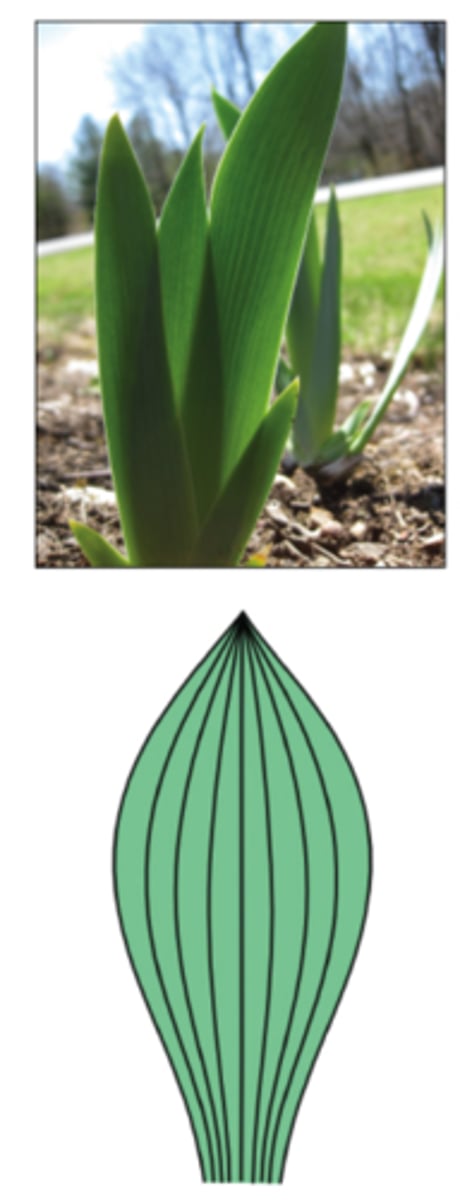
What is the leaf venation in dicots?
netted, branching pattern
What is the leaf venation in monocots?
parallel
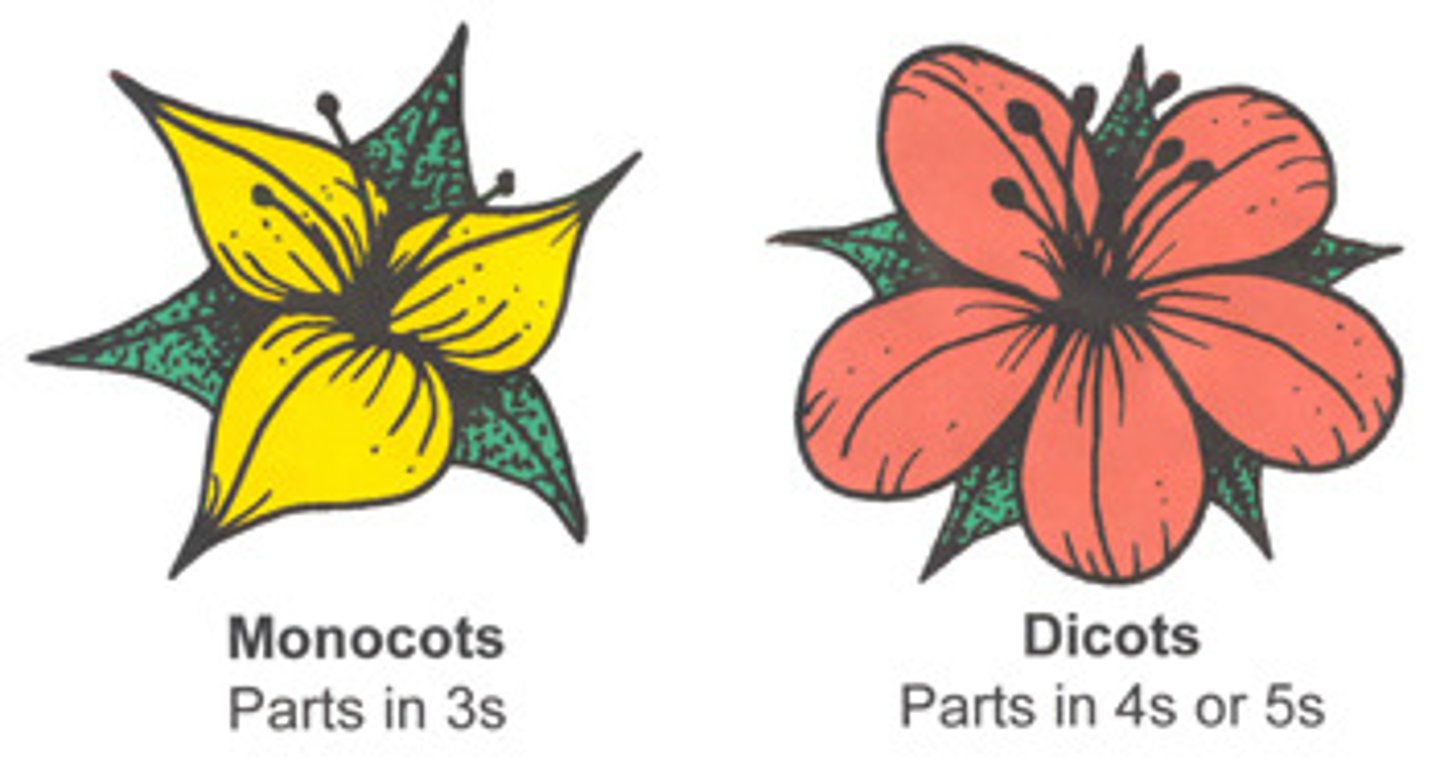
What are the flower parts in dicots?
in 4s, 5s, or multiples
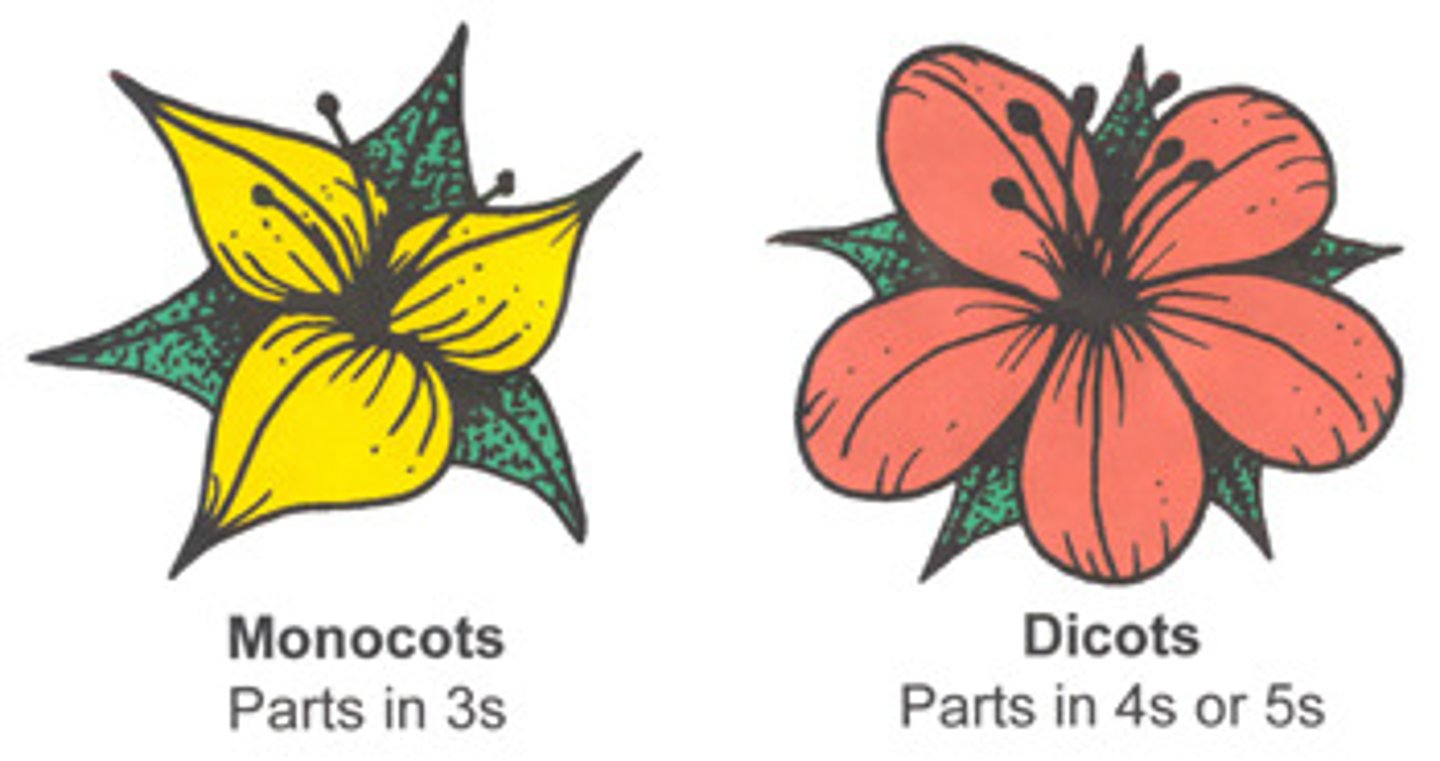
What are the flower parts in monocots?
in 3s or multiples
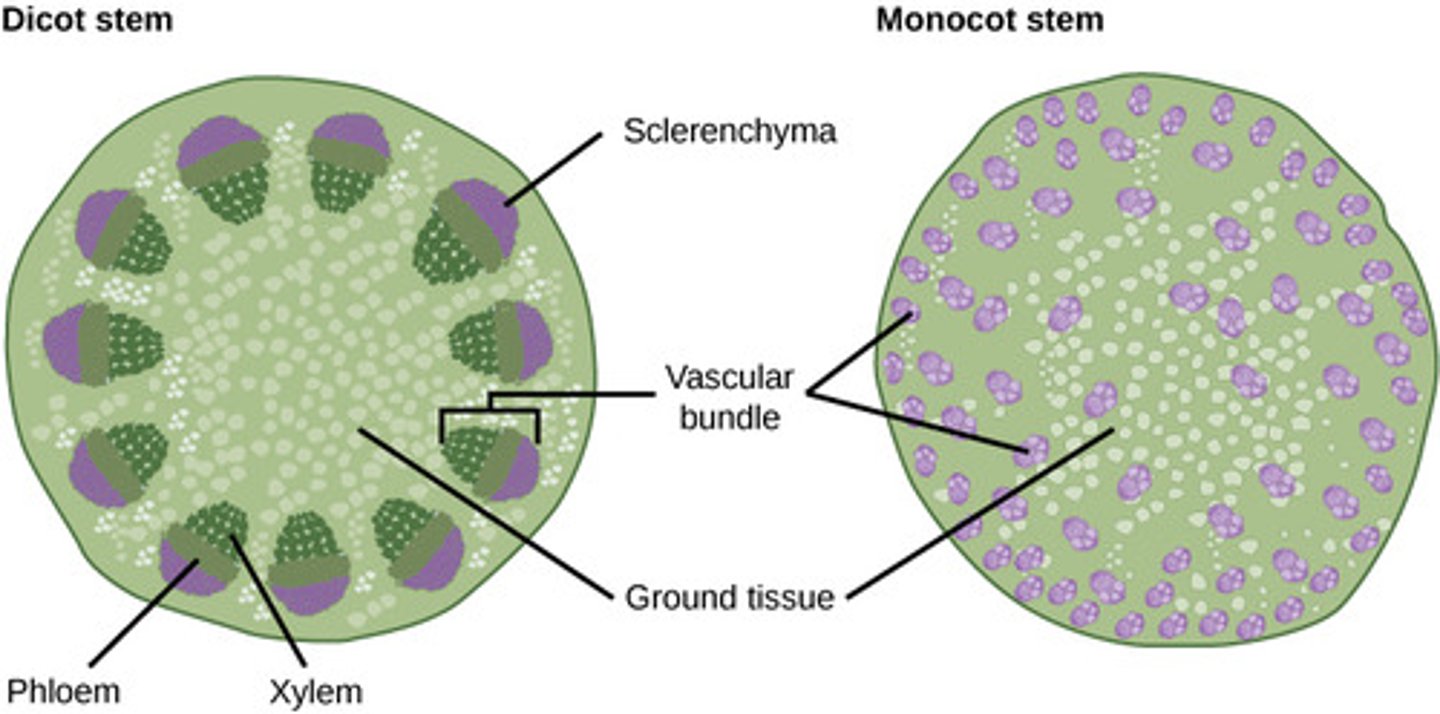
How are the vascular bundles organized in dicots?
circle
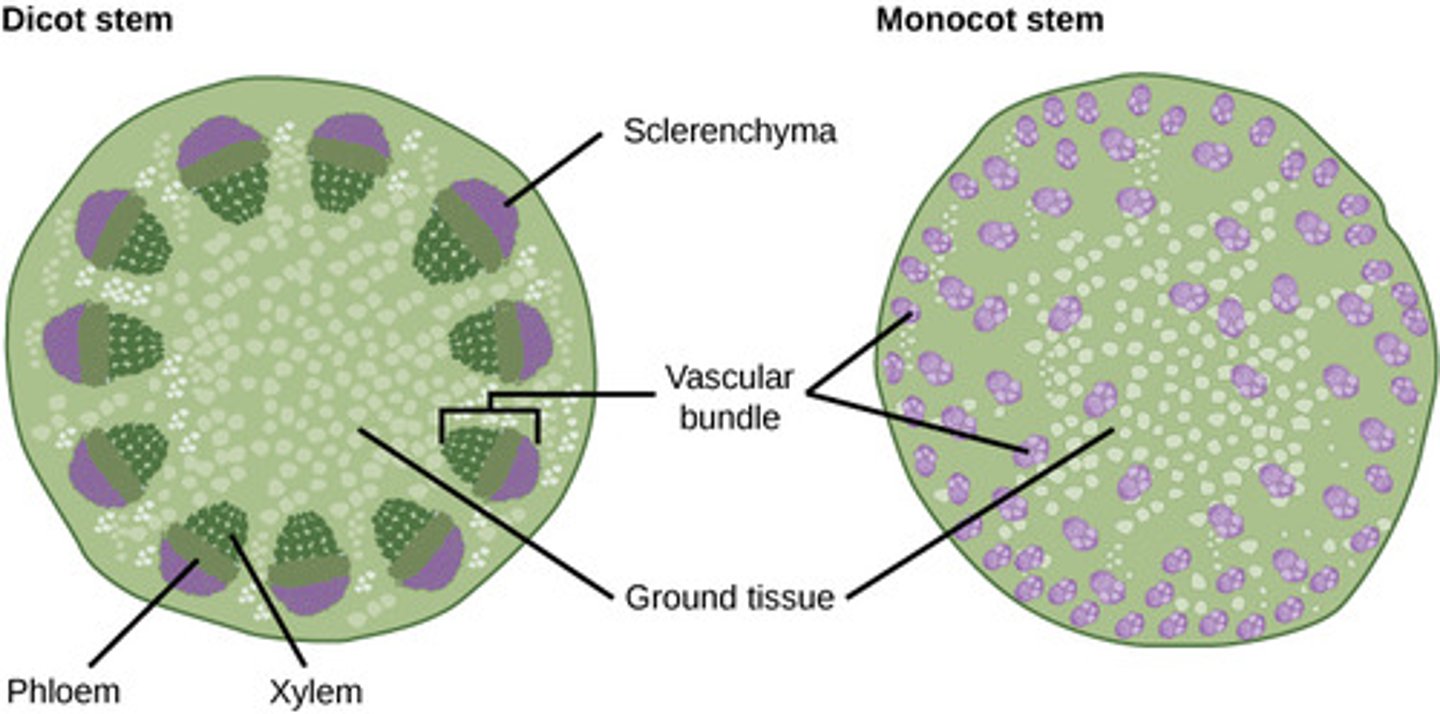
How are the vascular bundles organized in monocots?
scattered
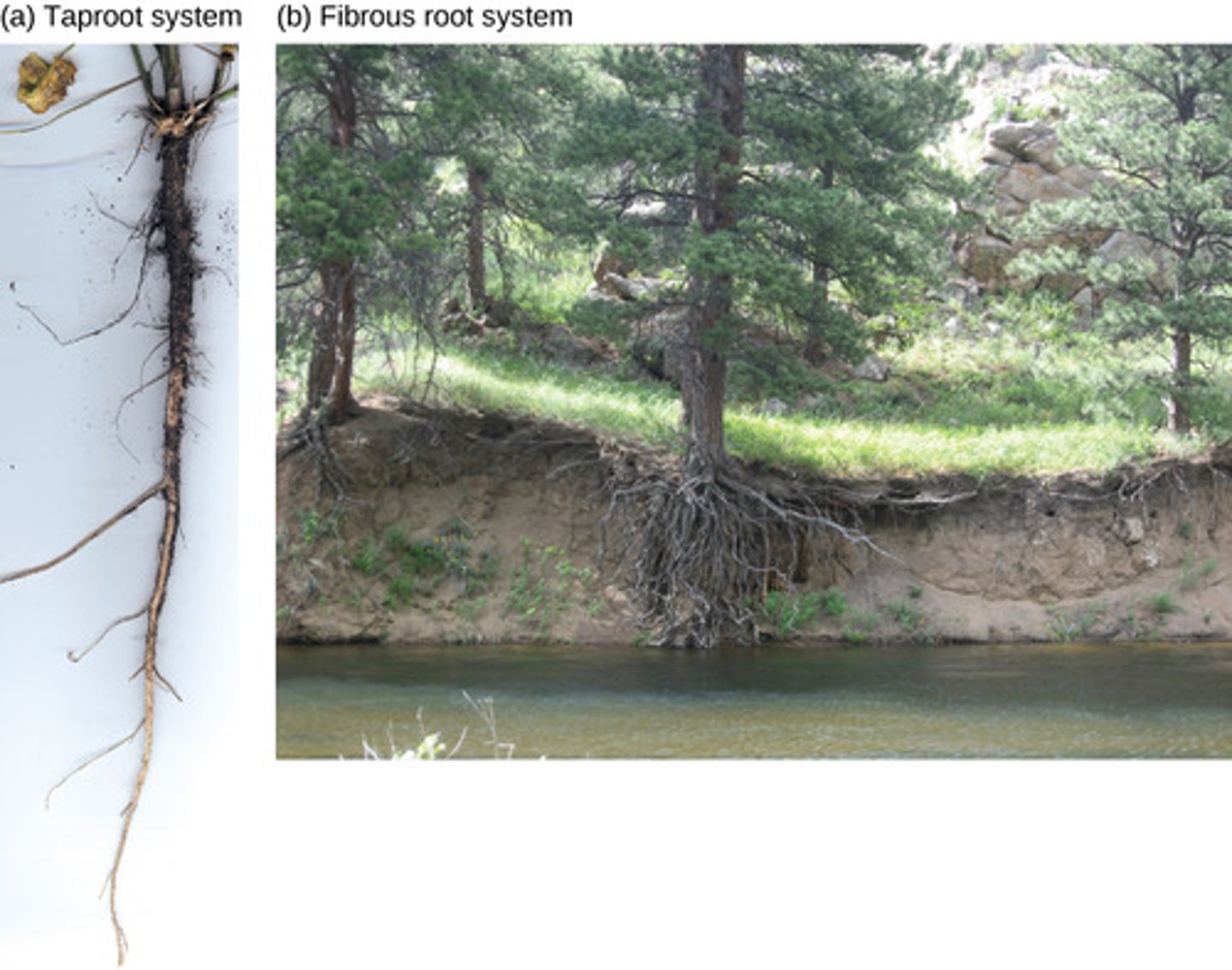
What is the root form in dicots?
taproot, which is a large single root
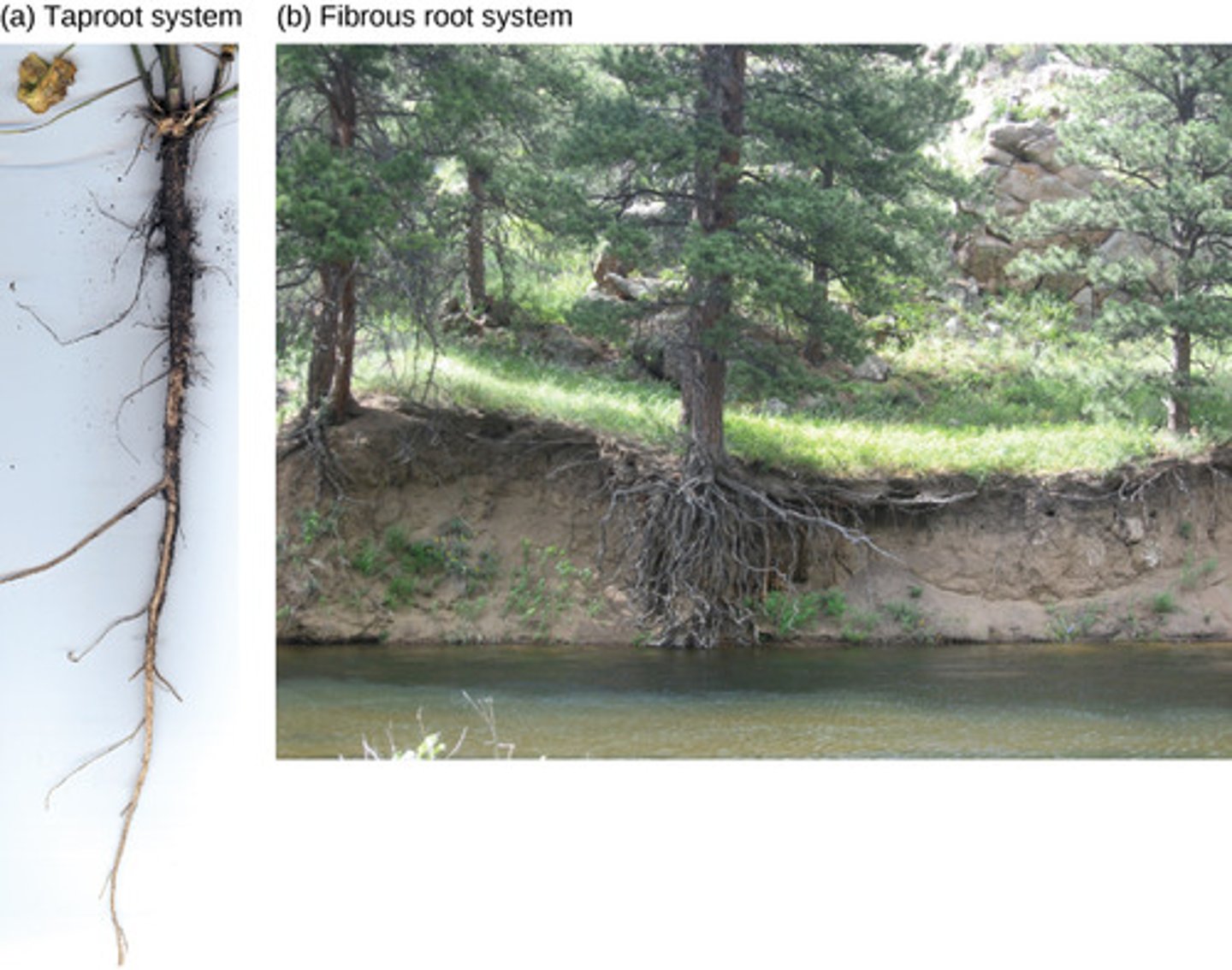
What is the root form in monocots?
fibrous root system with many fine roots
What are the 3 distinct groups of plant tissues?
1. ground tissue
2. dermal tissue
3. vascular tissue
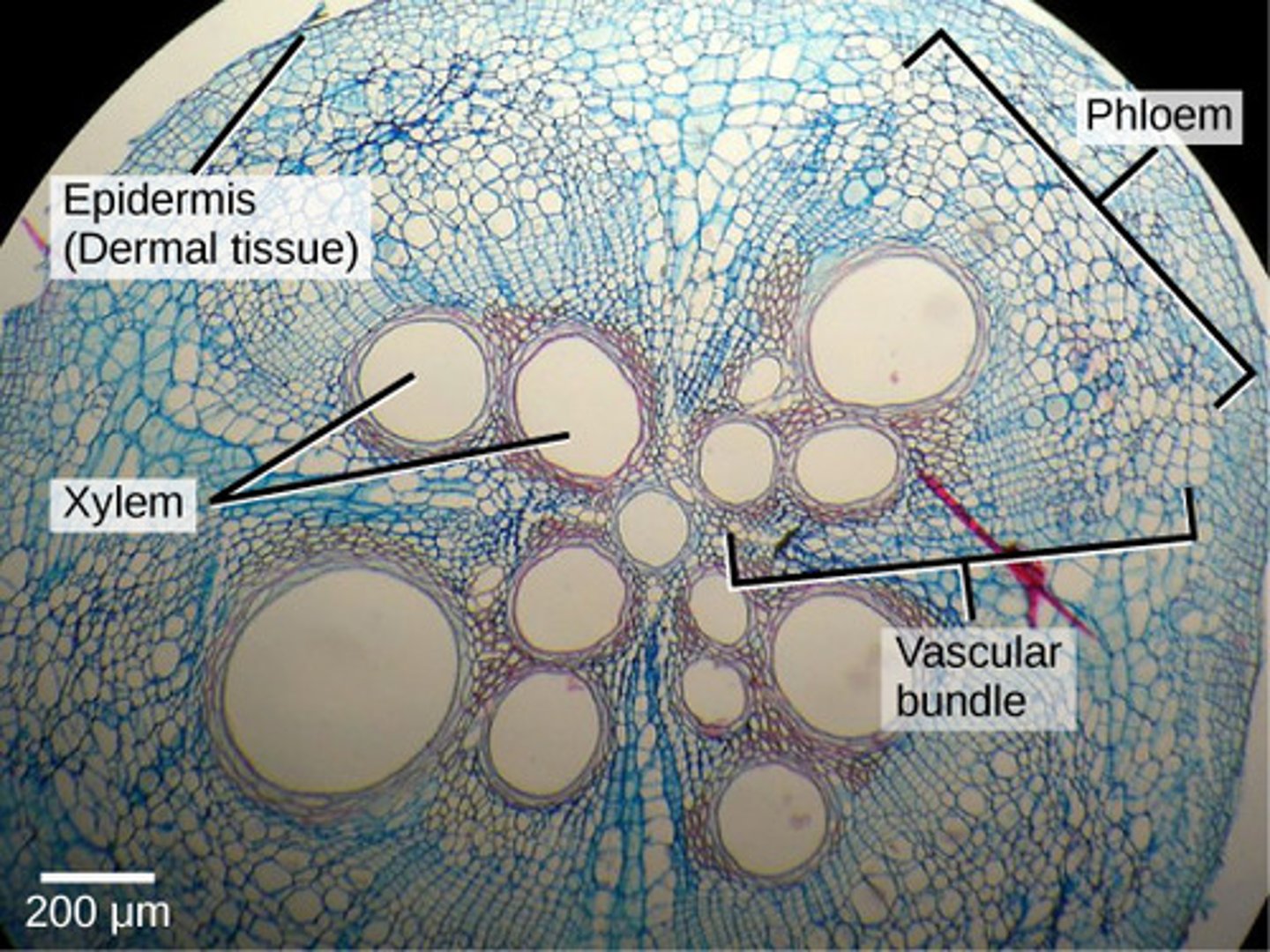
Which plant tissue provides structural support to the plant and thus makes up most of the plant’s mass?
ground tissue
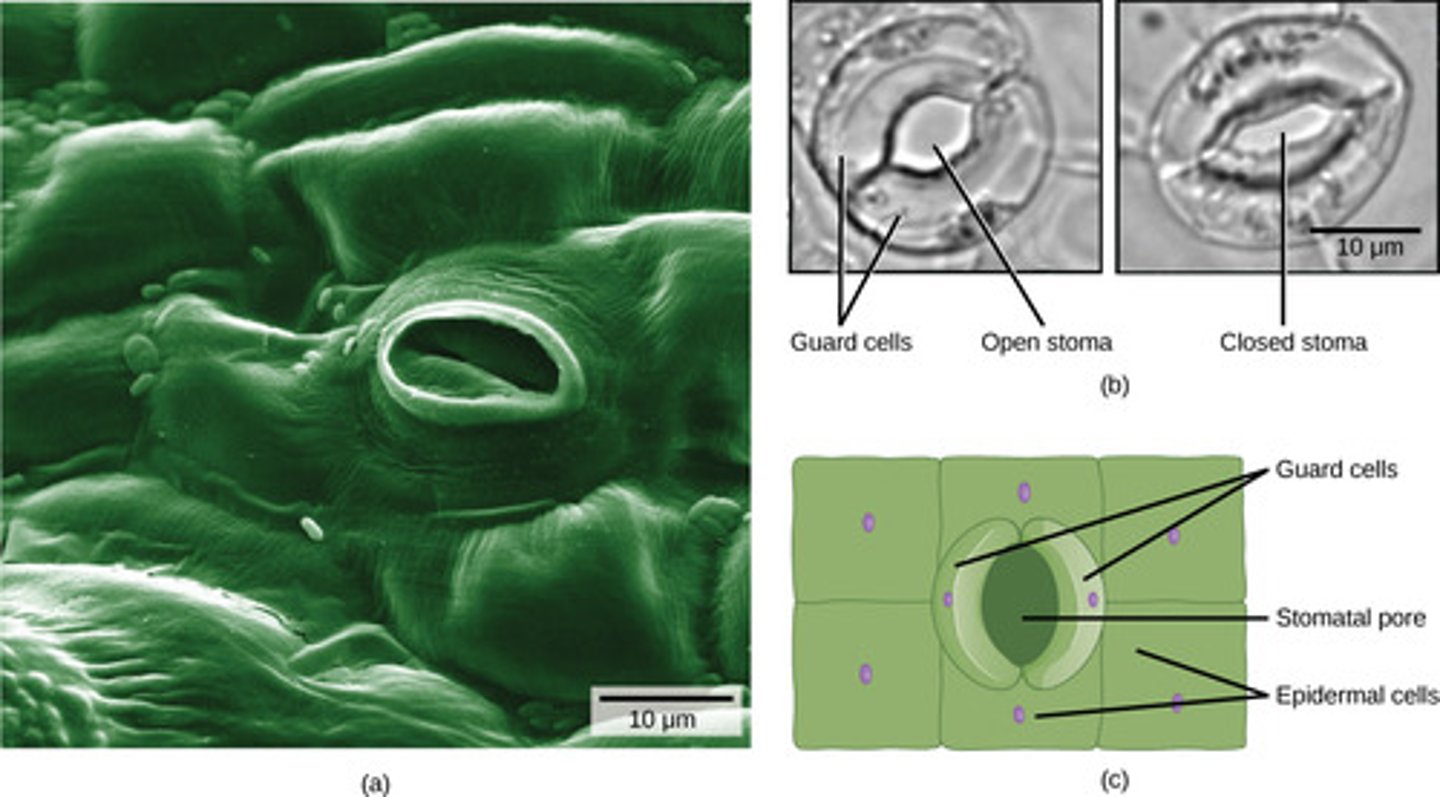
Which plant tissue includes epidermis cells that cover the outside of plant parts?
dermal tissue
Which plant tissue consists of xylem and phloem which together form vascular bundles?
vascular tissue
What are the 3 types of ground tissue?
1. parenchyma
2. collenchyma
3. sclerenchyma
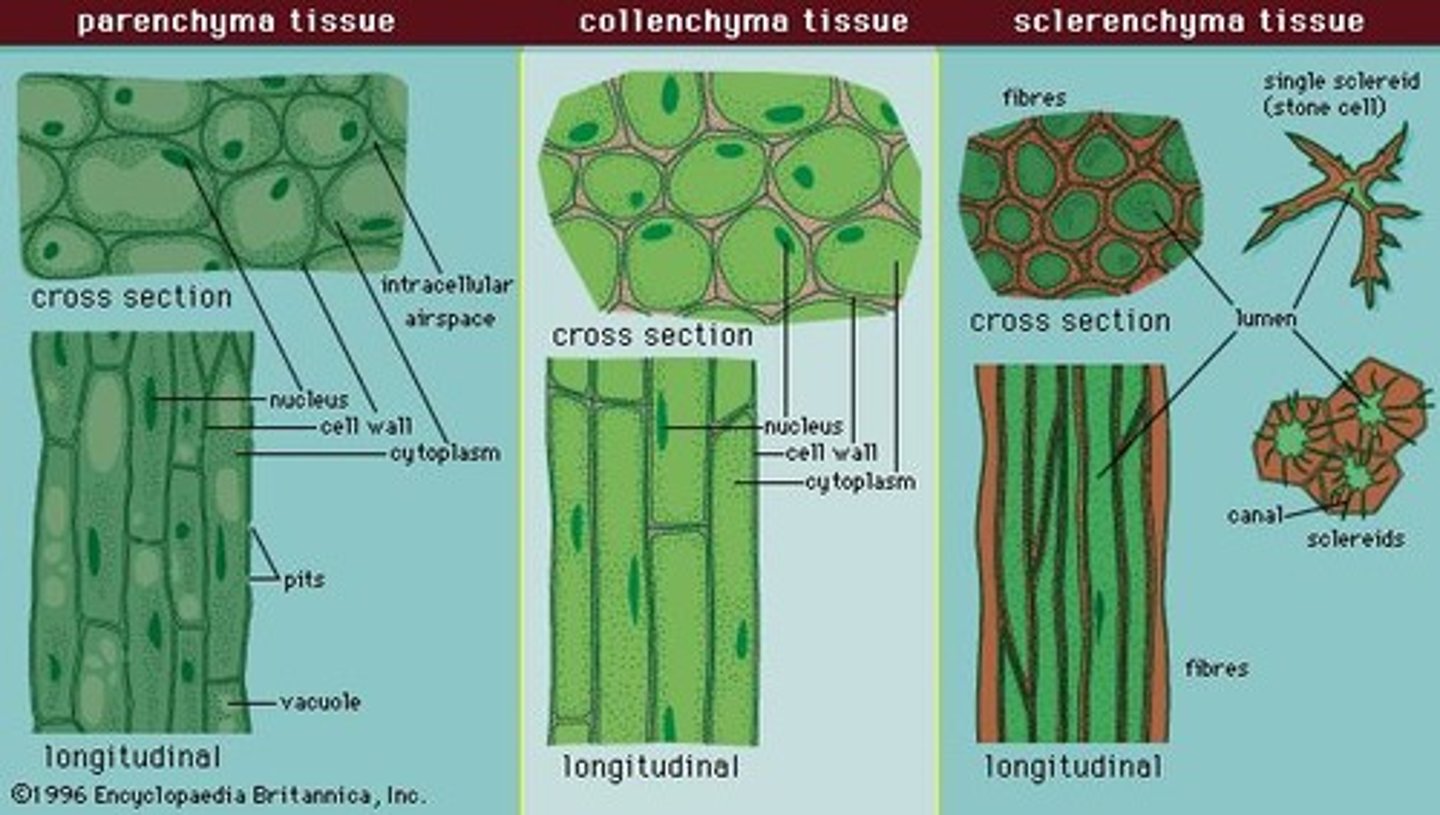
Which ground tissue is the most common?
parenchyma
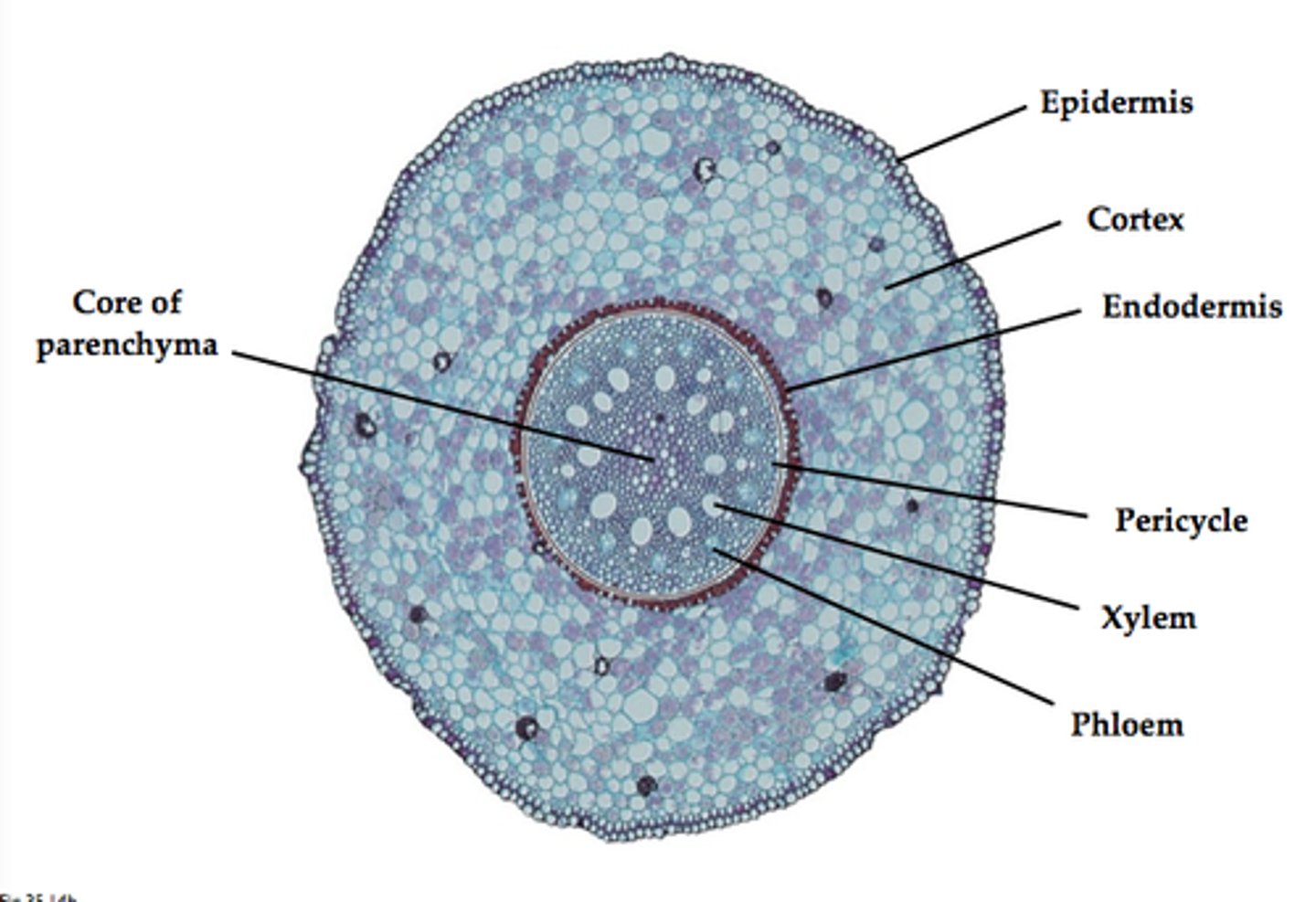
What is the relative thickness of parenchyma cell walls?
thin cell walls
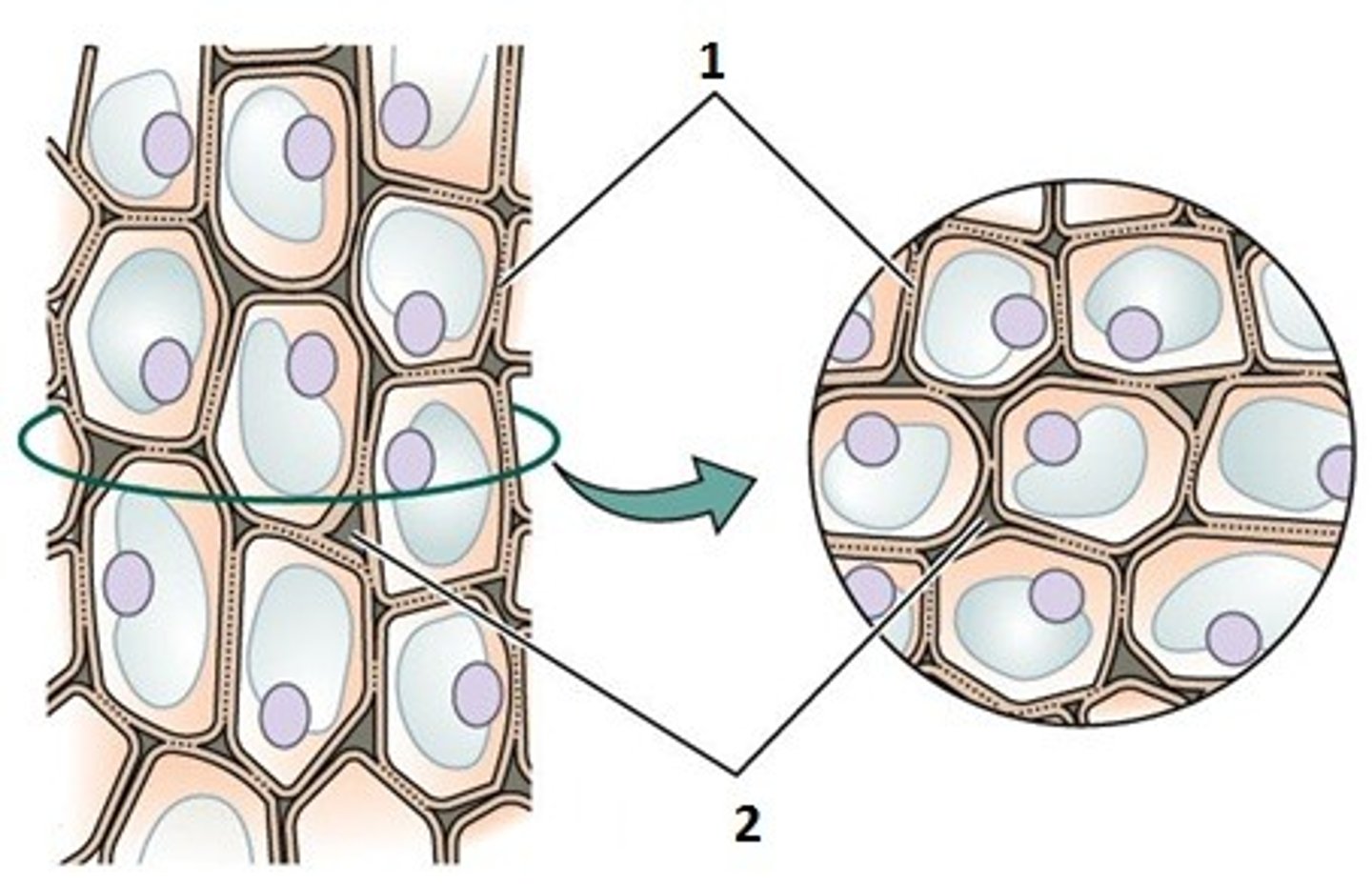
What are the functions of parenchymal cells?
1. storage
2. photosynthesis
3. secretion
Which cells in leaves are an example of parenchyma tissue?
mesophyll cells
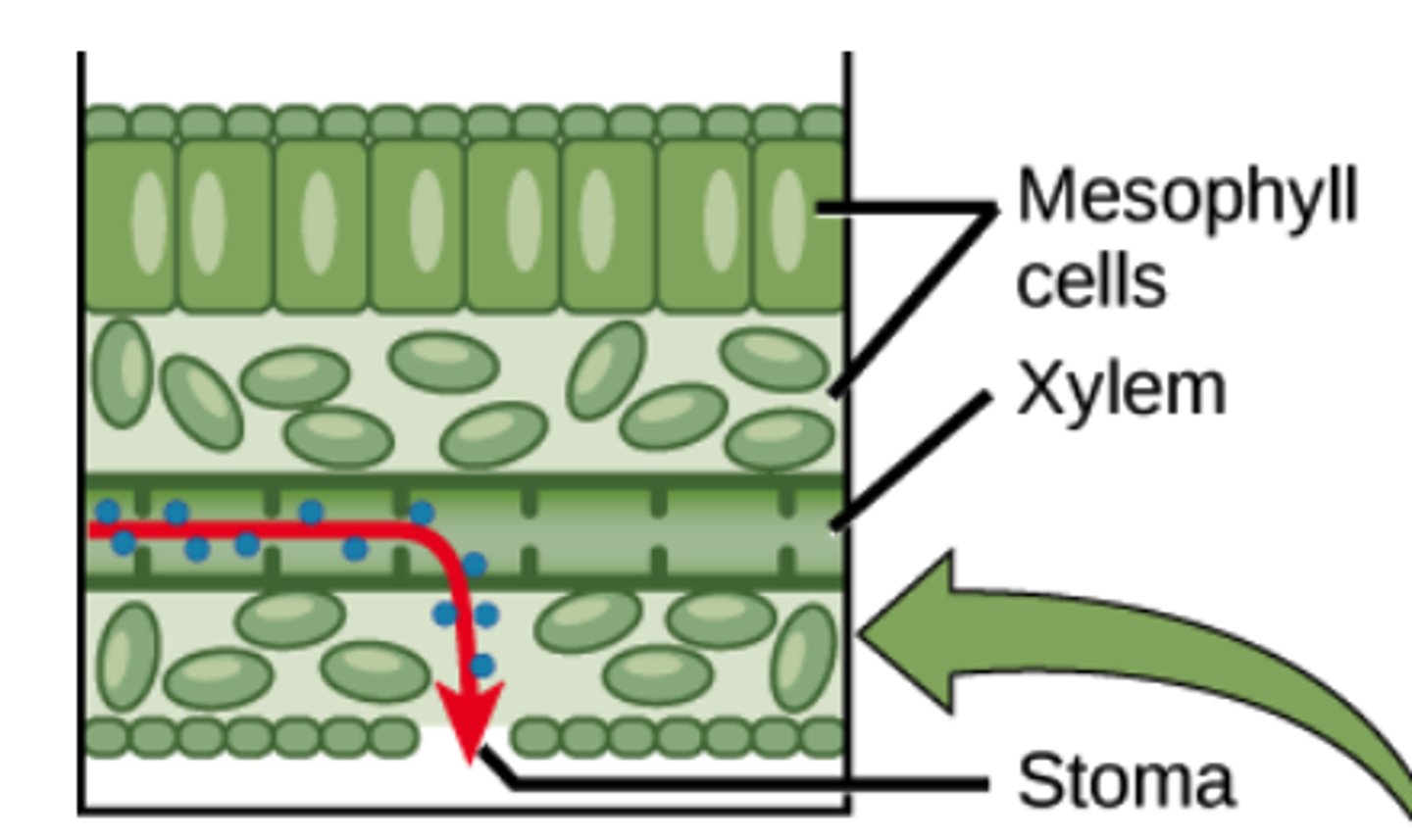
Which ground tissue contains cells with thick but flexible cell walls, and serves mechanical support functions?
collenchyma
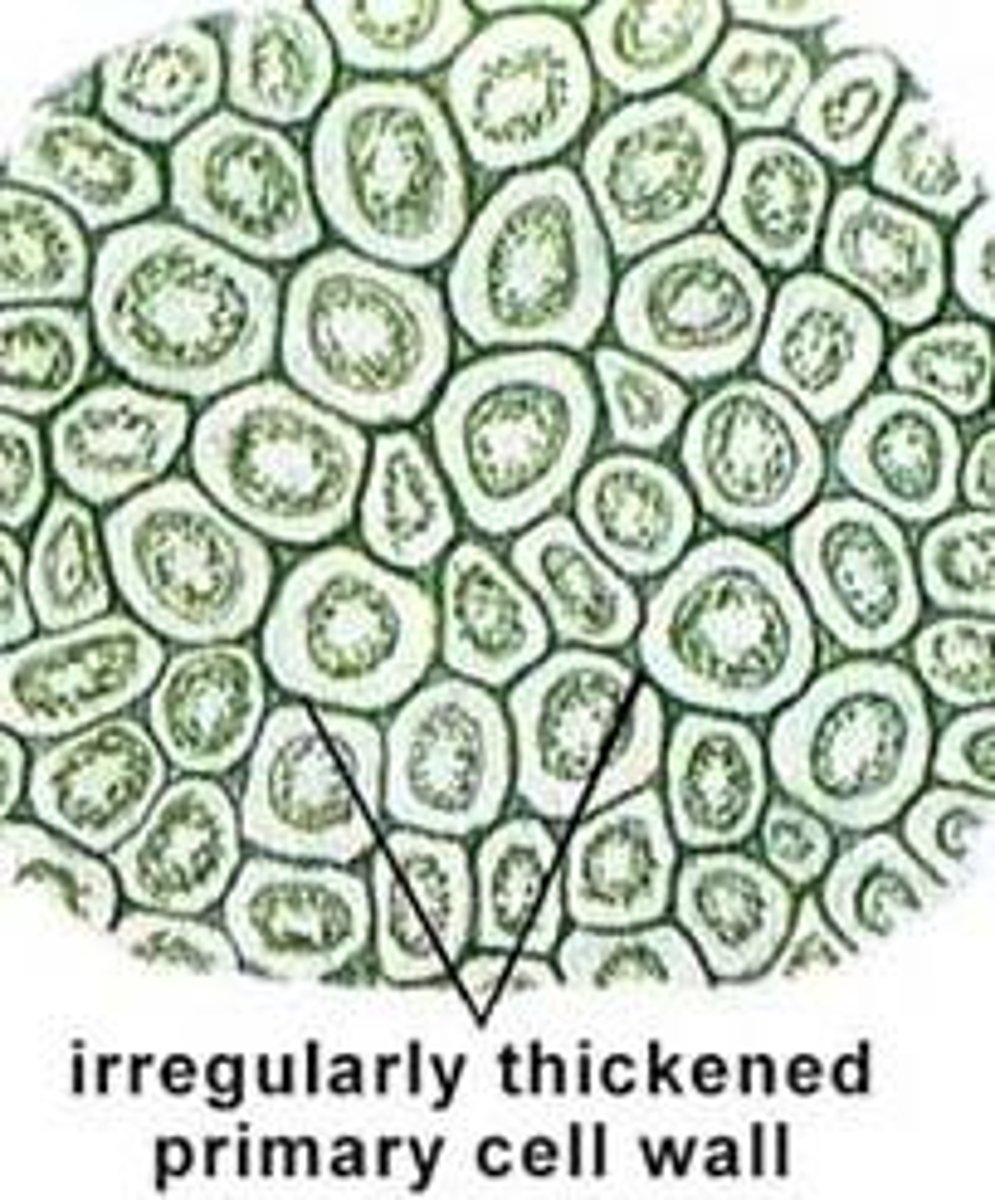
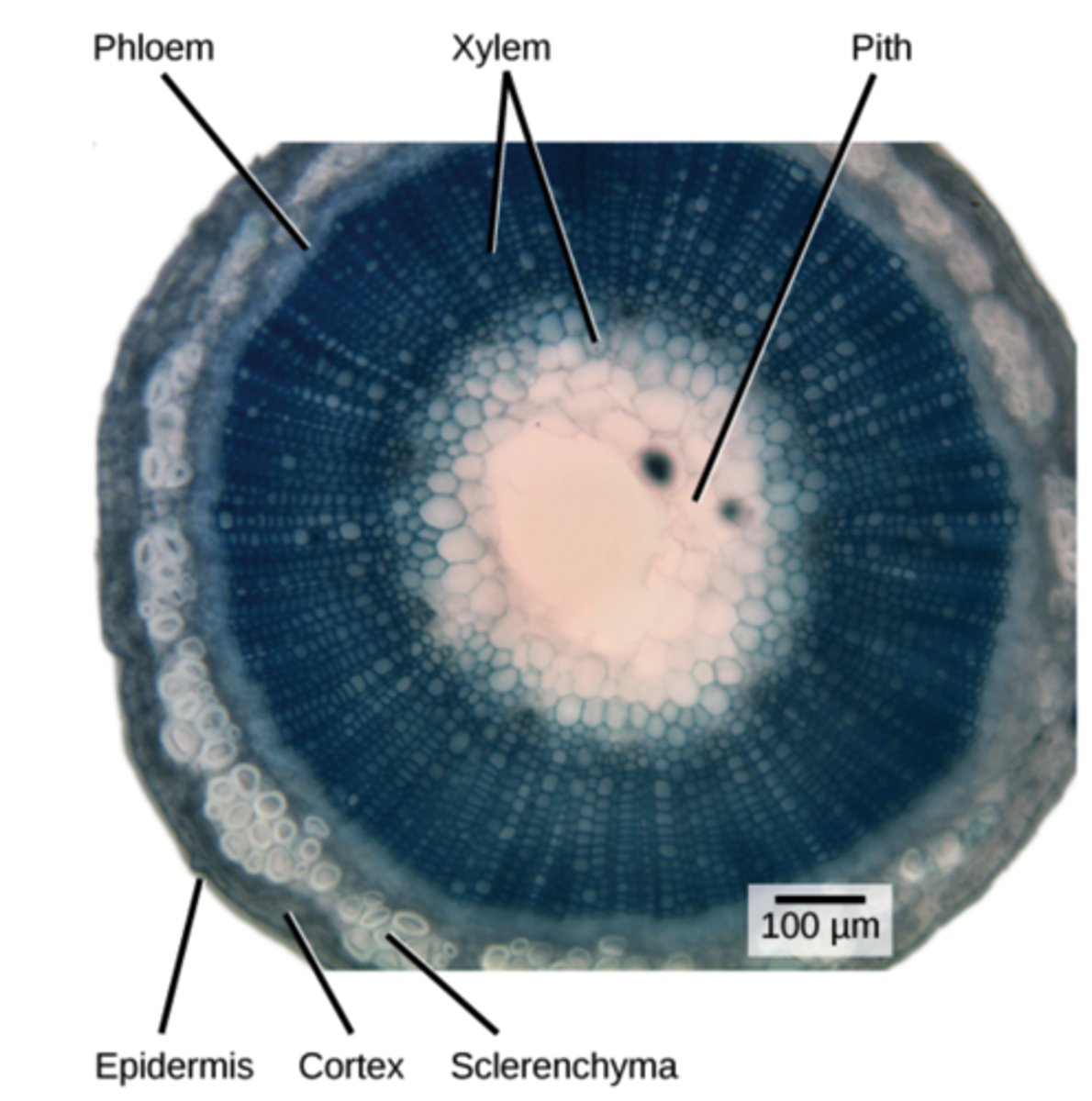
Which ground tissue contains cells with thicker walls than collenchyma, and also provides mechanical support?
sclerenchyma
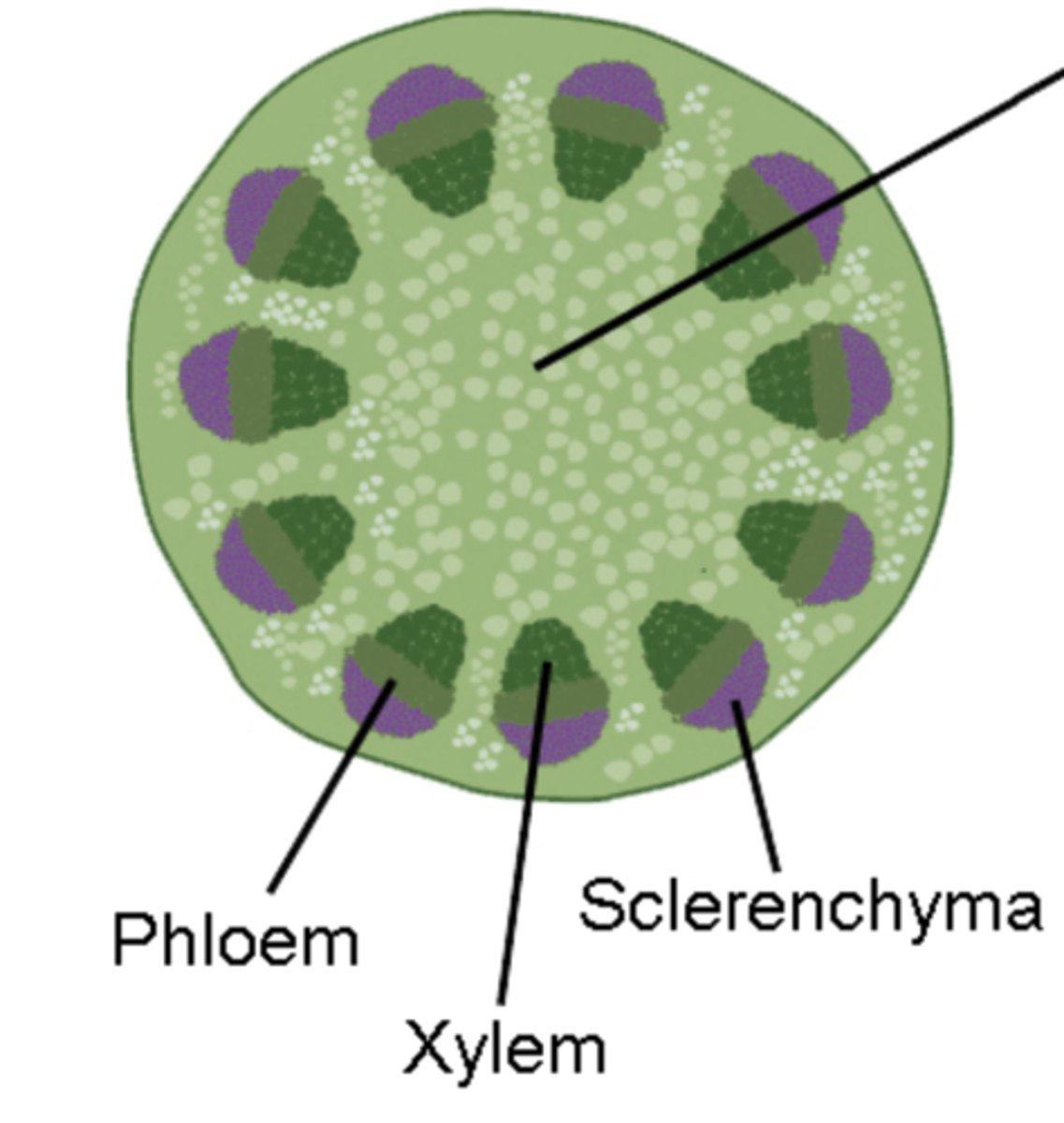
Which strengthening polymer does sclerenchyma tissue produce?
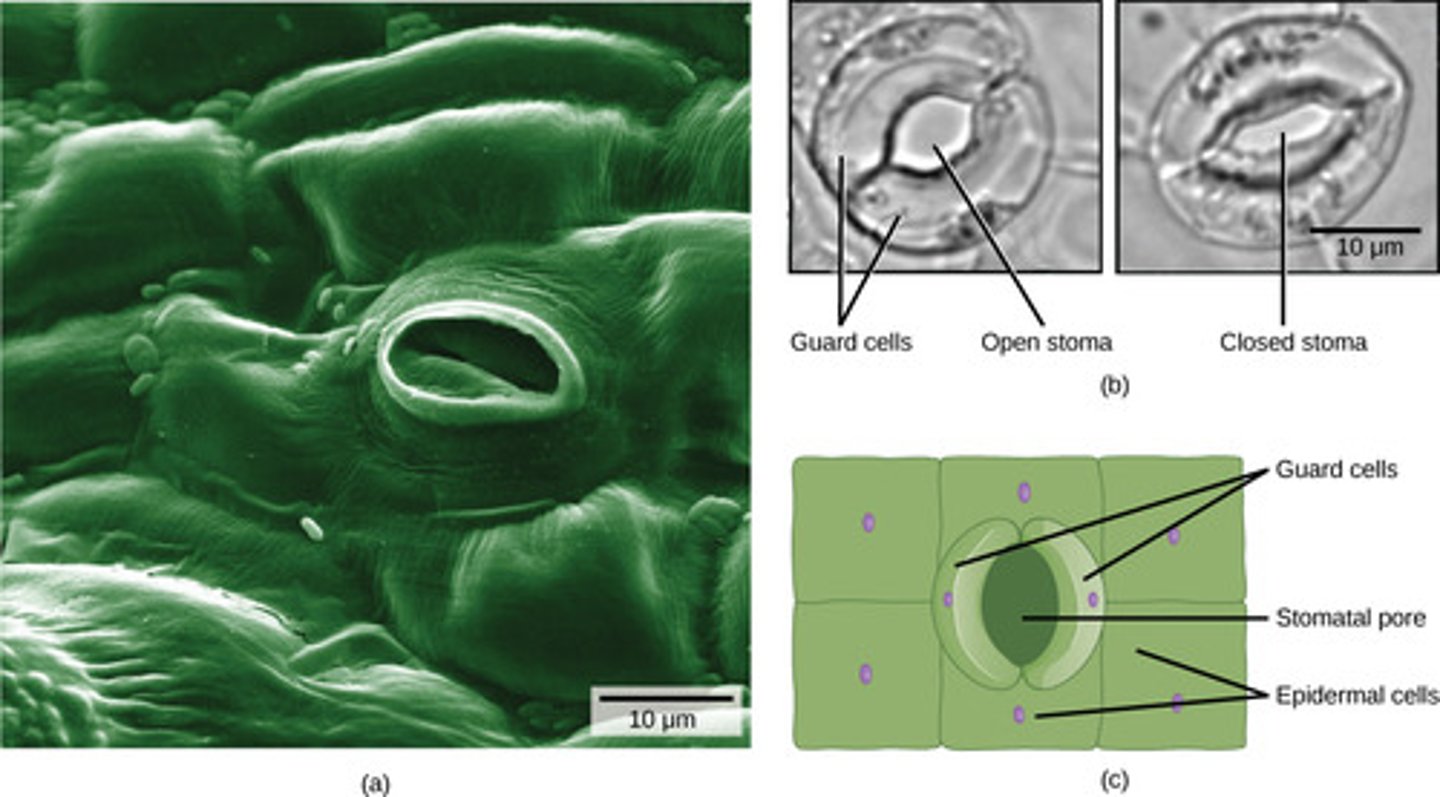
lignin
Which cells in plant dermal tissue surround stomata, hair cells, stinging cells, and glandular cells?
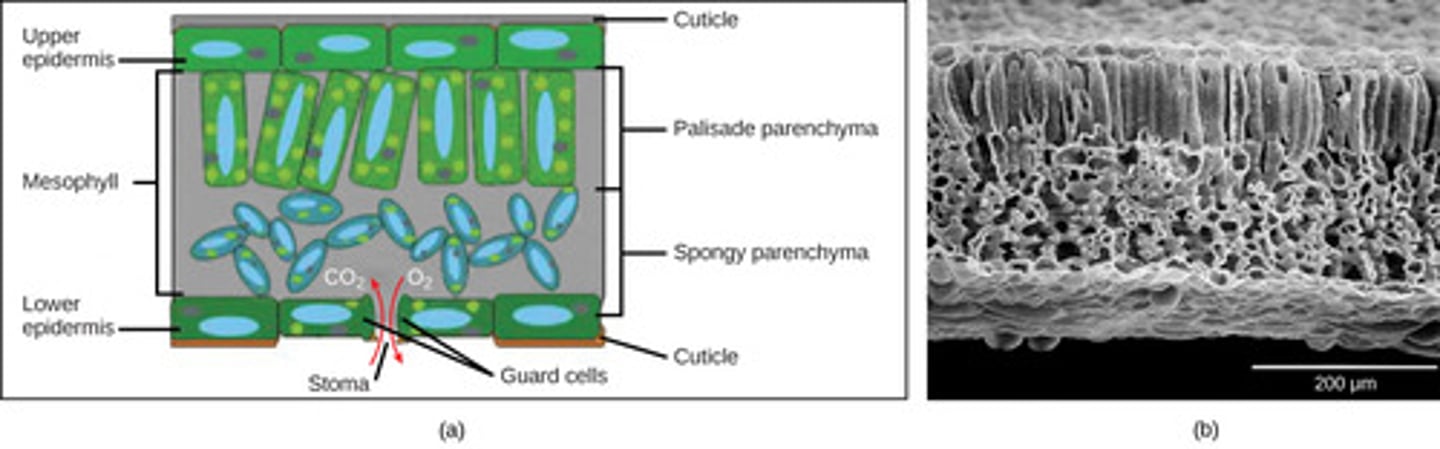
guard cells
In aerial portions of plants, the epidermal cells secrete a waxy protective substance that forms what structure?
cuticle
Why do roots lack a cuticle?
a cuticle would
prevent the roots
from absorbing water
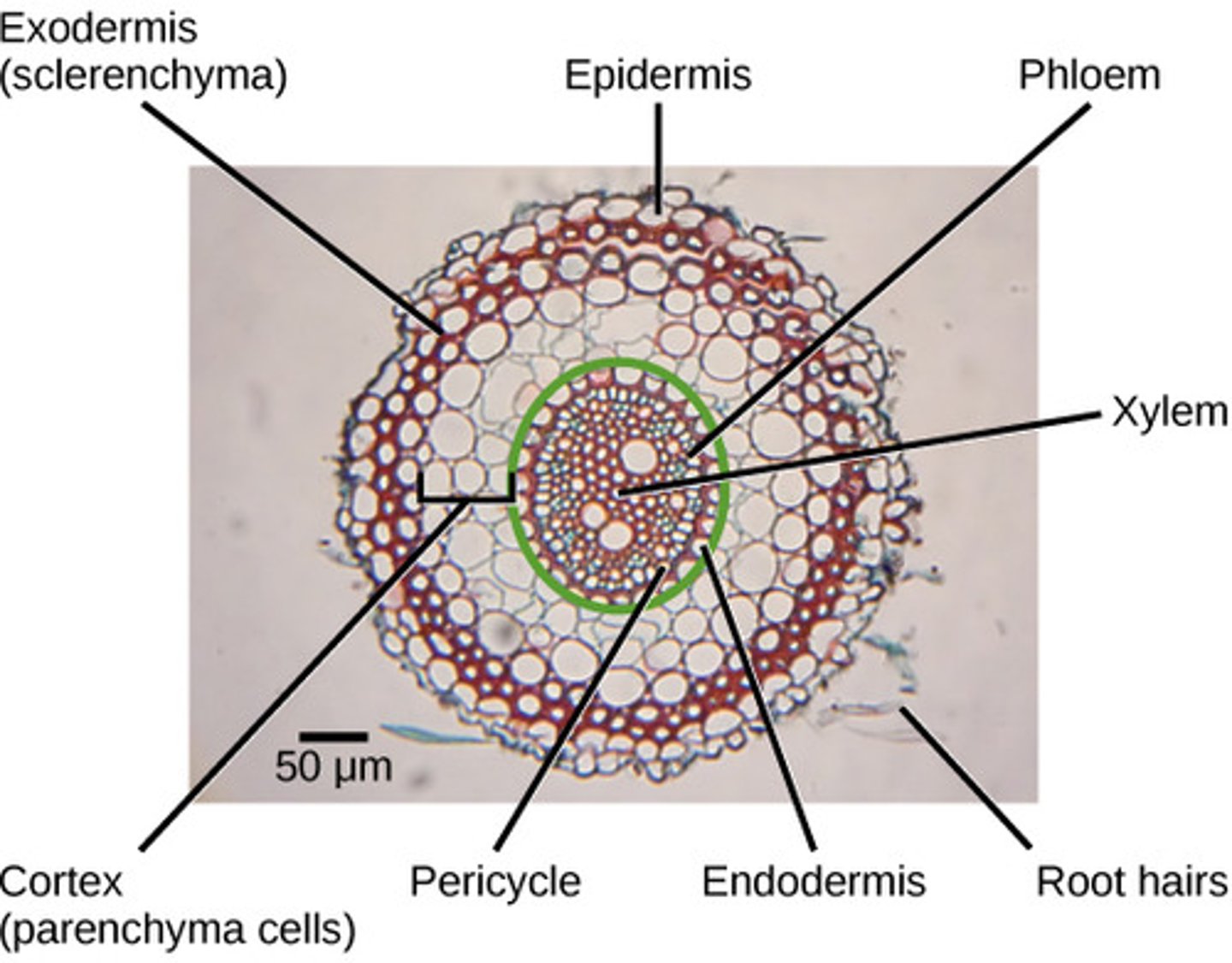
Which plant vascular tissue conducts water and minerals while functioning in mechanical support?
xylem
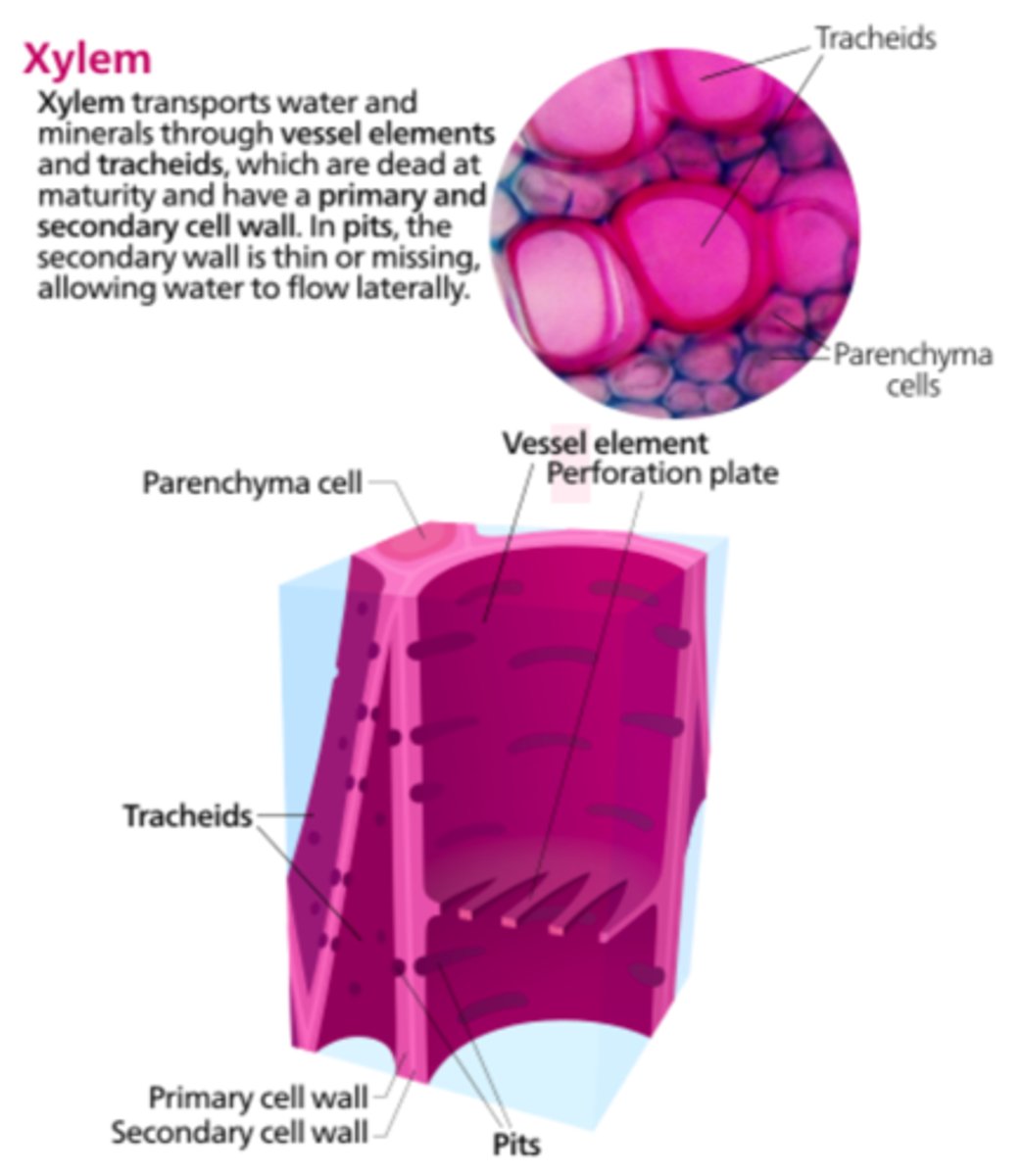
What cellular structure in xylem provides additional strength?
2nd cell wall
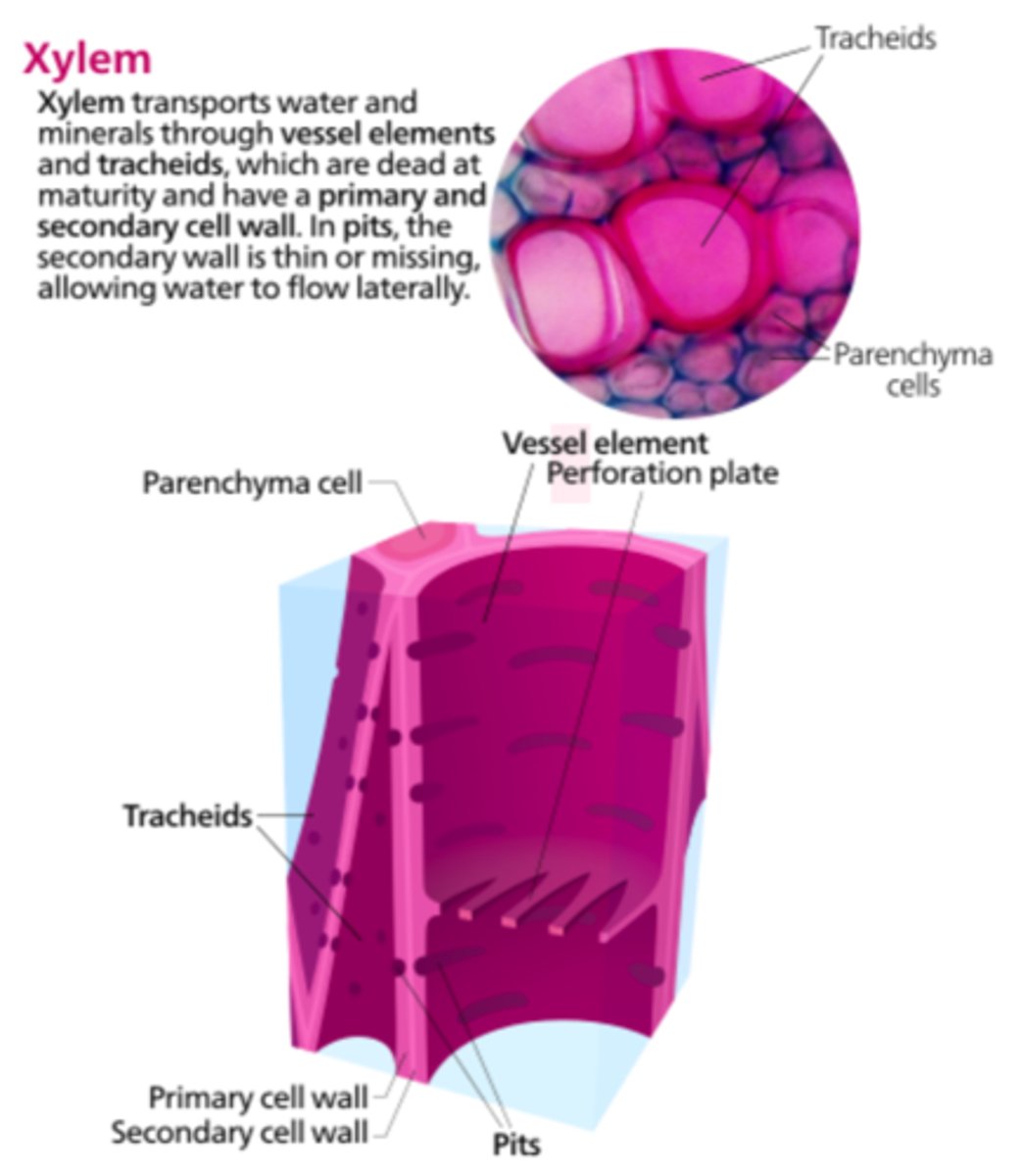
Why do the walls of xylem cells have pits in some places?
absence of 2nd cell wall
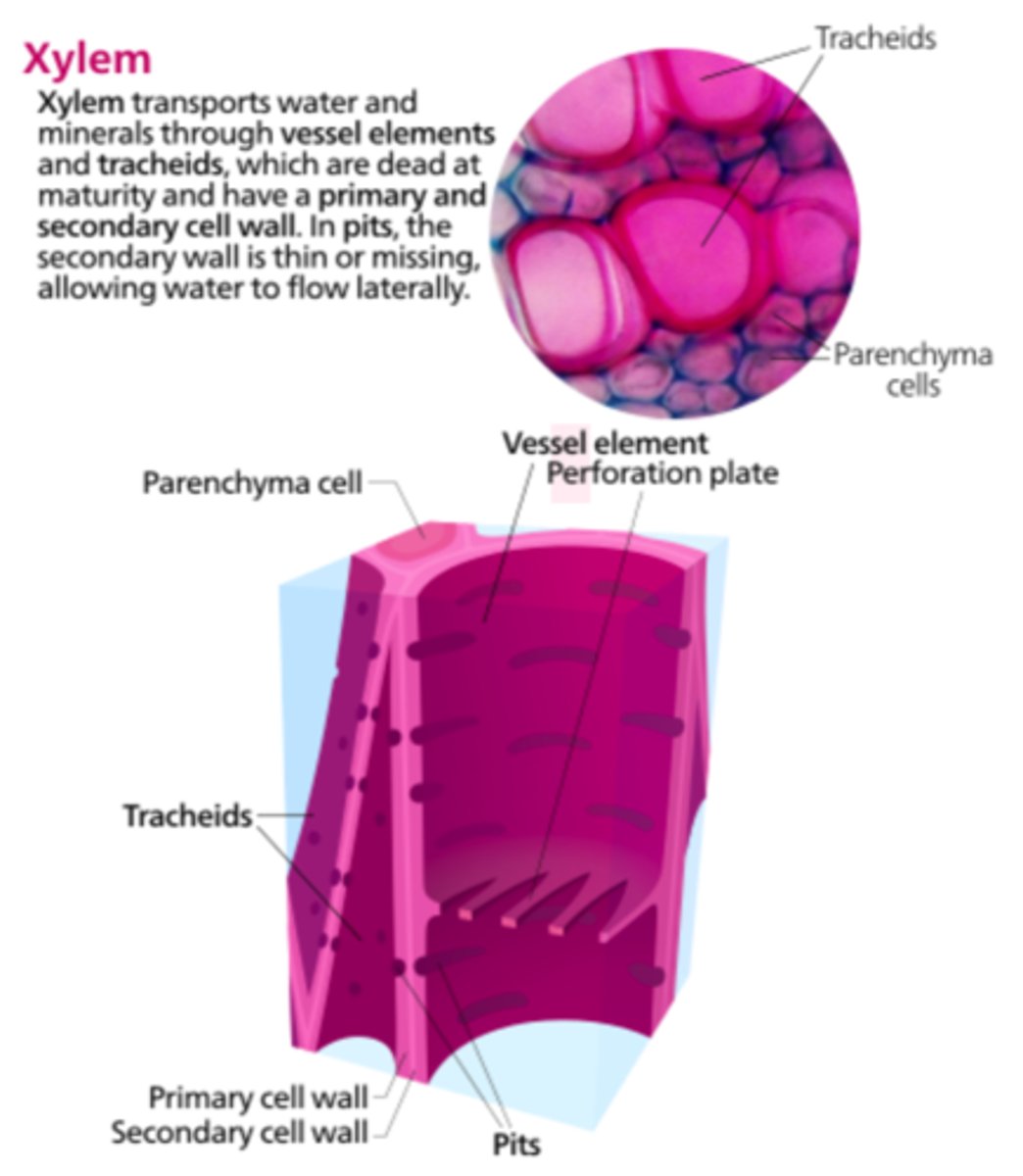
Are xylem cells alive or dead at maturity?
dead
(Note: only contain cell walls at maturity, no cellular components)
What are the types of xylem cells?
1. tracheids
2. vessel elements
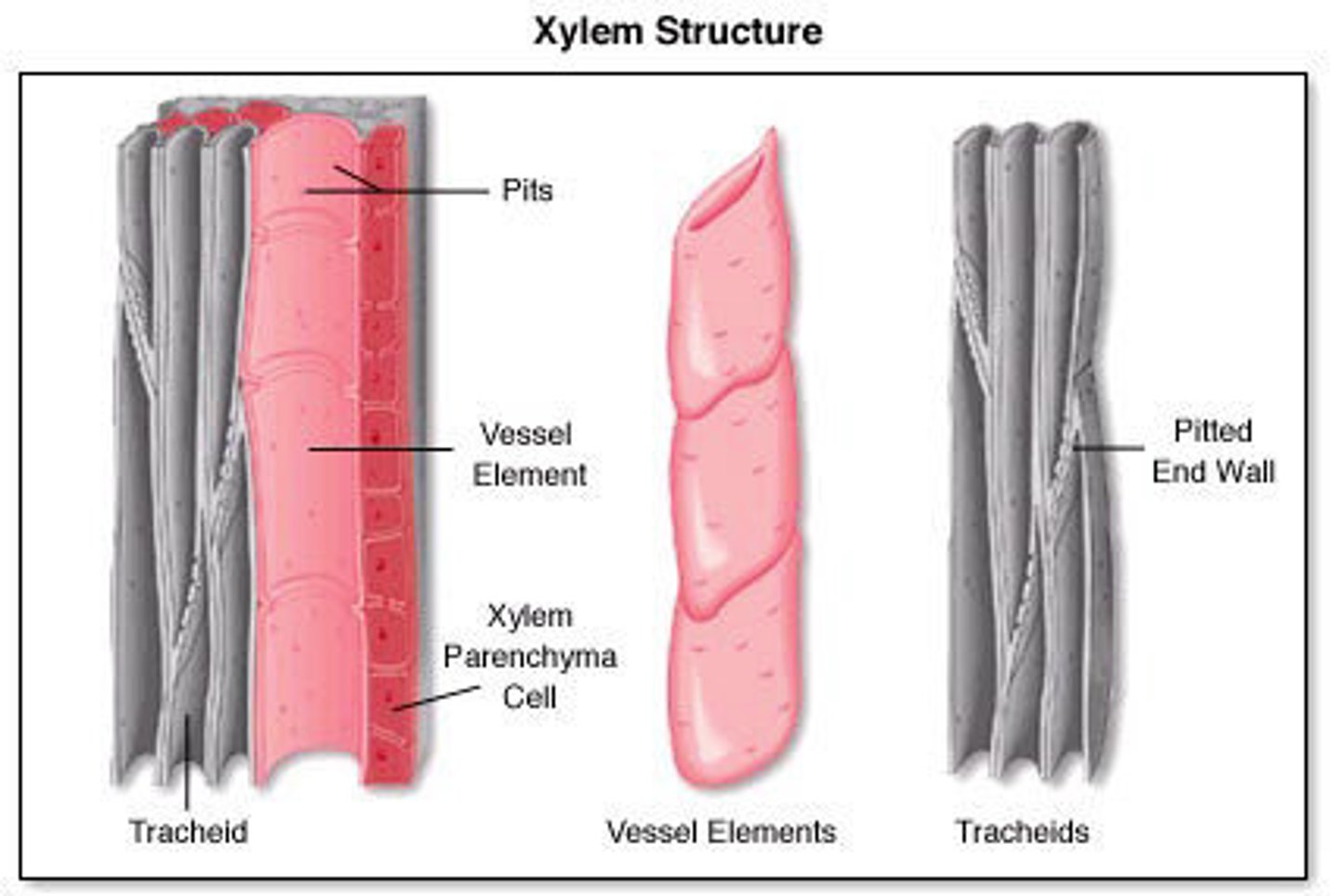
Which xylem cells are long and tapered allowing water to pass laterally from one to another through pits?
tracheids
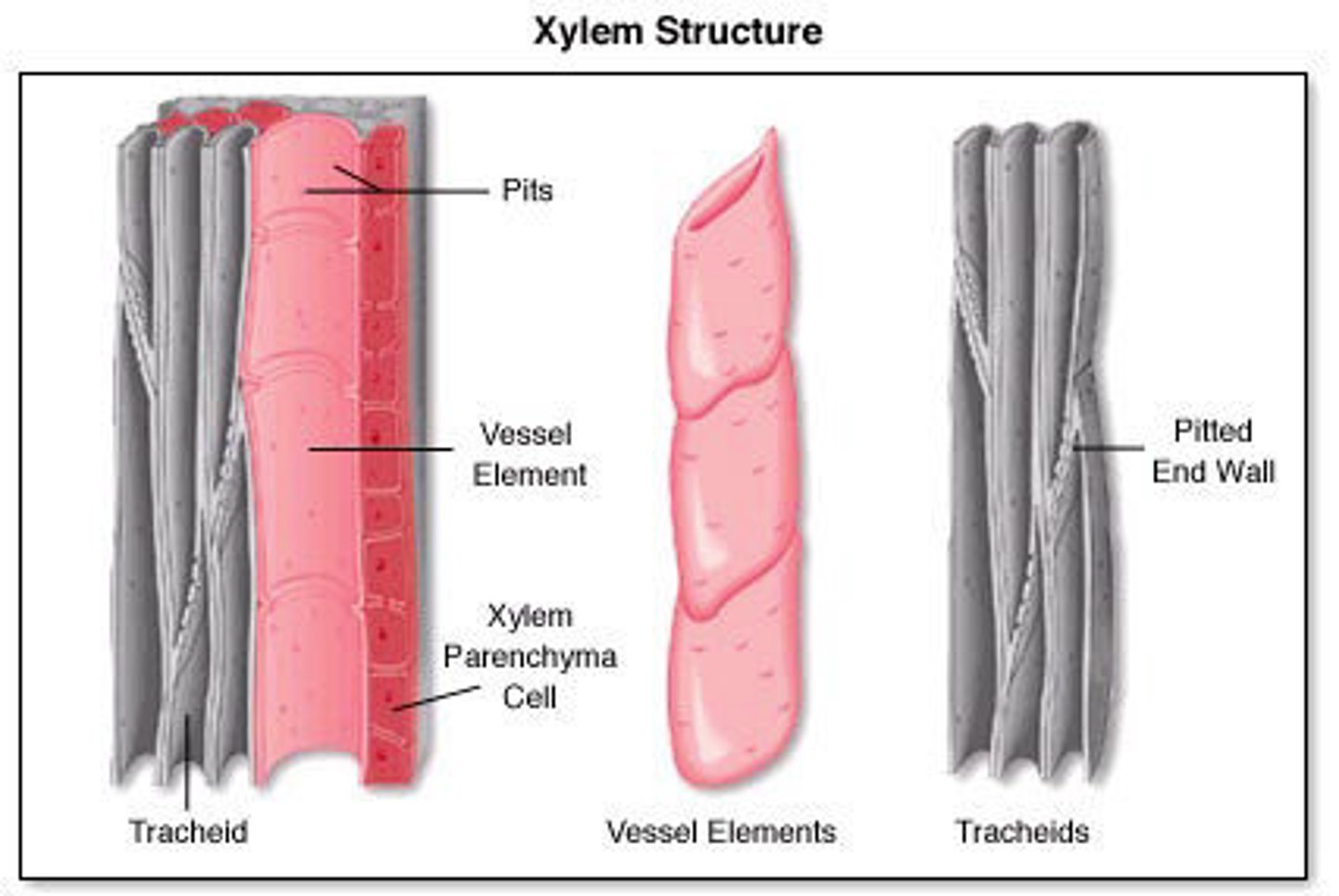
Which xylem cells are shorter and wider, and have less or no taper at the ends?
vessel elements
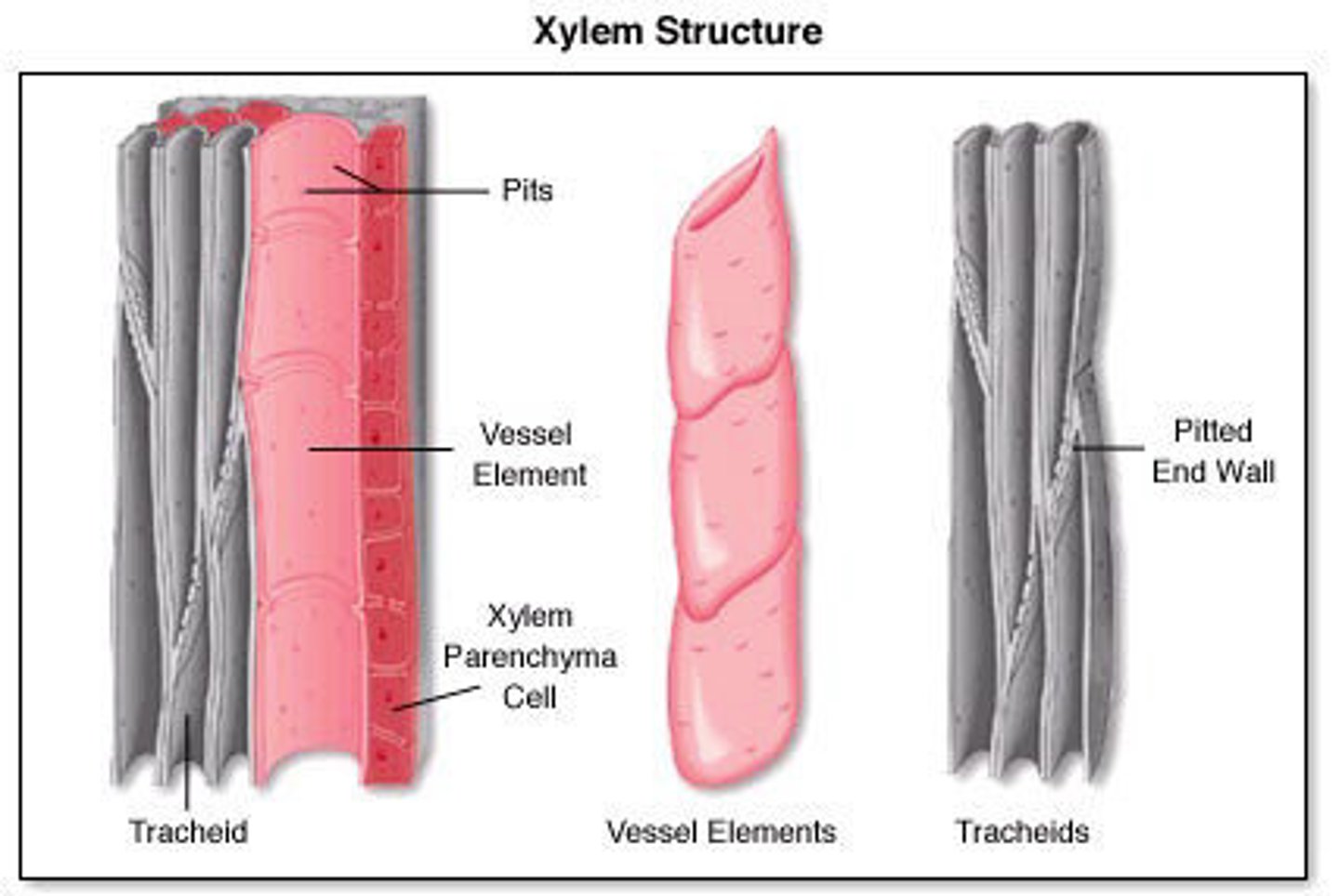
What is a column of vessel elements (members) called?
vessel
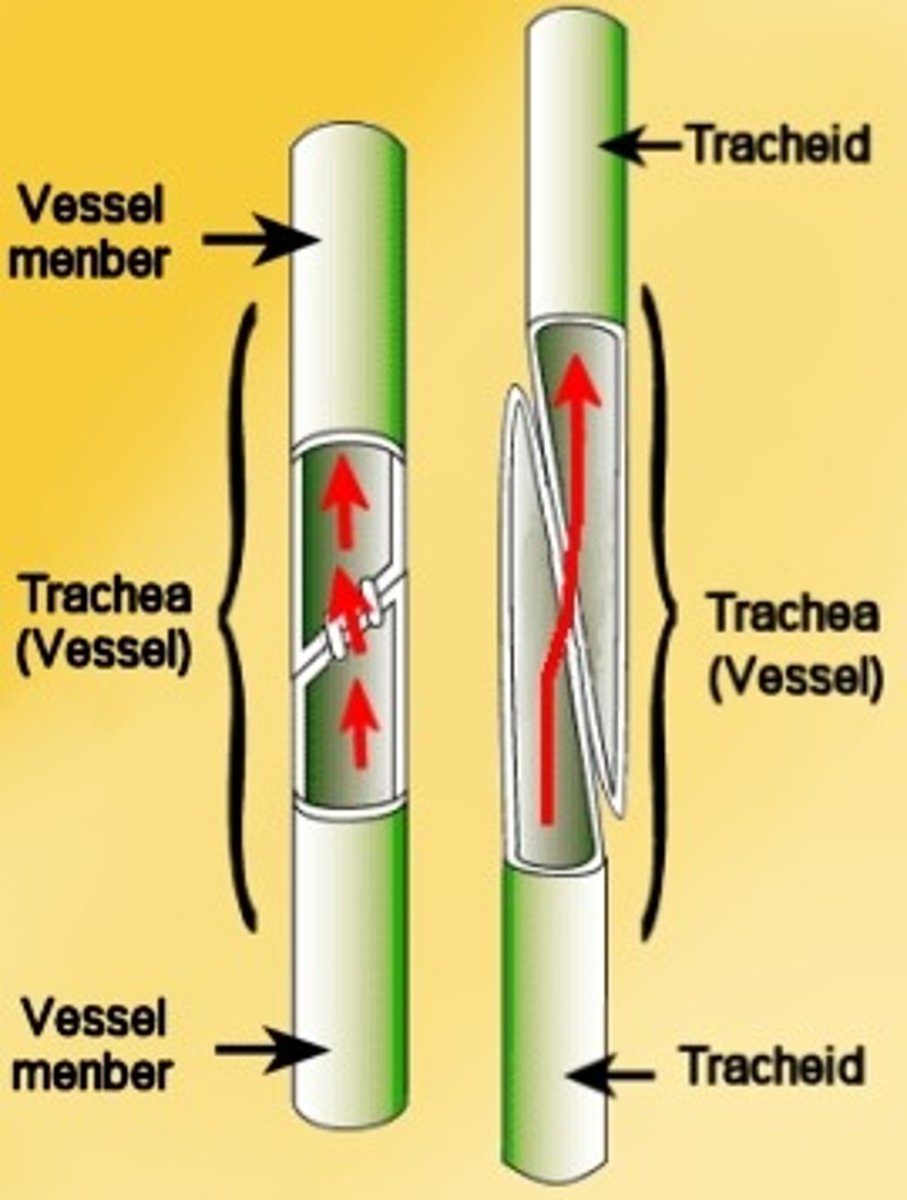
Where does water pass from one vessel member to the next?
perforations
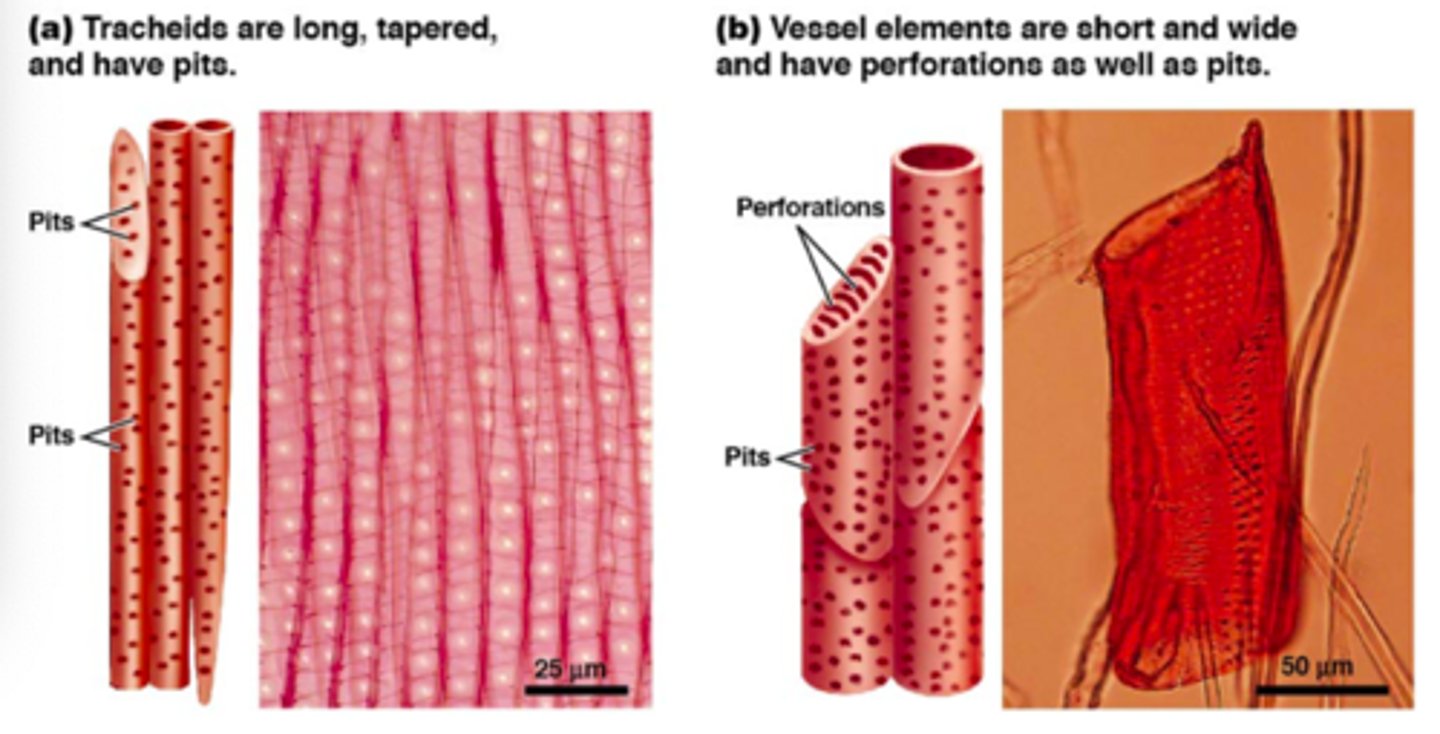
vessel elements lack what cellular structure?
first and secondary cell walls
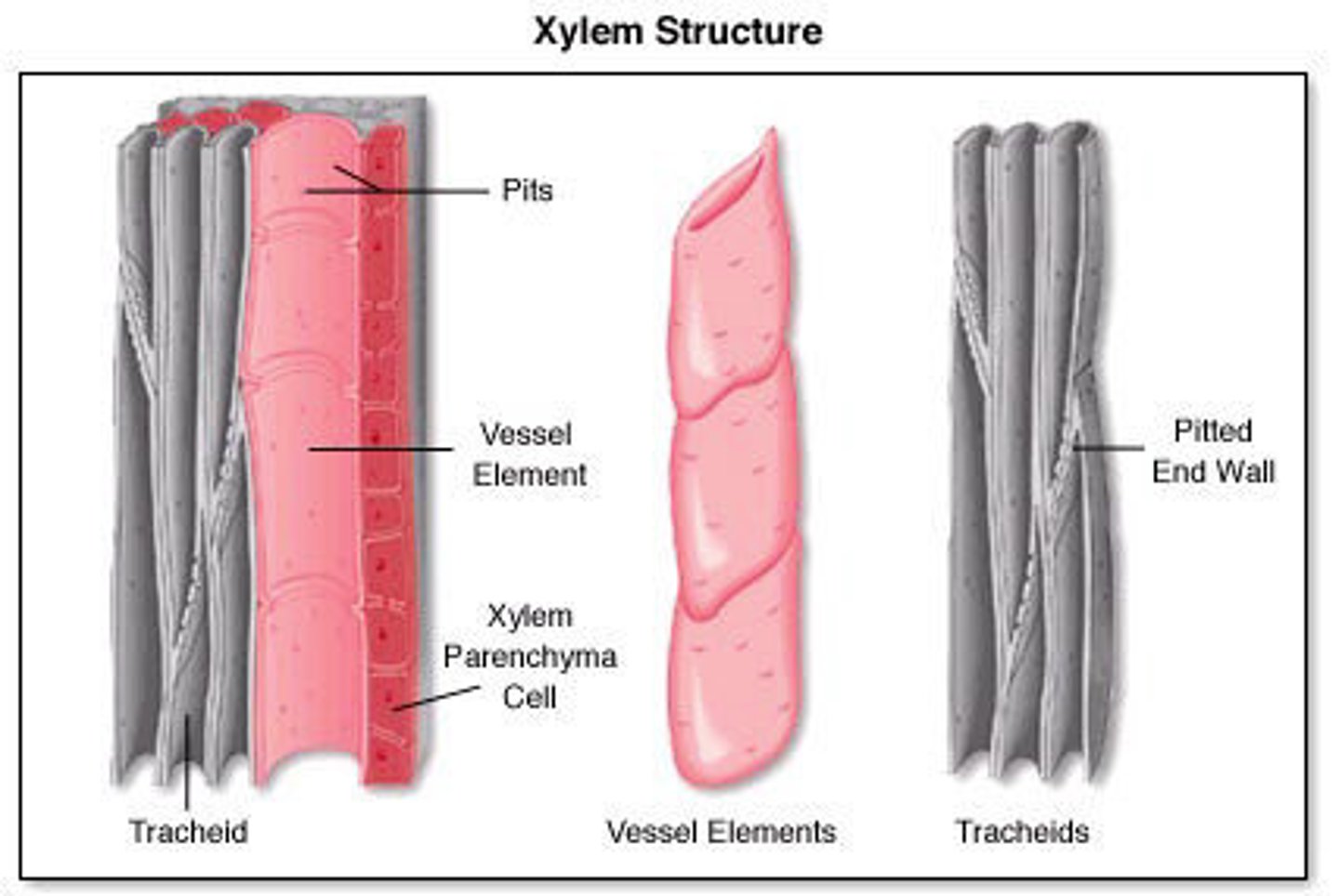
Are perforations (vessel elements) or pits (tracheid) more efficient?
perforations
Which plant tissue transports sugar?
phloem
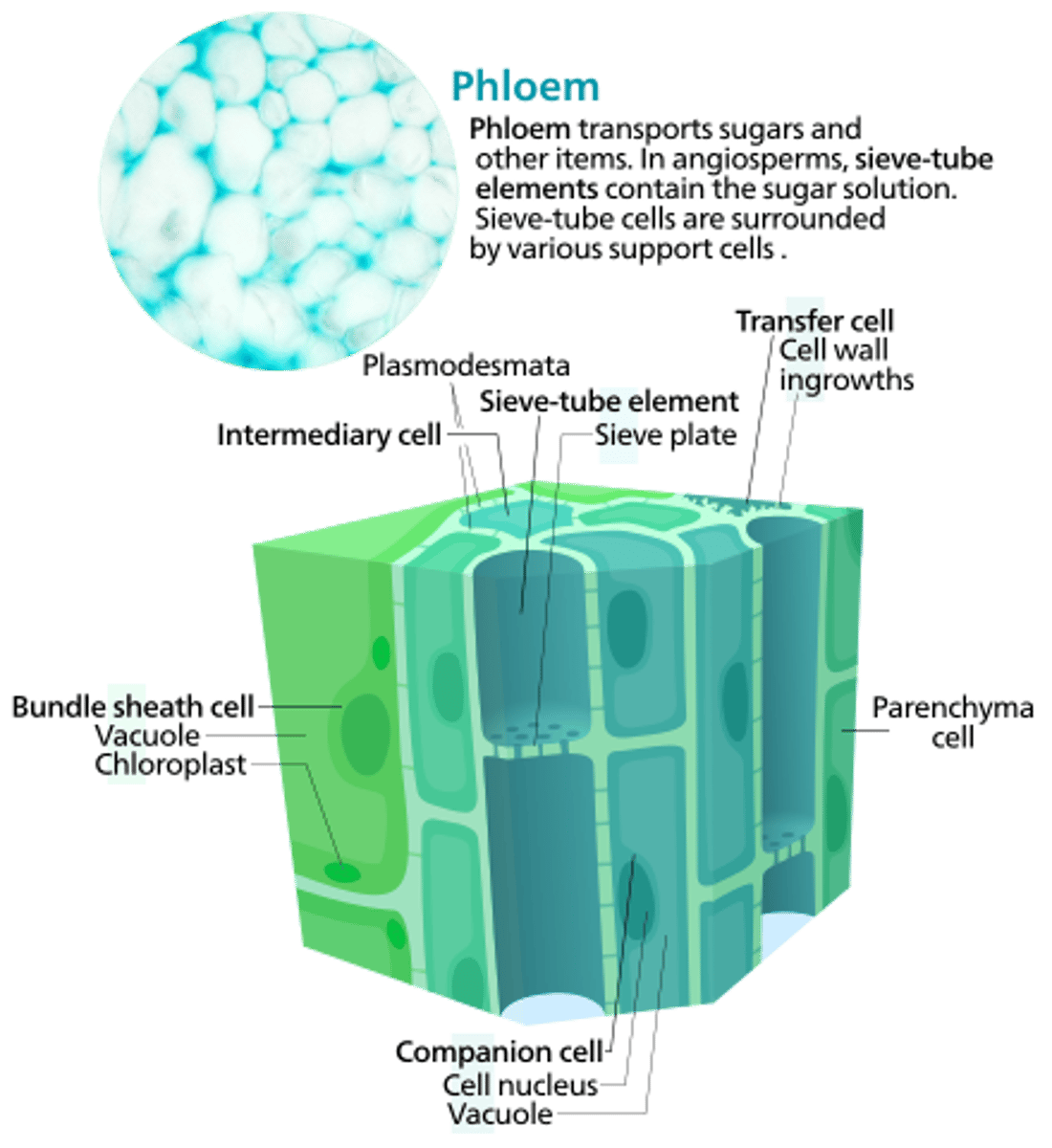
Which cells compose phloem?
sieve-tube members (elements)
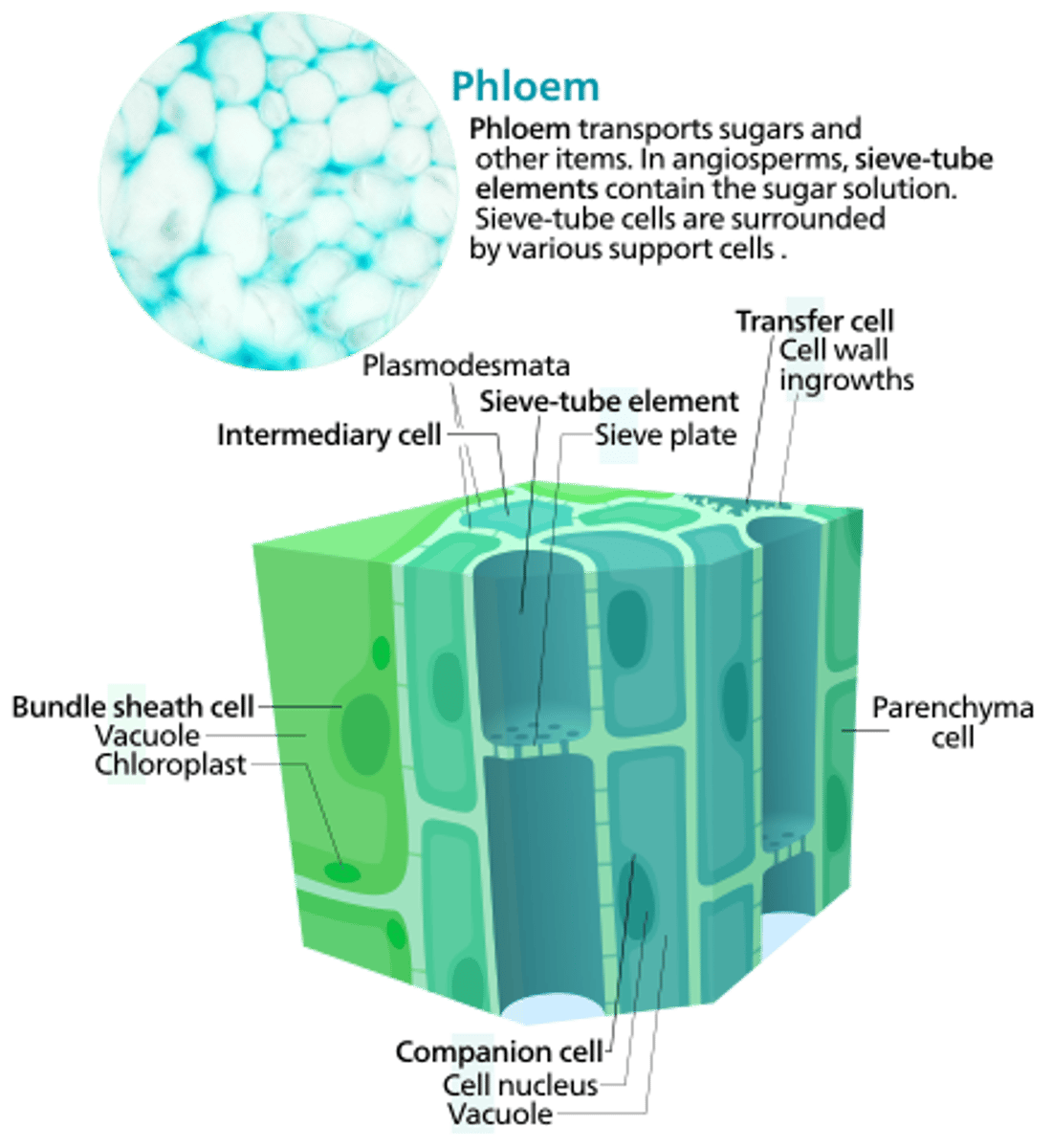
The sieve-tube members in phloem form fluid conducting columns called what?
sieve tubes
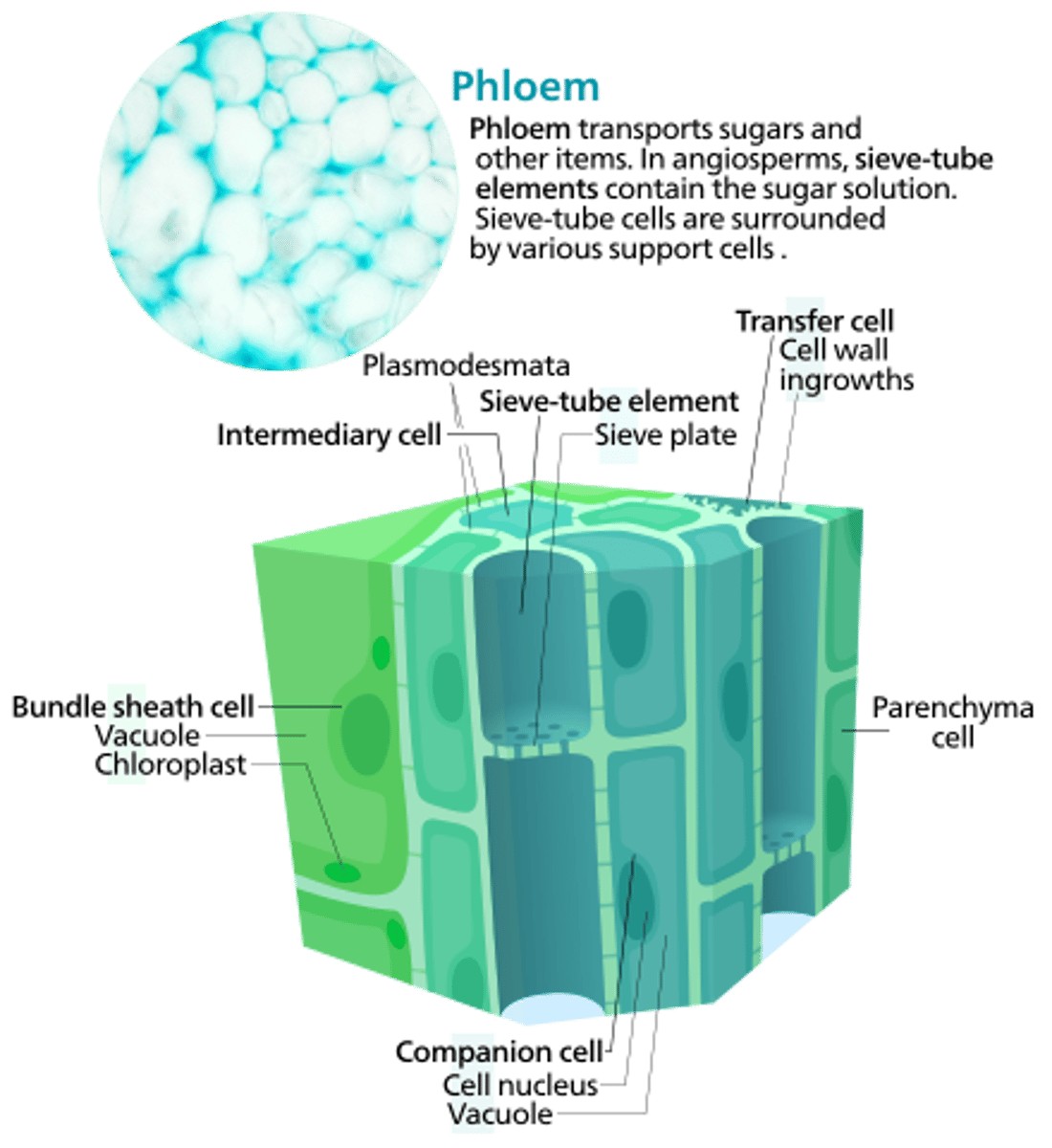
Though sieve tube members are alive at maturity, what cellular structures do they lack?
nuclei and ribosomes
What structures on the ends of sieve tube members form sieve plates?
pores
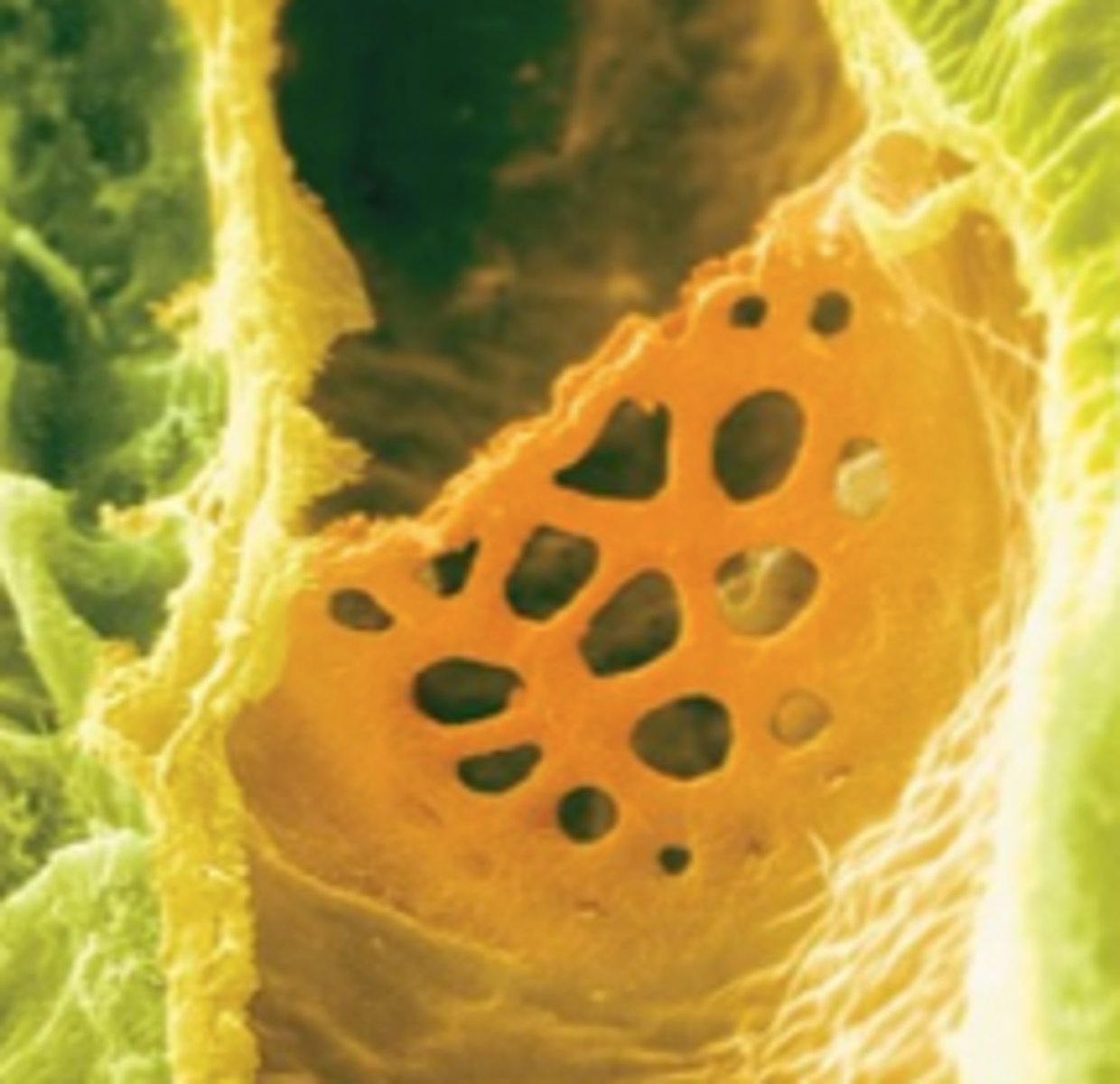
What are sieve plates?
areas where the
cytoplasm of one
cell makes contact
with the next cell
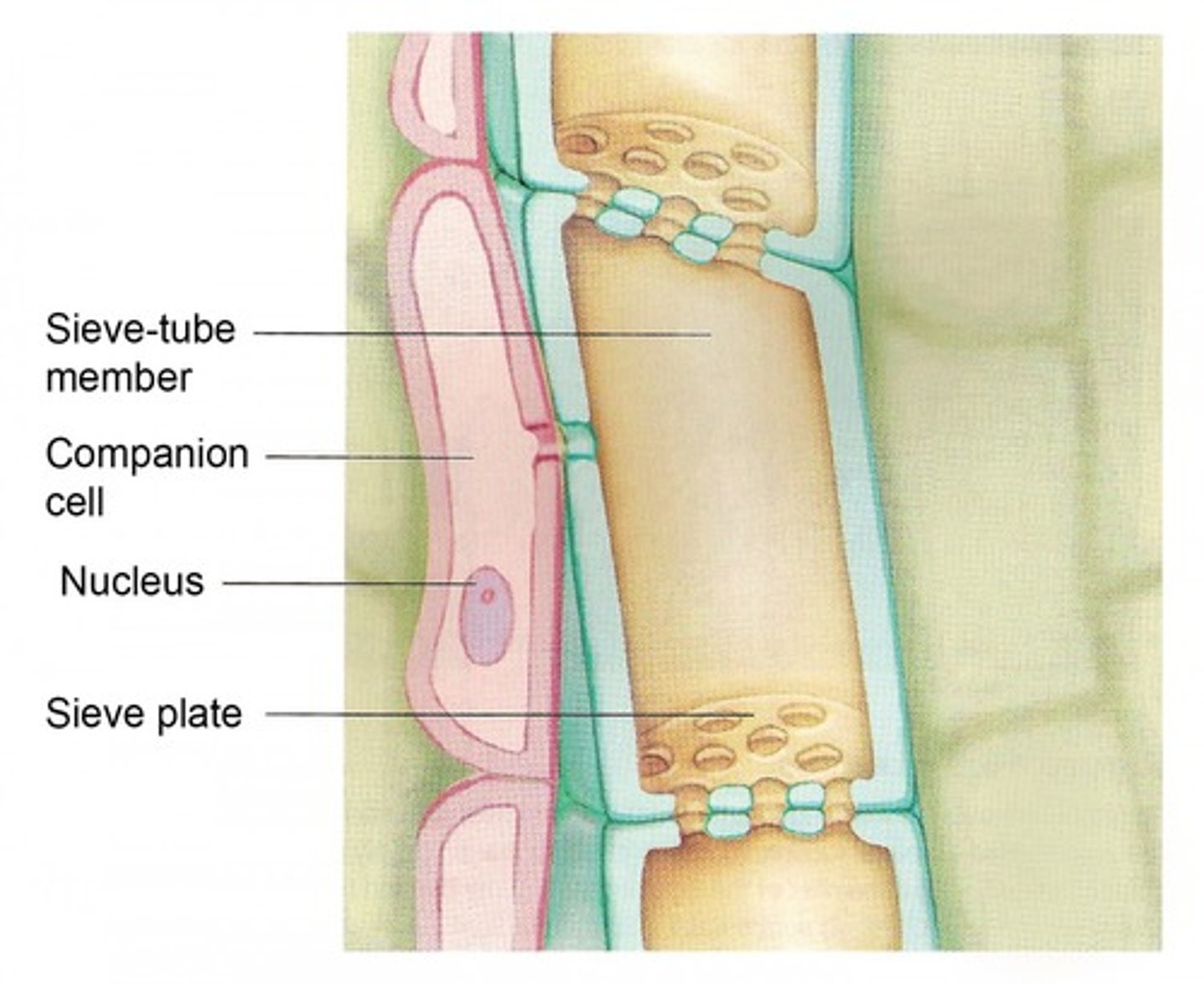
Which cells are sieve tubes associated with?
companion cells
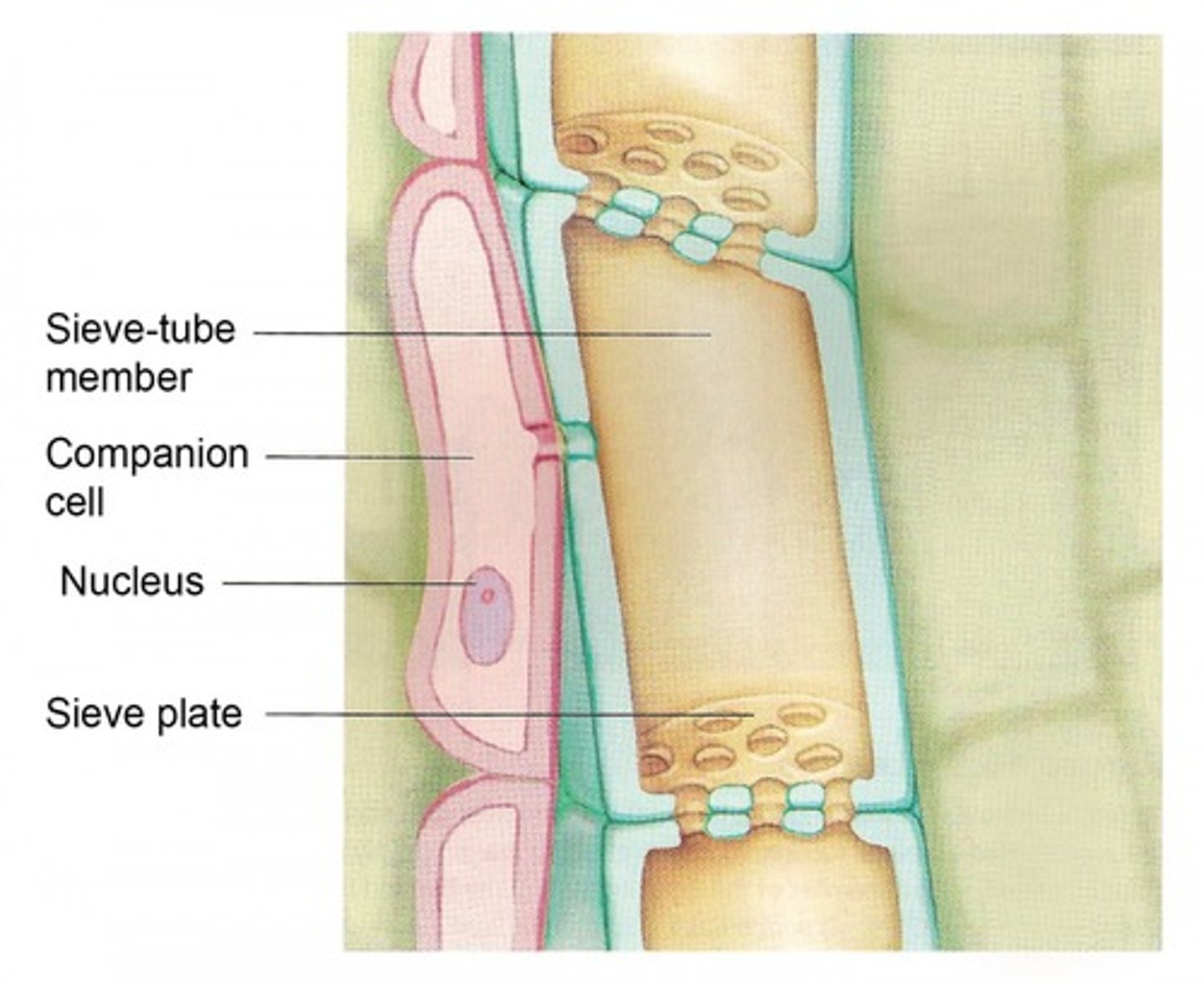
Which type of plant tissue are companion cells?
parenchyma
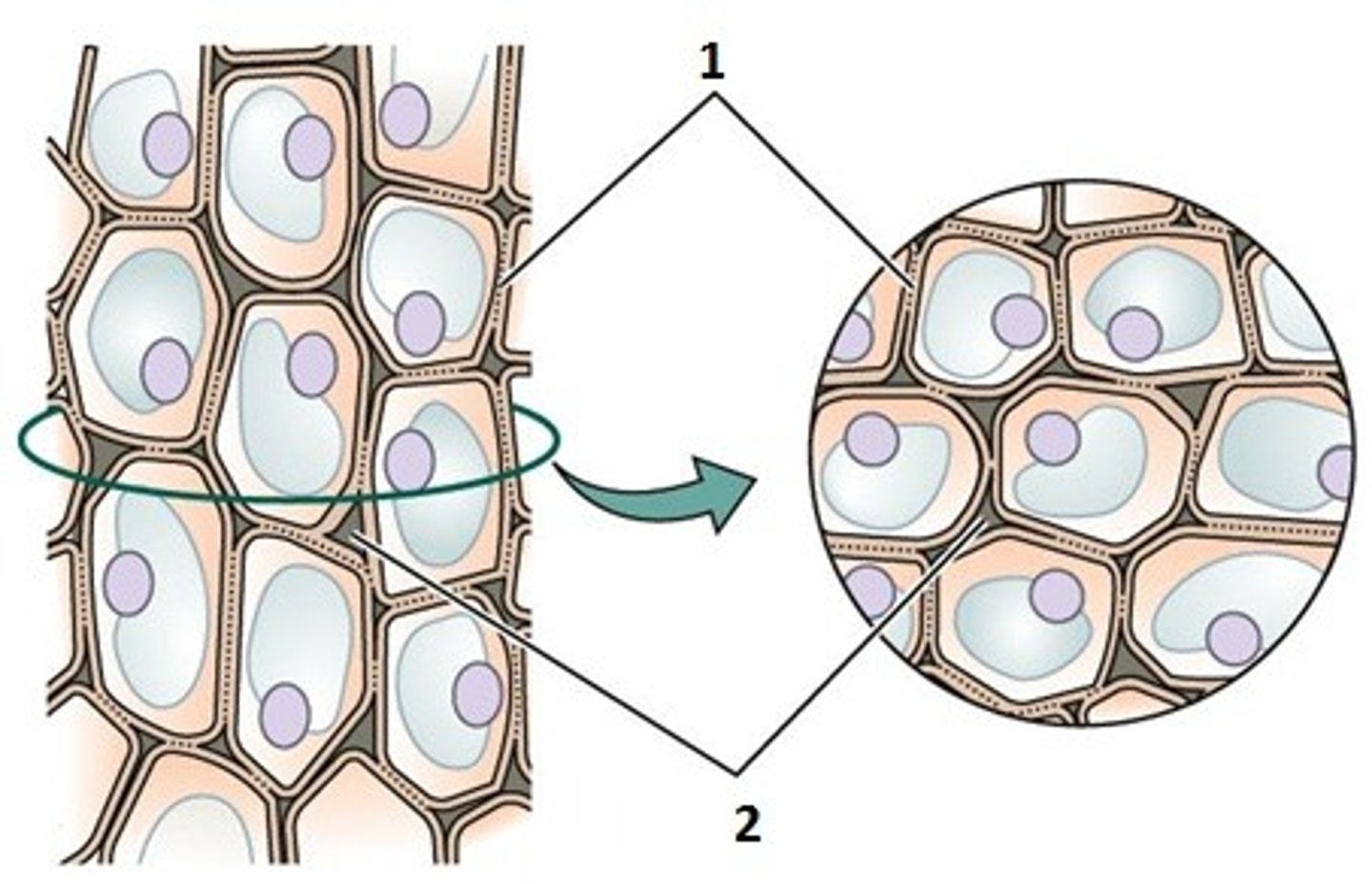
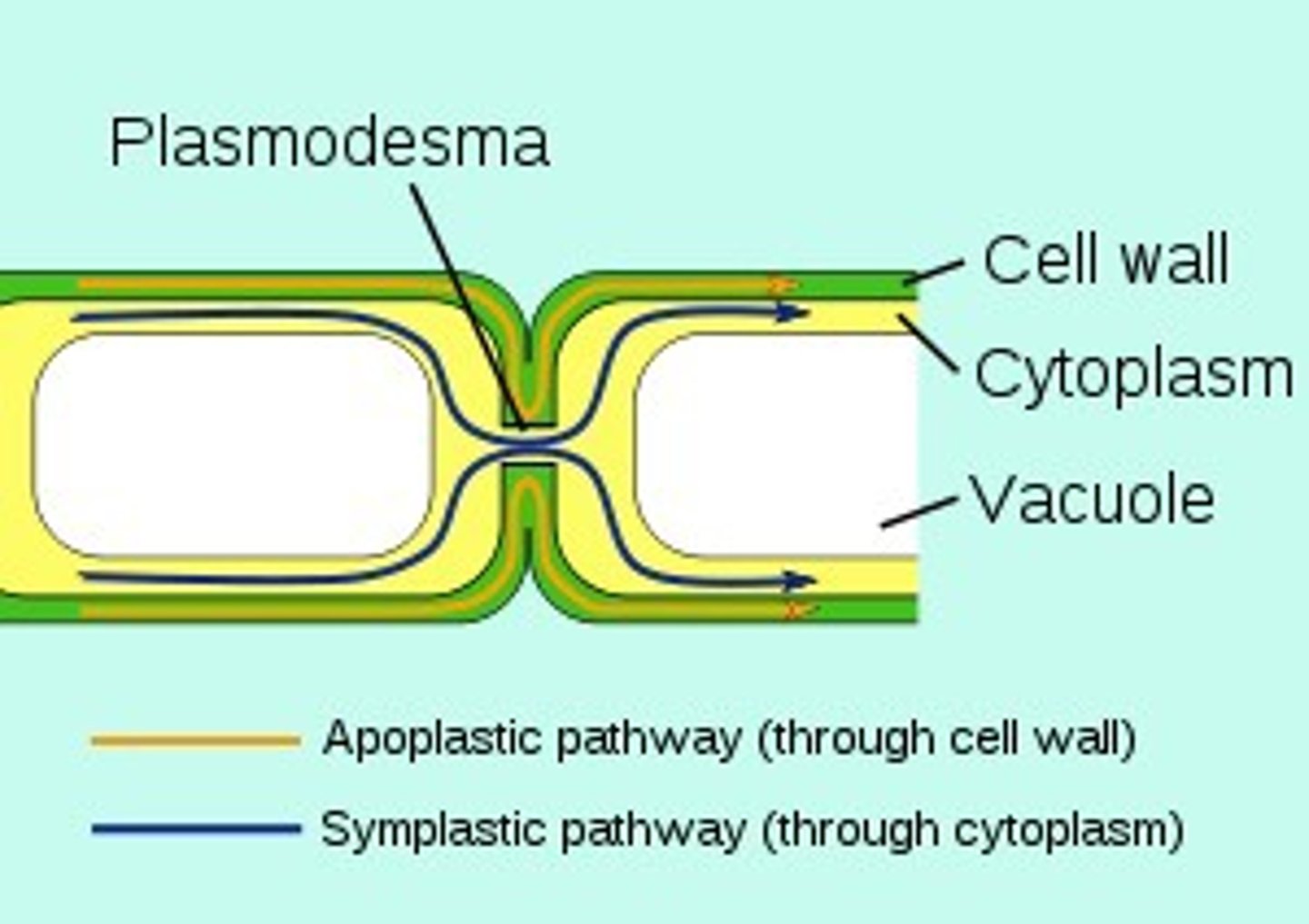
sieve-tube members are connected by what to maintain physiological support?
plasmodesmata
(Note: necessary
because of the lack
of nuclei)
In many monocots, what is the primary storage tissue?
endosperm
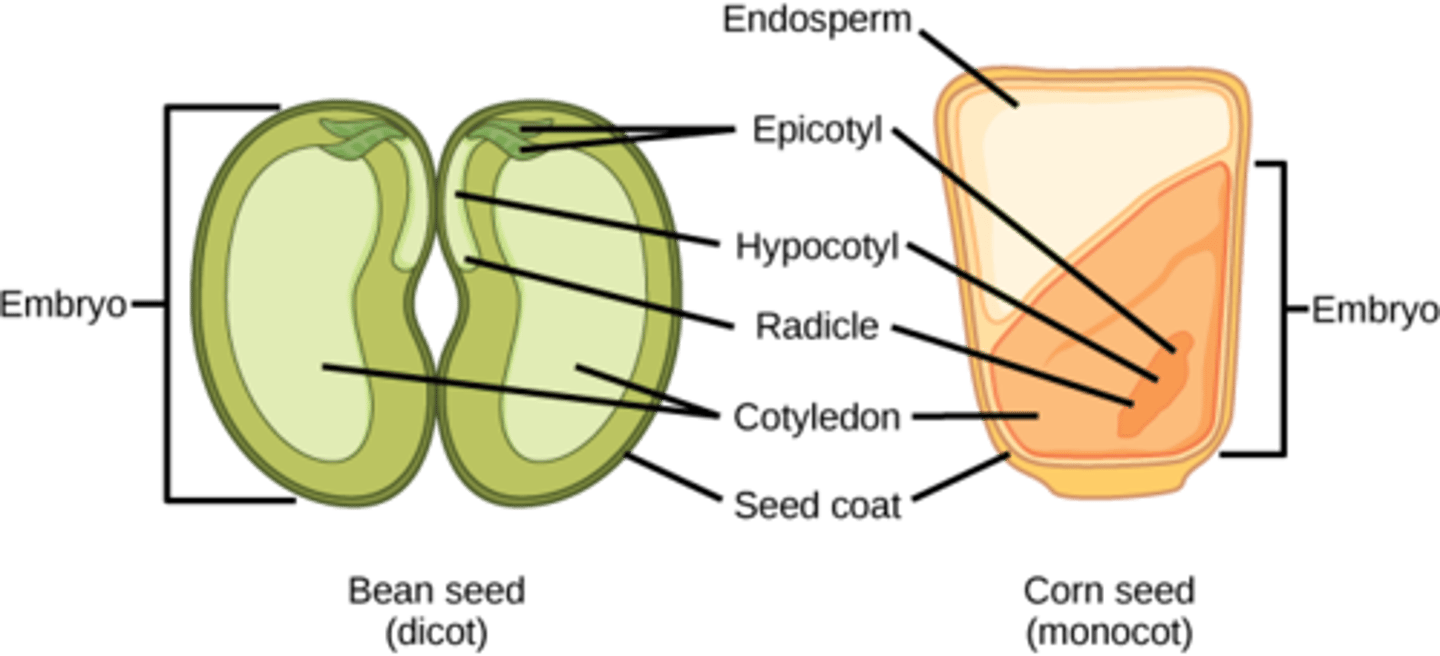
In many monocots, what is the function of cotyledons?
transfer nutrients
from the endosperm
to the embryo
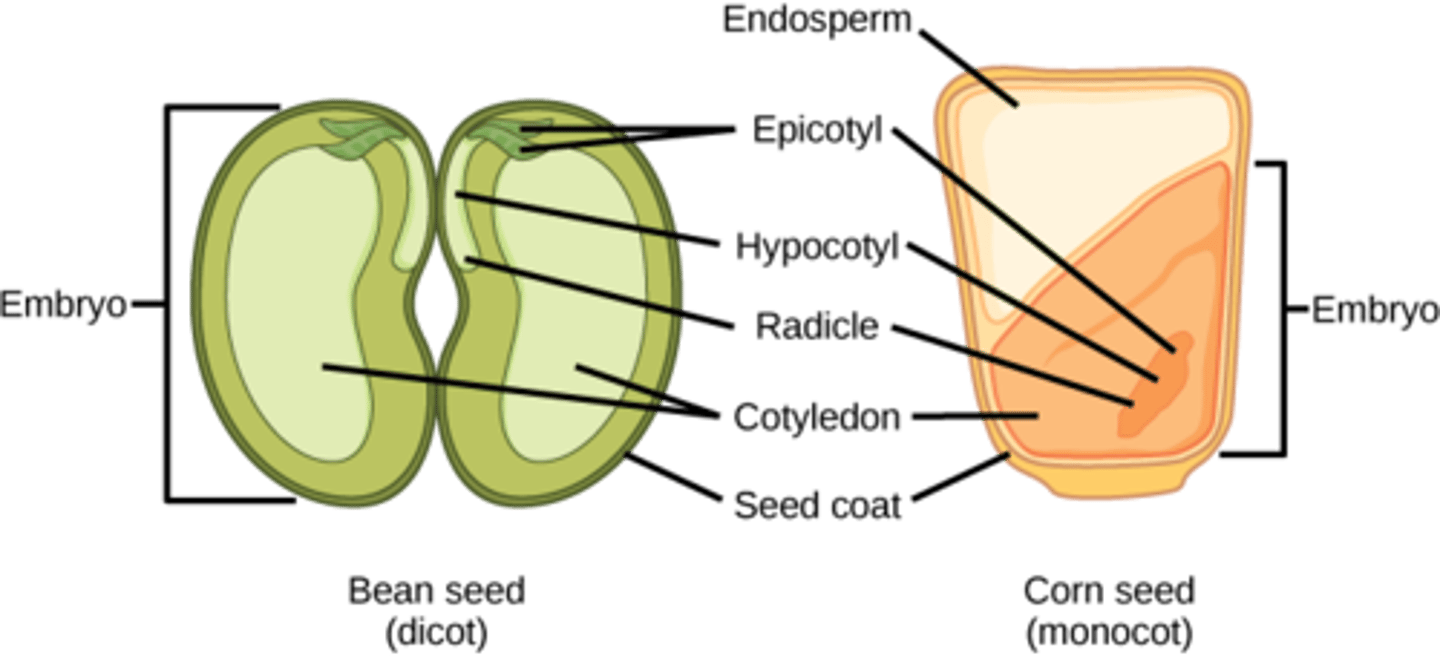
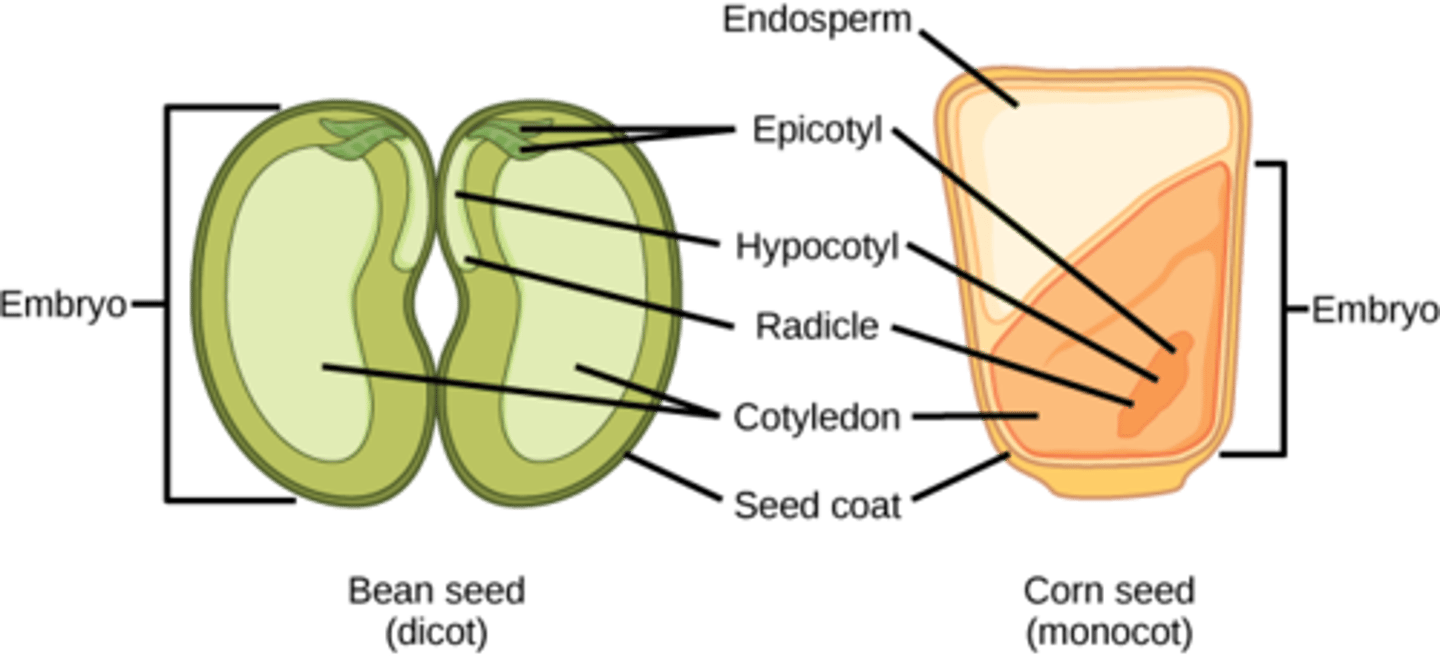
Which part of the plant embryo is at the top portion of the embryo and becomes the shoot tip?
epicotyl
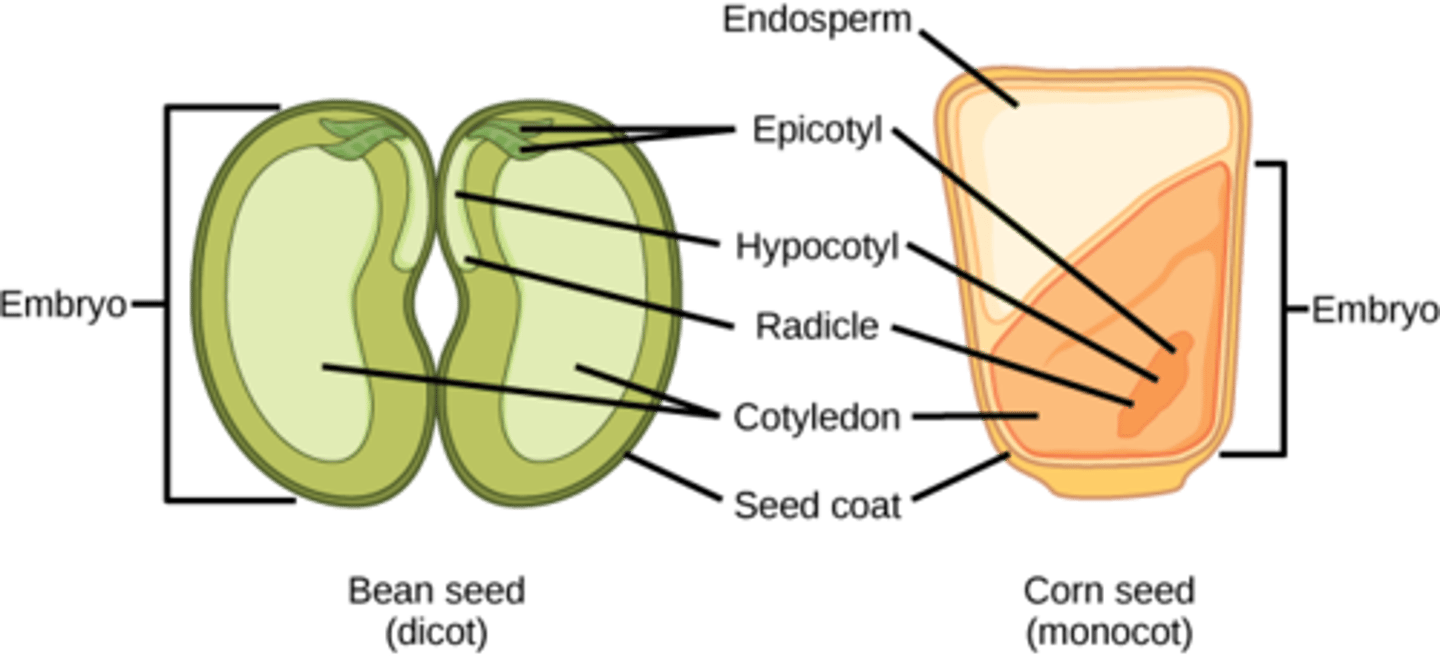
Which part of the plant embryo contains the young leaves often attached to the epicotyl and located underneath the epicotyl?
plumule
(Note: refers to both together)
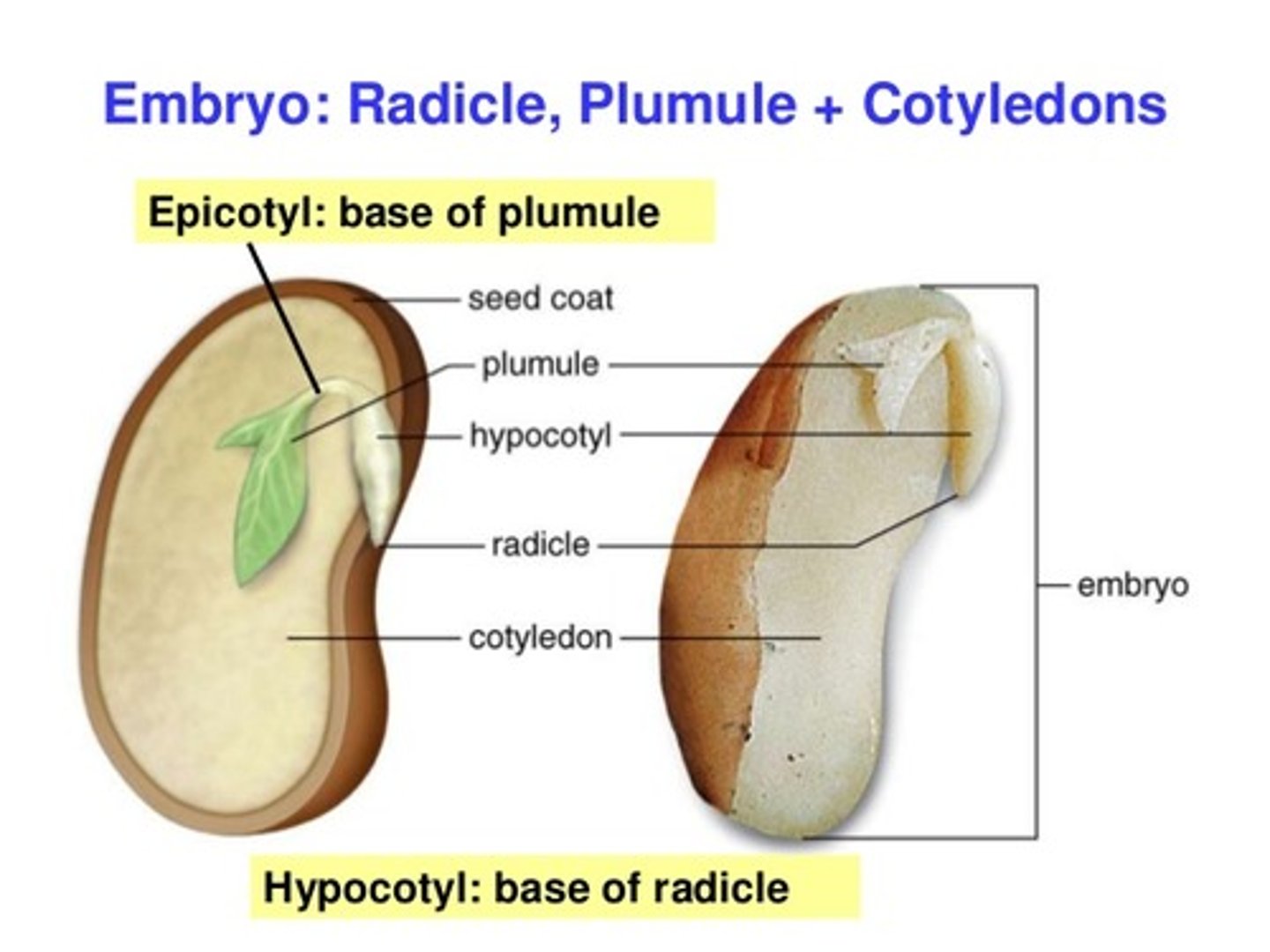
Which part of the plant embryo is located below the plumule and attached to cotyledons?
hypocotyl
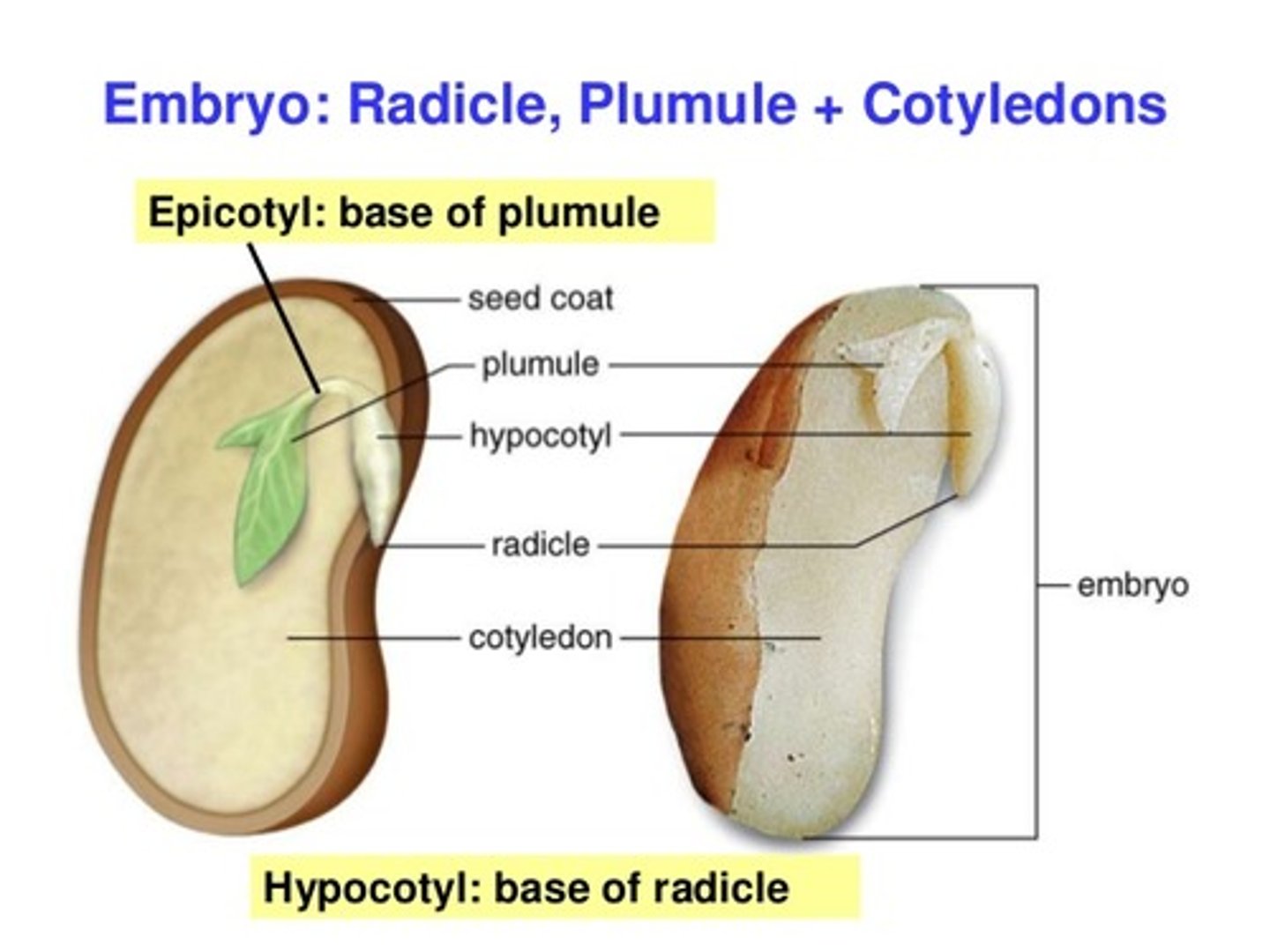
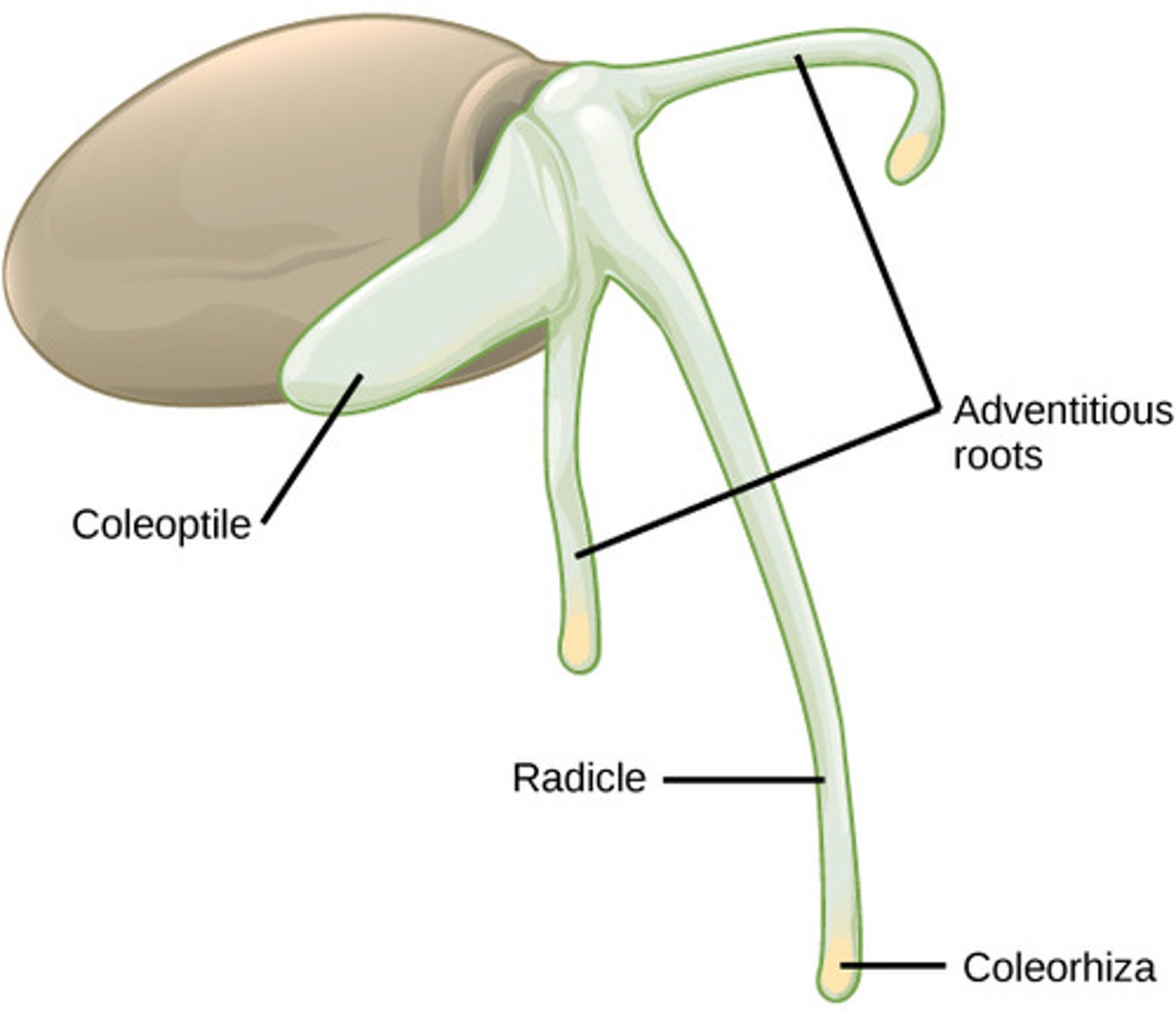
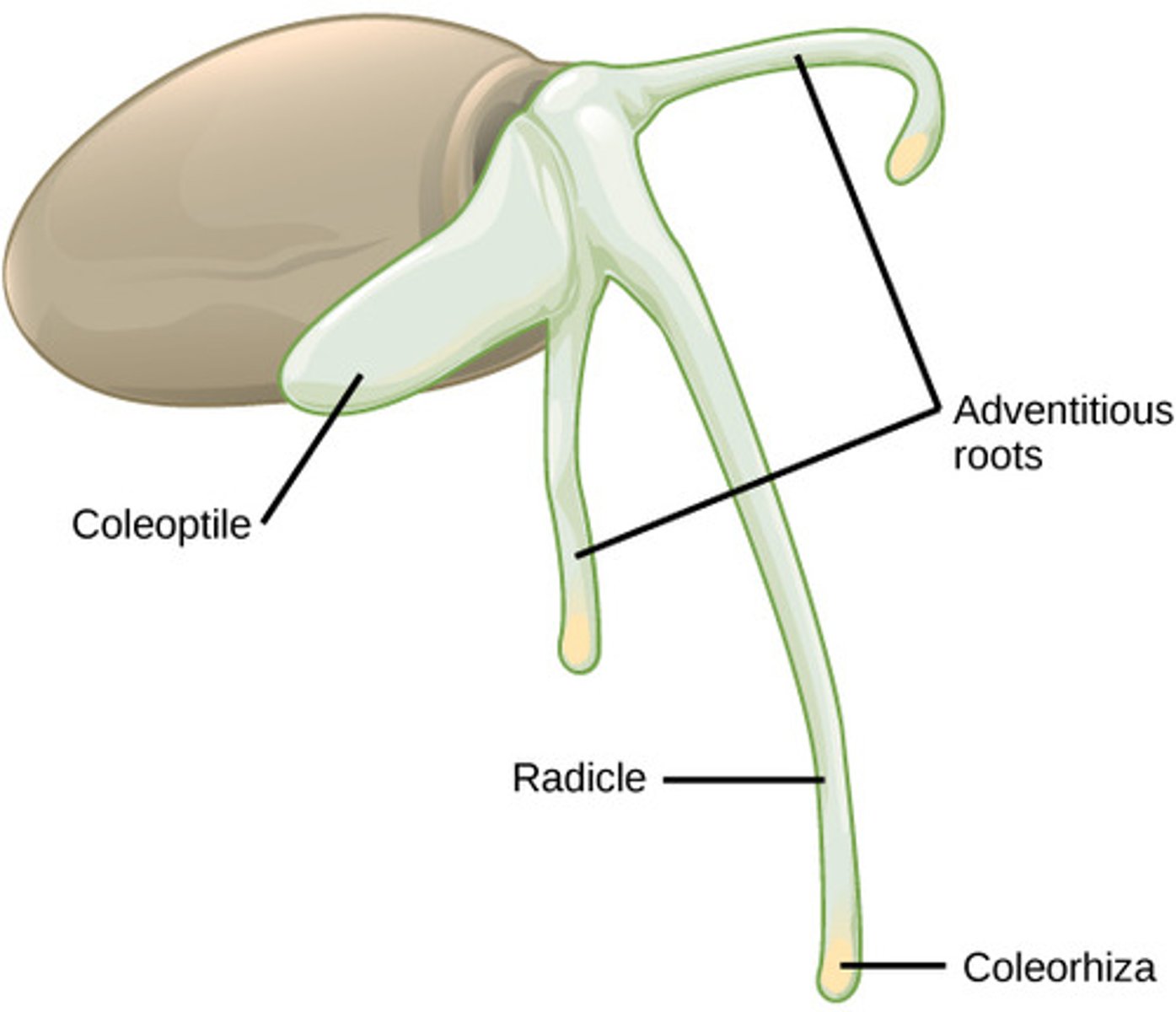
Which part of the plant embryo develops from below the hypocotyls and becomes the roots?
radicles
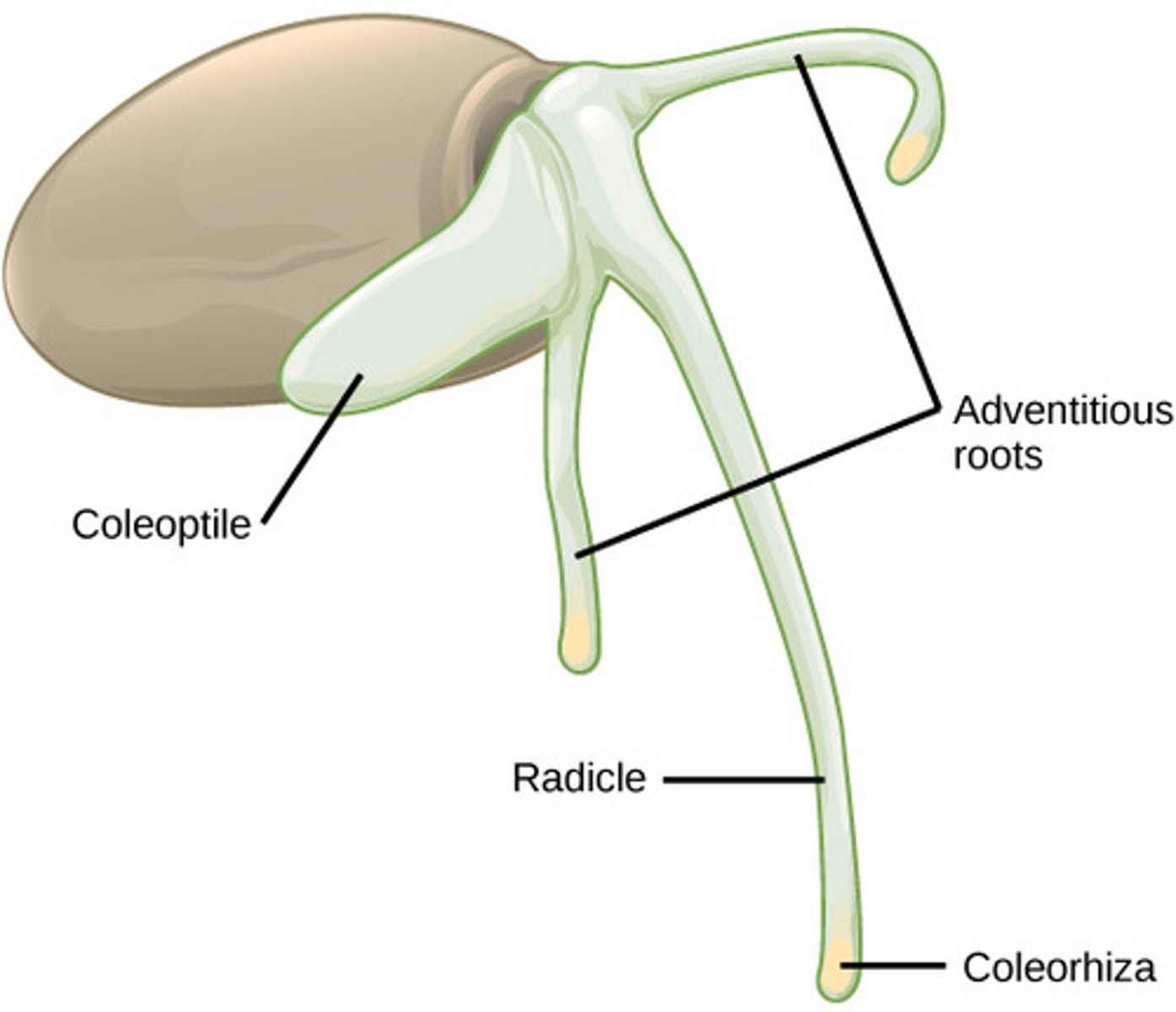
Which part of the plant embryo is a sheath in monocots that surrounds and protects the epicotyl?
coleoptiles
(Note: in developing
young plants, the coleoptiles
appears first followed by the
true leaves of the plumule)
What plant reproductive structure remains dormant at maturity until specific environmental cues break the dormancy period?
seed
(Note: water, temp,
light, or seed coat damage)
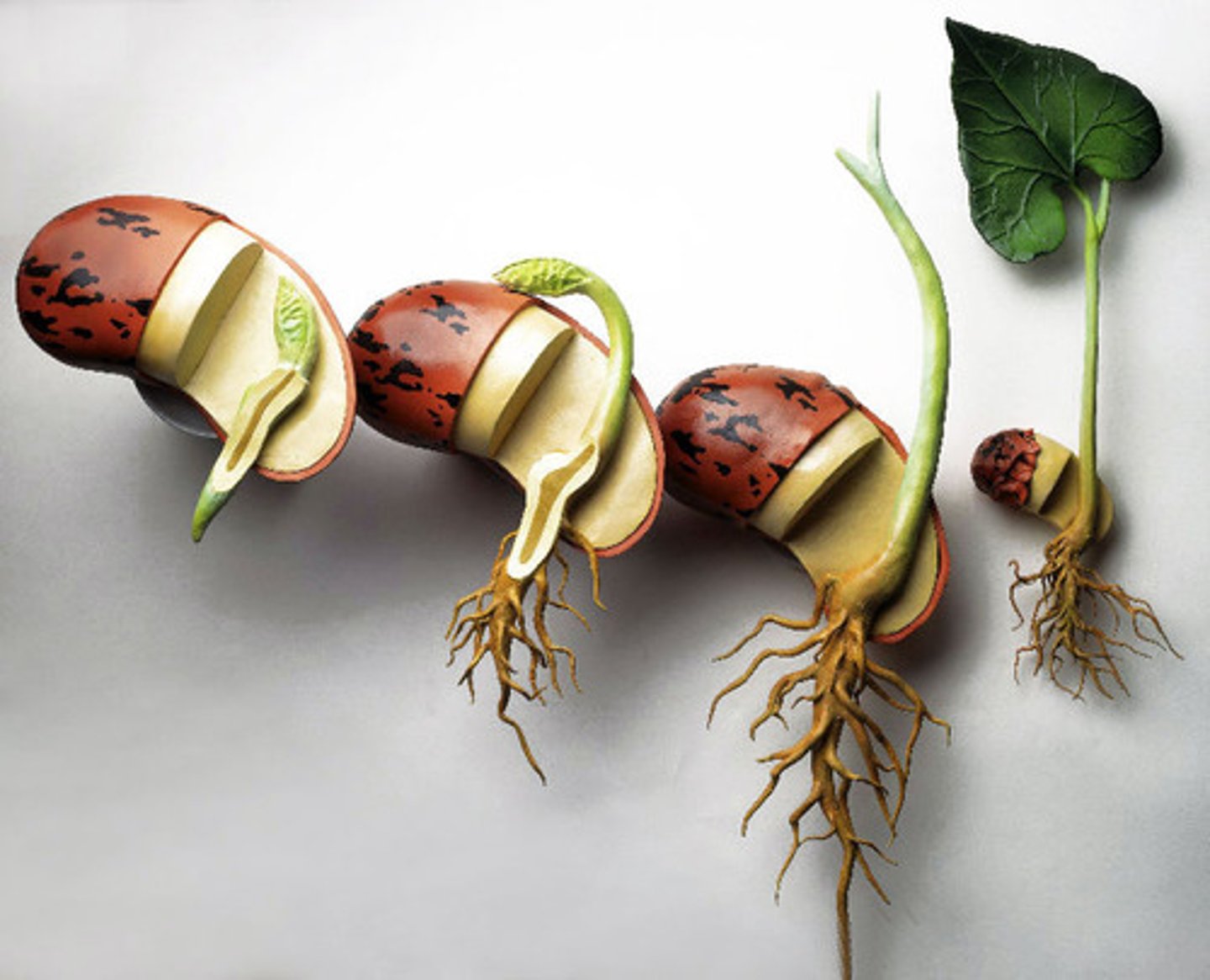
What event begins seed germination?
imbibition (absorption) of water
after the start of germination, what substances are activated to start biochemical processes, beginning respiration?
enzymes
What action causes the seed to swell and for the seed coat to crack?
imbibition of water
During seed germination, what structures produce roots that anchor the seedling?
growing tips of the radicle
How is the young shoot formed during seed germination?
hypocotyl elongates
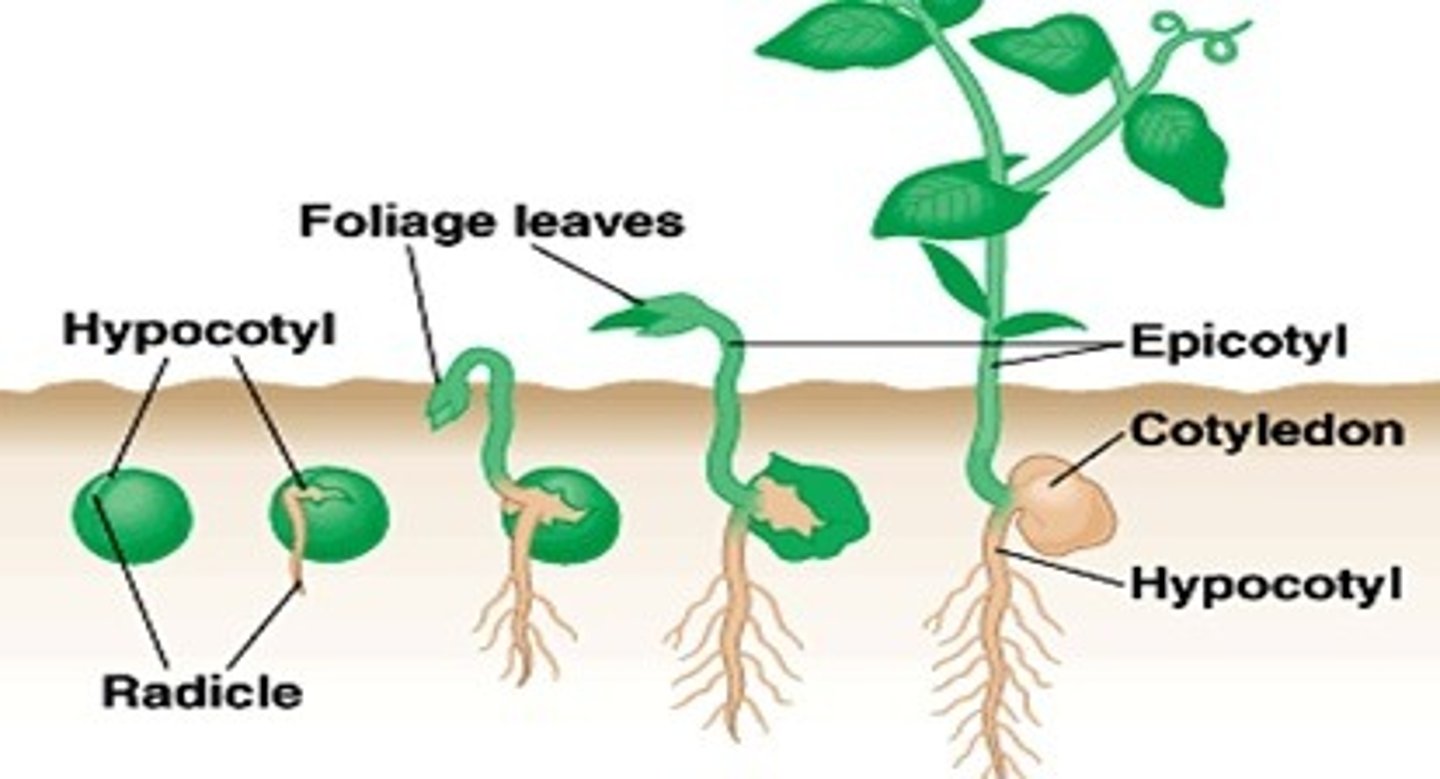
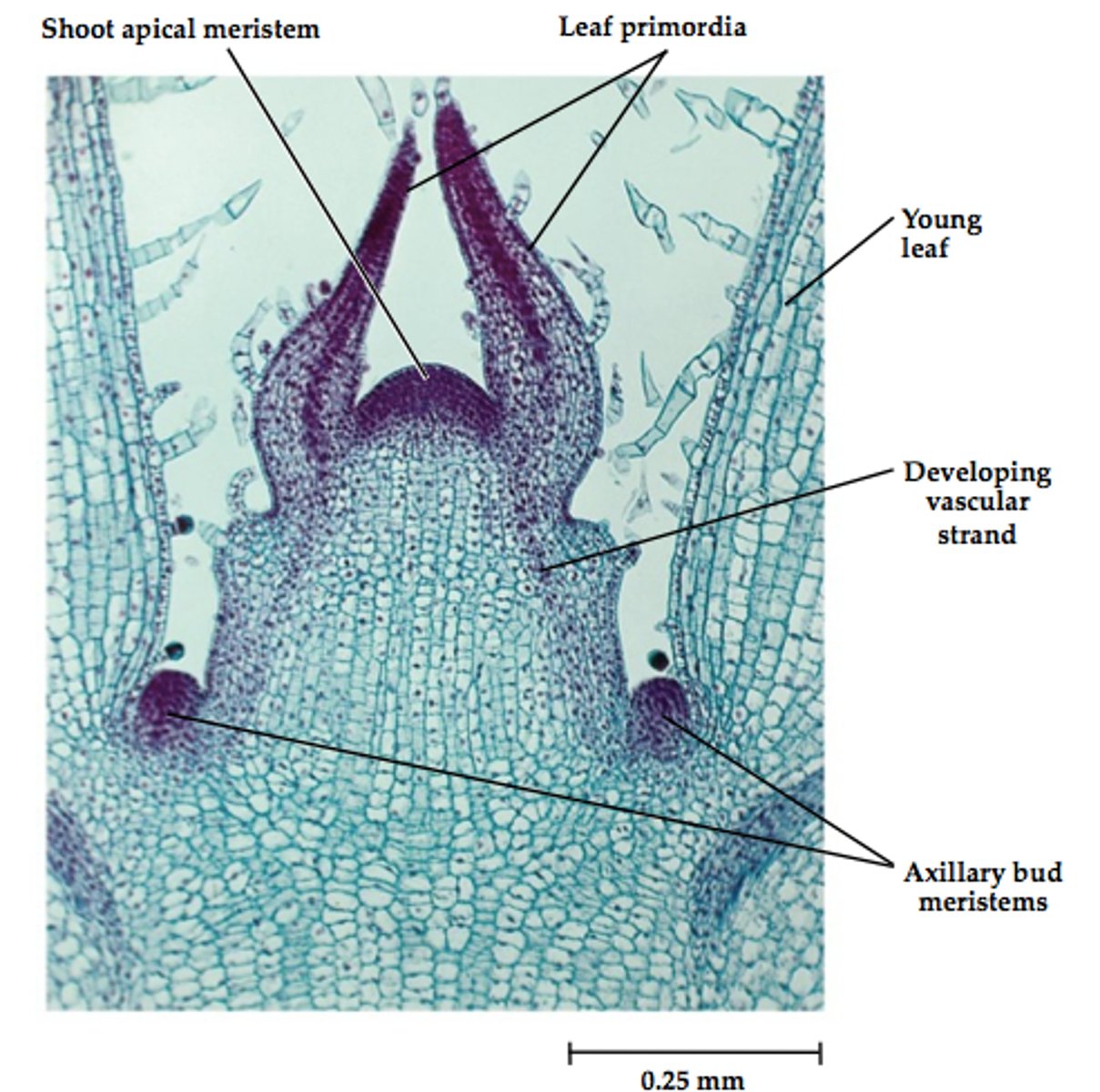
In young seedlings/plants, where does growth occur?
tips of roots and shoots
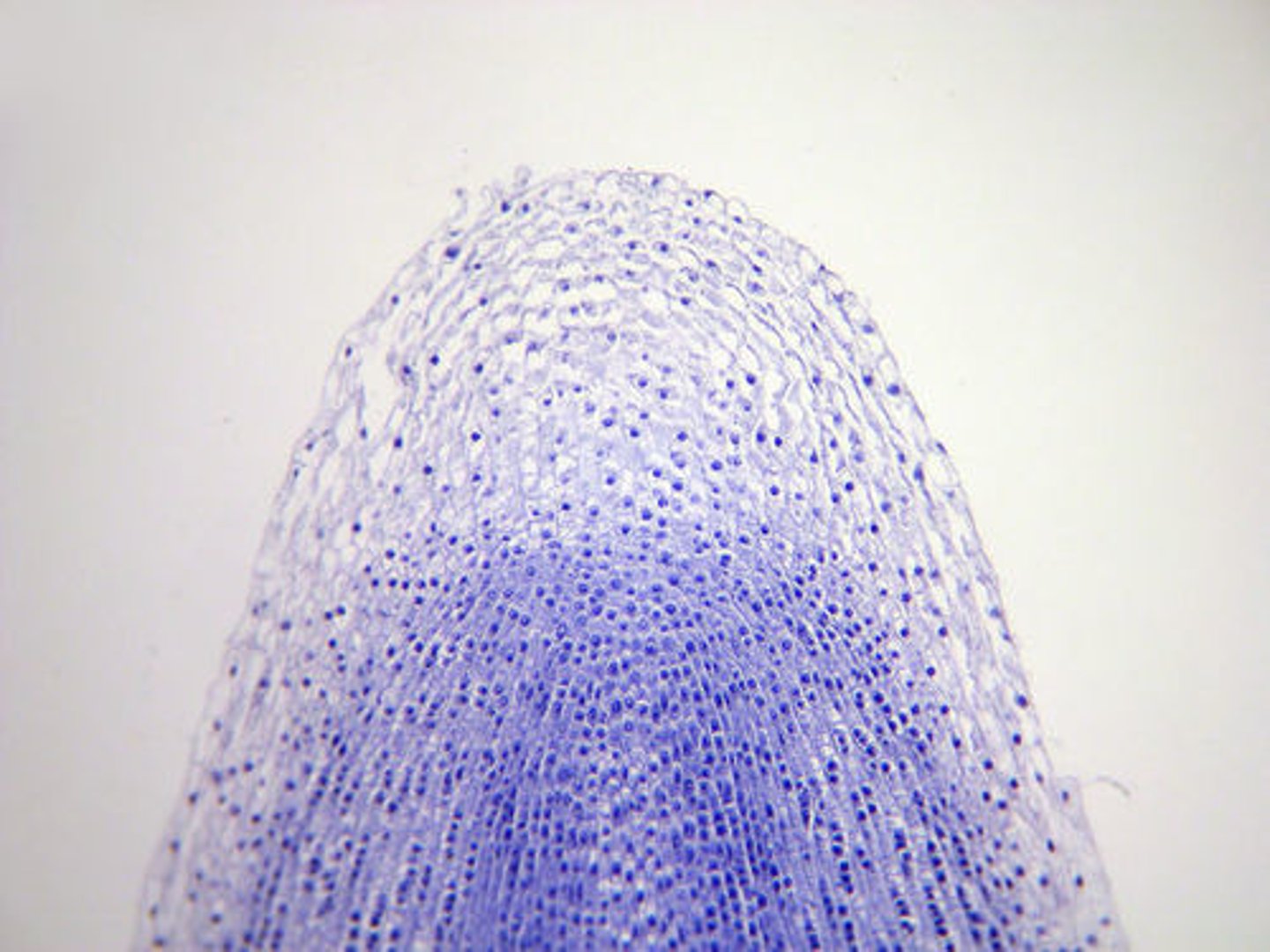
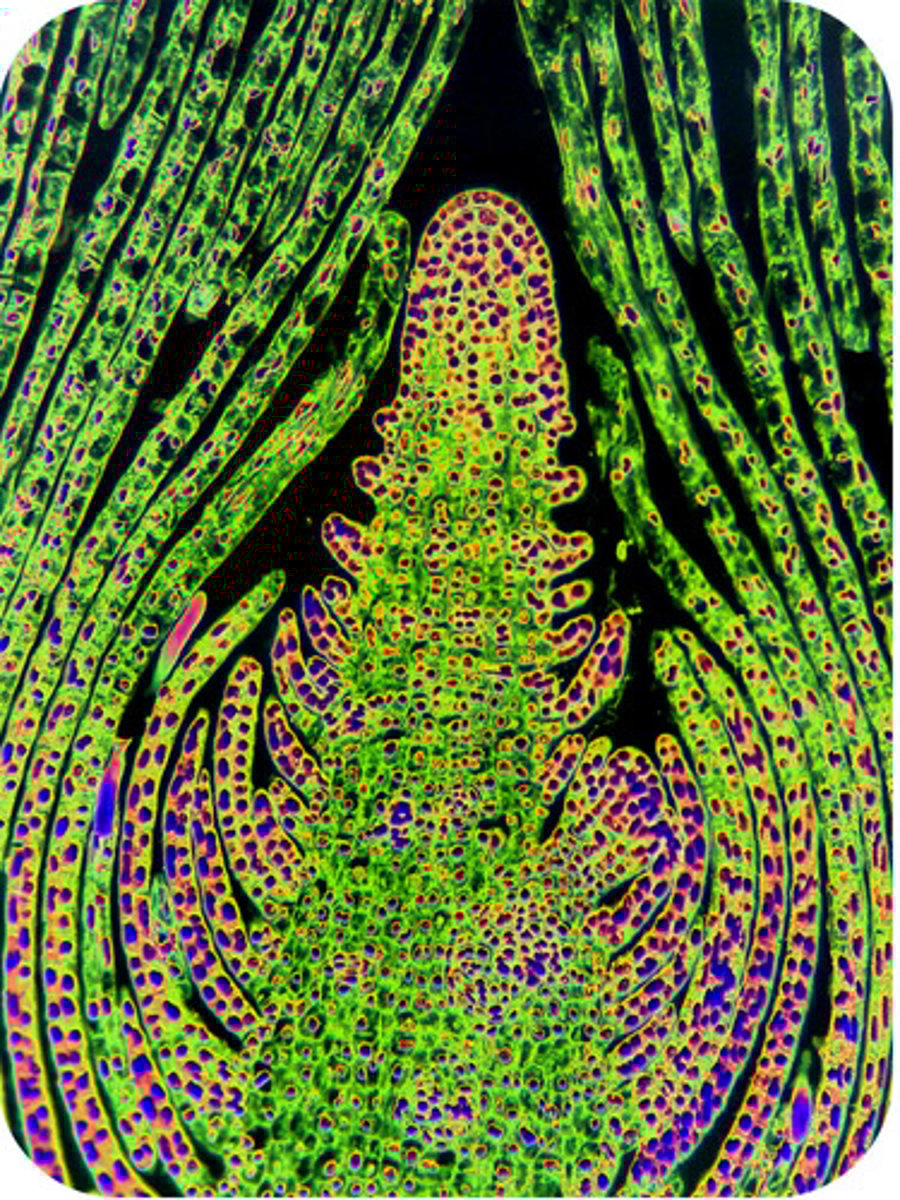
In young seedlings/plants, what are the growing tips called?
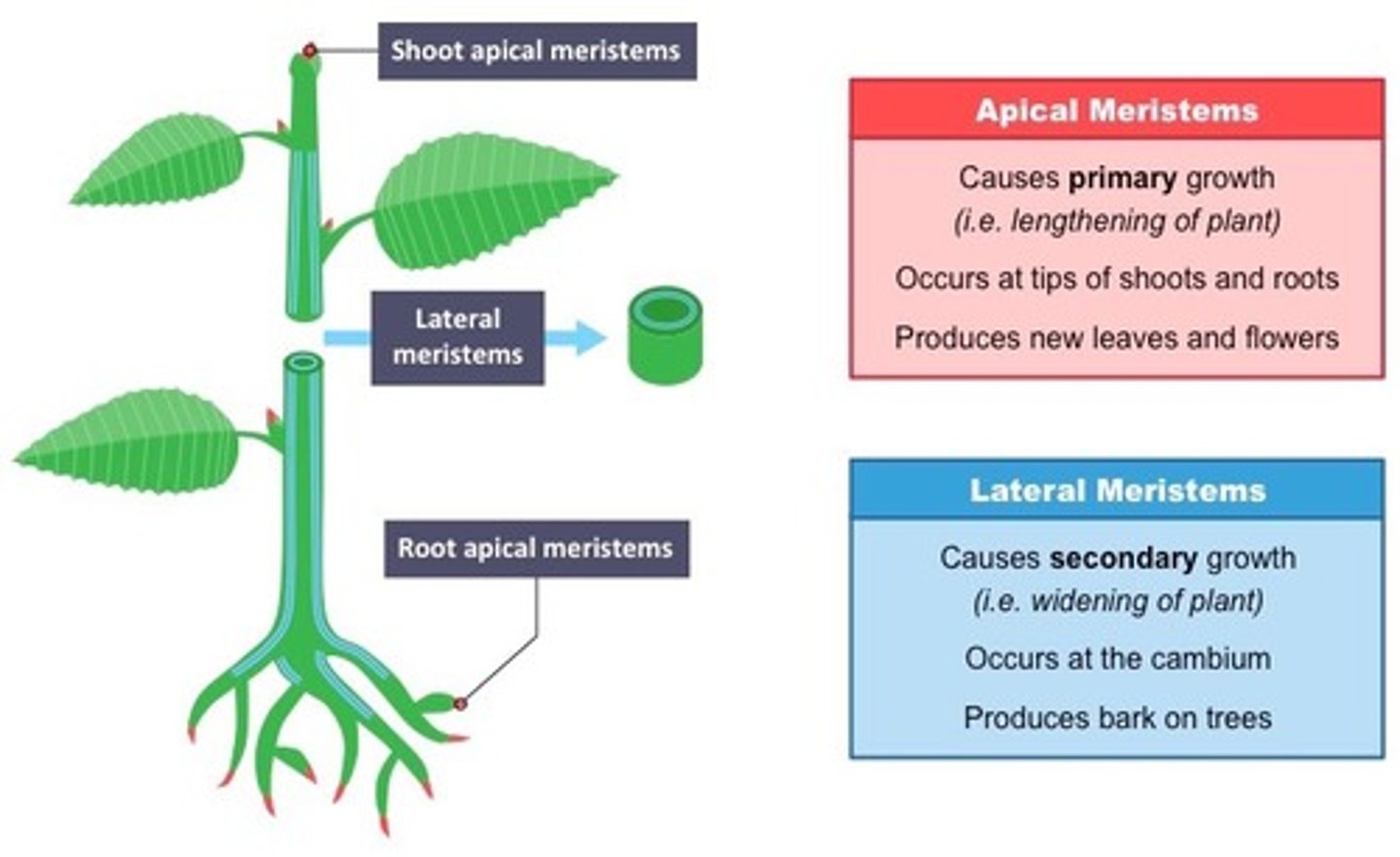
apical meristems
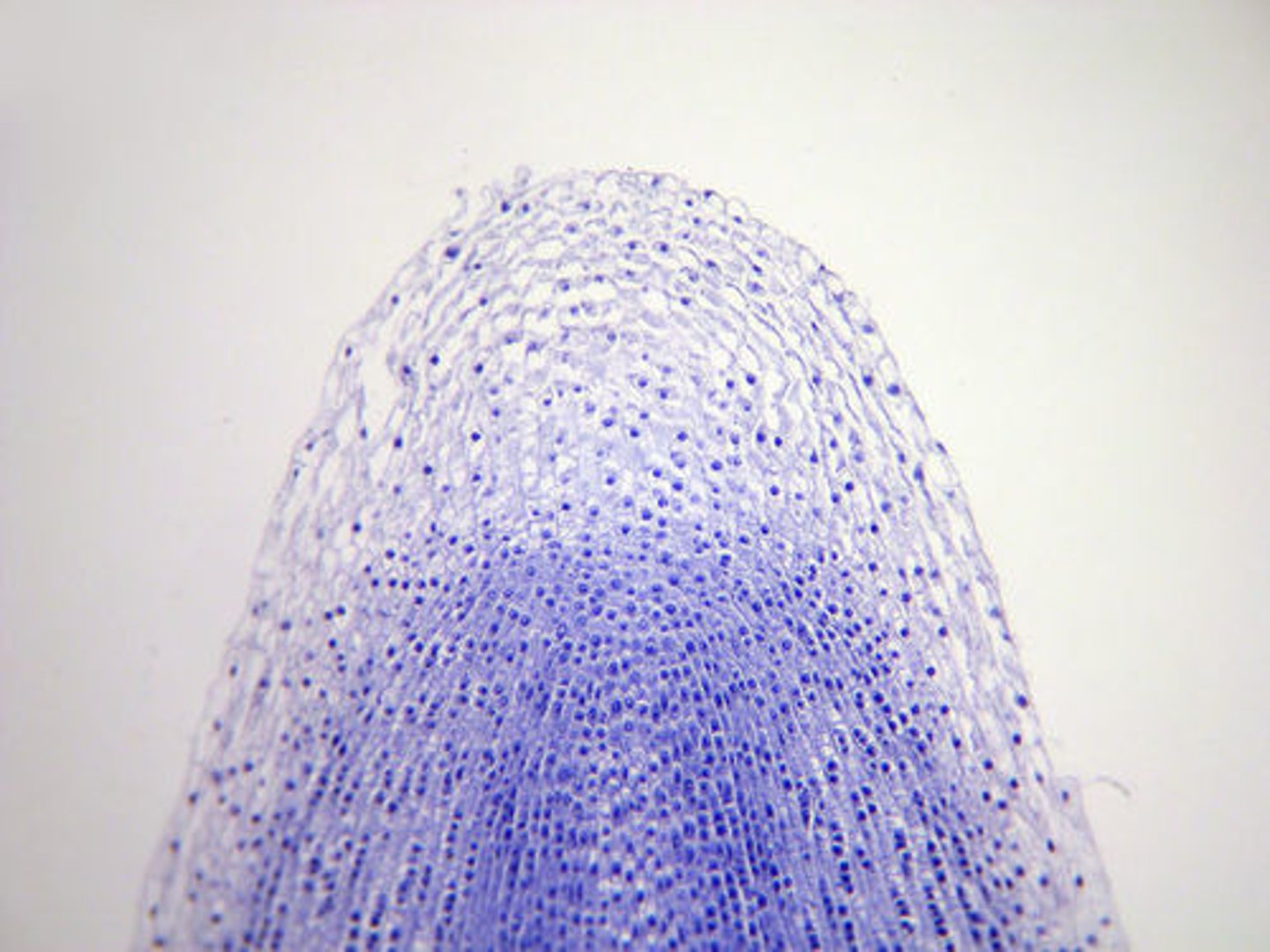
Which cells are areas of actively dividing, mitotic cells, causing growth?
meristematic cells
Growth at the apical meristems is called what?
primary growth
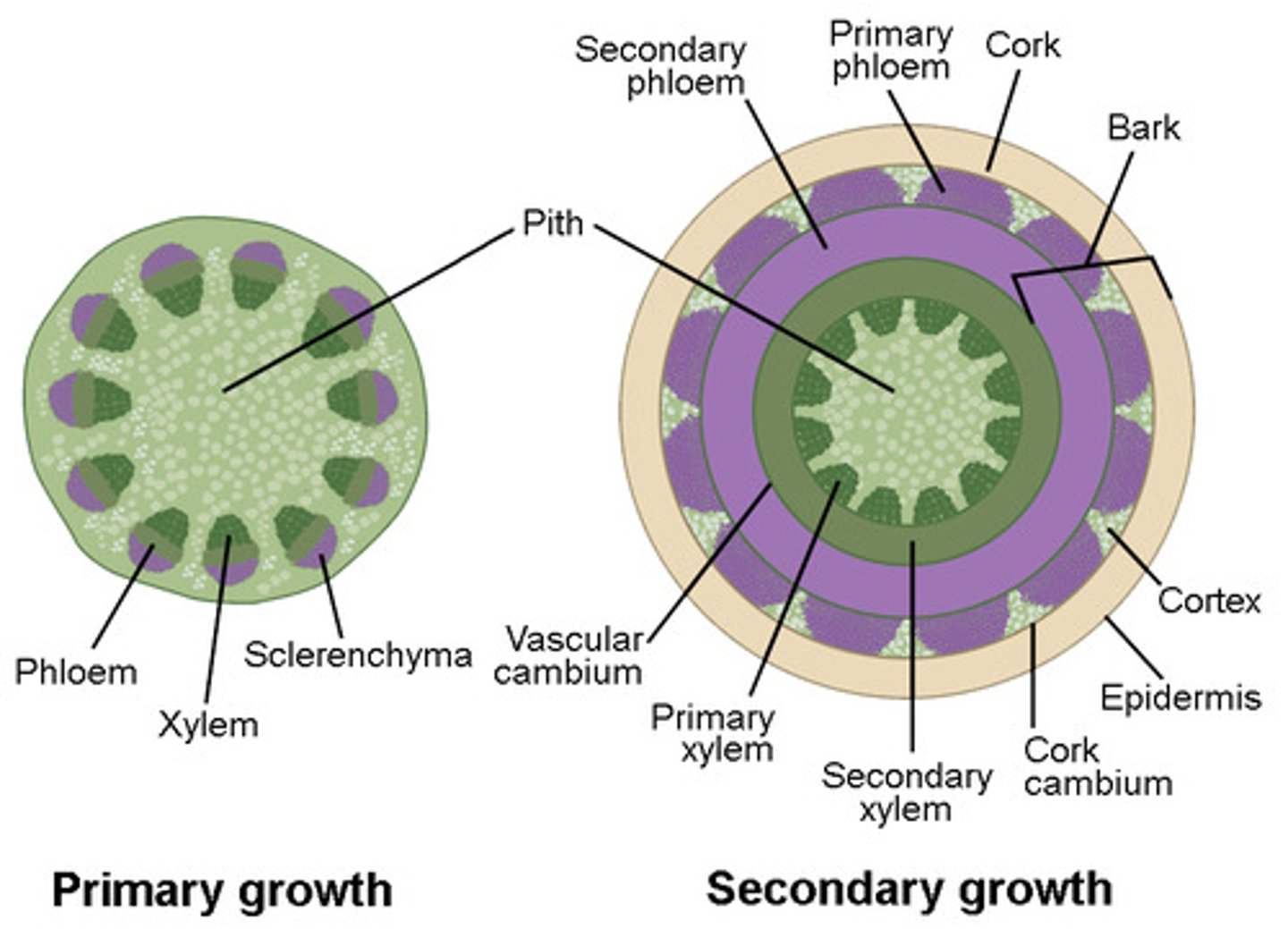
What does primary growth produce?
primary xylem and
primary phloem
(Note: primary tissues)
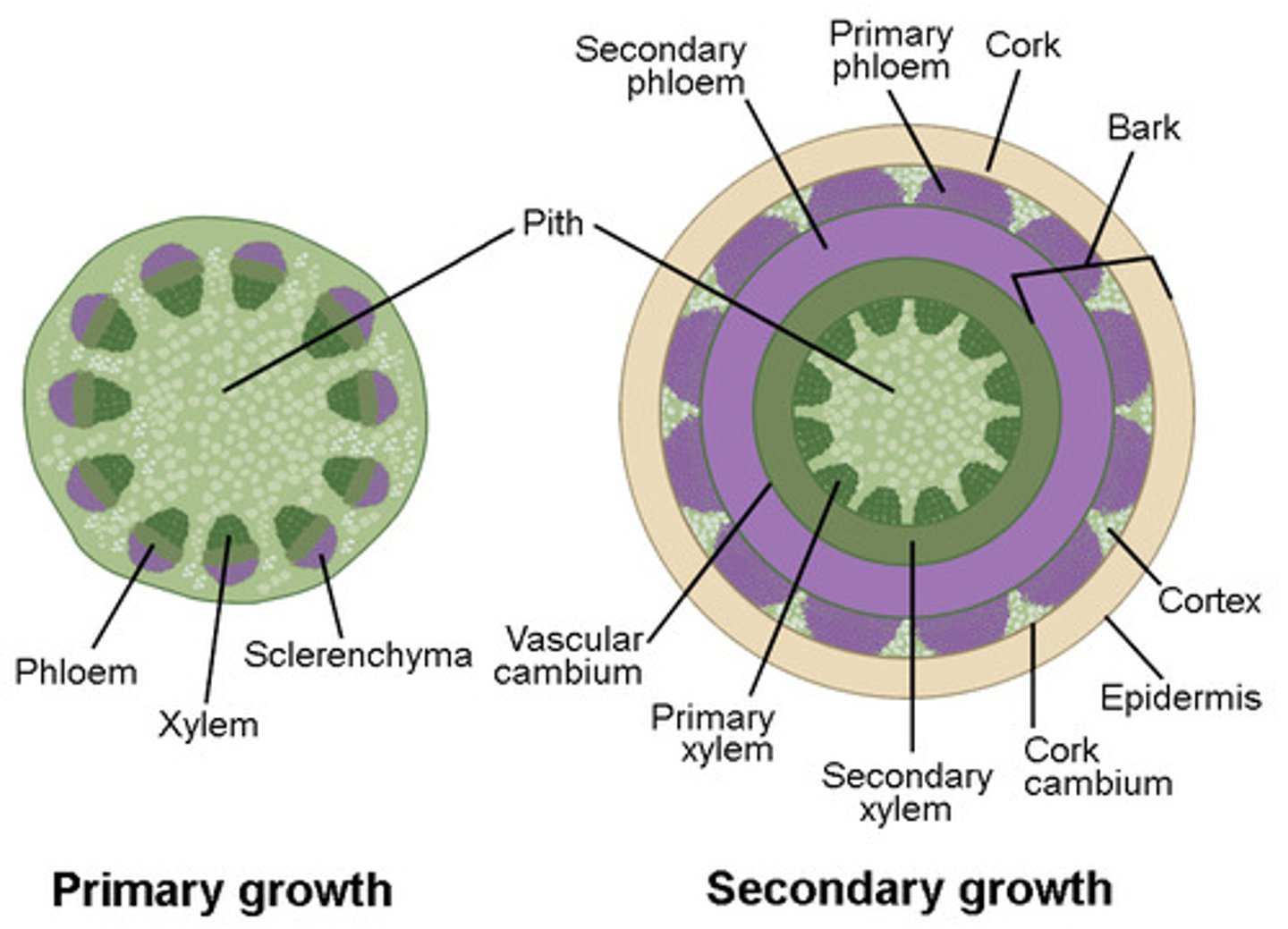
Which direction is apical growth?
vertical growth
Most plants, including most monocots, have which type of growth?
apical growth
What structures can be found on the sides of plants which cause growth in thickness and width?
lateral meristems
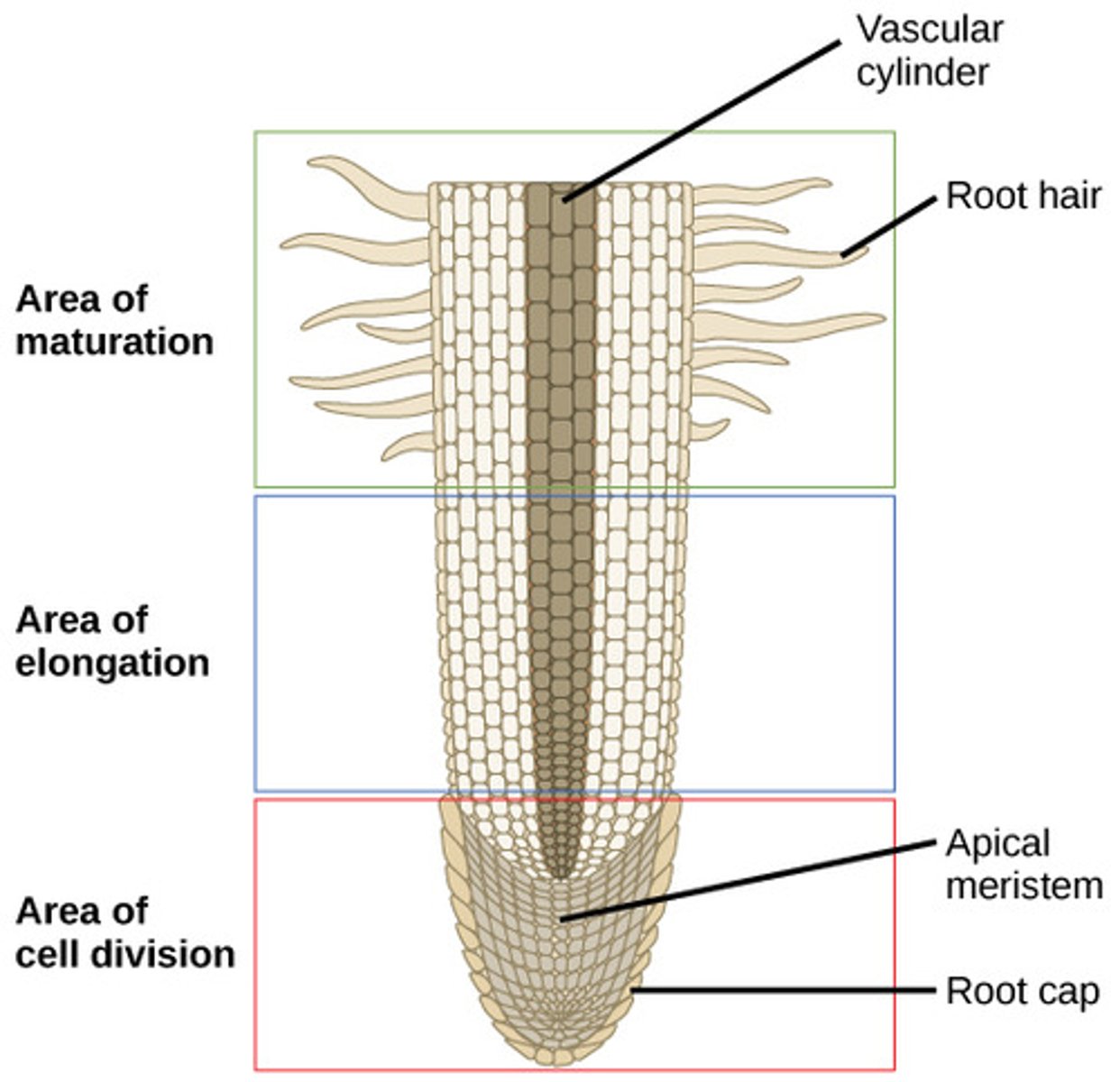
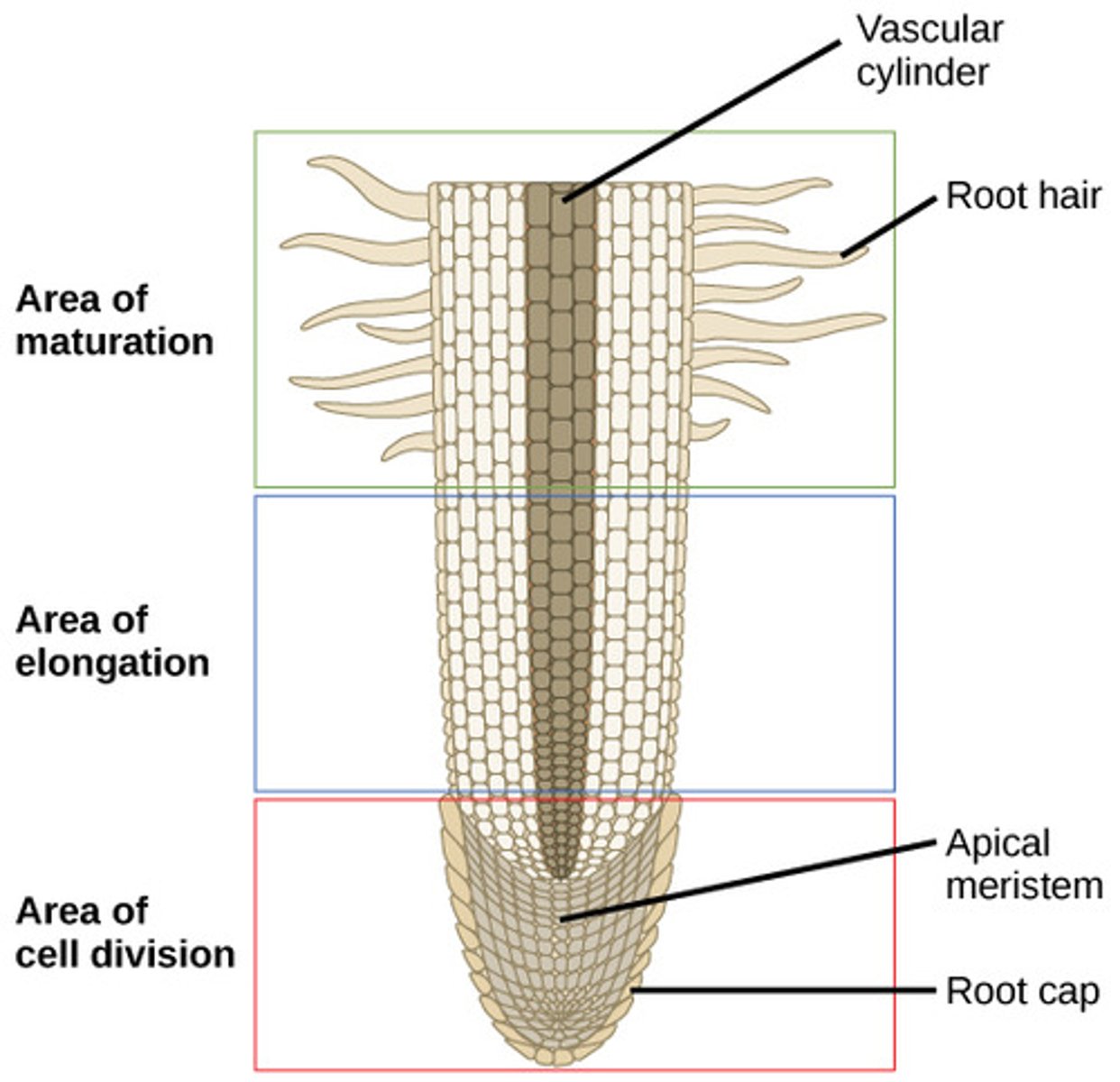
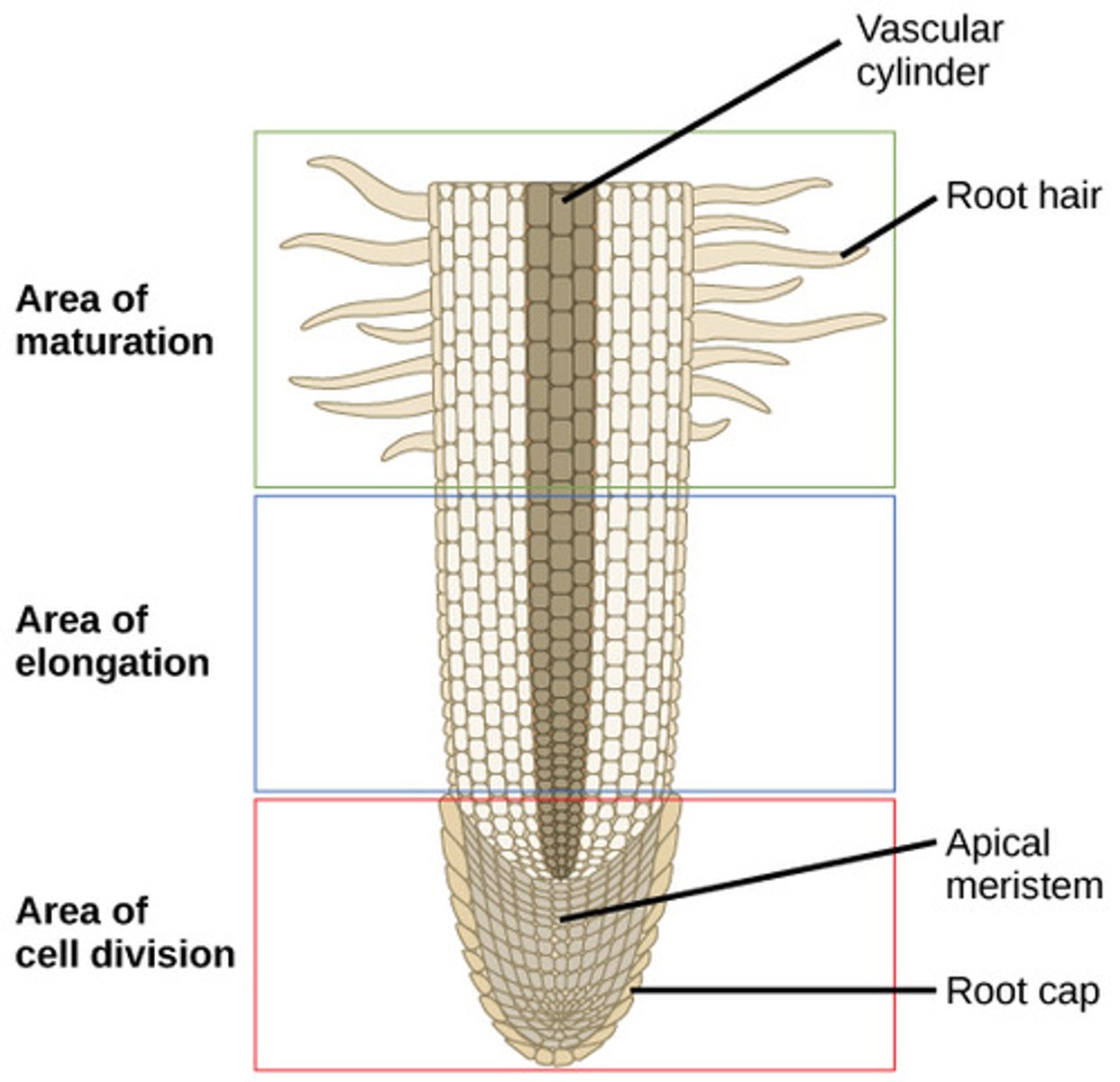
Which section of root growth protects the apical meristem behind it while secreting polysaccharides to permit root growth?
root cap
(AKA: root tip)
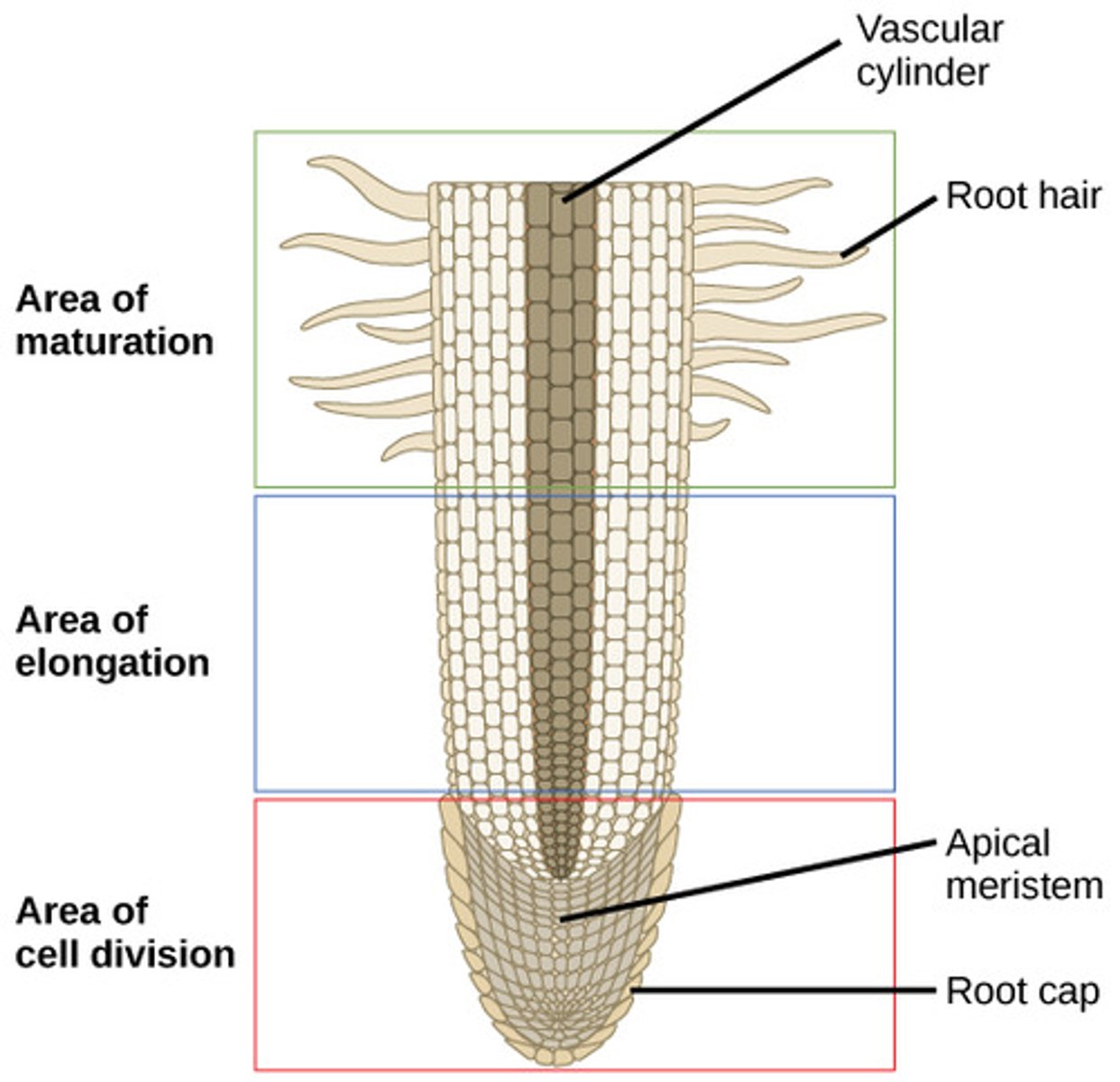
Which section of root growth is formed from the dividing cells of the apical meristem?
zone of cell division
(Note: This zone
is right above the
apical meristem)
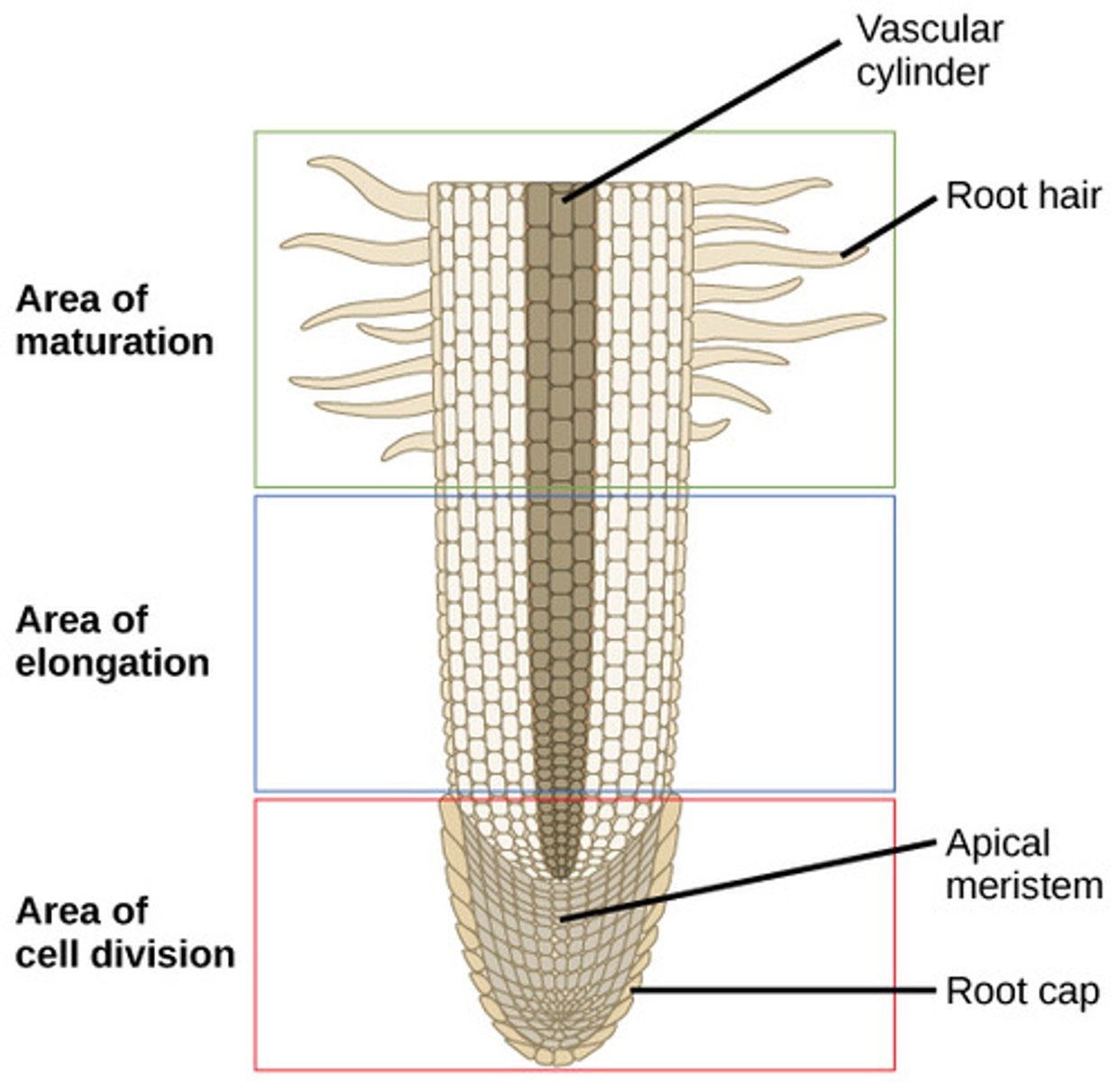
Which section of root growth is caused by the absorption of water and resulting elongation of the new cells from the zone of cell division?
zone of elongation
(Note: responsible
for our perception
of plant growth)
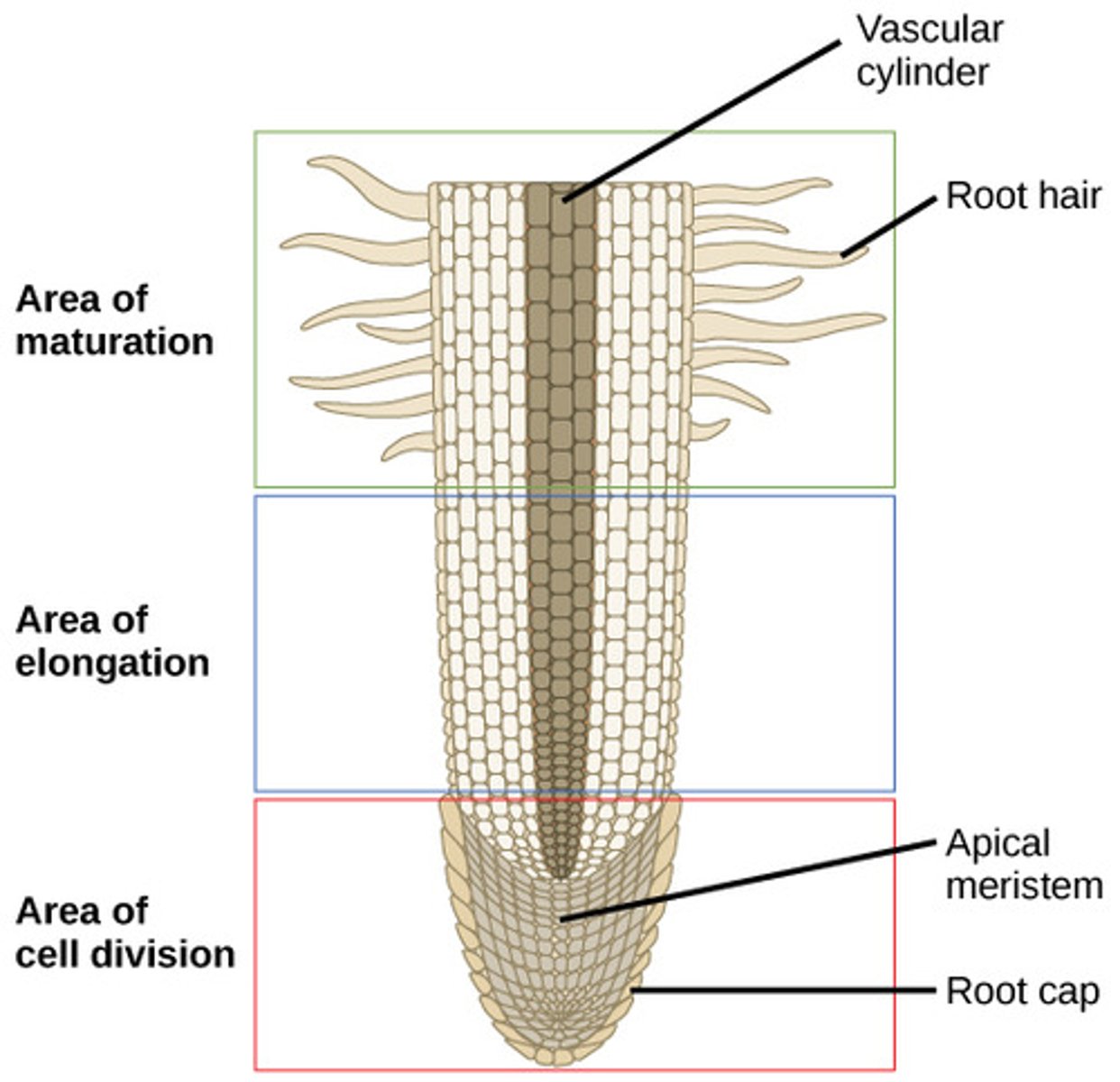
Which section of root growth differentiates and matures into the xylem, phloem, parenchyma, or epidermal cells?
zone of maturation
(Note: root hairs may grow here)
Conifers and woody dicots undergo which type of growth in addition to primary growth?
secondary growth
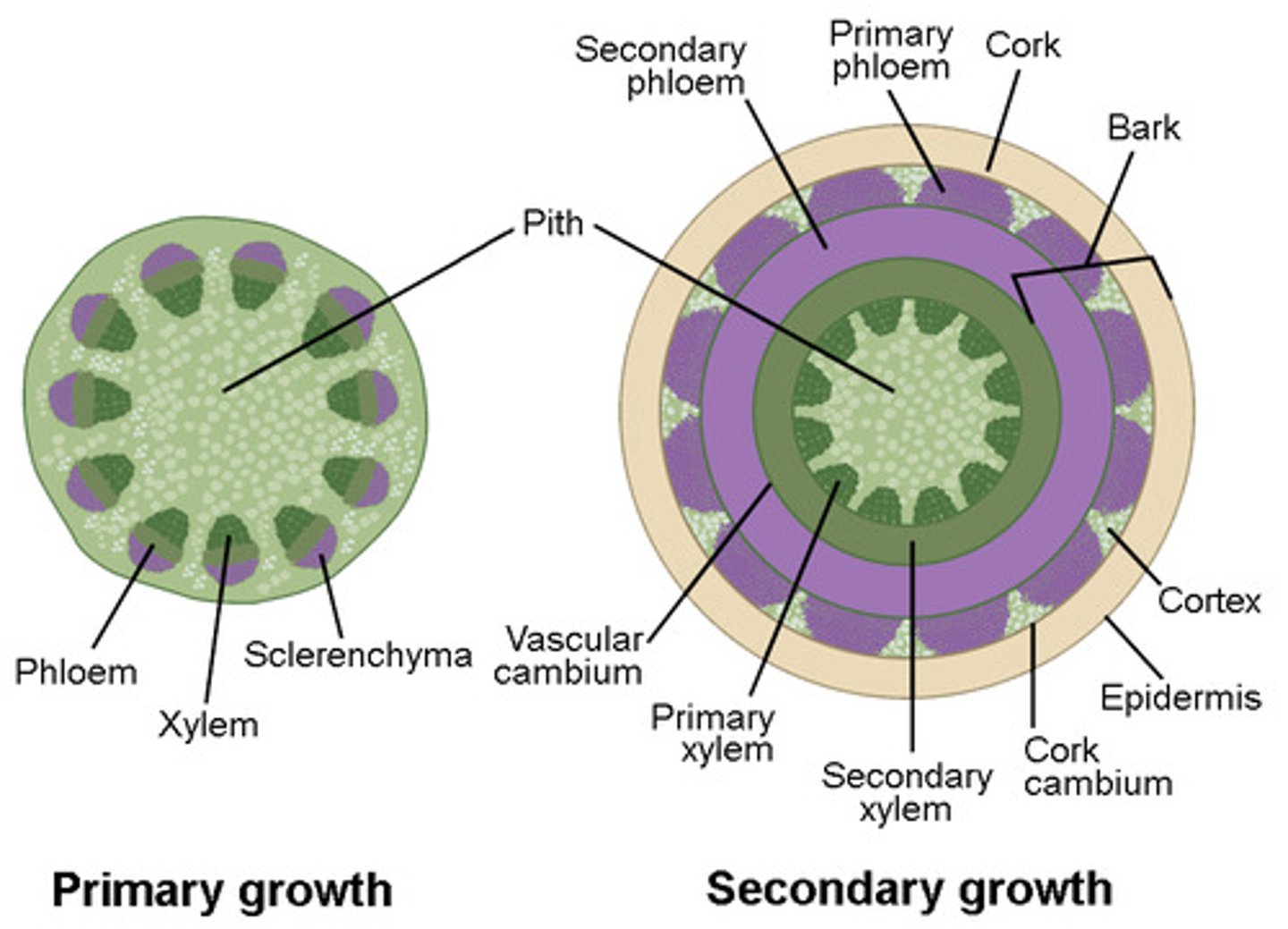
What is the function of secondary growth?
increase girth
(Note: origin of
woody plant tissues)
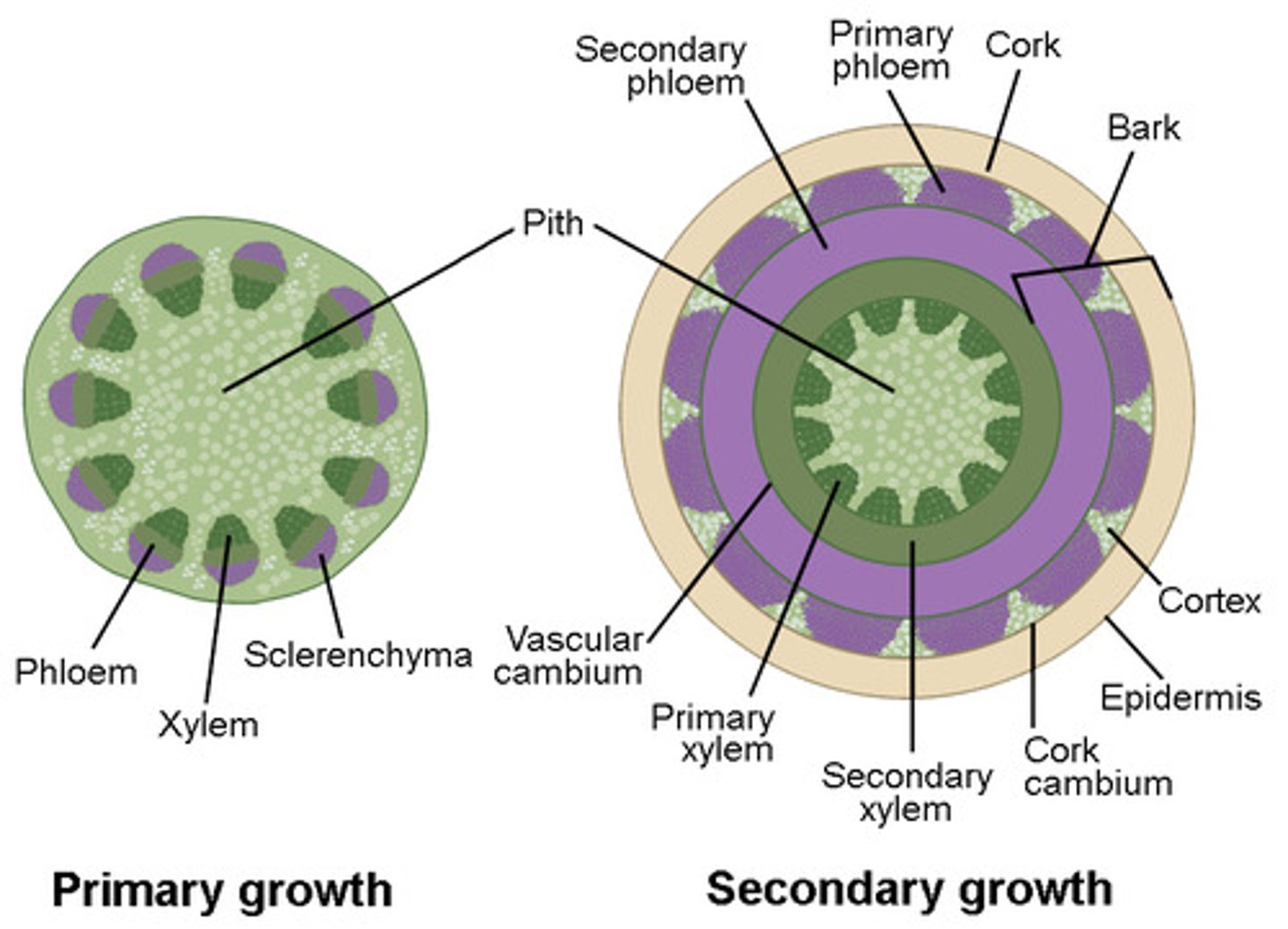
Where does secondary growth occur?
1. vascular cambium
(secondary xylem and phloem)
2. cork cambium
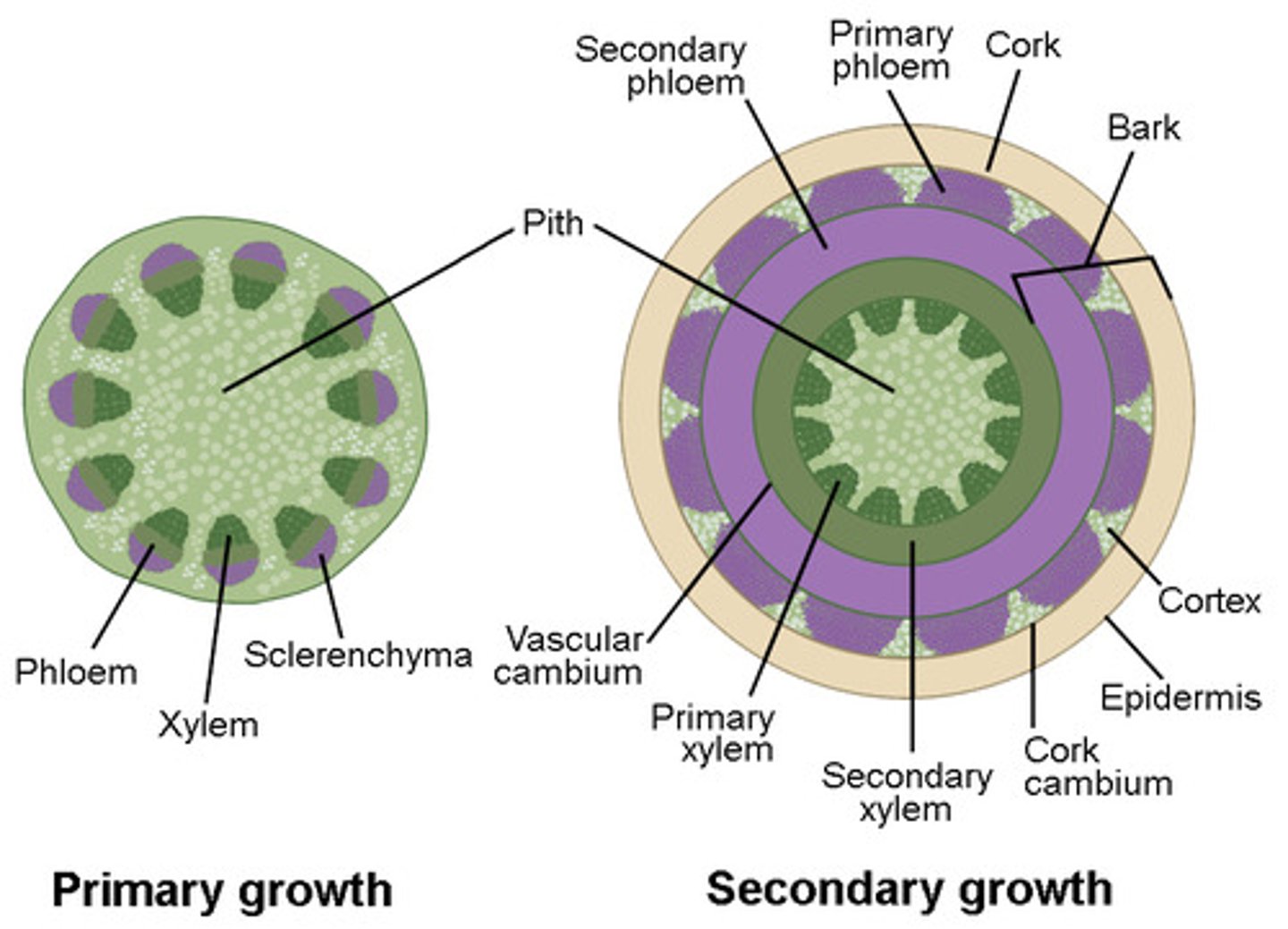
What structure gives rise to periderm-protective material that lines the outside of woody plants?
cork cambium
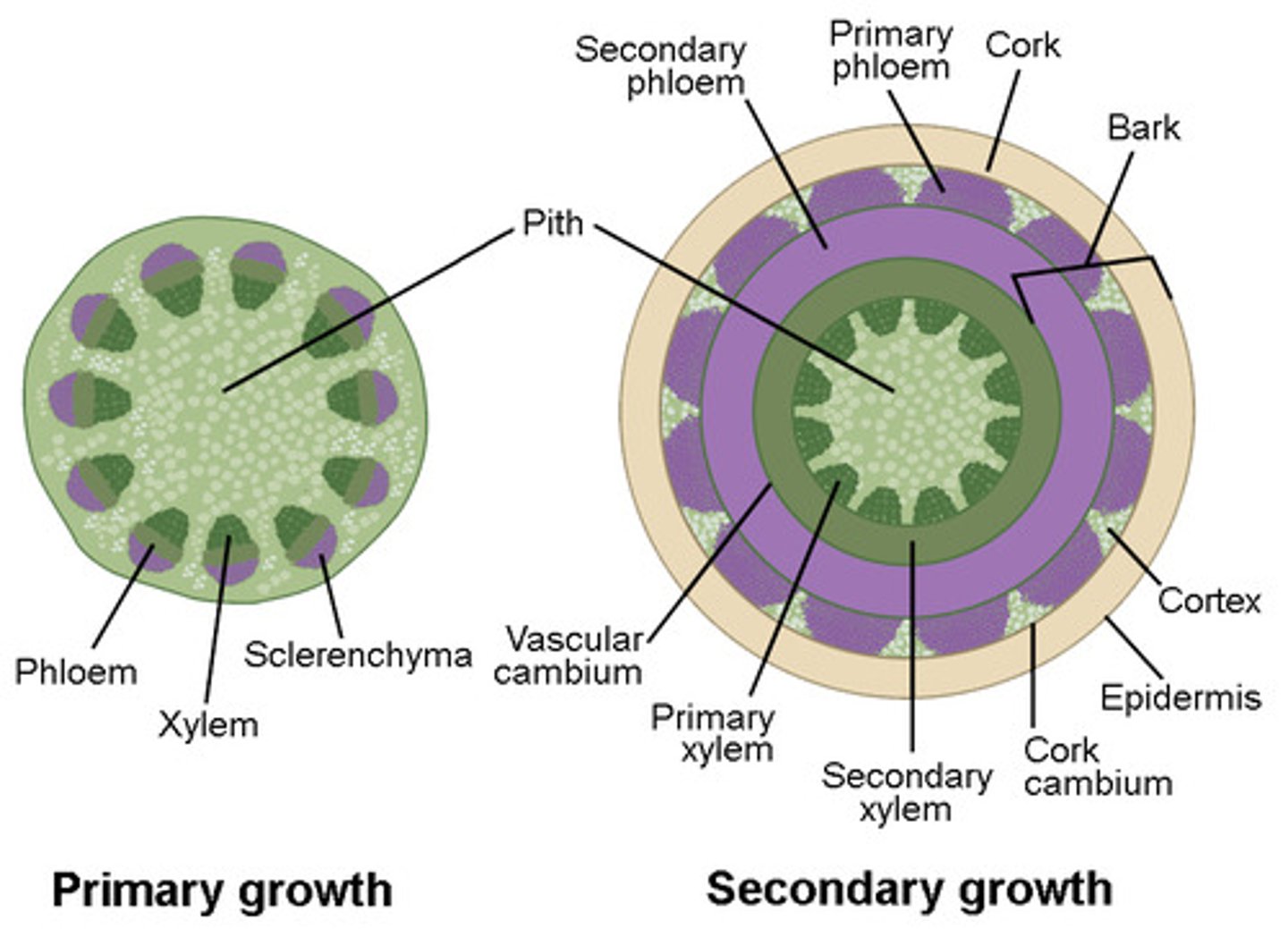
Which root structure lines the outside surface of the root?
epidermis
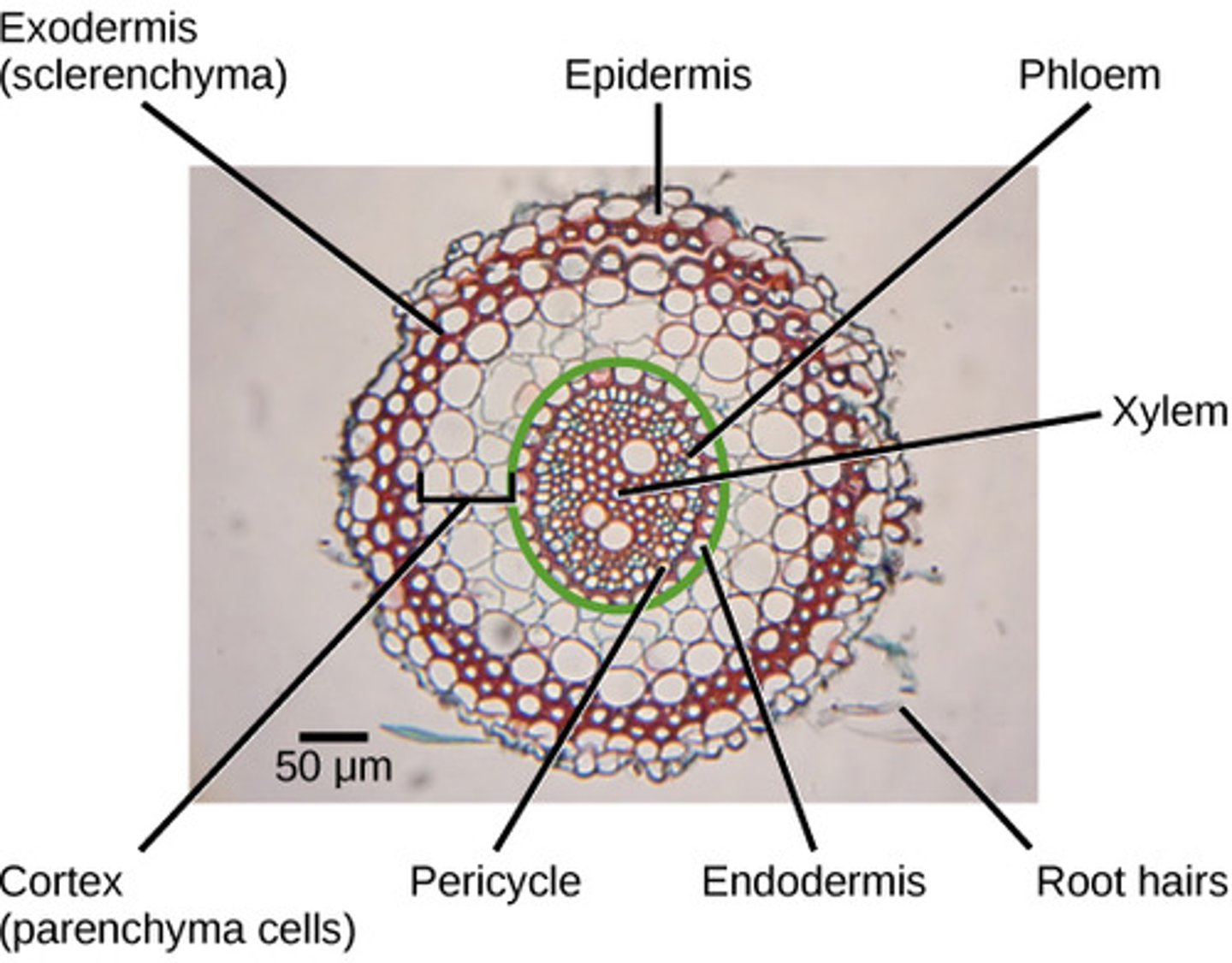
What structures does the epidermis produce in the zone of maturation?
root hairs
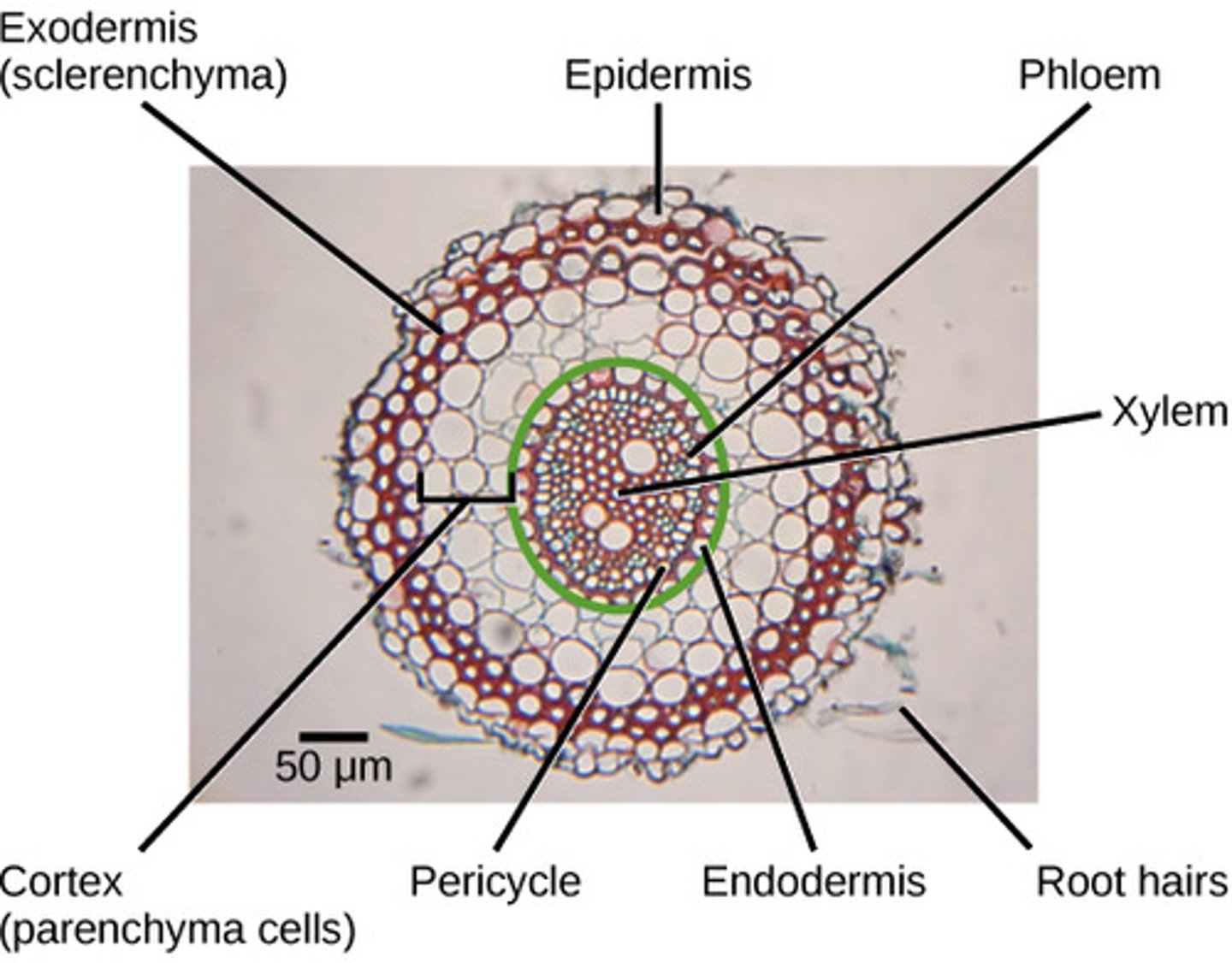
What happens to root hairs as the zone of maturation ages?
they die
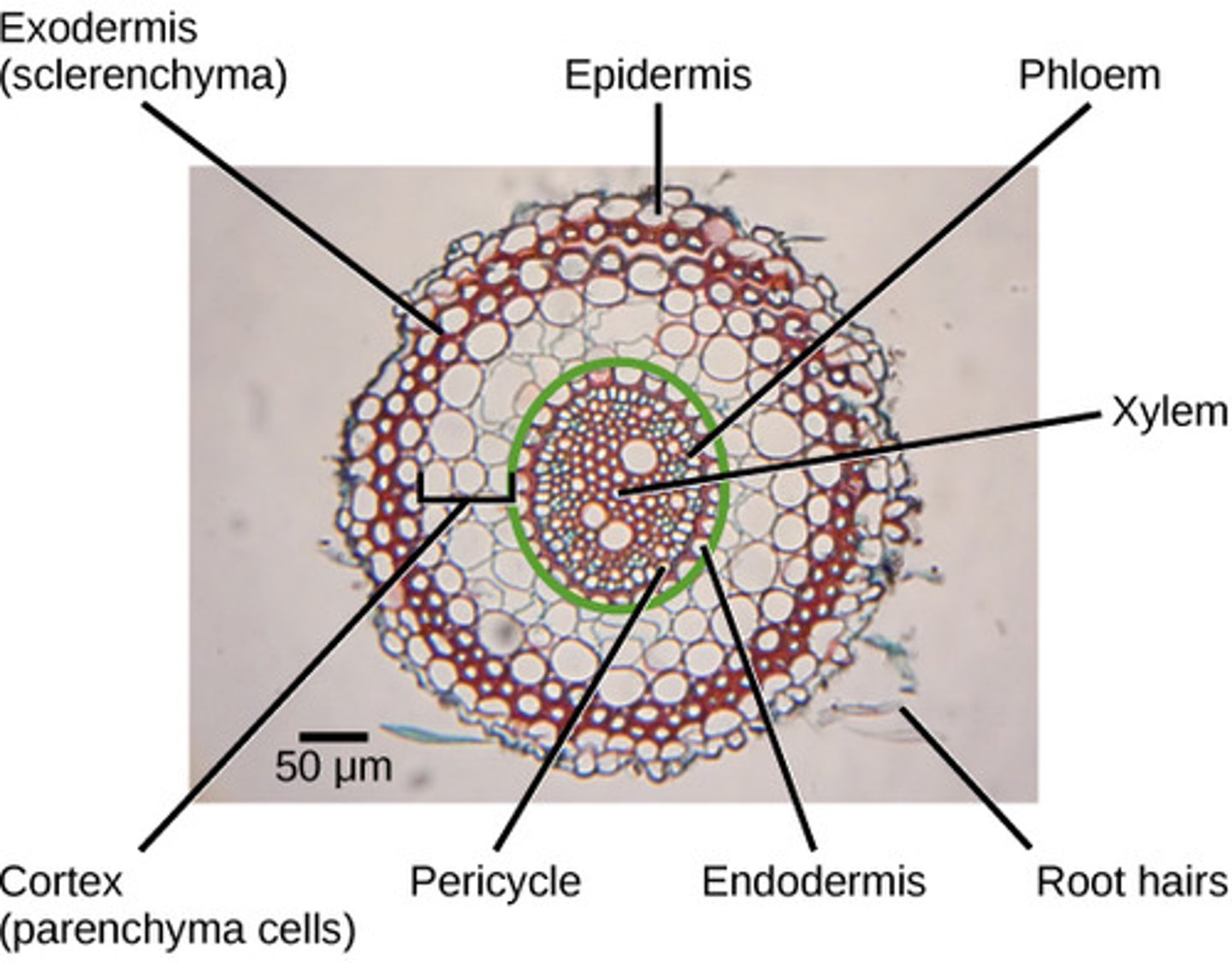
As the zone of maturation ages, which cells become the new zone of maturation?
new epidermal cells
from the zone of elongation
(Note: become new root
hairs to absorb water)
What is the function of old epidermis?
protect the root
Which root structure makes up the bulk of the root?
cortex
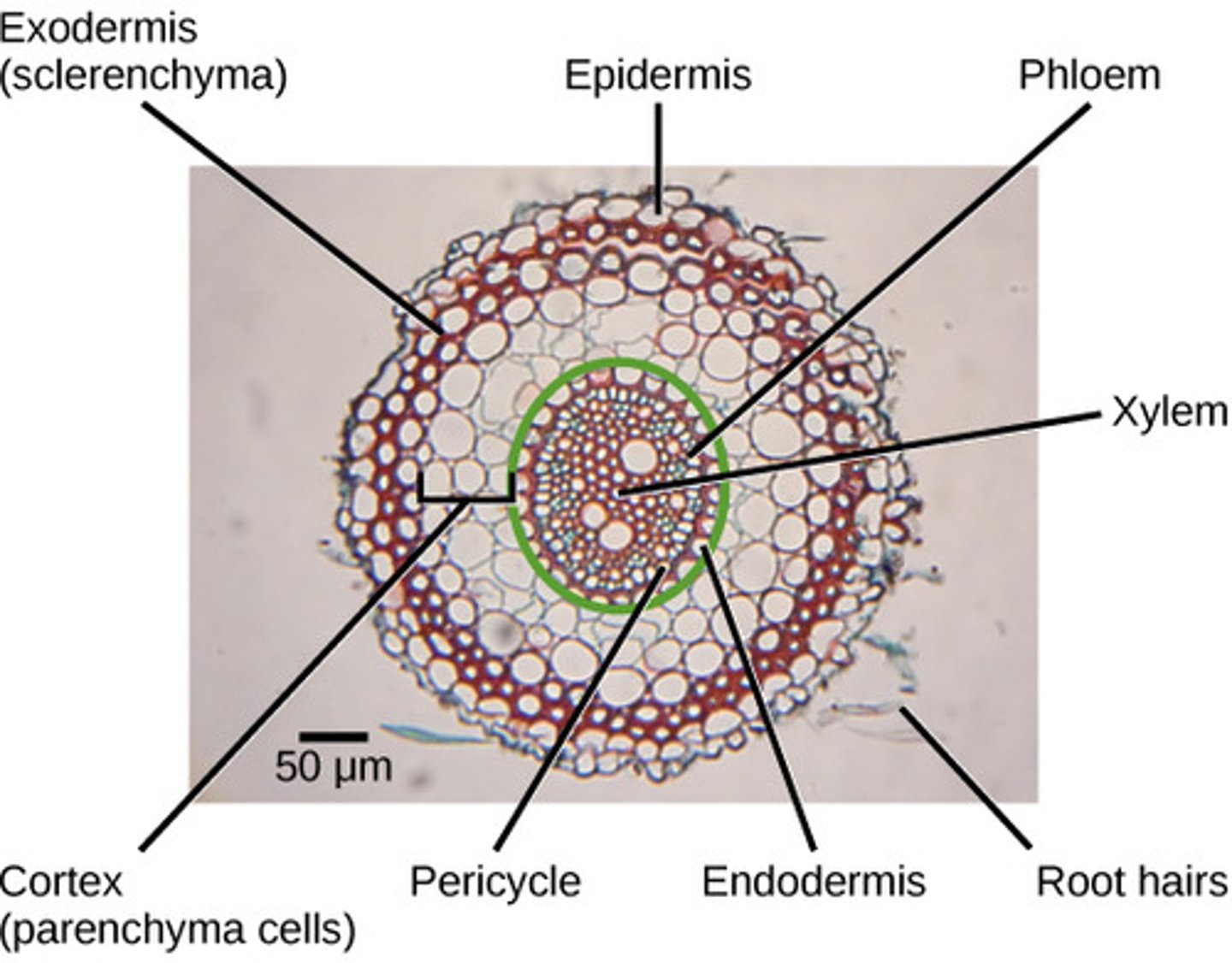
What is the function of the cortex?
1. stores starch
2. contains intercellular
spaces allowing aeration
for respiration
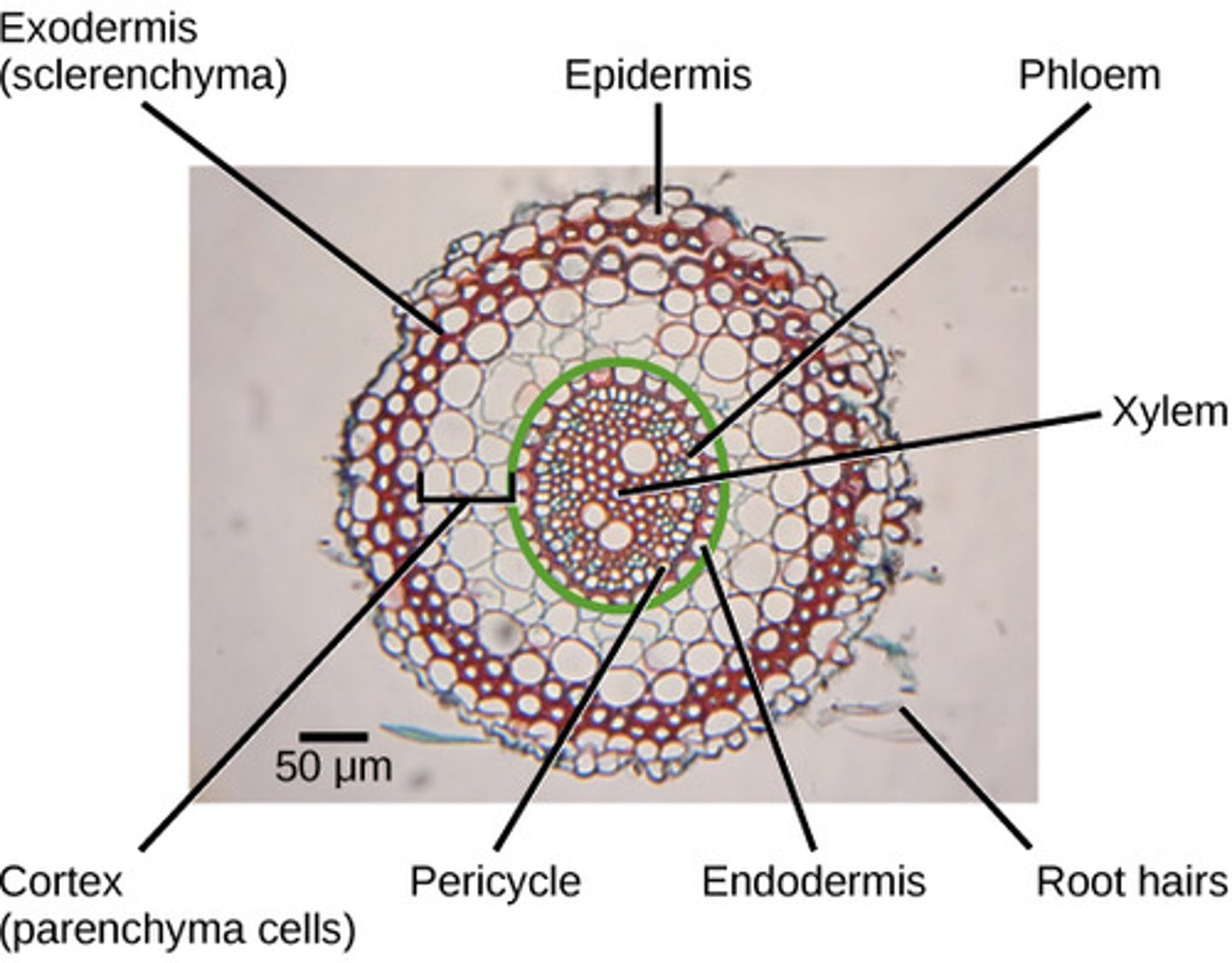
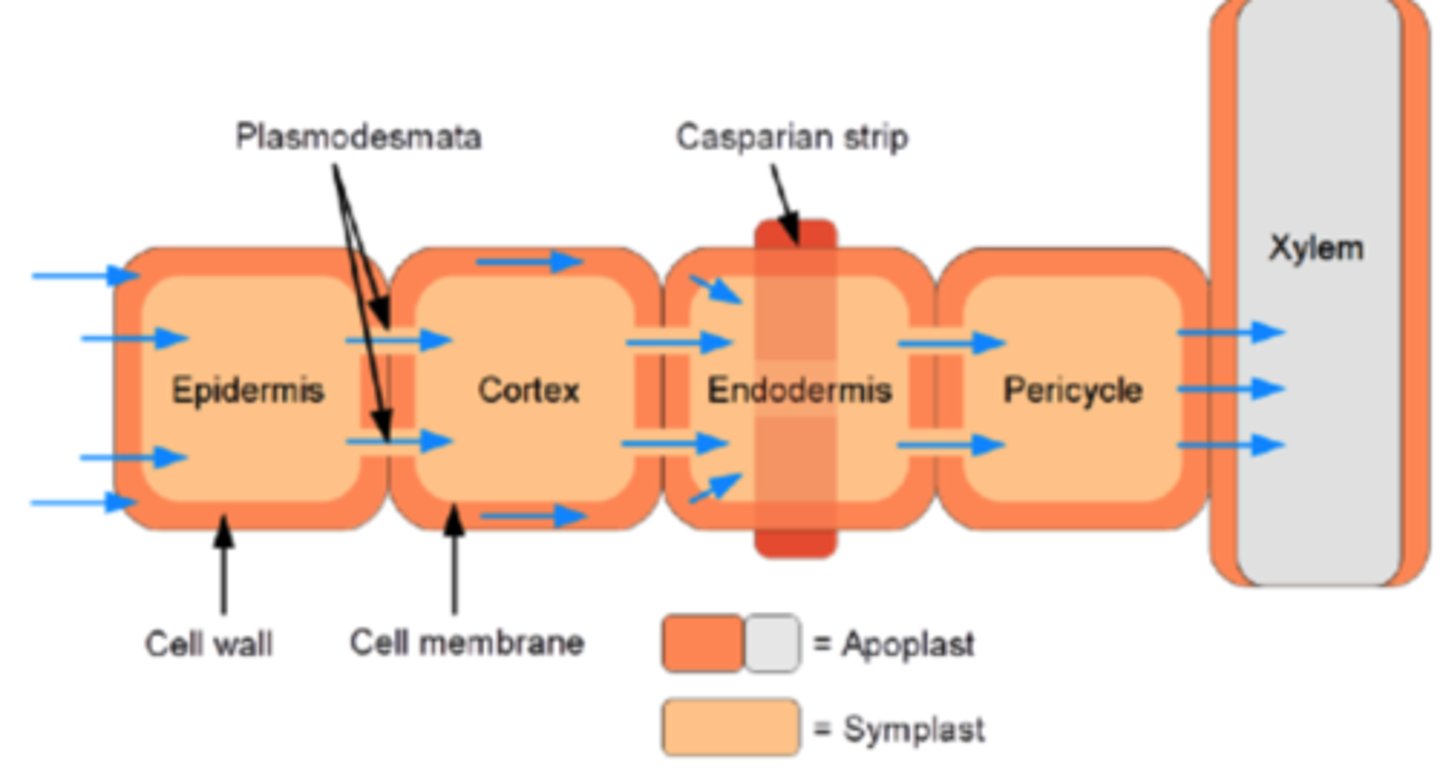
What root structure is a ring of tightly packed cells at the inner-most portion of the cortex?
endodermis
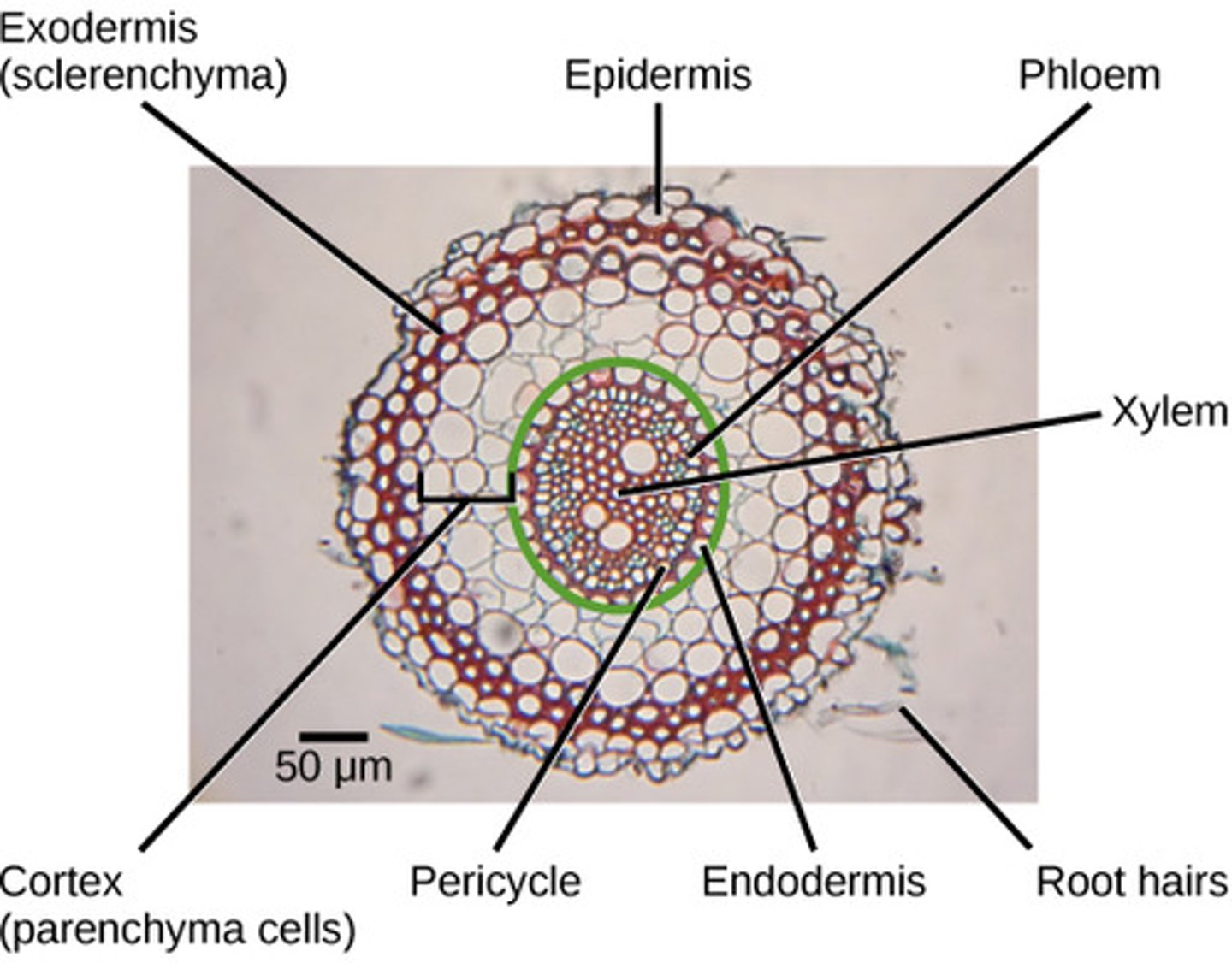
In the endodermis, a band of fatty material (suberin) impregnates endodermal cell walls to form an encircling band called what?
Casparian strip
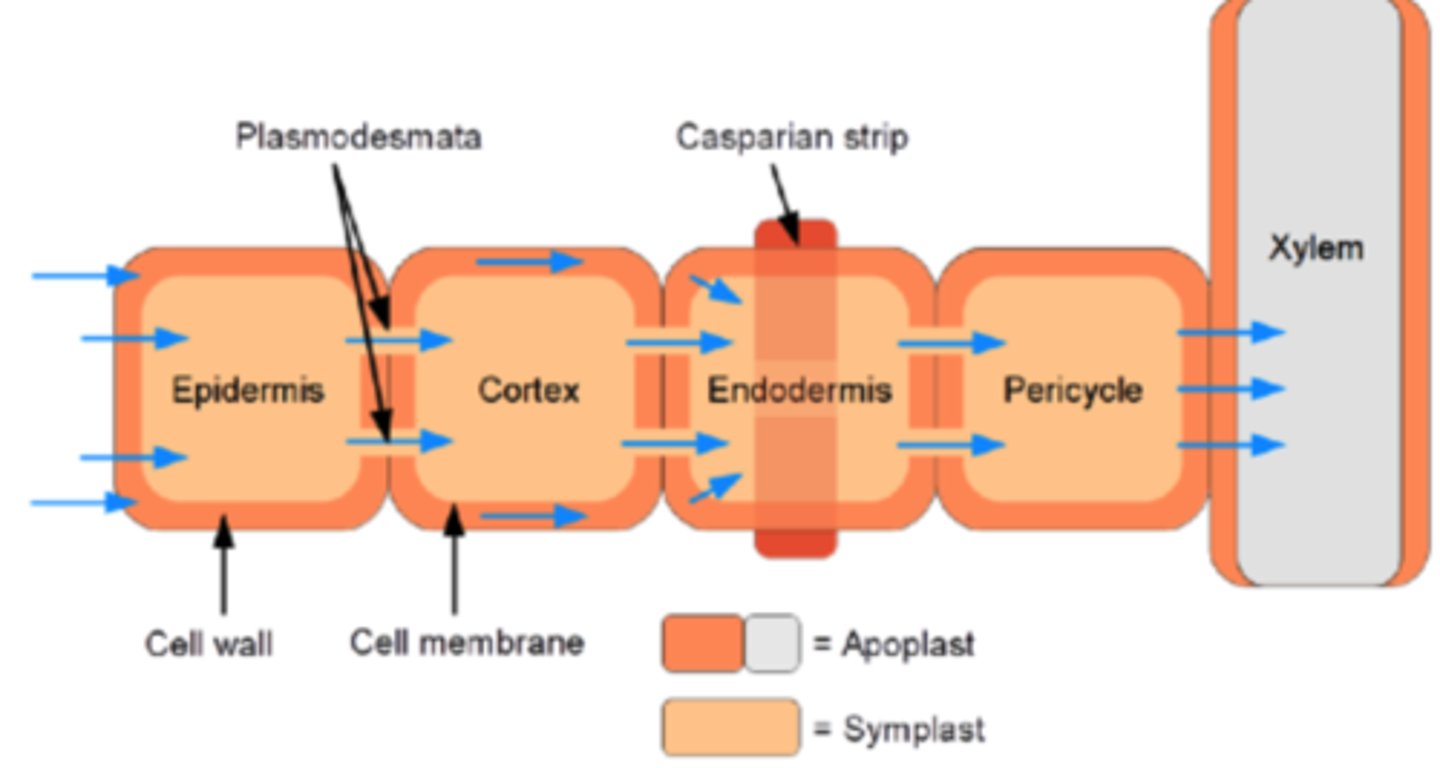
What is the function of the Casparian strip?
creates a water-impenetrable
barrier between cells
(Note: prevents water from
moving back out of the cortex)
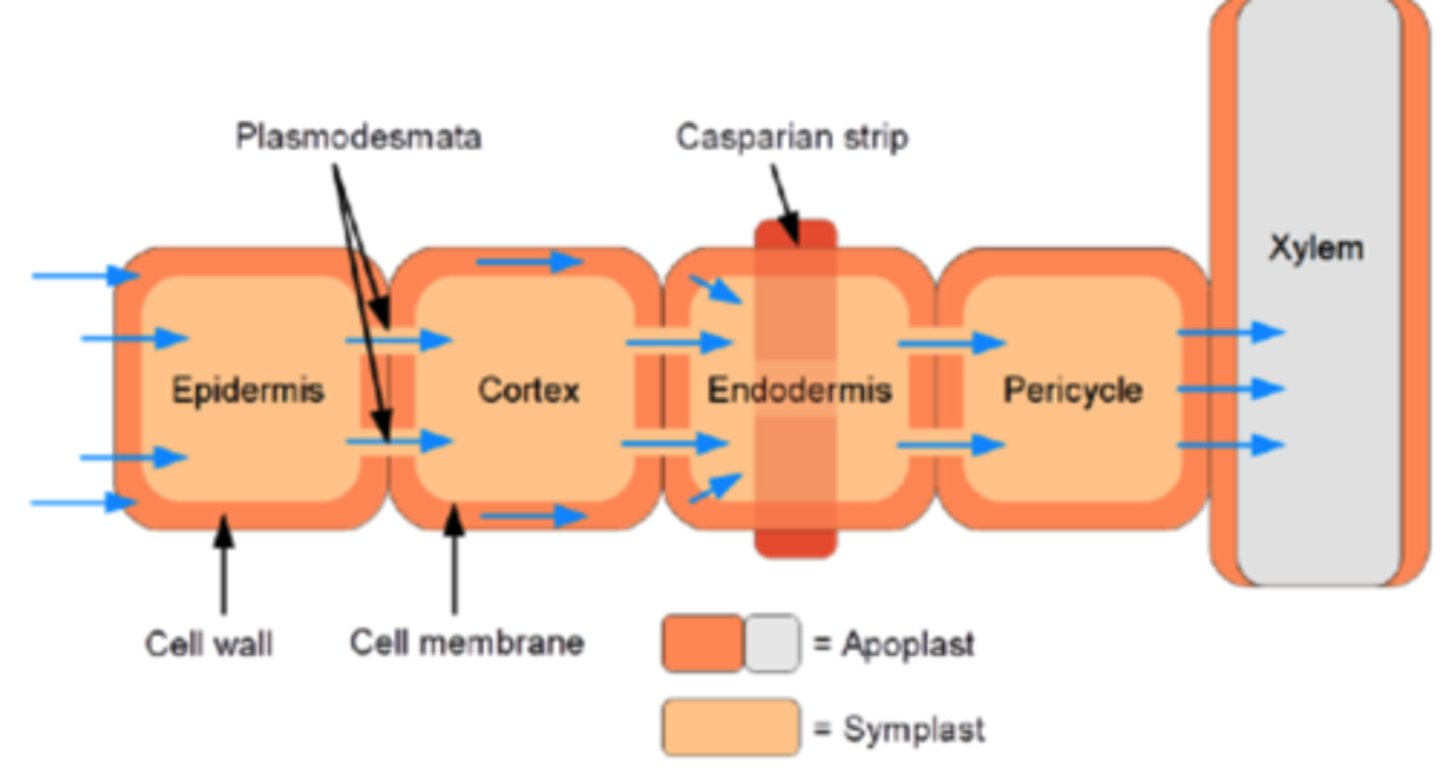
Due to the Casparian strip, what location must water in the endodermis pass through?
cytoplasm of endodermal cells
(Note: water must be filtered)
What root structure is made up of vascular tissue and the pericycle?
vascular cylinder (stele)
 Note
Note  Flashcards (101)