Mongols
Summary
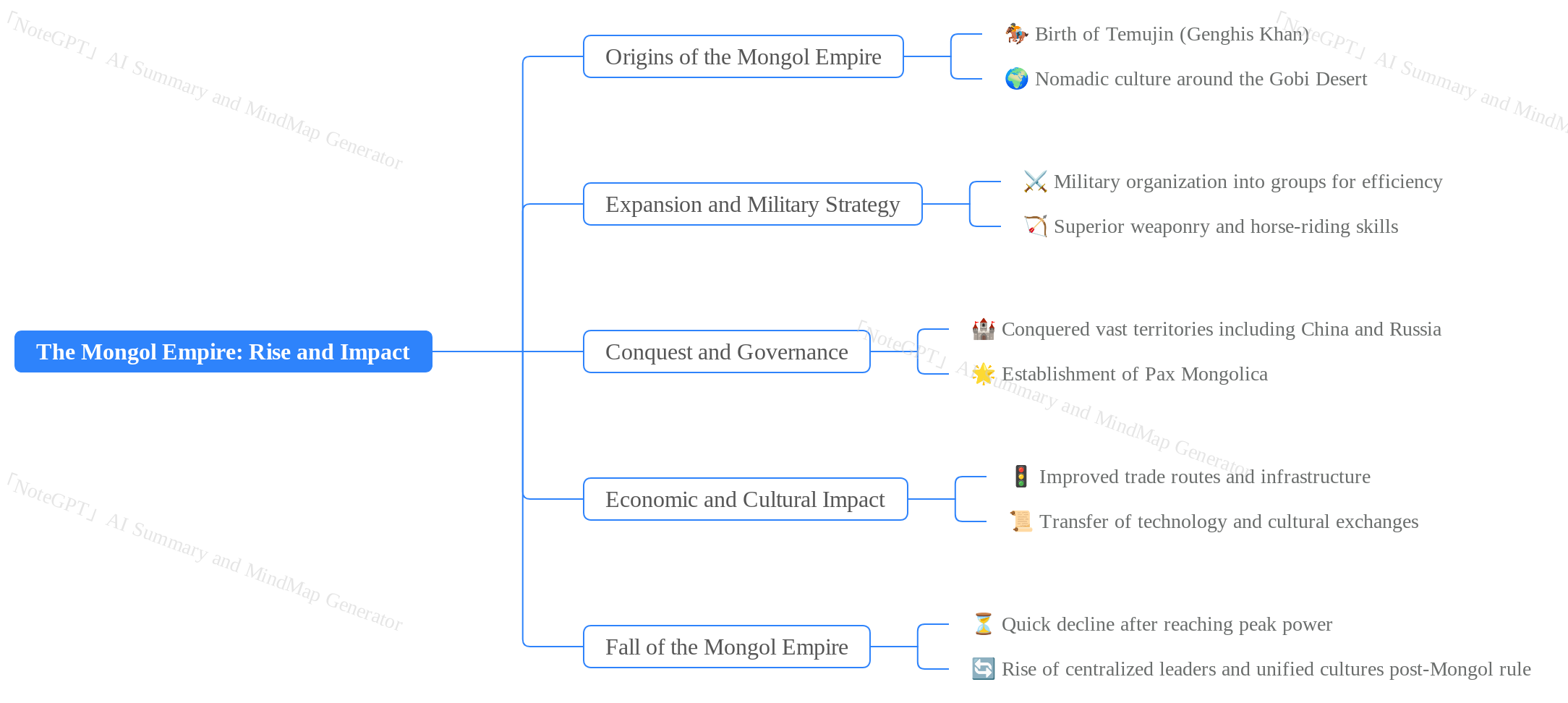
The Mongol Empire, founded by Genghis Khan, became the largest contiguous land-based empire, known for its military prowess, trade facilitation, and cultural exchanges.
Highlights
🏇 Genghis Khan united Mongol tribes and established the largest contiguous empire.
🌍 The Mongol Empire expanded rapidly, conquering vast territories across Asia.
⚔ Superior military organization and weaponry contributed to their success.
📜 The Pax Mongolica facilitated trade and communication along the Silk Roads.
🏗 Infrastructure improvements under Mongol rule enhanced trade routes.
🤝 Cultural and technological exchanges thrived due to Mongol conquests.
💔 The empire’s rapid decline led to the rise of centralized powers in its former territories.
Key Insights
🏇 Genghis Khan’s Leadership: Temujin, later Genghis Khan, united the Mongol tribes through strategic alliances and military victories, showcasing exceptional leadership skills. His rise to power marked a significant shift in the political landscape of Mongolia.
🌍 Territorial Expansion: The Mongol Empire stretched across Asia, reaching Northern China, Central Asia, and Russia, illustrating the effectiveness of their military strategies against larger, established empires.
⚔ Military Innovations: The Mongols utilized advanced military organization and superior archery skills. Their ability to shock and awe opponents often led to victories despite being outnumbered.
📜 Pax Mongolica: The era of peace under Mongol rule promoted trade and cultural exchanges, leading to increased connectivity across Eurasia, benefiting economies and societies.
🏗 Infrastructure Development: The Mongols repaired roads and built bridges, enhancing trade flow and ensuring the safety of merchants, which was crucial for the prosperity of the Silk Roads.
🤝 Cultural Exchange: The Mongol policy of sparing skilled artisans and intellectuals allowed for a rich transfer of knowledge, technology, and culture, impacting various regions they controlled.
💔 Legacy of Decline: The swift fall of the Mongol Empire paved the way for new centralized powers, indicating how the shifts in dominance influenced the political evolution of the regions involved.