Pelvic Cavity
 Call Kai
 Learn
Learn Practice Test
 Spaced Repetition
 Match
Match Flashcards
 Knowt Play
1/26

There's no tags or description
Looks like no tags are added yet.
Name | Mastery | Learn | Test | Matching | Spaced | Call with Kai |
|---|
No analytics yet
Send a link to your students to track their progress
27 Terms
Where is the true/lesser pelvis? What does it contain?
The area between the pelvic inlet and pelvic outlet
Plevic organs: rectum, bladder, ureters, prostate and seminal vesicles (males), vagina + uterus + ovaries (females), blood vessels, lymphatics, nerves
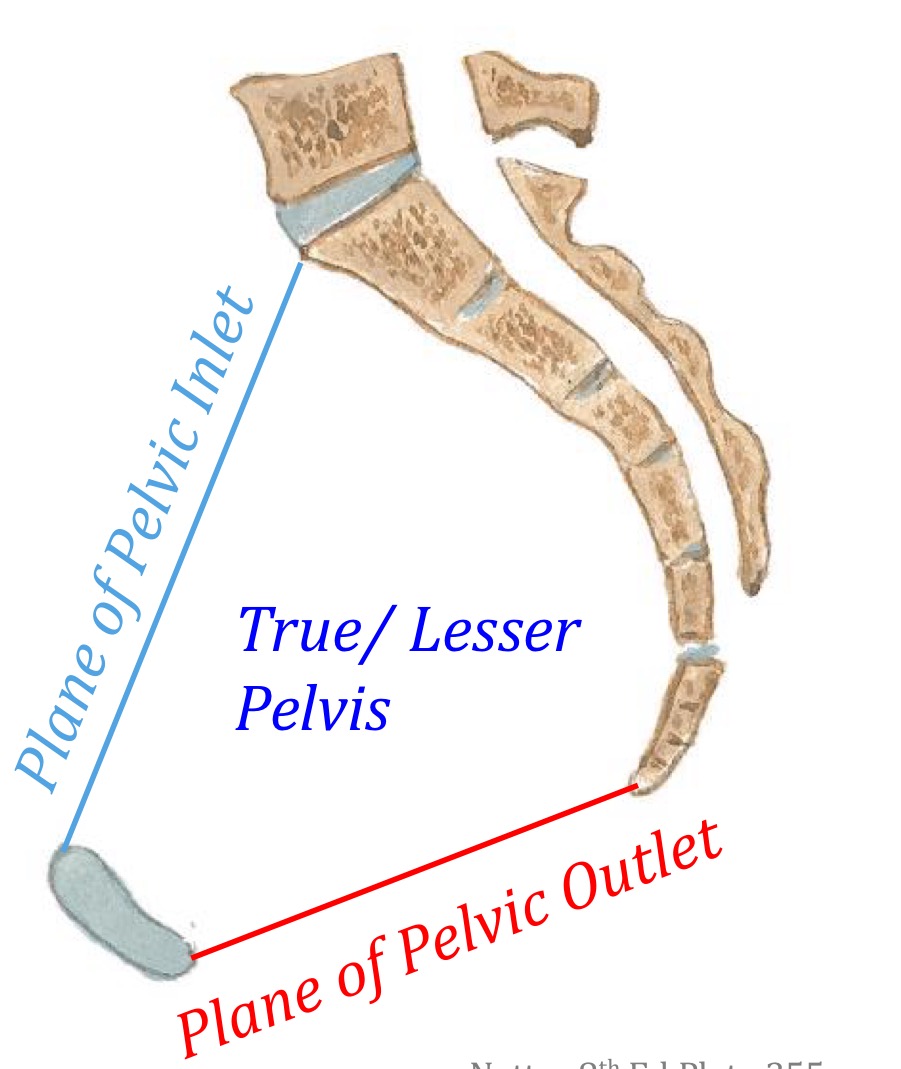
Where is the false/greater pelvis? What does it contain?
The area between the ala of the ilium
Abdominal organs: ileum loops, portions of the ascending, descending, and sigmoid colon, appendix, blood vessels, lymphatics, and nerves
The _________ delineates the pelvic inlet. What are its components?
Pelvic brim
Sacral promontory
Iliopubic eminence
Arcuate line
Superior pubic ramus / pectineal line
Sacral ala
Pubic symphysis
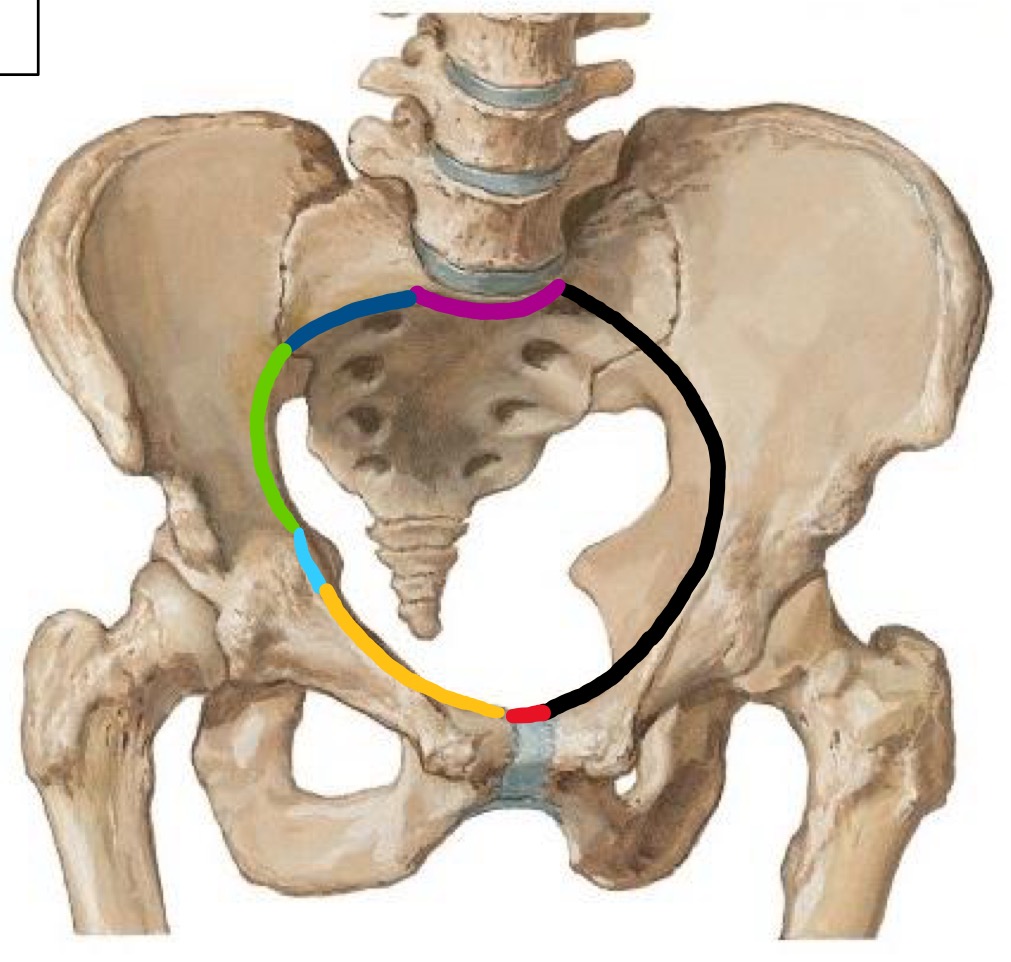
Identify the colored parts
Purple: sacral promontory
Dark blue: sacral ala
Green: arcuate line
Pale blue: iliopubic eminence
Orange: Superior pubic ramus / pectineal line
Red: pubic symphysis
What borders the pelvic outlet
Pubic symphysis
Ischiopubic rami
Ischial tuberosity
Sacrotuberous ligament
Coccyx
The pelvic diaphragm is the inferior muscular wall of the pelvic cavity. What muscle(s) make up this structure?
The levator ani — composed of 3 muscles:
Puborectalis: forms a sling around the lower rectum, acts in association with the external and internal anal sphincter in the process of defecation
Pubococcygeus: controls the flow of urine, helps reduce urinary incontinence
Iliococcygeus: forms the midline raphe after it meets the fibers from the opposite side, provides a secure anchoring point for the pelvic floor
What nerves innervate the levator ani?
nerve to the levator ani S3-S4
Pudendal nerve S2-S4
Inferior rectal nerve
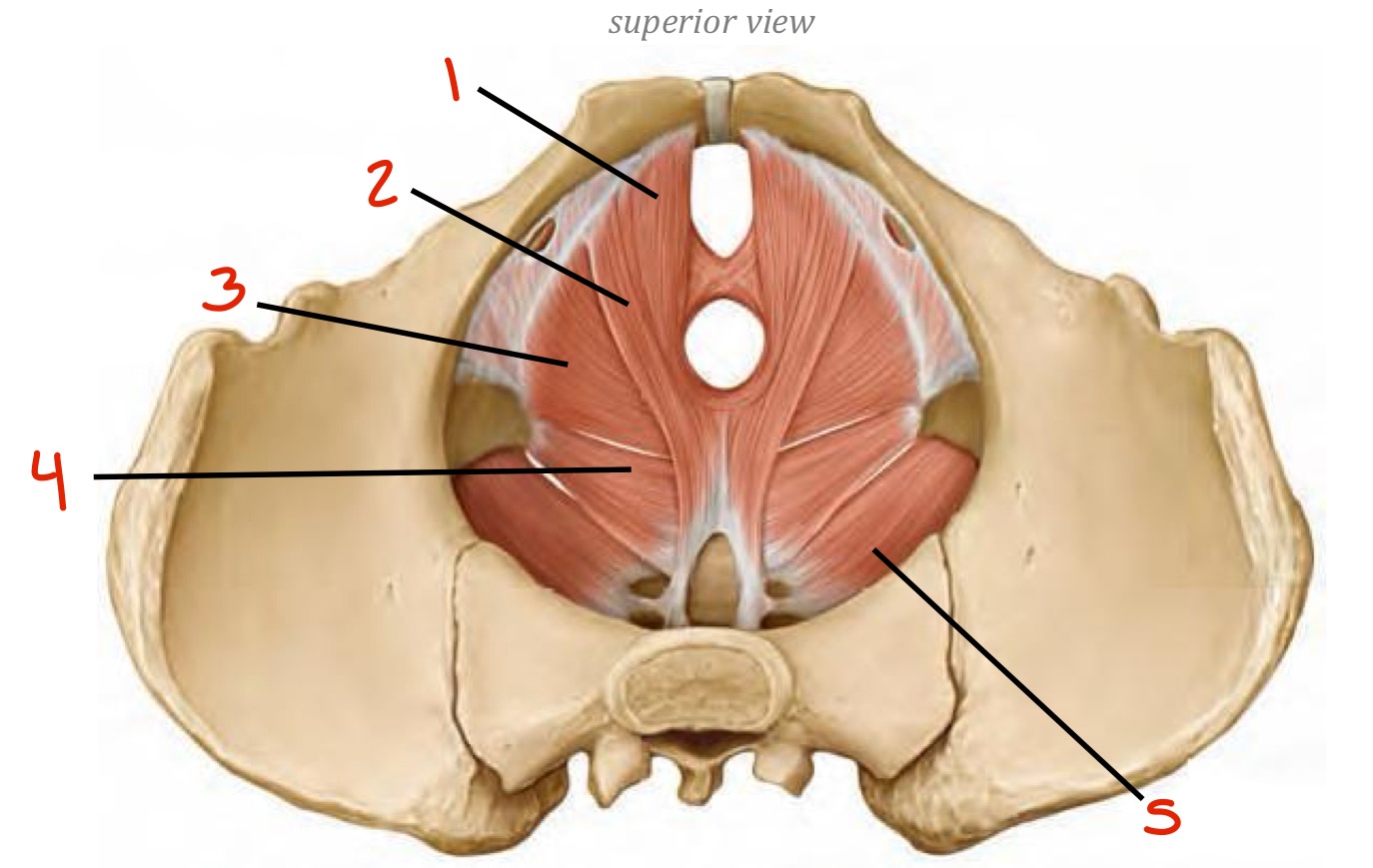
Identify
Puborectalis
Pubococcygeus
Iliococcygeus
Coccygeus
Piriformis
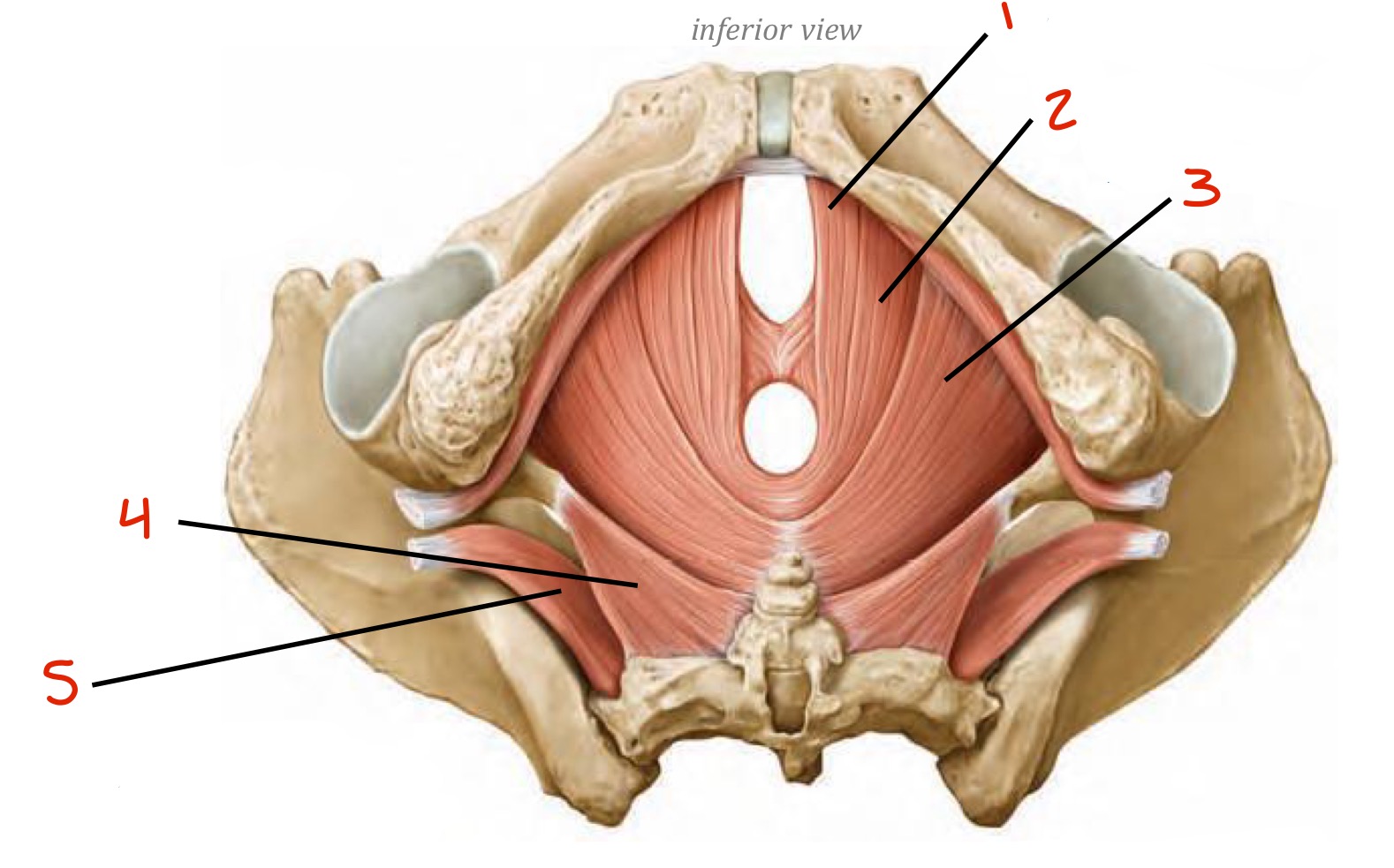
Identify
Puborectalis
Pubococcygeus
Iliococcygeus
Coccygeus
Piriformis
What nerve innervate Coccygeus muscle?
Pudendal nerve S2-S4
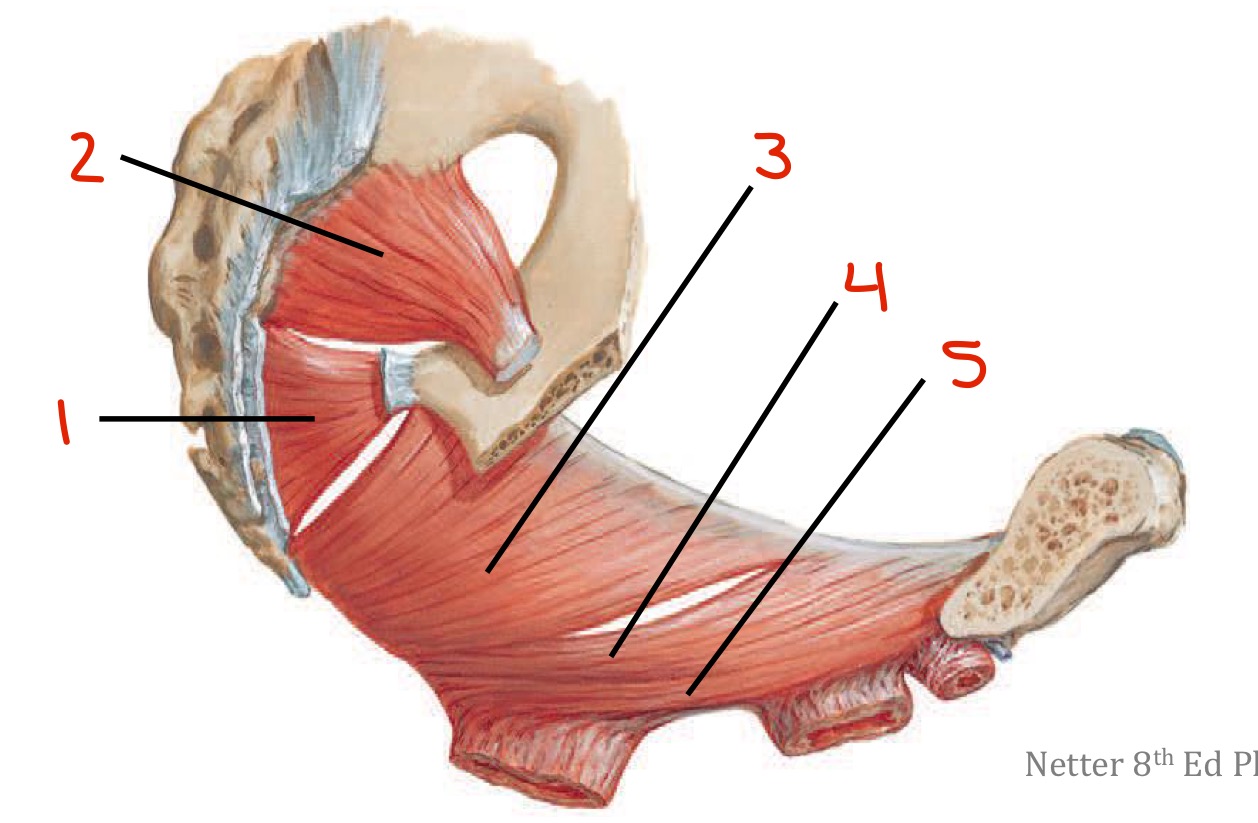
Identify
Coccygeus
Piriformis
Iliococcygeus
Pubococcygeus
Puborectalis
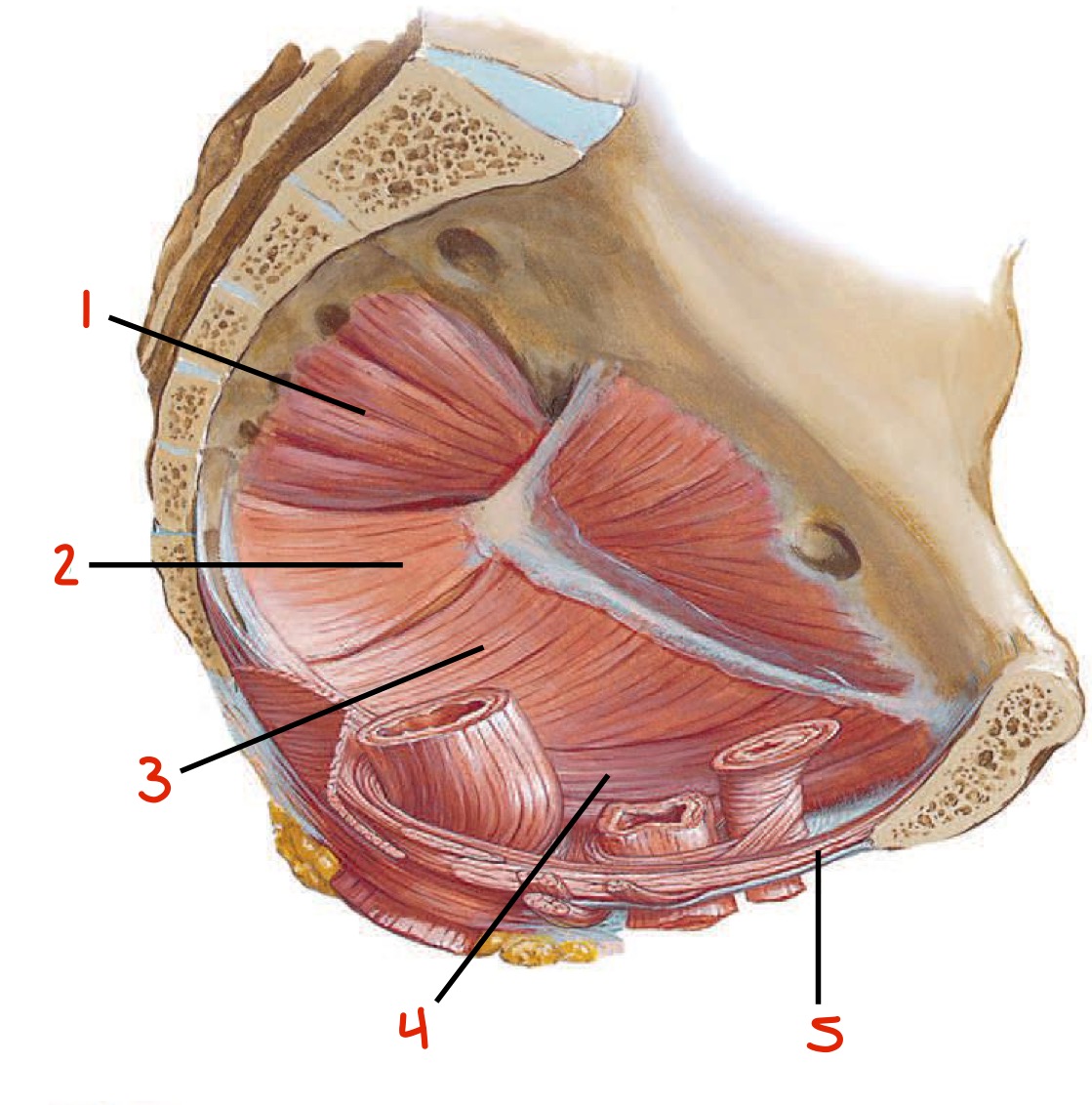
Identify
Piriformis
Coccygeus
Iliococcygeus
Pubococcygeus
Puborectalis
Name and describe the two hiatuses of the pelvic floor
Urogenital hiatus → anterior gap between the medial borders of the levator ani muscles through which structures pass to enter the urogenital triangle of the perineum
Rectal hiatus / anal aperture → posterior opening of the pelvic floor through which the anal canal passes to enter the anal triangle region of the perineum
What’s a gender difference between the structures passing through the urogenital hiatus?
In males, the urethra only passes through the UG hiatus, whereas in females the urethra and vagina pass (although end up being separate openings)
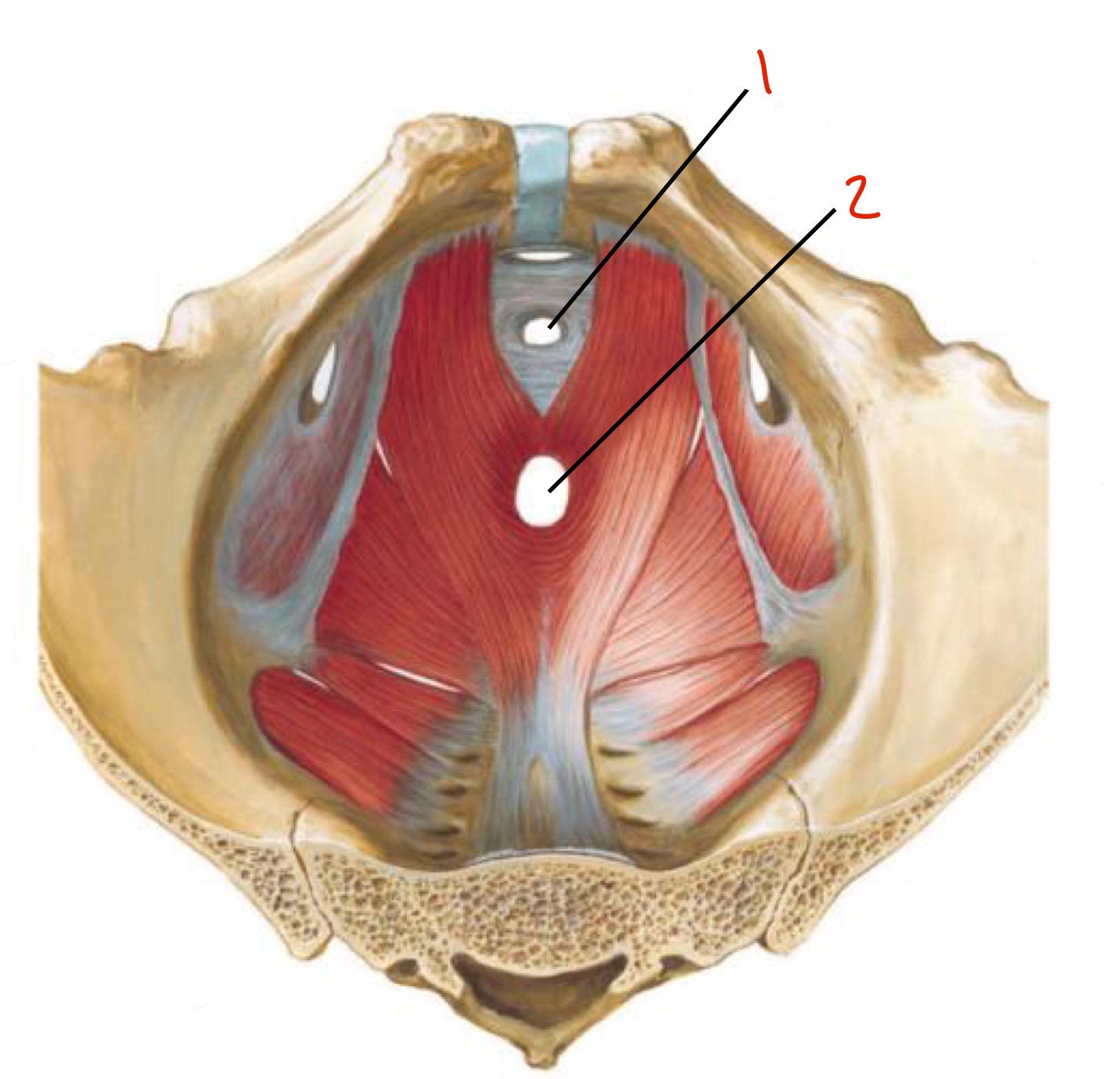
Identify
Urogenital hiatus
Rectal hiatus
What are the three main functions of the pelvic diaphragm?
Supports abdominopelvic viscera; resists inferior thrust following increased intraabdominal pressure (from coughing, deep expiration, etc.)
Raises the pelvic floor, assisting the anterior abdominal wall in compressing the viscera
Maintains continence; controls rectum, urethra and vagina openings (help retain or release pee or feces)
Slide 8
Give characteristics of:
Common iliac arteries
Internal iliac arteries
Bifurcates into the internal and external iliac arteries at the level of (approximately) L4
Is the principal artery of the pelvis, supplying most of the blood to the pelvic viscera and some to the musculoskeletal part of the pelvis; also supplies branches of the gluteal, medial thigh, and perineum regions
Divides into anterior and posterior divisions
The posterior division of the internal iliac artery supplies ________________; it branches into… (name them)
Lower posterior abdominal wall, posterior pelvic wall, and gluteal region
Iliolumbar artery
Superior gluteal artery
Largest branch of the internal iliac artery
Terminal continuation of posterior trunk
Leaves the pelvic cavity through the greater sciatic foramen above the Piriformis muscle
Substantial contribution of blood supply of muscles and skin in gluteal region
Lateral sacral artery
The anterior division of the iliac artery supplies ____________ ___________; its branches are…
The pelvic viscera, perineum, gluteal region, adductor region of the thigh, and the placenta (fetus)
Superior vesical artery / Umbilical artery
Supplies superior portion of bladder and other pelvic structures
In fetus, carries deoxygenated blood from fetus to placenta
In adults, it obliterates and becomes the median umbilical ligament
Obturator artery
Inferior Vesicle Artery (male) / Vaginal Artery (female)
Middle rectal artery
Internal pudendal artery
Main artery of the perineum
Larger in males
Leaves pelvis below piriformis muscle in greater sciatic foramen, then enters perineum through the lesser sciatic foramen
Inferior rectal artery is a branch
Inferior gluteal artery
terminal branch
Leaves through greater sciatic foramen below the piriformis
Contributes blood supply to gluteal region
Which arteries (branches of anterior division) are present in females but not in males? Describe them
Uterine artery
Major blood supply to uterus, enlarges significantly during pregnancy
Homolog to artery to the ductus deferens in males
May be a branch of superior vesical artery
May branch directly from anterior division
Vaginal artery
May originate from uterine artery
Supplies vagina, inferior bladder, and rectum
Homolog to inferior vesical artery in males
Which artery (branch of anterior division) are present in males but not in females? Describe it
The inferior vesical artery
Supplies the inferior bladder, prostate gland, and seminal vesicles
Homolog to vaginal artery in females
The most distal / inferior branch of the internal iliac artery is the ____________, branching off the ____________ (from _______ trunk of internal iliac)
Inferior rectal artery, internal pudendal artery, anterior
The internal pudendal, along with the pudendal nerve, exits the __________ and re-enters the perineal region through the _________ (pudendal canal)
Greater sciatic foramen, lesser sciatic foramen
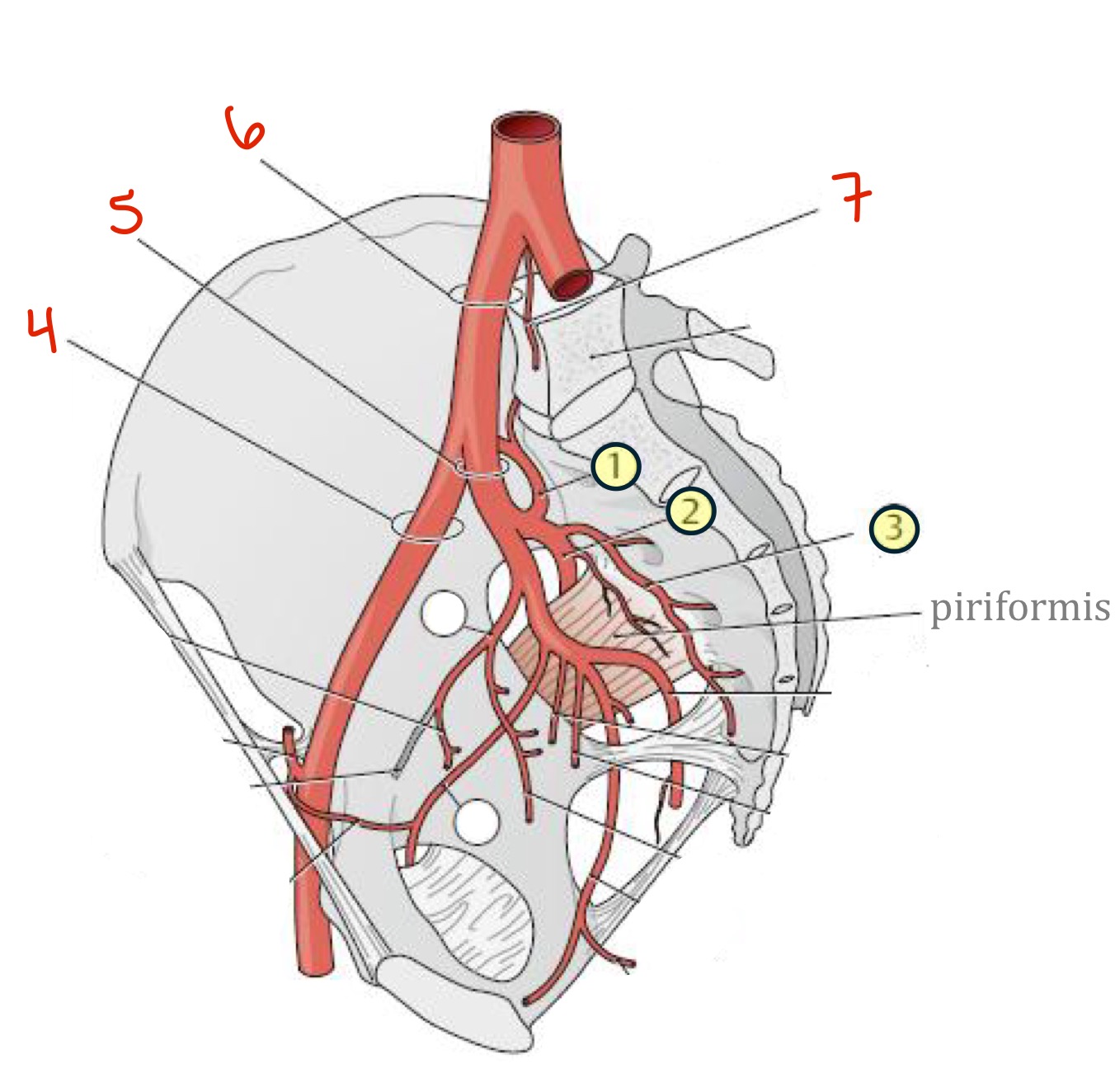
Identify
Iliolumbar artery
Superior gluteal artery
Lateral sacral artery
External iliac artery
Internal iliac artery
Common iliac artery
Median sacral artery
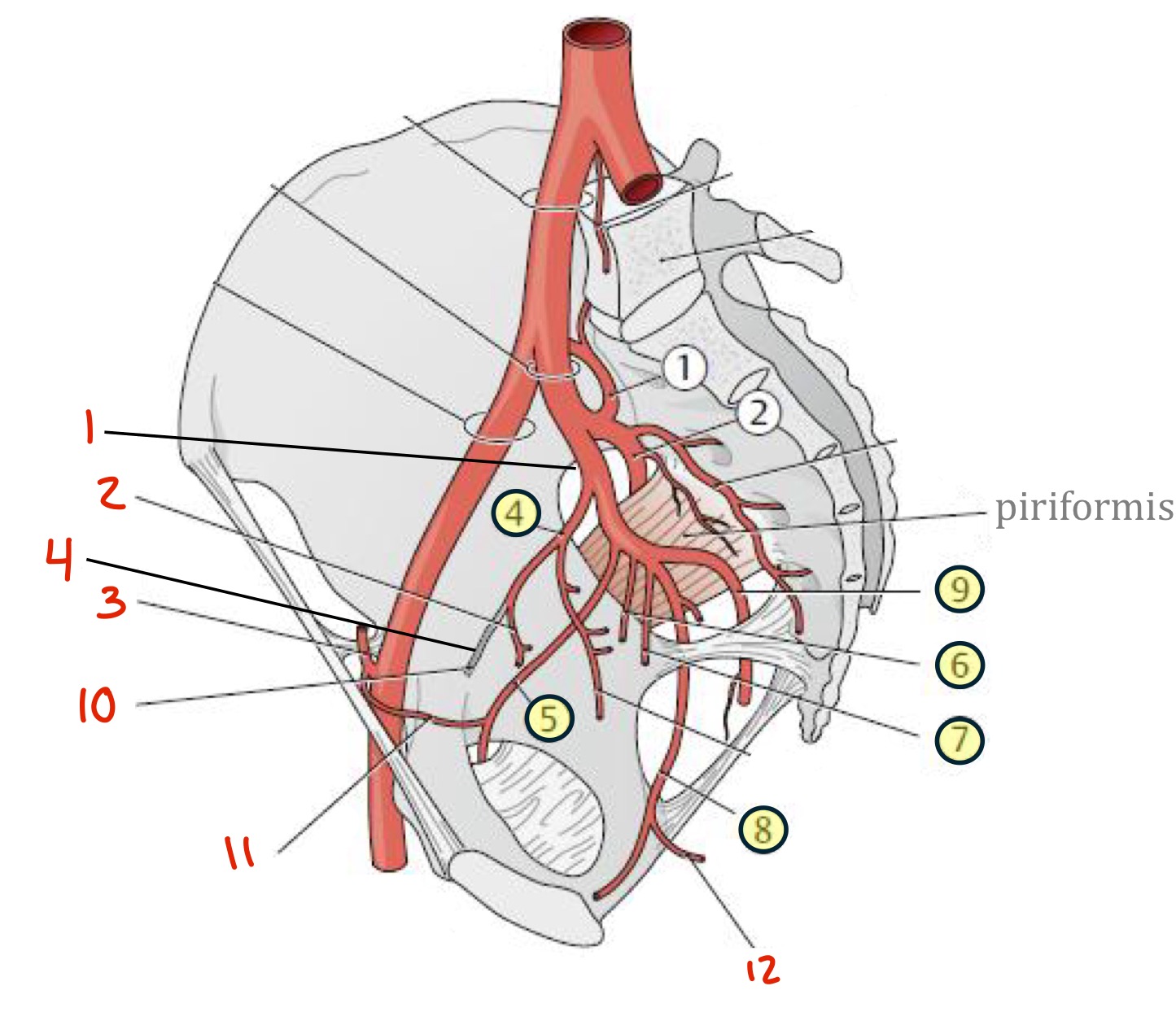
Identify SWAP red numbers 2 and 4
Anterior division of internal iliac artery
Median umbilical ligament
A
Superior vesical artery
Obturator artery
Inferior vesical artery or Umbilical artery in females
Middle rectal artery
Internal pudendal artery
Inferior gluteal artery
Same as 2 (swapped 4)
Not labelled
Inferior rectal artery
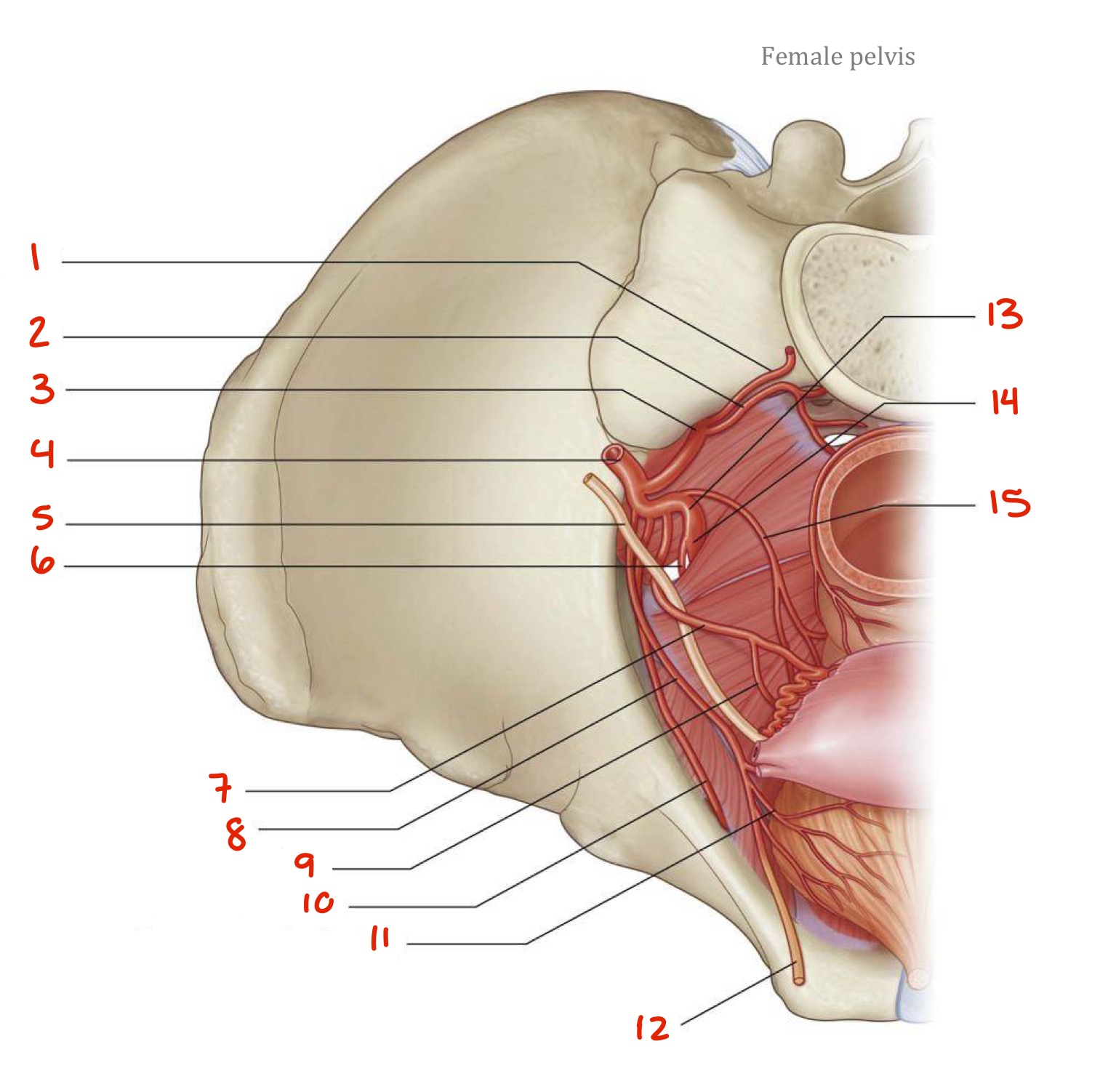
Identify
Iliolumbar artery
Lateral sacral artery
Superior gluteal artery
R internal iliac artery
R ureter
Internal pudendal artery
Uterine artery
Umbilical artery
Vaginal artery
Obturator artery
Superior vesical artery
Medial umbilical ligament
Anterior trunk of internal iliac artery
Inferior gluteal artery
Middle rectal artery

